Review Beta Alp 200 (2024)

the Lightest Argument Against Common Sense
115 kg, 16 hp, carburetor, no ABS – on paper, the Beta Alp 200 sounds like a motorcycle from another era. Put it on a gravel road, an alpine track, or an overgrown forest trail, and within minutes it explains why it has built such a loyal following. Final model year, final test.
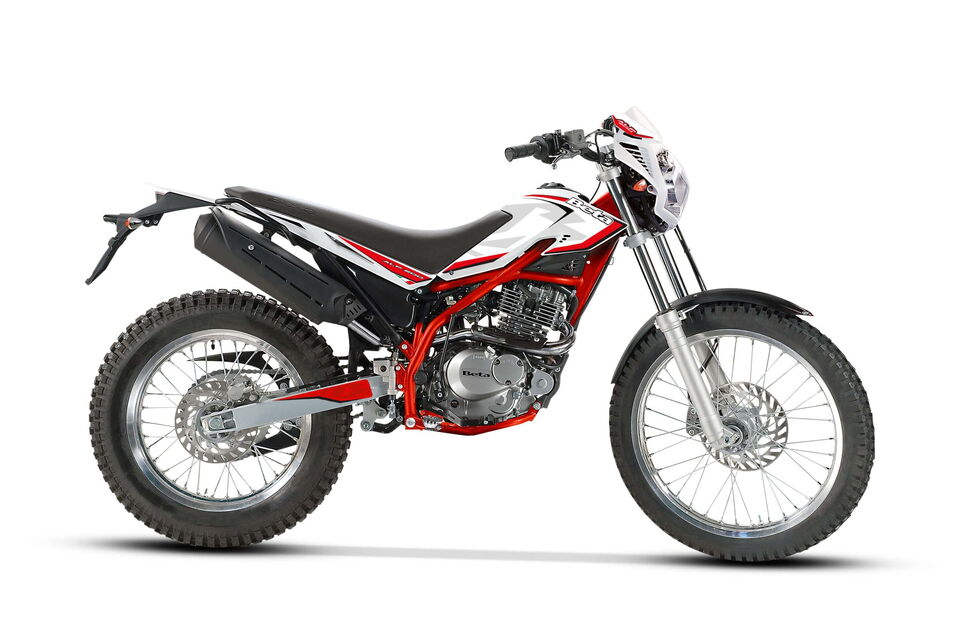
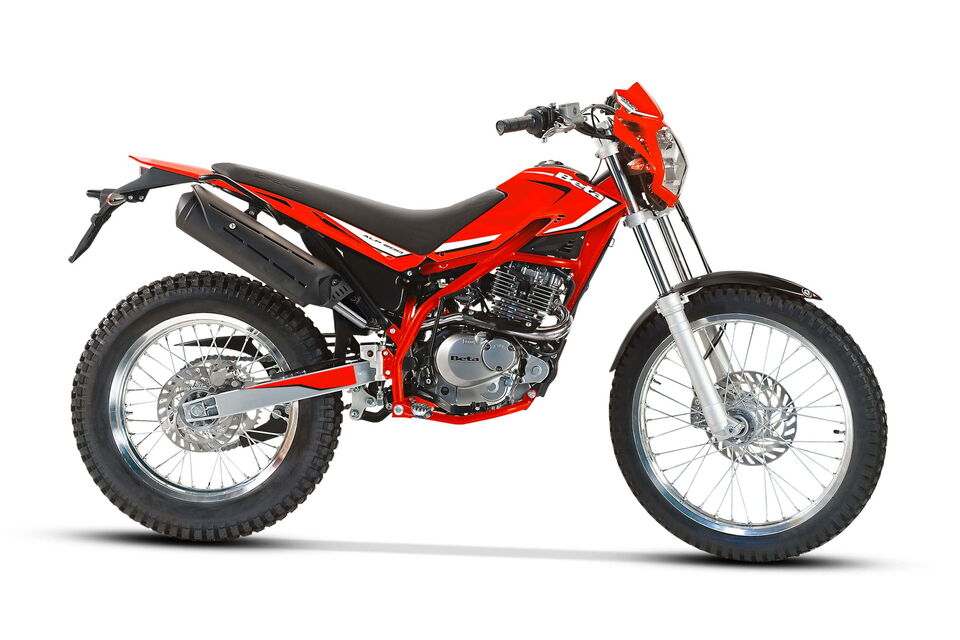
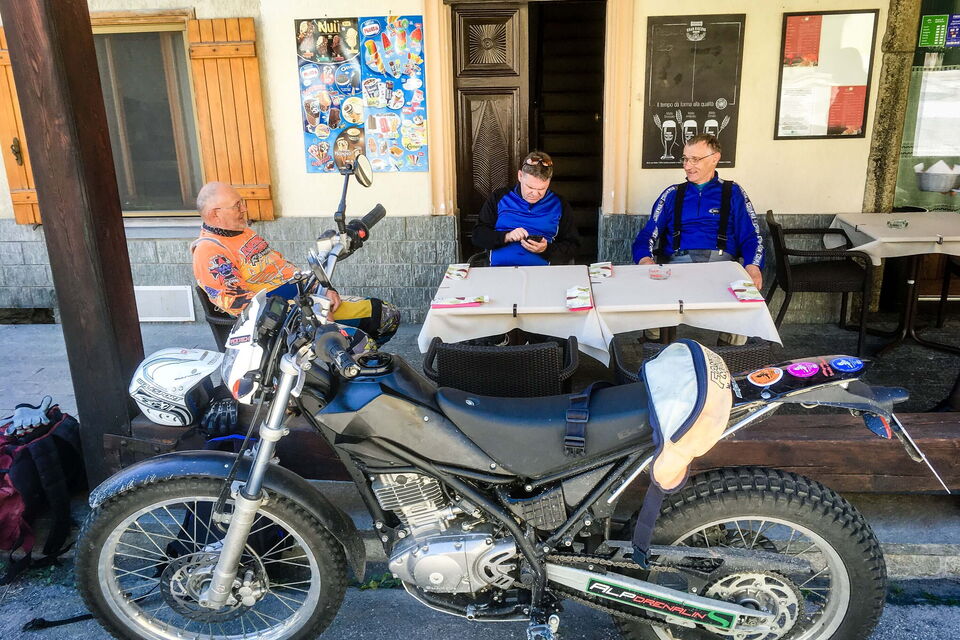
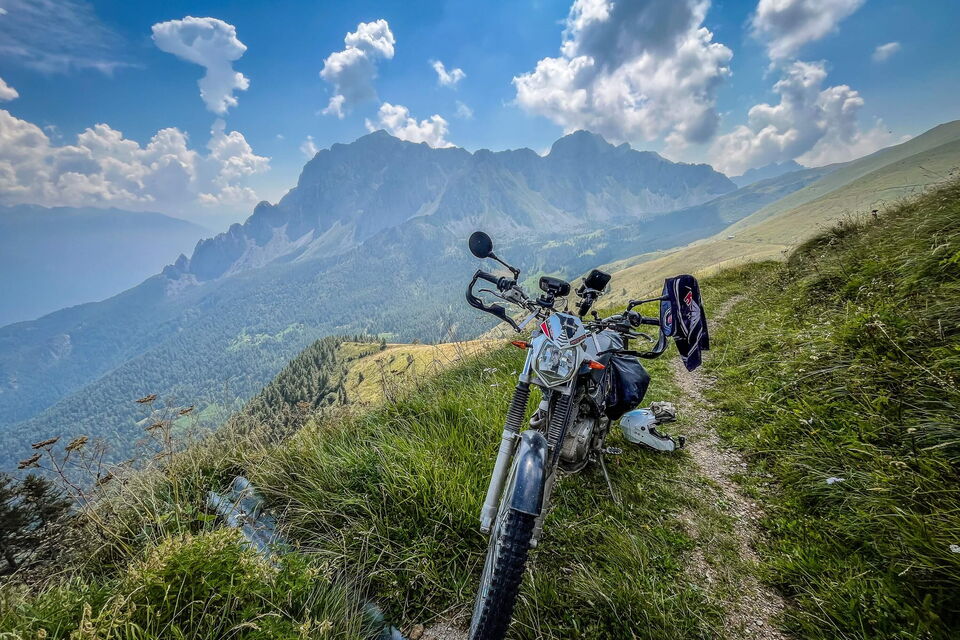
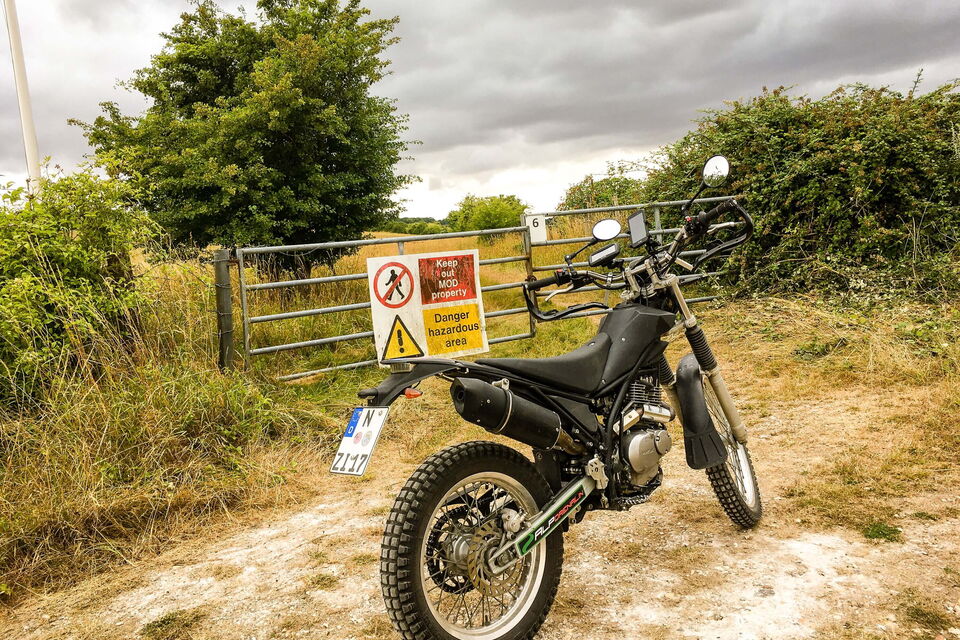
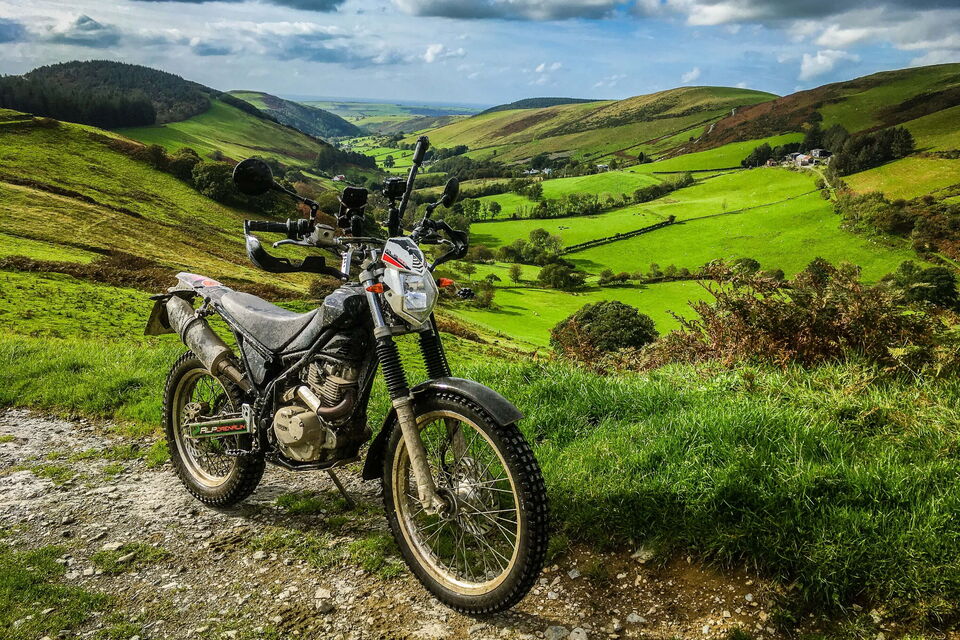
Engine: Little Power, Plenty of Character
Sixteen horsepower from 199 cc – anyone who reads that number and immediately turns the page has misunderstood the Alp 200. This engine is interesting not despite its modest output, but because of it. The air-cooled, carbureted single comes from another era, and that is precisely what makes it so appealing: no fuel-injection delay, no electronics between the throttle and the rear wheel, no mapping. Twist the grip and the engine responds – immediately, directly, predictably. It is a quality modern high-performance motorcycles can only try to recreate through sensors and software.
The Mikuni carburetor was revised for the 2024 model year to meet Euro 5, no small challenge for a concept born in a very different emissions era. Beta managed it without changing the engine’s character. It pulls evenly from low rpm, has no pronounced power peak, and never demands an aggressive rev-hungry riding style. You can genuinely pull away at near-idle speed, which is worth its weight in gold on slippery terrain.
The exhaust is new for 2024, with a slimmer, more modern appearance. The sound remains familiar: purposeful without being loud, with a single-cylinder beat that suits the bike perfectly. Both electric and kick starters are fitted – the kickstarter is insurance, not an emergency workaround. The five-speed gearbox shifts cleanly and the clutch action is light.
If this Suzuki DR200-derived engine is not enough for you, you are looking at the wrong motorcycle. If it is exactly enough, you may soon wonder why you ever needed anything bigger.
Chassis: Light Weight Beats Everything
The Alp 200’s real argument is its weight: around 115 kg fully fueled. For comparison, a KTM 390 Adventure weighs close to 180 kg ready to ride, while a Honda CRF300L is above 140 kg. Off-road, a 30-to-65 kg difference is not a statistic. It is another world.
A motorcycle you can pick up alone after a fall, carry across a rocky creek bed, or hold with one hand while moving a branch with the other is a fundamentally different tool from anything substantially heavier.
The conventional 37 mm fork is non-adjustable and offers 170 mm of travel. The rear monoshock allows spring-preload adjustment and nothing more. Serious enduro racers will want more. For everything the Alp was designed to do, it is enough.
On alpine tracks, gravel roads, and light-to-moderate off-road terrain, the suspension works reliably. It does not erase every bump, but it never overwhelms the rider either. Feedback is direct, and the Alp goes exactly where you point it.
The standard Pirelli MT 43 trial-style tires are the right choice for this motorcycle: strong grip on rocks, roots, and wet grass, acceptable on dry pavement, but less convincing in deep wet mud or snow. Riders who use the Alp mainly on pavement can easily switch to more road-oriented rubber.
The 245 mm front and 220 mm rear disc brakes are entirely adequate for the bike’s weight and performance. There is no ABS, no cornering assistance, no electronic safety net. You brake, the motorcycle responds. If you have not mastered that basic skill, the Alp will teach it faster than almost anything else.
Ergonomics: Small, Accessible, Surprisingly Versatile
An 830 mm seat sounds low for an off-road motorcycle – and it is, deliberately. The Alp 200 was not built to impress fast enduro racers in extreme terrain. It was built to make off-road riding accessible to as many people as possible.
Shorter riders, older riders, beginners, and returning motorcyclists all benefit from the combination of low seat height and low weight. Few motorcycles take those groups as seriously as the Alp.
The riding position is upright, the handlebar is high, and the footpegs are well positioned for standing off-road. Riders who stay seated are comfortable; riders who stand find a natural posture.
Very tall riders above roughly 1.90 meters will find it cramped, with limited room between knees and handlebar. That is the Alp’s one clear ergonomic boundary.
On pavement, it is surprisingly useful. The riding position works well for short and medium distances. At highway speeds, windblast becomes an issue – but anyone using an Alp 200 for sustained highway riding has probably misunderstood the concept. This bike belongs on small roads, gravel, and mountain tracks, and there the ergonomics work very well.
Handling: Simple. That Is a Compliment
The Alp 200 may be one of the least complicated motorcycles you could buy new. No display buried in menus, no riding modes, no electronics to understand. Sit down, start it with the button or kickstarter, and ride.
That is not a limitation. It is freedom. Few modern motorcycles reduce the experience so completely to the act of riding.
Its low weight matters everywhere heavier motorcycles become awkward: in a narrow alley, on an alpine track with nowhere to turn, or while pushing backward into a shed. One hundred fifteen kilograms can simply be moved.
The Alp is also an ideal travel companion for riders carrying a motorcycle on a motorhome or loading one into a van: small, light, robust, and easy to live with.
The 6-liter tank is the most obvious everyday limitation. Range is roughly 150 to 180 km in mixed use – more on pavement, less off-road. Day rides need to be planned around fuel stops, and remote mountain tours require some thought.
Beta offers accessory luggage solutions, including side bags and a top case, that fit the concept without significantly changing the motorcycle’s character.
Equipment: Nothing It Does Not Need
The Alp 200 has no ABS, no traction control, no TFT display, and no Bluetooth. That is not simply cost-cutting; it is part of the concept.
A motorcycle intended for off-road use needs robustness and ease of maintenance more than electronic modules that can fail after a crash. A carburetor can be adjusted with a screwdriver; fuel injection needs diagnostic equipment. For the riders who buy an Alp, simplicity is not a disadvantage.
Standard equipment includes electric starter, kickstarter, wire-spoke wheels, side stand, and an LED headlight on the 2024 model. It is fully street legal, not a closed-course off-road machine.
The new 2024 exhaust is not merely a styling update. It also helps the carbureted engine comply with Euro 5, a technical achievement that required real development work from Beta.
Cost: Cheap to Buy, Cheap to Run
The final 2024 examples cost around EUR 5,500 new, depending on dealer and remaining stock. For a motorcycle of this quality and such a specialized concept, that is fair.
Well-kept used Alp 200s are rarely much cheaper. The model holds its value because it has a loyal buyer base and many examples accumulate relatively low annual mileage.
Running costs are the opposite of those for big adventure bikes: oil, air filter, chain – that is essentially it. Owners who do their own maintenance need neither special tools nor diagnostic equipment.
Dealer servicing is correspondingly inexpensive. A straightforward annual service is well below EUR 200 according to the source. Trial-style tires are inexpensive, although their life depends heavily on use.
One important note for prospective buyers: the Alp 200 has been discontinued. What remains are dealer leftovers and used examples. Anyone who wants one should not wait too long.
Verdict
The Beta Alp 200 is not a motorcycle for riders chasing horsepower. It is for riders who know exactly what they want to do: easy off-road touring, alpine tracks, gravel roads, motorhome travel, learning to ride in the dirt, and enjoying a motorcycle without electronic interference.
For those jobs, there is no better tool in the source’s assessment. It is a shame that 2024 was its final model year – but if you can still find one, it is worth grabbing.
Quick Check
+ 115 kg fully fueled – the lightest street-legal off-road motorcycle in its class according to the source.
+ Simple, maintenance-friendly carbureted engine.
+ Direct, unfiltered riding feel without layers of electronics.
+ Low 830 mm seat height makes it accessible to a wide range of riders.
+ Fair purchase price and low running costs.
+ Strong resale value and robust construction; lasts a long time with minimal care.
– Only 16 hp, with little reserve for demanding terrain or highway use.
– No ABS.
– 6-liter tank means limited range and frequent fuel-stop planning.
– Non-adjustable front fork.
– Discontinued model – only dealer leftovers and used bikes remain.
– Cramped for very tall riders above roughly 1.90 meters.
Technical Specifications: Beta Alp 200 (2024)
Country of Manufacture: Italy, Rignano sull'Arno, Tuscany
Engine: Air-cooled single-cylinder four-stroke, OHC, carburetor, Euro 5
Displacement: 199 cc
Power: 12 kW / 16 hp
Torque: Not specified
Transmission: Five-speed
Final Drive: Chain
Front Suspension: Conventional 37 mm telescopic fork; 170 mm travel
Rear Suspension: Monoshock; spring preload adjustable; 185 mm travel
Front Brake: 245 mm disc
Rear Brake: 220 mm disc
Front Tire: 2.75-21 / 90/90-21, Pirelli MT 43
Rear Tire: 4.00-18 / 120/80-18, Pirelli MT 43
Rider Aids: None; no ABS
Weight: Approx. 115 kg fully fueled
Seat Height: 830 mm
Fuel Tank: 6 liters
German Price: Approx. EUR 5,500, final model year / remaining dealer stock
Warranty: 2 years