Review Beta Alp X (2026)

Same Engine, Different Priorities
The Beta Alp X shares its engine, suspension, and price with the Alp 4.0—but it is a different motorcycle. Smaller wheels, more street-oriented tires, a lower seat height, and modern-classic styling. This test reveals who will be better served by the X—and who will not.
As of: March 17, 2026 | Tested model: Beta Alp X (2026) | Price: €5,900



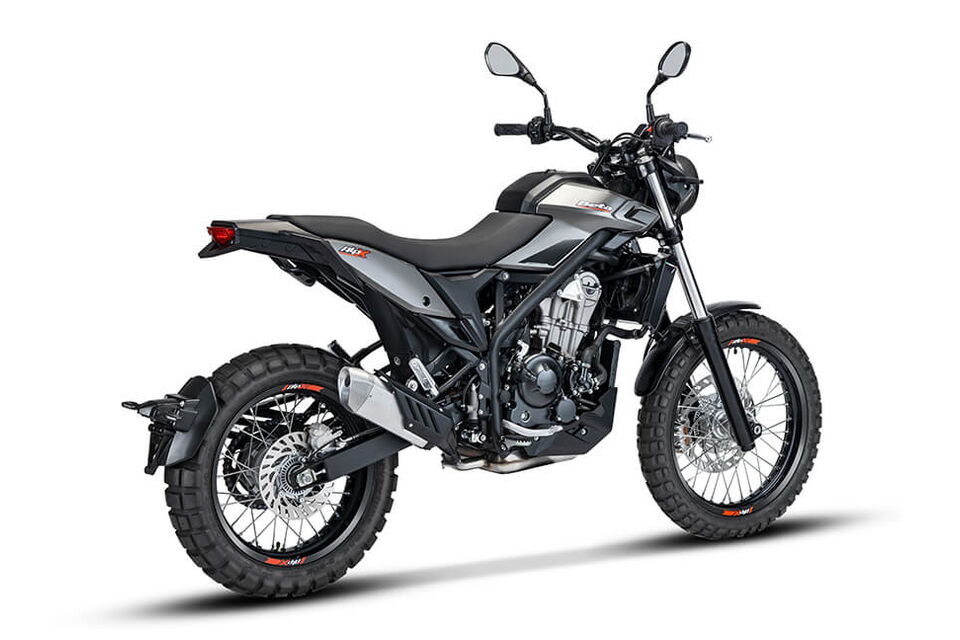
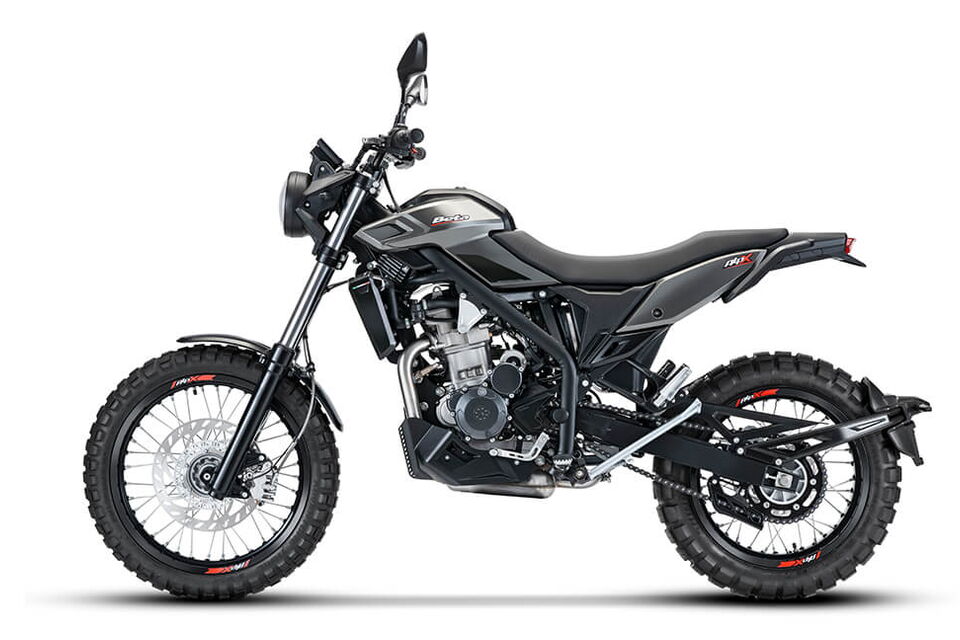
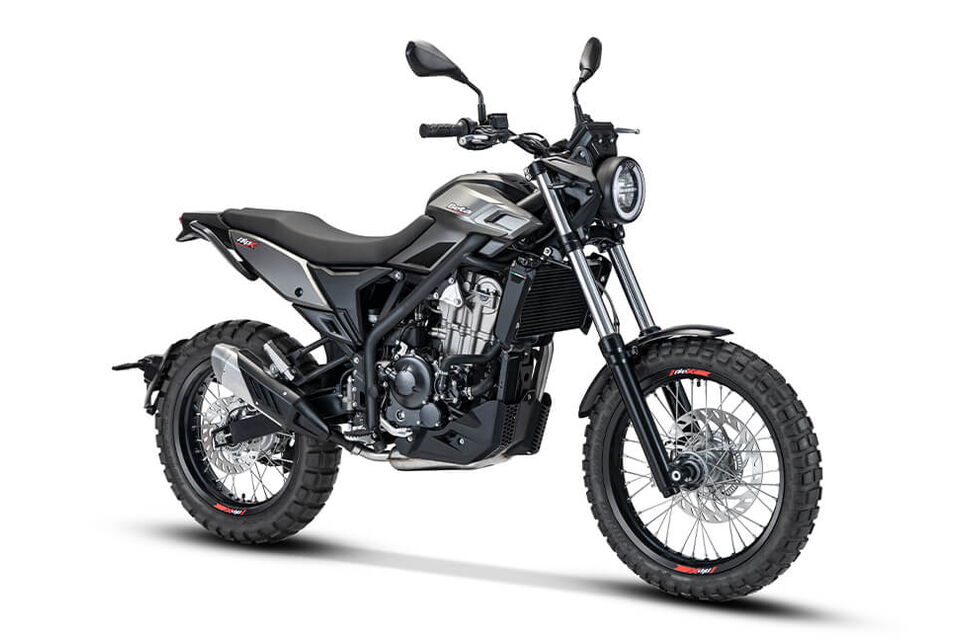
Engine: Identical to the 4.0—and That’s a Good Thing
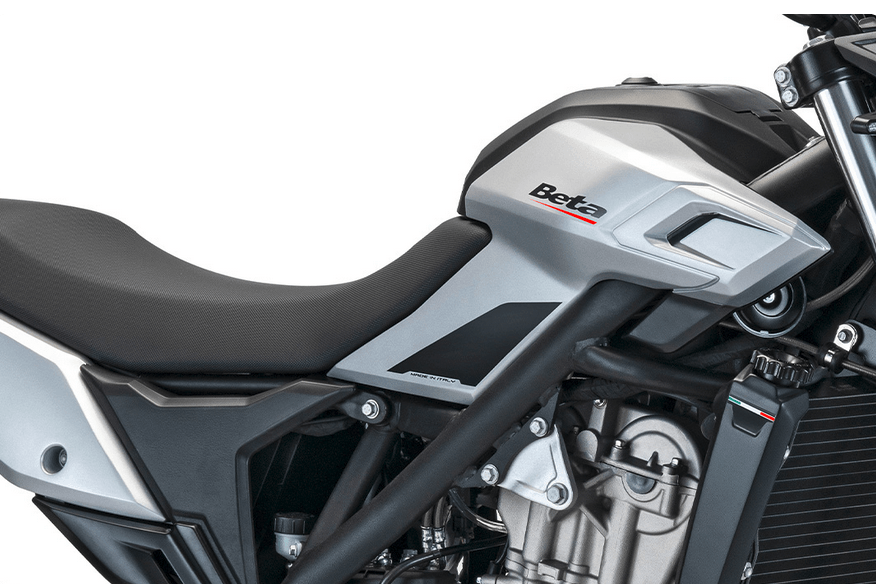
The Alp X uses the same engine, transmission, and drivetrain as the Alp 4.0. It is the same 348 cc liquid-cooled DOHC single-cylinder engine developed jointly with Chinese manufacturer Tayo, producing 35 hp at 9,500 rpm, with electronic fuel injection, Euro 5+ compliance, and a 6-speed transmission.
This commonality should be seen as a sign of efficiency rather than a weakness: Beta has developed a solid engine platform and built two different personalities around it. Those personalities start to be expressed through the engine mapping.
The Alp X is tuned for slightly smoother power delivery at lower rpm, appropriate for a motorcycle that will spend more time in city traffic and on backroads than off-road.
The difference is subtle but noticeable in real-world riding. The X feels slightly smoother when pulling away, which is pleasant in dense city traffic. Riders who need the engine to respond as a precise tool on loose gravel will be better served by the 4.0. For everyone else, the difference is minor.
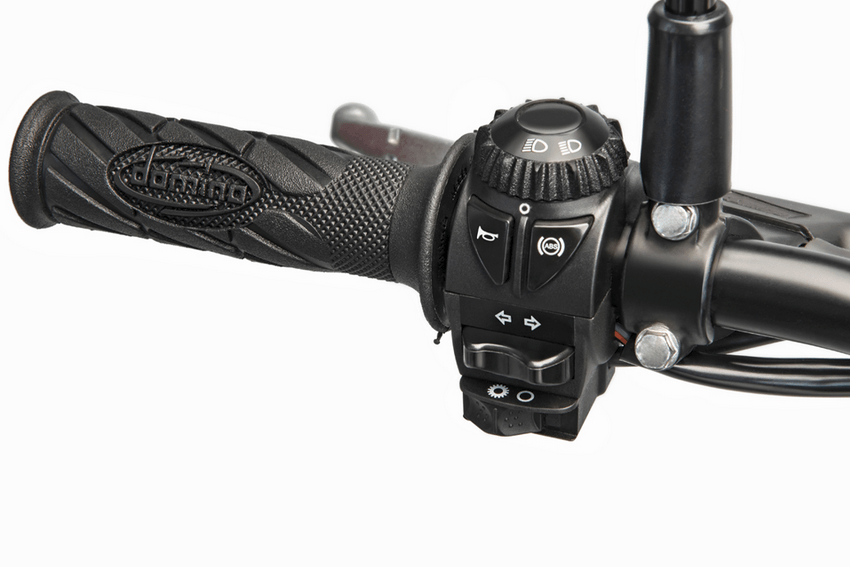
Two riding modes—Street and Offroad—are also included on the X. In Offroad mode, rear-wheel ABS can be switched off, even though the X is less likely to encounter situations where that becomes necessary. The Pirelli Scorpion Rally STR tires fitted as standard to the Alp X are considerably more street-oriented than the Vee Rubber knobby tires on the 4.0—and that is the biggest practical difference you will notice every day.
Chassis: Same Components, Different Result
A 43 mm non-adjustable telescopic fork with 185 mm of travel and a rear monoshock adjustable for spring preload with 195 mm of travel—the components are identical to those on the Alp 4.0.
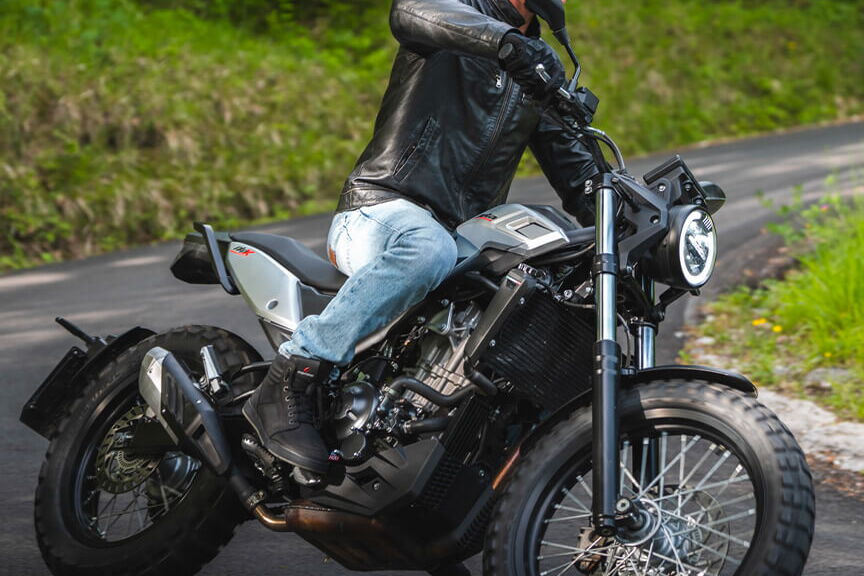
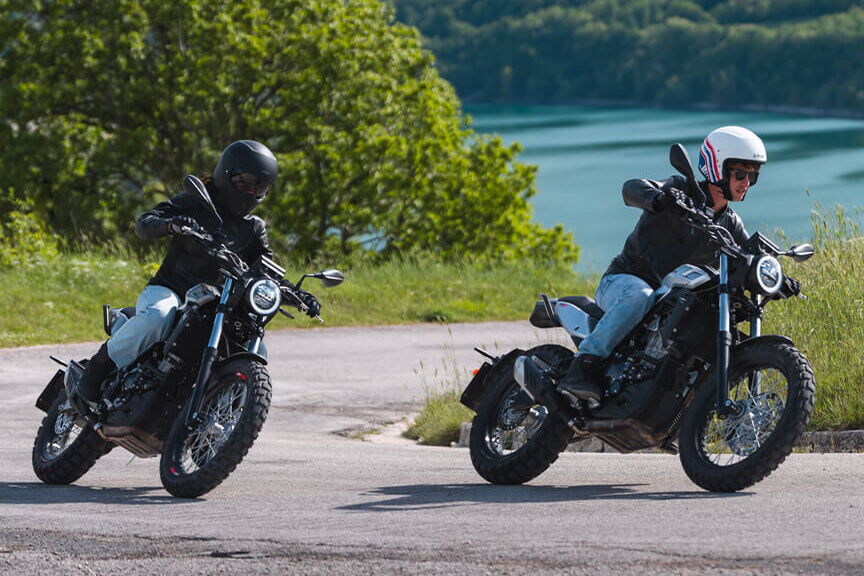
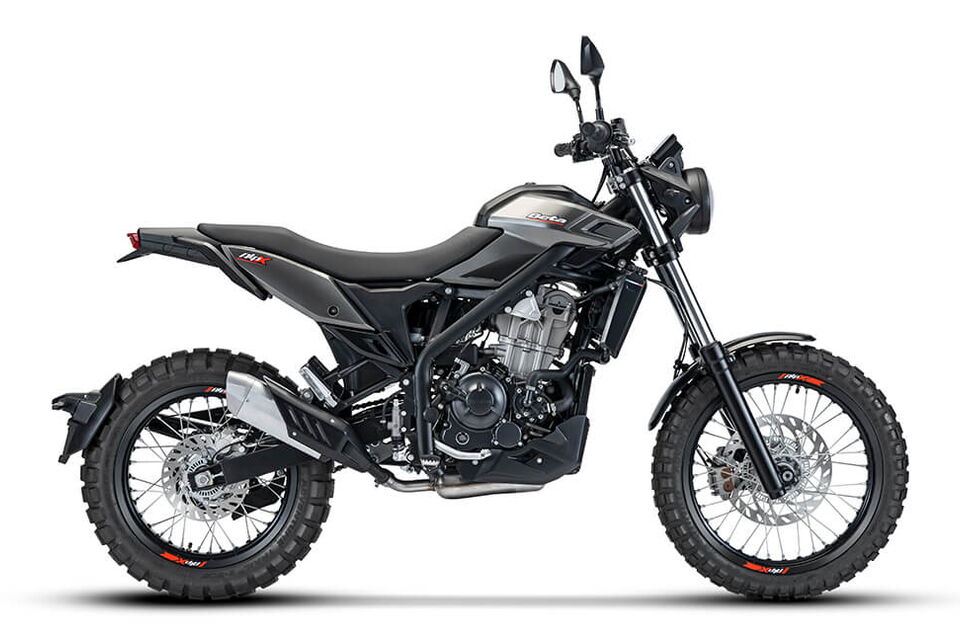
What changes are the wheels: the Alp X runs a 19-inch spoked wheel up front and a 17-inch rear instead of the 4.0’s 21/18-inch combination. Smaller wheels mean a lower seat height—855 mm instead of 865 mm—and a more agile motorcycle on the road. This really pays off on pavement, where the Alp X turns in more directly than the 4.0, is more entertaining in tight corners and city traffic, and feels more maneuverable. At the same time, the 19-inch front wheel remains capable enough off-road for maintained gravel roads and dirt tracks—the compromise suits the target audience.
Riders planning serious off-road excursions, tackling changing and loose terrain, and spending more time standing on the pegs will still be better served by the 4.0 and its 21-inch front wheel.
The brakes—a 290 mm front disc, 220 mm rear disc, and Bosch ABS—are identical to those on the 4.0 and entirely adequate for this weight and performance level. The Pirelli tires allow the brakes to work more effectively on asphalt than the 4.0’s knobby tires. On wet roads, the X feels considerably more secure than its sister model.
Ergonomics: 10 mm Lower—and It Makes a Difference
An 855 mm seat height—that is 10 mm lower than the 4.0. It sounds marginal, but for many riders it makes a noticeable difference in practice. Riders who are on tiptoe on the 4.0 can reach the ground a little more securely on the X.
For riders under 1.70 meters, the X is the considerably more accessible entry point. Anyone who has the opportunity to test ride both models should do so—the preference often comes down to rider height.
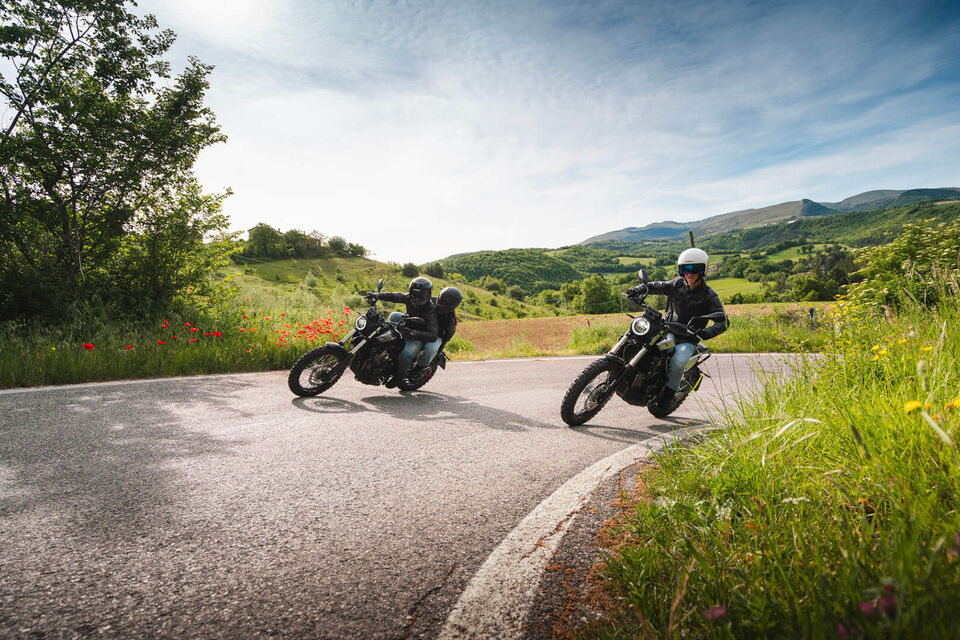
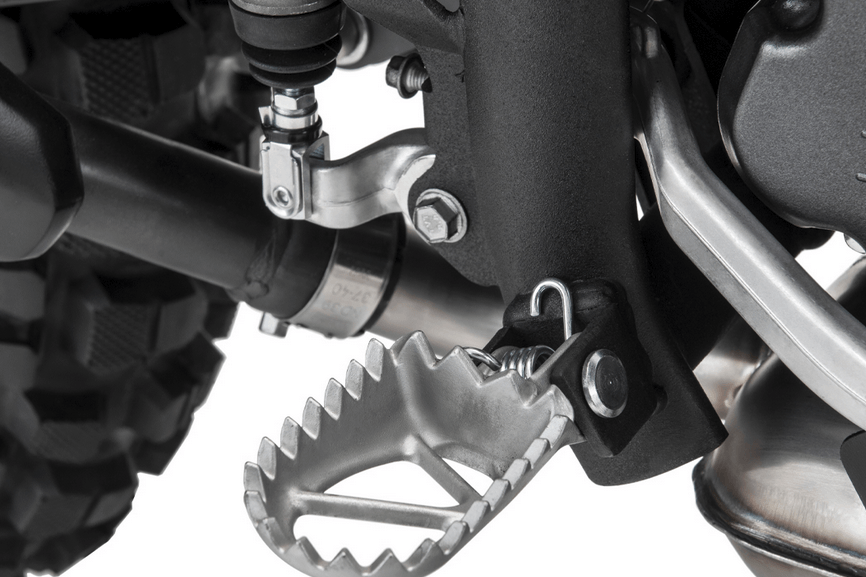
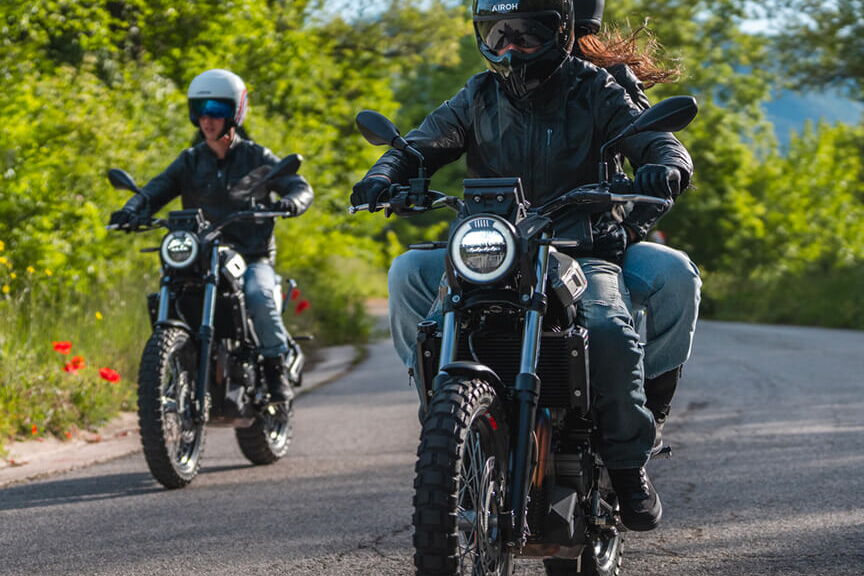
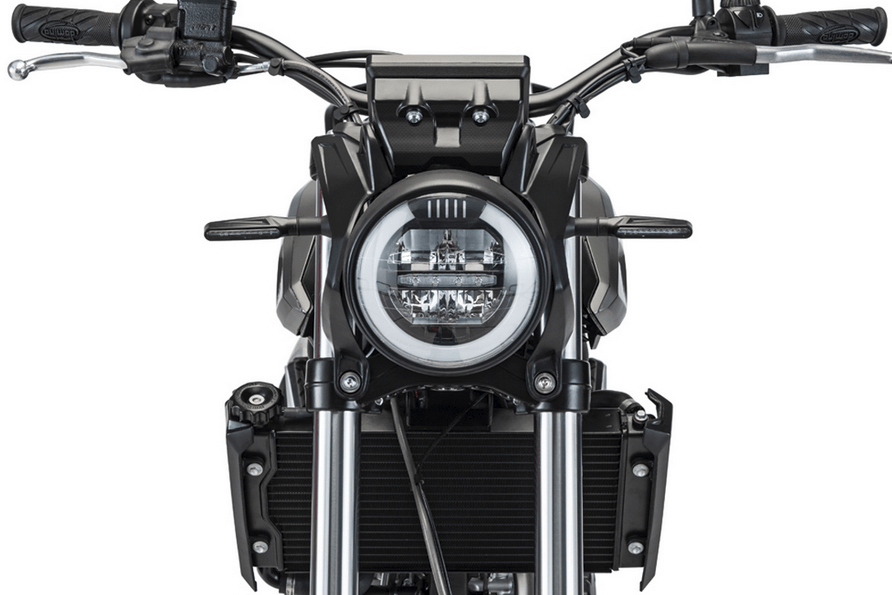
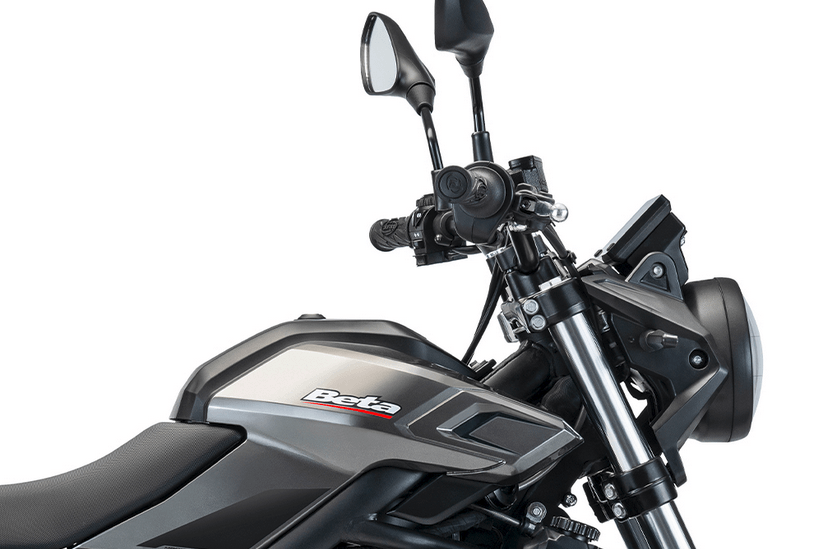
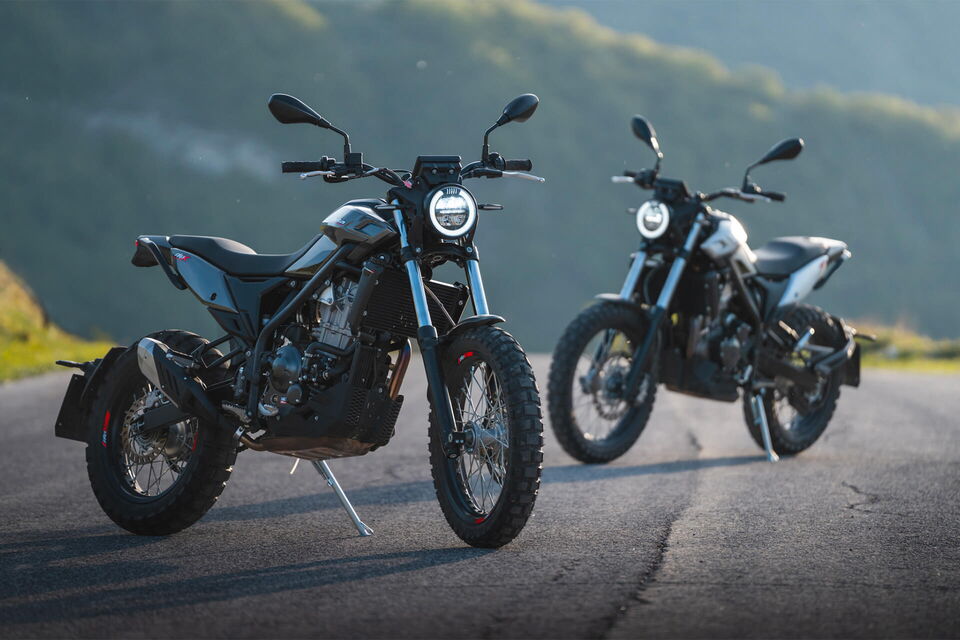
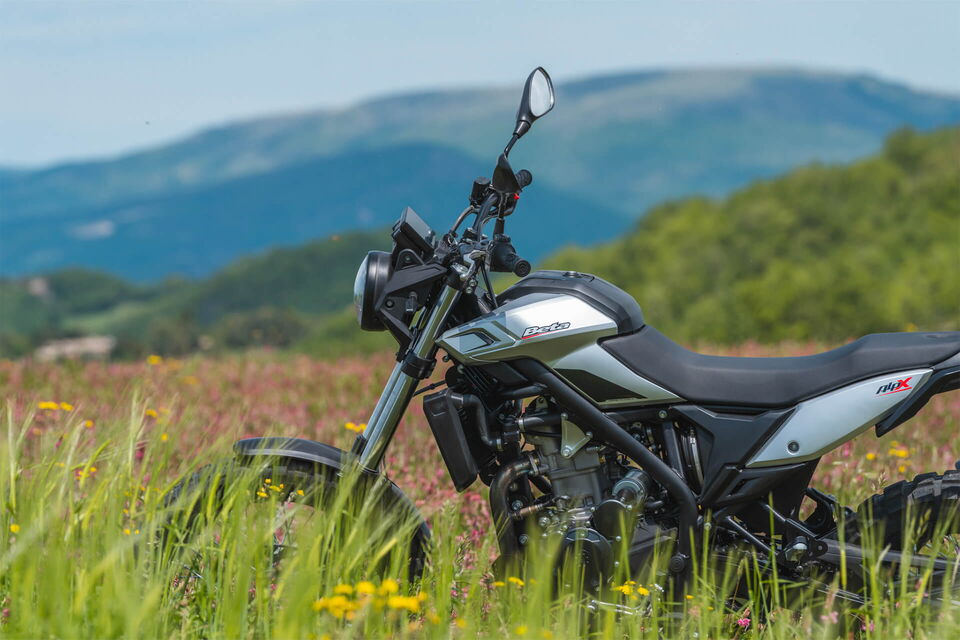
The riding position is upright, the handlebar is wide and high, and the footpegs are comfortably positioned. The X is not a scrambler in the traditional sense, but its modern-classic styling, rounded forms, compact headlight, and clean lines give it a look that says urban rider more than hardcore off-road enthusiast.
If that appeals to you—and it will appeal to many riders—you pay no premium for it. The price is identical to the 4.0.
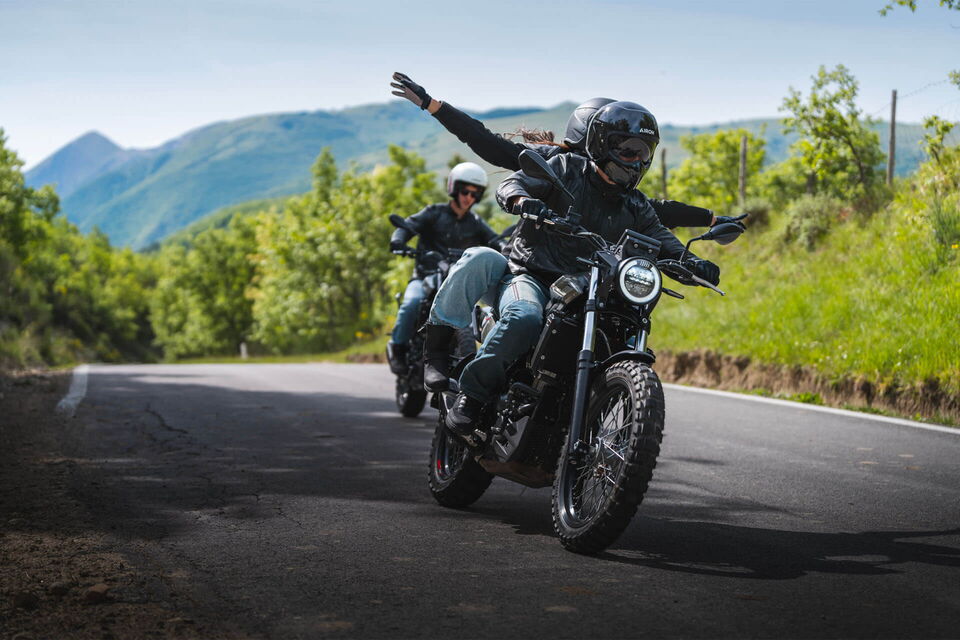
On longer trips, the X is surprisingly comfortable. The more street-oriented Pirelli tires make the motorcycle more stable and less nervous on pavement than the 4.0. Riders who regularly cover several hundred kilometers at a time will appreciate that.
No serious wind protection, no heated seat, no cruise control—none of that should come as a surprise on a €5,900 motorcycle. This is a lightweight touring tool, not a luxury adventure tourer.
Handling: 150 kg, USB Port, and Smartphone Connectivity
150 kg fully fueled—2 kg more than the 4.0. That difference is negligible. In everyday riding, the X feels just as light and manageable, and the 4.0’s slightly lower weight is not even noticeable in the extreme situations that most X riders are unlikely to encounter anyway.
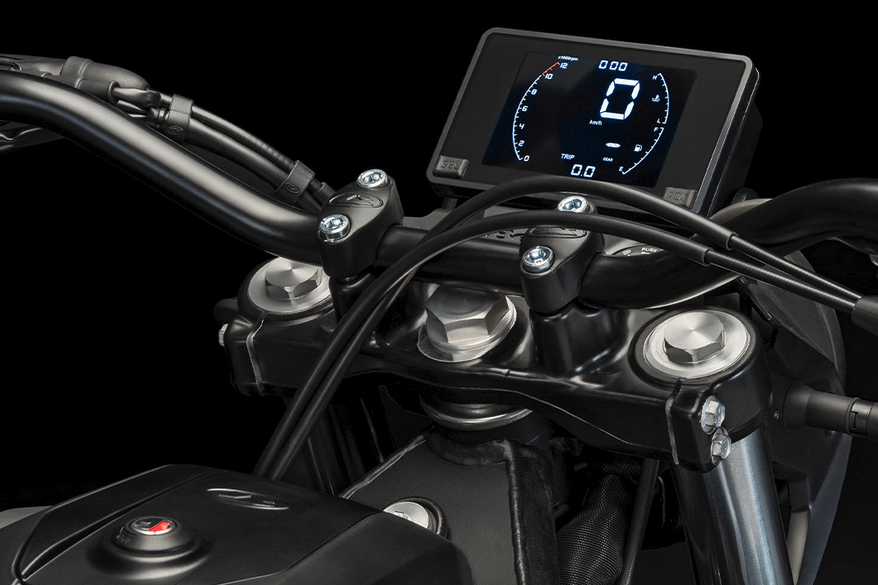
The TFT display is identical to the 4.0’s—clear, easy to read, and well organized. The X also adds a USB port as standard, which is useful for charging a smartphone on day trips.
The 11-liter fuel tank, combined with consumption of around 3.2 to 3.5 liters per 100 km, provides a range well beyond 300 km—more than enough for day rides and weekend trips. The fuel cap opens with the ignition key, and operation is straightforward.
An accessory range including side bags and a top case is available, making the X suitable for multi-day trips with a reasonable amount of luggage.
Two practical notes: according to one specification sheet, the Alp X’s standard ABS cannot be switched off—unlike the 4.0, where rear-wheel ABS can be disabled in Offroad mode. Riders who regularly venture off-road need to take that into account.
And the X comes standard with Pirelli Scorpion Rally STR tires—more road-friendly than the 4.0’s Vee Rubber tires, but still not high-performance sport rubber.
Equipment: Everything the 4.0 Has, Plus USB
TFT display, smartphone connectivity, LED headlight, Bosch ABS, two riding modes, traction control, electronic fuel injection—all identical to the Alp 4.0.
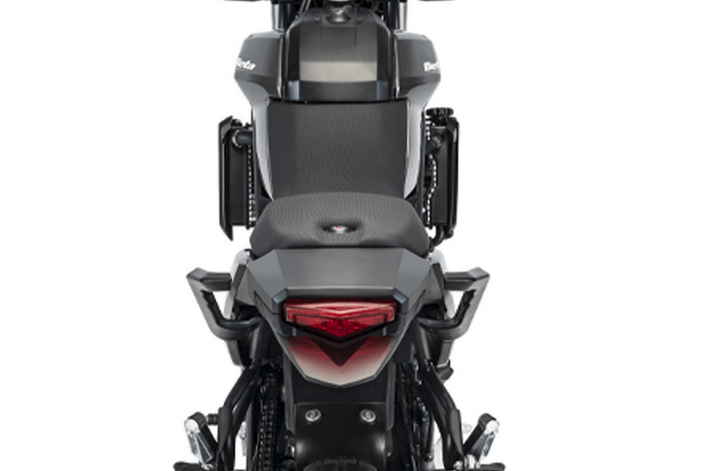
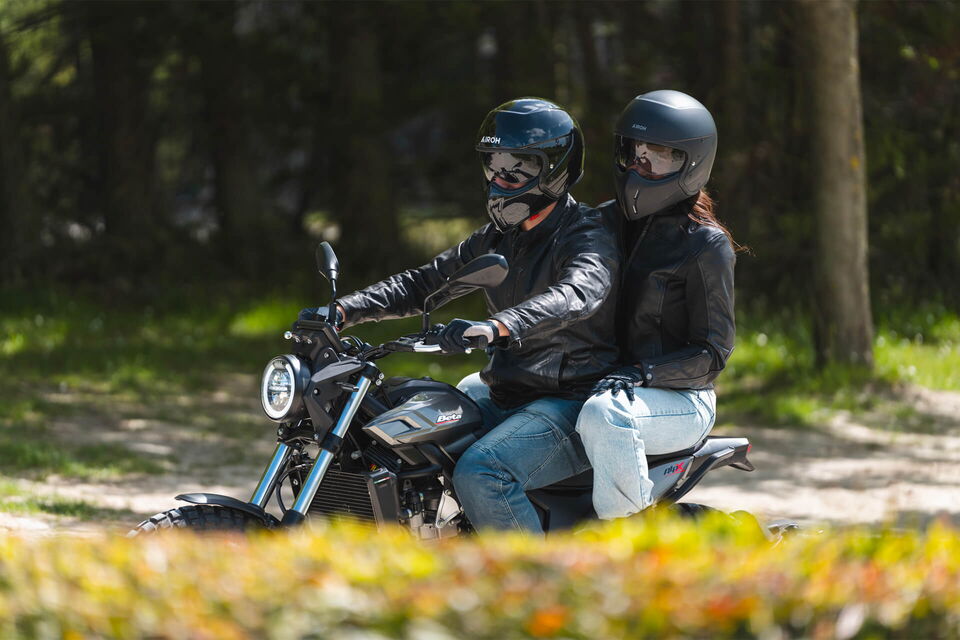
The X additionally includes a USB port as standard, something the 4.0 lacks. The windscreen is fixed and non-adjustable. It provides some protection at cruising speeds but no serious wind management. Passenger footpegs and a grab handle come standard—the Alp X is officially approved for two-up riding.
What the X does not include from the factory, despite what some riders might expect: no genuine scrambler accessories, no skid plate, no handguards.
That is not an oversight —the X is not considered an off-road motorcycle within Beta’s own lineup, so this reflects the concept. The accessory catalog offers appropriate additions for riders who want them.
Costs: Same Price, Different Target Audience
€5,900—identical to the Alp 4.0.
That makes choosing between the two models purely a question of intended use and personal preference, not budget.
Running costs are almost identical. Service is required every 10,000 km—or every six months—with costs below €200. Tires in enduro sizes are inexpensive. The X’s Pirelli Scorpion Rally STR tires cost slightly more than the 4.0’s standard Vee Rubber tires.
Warranty: two years with unlimited mileage.
Resale value: both Alp models hold their value well. The X may be slightly easier to resell because it appeals to a broader audience—more street riders, more beginners—while the 4.0 targets a more specialized group.
Verdict
The Beta Alp X is the better Alp for riders who spend most of their time on the road, occasionally venture onto gravel, and want a lightweight, stylish motorcycle with a modern character.
It is more accessible, more street-friendly, and visually more distinctive than the 4.0.
Riders who genuinely intend to go off-road—trails, loose terrain, standing on the pegs—should choose the 4.0 with its 21-inch front wheel.
At the same price, the decision is simple: it comes down to how you intend to use the motorcycle.
Quick Check
+ Same engine and price as the Alp 4.0—but more street-oriented
+ Pirelli Scorpion Rally STR tires standard—significantly better on asphalt than the 4.0
+ 855 mm seat height—10 mm lower and more accessible for shorter riders
+ Modern-classic styling—distinctive design at no extra cost
+ USB port standard
+ 11-liter fuel tank—more than 300 km of realistic range
+ Passenger accommodation standard
– 19/17-inch wheels instead of 21/18—less off-road capability than the 4.0
– Rear-wheel ABS cannot be switched off—disadvantage in more serious off-road terrain
– No skid plate or handguards from the factory
– Long-term reliability of the Tayo engine has not yet been proven over many years
– Limited wind protection; demanding at higher highway speeds
– 150 kg fully fueled—2 kg heavier than the 4.0
Technical Specifications: Beta Alp X (2026)
Country of manufacture: Italy (Rignano sull'Arno, Tuscany); engine developed with Tayo (China)
Engine: Liquid-cooled single-cylinder, DOHC, 4 valves, fuel injection, Euro 5+
Displacement: 348 cc
Power: 26 kW (35 hp) at 9,500 rpm
Torque: 32 Nm at 7,500 rpm
Transmission: 6-speed
Final drive: Chain
Front suspension: 43 mm telescopic fork, non-adjustable, 185 mm travel
Rear suspension: Monoshock, adjustable spring preload, 195 mm travel
Front brake: 290 mm disc, floating caliper
Rear brake: 220 mm disc, single-piston caliper
Front tire: 100/90-19 (Pirelli Scorpion Rally STR)
Rear tire: 140/80-17 (Pirelli Scorpion Rally STR)
Rider aids: Bosch dual-channel ABS (rear-wheel ABS cannot be switched off in Offroad mode), traction control, 2 riding modes (Street/Offroad)
Wet weight: 150 kg
Seat height: 855 mm
Fuel capacity: 11 liters
Price (Germany): €5,900 plus additional charges
Warranty: 2 years