Review Bimota Tesi H2 Tera (2026)

200 hp, Hub-Center Steering—the Alternative Concept
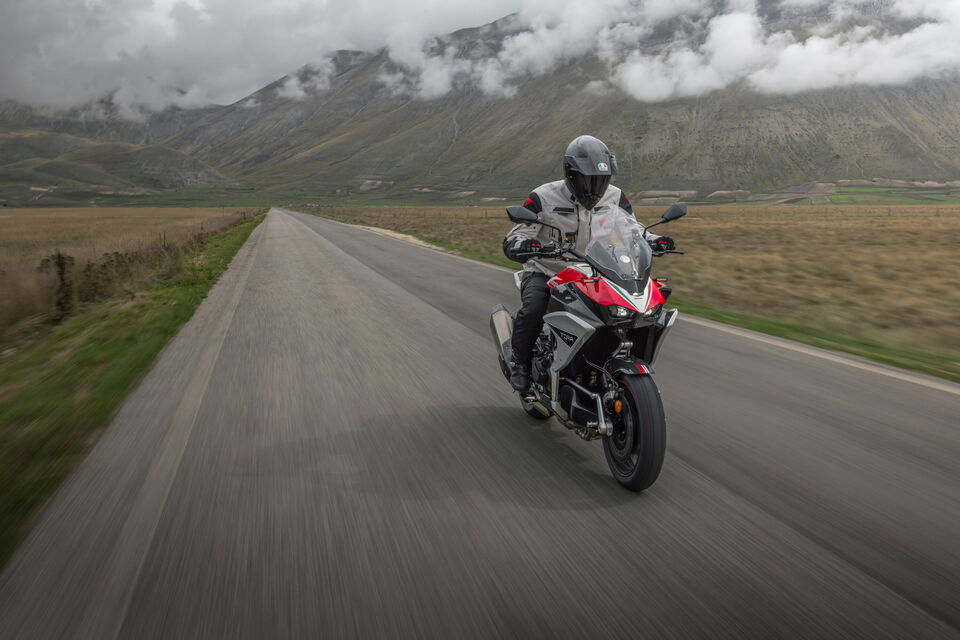
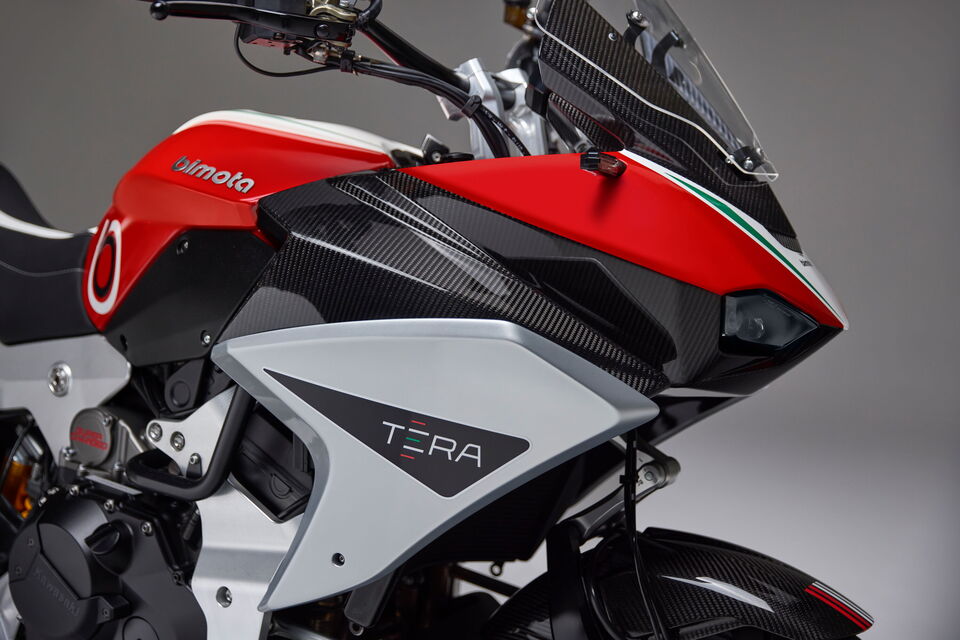
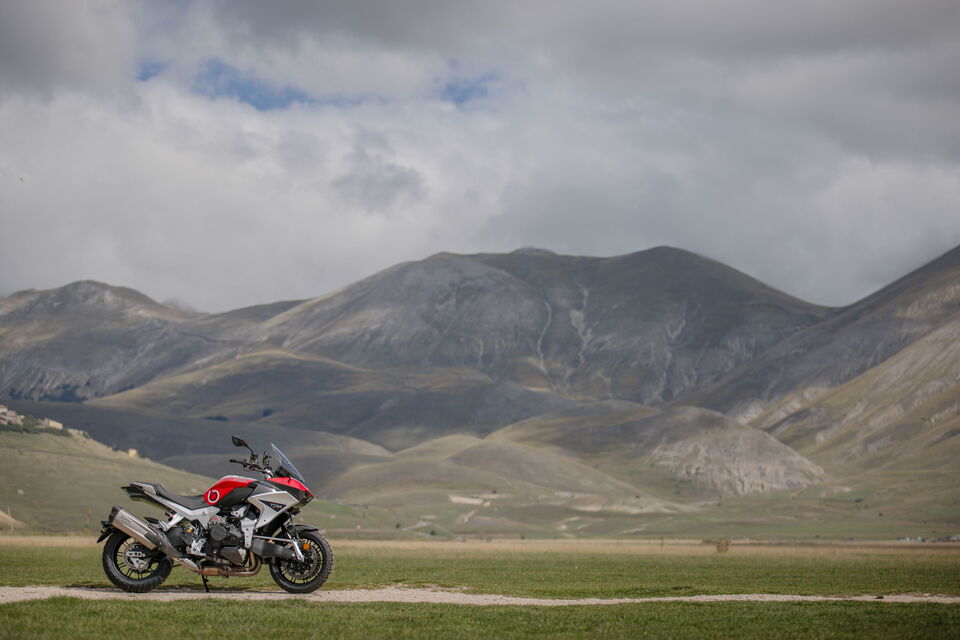
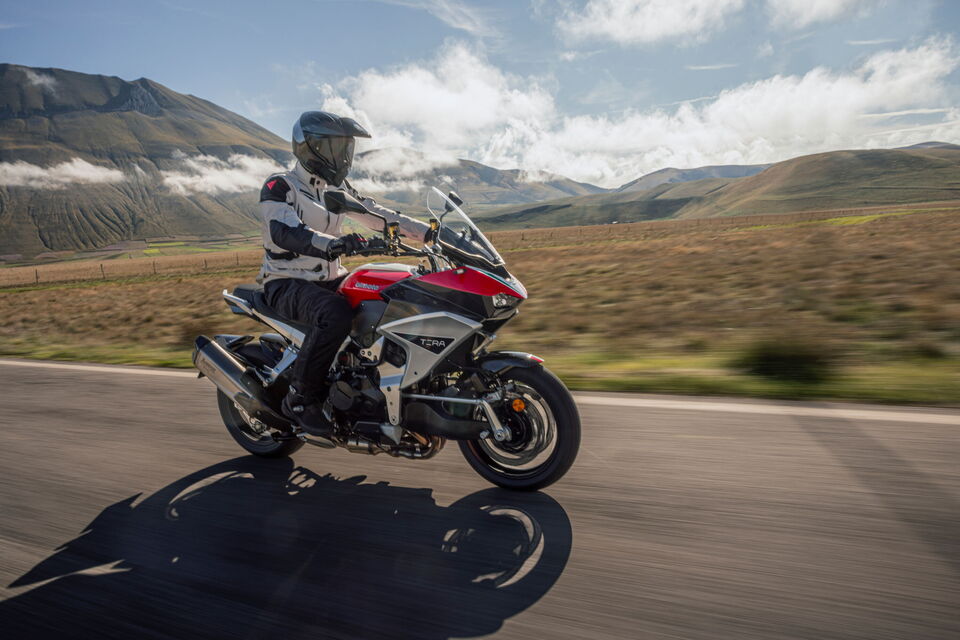
No other street motorcycle rides quite like the Bimota Tesi H2 Tera. Kawasaki supercharged inline-four, 200 hp, patented hub-center steering up front, Öhlins TTX36 front and rear, Brembo Stylema brakes—and €39,995. This is not a Superleggera clone. This is a design vision expressed in aluminum and carbon fiber.
As of: March 17, 2026 | Tested model: Bimota Tesi H2 Tera (2026) | Price: €39,995

Engine: 200 hp With a Supercharger—and Euro 5+
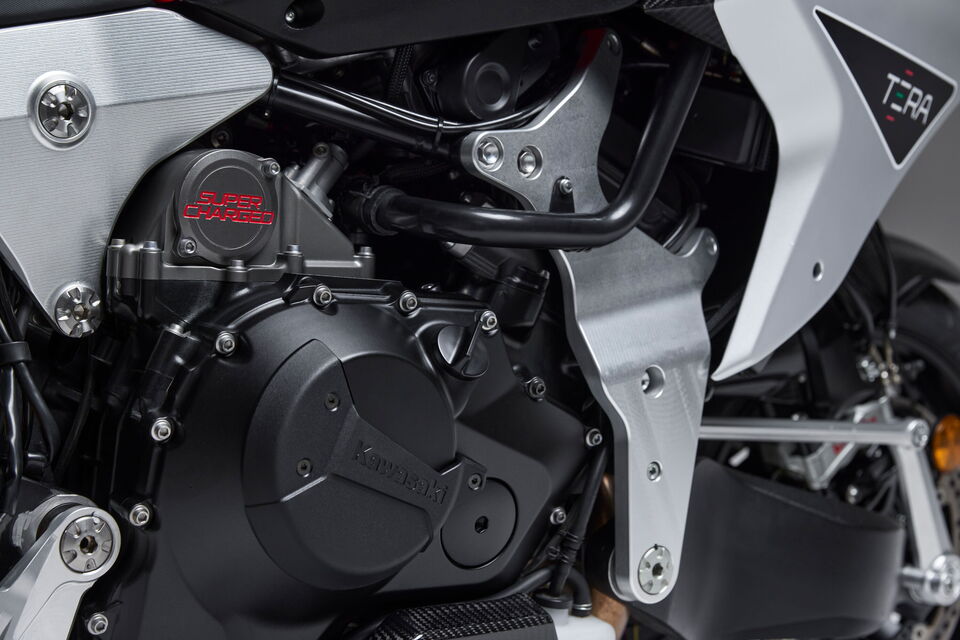
200 hp from 998 cc—this is Kawasaki’s supercharged inline-four, the same engine used in the production Kawasaki Ninja H2 SX. Bimota homologated it for Euro 5+ in the Tera and made some minor adjustments: 147.1 kW at 11,500 rpm and 137 Nm at 8,500 rpm.
That is 31 hp less than the non-catalyzed Tesi H2 with its 231 hp, but it is still 200 hp—and it comes with a supercharger. That means the engine pulls hard from way down low, with a broader and more everyday-friendly torque curve than a naturally aspirated high-performance engine. Then there is the distinctive, slightly mechanical sound of the supercharger—the Tera rider can actually hear the boost being made.
The 6-speed cassette transmission with dog-ring engagement is a design normally found in racing motorcycles. Dog-ring gearboxes shift faster and more directly than conventional designs because power is transmitted through positive-engagement dogs rather than friction. The standard quickshifter with blipper makes full use of that on the road.
The result is tangible: every gear change feels mechanically precise, accompanied by a short, crisp click—nothing soft, nothing vague.
The 22-liter fuel tank is unusually large for a sport motorcycle with this level of performance. With fuel consumption of around 6 liters per 100 km—the official figure according to the specifications—ranges of more than 350 km are realistic.
That makes the Tera more usable in everyday riding than you might expect. The engine is Euro 5+ certified, making the Tera suitable for use in noise-regulated areas as well.
Chassis: Patented Hub-Center Steering—This Is the Real Story
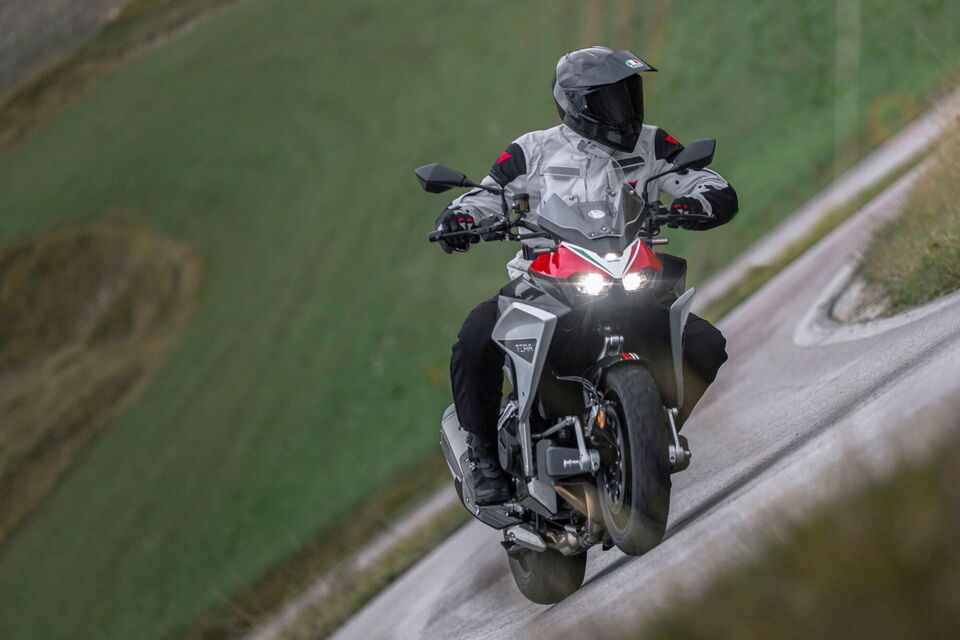
No conventional fork. No telescopic fork. No upside-down fork.
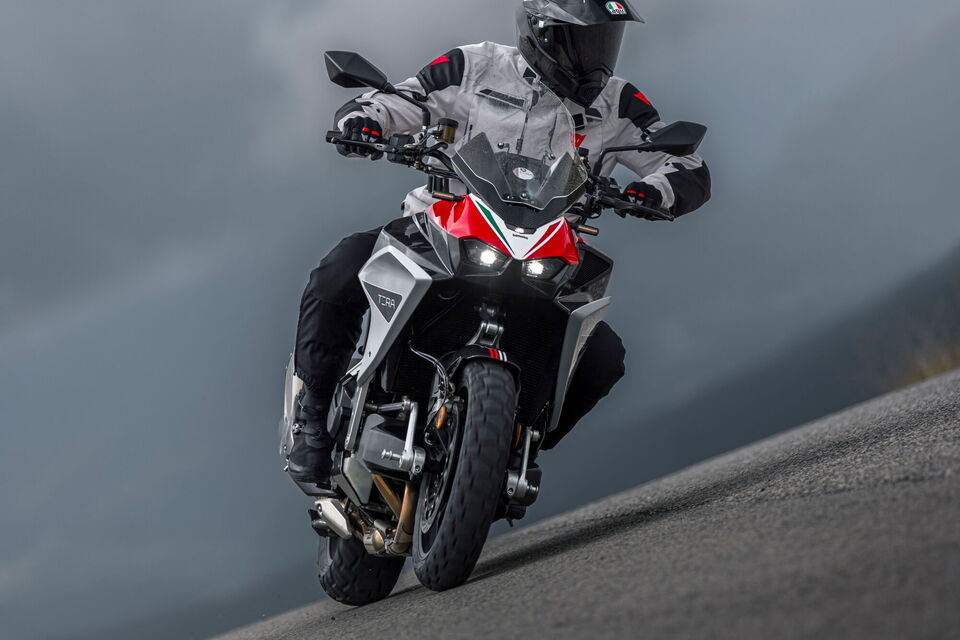
The Tesi H2 Tera steers through hub-center steering—the Tesi system Bimota has been developing since the 1980s and has newly patented for this generation.
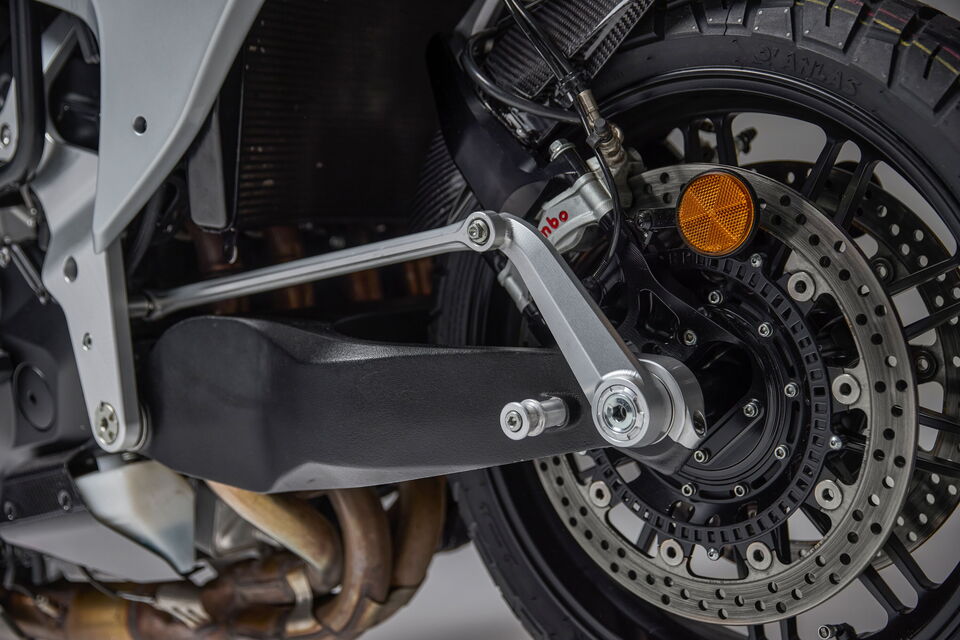
Here is how it works: steering input is not transmitted through a conventional fork, but through a push-rod linkage system that directly controls the steerable front-wheel hub. A swingarm handles suspension movement, while the steering system remains separate from the suspension action.
That has one direct consequence: under braking, the front wheel moves through its suspension travel without changing the steering-head angle. The motorcycle does not automatically become more agile under braking the way a conventional fork-equipped motorcycle does—it remains stable. Front-end dive under hard braking, so typical of conventional telescopic and USD forks, is minimized with the hub-center system. Almost the full suspension travel remains available.
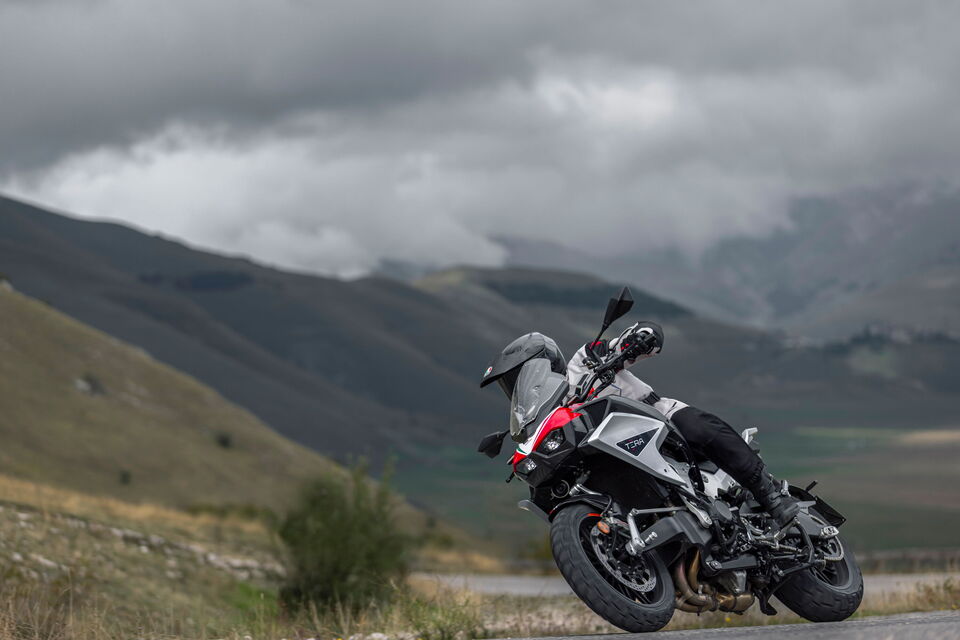
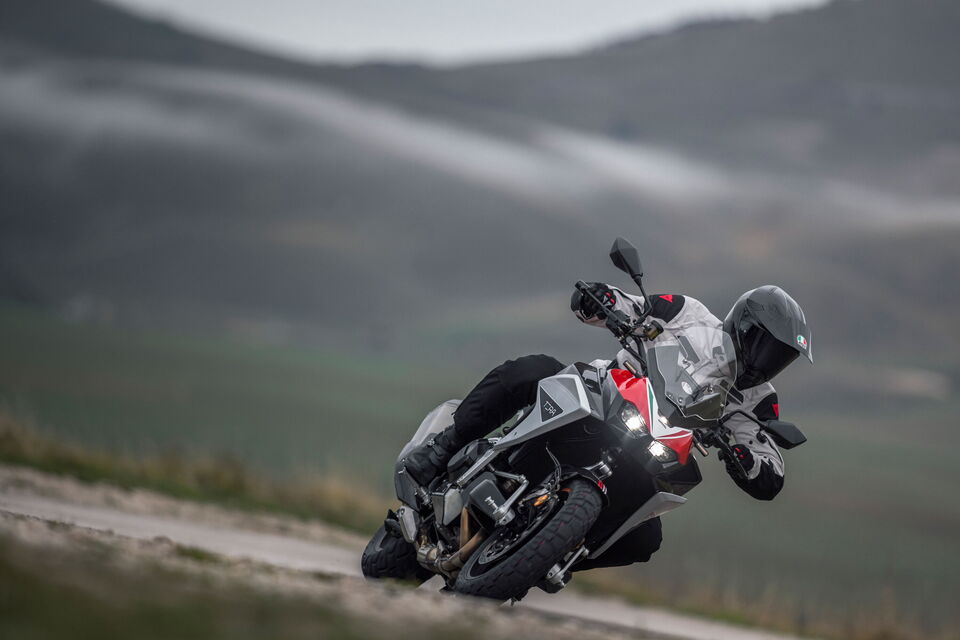
Those who have ridden the Tera tend to describe the experience in similar terms: the motorcycle turns in with minimal effort and then holds its line with remarkable confidence. Feedback is direct and precise, without the slight uncertainty a conventional telescopic fork can introduce when braking hard into a corner.
At the same time, the Tera does not feel as if it is riding on rails. Fine corrections are possible at any time, although changing your chosen line once the bike is committed requires slightly more effort than with a conventional chassis.
Öhlins TTX36 suspension units are used front and rear, fully adjustable for spring preload, rebound, and compression damping. Front travel is 114 mm, rear travel 145 mm.
According to Bimota, weight distribution is 52.5 percent front and 47.5 percent rear—more balanced than most street motorcycles, which typically sit around 50/50 or are slightly rear-biased. That contributes to the neutral handling.
The brakes—four-piston Brembo Stylema calipers gripping dual 330 mm front discs and a single 260 mm rear disc—represent the highest-spec street equipment Brembo offers. Bimota fits the Stylema calipers as standard, not as an upgrade. Cornering ABS is included, works with precision, and intervenes unobtrusively in everyday riding.
Ergonomics: Crossover—but With Conviction
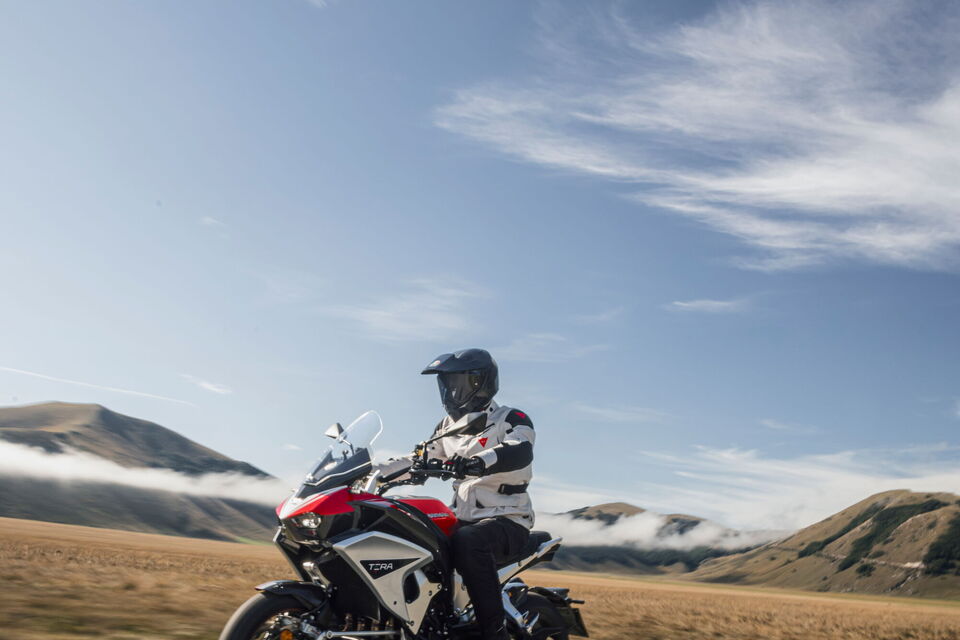
The Tera is designed as a crossover: somewhere between a sport-touring powerplant and an uncompromising superbike, between racetrack ambition and real-world street usability.
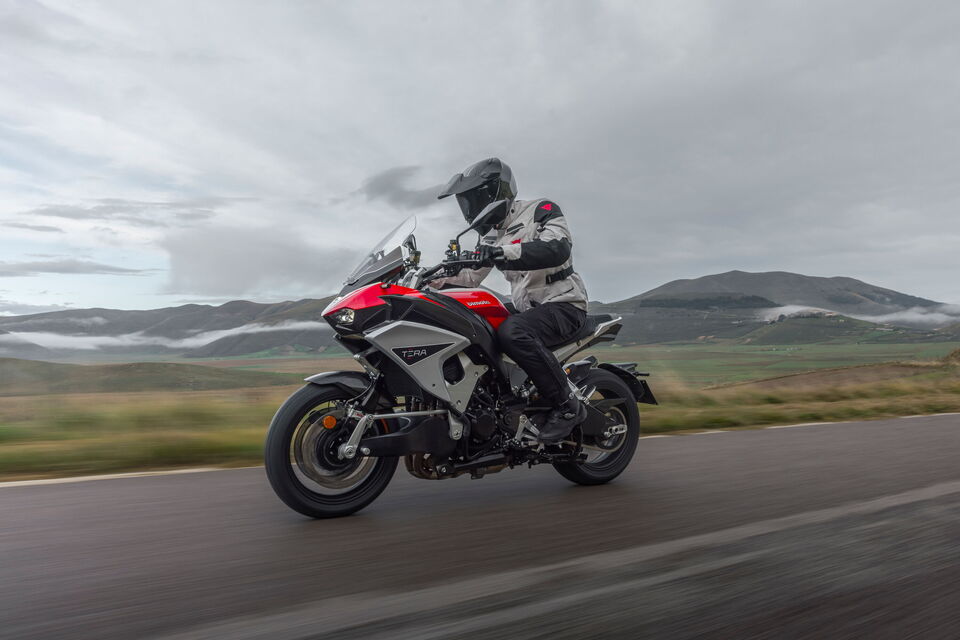
The 830 mm seat height is moderate for this performance class, making it relatively easy to get your feet on the ground. The riding position is sportier than on a BMW M 1000 XR or Ducati Multistrada RS, but less extreme than on a Panigale.
Spend an hour on the Tera and it feels remarkably comfortable without forcing your body into an unnatural position. Spend five hours on the highway and you will need to do some stretching.
The handlebar is neither excessively wide nor particularly high—a deliberately chosen middle ground. The footpegs are positioned sportily. Riders looking for more everyday comfort can turn to the accessory catalog.
The windscreen comes standard and provides noticeable protection at cruising speeds without completely isolating the rider from the airflow. On the highway, the Tera remains manageable at speeds of up to 200 km/h, with aerodynamics designed for sporty high-speed stability.
One unusual detail: 15 employees in Rimini hand-build the Tesi H2 Tera.
That means no two motorcycles are absolutely identical in assembly precision and finish—and that is not a flaw. It is part of the character of a hand-built motorcycle. Riders who understand and appreciate that pay for it. Those looking for perfect mass-production repeatability buy a BMW.
Handling: 214 kg—and Less Demanding Than Expected
214 kg ready to ride without fuel. Fill the 22-liter tank and you are looking at around 230 kg.
That is more than a Panigale V4 at 198 kg or a KTM Super Duke R at 214 kg, and roughly comparable to a BMW M 1000 XR at 223 kg.
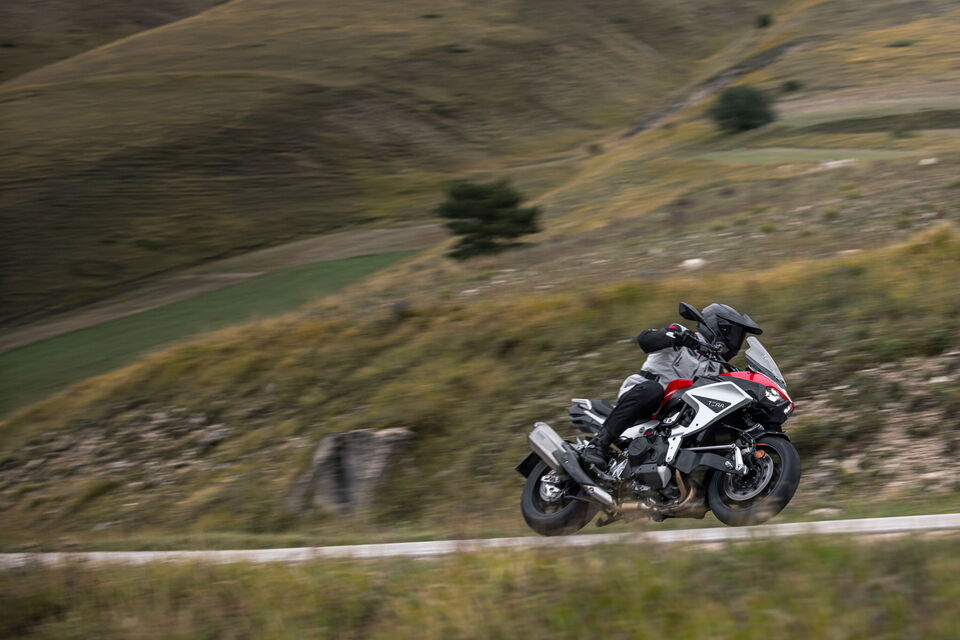
Once moving, however, the Tera feels lighter than the numbers suggest because its weight distribution and hub-center steering system give the rider more control than a conventional chassis at a similar weight. Maneuvering in a parking lot requires concentration. On the road, the weight seems to disappear.
The TFT display, based on Kawasaki electronics, is easy to read, shows all relevant information, and allows riding modes, traction control, and ABS settings to be adjusted while riding.
Cruise control comes standard—an unexpected feature on a 200 hp motorcycle, but one that proves genuinely useful on long trips. Bimota’s accessory catalog also offers luggage solutions for touring riders willing to make that particular compromise.
Equipment: No Boxes to Check, No Extra Charge—Everything Is Standard
Fully adjustable Öhlins TTX36 suspension front and rear, Brembo Stylema brakes with 330 mm front discs, cornering ABS, traction control, Slide Control, anti-wheelie, quickshifter with blipper, cruise control, LED headlight, windscreen, TFT display, dog-ring cassette transmission, Euro 5+—that is the standard equipment list.
There are no option packages. No expensive upgrades. No boxes you need to check in the configurator.
You buy the Tera and you get everything.
At this price, that is the minimum you should expect. Bimota delivers.
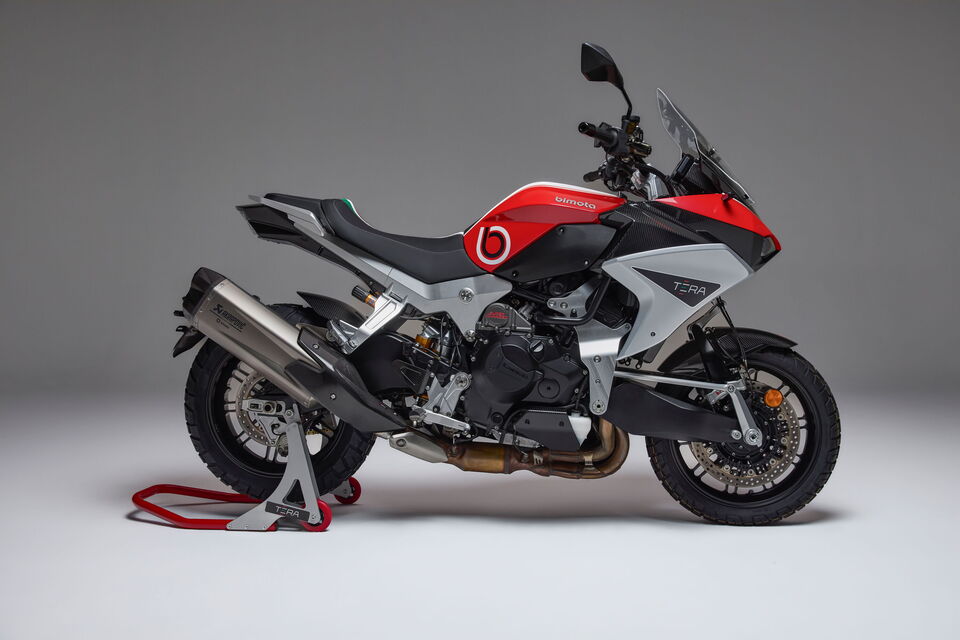
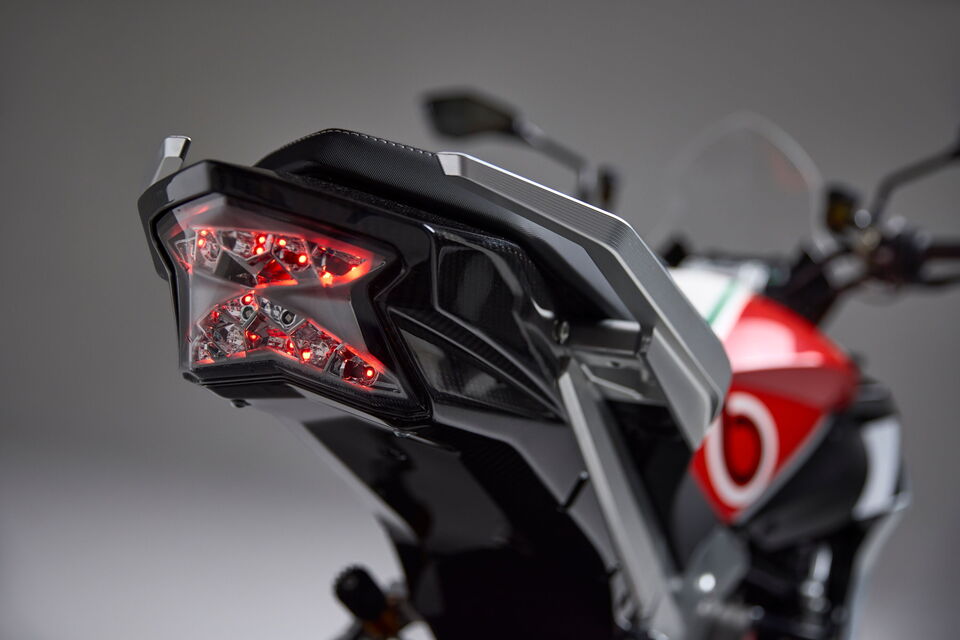
The entire chassis consists of machined aluminum plates and high-strength steel trellis-frame sections. Carbon fiber is used for all relevant bodywork components—no imitation material, no decals pretending to be carbon. OZ Racing wheels also come standard.
The engineering effort Bimota has invested in the chassis, hub-center steering, and material selection is the fundamental difference between the Tera and the Kawasaki H2 SX, which uses the same engine but wraps it in a conventional sport-touring concept.
Costs: €39,995—and a Clear Benchmark
€39,995 including VAT and destination according to the official Bimota Germany specification sheet.
For direct comparison, a Ducati Multistrada V4 RS costs around €38,000, a BMW M 1000 XR just over €26,000, and a Kawasaki H2 SX SE approximately €29,000.
The Tera is more expensive than all of them—and that is not a mistake in the calculation. It is the price of the Tesi chassis concept, hand-built production, and Bimota-specific chassis components.
Anyone comparing the Tera with an H2 SX simply because they share the same engine has missed the point. Compare it with the Multistrada RS because their ambitions are similar, and you are getting closer.
Running costs are manageable considering the purchase price. The Kawasaki engine means documented reliability and readily available replacement parts. Service intervals and workshop time correspond to Kawasaki standards.
Bimota-specific components—swingarm parts, hub-center steering components, chassis elements—rarely become routine service items, but if something fails, pricing and availability need to be checked individually.
Warranty: two years.
Verdict
The Bimota Tesi H2 Tera is the only motorcycle built around this combination: supercharged inline-four, hub-center steering, hand-built production, Euro 5+.
Once you have experienced the Tesi system—the neutral turn-in, the stability under braking without front-end dive, the direct feedback—you begin to understand why some riders believe the conventional telescopic fork is itself a compromise.
Whether that is worth €40,000 is something every buyer has to decide individually.
Objectively, there is no comparable motorcycle.
Quick Check
+ hub-center steering—no other street motorcycle rides like this
+ 200 hp supercharged inline-four, Euro 5+, broad torque curve
+ Fully adjustable Öhlins TTX36 front and rear—benchmark-level suspension
+ Brembo Stylema with 330 mm front discs—production-ready racetrack hardware
+ Dog-ring cassette transmission as standard
+ Cruise control, cornering ABS, Slide Control, quickshifter—all included
+ 52.5/47.5 weight distribution—more balanced than most supersport motorcycles
+ Hand-built in Rimini by 15 employees
– 214 kg ready to ride without fuel—around 230 kg with a full tank
– €39,995—not an entry-level price
– Limited hand-built production availability—expect delivery times
– Limited Bimota dealer network—check service distances
– Availability and pricing of Bimota-specific replacement parts must be checked individually
– No luggage system as standard
Technical Specifications: Bimota Tesi H2 Tera (2026)
Country of manufacture: Italy (Rimini), hand-built production
Engine: Liquid-cooled supercharged inline-four, DOHC, 4 valves per cylinder, ride-by-wire, Euro 5+ (Kawasaki)
Displacement: 998 cc
Power: 147.1 kW (200 hp) at 11,500 rpm
Torque: 137 Nm at 8,500 rpm
Transmission: 6-speed cassette transmission with dog-ring engagement, quickshifter with blipper standard
Final drive: Chain
Frame: Front steel trellis frame with machined aluminum plates, machined aluminum plates at the rear; Bimota proprietary design
Front suspension / steering: Patented Bimota Tesi hub-center steering: push-rod system separates steering and suspension functions; fully adjustable Öhlins TTX36
Front suspension travel: 114 mm
Rear suspension: Öhlins TTX36, fully adjustable for spring preload, rebound, and compression damping
Rear suspension travel: 145 mm
Front brakes: Dual 330 mm discs, radial-mount Brembo Stylema four-piston calipers
Rear brake: 260 mm disc, two-piston caliper
Front tire: 120/70 ZR17
Rear tire: 190/55 ZR17
Rider aids: Cornering ABS, traction control, Slide Control, anti-wheelie, quickshifter/blipper, cruise control, riding modes (Kawasaki electronics package)
Weight distribution: 52.5% front / 47.5% rear
Ready-to-ride weight: 214 kg (including operating fluids, without fuel)
Seat height: 830 mm
Wheelbase: 1,445 mm
Fuel capacity: 22 liters
Price (Germany): €39,995 plus additional charges
Warranty: 2 years