Review Bimota KB4 RC (2026)

142 hp, 100 Units—and the Shortest Wheelbase in Its Class
Kawasaki engine, Bimota chassis, Öhlins suspension, Arrow exhaust, OZ Racing wheels, carbon-fiber components—and just 100 individually numbered examples worldwide. The KB4 RC is one of the most extravagant motorcycles you can buy with a street license. A test of a truly exceptional machine.
As of: March 17, 2026 | Tested model: Bimota KB4 RC (2026) | Price: on request (reference: approx. €42,000)

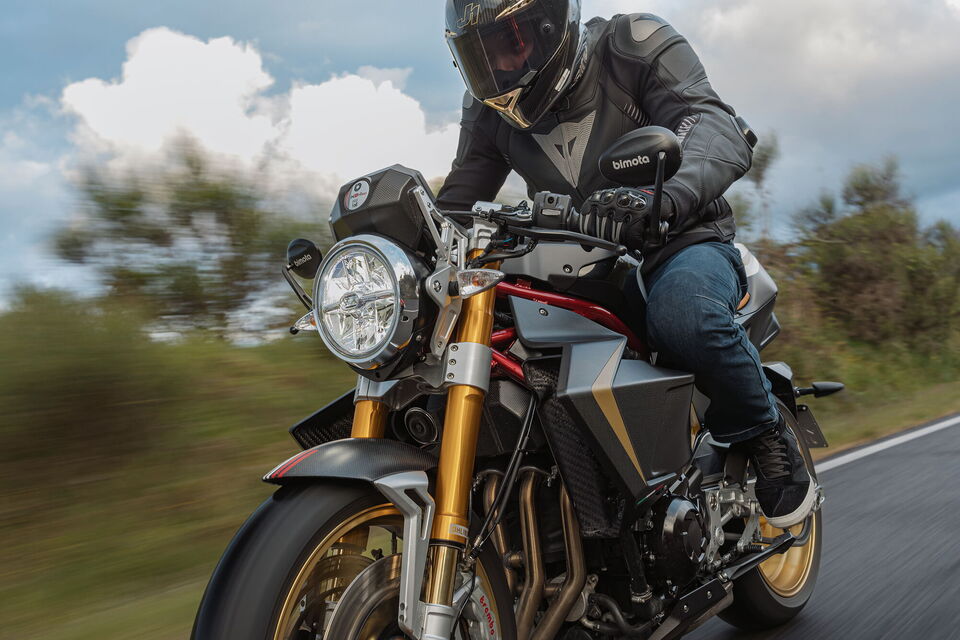
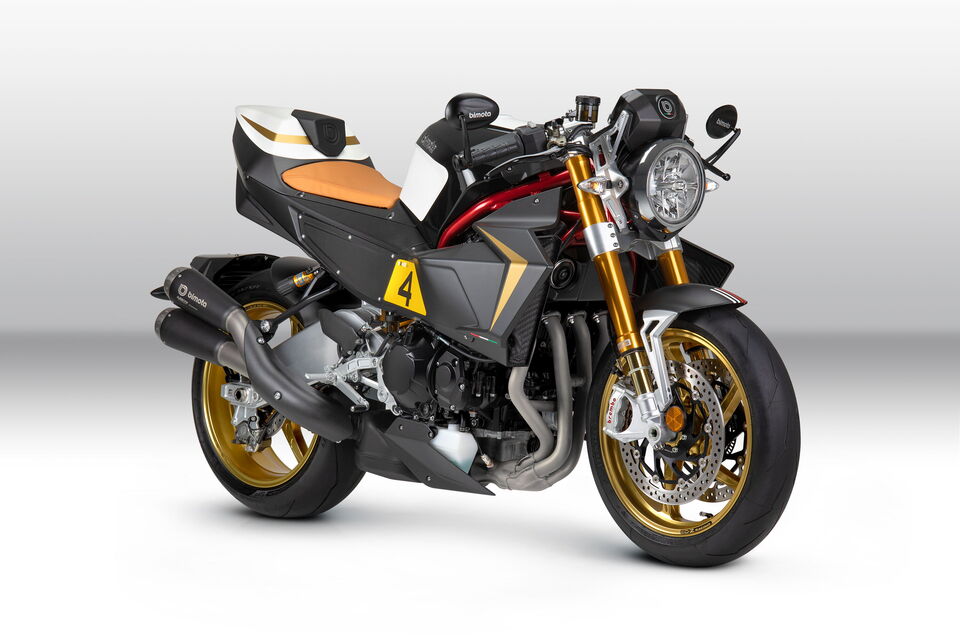
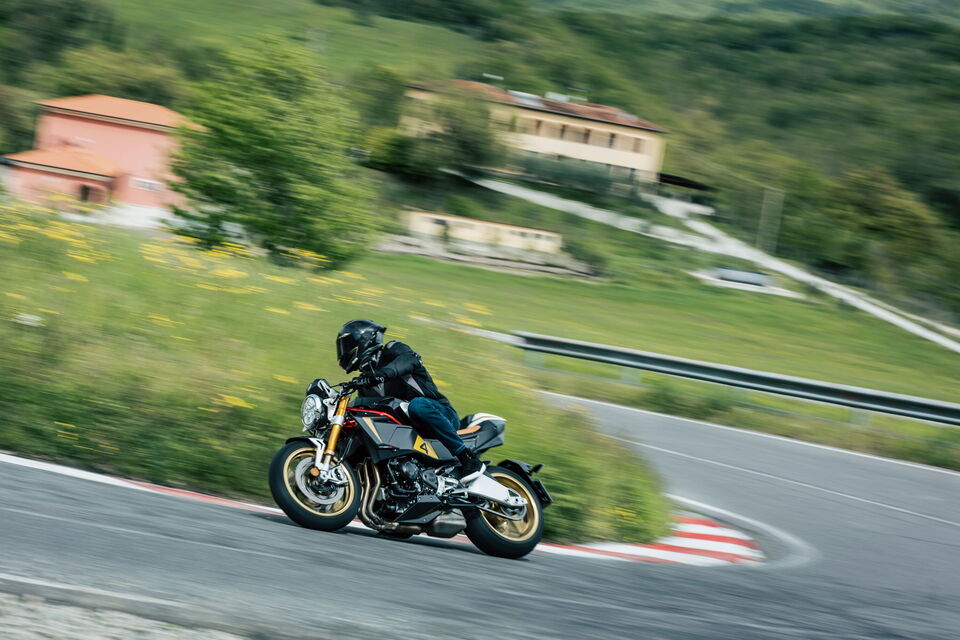

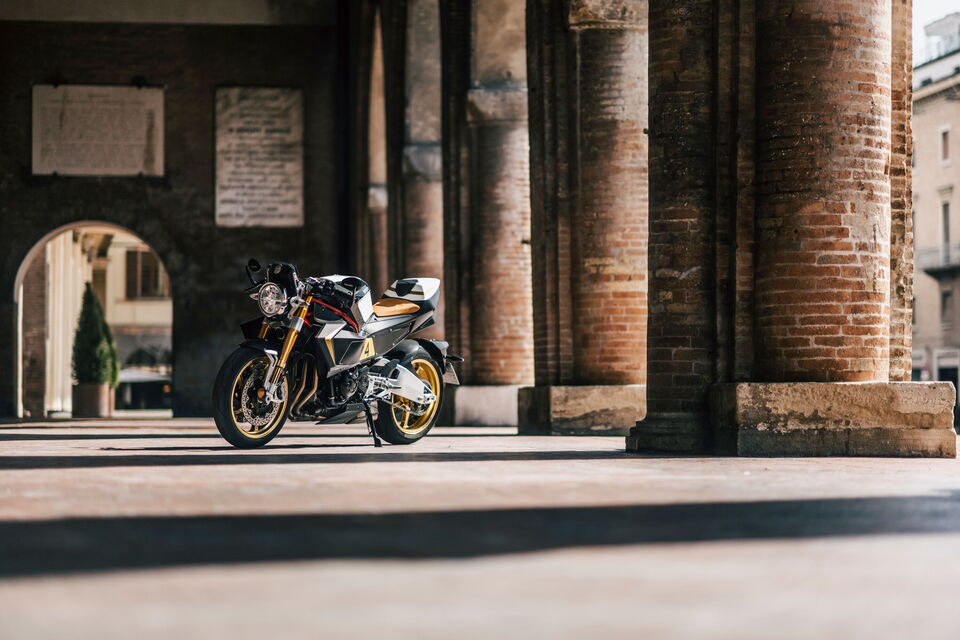
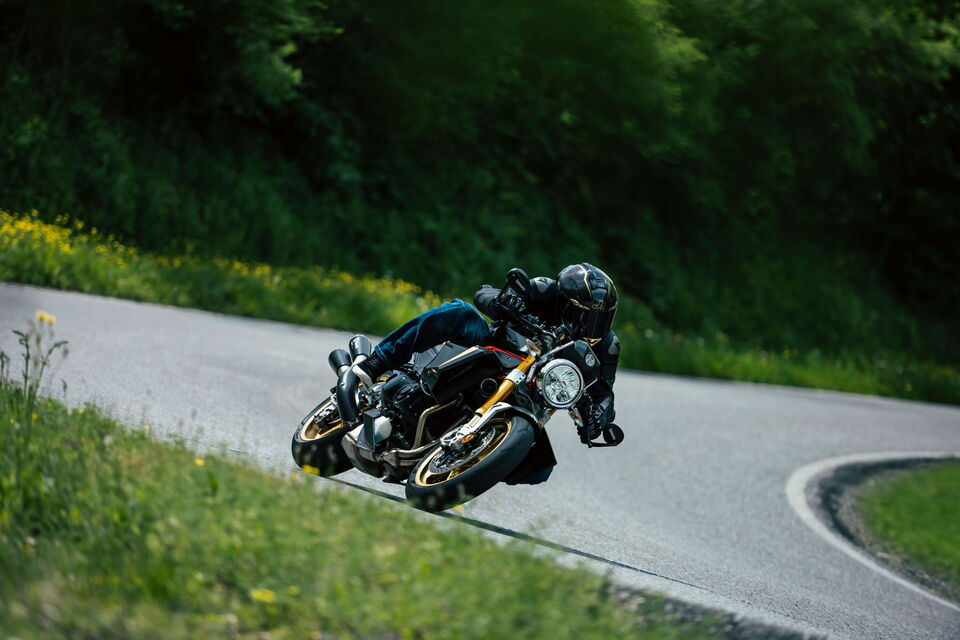
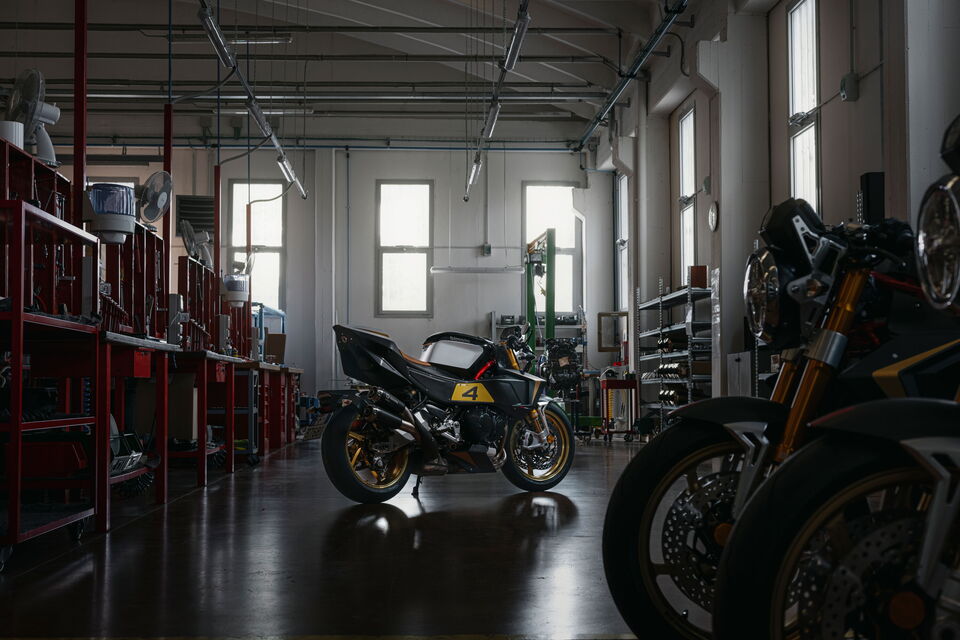
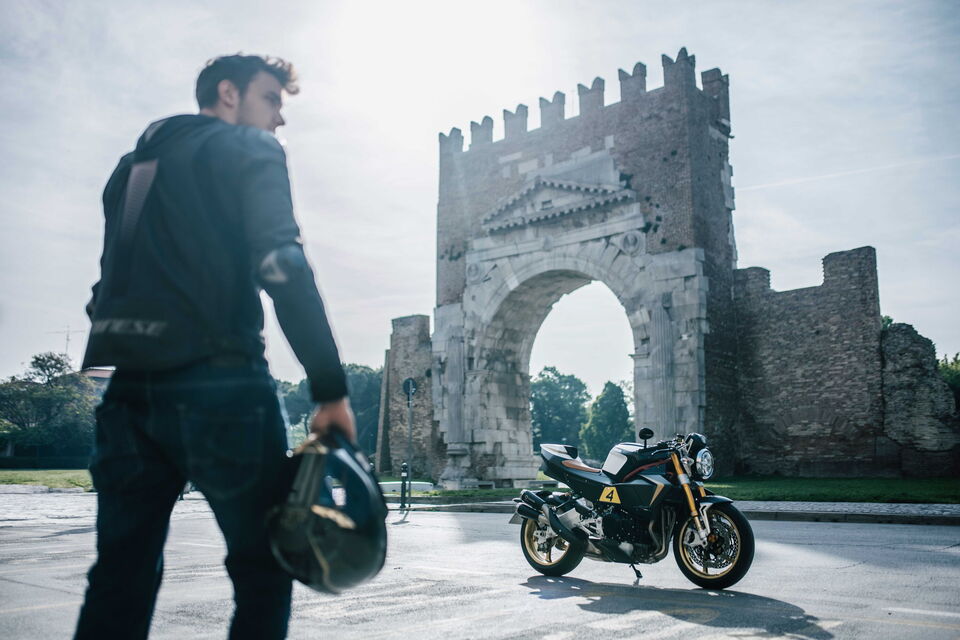
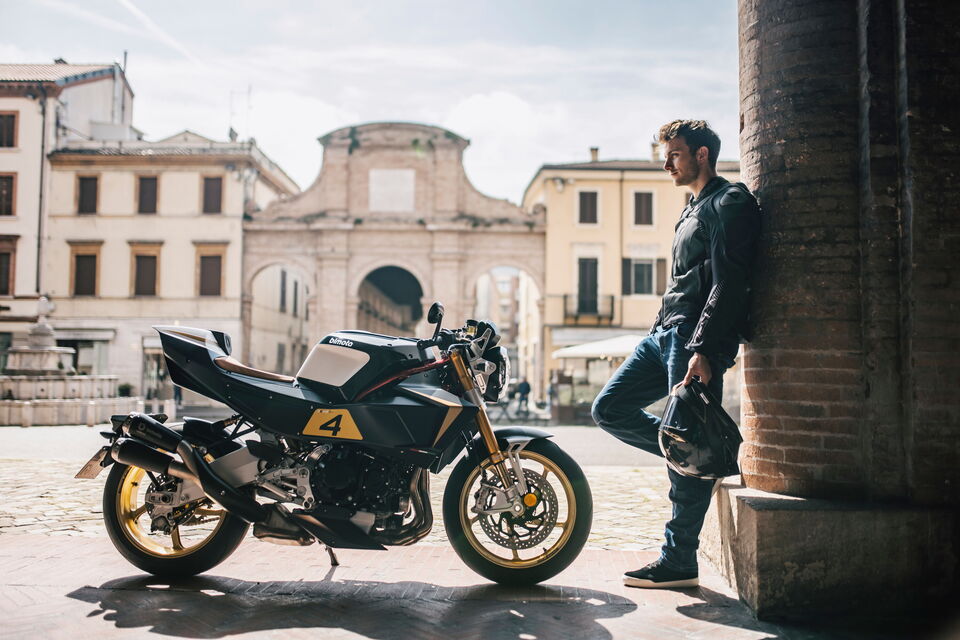



Engine: Kawasaki Reliability, Bimota Character
142 hp from 1,043 cc—this is the inline-four from the Kawasaki Ninja 1000 SX, and nobody should mistake that for a compromise. This engine has proven itself over decades as one of the most reliable four-cylinders in the segment, with hundreds of thousands of units running in the Z1000 and Z1000 SX. Kawasaki provides the foundation; Bimota builds something new upon it. The identical powerplant feels fundamentally different in the KB4 RC than it does in the Ninja because weight, wheelbase, and chassis geometry change everything.
111 Nm at 8,000 rpm is a strong figure, and you feel it immediately in the real world. The four-cylinder pulls hard from low rpm, spins up effortlessly, and always gives the rider the sense that there is plenty in reserve. For a motorcycle weighing 194 kg, the power-to-weight ratio is outstanding—more compact than a Kawasaki Z900, yet with performance approaching a Ninja 1000. Bimota has retained the original engine mapping. Riders who want something sharper can turn to the aftermarket.
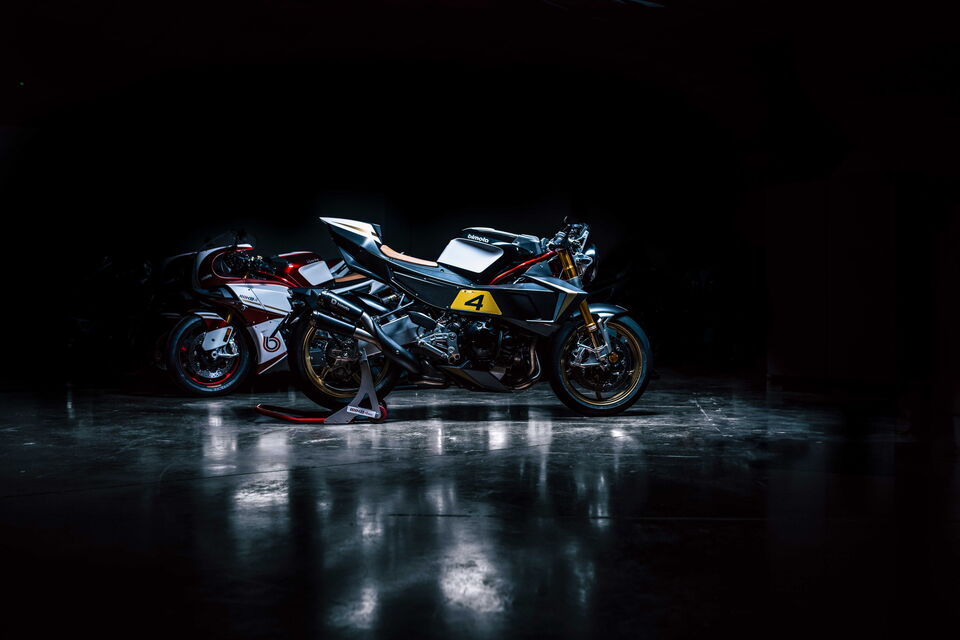
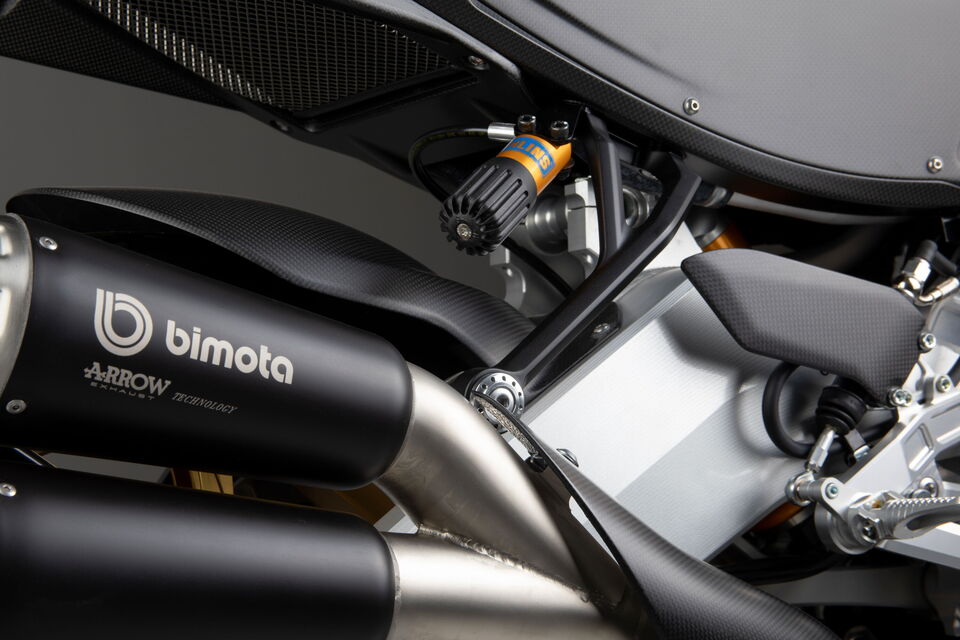
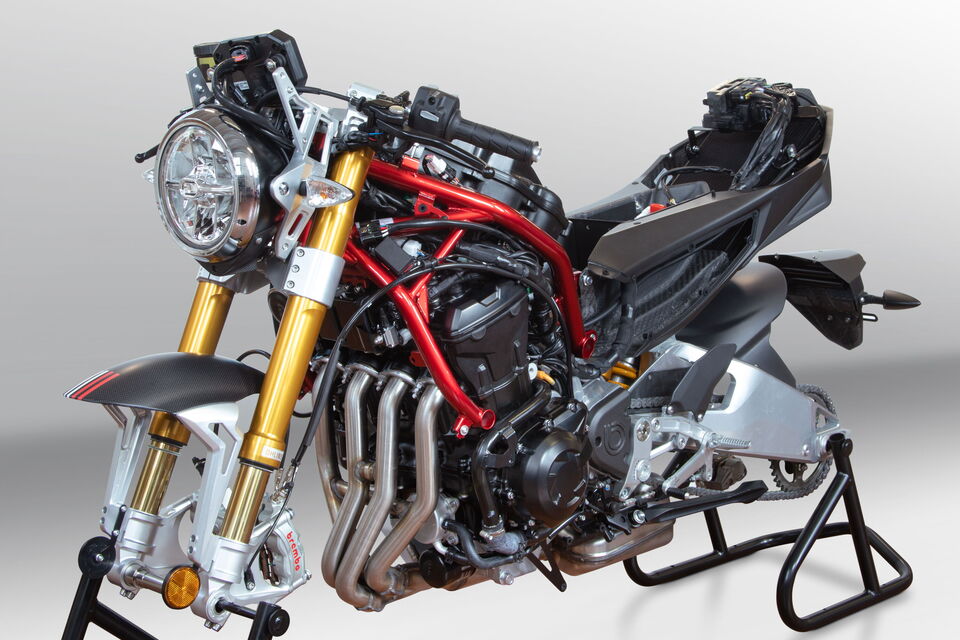
The black-coated Arrow 4-into-2 exhaust system is a visual statement: four header pipes remain fully visible because the radiator—the most ingenious design decision in the KB4 family—is hidden beneath the tail section. That turns the engine into a sculpture rather than a powerplant concealed behind hardware. Through this exhaust, the RC sounds deep and present, yet remains perfectly manageable on public roads. Not an obnoxious bark, but a sophisticated statement.
A quickshifter comes standard, and the 6-speed transmission shifts precisely. Clutch operation is manageable rather than heavy. The entire electronics package comes from Kawasaki: ABS, traction control, riding modes, shift assist—everything is there, everything is proven. This is actually a strength of the package: you are not buying proprietary electronics with unknown long-term reliability, but proven Kawasaki software inside an extravagant chassis.
Chassis: 1,390 mm Wheelbase—and You Feel Every Millimeter
A 1,390 mm wheelbase—that is the defining number of the KB4 RC.
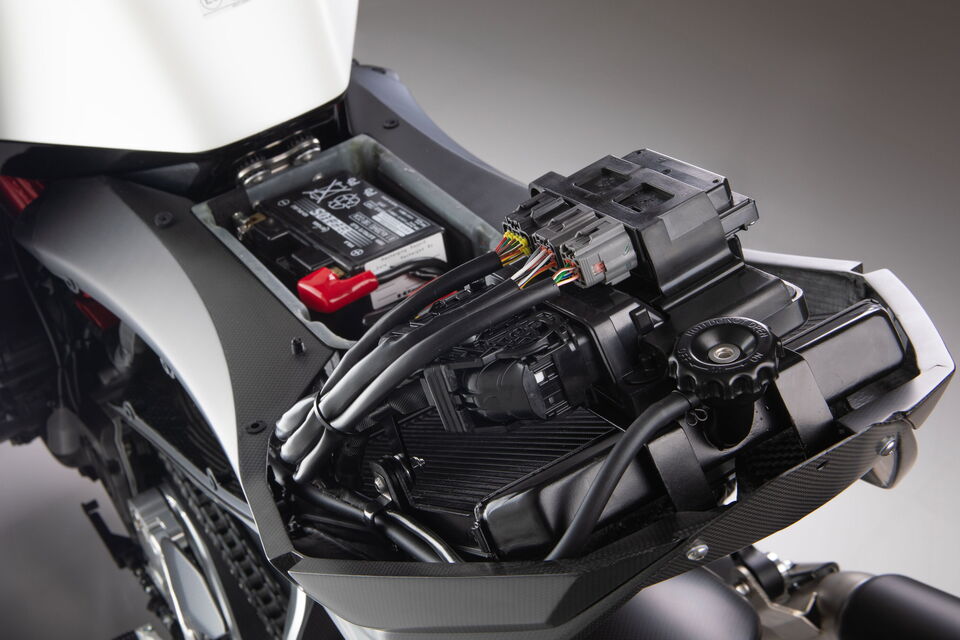
For comparison, the Kawasaki Ninja 1000 SX has a 1,440 mm wheelbase, while a Ducati Panigale V4 measures around 1,469 mm. The KB4 RC is shorter than both, and that is precisely why Bimota moved the radiator beneath the seat: it is the only way to achieve this extreme wheelbase while maintaining reasonable service access.
The effect on the riding experience is immediate and dramatic.
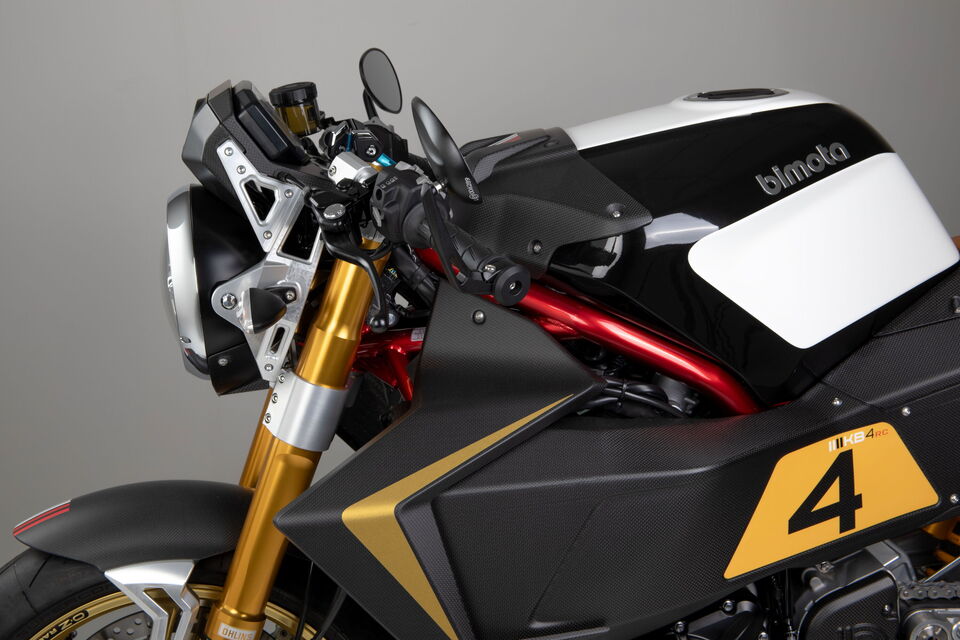
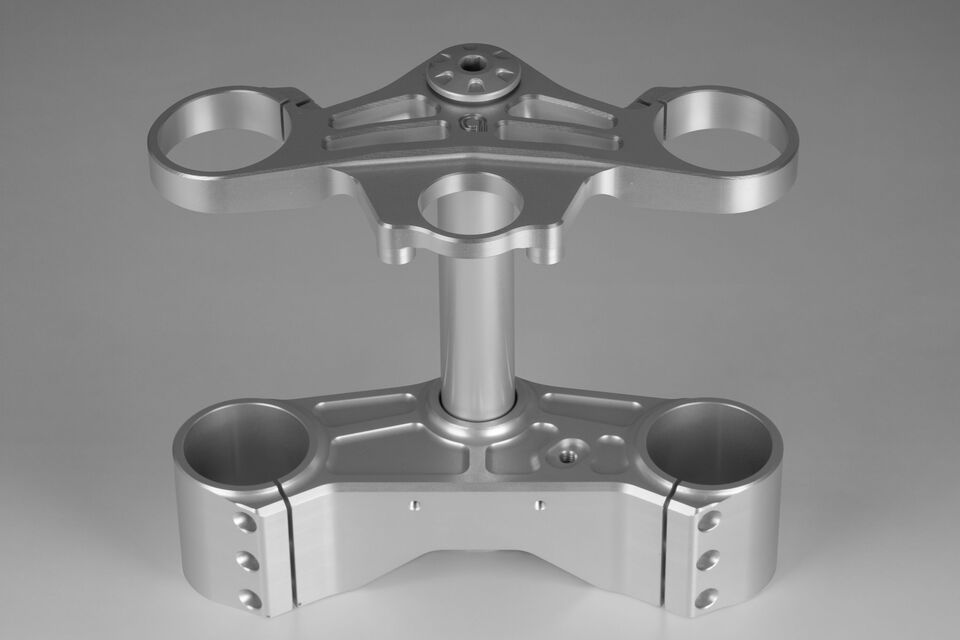
The chassis is pure Bimota: a front trellis section made from high-strength steel combined with machined aluminum plates at the rear—a design that is lightweight, rigid, and visually spectacular. The aluminum swingarm incorporates an eccentric ride-height adjuster, allowing the chassis dynamics to be fine-tuned to the rider. That is not the kind of detail you find on ordinary motorcycles.
The suspension comes entirely from Öhlins. Up front is an FG R&T 43 NIX30 USD fork with 130 mm of travel, fully adjustable for spring preload, rebound, and compression damping. At the rear is a TTX36 shock with 122 mm of travel, also fully adjustable.
This is not mid-range Öhlins hardware. These are the kind of components found on superbike race machines. On the road, that means maximum feedback, maximum adjustability, and a standard setup already extremely well calibrated for sporty riders on good pavement.
The brakes—radial-mount Brembos, dual 320 mm front discs, and a 220 mm rear disc—are exactly what you would expect at this price level, and they are a pleasure to use. Lever feel is crystal clear, stopping power massive, and modulation surgical.
OZ Racing Superleggera wheels are lighter than conventional cast wheels and reduce unsprung mass, further improving suspension response. Pirelli Diablo Supercorsa SP tires come fitted from the factory: no compromises on rubber.
Ergonomics: Clip-Ons, 810 mm Seat Height—and Surprising Comfort
Clip-on handlebars are the KB4 RC’s visual calling card. They say café racer, racetrack, forward.
Anyone seeing the bike for the first time and then riding it may be surprised. The riding position is sportier than on a naked bike with a high handlebar, but considerably less extreme than on a full-on superbike.
The 810 mm seat height is moderate, the load on the wrists is reasonable, and the knee angle is relaxed enough for an hour on backroads without your back starting to complain.
The machined, adjustable footpegs allow fine-tuning of the riding position. Long legs or short legs—you adjust accordingly. This is not an accessory. It comes standard.
The KB4 RC is a single-seater. Passenger accommodation is not part of the design. If you want to ride two-up, look for another motorcycle. If you understand that, you are buying exactly the right machine for yourself.
For long-distance touring, the RC is certainly no touring motorcycle: no real wind protection, no luggage system, no cruise control. But a motorcycle limited to 100 units is rarely purchased for a pilgrimage to Santiago de Compostela.
This is a motorcycle for deliberate rides on good roads—for those moments when riding itself is the only purpose.
Handling: 194 kg Feels Like 170
194 kg fully fueled—that is the KB4 RC’s ready-to-ride weight according to the official specifications. Dry weight is 177 kg.
For comparison, the Kawasaki Ninja 1000 SX that provides the engine weighs 235 kg fully fueled. Through its chassis, lightweight rear subframe, and premium components, Bimota has removed 41 kg.
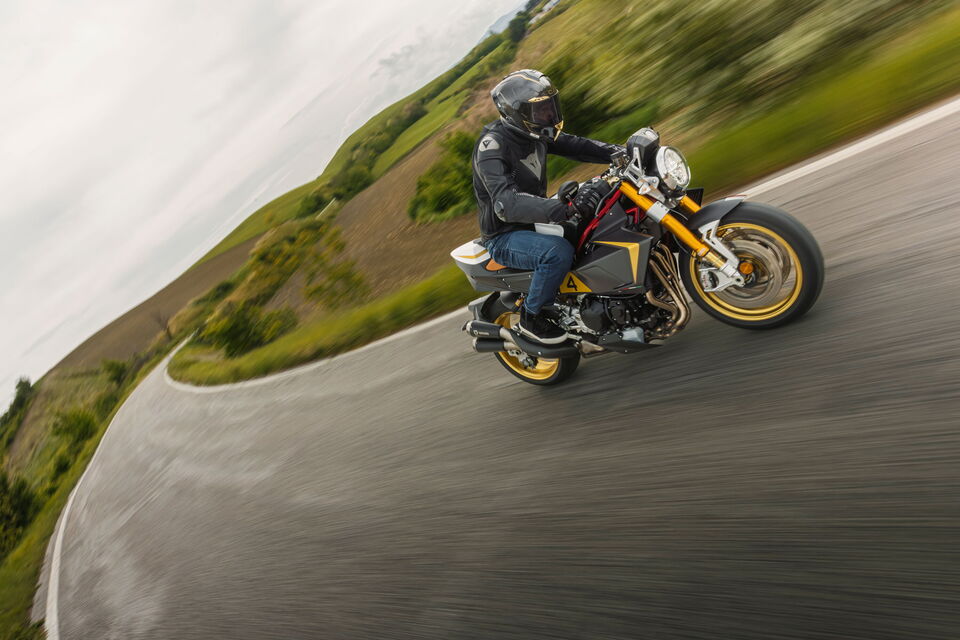
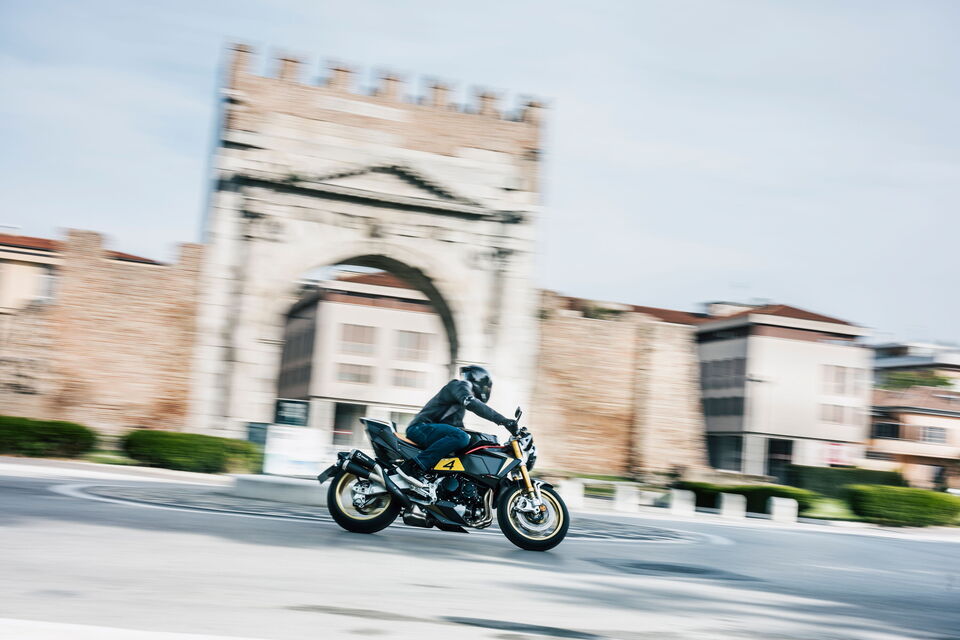
On the road, the difference is not merely measurable, it is dramatic. The KB4 RC responds to steering inputs with a lightness you simply do not expect from a liter-class inline-four.
The TFT display from the Kawasaki electronics package is easy to read and presents all relevant information. Operation through the familiar Kawasaki handlebar switches is intuitive.
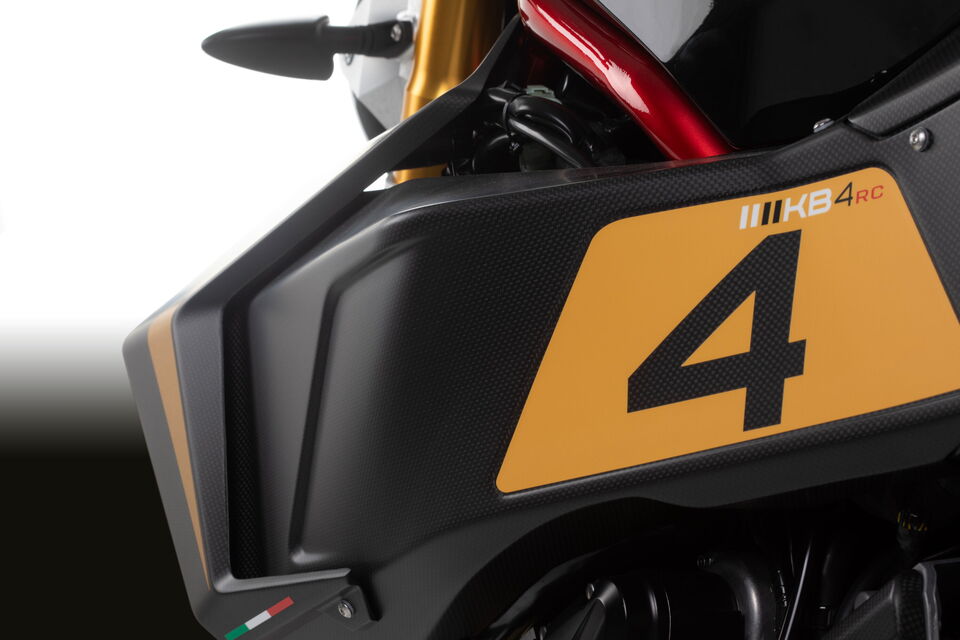
The 19.5-liter fuel tank provides around 300 km of range with a moderate riding style—more than enough for a full day of sport riding without range anxiety. Carbon-fiber components on the bodywork, fenders, and license-plate holder are installed at the factory, not added afterward.
One note for potential buyers: servicing is handled through selected Kawasaki dealers that are also Bimota distribution partners. The service network is limited, so anyone living outside major cities should plan accordingly.
Replacement parts for the Kawasaki components are readily available. Bimota-specific parts such as chassis components or the swingarm are subject to different availability.
Equipment: 100 Numbered Plaques—That Tells You Almost Everything
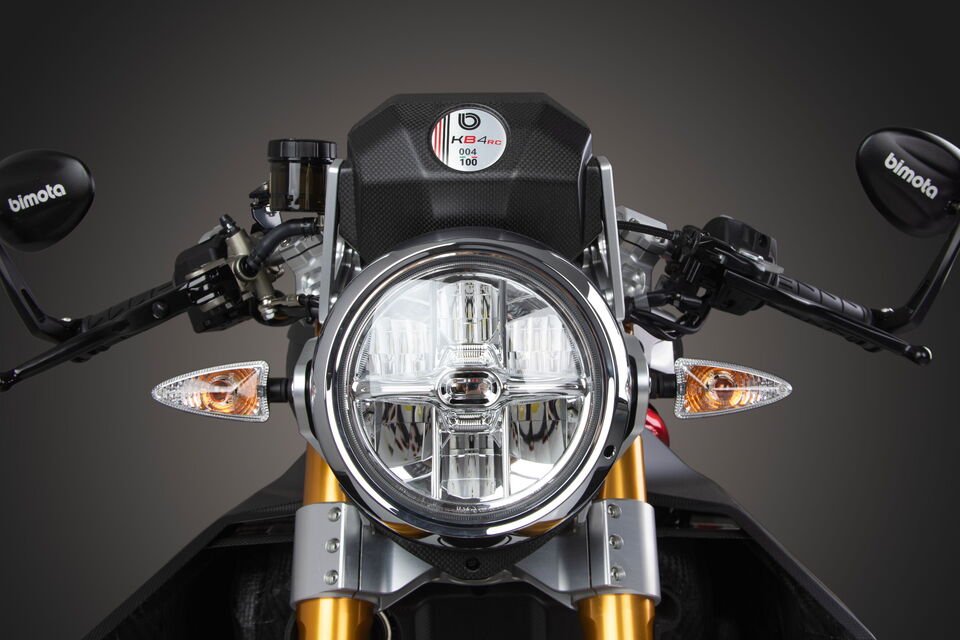
Every one of the 100 KB4 RCs carries an individually numbered plaque, providing a physical document of the motorcycle’s rarity.
Fully adjustable Öhlins suspension front and rear, OZ Racing Superleggera wheels, radial-mount Brembo brakes, Arrow 4-into-2 titanium exhaust system, Pirelli Diablo Supercorsa SP tires, quickshifter, carbon-fiber components, machined adjustable footpegs, aluminum swingarm with eccentric adjuster—that is the standard equipment list.
Kawasaki electronics add ABS, traction control, riding modes, shift assist, and TFT display. Cornering ABS is included.
What is missing—and what purists will not consider a flaw—is cruise control, a luggage system, and a passenger seat.
The KB4 RC is an uncompromising single-seat motorcycle with no concessions toward comfort or everyday practicality.
Costs: Price on Request—but We Know the Ballpark
The German importer does not publicly communicate an official list price for the KB4 RC. The old principle applies: if you have to ask what it costs, you may not be the target customer.
For reference, the fully faired standard KB4 costs €35,700 in Germany including VAT and destination according to the official specification sheet as of June 2025. Austrian dealers list the 2025 KB4 RC at around €42,000.
For direct comparison, a Ducati Panigale V4 starts at around €28,000 but does not offer a limited-production collector’s motorcycle with a hand-built chassis.
Running costs remain manageable as long as you focus on the Kawasaki engine. Service intervals and replacement-part costs correspond to Kawasaki standards for the Ninja 1000 engine.
Bimota-specific components are more expensive to deal with and need to be priced individually. Anyone buying a KB4 RC is not buying everyday transportation and will budget accordingly: this is a street-legal collector’s piece.
Historically, the value development of limited-production Bimota models suggests stable to rising values.
Warranty: two years. That corresponds to Kawasaki standards for the engine components; warranty terms for Bimota-specific components should be confirmed with the dealer.
Verdict
The Bimota KB4 RC is not a motorcycle that can really be compared with other motorcycles.
It is one unique machine within a 100-unit production run: a hand-built Bimota chassis, proven Kawasaki power, Öhlins suspension, Arrow exhaust, OZ wheels—all wrapped around a motorcycle with a 1,390 mm wheelbase and a 194 kg wet weight.
If you get the chance to ride one, you will not forget any of it.
If you want to buy one, pick up the phone and give them your number.
There are still a few left.
Quick Check
+ 1,390 mm wheelbase—the most agile liter-class inline-four on the market
+ Öhlins FG R&T 43 NIX30 / TTX36—race-spec suspension as standard
+ 194 kg fully fueled—41 kg lighter than the Kawasaki donor bike
+ Arrow 4-into-2 exhaust, OZ Racing wheels, radial Brembos, Pirelli Supercorsa tires—all standard
+ Proven Kawasaki engine: 142 hp, documented long-term reliability
+ 100 individually numbered examples—genuine collector value
+ Complete Kawasaki electronics package including ABS and traction control
– Price on request—reference figure approx. €42,000
– No passenger seat, no luggage system, no cruise control
– Limited Bimota dealer network—plan service trips accordingly
– Sporty riding position due to clip-ons—demanding on long rides
– No transparency on destination charges—pricing determined individually
Technical Specifications: Bimota KB4 RC (2026)
Country of manufacture: Italy (Rimini)
Engine: Liquid-cooled inline-four, DOHC, 4 valves per cylinder, ride-by-wire, Euro 5 (Kawasaki Ninja 1000 SX)
Displacement: 1,043 cc
Power: 104.5 kW (142 hp) at 10,000 rpm
Torque: 111 Nm at 8,000 rpm
Transmission: 6-speed, quickshifter standard
Final drive: Chain
Frame: High-strength steel trellis structure at the front, machined aluminum plates at the rear; Bimota proprietary design
Swingarm: Aluminum, with integrated eccentric ride-height adjustment
Front suspension: Öhlins FG R&T 43 NIX30 USD, fully adjustable (spring preload, rebound and compression damping), 130 mm travel
Rear suspension: Öhlins TTX36, fully adjustable, 122 mm travel
Front brakes: Dual 320 mm discs, radial-mount Brembo four-piston calipers
Rear brake: 220 mm disc, Brembo single-piston caliper
Wheels: OZ Racing Superleggera lightweight forged-alloy wheels
Front tire: 120/70 ZR17 (Pirelli Diablo Supercorsa SP)
Rear tire: 190/50 ZR17 (Pirelli Diablo Supercorsa SP)
Exhaust: Arrow 4-into-2, black-coated
Rider aids: ABS (cornering ABS), traction control, riding modes, shift assist (Kawasaki electronics package)
Wheelbase: 1,390 mm
Seat height: 810 mm (± 8 mm)
Wet weight: 194 kg (according to specification sheet; dry weight 177 kg)
Fuel capacity: 19.5 liters
Production limit: 100 units worldwide, individually numbered plaque
Price (Germany): on request (reference figure approx. €42,000)
Warranty: 2 years (Kawasaki engine components)