Review BMW M 1000 RR (2026)

The Superbike for Riders Who Only Care About First Place
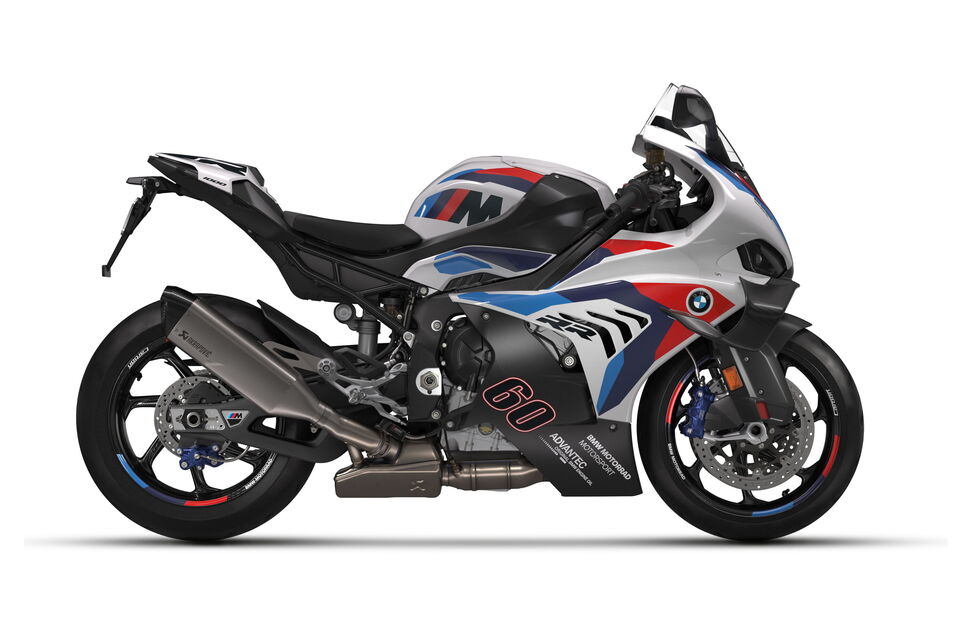
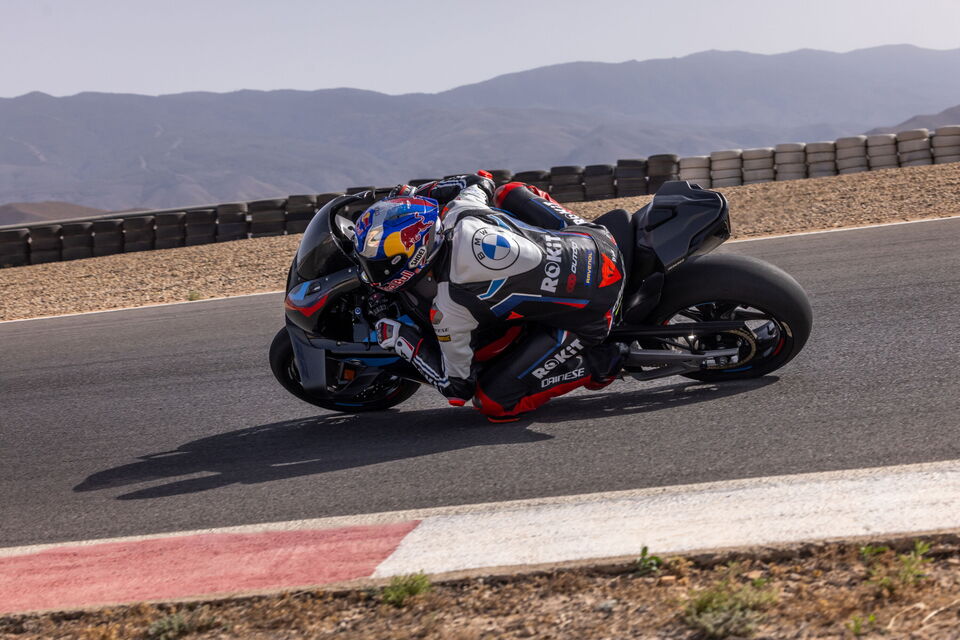
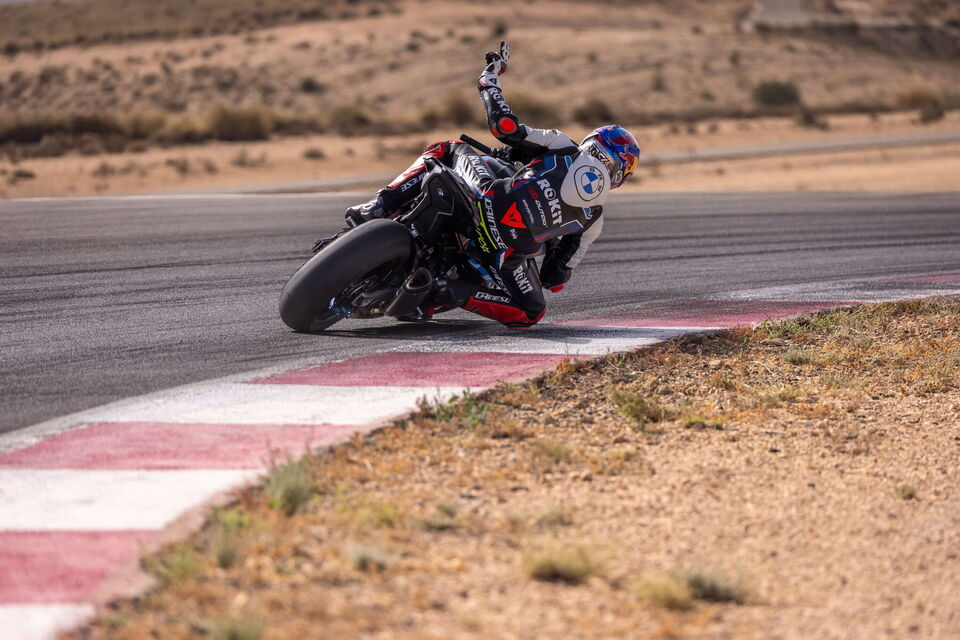
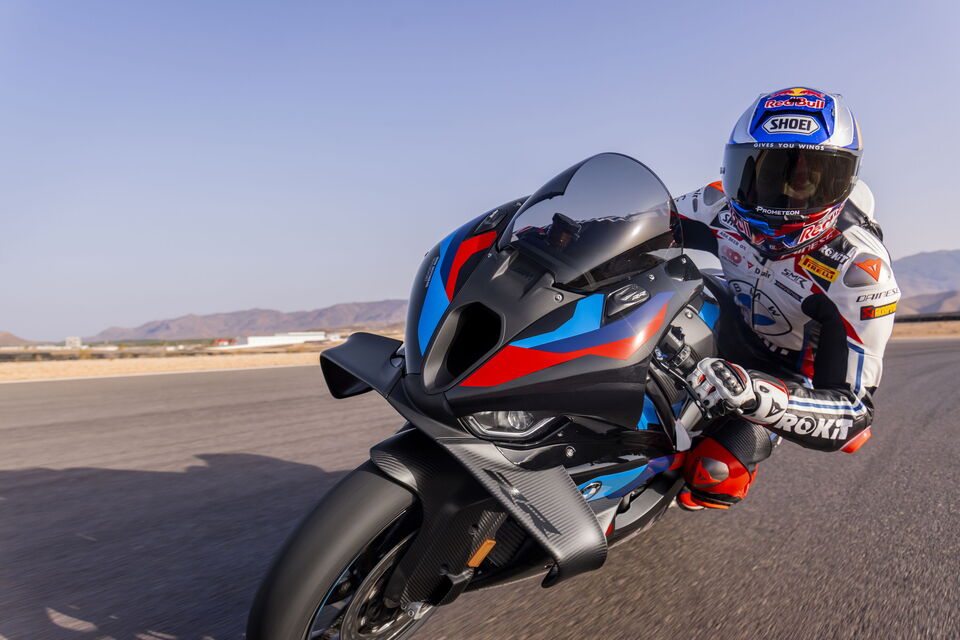
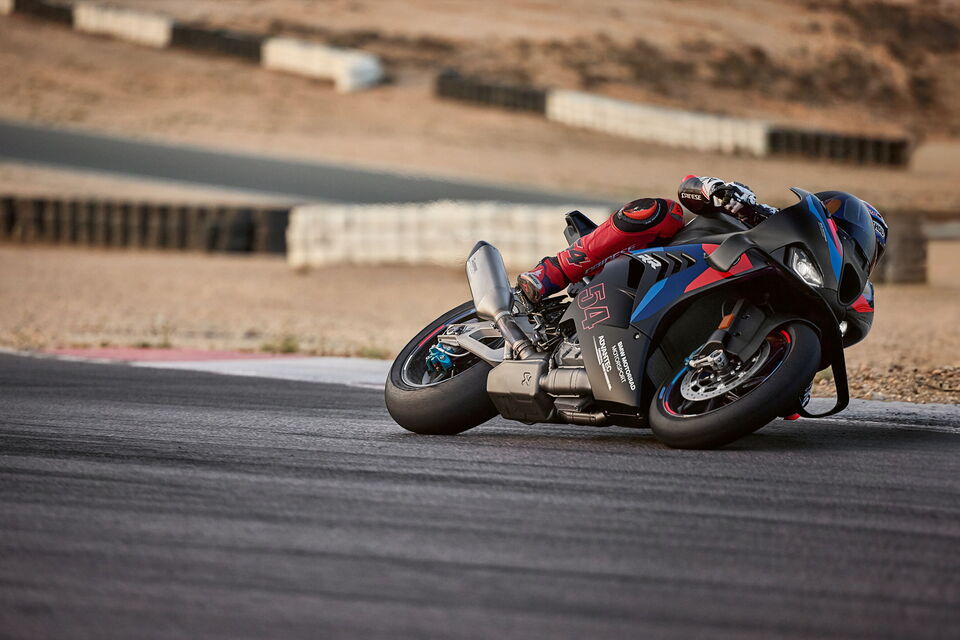
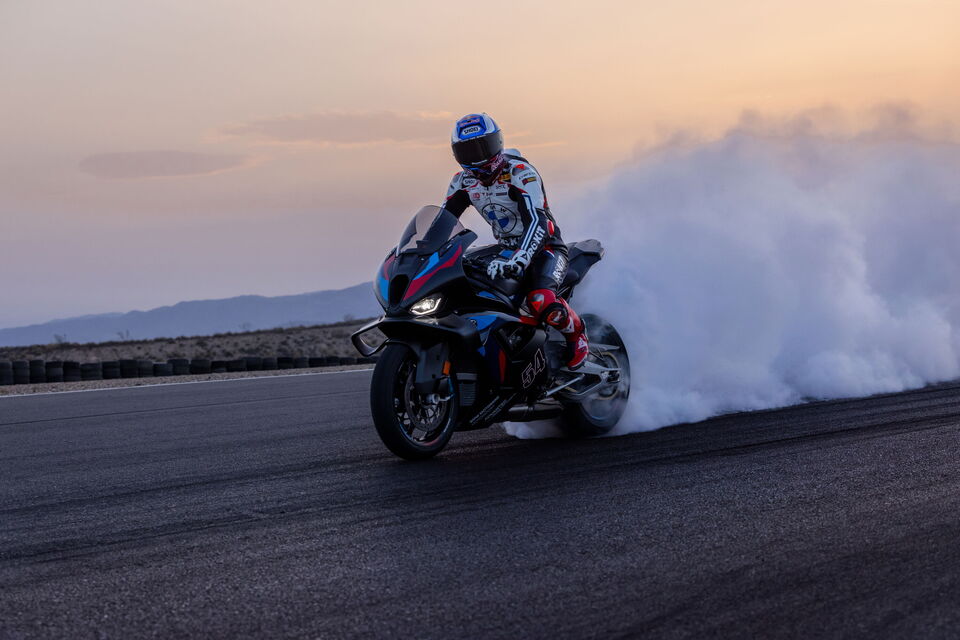
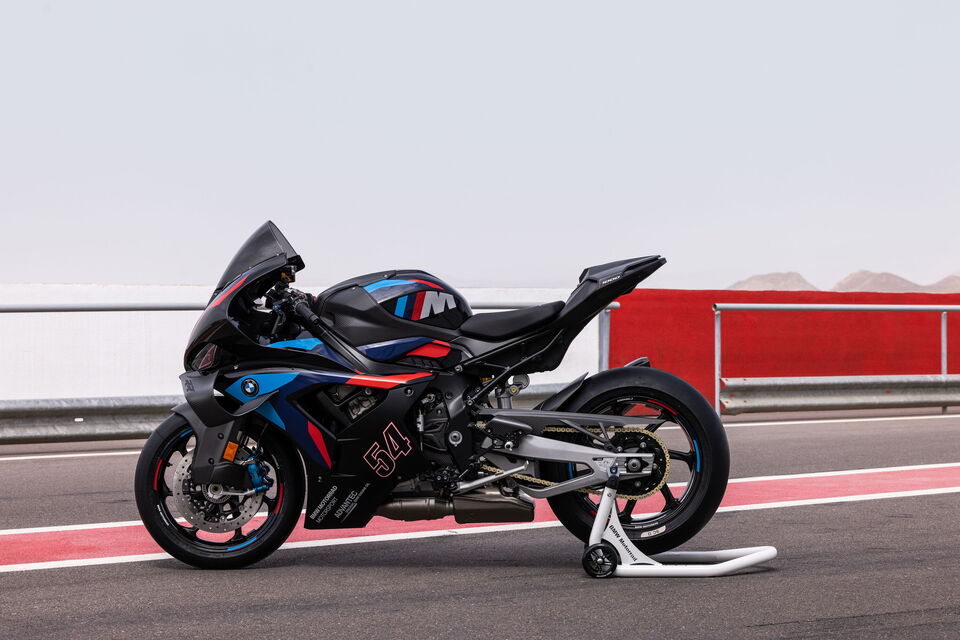
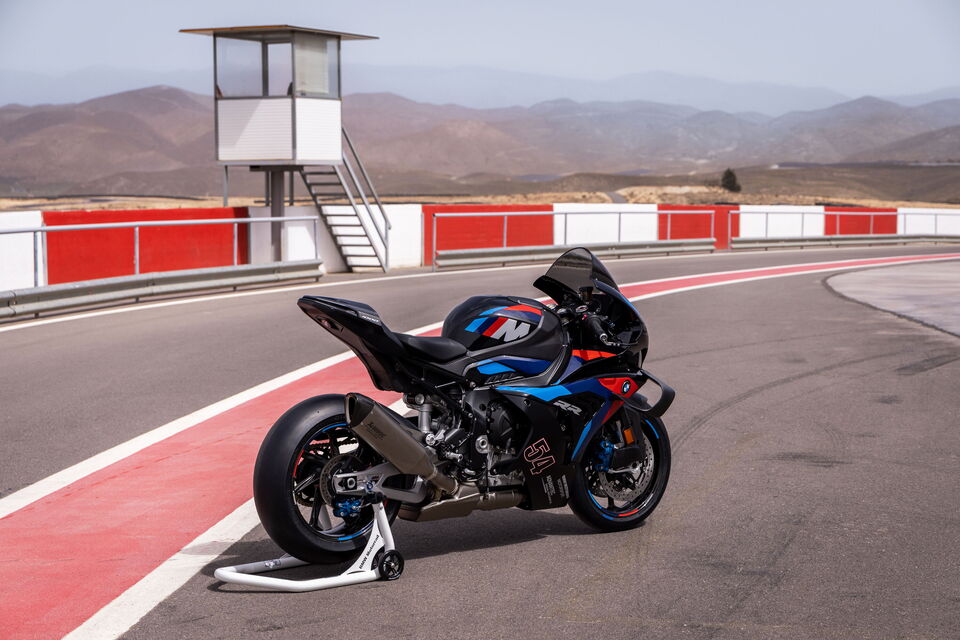
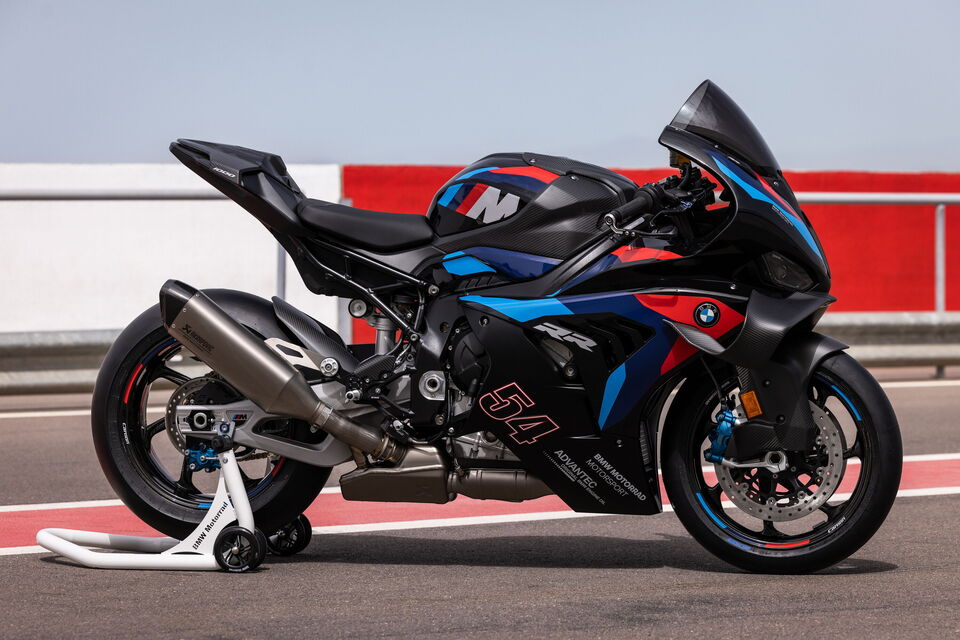
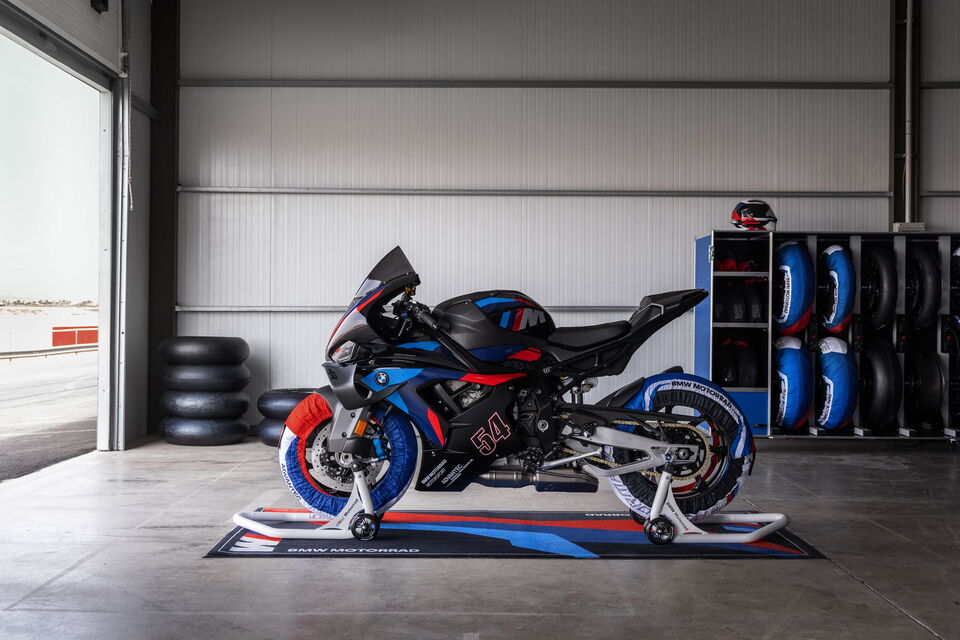
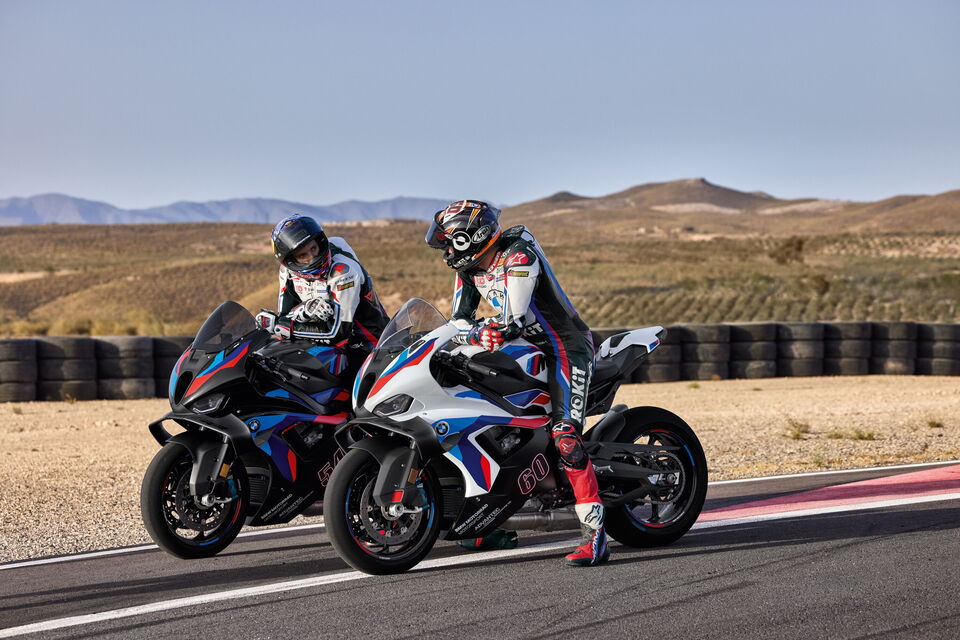
BMW did not build the M 1000 RR for weekend riders. It is BMW’s only street-legal superbike that was designed from the outset for World Superbike homologation—and the motorcycle on which Toprak Razgatlioglu won the World Championship in 2024 and 2025. 218 hp, 194 kg, Carbon Winglets 3.0 generating 30 kg of downforce, Akrapovič titanium exhaust standard. From €36,300.
As of: April 12, 2026 | Tested model: BMW M 1000 RR (2026) | Price from: €36,300
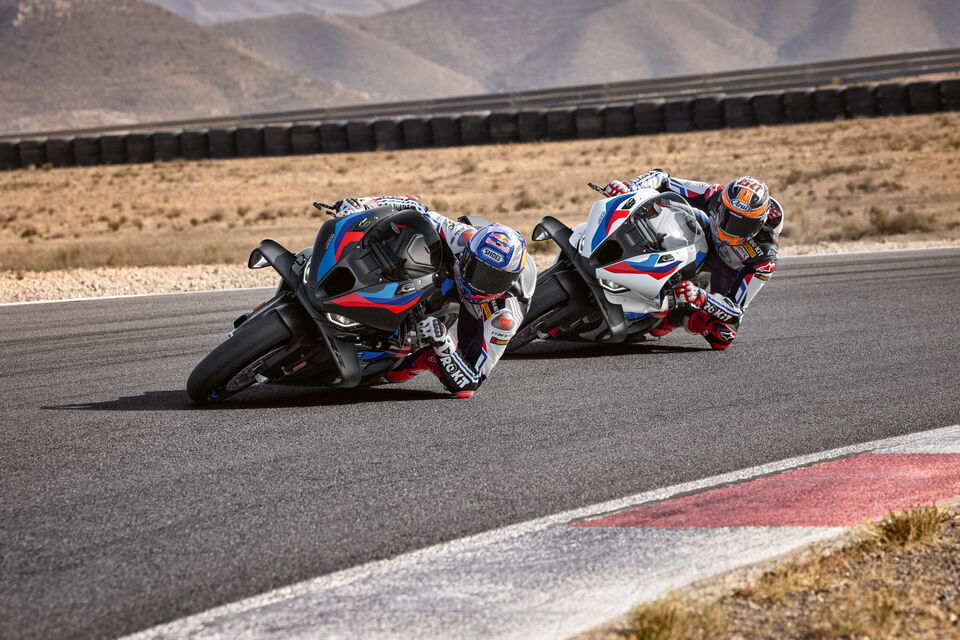
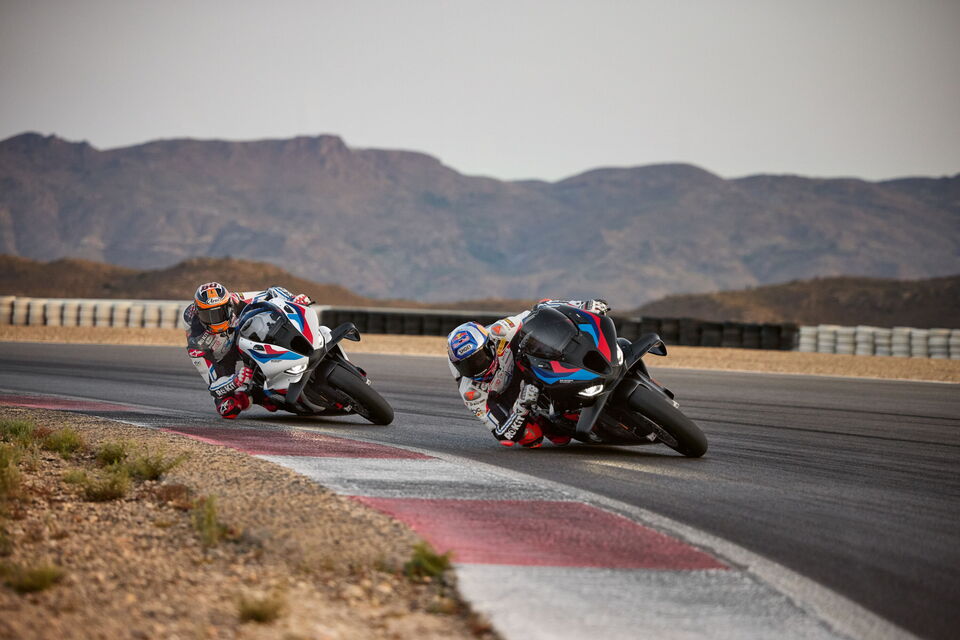
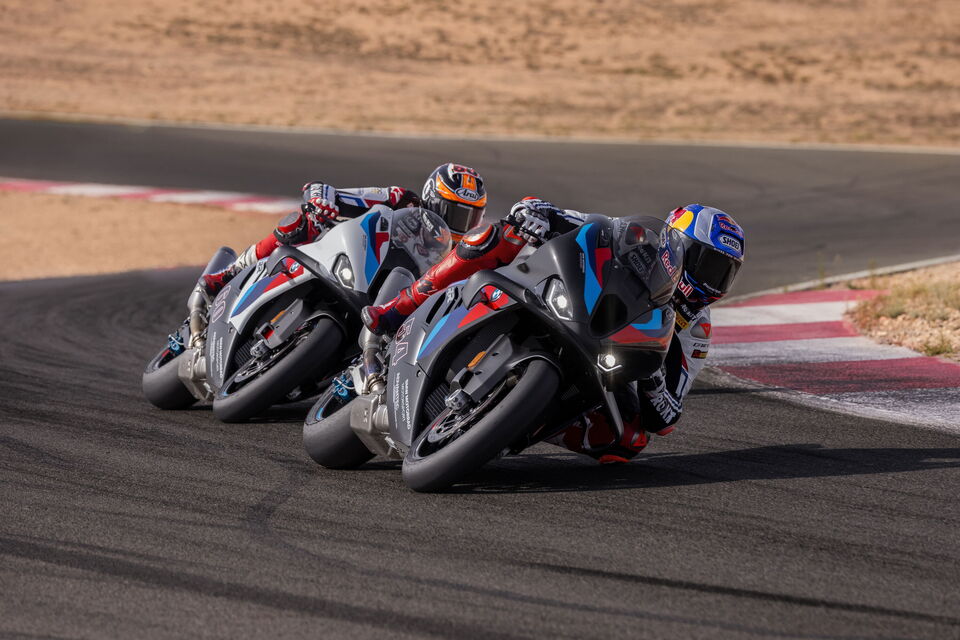
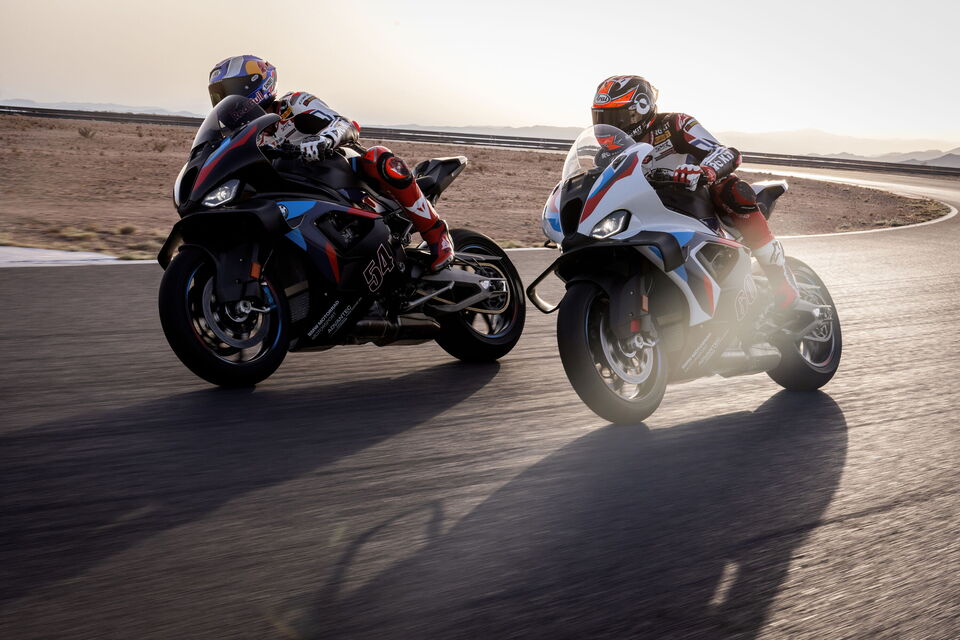
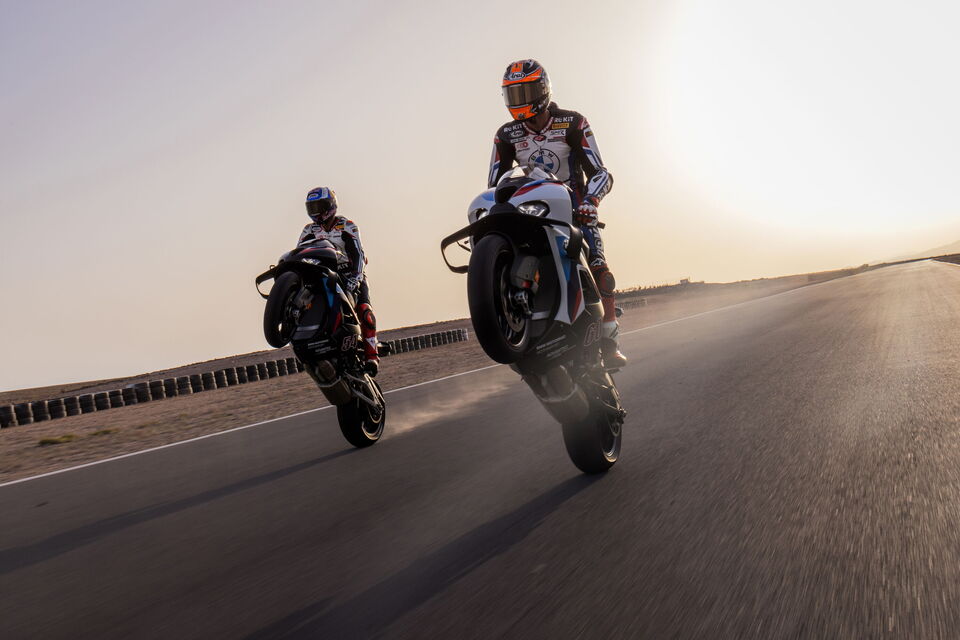
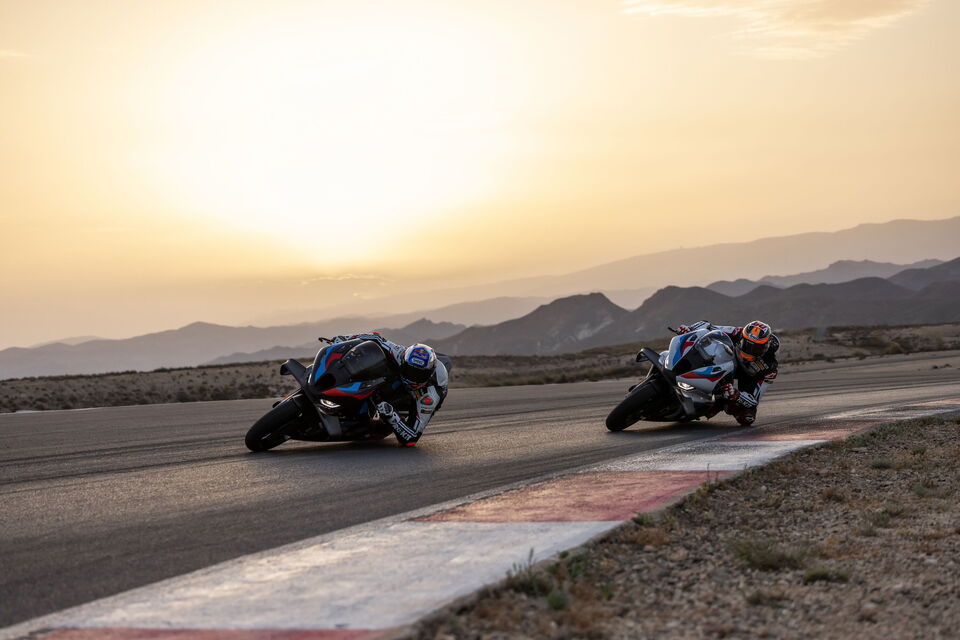
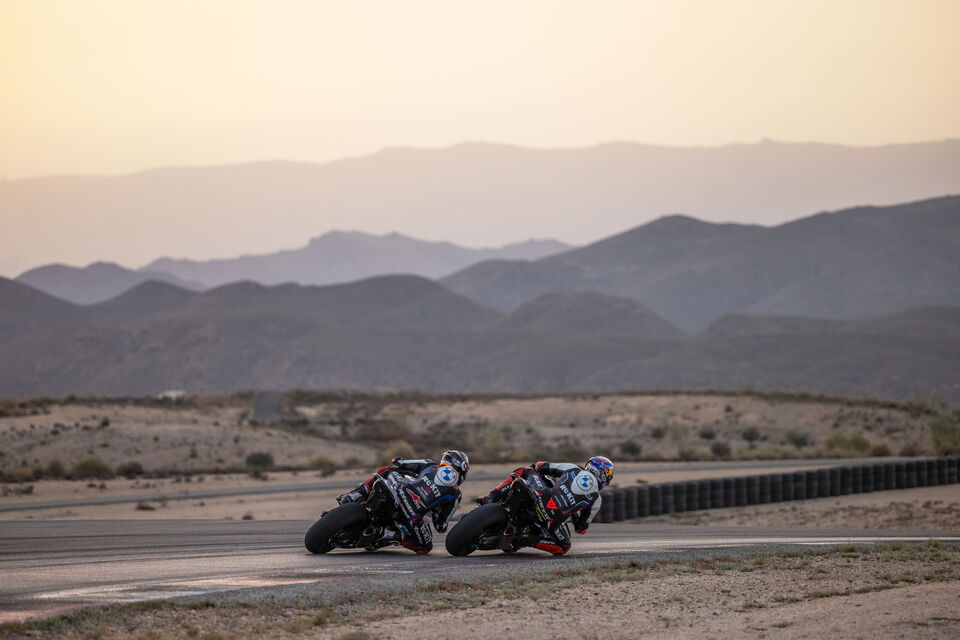

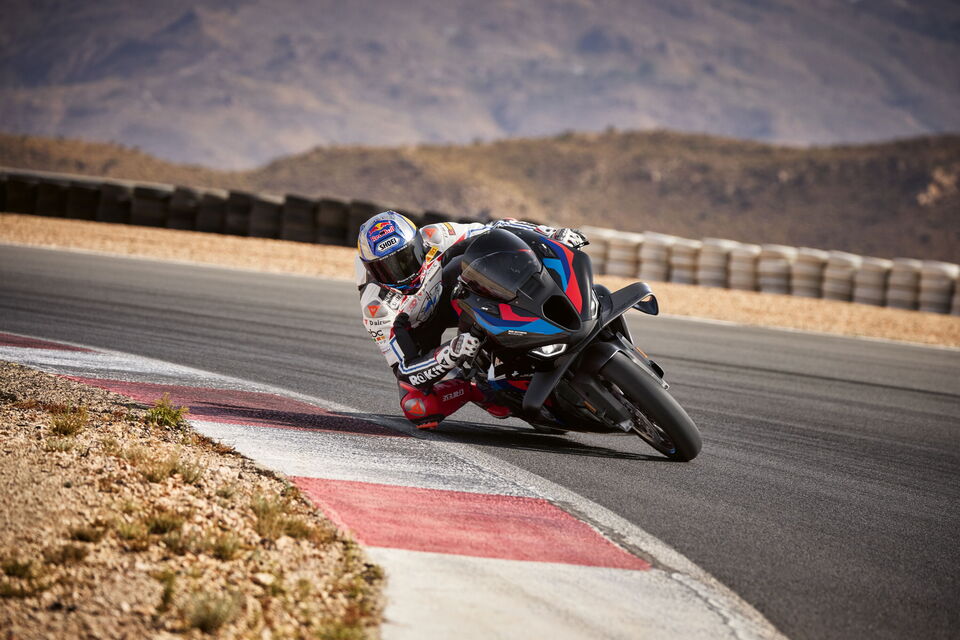
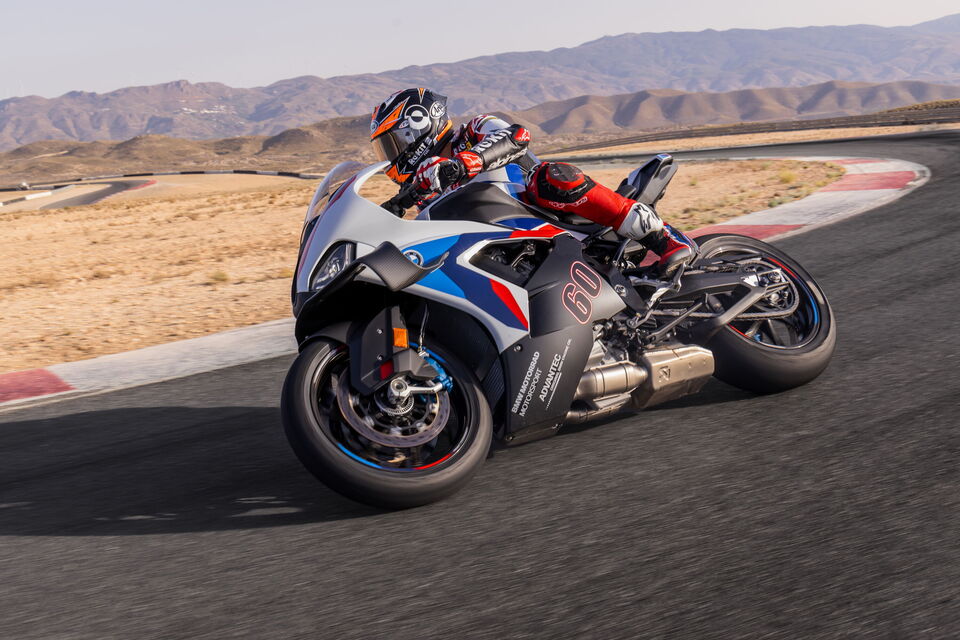
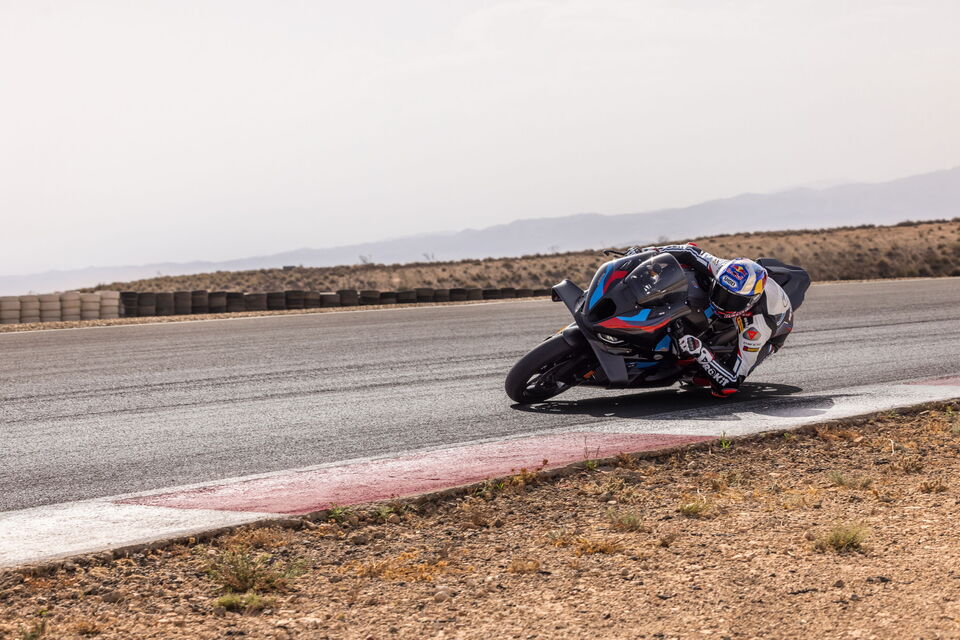
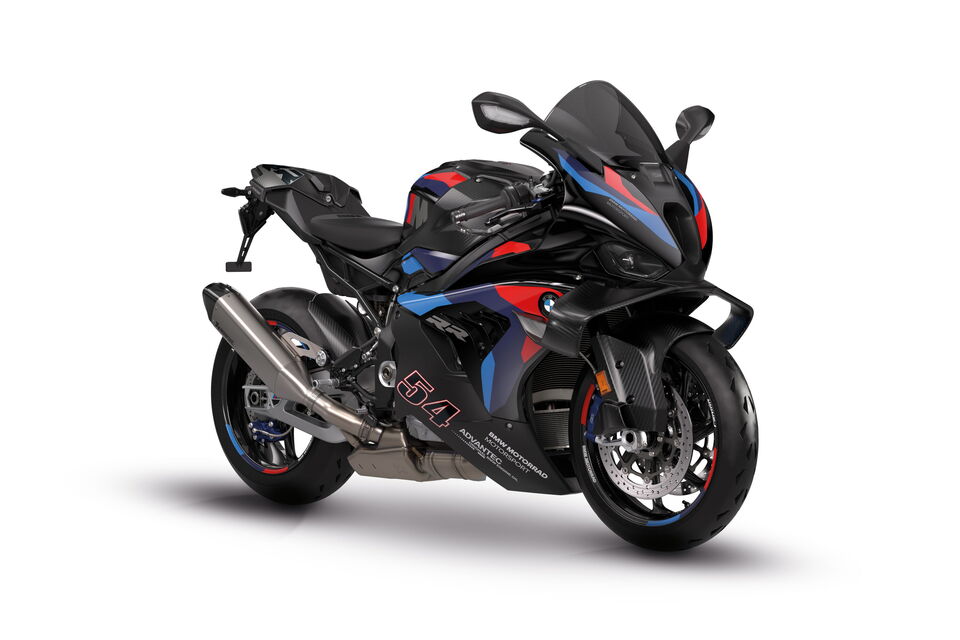

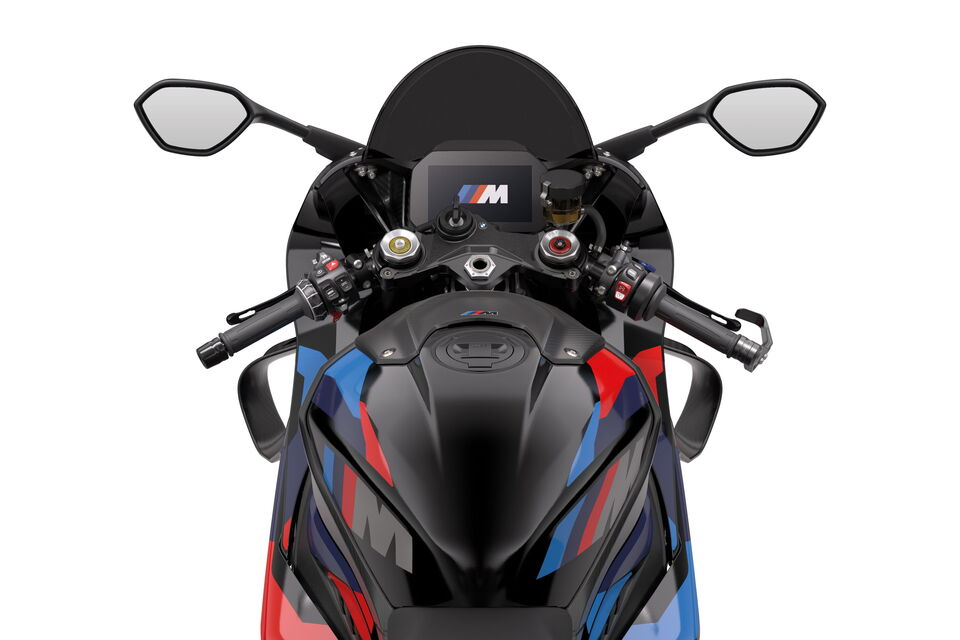


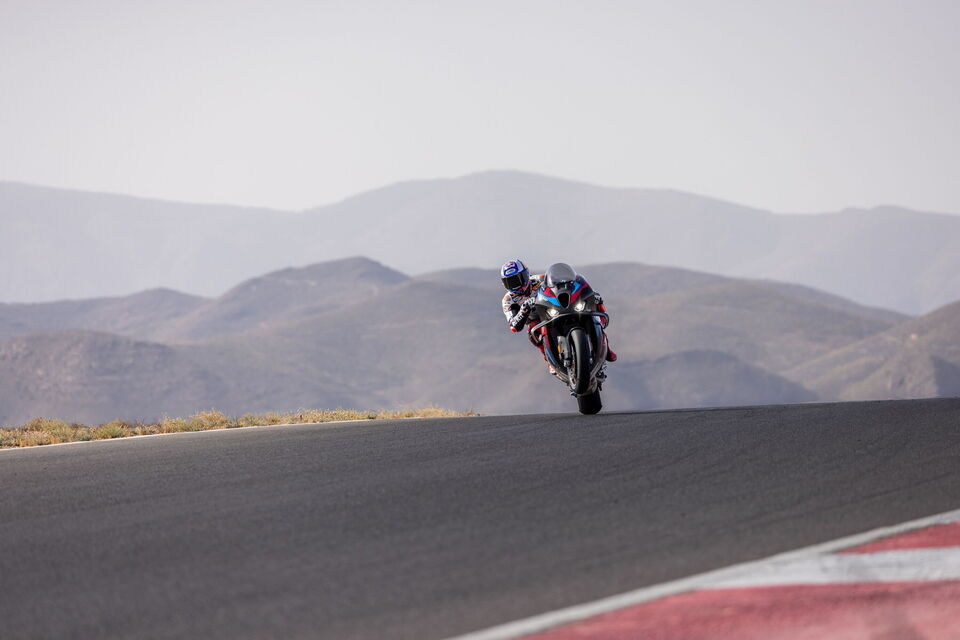
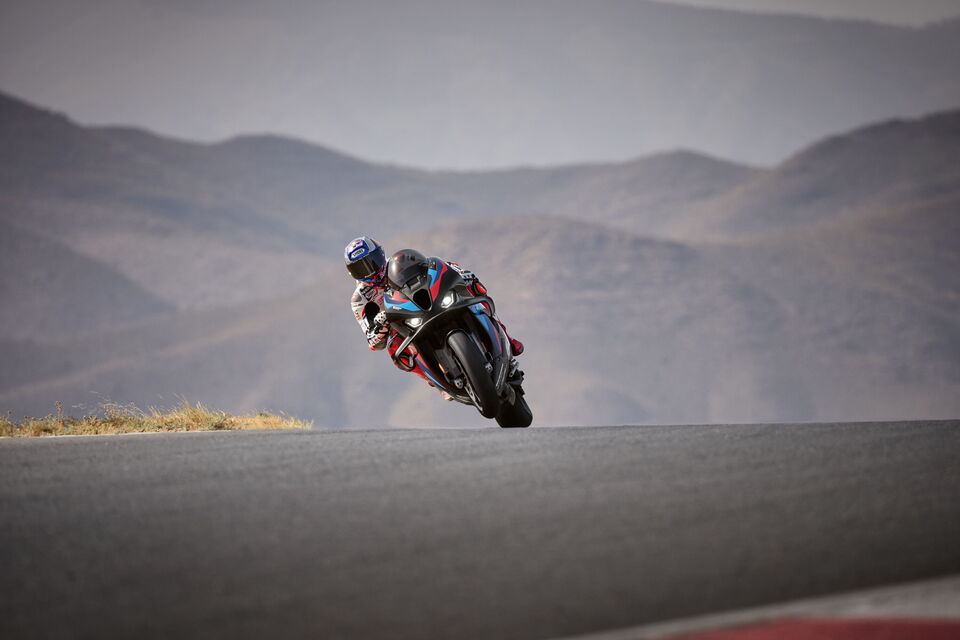
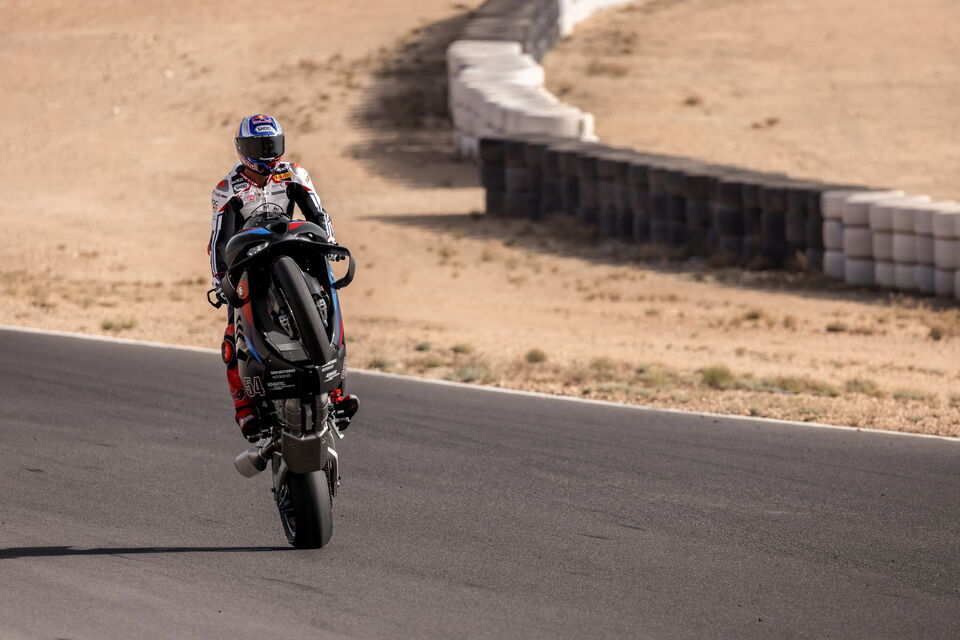
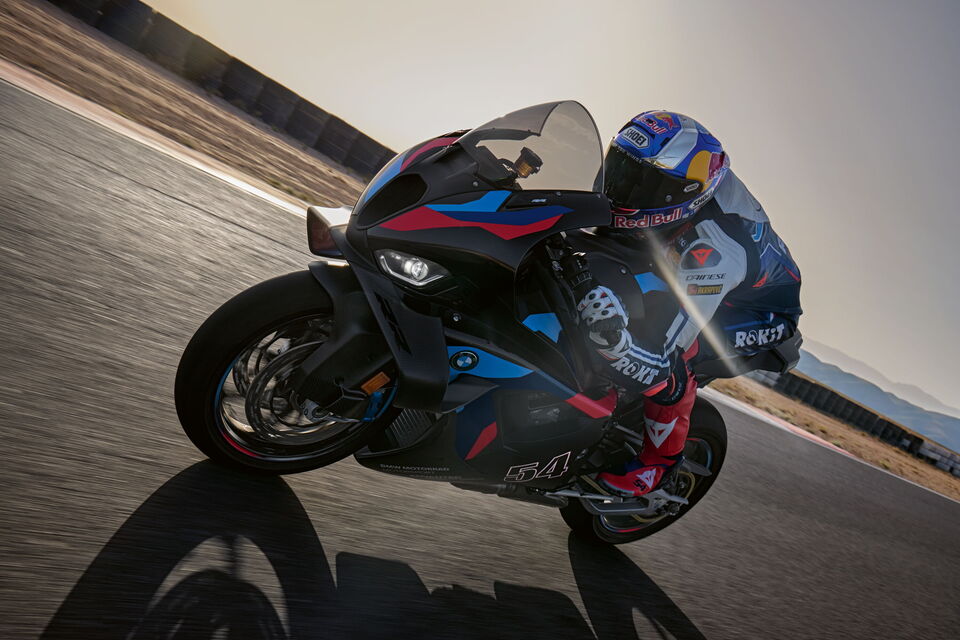
Engine: 218 hp—6 hp More Than Its Predecessor, Titanium Valves, Pankl Connecting Rods
999 cc, inline-four, BMW ShiftCam, liquid-cooled, Euro 5+. 160 kW (218 hp) at 14,500 rpm, with the rev limiter at 15,100 rpm. Compared with the previous generation’s 212 hp, that is an increase of 6 hp, achieved through revised titanium valves, new combustion-chamber geometry, and optimized engine management.
The engine components come straight from racing: forged Mahle pistons, Pankl titanium connecting rods, increased compression. This is the material specification of a homologation superbike, not a conventional production motorcycle.
The new quick-action throttle reduces the rotation required from closed to fully open by 14 degrees. That sounds marginal. It is not. On the racetrack, when accelerating out of slow corners, the more direct and precise throttle control is immediately noticeable.
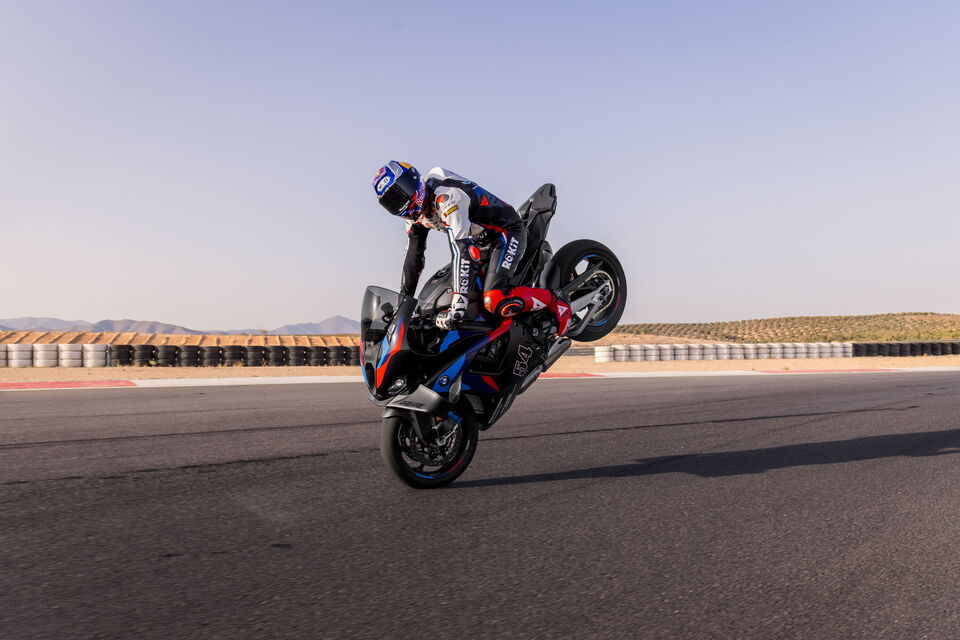
Standard electronics include Launch Control, Pit Lane Limiter, Riding Modes Pro with Race Pro 1–3, DTC +/- Shift, Wheelie Control, Slide Control, Brake Slide Assist, Dynamic Brake Control, and Shift Assistant Pro. This is the complete racetrack electronics package of the World Championship-winning motorcycle, with nothing held back.
Since 2025, the M 1000 RR has also featured a steering-angle sensor. This enables Slip & Slide Control under acceleration and Brake Slide Assist when braking into corners. Brake Slide Assist allows controlled brake-induced drifting—a function previously reserved for racing, now standard on a street-legal superbike. Also new is a slick-tire ABS mode for racetrack use. Top speed: 314 km/h according to official type approval.
Chassis: Winglets 3.0 With 30 kg of Downforce, M Brake Ducts, Full Floater Pro
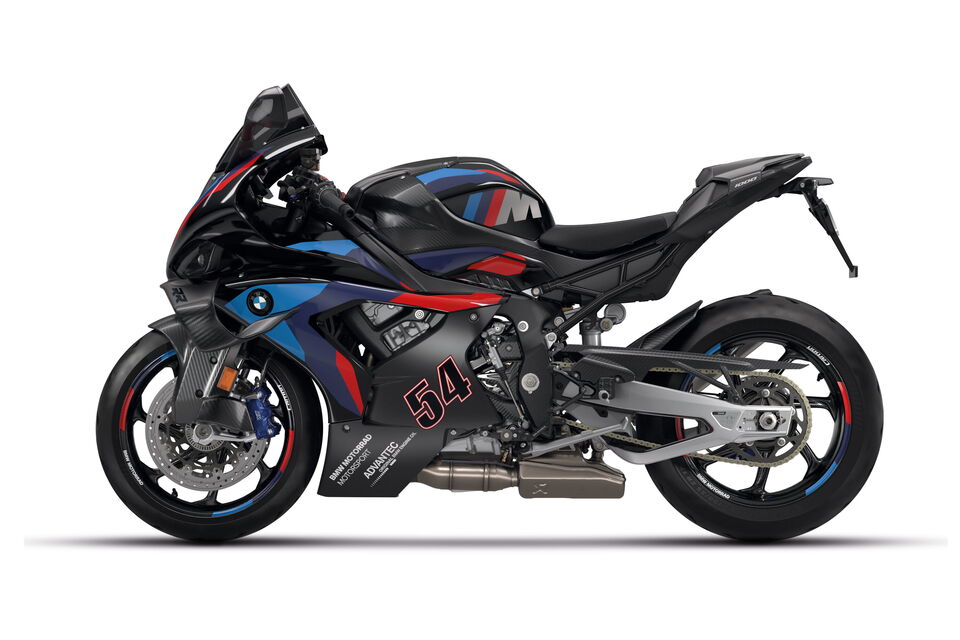
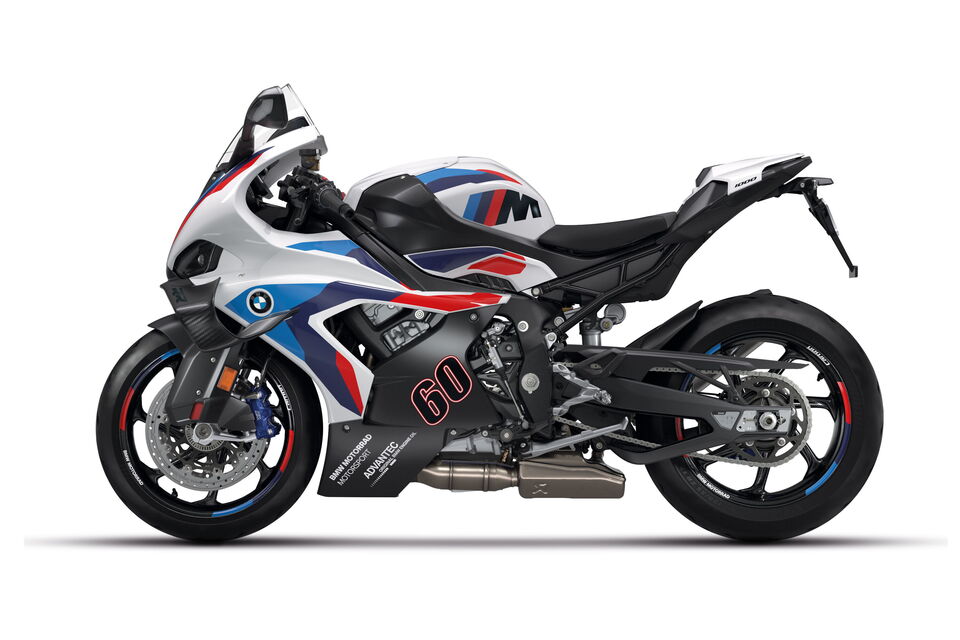
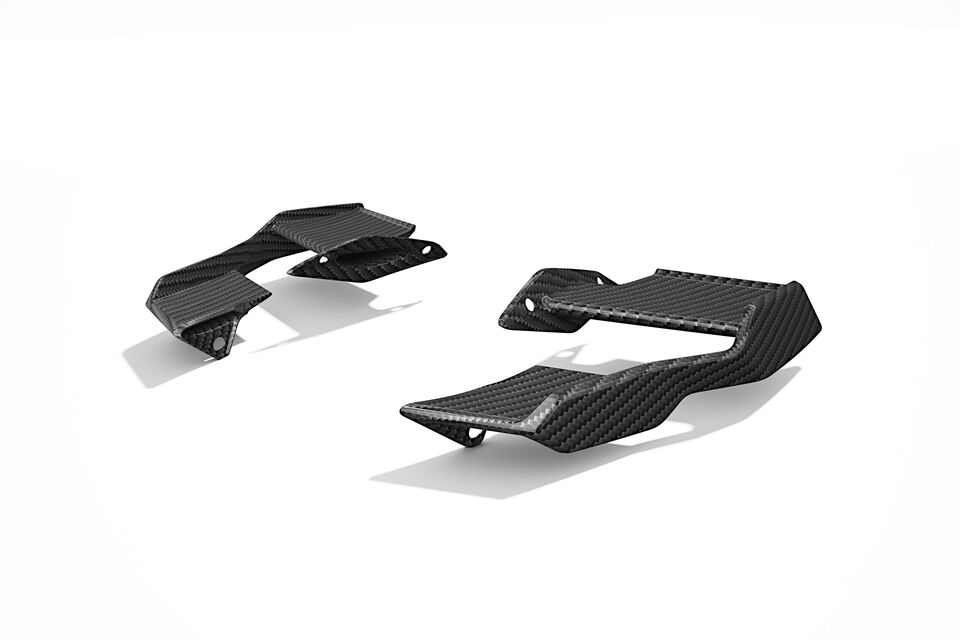
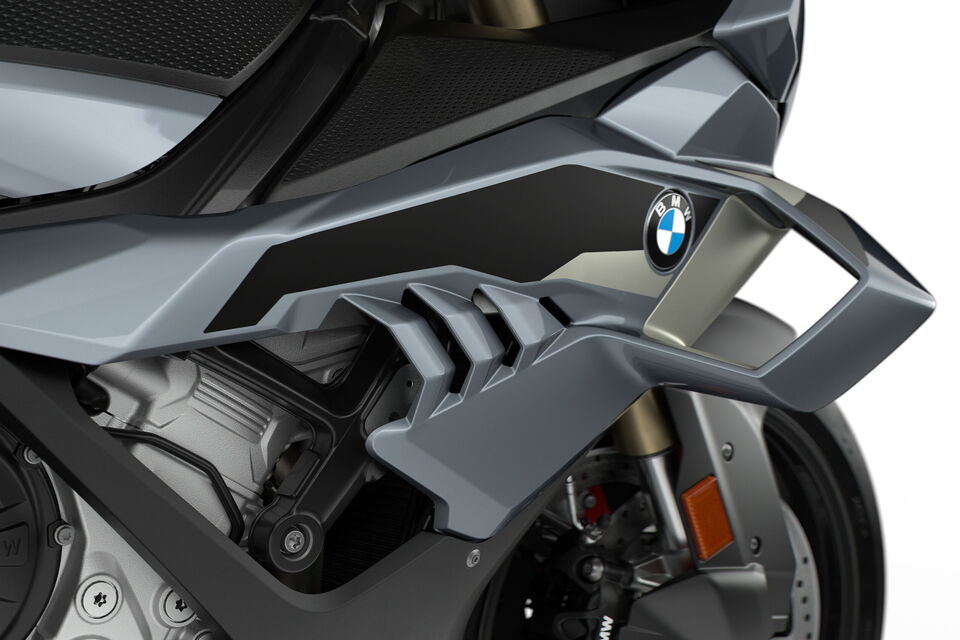
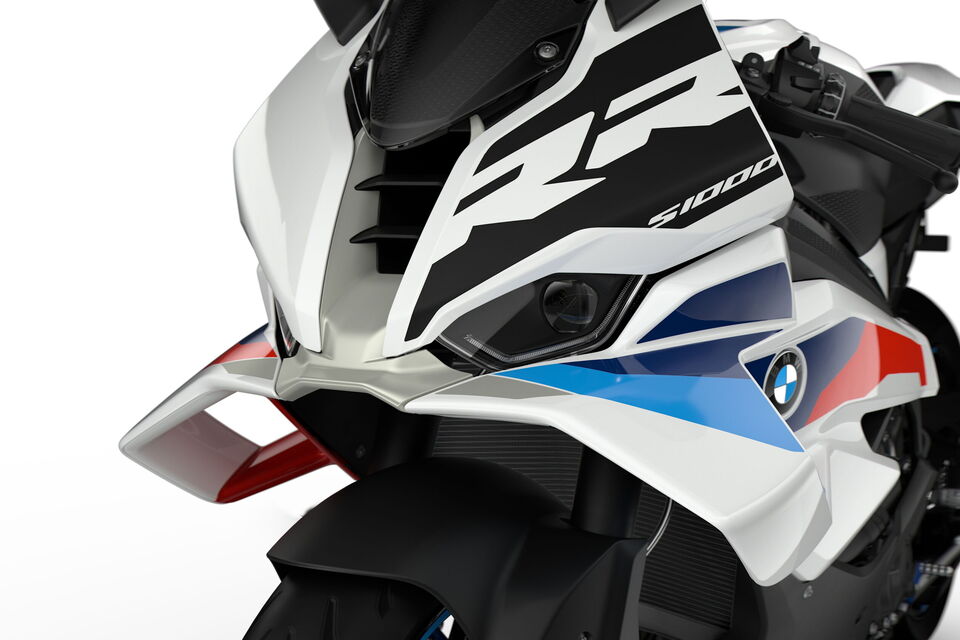
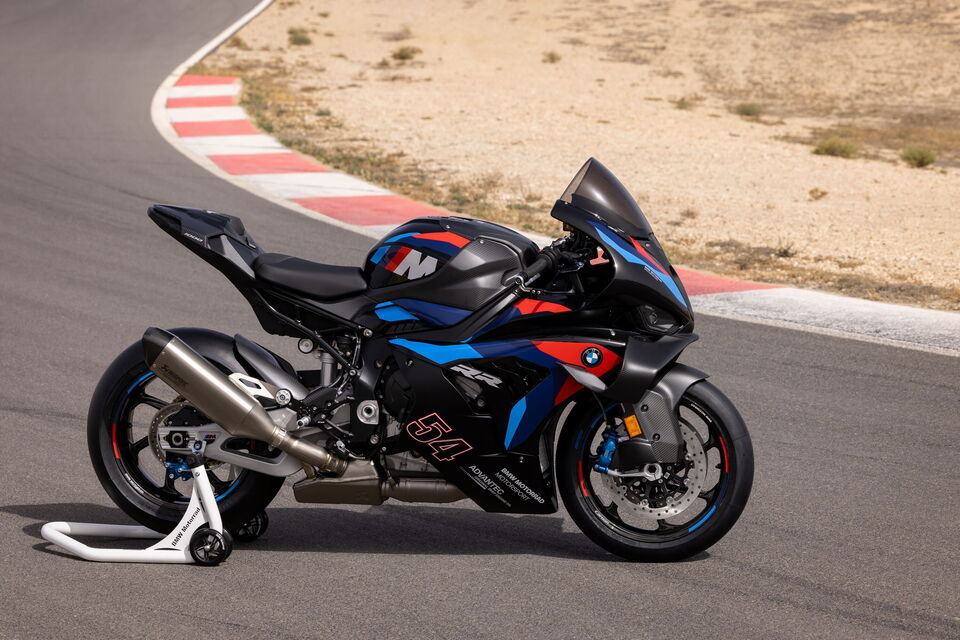
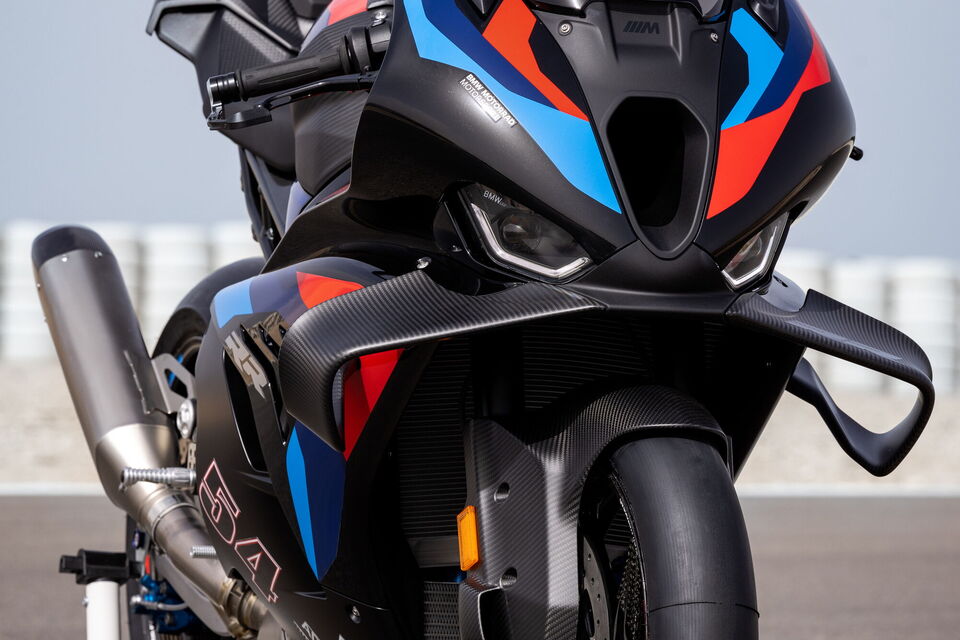
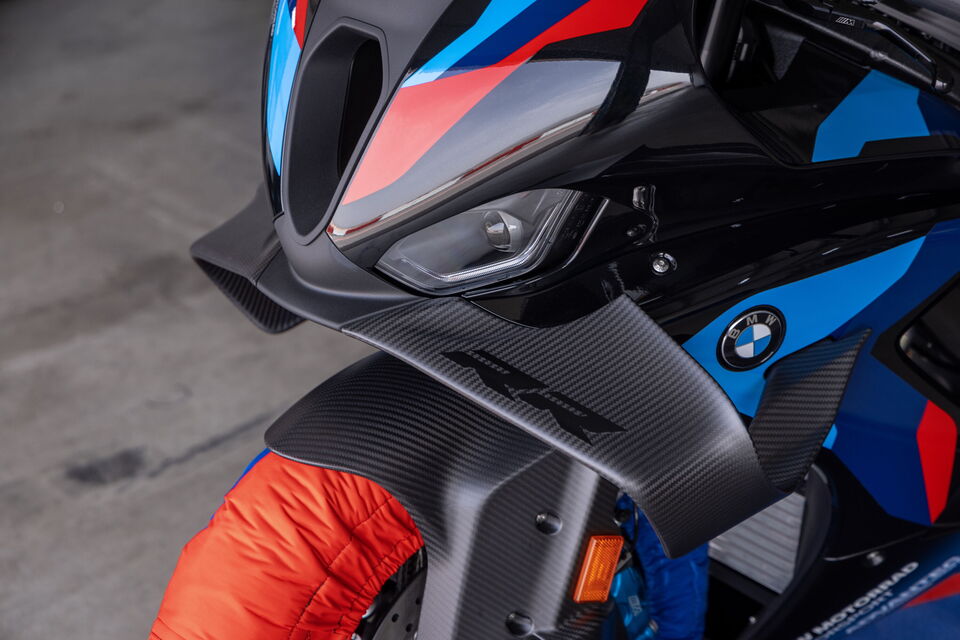
The new M Winglets Evolution 3.0 are the most significant aerodynamic update introduced on the 2025 M 1000 RR. Made from carbon-fiber-reinforced plastic, they generate up to 30 kg of downforce on the front wheel at 300 km/h—50 percent more than the previous generation. The additional front-wheel load at high speeds and lean angles significantly expands the usable acceleration window when exiting corners and reduces the tendency to wheelie on straights.
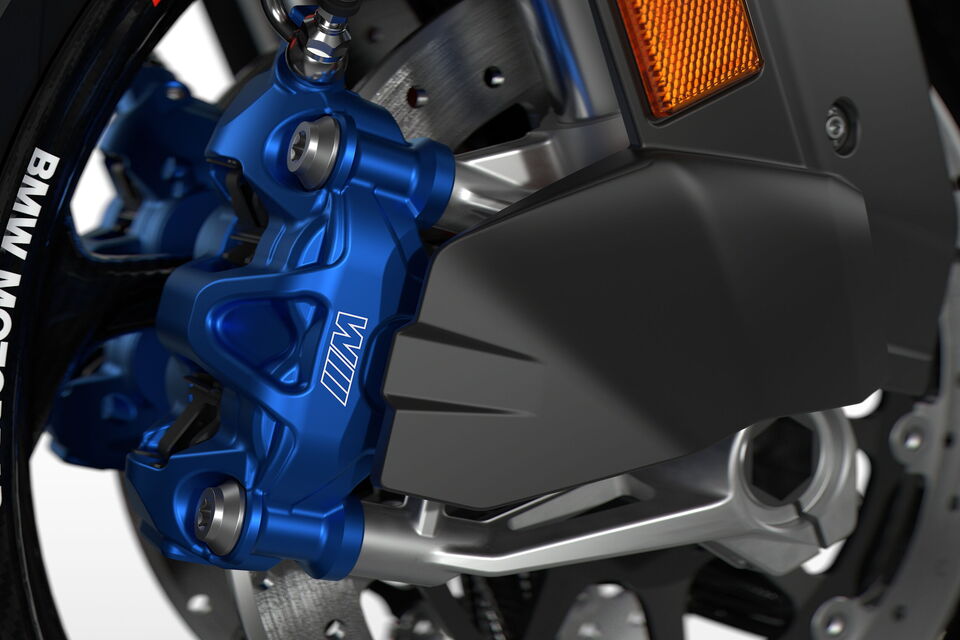
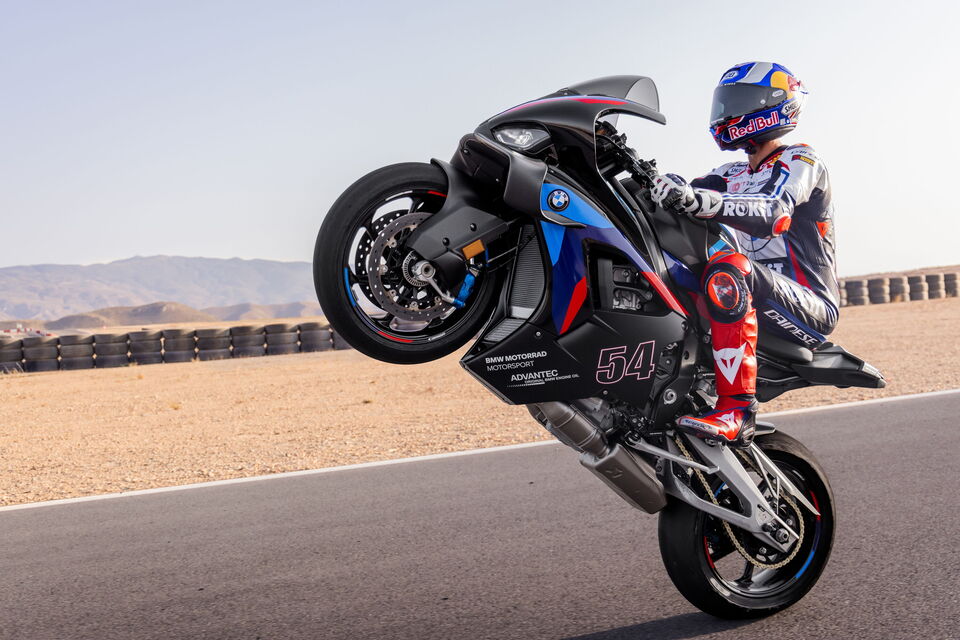
The winglets come standard. No extra charge, no option package. M Brake Ducts also come standard. Aerodynamic channels direct airflow toward the brake calipers and can reduce their temperature by up to 10 degrees during racetrack use, depending on the circuit.
That stabilizes the pressure point over multiple laps and keeps the M braking system performing consistently. The chassis consists of an aluminum bridge frame—BMW’s Flex Frame—with optimized engine mounting, a USD fork, and a rear monoshock with Full Floater Pro linkage.
Full Floater Pro, inspired by BMW’s racing design, means the upper end of the rear shock is not directly attached to the frame but actuated through a linkage system. This improves suspension response over small irregularities and stabilizes the rear under hard acceleration out of corners.
The M brake system—a racing brake package developed jointly by BMW and Nissin—comes standard. Up front are dual 320 mm discs with radially mounted four-piston racing calipers. Race ABS Pro in its latest generation is calibrated for Brake Slide Assist and can be adjusted through multiple levels, all the way to an ABS setting designed specifically for slick tires.
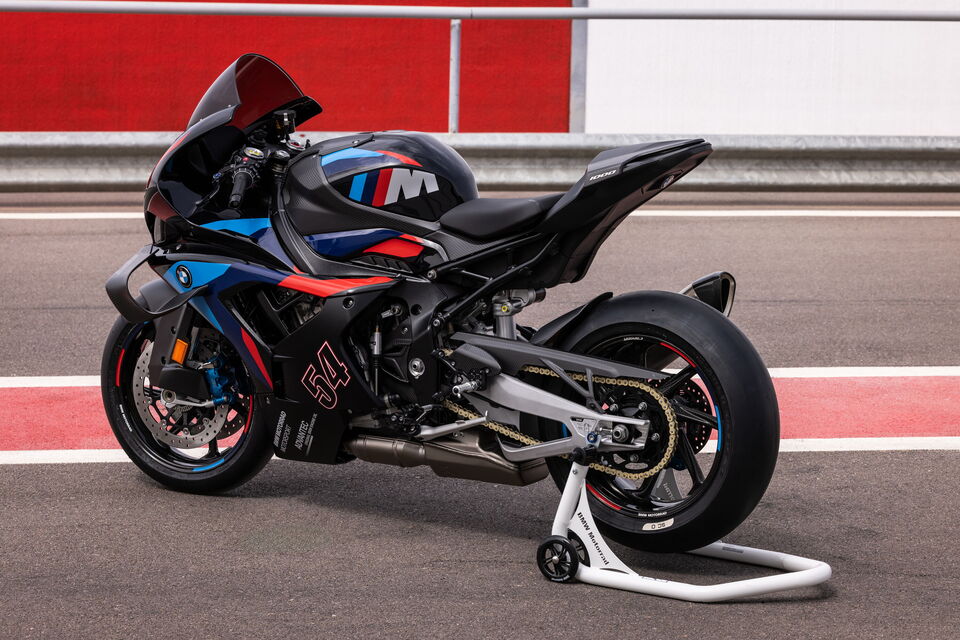
Carbon wheels come standard. This is one of the key differences from the S 1000 RR, which uses cast-aluminum wheels. The carbon wheels noticeably reduce unsprung and rotating mass, allowing the motorcycle to turn into corners more quickly.
Ergonomics: The Racetrack Is the Primary Mission—the Street Is Possible, but Not the Point
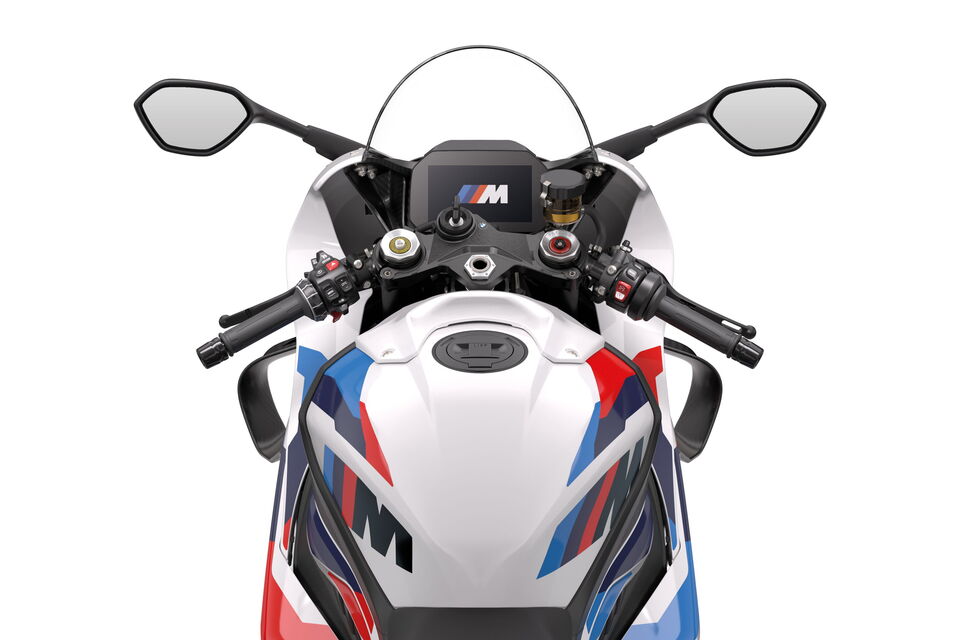
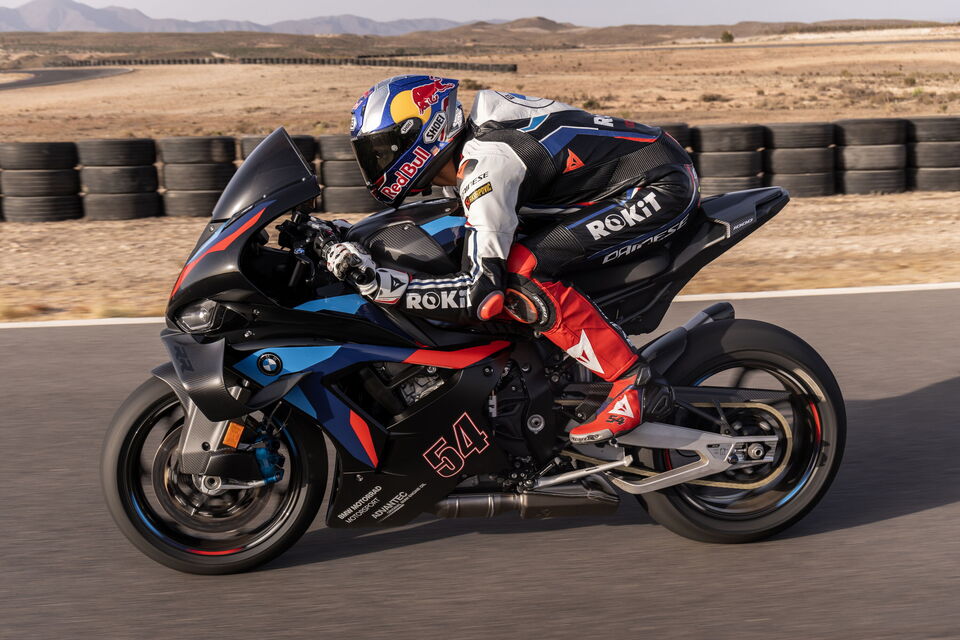
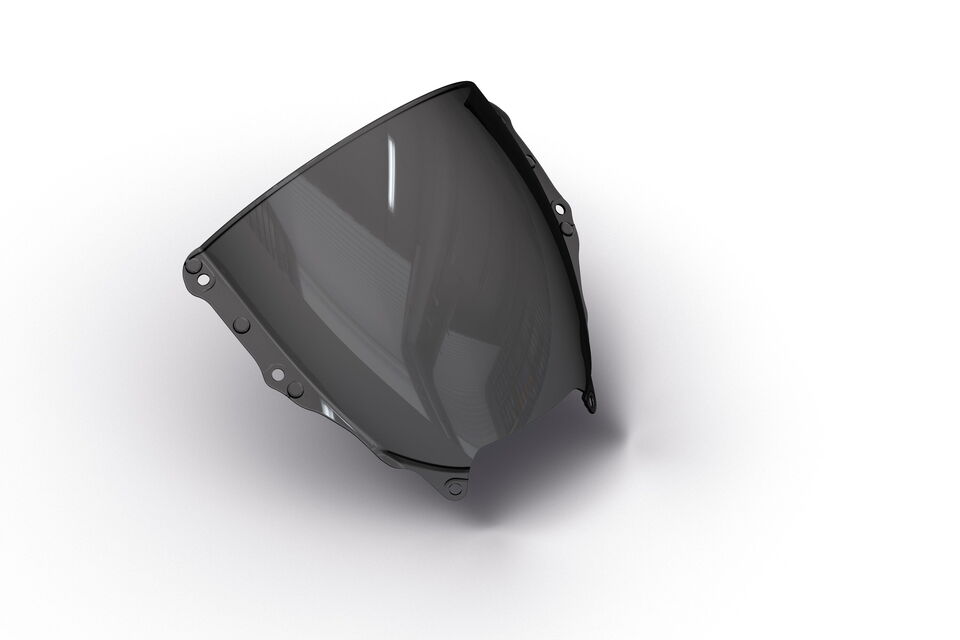
The M 1000 RR riding position is uncompromisingly racetrack-oriented: clip-on handlebars, rear-set footpegs, and a forward-canted seating position. BMW did not optimize the ergonomics for backroad comfort. Anyone buying an M 1000 RR knows that. The taller windscreen compared with the previous generation improves protection at high speed. Seat height is 830 mm. A passenger seat is available as part of the optional Passenger Package. In standard form, the M 1000 RR is a single-seater.
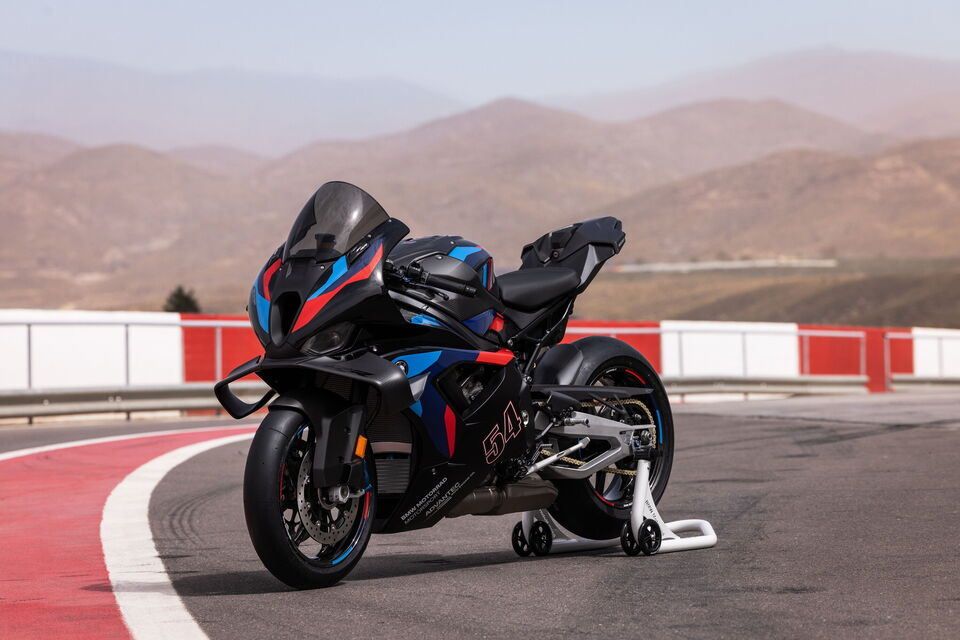
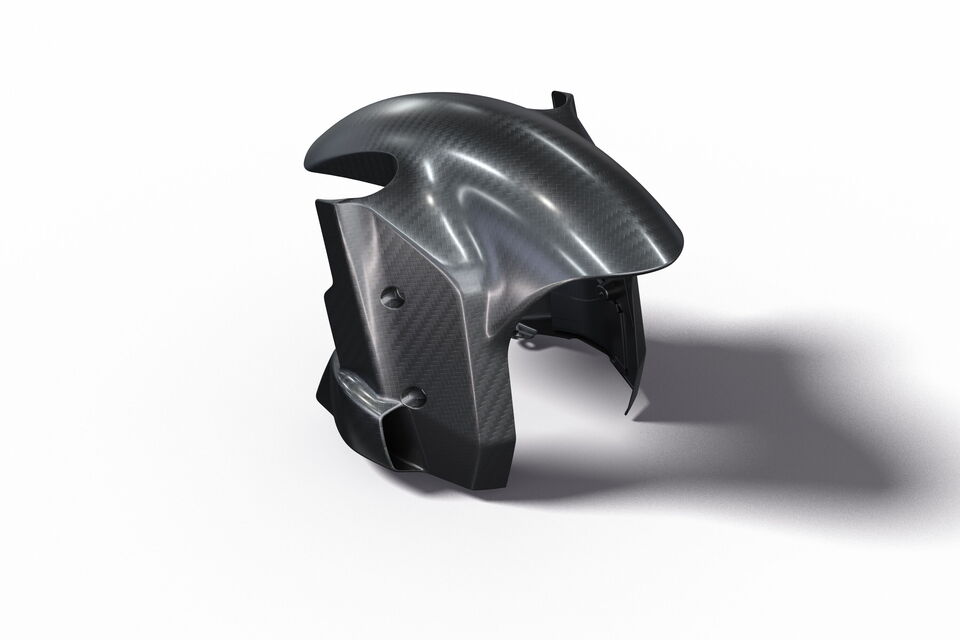
The 6.5-inch TFT display features M-specific display modes with telemetry functions: lean angle, brake-pressure display, and lap times. The M GPS Laptrigger can be activated by code with the M Competition Package. The aerodynamic fairing with its shark-gill design on the side panels was introduced for 2025. The front wheel cover fitted to the previous generation has been deleted.
Handling: 194 kg, Akrapovič Titanium Standard—the Street-Legal Racebike
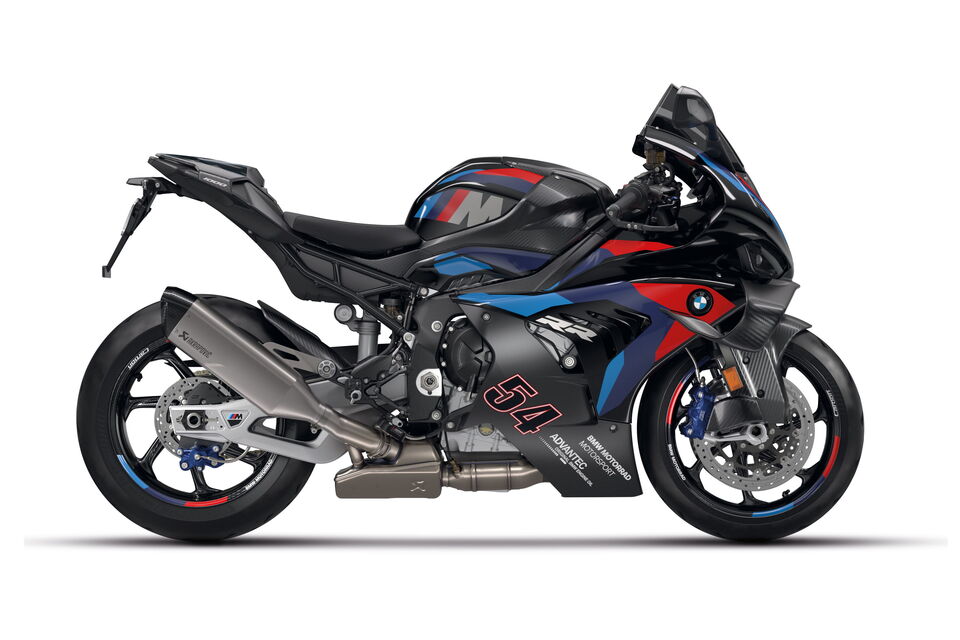
194 kg fully fueled—4 kg lighter than the S 1000 RR. That is the result of the standard carbon wheels and Akrapovič titanium exhaust system, which also comes fitted from the factory. The Akrapovič system is not an accessory you buy afterward. It is part of the motorcycle from day one and saves several kilograms compared with a conventional steel exhaust. The M 1000 RR’s power-to-weight ratio is around 0.89 kg per hp—better than almost any other street-legal production motorcycle.
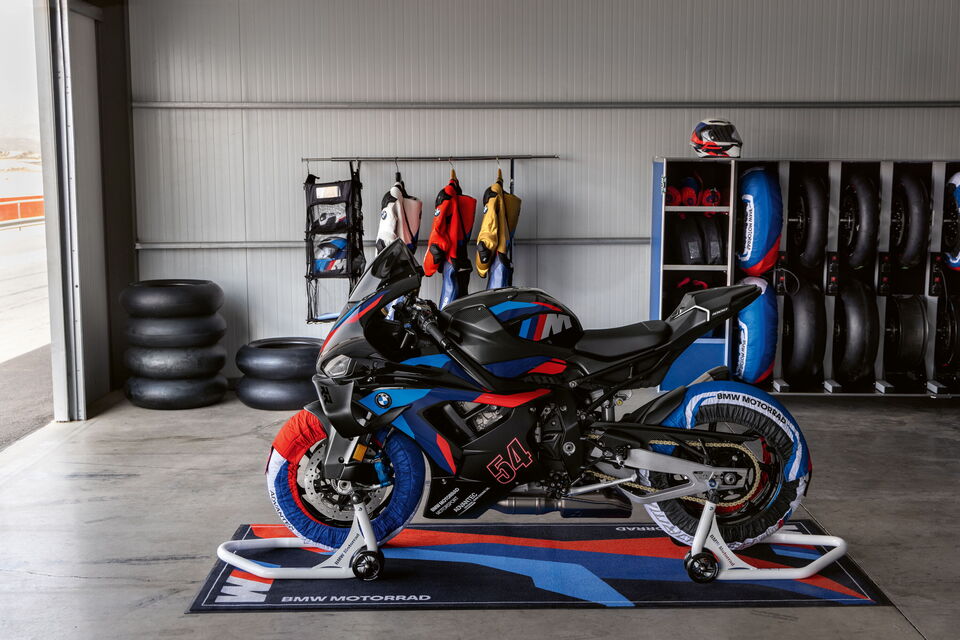
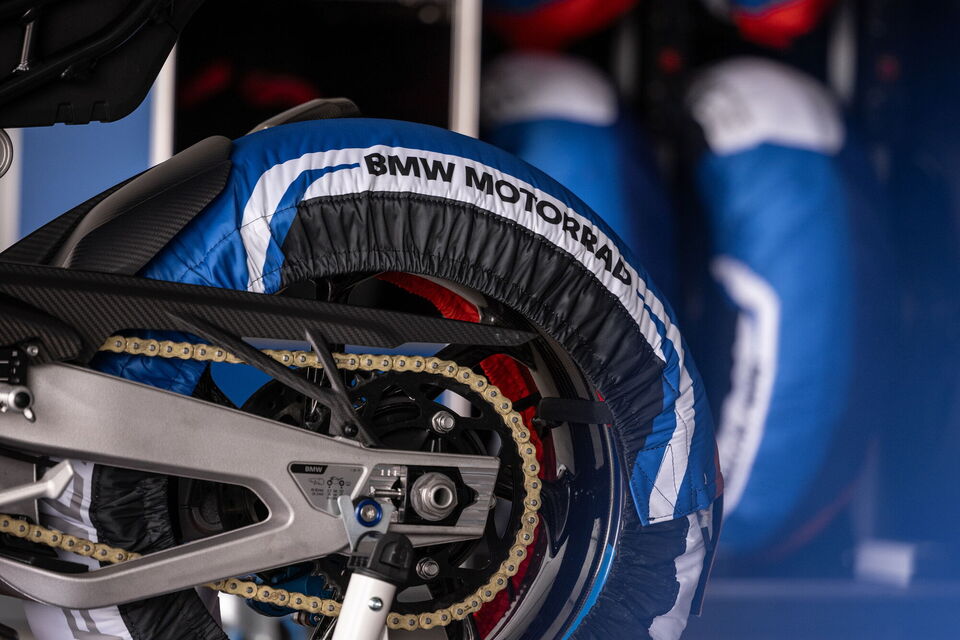
The M 1000 RR is available in two versions: the standard M 1000 RR and the M 1000 RR with the M Competition Package. The M Competition Package includes the M Billet Pack—brake and clutch levers, rider footpegs, and brake lever guard—the M Carbon Package with exposed-carbon covers for the front and rear wheels, sprocket, chain guard, side panels, and tank trim, plus an anodized swingarm, M Endurance chain, and M GPS Laptrigger activation code.
Two color schemes are available: Light White solid and Blackstorm Metallic/M Motorsport.
Equipment: Everything the Racetrack Demands Comes Standard
Standard equipment includes carbon wheels, Akrapovič titanium exhaust, M brakes, M Winglets 3.0 in carbon fiber, M Brake Ducts, quick-action throttle, steering-angle sensor, Slide Control, Brake Slide Assist, Race ABS Pro with slick setting, Launch Control, Pit Lane Limiter, Riding Modes Pro with Race Pro 1–3, DTC +/- Shift, Wheelie Control, Dynamic Brake Control, Shift Assistant Pro, and a 6.5-inch TFT with M startup animation and telemetry displays.
The M Competition Package adds further exclusive racing components.
Costs: €36,300—World Champion Pricing for World Champion Technology
The base price is €36,300 plus freight and packaging. For comparison, the Ducati Panigale V4 R starts at €43,990 plus delivery charges, while the Aprilia RSV4 Factory starts at €26,490. That makes the M 1000 RR less expensive than the Ducati and more expensive than the Aprilia—but the BMW is the only one of the three that comes standard with both carbon wheels and a titanium exhaust system.
Service intervals are every 10,000 km, with costs ranging from €650 to €900. Valve-clearance inspection is required every 10,000 km. Factory tires are Bridgestone Battlax Racing Street RS11s—strongly racetrack-oriented rubber with a shorter service life than sport-touring tires. Warranty: two years with unlimited mileage.
Verdict
The BMW M 1000 RR is the most uncompromising production motorcycle BMW has ever built. It is not just an upgraded sportbike. This is a racing homologation machine with a license plate. 218 hp, 194 kg, carbon wheels and Akrapovič titanium exhaust standard, Winglets 3.0 generating 30 kg of downforce, Brake Slide Assist—this is the development level of a two-time World Superbike champion, made legal for public roads.
Anyone buying one knows exactly what they are buying.
Quick Check
+ 218 hp—6 hp more than its predecessor; titanium valves, Mahle pistons, Pankl connecting rods derived from racing
+ Carbon Winglets 3.0 standard: 30 kg of downforce at 300 km/h, 50 percent more than the predecessor
+ M Brake Ducts standard: brake-caliper cooling by up to 10°C during racetrack use
+ Brake Slide Assist standard: controlled brake-induced drifting for the first time on a production motorcycle
+ Carbon wheels standard—reduces unsprung and rotating mass
+ Akrapovič titanium exhaust system standard
+ 194 kg fully fueled—4 kg lighter than the S 1000 RR
+ 314 km/h top speed according to official type approval
+ Less expensive than the Ducati Panigale V4 R by approximately €10,000
– €36,300—€15,410 more than the S 1000 RR
– Racetrack ergonomics—clip-ons, limited everyday comfort
– Front wheel cover from the previous generation has been deleted
– 2-year warranty—less than KTM or Triumph, which each offer 4 years
– Bridgestone RS11 standard—high tire wear during racetrack use
Technical Specifications: BMW M 1000 RR (2026)
Country of manufacture: Germany (Berlin-Spandau)
Engine: Liquid-cooled inline-four, DOHC, BMW ShiftCam, titanium valves, forged Mahle pistons, Pankl titanium connecting rods, increased compression, Euro 5+
Displacement: 999 cc
Power: 160 kW (218 hp) at 14,500 rpm
Maximum engine speed: 15,100 rpm
Transmission: 6-speed, Shift Assistant Pro standard; shift pattern reversible for racing use
Final drive: Chain; M Endurance chain with M Competition Package
Frame: Aluminum bridge frame (Flex Frame) with optimized engine mounting
Front suspension: 46 mm USD telescopic fork, fully adjustable, 120 mm travel
Rear suspension: Aluminum double-sided swingarm, monoshock with Full Floater Pro linkage, adjustable, 130 mm travel
Aerodynamics: M Winglets Evolution 3.0 made from carbon-fiber-reinforced plastic standard: up to 30 kg of downforce at 300 km/h. M Brake Ducts standard, reducing brake temperatures by up to 10°C during racetrack use; taller windscreen new
Front brakes: Dual 320 mm discs, M four-piston racing calipers developed by BMW/Nissin
Rear brake: 220 mm disc, single-piston floating caliper
Wheels: M carbon wheels standard
Front tire: 120/70 ZR17
Rear tire: 200/55 ZR17
Exhaust: Akrapovič titanium exhaust system standard
Rider aids: Race ABS Pro with slick setting standard; DTC +/- Shift, Slide Control, Brake Slide Assist, Wheelie Control, Dynamic Brake Control, Launch Control, Pit Lane Limiter standard; Riding Modes Pro with Race Pro 1–3 standard; steering-angle sensor standard
Display: 6.5-inch TFT with M startup animation, telemetry display modes, Bluetooth; M GPS Laptrigger activation code included with M Competition Package
Throttle: Quick-action throttle standard, with 14-degree shorter rotation than predecessor
Wet weight: 194 kg
Seat height: 830 mm
Fuel capacity: 16.5 liters
Price (Germany): from €36,300 plus additional charges
Warranty: 2 years, unlimited mileage