Review Ducati Panigale V4 (2026)

216 hp, Double-Sided Swingarm, DVO, Brembo Hypure, Race eCBS—MotoGP Technology With Street Approval
Double-sided swingarm—the biggest structural decision in the history of the Panigale V4. DVO with 70 virtual sensors. New Brembo Hypure brake calipers. Race eCBS—the first combined braking system in this class. 216 hp Desmosedici Stradale. 107 dB(A): banned on restricted Tyrolean roads. From €28,190.
As of: May 5, 2026 | Model: Ducati Panigale V4 Standard (2026; 2025/2026 generation; unchanged) | S version: covered in a separate review | Manufacturer: Ducati Motor Holding S.p.A., Borgo Panigale, Bologna, Italy | Price in Germany: from €28,190 plus €305 destination charges | Stationary noise: 107 dB(A)—Tyrol riding ban applies | Warranty: 2 years, unlimited mileage
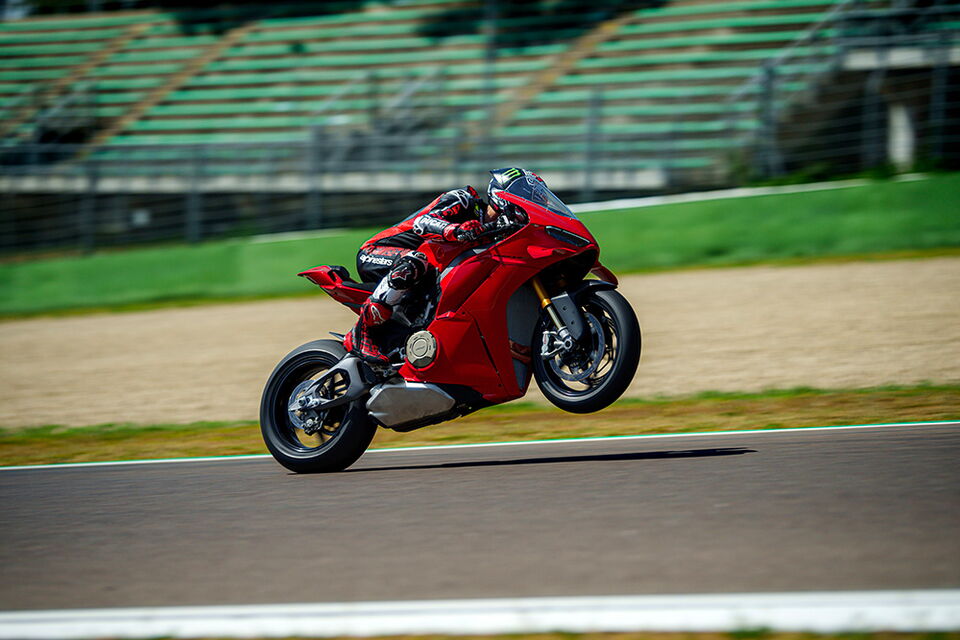
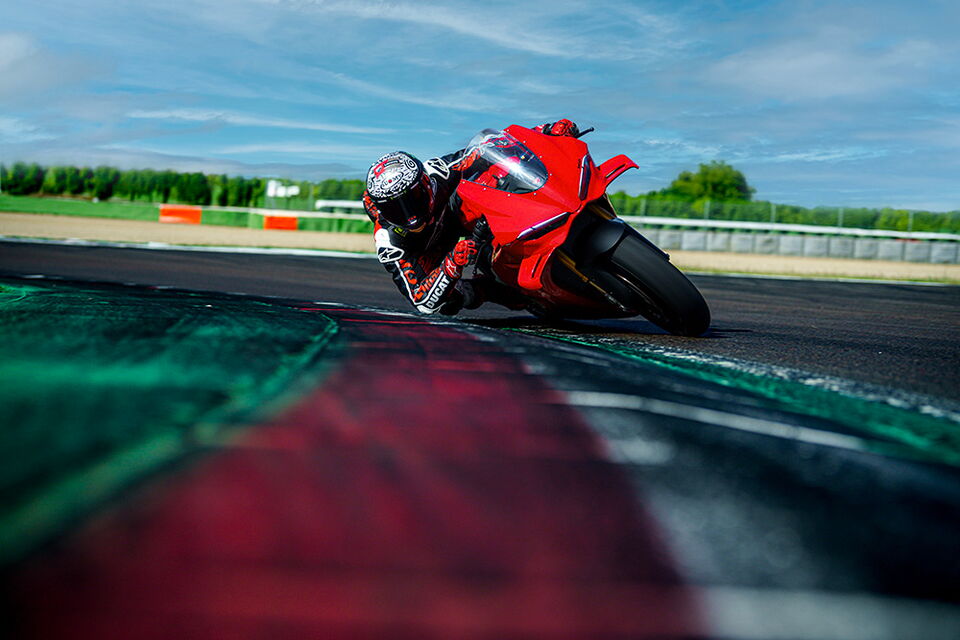
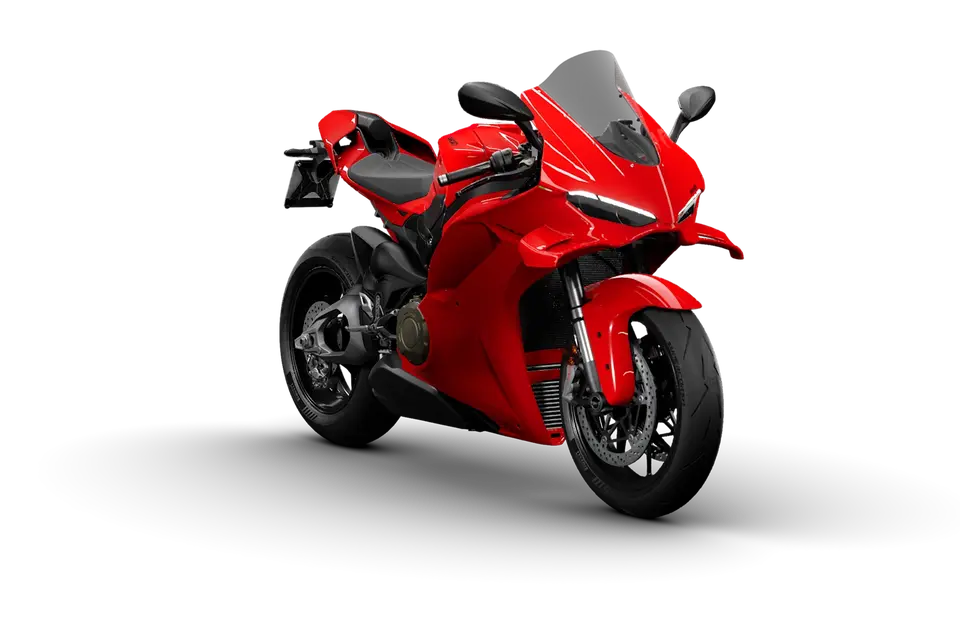
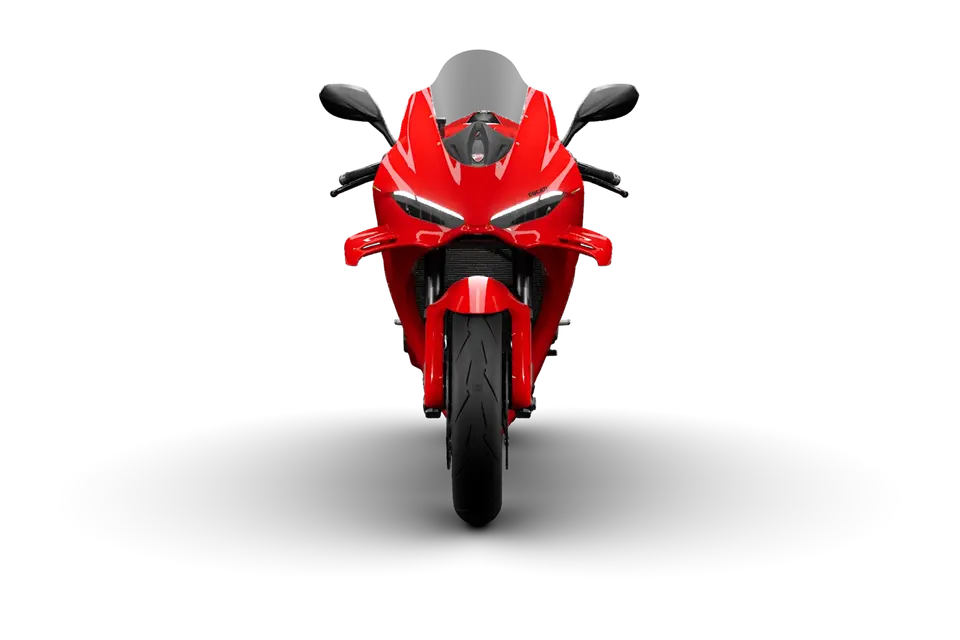
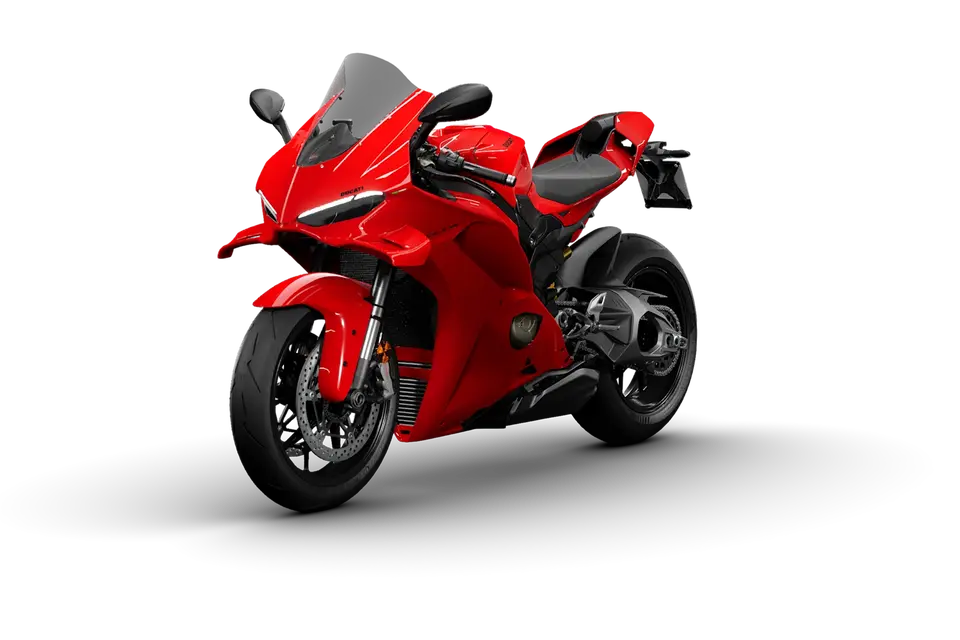
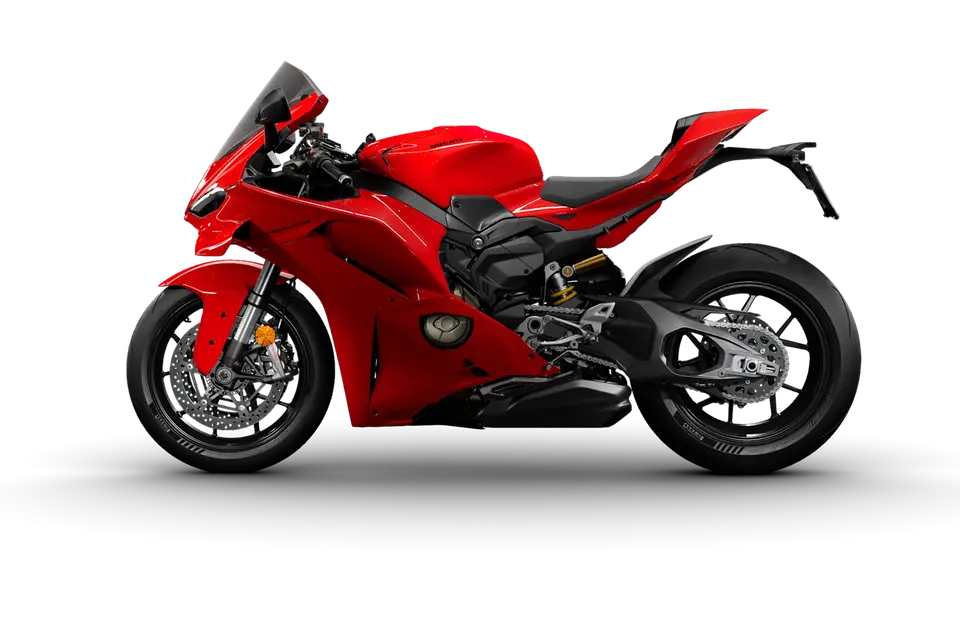
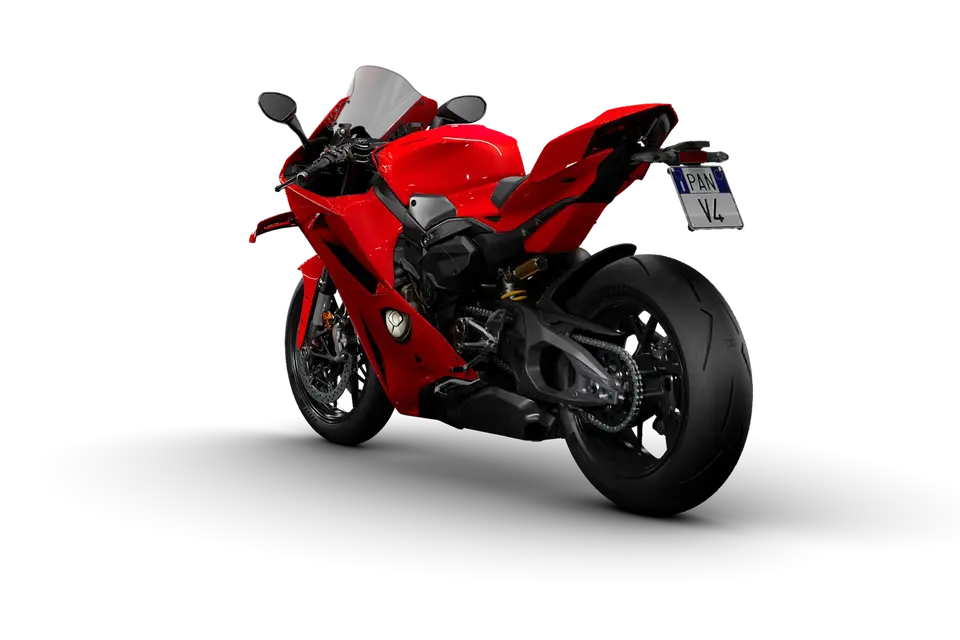
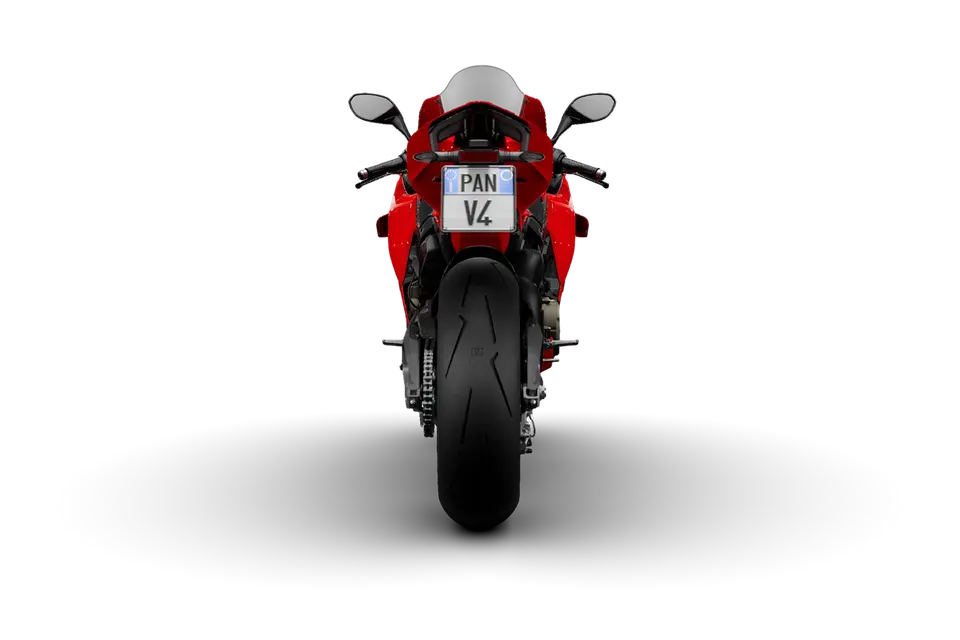
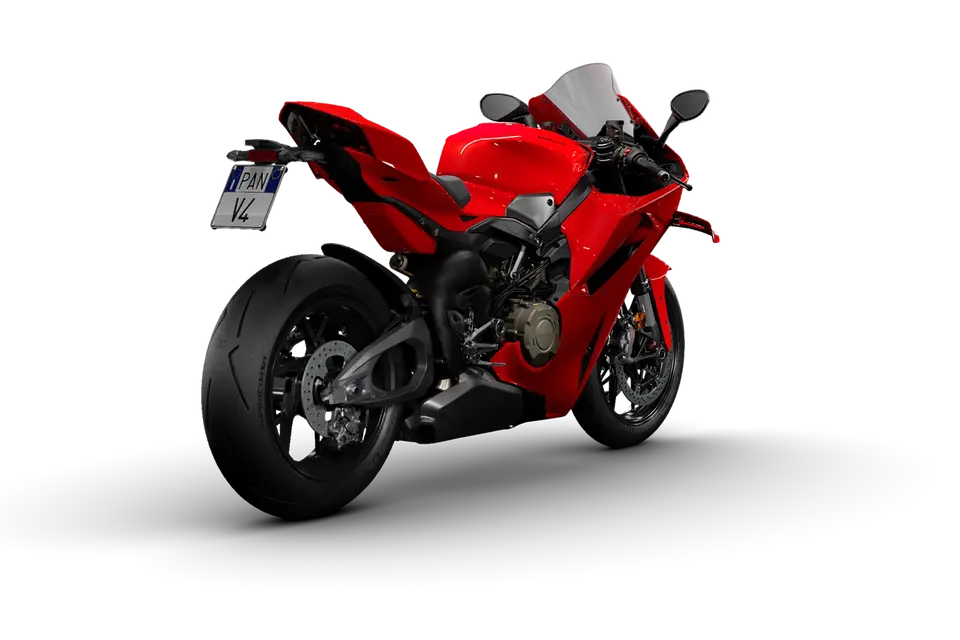
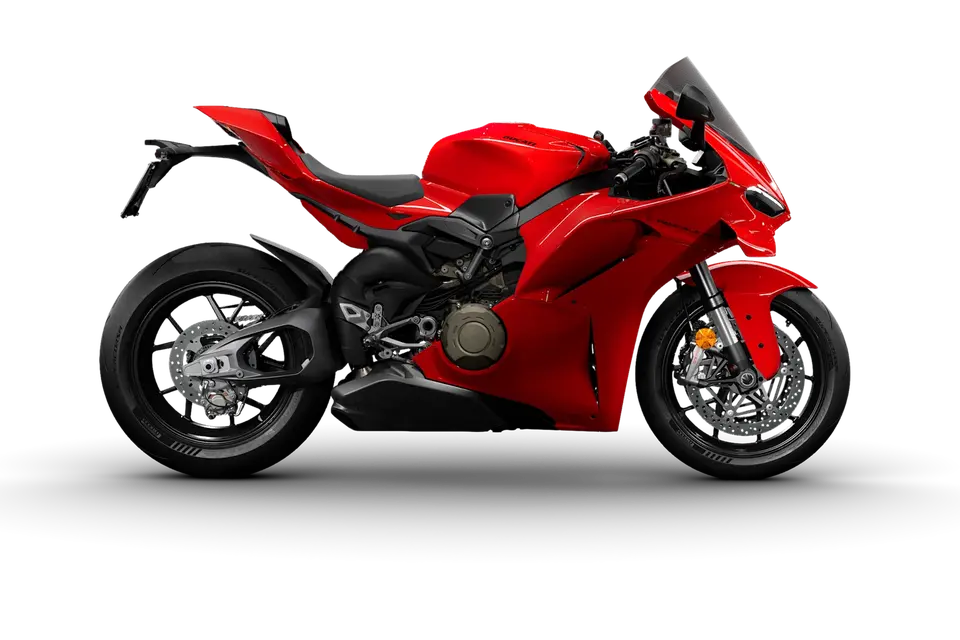


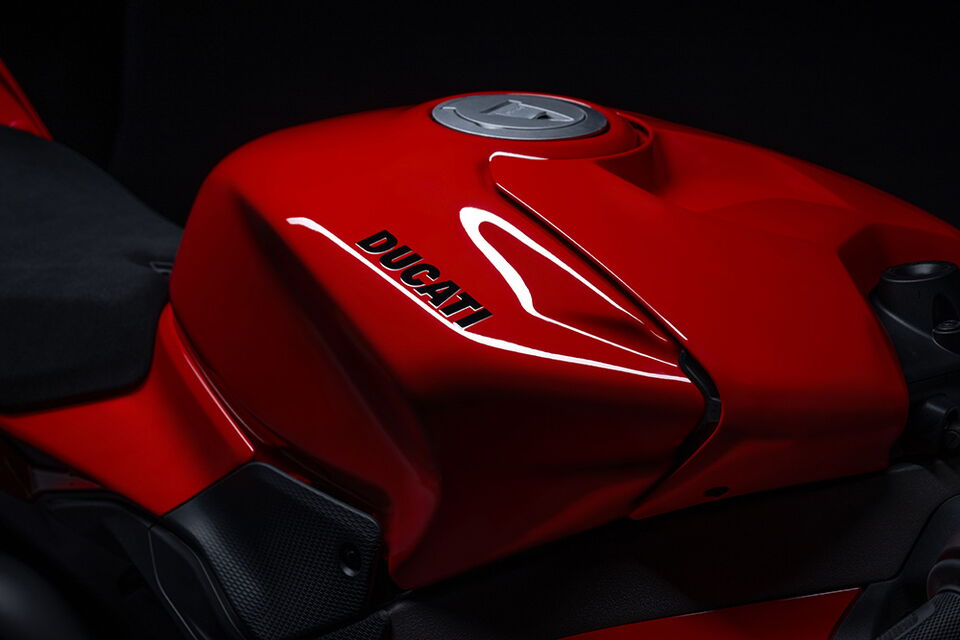

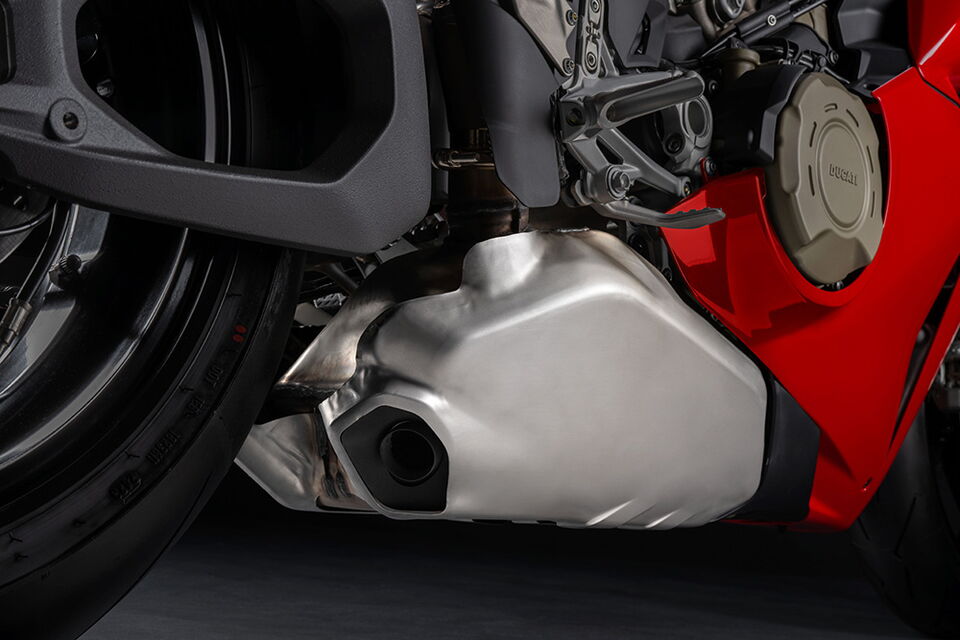
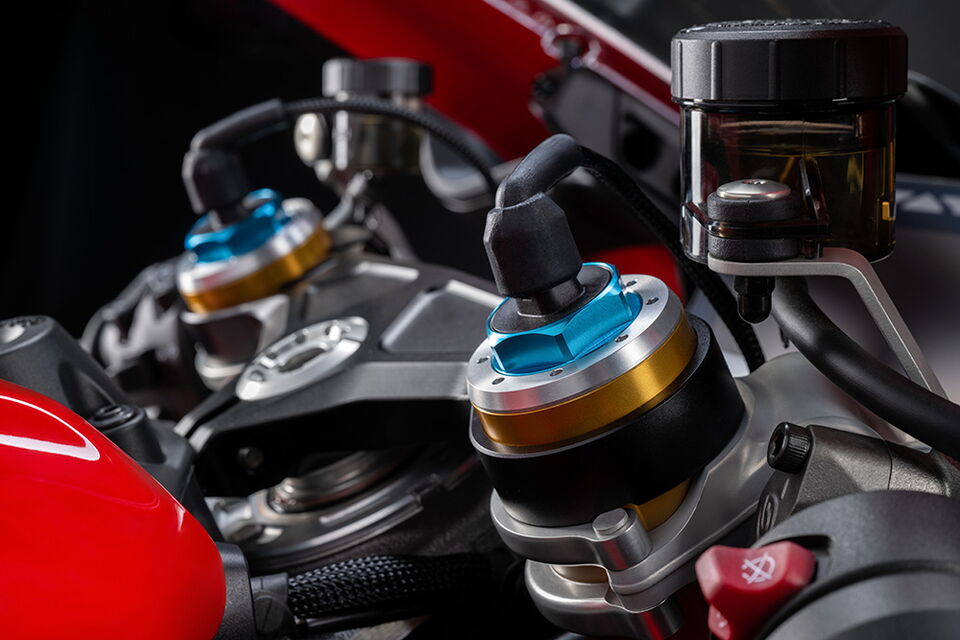
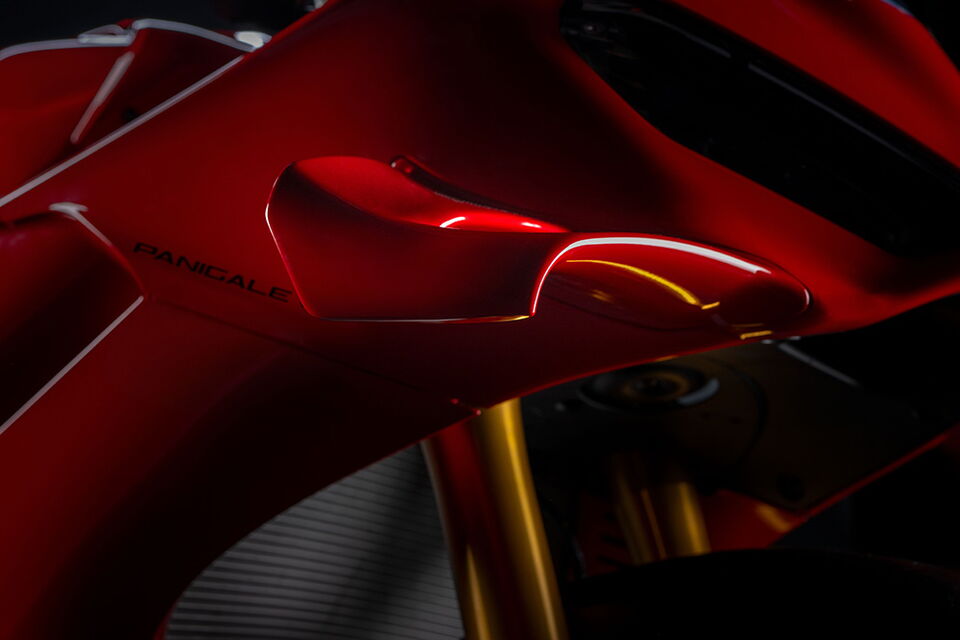
Double-Sided Swingarm: The Boldest Decision in Panigale History
Since 2012, the single-sided swingarm has been the visual signature of every Panigale. It is aesthetically distinctive, mechanically simple, and over decades has become embedded in Ducati’s racing DNA. And then came the double-sided swingarm. Ducati calls it the Ducati Hollow Symmetrical Swingarm—a double-wall, hollow-machined aluminum structure that is not merely as capable as its single-sided predecessor, but more effective.
It is 37 percent stiffer in torsion and 2.9 kg lighter. And because its lateral stiffness can be optimized more precisely, it allows the rear tire to maintain more consistent contact with the pavement under corner-exit acceleration. That is why the 2026 V4 R is also switching to a double-sided swingarm. What the racing department wants eventually reaches the production motorcycle.
For riders who miss the single-sided swingarm, it remains optionally available on the V4 R as a special configuration. On the standard Panigale and V4 S, the double-sided swingarm is the only choice—and judging by the available road and track tests, it is the faster concept.
Engine: 216 hp, Desmo, Oval Throttle Bodies, Variable-Length Intake Funnels
1,103 cc Desmosedici Stradale. 216 hp at 13,500 rpm. 120.9 Nm at 11,250 rpm. Those numbers sound familiar. What changed for 2025 is a modified cylinder head, greater valve lift—0.75 mm more on the intake side and 0.45 mm more on the exhaust side—new oval throttle bodies, and variable-length intake funnels operating in two configurations: short 25 mm funnels at high rpm and long 80 mm funnels through the midrange.
The result is a more linear torque curve between 6,000 and 10,000 rpm, even though peak torque itself has fallen from 123.6 Nm to 120.9 Nm. Ducati has made the engine easier for the rider to use with minimal sacrifice to peak power.
Above 7,500 rpm, the Desmosedici Stradale begins to reveal what it can really do. This is not a relaxed touring engine. At 10,000 rpm on a backroad, it is still nowhere near finished, and on a racetrack it does not enter its full performance zone until beyond 12,000 rpm. Ride this engine below 5,000 rpm and you are riding a different motorcycle from the rider who revs it out. That is the Desmosedici Stradale.
DVO: 70 Virtual Sensors, IMU Behind the Fuel Tank
Ducati Vehicle Observer is not entirely new—it arrived with the Panigale V4 in 2025 and has since been adopted by the Rally, RS, and other models. What is specific to the Panigale is that the IMU was moved from the front section to a position behind the fuel tank for this generation, for more centralized mass distribution.
DVO simulates data from 70 sensors and supplies the control systems with predictive information. DTC DVO, DWC DVO, and DPL DVO do not merely react to wheelspin after it has already begun; they anticipate it. In practice, that results in more consistent intervention from lap to lap. The systems do not abruptly switch intervention on and off, but smooth the control curves.
Race eCBS: The First Combined Braking System in This Class
Race eCBS—Electronic Cornering Brake System—is new to the Panigale family and a first in this class. When the rider pulls the front brake lever, the system also applies a proportion of rear braking across seven levels, with up to 15.5 percent of maximum rear-brake pressure.
The objective is stability under braking. A motorcycle that begins to lift the rear wheel during hard braking loses rear-tire traction. Race eCBS helps prevent that without requiring the rider to explicitly operate the rear brake pedal. On a racetrack with repeated hard braking from high speeds, the result is a measurable improvement in stability. On the road, you notice it less—and it never gets in the way.
Brembo Hypure: New Calipers, Lighter and More Thermally Stable
The new Brembo Hypure calipers replace the previous M50 units. The Hypure calipers are lighter, have improved ventilation, and provide greater thermal stability. That matters during trackday use. Repeatedly brake hard from high speed over successive laps and conventional calipers can begin to feel softer as temperatures rise. The Hypure units retain their precision longer.
The system uses dual 330 mm front discs, a self-bleeding brake master cylinder, and Cornering ABS.
Standard Suspension: Showa BPF, Sachs Shock, Sachs Steering Damper
The standard Panigale V4 uses a fully mechanically adjustable 43 mm Showa USD Big Piston Fork up front. At the rear is a fully adjustable Sachs shock, while a Sachs steering damper comes standard.
This is not compromise suspension. It is the setup many racetrack riders prefer as the foundation for their own chassis adjustments before deciding whether they actually need the V4 S’s Öhlins Smart EC 3.0 system.
If you want to tune the suspension yourself and do not want electronics intervening, choose the standard V4. If you want semi-active damping and forged wheels, choose the V4 S.
Standard vs. V4 S: What the Roughly €7,000 Premium Buys
The standard V4, from €28,190, comes with Showa BPF + Sachs suspension, cast wheels, a conventional battery, and weighs 193–194 kg. The V4 S, from €35,290, gets Öhlins NIX30 Smart EC 3.0 + Öhlins TTX36 semi-active event-based suspension, Marchesini forged wheels—the front wheel weighing 2.95 kg versus 3.82 kg for the cast wheel—a lithium-ion battery that saves 3 kg, and a weight of 189 kg.
Engine, Race eCBS, DVO, Brembo Hypure brakes, and double-sided swingarm are identical.
If you want the complete racetrack experience with electronically controlled suspension and maximum weight reduction, choose the S. If you use the Panigale primarily as a sporting street motorcycle with occasional trackdays, choose the standard V4.
107 dB(A): No Tyrol, No Compromise
107 dB(A). There is no gray area here. This is a clear Tyrol riding ban. The Panigale V4 is one of the loudest motorcycles on the market.
For its target audience—racetrack riders and sport-oriented backroad riders—that will be irrelevant in most situations. If you regularly ride in Austria, choose another model.
Verdict
The 2026 Ducati Panigale V4 is the result of an epochal upgrade: double-sided swingarm, DVO, Race eCBS, new Brembo Hypure calipers, 216 hp, oval throttle bodies, variable-length intake funnels. This is not a model-year facelift. This is a new Panigale.
30,000 km valve-clearance interval. Two-year warranty. From €28,190. Banned on restricted Tyrolean roads. That is the price of owning the most technically ambitious production superbike on the market.
Quick Check
+ 216 hp Desmosedici Stradale at 13,500 rpm; 120.9 Nm; Desmo; oval throttle bodies; variable-length intake funnels, short 25 mm / long 80 mm; counter-rotating crankshaft; Twin Pulse firing order; six-speed transmission; DQS 2.0; 30,000 km valve-clearance interval; Euro 5+. Ducati Hollow Symmetrical Swingarm: double-sided swingarm, 37 percent stiffer and 2.9 kg lighter than single-sided swingarm, with improved rear-tire traction on corner exit
+ DVO with 70 virtual sensors, centrally positioned IMU behind fuel tank, predictive operation, DTC DVO + DWC DVO + DPL DVO; Race eCBS combined braking system with seven levels and up to 15.5 percent rear-brake pressure when using the front brake, a first in its class; new Brembo Hypure four-piston monobloc calipers, lighter and more thermally stable than M50; dual 330 mm discs; self-bleeding brake master cylinder; Cornering ABS
+ Fully adjustable 43 mm Showa USD BPF; fully adjustable Sachs shock; Sachs steering damper; 17/17-inch cast wheels; Pirelli Diablo Supercorsa SP V4; 200/60 ZR17 rear; 16-liter fuel tank; 840 mm seat height; Pit Limiter; DPL; DSC; Data Logger; TPMS; 5-inch TFT. Ducati claimed consumption: 6.5 L/100 km versus 7.6 L/100 km on predecessor
+ From €28,190, around €7,000 less than V4 S with Öhlins Smart EC 3.0 + forged wheels + lithium battery; engine, Race eCBS, DVO, and Brembo Hypure identical; 2-year warranty; production-ready racing DNA, with V4 S semi-active Öhlins and V4 R at €43,990 with WSBK homologation as the next steps
– 107 dB(A): Tyrol riding ban; among Ducati’s loudest motorcycles together with V4 S; 2-year warranty, not four years as on Multistrada/DesertX; 30,000 km valve-clearance interval due to Desmo, while V2 family has 45,000 km; 16-liter tank provides approximately 246 km of range, limited even for a sportbike
– No passenger infrastructure for long-distance touring; no radar equipment; no cruise control. Cast wheels on Standard, while V4 S gets Marchesini forged wheels, approximately 0.87 kg lighter per wheel; Standard weighs 193–194 kg versus 189 kg for V4 S. At 107 dB(A), complaints from residents on popular riding roads are possible.
– €28,190 price: BMW M 1000 RR at around €35,000 with 210 hp and inline-four is more expensive but competitive; Aprilia RSV4 Factory at around €24,000 with 217 hp is less expensive and similarly powerful; Kawasaki ZX-10R KRT at around €22,000 with 210 hp is less expensive. V4 S at around €33,490: Öhlins Smart EC 3.0 + forged wheels clearly recommended for sport-focused riders.
Technical Specifications: Ducati Panigale V4 Standard (2026)
Make / Model: Ducati Panigale V4 Standard (2026; 2025/2026 generation; unchanged); V4 S version covered in a separate review, approx. €35,290 with Öhlins Smart EC 3.0, forged wheels, lithium battery, 189 kg; manufacturer: Ducati Motor Holding S.p.A.
What’s New for 2025/2026: Ducati Hollow Symmetrical Swingarm, double-sided swingarm replacing single-sided swingarm; DVO with 70 virtual sensors and centrally positioned IMU; Race eCBS combined braking system, a first in the class; new Brembo Hypure calipers; oval throttle bodies; variable-length intake funnels; modified cylinder head with +0.75/+0.45 mm valve lift; 216 hp; Euro 5+; new fuel-tank design
Standard vs. V4 S: Standard: Showa BPF + Sachs shock, cast wheels, conventional battery, 193–194 kg, from €28,190. V4 S: Öhlins NIX30 Smart EC 3.0 + semi-active TTX36, Marchesini forged wheels approximately 0.87 kg lighter per wheel, lithium battery, 189 kg. Engine + swingarm + brakes + DVO + eCBS identical.
Engine: Desmosedici Stradale; 1,103 cc; Desmo; 90-degree V4; counter-rotating crankshaft; Twin Pulse firing order; oval throttle bodies; variable-length intake funnels, 25 mm short / 80 mm long; two fuel injectors per cylinder; Ride-by-Wire; six-speed transmission; DQS 2.0; wet clutch; Euro 5+
Power / Torque: 216 hp (159 kW) at 13,500 rpm; 120.9 Nm at 11,250 rpm
Top Speed / Consumption: Approx. 299 km/h; approx. 6.5 L/100 km according to Ducati, versus 7.6 L/100 km on predecessor; approx. 246 km range from 16-liter tank
Fuel Tank / Weight: 16 liters; approx. 203 kg fully fueled for Standard; V4 S 204 kg fully fueled
Transmission / Final Drive: 6-speed; chain drive; DQS 2.0 Up/Down
Electronics: DVO with 70 virtual sensors, predictive operation, centrally positioned IMU behind fuel tank; Race eCBS with seven levels and combined braking; DTC DVO; DWC DVO; DSC; DPL DVO Launch Control; EBC; Bosch Cornering ABS; DQS 2.0; Pit Limiter; Lap Timer; DDL Data Logger; TPMS; 5-inch TFT with Road/Race modes; full LED lighting; anti-theft system
Front Suspension, Standard: 43 mm Showa USD Big Piston Fork, BPF; fully adjustable for compression, rebound, and spring preload
Rear Suspension, Standard: Sachs; fully adjustable; Ducati Hollow Symmetrical Swingarm, aluminum double-sided design, 37 percent stiffer and 2.9 kg lighter than single-sided swingarm; Sachs steering damper standard
V4 S Suspension: Öhlins NIX30 Smart EC 3.0, event-based semi-active, + Öhlins TTX36 semi-active; Ducati Electronic Suspension, DES 3.0
Front Brake: Brembo Hypure four-piston monobloc calipers, new for 2025, lighter and more thermally stable than M50; dual 330 mm discs; self-bleeding brake master cylinder; Race eCBS; Bosch Cornering ABS
Rear Brake: 220 mm disc; Race eCBS, receiving 0–15.5 percent rear-brake pressure from front-brake input; Cornering ABS
Wheels / Tires: Standard: six-spoke Y-design cast wheels, 17/17 inches. V4 S: Marchesini five-tangential-spoke forged wheels, 2.95 kg front / 4.15 kg rear. Pirelli Diablo Supercorsa SP V4; 120/70 ZR17 front / 200/60 ZR17 rear
Ergonomics: 840 mm seat height; sporting race-oriented riding position; clip-on handlebars; single-seat configuration standard, passenger setup available as an accessory; no adjustable windscreen
Stationary Noise: 107 dB(A)—Tyrol riding ban applies, Tyrol limit 95 dB(A)
2025/2026 Special Models: Panigale V4 S from €35,290 with Öhlins Smart EC 3.0 + forged wheels + lithium battery, 189 kg. V4 Tricolore, limited, approx. €54,500, carbon wheels, 188 kg, Brembo Front Brake Pro 338.5 mm discs, dry clutch. V4 R, €43,990, WSBK homologation model, 218 hp, Corner Sidepods, DRG.
Warranty / Service: 2 years, unlimited mileage; valve-clearance inspection every 30,000 km, Desmo; oil service every 15,000 km / 12 months
Price in Germany: From €28,190 plus €305 destination charges; V4 S from €35,290