Review Fantic Caballero 700 Scrambler (2026)

Yamaha Engine, Italian Frame—and More Modern Than Its Technical Donor
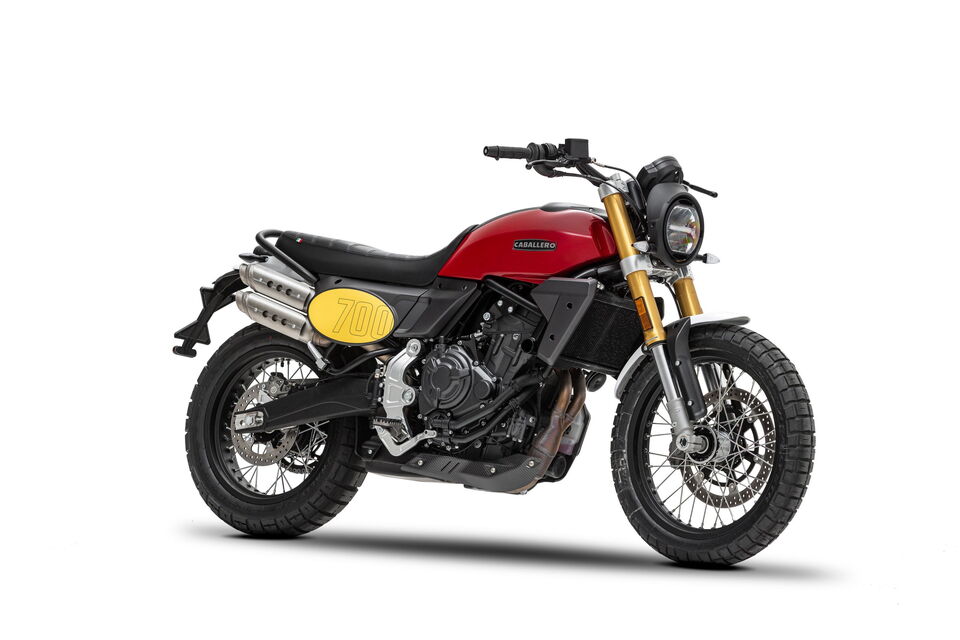
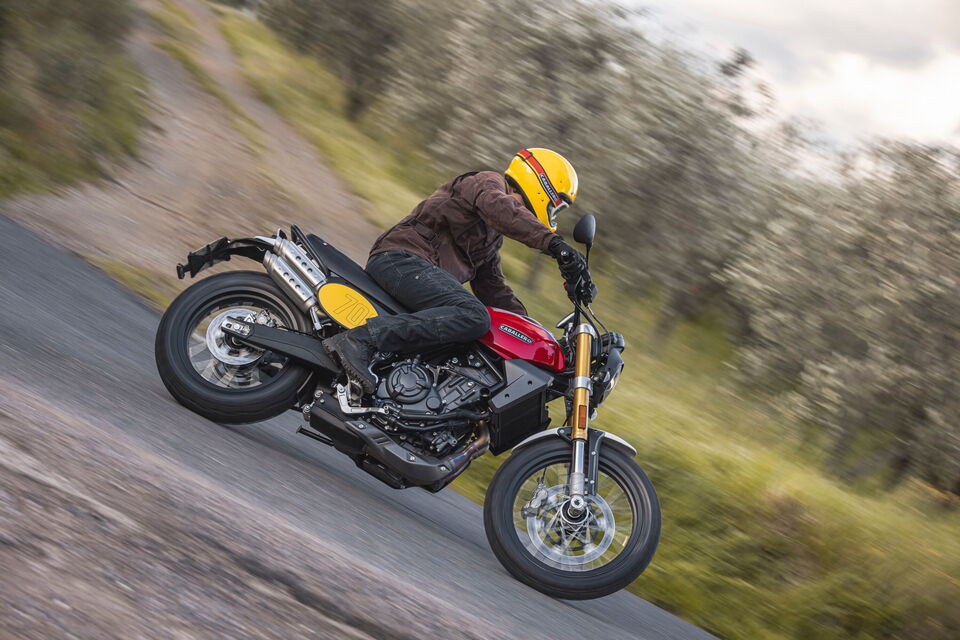
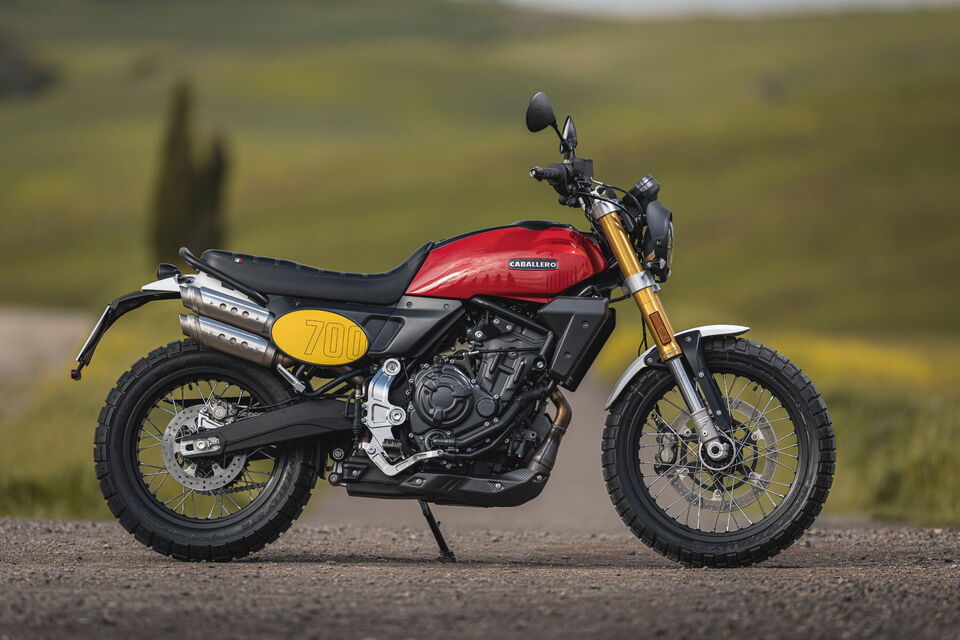
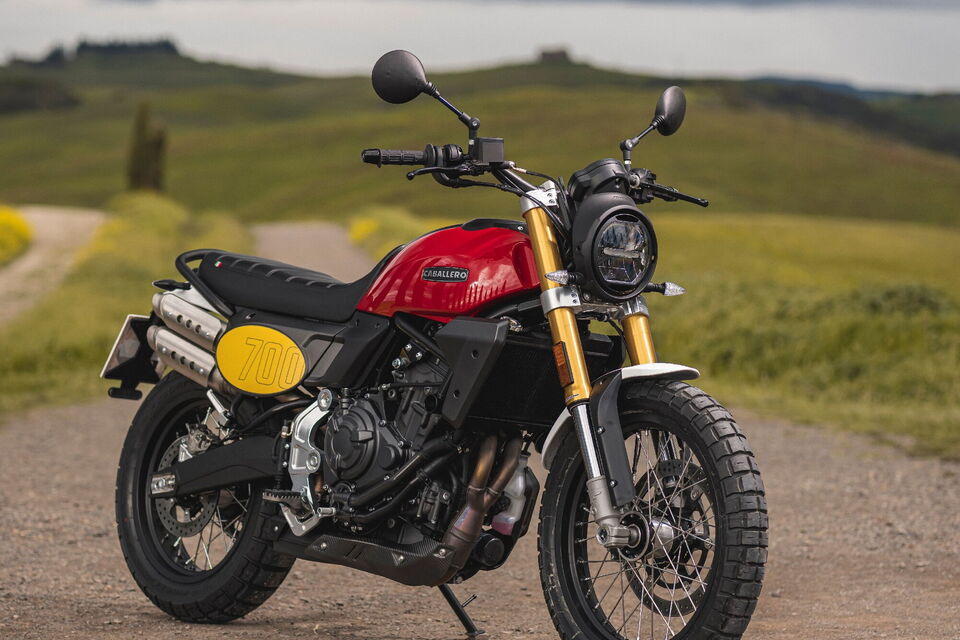
Fantic has taken the Yamaha CP2 twin from the MT-07 and Ténéré 700, installed it in its own chromoly chassis, added Ride-by-Wire and Cornering ABS—and created a Scrambler flagship that surpasses its technical donor, the Yamaha XSR 700, in electronic equipment. 75 hp, approx. 188 kg fully fueled, Brembo brakes, Marzocchi suspension, round TFT display with Bluetooth. From €9,290 for the base model, €9,999 for the Deluxe—both including additional charges.
As of: April 13, 2026 | Tested model: Fantic Caballero 700 Scrambler (2026) | Price from: €9,290 including additional charges

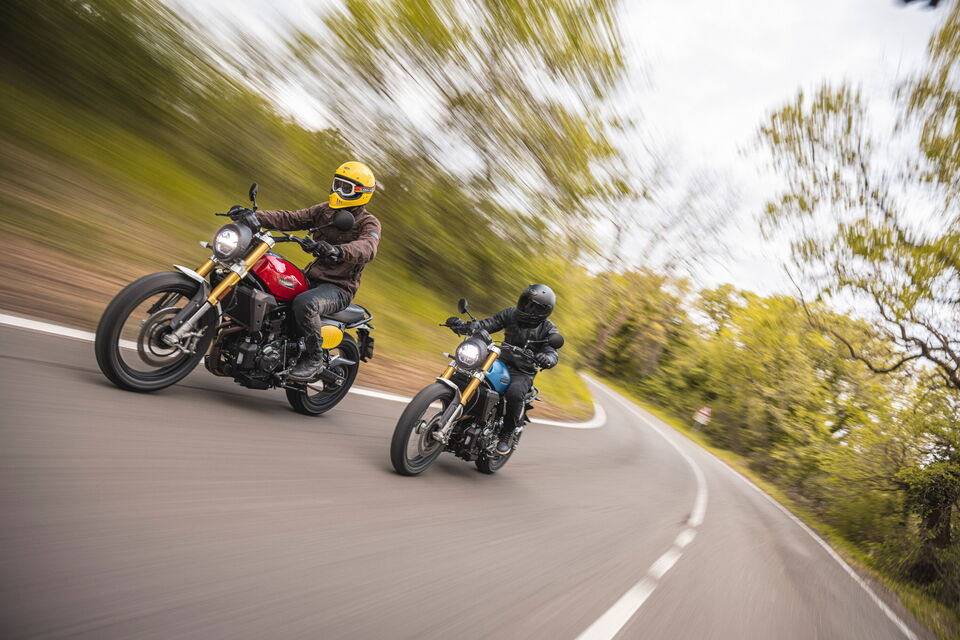
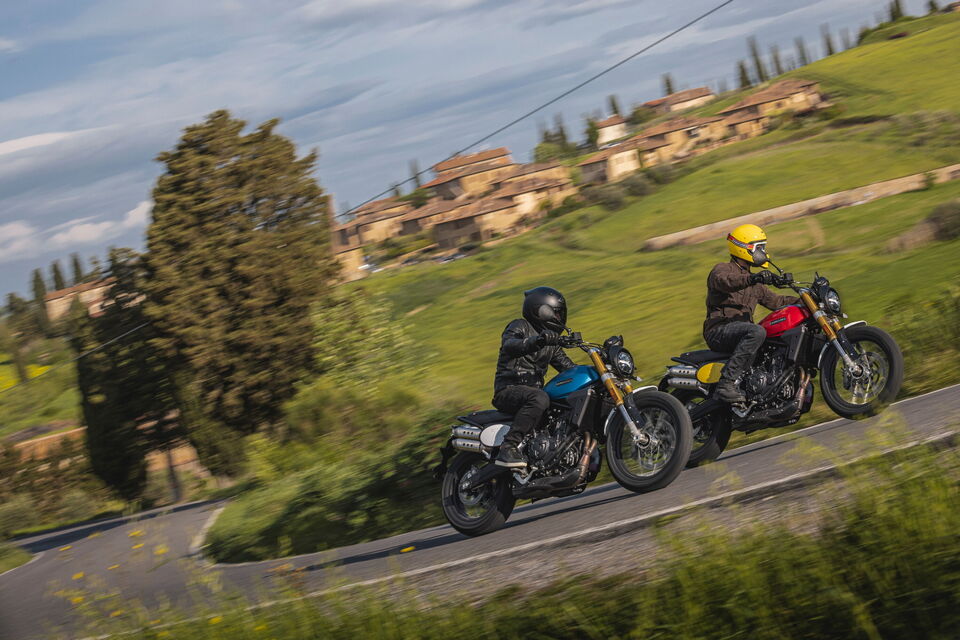
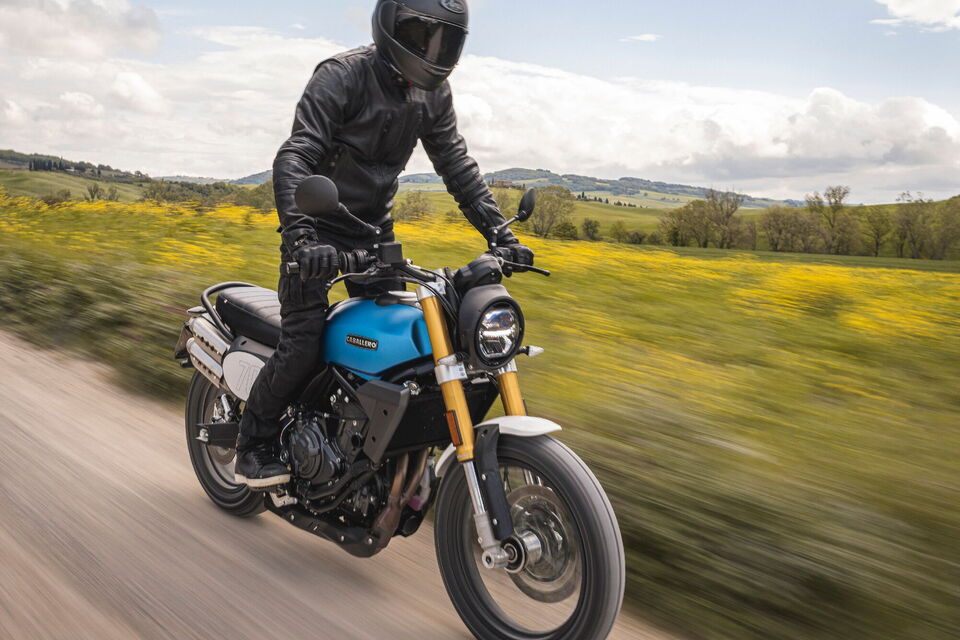
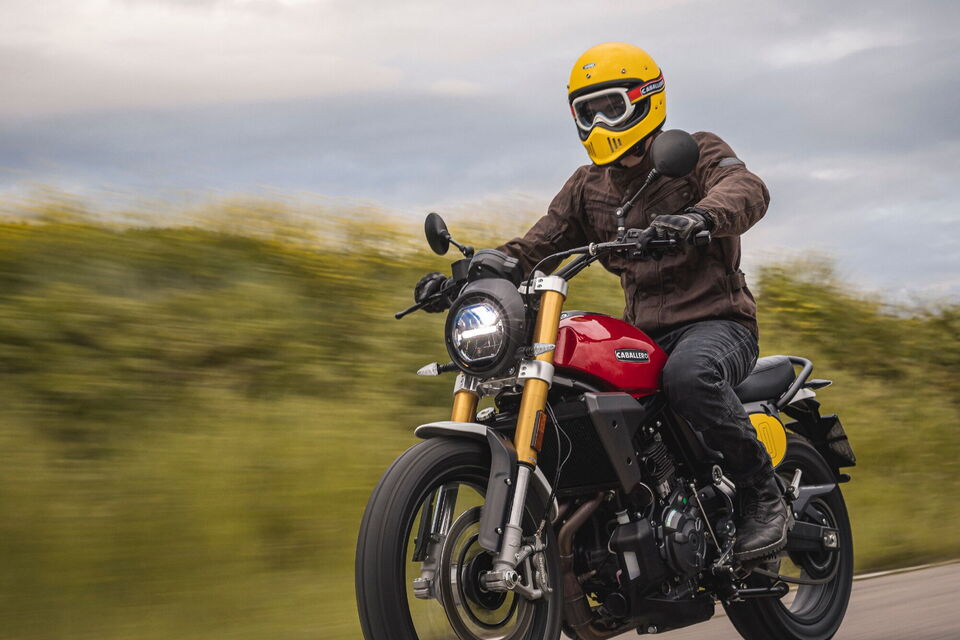





Engine: Yamaha CP2 With Fantic Tuning—75 hp, More Than MT-07 and XSR 700
689 cc, liquid-cooled parallel twin, DOHC, 270-degree crankshaft offset, fuel injection, Ride-by-Wire. The Yamaha CP2 is one of the best middleweight engines currently available—well known from the MT-07, Ténéré 700, and XSR 700. What is less widely known is that Fantic’s own airbox, exhaust system, and fuel-injection mapping extract around 75 hp and 68–69 Nm from the CP2—depending on the source, approximately 1–1.5 hp more than in the Yamaha models. It is a subtle difference that is expressed less in the numbers than in the perceived character: the Fantic CP2 responds more immediately to throttle input and delivers greater thrust through the low and middle rev range.
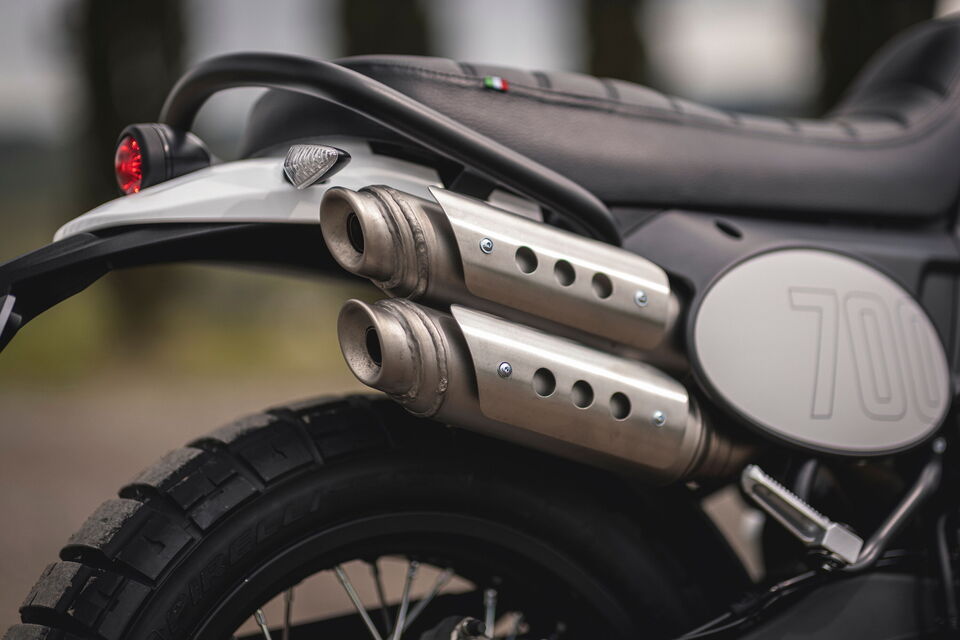
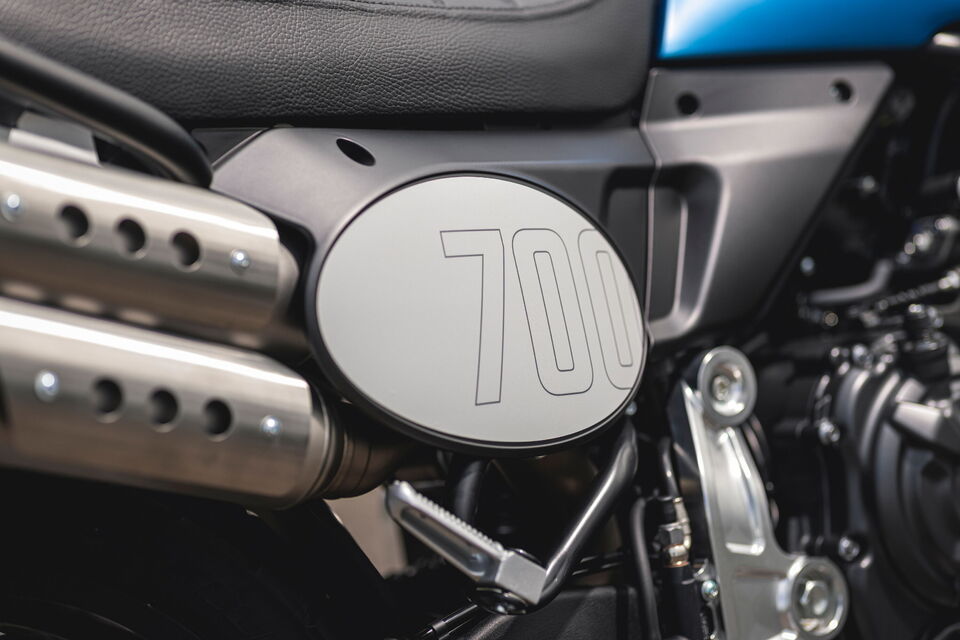
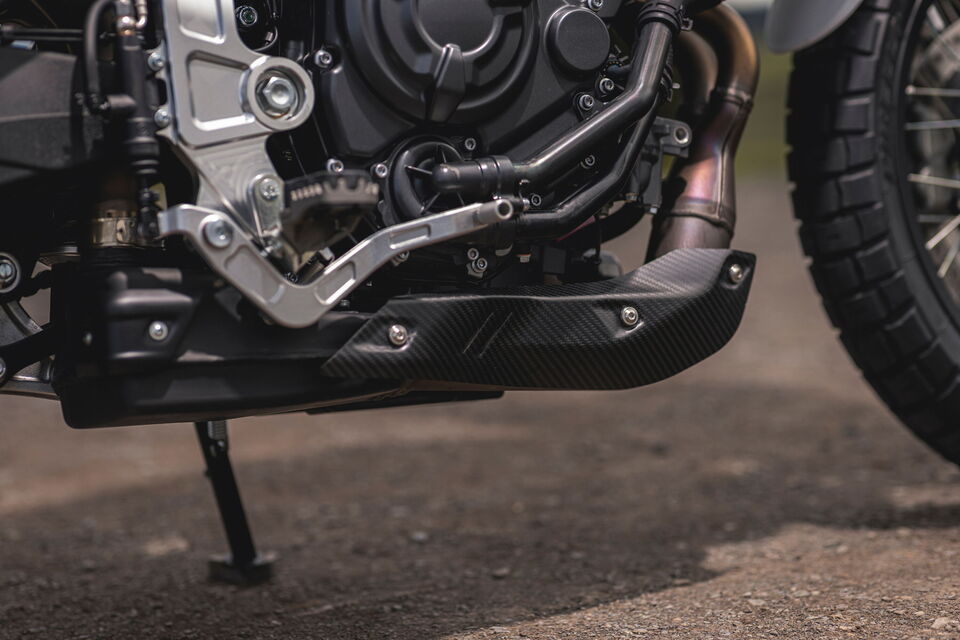
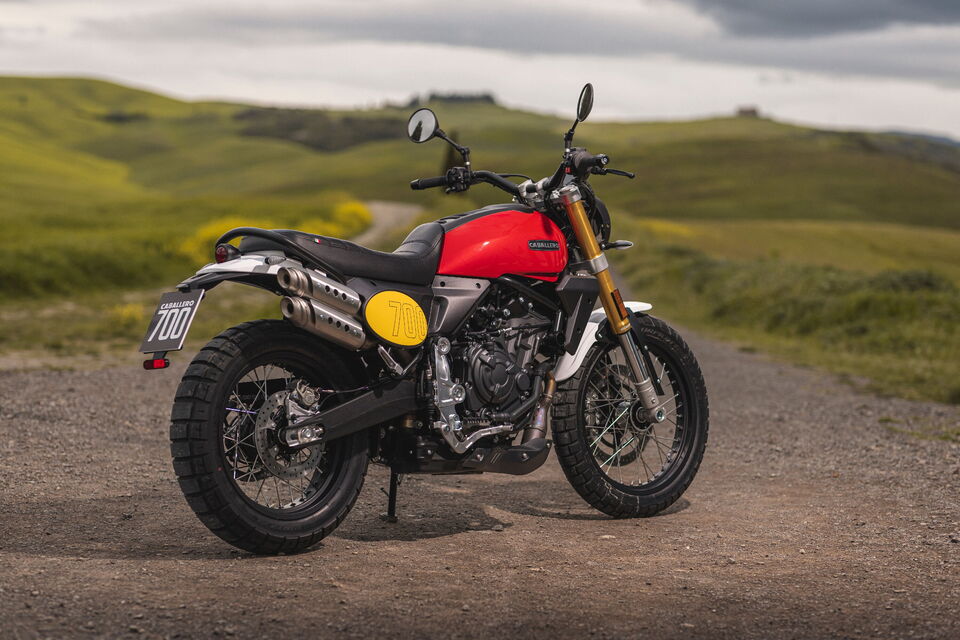
The characteristic CP2 sound from its 270-degree crankshaft—syncopated, pulsing, clearly different from a conventional parallel twin—is emphasized by Fantic’s high-mounted twin mufflers with carbon protection. Anyone familiar with the Yamaha soundtrack from the MT-07 or Ténéré will recognize the foundation. But the Fantic character makes it different: more immediate, more direct, with slightly stronger drive in the low and midrange where a scrambler spends much of its time.
There are three riding modes: Street, Offroad, and Custom. In Offroad mode, ABS operates only on the front wheel and traction control is deactivated. In Custom mode, the rider can configure ABS and traction control individually or switch them off completely.
Chassis: 45 mm Marzocchi USD Fork, Brembo Brakes, Inertial Platform—Far Beyond Yamaha Level
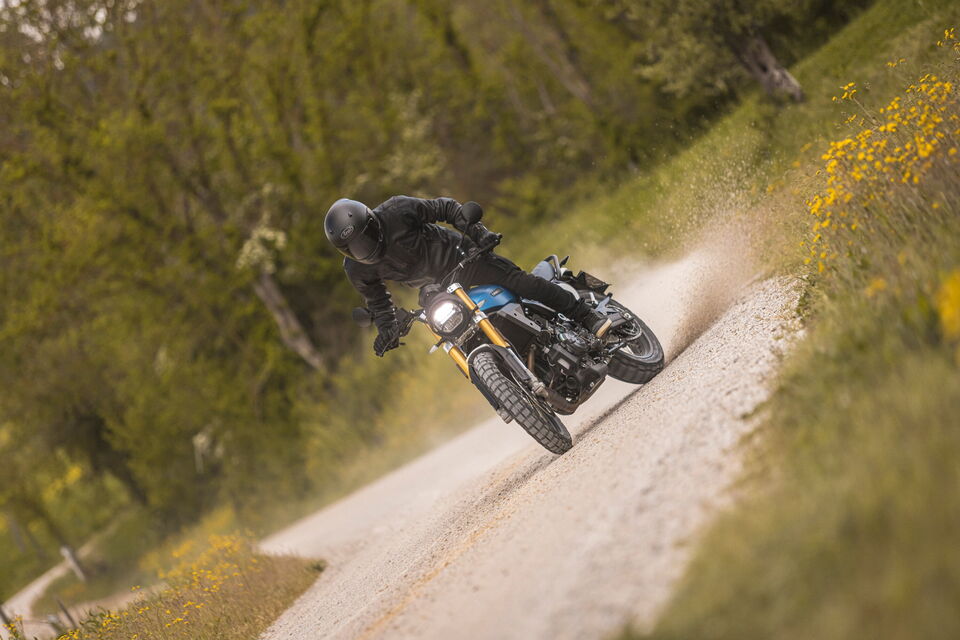
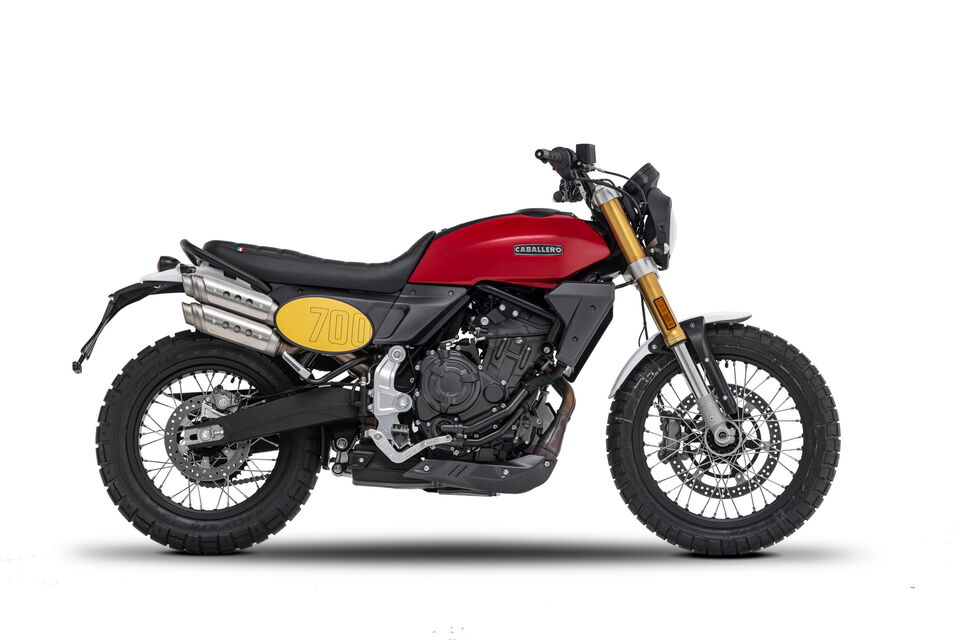
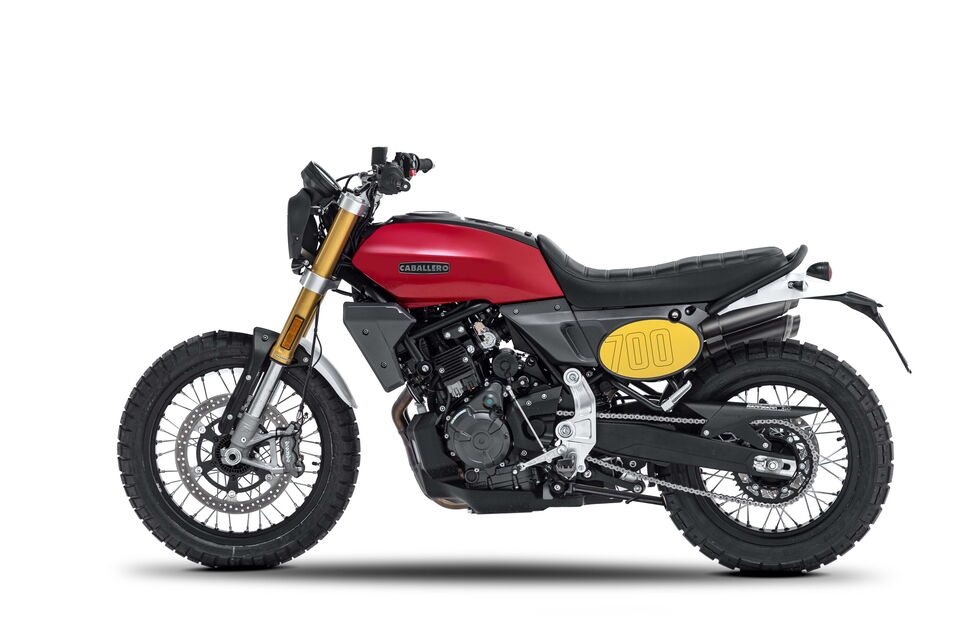
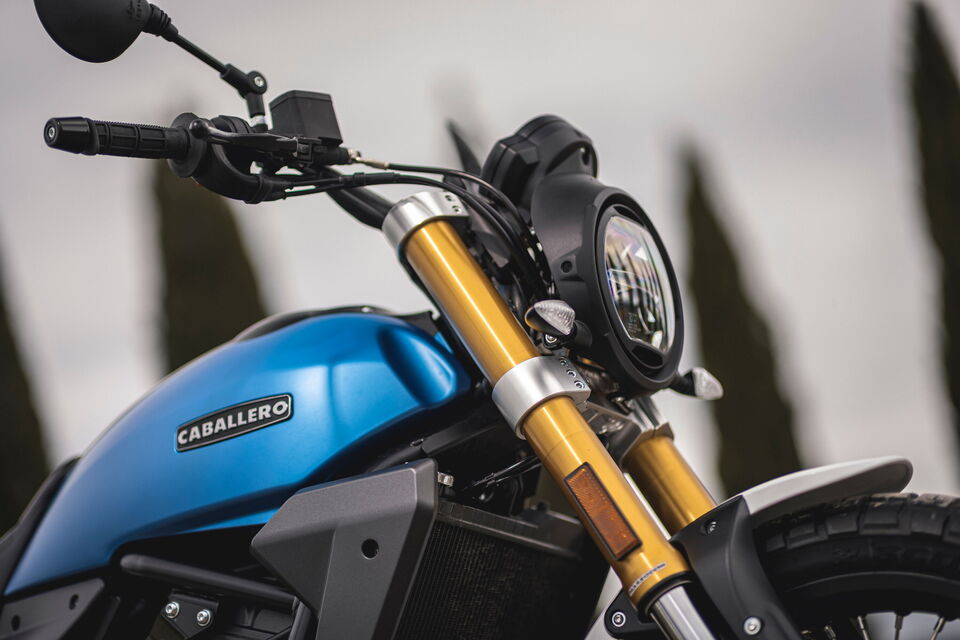
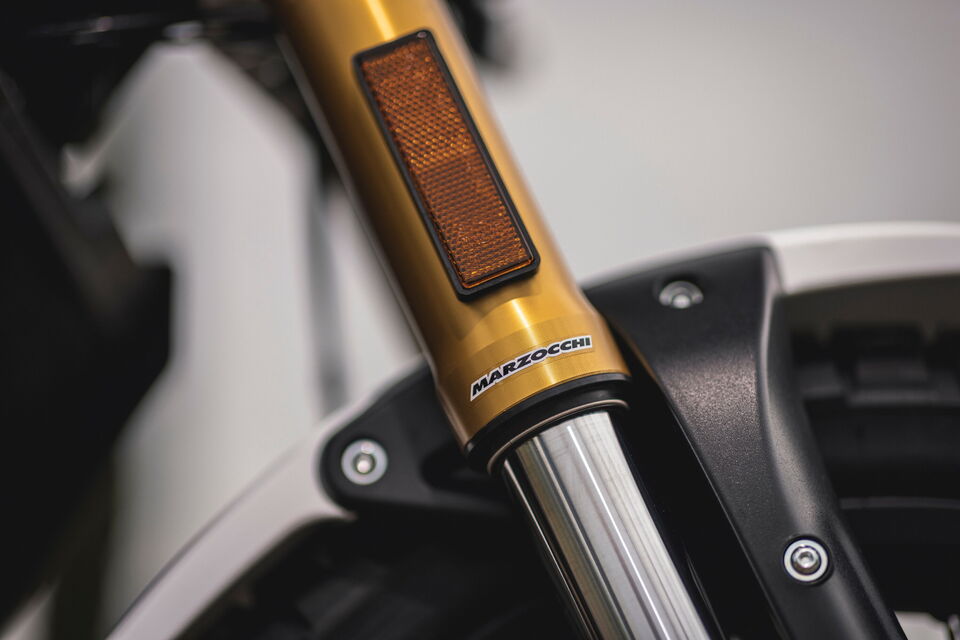
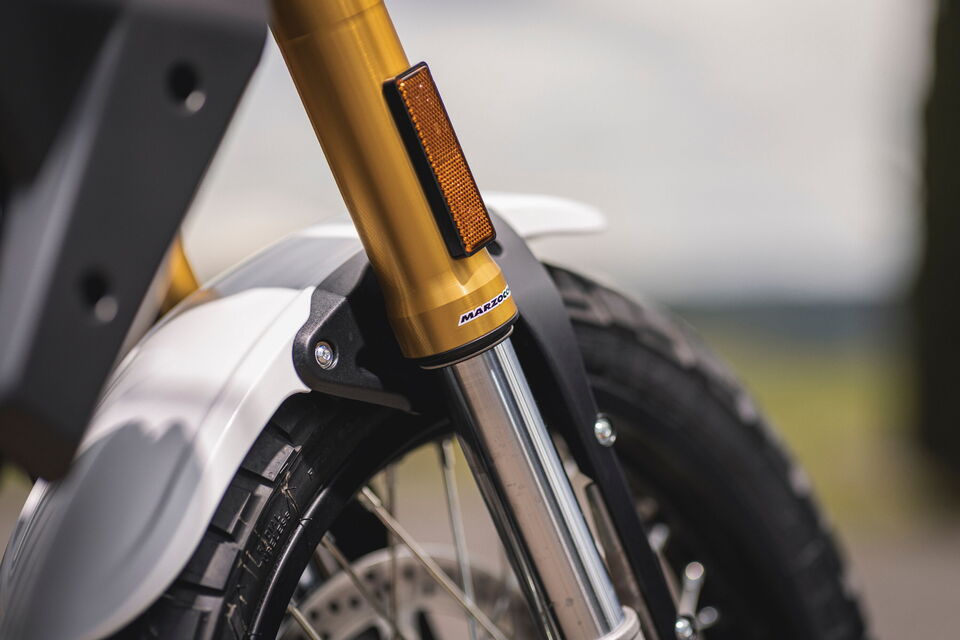
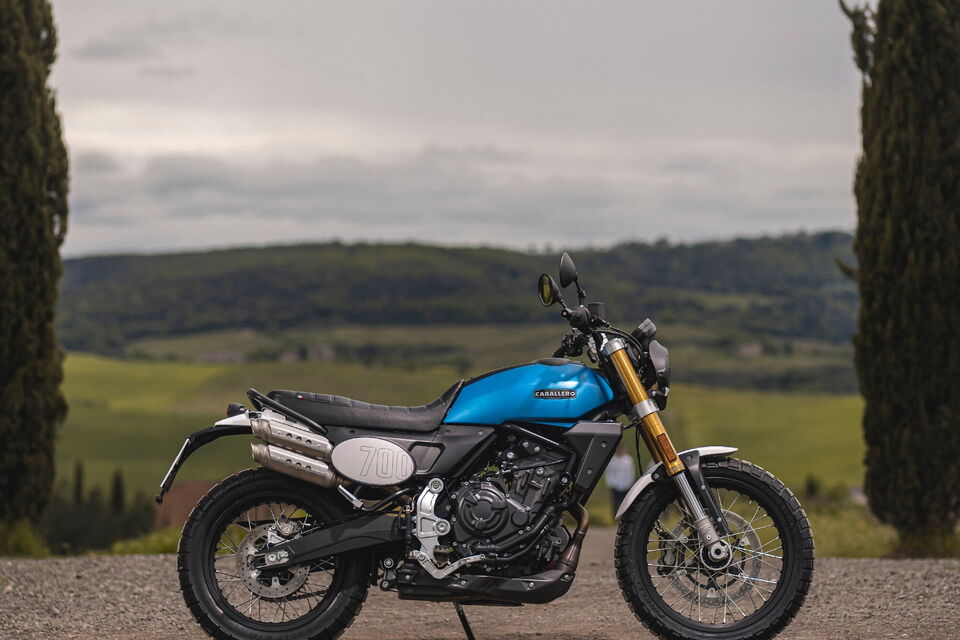
The frame is a chrome-molybdenum steel monobeam design developed entirely by Fantic. Up front is a 45 mm Marzocchi USD fork with 150 mm of travel, non-adjustable on the standard Scrambler. At the rear is a Marzocchi monoshock with 150 mm of travel and adjustable spring preload. An aluminum double-sided swingarm completes the chassis. Wire-spoke wheels measure 19 inches at the front and 17 inches at the rear.
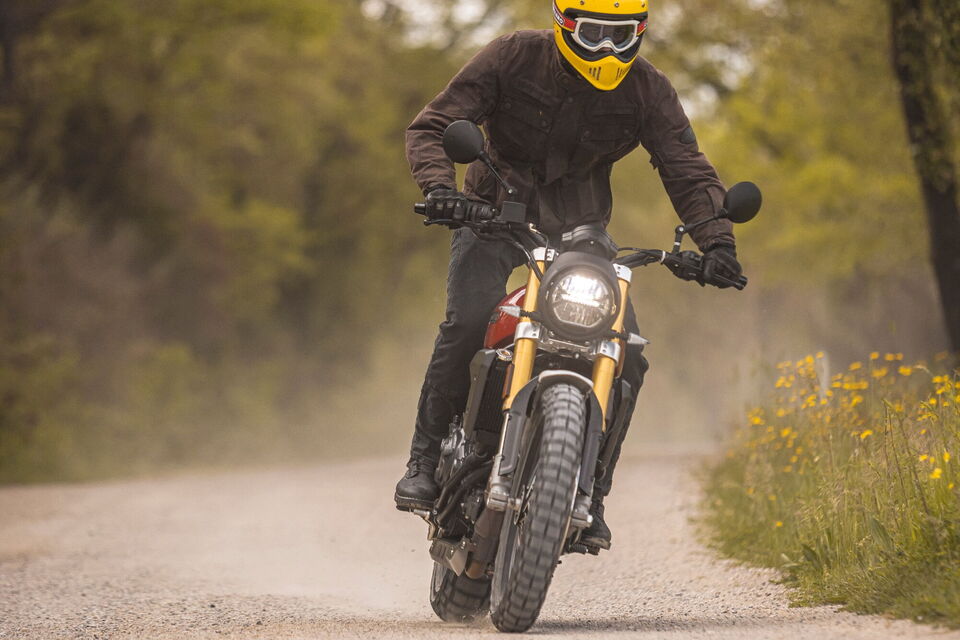
Tires are Pirelli Scorpion Rally STRs, 110/80-19 front and 150/70-17 rear—the rear is wider than the 500’s 140/80-17, reflecting the higher performance. The suspension has been developed through countless test kilometers under all conditions: fast roads, gravel tracks, and off-road terrain. The result works well on pavement while retaining genuine dual-sport ability in light off-road use.
The brakes are the real quality statement. Up front is a 330 mm disc with a Brembo P4.32 four-piston radial caliper—a genuine high-performance caliper normally found on considerably more expensive motorcycles. At the rear is a 245 mm disc with a Brembo caliper. Continental Cornering ABS comes standard, can be switched off, and is lean-angle optimized. Traction control is also standard and switchable, while an IMU inertial platform comes standard as well.
That level of equipment is not found on the Yamaha XSR 700. The XSR 700 has neither Ride-by-Wire nor lean-angle-sensitive systems. In terms of electronics, the Fantic is considerably more modern than the donor model.
Ergonomics: 830 mm Seat Height, Round TFT With Bluetooth, Upright Scrambler Position
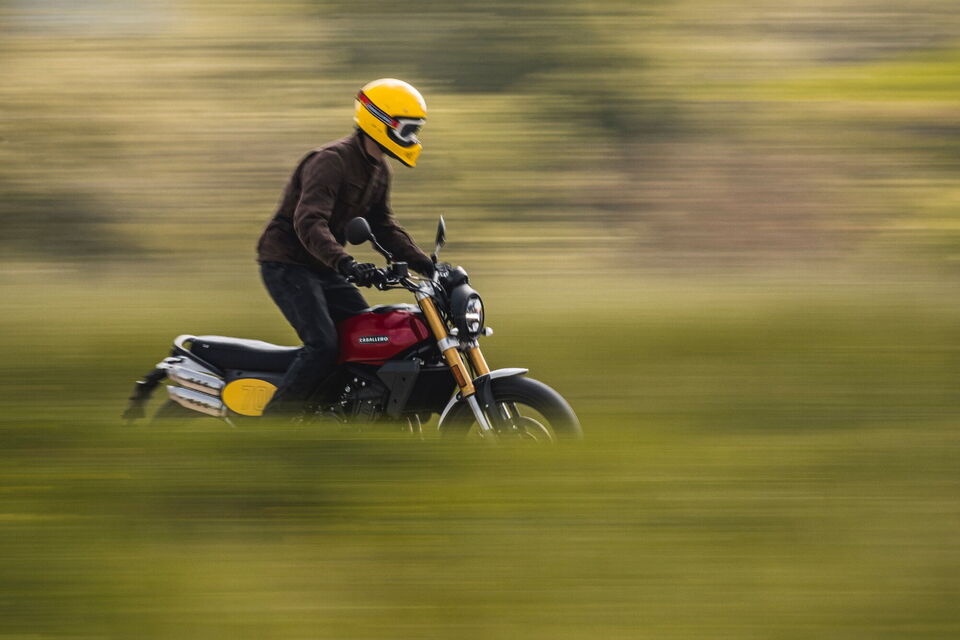
Seat height is 830 mm—10 mm higher than on the 500. Thanks to the narrow waist, even shorter riders can place both feet securely on the ground. The seat is flat and continuous, with the typical upright scrambler layout. The wide, tapered off-road handlebar creates a slight forward lean while maintaining relaxed knee angles. It is classic scrambler ergonomics and remains comfortable over longer distances. The riding position works coherently for riders up to around 1.90 meters tall.
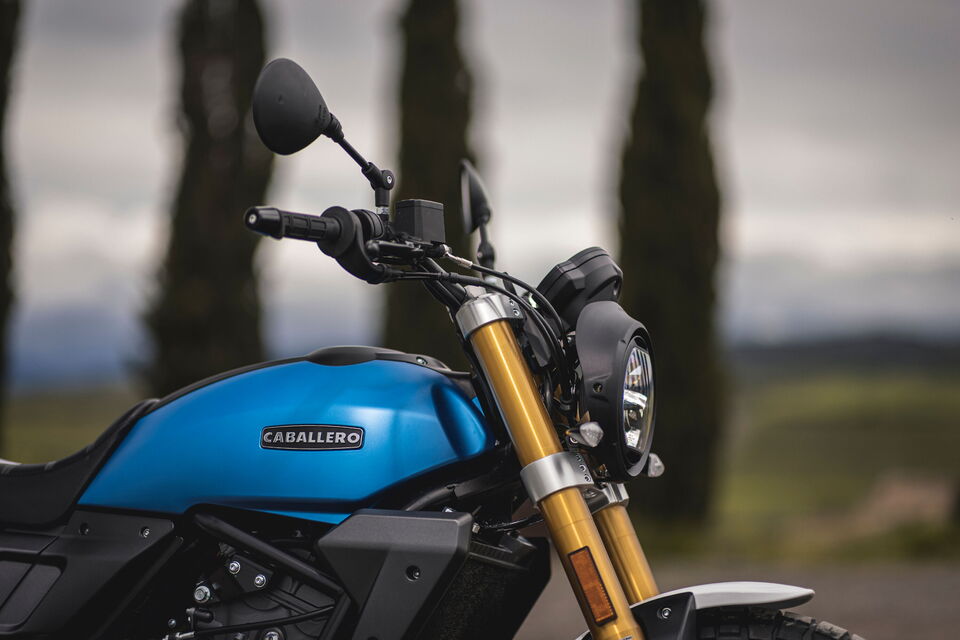
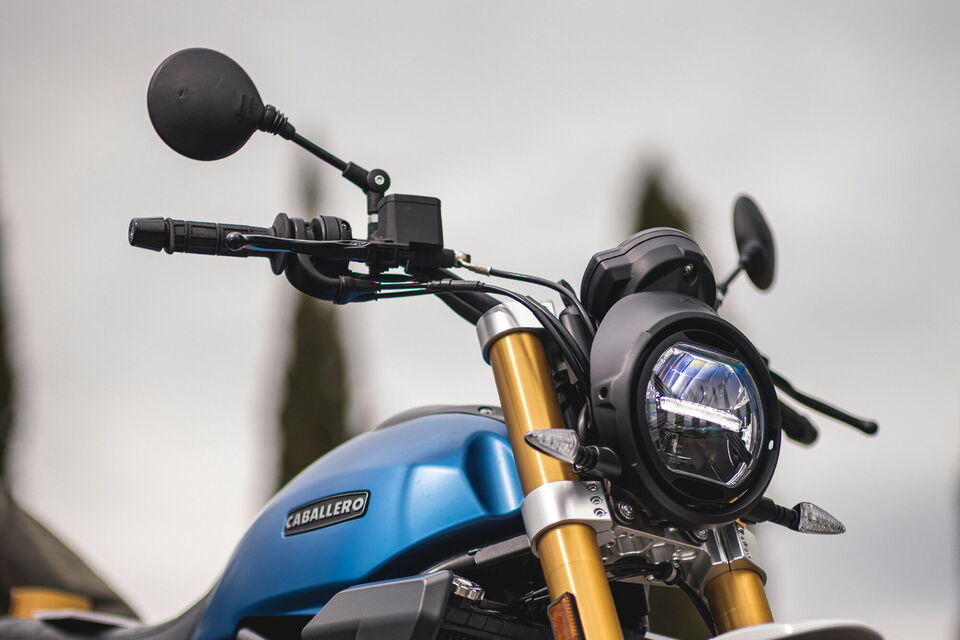
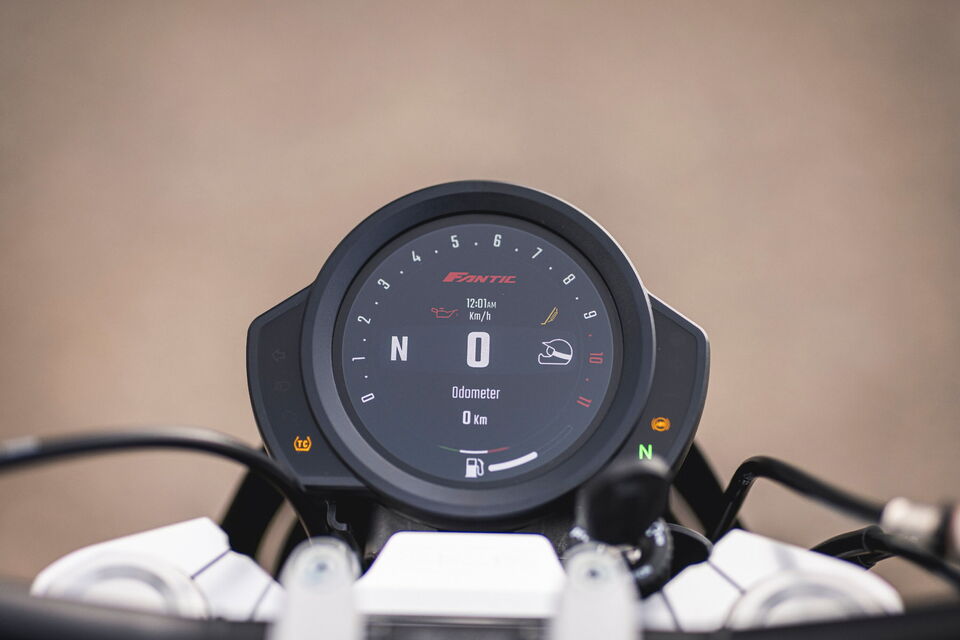
The display is a round 3.5-inch TFT—the world’s first scrambler with this feature when it was introduced in 2023. The round screen fits the visual language of the Scrambler perfectly and is clearly legible. Bluetooth connectivity for phone and media applications comes standard, a significant advantage over the 500’s LCD display.
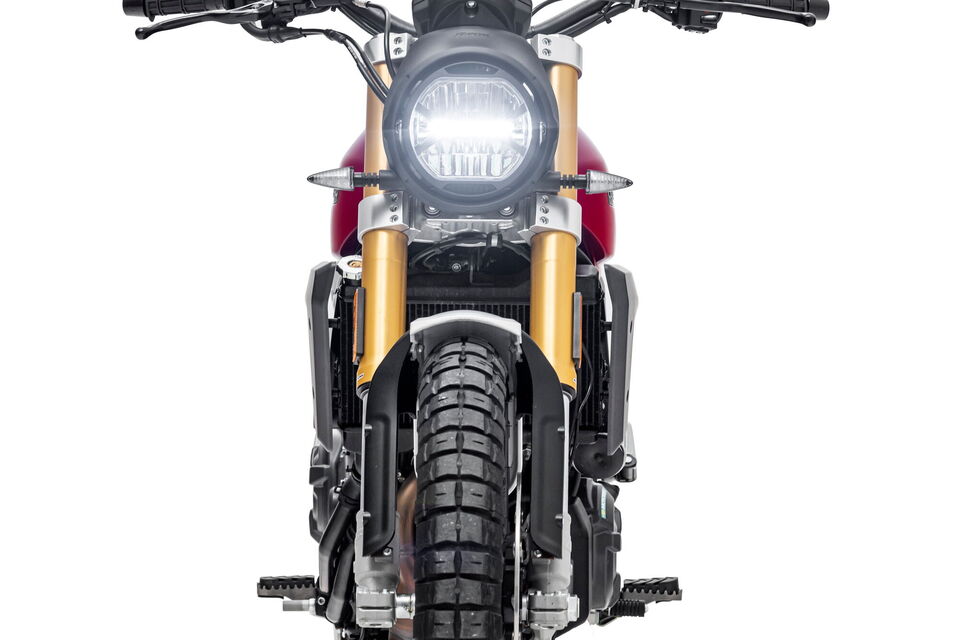
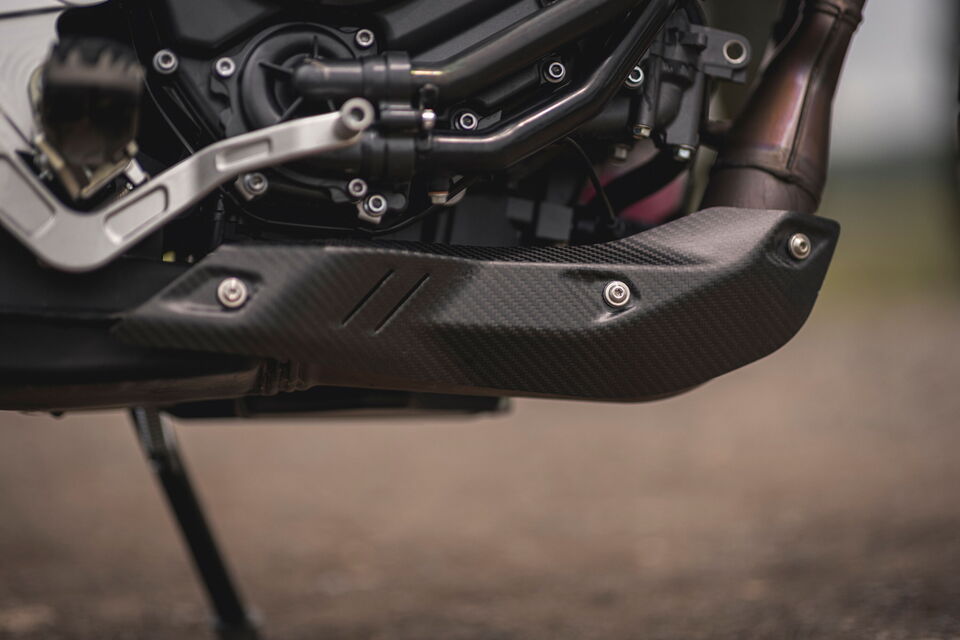
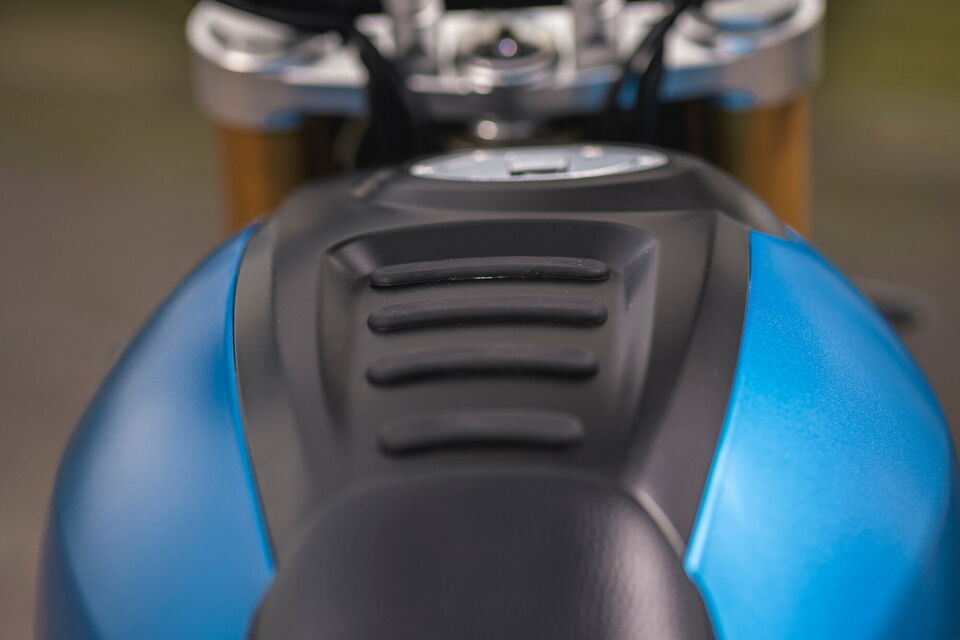
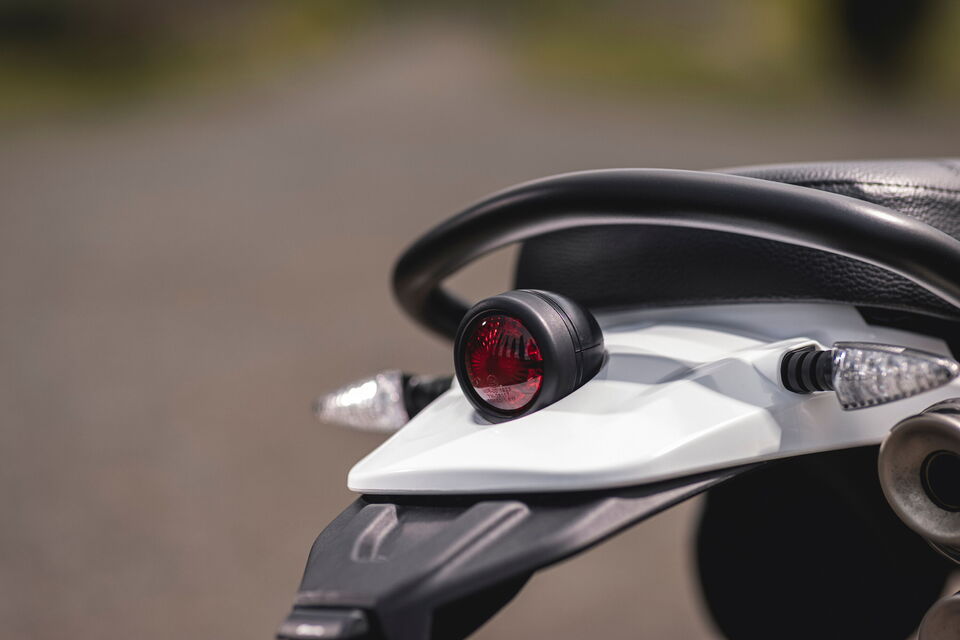
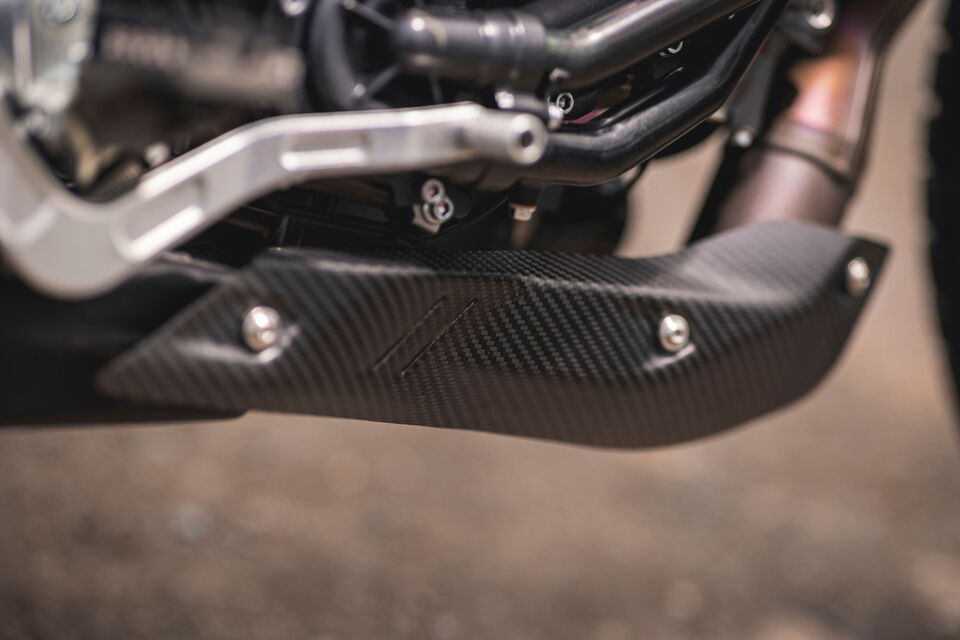
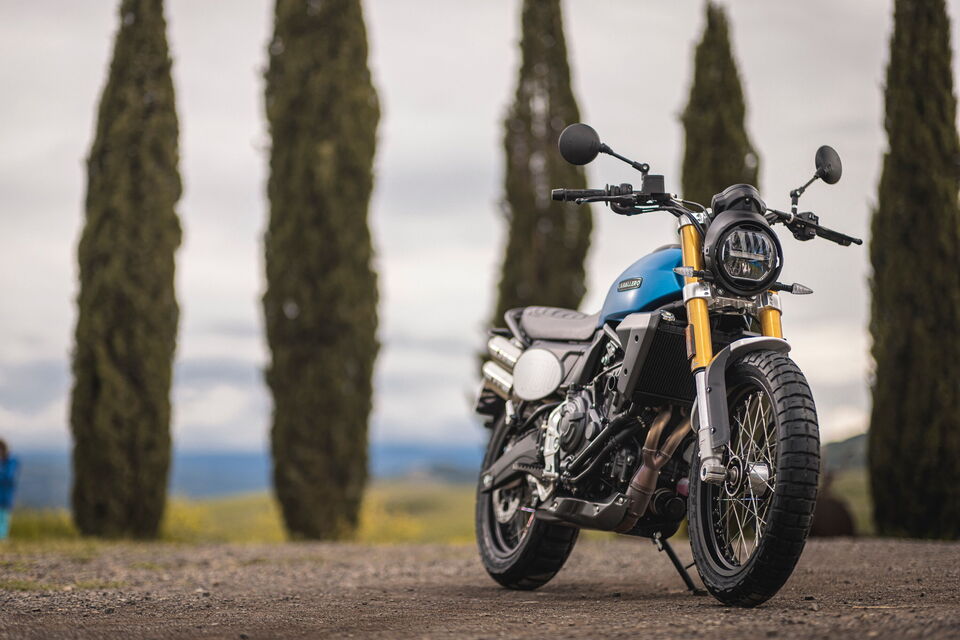
Fuel capacity is 14 liters. At approximately 4.1 L/100 km, range is around 320–340 km. Full LED lighting comes standard, as do Arrow twin mufflers with a carbon exhaust guard.
Handling: Approx. 188 kg Fully Fueled—Agile for a 75 hp Motorcycle, Honest About Its Off-Road Limits
Approximately 188 kg fully fueled is remarkably light for a 75 hp motorcycle with Brembo brakes. The Yamaha XSR 700 is in a similar range at around 193 kg. The 2026 Triumph Scrambler 900 has become lighter thanks to its new frame, but its 900 cc twin with 80 Nm of torque operates in a different engine-character category.
The Fantic is not a touring motorcycle: 14-liter tank, no luggage-rack system, no windscreen. Understand that and look for a scrambler that works on backroads and gravel tracks, and the Caballero 700 becomes one of the strongest offerings in the segment.
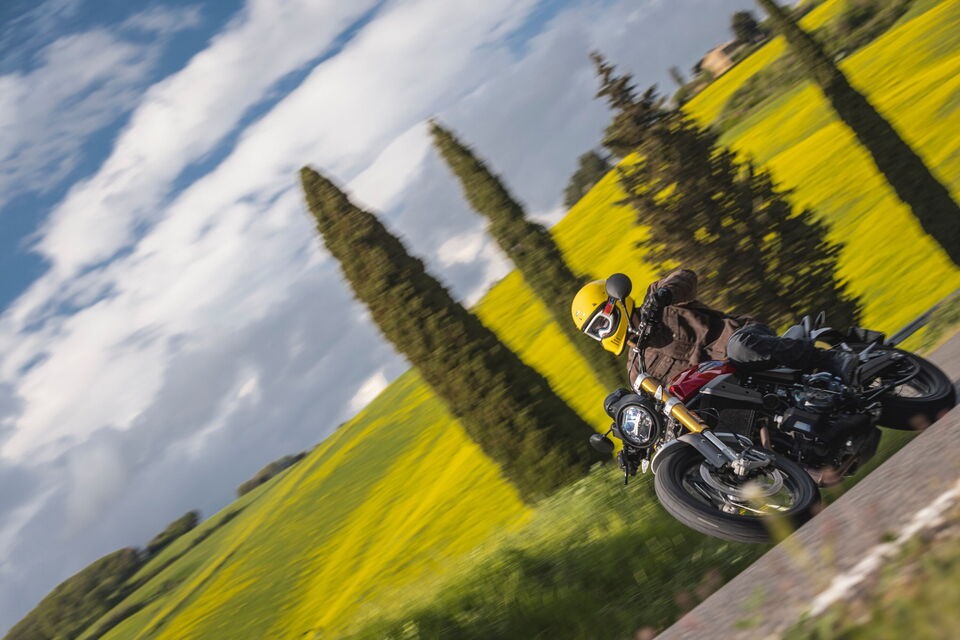
Road tests describe the 700 as pleasantly agile, with good control through the wide handlebar and an accessible, forgiving handling character. The CP2 is not a beginner’s engine—75 hp in a light motorcycle deserves respect. But its power delivery is friendly and linear, and Ride-by-Wire with three riding modes makes it easy to control.
On brand-new motorcycles, the transmission can initially feel slightly notchy in the upper gears. That tends to disappear after the first break-in miles.
Equipment: Modern Electronics That Surpass the Yamaha XSR 700—World’s First Scrambler With a Round TFT
Standard equipment includes the Yamaha CP2 689 cc engine with Fantic-specific tuning and Ride-by-Wire, switchable Continental Cornering ABS, switchable traction control, IMU inertial platform, three riding modes—Street, Offroad, Custom—a round 3.5-inch TFT with Bluetooth, Arrow twin mufflers, carbon exhaust guard, Brembo four-piston radial front caliper, Brembo rear brake, 45 mm Marzocchi USD fork, Pirelli Scorpion Rally STR tires, full LED lighting, and a CNC-machined triple clamp.
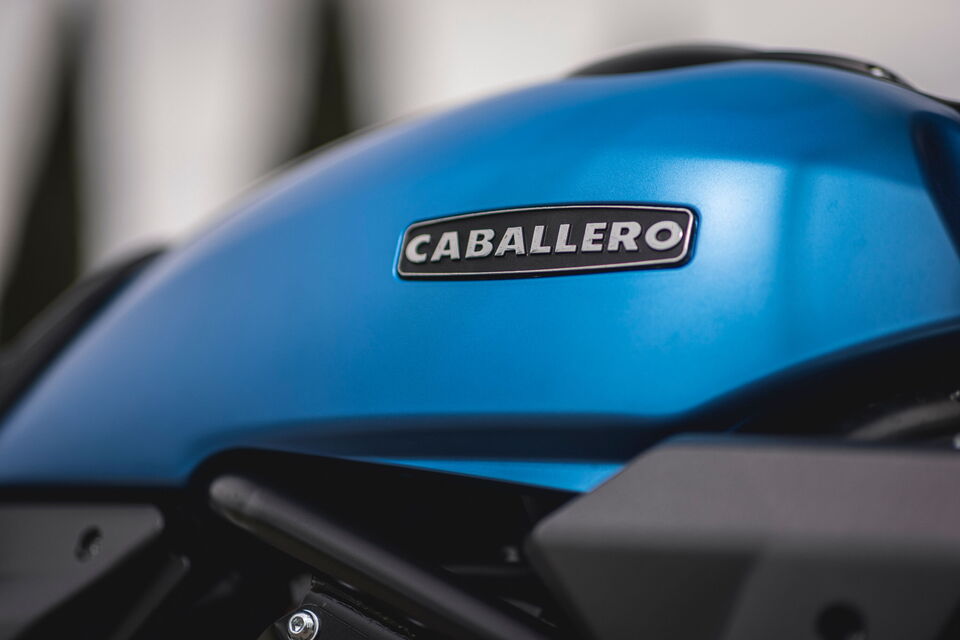
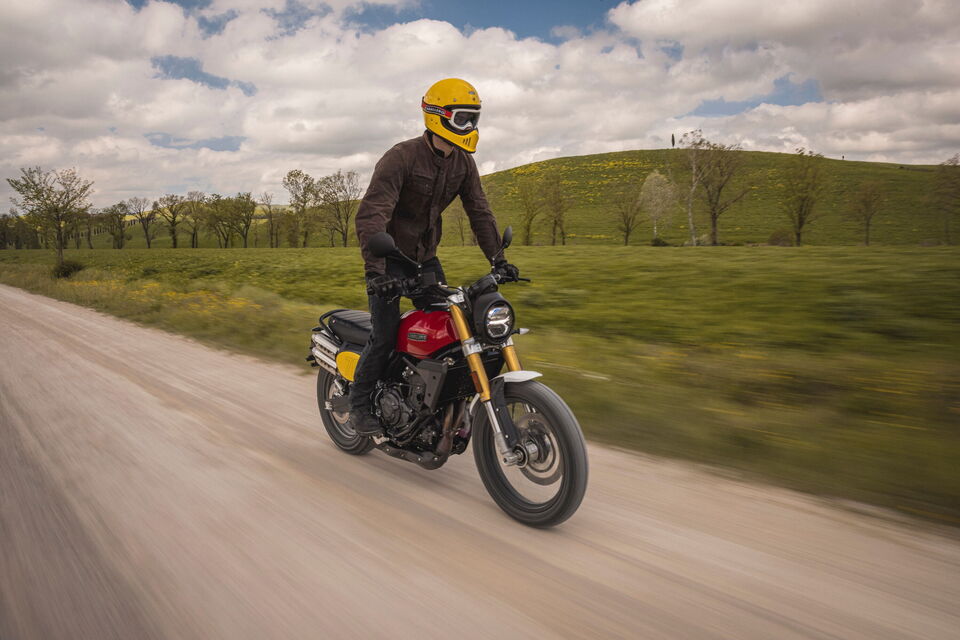
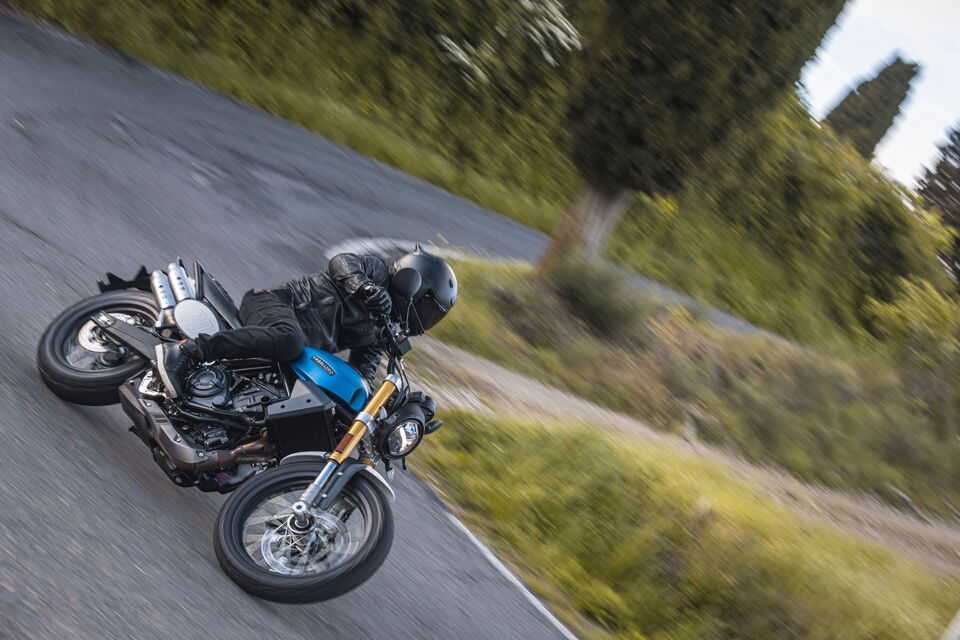
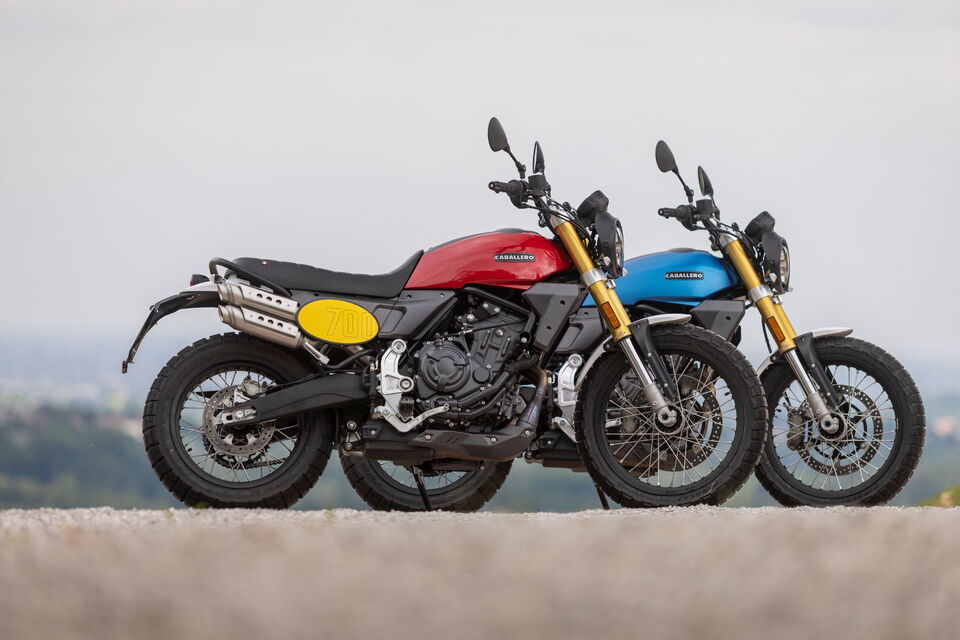
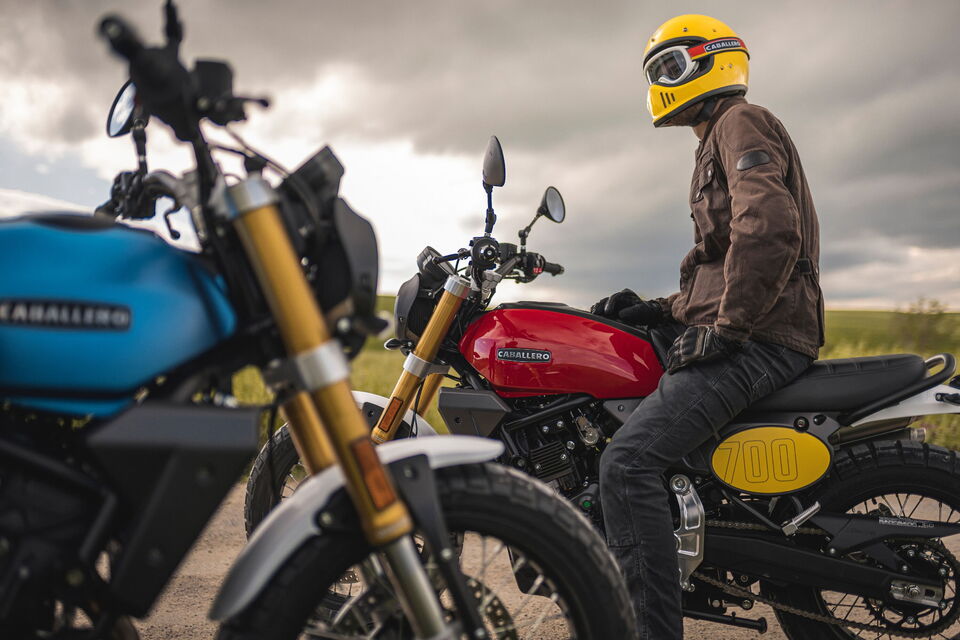
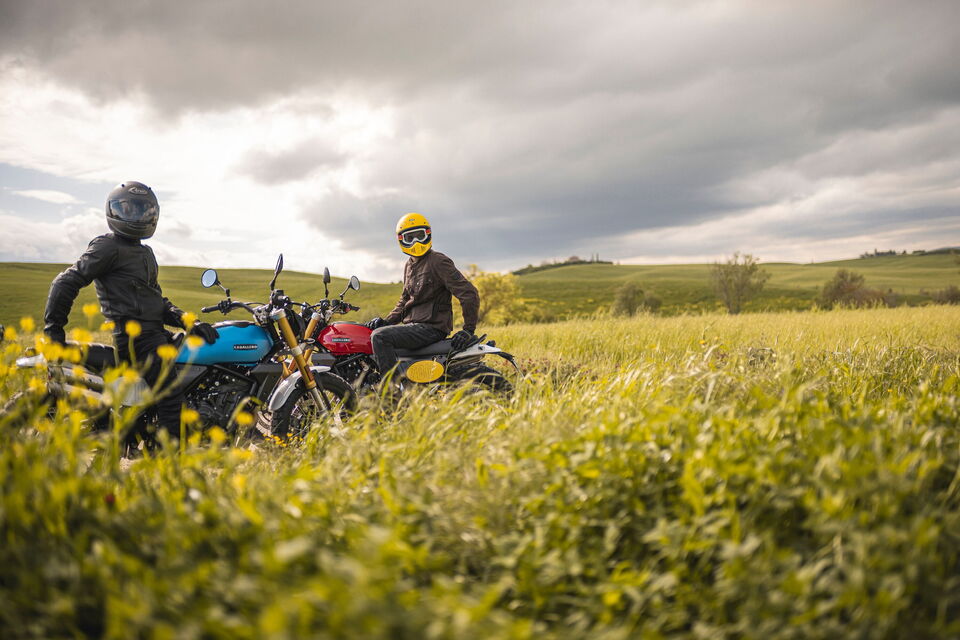
Color options are Red, a classic tribute to the 1974–76 Caballero 125 RC, and matte Metallic Blue. The Deluxe version adds a Scrambler handlebar and additional visual details.
One availability note: the Caballero 700 is produced in smaller numbers than mainstream models. If you are interested, contact your dealer early.
Costs: €9,290—Under €10,000 for a Motorcycle With Brembo, Marzocchi, IMU, and TFT
From €9,290 for the Scrambler, and from €9,999 for the Deluxe. In direct comparison, the Yamaha XSR 700 starts at €12,249. The 2026 Triumph Scrambler 900 with its new frame starts at €12,445 according to Triumph Germany—around €3,000 more, with 65 hp, 900 cc, more torque, and British brand prestige.
The Fantic positions itself between the two: more electronics and higher equipment quality than the Yamaha, at a lower price than the Triumph.
Service intervals are every 10,000 km. Warranty is two years with unlimited mileage. Fantic’s dealer network in Germany is smaller than Yamaha’s or Triumph’s, so check local dealer coverage before buying.
Verdict
The Fantic Caballero 700 Scrambler is the most convincing scrambler proposition between €9,000 and €10,000. It has the best engine in the segment—the Yamaha CP2 with its own Fantic calibration—the best electronics package, with Cornering ABS, IMU, and Ride-by-Wire all standard, the best brakes with a Brembo four-piston radial caliper, and a design that needs no explanation.
It is better equipped than the XSR 700 and less expensive than the Triumph Scrambler 900. Understand the package, and it is difficult to look past it.
Quick Check
+ Yamaha CP2, 689 cc, with Fantic-specific tuning: 75 hp—approx. 1–1.5 hp more than in MT-07 and XSR 700
+ Continental Cornering ABS, IMU, and Ride-by-Wire standard—considerably more modern than Yamaha XSR 700
+ Brembo P4.32 four-piston radial front caliper—premium braking hardware at a middleweight price
+ 45 mm Marzocchi USD fork standard
+ Approx. 188 kg fully fueled—remarkably light for a 75 hp motorcycle
+ Round 3.5-inch TFT display with Bluetooth: world’s first scrambler with this feature
+ Arrow twin mufflers standard with carbon exhaust guard
+ Three riding modes—Street, Offroad, Custom: Offroad mode deactivates traction control and reduces ABS intervention
+ €9,290 base price including additional charges: under €10,000 for Brembo, Marzocchi, IMU, and TFT
+ Approx. €3,000 less expensive than the 2026 Triumph Scrambler 900 despite more extensive electronics
– USD fork is not adjustable on Scrambler version; rear shock adjustable only for preload
– Not a touring motorcycle: 14-liter tank, no luggage system, no windscreen
– Lower production volume than mainstream models: confirm availability with dealer
– Fantic dealer network in Germany smaller than Yamaha’s or Triumph’s
– Transmission can feel slightly notchy on brand-new motorcycles—improves after break-in
– 2-year warranty
Technical Specifications: Fantic Caballero 700 Scrambler (2026)
Country of Manufacture: Italy, Asolo, Treviso; engine: Yamaha, Japan, with Fantic-specific tuning
Engine: Liquid-cooled four-stroke parallel twin; DOHC; 270-degree crankshaft offset; Ride-by-Wire; Yamaha CP2
Displacement: 689 cc, 80 mm × 68.6 mm
Power: 55 kW / 75 hp; approx. 1–1.5 hp more than Yamaha models through Fantic-specific tuning
Torque: Approx. 68–69 Nm
Transmission: 6-speed; chain final drive
Riding Modes: Street, Offroad, Custom; Custom allows ABS and traction control to be freely configured or switched off completely
Frame: Chrome-molybdenum steel monobeam frame; Fantic proprietary design
Front Suspension: 45 mm Marzocchi USD fork; 150 mm travel; non-adjustable on Scrambler
Rear Suspension: Marzocchi monoshock; 150 mm travel; spring preload adjustable; aluminum double-sided swingarm
Front Brake: 330 mm disc; Brembo P4.32 four-piston radial caliper
Rear Brake: 245 mm disc; Brembo caliper
Rider Aids: Continental Cornering ABS, switchable and lean-angle optimized; switchable traction control; IMU inertial platform
Wheels: Wire-spoke wheels; 19-inch front; 17-inch rear
Front Tire: Pirelli Scorpion Rally STR 110/80-19
Rear Tire: Pirelli Scorpion Rally STR 150/70-17
Exhaust: Arrow twin mufflers standard; carbon exhaust guard
Display: Round 3.5-inch TFT with Bluetooth for phone and media; world’s first scrambler with a round TFT when introduced in 2023
Lighting: Full LED standard
Fully Fueled Weight: Approx. 188 kg
Seat Height: 830 mm
Wheelbase: 1,460 mm
Fuel Capacity: 14 liters
Price in Germany: From €9,290 for Scrambler base model; €9,999 for Deluxe; both including additional charges
Warranty: 2 years, unlimited mileage