Review Kawasaki Z H2 (2026)

200-hp Supercharged Hypernaked With Brembo M4.32, Full Electronics, Dog-Ring Transmission, and Conventional Showa Suspension for EUR 20,145
998 cc, 200 hp, 137 Nm. Kawasaki supercharger. Brembo M4.32 calipers with Nissin radial master cylinder and 320 mm discs. Fully adjustable Showa SFF-BP fork. IMU, KTRC, KCMF, KIBS cornering ABS, bidirectional quickshifter, cruise control, Launch Control, four riding modes, and three power modes all standard. Dog-ring transmission. 239 kg. MY2026 is technically unchanged and gets a new Metallic Diablo Black/Metallic Carbon Gray color. The Z H2 SE with semi-active Showa suspension and Brembo Stylema brakes is covered in a separate review.
As of: April 16, 2026 | Model: Kawasaki Z H2 (2026, base) | Price: EUR 20,145 including destination | Warranty: 4 years | Stationary noise: approx. 94 dB(A), Tyrol-compliant | MY2026: technically unchanged, new color | Z H2 SE: EUR 22,795 including destination
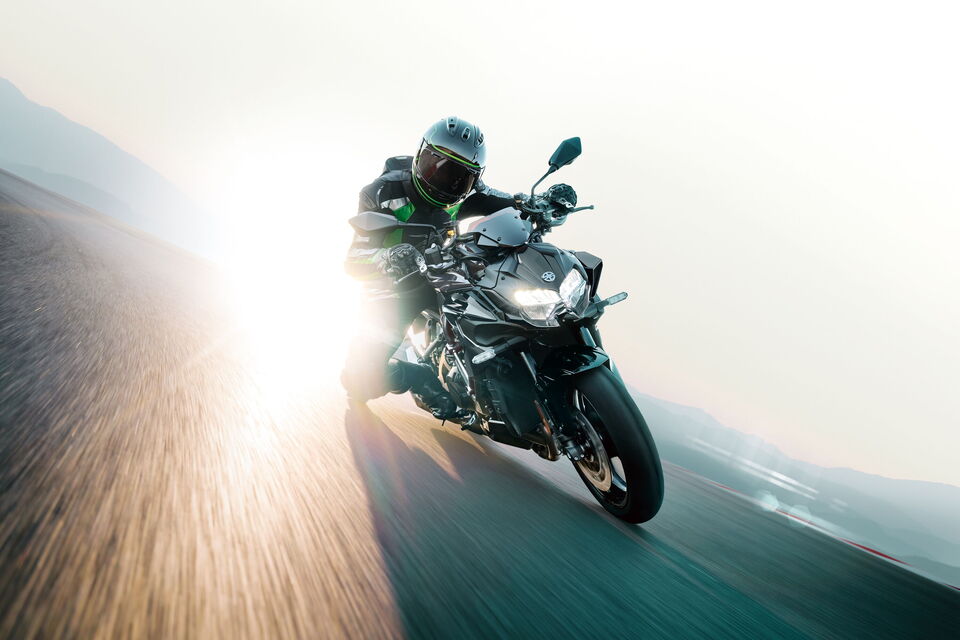
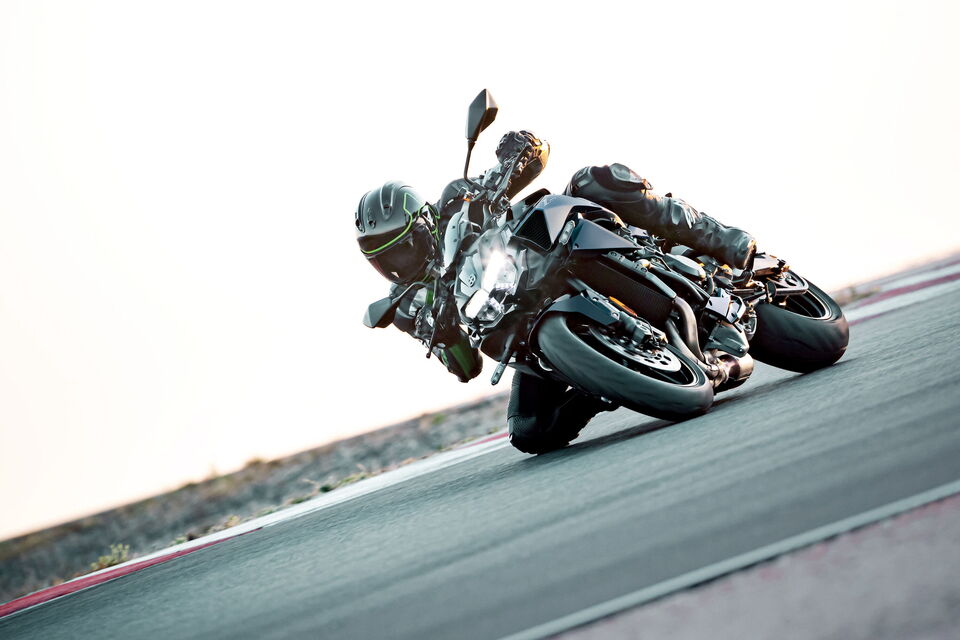
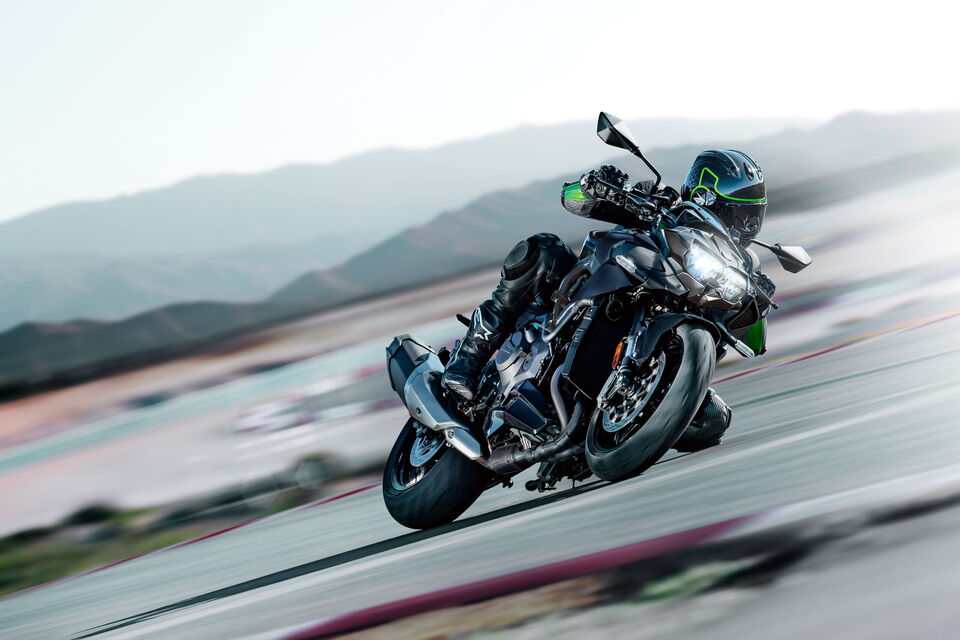
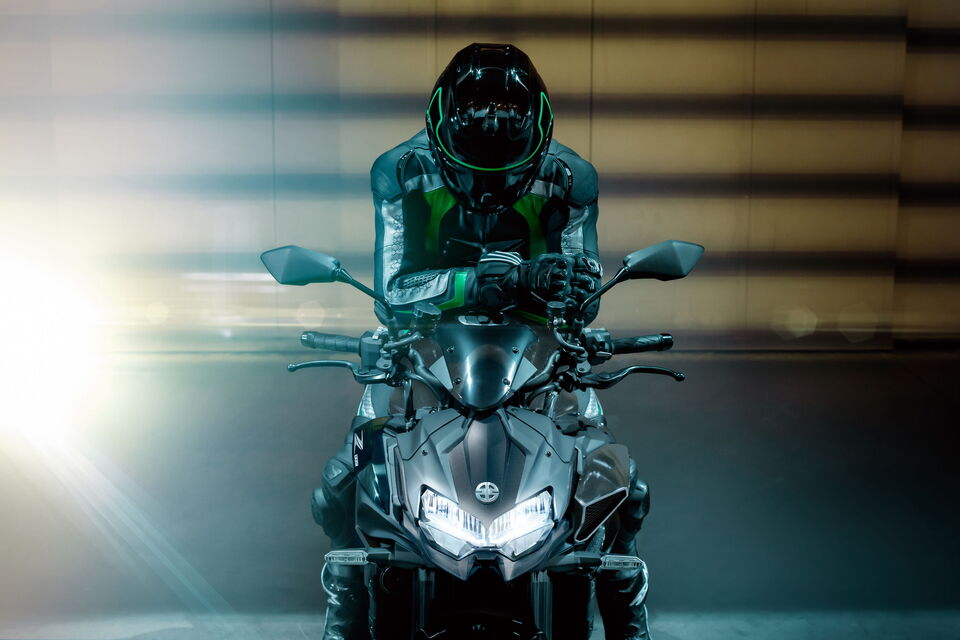
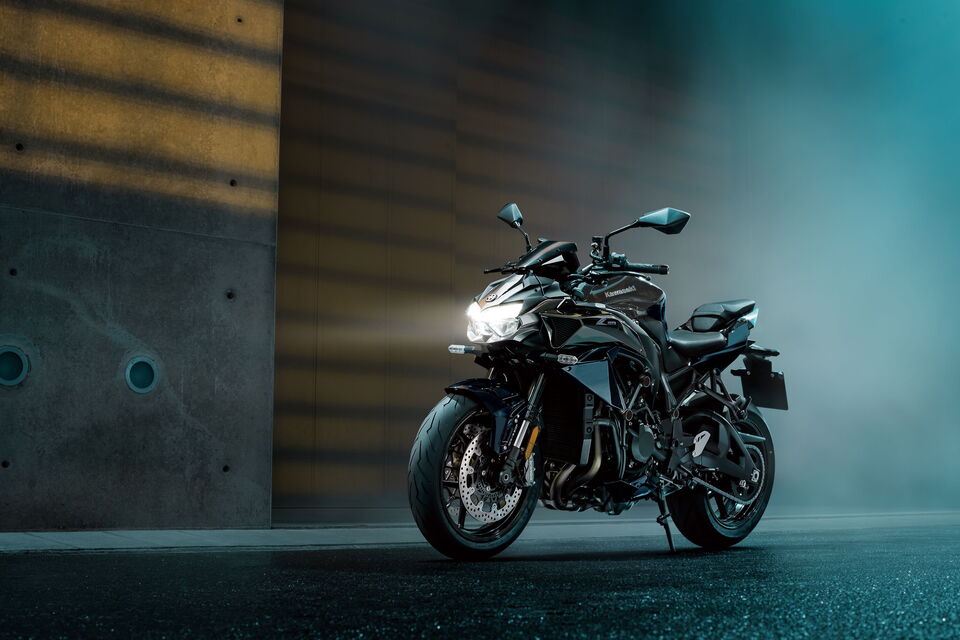
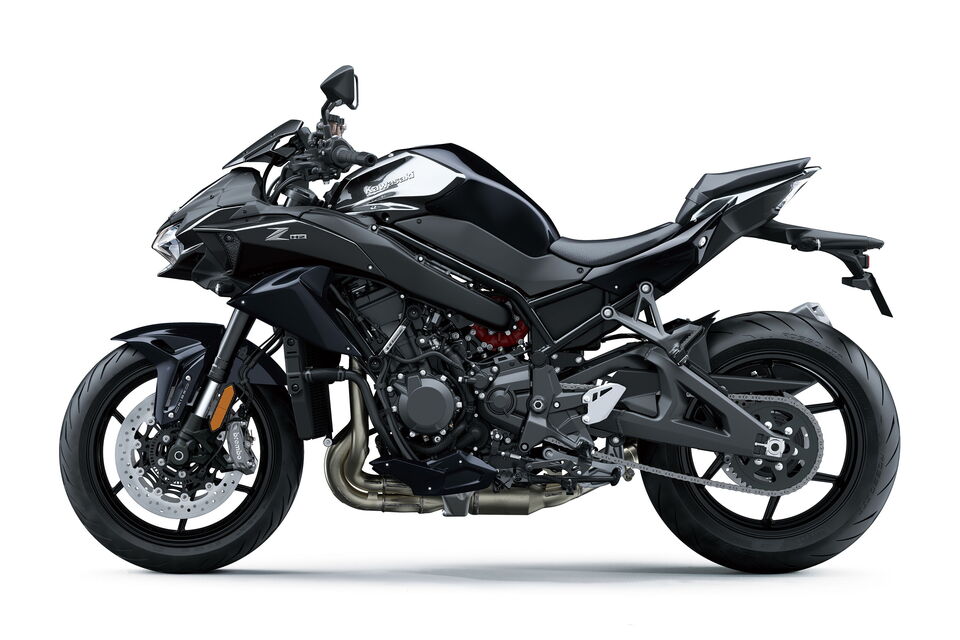
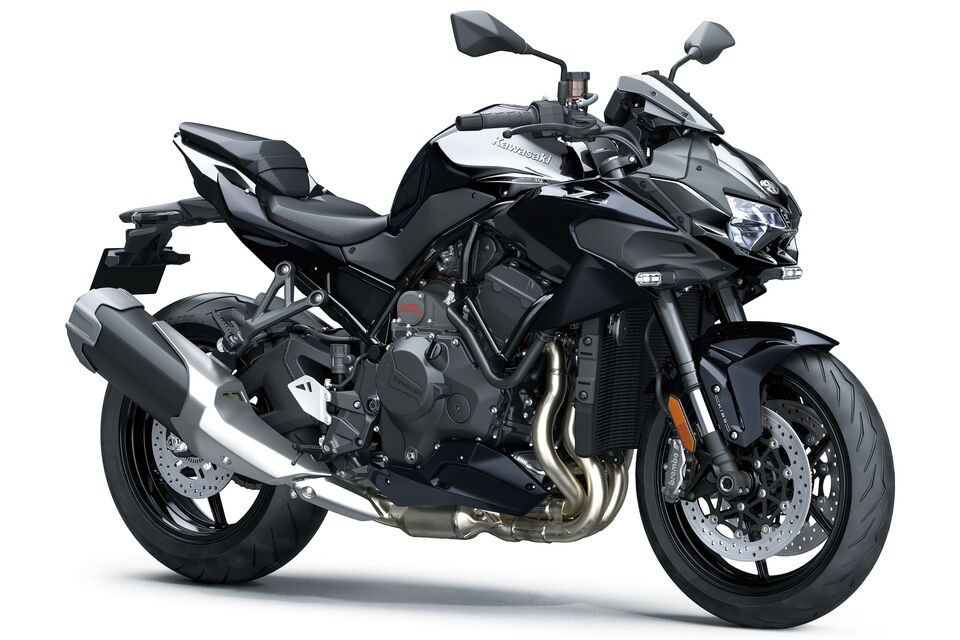
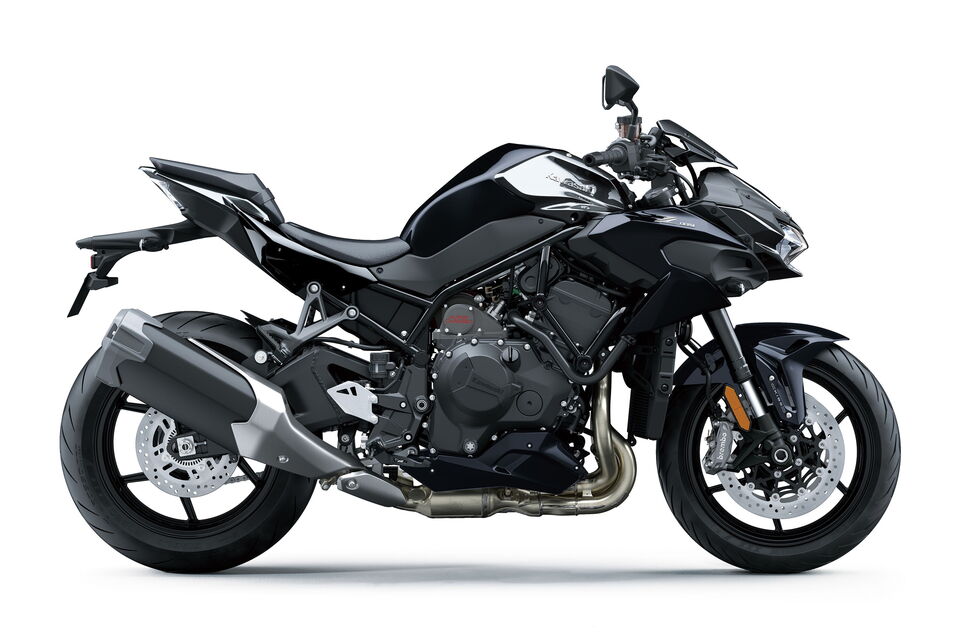
Positioning: What the Z H2 and Z H2 SE Share—and What the SE Adds
The Z H2 and Z H2 SE share the engine, frame, transmission, and complete electronics package. Both come standard with 200 hp from a 998 cc Kawasaki-supercharged engine, a bidirectional quickshifter working with a dog-ring transmission, cruise control, a six-DOF IMU, KIBS cornering ABS, KTRC traction control, Launch Control, Wheelie Control, Slide Control, KCMF, four riding modes—Rain, Road, Sport, and Rider—and three power modes—Full, Middle, and Low. Everything is included. Nothing requires an extra-cost electronics package.
What the SE adds exclusively is semi-active Showa Skyhook EERA suspension, with an electronically controlled SFF-CA fork up front and a Showa BFRC lite rear shock, plus Brembo Stylema Monobloc four-piston calipers with a Brembo radial master cylinder and steel-braided lines instead of the base model’s Brembo M4.32 calipers and Nissin radial master cylinder. The SE weighs one kilogram more at 240 versus 239 kg and costs EUR 2,650 extra. For MY2026, both models receive new colors only; the technical specification is unchanged.
Engine: 200 hp Supercharger, 137 Nm—and More Than 100 Nm From 4,000 rpm Is What Defines It
The liquid-cooled 998 cc inline-four with Kawasaki supercharger produces 200 hp at 11,000 rpm and 137 Nm at 8,500 rpm. The defining feature of the supercharged power delivery is what happens much earlier: more than 100 Nm is already available from 4,000 rpm, a figure comparable naturally aspirated engines often do not reach until roughly twice that engine speed. In everyday riding, that means power reserves in every gear and at virtually any road speed without needing to spin the engine hard. The supercharger’s bypass valve produces the characteristic chirping sound when the throttle is closed—the unmistakable acoustic fingerprint of the H2 family.
The six-speed dog-ring transmission is the same basic design used in the H2R. Gear changes through the bidirectional KQS quickshifter have drawn mixed criticism: some shifts feel less satisfying than expected, with the blipper either barely perceptible or requiring a firm boot. Careful adjustment of the shift lever can improve the system.
Chassis: Fully Adjustable Showa SFF-BP Fork, Conventional Rear Shock—Comfort-Oriented Setup, Stable at High Speed
The fully adjustable 43 mm Showa SFF-BP—Separate Function Fork, Big Piston—responds without noticeable stiction and isolates the rider effectively from small surface imperfections. The rear Showa shock is also adjustable for compression, rebound, and spring preload. Compared directly with the fork, it is marginally less refined in its initial response. The baseline setup leans toward comfort. The Z H2 is clearly tuned for stability, with long straights and fast corners as its natural environment.
Under hard braking, the fork dives noticeably because of the soft baseline setup and the motorcycle’s pronounced front weight bias. That requires sensitivity at the brake lever as the rider approaches the turn-in point, along with a clear steering input through the high handlebar. Tight corners require physical effort to push the Z H2 into the desired radius, but that is the handling profile of a heavy hypernaked designed around high-speed stability. On a racetrack or high-speed oval, the Kawasaki feels wonderfully planted and precise. Wheelbase is 1,455 mm, and Kawasaki says the swingarm design draws on the ZX-10R.
Brakes: Brembo M4.32 + Nissin Radial Master Cylinder, 320 mm—Progressive, Powerful, and Consistent Under Sustained Use
The base Z H2 combines Brembo M4.32 four-piston Monobloc fixed calipers with a Nissin radial master cylinder and twin 320 mm front discs. The Brembo Monoblocs bite hard and deliver powerful, dependable deceleration, with no reason for criticism even under track use despite the motorcycle’s considerable weight. The combination of Brembo calipers and Nissin master cylinder is exceptionally easy to modulate and shows no signs of weakness under repeated heavy braking. A Brembo caliper works on a single rear disc. KIBS cornering ABS operates according to lean angle; in Sport mode on the racetrack, it can intervene relatively early and extend braking distances, a familiar characteristic of street-oriented ABS systems.
Ergonomics: High Handlebar, Upright Riding Position, 830 mm Seat Height—a Comfortable Sport-Naked Cockpit Even for Tall Riders
The handlebar sits high and extends well rearward ahead of the Showa fork tubes. Combined with the distance between the seat and footpegs, the result is a riding position that works well even for tall riders: upright, with plenty of knee room. The 830 mm seat height is moderate, and a Comfort Seat adding 20 mm is available as an accessory for around EUR 170. The Z H2’s broad front end provides comparatively good wind protection for a naked bike. The passenger seat is compact; Kawasaki offers an ERGO-FIT Comfort Passenger Seat with an additional 10 mm of padding for around EUR 133.
The 4.3-inch TFT display shows supercharger boost pressure and charge temperature, values no other production motorcycle displays in its cockpit. The left-hand switchgear requires some familiarization, but the logic becomes clear with use. The onboard computer’s remaining-range display can be somewhat erratic in its accuracy. Adjustable clutch and brake levers are standard.
Cost: EUR 20,145 Including Destination—A Complete Electronics Package, Brembo M4.32, and a Supercharged Engine at a Unique Price
The Z H2 costs EUR 20,145 including destination. In the hypernaked segment, that is a clear price advantage: the KTM 1390 Super Duke R costs more than EUR 22,000, the Aprilia Tuono V4 Factory around EUR 21,000, and the Ducati Streetfighter V4 nearly EUR 26,000. What the Z H2 includes at this price—a supercharged engine, a complete IMU-supported electronics package, bidirectional quickshifter, cruise control, Brembo M4.32 brakes, and a dog-ring transmission—is not matched in this combination by any direct rival in the same price range.
The SE premium is EUR 2,650. In return, you get semi-active Showa Skyhook EERA suspension and Brembo Stylema brakes with a Brembo radial master cylinder and steel-braided lines. Riders who spend a lot of time on fast backroads or at the limit and consider suspension a central buying criterion will find the arguments in the separate SE review. Buyers of the base model still get a complete, exceptionally well-equipped hypernaked whose conventional suspension imposes no meaningful limitation in normal road use.
Verdict
The Z H2 is the only supercharged hypernaked on the market—and it costs EUR 20,145. The engine is its own argument: 200 hp with more than 100 Nm from 4,000 rpm creates a riding experience no naturally aspirated engine in this class can truly replicate. The chassis is good, comfort-oriented, and stable. The brakes are strong. The electronics package is complete. Riders who want more sophisticated suspension can spend another EUR 2,650 on the SE.
Quick Check
+ 200 hp / 137 Nm with Kawasaki supercharger: more than 100 Nm available from 4,000 rpm; no other naked bike in this price class offers this torque profile.
+ Dog-ring transmission + bidirectional KQS: motorsport-proven shift architecture as standard.
+ Complete IMU electronics package standard: KTRC with 3 modes / 9 levels, KIBS cornering ABS, KCMF, Launch Control, Wheelie Control, Slide Control.
+ Four riding modes—Rain/Road/Sport/Rider—plus three power modes—Full 100%/Middle 75%/Low 50%: fine-grained configuration for different conditions.
+ Cruise control standard: unusual and practical on a hypernaked of this type for highway stages.
+ Brembo M4.32 four-piston Monobloc + Nissin radial master cylinder, 320 mm discs: progressive, powerful, and fade-resistant.
+ 43 mm Showa SFF-BP fork, fully adjustable: sensitive response without stiction issues.
+ Excellent high-speed stability: exceptionally planted through fast corners.
+ 267 km/h top speed; 0–100 km/h in 3.5 seconds.
+ Supercharger chirp on closed throttle: unmistakable acoustic signature of the H2 family.
+ Cockpit displays boost pressure and charge temperature: unique in the production-motorcycle market.
+ 830 mm seat height: comfortable riding position even for tall riders; high handlebar with plenty of room.
+ Comfort Seat +20 mm, approx. EUR 170, available as accessory; adjustable brake lever standard.
+ Broad front end provides comparatively good wind protection for a naked bike.
+ EUR 20,145 including destination: exceptionally competitive entry price for a supercharged hypernaked with Brembo brakes, dog-ring transmission, and full electronics.
+ 4-year warranty with unlimited mileage.
– No semi-active suspension, which is SE-exclusive; the base uses a conventional Showa rear shock, giving serious suspension enthusiasts a reason to pay for the SE.
– Fork dives noticeably under hard braking: front-heavy balance and soft baseline setup require sensitivity at turn-in.
– Quickshifter quality can be inconsistent, ranging from smooth to disappointing; careful adjustment is recommended.
– Cornering ABS can intervene early on the racetrack and lengthen braking distances.
– Tight corners require physical effort: 239 kg need active steering input; this is not a light-footed naked bike.
– Passenger seat is compact; accessory comfort passenger seat makes sense for regular two-up use.
– Remaining-range display in the onboard computer can be erratic.
– The motorcycle requires acclimatization for menu operation and full performance; not a beginner bike.
– MY2026 is technically unchanged: anyone hoping for a suspension update will have to keep waiting.
Technical Specifications: Kawasaki Z H2 (2026, Base)
Model Series: ZR1000, 2020-present; MY2026 technically unchanged
Engine: Inline-four, 998 cc, liquid-cooled, DOHC 16-valve; Kawasaki supercharger; Ride-by-Wire; dog-ring transmission; six-speed; chain final drive
Power: 200 hp / 147 kW at 11,000 rpm
Torque: 137 Nm at 8,500 rpm; more than 100 Nm already available from 4,000 rpm
Electronics: Six-DOF IMU; KTRC, 3 modes / 9 levels; KIBS cornering ABS; KCMF; KLCM Launch Control; Wheelie Control; Slide Control; cruise control; bidirectional KQS with dog-ring transmission
Riding Modes: Rain / Road / Sport / Rider, freely configurable; power modes: Full 100% / Middle 75% / Low 50%
Display: 4.3-inch TFT; displays boost pressure and charge temperature; Rideology app; Bluetooth
Frame: High-tensile steel trellis frame
Fork, Base: 43 mm Showa SFF-BP, Separate Function Fork – Big Piston, USD; fully adjustable for compression, rebound, and preload; 120 mm travel
Rear Shock, Base: Showa; adjustable for compression, rebound, and spring preload; 130 mm travel; conventional, no KECS
Front Brake, Base: Brembo M4.32 four-piston Monobloc; twin 320 mm discs; Nissin radial master cylinder; KIBS
Rear Brake: Brembo; single disc; two-piston caliper
SE Differences: Semi-active KECS Showa Skyhook EERA, SFF-CA fork + BFRC lite rear shock, instead of conventional suspension; Brembo Stylema + Brembo master cylinder + steel-braided lines instead of M4.32 + Nissin; 1 kg heavier
Wheels: 17-inch front and rear
Tires: 120/70 ZR17 front; 190/55 ZR17 rear; Bridgestone Battlax Hypersport S22
Weight: 239 kg fully fueled
Seat Height: 830 mm; Comfort Seat +20 mm available as accessory, approx. EUR 170
Wheelbase: 1,455 mm
Fuel Tank: 19 liters; approx. 316 km range at WMTC 6.0 L/100 km
Stationary Noise: Approx. 94 dB(A), Tyrol-compliant
2026 Color: Metallic Diablo Black / Metallic Carbon Gray
Warranty: 4-year Kawasaki factory warranty with unlimited mileage in Germany
Price in Germany: EUR 20,145 including destination