Review Kawasaki Z650 (2026)

The Proven All-Round Naked Bike With 68 hp, KTRC, and a Value Proposition That Has Been Hard to Beat for Years
Third among Germany’s best-selling motorcycles in 2025. 188 kg ready to ride. 68 hp, two-level traction control, a TFT display, and 89 dB(A). The base Z650 carries into 2026 technically unchanged, with new colors and the knowledge that the newly revised Z650 S costs only EUR 200 more. Buyers who deliberately choose the base model are buying nine years of proven market performance.
As of: April 15, 2026 | Model: Kawasaki Z650 (2026, base model without S) | Price: EUR 7,770 including destination | Warranty: 4 years | Stationary noise: 89 dB(A), Tyrol-compliant | A2: restrictable to 48 hp / 35 kW and reversible | MY2026: technically identical to ER650 K-TC from 2023, new colors | Sister model Z650 S from approx. EUR 7,970 including destination covered in a separate review
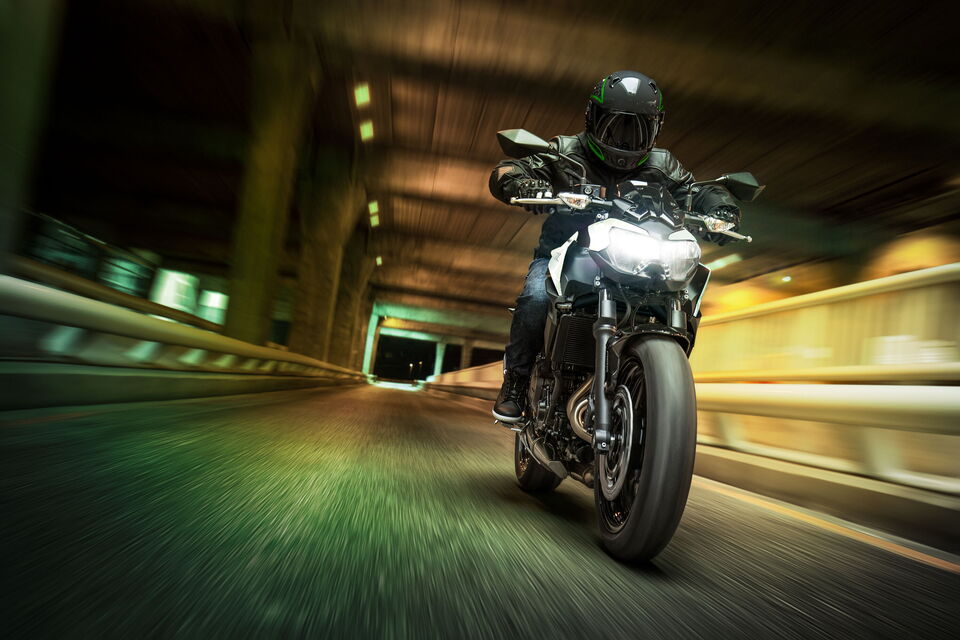
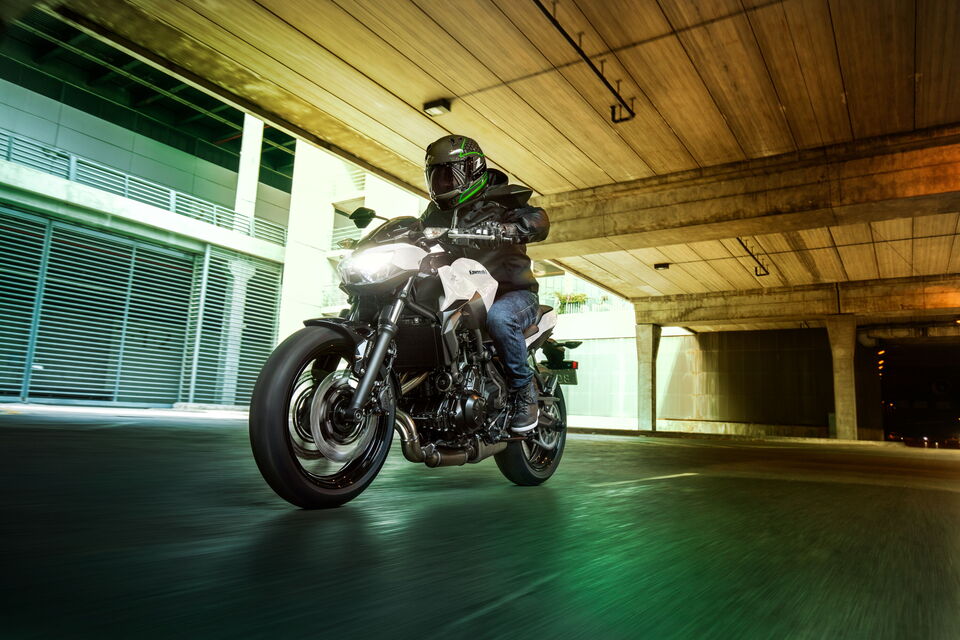
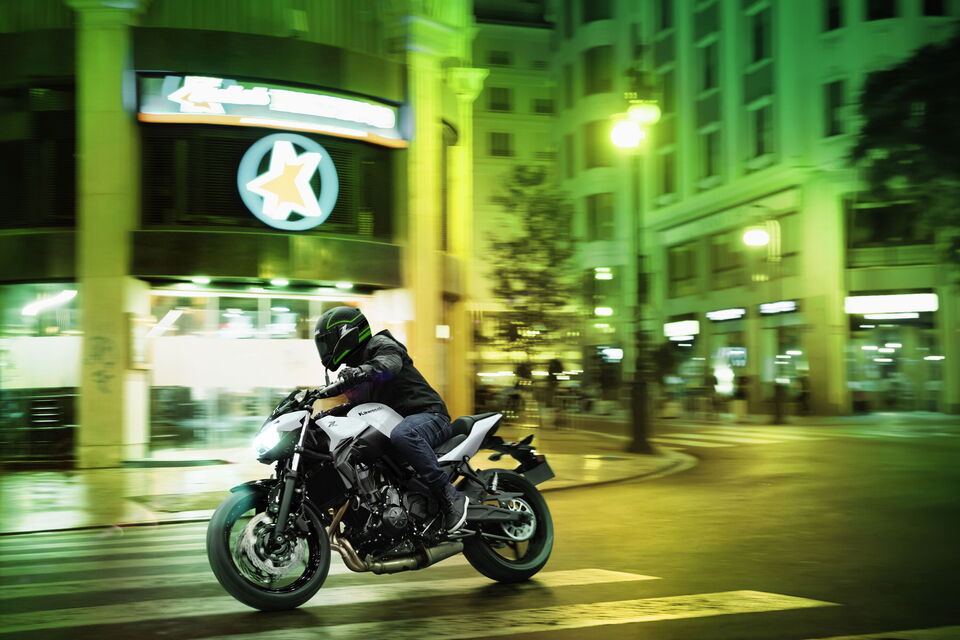
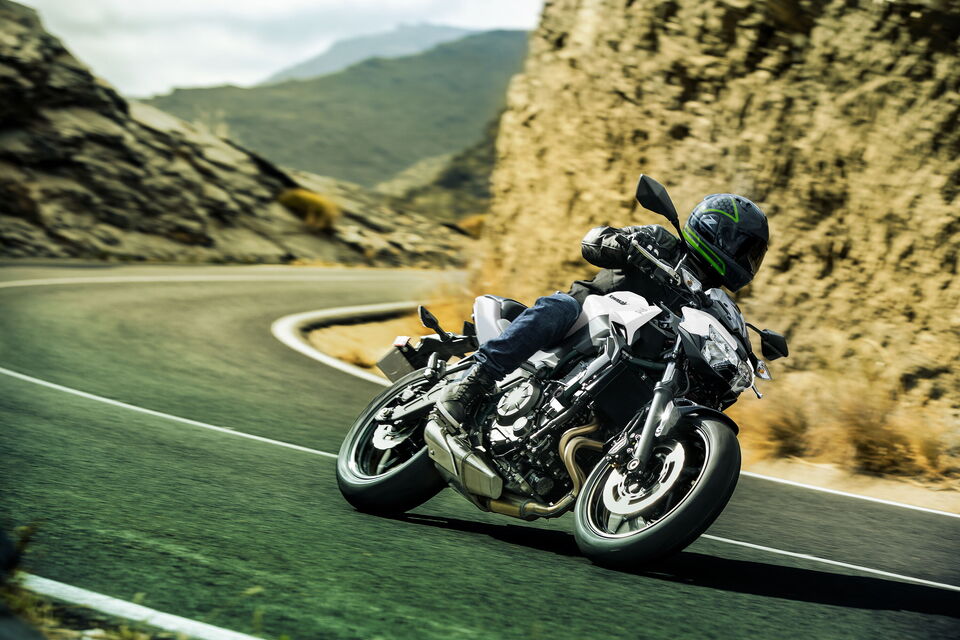
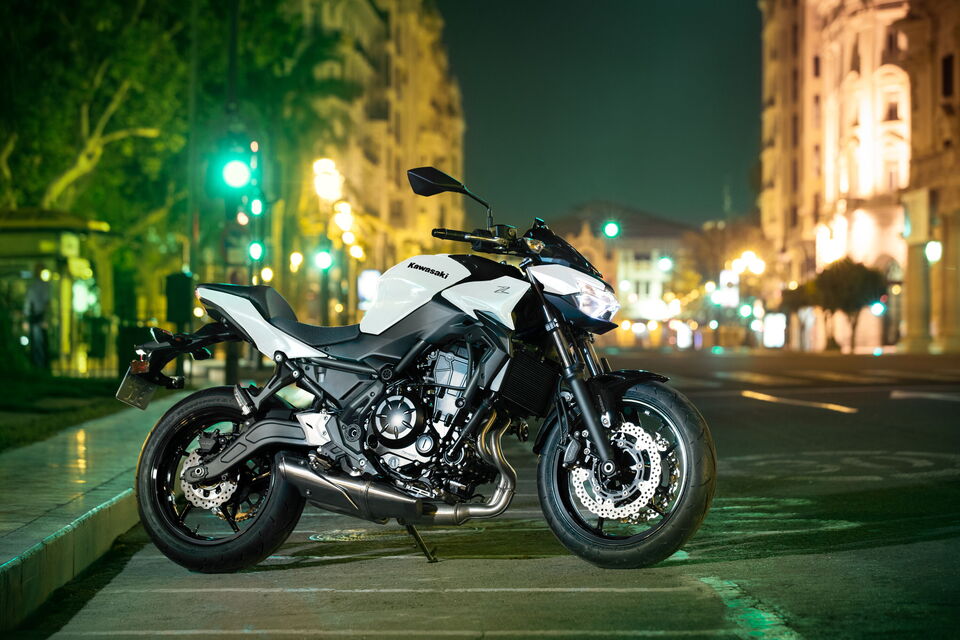
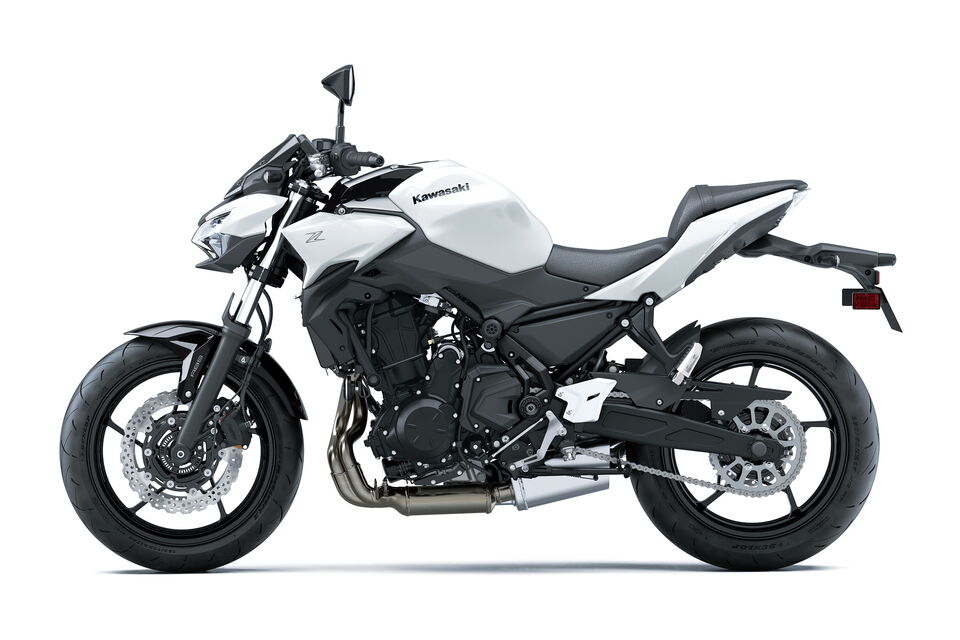
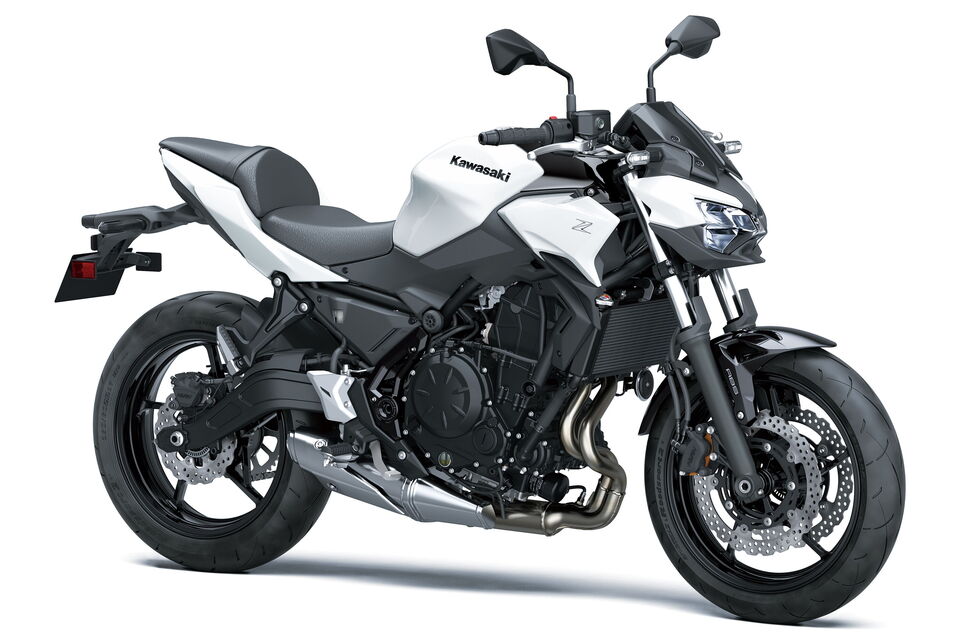
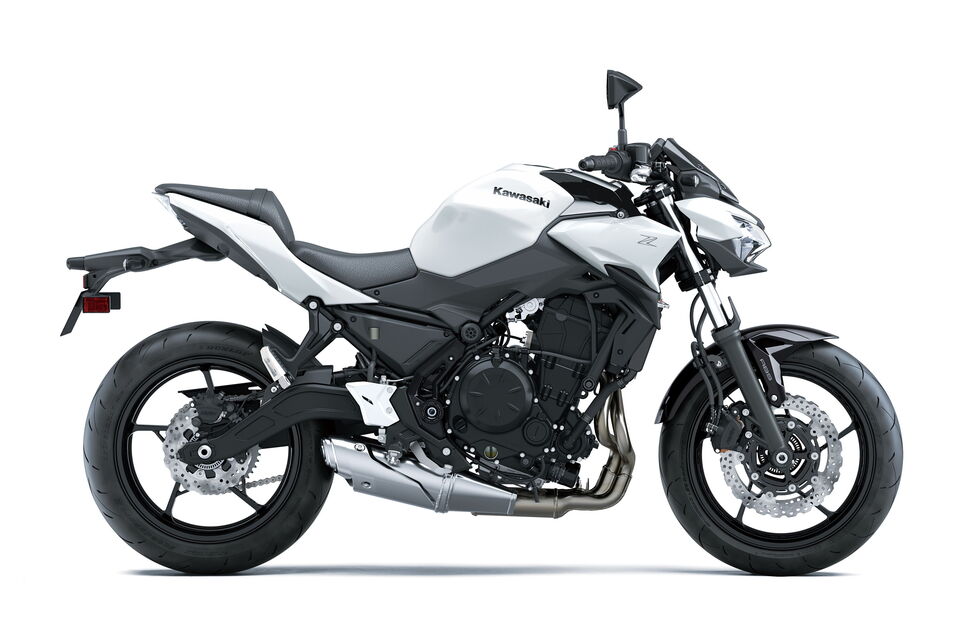
MY2026 Positioning: Base or S—What Separates Them, and Why Does the Base Model Still Exist?
For 2026, Kawasaki offers the Z650 as two separate models: the unchanged base Z650, model series ER650 K-TC introduced for 2023, and the extensively revised new Z650 S, model series ER650W, new for 2026. The price difference is just EUR 200—an unusually small gap between two distinct models. The Z650 S gets a new three-piece LED headlight, revised bodywork with more aggressive Sugomi styling, a handlebar 30 mm wider, repositioned footpegs, a wider and more heavily padded seat, Continental ABS instead of Bosch, a USB-C charging port, and an optional quickshifter. The base Z650 has none of those features.
Even so, the base model remains in the lineup for 2026—a clear signal that Kawasaki is serving buyers who want the familiar, proven motorcycle without paying extra for styling and ergonomic changes. Anyone who knows exactly what the base model offers and prefers it to the S is not buying a bargain at the expense of quality. The mechanical package is proven, the chassis is established, and the engine is the same. What is missing is the ergonomic modernization, new design, and quickshifter option. This review covers only the base Z650; the Z650 S is handled separately.
Engine: 649 cc, 68 hp, 64 Nm—Restrained at Low Revs, Stronger Up Top, 58 Nm at 4,700 rpm When A2-Restricted
The liquid-cooled DOHC 649 cc parallel twin with a 180-degree crank has been the heart of the Z650 since its 2017 introduction. It has been continuously refined, but its character remains recognizable. At idle and low rpm, it is remarkably restrained and refined, almost quieter than expected from a naked bike. Only higher in the rev range does the exhaust note become more assertive. The engine pulls cleanly from low revs but, typical of this twin, becomes properly lively only farther up the tach. That is not a weakness; it is a character trait that makes the bike relaxed and easy to control in everyday and city riding.
The A2 restriction to 48 hp / 35 kW is performed electronically by an authorized Kawasaki dealer and can later be reversed. Notably, the restricted version retains 58 Nm of torque at 4,700 rpm. That is more pulling force than many native 48 hp engines of smaller displacement can offer. For A2 riders, the logic is attractive: buy a 649 cc motorcycle, ride it restricted for two years with stronger torque than most A2 rivals, then restore the full 68 hp for a workshop fee after moving to a full A license.
Chassis: 41 mm Telescopic Fork, Horizontal Back-Link Shock—Sensitive Front End, Slightly Firmer Rear, Few External Adjustments
The Z650 chassis has proved itself across several model generations and uses familiar hardware: a non-adjustable 41 mm telescopic fork up front and a horizontally mounted rear shock with adjustable spring preload. The baseline setup is solid and designed for a broad range of uses. The fork responds sensitively and smooths out neglected road surfaces effectively. The rear shock is slightly firmer than the fork, which suits sportier riders. On winding backroads—the Z650’s preferred environment—the motorcycle feels at home: light-footed, agile, almost playful from one corner to the next, yet planted on the pavement.
Setup enthusiasts will miss external adjustment at the fork and damping adjustment at the rear. In real-world use, however, the standard calibration is well chosen for the broad target group. Riders using the Z650 as an everyday motorcycle and occasional sporting partner on backroads will appreciate the balance. Push hard enough to search for the suspension’s limits and the rear shock eventually runs short of rebound control, producing some after-movement much like the Ninja 650, with which it shares its basic frame and chassis architecture.
Electronics: Two-Level KTRC Standard Since 2023, TFT, Bluetooth—No Quickshifter, No USB-C
Since the 2023 facelift, two-level Kawasaki Traction Control, KTRC, has been standard—an important update that put the Z650 on more equal footing with rivals such as the Yamaha MT-07, where traction control has not always been standard, and the Suzuki GSX-8S. Level 1 allows more rear-wheel freedom and suits sportier riding. Level 2 intervenes more conservatively and is the better choice in rain or on poor surfaces. The system can be switched off completely. Dual-channel ABS is also standard.
A 4.3-inch color TFT with Bluetooth connectivity and the Kawasaki Rideology app comes standard. What the base Z650 does not have, and does not offer even as an option, is a quickshifter—the Z650 S offers one as an accessory—or a USB-C charging port, which is also reserved for the S. Riders who consider either feature important are better served by the newer sister model.
Ergonomics: 790 mm Seat Height, Upright Posture—A Little Tight for Tall Riders, Ideal for the Broad Middle
The Z650 riding position is upright with a slight forward lean, an ergonomic compromise that works for short city trips and occasional backroad stages without placing excessive strain on the back. The 790 mm seat height is easy to manage because of the narrow seat profile, allowing shorter riders to reach the ground confidently. Very tall riders—above roughly 1.90 meters—may feel slightly cramped on the standard seat, although Kawasaki offers a taller accessory seat to create more room.
Compared with the new Z650 S, the base model has a narrower handlebar—30 mm less width—an unchanged seat, and a slightly less forward-biased riding position. Many riders will barely notice the difference, but those who want more front-end leverage and a wider flat-bar feel will find the Z650 S the more consistent choice. The base Z650 is not a compromise. It is the proven original, with ergonomics developed in 2017 and essentially unchanged since.
Everyday Character: Third in Germany’s 2025 Registration Charts—the Z650 Is a Genuine Bestseller for Good Reason
In Germany, the Z650 ranked third among the best-selling motorcycles of 2025; in Austria, it placed second among naked bikes. Those numbers are the strongest argument for the motorcycle. It is not simply the price or the horsepower figure, but the balance of everyday usability, sporting ability, reliability, and fair pricing that clearly appeals to an enormous range of buyers. The Z650 works for beginners and returning riders, commuters and weekend sport riders, and it can transition from A2 to full-A use without requiring a change of motorcycle.
In city traffic, the low weight and agile chassis make it easy to maneuver. On winding backroads, its light-footed precision is genuinely enjoyable. On the highway, the lack of fairing wind protection is the one obvious disadvantage for riders covering longer distances. An accessory windshield is available, although it inevitably changes the naked bike’s clean silhouette. Range from the 15-liter tank is around 348 km, a good figure for a naked bike.
Cost: EUR 7,770 Including Destination—the Least Expensive Entry Into the Z Family With Full Standard Equipment
The base Z650 costs EUR 7,770 including destination. That puts it EUR 200 below the Z650 S and EUR 700 below the Ninja 650 at EUR 8,470 including destination. Price remains one of its most consistent arguments: compared directly with rivals, the base Z650 is one of the least expensive ways into a fully equipped 650-class naked bike with traction control, a TFT display, and a four-year warranty. The Yamaha MT-07 costs EUR 8,524, while the Suzuki GSX-8S is EUR 9,400 plus additional charges.
Kawasaki’s starter bonus gives newly licensed riders a EUR 649 discount, bringing the effective entry price to just over EUR 7,100 including destination. Service intervals are 12,000 km and warranty coverage is four years. A2 restriction costs around EUR 249 at the dealer; restoring full power after earning the unrestricted license is handled by the same workshop for a similar fee. Accessories include a top case, KQR side bags, seat cowl, and windshield.
Verdict
The base Z650 is not an obsolete model being cleared from dealer inventory in 2026. It is a proven motorcycle with excellent value that gives the majority of buyers everything they actually need. Riders who prioritize the Z650 S’s new design, wider handlebar, improved ergonomics, optional quickshifter, and USB-C port should spend the extra EUR 200. Riders who want the established original in its familiar form are exactly where they should be with the base Z650.
Quick Check
+ Third among Germany’s best-selling motorcycles in 2025: bestseller status built on consistent value and an exceptionally broad target group.
+ Two-level KTRC standard since 2023: switchable traction control; Level 1 for dry conditions, Level 2 for rain.
+ 68 hp / 64 Nm: linear, refined character at low rpm and livelier delivery higher in the rev range.
+ A2 restriction to 48 hp / 58 Nm at 4,700 rpm: electronic and dealer-reversible; more restricted torque than many native 451 cc A2 motorcycles.
+ 188 kg ready to ride: agile and light-footed, with a very nimble naked-bike feel in corners.
+ 4.3-inch TFT standard; Rideology app and Bluetooth connectivity.
+ Bosch dual-channel ABS standard.
+ 89 dB(A) stationary noise: very quiet and comfortably Tyrol-compliant.
+ 790 mm seat height: accessible middle ground; taller accessory seat available.
+ 15-liter tank; approx. 348 km range at 4.3 L/100 km WMTC.
+ EUR 7,770 including destination: least expensive entry into the Z family with traction control and TFT.
+ EUR 649 starter bonus available for newly licensed riders.
+ 4-year warranty; 12,000 km service interval.
+ Accessory range: top case, KQR side bags, seat cowl, windshield.
– No quickshifter available, even as an option; the Z650 S offers one as an accessory.
– No USB-C charging port as standard; available only on the Z650 S.
– Narrower handlebar than Z650 S: 30 mm less width, noticeable for riders who prefer a broad flat-bar feel.
– Unrevised seat: narrower and less heavily padded than the Z650 S seat.
– Design unchanged since 2023: a disadvantage for riders who prioritize the S model’s new Sugomi styling.
– No wind protection as standard: highway stages lack the fairing protection of the Ninja 650.
– Fork and rear shock offer virtually no external setup adjustment beyond rear preload.
– Rear shock reaches the limit of its rebound damping during very aggressive riding.
– Bosch ABS rather than Continental as on the Z650 S: not necessarily worse, but an older-generation system.
Technical Specifications: Kawasaki Z650 (2026, Base)
Country of Manufacture: Japan, Kawasaki
Model Series: ER650 K-TC, 2023-present; MY2026 technically unchanged
Engine: Parallel twin, 649 cc, liquid-cooled, DOHC, 180-degree crank; fuel injection; assist/slipper clutch; six-speed; no quickshifter
Power: 68 hp / 50 kW at 8,000 rpm
Torque: 64 Nm at 6,500 rpm
Electronics: Two-level KTRC traction control, switchable; Bosch dual-channel ABS; no quickshifter; no cruise control
Display: 4.3-inch color TFT; Kawasaki Rideology app; Bluetooth connectivity; no USB-C
Frame: Lightweight high-tensile steel trellis frame
Fork: 41 mm telescopic fork; non-adjustable
Rear Shock: Horizontal Back-Link gas shock; adjustable spring preload; no external damping adjustment
Front Brake: Twin 300 mm discs; two-piston calipers; Bosch dual-channel ABS
Rear Brake: Single 220 mm disc; single-piston caliper; ABS
Wheels: Cast aluminum; 17-inch front and rear
Tires: 120/70 ZR17 front; 160/60 ZR17 rear
Weight: 188 kg fully fueled; 173 kg dry
Seat Height: 790 mm; optional taller accessory seat
Fuel Tank: 15 liters; approx. 348 km range at 4.3 L/100 km WMTC
Stationary Noise: 89 dB(A), Tyrol-compliant
License: A; electronically restrictable to 35 kW / 48 hp for A2, approx. EUR 249 at dealer and reversible; restricted torque approx. 58 Nm at 4,700 rpm
2026 Colors: Metallic Flat Spark Black / Metallic Carbon Gray; ask dealer for additional colors
Sister Model: Z650 S 2026, ER650W: new design, wider handlebar, revised seat, Continental ABS, USB-C, optional quickshifter; approx. EUR 200 premium
Accessories: KQR side bags, 30-liter top case, seat cowl, windshield, taller seat, frame sliders
Warranty: 4-year Kawasaki factory warranty
Service: Every 12,000 km
Price in Germany: EUR 7,770 including destination. EUR 649 starter bonus available for newly licensed riders