Review KTM 1390 Super Adventure S EVO (2026)

KTM’s First Automatic—and It Works Better Than Expected
A KTM with an automatic transmission sounds like a contradiction. Ready to Race, but without a clutch lever. The 1390 Super Adventure S EVO answers that question in its own way: not with a soft, comfort-focused automatic like Honda’s, but with an Automated Manual Transmission using a centrifugal clutch and an electric shift actuator. Open the throttle and drive engages smoothly at 1,900 rpm; the clutch lever simply no longer exists. Riders who want to shift for themselves still can, either with the foot lever or a thumb paddle on the handlebar. The AMT only takes over when you let it. The first test on Tenerife delivered a clear result: the comfort gain is real. The engine remains the same gentle giant. And the suspension is the best yet fitted to an adventure-tourer in this class.
As of: April 15, 2026 | Tested model: KTM 1390 Super Adventure S EVO (2026) | Price: EUR 23,494 plus ancillary charges | Production: KTM Mattighofen, Austria
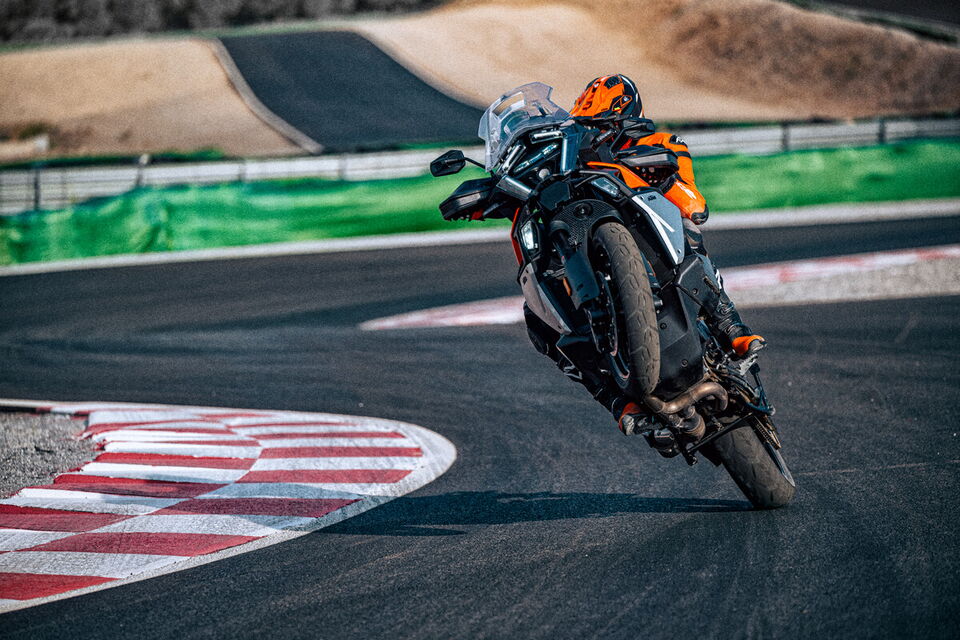
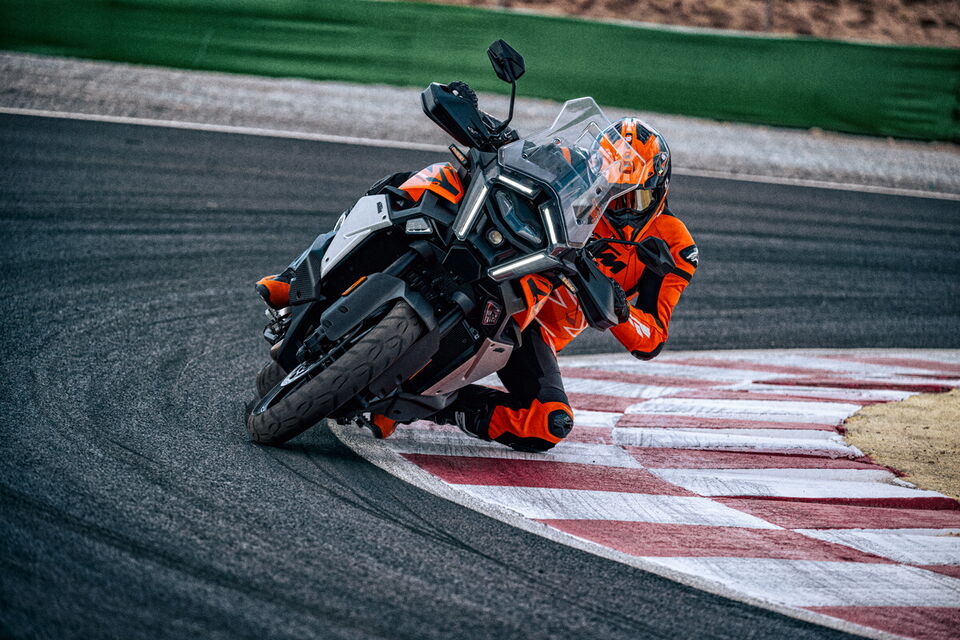
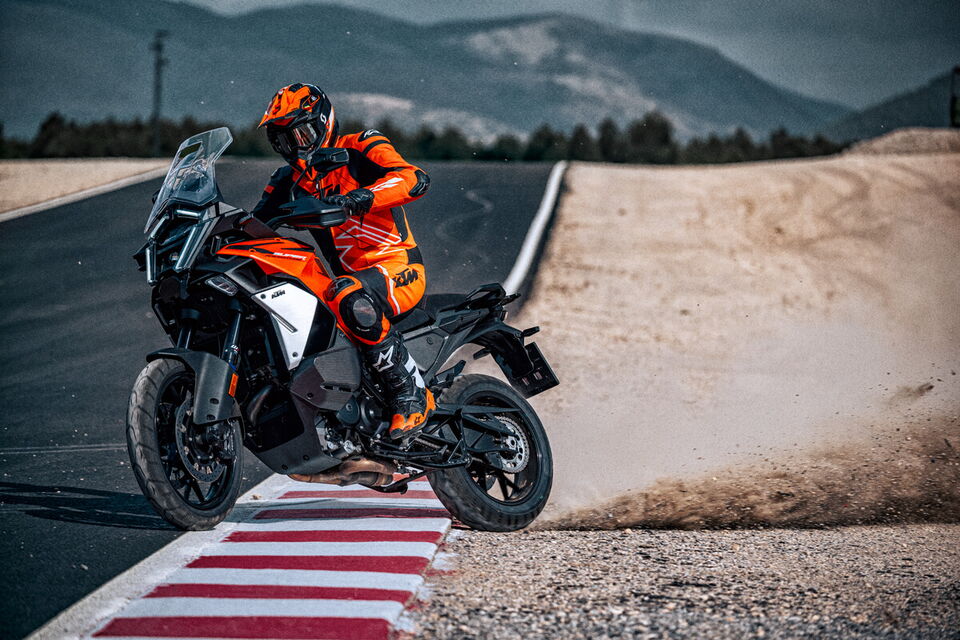
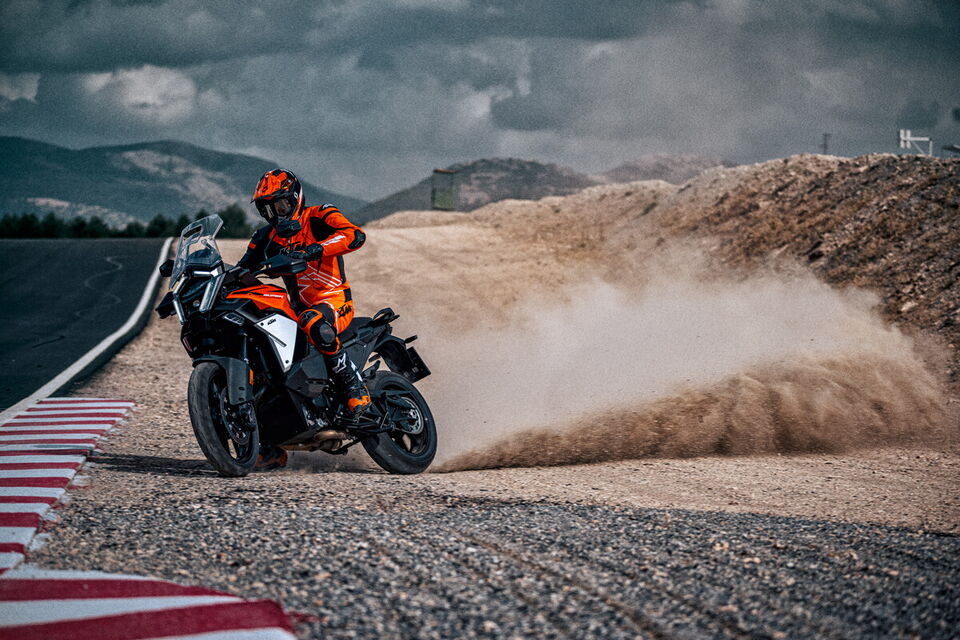
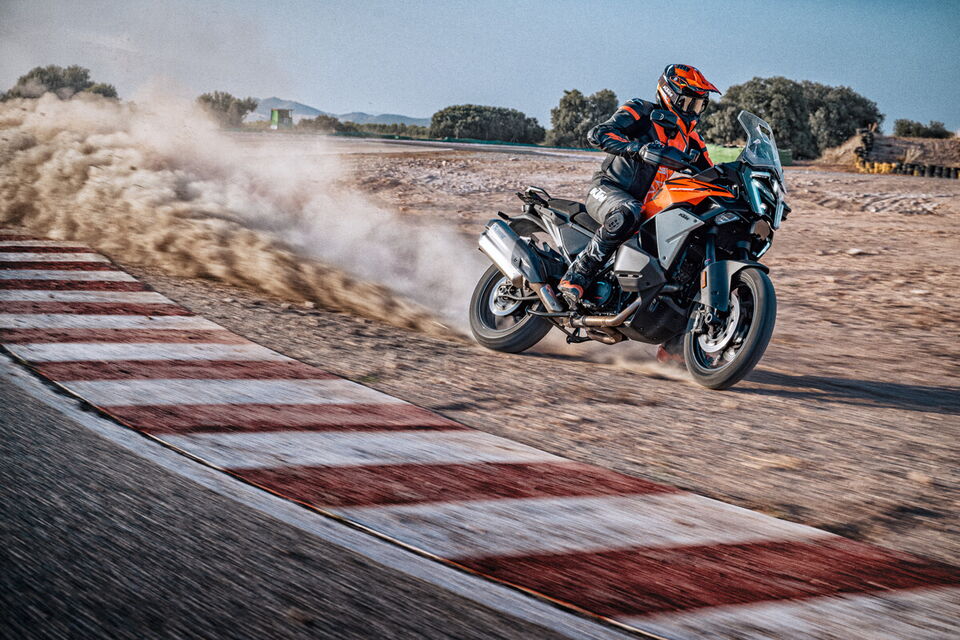
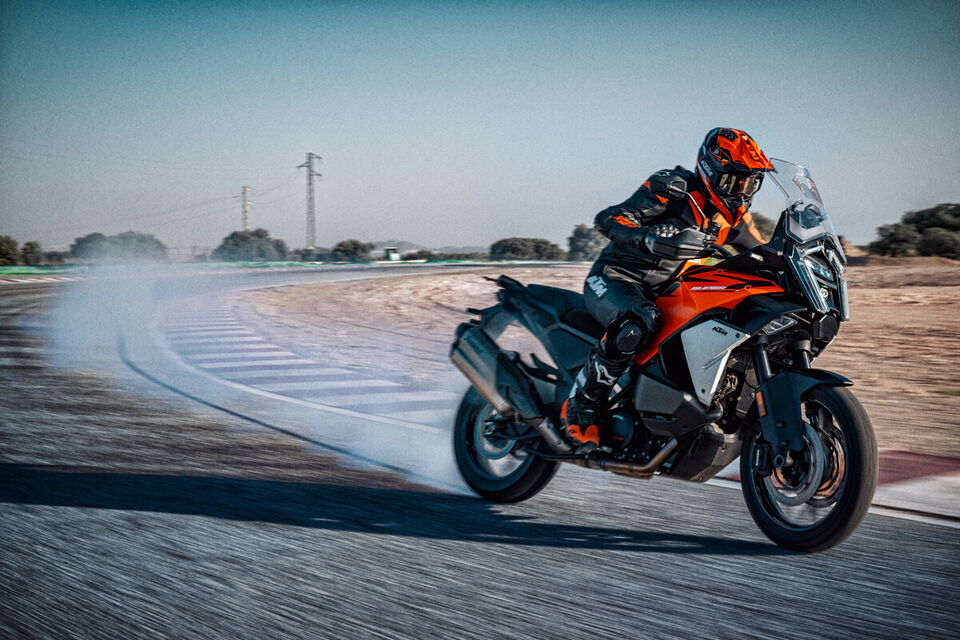
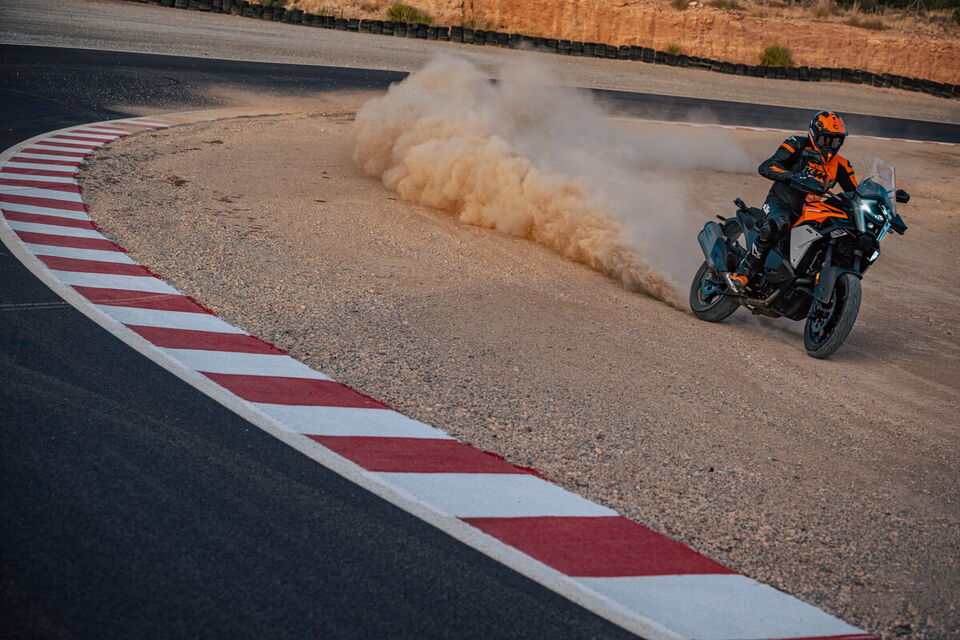
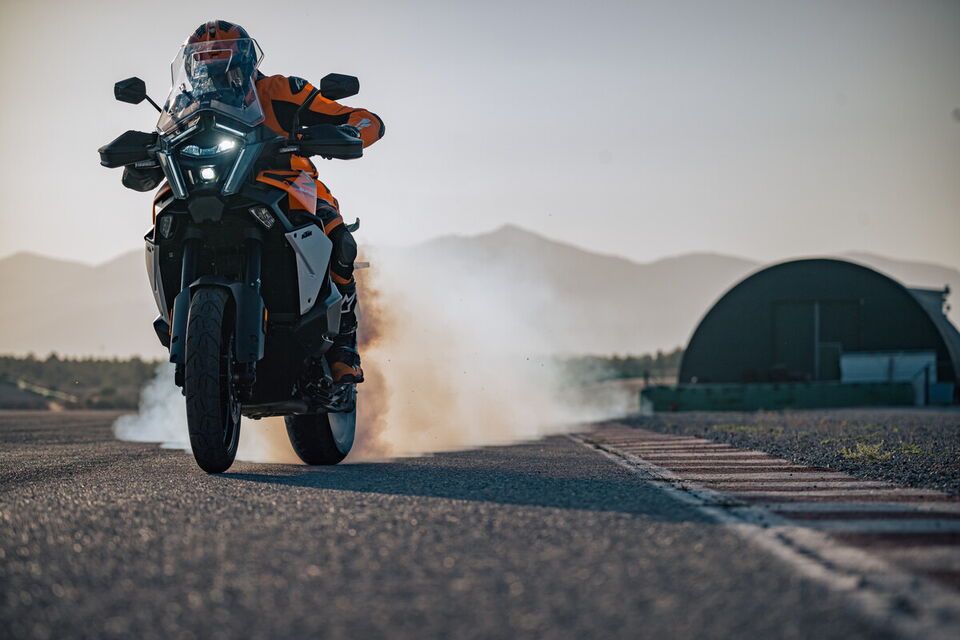
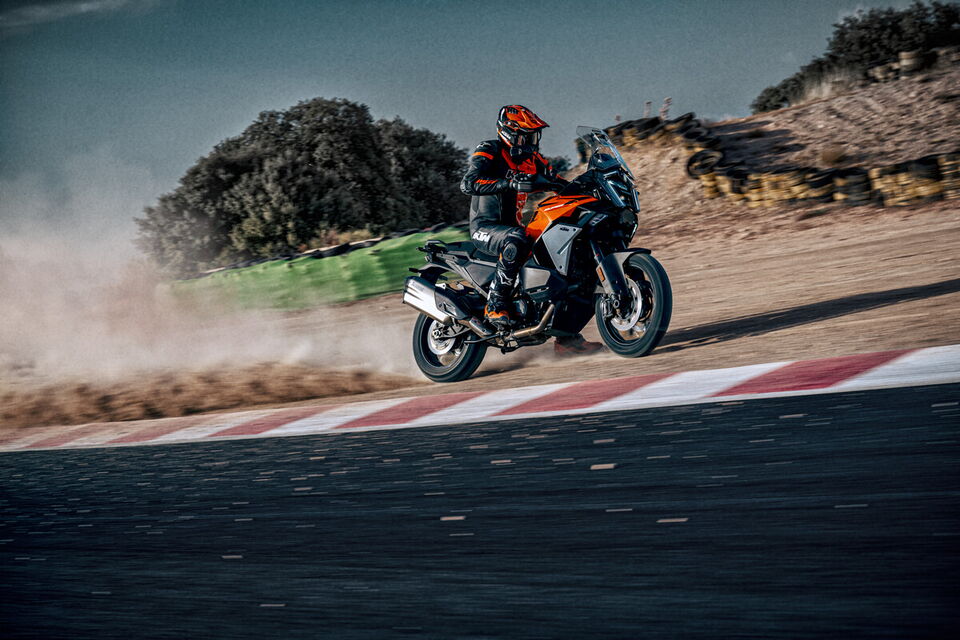
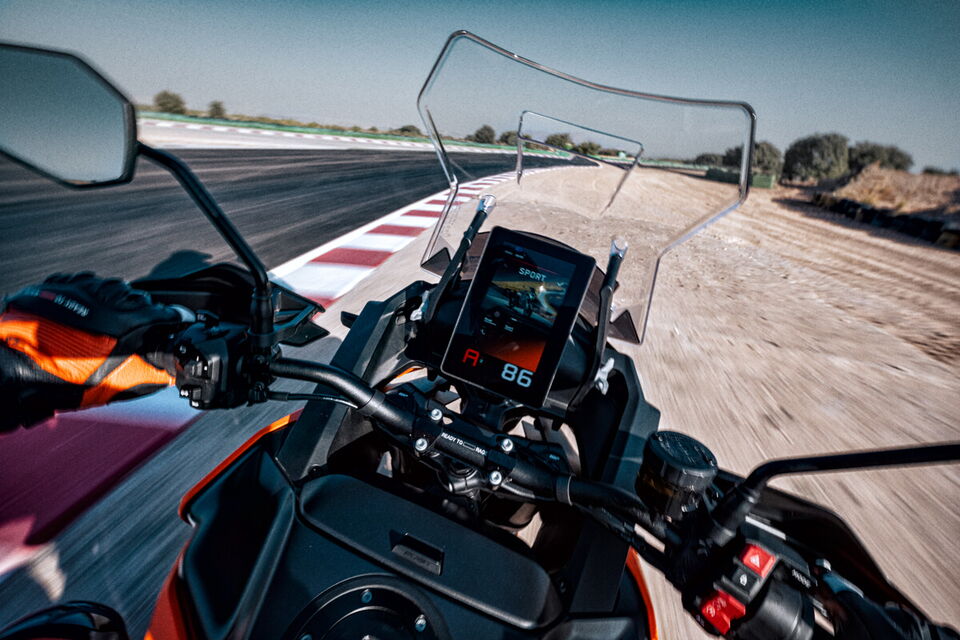
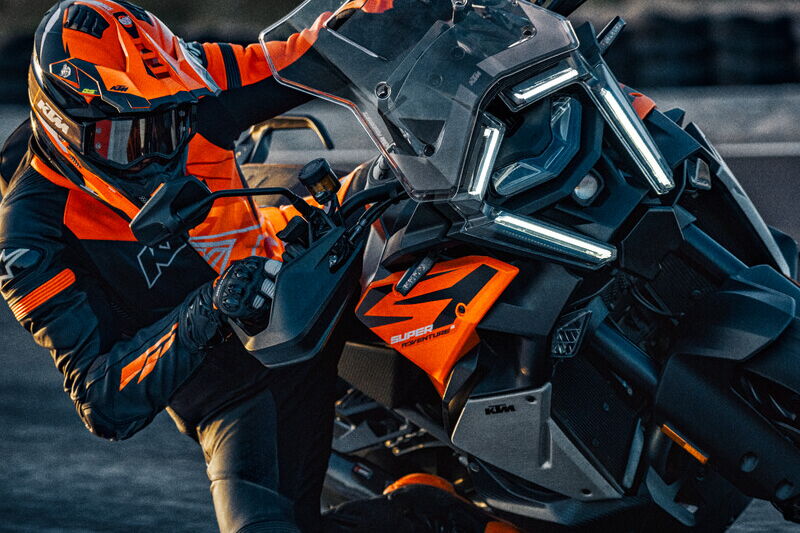
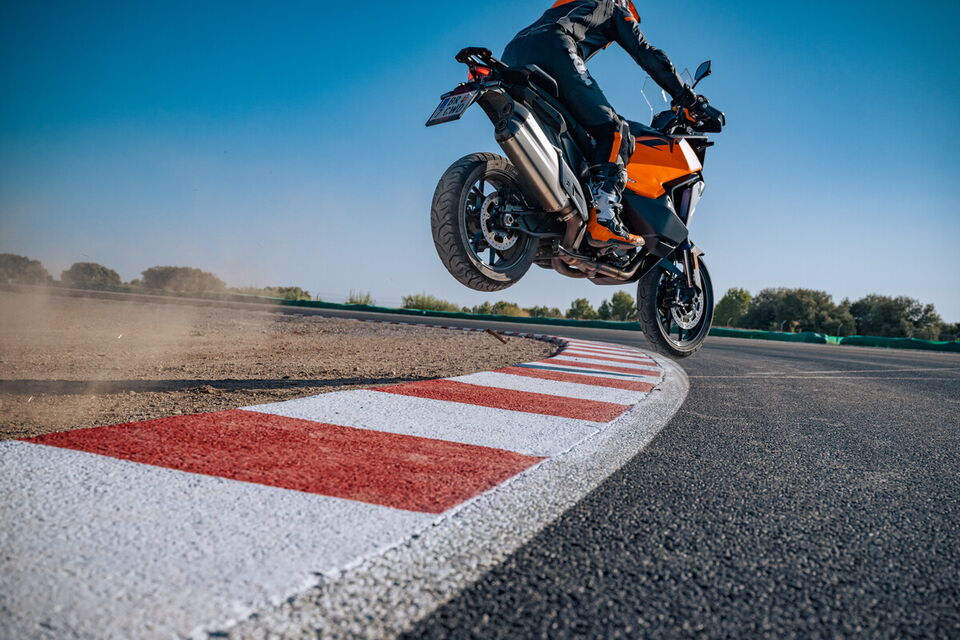
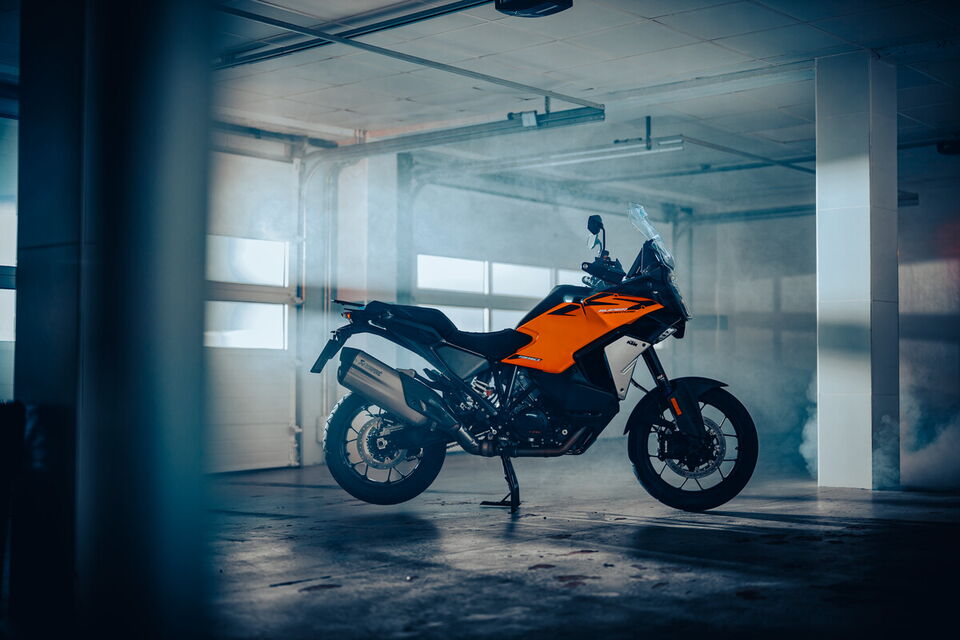
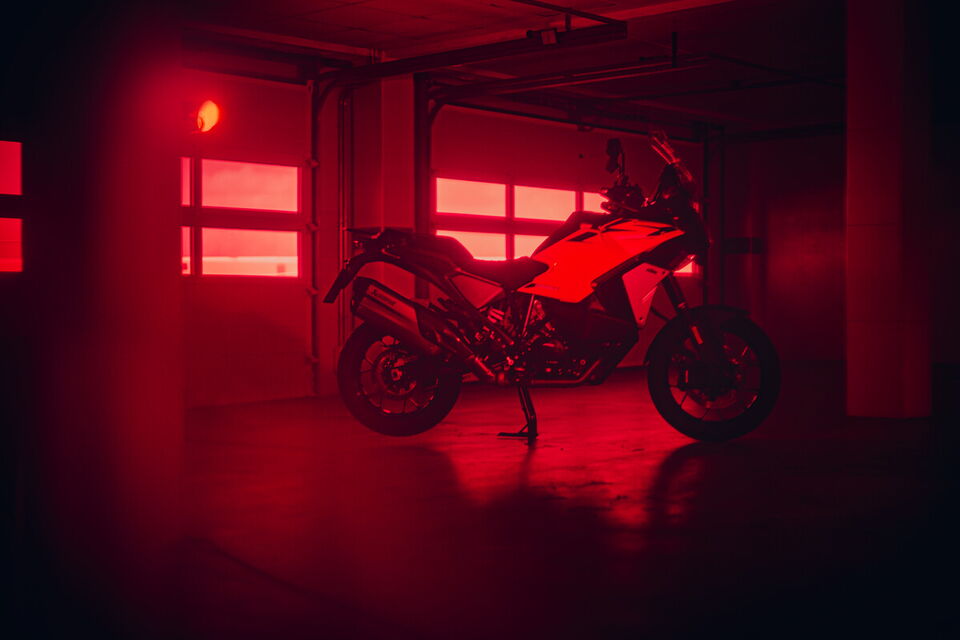
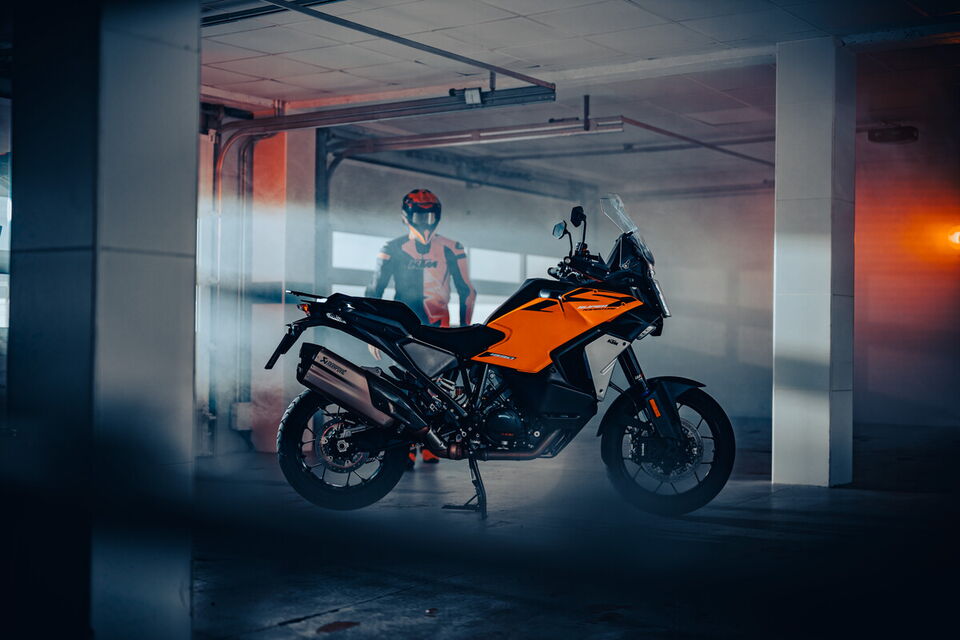
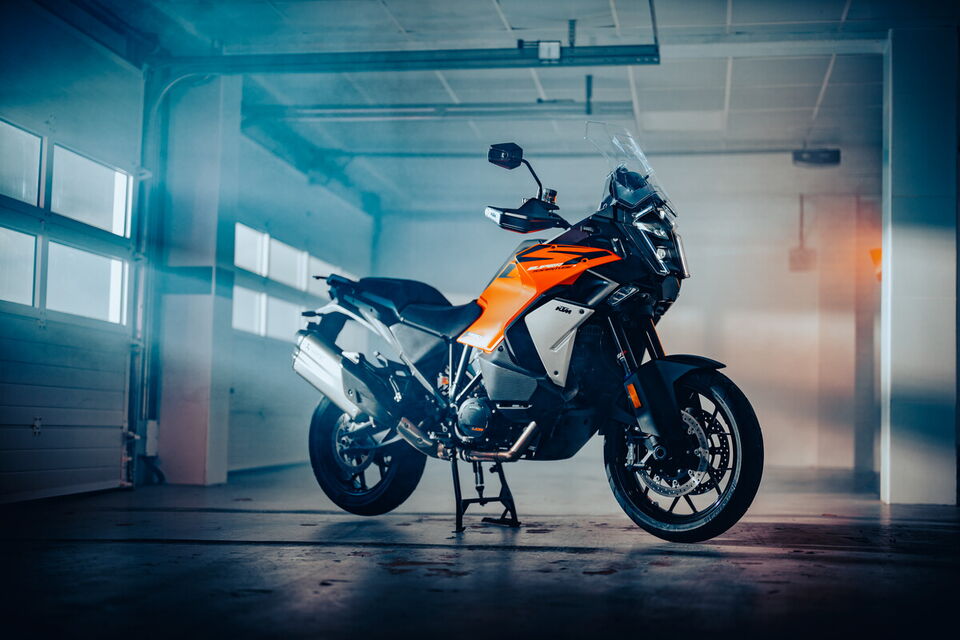
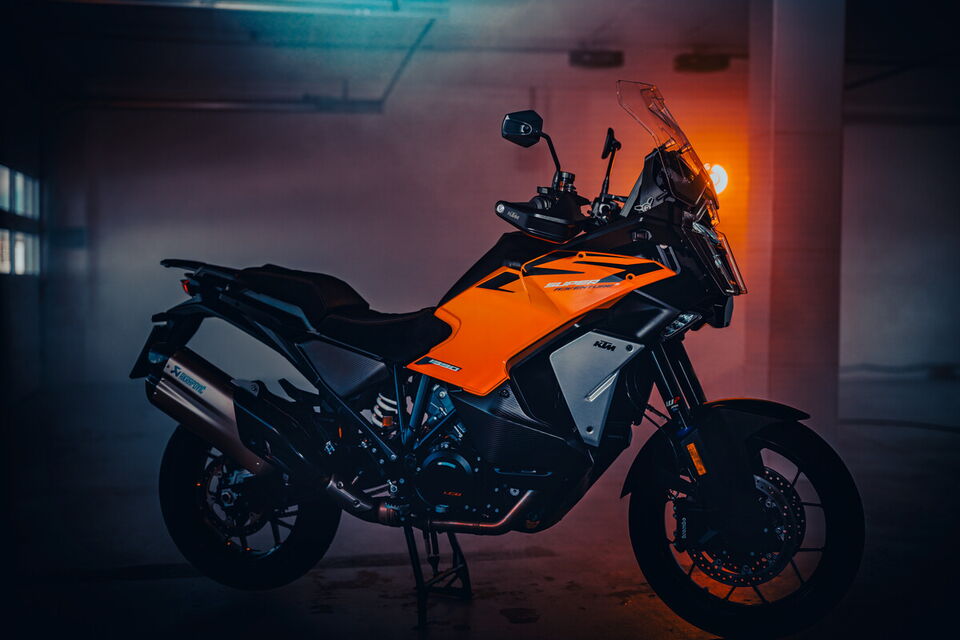
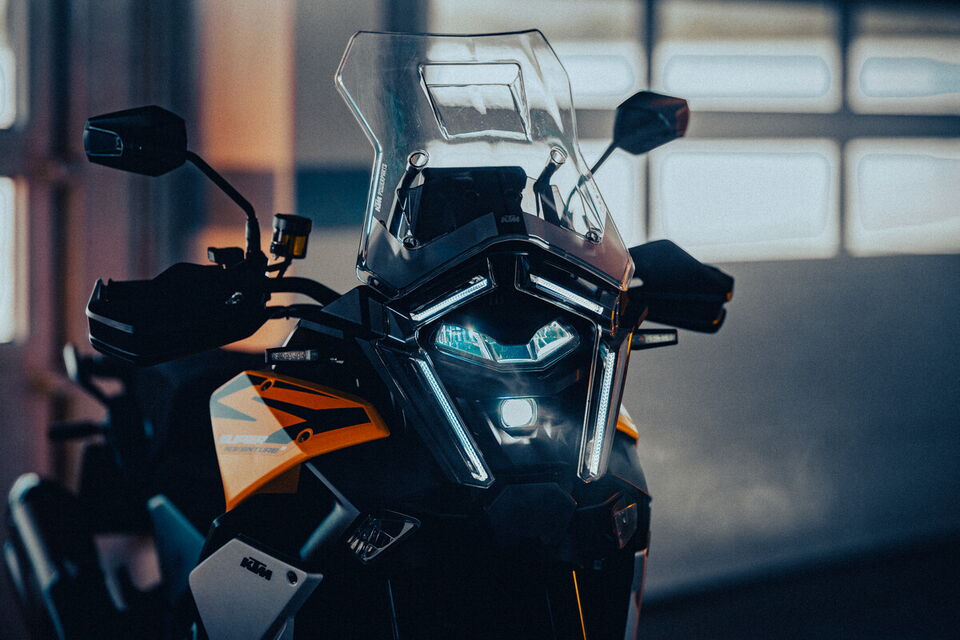
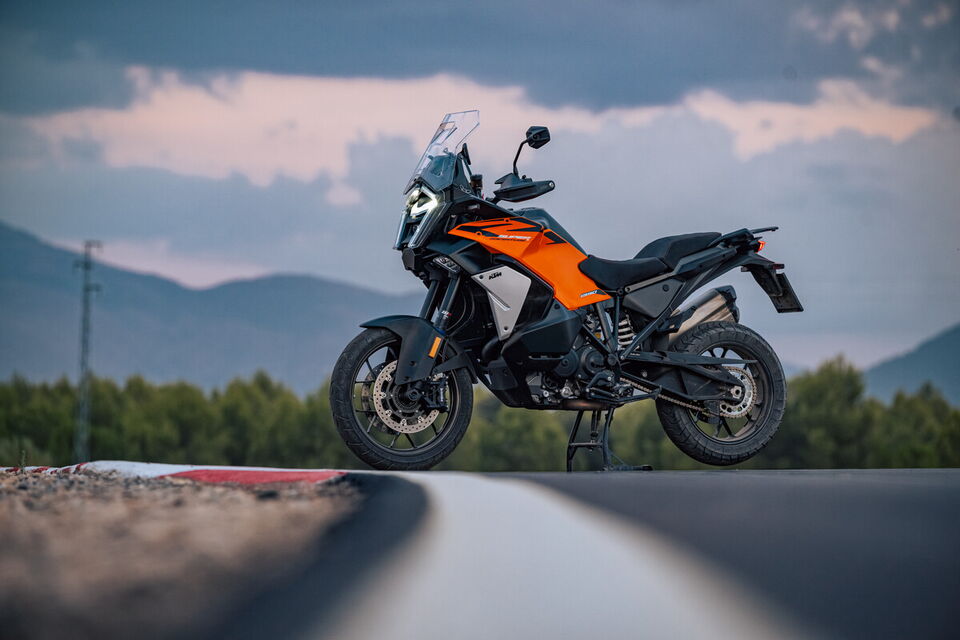
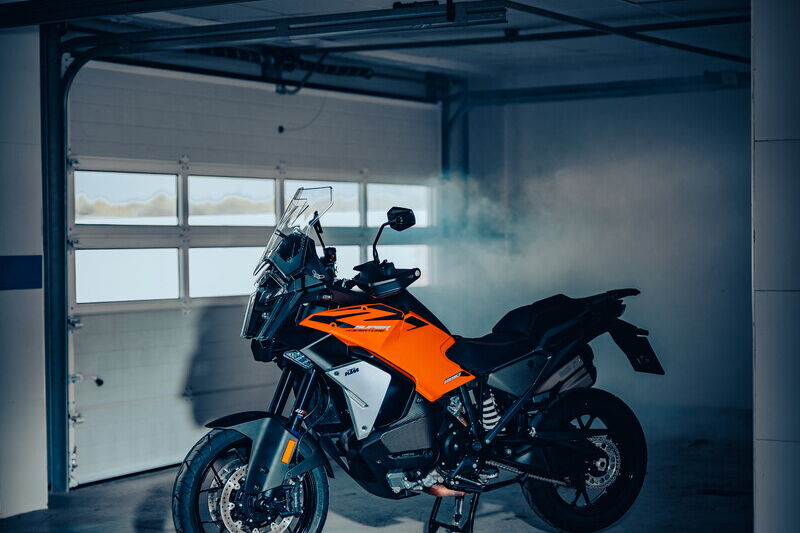
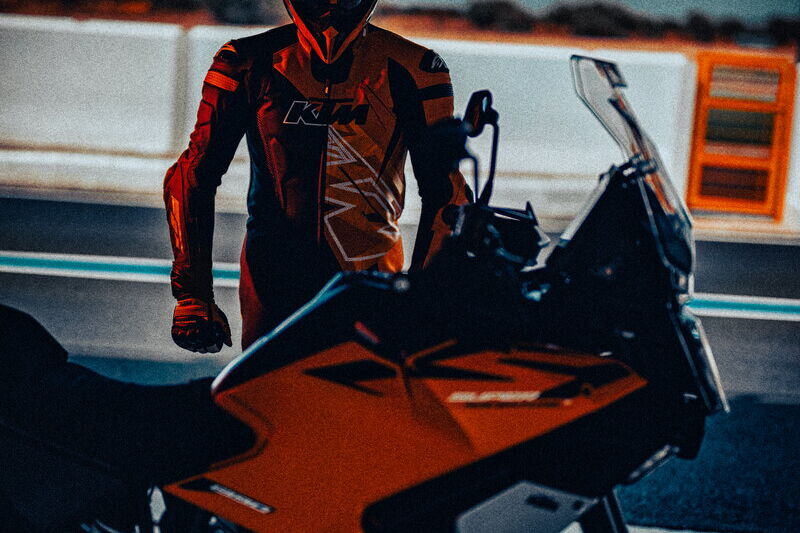
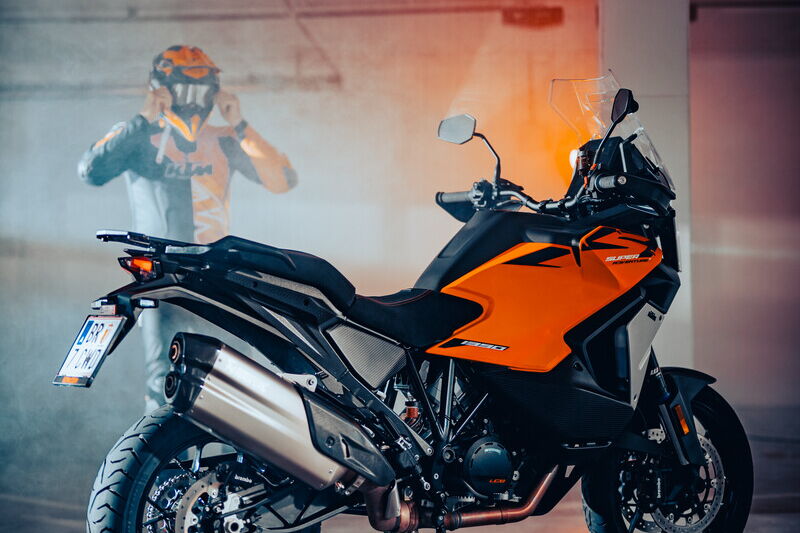
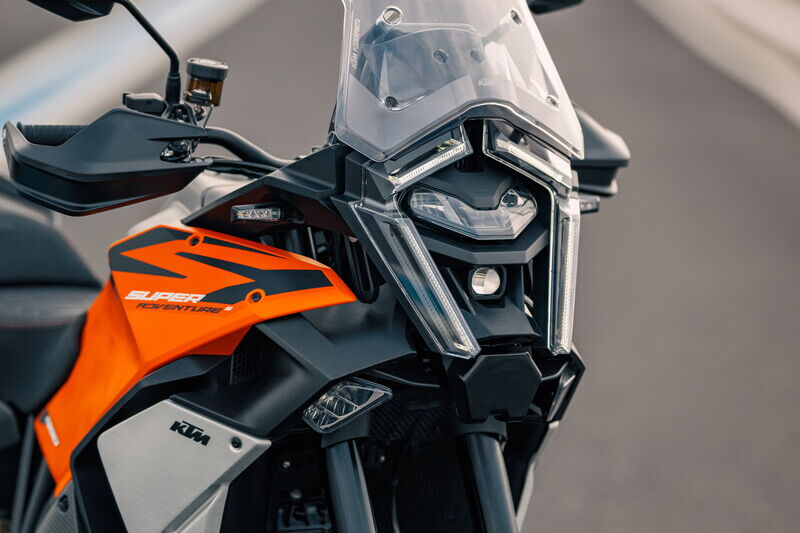
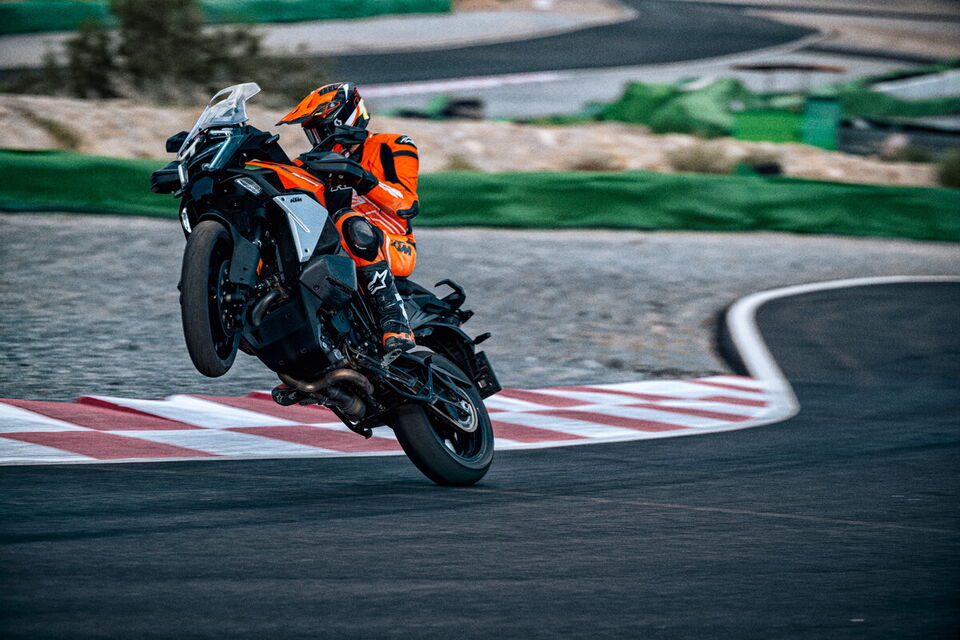
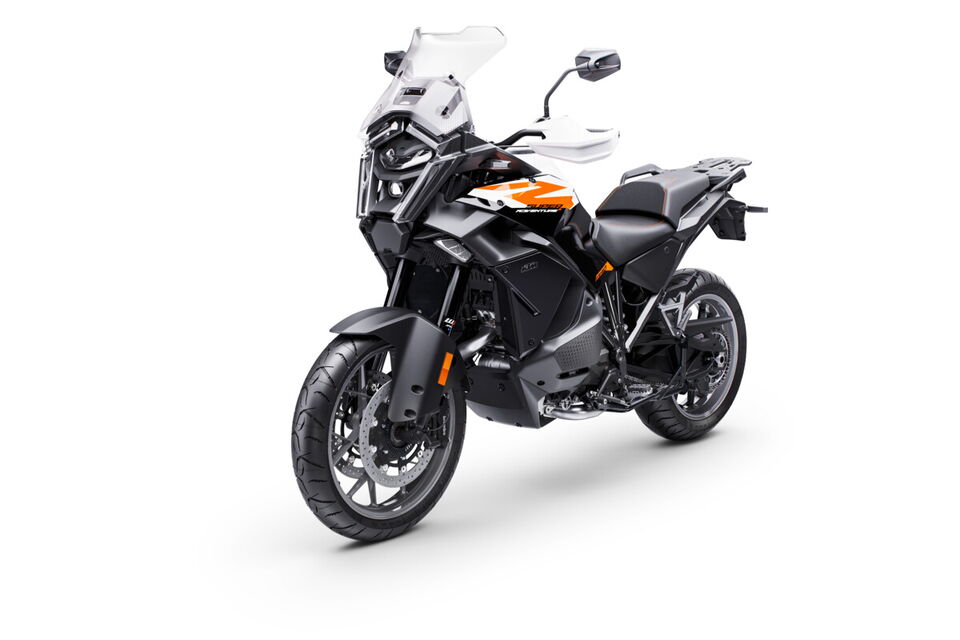
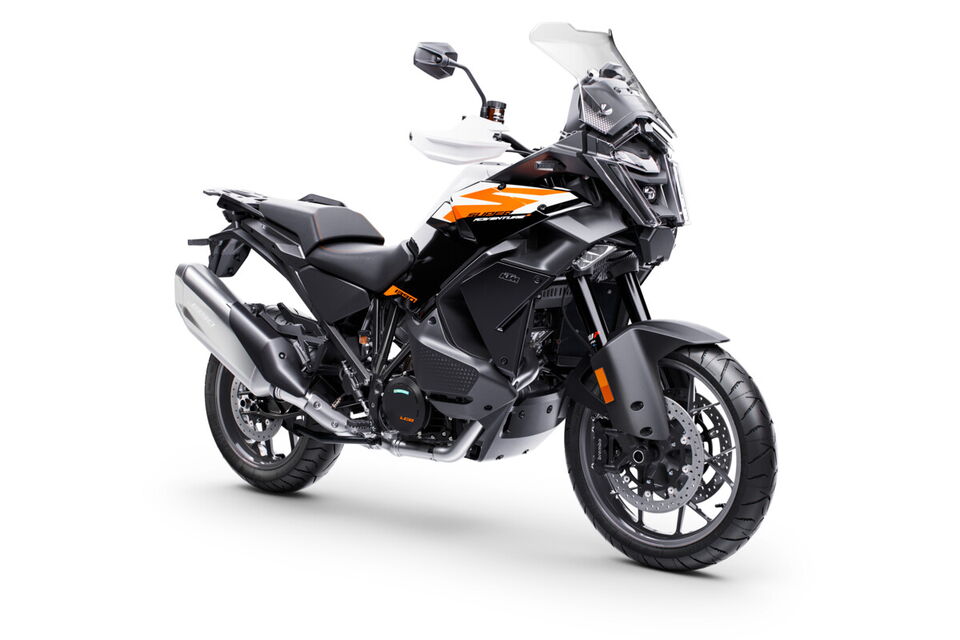
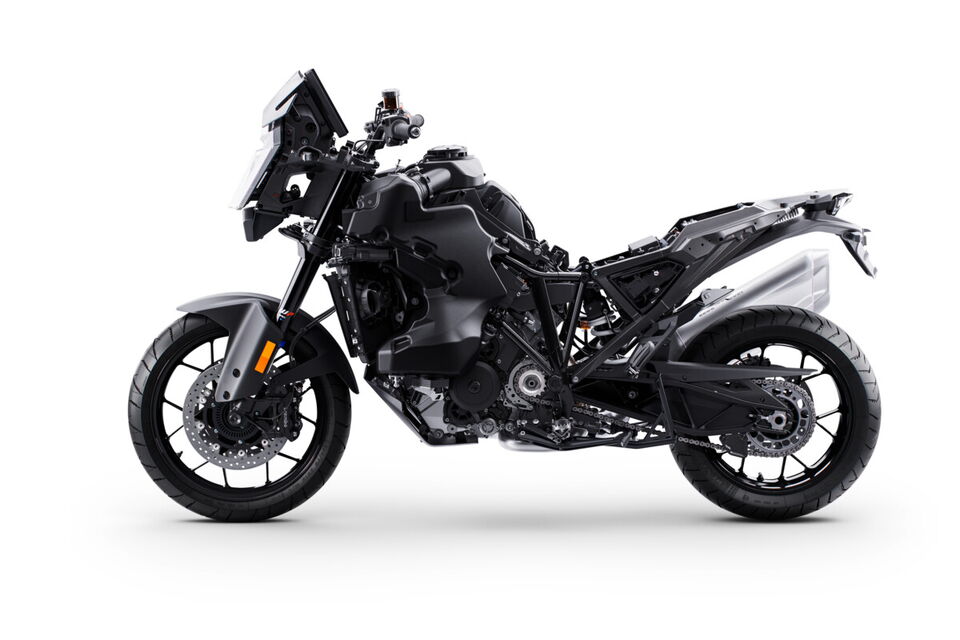
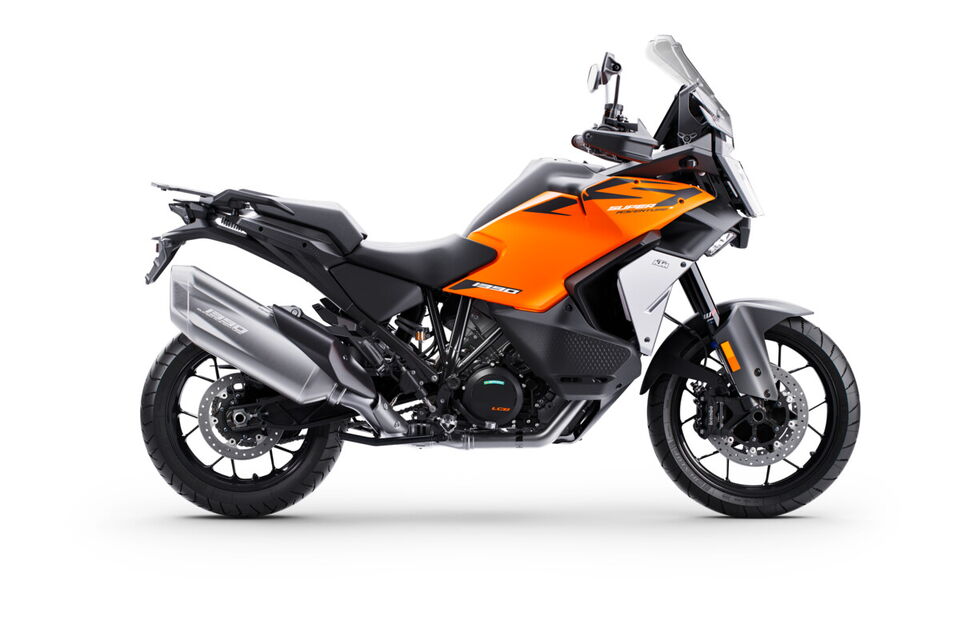
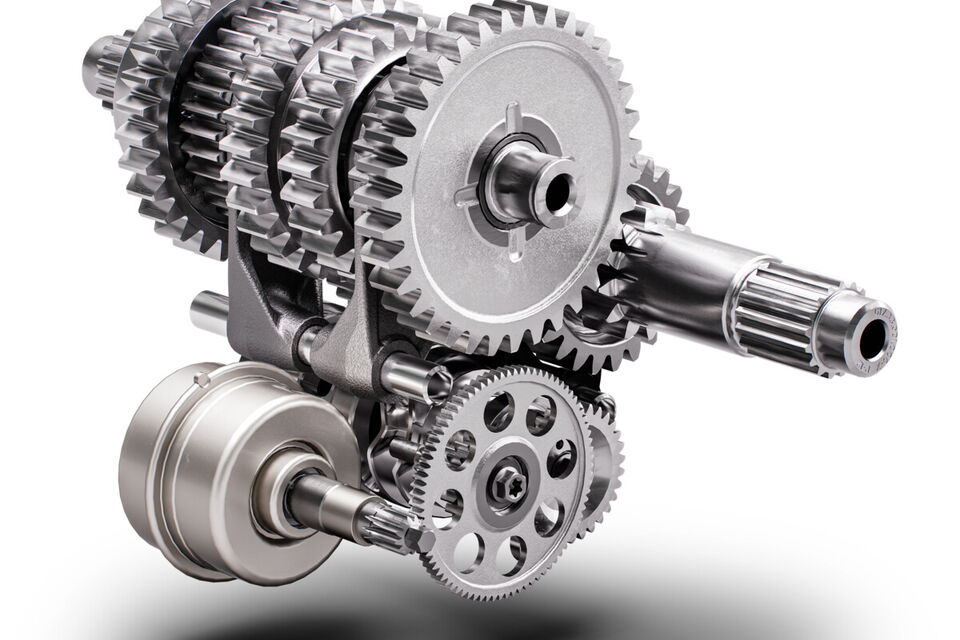
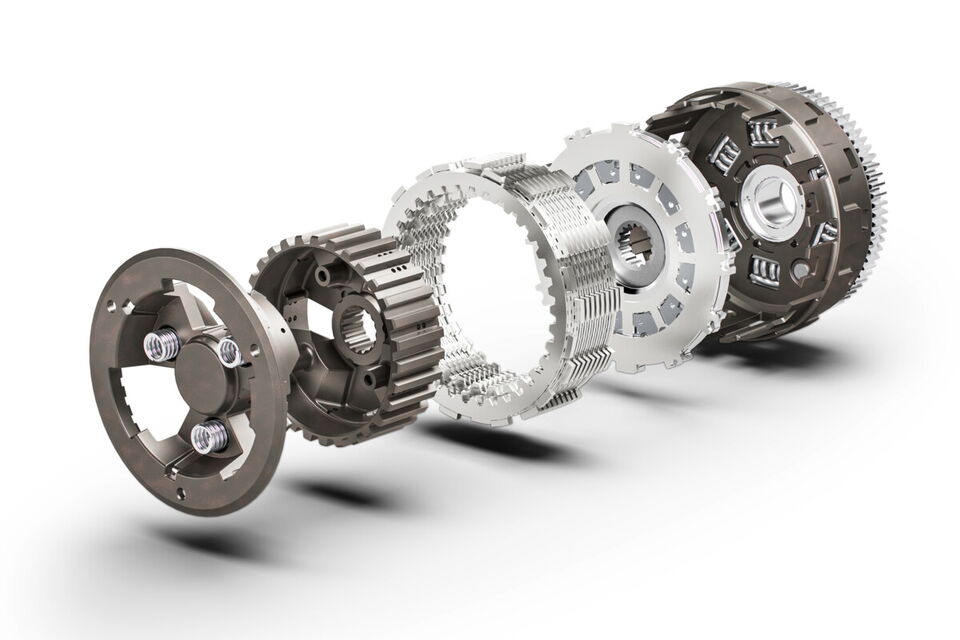
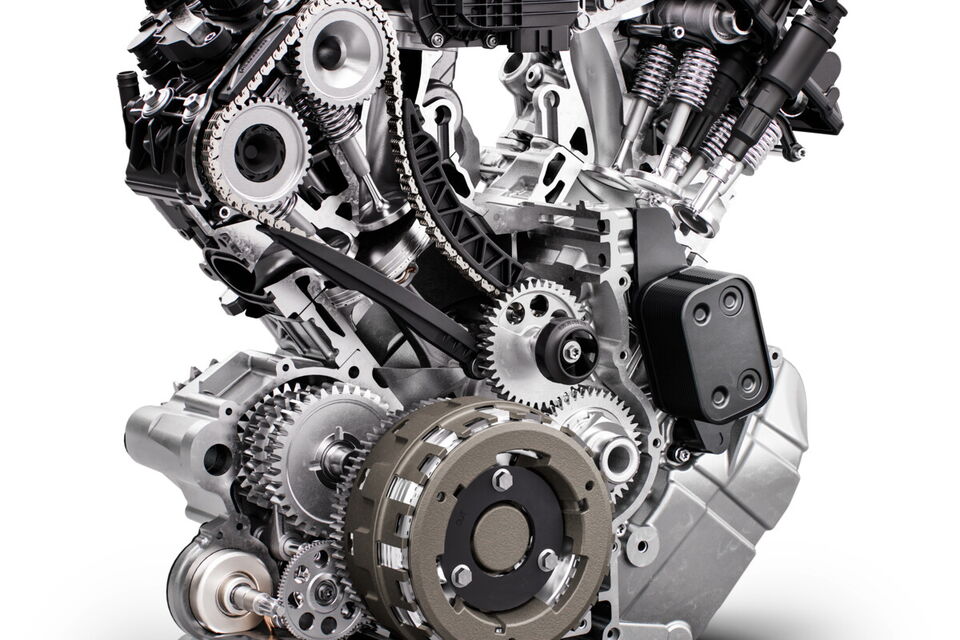
The AMT: Centrifugal Clutch Instead of a Servo Actuator—a Different Approach From BMW and Yamaha
The 1390 Super Adventure S EVO’s Automated Manual Transmission is not a dual-clutch transmission like Honda’s, and it is not a hybrid automatic like Yamaha’s. KTM has taken a fundamentally different route. The clutch disappears completely as a manually operated component. Instead, a centrifugal clutch engages drive automatically once engine speed rises above 1,900 rpm. The shift drum is operated by an electric motor that changes gear earlier or later depending on the selected riding mode. There is no clutch lever.
KTM still gives the rider a choice. In M mode, gears can be selected manually either with the conventional foot lever or with a thumb paddle on the left handlebar. In A mode, the system takes over completely. It is an impressively simple solution, conceptually close to the centrifugal-clutch systems Rekluse offers for sport enduros. The main criticism is that in Comfort mode the electronics hold gears a fraction longer than many riders would choose themselves, taking a little of the EVO’s otherwise almost Zen-like composure away. Sporty riders who want to shift actively should buy the S. The EVO is aimed at riders who want less manual input on long tours, in traffic, and on the highway.
Radar + AMT: Stop & Go to a Complete Halt, Then Automatic Pull-Away—Possible Only Because of AMT
The EVO’s real technical synergy lies in the combination of AMT and Bosch’s fifth-generation front radar. A conventional motorcycle with a manual transmission can decelerate automatically only to a certain minimum speed; eventually the rider has to operate the clutch and brake. The EVO has no clutch lever. Adaptive cruise control can therefore slow the motorcycle all the way to a stop and, after a short halt of less than three seconds, pull away again once the rider confirms readiness at the controls. It is Stop & Go functionality on a motorcycle that is not an automatic in the conventional sense.
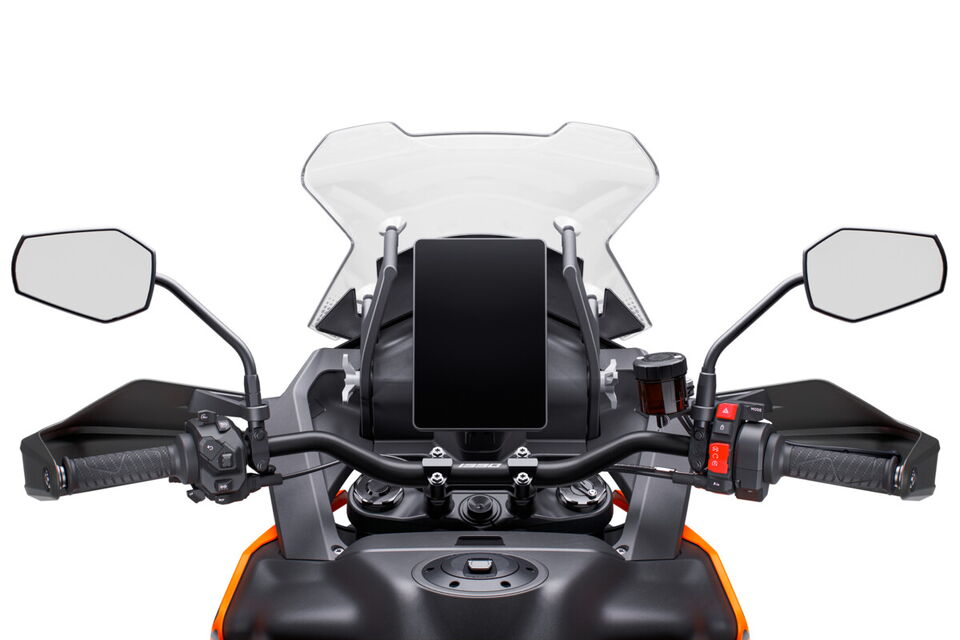
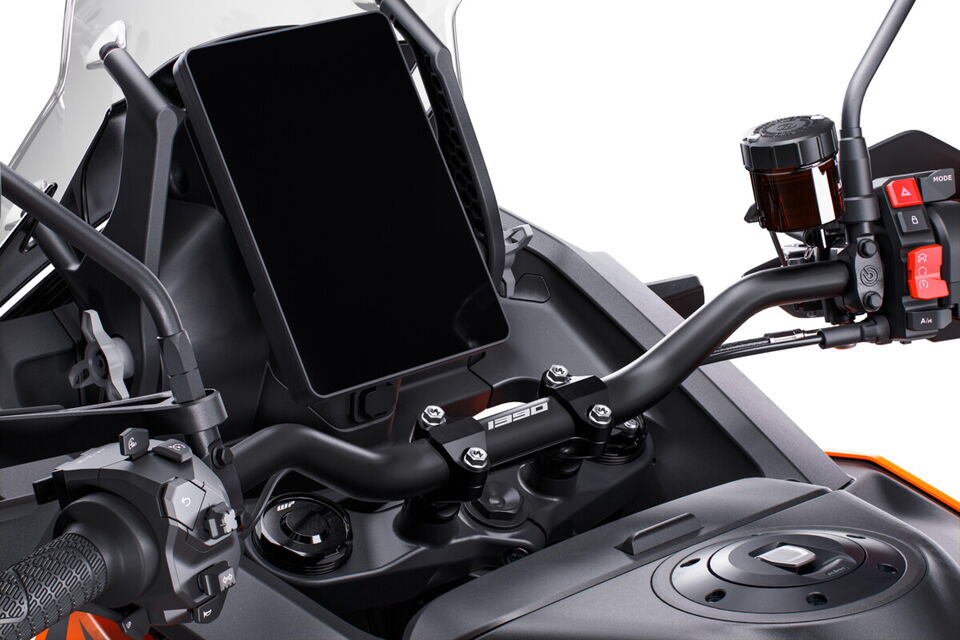
The package also includes Blind Spot Detection, distance warning, and an adaptive cruise-control function that recognizes when the motorcycle would otherwise pass traffic on the right on the highway and adjusts speed accordingly. The integrated navigation system is a genuinely useful alternative to an external GPS. The 8.8-inch portrait TFT uses optical bonding, touchscreen operation, and an anti-fingerprint coating, making it the largest and most modern standard cockpit in the class.
Engine: The Gentle Giant—173 hp That Does Not Feel Like 173 hp, With 60,000 km Valve Checks
The 1,350 cc LC8 V-twin with Cam Shift valve control produces 173 hp and 145 Nm. Yet the engine never feels as brutal as those numbers suggest. It accepts throttle cleanly from 2,000 rpm, does not lash the chain, and responds predictably to even tiny throttle inputs. Mechanical noise is low. It feels far less monstrous than the marketing suggests—more like a gentle giant. That is not a contradiction. It is the character of the LC8 in its most mature form.
The valve-clearance inspection interval has now doubled to 60,000 km from the previous 30,000 km, significantly reducing lifetime maintenance costs. Oil changes are due every 15,000 km. Real-world test consumption is around 7 L/100 km. With a 23-liter tank, that means roughly 310 to 340 km of range during sporty riding, less than the nominal 400-plus kilometers suggested by WMTC figures. For a road-focused 173 hp adventure-tourer, that is realistic.
Suspension: Through-Rod SAT—New Architecture, Finer Calibration, the Best Foundation in the Market
The EVO uses the same WP APEX SAT suspension as the standard S, and that is very much a compliment. The new Through-Rod fork architecture combines elements of open- and closed-cartridge designs, reduces friction through a continuous rod inside the fork leg, and responds faster to changes in road surface. New PWM sensors measure damping requirements more precisely. Suspension travel is 200 mm front and rear, while spring preload is adjusted automatically without rider input. The new-generation frame has increased torsional rigidity, which the developers say improves front-tire feedback.
Engine, suspension, and brakes work exceptionally well together. Seat height is 847 mm in the low position and 867 mm in the high position. Dry weight is 227 kg—only one kilogram more than the S despite the AMT transmission—and payload is 230 kg. The footpegs are 10 mm wider and 8 mm lower than on the predecessor, providing a more relaxed knee angle on long stages.
What the EVO Adds Over the S
AMT and radar-based adaptive cruise control are the core differences from the S. A center stand is also standard—on a heavy touring motorcycle, that is not a luxury but a useful piece of equipment. The storage compartment ahead of the fuel filler is larger and now accommodates a large smartphone, with USB-C fitted as standard. The onboard tool kit beneath the seat is unusually complete, a small detail that matters more on a travel motorcycle.
The Keyless Go system includes Anti-Relay-Attack protection, designed to prevent the key signal from being exploited by external signal amplifiers—a practical anti-theft feature at a time when relay attacks on keyless systems are common. The optional luggage can also be unlocked through Keyless Go. Dunlop Trailmax Meridian tires are standard. ABS modes, cornering lights, TPMS, and five standard riding modes—Street, Rain, Sport, Offroad, and Custom—are included. Rally mode, Suspension Pro, and Hill Hold Control are optional. Stationary noise is 91 dB(A), so Tyrol remains open to the EVO.
Handling: Who Should Buy the EVO, Who Should Buy the S—and Why Both Are Among the Best Packages in the Class
For many riders, AMT will offer no decisive advantage over a conventional transmission with a good blipper. It is not a step every rider needs. It is a step for commuters, long-distance tourers, and riders who simply want a more relaxed experience. Those who ride aggressively and want to intervene actively should buy the S.
What both versions share is the class-leading suspension foundation, the strongest V-twin among adventure-tourers with a 19-inch front wheel, Brembo brakes, Dunlop Meridian tires, an 8.8-inch touchscreen TFT, a 23-liter tank, and Mattighofen build quality. The long-term reliability of the AMT still has to prove itself in real-world ownership. That is the only genuine question mark.
Cost: EUR 23,494—the Premium for AMT and Radar, and What You Get for It
EUR 23,494 plus ancillary charges is the officially communicated German list price. The S without AMT and standard adaptive cruise control costs EUR 2,000 less. The premium buys AMT, radar-based adaptive cruise control, Stop & Go, Blind Spot Detection, and a center stand. The BMW R 1300 GS starts at EUR 19,990 plus ancillary charges with 145 hp, while semi-active DDC costs extra. The Ducati Multistrada V4 S costs EUR 24,590 plus ancillary charges, produces 170 hp, and uses semi-active suspension. The KTM sits between them in both price and performance. Premium Manufacturer Warranty coverage extends to four years.
Verdict
With the 1390 Super Adventure S EVO, KTM has not built a fundamentally different motorcycle so much as a more complete one. The engine is more refined, the suspension more mature, and the cockpit more generous. AMT is a convincingly simple and well-executed system—for riders who actually need it. Everyone else can buy the S for EUR 2,000 less and get the same core motorcycle.
Quick Check
+ AMT standard: centrifugal clutch + electrically operated shift drum; M mode for manual shifting by foot lever or thumb paddle, A mode fully automatic.
+ AMT + radar: Stop & Go to a complete halt; automatic pull-away after stops under three seconds; Blind Spot Detection; distance warning.
+ Bosch fifth-generation front radar standard; optional on the S.
+ 173 hp / 145 Nm from the 1,350 cc LC8 V-twin with Cam Shift; smooth character and clean response from 2,000 rpm.
+ Valve-clearance inspection every 60,000 km, doubled from predecessor; oil changes every 15,000 km.
+ Semi-active WP SAT Through-Rod suspension; new PWM sensors; 200 mm travel front and rear.
+ Automatic preload adjustment without rider input.
+ Radial four-piston Brembo brakes with twin 320 mm front discs; new master cylinders and pads.
+ Dunlop Trailmax Meridian standard.
+ 8.8-inch portrait touchscreen TFT; optical bonding; anti-reflective coating.
+ Center stand standard.
+ Keyless Go with Anti-Relay-Attack protection.
+ Large storage compartment ahead of fuel filler with USB-C; comprehensive onboard tool kit.
+ 227 kg dry; only one kilogram heavier than S despite AMT; 230 kg payload.
+ 91 dB(A) stationary noise—no Tyrol riding ban.
+ Up to four years warranty; built in Mattighofen.
– AMT holds gears slightly too long in Comfort mode, taking some edge off its otherwise composed character.
– AMT has not yet been sufficiently proven off-road; behavior without a manual clutch in dirt remains a question.
– Long-term reliability of the AMT still has to prove itself in real-world use.
– Real consumption around 7 L/100 km versus 6.7 L factory figure; sporty range roughly 310–340 km.
– No conventional quickshifter because AMT performs that function; manual clutchless gear selection remains available in M mode.
– Warranty coverage depends on scheduled servicing at an authorized KTM dealer.
Technical Specifications: KTM 1390 Super Adventure S EVO (2026)
Country of Manufacture: Austria, KTM Mattighofen
Engine: LC8 V-twin, 75-degree cylinder angle, 1,350 cc, liquid-cooled, DOHC, Cam Shift, Keihin EMS, Ride-by-Wire, twin ignition, Euro 5+; new valve-seat alloys; lateral heat-air outlets away from knee area
Power: 173 hp at 9,500 rpm
Torque: 145 Nm at 8,000 rpm
Transmission: AMT, Automated Manual Transmission: centrifugal clutch + electrically operated shift drum; M mode for manual selection by foot lever or thumb paddle; A mode fully automatic
AMT Characteristic: No manually operated clutch; drive engages automatically from approx. 1,900 rpm; centrifugal principle rather than a BMW/Yamaha-style clutch servo actuator
EVO Added Value vs. S: AMT standard; front radar standard, optional on S; Stop & Go standard
Riding Modes / Electronics: Street, Rain, Sport, Offroad, Custom standard; Rally mode optional; Bosch Gen 5 front radar with adaptive cruise control, Stop & Go, Blind Spot Detection and distance warning; cornering ABS; MTC; Motor Slip Regulation; TPMS; Keyless Go with Anti-Relay-Attack; cornering lights; Suspension Pro optional; Hill Hold Control optional
Frame: Chrome-molybdenum steel trellis frame; increased torsional rigidity; engine as stressed member
Fork: 48 mm WP APEX SAT USD, semi-active; Through-Rod architecture; new PWM sensors; 200 mm travel
Rear Shock: WP APEX SAT semi-active; 200 mm travel; automatic preload adjuster
Front Brakes: Radial four-piston Brembo calipers; twin 320 mm discs; new master cylinders and brake pads
Rear Brake: Two-piston Brembo caliper; 267 mm disc; ABS
Wheels: 19-inch front; 17-inch rear
Tires: 120/70 R19 front; 170/60 R17 rear; Dunlop Trailmax Meridian standard
Footpegs: 10 mm wider and 8 mm lower than predecessor
Display: 8.8-inch portrait touchscreen TFT; optical bonding; anti-reflective and anti-fingerprint coatings; navigation
Windshield: Adjustable by 70 mm without tools
Seat: 847 mm low / 867 mm high
Weight: 243 kg fully fueled; 227 kg dry; one kilogram more than S despite AMT
Payload: 230 kg
Fuel Tank: 23 liters; realistic sporty range approx. 310–340 km
Center Stand: Standard
Service Interval: 15,000 km; valve-clearance inspection every 60,000 km
Stationary Noise: 91 dB(A), no Tyrol riding ban
Price in Germany: EUR 23,494 plus ancillary charges
Warranty: Up to 4 years Premium Manufacturer Warranty; scheduled servicing at an authorized KTM dealer required