Review Mash K750 (2026)

730 cc Parallel Twin, Suter-Developed Engine, Marabese Design, Brembo Brakes and Showa Fork—for EUR 7,699
A liquid-cooled 730 cc DOHC parallel twin producing 74.8 hp, or 55 kW, at 8,500 rpm and 69 Nm at 6,800 rpm. Engine development by Suter Racing in Switzerland. Design by Marabese Design in Italy. Manufacturing by Jedi Motor in China. A gold-anodized, fully adjustable Showa USD fork, aluminum single-sided swingarm, radial four-piston Brembo front calipers on twin 298 mm wave discs, Bosch ABS, and Michelin Road 6 tires. A 5-inch TFT, keyless operation, TPMS, and Bluetooth are standard. No quickshifter, traction control, or riding modes. Ready-to-ride weight is 217 kg, seat height 780 mm, fuel capacity 14 liters. Price: EUR 7,699 plus delivery. A 47.5-hp A2 version is available.
As of: April 10, 2026 | Model: Mash K750 (2026) | Brand / production chain: Mash, France / Jedi Motor, China / Marabese Design, Italy / Suter Racing, Switzerland | Price: EUR 7,699 plus delivery, EUR 8,014 including delivery | A2 version: 47.5 hp available
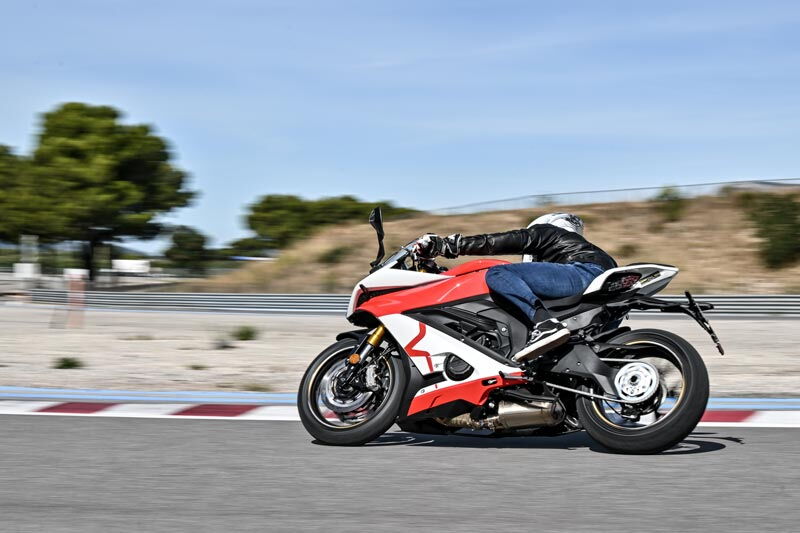
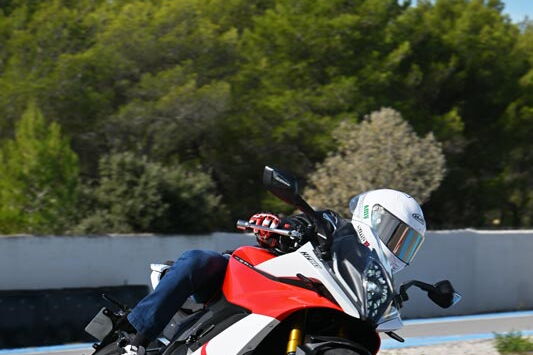
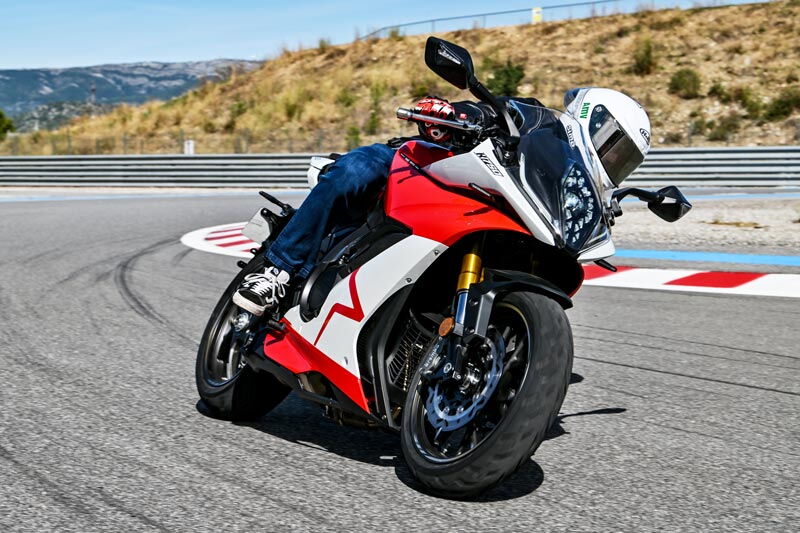
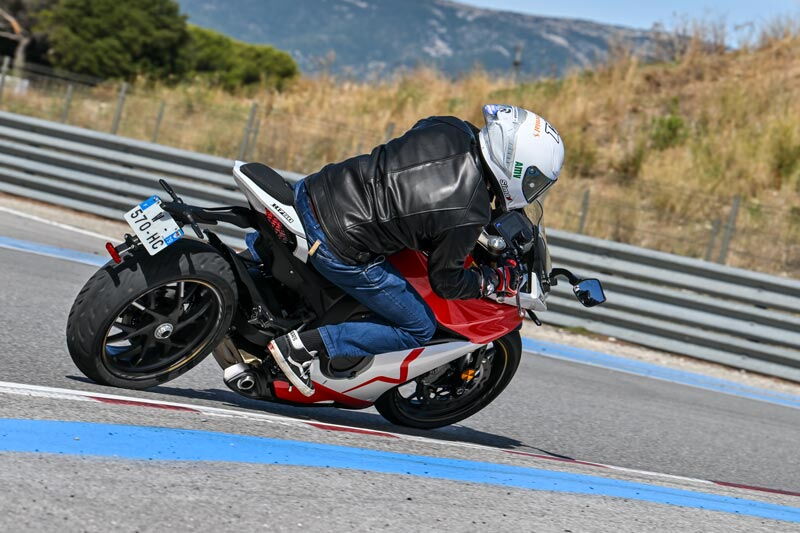
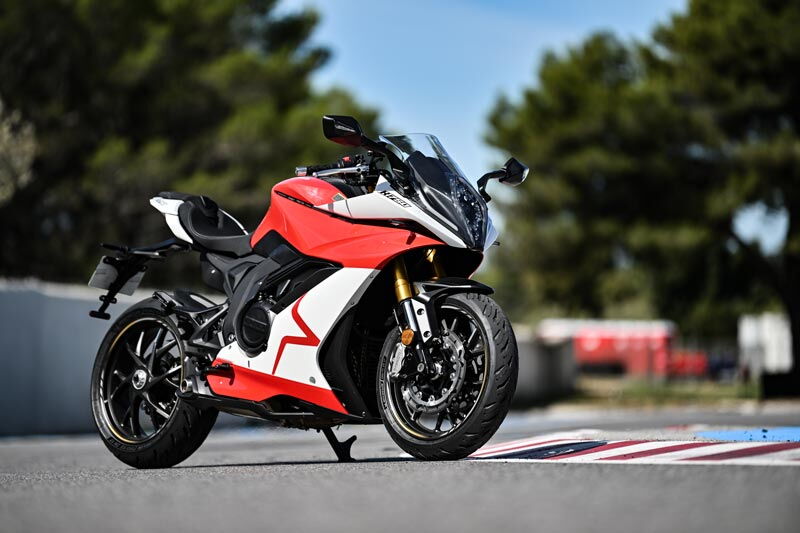
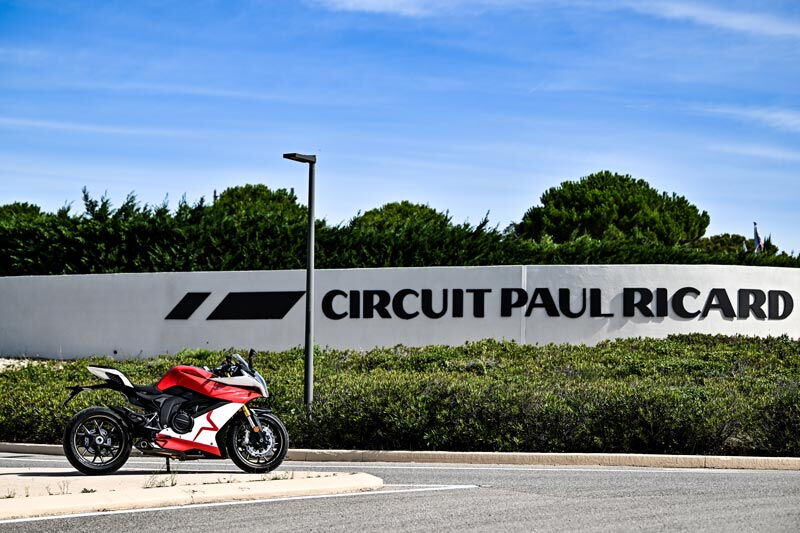
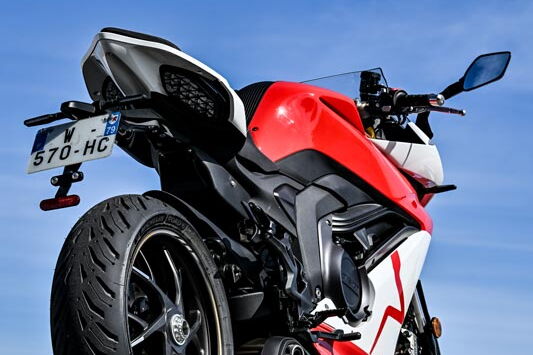
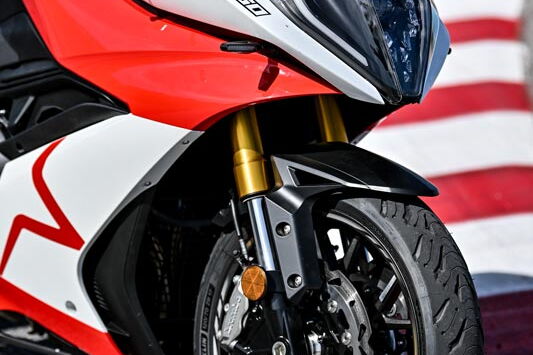
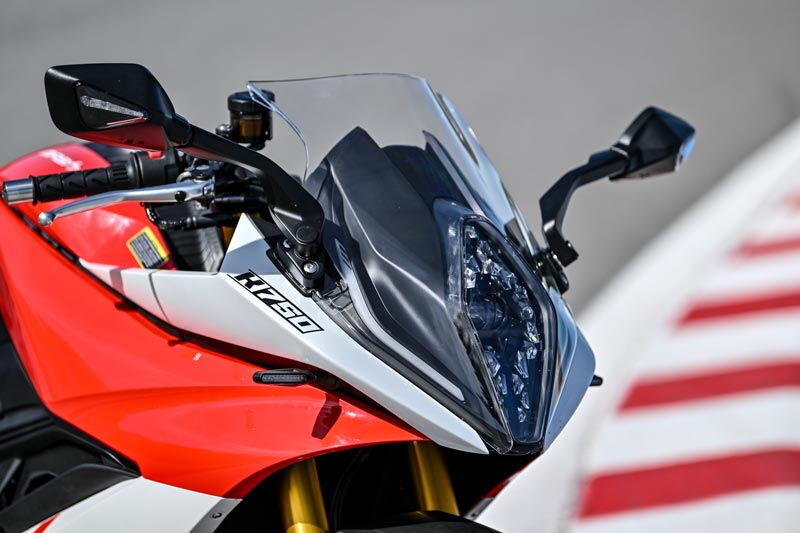
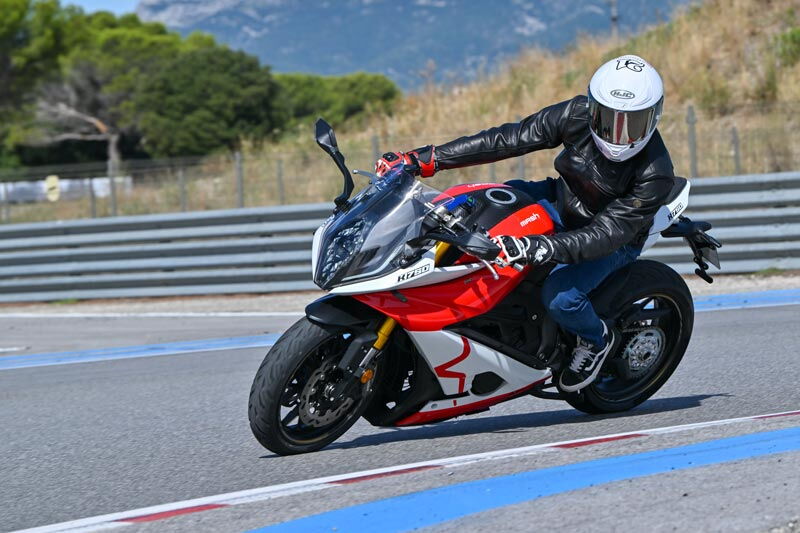
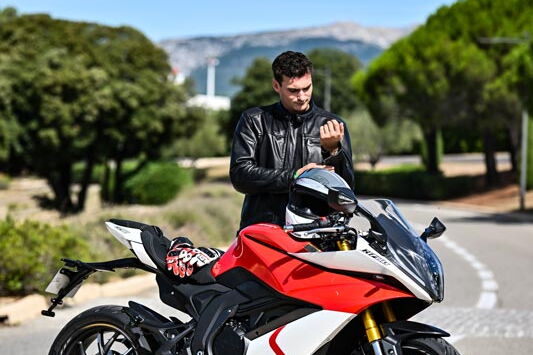
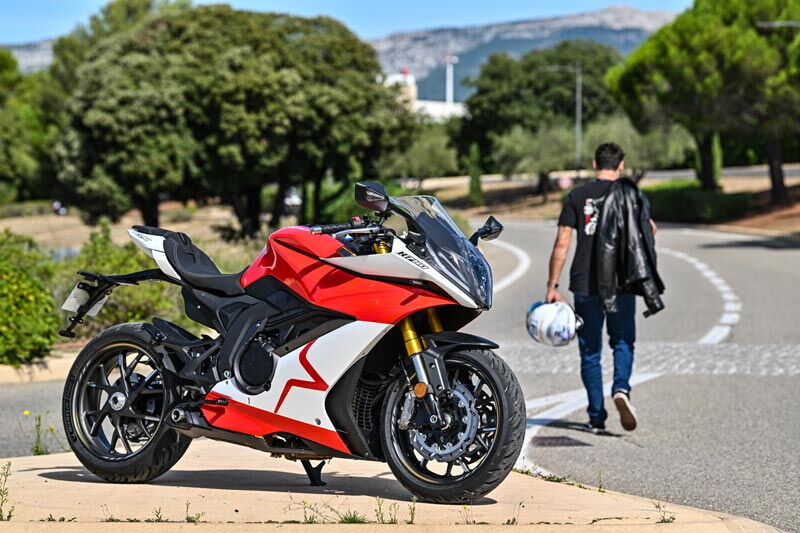
Brand and Origin: French Importer, Swiss Engine Development, Italian Design, Chinese Manufacturing
Mash is a French motorcycle label that has spent years importing small retro singles for the European market. The K750 marks its first move into the sporting middleweight segment and is also a textbook example of globalized motorcycle production. Manufacturing takes place at Jinan Jedi Motorcycle Technology, or Jedi Motor, in China, where the motorcycle has already been produced as the Jedi K750 since early 2024. In Spain, the same basic machine is sold as the Mitt 775R for EUR 6,995. Styling comes from the Italian studio Marabese Design, which has worked for numerous major manufacturers over the past four decades. Mash credits engine development to Switzerland’s Suter Racing, the engineering company associated with former Grand Prix rider and respected motorcycle engineer Eskil Suter.
That development chain has one direct consequence: technically, the K750 is not an all-new motorcycle. It has been in production since 2024, is sold in several markets under different names, and its manufacturing quality reflects the standards of an established Chinese mid-size producer. Mash adds market positioning, styling, and European distribution—and does so at a price below most established middleweight rivals.
Engine: 730 cc Parallel Twin With Suter Development History—and a Power Figure That Varies by Market
The engine is a liquid-cooled 730 cc DOHC parallel twin with a six-speed transmission and chain final drive. Mash Germany officially quotes 74.8 hp, or 55 kW, at 8,500 rpm and 69 Nm at 6,800 rpm. The technically identical Spanish Mitt 775R is rated at 80 hp. The reason for the discrepancy is not fully explained and may reflect different homologation decisions or a more conservative German-market rating. This review uses the official Mash Germany figures.
The performance approach is analog and direct. According to Mash, the twin responds immediately to throttle input and delivers a smooth, lively character. There is no electronically controlled throttle—no Ride-by-Wire—so there are also no riding modes, traction control, or quickshifter. For A2 riders, output can be restricted to 47.5 hp, or 35 kW.
Suspension and Equipment: Showa Fork, Brembo Brakes, Michelin Road 6—Premium Components in the Budget Segment
The chassis is where the K750 most strongly exceeds expectations for its price. An aluminum twin-spar frame carries a gold-anodized Showa USD fork that is fully adjustable for compression and rebound damping. At the rear is an aluminum single-sided swingarm, a rare design feature at this price, working with a shock adjustable for spring preload. Both the front brake lever and clutch lever are adjustable for reach.
The brake system comes from Brembo. Up front are twin radially mounted four-piston calipers working on 298 mm wave discs, while a Brembo caliper grips a 240 mm single rear disc. Bosch supplies the ABS. Michelin Road 6 tires in 120/70 ZR17 front and 180/55 ZR17 rear sizes are standard and represent unusually high-grade sport-touring rubber for a motorcycle at this price. The cockpit combines a 5-inch TFT with Bluetooth smartphone connectivity through Carbit Ride, keyless operation, TPMS, and a USB-A outlet. At EUR 7,699, that equipment combination is remarkable.
Weight: 217 kg—the Main Weakness in the Class Comparison
The K750’s biggest talking point is its 217 kg ready-to-ride weight. For a sporty motorcycle in this class, that is heavy. The Mash carries roughly 15 to 33 kg more than its main rivals. A Yamaha MT-07 weighs around 184 kg, a Honda CB750 Hornet around 190 kg, and a Suzuki GSX-8S around 202 kg. Its power-to-weight ratio of 2.90 kg per horsepower trails the MT-07 by 16 percent, the GSX-8S by 21 percent, and the CB750 Hornet by 35 percent.
There is no single obvious explanation for the extra mass, which is surprisingly high given the aluminum frame. Calculated payload is only 152 kg, based on a 369 kg gross vehicle weight minus the 217 kg ready-to-ride figure, leaving limited margin for rider, passenger, and luggage. The weight is the price paid for Mash’s particular combination of low purchase price, generous equipment, and visual presence.
Cost and Market Position: EUR 7,699—the Least Expensive Fully Faired 750 With Brembo and Showa
The entry price is EUR 7,699 plus EUR 315 in delivery costs, or EUR 8,014 all in. Direct competitors include the Yamaha MT-07 from around EUR 8,500, although it is a naked bike rather than a fully faired sport model; the Kawasaki Z650 S from EUR 7,970, also without full fairing; the Honda CB750 Hornet from around EUR 8,700; and the Suzuki GSX-8S from around EUR 9,400 plus ancillary charges. That makes the Mash K750 the only fully faired motorcycle in this price class to combine radial four-piston Brembo brakes and a Showa fork as standard. Depending on the comparison model, the price advantage ranges from roughly EUR 575 to more than EUR 1,300—balanced against greater weight and lower engine output.
Who does that matter to? Riders who prioritize visual impact and equipment depth rather than maximum power-to-weight ratio. The K750 looks more expensive than it is, and its components are more sophisticated than the price suggests. Riders who put outright agility and dynamics first will find stronger solutions in the MT-07 or CB750 Hornet. Riders trying to reconcile budget and appearance will find a lot to like in the K750.
Verdict
The Mash K750 is an honest proposition with clearly defined strengths and weaknesses. Its strengths are price, styling, the equipment package—Brembo, Showa, Michelin Road 6, TFT, keyless operation, TPMS—and the availability of an A2 version. Its weaknesses are 217 kg, no Ride-by-Wire, no traction control, no riding modes, and no quickshifter. The motorcycle is exactly what it appears to be: an attractively priced sport machine from a global production chain with a European design label. Buyers who understand that are unlikely to regret the decision.
Quick Check
+ EUR 7,699 plus delivery: the least expensive fully faired 750-class motorcycle with radial four-piston Brembo brakes and a Showa fork.
+ Radial four-piston Brembo front calipers, twin 298 mm wave discs; 240 mm Brembo rear; Bosch ABS—braking hardware normally associated with motorcycles above EUR 10,000.
+ Gold-anodized Showa USD fork, fully adjustable for compression and rebound—unusual at this price.
+ Michelin Road 6 standard: premium sport-touring tires as original equipment.
+ Aluminum single-sided swingarm: visually distinctive and rare in this price class.
+ Marabese Design, Italy: four decades of experience with major manufacturers; coherent full-fairing design with a clean tank transition.
+ 5-inch TFT, keyless operation, TPMS, Bluetooth, and USB-A standard.
+ 780 mm seat height: low and accessible for shorter riders.
+ 47.5-hp A2 version available.
+ Adjustable front brake and clutch levers standard.
+ 730 cc engine with Suter Racing development history; 69 Nm at 6,800 rpm.
– 217 kg ready to ride: 15–33 kg heavier than Yamaha MT-07, Honda CB750 Hornet, and Suzuki GSX-8S; weakest power-to-weight ratio in the comparison.
– No traction control, Ride-by-Wire, riding modes, or quickshifter—basic electronics package.
– Calculated payload of 152 kg leaves limited margin for fully loaded touring.
– Identical basic motorcycle also sold as Jedi K750 in China and Mitt 775R in Spain at EUR 6,995 with a quoted 80 hp; part of the Mash premium pays for branding and German distribution.
– Mash service infrastructure in Germany is still developing; parts supply and workshop coverage are less established than with Japanese or European manufacturers.
– Stationary noise is not documented in the available source material.
Technical Specifications: Mash K750 (2026)
Brand / Origin: Mash, French importer; manufactured by Jinan Jedi Motorcycle Technology, China; design by Marabese Design, Italy; engine development credited to Suter Racing, Switzerland
Identical Models: Jedi K750, China; Mitt 775R, Spain, EUR 6,995 with quoted 80 hp; technically the same basic platform
Engine: 730 cc liquid-cooled DOHC parallel twin; six-speed transmission; chain final drive; engine development by Suter Racing
Power: 74.8 hp / 55 kW at 8,500 rpm, Mash Germany specification
Torque: 69 Nm at 6,800 rpm
A2 Version: 47.5 hp / 35 kW available
Frame: Aluminum twin-spar frame
Fork: Gold-anodized Showa USD; fully adjustable for compression and rebound
Swingarm: Aluminum single-sided swingarm
Rear Shock: Adjustable for spring preload
Front Brake: Radial four-piston Brembo calipers; twin 298 mm wave discs; Bosch ABS
Rear Brake: Brembo caliper; single 240 mm disc; ABS
Tires: Michelin Road 6; 120/70 ZR17 front; 180/55 ZR17 rear
Cockpit: 5-inch TFT; Bluetooth via Carbit Ride app; keyless operation; TPMS; USB-A
Electronics: Bosch ABS standard; no traction control, riding modes, Ride-by-Wire, or quickshifter
Weight: 217 kg fully fueled
Seat Height: 780 mm
Fuel Tank: 14 liters
Fuel Consumption: 4.7 L/100 km manufacturer figure; 105 g/km CO2
Payload: 152 kg
German Price: EUR 7,699 plus delivery; EUR 8,014 including delivery costs