Review Moto Guzzi Stelvio (2026)

115 hp, Shaft Drive, Radar Assistance Standard—the Only Shaft-Drive Adventure Tourer in Its Class
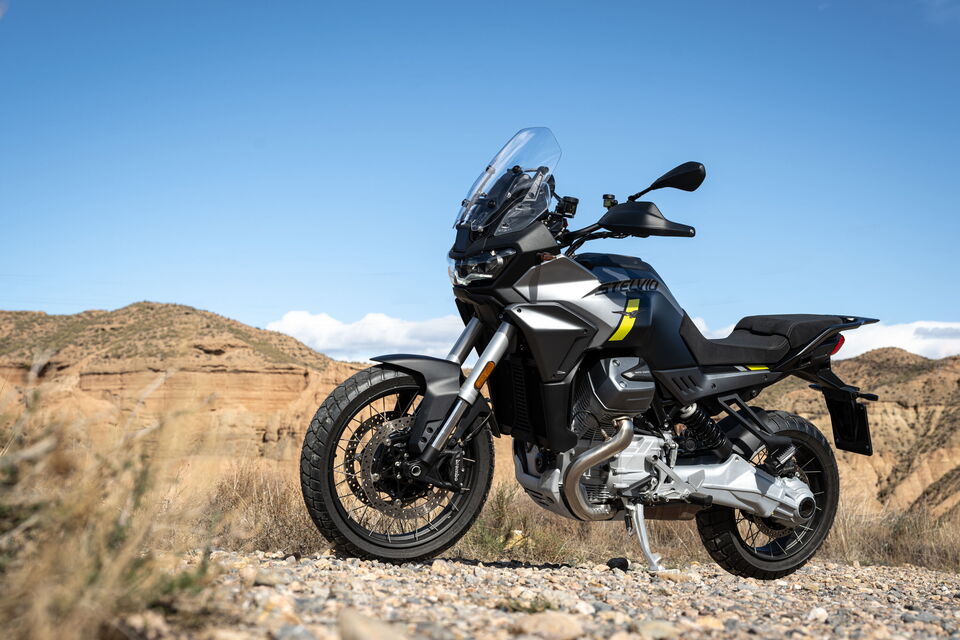
A longitudinally mounted, liquid-cooled 1,042 cc 90-degree V-twin with DOHC, Marelli Ride-by-Wire, six-speed transmission, and shaft final drive—the Stelvio’s defining feature in this class. Anti-hopping clutch, Euro 5+, 170 mm of travel from a Sachs USD fork and Kayaba rear shock, radial four-piston Brembo front calipers on twin 320 mm discs, six-axis IMU, five riding modes, cornering ABS, cruise control, and the PFF radar system as standard for MY2026. An electrically adjustable windshield and 5-inch TFT are standard. Fuel capacity is 21 liters, seat height 830 mm, and ready-to-ride weight 246 kg. Price: EUR 16,499.
As of: April 18, 2026 | Model: Moto Guzzi Stelvio II (MY2026) | Production: Mandello del Lario, Italy | Price: from EUR 16,499 | 2026 colors: Grigio Climbing, Verde Hiking; Duecento Tributo special edition in White/Red/Blue
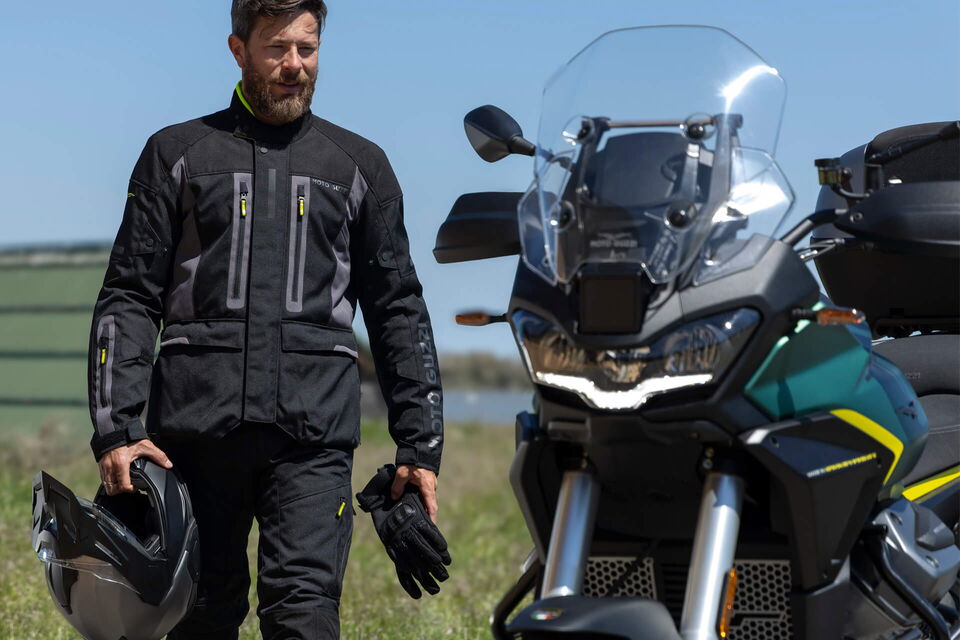

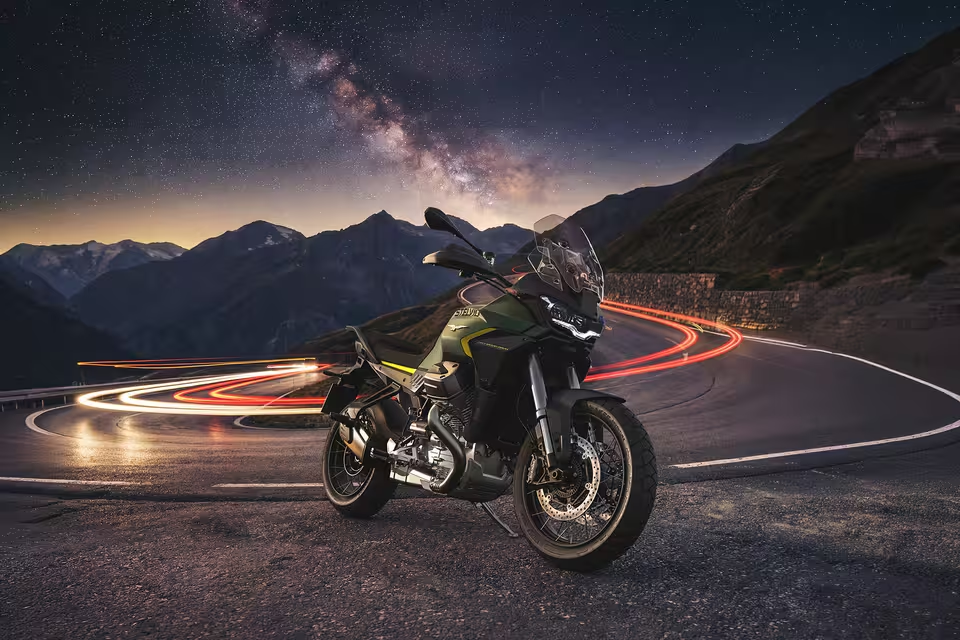
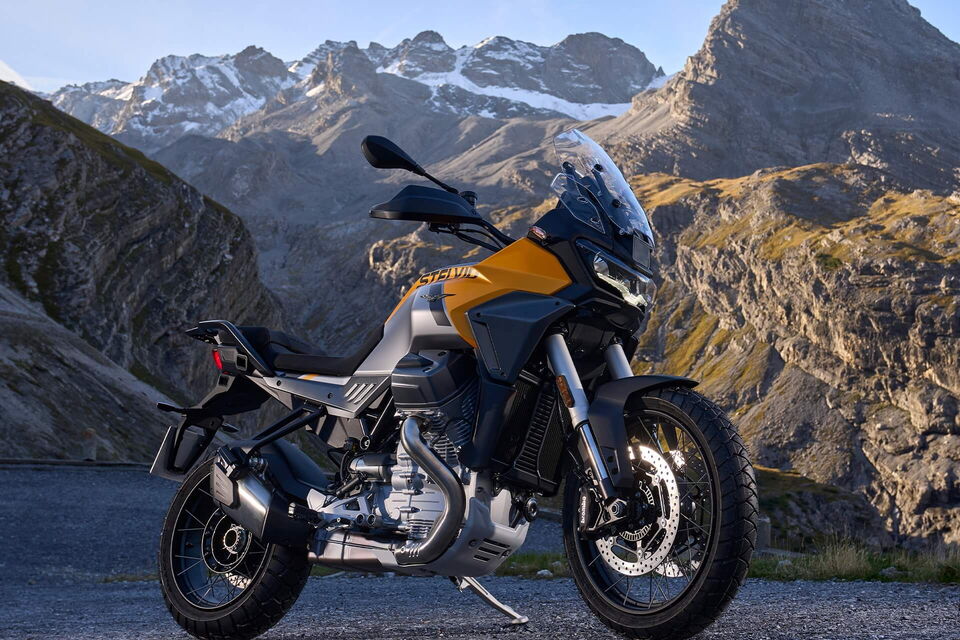
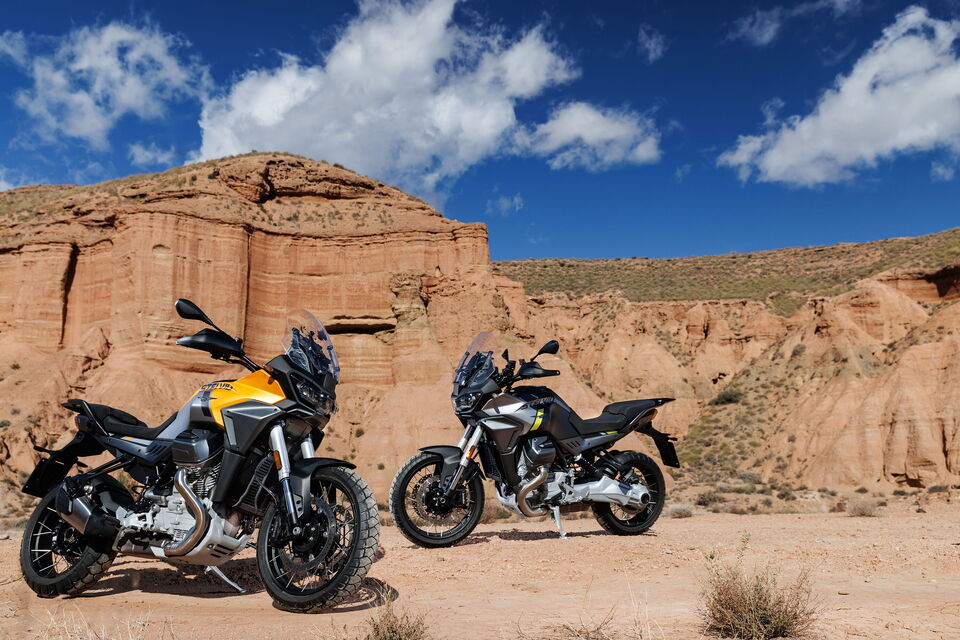
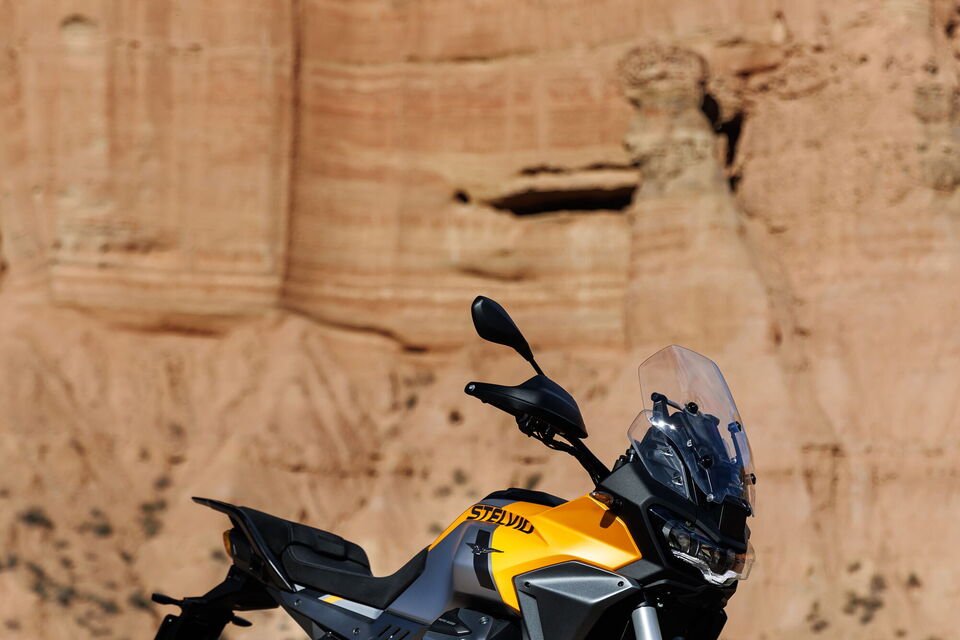
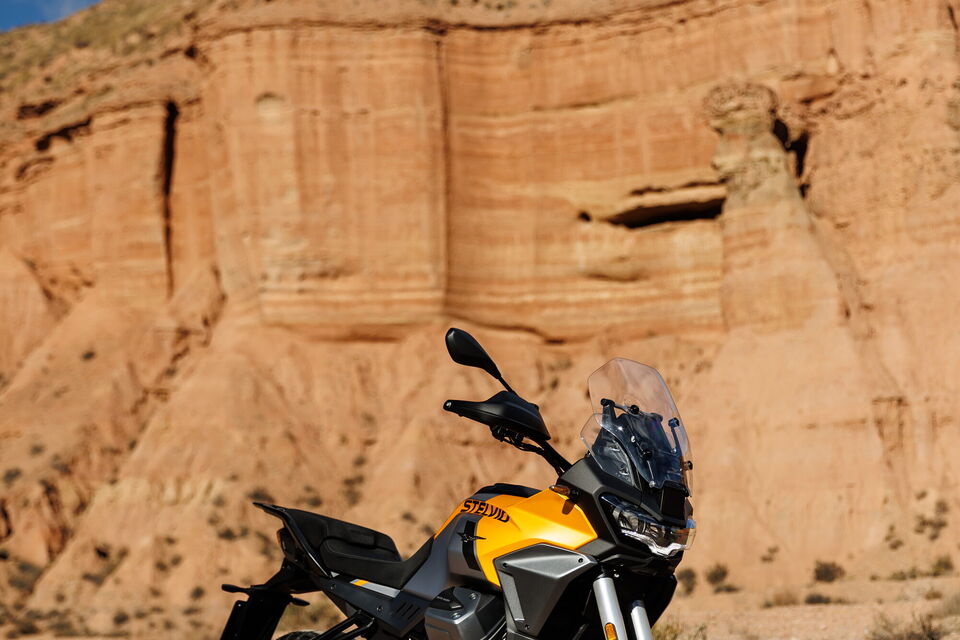
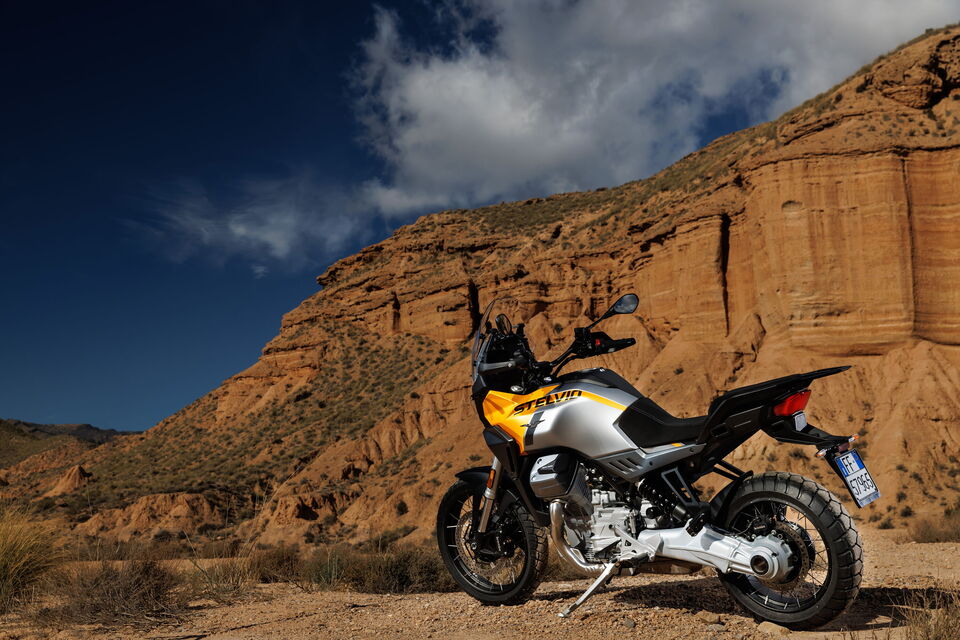
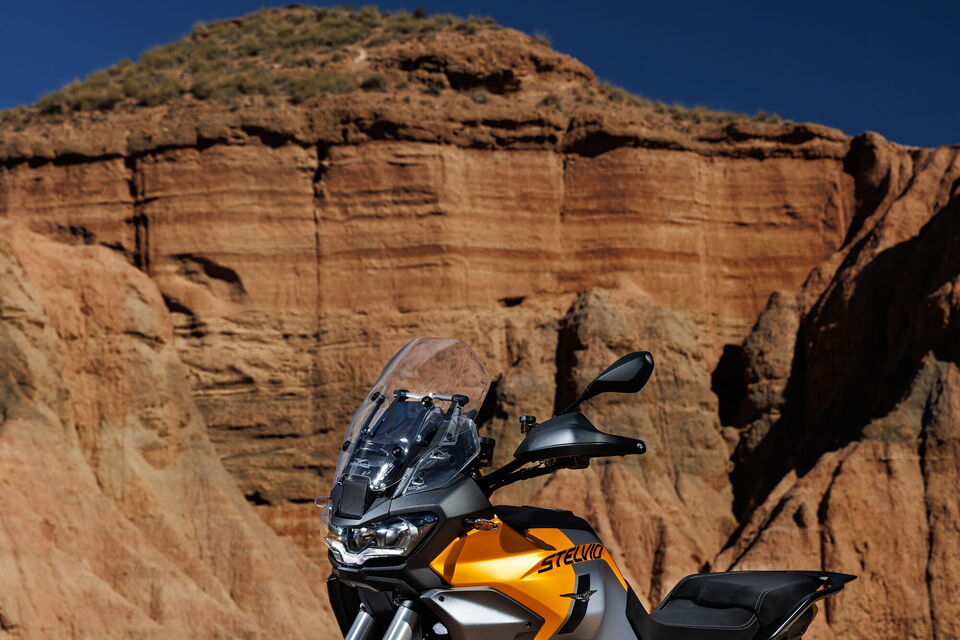
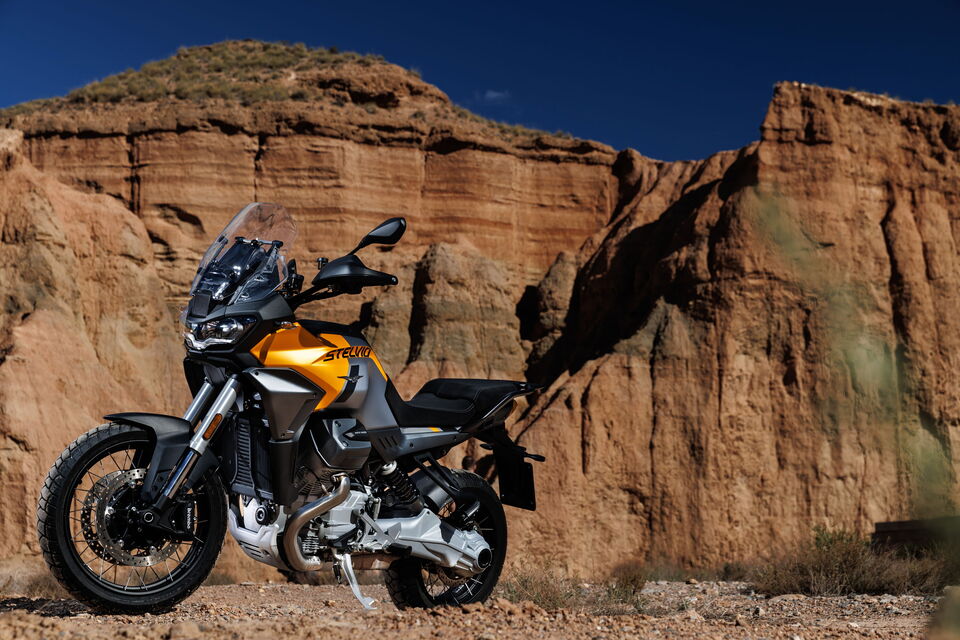
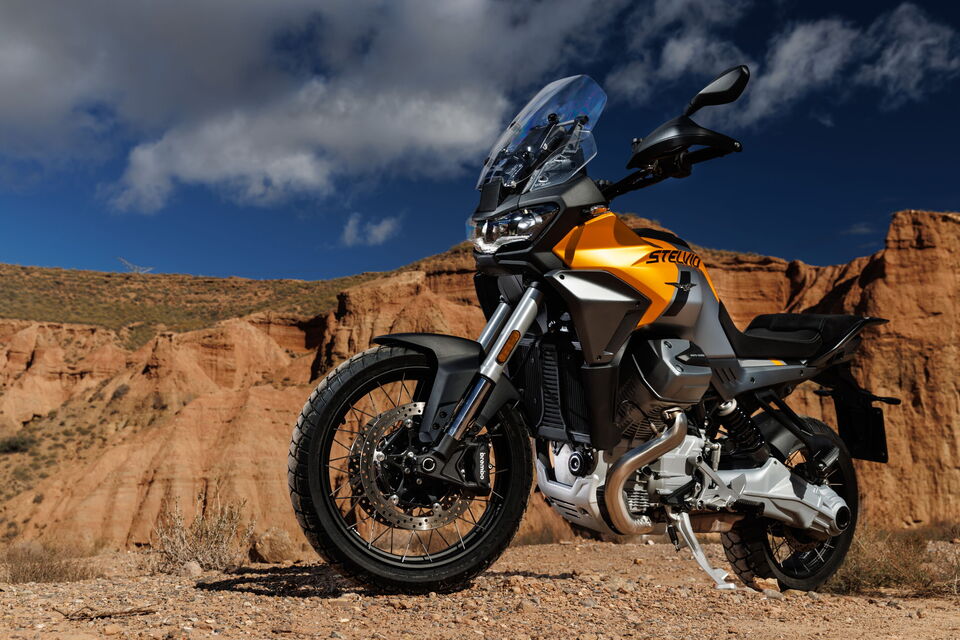
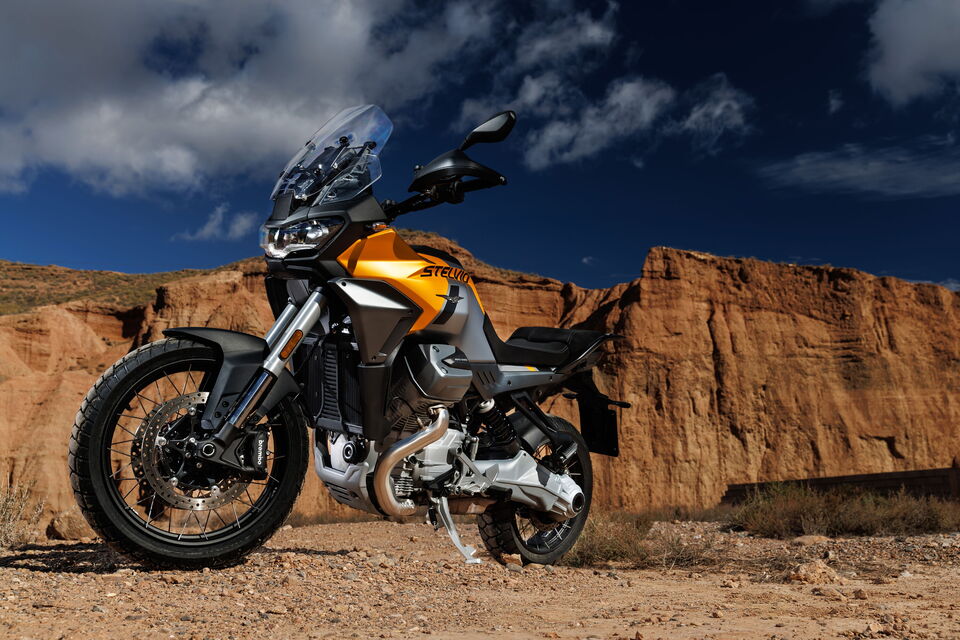
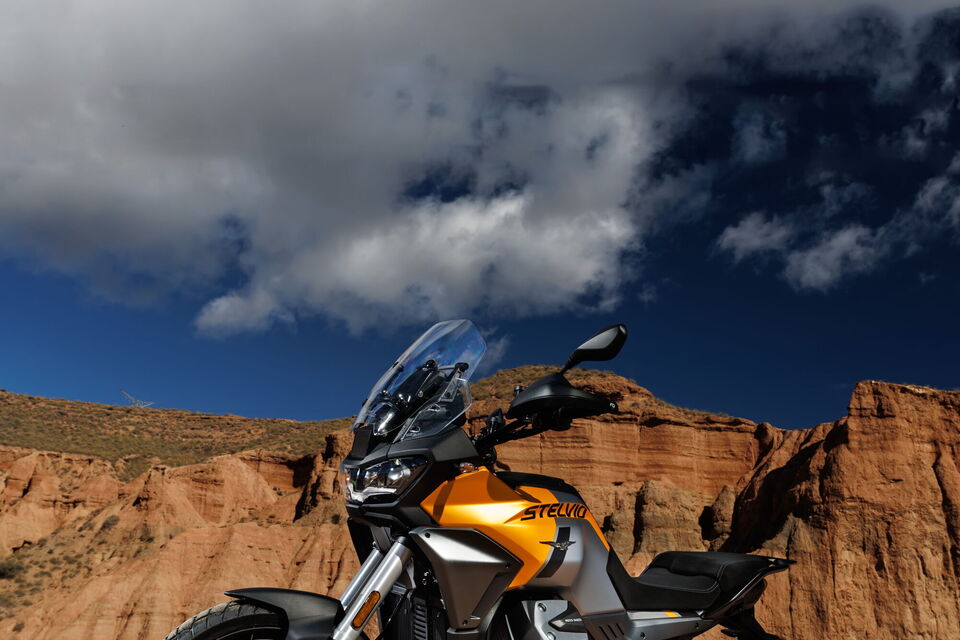
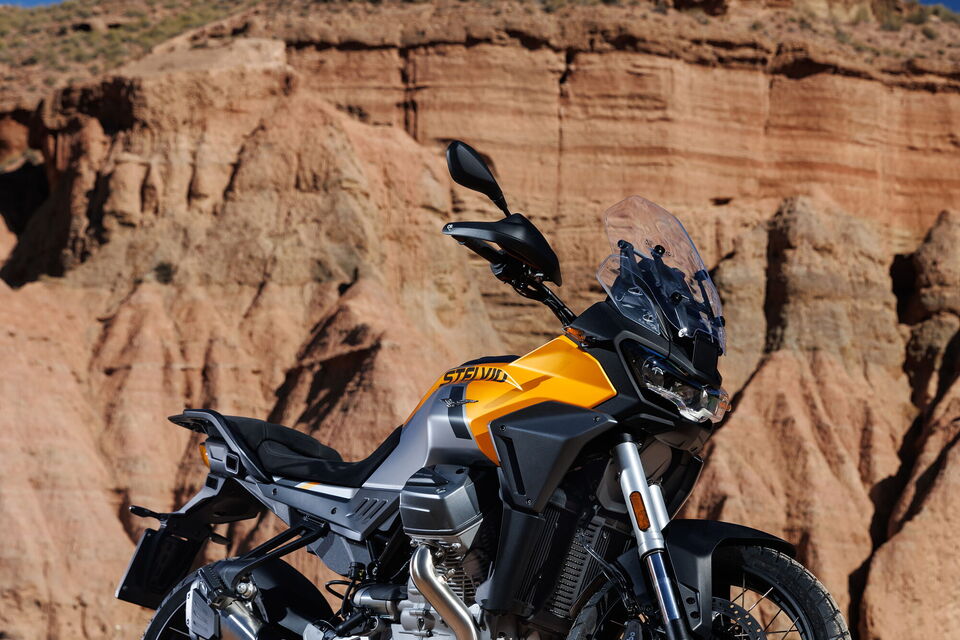
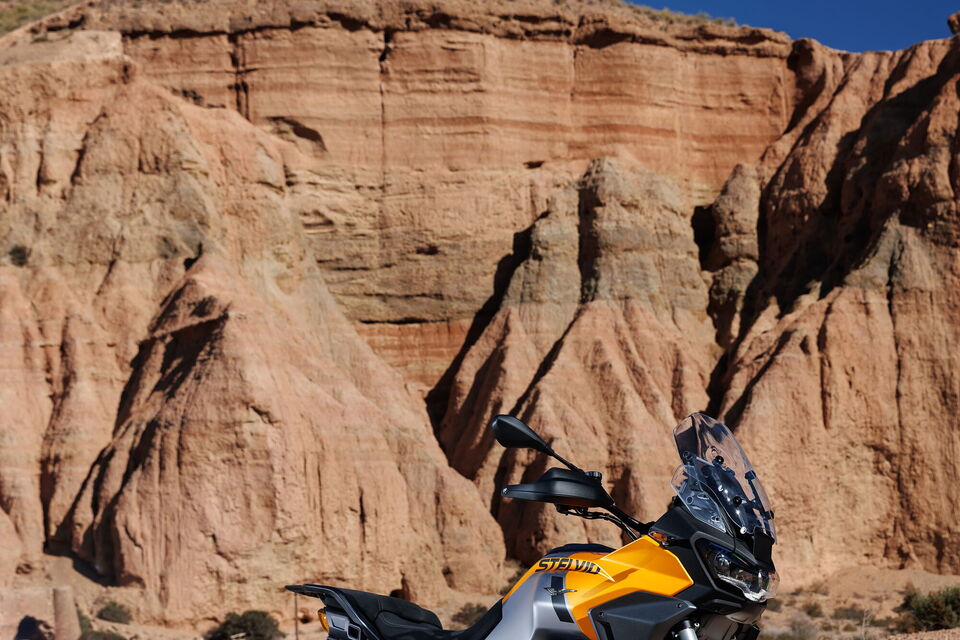
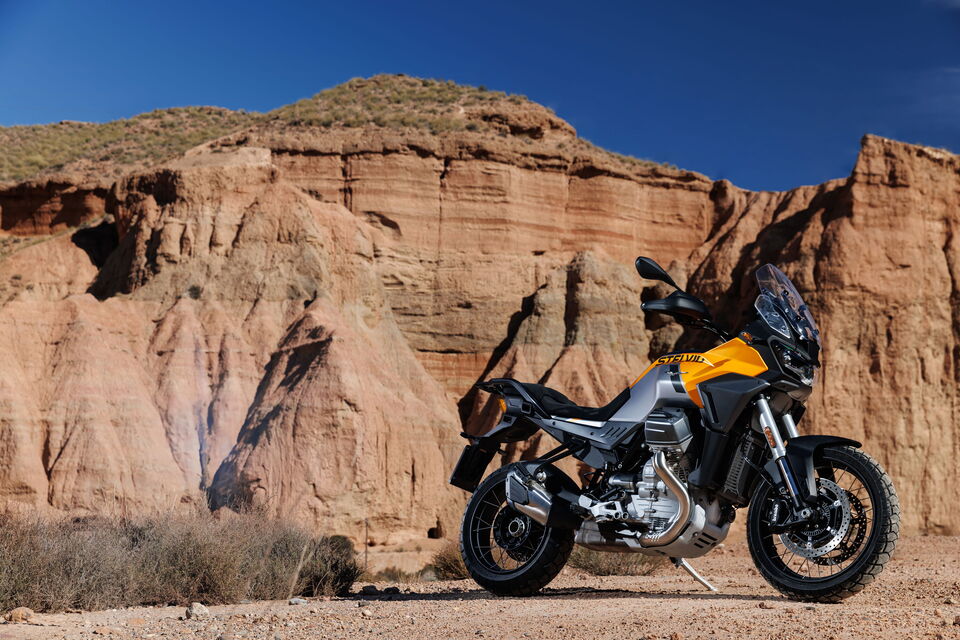
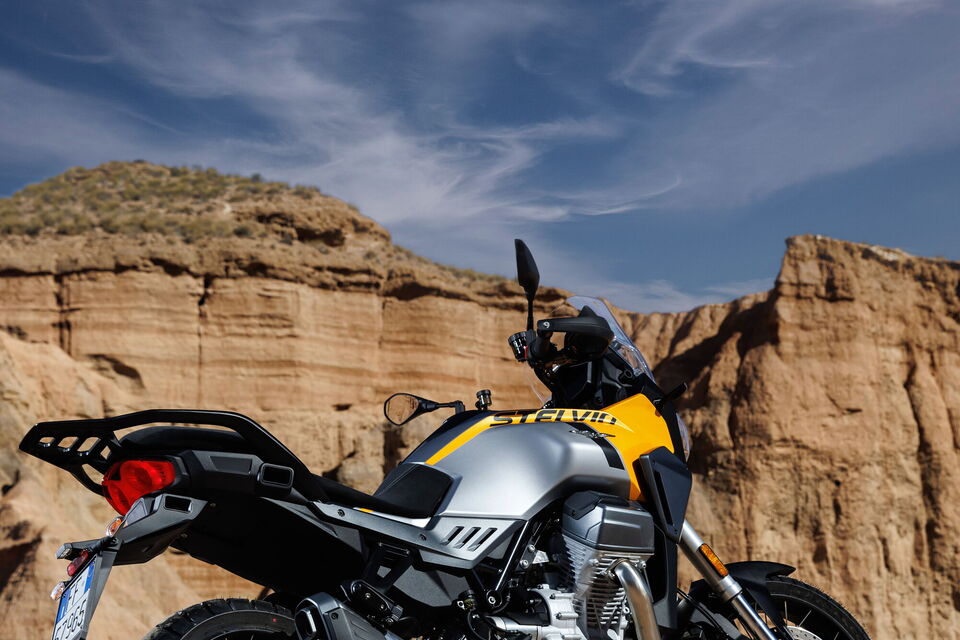
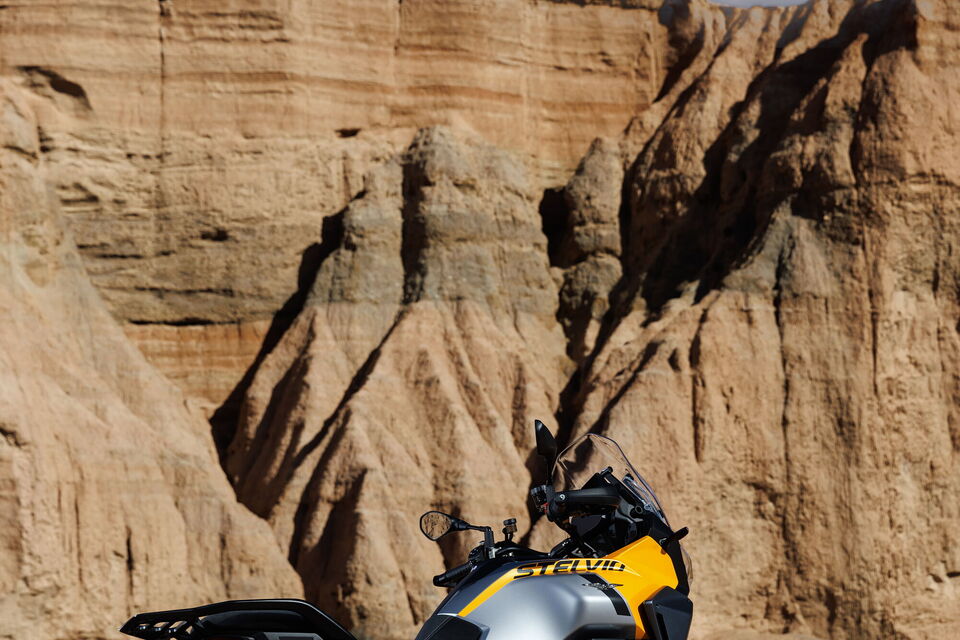
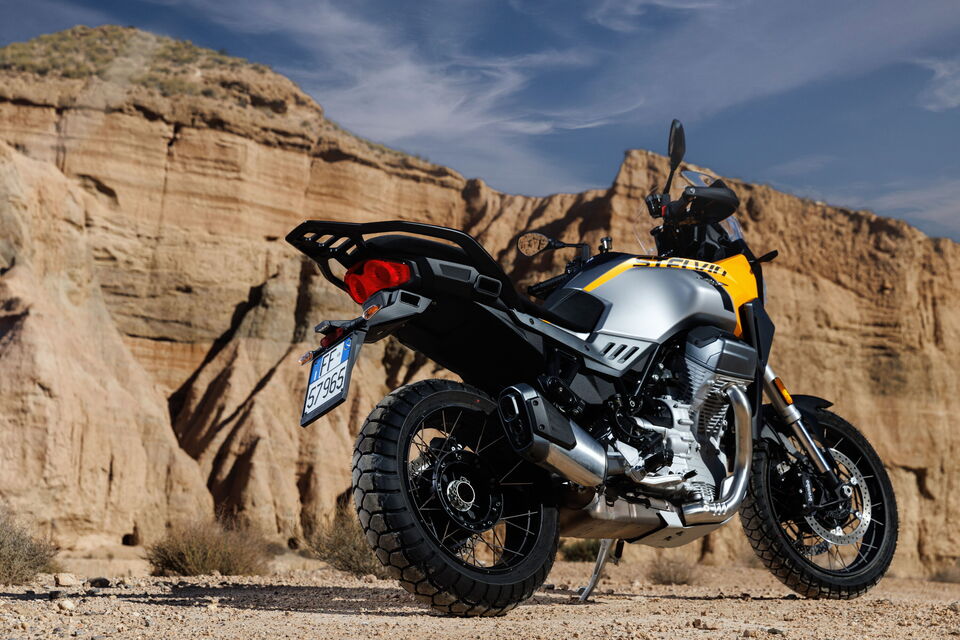
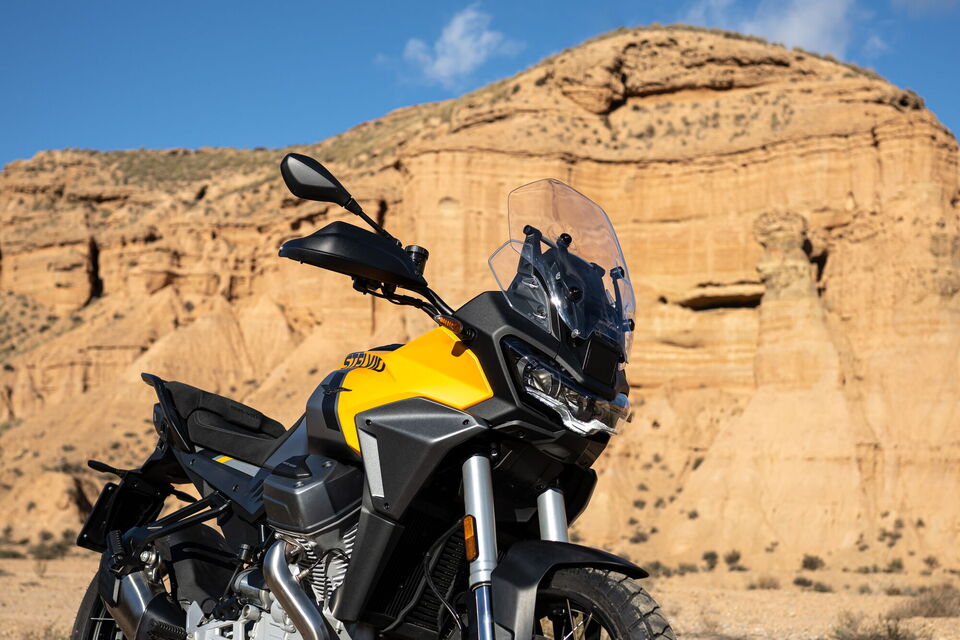
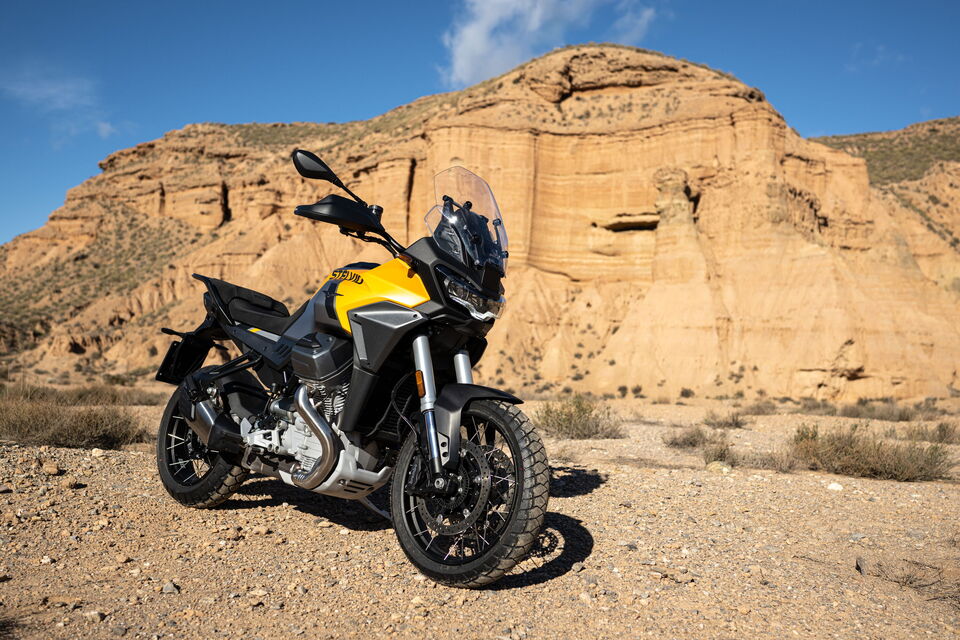
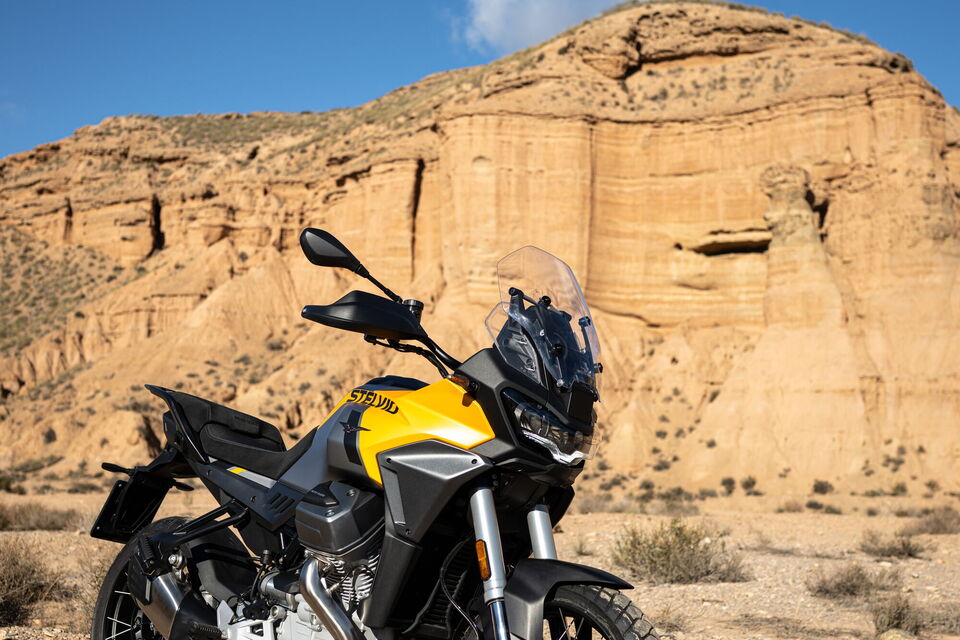
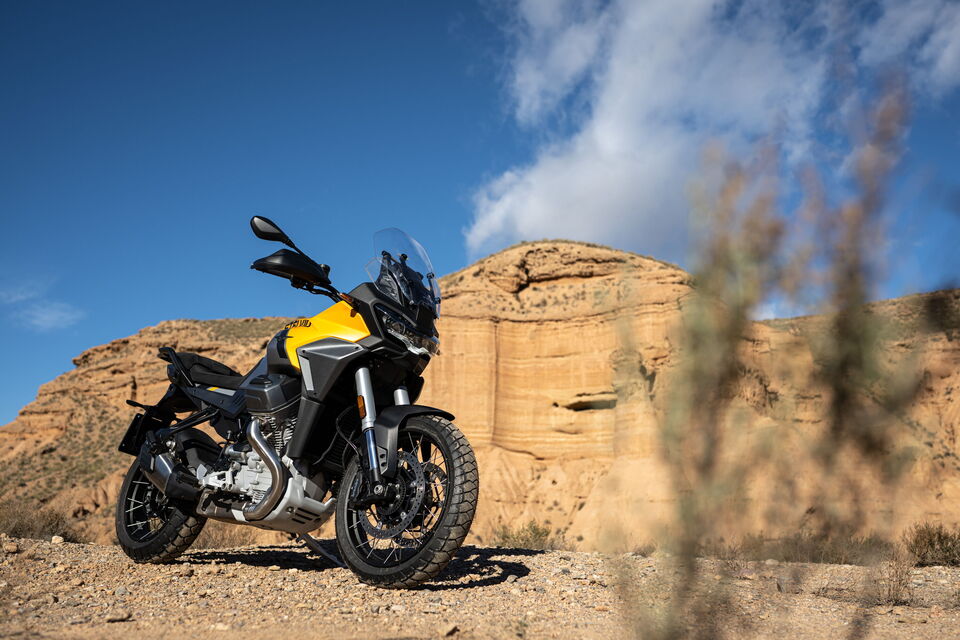
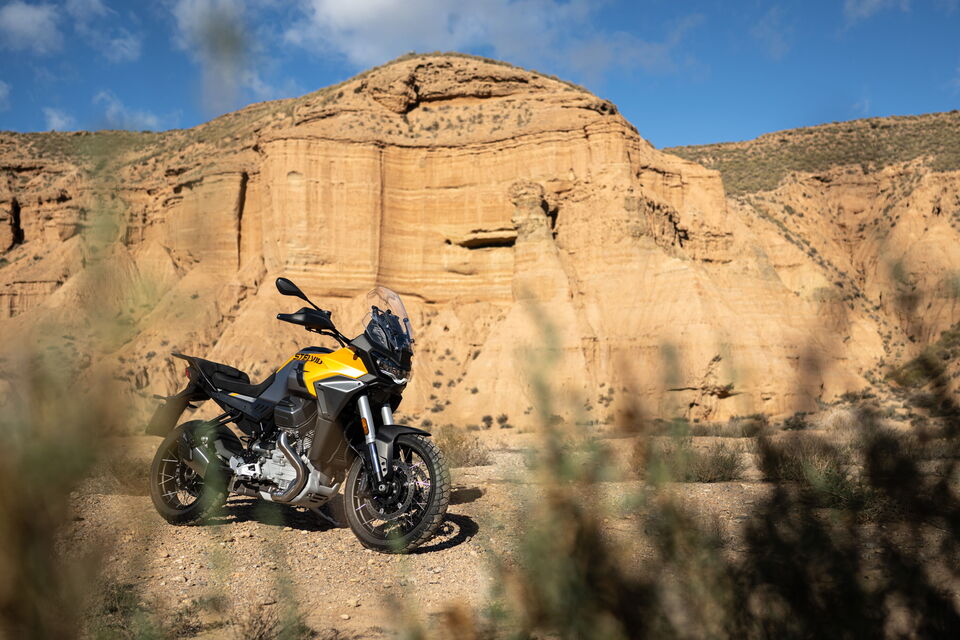
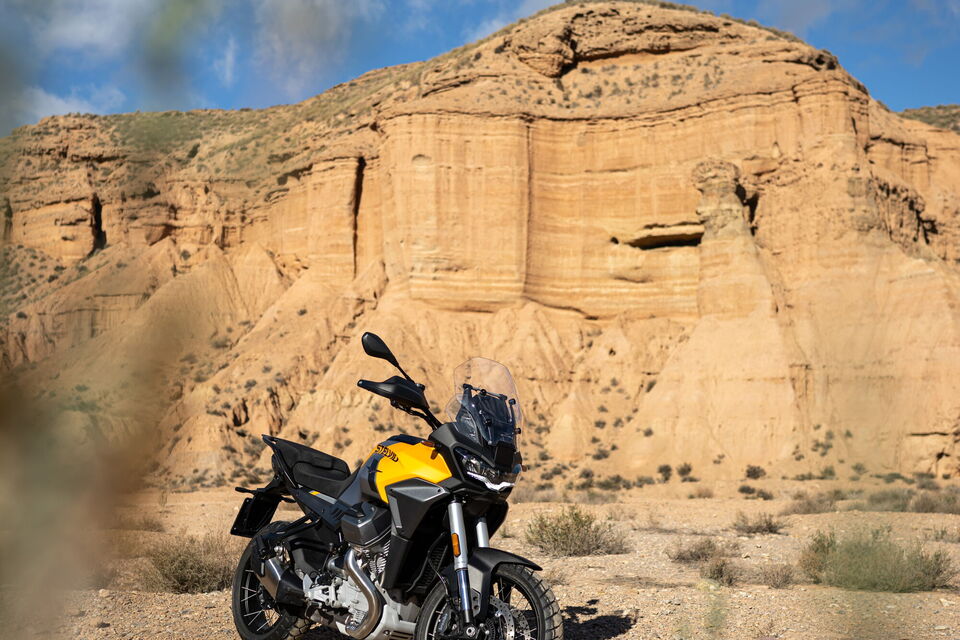
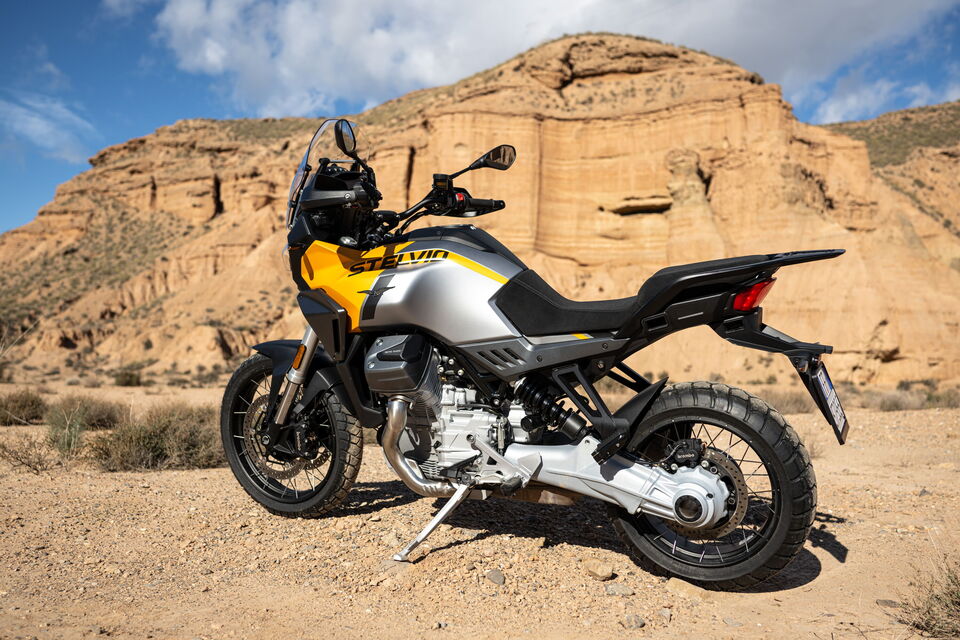
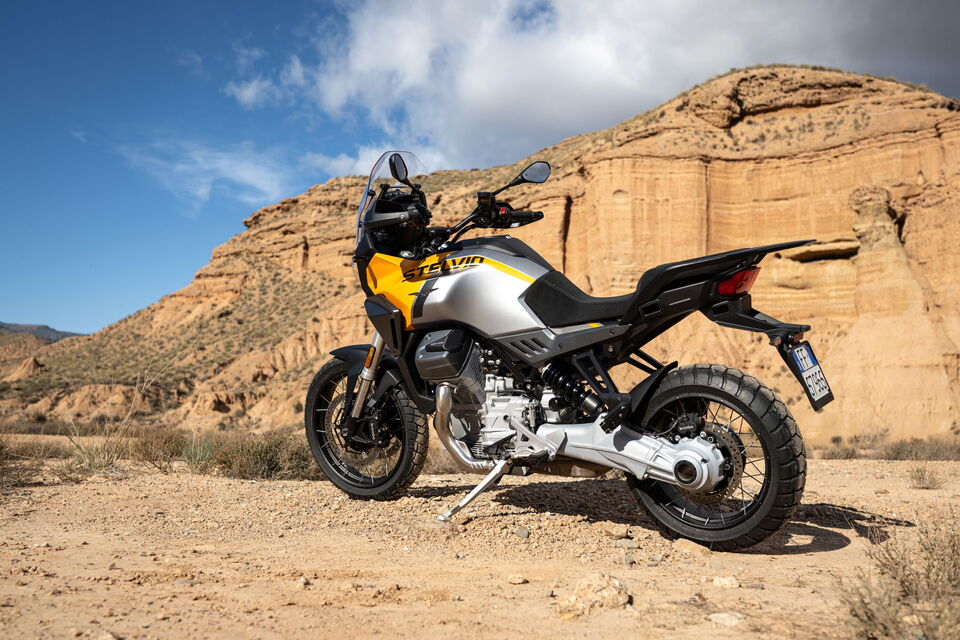
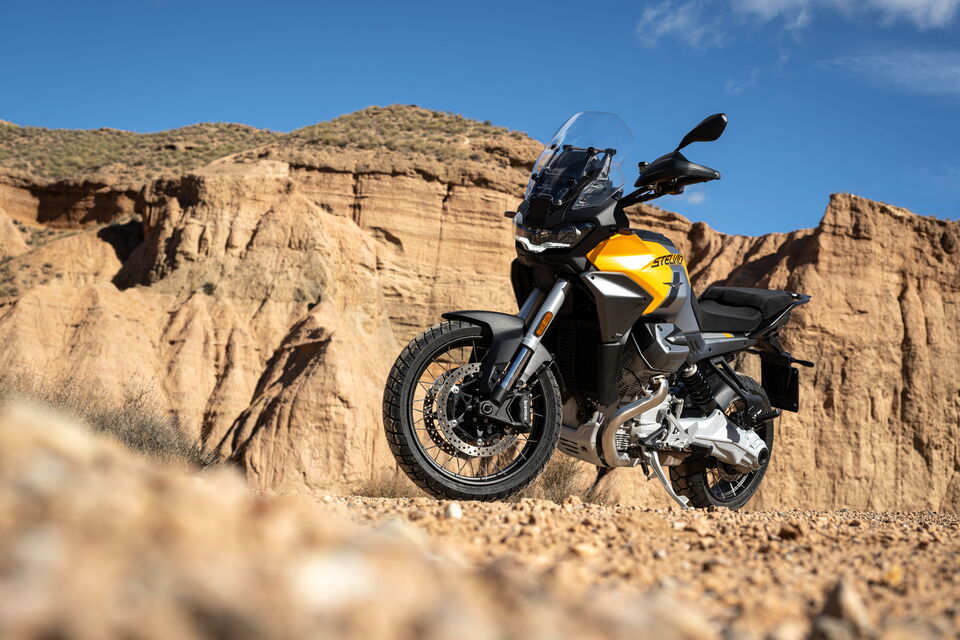
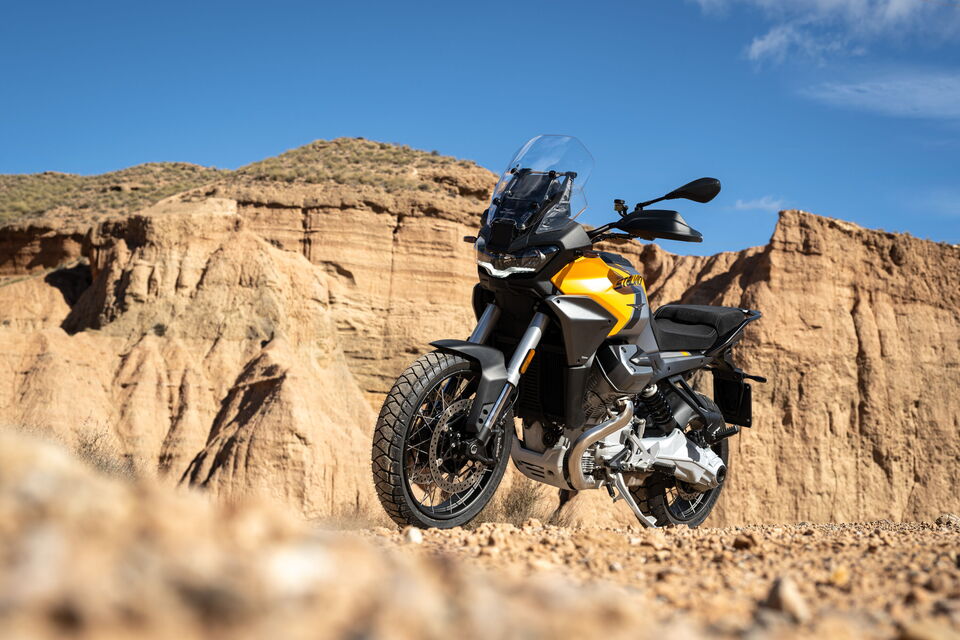
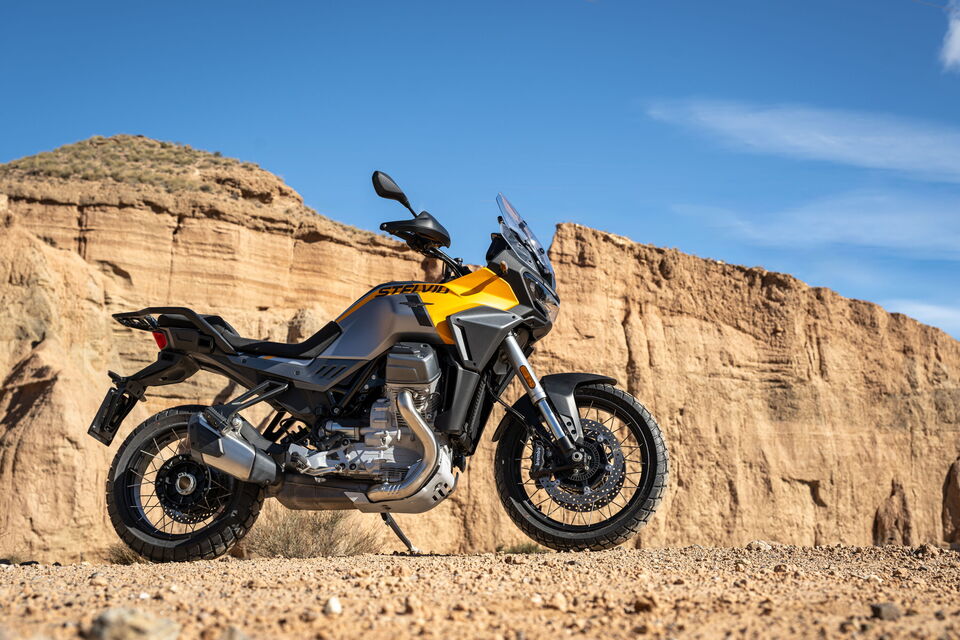
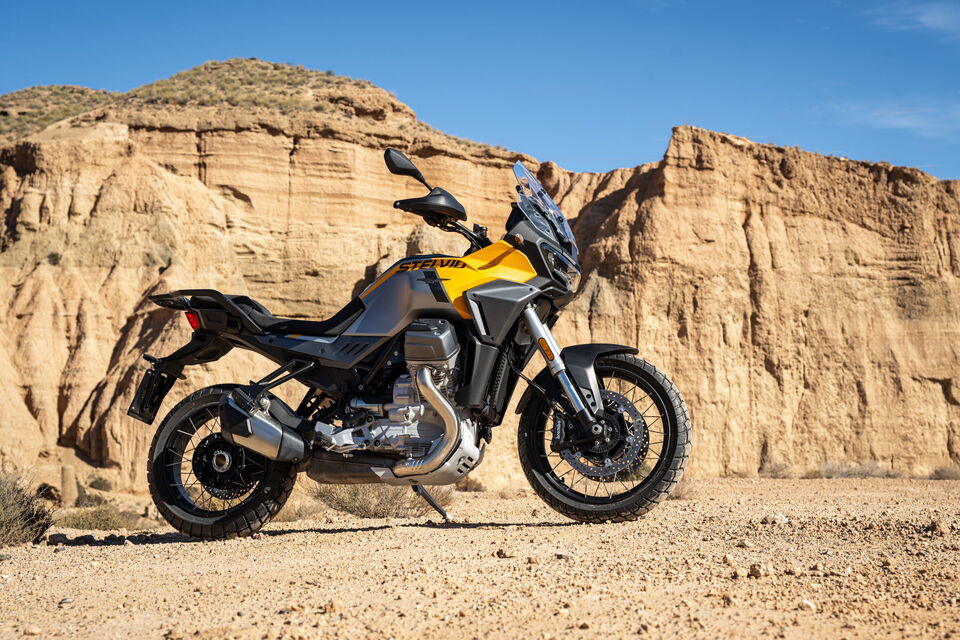
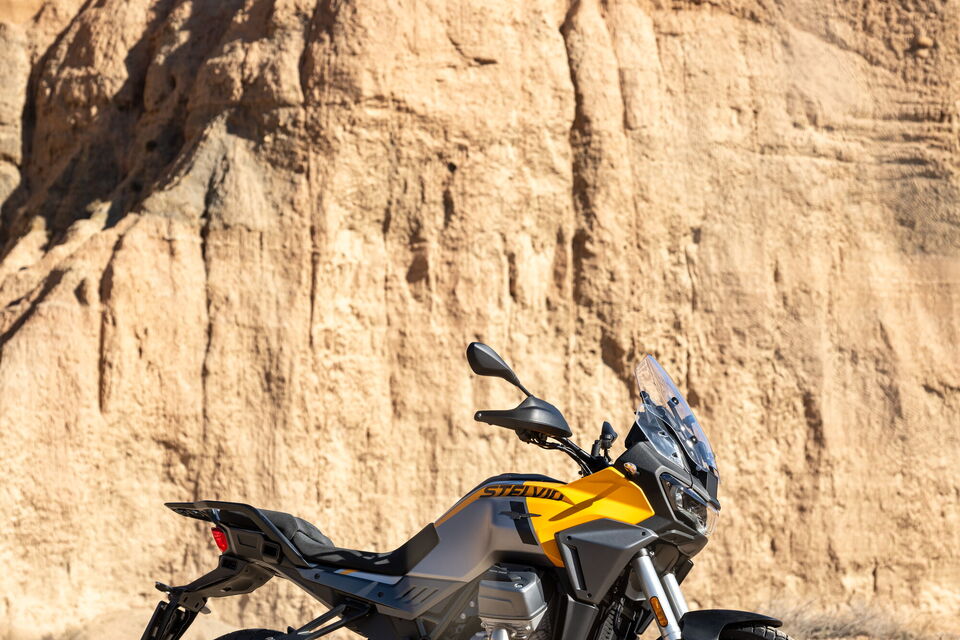
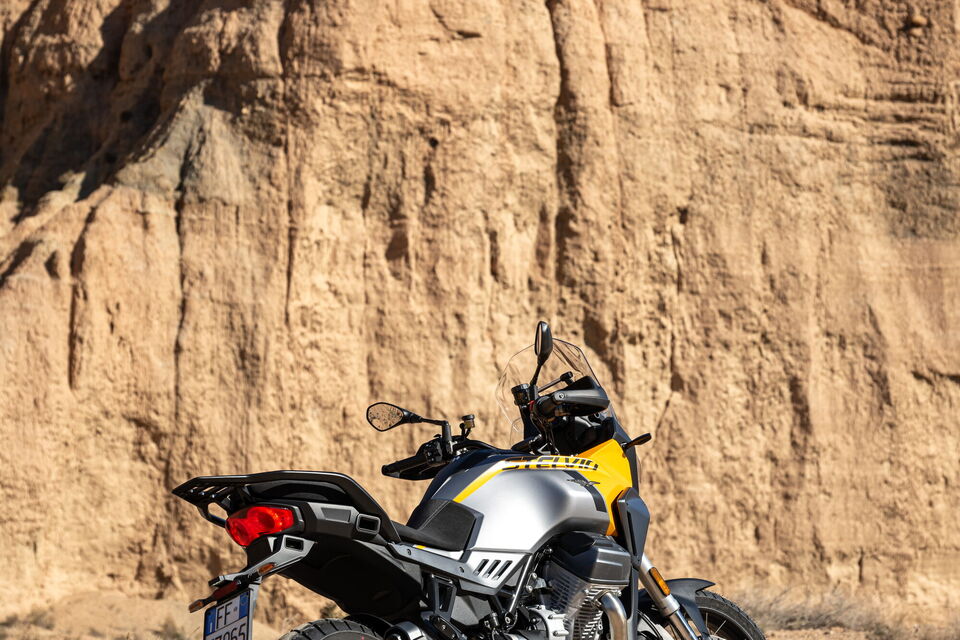
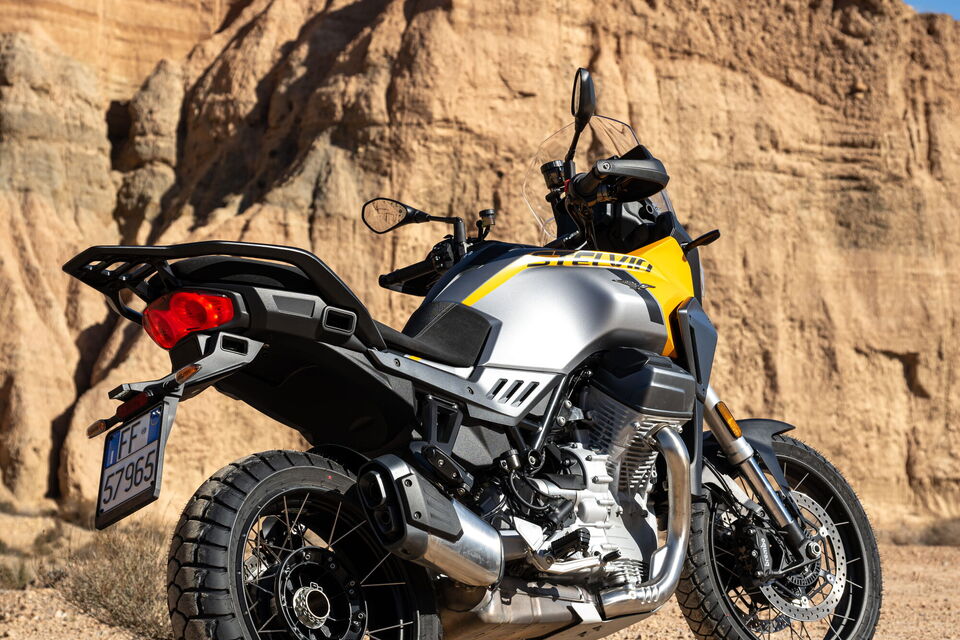
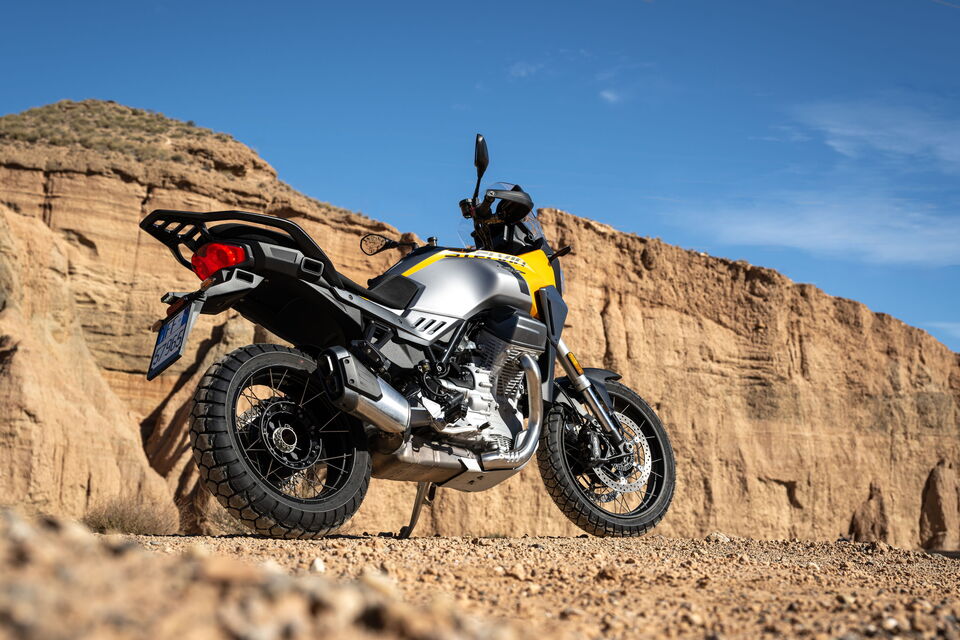
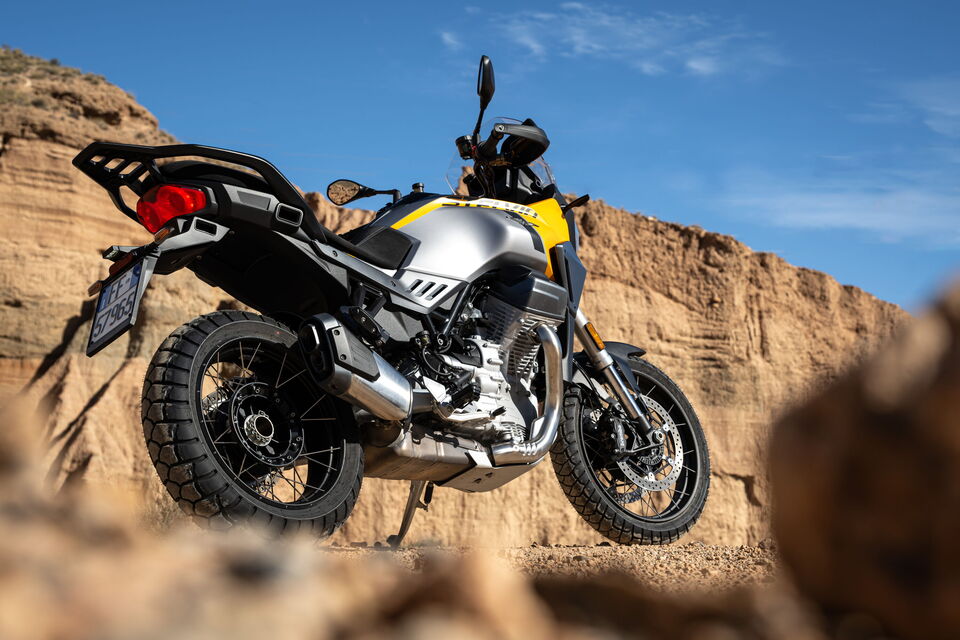

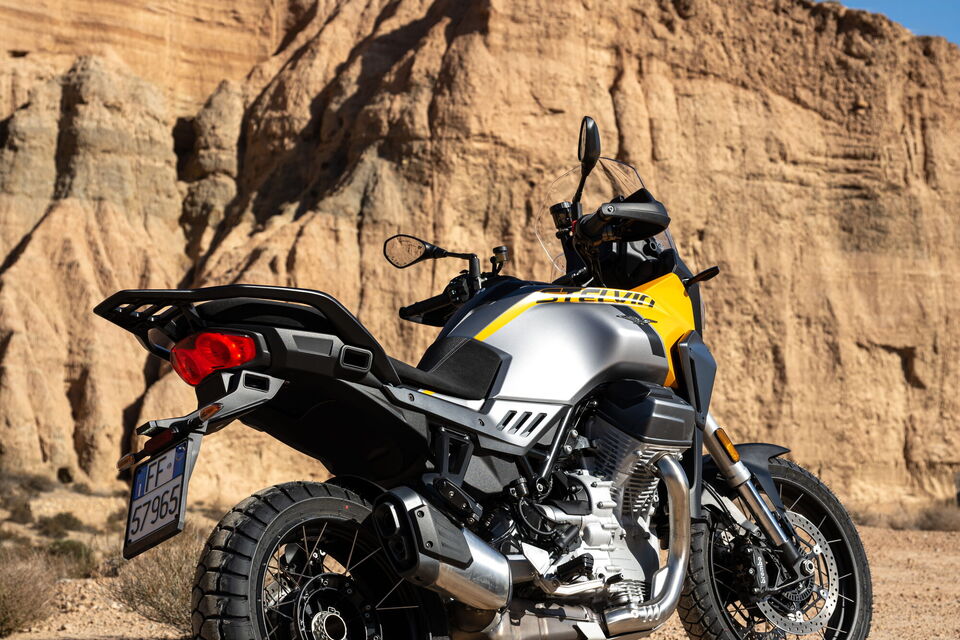
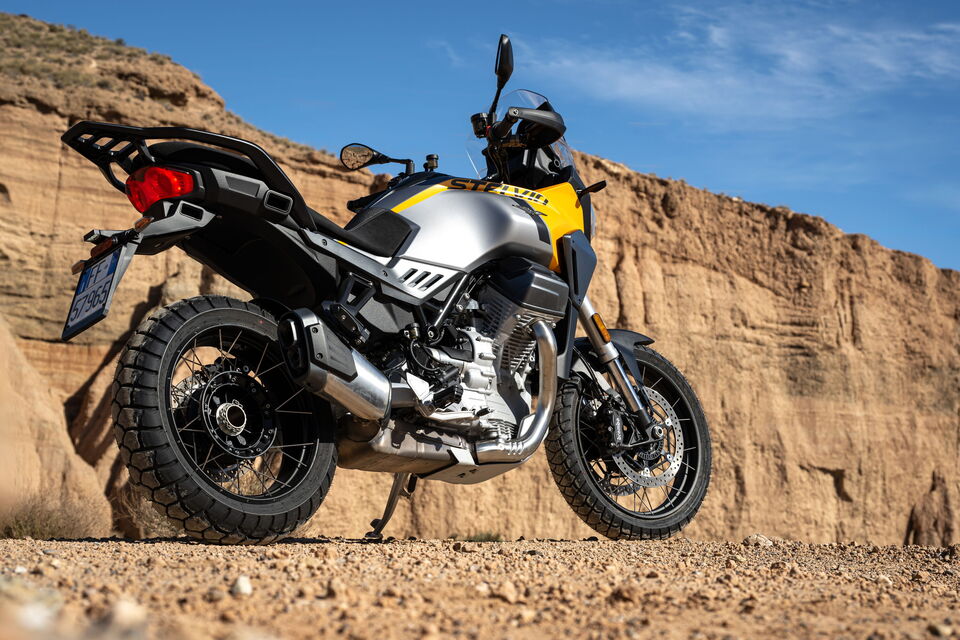

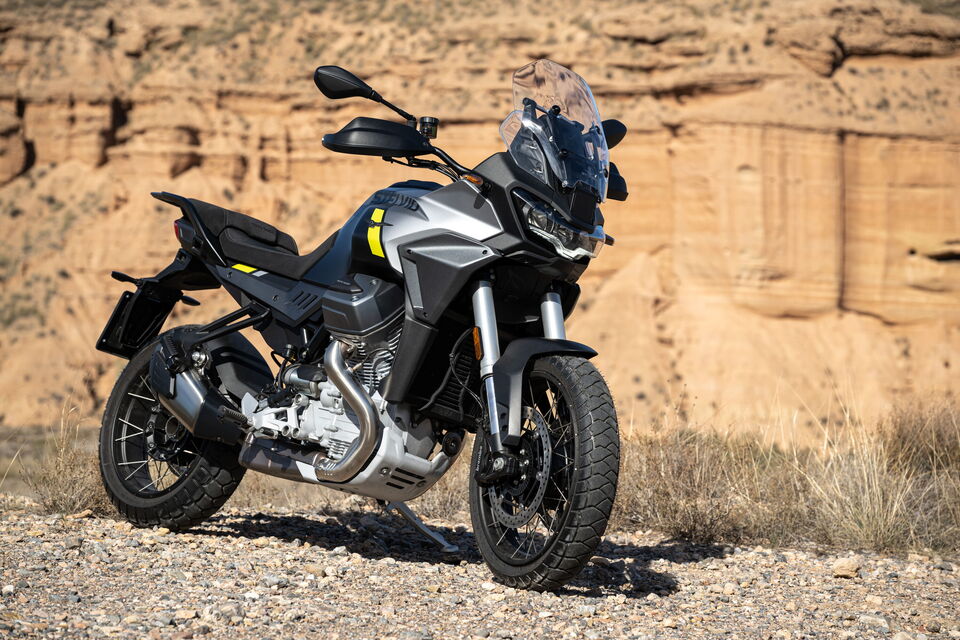
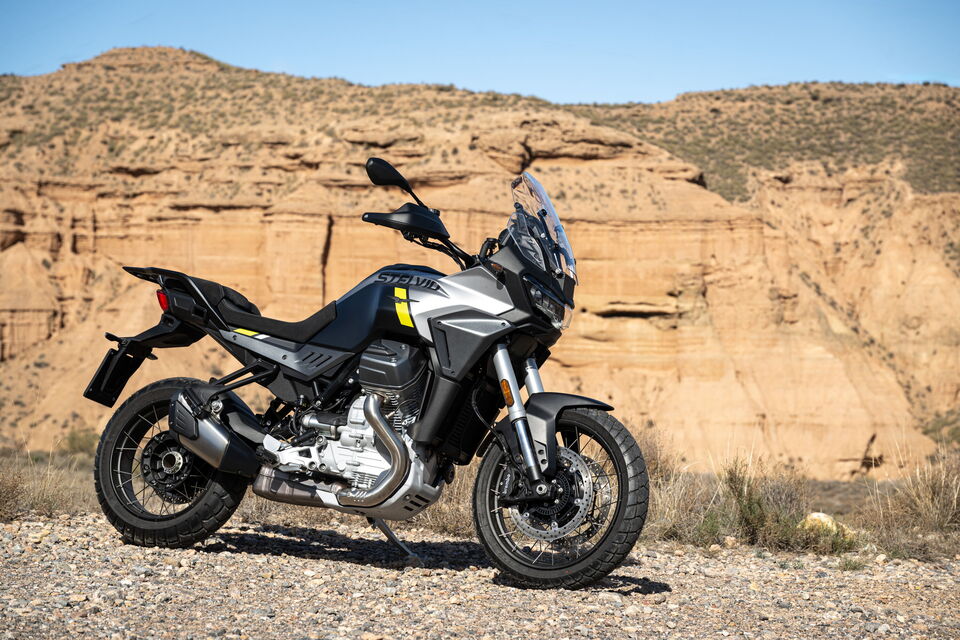
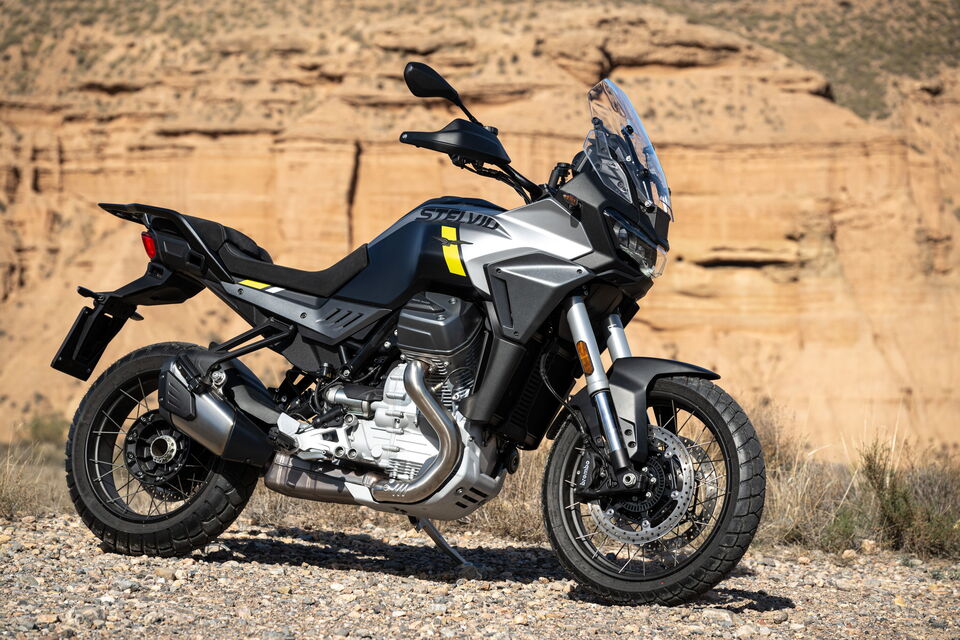
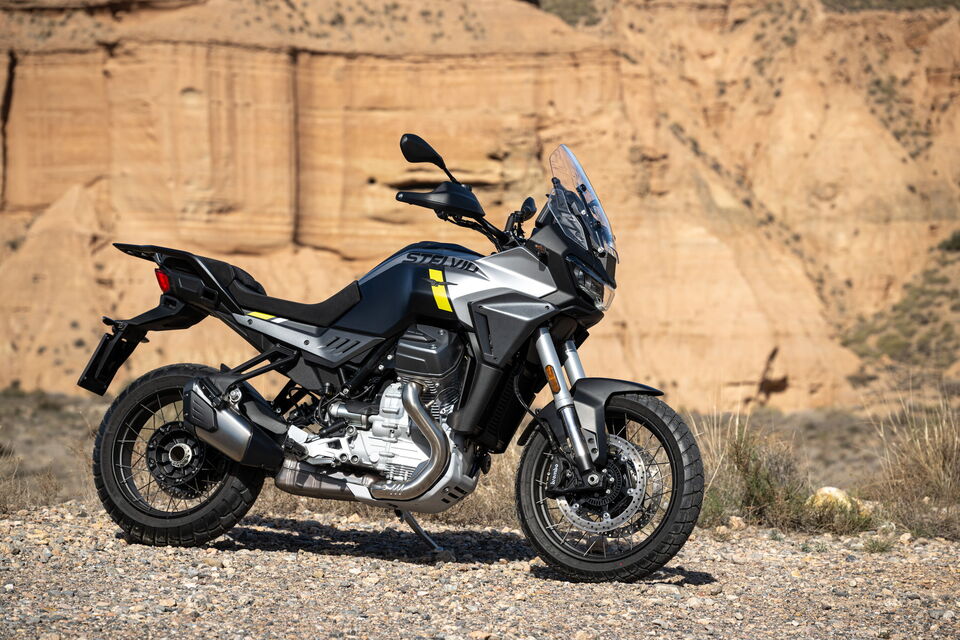
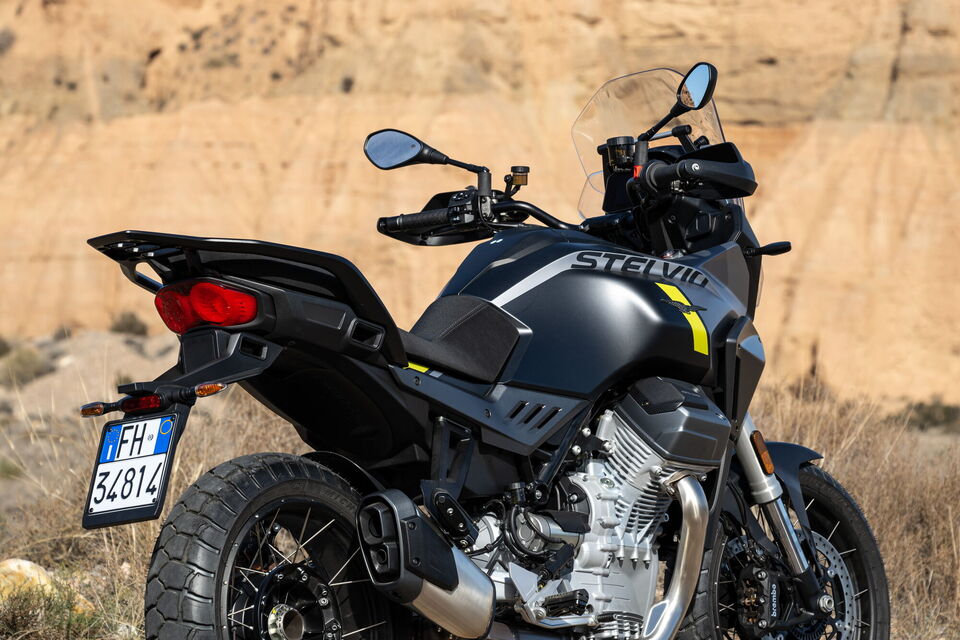
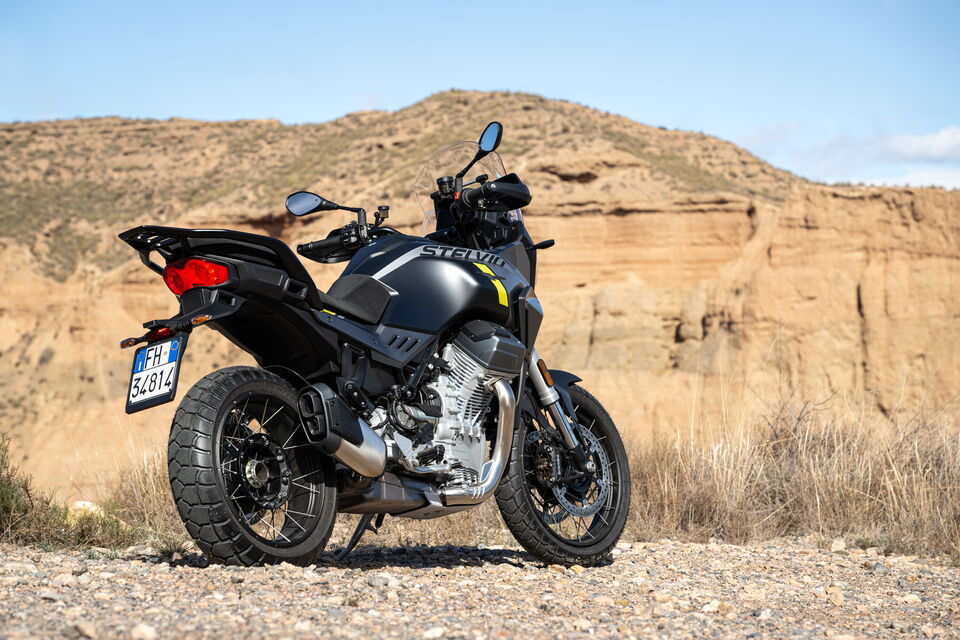
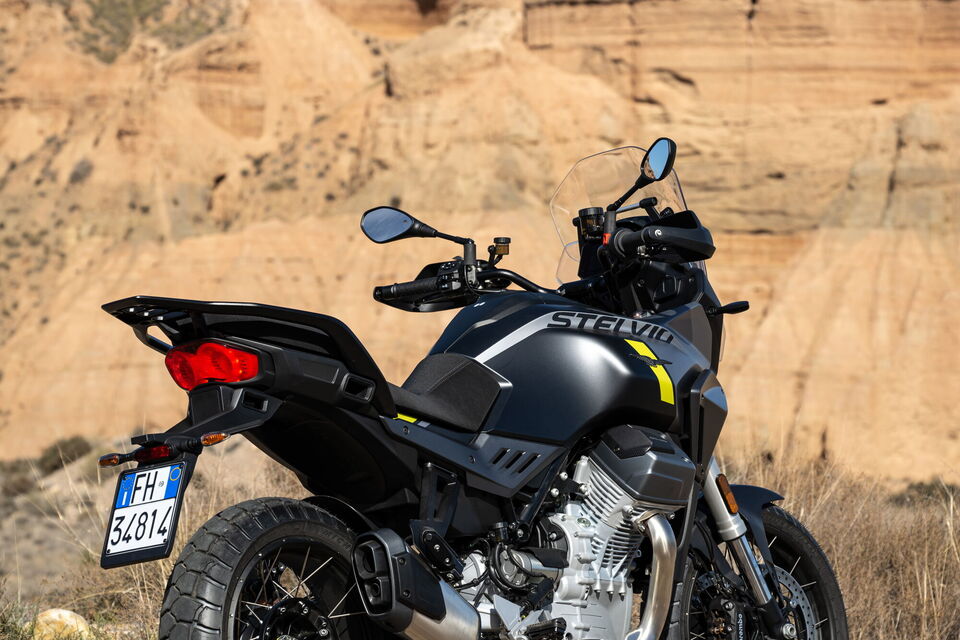
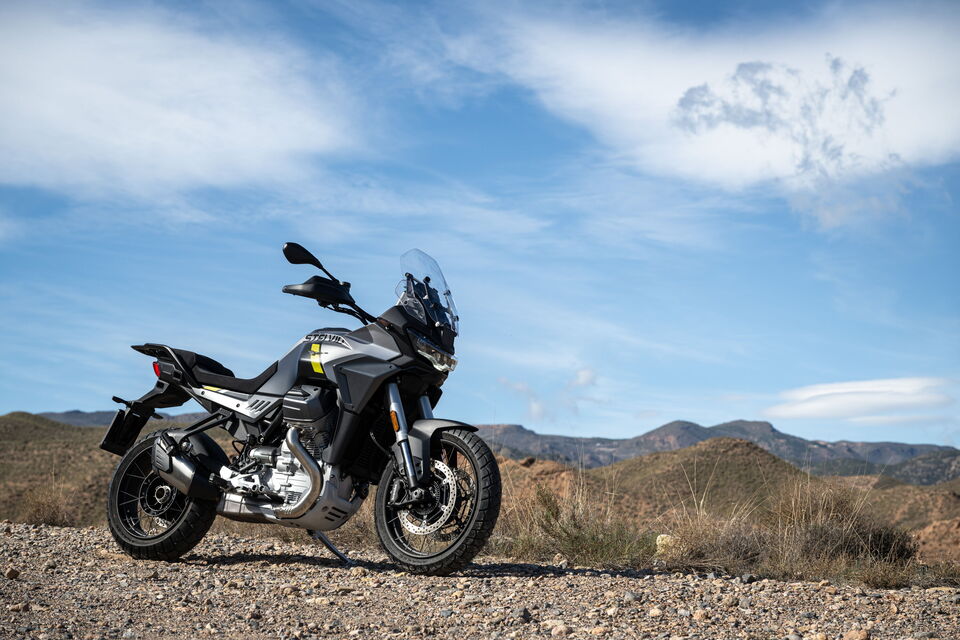
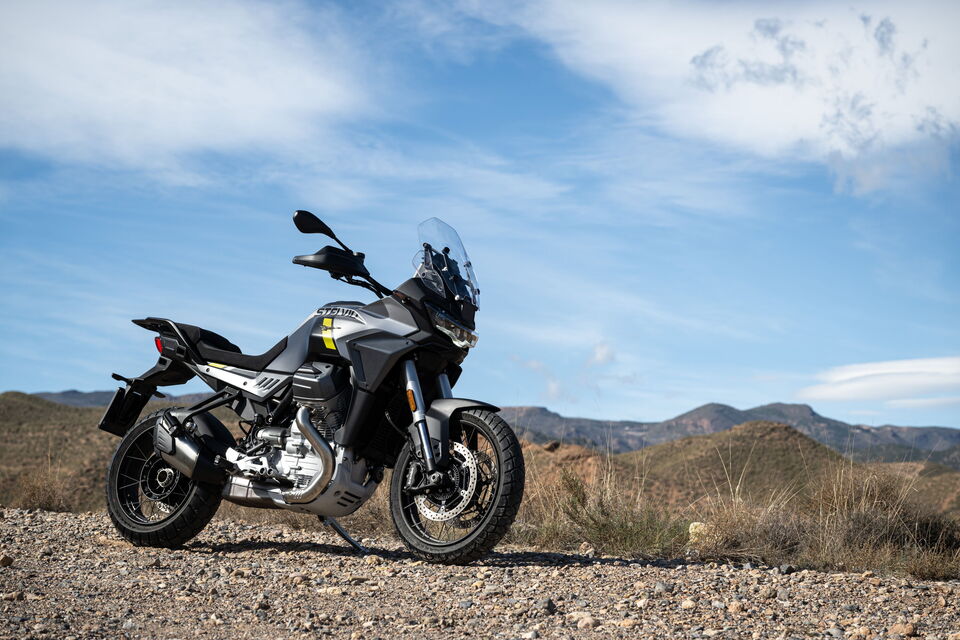
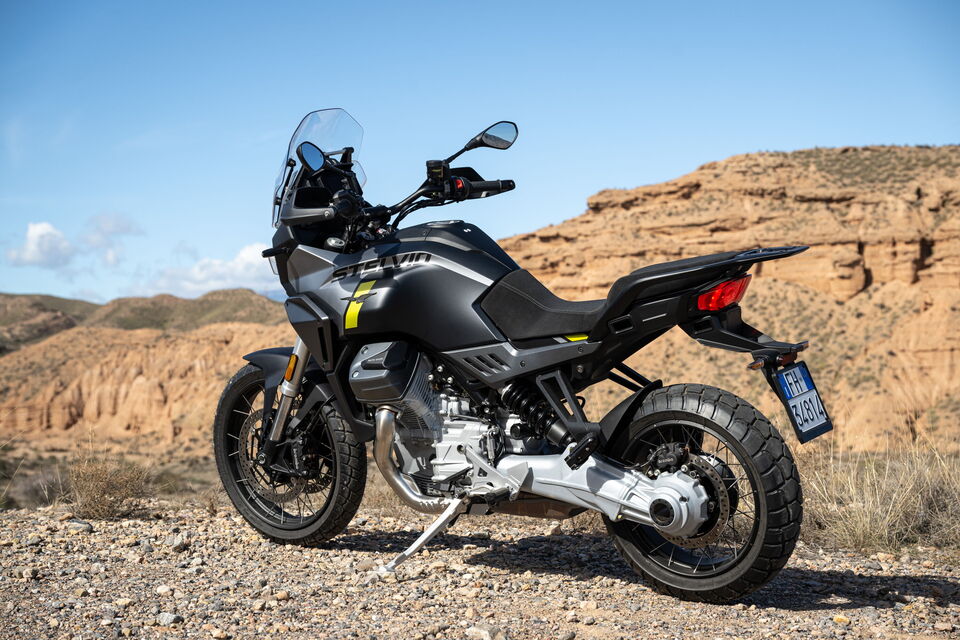
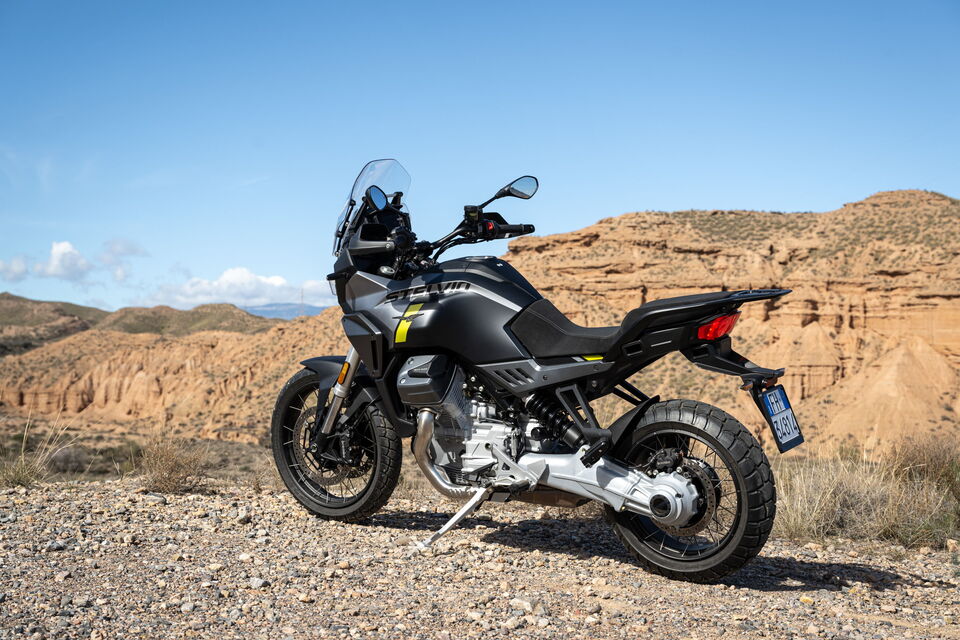


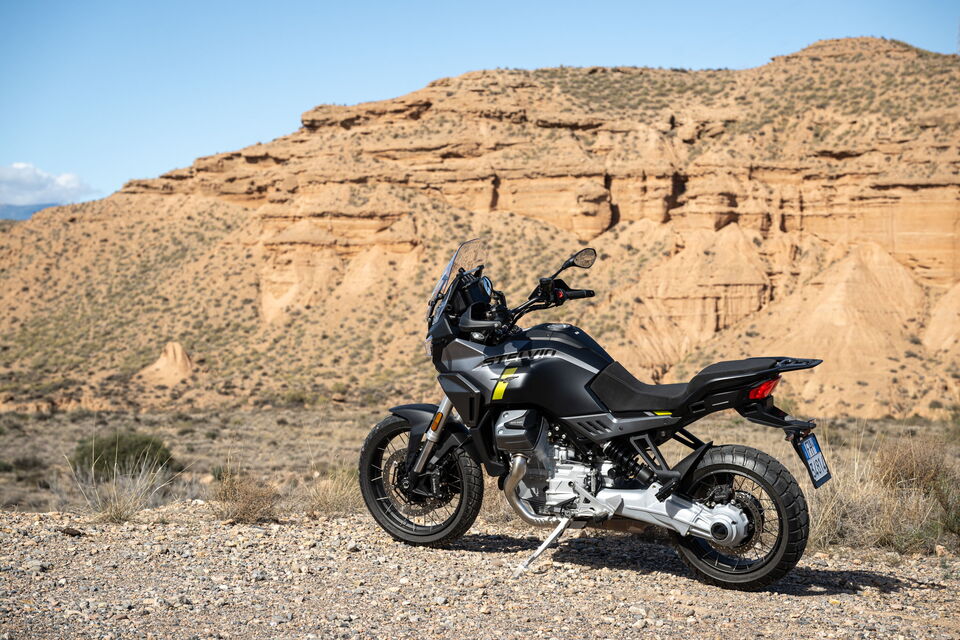
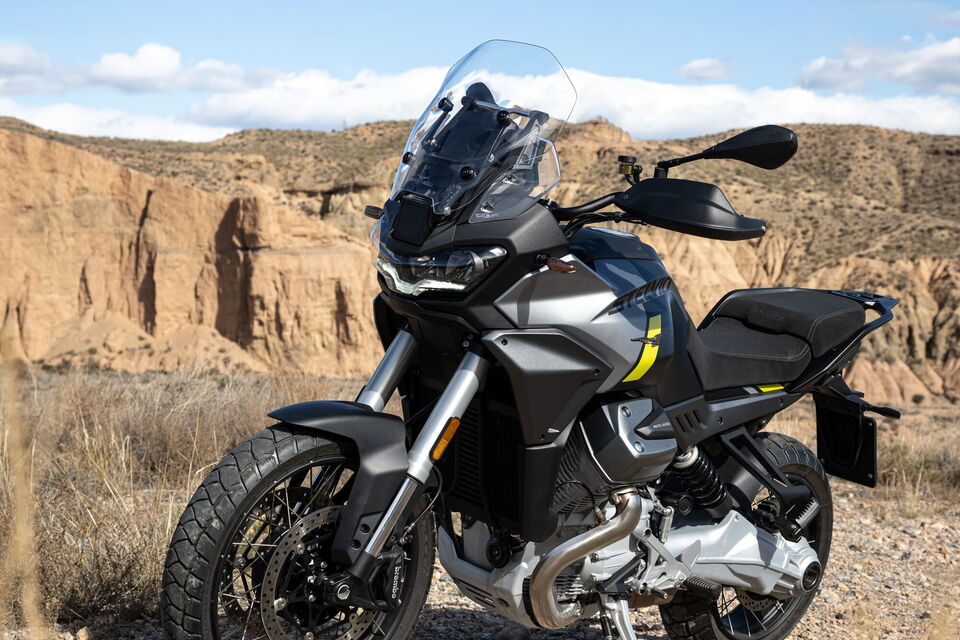

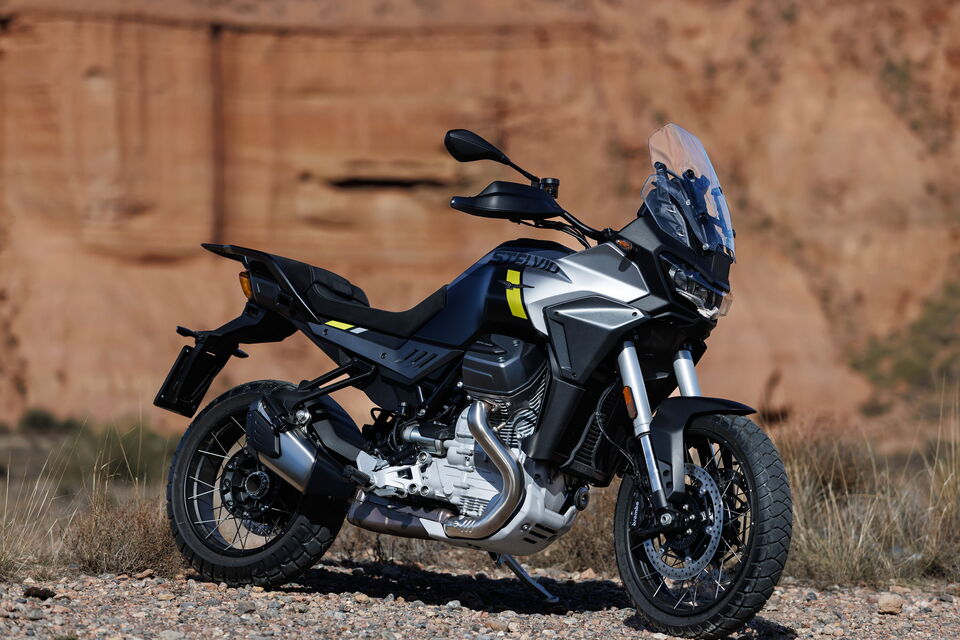
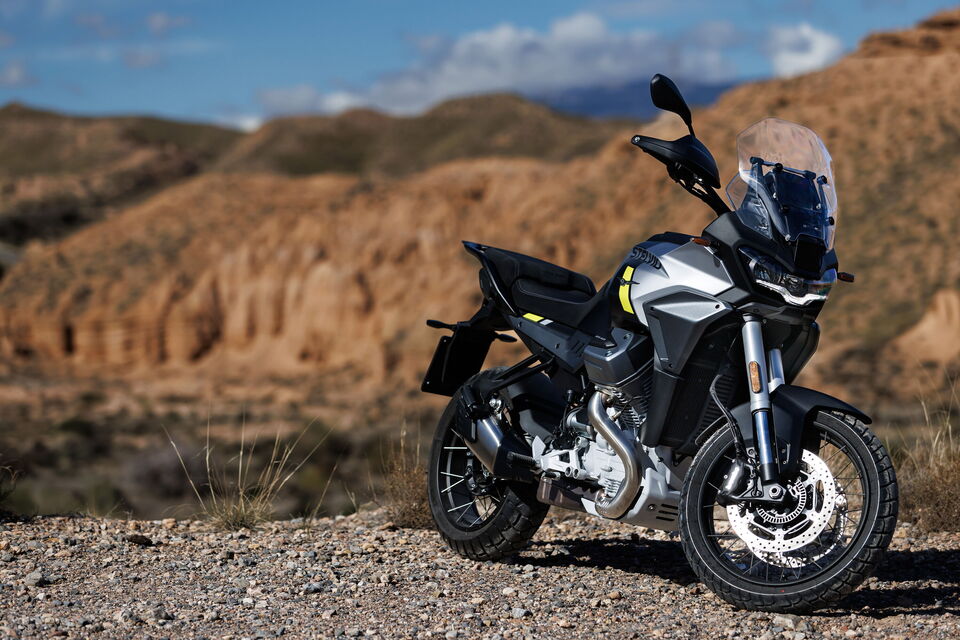
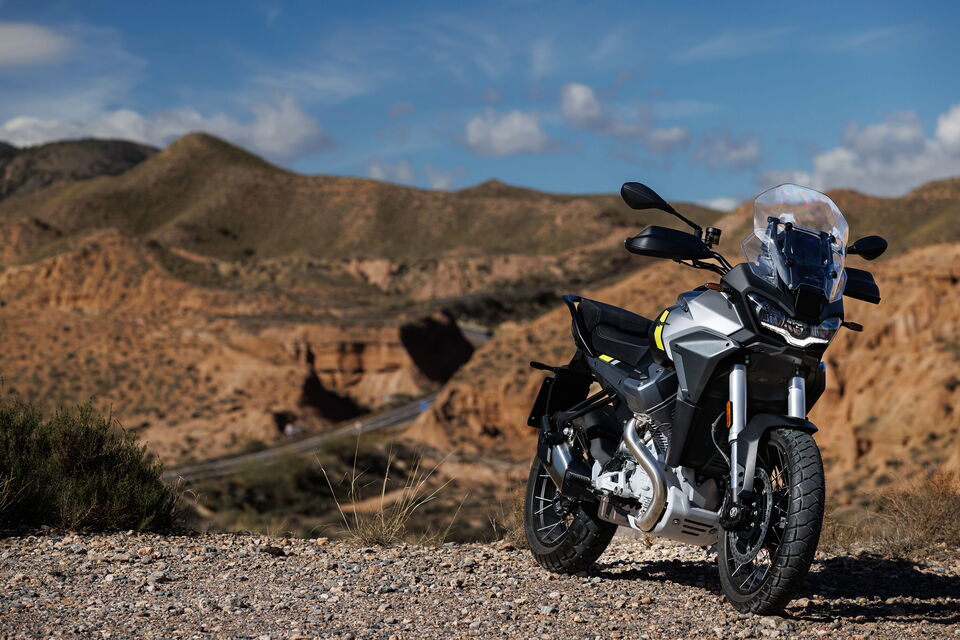
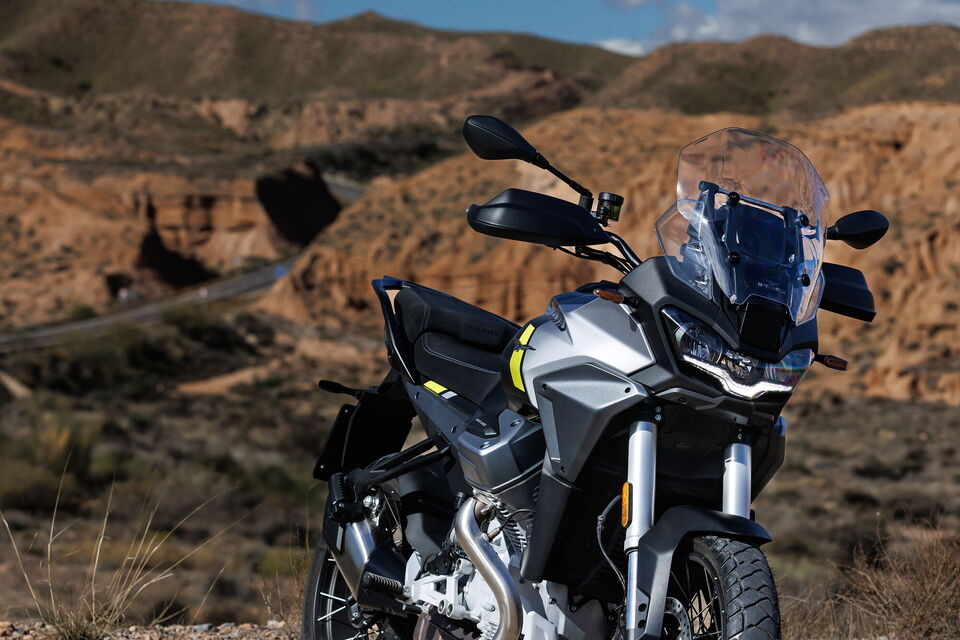
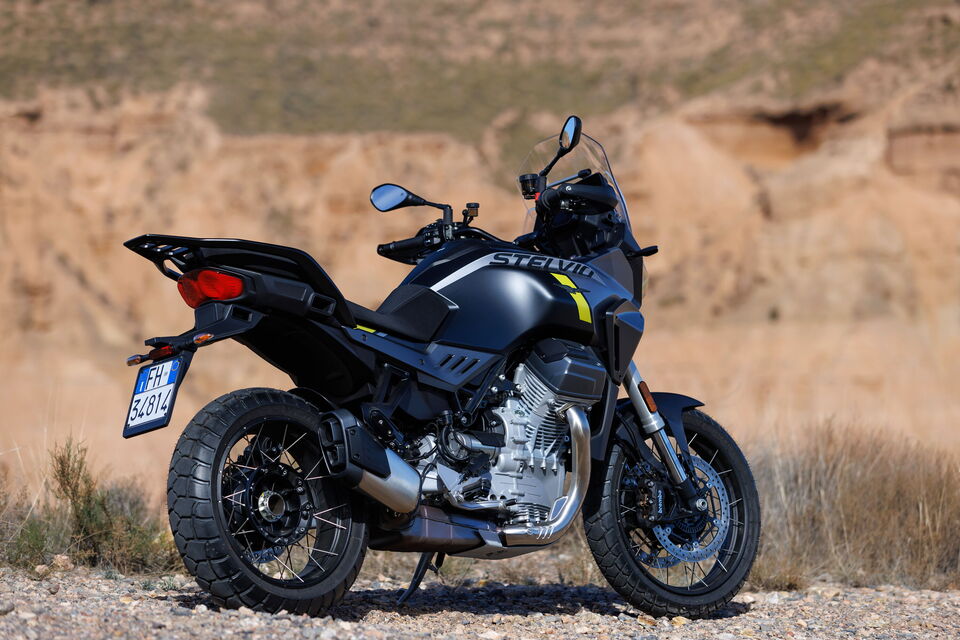
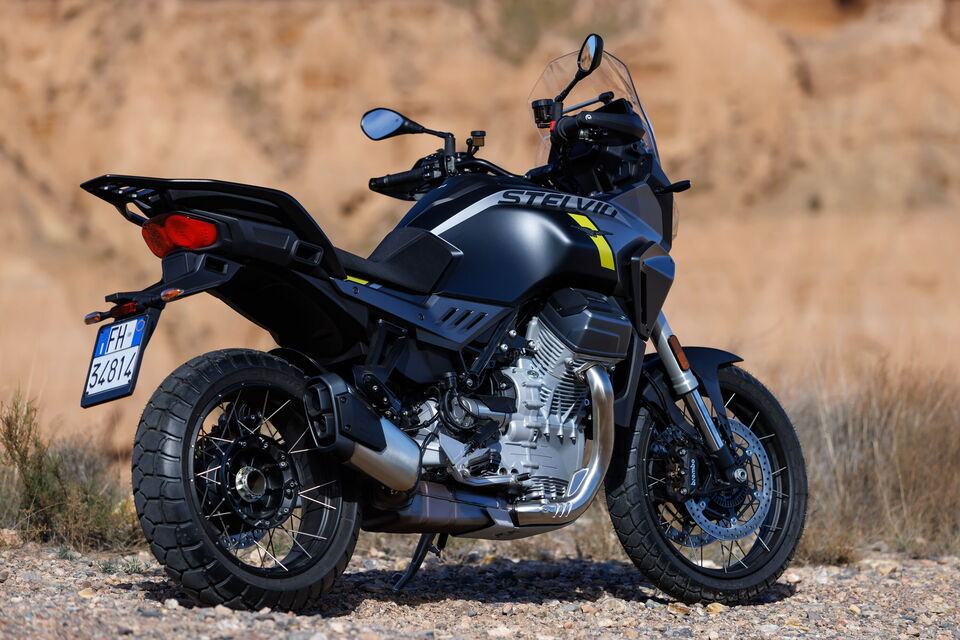
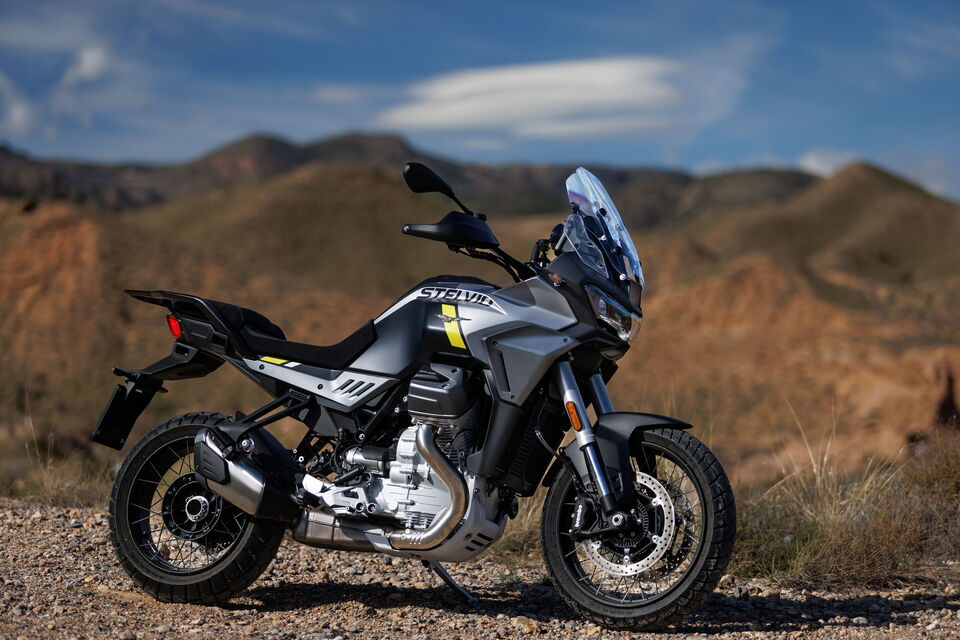
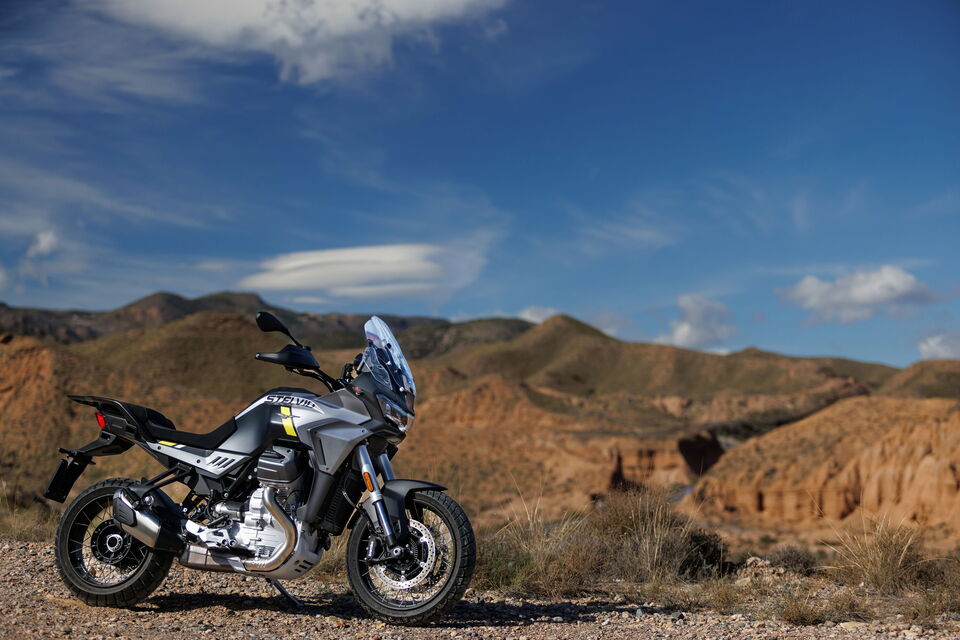
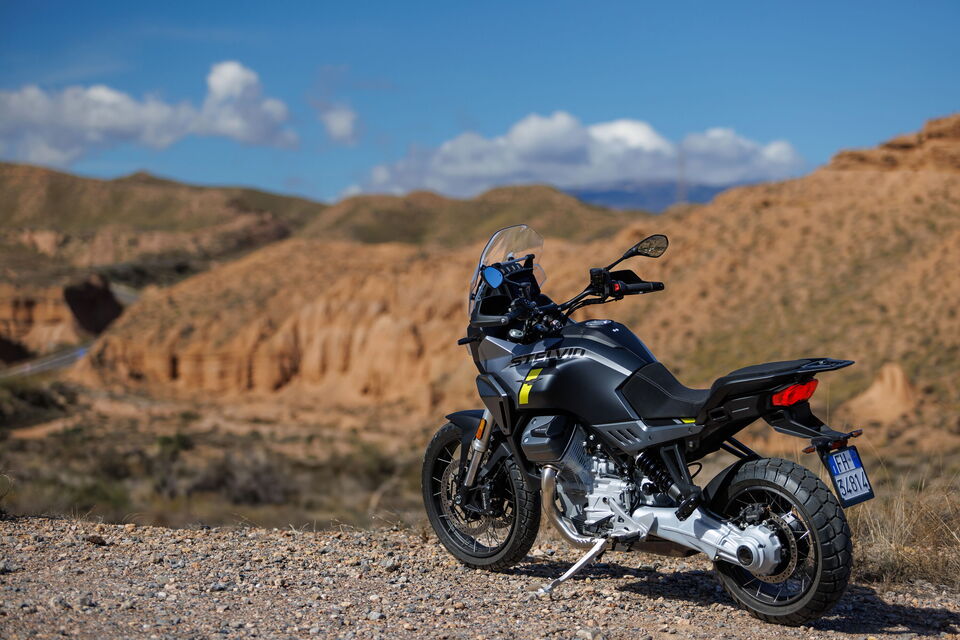
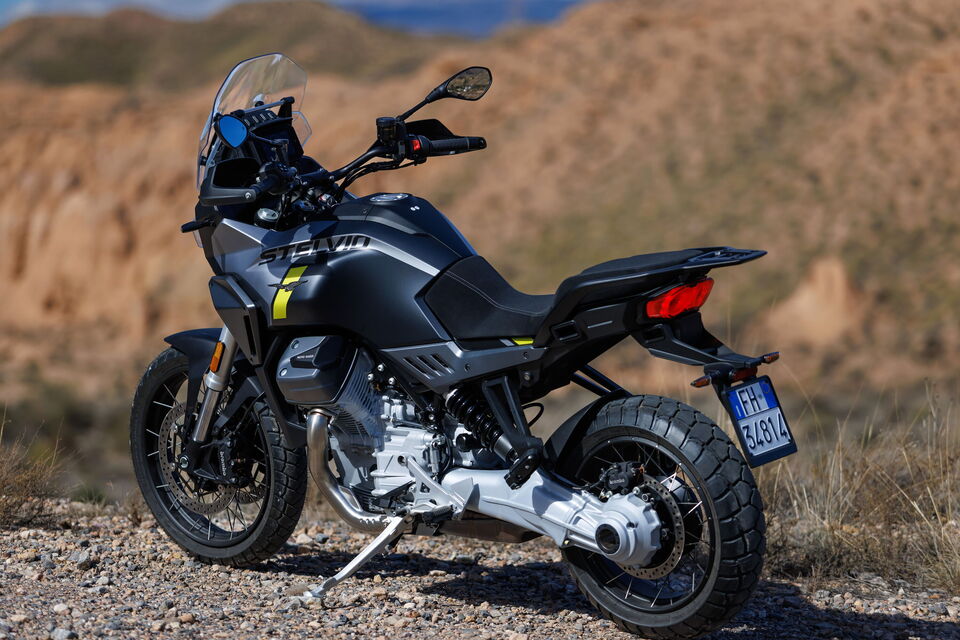

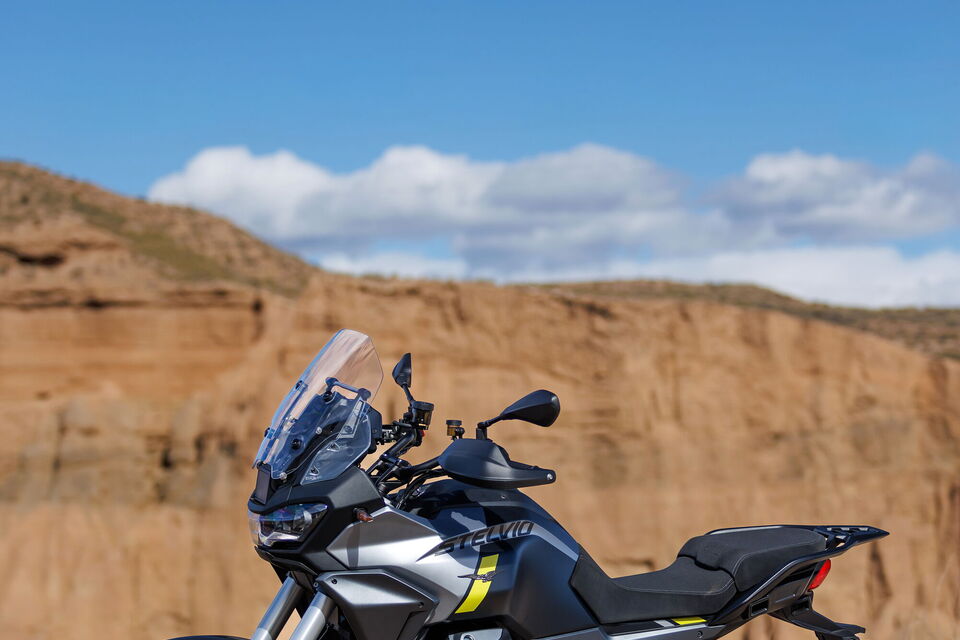
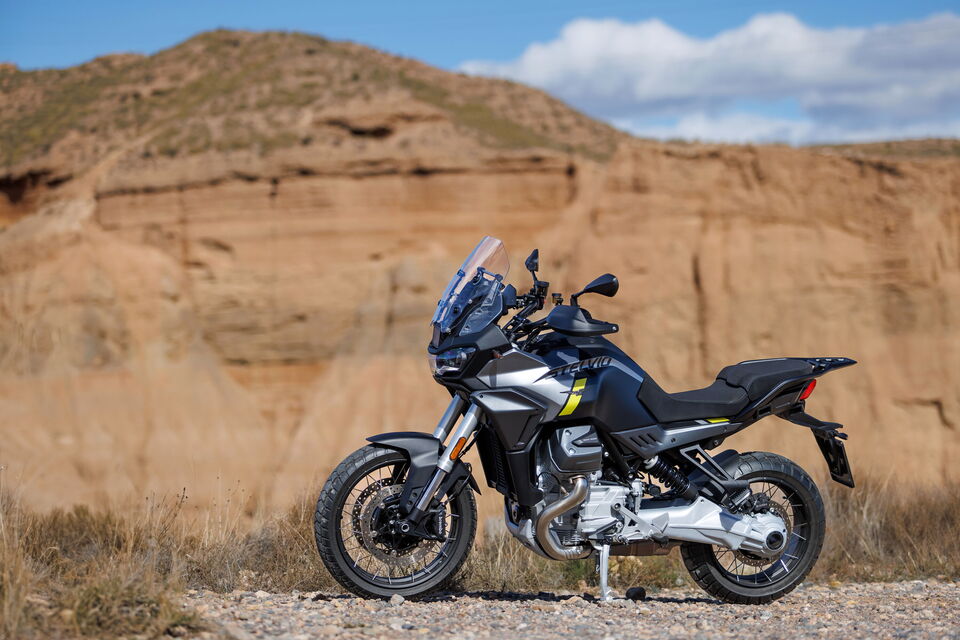
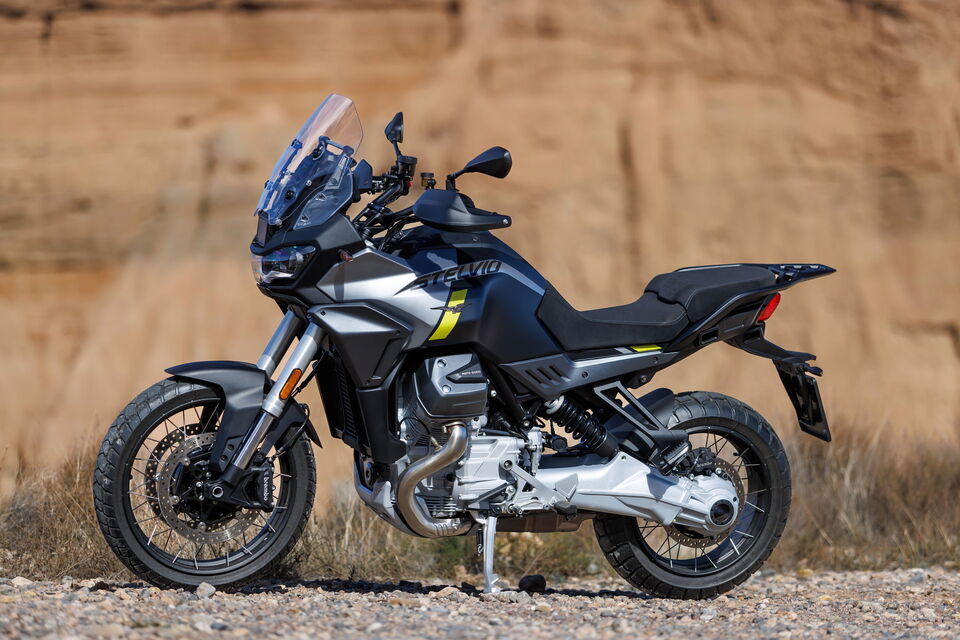
Engine and Shaft Drive: Longitudinal 1,042 cc V-Twin, 105 Nm—with 90 Percent of Torque Available From 3,000 rpm
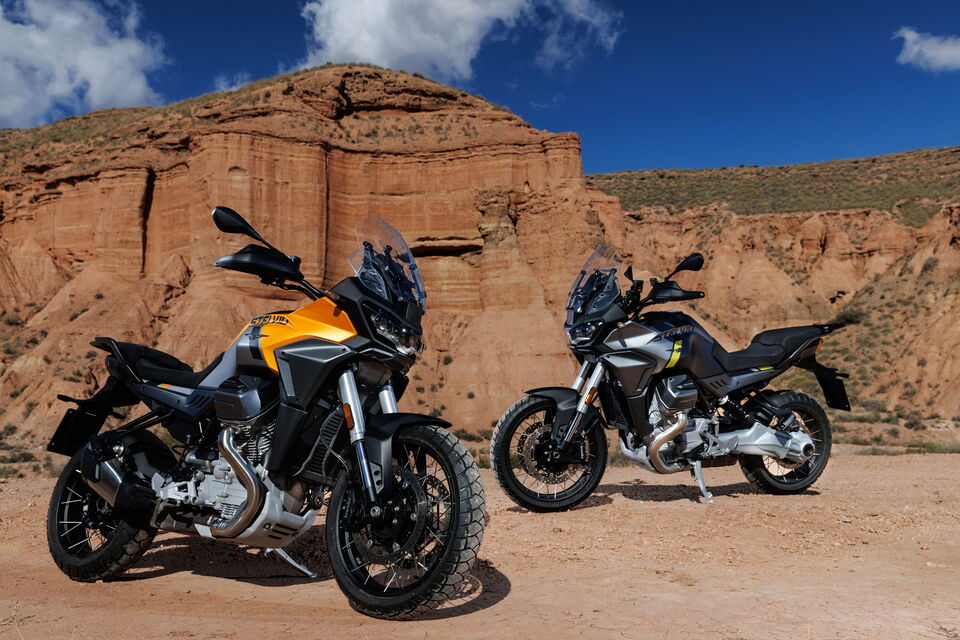
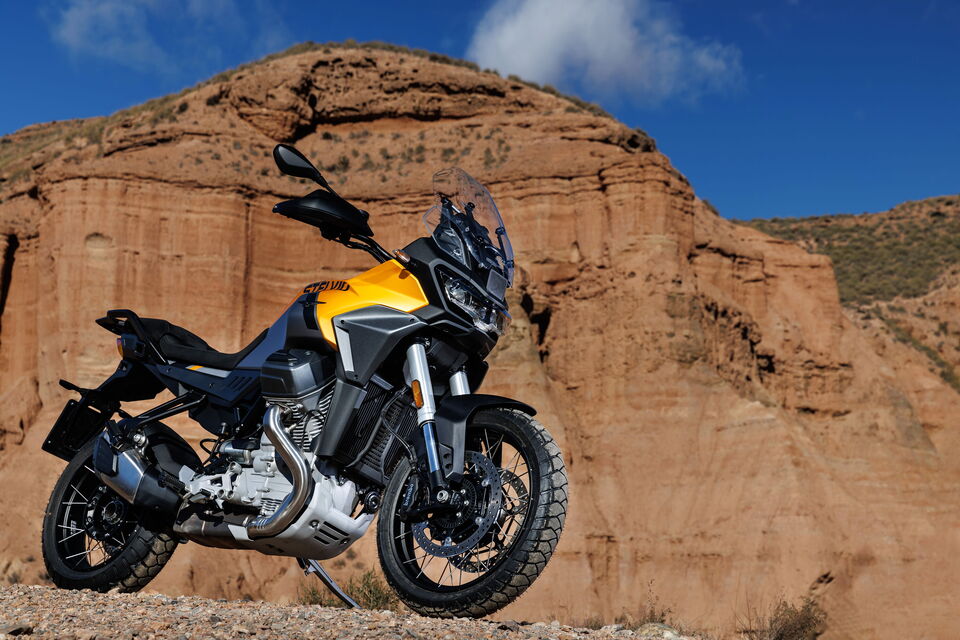
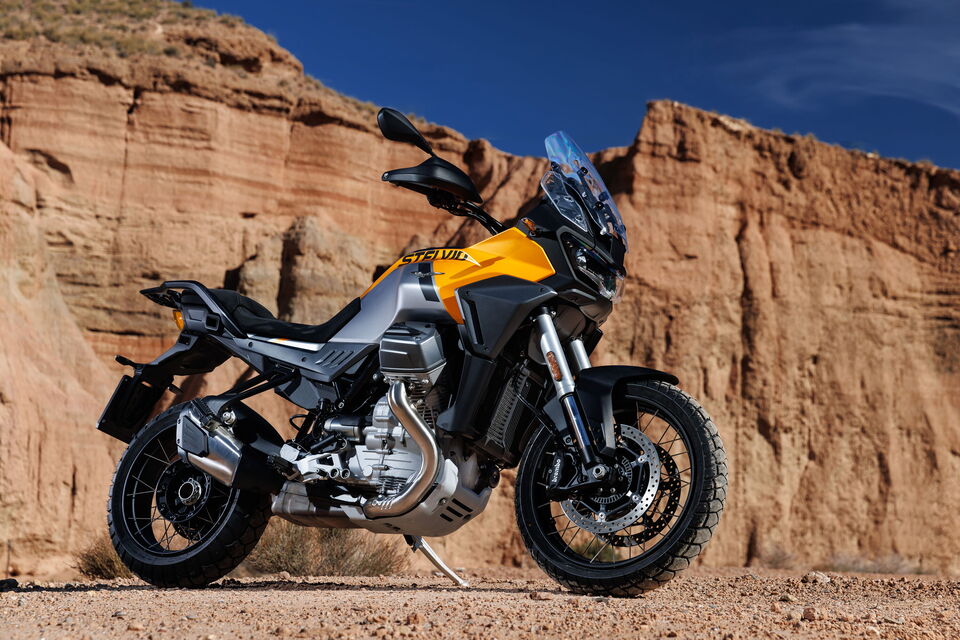
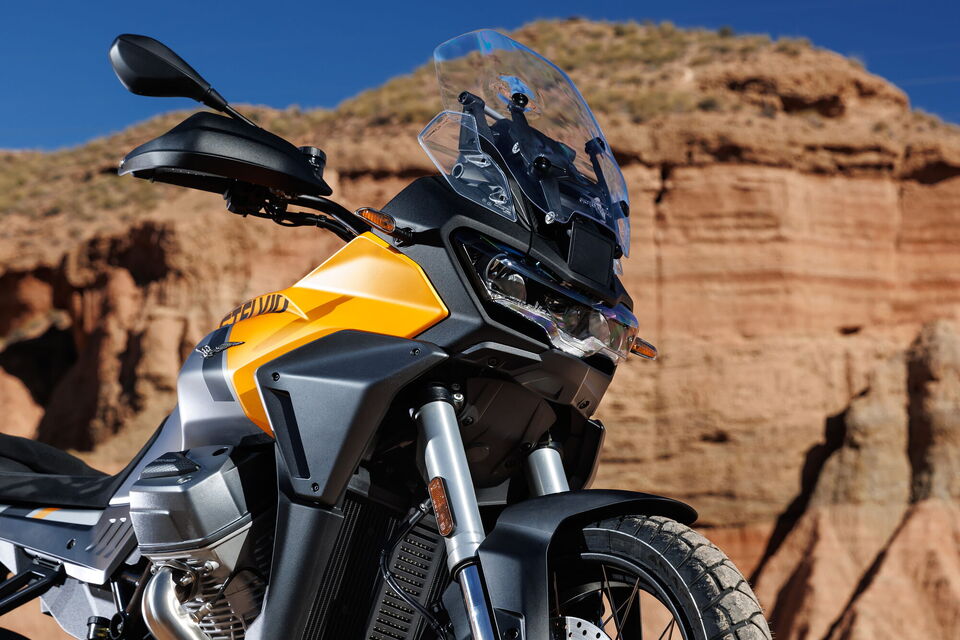
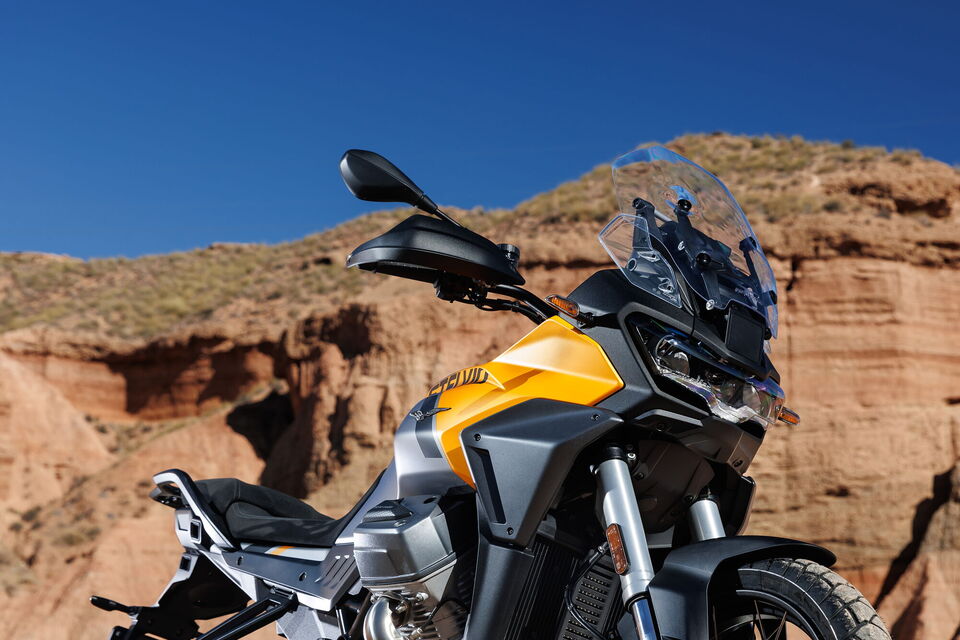
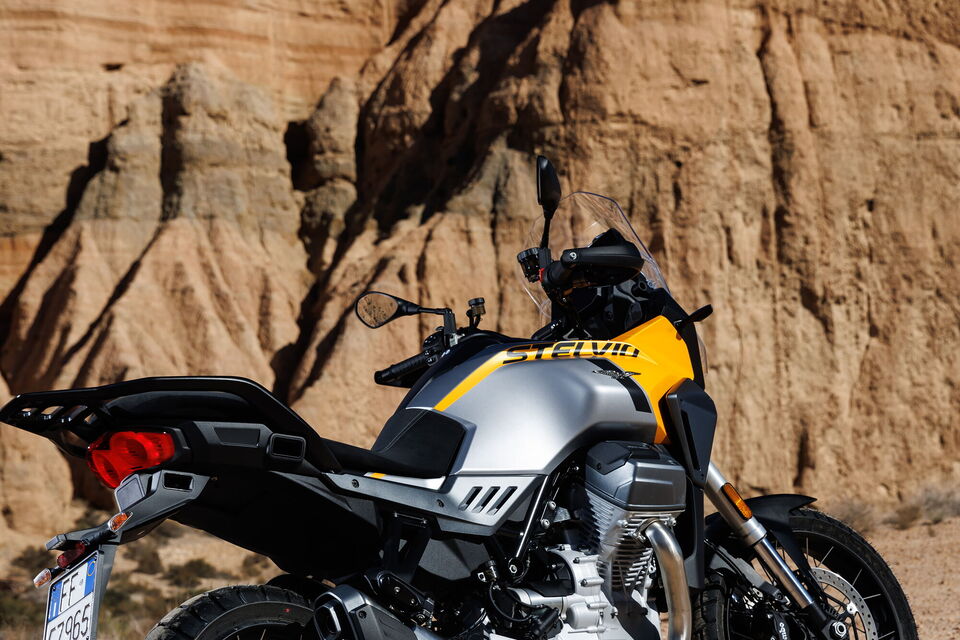
The Stelvio’s 90-degree V-twin displaces 1,042 cc, with a 96 mm bore, 72 mm stroke, and 12.6:1 compression ratio. It sits longitudinally in the chassis, classic Moto Guzzi architecture in the latest Compact Block form. Compared with traditional Guzzi engines, the cylinder heads are rotated 90 degrees: the intake sides now face inward between the cylinders, while the exhaust headers point outward and downward. Moto Guzzi says this makes the engine 103 mm shorter than the V85 TT unit, creates more legroom behind the cylinders, and frees space for the front radiator. Marelli injection with a central throttle body and Ride-by-Wire handles fueling, and the engine meets Euro 5+ requirements.
Output is 115 hp at 8,700 rpm and 105 Nm at 6,750 rpm, with roughly 90 percent of peak torque already available from 3,000 rpm. That gives the Stelvio relaxed, muscular real-world drive without constant shifting. Power reaches the rear wheel through a six-speed gearbox and shaft final drive, the feature that most clearly separates the Guzzi from its direct rivals. There is no chain to clean, lubricate, adjust, or replace.
Chassis: Sachs USD Fork, Kayaba Shock, Radial Brembos, Six-Axis IMU—Cornering Is a Strength
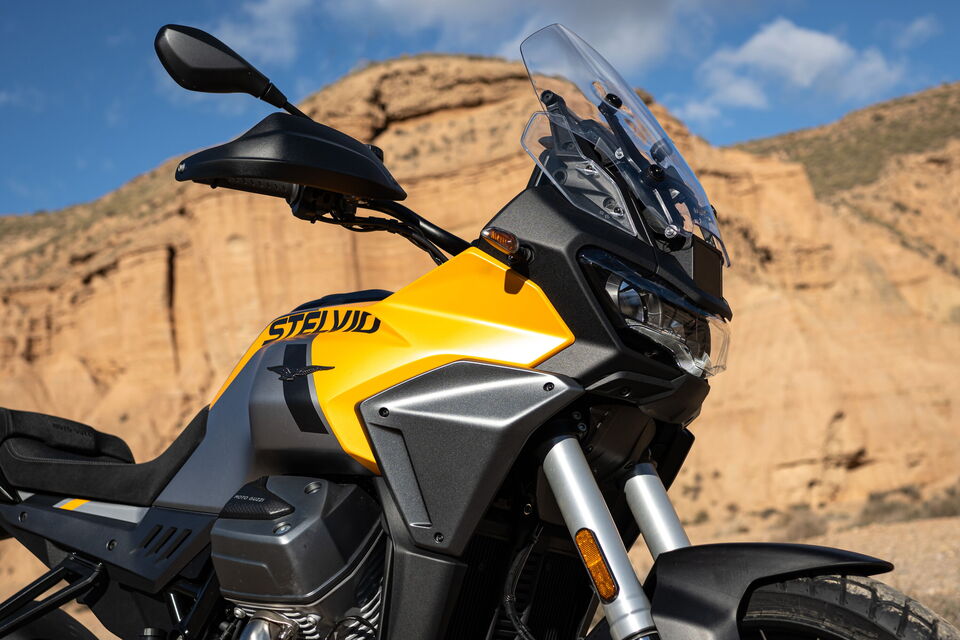
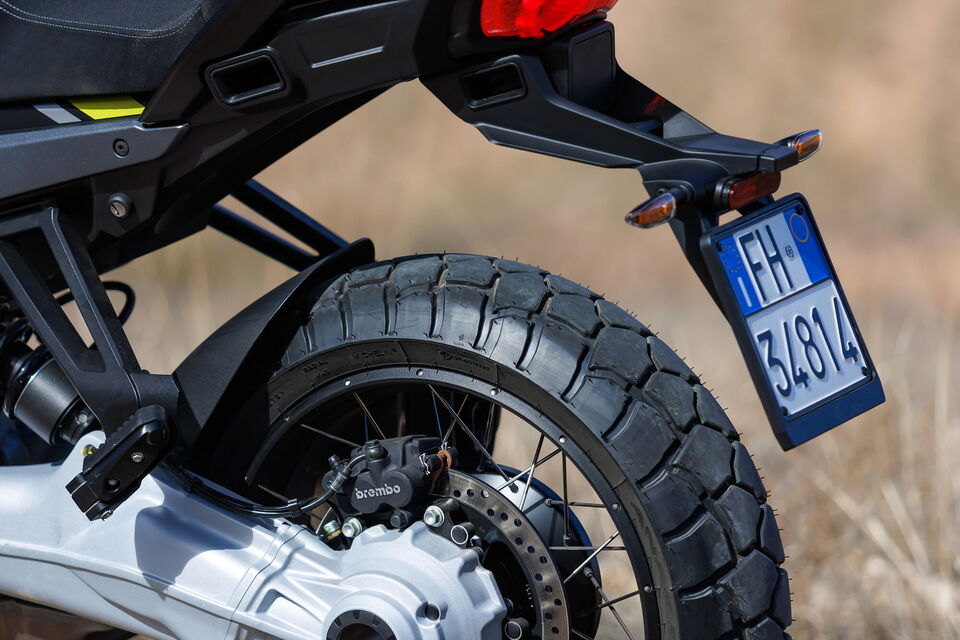
The steel-tube twin-spar frame is based on the V100 Mandello architecture, with additional reinforcement around the engine mounts, while the engine and transmission serve as stressed members. Up front is a 46 mm Sachs USD fork with 170 mm of travel, adjustable for spring preload and rebound damping. At the rear, an aluminum single-sided swingarm works with a Kayaba monoshock, also offering 170 mm of travel and adjustment. Braking is handled by Brembo: twin 320 mm front discs with radial four-piston Monobloc calipers, plus a 280 mm rear disc.
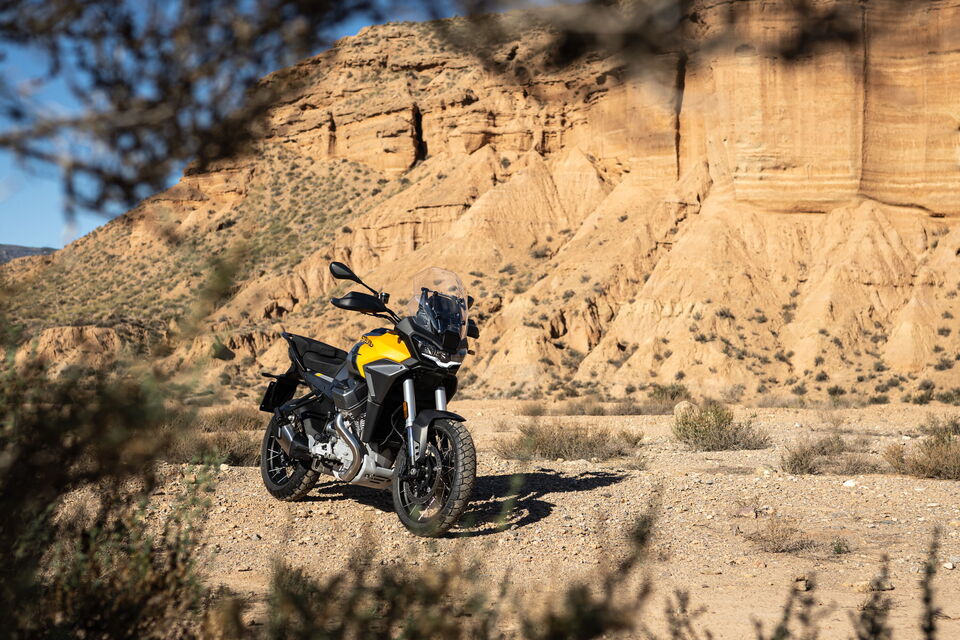
A six-axis IMU supports the entire electronics package, allowing cornering ABS and traction control to respond correctly at lean. The basic suspension calibration works well for both high-speed highway travel and winding backroads. The Stelvio feels more agile than its weight suggests. Tubeless cross-spoke wheels in 19/17-inch sizes allow light off-road excursions in Offroad mode, but the concept reaches its limits once the terrain demands genuine knobby tires and serious enduro suspension.
Electronics and PFF Radar: Five Riding Modes, Cruise Control and Cornering ABS Standard—Radar Included for MY2026
Model year 2026 brings a significant equipment upgrade: the PFF radar system from Piaggio Fast Forward is now factory standard rather than an extra-cost option that previously added roughly EUR 800. Using 4D imaging radar, it provides Forward Collision Warning, Blind Spot Information, and Lane Change Assist. Following Cruise Control, Moto Guzzi’s adaptive cruise-control function, remains optional.
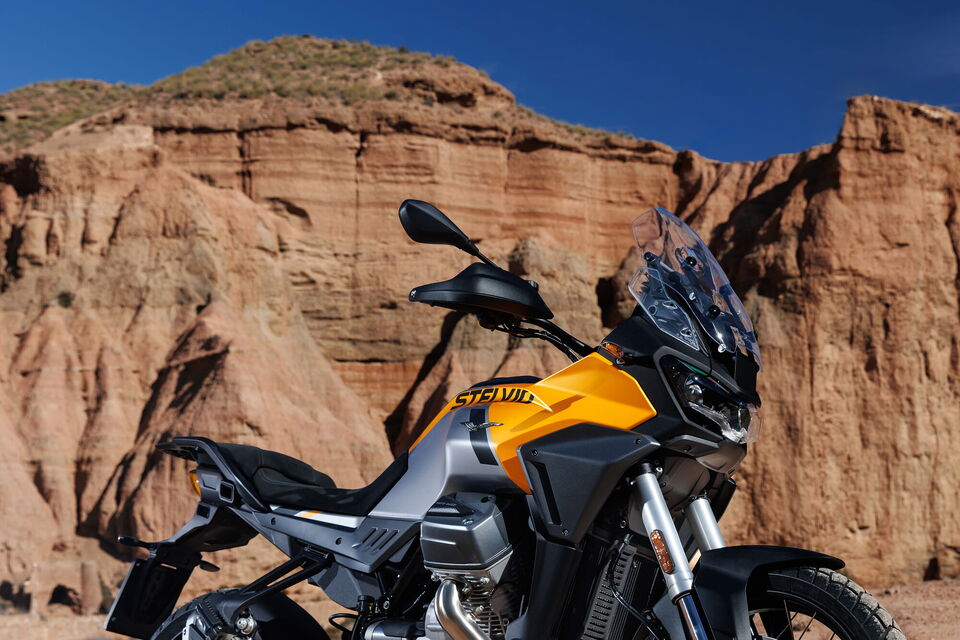
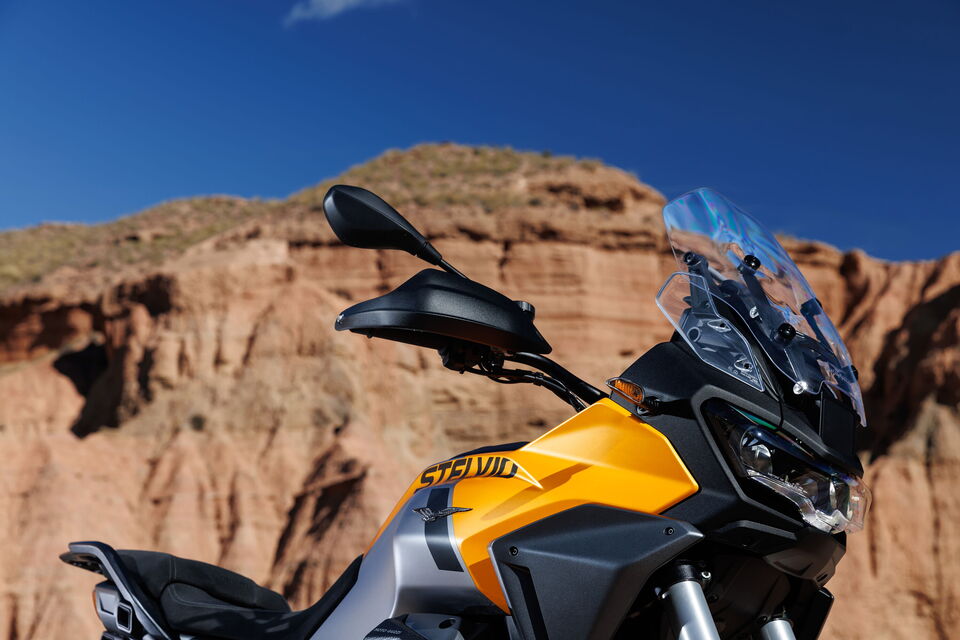
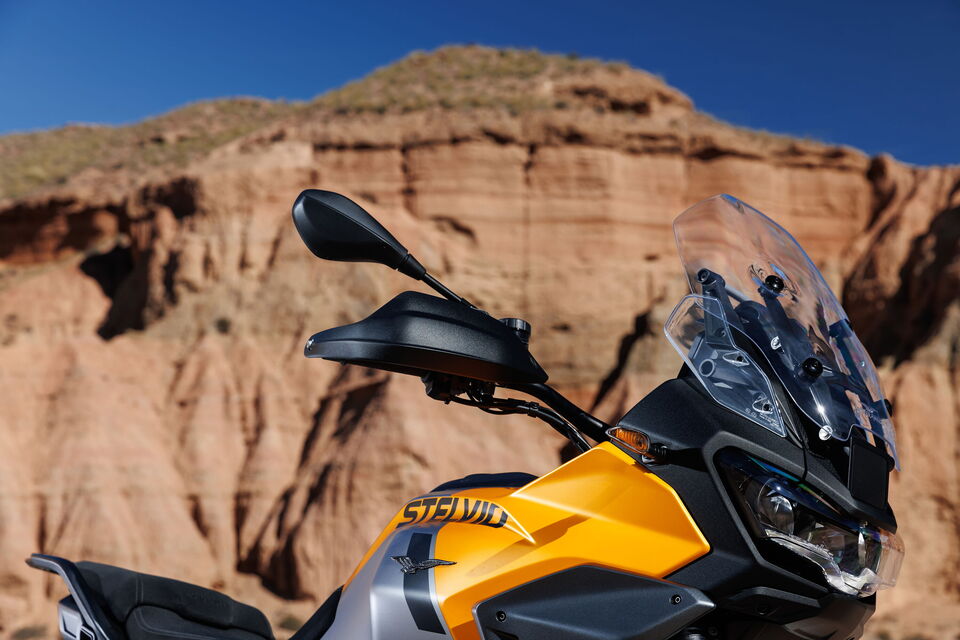
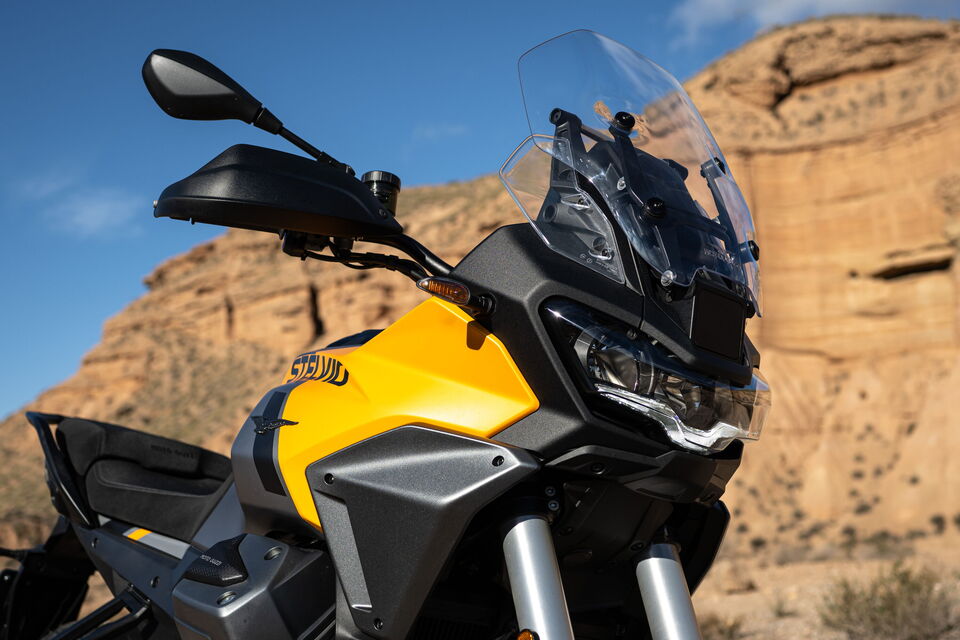
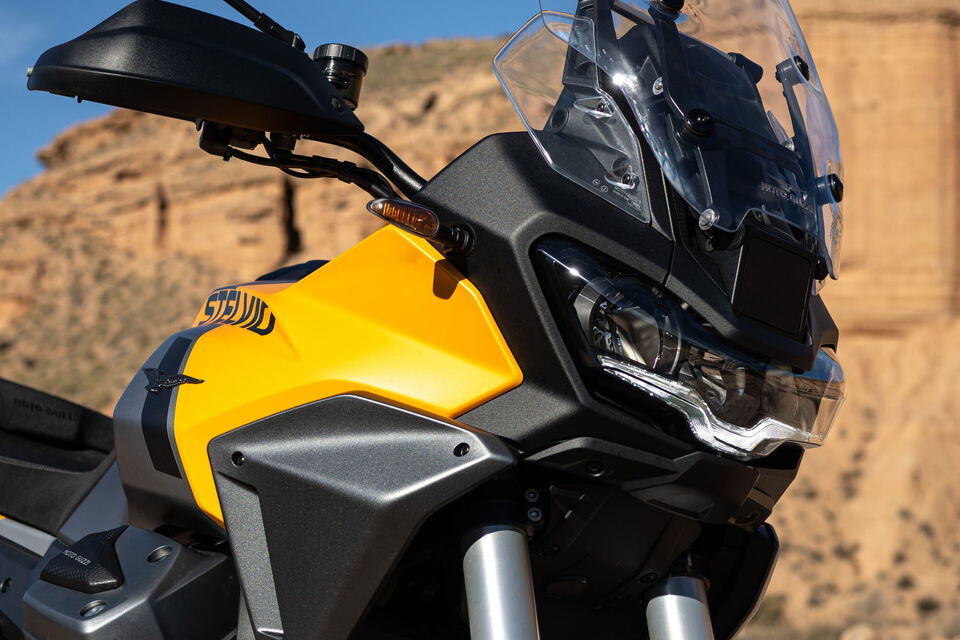
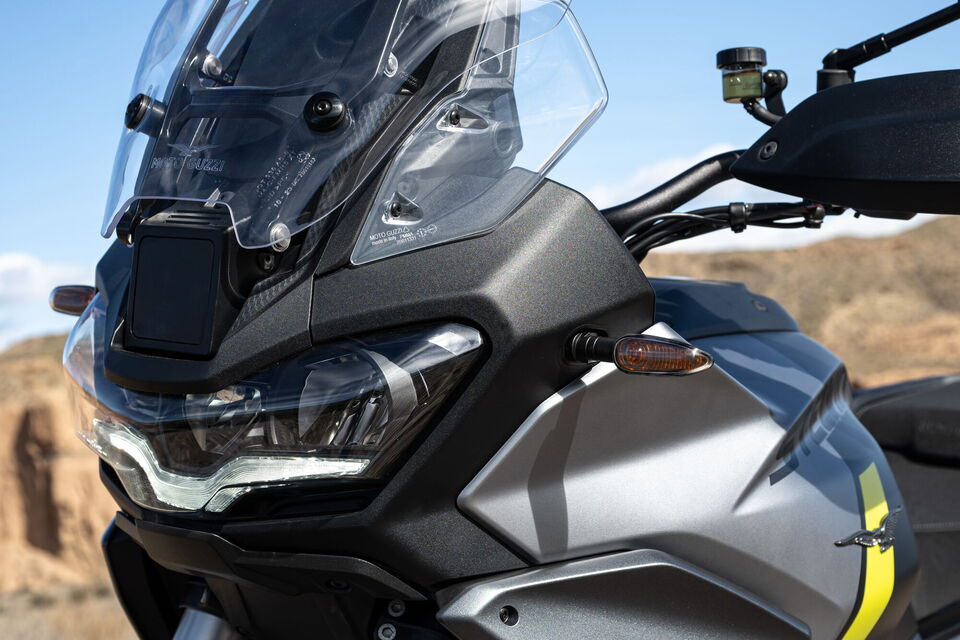
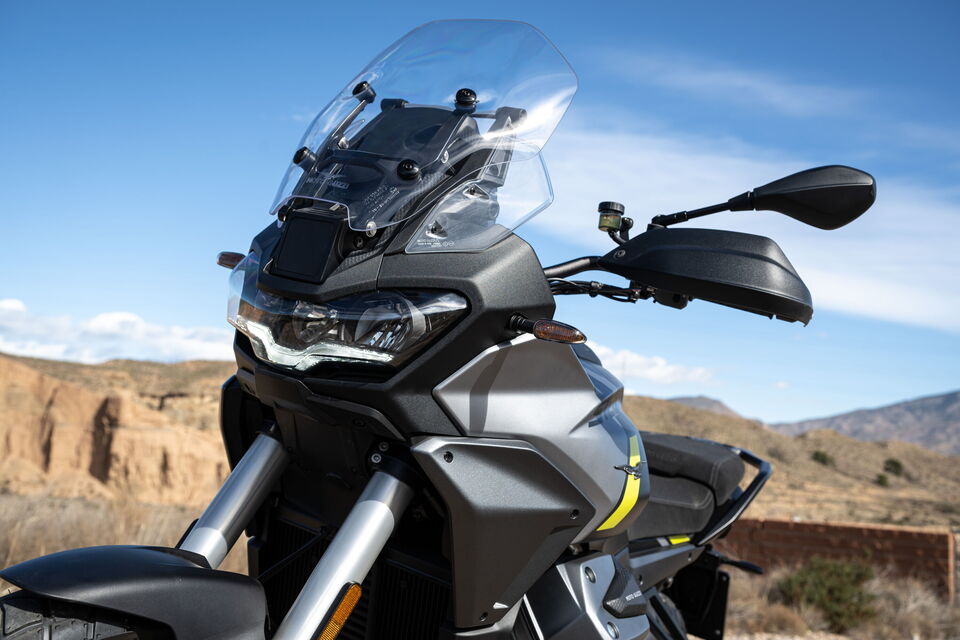
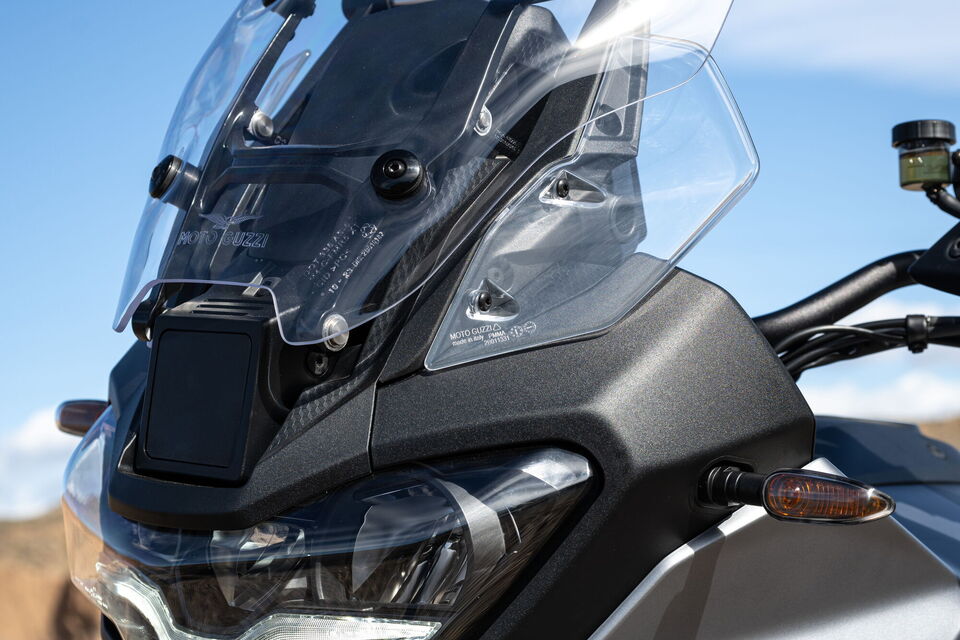
The standard electronics package includes five riding modes, including an Offroad setting with rear ABS disabled and traction control switchable, four traction-control levels, three engine-map settings, three engine-braking levels, and conventional cruise control. A bidirectional quickshifter remains optional. The electrically adjustable windshield is standard, an unusually generous feature in this segment.
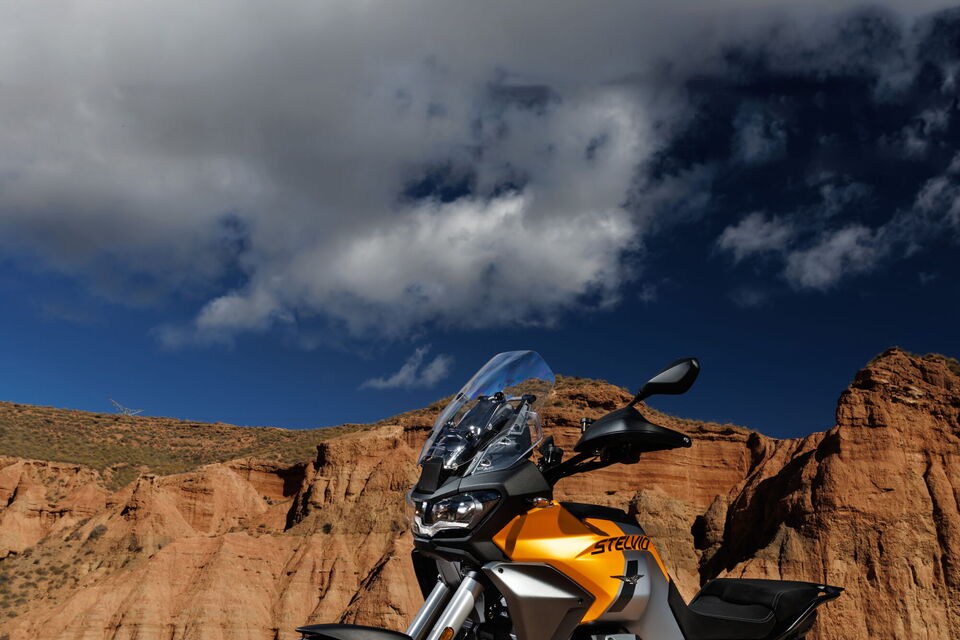
The 5-inch color TFT earns good marks for readability and operation. Moto Guzzi’s MIA connectivity platform with Bluetooth and smartphone integration is optional. Full LED lighting includes cornering lights and the distinctive eagle-shaped daytime-running-light signature. The only minor criticism is the automatic turn-signal cancellation, which reacts a little more slowly than expected.
Ergonomics: 830 mm Seat Height, 246 kg, Generous Riding Position—Long-Distance Comfort, but Parking Takes Effort
An 830 mm seat height is moderate for a liter-class adventure tourer, and the broad seat is designed for long-distance comfort. Handlebar and footpeg positioning also allow standing on the pegs. The rider triangle is generous and particularly well suited to taller riders. Shorter riders should check ground reach before buying because the fuel tank is relatively wide. At highway speed, the electrically adjustable windshield provides effective protection.
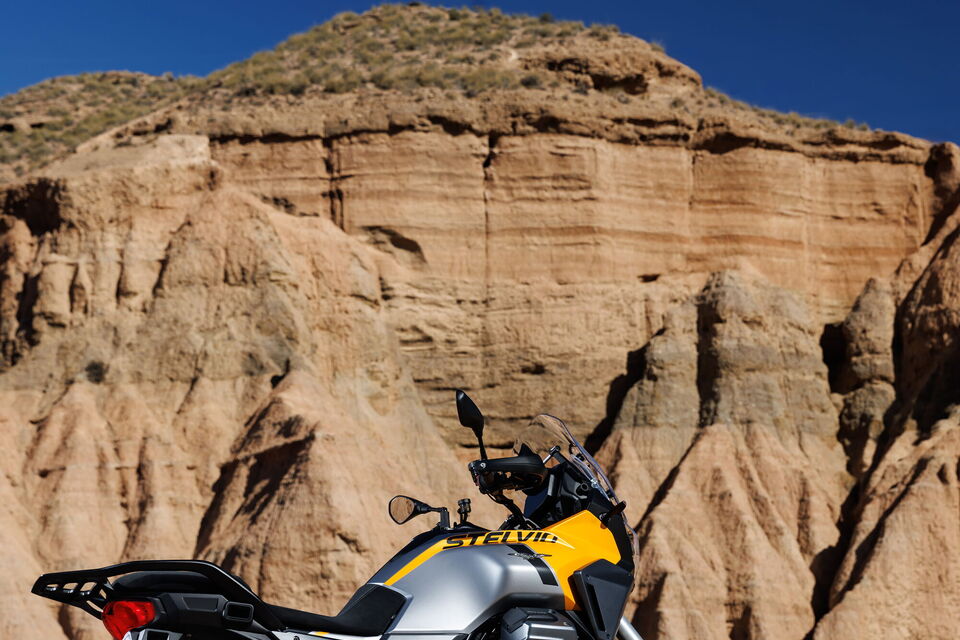
The 246 kg ready-to-ride weight is the main ergonomic drawback. It is noticeable when maneuvering and in very tight turns, but largely disappears once the motorcycle is moving. The aluminum single-sided swingarm gives the Stelvio a distinctive rear-end appearance and simplifies rear-wheel removal. Accessory luggage is praised for its low mounting position and easy handling. The rear brake has a noticeably long initial travel, something riders need to adapt to in tight corners.
Cost and Versions: EUR 16,499 Base Price—Less Than a GS, More Than a Tiger, With Duecento Tributo as the Fully Equipped Special Edition
The Stelvio starts at EUR 16,499. That is less than a BMW R 1300 GS at roughly EUR 20,000, but more than a Triumph Tiger 900 GT at around EUR 14,000 and broadly comparable with a Honda Africa Twin starting around EUR 16,500. The Stelvio’s unique selling point in this class is its shaft drive, which brings substantially lower long-term final-drive maintenance than a chain or belt.
The Stelvio Duecento Tributo special edition, finished in White/Red/Blue to mark the 200th anniversary of the Stelvio Pass, includes heated grips, the bidirectional quickshifter, comfort seat, center stand, TPMS, and MIA multimedia as standard. The surcharge is EUR 2,300.
Owner-reported fuel consumption is around 5.1 to 5.7 L/100 km on backroads and highways, remaining remarkably consistent regardless of riding style. With a 21-liter tank, range exceeds 400 km. Short-trip use can push consumption beyond 7 L/100 km. Production remains in Mandello del Lario on Lake Como, Moto Guzzi’s historic home factory.
Verdict
For 2026, the Stelvio is Moto Guzzi’s technological flagship: shaft drive instead of chain, radar assistance as standard, five-mode electronics, radial Brembo brakes, and an electrically adjustable windshield. It is the only shaft-drive adventure tourer in this liter-class price bracket. Riders who specifically want shaft drive have almost no alternative short of the more expensive BMW GS. Those looking for a sportier chassis, stronger off-road capability, or lower weight will need to shop elsewhere. For touring riders who value long-distance comfort, low-maintenance final drive, and the unmistakable feel of a longitudinal V-twin more than maximum off-road ability, the Stelvio is a compelling proposition.
Quick Check
+ Shaft drive standard: unique in this adventure-touring class; no chain cleaning, lubrication, adjustment, or replacement.
+ PFF radar system standard for MY2026: Forward Collision Warning, Blind Spot Information, and Lane Change Assist; previously roughly EUR 800 extra.
+ Electrically adjustable windshield standard: unusually generous equipment for the class.
+ Radial four-piston Brembo Monobloc front calipers with twin 320 mm discs: high-level braking hardware.
+ Six-axis IMU with cornering ABS, four-level traction control, five riding modes including Offroad, three engine maps, and three engine-braking settings.
+ Cruise control standard; adaptive Following Cruise Control optional.
+ 115 hp and 105 Nm, with around 90 percent of peak torque available from 3,000 rpm: relaxed touring power delivery.
+ 21-liter tank and more than 400 km range; 5.1–5.7 L/100 km reported even at highway pace.
+ 5-inch color TFT with good readability and intuitive operation; signature eagle DRL.
+ 830 mm seat height: moderate for a liter-class adventure tourer and well suited to long-distance use.
+ Produced in Mandello del Lario on Lake Como, Italy, Moto Guzzi’s historic factory.
+ Duecento Tributo special edition includes heated grips, quickshifter, comfort seat, center stand, TPMS, and MIA as standard.
– 246 kg ready to ride: noticeable when maneuvering and in tight turns; heavier than BMW R 1300 GS and Triumph Tiger 900 GT figures cited in the source.
– Rear brake has long initial travel, especially noticeable in tight corners.
– Limited off-road capability: 170 mm of travel and 246 kg make it better suited to gravel and unpaved roads than serious terrain.
– Bidirectional quickshifter is optional on the base model, a criticism at this price and performance level.
– – MIA Bluetooth/smartphone connectivity is optional; no standard integrated navigation system.
– Automatic turn-signal cancellation reacts somewhat slowly.
– EUR 16,499: more expensive than the Triumph Tiger 900 GT.
Technical Specifications: Moto Guzzi Stelvio (2026)
Brand / Production: Moto Guzzi, Piaggio Group; Mandello del Lario plant, Lake Como, Italy
Engine: Longitudinal 90-degree V-twin, 1,042 cc, liquid-cooled, DOHC, four valves per cylinder; 96 x 72 mm bore and stroke; 12.6:1 compression; Marelli injection; Ride-by-Wire; Euro 5+
Power: 115 hp / 84.6 kW at 8,700 rpm
Torque: 105 Nm at 6,750 rpm
Transmission: Six-speed; wet anti-hopping clutch; shaft final drive
Frame: Steel-tube twin-spar frame; engine and transmission as stressed members, based on V100 Mandello architecture
Fork: 46 mm Sachs USD; adjustable preload and rebound damping; 170 mm travel
Rear Shock: Kayaba monoshock with aluminum single-sided swingarm; adjustable preload and rebound damping; 170 mm travel
Front Brake: Radial four-piston Brembo Monobloc calipers; twin 320 mm discs; cornering ABS
Rear Brake: 280 mm disc; cornering ABS; long initial pedal travel
Wheels: Tubeless cross-spoke; 19-inch front / 17-inch rear
Tires: Michelin Anakee Adventure standard; 120/70 ZR19 front; 170/60 R17 rear
Electronics: Six-axis IMU; five riding modes including Offroad with rear ABS disabled and TC switchable; four TC levels; three engine maps; three engine-braking levels; cornering ABS; cruise control standard
MY2026 Update: PFF radar system by Piaggio Fast Forward standard: Forward Collision Warning, Blind Spot Information, Lane Change Assist; Following Cruise Control adaptive cruise optional
Windshield: Electrically adjustable, standard
Cockpit: 5-inch color TFT; optional MIA Bluetooth/smartphone connectivity; optional bidirectional quickshifter
Lighting: Full LED; cornering lights; eagle-shaped daytime running light
Ergonomics: Generous rider triangle, well suited to taller riders; standing possible; 830 mm seat height; weight noticeable when maneuvering but much less so once moving
Weight: 246 kg fully fueled; 222 kg dry
Seat Height: 830 mm
Fuel Tank: 21 liters; more than 400 km range
Fuel Consumption: 5.1–5.7 L/100 km in owner experience; above 7 L/100 km on short trips
2026 Colors: Grigio Climbing, Gray/Yellow; Verde Hiking, Green; Duecento Tributo White/Red/Blue with heated grips, quickshifter, comfort seat, center stand, TPMS, and MIA
German Price: From EUR 16,499 base; Duecento Tributo surcharge EUR 2,300