Review Moto Guzzi V7 Sport (2026)

853 cc Shaft-Drive V-Twin, USD Fork, Twin Brembo Discs, Six-Axis IMU—the Most Modern V7 Ever for EUR 10,999
An air-cooled, longitudinally mounted 853 cc 90-degree V-twin with two valves per cylinder and traditional OHV pushrod valve gear. Ride-by-Wire, a 52 mm throttle body, a 27-percent larger airbox, and Euro 5+. Output is 67.3 hp at 6,900 rpm and 79 Nm at 4,400 rpm, with 95 percent of torque available from 3,500 rpm. Six-speed transmission and shaft drive. USD fork, radial four-piston Brembo front calipers on twin 320 mm discs, Continental six-axis IMU, cornering ABS and cornering traction control. Three riding modes—Rain, Road, and Sport—plus cruise control, full LED lighting, LCD instrumentation, a 780 mm seat height, 220 kg ready-to-ride weight, and a 21-liter steel tank. Price: EUR 10,999. MY2026 colors are new Rosso Monza, Legnano Green, and Lario Gray.
As of: April 18, 2026 | Model: Moto Guzzi V7 Sport, introduced March 2025; MY2026 adds only the new Rosso Monza color | Production: Mandello del Lario, Italy | Price: EUR 10,999
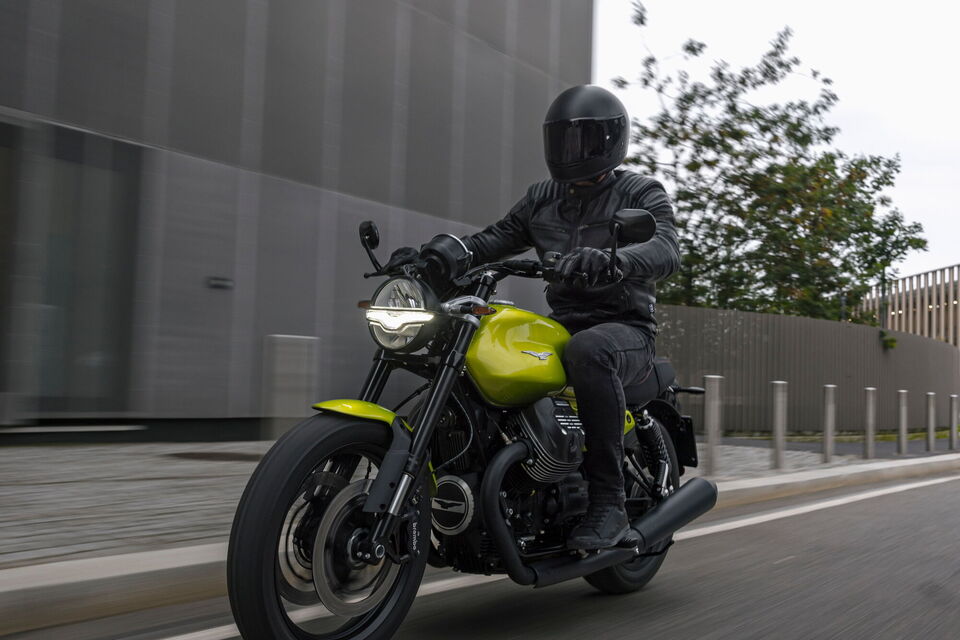
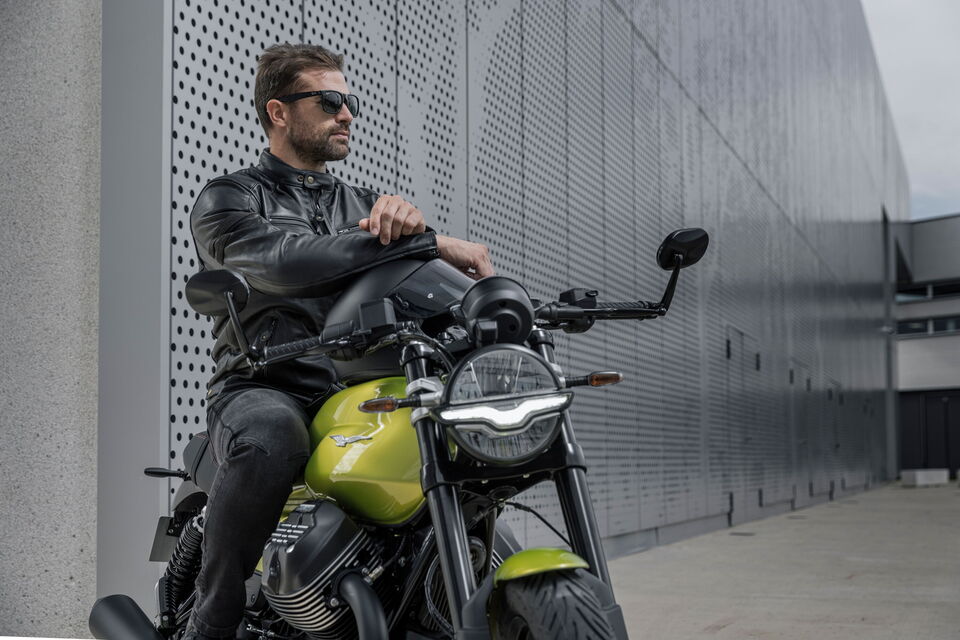
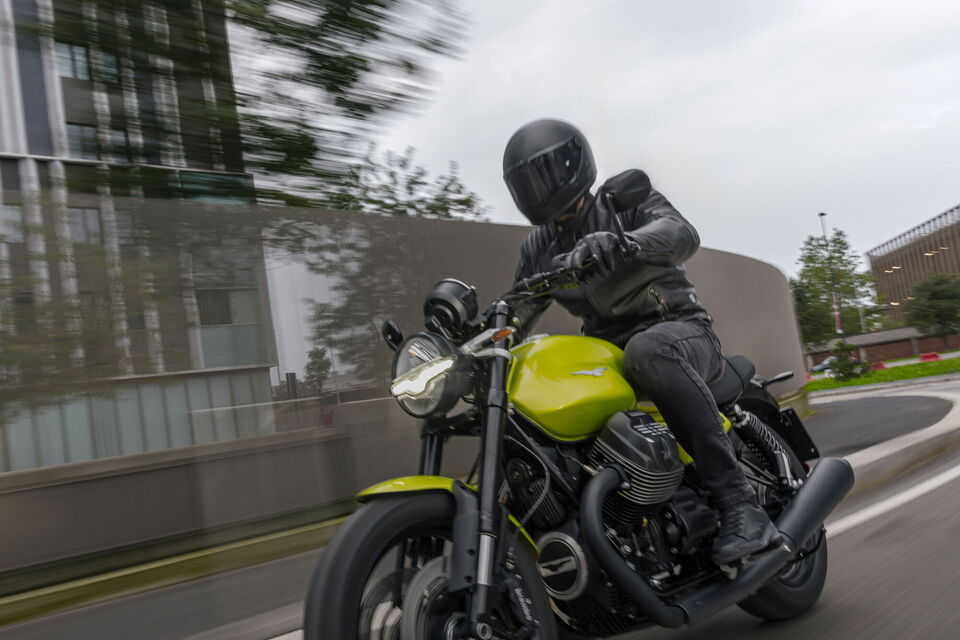
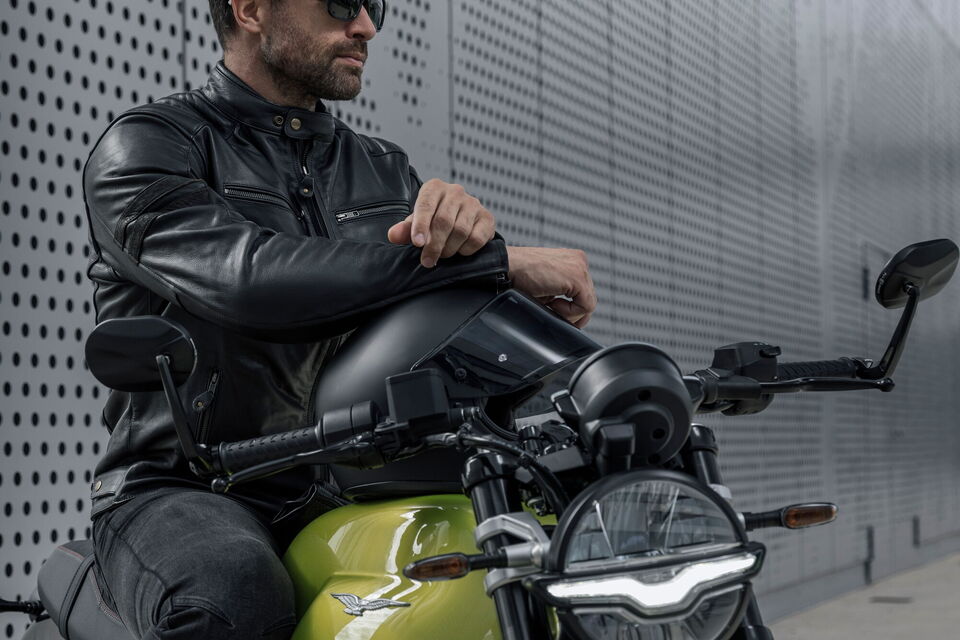

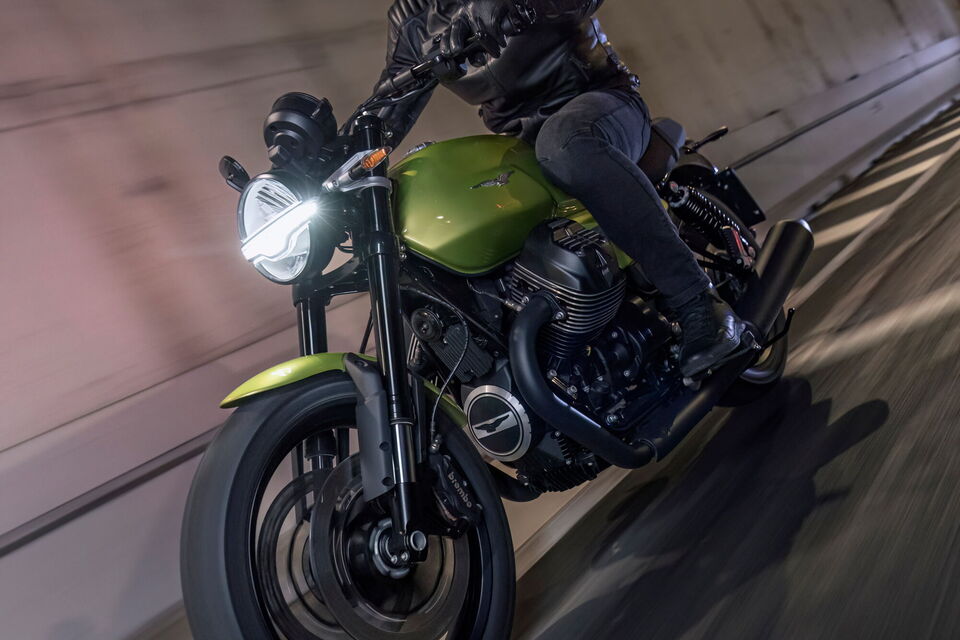
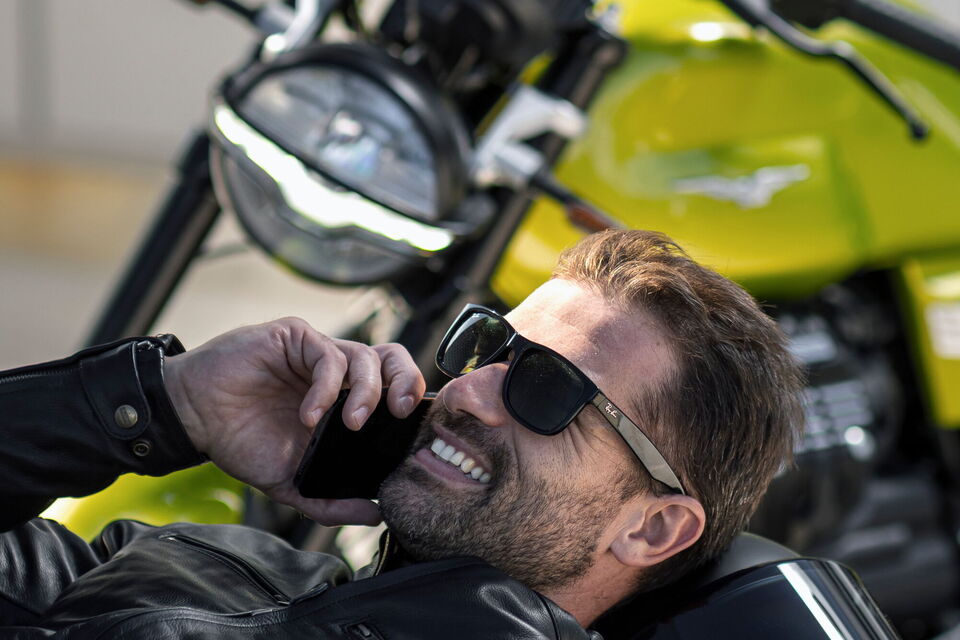
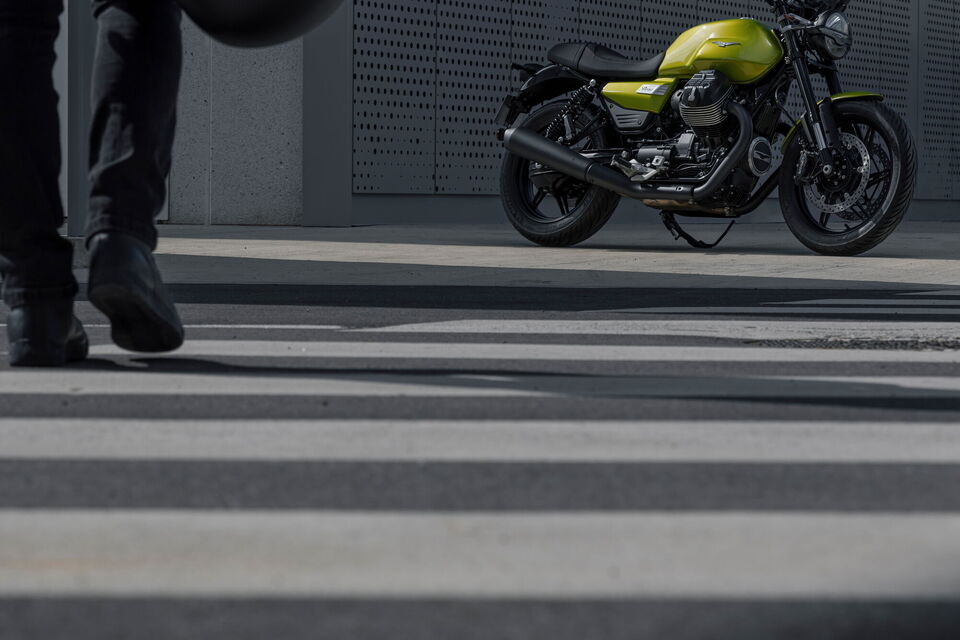
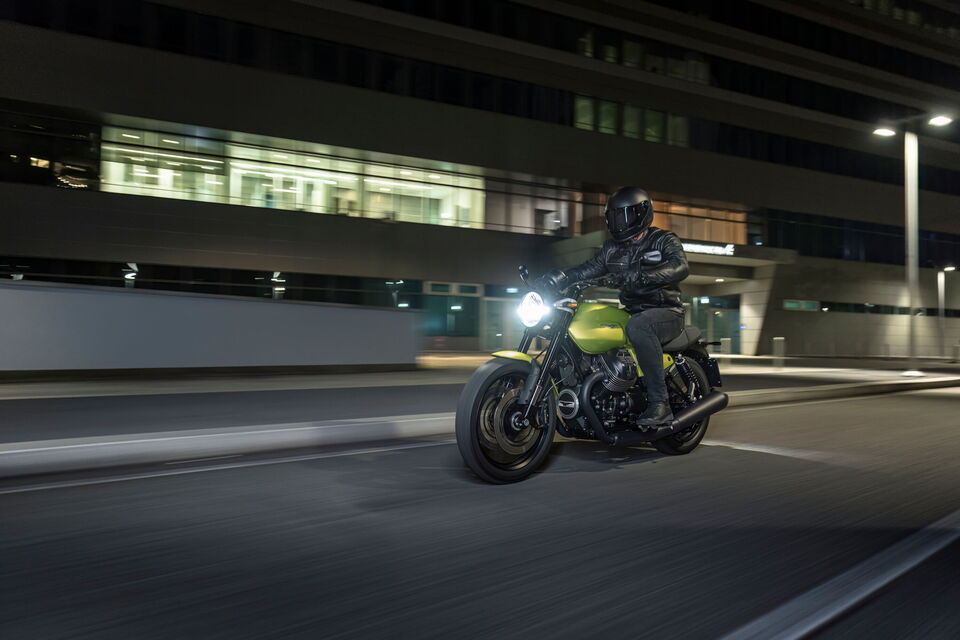
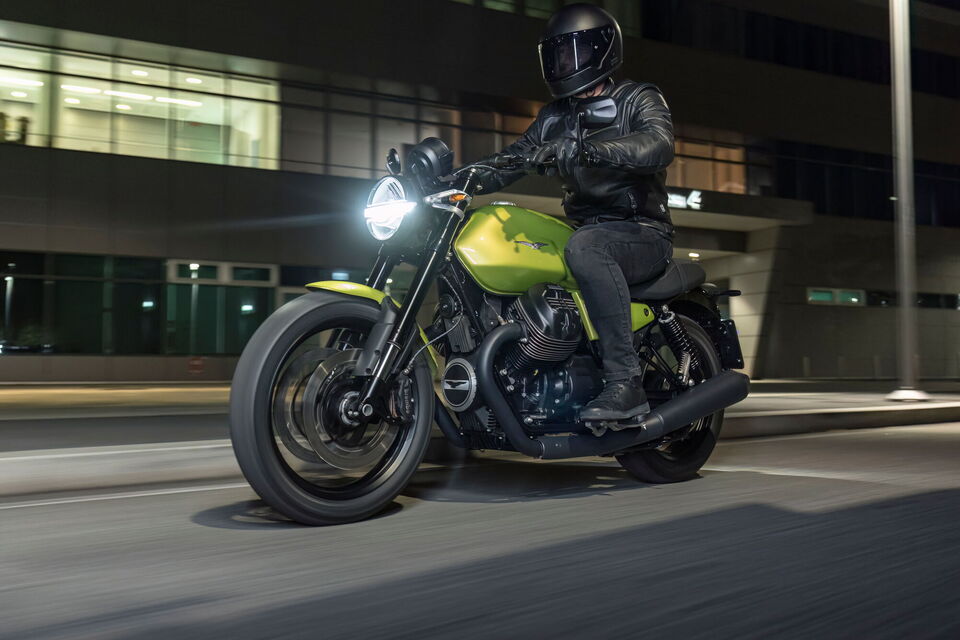

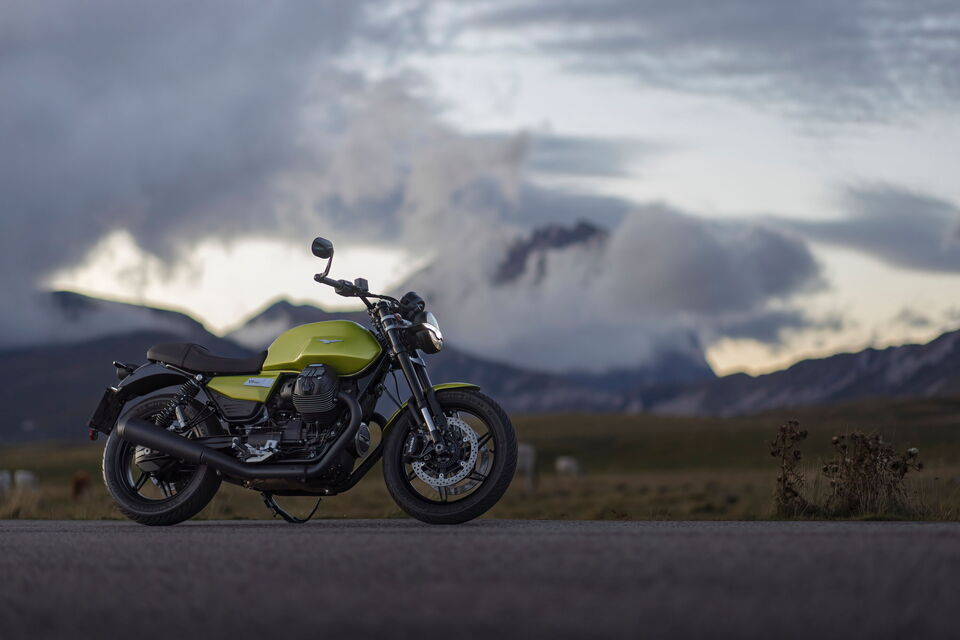

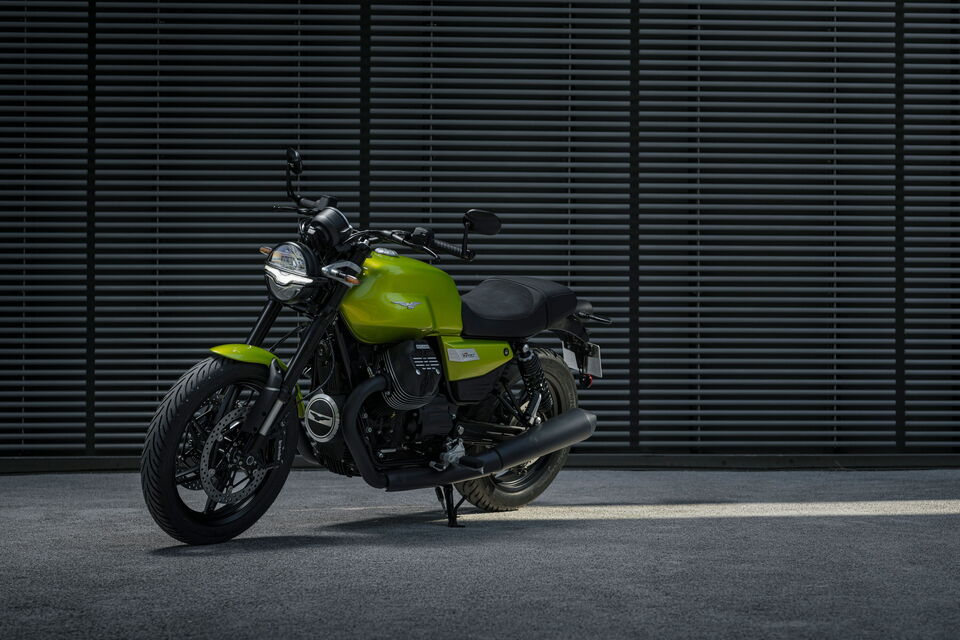
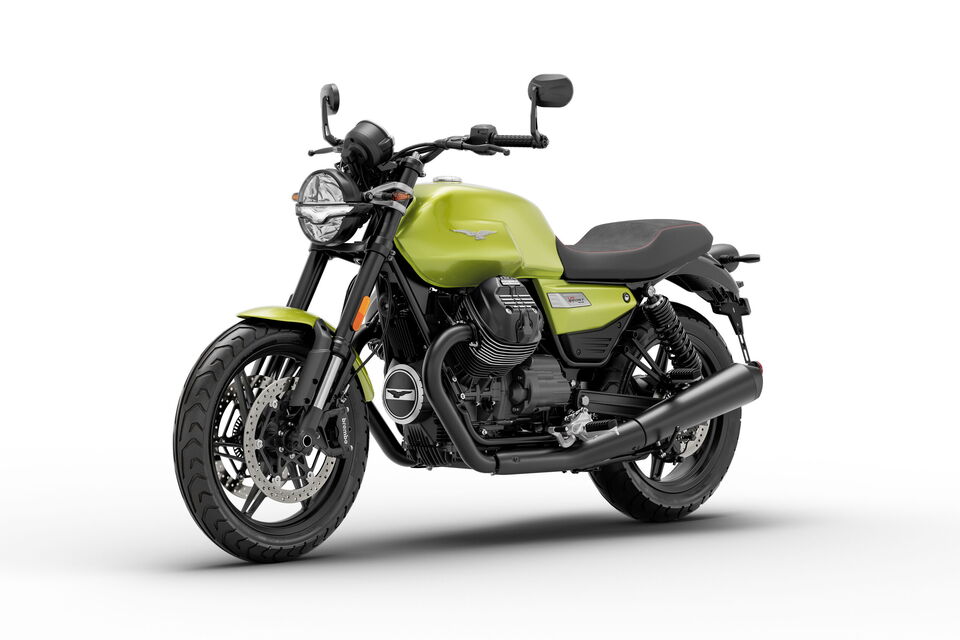
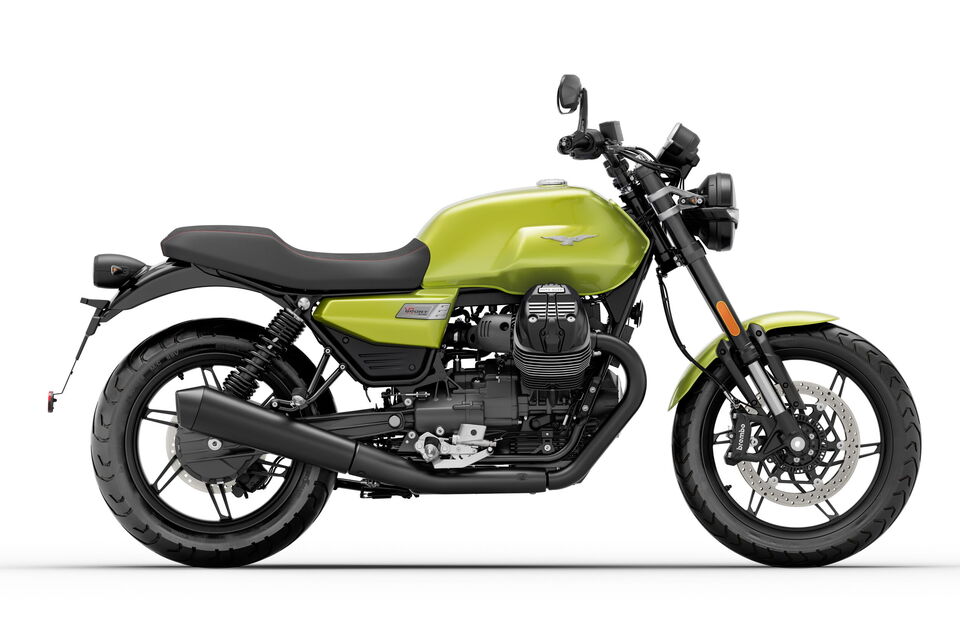
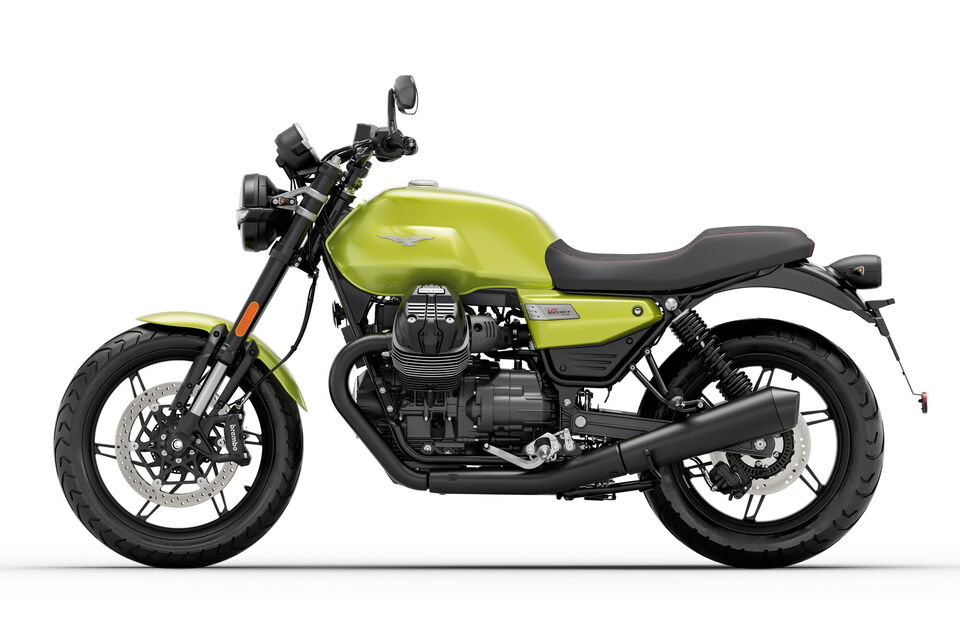
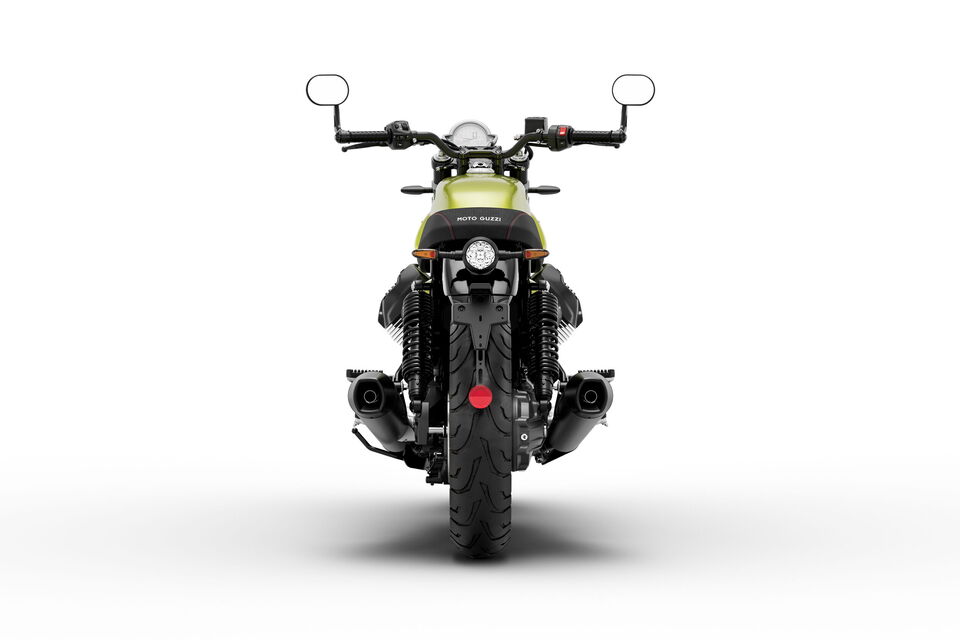
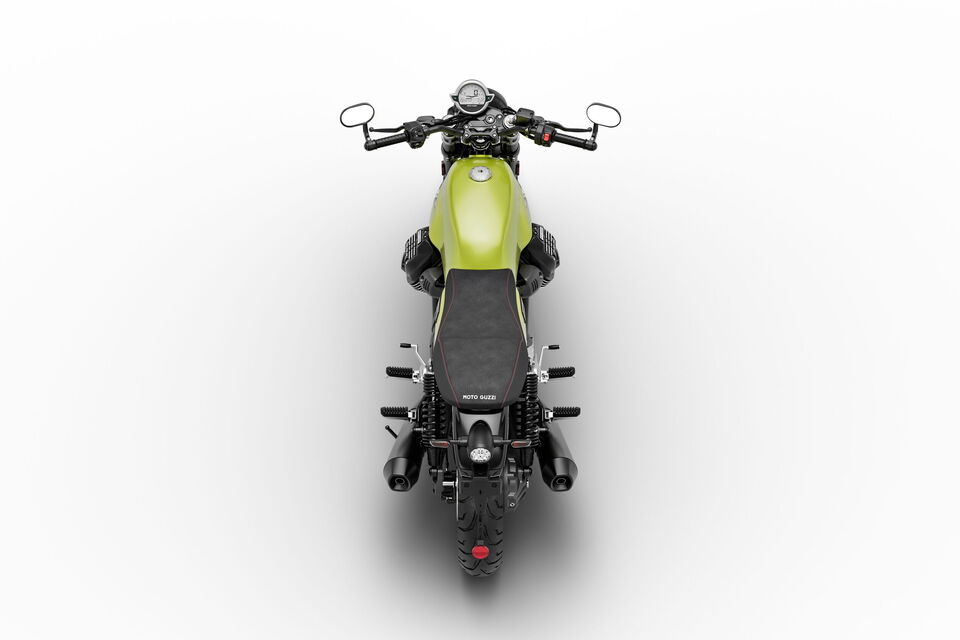
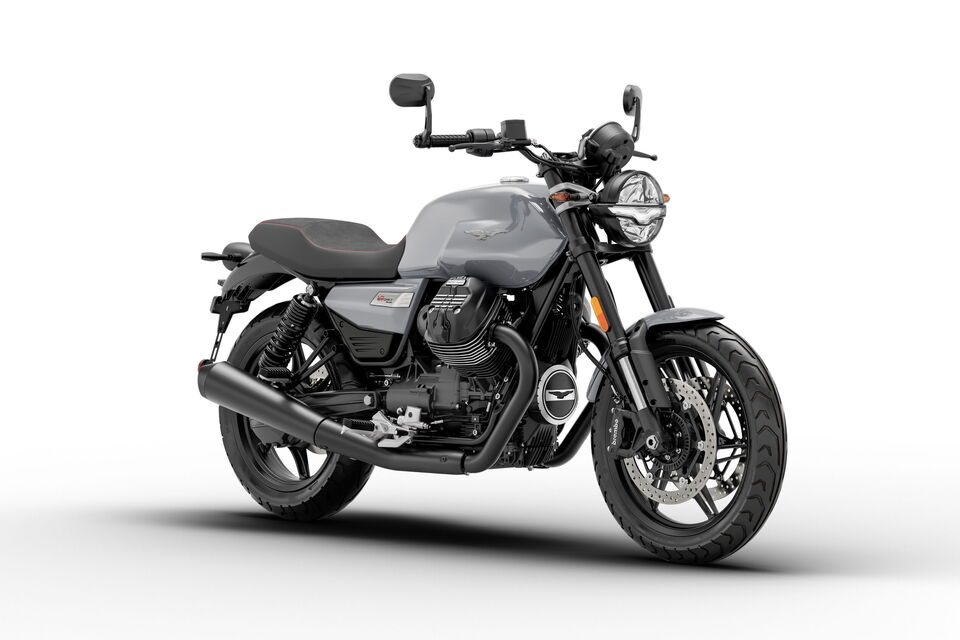
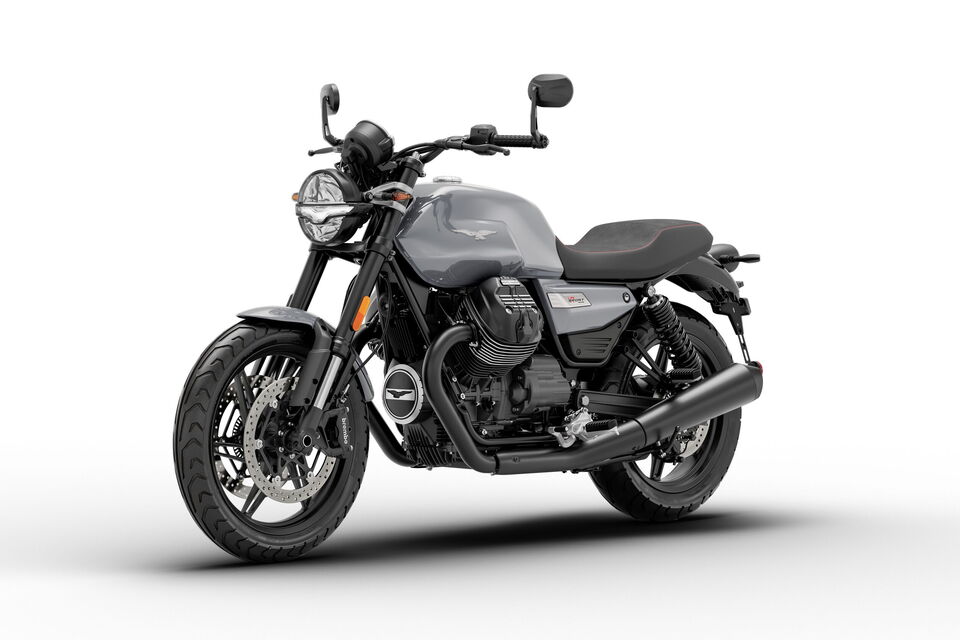
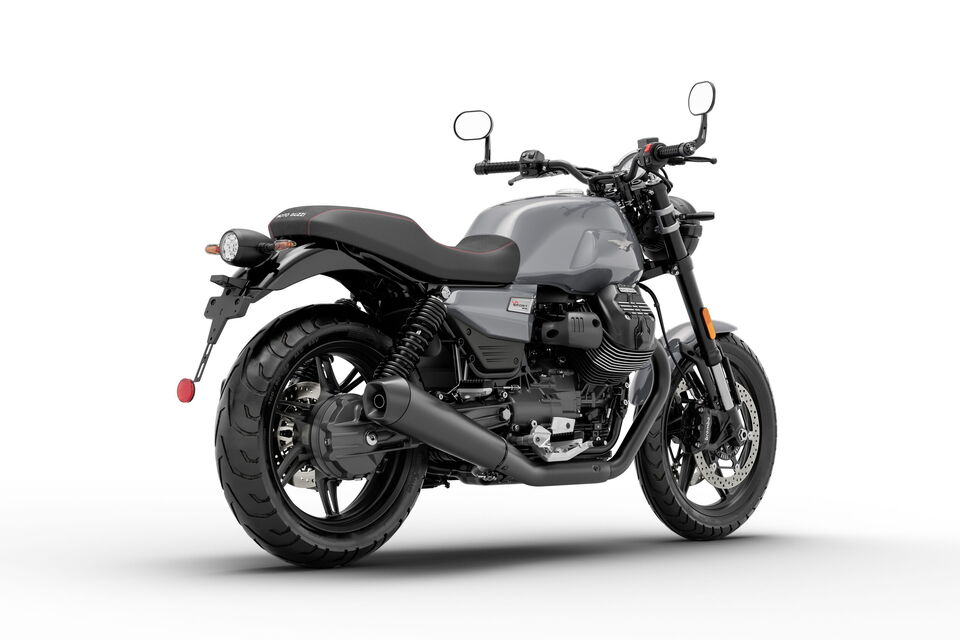
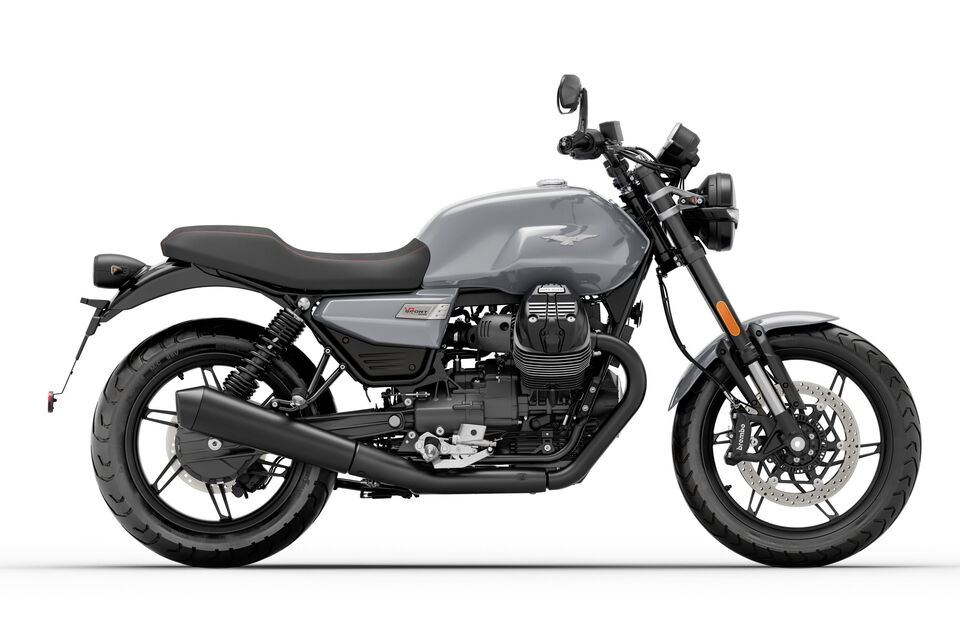


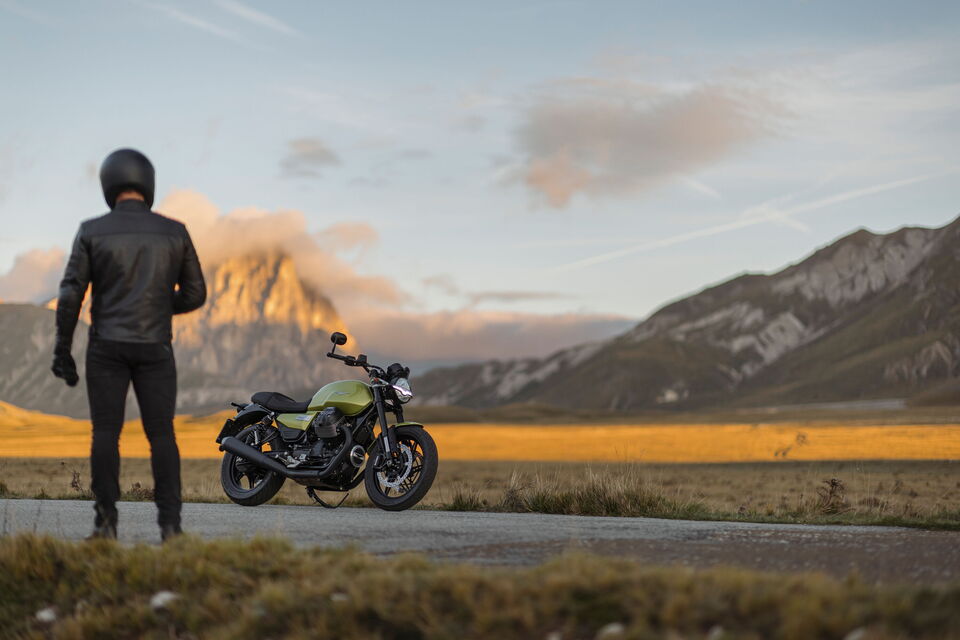
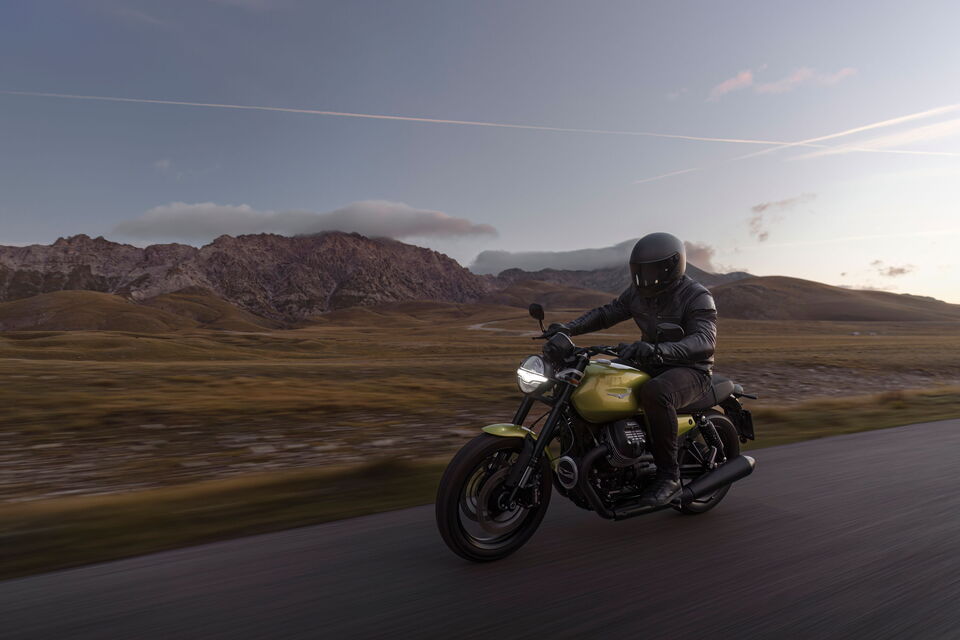
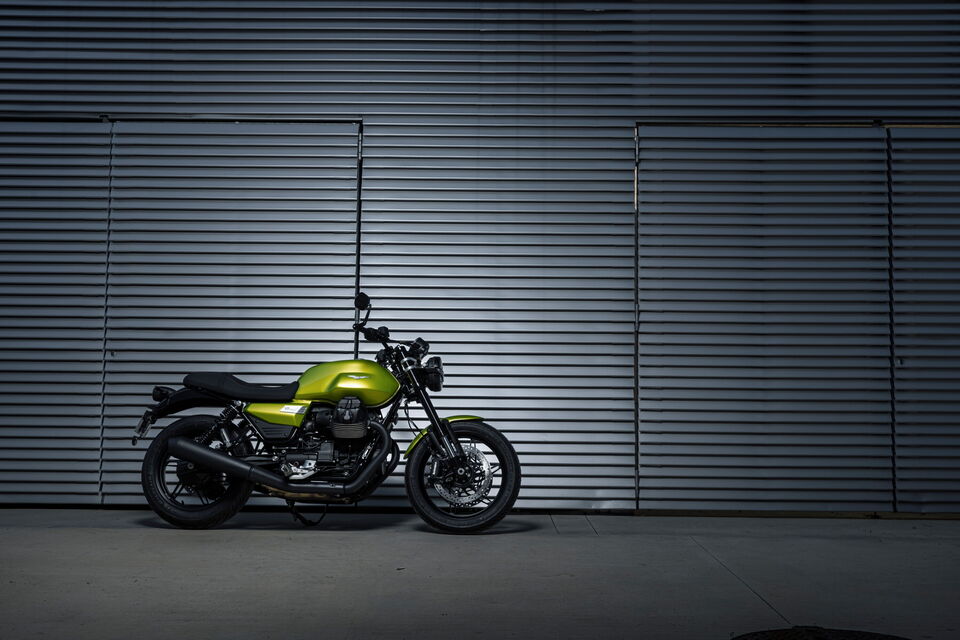
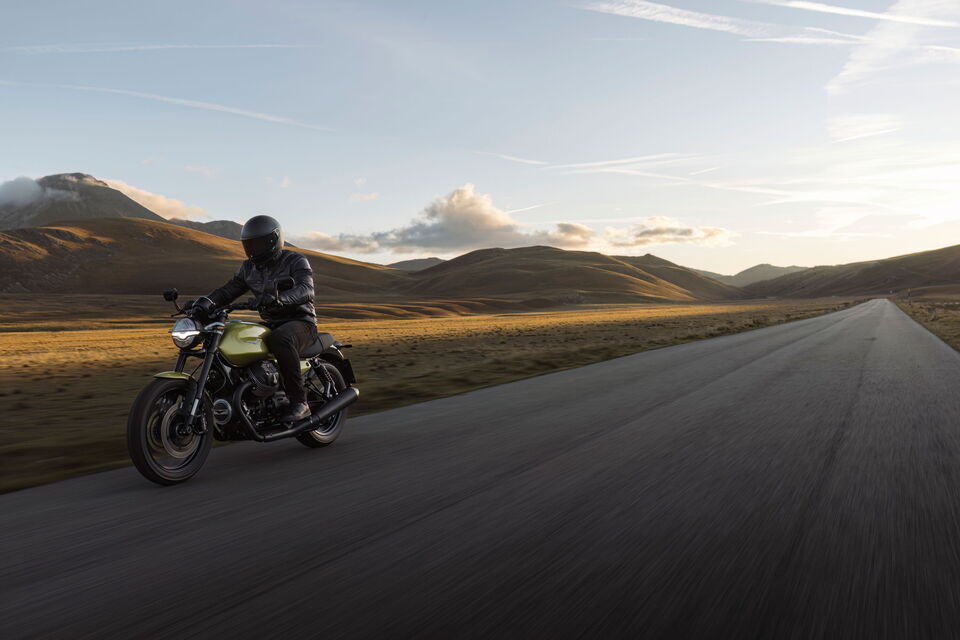


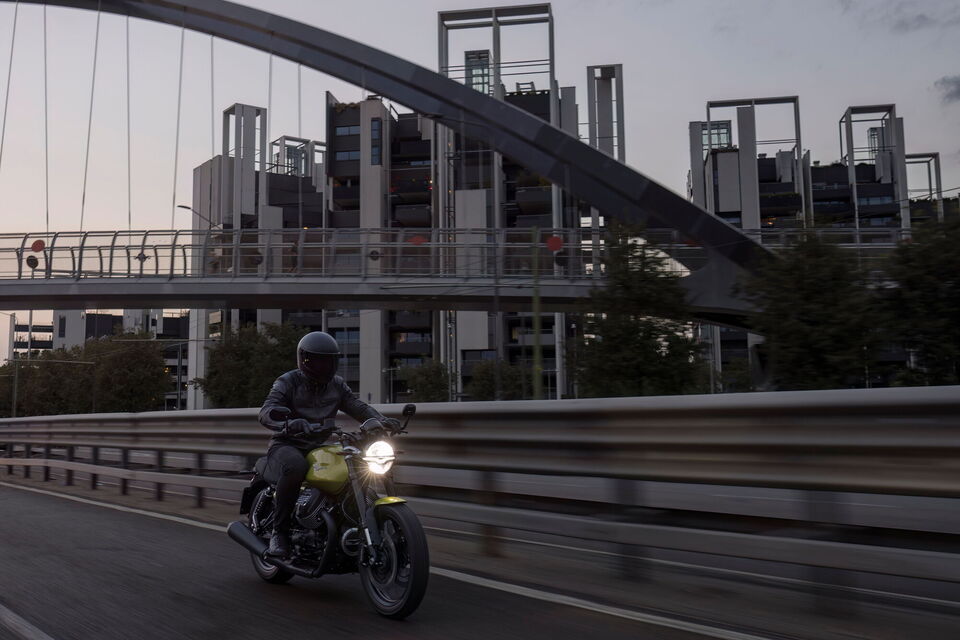
Engine and Shaft Drive: 853 cc Two-Valve V-Twin With 67.3 hp—Thoroughly Updated, Typical Character Preserved
The air-cooled 853 cc V-twin, with its 90-degree cylinder angle and longitudinal installation, remains the technical heart of Moto Guzzi tradition. It is based on the V85 TT engine but detuned for the V7 to 67.3 hp, or 49 kW, at 6,900 rpm. The objective was not to create a high-revving sport engine, but to preserve the character riders expect from a classic Guzzi.
For the 2025 Euro 5+ update, Moto Guzzi revised the engine extensively. Airbox volume increased by 27 percent, throttle-body diameter grew from 38 to 52 mm, additional piston oil jets improved thermal durability, valve timing was revised, and friction in the traditional OHV pushrod valvetrain was reduced.
The result is 79 Nm at 4,400 rpm, with 95 percent of peak torque available from 3,500 rpm. The stronger torque between 3,500 and 4,500 rpm is one of the most effective improvements. Ride-by-Wire is new. Rain, Road, and Sport modes vary throttle response and traction-control intervention. Cruise control is standard for the first time. Power reaches the rear wheel through a six-speed gearbox and shaft drive—a low-maintenance solution that has been a Moto Guzzi hallmark for decades and still separates the V7 Sport from its direct rivals.
Chassis and Brakes: USD Fork, Radial Brembo Twin 320 mm Discs, Continental Six-Axis IMU—Two Classes Better Than Before
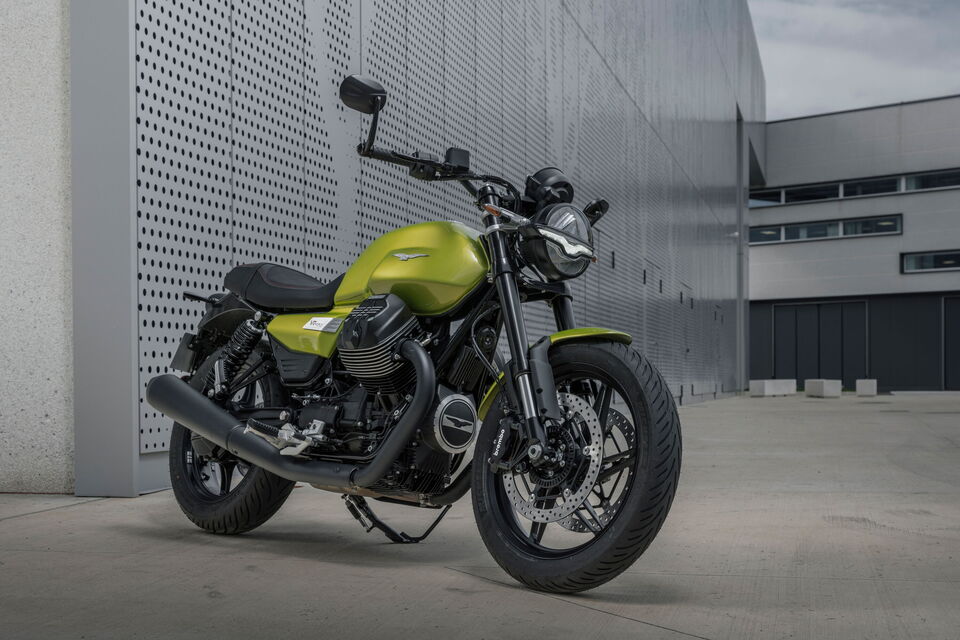
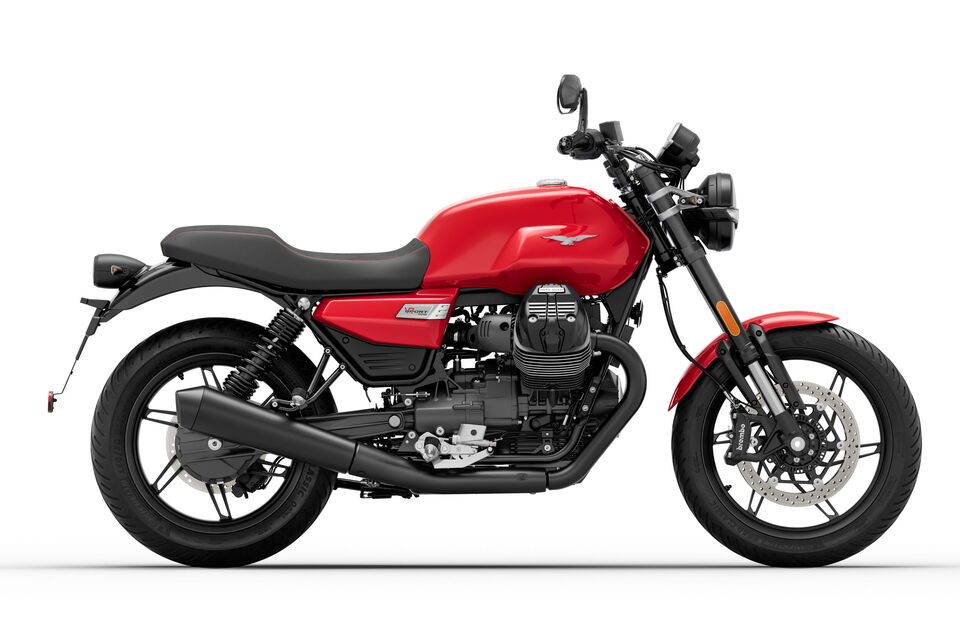
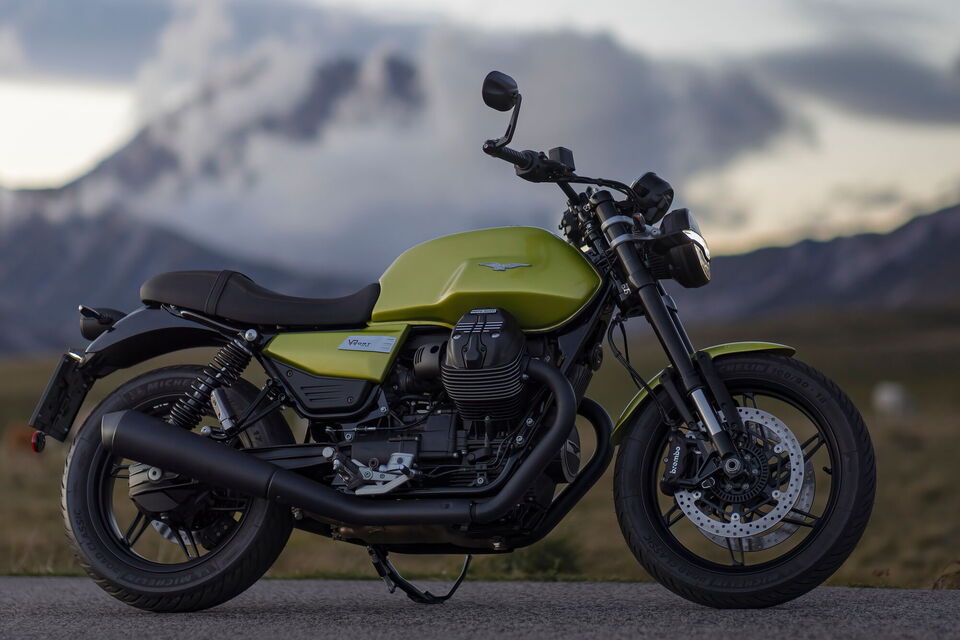
The 2025/2026 V7 Sport chassis represents a major step beyond earlier V7 models. A new USD fork replaces the conventional telescopic unit, and both the fork and twin rear shocks allow spring-preload adjustment. Lightweight cast-aluminum wheels improve handling, while tire sizes remain classically narrow at 100/90-18 front and 150/70-17 rear.
The brakes are the single biggest improvement. Instead of the previous single front disc, the Sport gets twin 320 mm discs with radially mounted four-piston Brembo Monobloc calipers. Continental supplies ABS and traction control, managed by a six-axis IMU, so both cornering ABS and cornering traction control function correctly at lean. That level of electronics is unusual on a classic naked bike at this price and gives the Sport badge genuine technical substance.
Design and Character: Bar-End Mirrors, Aluminum Details, Eagle DRL—Retro Italian With a Modern Edge
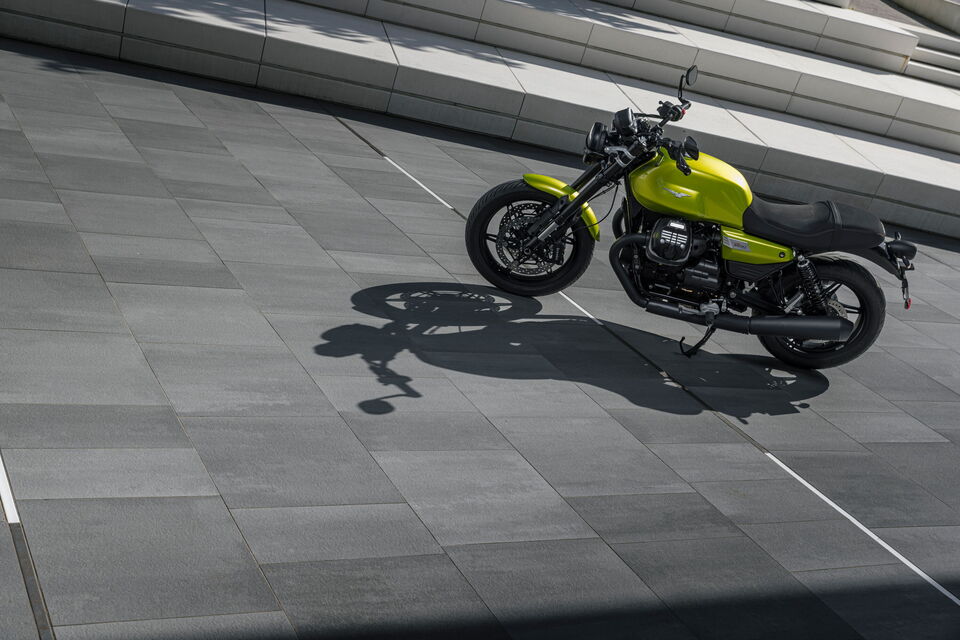
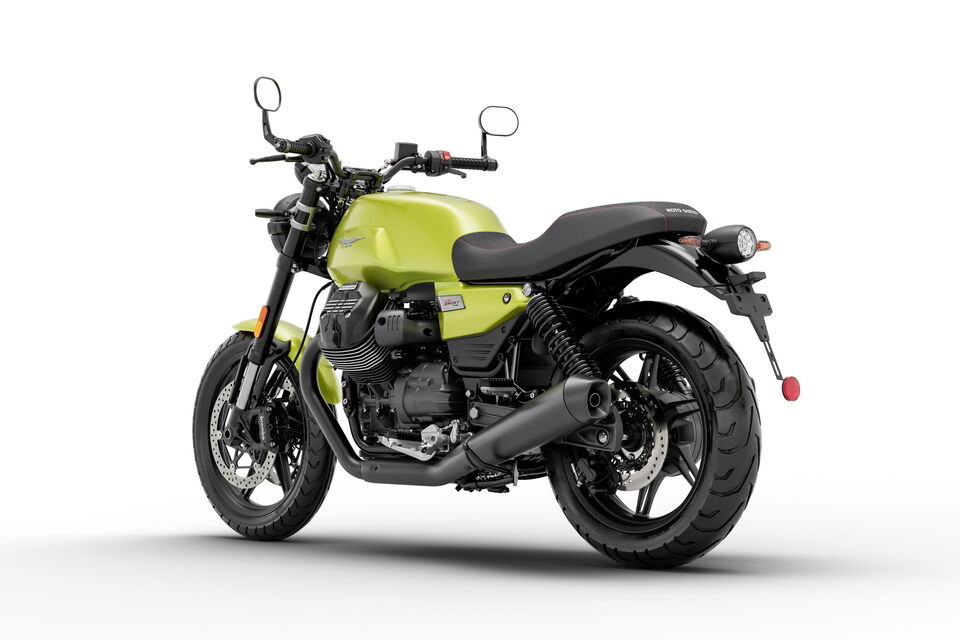
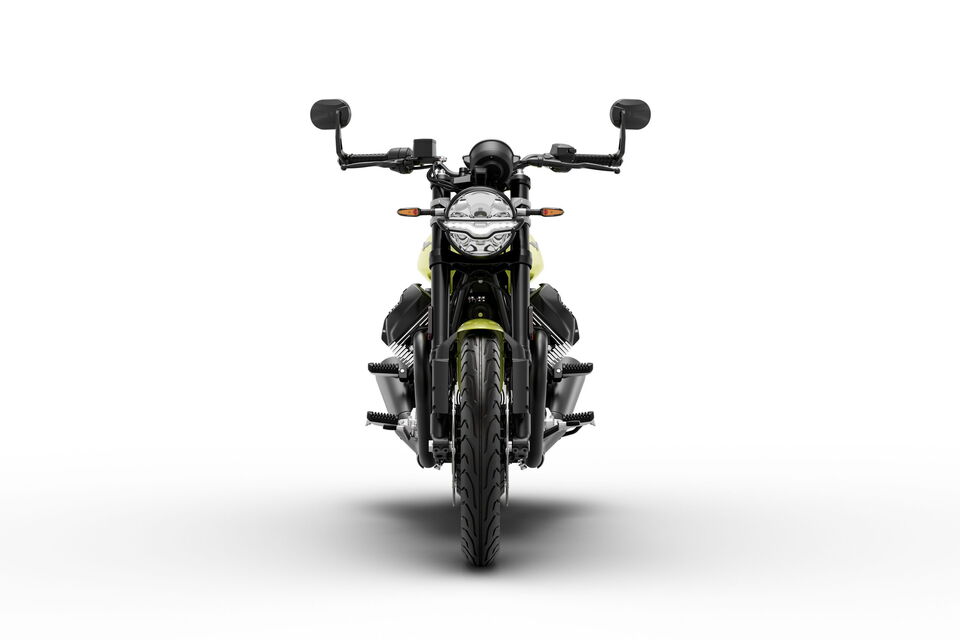
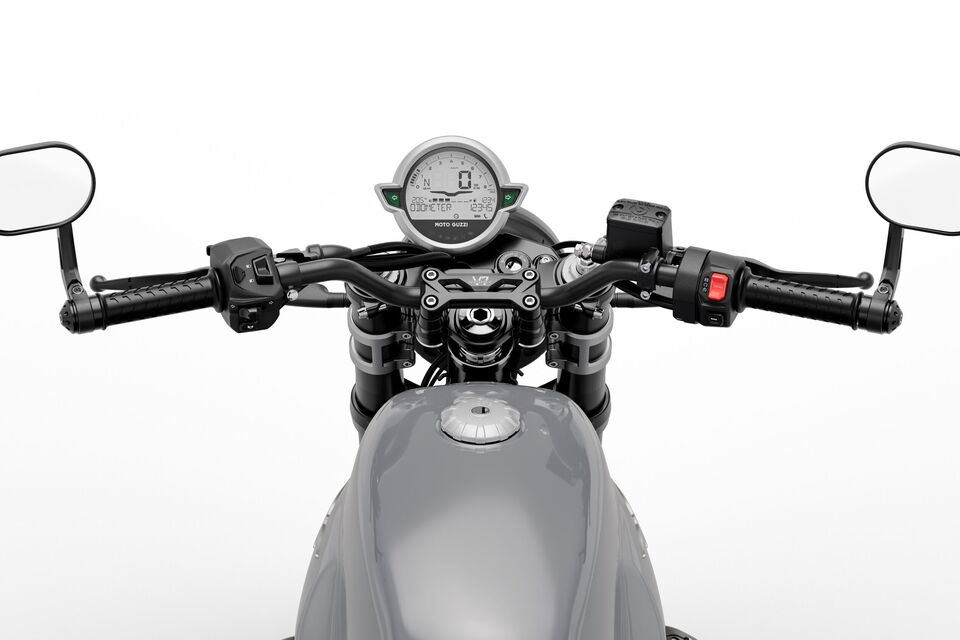
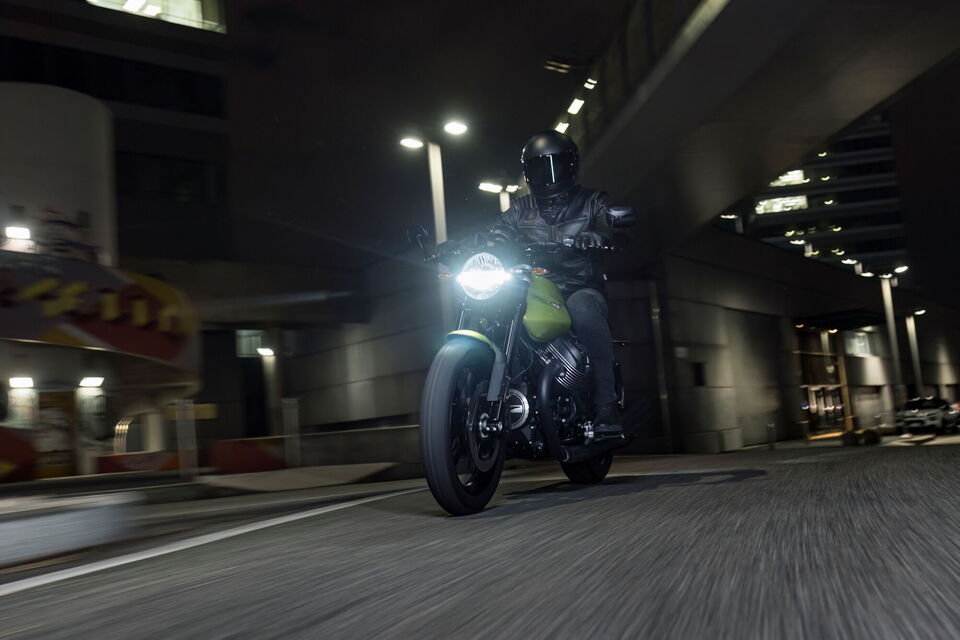
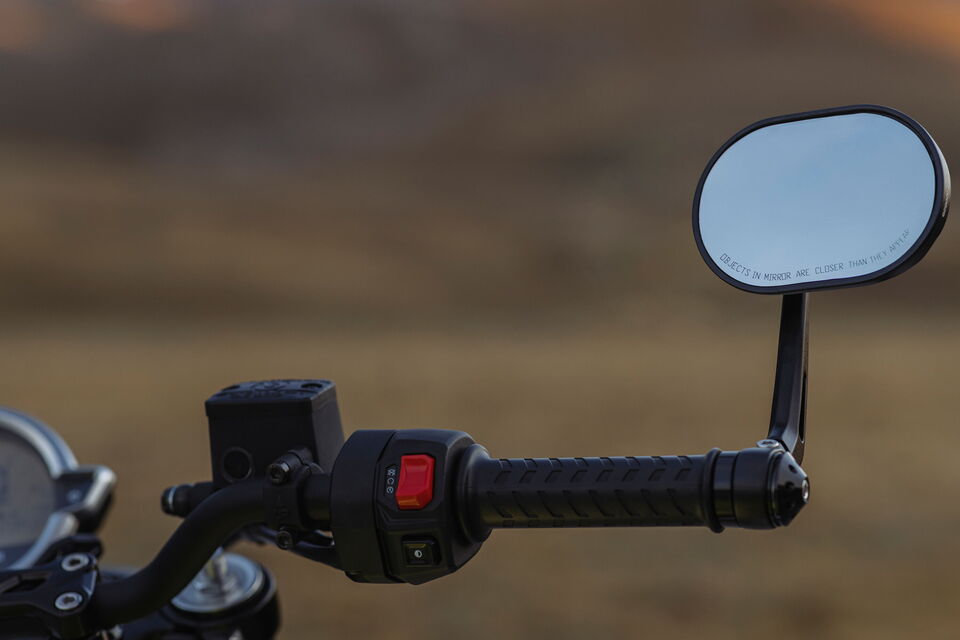
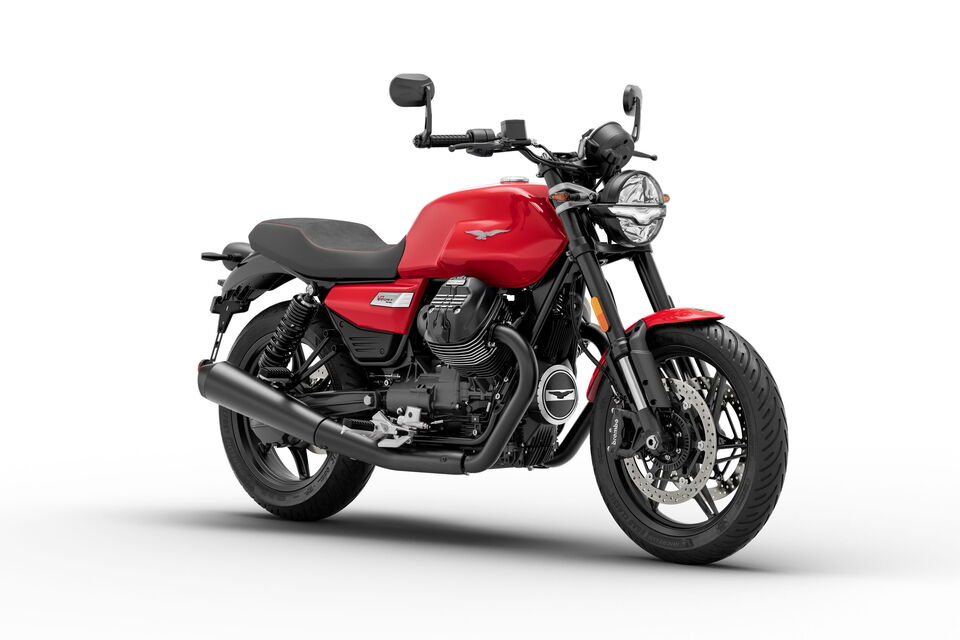
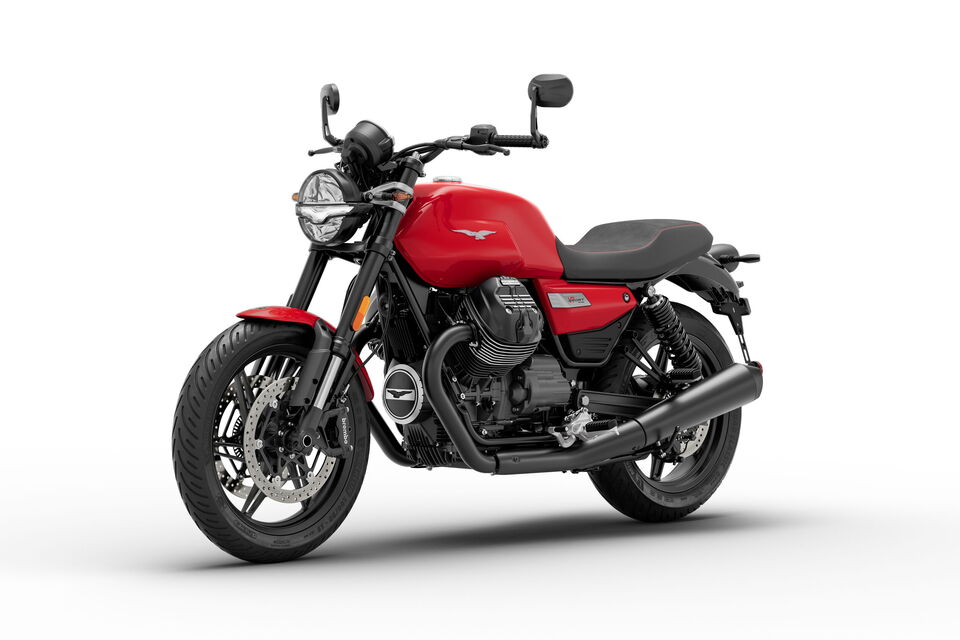
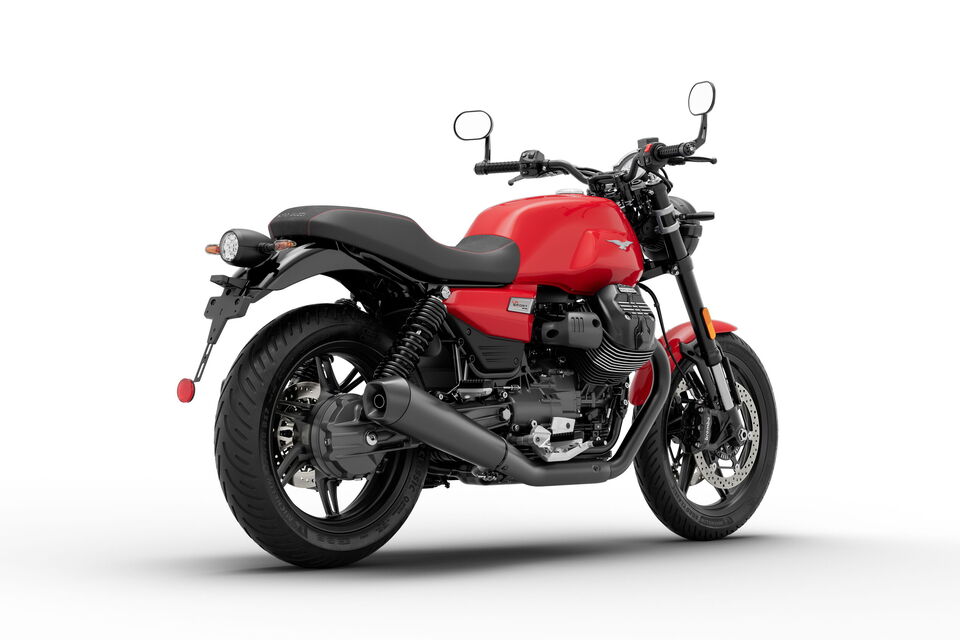
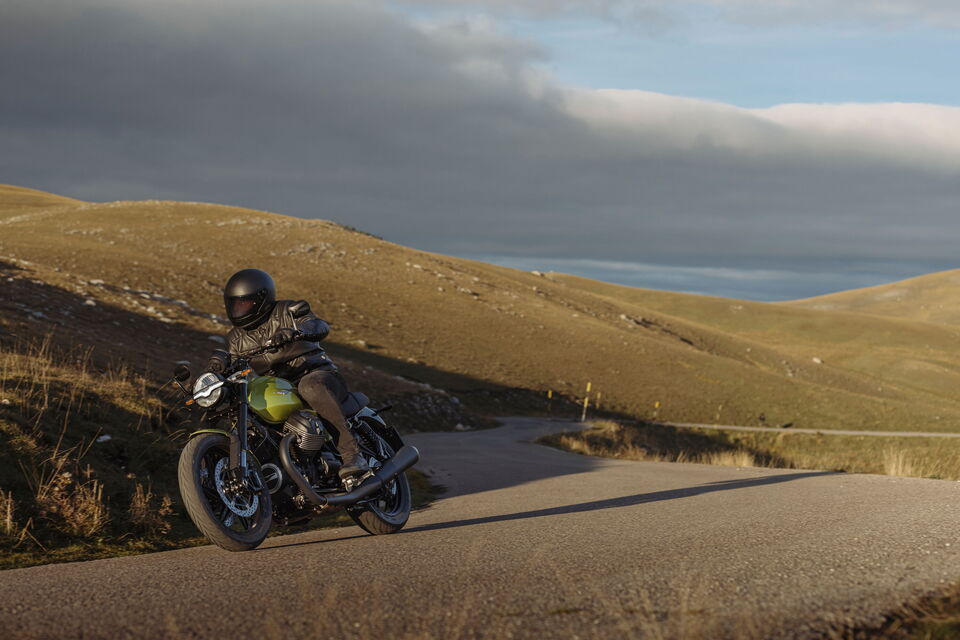
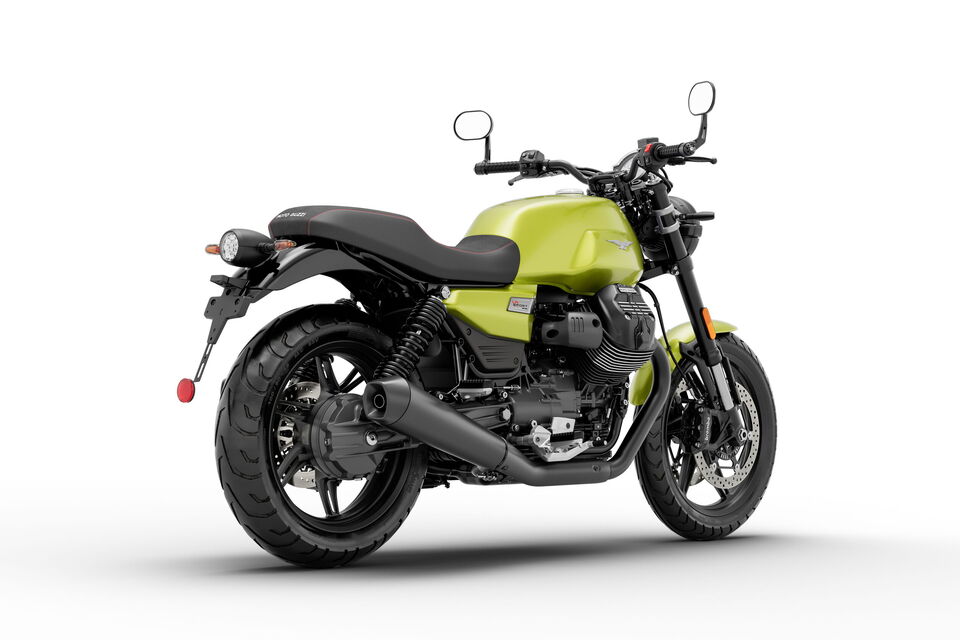
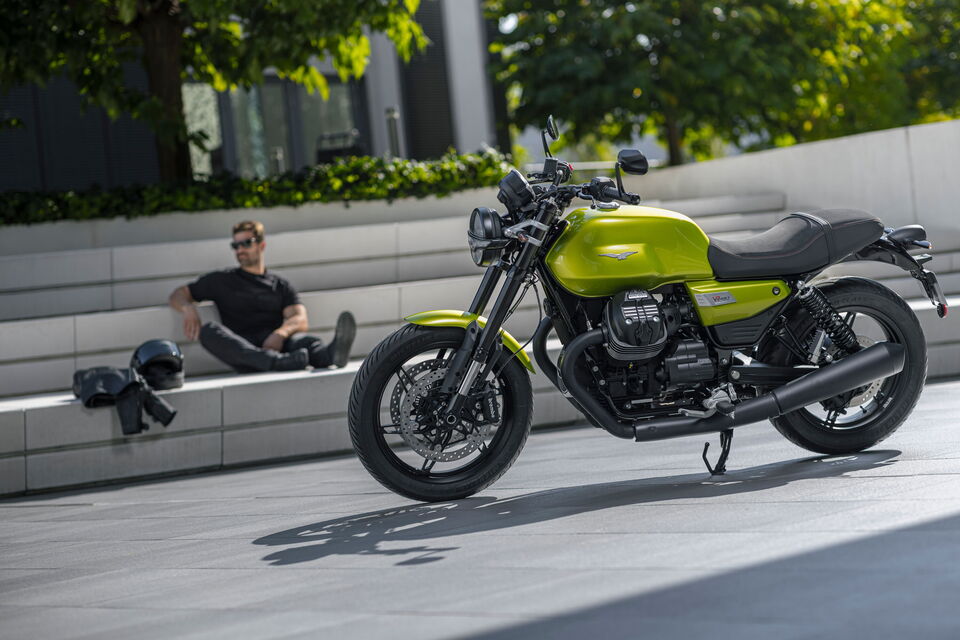
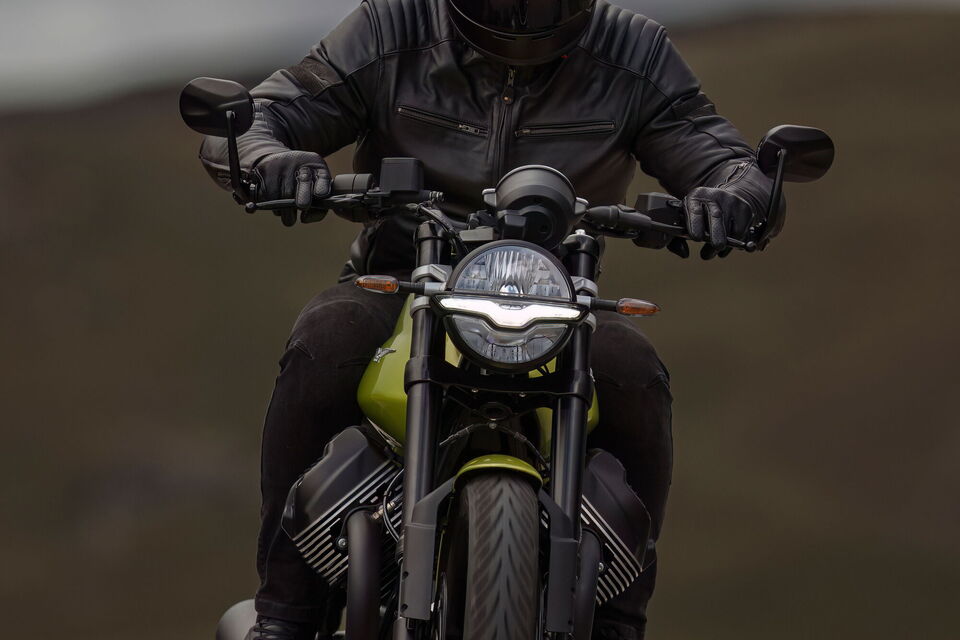
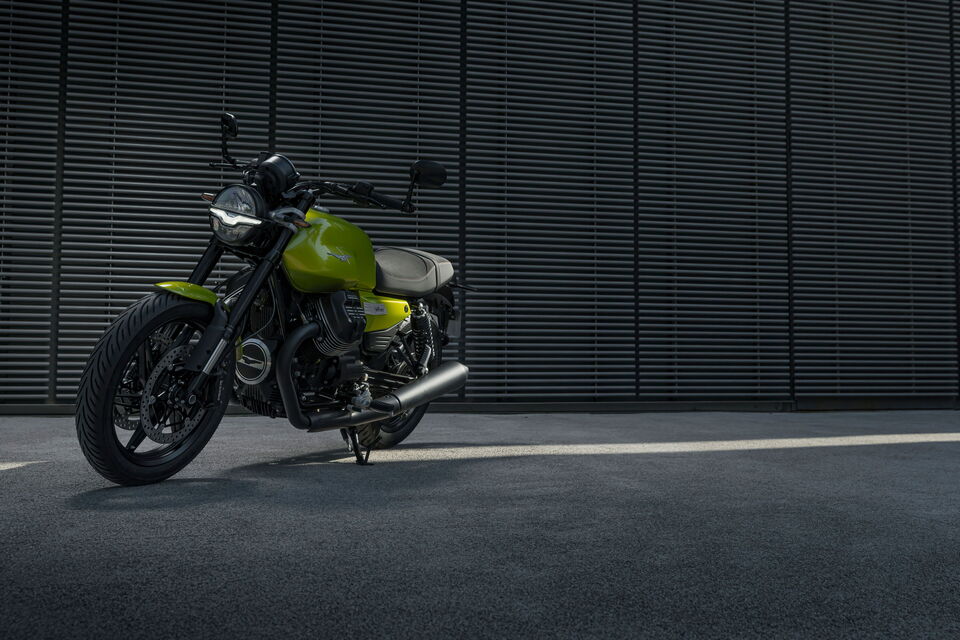
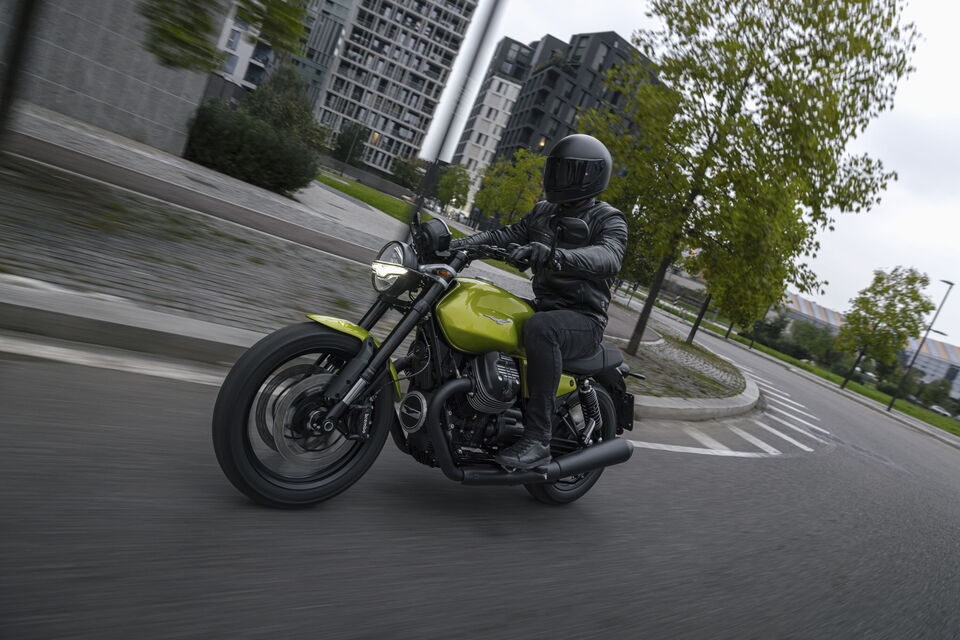
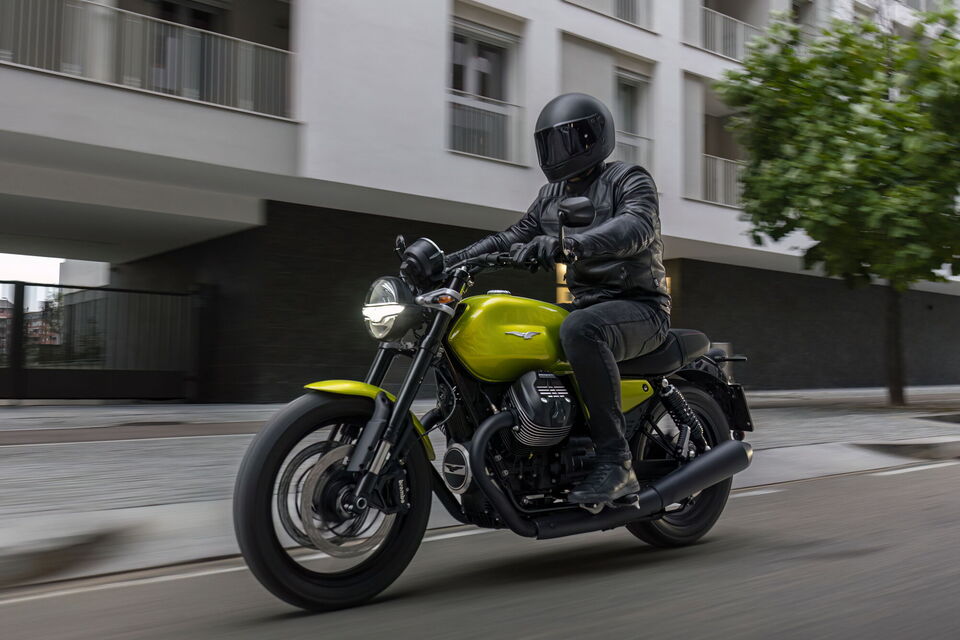
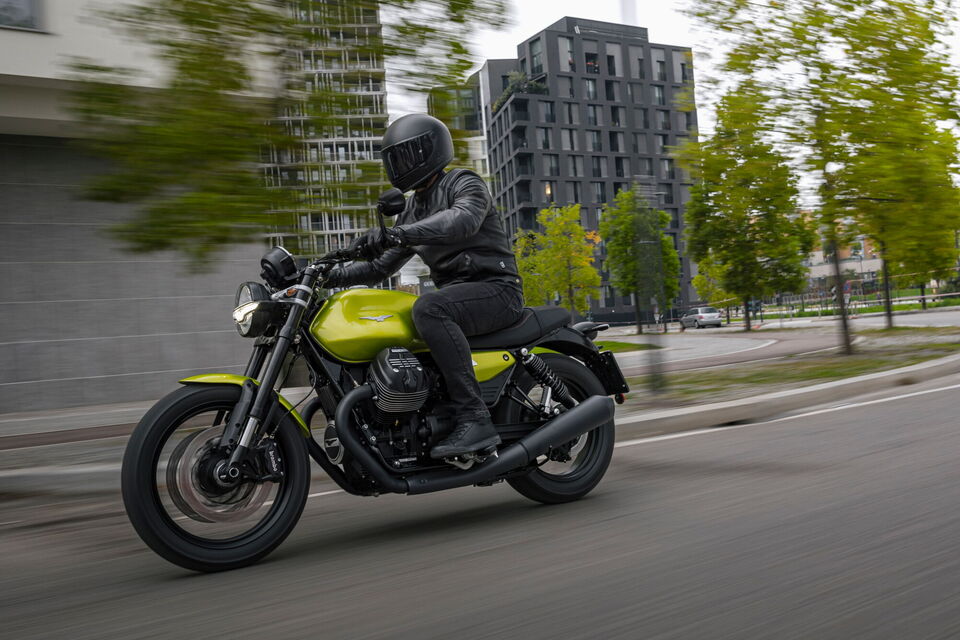
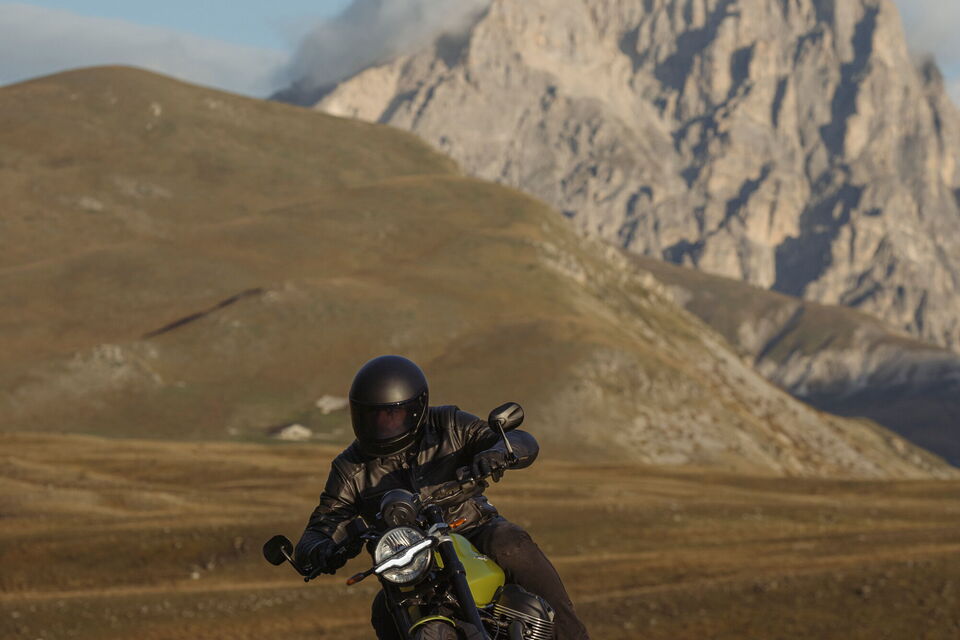
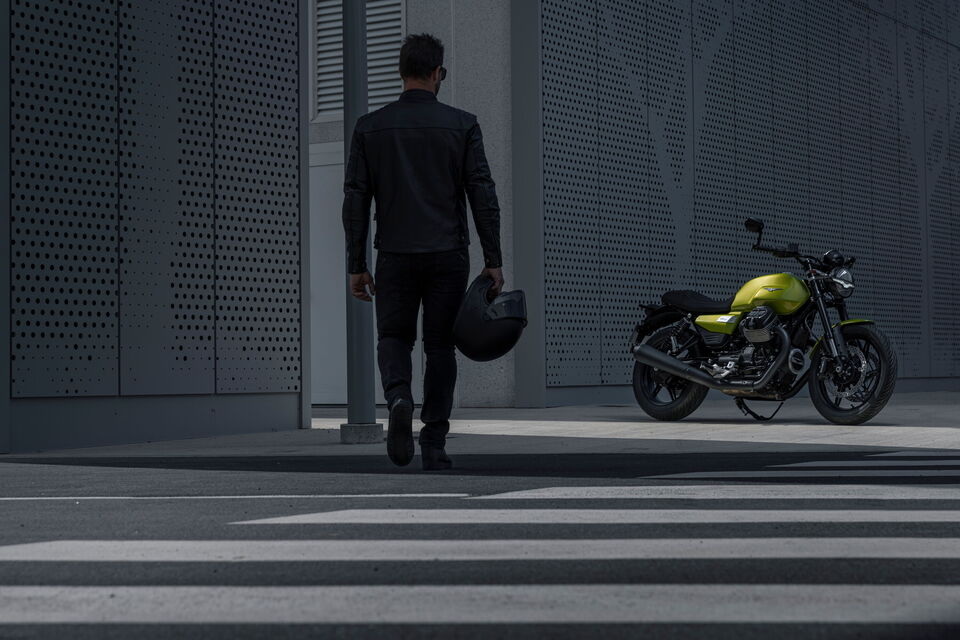
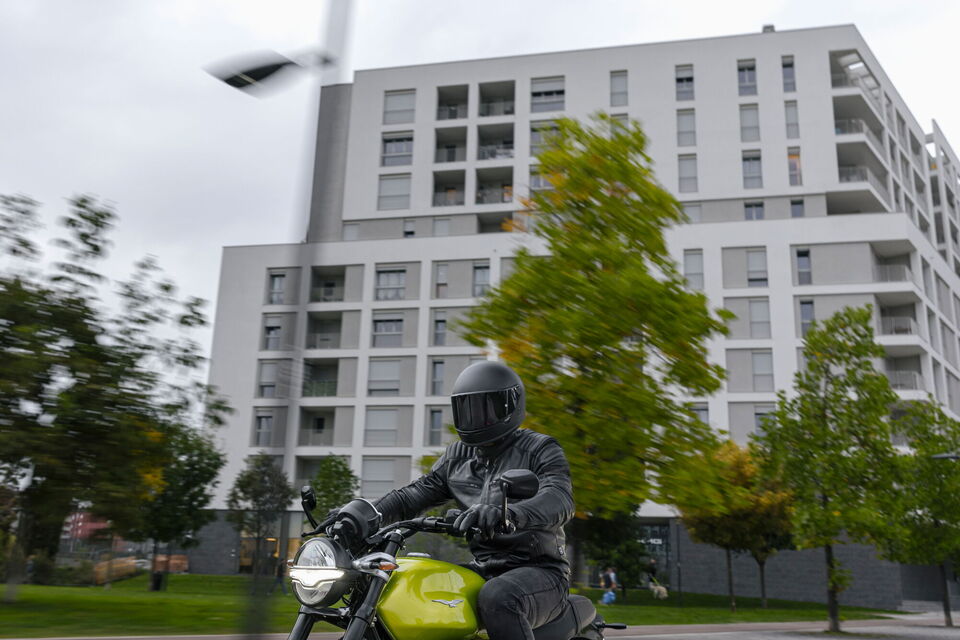
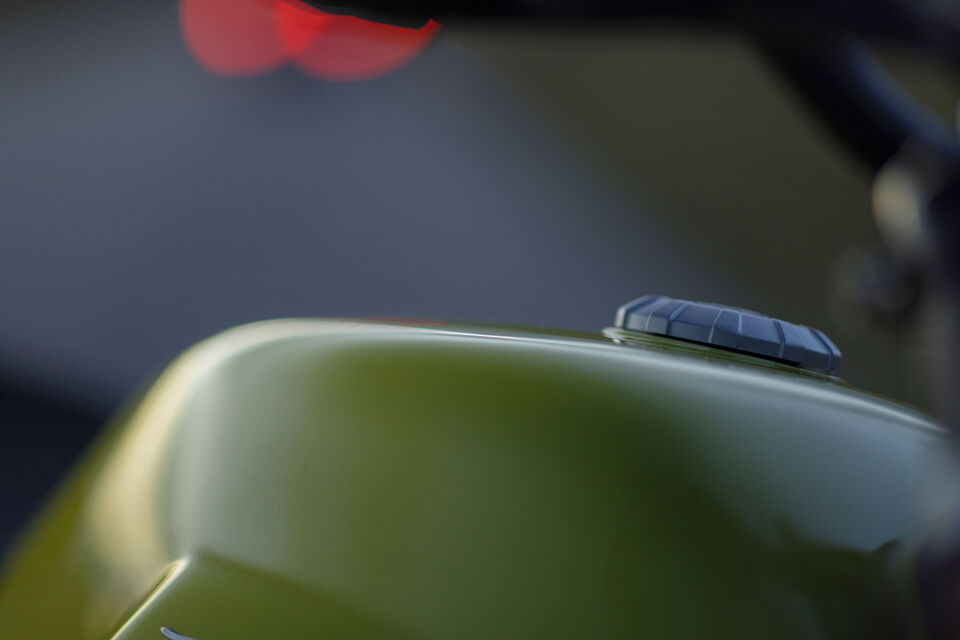
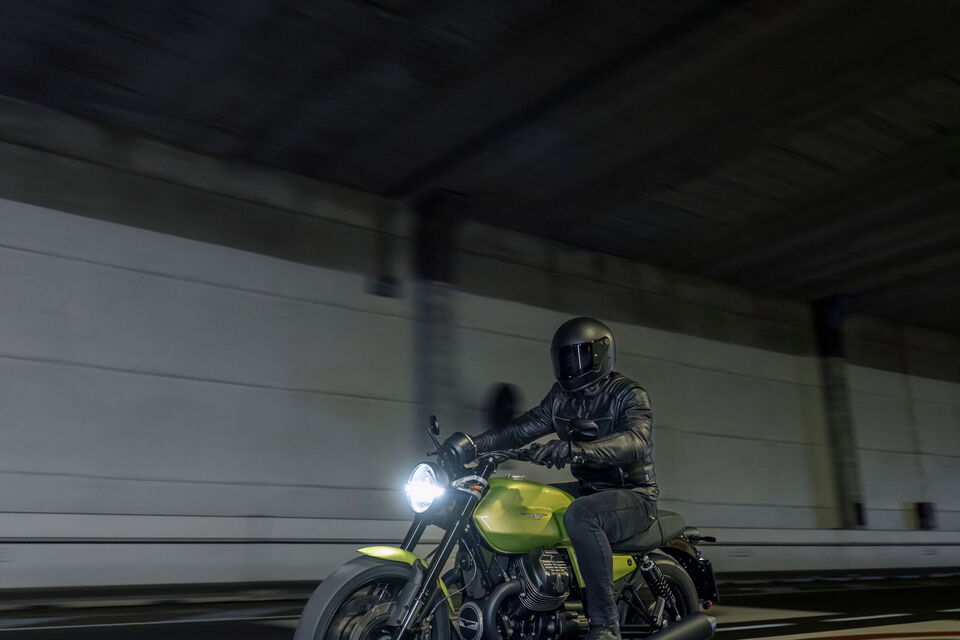
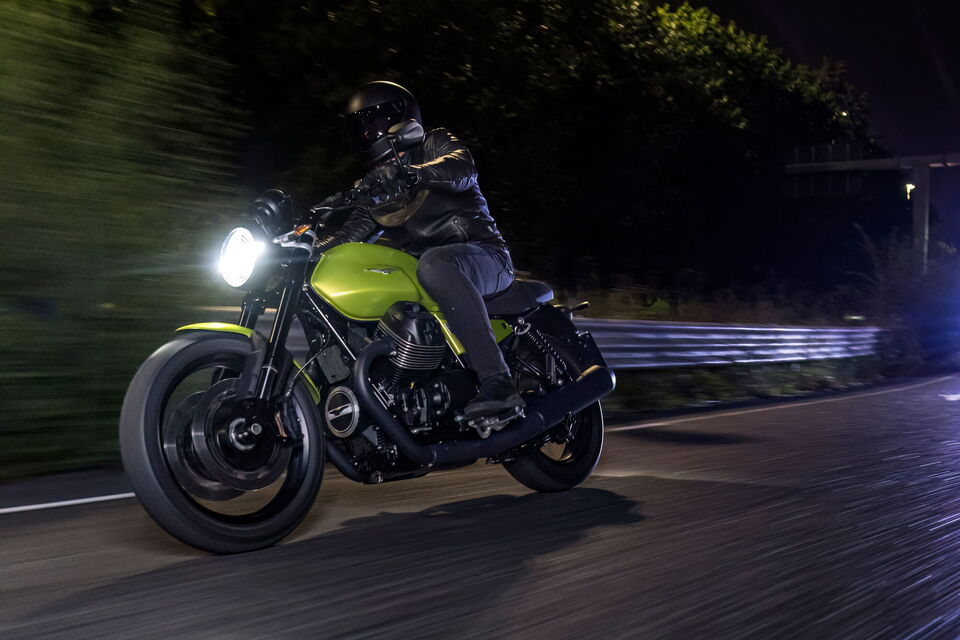
The V7 Sport separates itself from the Stone and Special through a more athletic appearance: bar-end mirrors instead of conventional stalks, a black seat with contrast stitching, six-spoke alloy wheels, aluminum inserts on the side panels, aluminum headlight brackets, and a laser-engraved handlebar clamp carrying the V7 Sport logo. The eagle-wing daytime-running-light signature is a hallmark of the current Moto Guzzi generation and appears here as well. Lighting is full LED throughout.
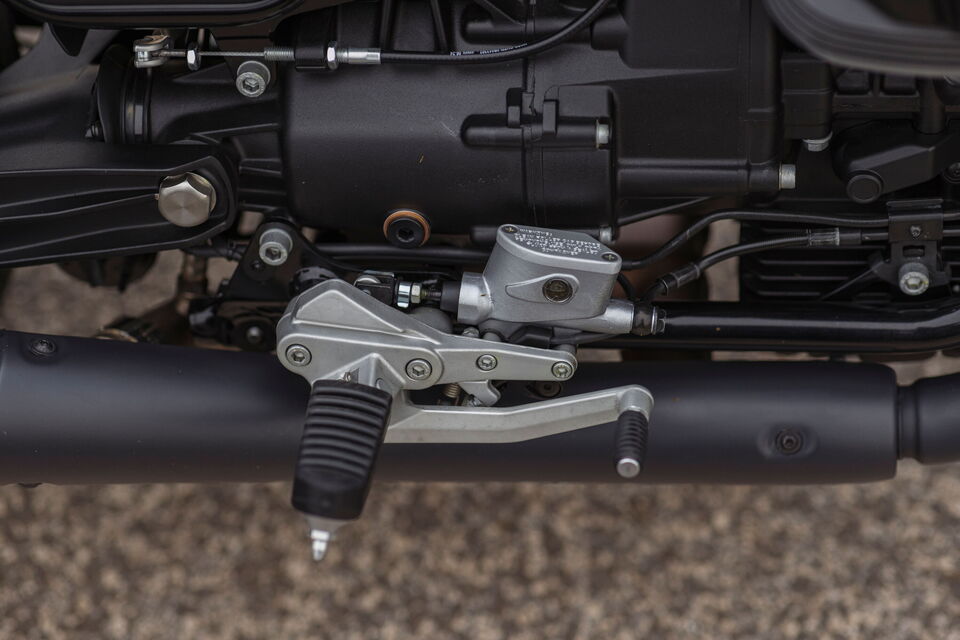
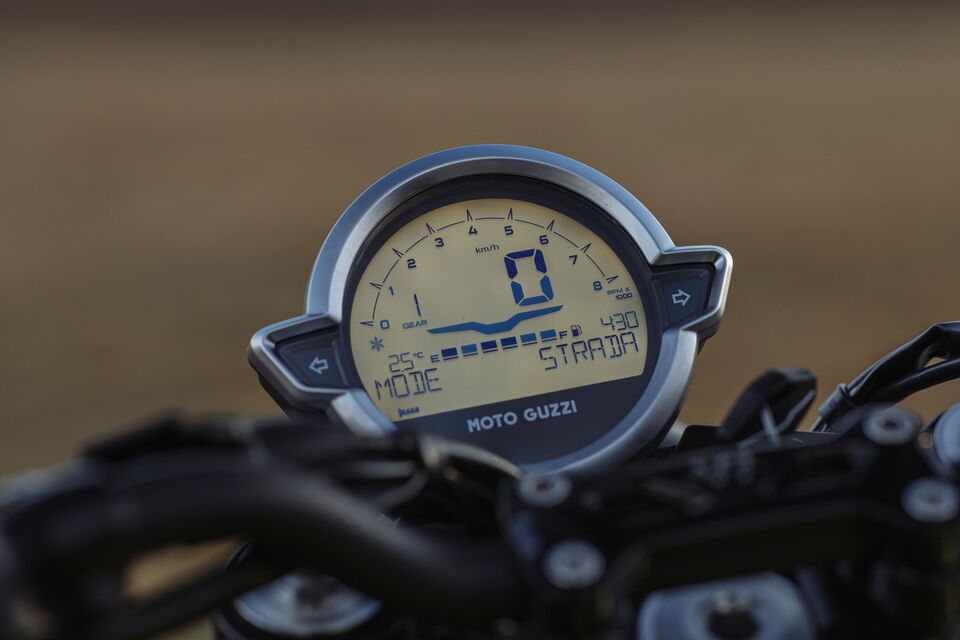
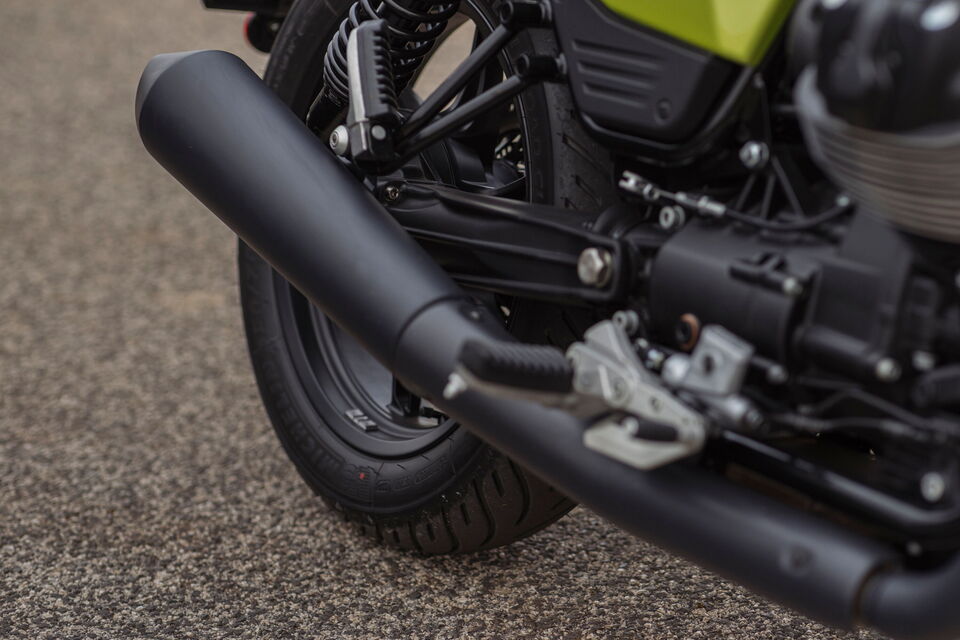
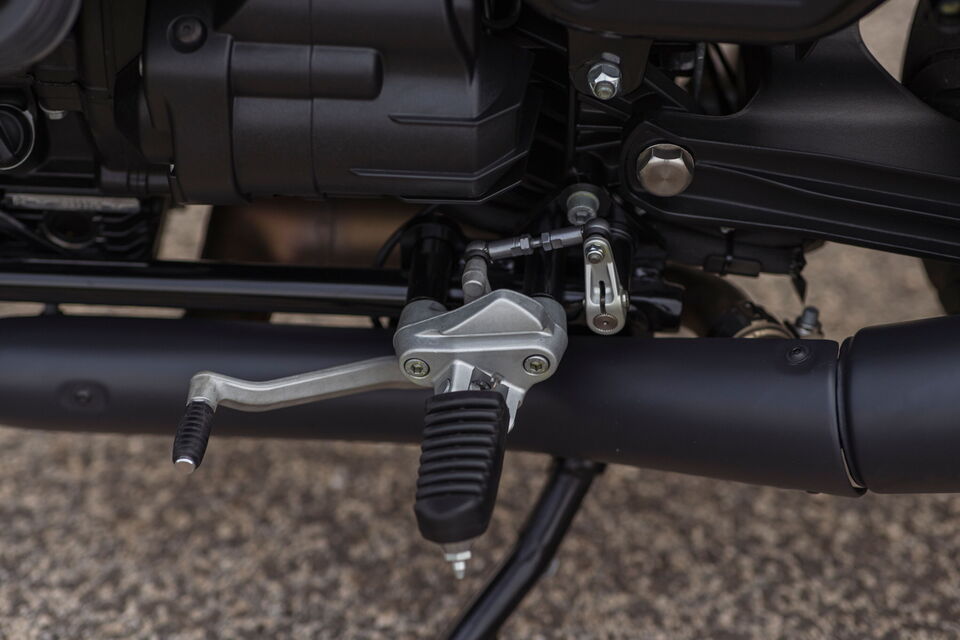
The cockpit uses an LCD rather than a TFT. That is the one obvious cost-saving decision. Information content and readability are adequate, but this is not a color display on the level of the Stelvio. The matte-black 2-into-2 exhaust gives the motorcycle a restrained sporty look. The bike is prepared for Moto Guzzi’s MIA connectivity platform, but Bluetooth and smartphone integration remain extra-cost options.
Ergonomics: 780 mm, 220 kg, 21-Liter Steel Tank—Friendly for Short Legs, Tight for Tall Riders
A 780 mm seat height is pleasantly low for an 853 cc naked bike. Shorter riders should have little trouble finding secure footing. At 220 kg ready to ride, the V7 Sport sits around the middle of the class. A Triumph Bonneville T100 is in a similar weight range, while some competing retro machines are lighter.
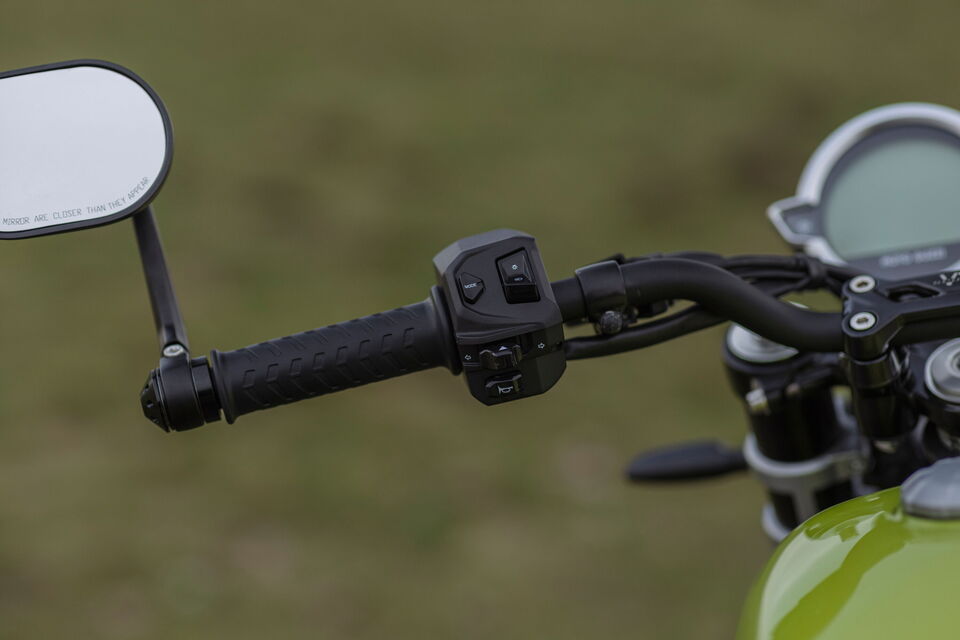
Tall riders, from roughly 1.85 meters upward, begin to run out of room. The rider’s tailbone quickly reaches the back of the seat pocket while the knees contact the recesses in the 21-liter steel tank. For the typical V7 rider, who is more likely to tour at a relaxed pace than attack every corner, the ergonomics remain functional. At around 4.9 L/100 km, the 21-liter tank provides at least 350 km of range. The left switchgear feels somewhat bulky, and the button logic requires acclimatization: the Mode button scrolls the display rather than directly cycling through riding modes.
Cost: EUR 10,999—More Than Kawasaki and Royal Enfield, Less Than Some Premium Retros; Shaft Drive and Six-Axis IMU Included
At EUR 10,999, the V7 Sport sits above simpler retro rivals. The Kawasaki Z650RS is around EUR 8,500 with 68 hp but no shaft drive or cornering ABS. The Royal Enfield Super Meteor 650 is around EUR 7,900 with 47 hp, no shaft drive, and simpler electronics. The Honda CB650R is around EUR 10,000 with 95 hp from an inline-four but no shaft drive. The Triumph Bonneville T100 would be a natural rival, but according to sources it is no longer part of the German model range.
The long-term maintenance advantage of shaft drive is real: no chain lubrication, no chain adjustment, and no chain replacement. The comparatively simple two-valve OHV engine also helps keep maintenance costs under control. Accessories include heated grips, TPMS, cases and soft luggage, a stitched seat, and matching rider apparel—but all are extra-cost options rather than standard equipment.
Verdict
For 2026, the V7 Sport is the sportiest and best-equipped V7 Moto Guzzi has ever built. A USD fork, twin Brembo front discs, six-axis IMU with cornering ABS and traction control, Ride-by-Wire, and cruise control form an equipment package rarely found at this price. Shaft drive separates it from every direct rival. The air-cooled two-valve V-twin does not deliver outstanding outright performance, but it does deliver unmistakable character. For riders who specifically want shaft drive, classic Guzzi pulse, modern safety electronics, and relaxed touring pace, the V7 Sport is the right buy.
Quick Check
+ Shaft drive standard: no direct rival in this class and price range offers it.
+ Radial four-piston Brembo front calipers with twin 320 mm discs: a major leap over the previous generation.
+ Continental six-axis IMU: cornering ABS and cornering traction control standard—unusual on a classic naked bike at this price.
+ Ride-by-Wire with three riding modes, Rain/Road/Sport, plus cruise control standard.
+ USD fork: sporting upgrade over the base V7 models; spring preload adjustable.
+ 67.3 hp and 79 Nm: stronger torque from 3,500–4,500 rpm makes the V-twin better for relaxed, muscular touring.
+ 780 mm seat height: easy for shorter riders and low for this displacement class.
+ Full LED lighting, eagle DRL, bar-end mirrors, and aluminum details create a coherent sporting retro package.
+ 21-liter steel tank: at least 350 km range at around 4.9 L/100 km.
+ Shaft drive + two-valve OHV engine: low maintenance costs and simple, proven technology.
+ New MY2026 Rosso Monza color joins Legnano Green and Lario Gray.
– LCD cockpit rather than TFT: the one obvious cost-saving measure at EUR 10,999; no color display.
– Tall riders from around 1.85 m: limited seat room, knees contact tank recesses, tailbone reaches the end of the rider pocket.
– Left switchgear is bulky; Mode button scrolls the display rather than riding modes, requiring acclimatization.
– No bidirectional quickshifter as standard.
– No self-canceling turn signals.
– No hazard-warning lights as standard.
– MIA Bluetooth/smartphone connectivity is optional.
– 67.3 hp: Honda CB650R offers 95 hp; more performance-oriented alternatives are significantly stronger.
– Rear shocks are relatively firm.
Technical Specifications: Moto Guzzi V7 Sport (2026)
Brand / Production: Moto Guzzi, Piaggio Group; Mandello del Lario plant, Lake Como, Italy; introduced March 2025
Engine: Longitudinal air-cooled 90-degree V-twin, 853 cc, two valves per cylinder, OHV pushrod valvetrain; Ride-by-Wire; 52 mm throttle body; 27-percent larger airbox; Euro 5+; matte-black 2-into-2 exhaust; three lambda sensors
Power: 67.3 hp / 49 kW at 6,900 rpm
Torque: 79 Nm at 4,400 rpm; 95 percent available from 3,500 rpm
Transmission: Six-speed; shaft final drive, unique in the class
Engine Origin: Derived from V85 TT engine; detuned for V7; fundamental architecture proven over decades
Fork: USD fork; spring preload adjustable
Rear Suspension: Twin rear shocks; spring preload adjustable; relatively firm calibration
Front Brake: Radial four-piston Brembo Monobloc calipers; twin 320 mm discs; cornering ABS
Rear Brake: Single disc; ABS
Electronics: Continental six-axis IMU; cornering ABS; cornering traction control; three riding modes, Rain/Road/Sport; cruise control standard
Wheels: Lightweight cast aluminum, six-spoke design
Tires: 100/90-18 front; 150/70-17 rear, classically narrow sizes
Cockpit: Digital LCD display, no TFT; full LED lighting; eagle DRL; bar-end mirrors
Connectivity: Prepared for MIA platform; Bluetooth/smartphone integration optional
Design Details: Aluminum side-panel inserts; aluminum headlight brackets; laser-engraved V7 Sport handlebar clamp; black stitched seat
Ergonomics: 780 mm seat height, low for the class; tight for tall riders, with knee contact at tank recesses from around 1.85 m
Weight: 220 kg fully fueled
Seat Height: 780 mm
Fuel Tank: 21-liter steel tank; at least 350 km range
A2 Option: Can be restricted to 35 kW / 48 hp
2026 Colors: Rosso Monza, new for MY2026; Legnano Green; Lario Gray
German Price: EUR 10,999