Review Rieju Aventura 500 (2026)
The Only Adventure Bike in Its Class With Two Fuel Tanks—39 Liters Total, Up to 1,000 km of Range, From EUR 7,290
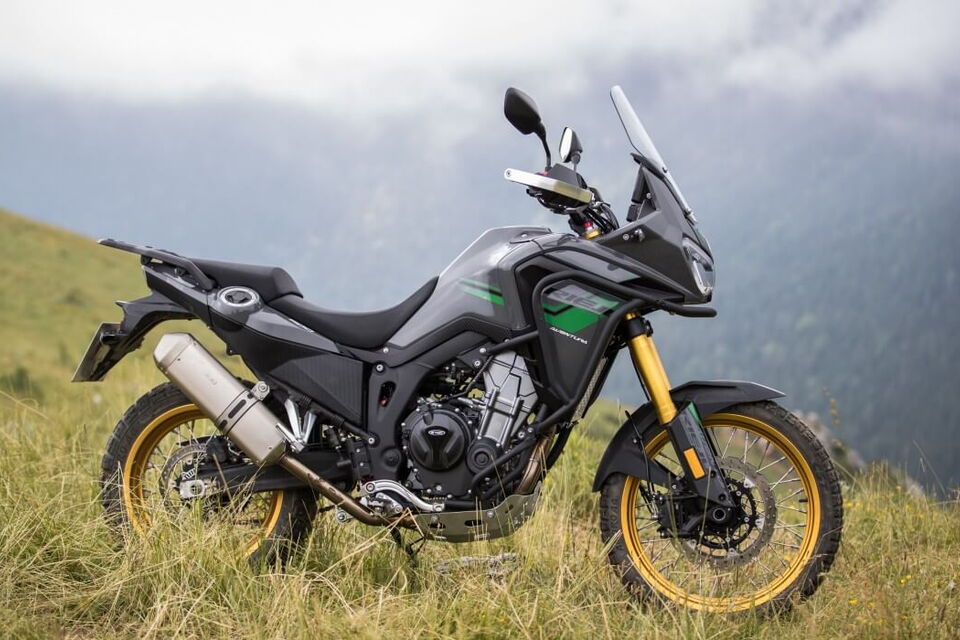
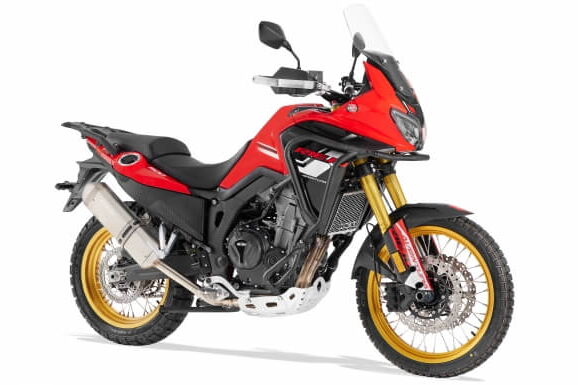
What separates the Rieju Aventura 500 from every other adventure bike in its class is not found under engine or suspension on the spec sheet. It is found under fuel capacity. A 20-liter front tank and a 19-liter rear tank can be selected independently. Together they deliver a range that leaves every Japanese and European rival in this class far behind. Power comes from a Loncin-built parallel twin producing 48 hp. Fully adjustable suspension, Bosch ABS, 21/18-inch wire-spoke wheels, and a starting price of EUR 7,290 complete the package. This is a Spanish adventure bike with a Chinese-built engine and a fuel concept that redefines long-distance travel.
As of: April 23, 2026 | Model: Rieju Aventura 500i ABS; available as Legend, Rally-Sport and Touring | Manufacturer: Rieju España S.A., Figueres/Catalonia, Spain, founded 1942 | Engine manufactured by Loncin, China | Price: from EUR 7,290 incl. ancillary charges, base version; approx. EUR 8,290 incl. ancillary charges with luggage set, German dealer figures | A2 compliant, 48 hp / 35 kW | Stationary noise: not officially published; confirm with dealer | Warranty: 2 years | Service: first inspection at 500 km, then every 8,000 km
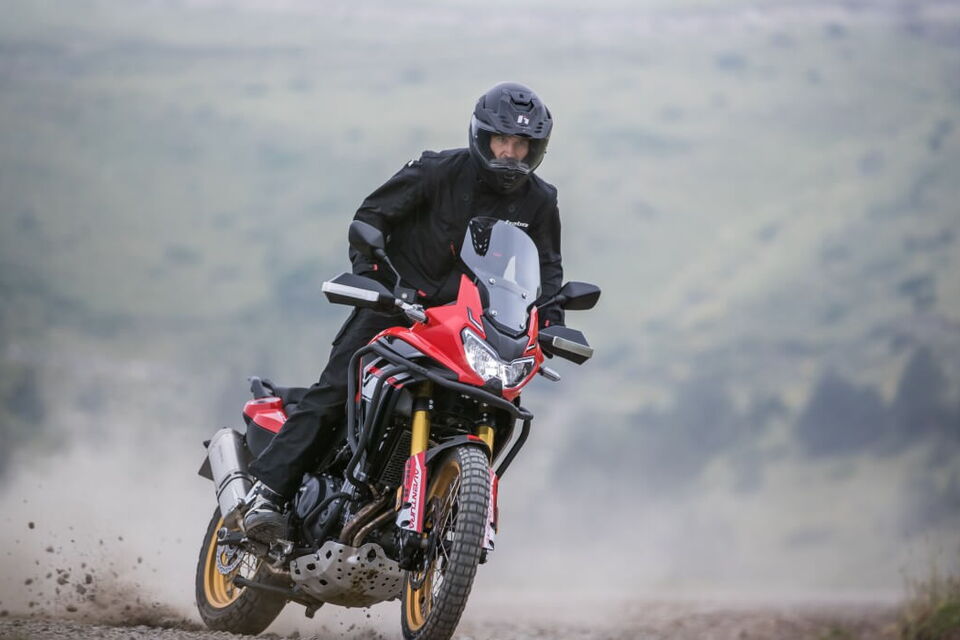
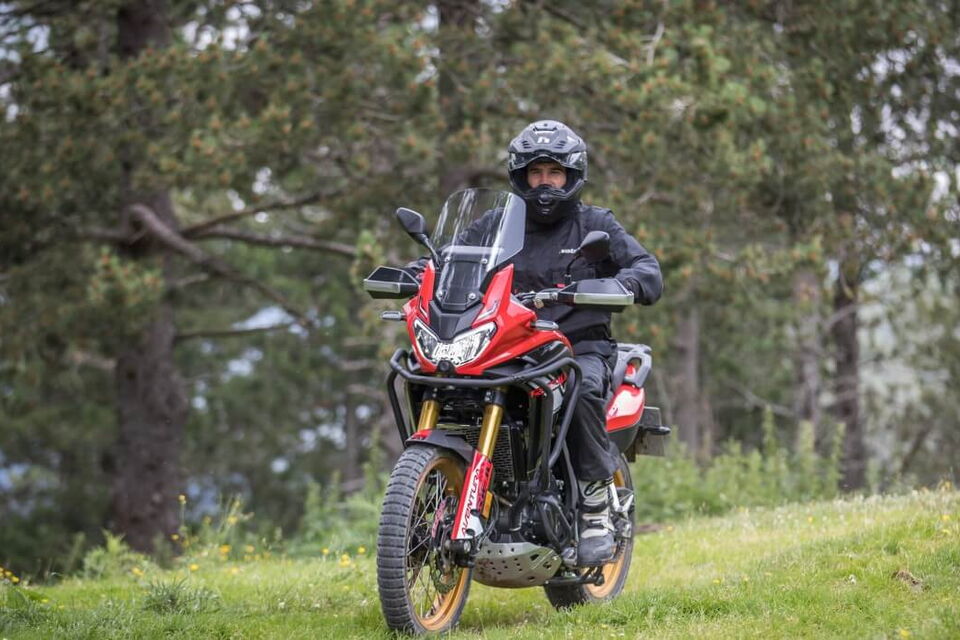
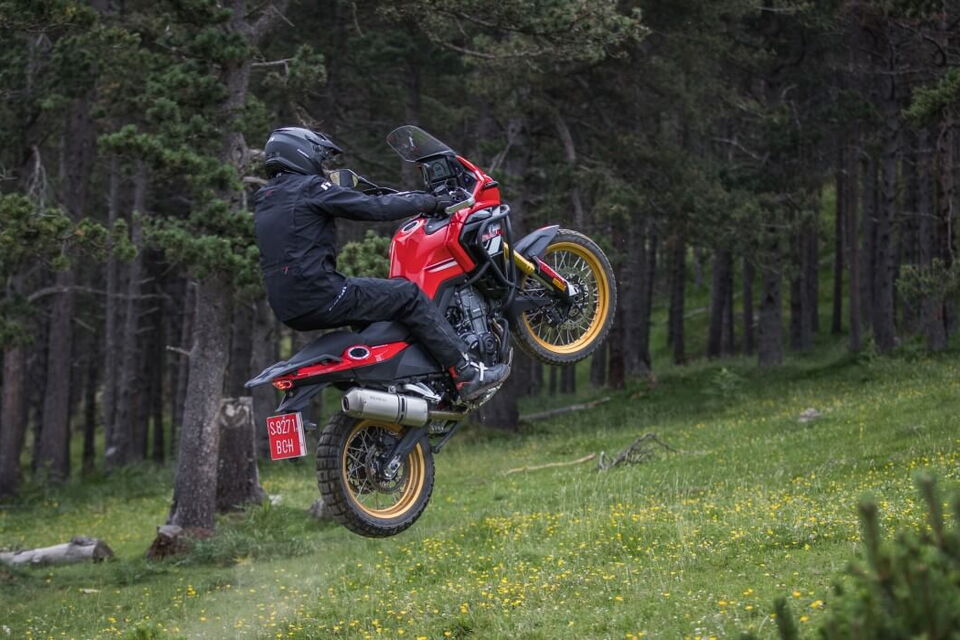
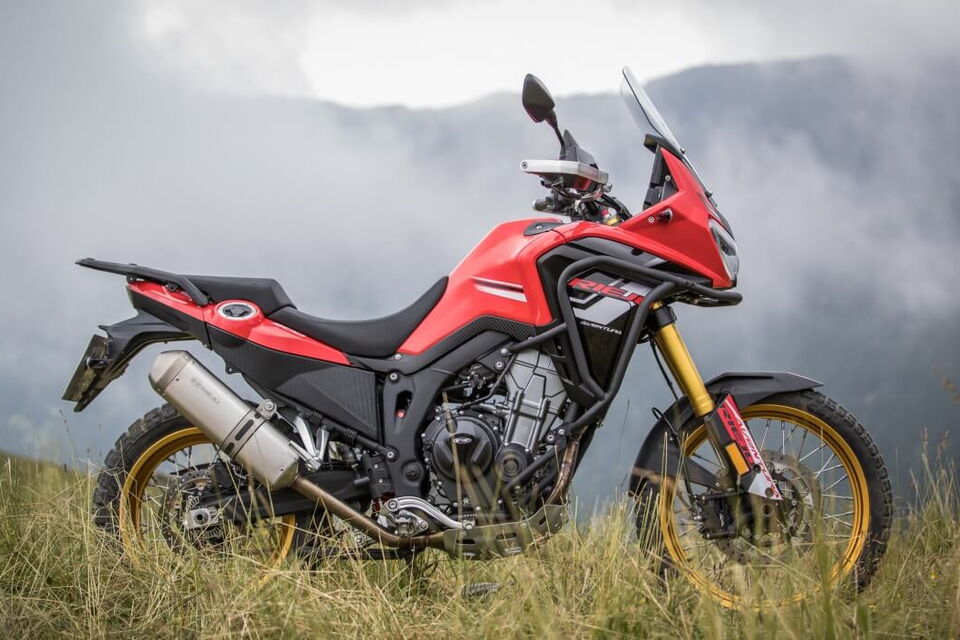

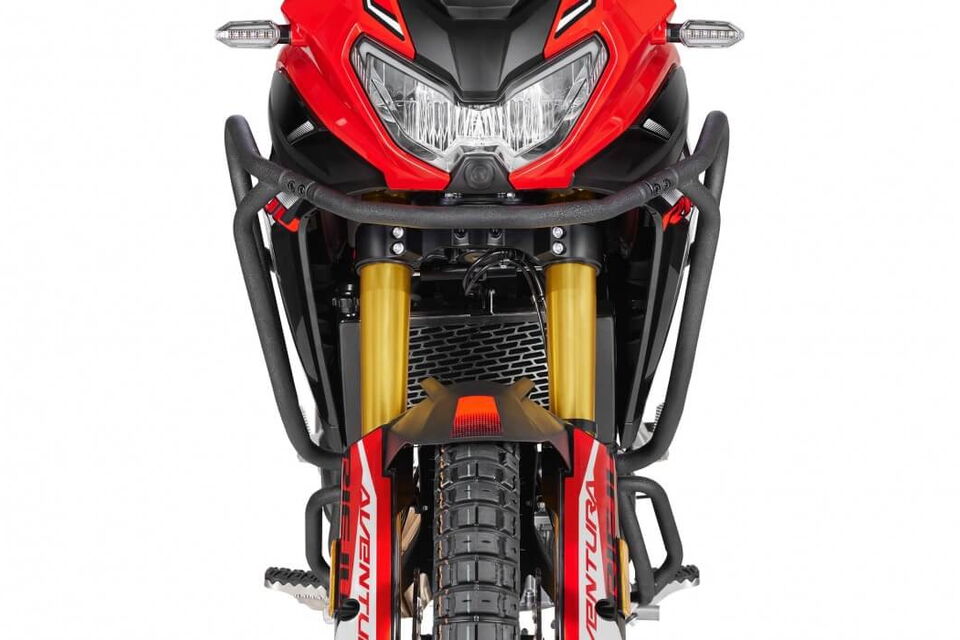
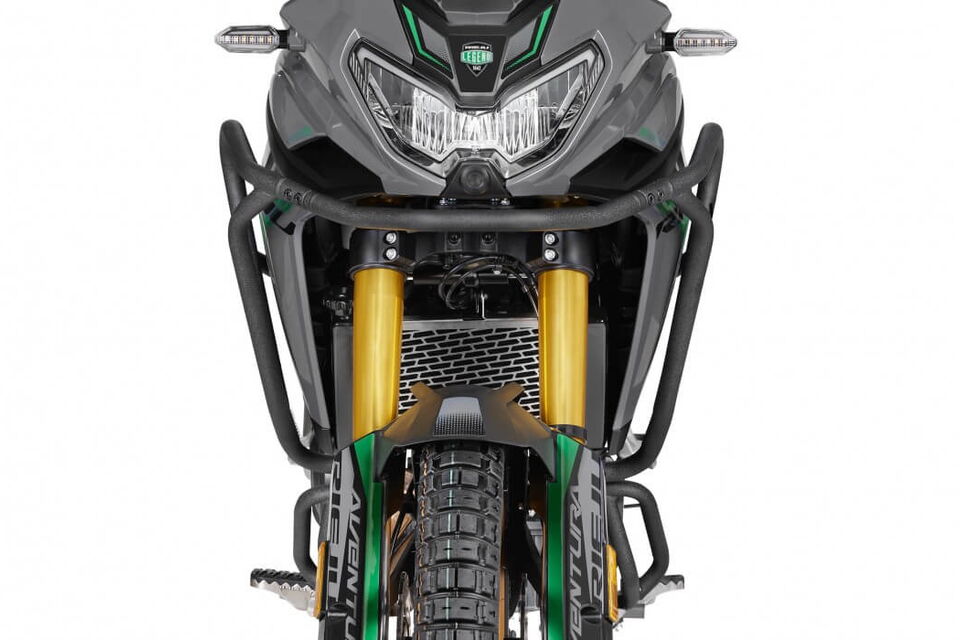
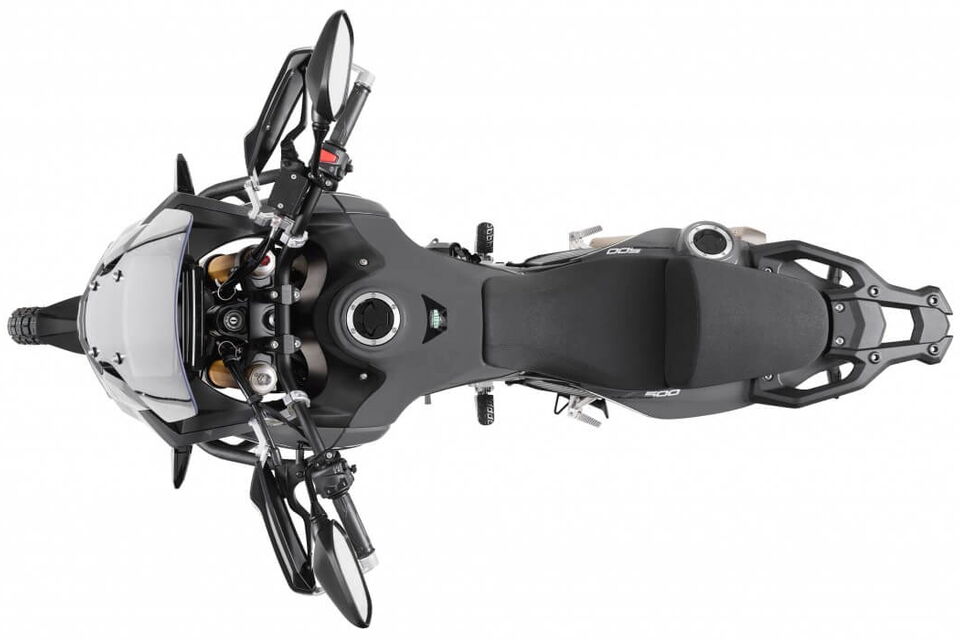
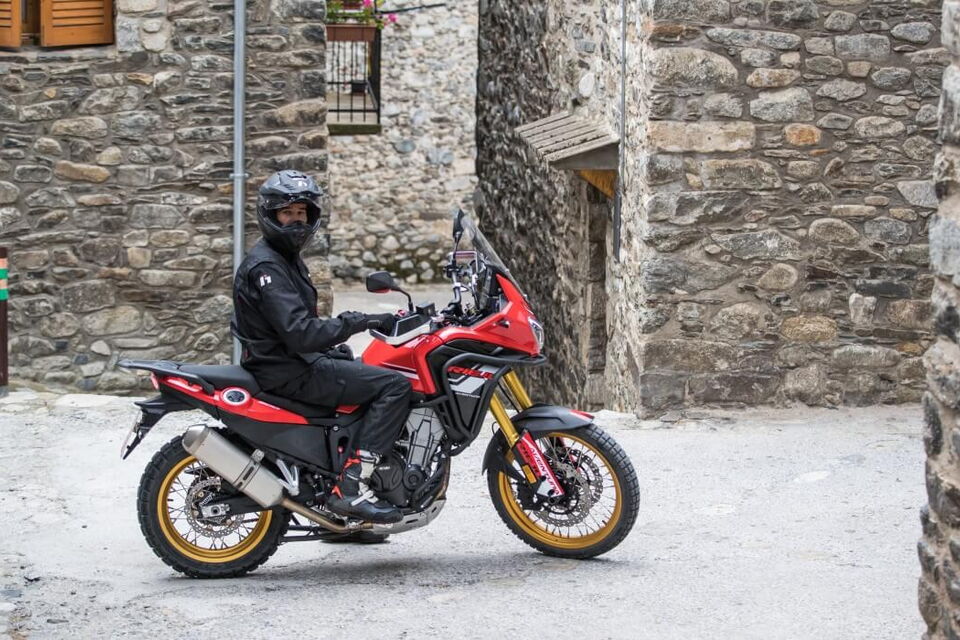
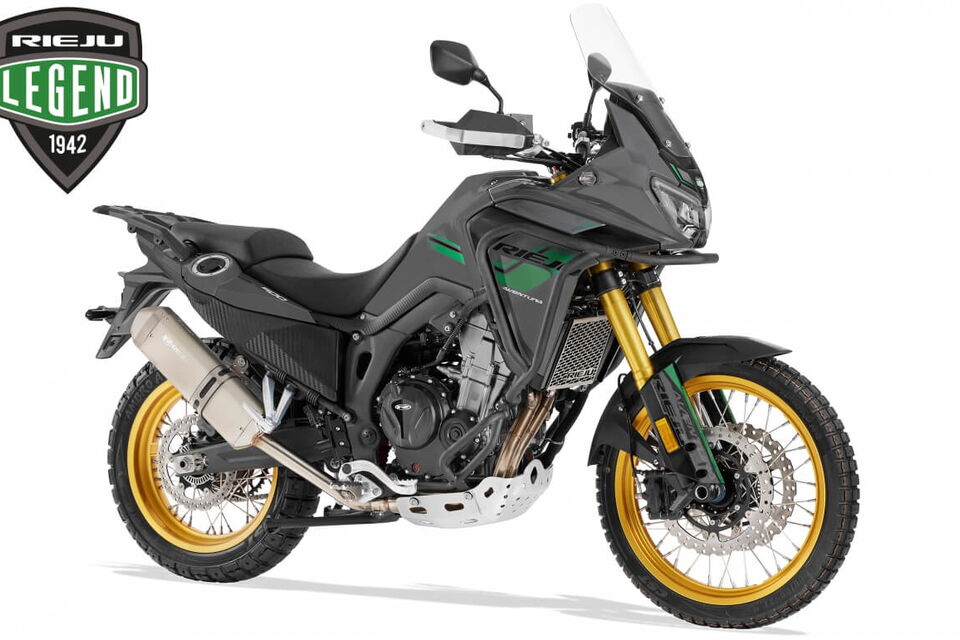
Rieju: Spanish Tradition Since 1942, First Twin Since 2022
Rieju has existed since 1942, making it one of Europe’s oldest motorcycle manufacturers still in operation. Founded in Figueres, Catalonia—in the same year the company was notarized by Salvador Dalí’s father—the brand spent decades concentrating on small-displacement motorcycles: mopeds, 50s, 125s, and enduros for sport and younger riders.
With the Aventura 500 Legend, unveiled at EICMA 2022 and on sale since September 2023, Rieju marked two firsts: the first twin-cylinder motorcycle in the company’s history and the first Rieju with more than one cylinder, period.
The engine is manufactured by Loncin, the Chinese engine producer that also builds parallel twins for BMW’s F-series models. The Aventura unit displaces 485 cc but is marketed as a 500. It is closely related in concept to the Honda CB500 engine; the similarities in bore and stroke are not accidental.
The Unique Selling Point: 39 Liters in Two Tanks
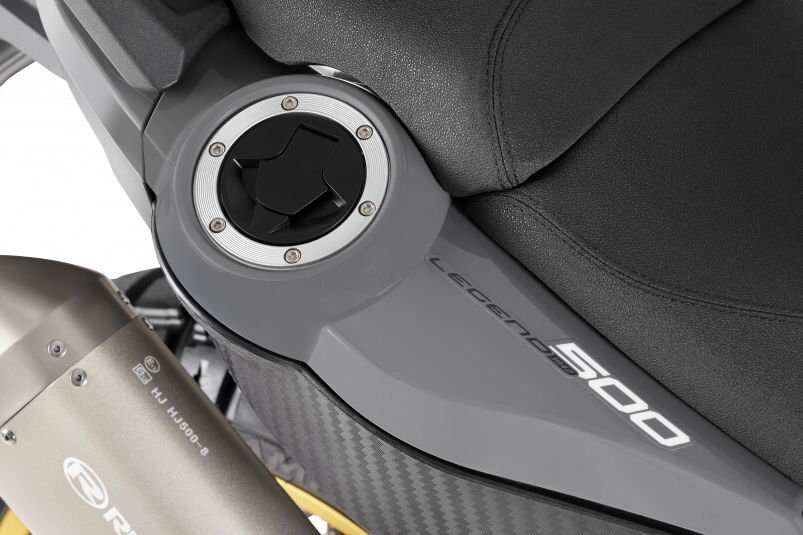
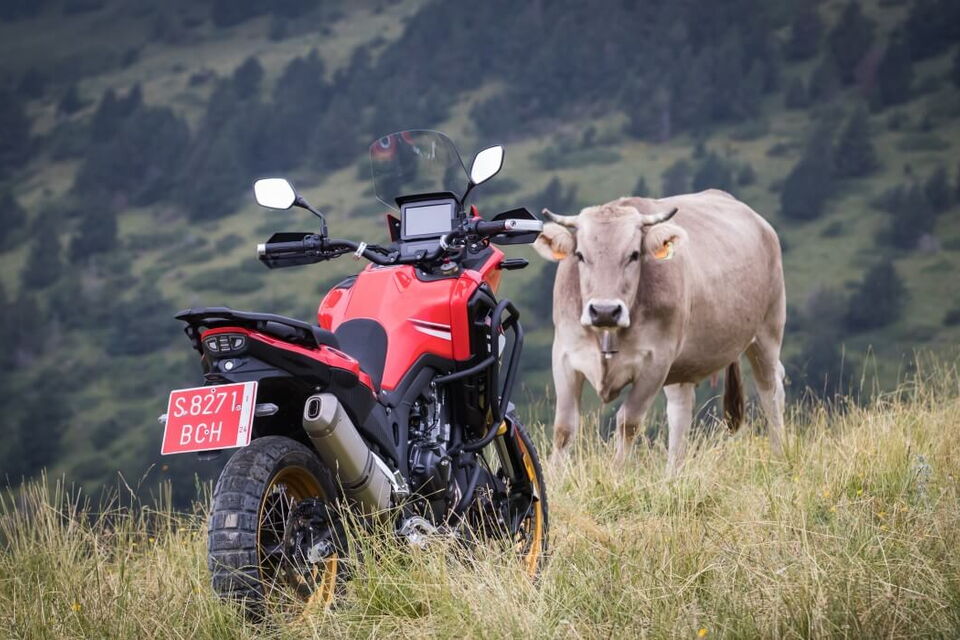
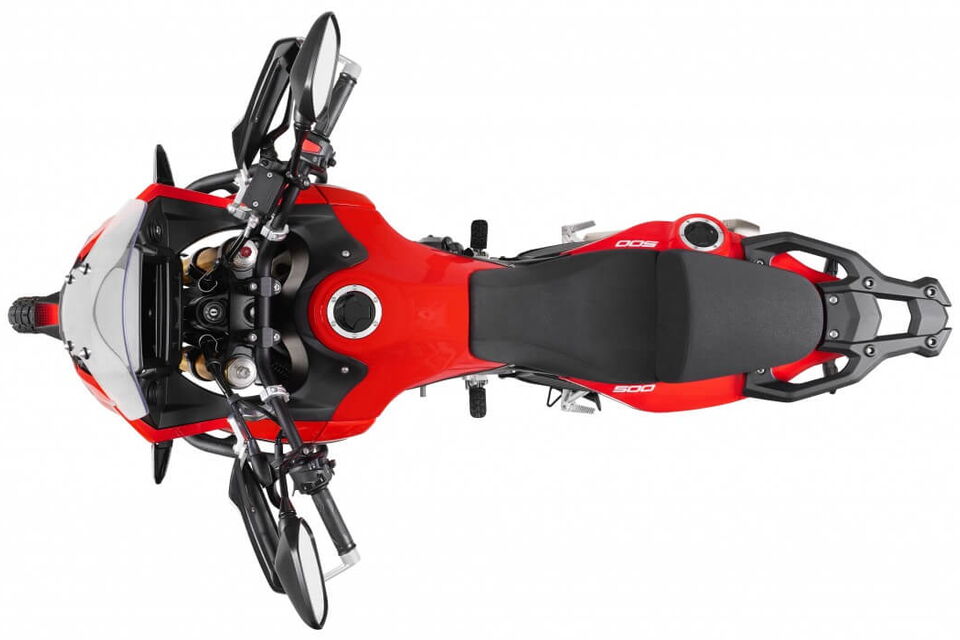
The Aventura 500 uses two independent fuel tanks. The front tank holds 20 liters, the rear tank 19 liters. Each can be filled separately and selected directly on the motorcycle. COC-standard fuel consumption is 2.9 L/100 km, which produces a theoretical range of roughly 1,344 km. In mixed real-world touring, around 4 L/100 km is more realistic, giving an estimated practical range of about 975 km.
Nothing else in this adventure-bike class comes close. The Yamaha Ténéré 700 carries 16 liters, the Voge DS 800X Rally 24 liters, and the Voge DS 900X 17 liters. If your idea of touring is to fill up in the morning and not think about fuel again until the following evening—or later—the Aventura has a compelling argument.
There is also a practical everyday advantage: on shorter rides or in town, there is no need to fill both tanks. The 20-liter front tank is enough for most normal use. The rear tank comes into play when the trip gets serious. It is a pragmatic and well-considered system, although two full tanks raise ready-to-ride weight to roughly 244 kg.
Engine: 48 hp at the A2 Limit—What That Means In Practice
The 485 cc Loncin parallel twin produces 48 hp, or 35 kW, at 8,500 rpm and 44 Nm at 7,500 rpm. That places it directly at the A2 power ceiling. The engine is elastic and agreeable, and owner experience cited in our sources describes it as reliable, smooth, and economical.
The limitation is equally clear: 48 hp in a motorcycle weighing around 244 kg ready to ride does not make a sporty package. Its power-to-weight ratio is the weakest in the comparison group. Riders who attack corners, want strong overtaking reserves, or prioritize acceleration will notice the shortfall.
For relaxed travel, long stages, luggage, and passenger use, however, the 48-hp engine’s economy-focused character is not a quality defect. The Aventura is a travel motorcycle in the literal sense, not a sport-tourer.
Suspension, Brakes and Off-Road Ability
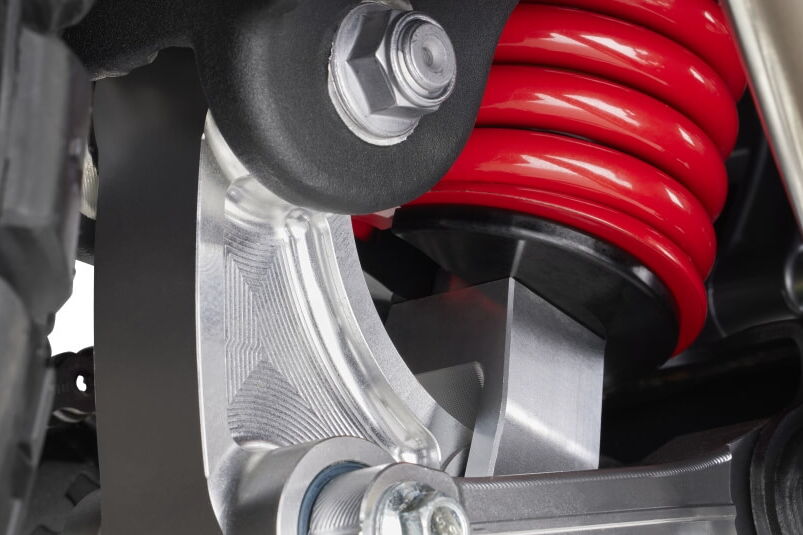
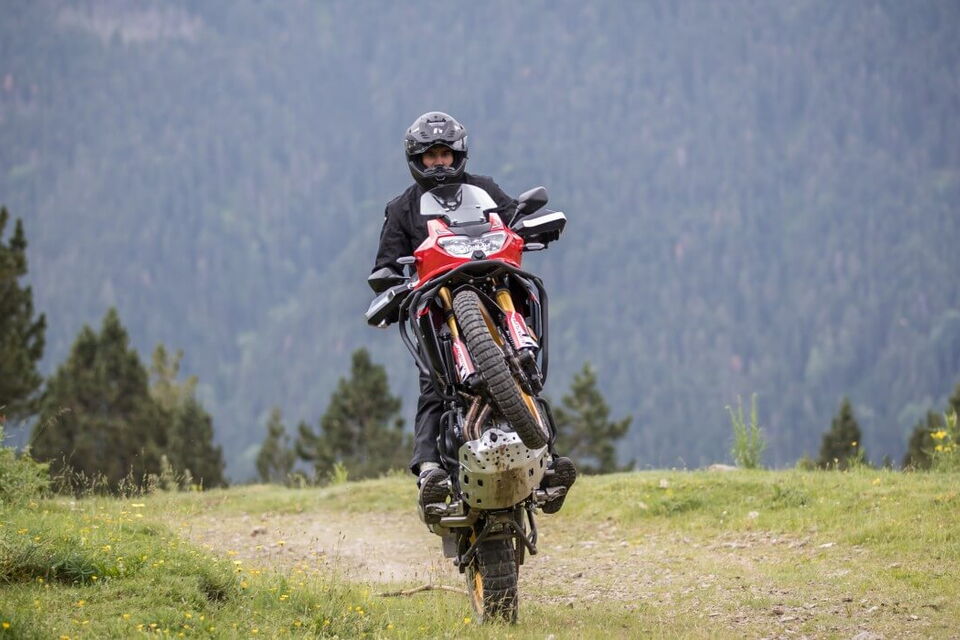
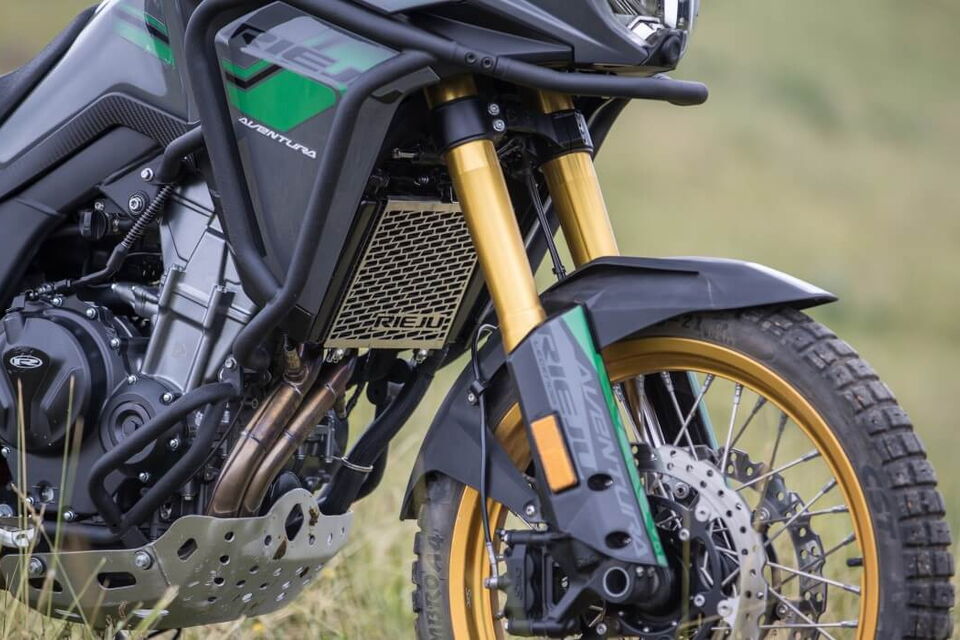
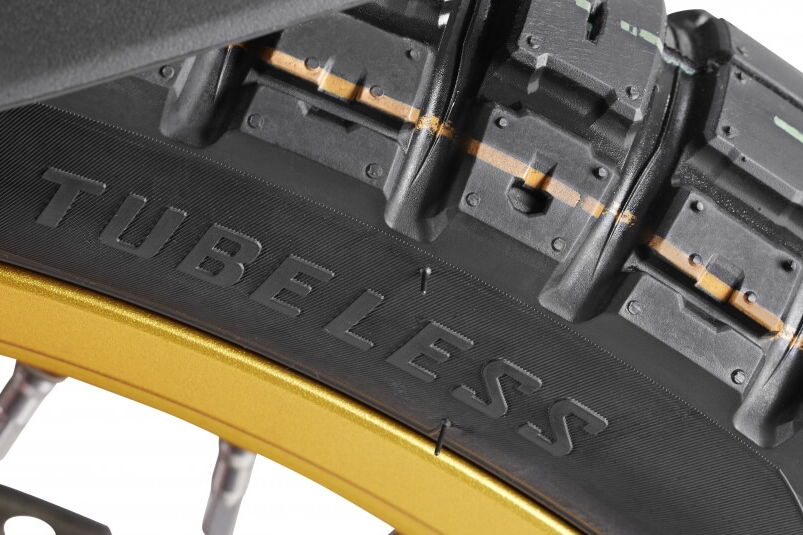
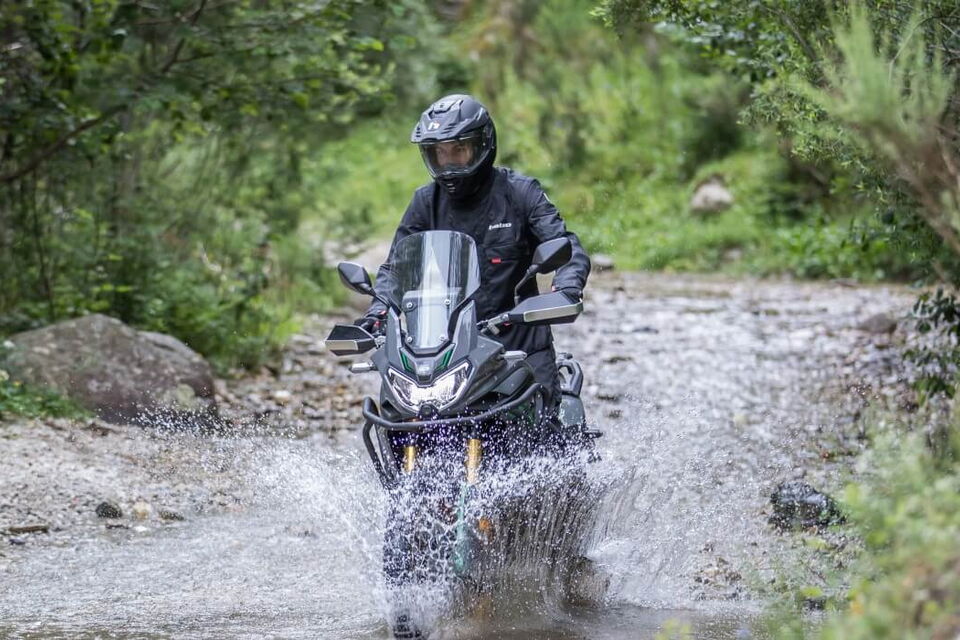
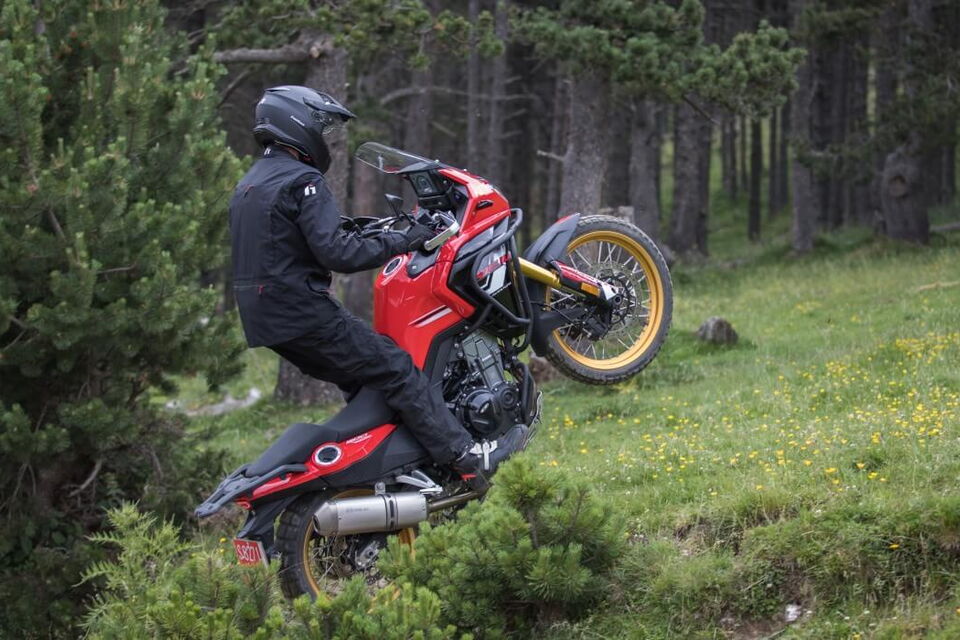
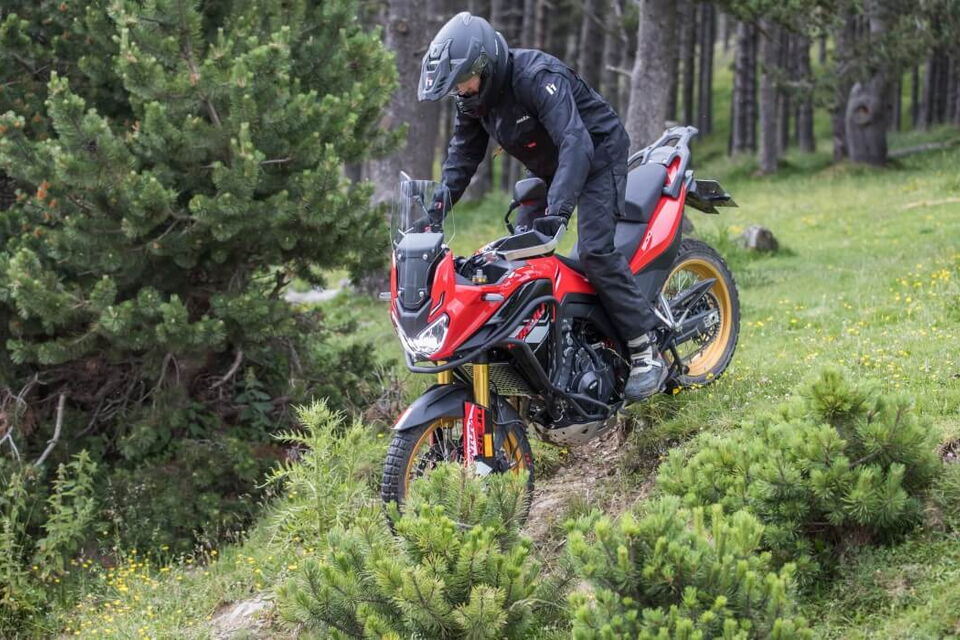
The 48 mm USD fork and PRS gas-pressure rear monoshock are both fully adjustable, with 190 mm of travel at each end. Ground clearance is around 220 mm. Combined with a 21-inch front and 18-inch rear wire-spoke wheel and trail-oriented tires, those are genuine off-road dimensions.
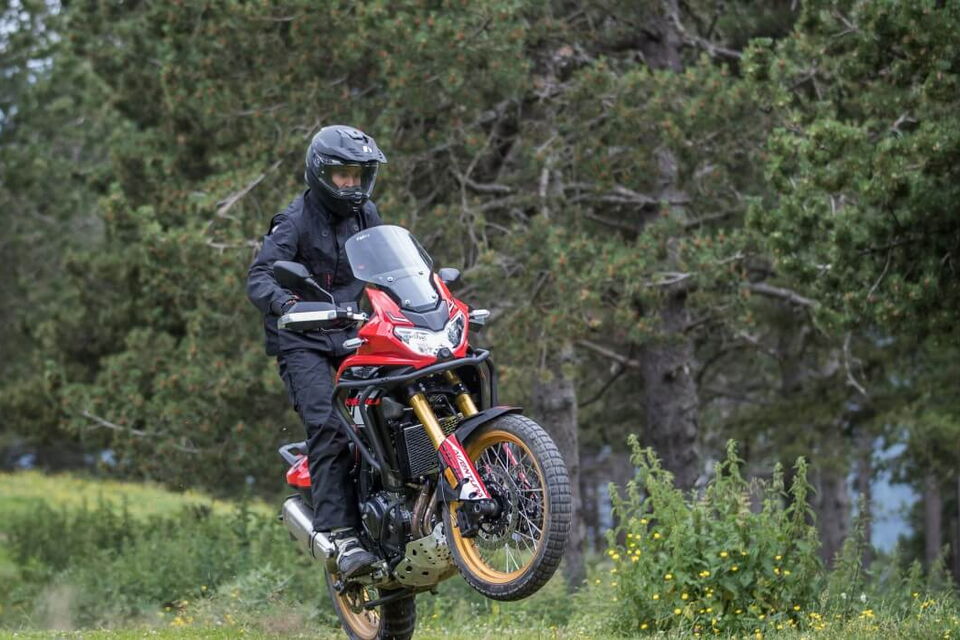
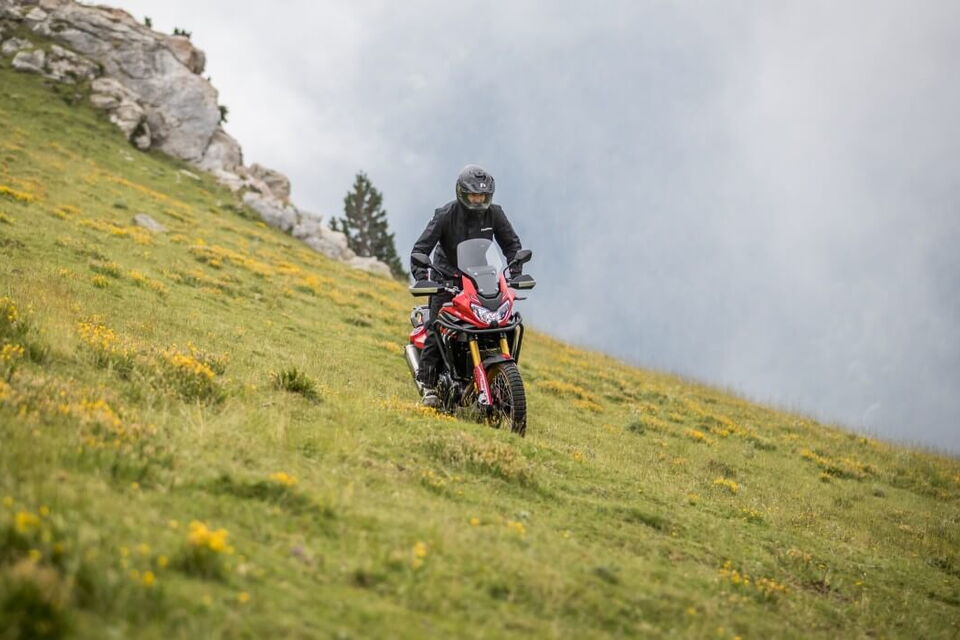
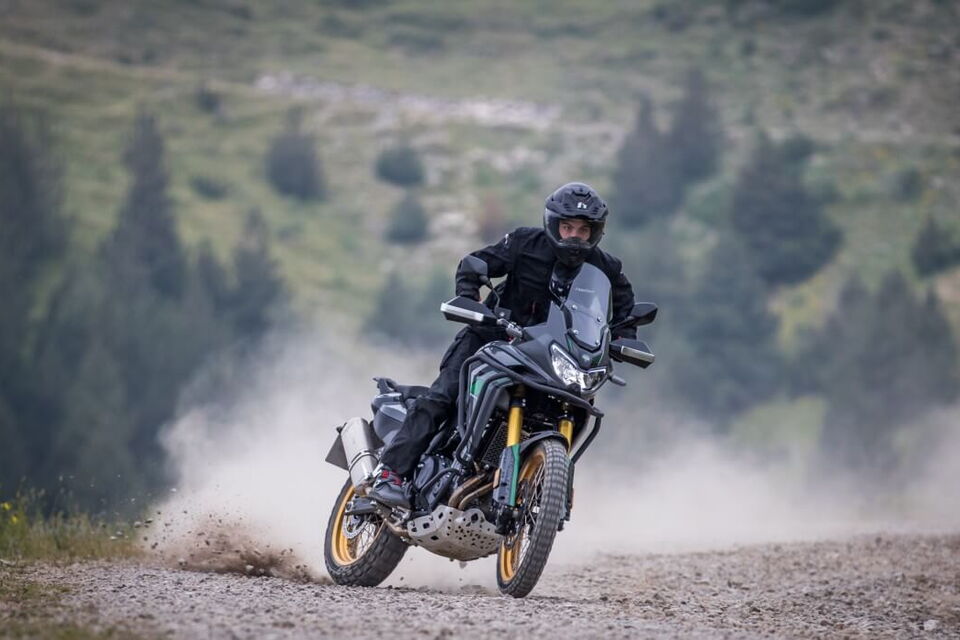
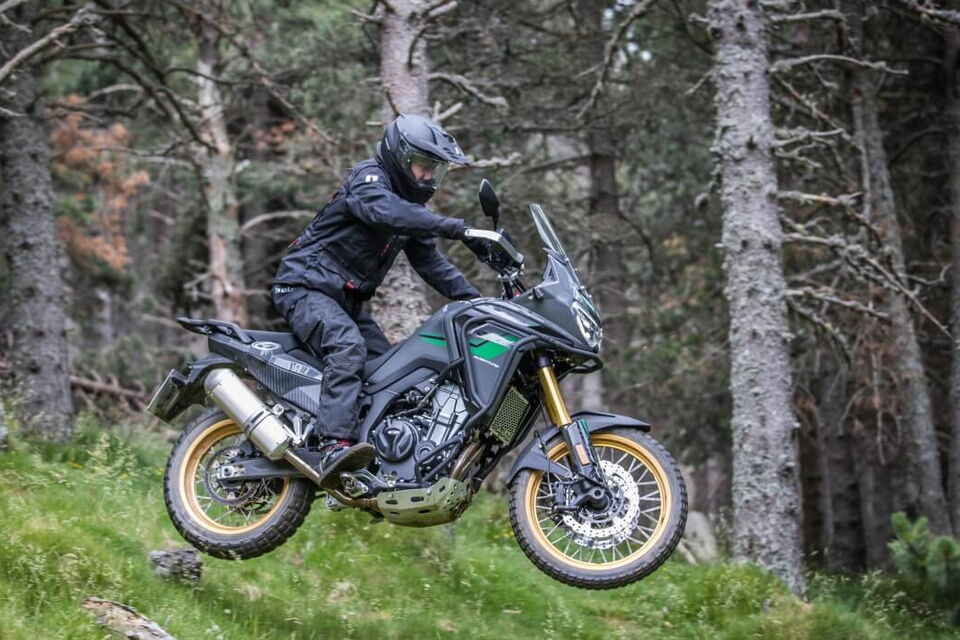
The Aventura is designed for gravel sections and unpaved roads. Its high weight when both tanks are full limits serious off-road performance to light and medium terrain. This is an adventure-travel motorcycle rather than an enduro competition machine.
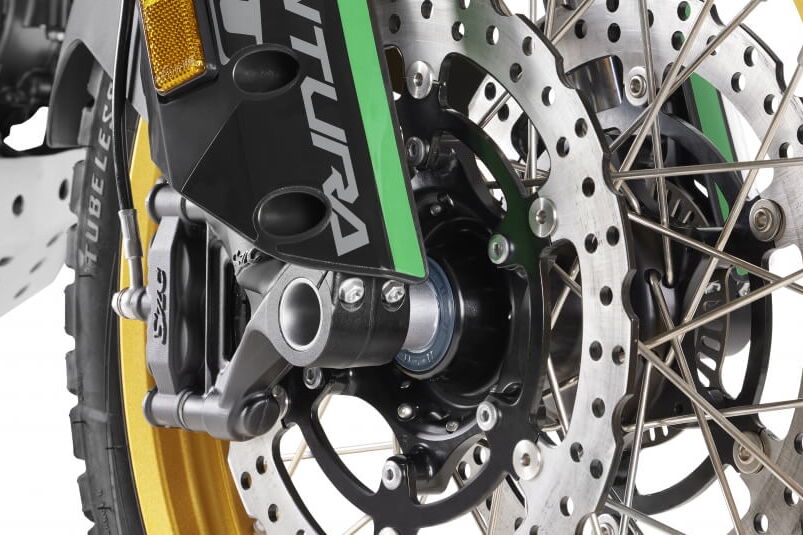
Braking is handled by twin 298 mm wave front discs with two-piston calipers on each side, plus a 240 mm wave rear disc with a two-piston caliper. Bosch ABS is standard. At this price, the Bosch system is a level of quality to be featured rather than something to take for granted.
Ergonomics: Two Seat Heights, Upright Position, Tall Windshield
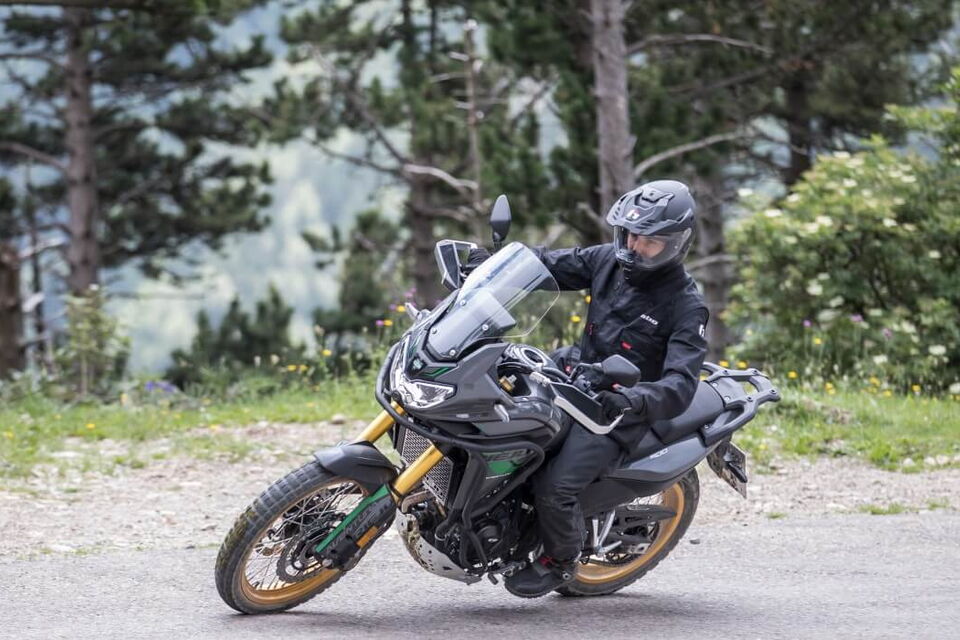
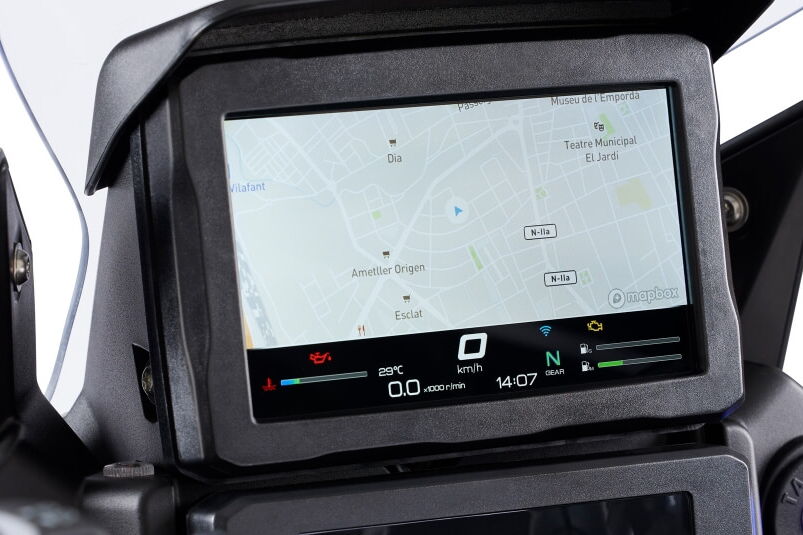
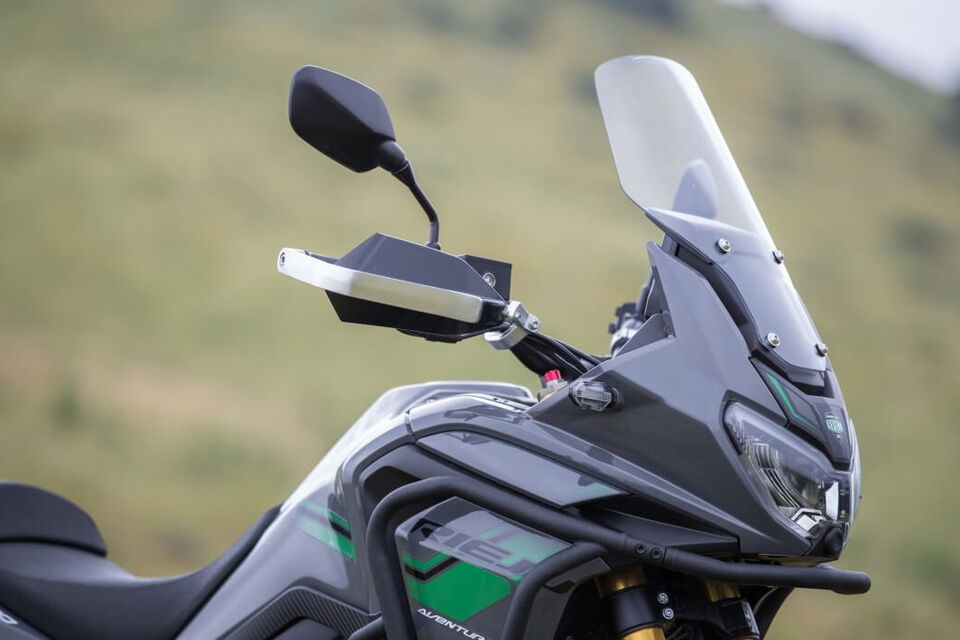
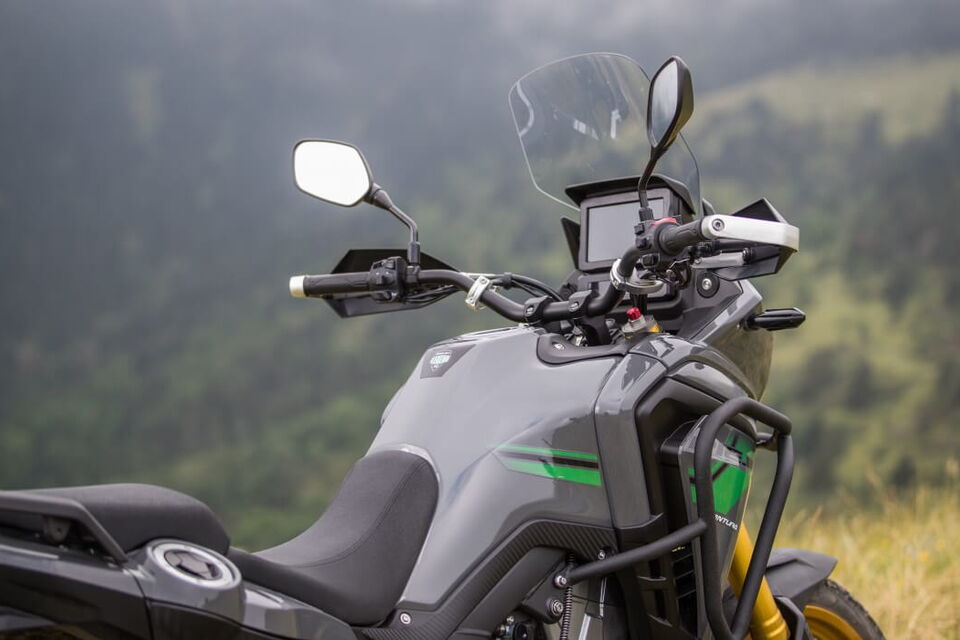
Seat height is adjustable from 820 to 870 mm, giving useful flexibility for riders of different sizes. The riding position is upright and typical of an adventure tourer: wide handlebar, relaxed knee angle, and good wind protection from the very tall standard windshield. The 7-inch TFT is easy to read. Connectivity is included, although the system takes some familiarization.
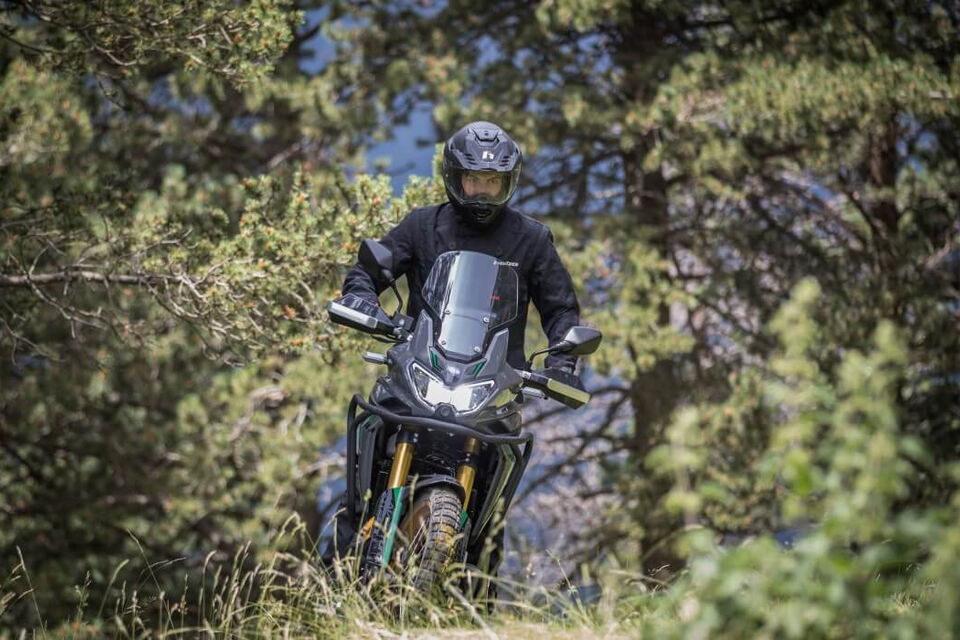
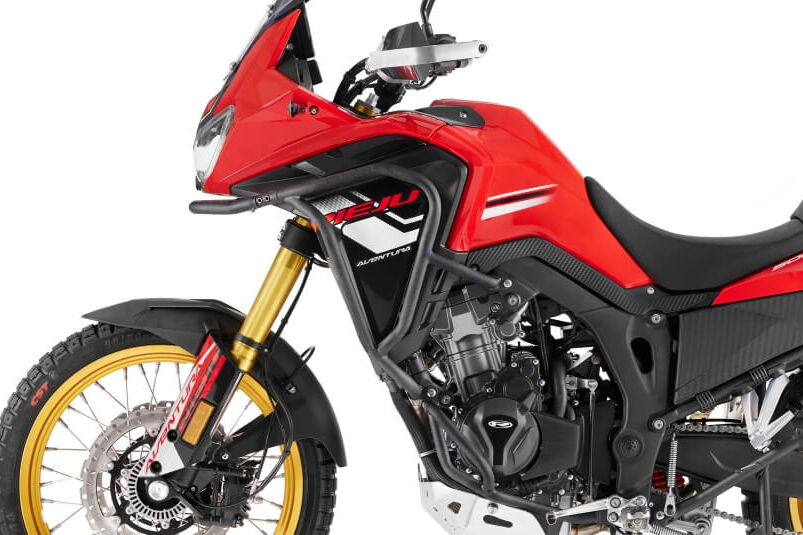
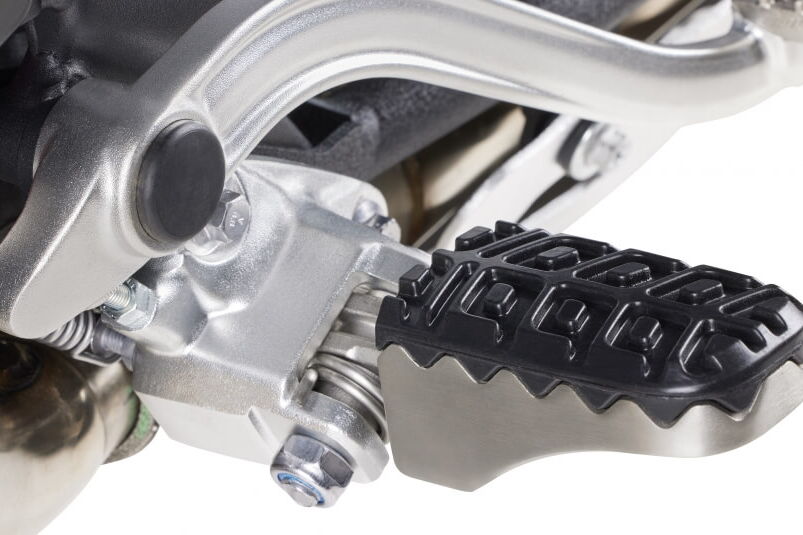
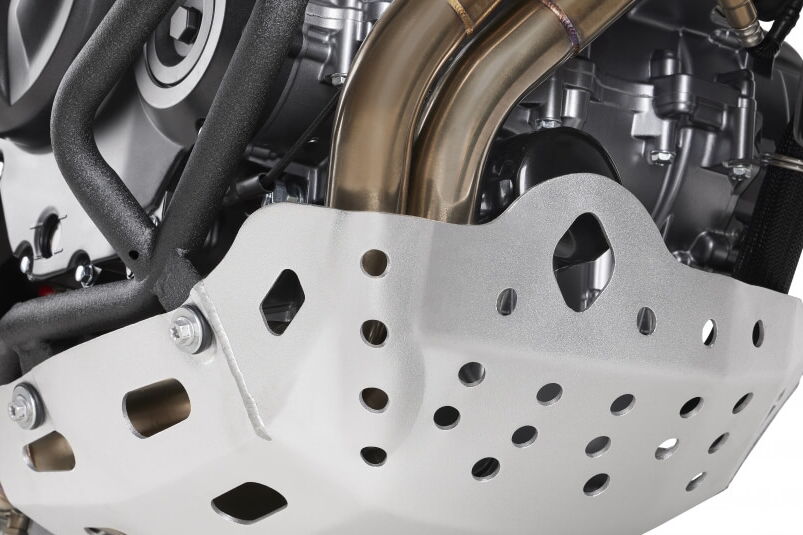
Hand guards with metal reinforcement and crash bars are standard, as are protective components from the factory. Owner feedback highlights one consequence of the unusual layout: the wide rear tank behind the seat changes mass distribution compared with a conventional motorcycle. With the rear tank empty, the Aventura feels lighter and more agile than when it is full. That is not a flaw - it is the logical result of carrying 19 liters of fuel at the rear - but it is something to be conscious of in operation.
2026 Versions and a Successor on the Horizon
For 2026, the Aventura 500 is offered in several versions: Legend as the base model, Rally-Sport, and Touring with a luggage set. Prices range from around EUR 7,290 including ancillary charges for the base version to roughly EUR 8,290 including ancillary charges for the Touring with luggage.
A replacement is being prepared. According to a Rieju dealer communication from February 2026 cited in the source, an Aventura 607 with a 600-class QJMotor twin is planned in Touring and Touring-with-luggage versions. Concrete specifications and delivery dates were not yet known. Buying the 500 means buying the mature current model; waiting for the 607 means waiting for an unknown timetable.
Price Positioning and Competition
Starting at EUR 7,290, the Aventura 500 is the least expensive adventure bike in the 500 class in our comparisons to combine genuine enduro dimensions—21/18-inch wheels, 220 mm of ground clearance, and fully adjustable suspension—with Bosch ABS. It is also the only one with a dual-tank concept. The Honda NX500 is around EUR 8,400 but carries only 17.2 liters and is less dirt-oriented. The Voge DS 800X Rally costs EUR 9,299 with a 24-liter tank and 95 hp. The Royal Enfield Himalayan 450 is around EUR 5,900, lighter, and single-cylinder. The CFMoto 450MT is around EUR 6,500 with a 450-class twin. None matches the Aventura’s fuel concept at this price.
Verdict
The Rieju Aventura 500 is not a performance motorcycle. It is a travel bike built around solving one specific problem: covering huge distances without stopping for fuel. Thirty-nine liters of total capacity, up to roughly 1,000 km of practical range, fully adjustable suspension, Bosch ABS, 21/18-inch off-road geometry, and standard crash bars start at EUR 7,290.
That makes it a proposition for a clearly defined audience: long-distance travelers who want to refuel rarely, ride remote routes, and do not want to spend EUR 10,000 or more. Riders who want sporty performance should shop elsewhere. Riders who want to go far—and refuse to compromise on fuel capacity—should look closely at the Aventura.
Quick Check
+ Two independent fuel tanks: 20 L front + 19 L rear = 39 L total; roughly 975 km practical range; unique concept in this adventure-bike class.
+ A2 compliant, 48 hp / 35 kW; fully adjustable 48 mm USD fork + monoshock, both with 190 mm travel; Bosch ABS; 21/18-inch wire-spoke wheels; 220 mm ground clearance.
+ Owner experience cited in our sources report reliability under extreme conditions, from 50-degree heat to sustained rain; 8,000 km service interval after the first inspection.
+ Standard: crash bars, hand guards with metal braces, protective equipment, tall windshield, 7-inch TFT, full LED lighting; luggage set optional for roughly EUR 1,000.
+ From EUR 7,290 including ancillary charges: lowest-priced full-size adventure bike in the source segment with 21/18-inch wheels, fully adjustable suspension, and Bosch ABS; seat height adjustable 820–870 mm.
– 48 hp for roughly 244 kg ready to ride: weakest power-to-weight ratio in the comparison group; aggressive riding and overtaking with large reserves are not its strengths.
– Approx. 244 kg ready to ride with both tanks full: heavier than all direct rivals; noticeable in difficult terrain and when maneuvering.
– Stationary noise not officially published; confirm Tyrol compatibility with dealer before purchase.
– Aventura 607 with a 600-class QJMotor twin has been announced, but specifications and delivery timing remain unknown; buyers interested in the new model should ask a dealer.
– Engine is closely related to the Honda CB500 concept and built by Loncin; it is not an in-house Rieju engine development.
– German dealer network is limited; Rieju remains relatively unknown in the 500 class, so workshop availability should be checked before purchase.
Technical Specifications: Rieju Aventura 500 (2026)
Brand / Model: Rieju Aventura 500i ABS; manufacturer: Rieju España S.A., Figueres/Catalonia, Spain, founded 1942; first shown EICMA 2022; market launch September 2023; engine manufactured by Loncin, China; versions: Legend, Rally-Sport, Touring
Engine: Liquid-cooled DOHC parallel twin, 485 cc, marketed as 500; eight valves; electronic fuel injection; six-speed; chain drive; Euro 5+; A2 compliant, 48 hp / 35 kW
Power: 48 hp / 35 kW at 8,500 rpm
Torque: 44 Nm at 7,500 rpm
Fuel System: Two independent, separately selectable tanks: Tank 1 front 20 L; Tank 2 rear 19 L; total 39 L; approx. 975 km practical range at 4 L/100 km; COC standard consumption 2.9 L/100 km
Top Speed / Consumption: Approx. 170 km/h; real-world average approx. 4 L/100 km; COC 2.9 L/100 km; CO2 80 g/km
Frame: Steel-tube frame
Fork: 48 mm R16 USD; fully adjustable; 190 mm travel
Rear Shock: PRS gas monoshock; fully adjustable; 190 mm travel
Ground Clearance: Approx. 220 mm
Front Brakes: Twin 298 mm wave discs; twin two-piston calipers; Bosch ABS
Rear Brake: Single 240 mm wave disc; two-piston caliper; ABS
Wheels: 21-inch front / 18-inch rear; wire-spoke wheels
Tires: 90/90-21 front; 150/70-18 rear
Ergonomics: Adjustable seat height 820–870 mm; upright touring position; wide handlebar; tall windshield standard
Cockpit: 7-inch TFT; full LED lighting; connectivity
Standard Equipment: Crash bars; hand guards with metal braces; protective equipment; tall windshield; Bosch ABS; 7-inch TFT
Weight: 244 kg fully fueled with both tanks full
Stationary Noise: Not officially published; confirm with dealer for Tyrol compatibility
Service: First inspection at 500 km; then every 8,000 km
Successor Announced: Aventura 607 with QJMotor 600-class twin; Touring and Touring with luggage versions; no official specifications or delivery dates as of April 2026
German Price: From EUR 7,290 incl. ancillary charges for base/Legend; from EUR 8,290 incl. ancillary charges with luggage set/Touring
Warranty: 2 years