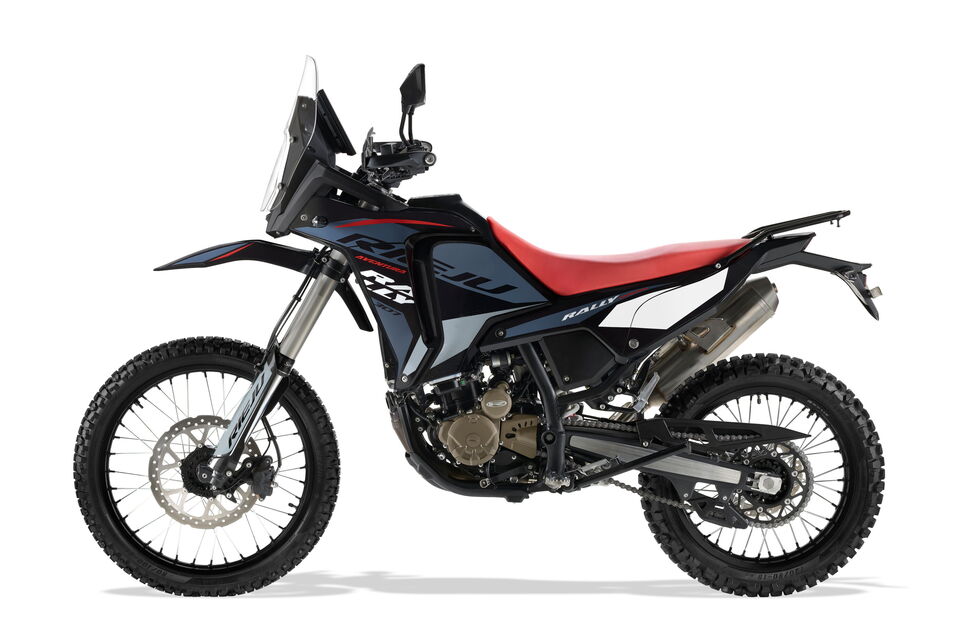
Review Rieju Aventura Rally 307 (2026)
158 kg, 235 mm of Travel, 20.5 Liters—Dakar DNA in the Entry-Level Class for EUR 4,790
One Rieju engineer. One prototype. No support crew. The Touareg Legend Rally in Morocco, following the original Dakar routes—ridden solo from start to finish, with 72 improvement points documented along the way. Then came the Hellas Rally with pre-production prototypes. That is how the Aventura Rally 307 was developed. The result: 293 cc, 33.5 hp, 138 kg dry, 235 mm of fully adjustable suspension travel front and rear, 21/18-inch wheels, a 20.5-liter tank, switchable two-channel ABS, and a vertical 7-inch TFT with Mirror Link. From EUR 4,790 in Germany. The resemblance to the Honda CRF300 Rally is no coincidence.
As of: April 23, 2026 | Model: Rieju Aventura Rally 307; 307R is a separately available upgrade kit with Michelin Tracker tires, Rieju by ACD aluminum skid plate and red graphics—not a separate motorcycle model | Manufacturer: Rieju España S.A., Figueres/Catalonia | Engine: Loncin 293 cc single with TFI injection | German price: EUR 4,790 incl. ancillary charges | Austria: approx. EUR 5,199 | Stationary noise: not officially published; confirm with dealer | Warranty: 2 years | Service: first inspection at 1,000 km, then every 5,000 km


Development Story: What One Engineer in the Desert Is Worth
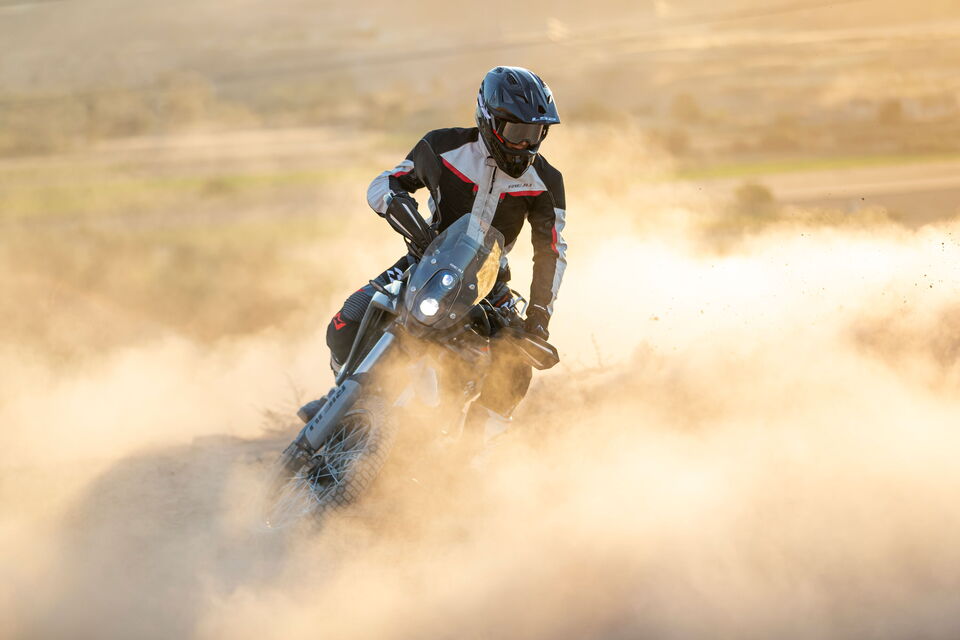
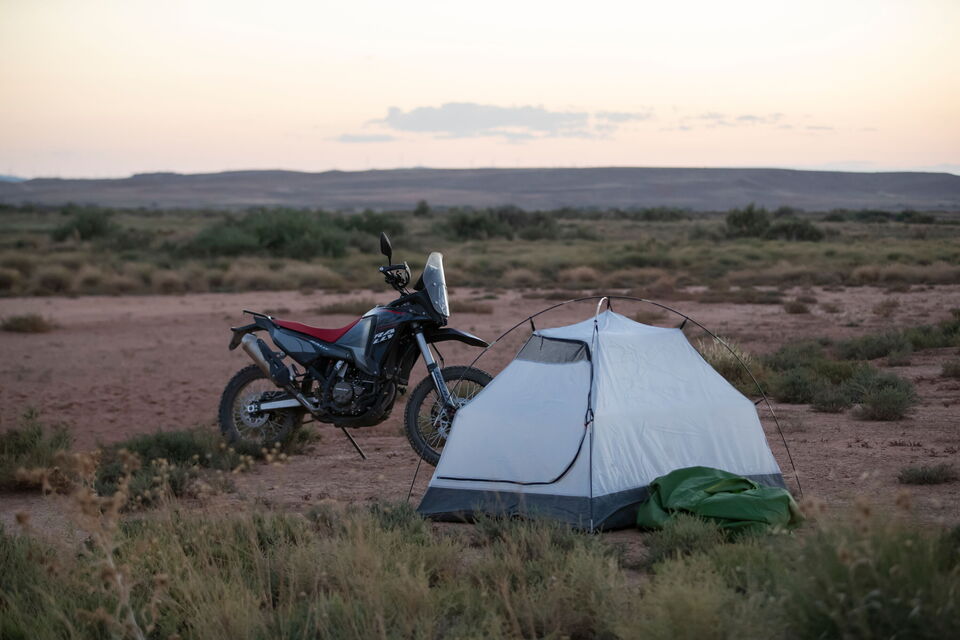
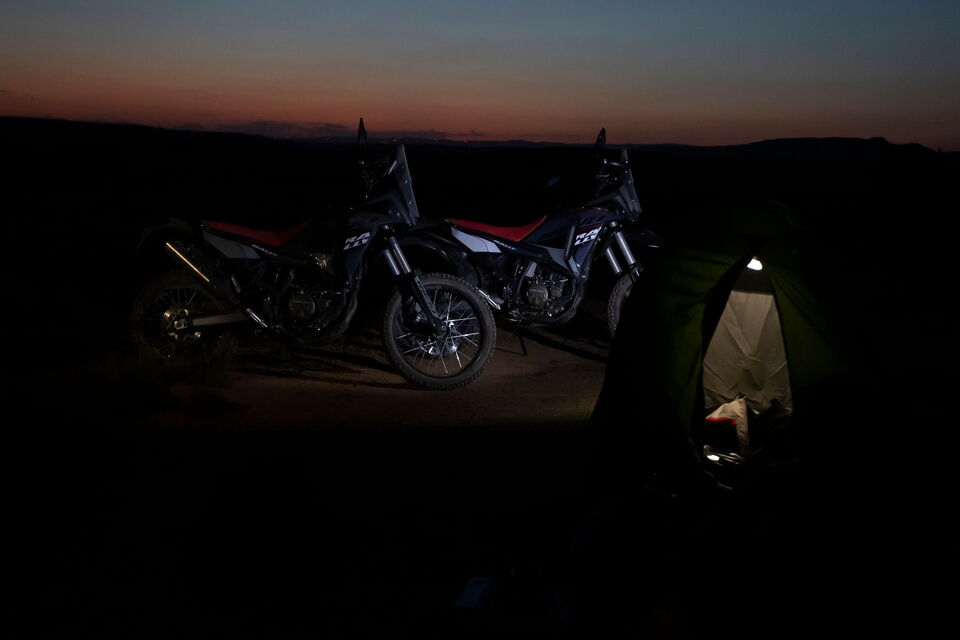
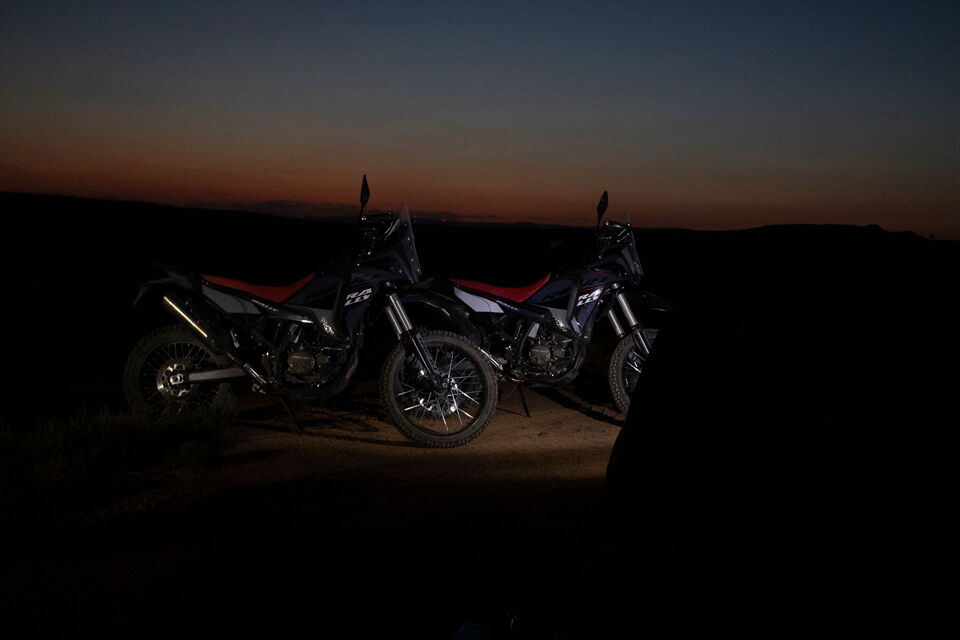
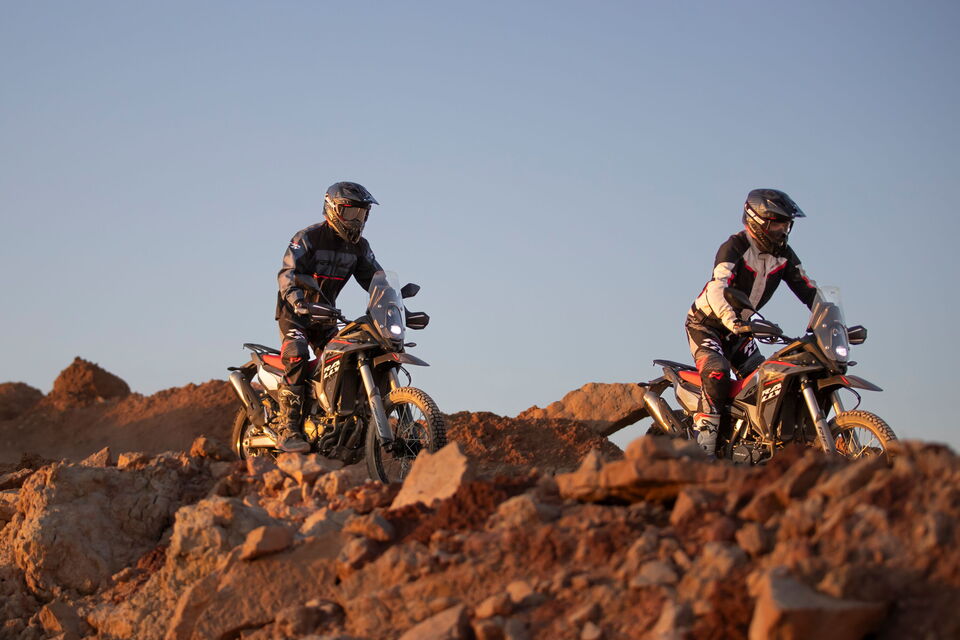
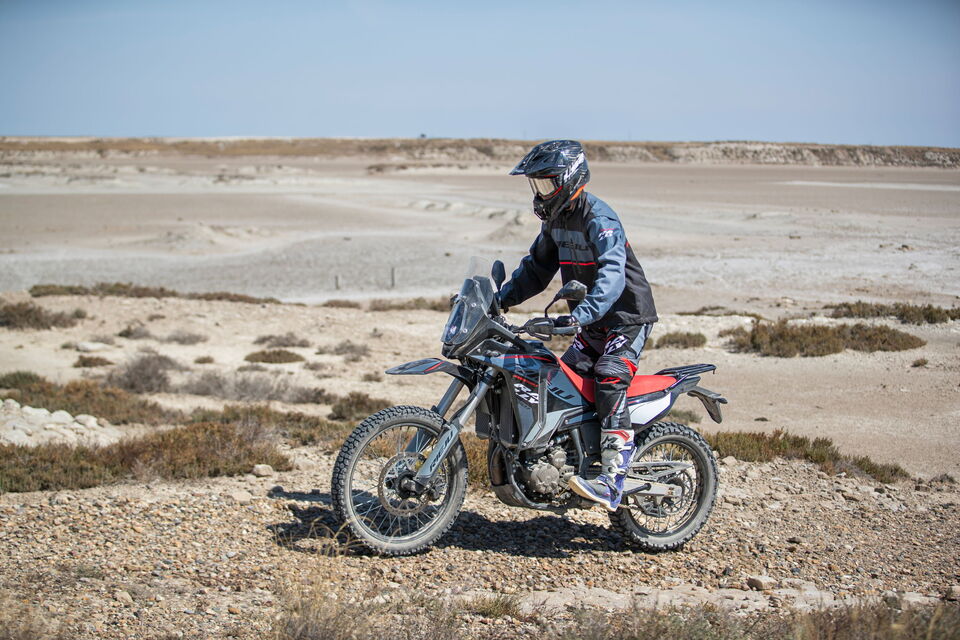
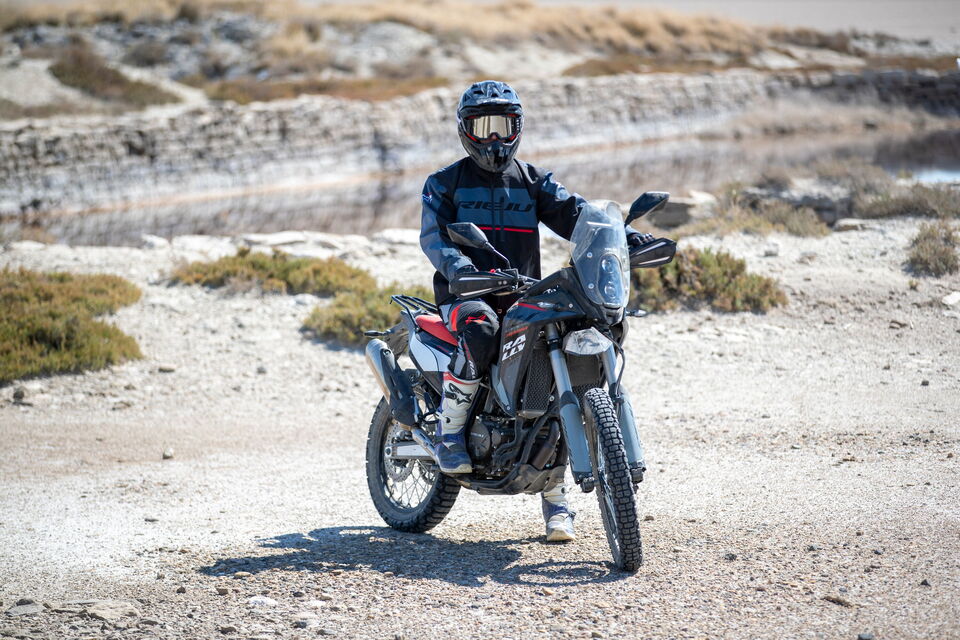
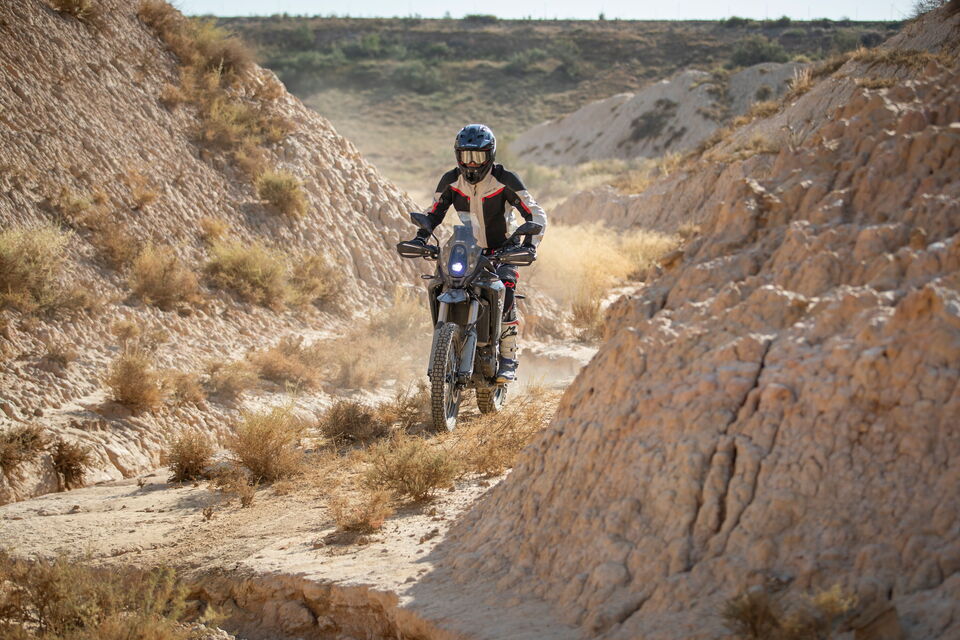
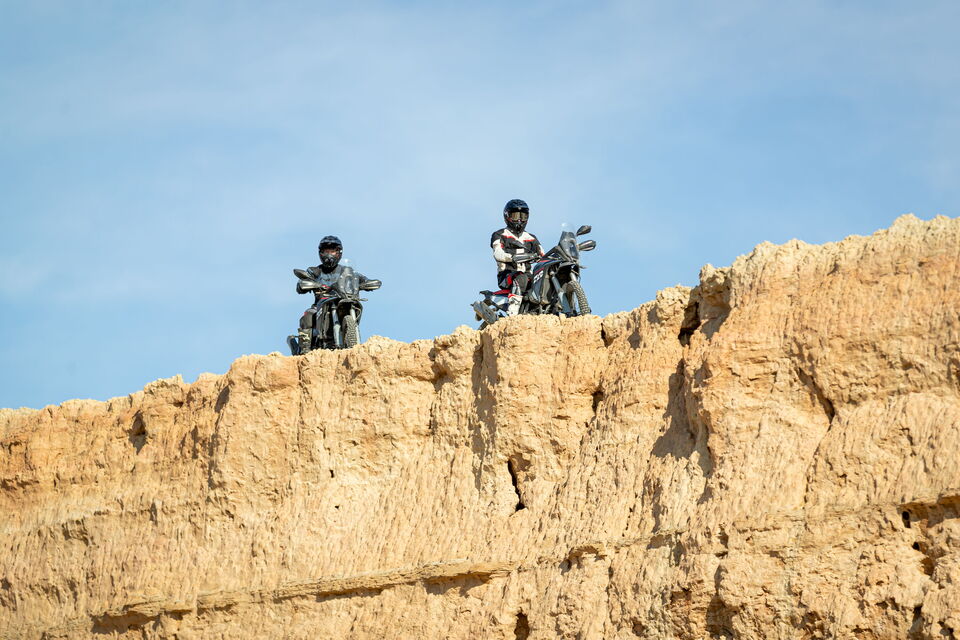
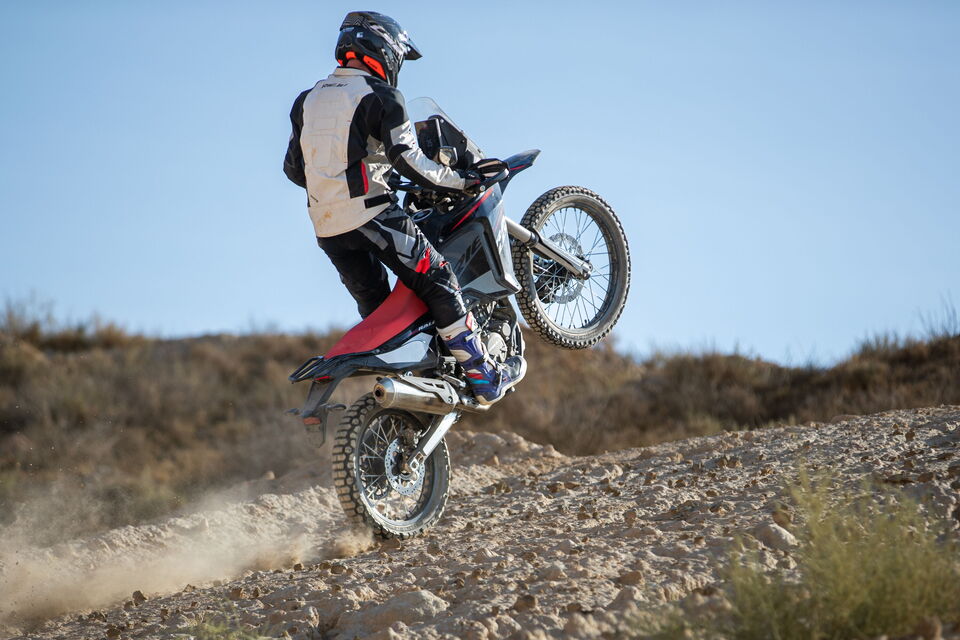
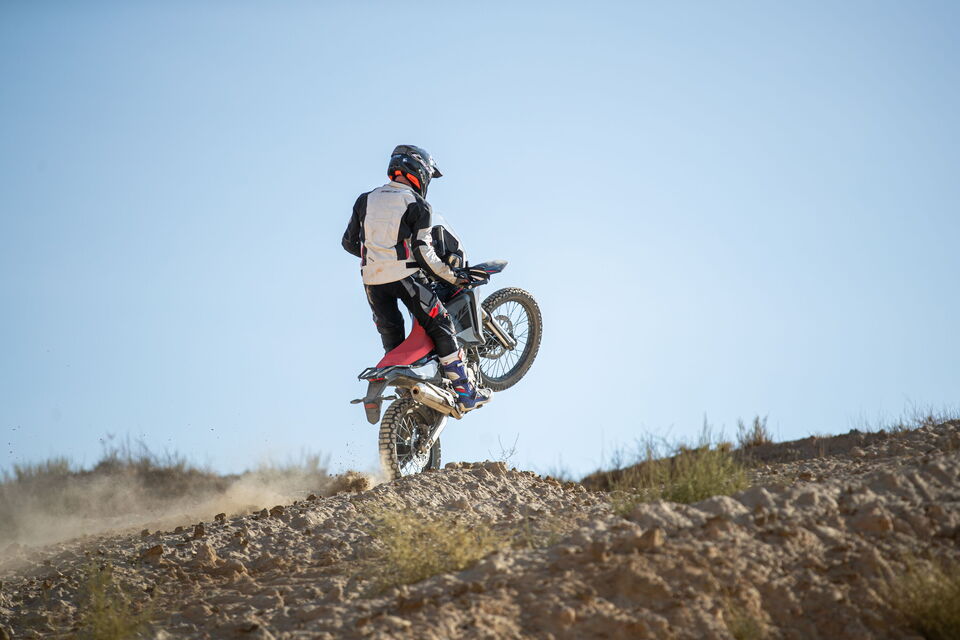
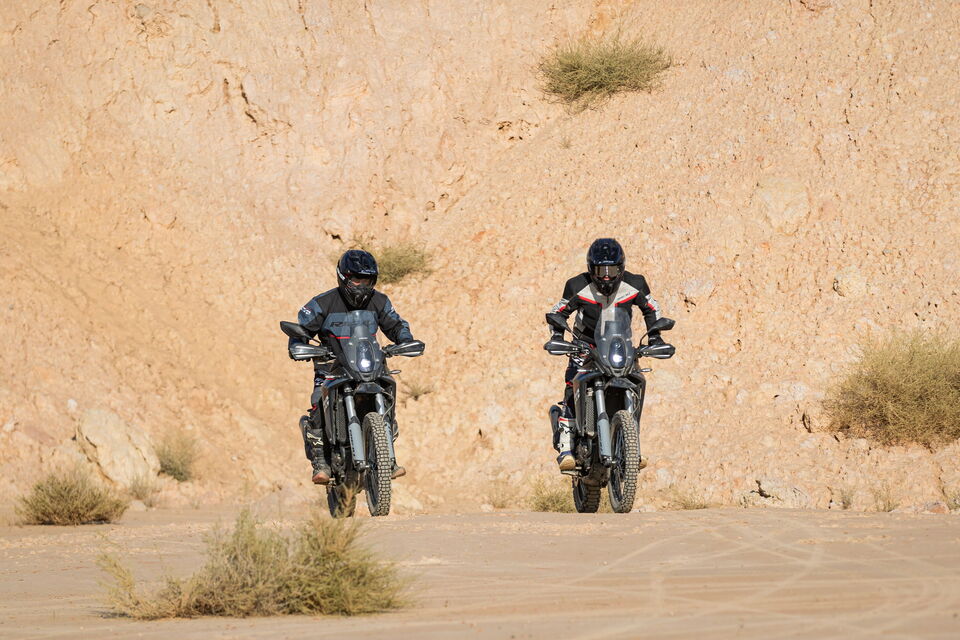
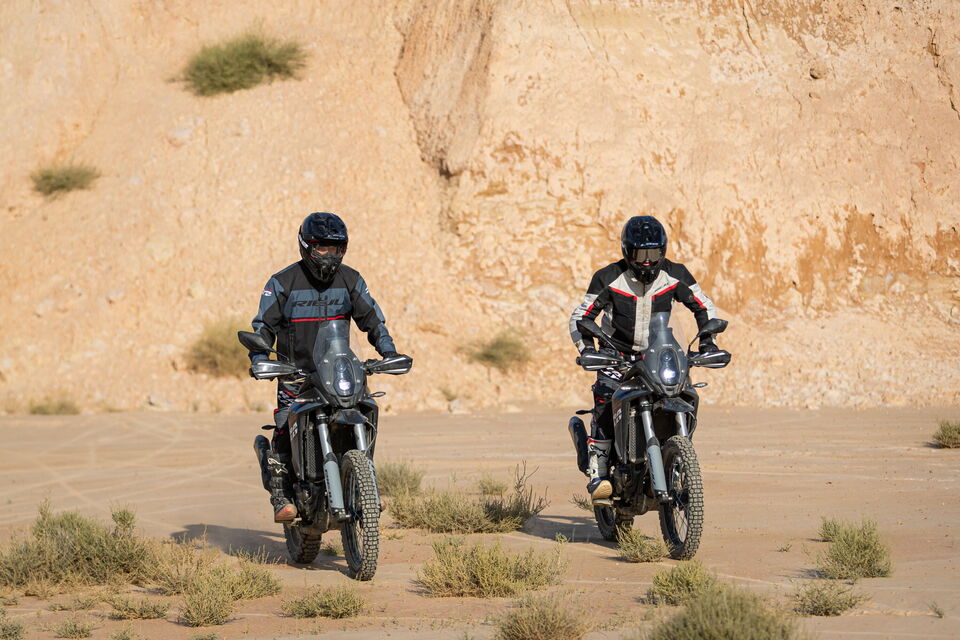
The Aventura Rally 307 has a development story that is unusual in the 2026 motorcycle market. Rieju engineer August Castellà tested a prototype at the Touareg Legend Rally, an event following original Dakar routes through North Africa, without a support crew and without assistance, riding solo from start to finish. He documented 72 points for improvement. Rieju then built two pre-production motorcycles and tested them with Castellà and YouTuber Willy Fox at the Hellas Rally in Greece. Only after that did the motorcycle enter production.
That approach is unusual. Large manufacturers often send prototypes into controlled test programs. Rieju sent an engineer solo into the Sahara. The 307 is the product of that method, and in the source material this is presented as documented development history rather than marketing theater.
Engine: 293 cc, TFI Injection, 33.5 hp—Loncin Development for Rieju
The liquid-cooled 293 cc four-stroke single comes from Loncin, the Chinese engine manufacturer that also supplies BMW. The unit was developed for Rieju’s enduro line and uses TFI, or Throttle Body Fuel Injection. Fuel is injected directly into the throttle body, providing more precise response across changing load conditions and better efficiency than conventional carburetion. Output is 33.5 hp, or 24.6 kW, with 27 Nm of torque, a six-speed transmission, slipper clutch, chain final drive, and Euro 5+ compliance.
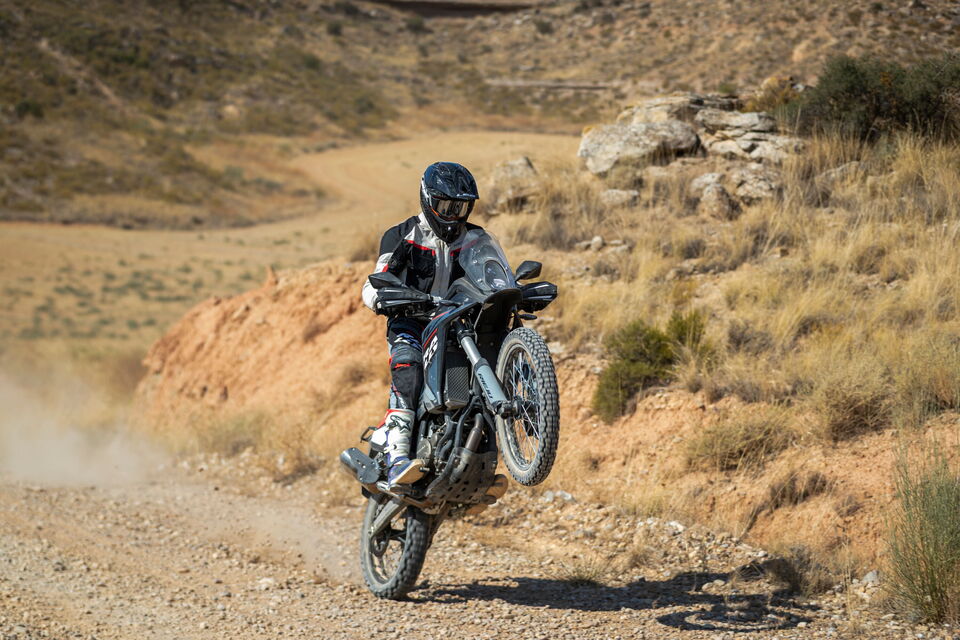
Thirty-four horsepower is respectable for a sub-300 cc single, but the Aventura Rally 307 does not have the muscle to bulldoze through terrain on torque alone. A measured pace suits it better. On the road, the limitation becomes clearer: if the engine is not kept close to the upper end of the rev range, progress on backroads is not especially quick. But this motorcycle was developed primarily for dirt and gravel, not fast paved-road riding.
Suspension: 235 mm Fully Adjustable—Class-Leading
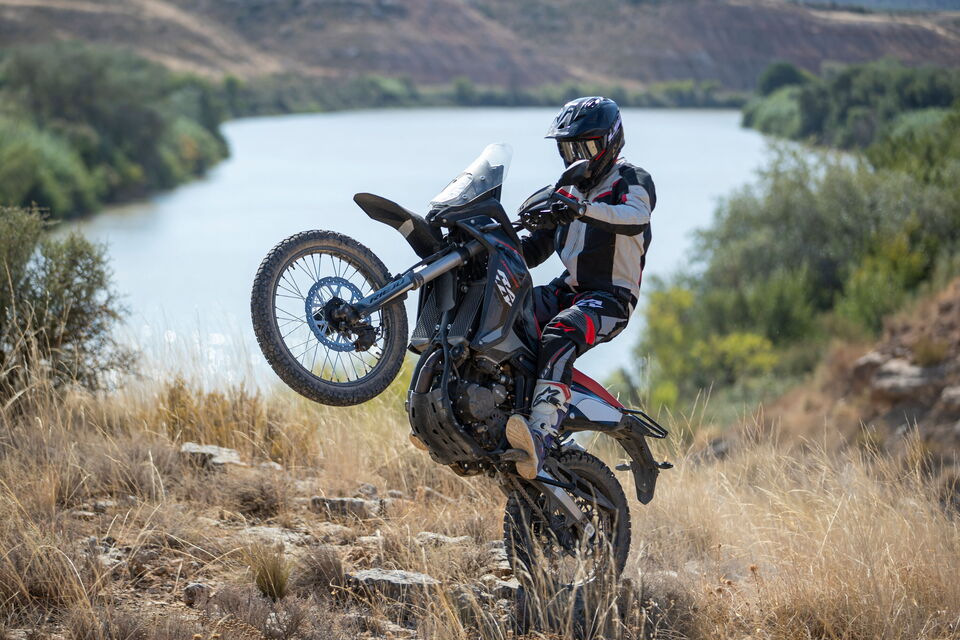
The suspension is the Aventura Rally 307’s strongest technical argument against its direct rivals. A 43 mm USD fork is fully adjustable. The progressively linked rear monoshock is also fully adjustable. Travel is 235 mm at both ends. No direct rival at this price—the Honda CRF300 Rally, Voge 300 Rally, or KTM 390 Adventure—offers this combination of full adjustment and 235 mm of travel.
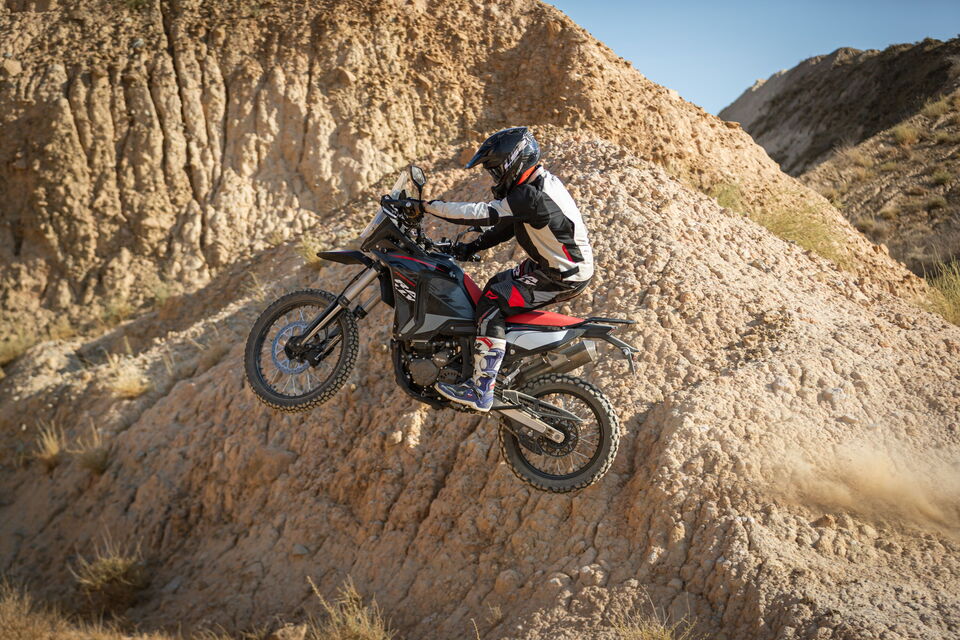
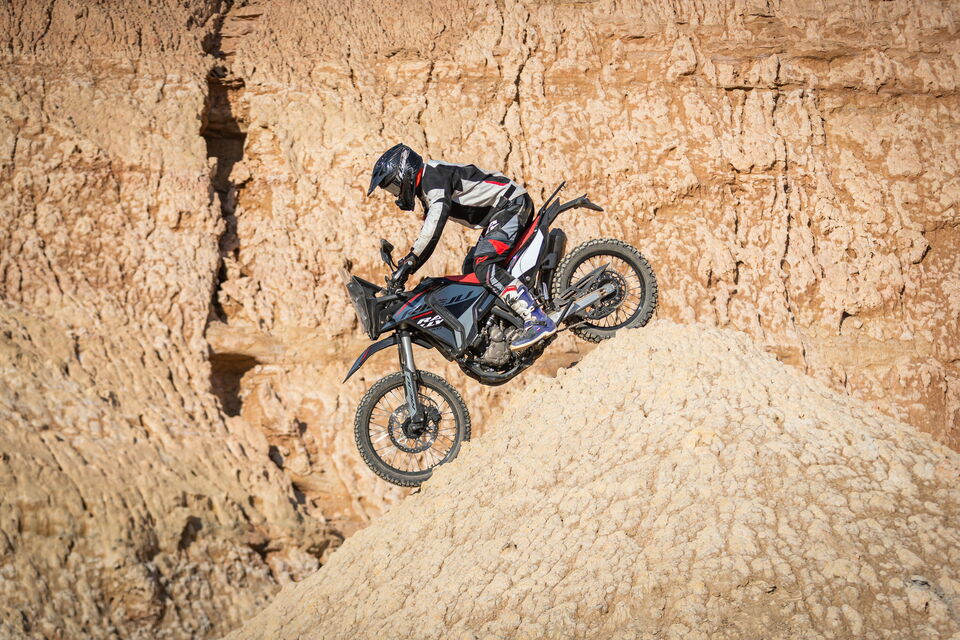
The stock setup is firm and controlled. The Honda and Voge are generally softer and can be overwhelmed by heavier or more enthusiastic riders. According to our sources, compression damping is too firm in the factory setting, but the long 235 mm travel does not produce excessive pitching. The Rieju absorbs potholes, roots, and rough off-road impacts better than most direct competitors.
Fork and shock are clearly calibrated for adventure trails and off-road use. For sporty paved-road riding, the fully adjustable suspension gives the owner the ability—and the need—to change the setup.
Weight, Geometry and What They Mean Off-Road
Dry weight is 138 kg and ready-to-ride weight 158 kg. For comparison, the Honda CRF300 Rally weighs around 153 kg despite carrying a smaller fuel tank. If the Rieju’s 20.5-liter tank is not filled to the top, the practical difference between the two becomes negligible. The wheelbase is compact—35 mm shorter than the CRF and 90 mm shorter than the Royal Enfield Himalayan 450. That makes the 307 agile and easy to balance, particularly on wet, slippery trails.
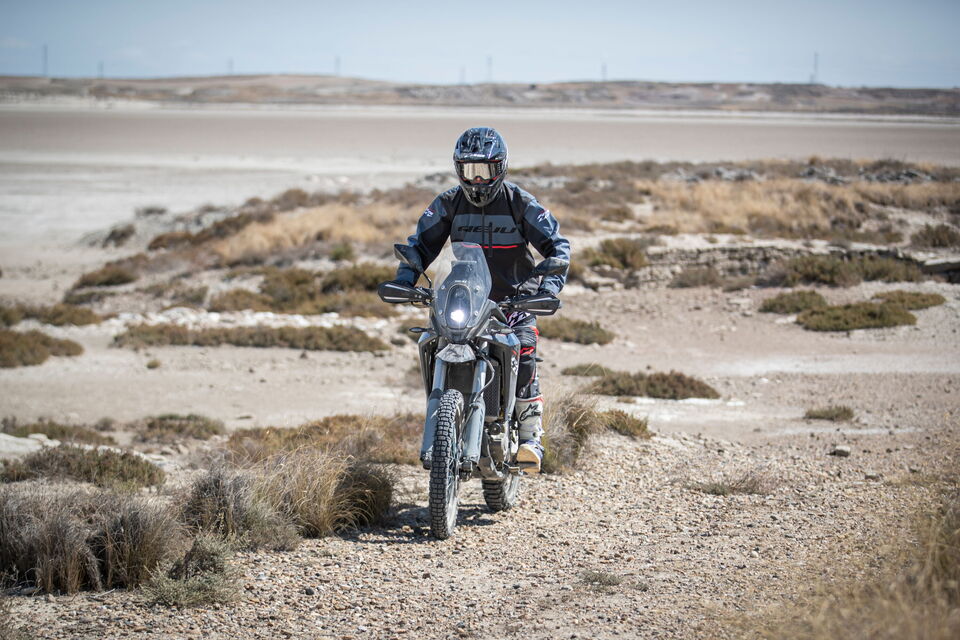
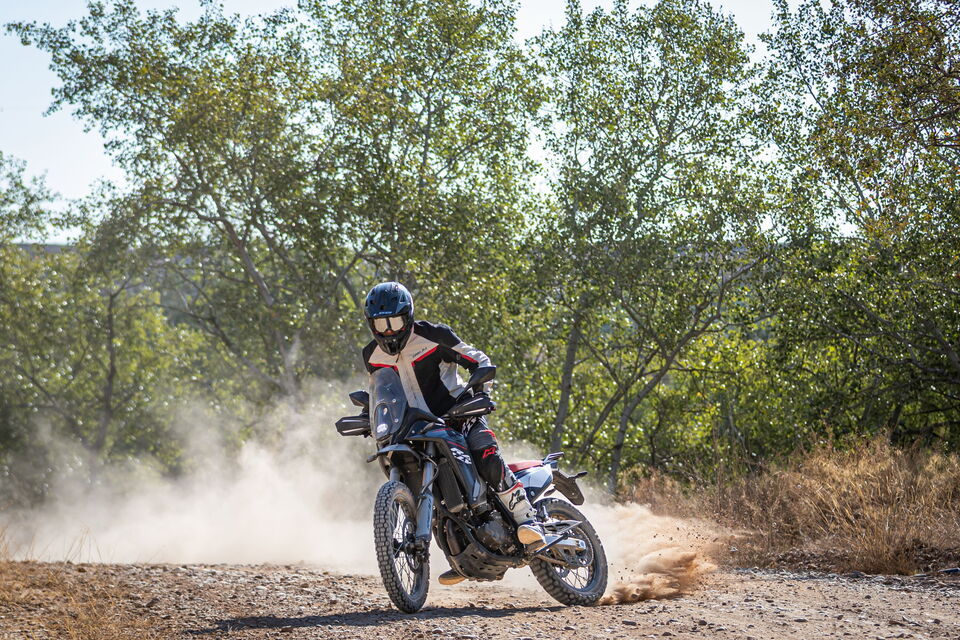
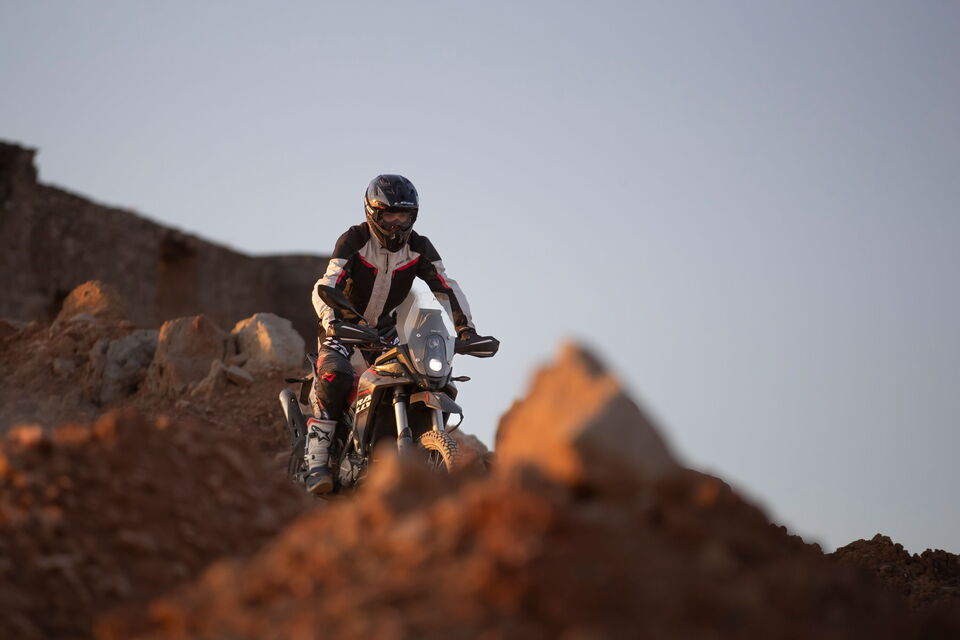
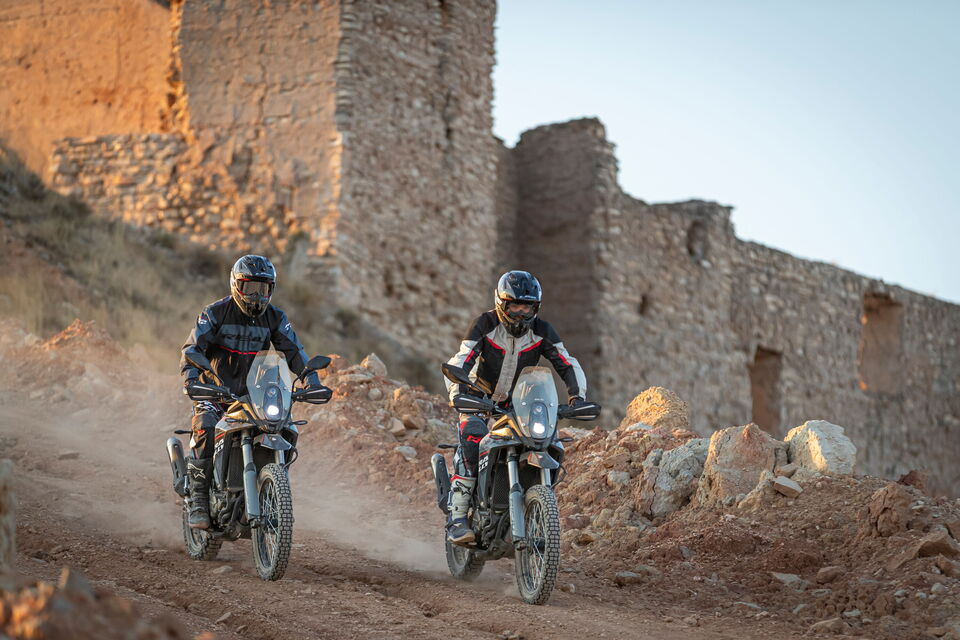
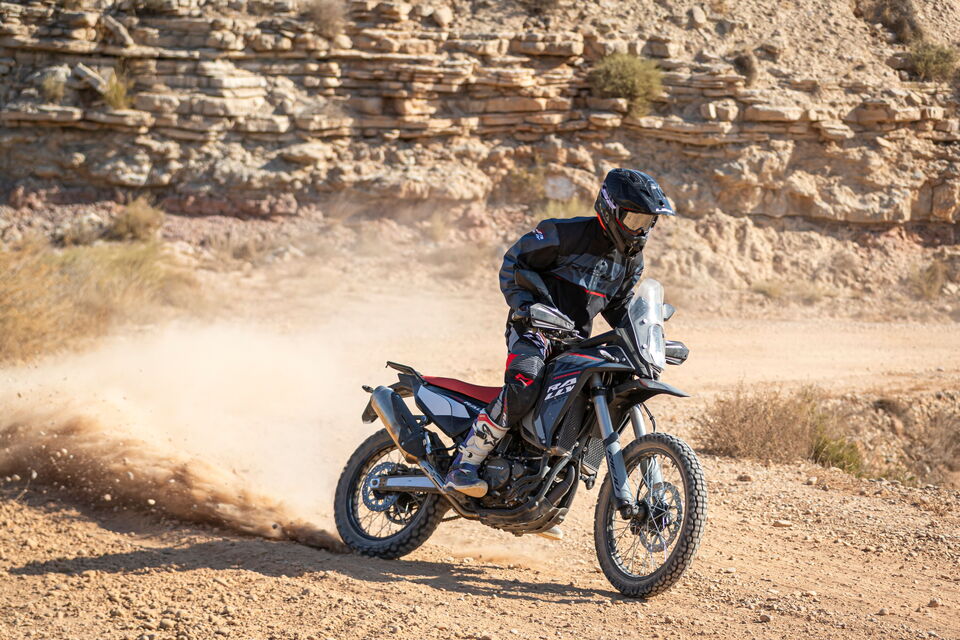
It feels confident on unpaved tracks in third gear, absorbs rough terrain, and finds more grip than the standard Helios Trail tires might suggest. Mud riding also works well. The vertical 7-inch TFT with day/night mode, Mirror Link, and smartphone pairing is easy to read and unusually sophisticated for this price class.
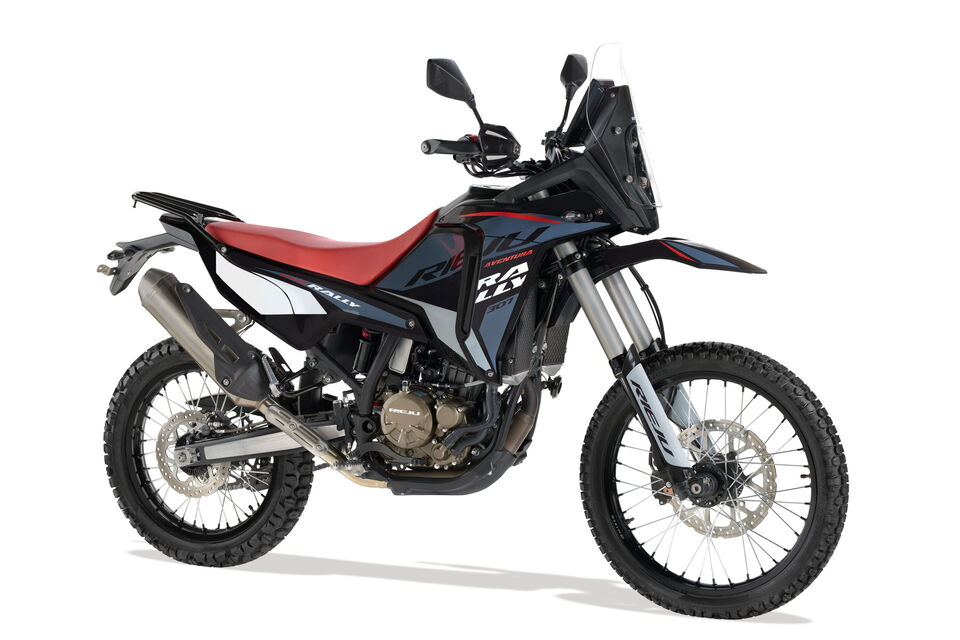
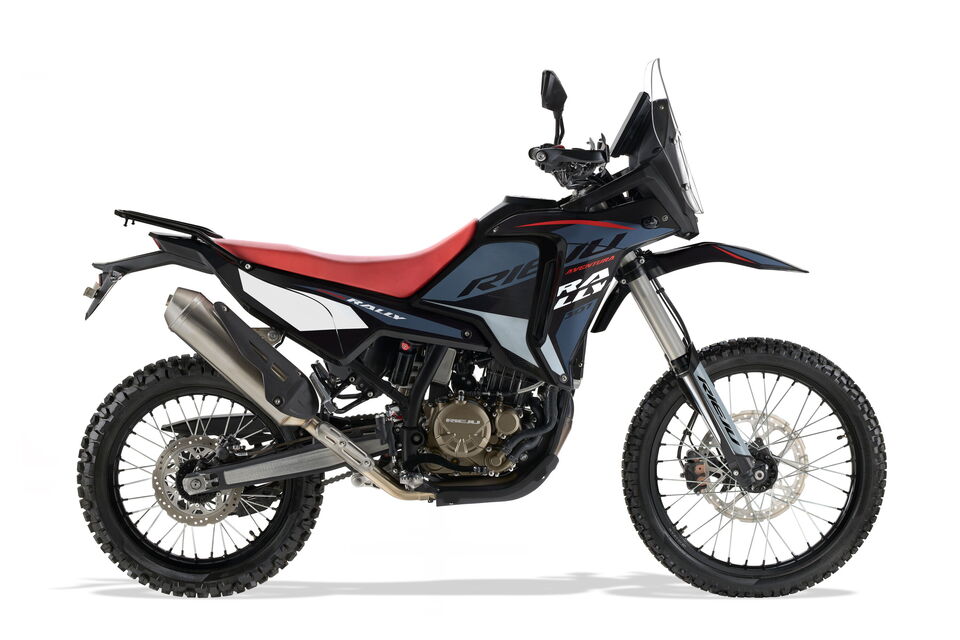
One important point concerns the 307R version. The 307R is not a separately orderable motorcycle. Rieju offers an R Kit consisting of Michelin Tracker tires, a Rieju by ACD aluminum skid plate, and red graphics. Owners who want to upgrade a standard 307 to R specification buy the kit separately.
Ergonomics: 890 mm Seat Height, Upright Rally Position
An 890 mm seat height is typical for a rally enduro in this class, with the Honda CRF300 Rally in a similar range. The riding position is upright and relaxed: wide enough for comfortable seated riding, compact enough for standing on the pegs. Footpeg position and handlebar width are designed specifically for standing off-road. The low dry weight and compact geometry make the bike manageable even for riders around 1.70 meters tall. Test engineer August Castellà, at 1.80 meters, can place both feet flat on the ground.
Price Positioning: What EUR 4,790 Buys
The German price is EUR 4,790. A Honda CRF300 Rally costs around EUR 7,800 with 27 hp, 153 kg, no fully adjustable suspension, and a proven accessory market. The Voge 300 Rally is EUR 4,799 with 29 hp, 158 kg, substantially less suspension travel, and no full adjustment. The Royal Enfield Himalayan 450 is around EUR 6,000, with more power from a 450-class single.
Rieju positions the Aventura Rally 307 against the Honda CRF300 Rally and Royal Enfield Himalayan 450. The price argument is strong: for EUR 4,790, there is no other motorcycle in comparison thus far combining fully adjustable 235 mm suspension, 21/18-inch wire-spoke wheels, and a 20.5-liter tank. Dealer-stated consumption of around 3.2 L/100 km produces a theoretical range of more than 600 km.
What Test Riders Say—and What Is Still Missing
Off-road, the motorcycle works well and the suspension calibration is a positive surprise compared with directly priced budget rivals. The short-geared engine suits dirt riding and relaxed trail touring but is too weak for sporty backroad use. The standard Helios Trail tire is not among the strongest in the segment; the 307R kit with Michelin Tracker tires directly addresses that weakness.
What is still missing is long-term reliability data. The model has only been available in Germany since spring 2026. Stationary noise has not been officially published, so Tyrol compatibility cannot be confirmed and should be checked with the dealer.
Verdict
The Rieju Aventura Rally 307 is the motorcycle Honda fans have spent years wishing existed as an affordable evolution of the CRF Rally idea. Its development story—one engineer solo in the desert, 72 documented improvements, and genuine rally competition with prototypes—is unique for a EUR 4,790 motorcycle. The suspension convinces, while the engine is appropriate for the concept but not built for sporty road use. Riders who explore dirt, travel gravel roads, and want uncompromising rally flavor for less than EUR 5,000 currently have no direct rival.
Quick Check
+ 235 mm suspension travel front and rear, both fully adjustable: class-leading figure; strong stock performance after setup; high-strength steel backbone frame + aluminum swingarm.
+ 138 kg dry / 158 kg ready to ride; short wheelbase, 35 mm shorter than CRF; agile, confidence-inspiring balance on wet trails and easy handling.
+ 20.5-liter tank: largest fuel capacity in the class; approx. 3.2 L/100 km dealer COC figure; more than 600 km theoretical range; 21/18-inch wire-spoke wheels; generous ground clearance.
+ Development: August Castellà rode the Touareg Legend Rally solo on original Dakar routes in Morocco, documented 72 improvements, then tested pre-production prototypes at the Hellas Rally.
+ Vertical 7-inch TFT with Mirror Link, day/night mode and smartphone pairing; switchable two-channel ABS for dirt; slipper clutch; full LED; EUR 4,790 incl. ancillary charges in Germany.
+ 307R upgrade kit available: Michelin Tracker + Rieju by ACD aluminum skid plate + red graphics; sold separately, not a separate motorcycle variant.
– Road performance is limited: the engine needs to be kept near the upper rev range for brisk progress; 33.5 hp for roughly 160 kg is not a backroad-sport package.
– Suspension is primarily off-road calibrated; sporty mixed-road use requires adjustment.
– Standard Helios Trail tires are not the strongest in the segment; the 307R Michelin Tracker kit is the better off-road choice.
– Stationary noise not published; Tyrol compatibility cannot be confirmed and should be checked before purchase.
– Young model: German launch spring 2026; long-term reliability data are not yet available; dealer network is still developing, so workshop access should be checked.
– 890 mm seat height: challenging for shorter riders; a seat test is recommended.
Technical Specifications: Rieju Aventura Rally 307 (2026)
Brand / Model: Rieju Aventura Rally 307; manufacturer: Rieju España S.A., Figueres/Catalonia; engine by Loncin, China; German market launch spring 2026; 307R is not a separate motorcycle but a separately available upgrade kit
Engine: Liquid-cooled 293 cc four-stroke single with TFI Throttle Body Fuel Injection; DOHC; 78 mm bore, 61.2 mm stroke; 10.7:1 compression; six-speed; slipper clutch; chain drive; Euro 5+; A2 compliant
Power: 33.5 hp / 24.6 kW
Torque: 27 Nm
Top Speed / Consumption: Approx. 130 km/h; approx. 3.2 L/100 km dealer COC figure; approx. 3.4 L/100 km
Fuel Tank / Range: 20.5 liters; manufacturer claims more than 500 km; approx. 600+ km at 3.2 L/100 km
Frame: High-strength steel backbone frame; aluminum swingarm
Fork: 43 mm USD; 235 mm travel; fully adjustable
Rear Shock: Progressively linked monoshock; 235 mm travel; fully adjustable
Front Brake: Single 300 mm disc; two-channel ABS; rear ABS switchable for off-road use
Rear Brake: Single 240 mm disc; ABS, switchable
Wheels: 21-inch front / 18-inch rear; wire-spoke wheels, tubeless
Standard Tires: Helios Trail; 80/100-21 front; 120/80-18 rear
307R Kit: Separately available: Michelin Tracker tires; Rieju by ACD aluminum skid plate; red racing graphics. Cannot be ordered as a standalone motorcycle variant.
Electronics / Equipment: Vertical 7-inch TFT; Mirror Link; day/night mode; smartphone pairing; switchable two-channel ABS; full LED lighting; slipper clutch
Ergonomics: 890 mm seat height; upright rally position; handlebar width and footpeg position optimized for standing
Weight: 138 kg dry; 158 kg fully fueled
Stationary Noise: Not officially published; Tyrol compatibility cannot be confirmed; ask dealer
Service: First inspection at 1,000 km; then every 5,000 km
Development Test: Touareg Legend Rally on original Dakar routes in Morocco, solo with prototype; 72 improvement points documented; followed by Hellas Rally with pre-production prototypes; test engineer August Castellà, Rieju R&D
German Price: EUR 4,790 incl. ancillary charges
Warranty: 2 years