Review Royal Enfield Bullet 350 (2026)

More Than 90 Years—and Still the Original
The Bullet 350 is not a retro motorcycle. Retro means imitating the look of the past. The Bullet is the source that retro designs copy. Since 1932. J-platform engine, long-stroke 349 cc single, 20.4 hp, 27 Nm, 19/18-inch wire-spoke wheels, two-channel ABS, USB, and signature gold pinstriping. EUR 5,240. If you want to buy a motorcycle with history rather than invent a story around one, the Bullet is that motorcycle.
As of: July 17, 2026 | Model: Royal Enfield Bullet 350 (2026; J-platform; 349 cc single; retro/classic; A2) | Manufacturer: Royal Enfield, Chennai, India; Eicher Motors | German price: from EUR 5,240 plus ancillary charges | Stationary noise: not published | Warranty: 3 years, Royal Enfield standard
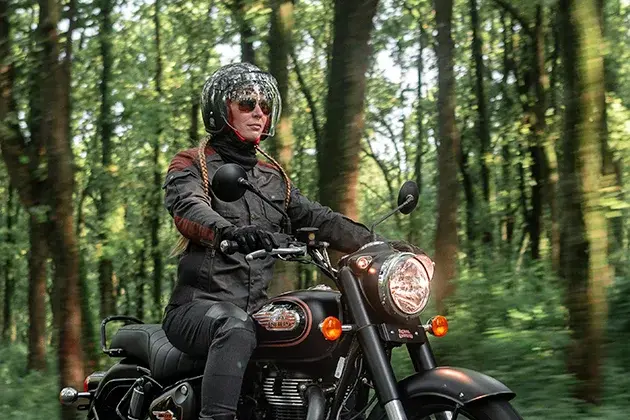
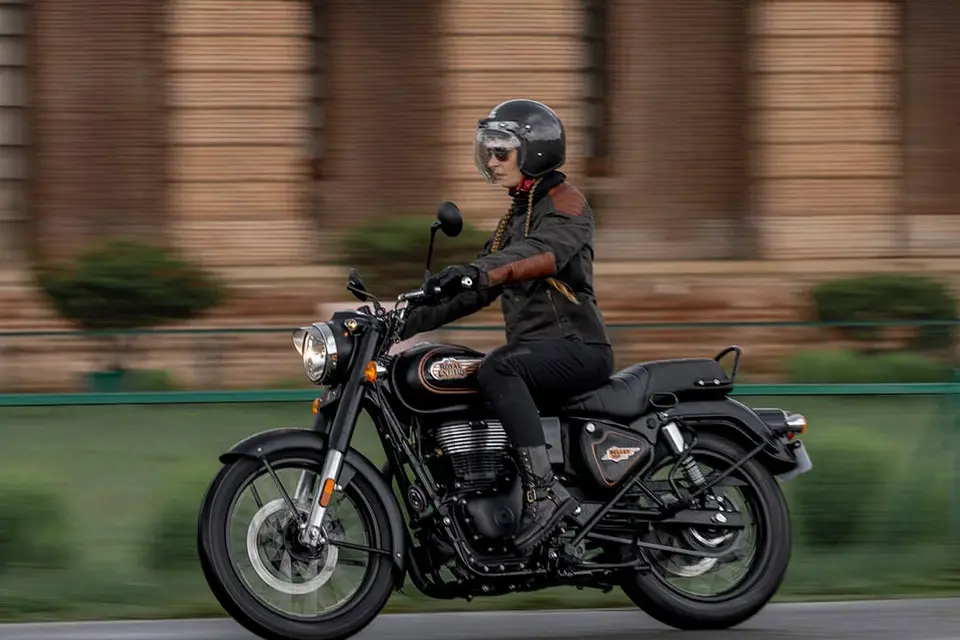

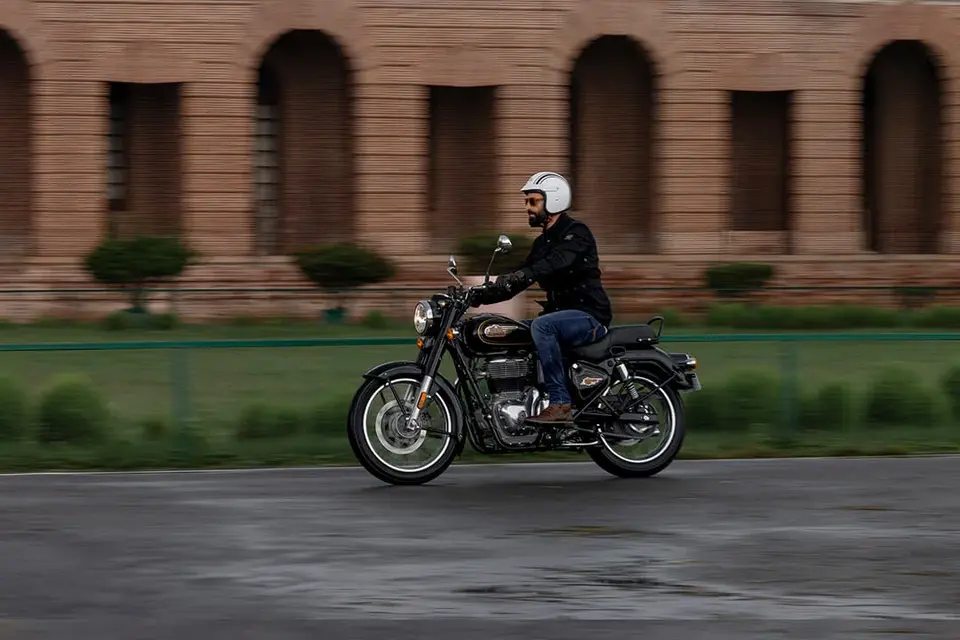
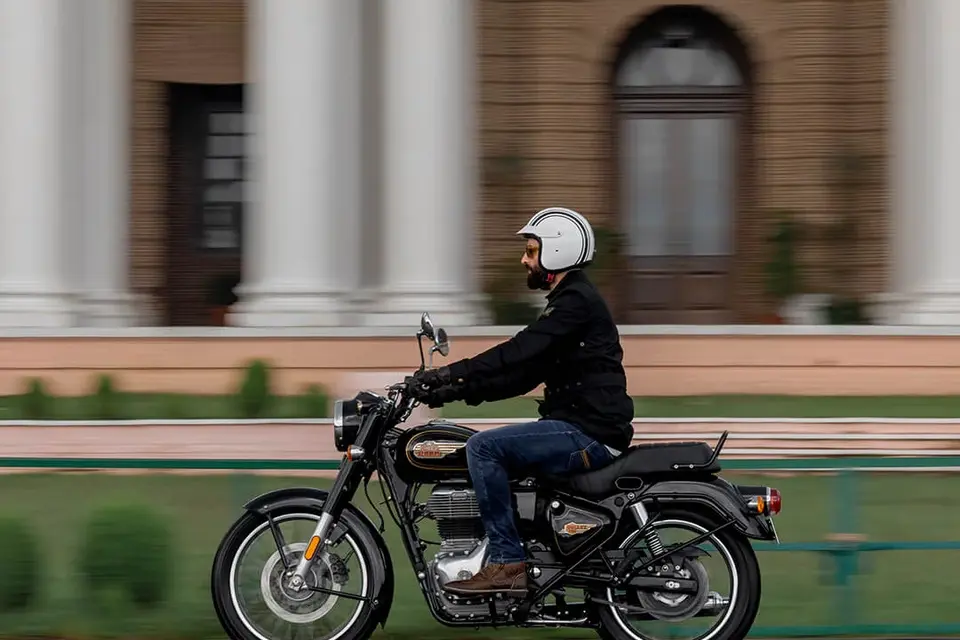
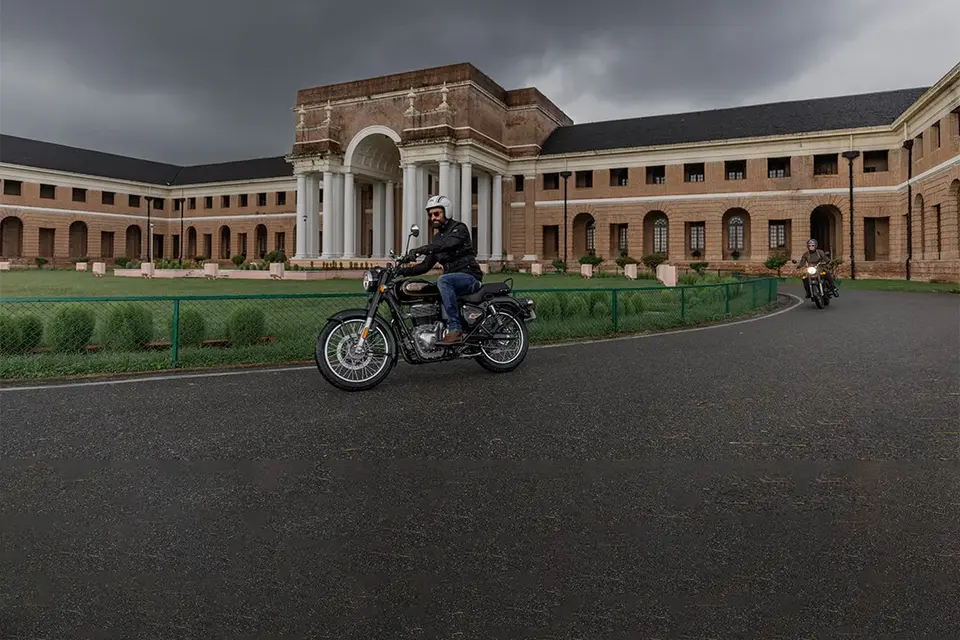
1932. The Bullet appears for the first time in the pages of The Motor Cycle. In 1948 it gains a rear swingarm, an innovation that changes motorcycle design. In 1952 Johnny Brittain wins the Scottish Six Days Trial on one. During the 1950s, the Indian Army orders 500 Bullets for high-altitude service in Kashmir. The Bullet climbs, survives, and stays. For decades.
2026. The Bullet is still here. Not as a museum piece, but as a new motorcycle you can buy today for EUR 5,240—and ride with a model biography no other motorcycle can match. Ducati was founded in 1926, Honda in 1948, Yamaha in 1955. The Bullet model line has existed since 1932. No line on a spec sheet can replace that lineage.
The New Generation: J-Platform, No More Kickstarter
In 2023, Royal Enfield moved the Bullet onto its modern J-platform, using the same basic frame and engine architecture found in the Meteor 350, Classic 350, and HNTR 350. This is the first Bullet generation in the model’s history without a kickstarter. Electric start only. That sounds like a small detail. For anyone familiar with Bullet history, it is a statement.
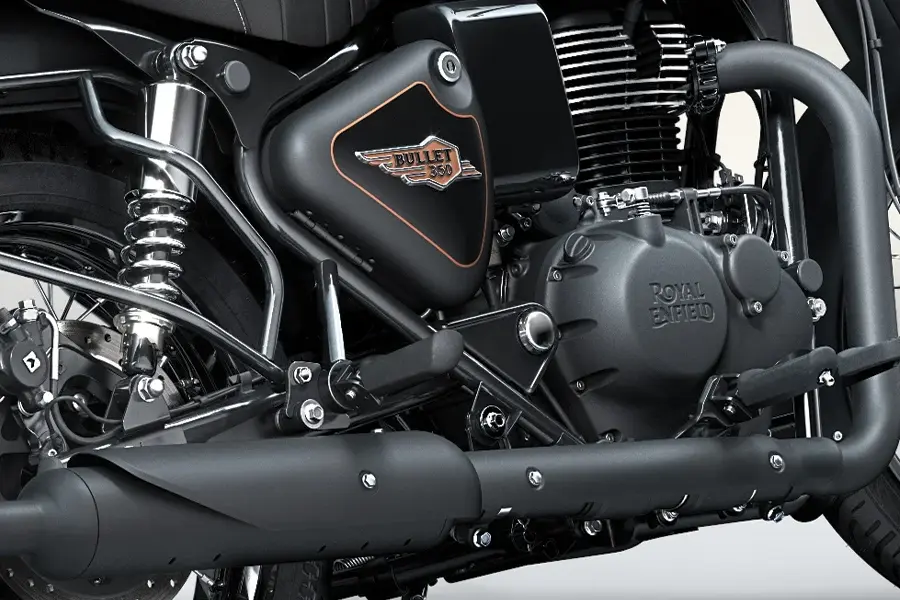
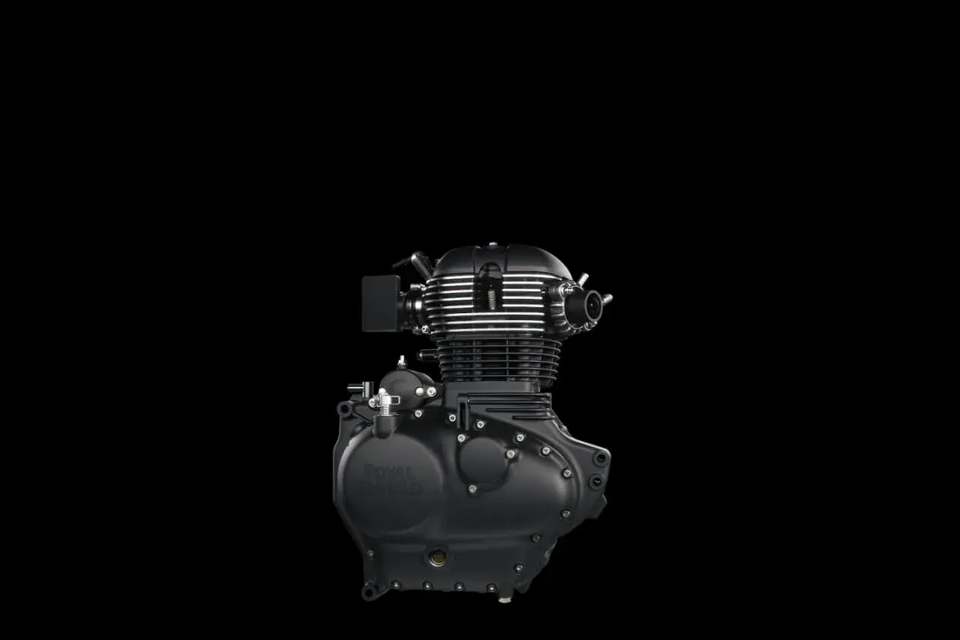
The J-platform engine is a genuine step forward. MOTORRAD noted in its road test that the old 350 Classic engine could no longer meet increasingly strict emissions regulations. The new unit can: Euro 5+, balance shaft, ECU control, and fuel injection. Output is 20.4 hp with 27 Nm. Its basic character is shared with the HNTR 350 and Meteor 350. The Bullet’s identity does not live in the engine alone. It lives in the shape.
The Shape: Teardrop Tank, Chrome, Gold Pinstriping
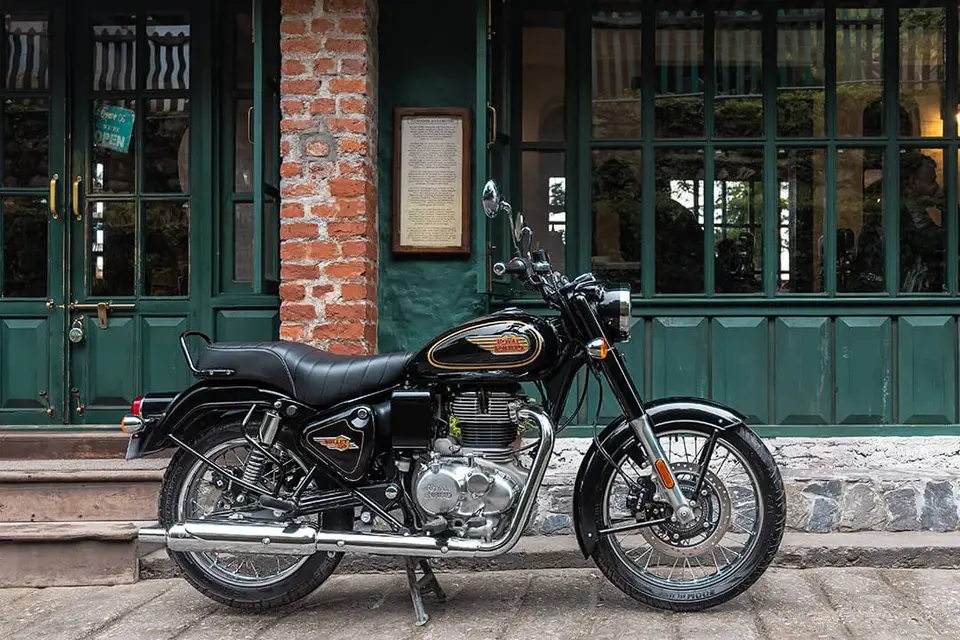
The Bullet 350 carries a silhouette that has remained recognizable for decades: the teardrop fuel tank, round headlight housing, long exhaust, wire-spoke wheels with chrome rims, and gold pinstriping as a visual signature. This is not a styling decision invented for 2026. It is continuity used as identity. Put a 1955 Bullet next to a 2026 model and try to list the differences at a glance—you may need a moment.
Royal Enfield describes the Bullet’s history as shining as brightly as its iconic gold pinstripes. The wording is promotional, but the underlying point is factual: the design language is rooted in the model’s own history rather than borrowed from someone else’s past.
20.4 hp—and Why the Number Leads To False Expectations
Twenty-point-four horsepower is not much. On paper, 20 hp sounds like small-bike territory. But 27 Nm at 4,000 rpm from a long-stroke single with a balance shaft and fuel injection creates a different kind of motorcycle. It pulls at 50 km/h in second gear, cruises comfortably around 90 km/h on backroads, and still has a small amount of reserve at 110 km/h. 1000PS tester NASTYNILS summed it up well: it is not an adrenaline machine, but a likable cruiser with authentic character.
MOTORRAD’s headline was equally concise: a lot of motorcycle for relatively little money. For EUR 5,240, the Bullet brings 19-inch wire-spoke wheels, chrome details, two-channel ABS, USB, and a model history stretching back to 1932. Build quality on the new J-generation is also a clear step forward from the old UCE generation, something riders familiar with both versions consistently notice.
19/18-Inch Wire-Spoke Wheels and the Classic Bullet Feel
Nineteen inches up front, 18 at the rear. Wire-spoke wheels. Tube-type tires. These are classic Bullet proportions. The wheels are larger than those on many rivals in the class: the HNTR 350 uses 17/18 inches, while the Meteor 350 uses 19/17. The Bullet’s 19-inch front wheel reinforces its traditional proportions and improves directional stability on poor roads. The compromise is equally traditional: repairing a puncture is more involved with tubes than with a tubeless setup.
EUR 5,240: History at an Accessible Price
The Bullet costs EUR 5,240 plus ancillary charges. Within the Royal Enfield lineup cited in the source, it sits above the HNTR 350 at EUR 4,590 and Meteor 350 from EUR 4,790, but below the Interceptor 650 at EUR 6,990 and the other 650 models. For the Bullet’s target rider—someone buying history and character rather than a speed record—the price is fair.
Bullet vs. Classic 350: The Question Everyone Asks
Royal Enfield offers two motorcycles aimed at a similar audience: the Bullet 350 and Classic 350. Both use the J-platform, the same engine, and the same basic architecture. The differences are in execution. The Bullet uses 19/18-inch wire-spoke wheels and carries the historic Bullet line that dates to 1932. The Classic 350 uses 19/17-inch wheels, offers more chrome and color variations, and since 2025 has a broader equipment package with full LED lighting and a gear-position indicator. Prices are similar. The decision comes down to whether you prefer Bullet history or Classic comfort and equipment. Both choices make sense. The Bullet is the more historically authentic one.
Verdict
The 2026 Royal Enfield Bullet 350 is the oldest continuously produced motorcycle model line you can buy new in Germany. It has 20.4 hp, 27 Nm, the J-platform, two-channel ABS, 19/18-inch wire-spoke wheels, chrome, gold pinstriping, and USB. Prices start at EUR 5,240. 1000PS calls it a likable cruiser with authentic character; MOTORRAD calls it a lot of motorcycle for the money. That is the essence. If motorcycling is about experience and character matters more than horsepower, the Bullet makes an unusually honest case for itself.
Quick Check
+ Bullet model line since 1932: the longest production history of any vehicle in the test series. 1000PS describes it as a likable cruiser with authentic character.
+ J-platform engine introduced to the Bullet in 2023: more modern, smoother, Euro 5+, ECU-controlled, with a balance shaft compared with the UCE predecessor.
+ 27 Nm at 4,000 rpm: early torque delivery and useful real-world backroad performance.
+ 19/18-inch wire-spoke wheels with chrome rims: historically correct Bullet proportions.
+ Classic Bullet design: teardrop tank, round headlight, gold pinstriping—not a retro imitation, but the original lineage.
+ Two-channel ABS standard. USB port standard.
+ From EUR 5,240: accessible price for a chrome-and-wire-spoke classic with genuine model history.
– 20.4 hp: not a performance engine; highway overtaking is limited; top speed around 115 km/h.
– Tube-type tires on wire-spoke wheels: puncture repair is more involved than with tubeless systems.
– Five-speed gearbox: less ratio spread than a six-speed transmission on longer highway stages.
– No TFT and no standard Bluetooth; Tripper navigation is compatible, but source advises confirming whether it is standard or optional.
– Exact ready-to-ride weight not published in the source; approximately 190–195 kg.
Technical Specifications: Royal Enfield Bullet 350 (2026)
Brand / Model: Royal Enfield Bullet 350 (2026; J-platform since 2023; 349 cc single; retro/classic; A2); manufacturer: Royal Enfield, Chennai, India; Eicher Motors Ltd.
History: Model line since 1932; Scottish Six Days Trial winner in 1952 with Johnny Brittain; Indian Army use in the 1950s; first Bullet without kickstarter with the 2023 J-generation; more than 90 years of production continuity
Engine: J-series air/oil-cooled long-stroke single; balance shaft; ECU; 349 cc; 20.4 hp / 15 kW; 27 Nm at 4,000 rpm; five-speed; chain drive; A2; Euro 5+
Front Suspension: 41 mm telescopic fork; approx. 130 mm travel
Rear Suspension: Twin shocks; six-step adjustable spring preload
Brakes: 300 mm front disc with two-piston caliper; 270 mm rear disc with single-piston caliper; two-channel ABS
Wheels / Tires: Wire-spoke wheels with chrome rims; 19-inch front / 18-inch rear; tube-type tires
Seat Height / Wheelbase: 805 mm seat height; 1,390 mm wheelbase
Fuel Tank / Consumption: 13 liters; approx. 3.0 L/100 km; approx. 430 km range
Electronics: Two-channel ABS; analog-digital instrument cluster; USB port; LED headlight. Tripper Dash navigation compatible; confirm with dealer whether standard or optional.
Bullet vs. Classic 350: Both use J-platform and identical engine. Bullet: 19/18-inch wheels and historic Bullet lineage since 1932. Classic 350: 19/17-inch wheels, more color variants, and since 2025 full LED equipment and gear-position indicator. Similar pricing. Choice: history, Bullet, versus broader comfort/equipment, Classic.
Stationary Noise: Not published; Tyrol threshold 95 dB(A)
Warranty: 3 years, Royal Enfield standard
German Price: EUR 5,240 plus ancillary charges