Review Suzuki Burgman 400 (2026)

The Torque Heavyweight Among Maxi-Scooters – 35 Nm, 42 Liters of Storage, EUR 8,500
The Burgman 400 is the original modern maxi-scooter, and for 2026 it makes no attempt to hide what it is: 400 cc, 35.2 Nm at just over 4,900 rpm, a massive torsionally rigid frame, a generously padded seat, and 42 liters of underseat storage. It offers more displacement and torque than the Yamaha XMAX 300 and Honda Forza 350, but it also carries 218 kg ready to ride and a higher price. The MY2026 update is limited to three new colors, Euro 5+ compliance, and a refined muffler cover.
As of: April 18, 2026 | Model: Suzuki Burgman 400, MY2026; technically unchanged apart from new colors + Euro 5+ | German MSRP: EUR 8,500 plus delivery charges
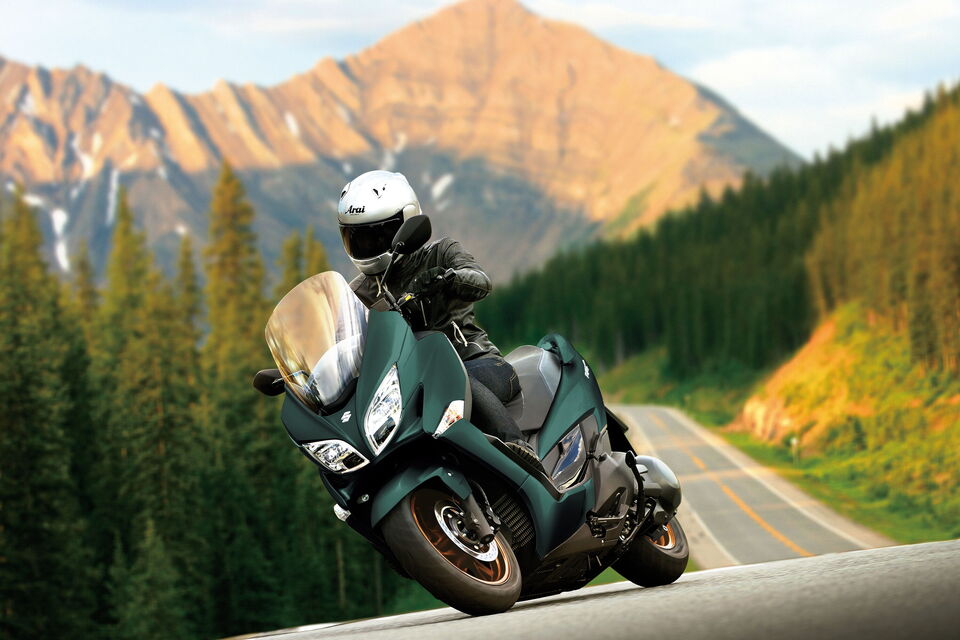
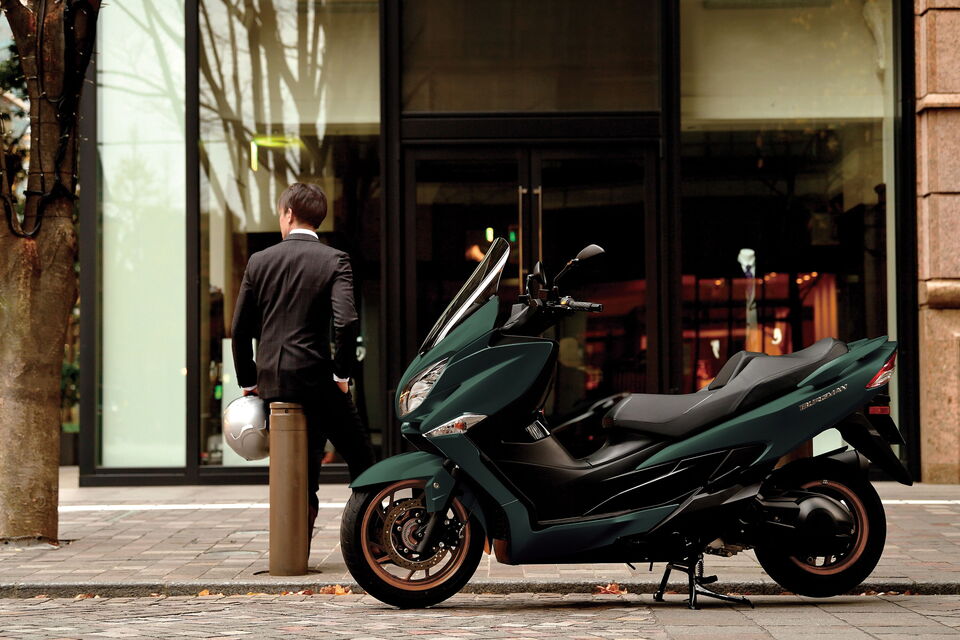
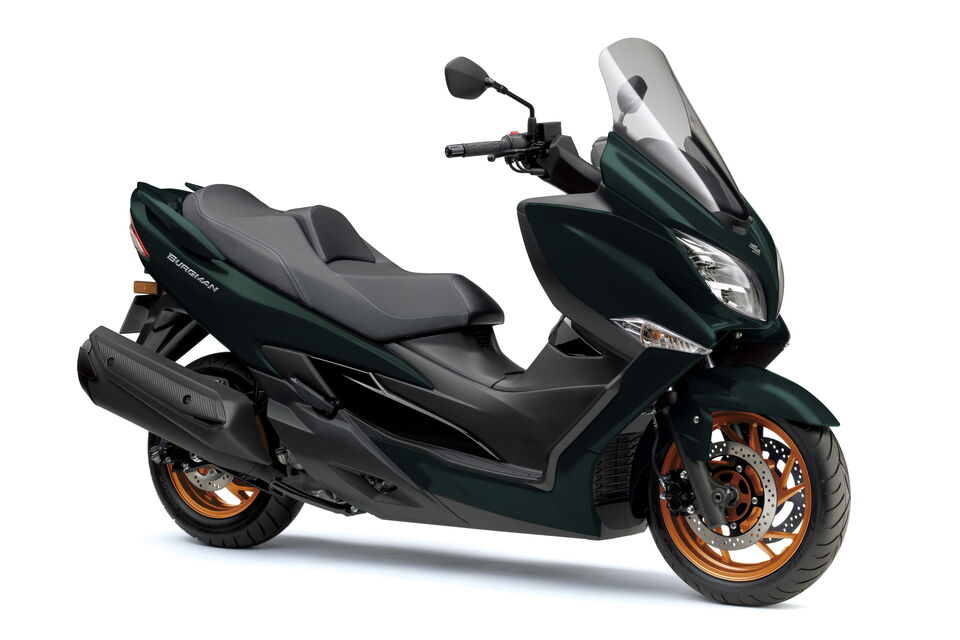
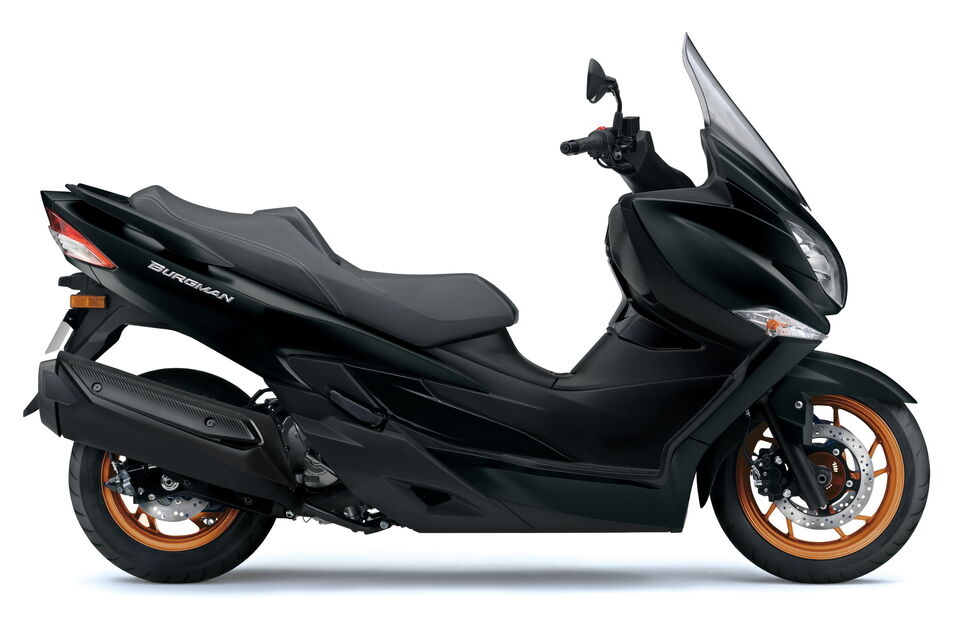
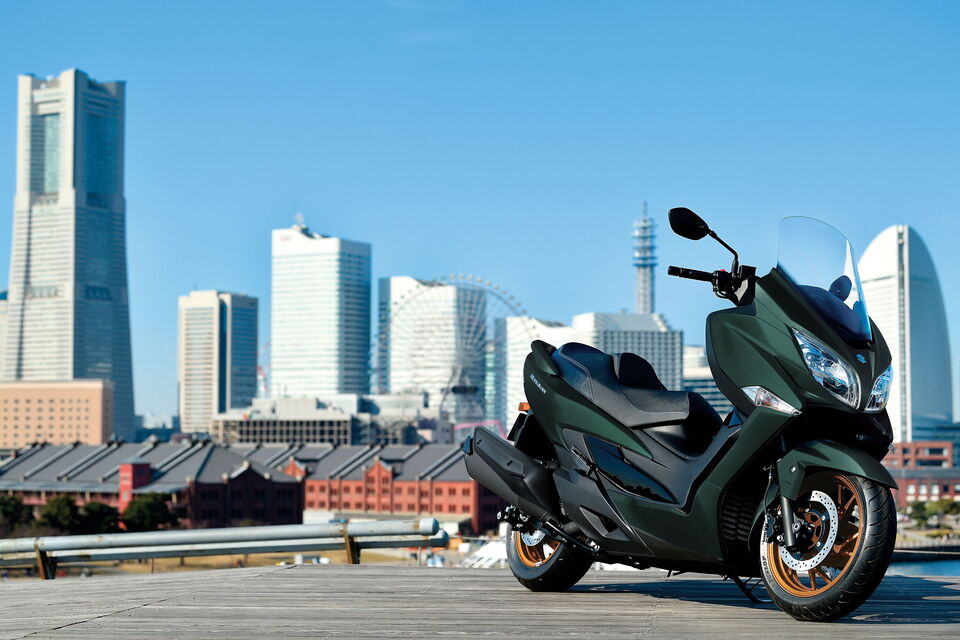
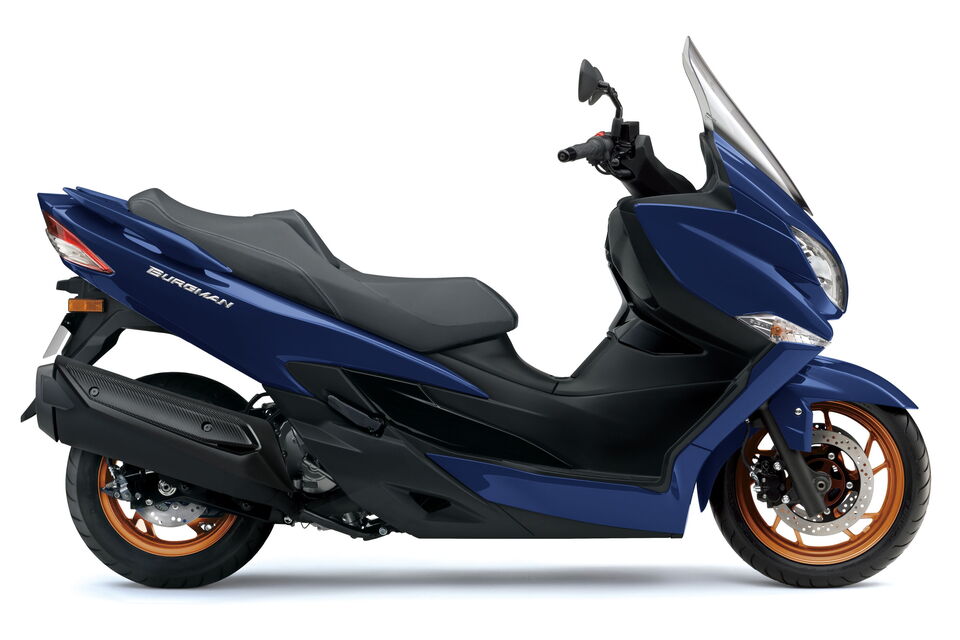
Concept: The Original Since 1998, Significantly Sportier Since 2017 – and Technically Unchanged for 2026
The Burgman 400 helped establish the large-displacement touring-scooter category and shaped the segment more than almost any other model. The 2017 redesign was the most substantial change in its history: a new frame, lower weight, a 15-inch front wheel instead of 14 inches, firmer suspension, and a slimmer tail. The trade-off was storage capacity, which dropped from more than 60 liters to 42.
Since then, Suzuki has focused on continuity. The MY2026 update is correspondingly modest: three new colors – Pearl Mat Shadow Green, Metallic Reflective Blue, and Metallic Mat Black No.2 – a revised muffler cover, and Euro 5+ calibration. Price is EUR 8,500, EUR 100 more than the previous year, plus ancillary charges.
Engine: 400 cc DOHC, 30 hp, 35.2 Nm – the Strongest Torque Figure in the 300/400 Mid-Class
The liquid-cooled 400 cc DOHC single produces 30 hp at 6,300 rpm and delivers its maximum 35.2 Nm at just 4,900 rpm. That gives the Burgman an advantage over the Yamaha XMAX 300 at 29 Nm and the Honda Forza 350 at 32 Nm in the source comparison. Two iridium spark plugs are intended to improve combustion speed and efficiency.
The result is strong roll-on performance – a genuine torque heavyweight. The CVT works unobtrusively and quietly. Traction control is standard, a sensible feature when 35 Nm is being sent to a 13-inch rear wheel on wet pavement.
Chassis: 41 mm Fork, 15-Inch Front Wheel, Seven-Step Rear Preload – More Dynamic Than Its Reputation Suggests
The massive, torsionally rigid steel frame is a defining Burgman feature. It contributes significantly to the 218 kg ready-to-ride weight, but it also delivers excellent stability. A 41 mm telescopic fork provides 110 mm of travel, while the rear monoshock offers seven-step spring-preload adjustment. The setup strikes a convincing balance between comfort and control: composed over rough pavement, yet firm and stable enough for a more ambitious pace.
Braking is handled by twin 260 mm front discs and a 210 mm rear disc. The system is effective, although the front requires a firm pull on the non-adjustable lever. Some riders criticize the relatively late ABS intervention.
What surprises many prospective buyers is how manageable the Burgman feels. The wide handlebar restores directness and agility that the dimensions do not suggest, particularly in city traffic. The long wheelbase, meanwhile, gives the scooter stability and calm handling on backroads.
Ergonomics: 755 mm Seat Height, 42 Liters of Storage, Lumbar Support
A 755 mm seat height is very low for a maxi-scooter in this class and makes ground contact easy for shorter riders. The seat has 20 mm more padding than the pre-2017 version and includes an adjustable backrest with 15 or 30 mm of adjustment. The deep seating position is comfortable, with useful lumbar support for longer rides.
The 42-liter compartment beneath the seat holds a full-face helmet plus rain gear. An optional 47-liter top case is available. The windshield is fixed and cannot be adjusted.
A recurring criticism concerns the two cockpit glove compartments: they are large enough for everyday items but cannot be locked. The analog instrument cluster with LCD insert is easy to read but looks dated next to competitors with TFT displays. There is no Bluetooth, no Garmin integration, and no Smart Key.
Cost: EUR 8,500 – the Most Expensive in the Class, With the Largest Engine and Four-Year Warranty
At EUR 8,500 before ancillary charges, the Burgman 400 sits clearly above its nearest rivals: the Yamaha XMAX 300 starts at EUR 6,899 and the Honda Forza 350 at around EUR 7,800. The premium mainly buys more displacement, more torque, and a robust, stable chassis – not modern connectivity, a TFT display, or keyless operation.
Suzuki provides a four-year warranty, which matters over longer ownership. The Burgman is aimed at riders who value proven engineering, durability, class-leading torque, and comfortable long-distance use more than TFT graphics, navigation, and Bluetooth. Riders with the opposite priorities will find the cheaper and more technologically modern XMAX 300 more attractive.
Verdict
For 2026, the Burgman 400 remains technically what it has been since the major 2017 redesign: a solid, dependable touring scooter with the strongest torque figure in its class, great comfort, and the kind of robustness its loyal owners value more than annual feature updates. That is both its strength and its weakness. Riders looking for modern connectivity and a smart cockpit need to look elsewhere. Riders who want proven touring substance will find it here.
Quick Check
+ 35.2 Nm at 4,900 rpm: strongest torque figure in the 300/400 mid-class in the source comparison.
+ Robust, torsionally rigid frame: excellent stability and strong straight-line composure.
+ 755 mm seat height: low for the class and confidence-inspiring for shorter riders.
+ Seat with lumbar support and adjustable backrest: helpful for long-distance comfort.
+ 42-liter underseat storage for a full-face helmet plus rain gear; optional 47-liter top case.
+ ABS + traction control standard; DOHC engine with two iridium spark plugs.
+ Surprisingly agile: wide handlebar helps offset the mass.
+ Seven-step adjustable rear spring preload.
+ Four-year warranty.
+ Euro 5+ from MY2026; solid used-market price stability.
– 218 kg: heaviest model in the mid-class comparison; Yamaha XMAX 300 is much lighter at 183 kg.
– EUR 8,500: most expensive in the class, yet no TFT, Bluetooth, Smart Key, or navigation.
– Glove compartments are not lockable.
– Windshield is fixed and non-adjustable.
– Front brake lever is non-adjustable; ABS intervention is criticized as late.
– No TFT cockpit, connectivity, or Smart Key: competitors are clearly more modern.
– MY2026 brings only new colors, Euro 5+, and a revised muffler cover – no major technical innovations.
Technical Specifications: Suzuki Burgman 400 (2026)
Brand / Model: Suzuki Burgman 400 (AN400D); in production since 1998; current major redesign dates from 2017; MY2026 technically unchanged
Engine: Liquid-cooled DOHC four-stroke single; 400 cc; two iridium spark plugs; fuel injection; continuously variable CVT; Euro 5+
Power: 30 hp / 22 kW at 6,300 rpm
Torque: 35.2 Nm at 4,900 rpm
Front Suspension / Brake: 41 mm telescopic fork; 110 mm travel; 15-inch wheel; twin 260 mm discs with two-piston floating calipers; ABS
Rear Suspension / Brake: Monoshock; seven-step adjustable spring preload; 13-inch wheel; 210 mm disc; ABS
Electronics: ABS + traction control standard
Tires: 120/70-15 front / 150/70-13 rear
Cockpit: Analog instruments with LCD insert; easy to read; no TFT, Bluetooth, or Smart Key
Storage: 42 liters under the seat, enough for a full-face helmet plus rain gear; two non-lockable glove compartments; optional 47-liter top case
Seat: 20 mm thicker padding since the 2017 redesign; adjustable backrest, 15 or 30 mm; lumbar support
Windshield: Fixed, non-adjustable
Weight: 218 kg fully fueled
Seat Height: 755 mm
Fuel Tank / Range: 13.5 liters; more than 300 km range
Fuel Consumption: Approx. 3.6 L/100 km
MY2026 Changes: Three new colors: Pearl Mat Shadow Green, Metallic Reflective Blue, Metallic Mat Black No.2; revised muffler cover; Euro 5+
German Price: EUR 8,500 plus delivery charges; four-year warranty