Review Suzuki GSX-8S (2026)

The Naked Bike That Covers Every Base – 270-Degree Twin, Quickshifter, EUR 9,400, Now Full LED
From the beginning, the GSX-8S has been the sensible motorcycle of Suzuki’s 800 platform: upright naked-bike ergonomics, the same 83-hp twin as the GSX-8R, a bidirectional quickshifter as standard, high-quality finish – all for less than EUR 10,000. For MY2026, LED turn signals are the only technical update, completing the switch to full LED lighting, along with three new colors.
As of: April 18, 2026 | Model: Suzuki GSX-8S, introduced in 2023; MY2026 adds LED turn signals + new colors | German MSRP: EUR 9,400 plus ancillary charges | A2 restrictable to 35 kW
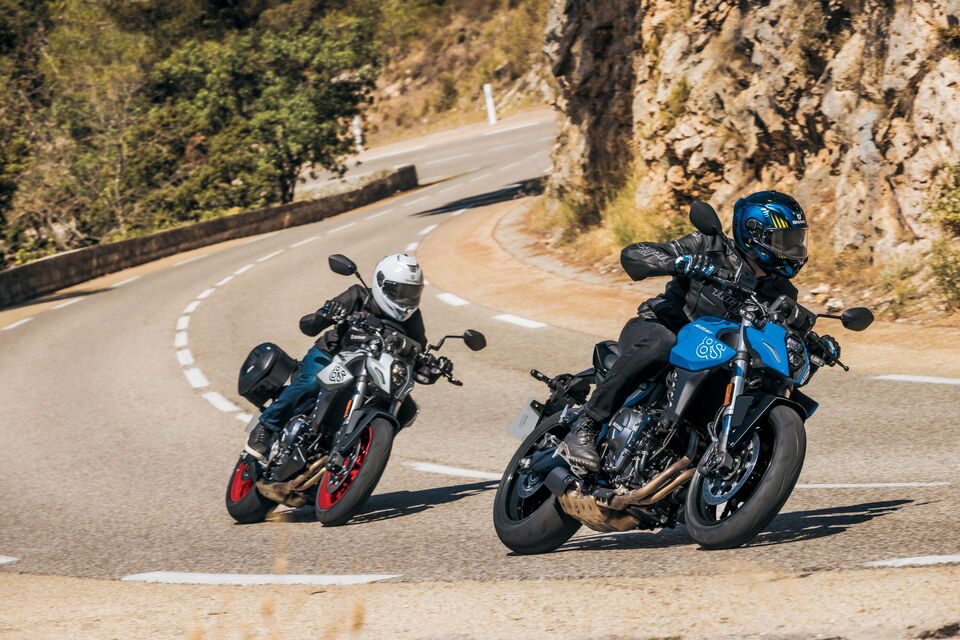
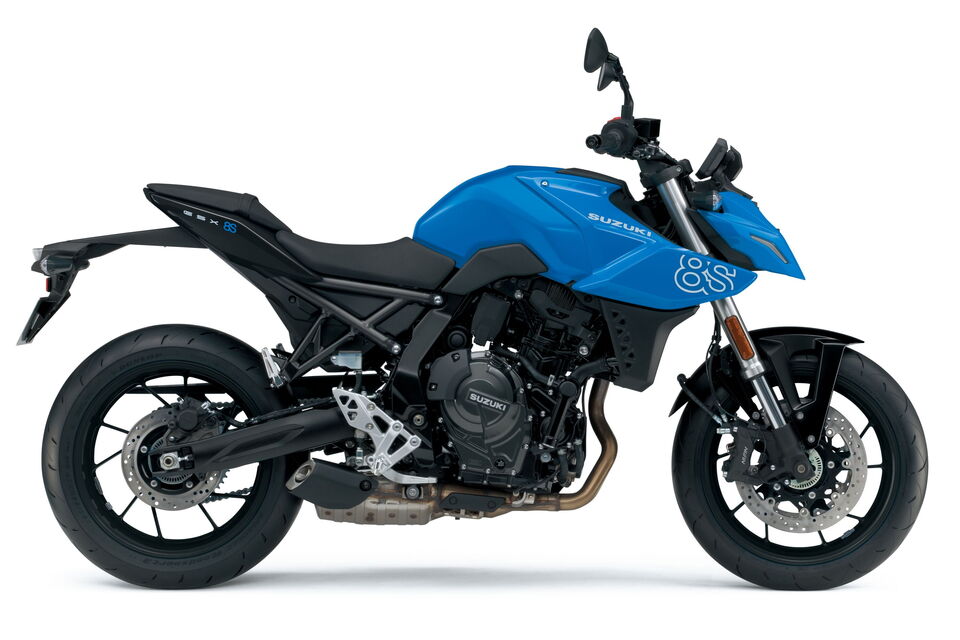
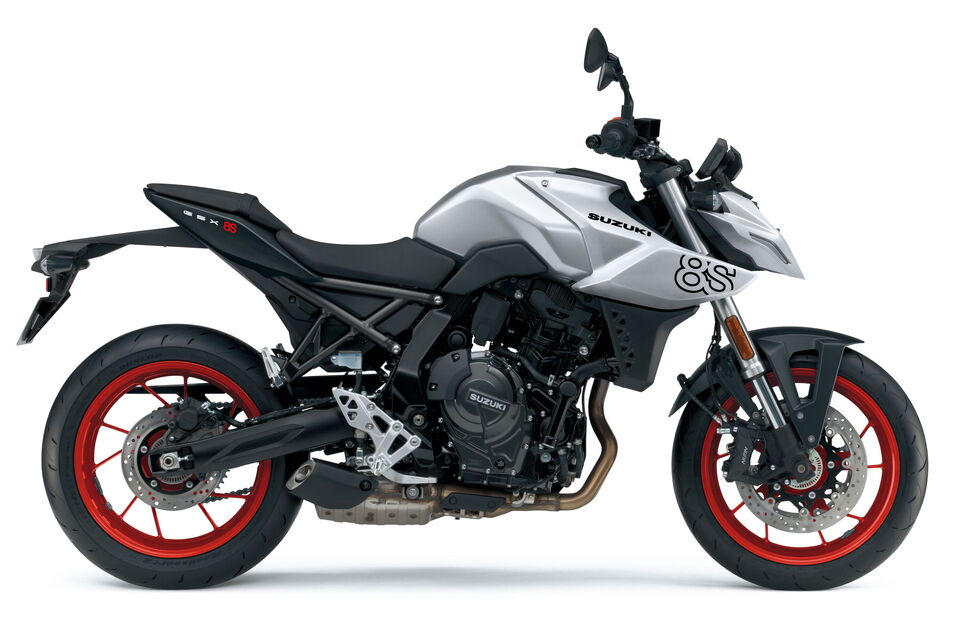
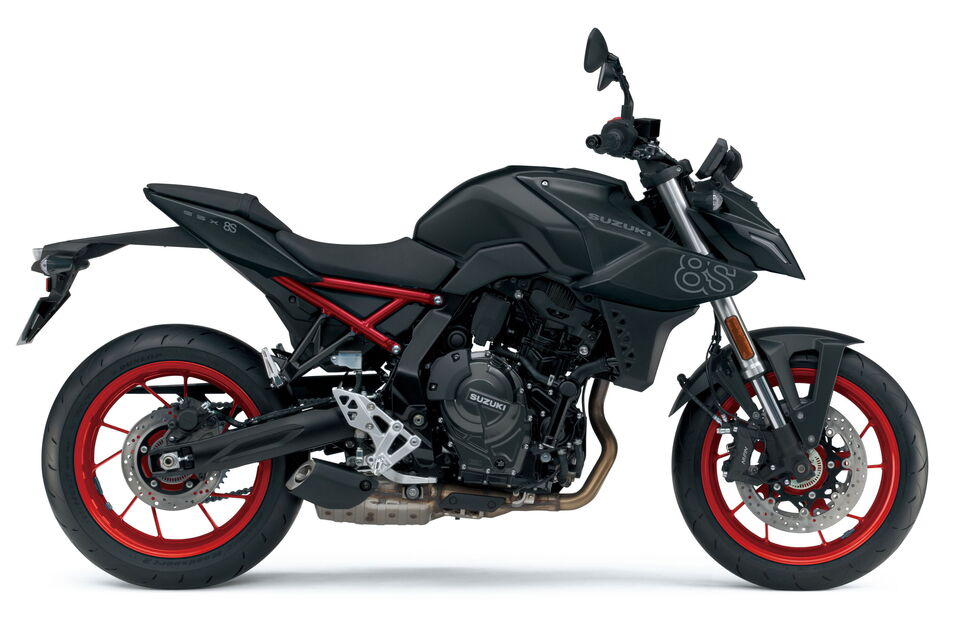

Concept: The Foundation of the 800 Family – and Its Most Consistently Praised Member
The GSX-8S arrived in 2023 as the first model on Suzuki’s new 800 platform and immediately set a high standard. Contemporary assessments described it as a major success: well made, mature, and among the best in its class. It shares its technical foundation with the GSX-8R – the same engine, frame, swingarm, brakes, tank, geometry, and electronics package.
The differences are straightforward: an upright aluminum tubular handlebar instead of clip-ons, KYB suspension instead of the Showa SFF-BP setup, and no full fairing. In return, the 8S is 3 kg lighter and less expensive.
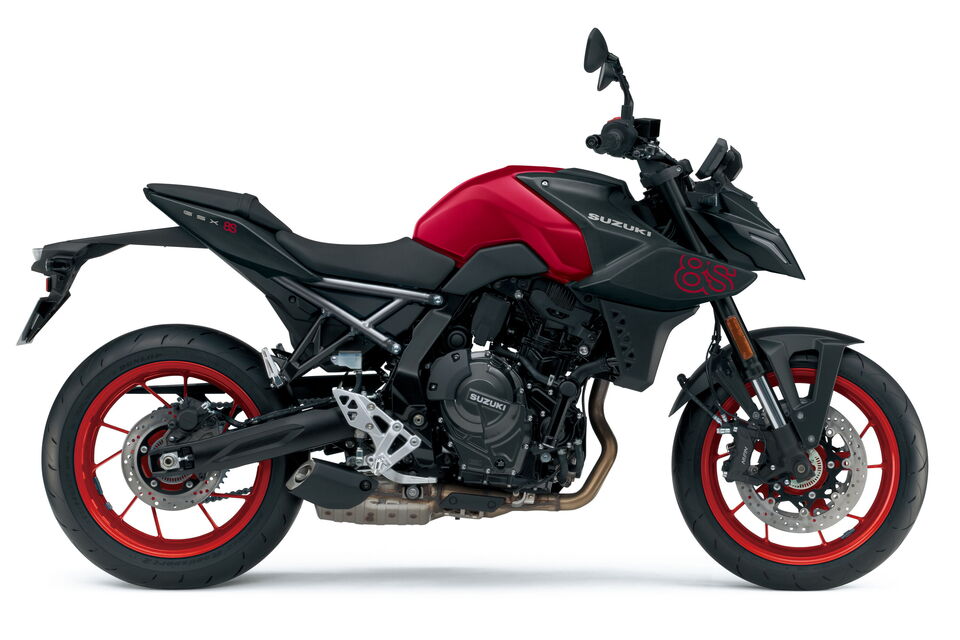
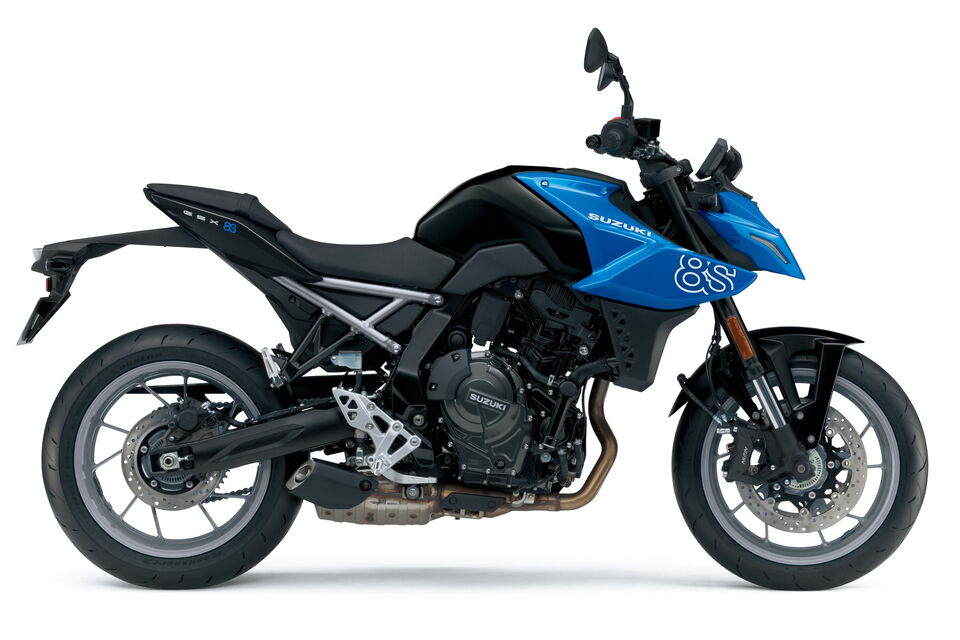
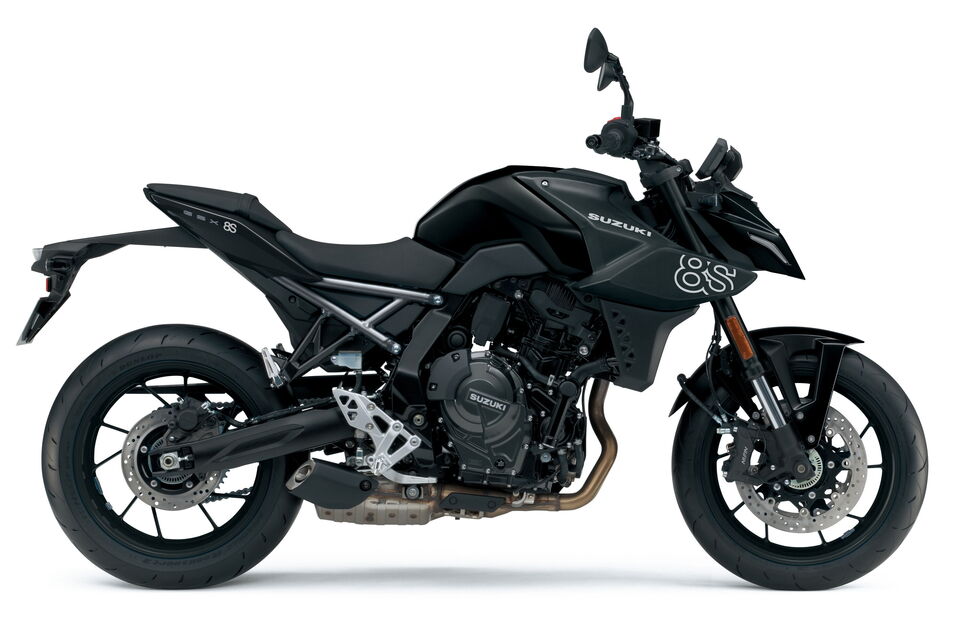
For model year 2026, Suzuki adds LED turn signals, meaning every lighting and signaling component is now LED. Three new color combinations join the range: Metallic Triton Blue/Glass Sparkle Black, Candy Daring Red/Metallic Matte Black No.2, and Metallic Matte Black No.2/Glass Sparkle Black. The EUR 9,400 price remains unchanged.
Engine: 776 cc, 270-Degree Twin, 78 Nm – More Torque-Focused Than the Honda
The 776 cc parallel twin with a 270-degree crankpin offset and Suzuki Cross Balancer is identical to the GSX-8R engine: 83 hp at 8,500 rpm, 78 Nm at 6,800 rpm, and a bidirectional quickshifter as standard. It delivers a bass-heavy, V-twin-like note from its stubby exhaust without being excessively loud. Stationary noise is 88 dB(A), comfortably below Tyrol’s 95 dB(A) threshold.
Compared with the Honda CB750 Hornet cited in the source at 92 hp and 75 Nm, the GSX-8S is tuned more strongly for torque: more power from lower revs, less peak power at the top. Against the Yamaha MT-07 at 75 hp, the Suzuki has the output advantage.
Chassis: KYB USD, 310 mm Brakes, Bolt-On Subframe
A 41 mm KYB upside-down fork with 130 mm of travel and a KYB monoshock with 130 mm form the suspension package. The fork is non-adjustable, while rear spring preload can be changed. Compared with the GSX-8R’s Showa SFF-BP setup, the 8S is softer and more comfort-oriented for everyday riding.
The chassis geometry is excellent: stable yet agile. Radially mounted four-piston front calipers on twin 310 mm discs and a 240 mm rear disc are shared with the GSX-8R. The bolt-on rear subframe also makes repairs easier than on some competitors.
The 180-section rear tire is wider than the Honda’s 160 and slightly reduces agility, requiring a little more steering input. The trade-off is stability and comfort, and it does little to diminish the enjoyment the GSX-8S brings in corners.
Ergonomics: 810 mm, 202 kg, Upright Naked-Bike Position
With an 810 mm seat height, 202 kg ready-to-ride weight, and a narrow waist, even shorter riders can get secure footing. The upright naked-bike riding position is less sporty than the GSX-8R but clearly more comfortable for long day rides. There is no windshield as standard, although an accessory screen is available.
The 5-inch TFT displays all relevant information, and Bluetooth pairing through Suzuki’s mySPIN app is standard. Easy Start and Low-RPM Assist add everyday convenience.
Build quality is a particular strength. The tapered handlebar, switchgear, aluminum swingarm, and footpeg assemblies all look and feel substantial rather than budget-built. At this price, that makes an impression.
GSX-8S vs. GSX-8R: What the Naked Version Gains and Gives Up
Choosing between the GSX-8S and GSX-8R is mainly a decision about riding position and wind protection; technically, the differences are limited. The 8S has the more upright handlebar, softer KYB suspension, and no full fairing. That makes it more comfortable for everyday use and longer rides, but less suited to sustained high-speed or track riding.
The 8R uses Showa SFF-BP suspension, clip-ons for a sportier load distribution, and a full fairing with better wind protection at speed. Both remain below EUR 10,000. The choice is about character, not quality.
Cost: EUR 9,400 – Standard Quickshifter Where Rivals Charge Extra
The German MSRP is EUR 9,400 plus ancillary charges. Compared with the Honda CB750 Hornet cited at around EUR 8,800, the Suzuki costs more but includes the quickshifter as standard, while Honda charges extra. Compared with the Yamaha MT-07 at around EUR 8,600, the Suzuki premium buys more displacement and torque. Service intervals are 12,000 km or once per year. Warranty is two years.
Verdict
Since its 2023 debut, the GSX-8S has been one of the strongest recommendations in the sub-EUR-10,000 middleweight naked-bike class, and that remains true in its fourth model year. The MY2026 update is deliberately small because the basic package needs little correction. LED turn signals neatly complete an already well-rounded motorcycle. Riders who do not need a full fairing and want a sporty, comfortable all-rounder for daily use will struggle to find a better-balanced package for the money.
Quick Check
+ 776 cc 270-degree twin: V-twin character and strong torque from around 3,000 rpm; more torque-focused than the Honda Hornet in comparison.
+ Bidirectional quickshifter standard; an extra-cost item on some rivals.
+ Radial four-piston front brakes with twin 310 mm discs, shared with the GSX-8R; strong and easy to modulate.
+ MY2026: complete LED lighting including turn signals.
+ High-quality finish: handlebar, switchgear, swingarm, and footpeg assemblies look and feel substantial.
+ Upright naked-bike ergonomics are more comfortable than the GSX-8R for daily riding and day tours.
+ 202 kg, 810 mm seat height, narrow waist: manageable even for shorter riders.
+ Bolt-on rear subframe: repair-friendly design.
+ Easy Start + Low-RPM Assist: useful everyday convenience features.
+ 88 dB(A) stationary noise: below Tyrol’s 95 dB(A) threshold.
+ EUR 9,400: reasonable value including the standard quickshifter.
– 9 hp less peak power than the Honda CB750 Hornet in comparison; Honda is also more agile with its narrower 160-section rear tire.
– KYB suspension offers no fork adjustment and only rear preload adjustment.
– No windshield as standard; wind pressure becomes noticeable at higher speeds.
– 180-section rear tire slightly dulls agility compared with the Honda Hornet’s 160-section setup.
– MY2026 adds only LED turn signals and colors; no other technical changes.
– 14-liter tank gives around 333 km of range; Honda Hornet’s larger tank offers slightly more reserve.
Technical Specifications: Suzuki GSX-8S (2026)
Brand / Model: Suzuki GSX-8S; introduced in 2023; MY2026 adds LED turn signals and three new colors; otherwise technically unchanged
Engine: Liquid-cooled DOHC parallel twin; 776 cc; 270-degree crankpin offset; Suzuki Cross Balancer; four valves per cylinder; ride-by-wire; six-speed; chain drive; Euro 5+
Power: 83 hp / 61 kW at 8,500 rpm
Torque: 78 Nm at 6,800 rpm
Top Speed / Consumption: Approx. 210 km/h; 4.2 L/100 km; 14-liter tank; approx. 333 km range
Frame / Swingarm: Steel twin-spar frame; bolt-on rear subframe; aluminum double-sided swingarm
Fork: 41 mm KYB USD; 130 mm travel; non-adjustable
Rear Shock: KYB; 130 mm travel; spring preload adjustable
Front Brakes: Radial four-piston calipers; twin 310 mm discs; ABS
Rear Brake: 240 mm disc; single-piston floating caliper; ABS
Electronics: Three riding modes A/B/C; three-stage switchable traction control; bidirectional quickshifter with blipper; Easy Start; Low-RPM Assist; S.I.R.S.
Cockpit: 5-inch TFT; Bluetooth/mySPIN app; USB; gear indicator; shift light
Lighting: Full LED including turn signals, new for MY2026
Tires: 120/70 ZR17 front / 180/55 ZR17 rear
Ergonomics: Upright naked-bike position; aluminum tubular handlebar; 810 mm seat height; no windshield standard
Stationary Noise: 88 dB(A), below Tyrol’s 95 dB(A) threshold
Weight: 202 kg fully fueled
Wheelbase / Geometry: 1,465 mm wheelbase; 65-degree steering-head angle; 104 mm trail
Fuel Tank / Service: 14 liters; service every 12,000 km or once yearly; two-year warranty
MY2026 Changes: LED turn signals, completing full LED lighting; three new colors: Metallic Triton Blue/Glass Sparkle Black, Candy Daring Red/Metallic Matte Black No.2, Metallic Matte Black No.2/Glass Sparkle Black
A2: Restrictable to 35 kW / 48 hp
Difference vs. GSX-8R: Upright tubular handlebar instead of clip-ons; KYB instead of Showa SFF-BP; no full fairing; 3 kg lighter; lower price
German Price: EUR 9,400 plus ancillary charges