Review Suzuki GSX-8TT (2026)

Neo-Retro Sportbike With Spoke Wheels, Bikini Fairing and 270-Degree Twin – EUR 11,590
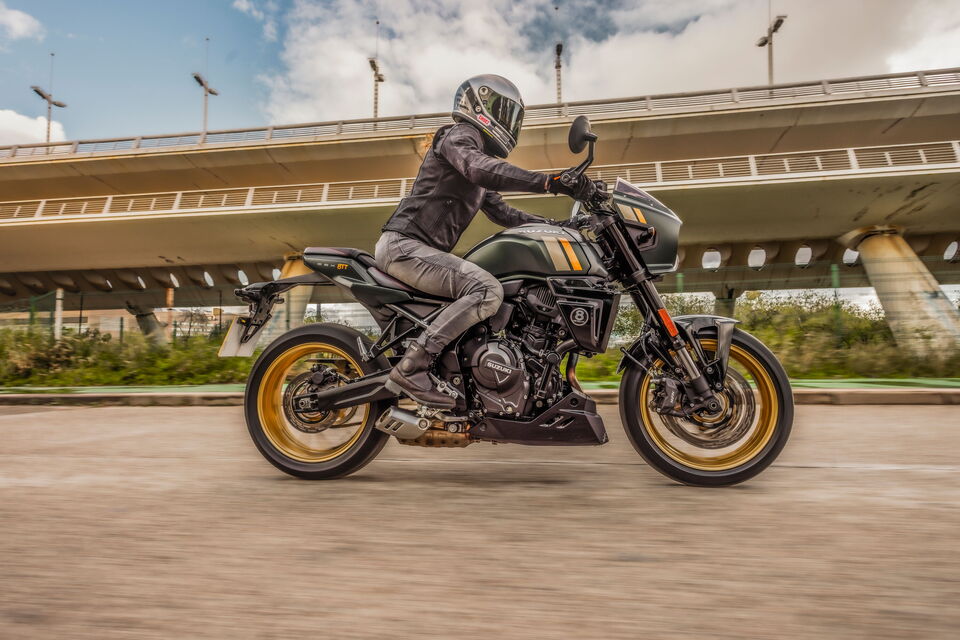
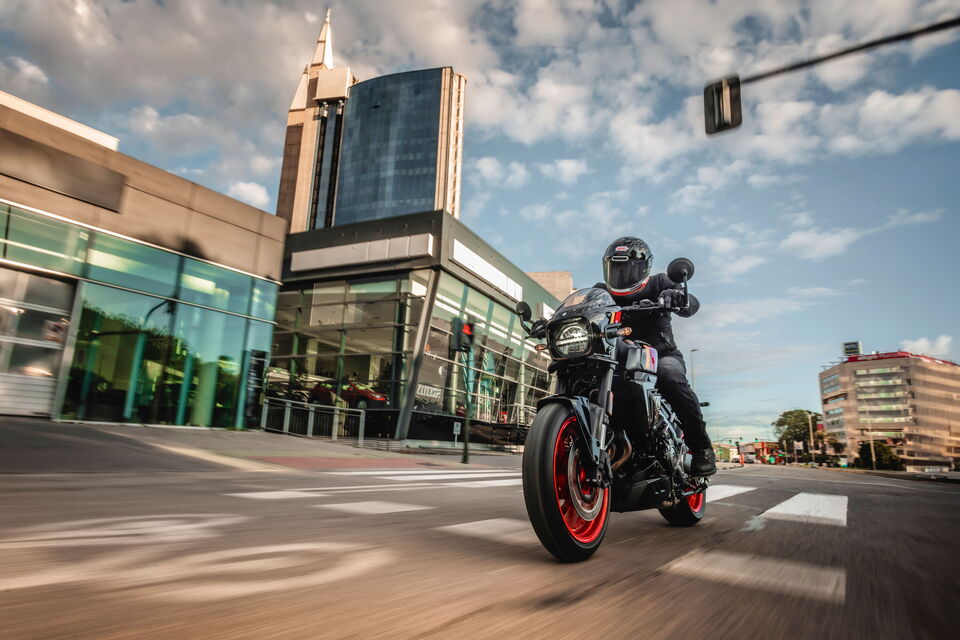
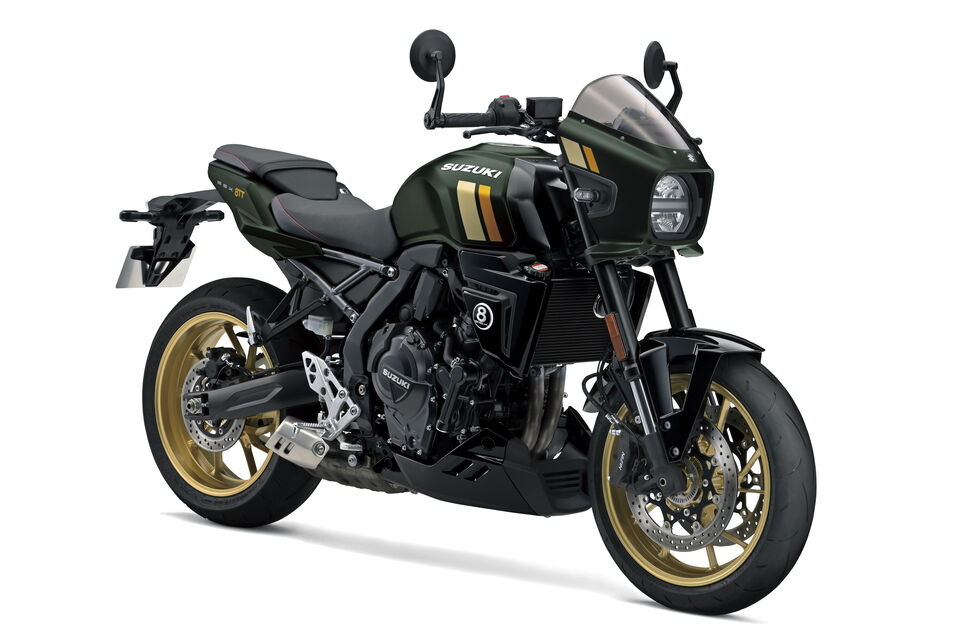
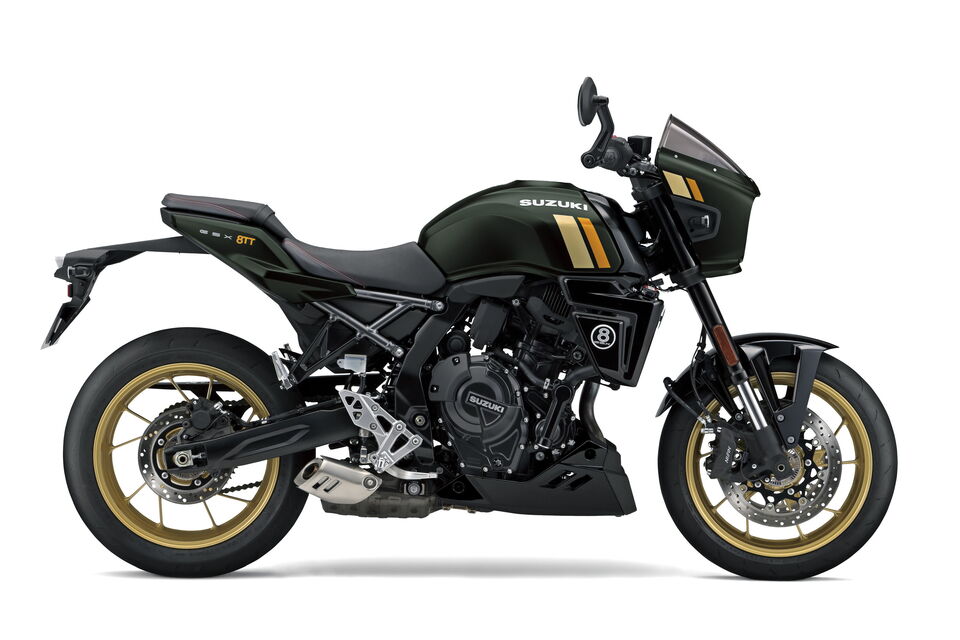
TT stands for Timeless Titan, not Tourist Trophy – and that says everything about the concept. The GSX-8TT is the character bike of Suzuki’s 800 family: a bikini fairing around a round headlight, tubeless wire-spoke wheels, bar-end mirrors, Trailmax tires, and an optional green-and-gold look that demands attention. Its engine and core technology are shared with Suzuki’s 800 platform, while the price sits EUR 600 above the GSX-8T.
As of: April 18, 2026 | Model: Suzuki GSX-8TT, introduced for MY2025; 2026 technically unchanged | German MSRP: EUR 11,590 plus EUR 575 ancillary charges | Power Edition with Akrapovič: EUR 12,890 | A2 restrictable
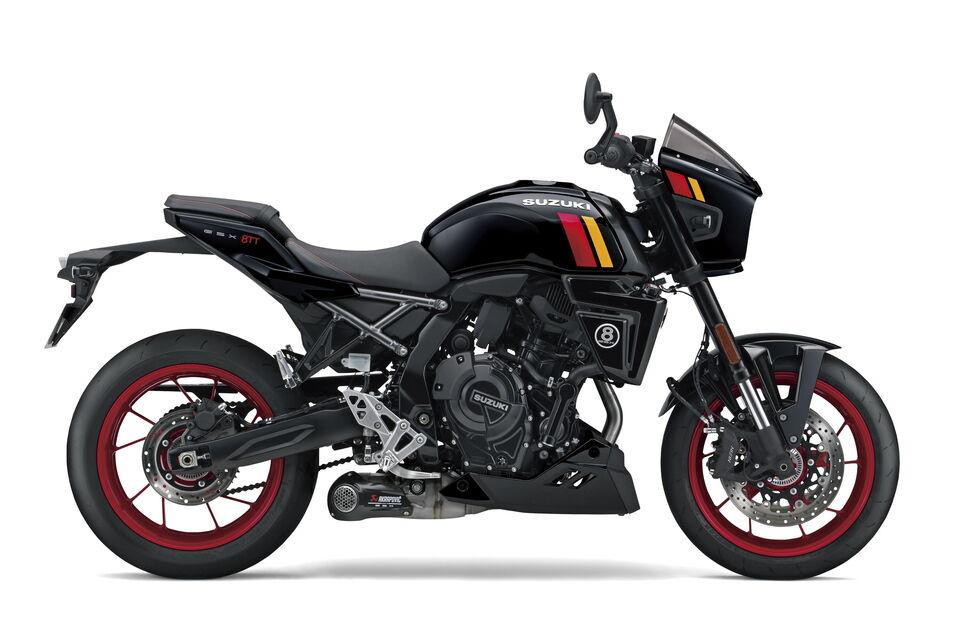
Concept: The Character Bike of the 800 Family – Neo-Retro With Full Middleweight Electronics
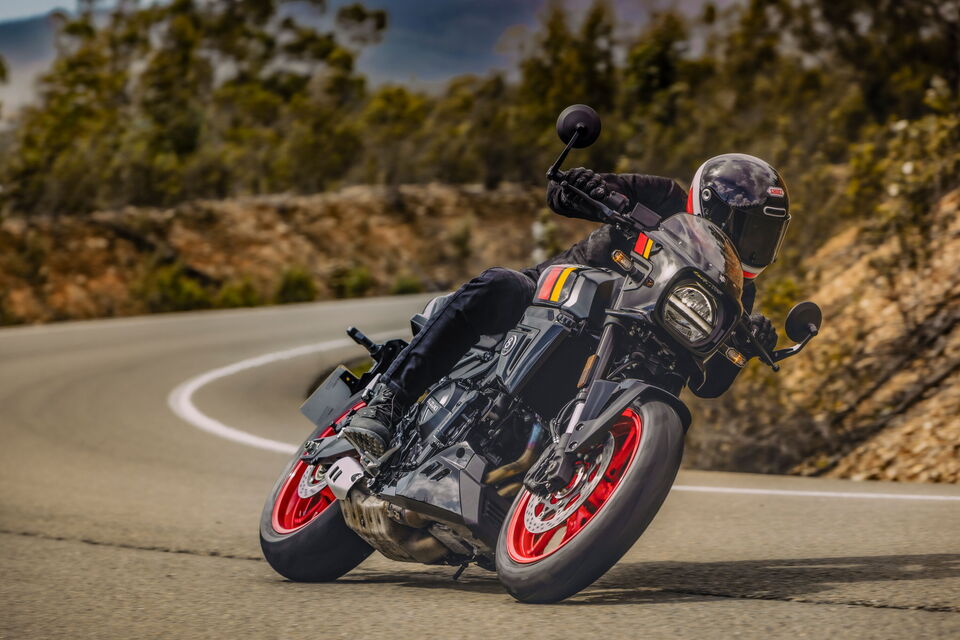
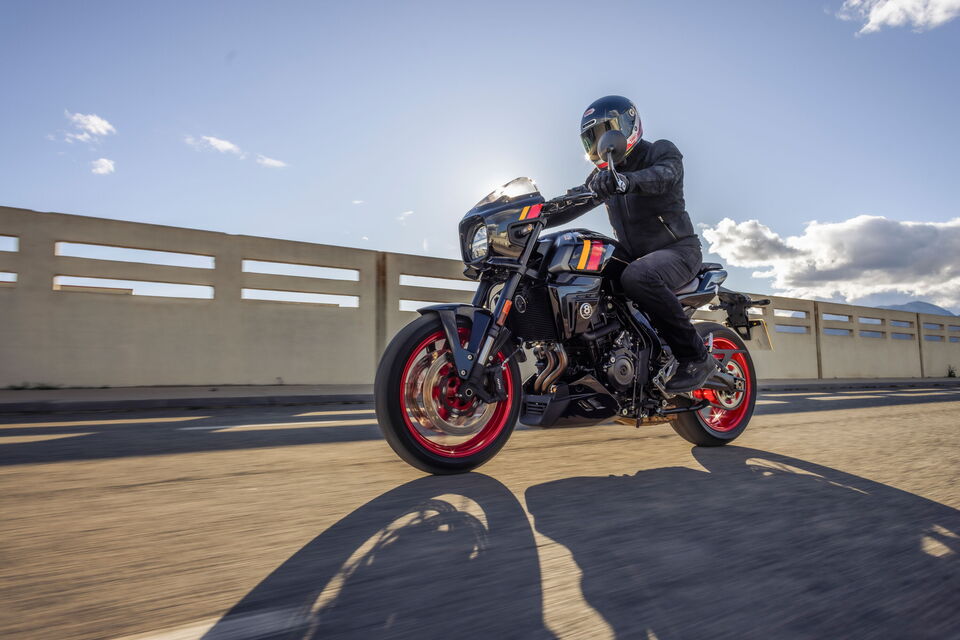
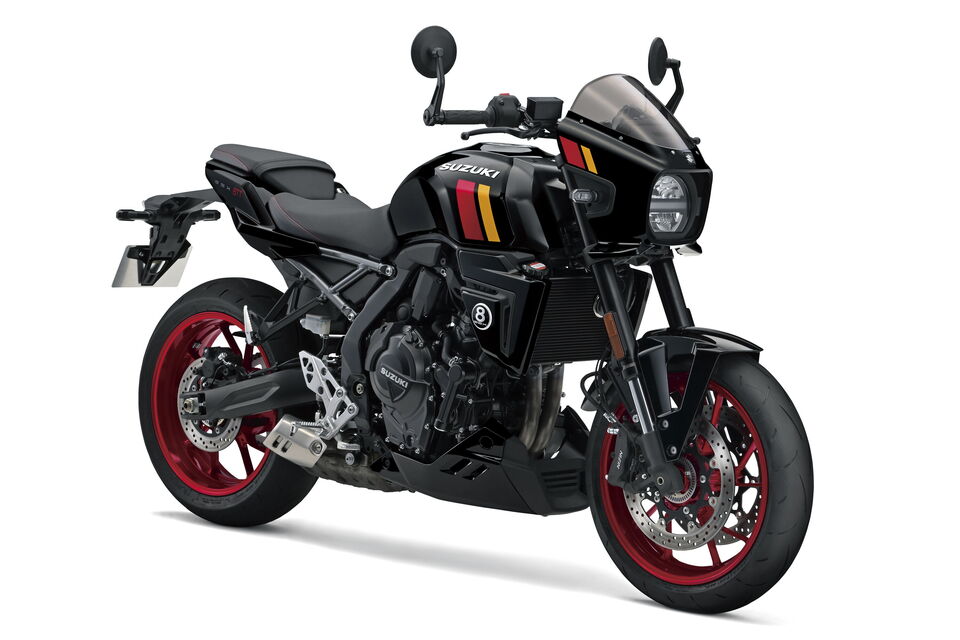
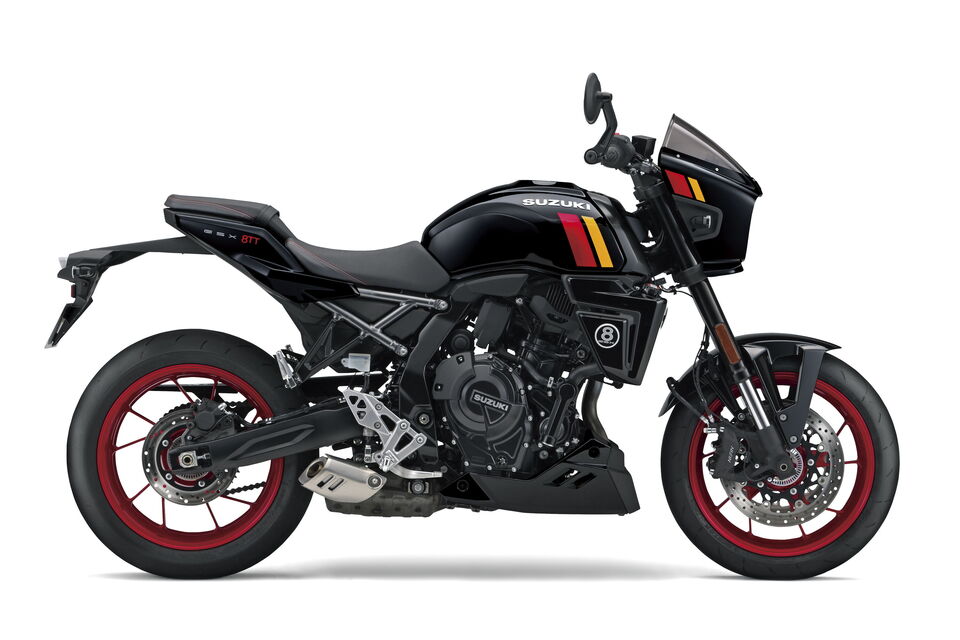
Suzuki introduced the GSX-8TT alongside the GSX-8T in July 2025, drawing inspiration from 1970s street racers. The TT uses a half fairing around the round headlight, complete with an air intake and suggested winglets, 17-inch wire-spoke wheels in red or gold, and bar-end mirrors – the first production Suzuki to use them as standard.
Mechanically, it shares its engine, frame, swingarm, electronics, and basic suspension concept with the GSX-8T. The differences are primarily visual and ergonomic. Price is EUR 11,590, EUR 600 more than the GSX-8T.
The TT is essentially a factory custom. The blend of classic accents and modern technology works, and the riding position feels natural immediately. Model year 2026 is technically unchanged.
Engine: 776 cc, 270-Degree Twin, 83 hp – a Class Benchmark Candidate
The 776 cc parallel twin with a 270-degree crankpin offset and Suzuki Cross Balancer is the same basic engine used throughout Suzuki’s 800 range: 83 hp at 8,500 rpm and 78 Nm at 6,800 rpm. It is refined, strong in the low and midrange, and still happy to rev at the top. In normal use, fuel consumption can drop below 4 L/100 km. The standard bidirectional quickshifter works cleanly in both directions.
Its torque-rich character allows relaxed, short-shifting riding at low revs, exactly what suits a retro-styled motorcycle. There is useful torque early in the rev range and enough top-end performance for brisk highway passes.
Chassis: 43 mm KYB USD, Spoke Wheels – Rear Shock is the Weak Link
The fork and rear shock follow the GSX-8T’s basic setup: a 43 mm KYB USD fork with 130 mm of travel and a KYB rear shock with 130 mm. The fork is non-adjustable, while only rear spring preload can be changed. The TT’s most distinctive chassis feature is its tubeless 17-inch wire-spoke wheels. Dunlop Trailmax Mixtour tires are fitted as standard, combining touring-road behavior with limited gravel capability.
The simple suspension cannot quite match the quality of the engine. The fork responds well, but the rear shock is less sensitive and reaches its limits relatively early when ridden quickly over rough surfaces.
The brakes also differ from the GSX-8S and GSX-8R. Up front, axially mounted two-piston Nissin calipers work on twin 310 mm discs instead of the radial four-piston hardware used on those models. The rear disc is 260 mm rather than 240 mm. ABS is standard.
Ergonomics: 810 mm Seat Height, 203 kg, Bikini Fairing
Seat height is 810 mm, 15 mm lower than the GSX-8T, while ready-to-ride weight is 203 kg. The ergonomics suit a broad range of riders, roughly from 1.60 to 1.90 meters. A wide tapered aluminum handlebar and narrow waist help. The two-piece seat has different stitching from the 8T and creates a slightly tighter knee angle and more integrated seating position.
The bikini fairing takes pressure off the chest but does not replace a full windshield. At around 1.80 meters rider height, sources report more helmet wind noise on the 8TT than on the 8T. Shorter riders may sit more effectively in the small fairing’s wind shadow, while taller riders receive less protection. A test ride is recommended. In everyday use, the wide steering lock angle makes low-speed maneuvering surprisingly easy.
GSX-8TT vs. GSX-8T: EUR 600 for Spoke Wheels, Fairing and a Lower Seat
Choosing between the 8T and 8TT is mainly choosing between two aesthetic concepts: touring-oriented road bike versus neo-retro café-inspired character bike. Mechanically they are closely related, but the TT adds its bikini fairing, wire-spoke wheels, Trailmax tires, different front brake calipers, and two kilograms of additional weight.
The TT has the lower seat at 810 versus 825 mm, but the smaller 16.5-liter tank instead of 19 liters, reducing range by roughly 60 km. Riders who tour extensively are better served by the 8T. Riders who want the more distinctive character bike should choose the TT.
Cost: EUR 11,590 – Competing With Yamaha XSR900 and Kawasaki Z900RS
At EUR 11,590 plus EUR 575 ancillary charges, the GSX-8TT enters the territory of more expensive neo-retro machines. The source compares the Kawasaki Z900RS at EUR 13,470, Yamaha XSR900 from EUR 12,249, and Husqvarna Vitpilen 801 at EUR 11,990. Suzuki’s Power Edition with Akrapovič costs EUR 12,890, adding roughly 2.5 hp and 1.4 Nm while saving 2.2 kg. It appears to offer a EUR 250 advantage compared with buying the parts separately.
Verdict
The GSX-8TT is one of Suzuki’s strongest design statements in years, and it rides at least as well as it looks. The 270-degree twin is genuinely benchmark-worthy in this class, the quickshifter is a pleasure, and the ergonomics work for a broad range of riders. The chassis keeps up on normal backroads, although the rear shock shows its limits on rough surfaces. Riders who want the character bike of Suzuki’s 800 family and do not prioritize maximum range or wind protection should choose the TT.
Quick Check
+ Design: essentially a factory custom straight from the showroom.
+ Engine: benchmark-worthy in the class; refined, torque-rich, with sub-4 L/100 km fuel consumption possible in everyday use.
+ Bidirectional quickshifter works cleanly and enjoyably in both directions.
+ Ergonomics suit a broad range of riders, roughly 1.60 to 1.90 m; wide aluminum handlebar and narrow waist.
+ 810 mm seat height: 15 mm lower than GSX-8T for easier ground reach.
+ Bar-end mirrors: first production Suzuki with this feature standard.
+ Standard extras include hand guards, aluminum engine protection, and stainless-steel muffler trim.
+ Tubeless wire-spoke wheels combine timeless retro appearance with modern function.
+ Three riding modes + three-stage traction control + bidirectional quickshifter + Easy Start + Low-RPM Assist + SCAS standard.
+ Large steering lock angle makes maneuvering and tight turns surprisingly easy.
+ EUR 11,590: less than Kawasaki Z900RS and slightly below Yamaha XSR900 in the source comparison.
– Rear shock is not especially sensitive and reaches its limits early on fast, rough roads; only preload is adjustable.
– Axial two-piston front calipers are weaker than the radial four-piston hardware on GSX-8S and 8R; a step backward for sport-focused riders.
– 16.5-liter tank gives roughly 393 km range; GSX-8T has 19 liters and more than 450 km.
– Wind protection depends strongly on rider height; around 1.80 m, more helmet noise reported than on the 8T.
– 203 kg: 2 kg heavier than GSX-8T.
– EUR 11,590: EUR 600 more than the 8T for differences that are largely stylistic.
– MY2026 is technically unchanged.
Technical Specifications: Suzuki GSX-8TT (2026)
Brand / Model: Suzuki GSX-8TT; TT means Timeless Titan, not Tourist Trophy; introduced for MY2025; 2026 technically unchanged
Engine: Liquid-cooled DOHC parallel twin; 776 cc; 270-degree crankpin offset; Suzuki Cross Balancer; ride-by-wire; six-speed; chain drive; Euro 5+
Power: 83 hp / 61 kW at 8,500 rpm
Torque: 78 Nm at 6,800 rpm
Top Speed / Consumption: 210 km/h; 4.2 L/100 km official; 16.5-liter tank; approx. 393 km range
Frame / Swingarm: Steel twin-spar frame; aluminum double-sided swingarm
Fork: 43 mm KYB USD; 130 mm travel; non-adjustable
Rear Shock: KYB; 130 mm travel; spring preload adjustable
Front Brakes: Axially mounted Nissin two-piston calipers; twin 310 mm discs; ABS
Rear Brake: 260 mm disc; ABS
Electronics: Three riding modes A/B/C; three-stage switchable traction control; bidirectional quickshifter with blipper; Easy Start; Low-RPM Assist; SCAS; S.I.R.S.
Cockpit: 5-inch TFT with day/night mode; Bluetooth/mySPIN app; USB
Fairing: Bikini half fairing around round headlight; air intake; suggested winglets; not a full touring windshield
Wheels / Tires: 17-inch tubeless wire-spoke wheels; Dunlop Trailmax Mixtour 120/70 ZR17 front / 180/55 ZR17 rear
Colors: Black/red/yellow with red spoke wheels and red seat stitching; Pearl Matte Shadow Green with gold wheels
Standard Extras: Bar-end mirrors, first Suzuki with them standard; hand guards; aluminum engine guard; stainless-steel muffler trim; black engine covers; 3D billiard-ball No. 8 badge
Seat: Two-piece; different stitching from GSX-8T; tighter knee angle; more integrated seating feel
Weight: 203 kg fully fueled
Seat Height: 810 mm, 15 mm lower than GSX-8T
Wheelbase / Ground Clearance: 1,465 mm wheelbase; 145 mm ground clearance
Fuel Tank / Range: 16.5 liters; approx. 393 km
Warranty / Service: Three years from first registration; service every 12,000 km or once yearly
A2: Restrictable to 35 kW
Power Edition: EUR 12,890; Akrapovič titanium slip-on; approx. +2.5 hp, +1.4 Nm, -2.2 kg; source states EUR 250 price advantage
Difference vs. GSX-8T: Bikini fairing, wire-spoke wheels, Trailmax tires, bar-end mirrors, hand guards, engine protection, 810 vs. 825 mm seat height, 16.5 vs. 19 L tank, 203 vs. 201 kg, two-piston vs. four-piston front calipers, EUR 600 premium
German Price: EUR 11,590 plus EUR 575 ancillary charges