Review Suzuki GSX-S1000GT (2026)

152-hp Sport-Tourer With K5 Engine, Bidirectional Quickshifter and Cruise Control – From EUR 14,390
A 152-hp K5-based engine, fully adjustable KYB suspension, Brembo monobloc brakes, a bidirectional quickshifter, cruise control, and a 6.5-inch TFT with Bluetooth: the GSX-S1000GT remains the proven sport-touring foundation of Suzuki’s GSX-S family. It does without semi-active suspension and an IMU, but answers with a clearer value proposition than the GX. For MY2026, Suzuki adds three new colors while the price remains EUR 14,390.
As of: April 20, 2026 | Model: Suzuki GSX-S1000GT, introduced for MY2022; MY2026 technically unchanged | German price: EUR 14,390 GT / EUR 15,750 Travel Edition, plus ancillary charges | Stationary noise: GT 96 dB(A); GT+/Travel Edition 94 dB(A)
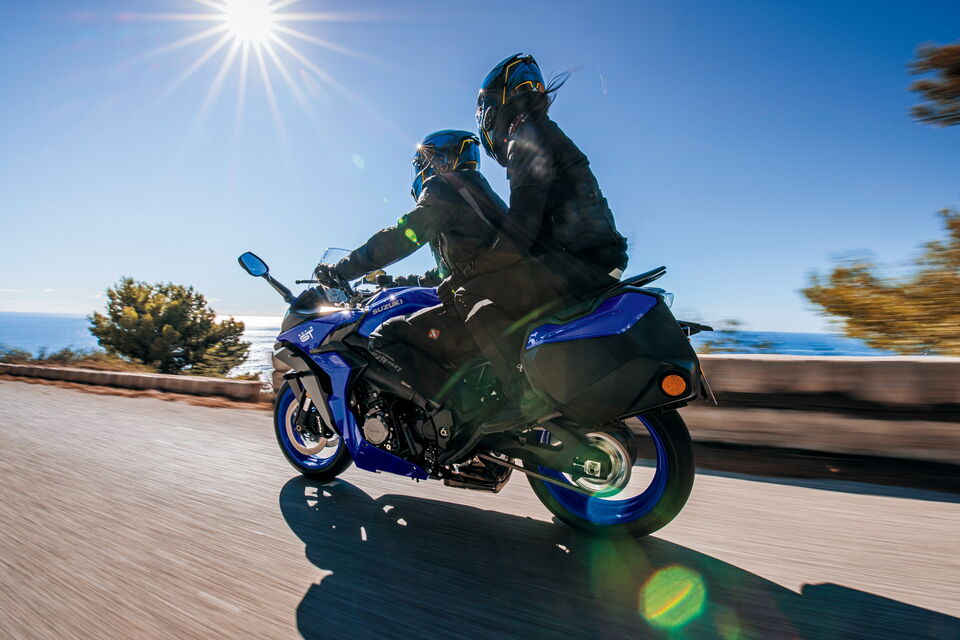
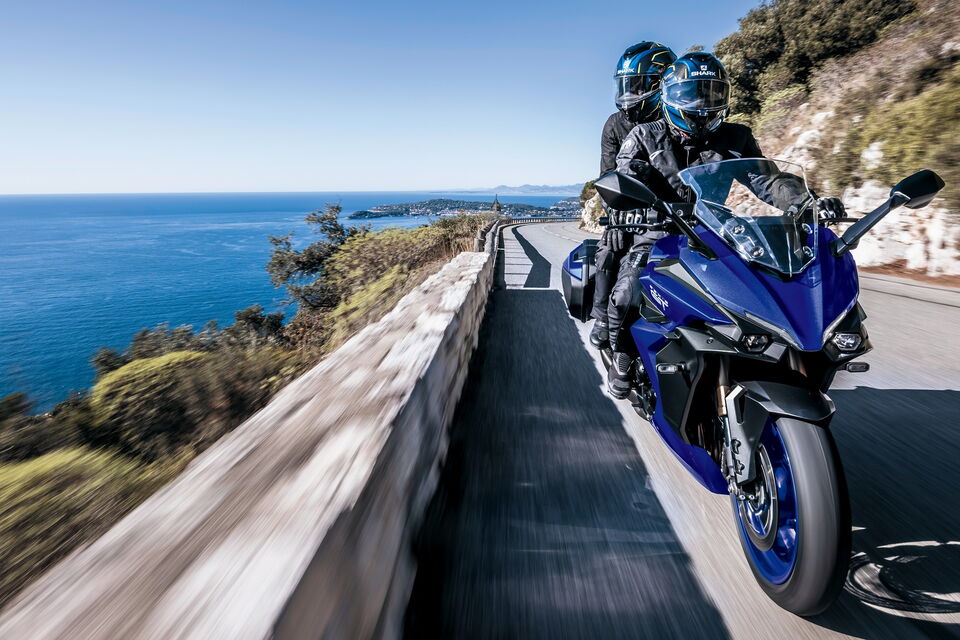
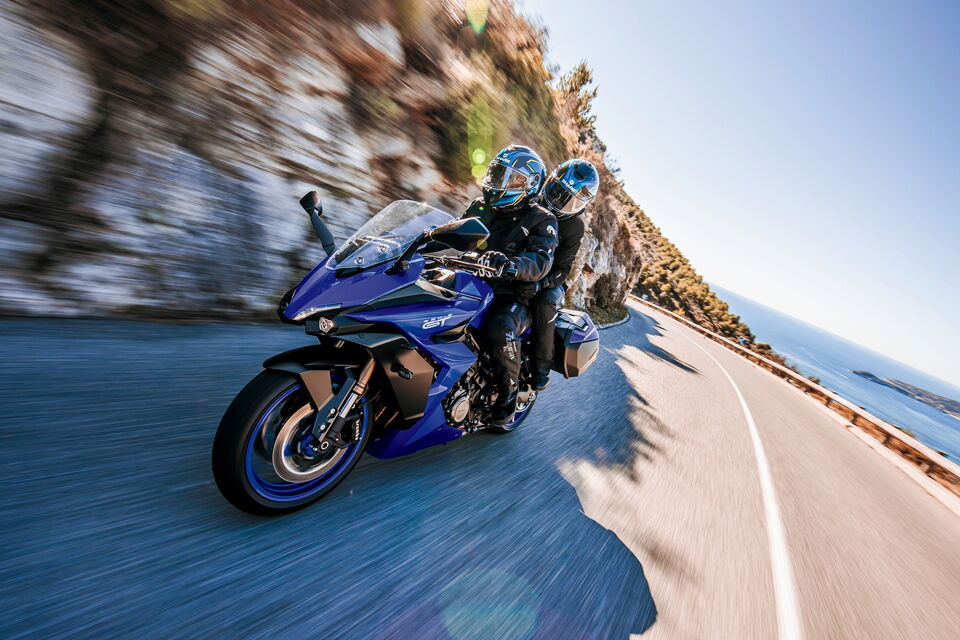
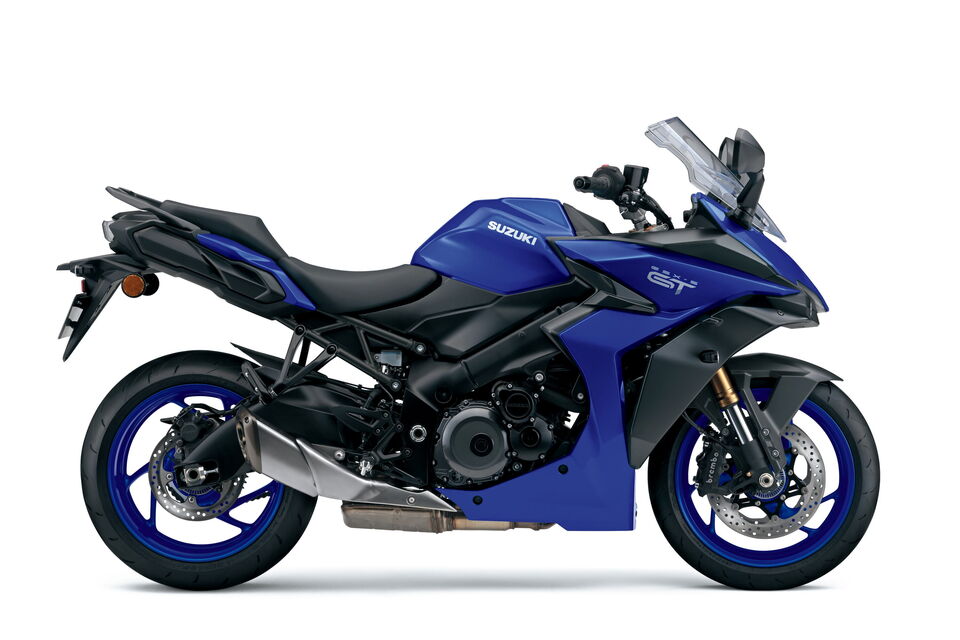


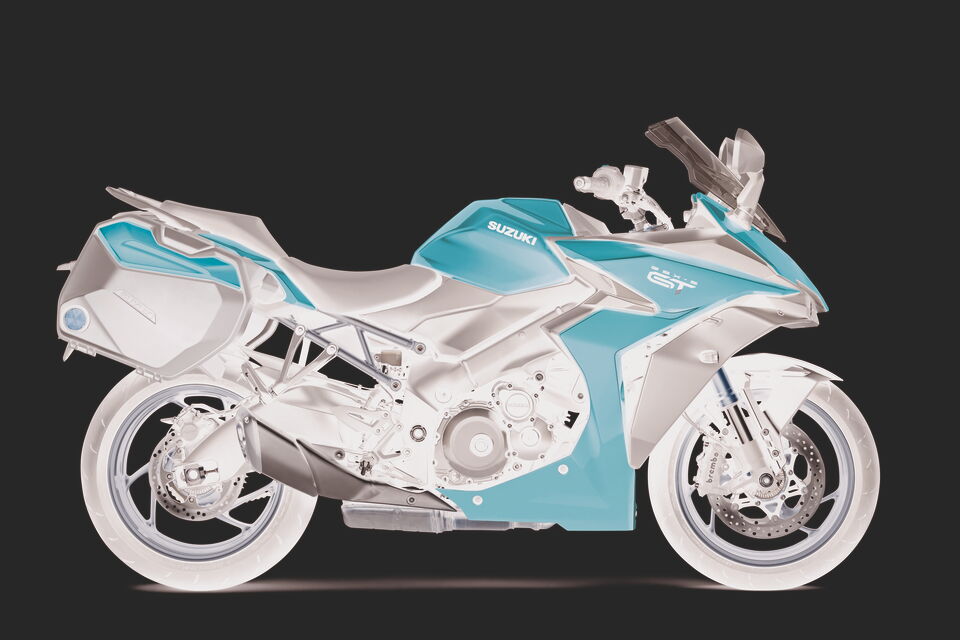
Concept: A Sport-Tourer Without Electronics Overload – the Middle Ground Between Naked and Crossover
The GSX-S1000GT is the sport-touring version of Suzuki’s GSX-S1000 family. Compared with the naked bike, it adds full bodywork, a large windshield, touring-oriented ergonomics with the handlebar 14 mm closer to the rider, a thicker seat, a 19-liter tank, cruise control, and a 6.5-inch TFT with Bluetooth. Engine, frame, swingarm, wheels, brakes, and quickshifter come directly from the GSX-S1000.
Compared with the GSX-S1000GX, the GT deliberately does without semi-active suspension, an IMU, cornering ABS, Wheelie Control, and Stoppie Control. The price is correspondingly lower. For MY2026, the technical package remains unchanged. New colors are Pearl Vigor Blue, Pearl Brilliant White, and Glass Sparkle Black. The GT costs EUR 14,390 without luggage, while the Travel Edition costs EUR 15,750 and includes two 36-liter side cases.
Engine: 999 cc K5 Inline-Four, 152 hp – Tuned for Touring
The 999 cc K5-based inline-four produces 152 hp, or 112 kW, at 11,000 rpm and 106 Nm at 9,250 rpm. In the GT, the delivery is tuned for a slightly smoother touring character than on the naked bike, with an even power curve and strong midrange response.
In the lower half of the rev range, the engine is civilized, quiet, and relaxed. It will pull cleanly at 30 km/h in fourth gear without snatch. Of the three riding modes, Mode B is the best all-round choice; Mode A is noticeably sharper at the throttle.
The bidirectional quickshifter is standard and works almost perfectly, even at low city speeds. SCAS assist-and-slipper clutch is also standard. Fuel consumption is around 5.8 L/100 km, giving roughly 320 km of range from the 19-liter tank. Top speed is 240 km/h.
Chassis: Fully Adjustable KYB USD, Brembo Monobloc – Solid Hardware, Rear Preload Requires Tools
The 43 mm KYB USD fork is fully adjustable for compression, rebound, and spring preload and provides 120 mm of travel. The rear monoshock offers 130 mm, with rebound and spring-preload adjustment. The main criticism is that rear preload requires a hook wrench rather than a remote hand adjuster. Suzuki cites weight savings, but on a touring motorcycle the explanation is not entirely convincing.
When ridden hard through bumpy corners, the rear can develop a little secondary movement. Braking is handled by Brembo monobloc four-piston calipers with 32 mm pistons on twin 310 mm floating discs, backed by Bosch ABS. There is no cornering ABS and no IMU. Initial bite is mild, and under a hard pull the calipers could respond more aggressively. The front-biased riding position and stable chassis nevertheless provide clear feedback.
Ergonomics: 810 mm Seat Height, Wide Handlebar, Fixed Windshield
Seat height is 810 mm, 35 mm lower than the GX, while ready-to-ride weight is 231 kg. The riding position is upright with a mild sport bias, balancing comfort and control without putting pressure on the wrists. Taller riders may prefer the optional touring seat.
The windshield is fixed and non-adjustable. In 2026, that is an obvious omission in this class. Suzuki offers an optional touring screen that is 7 cm taller and is worth considering for frequent long-distance use.
A 6.5-inch TFT with day/night mode, Bluetooth and the mySPIN app is standard, as is a USB charging port. Connectivity is essentially on the same level as the GX. What is missing are lean-angle-sensitive rider aids. The absence of an IMU is more noticeable today than it was when the GT launched in 2022.
GT vs. GT+: The Side Cases Are the Main Practical Difference
The GSX-S1000GT+ is mechanically identical to the GT but includes two color-matched 36-liter side cases as standard. They are removable without tools and each can accommodate a size-L full-face helmet. In Germany, this version is marketed as the Travel Edition for EUR 15,750.
The source also lists different stationary-noise figures: 96 dB(A) for the GT and 94 dB(A) for the GT+/Travel Edition. Because Tyrol’s restrictions apply above the relevant threshold, riders planning affected Alpine routes should check the exact homologation documents for the specific motorcycle and version.
GT vs. GX: When the GT Is the Better Choice
The GSX-S1000GT is the right choice when asphalt touring is the clear priority and cornering ABS or semi-active suspension are not essential requirements. The GX offers more electronics and a higher seating position for added crossover comfort. The GT counters with a lower seat, slightly lower weight, and a lower purchase price. For pure road touring without gravel ambitions, it is the leaner, simpler package.
Cost: EUR 14,390 – Strong Value in the Liter-Class Sport-Touring Segment
At EUR 14,390, the GT is competitively positioned among liter-class sport-tourers. Alternatives are considerably more expensive, including the BMW S1000XR, Kawasaki Ninja H2 SX, and Ducati Multistrada V4. For roughly EUR 14,500, the Suzuki delivers a well-equipped, well-finished package that raises a fair question: how much more motorcycle does a road-focused sport-tourer really need? A three-year warranty is standard.
Verdict
In 2026, the GSX-S1000GT remains what it has been since 2022: a balanced sport-tourer with the characterful K5 engine, an excellent quickshifter, and solid build quality, deliberately avoiding electronics overload. The fixed windshield and lack of an IMU hurt more in 2026 than they did at launch, but riders who know exactly what they need get a motorcycle that simply works without constantly demanding attention.
Quick Check
+ 152-hp K5 engine: civilized and relaxed at low rpm, pulls cleanly with strong midrange performance.
+ Bidirectional quickshifter standard: nearly flawless even at low city speeds.
+ Fully adjustable KYB USD fork; Brembo monobloc four-piston calipers on twin 310 mm discs.
+ Cruise control standard: essential comfort on long highway stages.
+ 6.5-inch TFT, Bluetooth/mySPIN, and USB: modern, readable, and easy to operate.
+ Travel Edition includes two 36-liter side cases; each accommodates a size-L full-face helmet.
+ 810 mm seat height and 231 kg: predictable, neutral handling with clear feedback.
+ EUR 14,390: strong value against more expensive liter-class sport-touring rivals.
+ Travel Edition EUR 15,750: side cases standard; sources cite 94 dB(A) stationary noise.
+ Three-year warranty and proven Suzuki reliability.
– Sources cite 96 dB(A) stationary noise for the standard GT; riders using noise-restricted Alpine roads should verify the exact registration value.
– Windshield is fixed and non-adjustable; optional touring screen is 7 cm taller.
– No cornering ABS, IMU, or Wheelie Control: a clear electronics gap compared with the GX.
– Rear spring preload requires a hook wrench rather than a remote adjuster.
– Rear end can develop some secondary movement in fast, bumpy corners.
– No lean-angle sensor: increasingly unusual in this class by 2026.
Technical Specifications: Suzuki GSX-S1000GT (2026)
Brand / Model: Suzuki GSX-S1000GT; introduced for MY2022; MY2026 technically unchanged; GT+/Travel Edition includes side cases
Engine: Liquid-cooled DOHC inline-four; 999 cc; K5-based architecture; ride-by-wire; six-speed; bidirectional quickshifter; SCAS; chain drive; Euro 5
Power: 152 hp / 112 kW at 11,000 rpm
Torque: 106 Nm at 9,250 rpm
Top Speed / Consumption: 240 km/h; approx. 5.8–6.1 L/100 km; 19-liter tank; approx. 310–320 km range
Frame: Aluminum twin-spar frame based on GSX-R1000 architecture; aluminum double-sided swingarm
Fork: 43 mm KYB USD; fully adjustable for compression, rebound, and preload; 120 mm travel
Rear Shock: Linkage-mounted monoshock; rebound + spring preload adjustable; no remote hand adjuster, hook wrench required; 130 mm travel
Front Brakes: Brembo monobloc four-piston calipers, 32 mm pistons; twin 310 mm floating discs; Bosch ABS
Rear Brake: 240 mm disc; Nissin single-piston caliper; ABS; no cornering ABS or IMU
Electronics / S.I.R.S.: Three riding modes A/B/C; adjustable traction control, not lean-sensitive; bidirectional quickshifter; cruise control; Easy Start; Low RPM Assist; no cornering ABS, IMU, or Wheelie Control
Cockpit: 6.5-inch TFT with day/night mode; Bluetooth; mySPIN app; USB charging port
Windshield: Fixed, non-adjustable; accessory touring windshield is 7 cm taller
Tires: Dunlop Sportmax Roadsport 2; 120/70 ZR17 front / 190/55 ZR17 rear
Weight / Payload: 231 kg fully fueled; 190 kg payload
Seat Height: 810 mm
Wheelbase: 1,460 mm
Stationary Noise: Source lists GT at 96 dB(A) and GT+/Travel Edition at 94 dB(A); verify exact homologation documents for local noise restrictions
Warranty: 3 years
MY2026 Changes: Three new colors: Pearl Vigor Blue, Pearl Brilliant White, Glass Sparkle Black; technically unchanged
GT vs. GX: GT: no cornering ABS, no IMU, no semi-active suspension, fixed windshield; 810 mm seat, 231 kg. GX: IMU, SAES, cornering ABS, Wheelie Control, Stoppie Control, three-position windshield, higher seat.
German Variants: GSX-S1000GT: EUR 14,390 without side cases. Travel Edition / GT+: EUR 15,750 with two 36-liter side cases standard.
German Price: EUR 14,390 GT / EUR 15,750 Travel Edition, plus ancillary charges