Review Suzuki Katana (2026)

152 hp, GSX-R1000 Engine, Brembo – and a 45-Bike Limited Edition for the 45th Anniversary
The Katana has never been a mass-market motorcycle. Its 999 cc K5-based GSX-R1000 engine produces 152 hp, Brembo brakes handle the stopping, and ready-to-ride weight is 215 kg. Technically, it is a full-blooded streetfighter; visually, it remains a polarizing design statement. For MY2026, the standard model continues unchanged, while Suzuki celebrates 45 years of Katana with a Limited Edition restricted to just 45 examples worldwide, including an Akrapovič exhaust, for EUR 15,045.
As of: April 19, 2026 | Model: Suzuki Katana, launched in 2019; current generation since MY2022 with ride-by-wire + bidirectional quickshifter | Standard model price: EUR 14,400 | Limited Edition: EUR 15,045; 45 examples worldwide
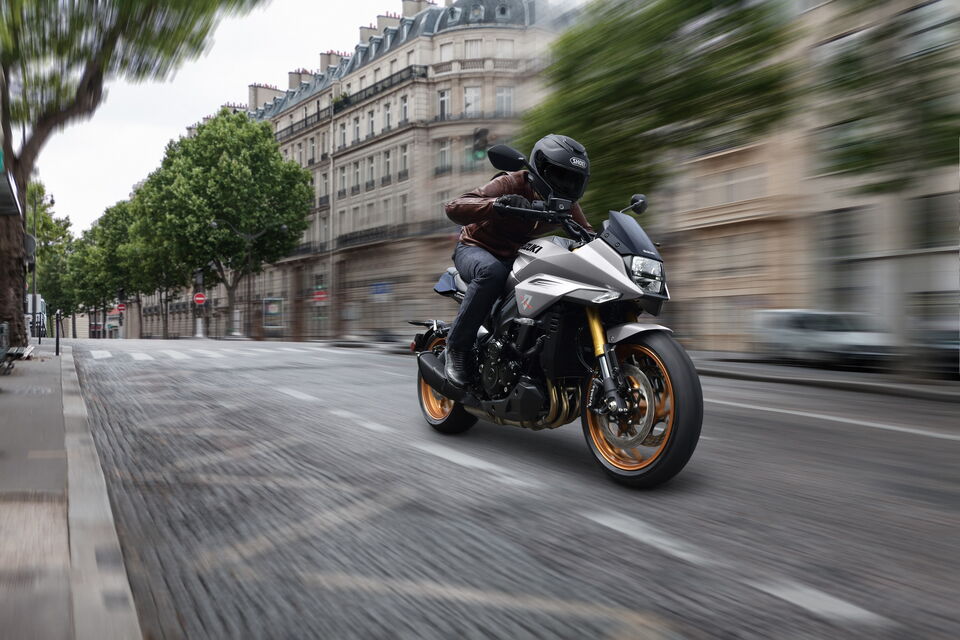
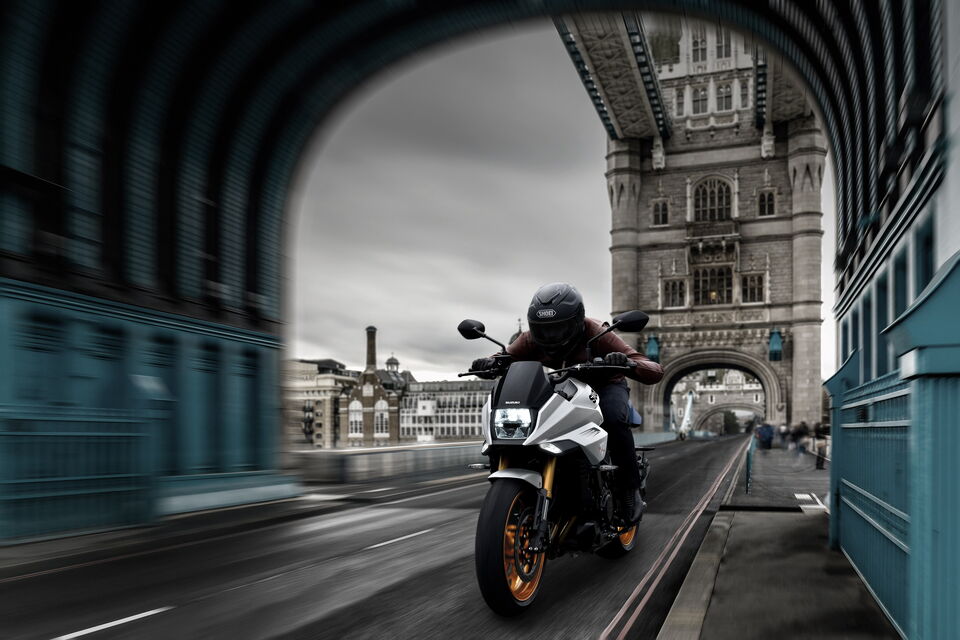
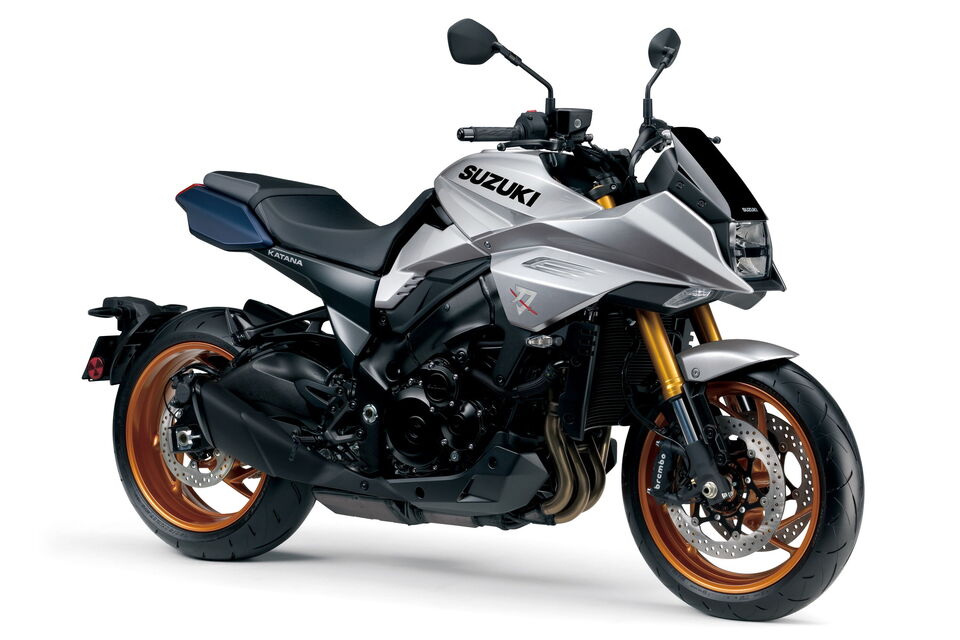
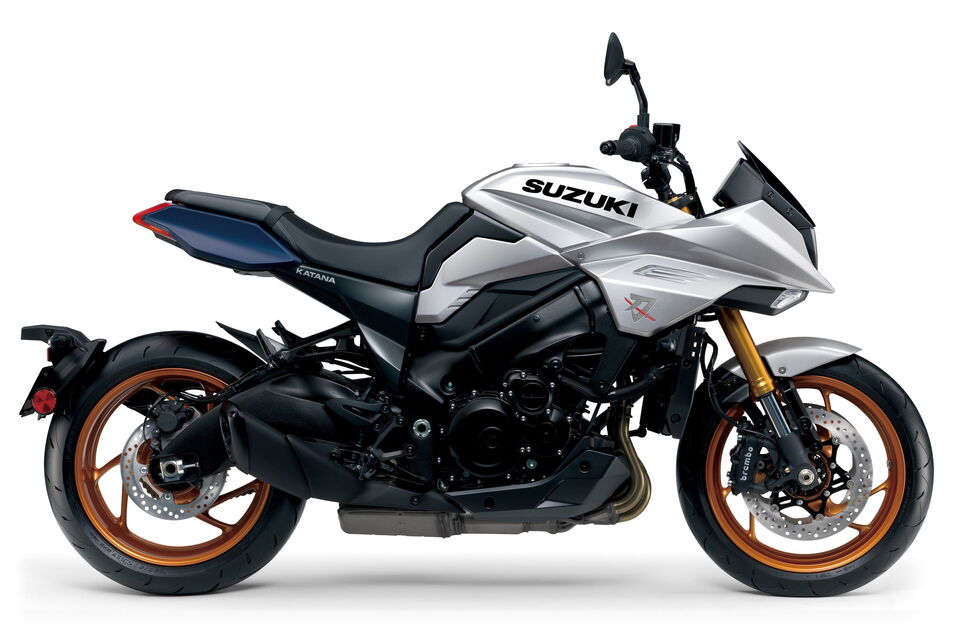
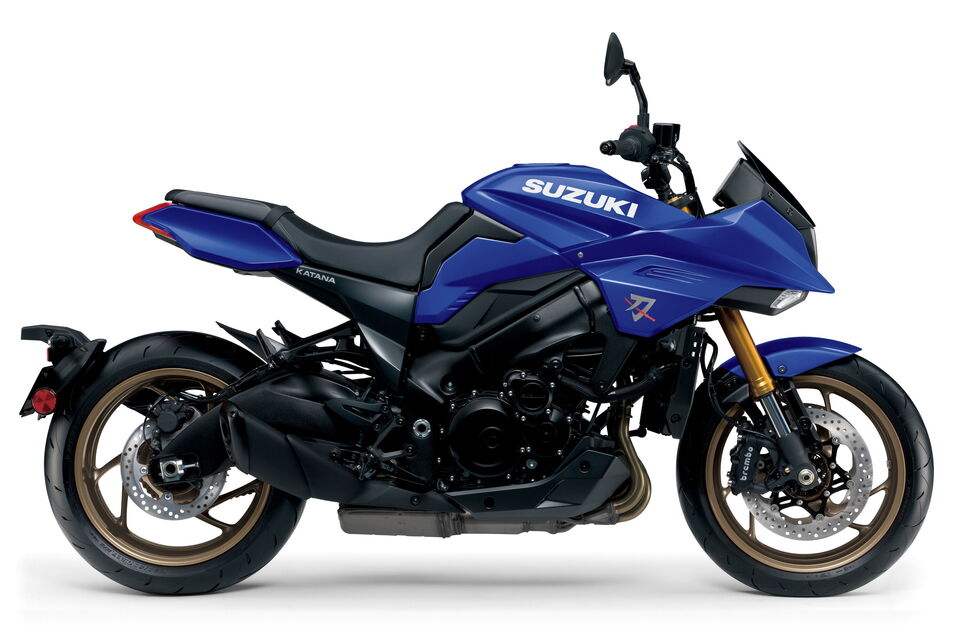
Concept: Retro Naked on a Streetfighter Platform – the 1981 Original Lives On
In 1981, Hans A. Muth’s Katana set a design milestone whose influence can still be seen in motorcycle styling today. Suzuki revived the name in 2019 on the GSX-S1000 platform, powered by the same K5-based engine architecture that traces back to the 2005 GSX-R1000. The concept has remained consistent ever since: more design than electronics arms race, more character than rider-aid checklist. Bold lines, an emotional engine, a solid chassis, and deliberate edges.
Model year 2026 changes nothing on the standard motorcycle’s engine, chassis, or equipment. The major news is the Limited Edition: 45 examples worldwide, individually numbered xx/45, with an Akrapovič slip-on, carbon-look tank pad, frame sliders, black tail bodywork, “The Edge” graphics kit, a Katana-branded parking mat, and the book “KATANA History.” Price is EUR 15,045. Sources show that is less than buying the standard motorcycle and the same accessories separately, which would total around EUR 15,725 before installation.
Engine: 999 cc Inline-Four, GSX-R1000 K5 Roots, 152 hp – Impressive Midrange Power
The 999 cc inline-four traces its basic architecture to the legendary K5 engine from the 2005 GSX-R1000. In the Katana it is tuned for street use, producing 152 hp, or 112 kW, and 106 Nm at 9,250 rpm, with a strong emphasis on the midrange. From around 60 km/h, sixth gear can handle almost anything without the engine stumbling. The midrange feels strong enough to suggest even more than 150 hp, accompanied by a wonderfully raspy exhaust note.
Since MY2022, the Katana has featured ride-by-wire, three riding modes, and a bidirectional quickshifter as standard. Five-level STCS traction control can be switched off. That puts the Katana on a modern streetfighter footing, although cornering ABS and an IMU are still absent. Stationary noise is listed at 94 dB(A), one decibel below the Tyrol threshold.
Chassis: Fully Adjustable KYB Fork, Radial Brembo Monoblocs
The 43 mm KYB USD fork is fully adjustable for compression, rebound, and spring preload and provides 120 mm of travel. The rear monoshock allows preload and rebound adjustment, but no compression-damping adjustment. The balance between agility and stability is very well judged, with convincing precision and solid line holding. The Katana feels light through tight switchbacks. It is not as razor-sharp as a dedicated sportbike, but remains neutral across a wide range of corner radii. The 190/50 ZR17 rear tire requires a brief familiarization period, then delivers good cornering dynamics.
The Brembo system is one of the strongest individual arguments for the bike: radially mounted monobloc four-piston calipers on twin 310 mm front discs provide clean initial response, excellent modulation, and authoritative stopping power.
Ergonomics: 825 mm Seat Height, Wide Handlebar – Relaxed-Sporting
Compared with the GSX-S1000, Suzuki deliberately altered the Katana’s ergonomics. Seat height is 15 mm higher at 825 mm, while the handlebar is 40 mm wider, higher, and positioned farther forward. The result is a relaxed-sport riding position. The knee angle is close to ideal, and even taller riders fit well. The Katana is not a commuter that disappears into traffic without complaint, but neither is it a supersport machine that punishes your back after 200 km.
The LCD instrument panel, rather than a TFT, can be difficult to read in direct sunlight. Its old-school feel suits the retro theme, but in 2026 it also looks like a concession to the past. The 12-liter fuel tank is the biggest everyday weakness. At 4.9 L/100 km, range is only around 245 km. That is enough for day rides, but long-distance use requires more frequent fuel stops.
Limited Edition 2026: 45 Bikes for the 45th Anniversary
Forty-five years after the original 1981 Katana, Suzuki limits the 2026 anniversary edition to exactly 45 motorcycles worldwide. Mechanically, the only difference from the standard model is the factory-fitted Akrapovič slip-on specifically matched to the Katana.
Visually, the Limited Edition adds the black-and-silver “The Edge” graphics kit, a carbon-look tank pad, black tail bodywork, frame sliders, and an individually numbered xx/45 sticker. The package also includes a KATANA-logo parking mat and the “KATANA History” book. Price is EUR 15,045 plus ancillary charges.
Calculations show that a standard model equipped with the same Akrapovič, tank pad, and frame sliders would cost around EUR 15,725 plus installation. The Limited Edition is therefore cheaper than assembling the same parts separately – while also being numbered and limited to 45 units worldwide.
Cost: EUR 14,400 Standard – More Than the GSX-S1000, Less Than Many Premium Rivals
At EUR 14,400 plus ancillary charges, the standard Katana is not a bargain. The technically related GSX-S1000 costs roughly EUR 1,000 less in comparison. If the decision is based purely on technical content, the GSX-S1000 offers more value. If the buyer wants the Katana’s design statement, ergonomics, and 1981 mythology, that premium is part of the deal. A three-year warranty is standard.
Verdict
The Katana is not for everyone. It costs more than a naked GSX-S1000, offers less electronics than a modern high-end sportbike, and carries too little fuel for serious long-distance work. But it is also one of the most characterful, best-sounding, and visually distinctive naked bikes in Suzuki’s lineup. The 45th Anniversary Limited Edition is a genuine collector piece – and with its Akrapovič package, it is even cheaper than buying the equivalent accessories separately.
Quick Check
+ 152 hp from the GSX-R1000 K5-based engine: excellent midrange power.
+ Radial Brembo monobloc four-piston calipers with twin 310 mm discs: clean response, excellent modulation, and authoritative braking.
+ Ride-by-wire, bidirectional quickshifter, three riding modes, and five-level traction control standard since MY2022.
+ Ergonomics: 15 mm higher seat and 40 mm wider handlebar than GSX-S1000; relaxed-sport posture with an excellent knee angle.
+ Chassis balance between agility and stability is very well judged; Brembo brake package is a major strength.
+ 94 dB(A) stationary noise: one decibel below the Tyrol threshold; strong standard exhaust character.
+ Polarizing, unmistakable design with a direct link to the 1981 original.
+ 2026 Limited Edition: 45 numbered examples with Akrapovič; cheaper than standard bike plus equivalent accessories.
+ Three-year warranty and proven Suzuki reliability.
– 12-liter tank and 4.9 L/100 km consumption mean only about 245 km of range – very limited for long-distance riding.
– No cornering ABS and no IMU; the 2026 electronics standard has moved on.
– LCD rather than TFT: limited readability in direct sunlight and distinctly old-school.
– Rear shock has no compression-damping adjustment, only preload and rebound.
– EUR 14,400 standard-model price is relatively high compared with the base GSX-S1000.
– MY2026 standard model is technically unchanged; Limited Edition is restricted to 45 examples worldwide.
Technical Specifications: Suzuki Katana (2026)
Brand / Model: Suzuki Katana (GSX-S1000S); launched in 2019; current generation since MY2022 with ride-by-wire and bidirectional quickshifter; MY2026 standard model technically unchanged
Engine: Liquid-cooled DOHC inline-four; 999 cc; GSX-R1000 K5-based architecture; ride-by-wire; dual ignition; six-speed; chain drive; Euro 5
Power: 152 hp / 112 kW at 11,000 rpm
Torque: 106 Nm at 9,250 rpm
Top Speed / Consumption: Approx. 200+ km/h; 4.9 L/100 km; 12-liter tank; approx. 245 km range
Frame: Aluminum twin-spar frame based on GSX-S1000
Fork: 43 mm KYB USD; fully adjustable for compression, rebound, and preload; 120 mm travel
Rear Shock: Monoshock; spring preload + rebound adjustable; no compression adjustment
Front Brakes: Radial Brembo monobloc four-piston calipers; twin 310 mm discs; ABS
Rear Brake: Nissin single-piston caliper; 240 mm disc; ABS; no cornering ABS
Electronics: Ride-by-wire; SDMS three riding modes; five-level STCS traction control + OFF; bidirectional quickshifter; Easy Start; full LED lighting
Cockpit: LCD with gear indicator, tachometer, speedometer, shift light, and trip computer; no TFT
Tires: Dunlop Roadsport 2; 120/70 ZR17 front / 190/50 ZR17 rear
Weight: 215 kg fully fueled
Seat Height: 825 mm
Wheelbase: 1,460 mm
Stationary Noise: 94 dB(A), below the 95 dB(A) Tyrol threshold cited in the source
Warranty / Service: 3 years
MY2026 Standard Model: Technically unchanged
Limited Edition 2026: 45 examples worldwide; Akrapovič slip-on standard; carbon-look tank pad; frame sliders; black tail bodywork; The Edge graphics kit; xx/45 sticker; parking mat; KATANA History book; EUR 15,045
German Price: EUR 14,400 plus ancillary charges