Review Suzuki SV-7GX (2026)

The 645 cc V-Twin Reborn as a Crossover Tourer – Bidirectional Quickshifter, TC, Three-Position Windshield, Price Still Unconfirmed
The SV-7GX was Suzuki’s surprise of EICMA 2025: the proven 645 cc V-twin from the SV650 and V-Strom 650 gets a new role as a fully equipped crossover tourer. Ride-by-wire, traction control, a bidirectional quickshifter, a three-position windshield, and a luggage rack are all standard. As of an April 2026 editorial deadline, official German pricing and the exact market-launch date had not yet been announced.
As of: April 19, 2026 | Model: Suzuki SV-7GX; EICMA premiere November 2025; German market launch still pending | Price: not yet official | A2 restriction available
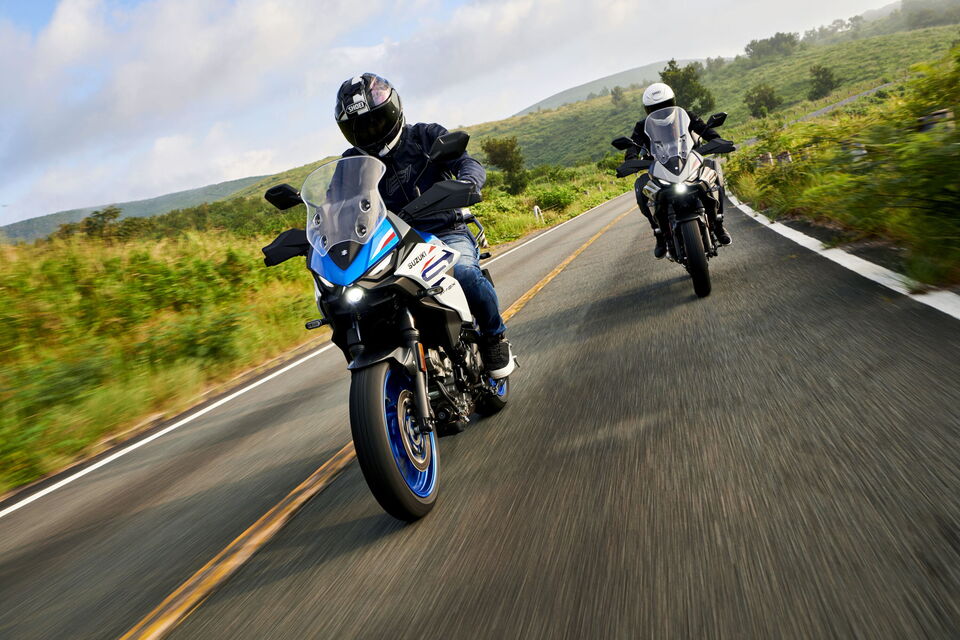
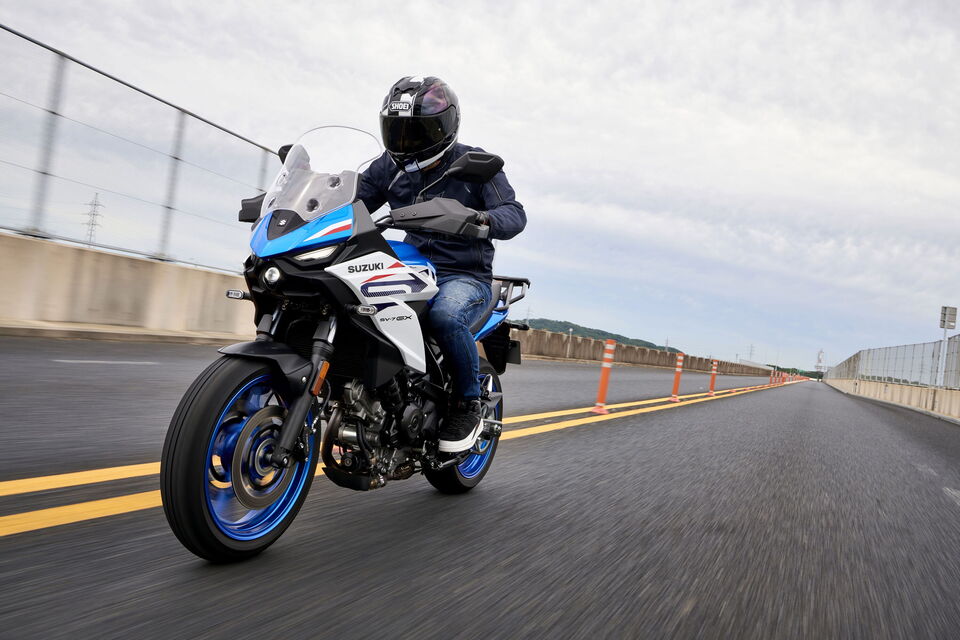
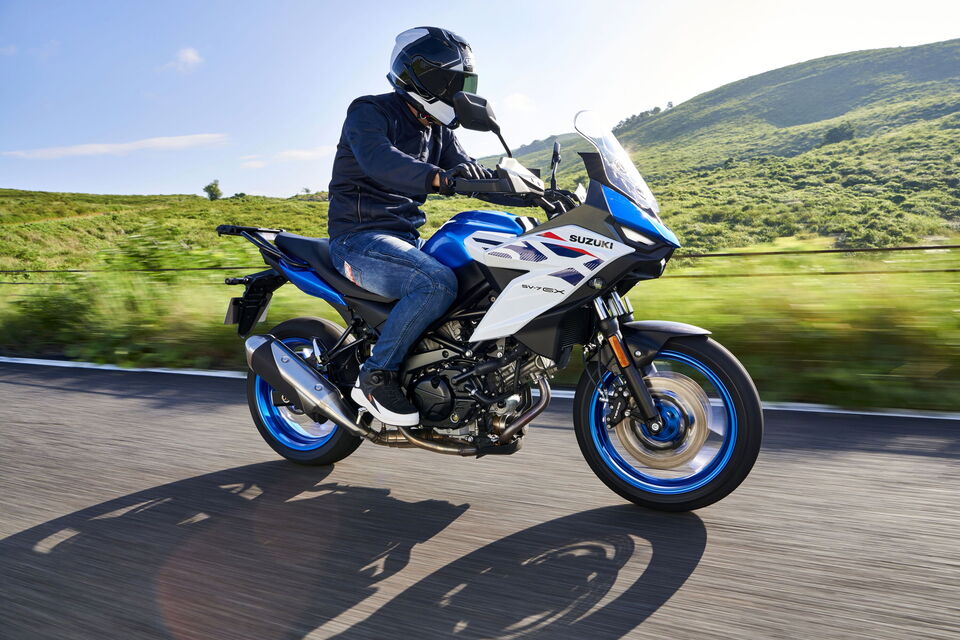
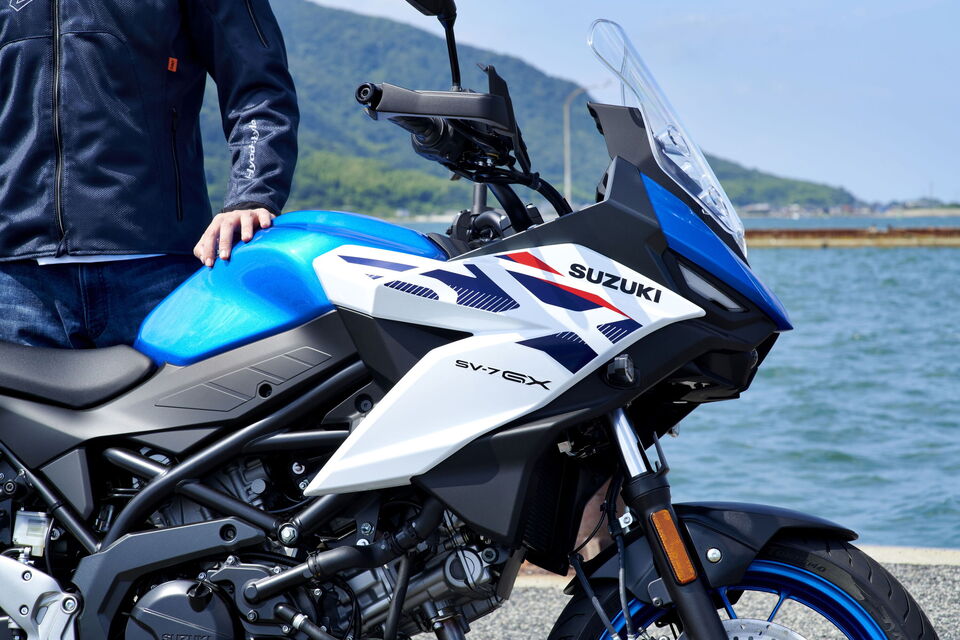
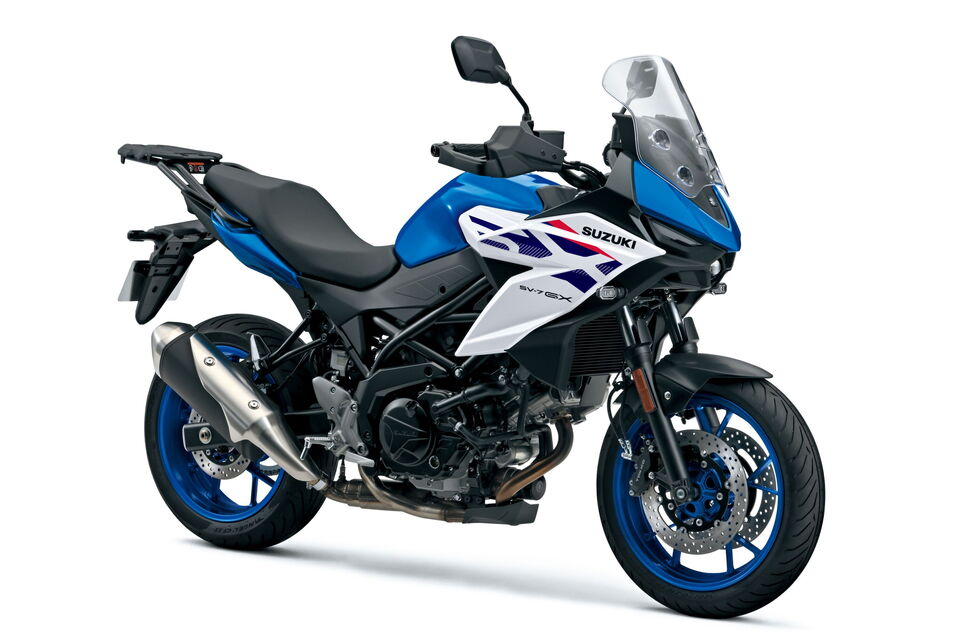
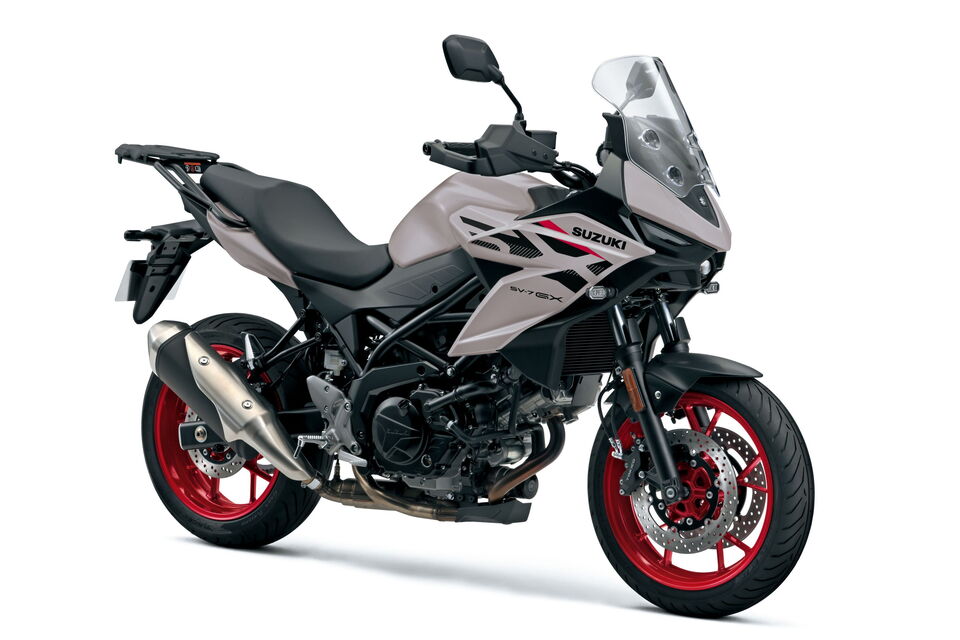
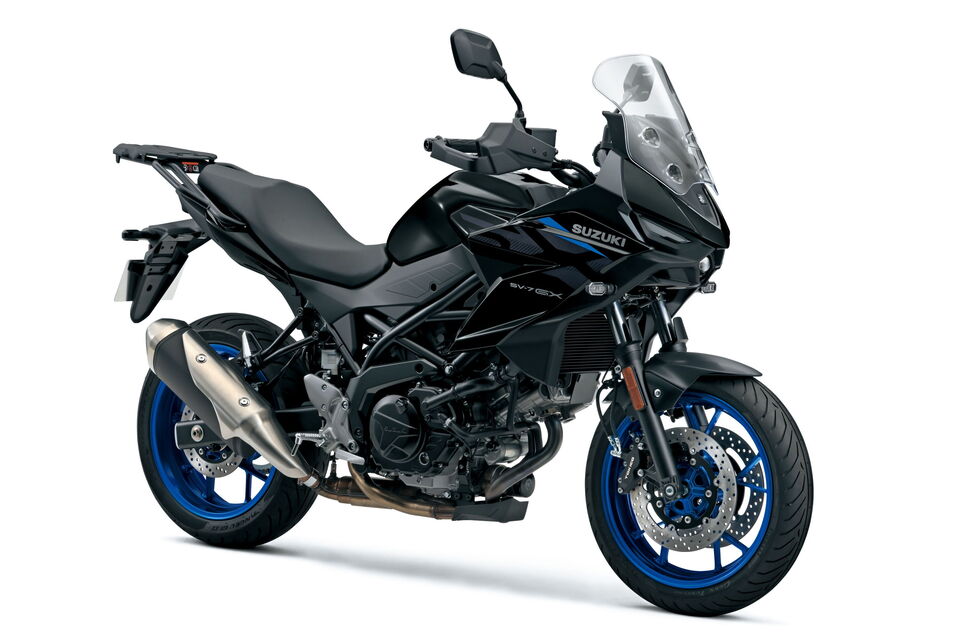
Concept: The V-Twin Crossover Returns – Successor to the SV650 and V-Strom 650
Shortly after Suzuki confirmed the end of the SV650 and V-Strom 650, the company surprised EICMA 2025 with the SV-7GX: a crossover tourer built around the proven 645 cc V-twin, styled in the spirit of the larger GSX-S1000GX and technically positioned well above the old SV650. It was one of Suzuki’s genuine surprises at the show. A half fairing, adjustable windshield, upright touring ergonomics, and luggage rack are all standard.
Suzuki identifies the Yamaha Tracer 7 as the target rival. In practical terms, the SV-7GX sits between the naked character of the SV650 and a full touring motorcycle, without growing into heavyweight-tourer territory in either weight or seat height. At our source’s editorial deadline, the German launch date and official price were still unknown. Early dealer listings averaged around EUR 9,890, but that figure was not officially confirmed.
Engine: Thoroughly Updated 645 cc V-Twin – Ride-by-Wire, Downdraft Throttle Bodies, Dual Iridium Ignition
The 645 cc 90-degree V-twin comes from the SV650 family, but it has been extensively updated for the SV-7GX. New features include ride-by-wire with downdraft throttle bodies, allowing the intake charge to flow vertically from above for improved cylinder filling and more precise throttle response, dual ignition with iridium spark plugs, new fuel injectors, SCEM cylinder coating, and coated pistons to reduce friction.
The result is 73 hp, or 53.7 kW, at 8,500 rpm and 64 Nm at 6,800 rpm. Top speed is 190 km/h. Claimed consumption is 4.2 L/100 km, and the 17.4-liter tank gives a theoretical range of roughly 410 km.
Suzuki’s Intelligent Ride System adds three riding modes – A Active, B Basic, and C Comfort – three-level traction control plus OFF, and a bidirectional quickshifter as standard. None of that existed on the old SV650, and it clearly moves the SV-7GX into a higher equipment and price class.
Chassis: Trellis Frame, 290 mm Four-Piston Brakes, Seven-Step Rear Preload
The steel trellis frame builds on the SV650 concept but is adapted to the crossover layout. Up front is a conventional 41 mm telescopic fork rather than a USD unit; it is non-adjustable. At the rear, a linkage-mounted monoshock offers seven-step spring-preload adjustment. Seventeen-inch cast-aluminum wheels carry Pirelli Angel GT II sport-touring tires in 120/70 ZR17 front and 160/60 ZR17 rear sizes.
The front brake is a clear step beyond the SV650: twin 290 mm discs with four-piston calipers instead of the old bike’s two-piston floating-caliper arrangement. A 240 mm rear disc completes the system. ABS is standard, but there is no cornering ABS. Wheelbase remains 1,445 mm, identical to the SV650.
Ergonomics: 795 mm Seat Height, Three-Position Windshield, Luggage Rack Standard
A 795 mm seat height combined with 211 kg ready to ride makes the SV-7GX accessible and manageable. The half fairing was developed in the wind tunnel, and the windshield offers three adjustment positions – a major everyday advantage over the naked SV650 and broadly comparable in concept to the Yamaha Tracer 7.
A wide 740 mm tapered aluminum handlebar and slightly lower footpegs create an upright but active riding position intended to work for commuting as well as longer day rides. Standard equipment includes a luggage rack, top-case carrier, hand guards, and a generously padded seat.
Factory accessories include an 80 mm taller touring screen, a comfort seat that raises seat height by 25 mm, 15–20-liter soft side bags, a 14-liter tank bag, and a 45-liter top case. That gives the SV-7GX a more complete factory luggage system than many direct rivals.
Market Situation: EICMA Premiere in November 2025 – German Price and Delivery Date Still Open
The SV-7GX was presented at EICMA in November 2025. As of April 2026, Suzuki Germany had not yet communicated an official price or a firm delivery date. The average asking price among the small number of early listings was around EUR 9,890. That may offer a rough indication of eventual pricing, but it was not representative enough to be treated as an official MSRP. Buyers should check current availability and pricing directly with a Suzuki dealer.
SV-7GX vs. SV650: Why That Is The Wrong Comparison
The SV-7GX is not simply an expensive SV650 and should not be judged as a replacement for a low-cost naked bike. It is a different product: crossover bodywork, wind protection, luggage capability, traction control, quickshifter, and stronger brakes – all equipment the SV650 did not offer.
Riders looking for the old SV650’s price point are not the SV-7GX target audience. Riders who want a comfortable, technically complete middleweight crossover with genuine V-twin character have relatively few alternatives. The direct comparison is the Yamaha Tracer 7, and that is exactly where Suzuki positions the new model.
Verdict
The SV-7GX is one of Suzuki’s most interesting new models for 2026, not merely because it keeps the 645 cc V-twin alive in a new role, but because it fills a genuine gap: a fully equipped middleweight crossover tourer with V-twin character, accessible dimensions, and sensible standard equipment. At the April 2026 publication deadline, the unanswered price question remained the biggest obstacle. If the official MSRP lands near the early dealer listings at around EUR 9,890, the SV-7GX should become a serious alternative to the Tracer 7.
Quick Check
+ Thoroughly modernized 645 cc V-twin with ride-by-wire, downdraft throttle bodies, dual iridium ignition, and SCEM cylinder coating.
+ Bidirectional quickshifter standard – still not a given in the middleweight crossover class.
+ Three riding modes A/B/C plus three-level traction control and OFF: complete S.I.R.S. package.
+ Three-position adjustable windshield standard: meaningful touring comfort for longer rides.
+ Luggage rack, top-case carrier, and hand guards standard; extensive factory accessory range.
+ Twin 290 mm front discs with four-piston calipers: a clear braking upgrade over the SV650.
+ 795 mm seat height and 211 kg ready to ride: accessible dimensions for a broad range of riders.
+ 17.4-liter tank, 4.2 L/100 km, roughly 410 km theoretical range.
+ Pirelli Angel GT II sport-touring tires standard.
+ Styling inspired by the GSX-S1000GX gives the model a contemporary crossover identity.
– No official German price or firm delivery date as of April 2026.
– No USD fork; conventional 41 mm telescopic fork is non-adjustable, and the rear shock offers preload adjustment only.
– No cornering ABS and no IMU.
– 73 hp is close to the Yamaha Tracer 7’s output in the source comparison rather than a class-leading figure.
– 211 kg is 12 kg heavier than the SV650 and roughly comparable with the Tracer 7.
Technical Specifications: Suzuki SV-7GX (2026)
Brand / Model: Suzuki SV-7GX; EICMA premiere November 2025; German market launch still pending at our source’s April 2026 deadline
Engine: Liquid-cooled DOHC 90-degree V-twin; 645 cc; ride-by-wire; downdraft throttle bodies; dual ignition with iridium plugs; new injectors; SCEM cylinder coating; six-speed; chain drive; Euro 5+
Power: 73 hp / 53.7 kW at 8,500 rpm
Torque: 64 Nm at 6,800 rpm
Top Speed / Consumption: 190 km/h; 4.2 L/100 km; 17.4-liter tank; approx. 410 km theoretical range
Frame: Steel trellis frame based on SV650 concept, adapted for crossover layout
Fork: 41 mm conventional telescopic fork; non-adjustable; approx. 125 mm travel
Rear Shock: Linkage-mounted monoshock; seven-step adjustable spring preload
Front Brakes: Twin 290 mm discs; four-piston calipers; ABS
Rear Brake: 240 mm disc; ABS; no cornering ABS
Electronics: S.I.R.S.: three riding modes A/B/C; three-level traction control + OFF; bidirectional quickshifter; Easy Start; Low RPM Assist; smartphone connectivity
Wheels / Tires: 17-inch cast-aluminum wheels; Pirelli Angel GT II; 120/70 ZR17 front / 160/60 ZR17 rear
Fairing: Wind-tunnel-developed half fairing; three-position adjustable windshield
Standard Equipment: Luggage rack; top-case carrier; hand guards; generously padded seat
Factory Accessories: Touring windshield +80 mm; comfort seat +25 mm seat height; 15–20 L soft side bags per side; 14 L tank bag; 45 L top case
Weight: 211 kg fully fueled
Seat Height: 795 mm
Wheelbase: 1,445 mm
Colors: Pearl Brilliant White/Metallic Triton Blue; Pearl Matte Greige; Glass Sparkle Black
A2: Restrictable to 35 kW
German Price: Not officially announced as of April 2026; early dealer-listing average approx. EUR 9,890, based on few listings and not representative