Beta Alp 200 (2013)
Enduro
Beta Alp 200
Model year 2013, 11,000 km, 3.5–4 L/100 km

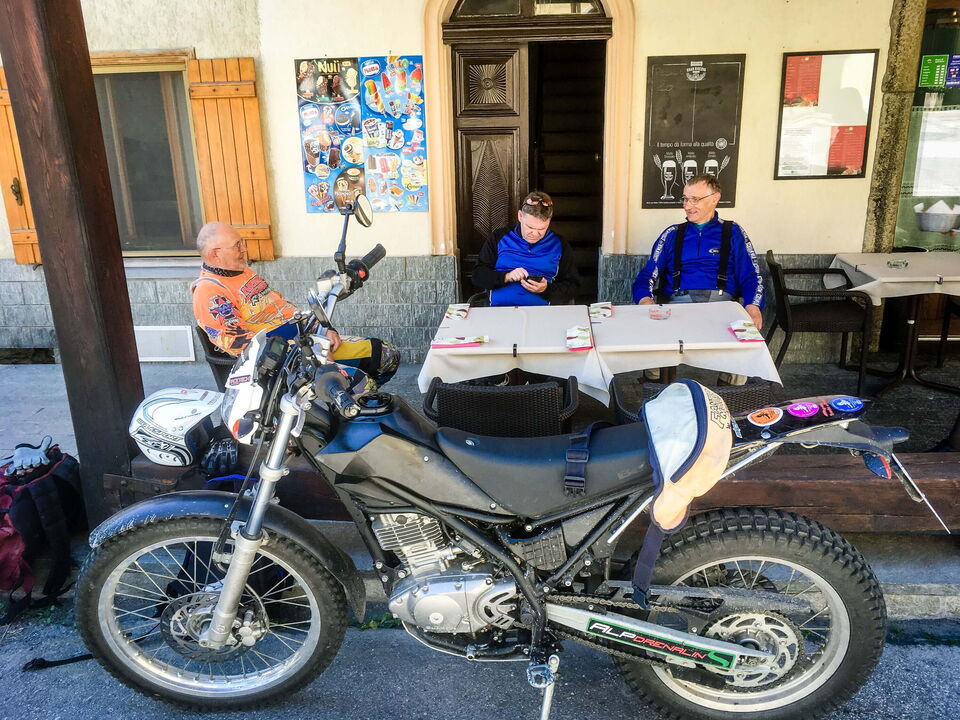
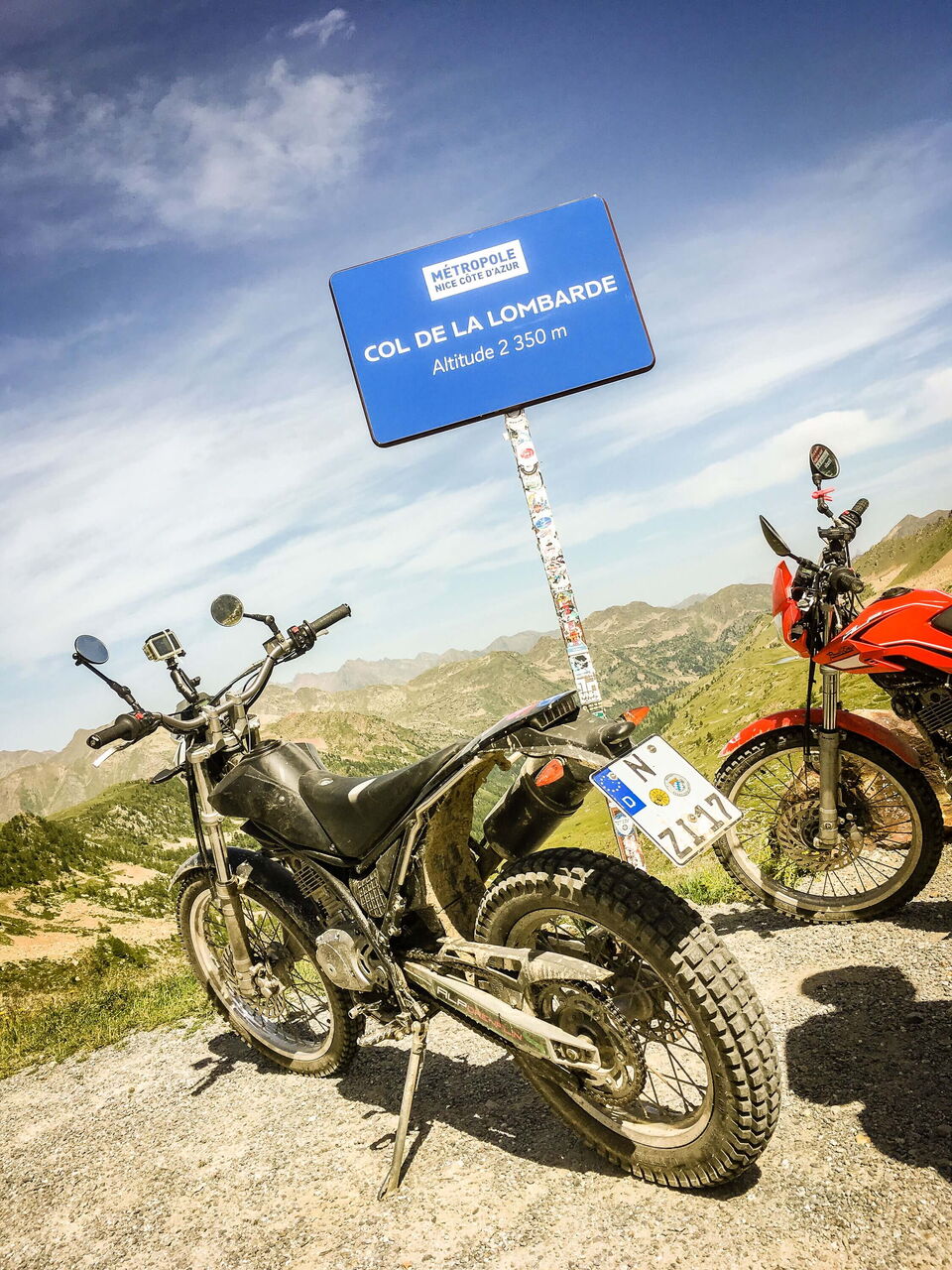
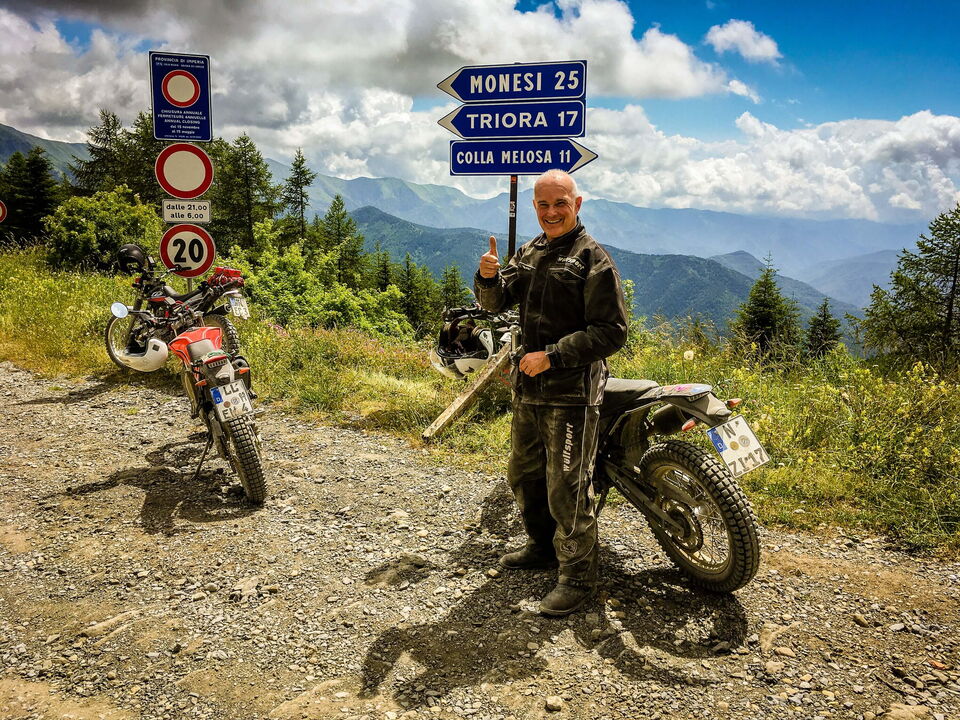
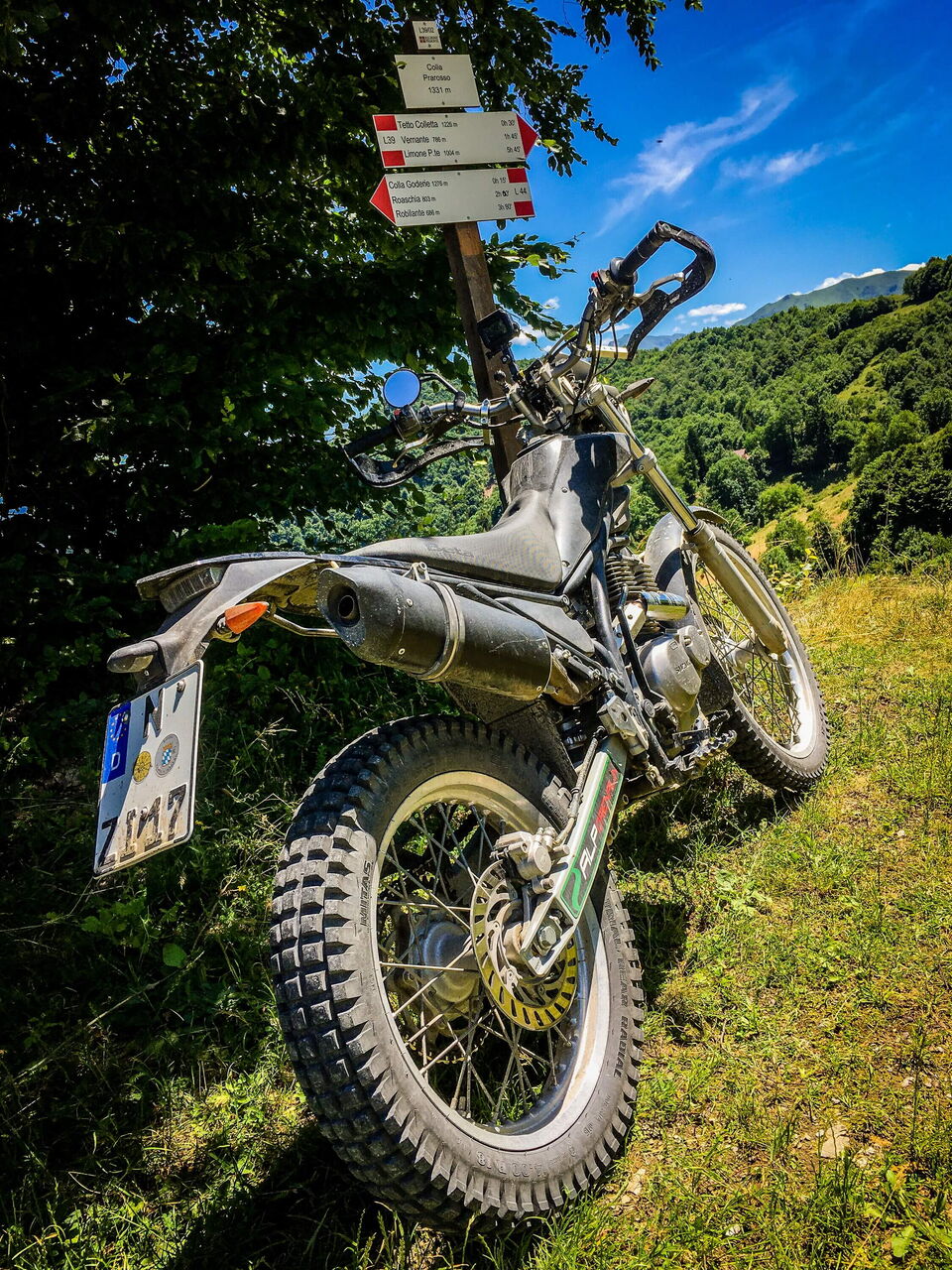

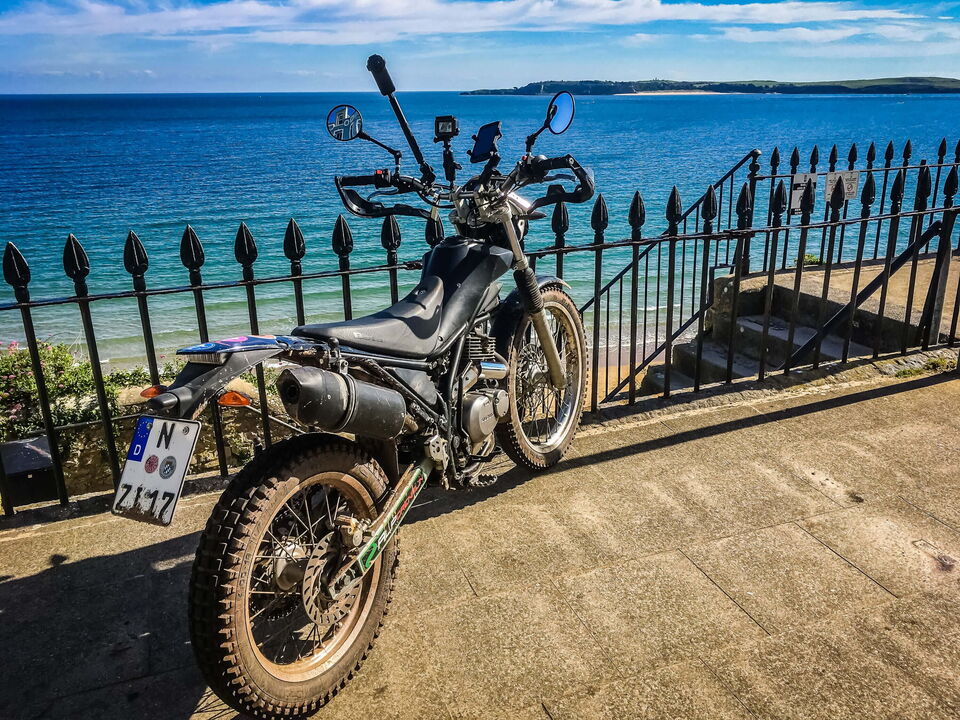
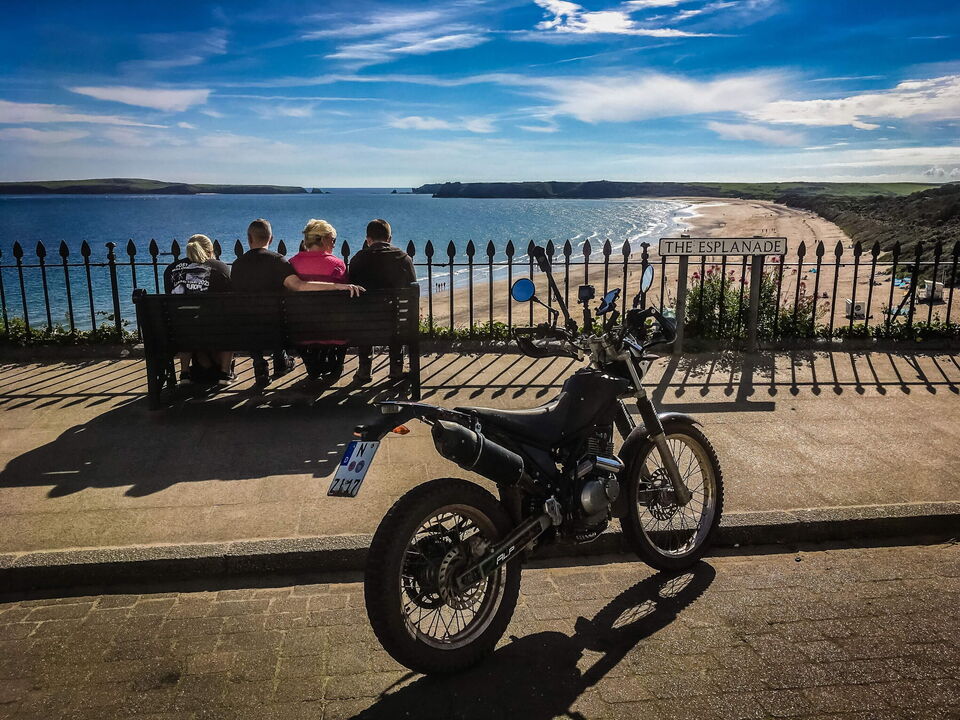
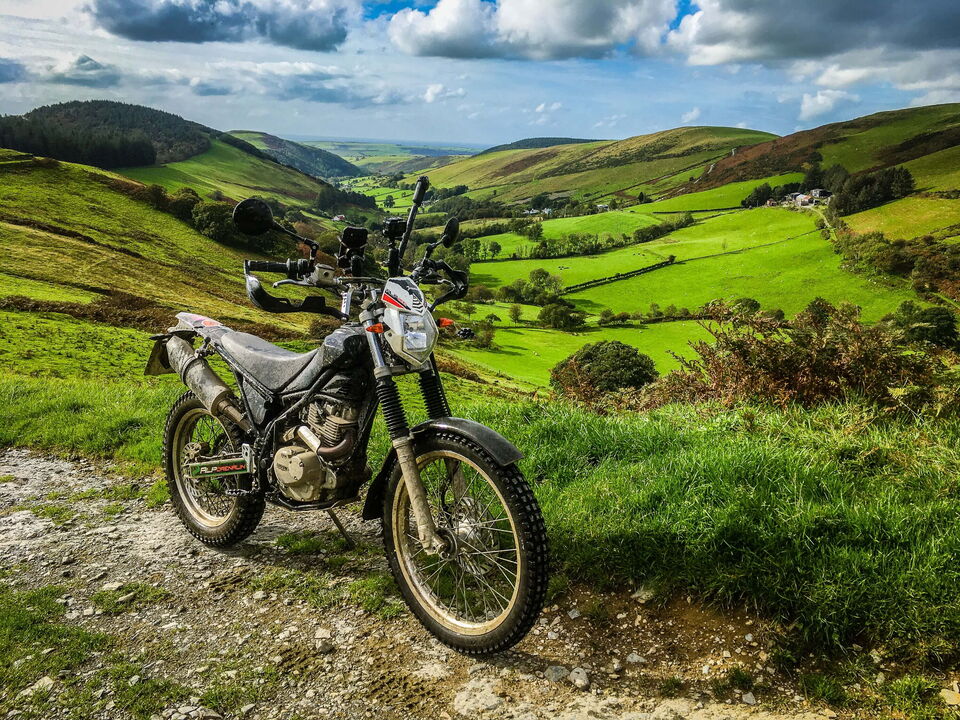
“It can’t do anything—and certainly not well,” a friend says about it. He owns a 2014 himself and strongly recommended the mini Beta to me. “It doesn’t suspend well. It doesn’t brake well. It has no power. But on our trails it’s the best normal bike. Our wild trial days are long gone—but this is where the Alp is the most fun.”
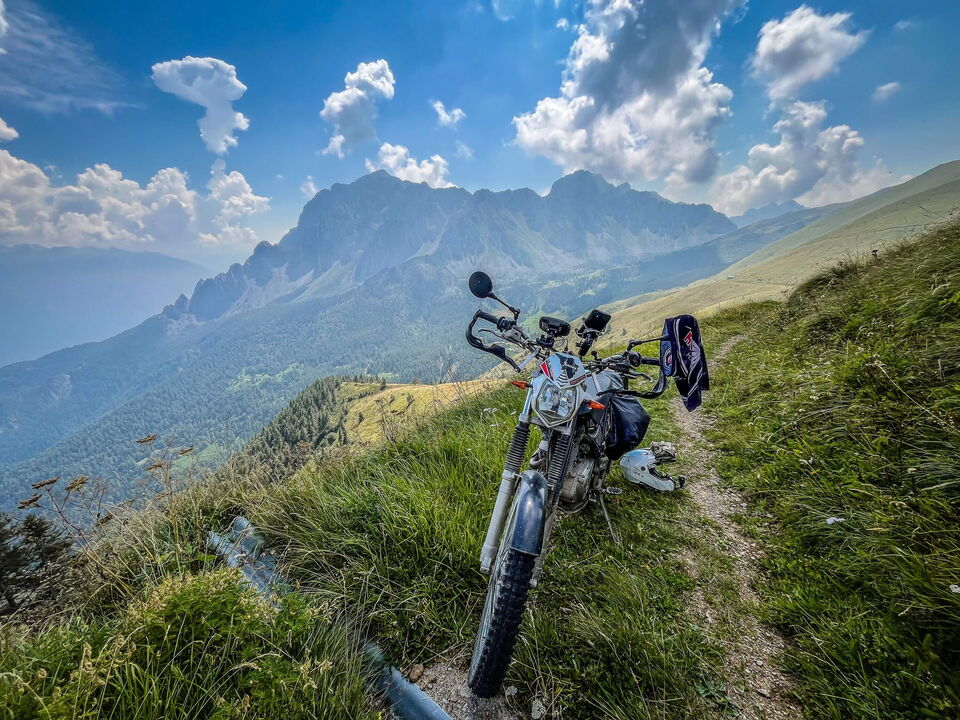
The key, of course, is “our trails.” Mostly in Italy—like the Western Alps, Liguria, or Piedmont. Also very steep climbs and descents in Lombardy near Lake Iseo, where sometimes even MTB races are signposted.
All kinds of small, tricky singletracks where you don’t need 150 hp—where 250 kg, even 200 kg, massively holds you back. Electronic aids? Nonsense—you’d shut them all off anyway. Safety first: here it’s just the trail and you.
On these mini paths—roots, slick rocks, loose rubble—this unassuming Beta Alp 200 starts to shine. On “our trails” you face super-tight, off-camber hairpins without the Beta hitting the steering stop. You can turn the bars insanely far—much farther than on any street-oriented dual-sport. And that makes things easy here.
What also makes it easy is the engine. Air-cooled, 200 cc, 15 hp—that sounds bleak. Like muscle atrophy. This ancient two-valver comes from the Suzuki DR200, and on “our trails” it’s excellent: it just keeps chugging forward, even from low rpm. Like a little tractor—putt-putt-putt. Its diesel-ish character helps you out of sketchy situations.
Thanks to the CV carb, throttle response is wonderfully smooth. You feel exactly what’s going on, and your right hand controls everything precisely. Who needs traction control? The kind that has to dial back too much power so you don’t crash. No—there’s no fluff on the Beta Alp 200. Rough and honest, by the motto: simple is best.
That not only keeps it affordable—it keeps it light. About 110 kg fully fueled, give or take. I never put it on a scale. No need—you feel it when you pick it up. Not feather-light (a Montesa 4Ride is around 85 kg), but still far easier to wrestle out of the brush than a Honda CRF 300 L. And that Honda, at 142 kg, is already considered skinny.
Ha—when you boldly head into the unknown alone. And yes, it happens: you crash. Usually the bike isn’t lying at a 45-degree angle like boxer fans claim. More like front wheel down at a 135-degree angle half in a ditch. In that situation the Beta is easy to lift, even solo. Motorcycling made easy.
What’s extremely important to me: it has an electric starter. On steep, gravelly, muddy tracks, I don’t want to kick-start a dozen times. Sorry—I’m too old for that. That’s 19th century to me. Why waste your strength when a gentle thumb press does the job? I need my limited energy reserves for demanding trails.
I also don’t want to wear myself out fighting hard-to-ride machines. One of those is the KTM Freeride: 10 kg lighter than the Beta, 10 hp stronger, much better suspension, crispier brakes. On paper it’s clear: Goliath vs. David.
Reality in alpine mountain terrain looks different. The KTM only works when you let it fly—ready to race, one or two gears higher, more speed. But on “our trails” there are mountain bikers and hikers; these aren’t closed race tracks just for us. You also have to expect wildlife. Speed endangers you and others.
If you ride the Freeride slower, it fights you—for example when you roll on the gas in hairpins. Too gentle and it stalls. Plop—engine off. You tip over and lie stupidly on the rocks, ribs hurting. Give it more gas and the front wheel lifts. You cling to the bars for dear life, and after an hour your hands look like this: blackened, sweat of fear. It wears you out.
Hop straight from that onto the unassuming mountain donkey Beta Alp 200 and you feel transformed. The thing makes life easy, you grin and glow. Braap-braap, no stress. The Beta doesn’t overwhelm you—not even on difficult sections. Front wheel lifting? “Wheelie” is a foreign word for this Italian mountain goat. Enduro hiking on easy mode. It frees your mind for the stunning views above 2,000 meters elevation.
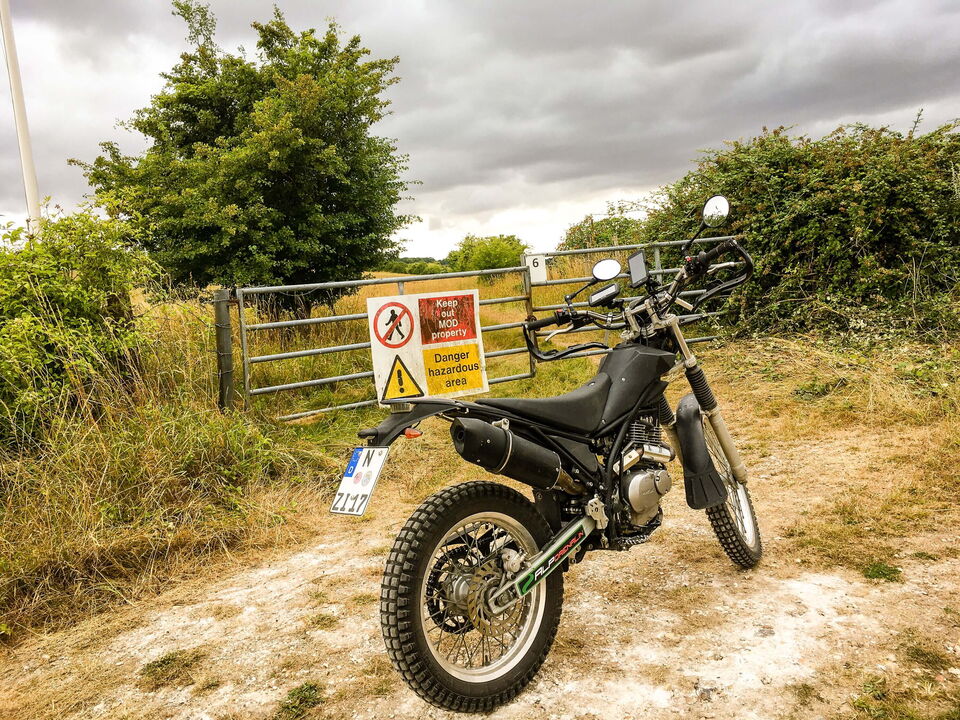
You laugh at “easy mode”? I still remember the Trans Euro Trail (TET) in mid-Wales—a mecca for high-level off-roading. I was riding alone, so I took the light Alp 200. In the mornings at various sheep gates I kept meeting the same group. Sometimes I held the gate, sometimes they did. Are you on the TET too? They asked what that even was—they just ride their local routes. Want to come along?
Sure. A few CRF 250 Ls, but also 300cc two-strokes. And me, the only German, in the middle with the tiny Beta. This could get interesting. It did—because it got difficult, and the Beta fought so bravely that even the two-stroke guys were impressed. No fuss—just ride, effortlessly. Nice little bike indeed.
That goes for maintenance too. I usually don’t even do 1,000 km a year on it. Still, every 1–2 years it gets fresh oil; I clean the K&N air filter often. Fresh DOT 4 brake fluid is a must before every Alpine trip. The whole spa program doesn’t cost much. After seven years, the two valves were checked—everything fine.
Tire wear? They go hard before they go bald. My Mitas ET-01 or Heidenau K67 ended up in the trash after many years, still with lots of tread—just too hardened. For 2025 I mounted Pirelli MT43s for the first time: very good all-rounders, with what feels like more grip than the ones above. My skills aren’t good enough to justify insanely expensive Michelin X11 Competition tires.
By the way, my Alp was bought used. Burkhard from the highly recommended Betabikes forum put me in touch with a seller—right near me, actually. The test ride almost turned into a disaster because the thing died out in the middle of nowhere and absolutely wouldn’t restart. I pushed it back, steaming. Cause: the petcock wasn’t open. Well…
A lot of Betabikes parts are fitted on my Alp 200: thick skid plate, softer fork springs, softer shock spring, linkage mud guard. Footpeg mounts moved rearward, short shift lever. Plus S3 footpegs you can stand on comfortably all day. All the plastic body panels are sitting like-new in the basement. What isn’t on the bike can’t break. The seat from the Urban model for more trial style. Front fender mounted a bit higher. Thanks for all the work, dear previous owner.
Everything perfect? No. Even with regular greasing, the linkage and shock start squeaking again after a short time—not just on mine. And sure: when the trail gets rough, you have to stay alert. You can’t miss holes—you have to brake.
Where a Freeride would just steamroll through, you have to slow down on the lazier Beta. Otherwise it bottoms out brutally and might buck you off. So: more haste, less speed. That’s the essence of enduro wandering. And for that, the Beta Alp 200 feels hard to beat.
Günter Wimme
First and foremost: vroom, vroom. He loves motorcycles and scooters—and has spent his entire professional life around them: as a test editor at MO, editor-in-chief of SCOOTER & Sport, and a racetrack instructor.
When it comes to travel, he raves about his Honda Forza 300 (nearly 90,000 km on the clock). For enduro wandering, he prefers lightweight machines like the Beta Alp 200 or Honda CRF 300 L. For those wild five minutes, he turns to his Aprilia Tuono 1100 V4.
Dream bikes: Honda RC30, Scout Flying Squirrel.
Motto: It’s the rider, not the bike.