Honda CBR 600 RR (2003)
Sport
Honda CBR 600 RR
Model year 2003, 83,000 km, 6–7.5 L/100 km

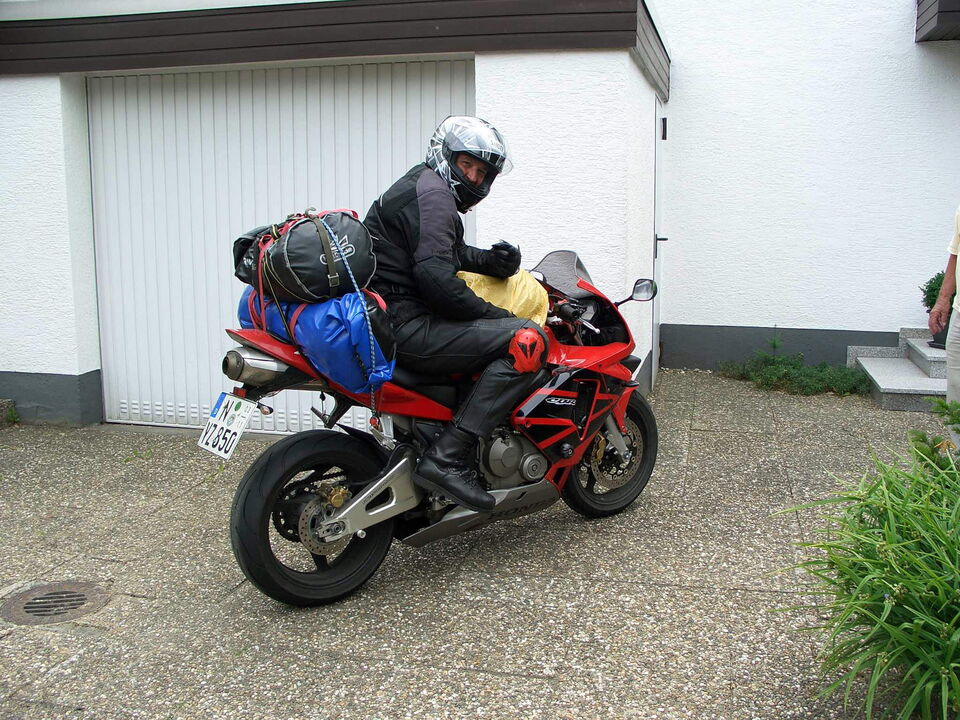


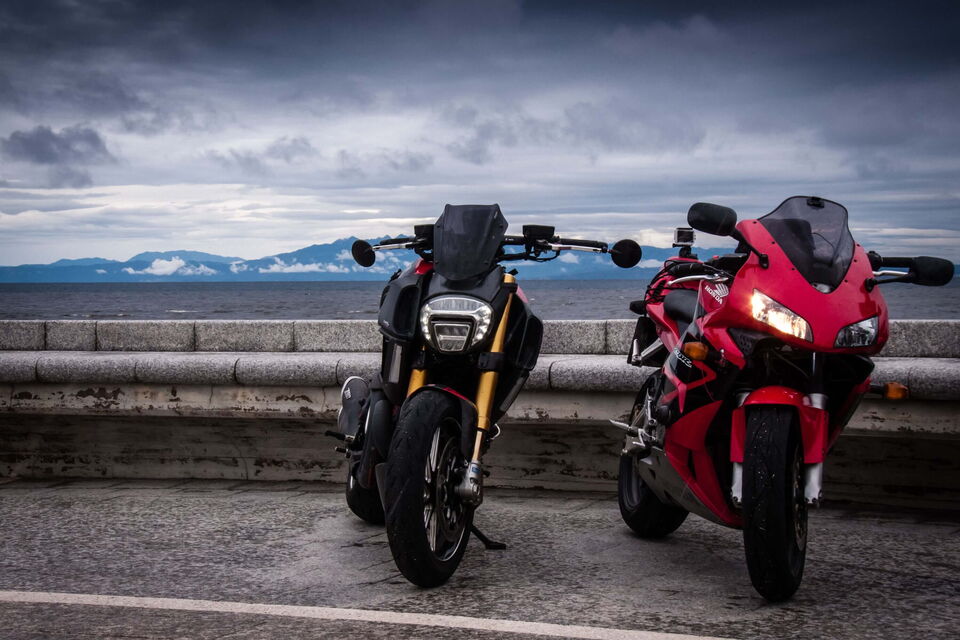
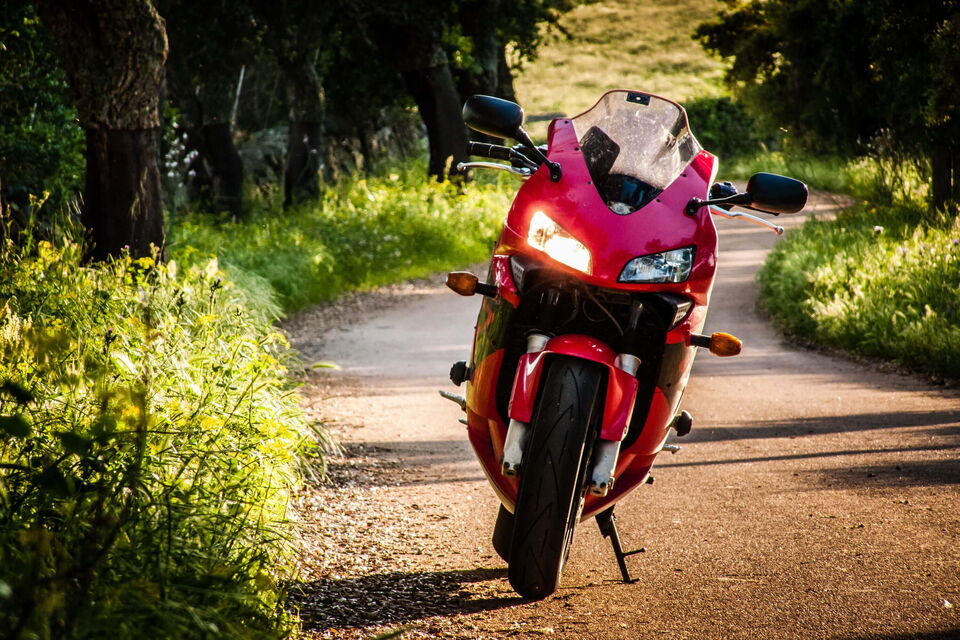
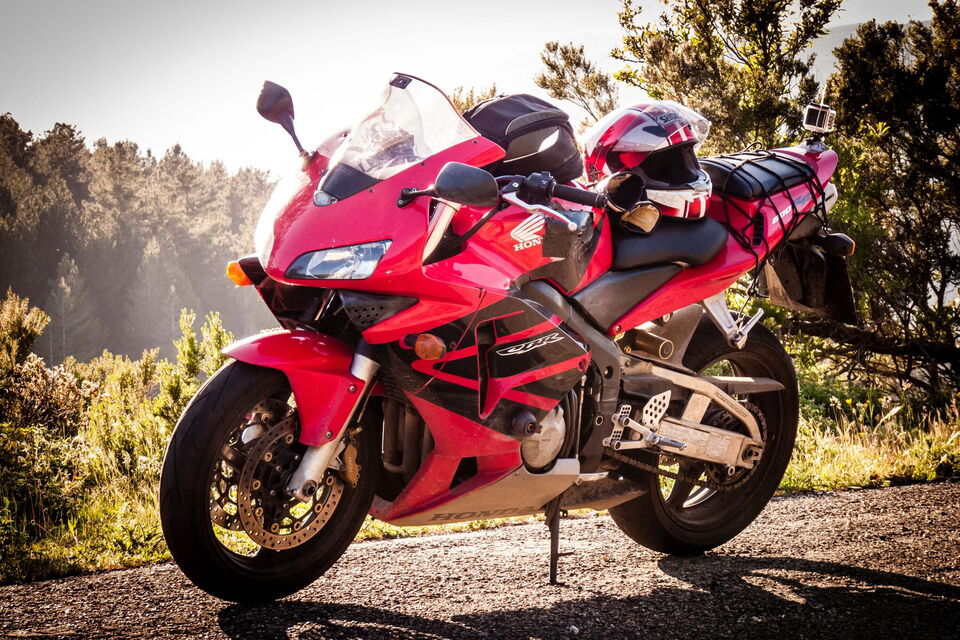
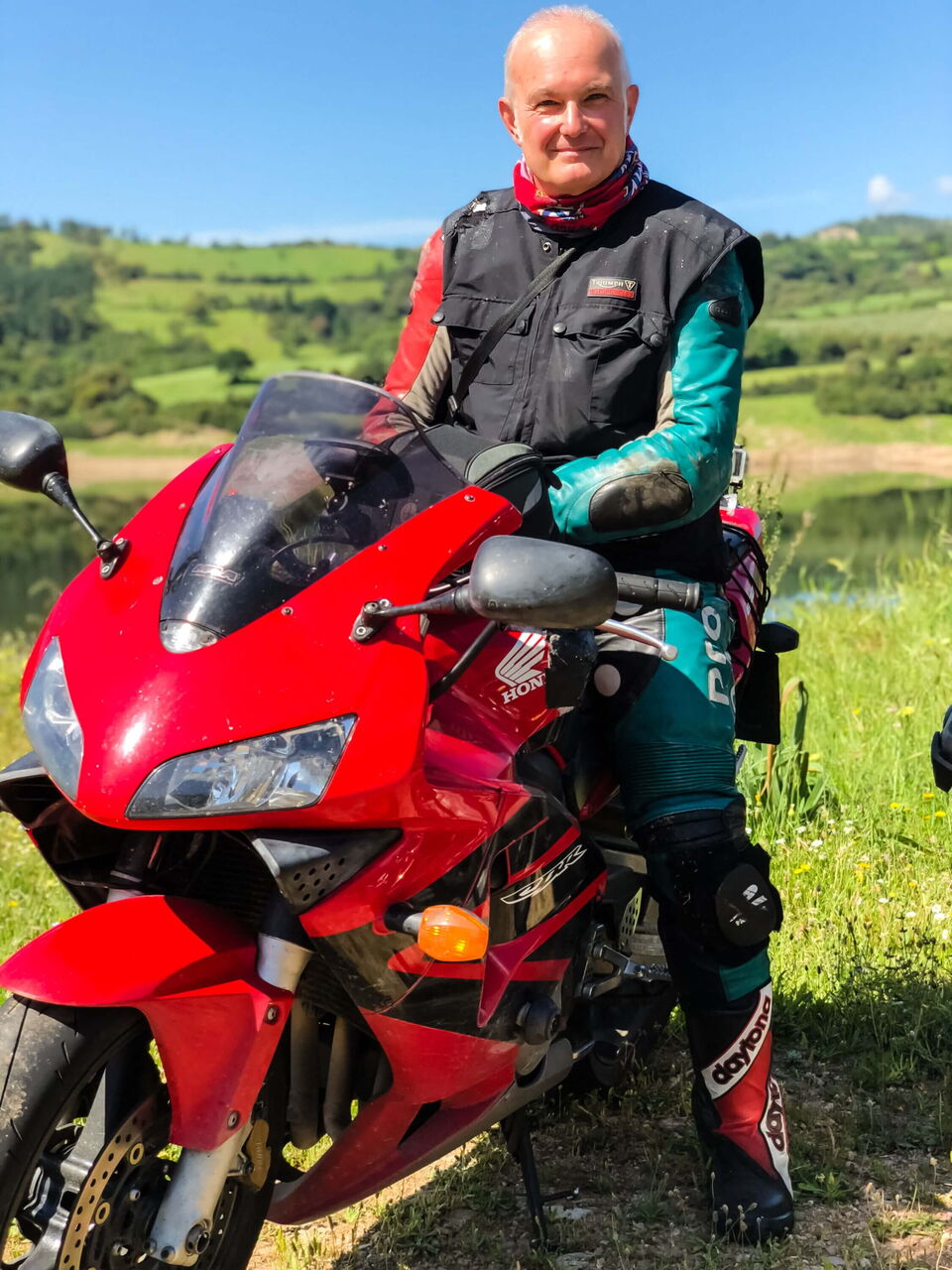
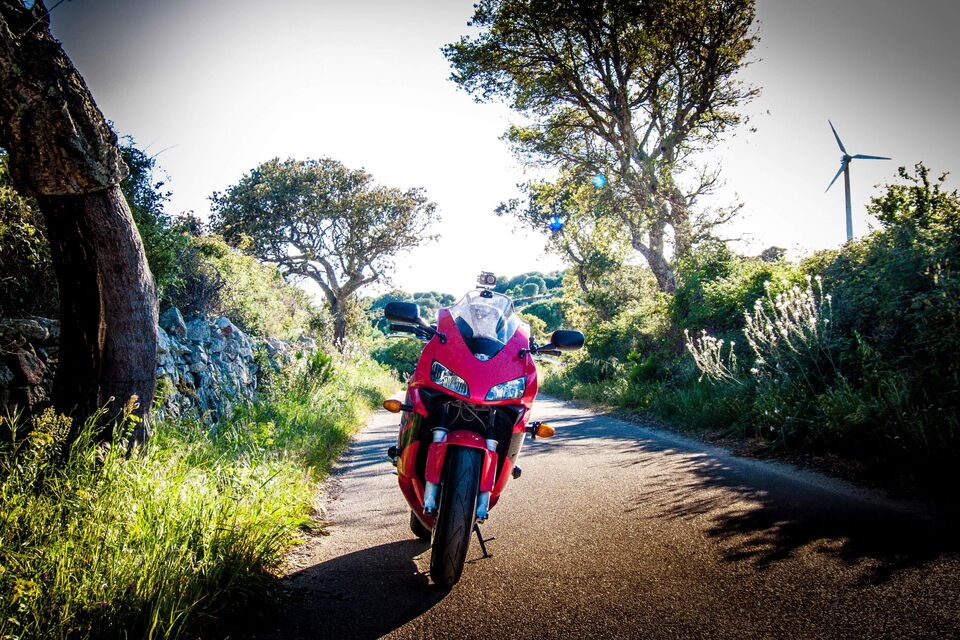
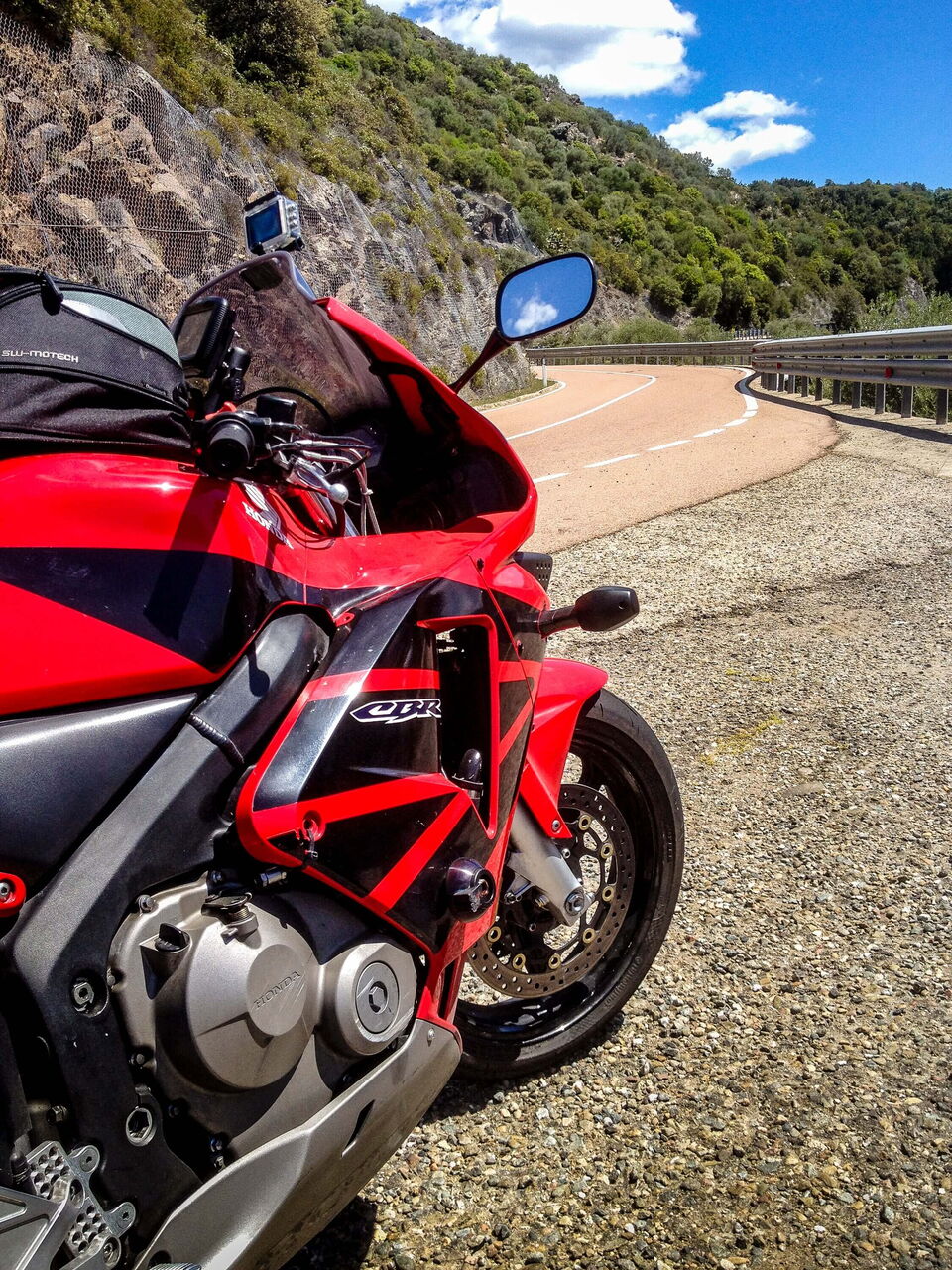
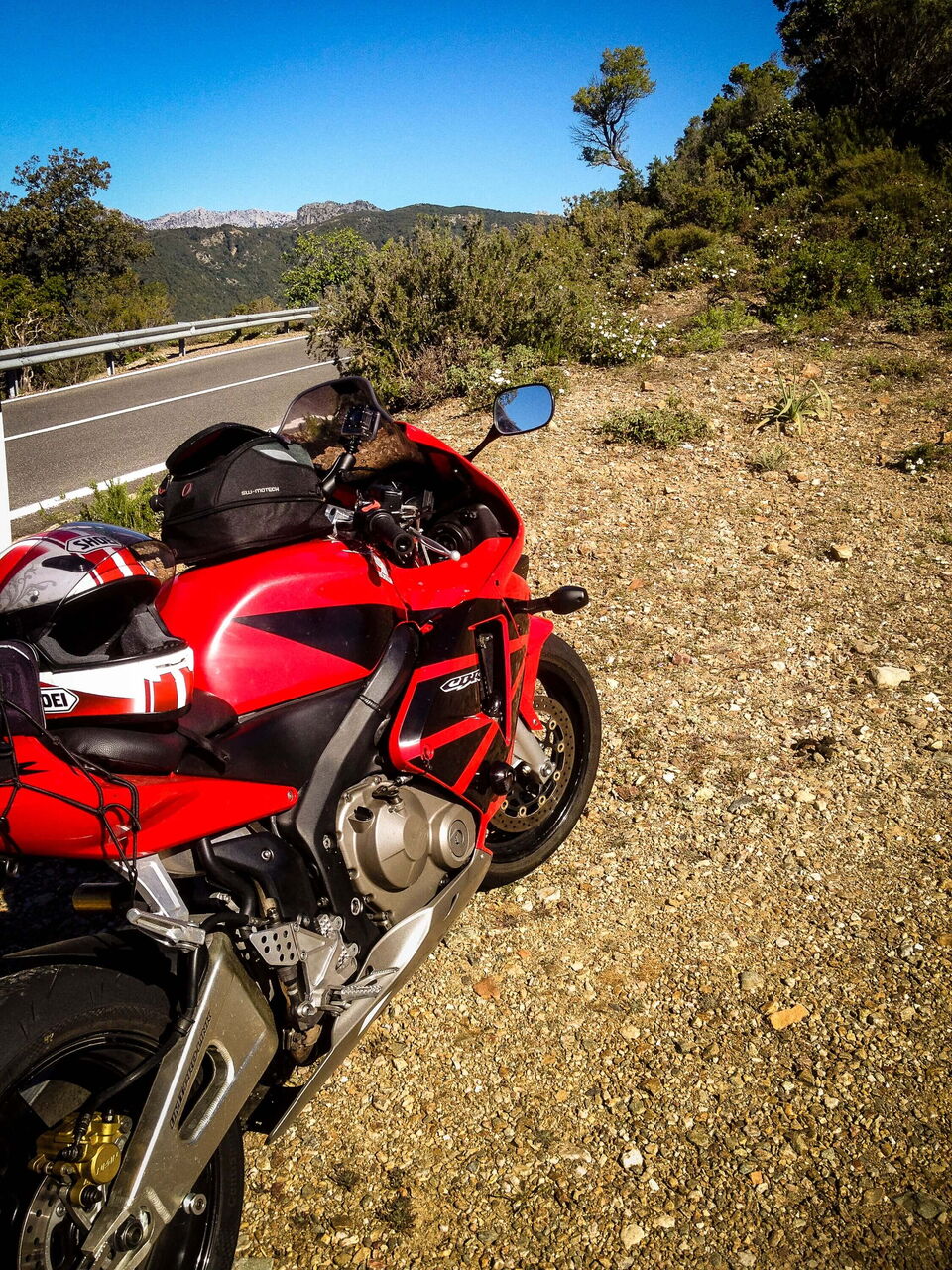
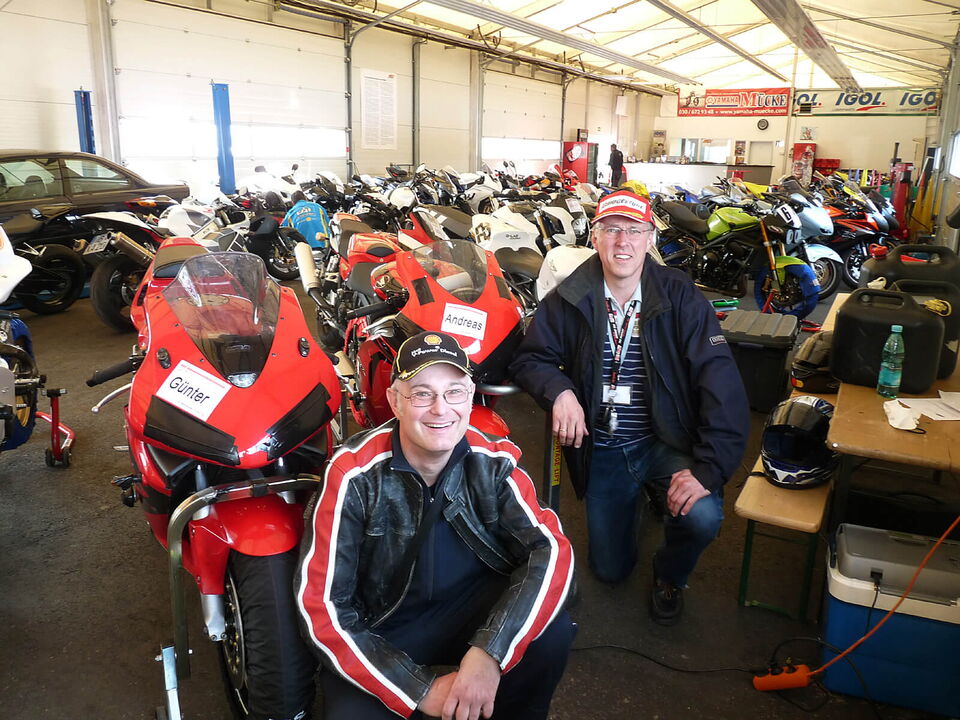
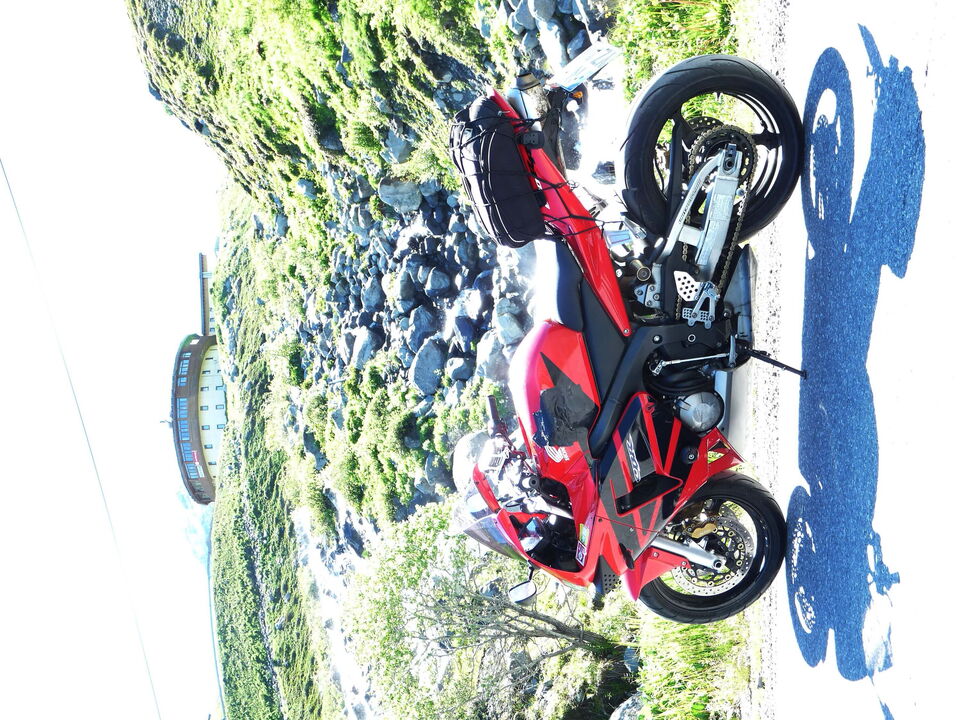
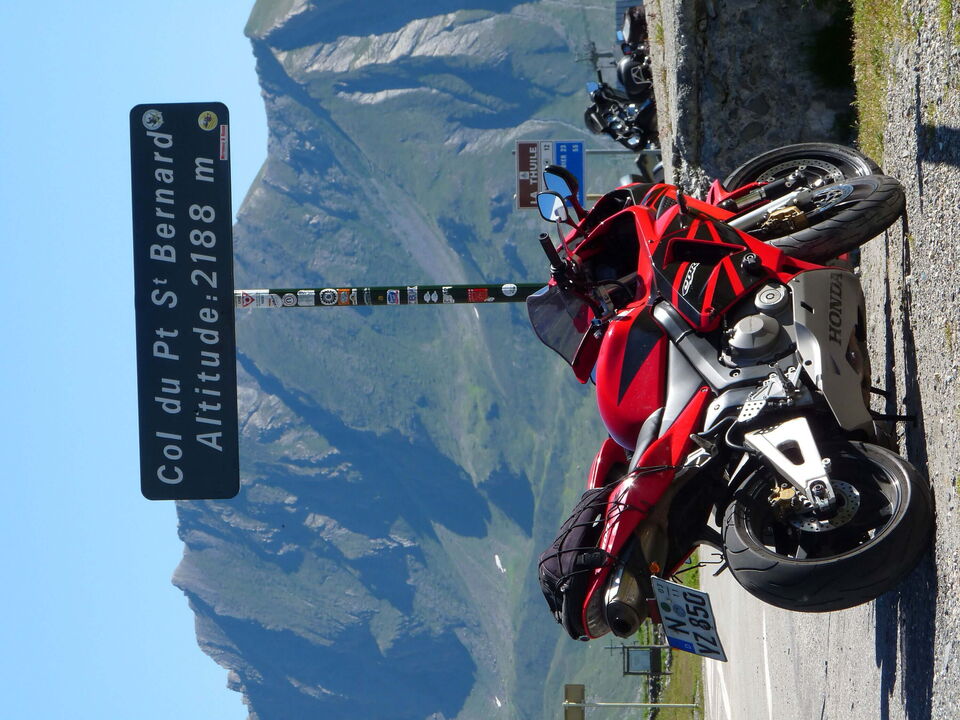
I actually wanted to buy Rossi’s V5. Japanese motorcycle journalists told me the MotoGP bike was supposed to come to market street-legal. But Honda got cold feet—they didn’t want to jeopardize Fireblade sales. That’s another story.
At Munich’s IFMA show in fall 2002, those same colleagues also told me: the same development team was responsible for the new CBR 600 RR. I sat on it, thumbs up—then ordered one sight unseen from my local dealer (Honda Hübler/Oberasbach). Mid-April it finally arrived.
The engine is a classic 600—you know the type; I’d had an ’88 CBR 600 F already. The RR, internally called PC37, has three very different rpm zones. Below 7,000 rpm it just putters along obediently. Up to 10,000 rpm, it wakes up—enough for brisk solo back-road rides. Above that, the house catches fire. The limiter kicks in at 15,000 rpm, though from about 14,000 rpm onward it doesn’t pull much harder. So you’ve got a little “play band” where you don’t have to upshift and downshift unnecessarily before every corner.
You have to like that peaky power delivery. Most riders want beefy shove in any gear at any rpm. A 600cc inline-four sportbike is the exact opposite. As the rider, you constantly have to adapt to what the engine wants. If you forget one downshift before a corner, you’ll just go beep—and not much happens.
And even if you keep it on the boil… you’re still only looking at a max of 64 Nm of torque. Even with a front sprocket two teeth smaller, it’s tough when your buddies ride 1000s or Bavarian boxers.
Not so much in the corners—more at the edge of town. Everyone’s rolling quietly at 50 km/h in a tall gear and then cracks the throttle. Bam—the others warp away and you’re left behind like a snail. What helps? Drop two gears and send it—throttle pinned. Not much fun for you, and even less for the dear neighbors.
Great, agile chassis. Excellent brakes for the time. Very easy to ride very fast. Even in 2003 I felt it was overkill on public roads. So the PC37 went to the track—where it came alive. Where the engine finally belonged: always between 10,000 and 14,000 rpm. Gaaaas!
Later I switched to a “real” race bike, used. A good friend bought the red Honda as a returning rider. He’s a top rider, and soon took it to the track too. In all those years he had only one issue: the stator was replaced at 25,000 km. When he switched to a Fireblade PC59, I bought it back. His taller windscreen stayed on; his tiny turn signals were swapped back to stock—because I want to be seen.
The PC37 is compact—you have to fold yourself up a bit. For street use I treated myself to a re-padded seat, plus a heavily drilled rearset bracket with road approval: it drops the stock pegs lower and farther back. Don’t worry—without hero blobs nothing scrapes. And my legs have more room. My knees say thank you.
Less good was the advice from so many well-meaning folks to install a superbike handlebar kit. Sure, comfort. But honestly, the better knee angle helped far more. With a bar instead of clip-ons in the Alps: before 180-degree hairpins, the upright torso helps me spot an oncoming Swiss PostBus (it has the right of way) faster—without having to contort myself over stock clip-ons.
However—and this really sucks—with a superbike bar you lose about 90% of front-end feel. Perceived precision matters a lot to me. That’s why I personally can’t warm up to BMW’s Telelever, though that’s just personal taste. So I wouldn’t fit a superbike bar again.
Why are so many parts scuffed on the Honda? Old race parts with some ground contact make it less attractive to thieves. A personal safety win. And from the saddle, I can’t see it anyway. Technically it’s tip-top. With a chain oiler too—so the nightly lubing ritual is gone.
Another friend took it twice to the Isle of Man, and as the “King of the Odenwald” he rode it accordingly. For his 1.90 m height it’s too small, but the power addict was pleasantly surprised by how it handled—two thumbs up. My three Sardinia scratching holidays and various Alpine trips went by without any problems—except that you have to adapt to its power character. Be its servant, and it’ll be smooth.
What’s broken over the years? Both fork seals; the front brake rotors were worn below spec. I found replacements (OEM) in my track-parts stash. Cheap spare spark plugs also went in. On that occasion, at 53,000 km, Honda Hübler checked the 16 valves—everything perfect, nothing to do. At the end of the 2025 season the engine started ticking after two kilometers. Cold it was fine. The cam-chain tensioner—a known weak point—had to be replaced.
Overall, it’s been a worry-free life for a machine that’s been ridden this hard. It underlines Honda’s reputation for building simply reliable bikes.
I’ve run it for years on Bridgestone BT16 Pro: very inexpensive, precise, and the front tire is a bit reluctant to turn in—ideal for my wide bar.
Günter Wimme
First and foremost: vroom, vroom. He loves motorcycles and scooters—and has spent his entire professional life around them: as a test editor at MO, editor-in-chief of SCOOTER & Sport, and a racetrack instructor.
When it comes to travel, he raves about his Honda Forza 300 (nearly 90,000 km on the clock). For enduro wandering, he prefers lightweight machines like the Beta Alp 200 or Honda CRF 300 L. For those wild five minutes, he turns to his Aprilia Tuono 1100 V4.
Dream bikes: Honda RC30, Scout Flying Squirrel.
Motto: It’s the rider, not the bike.