Honda CRF 300 L (2022)
Enduro
Honda CRF 300 L
Model year 2022, 19,000 km, 3.0–3.6 L/100 km
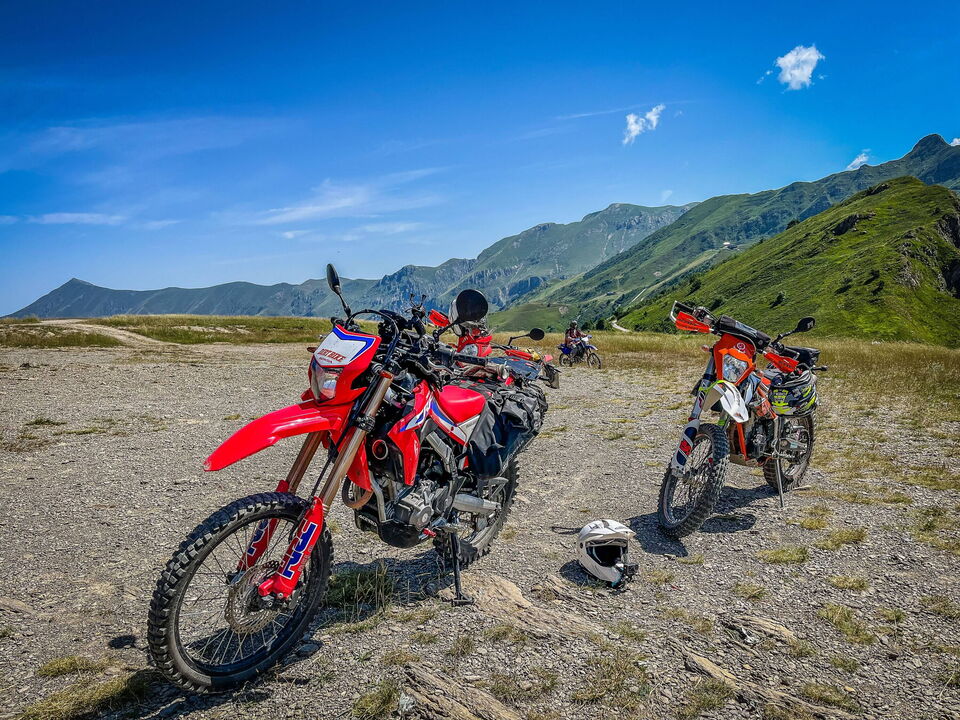
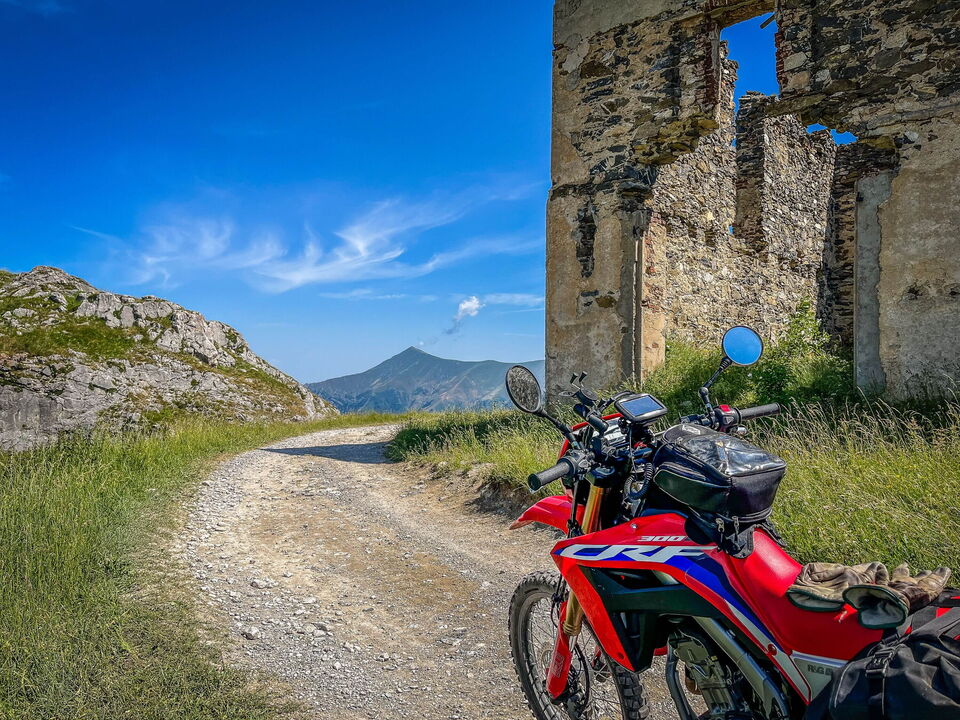
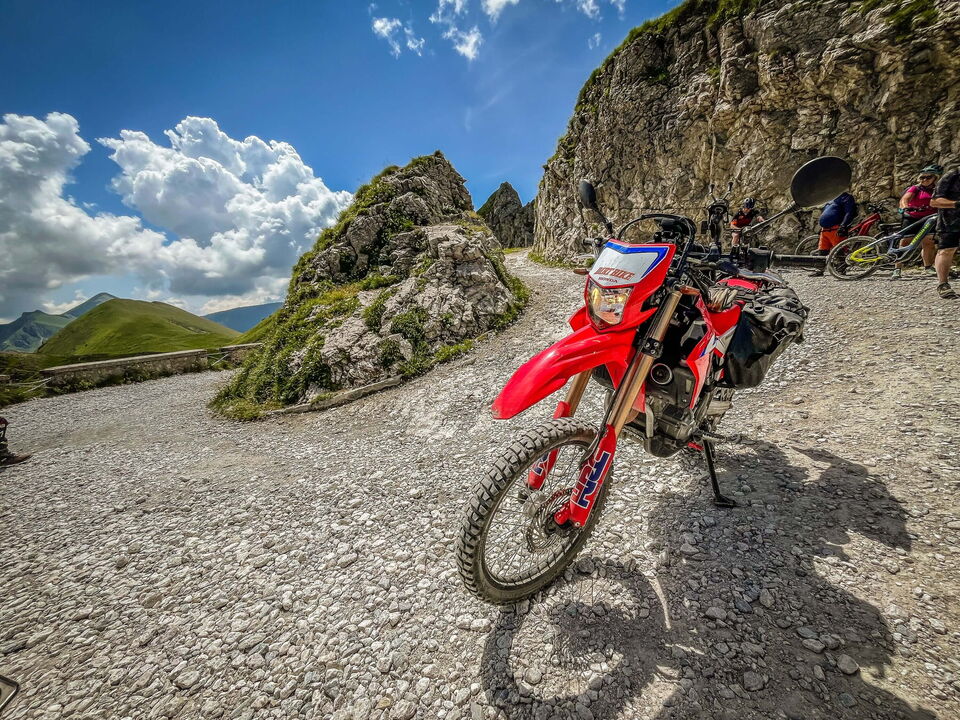
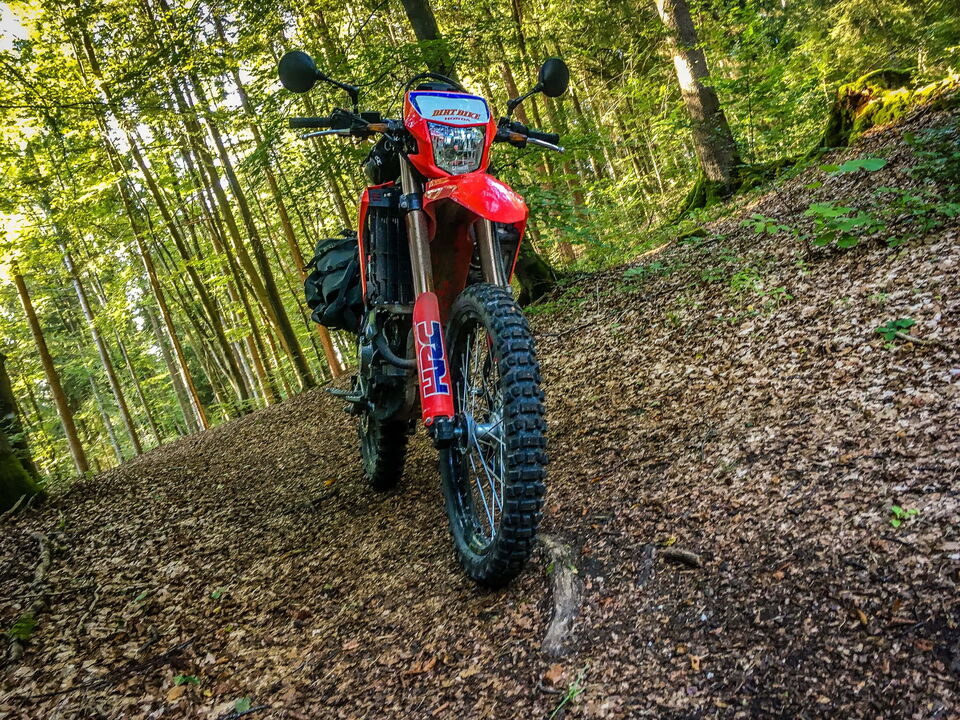
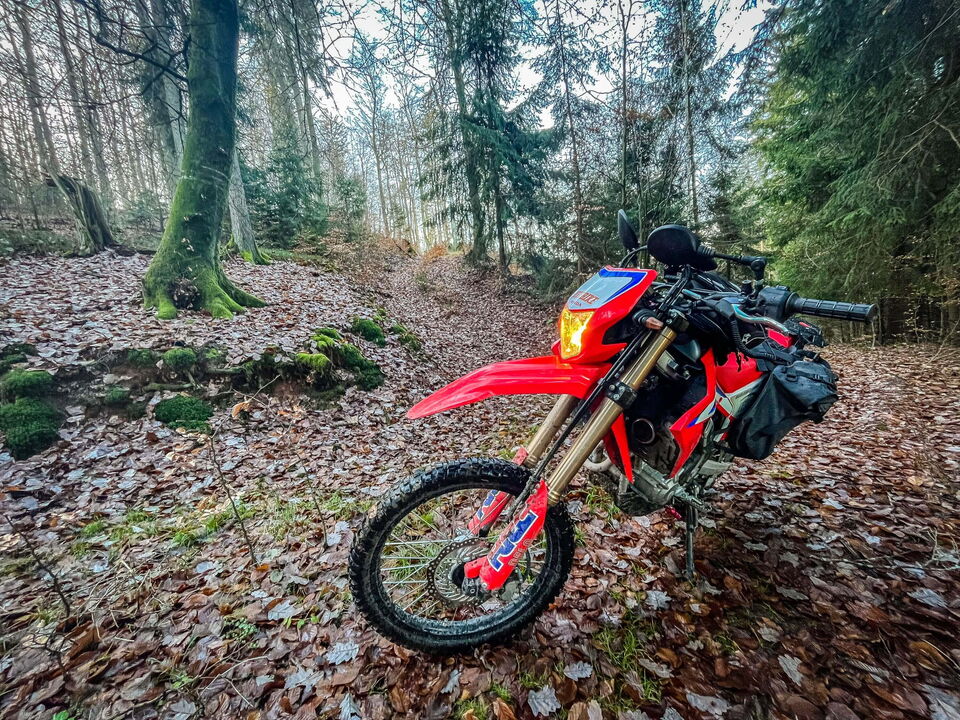
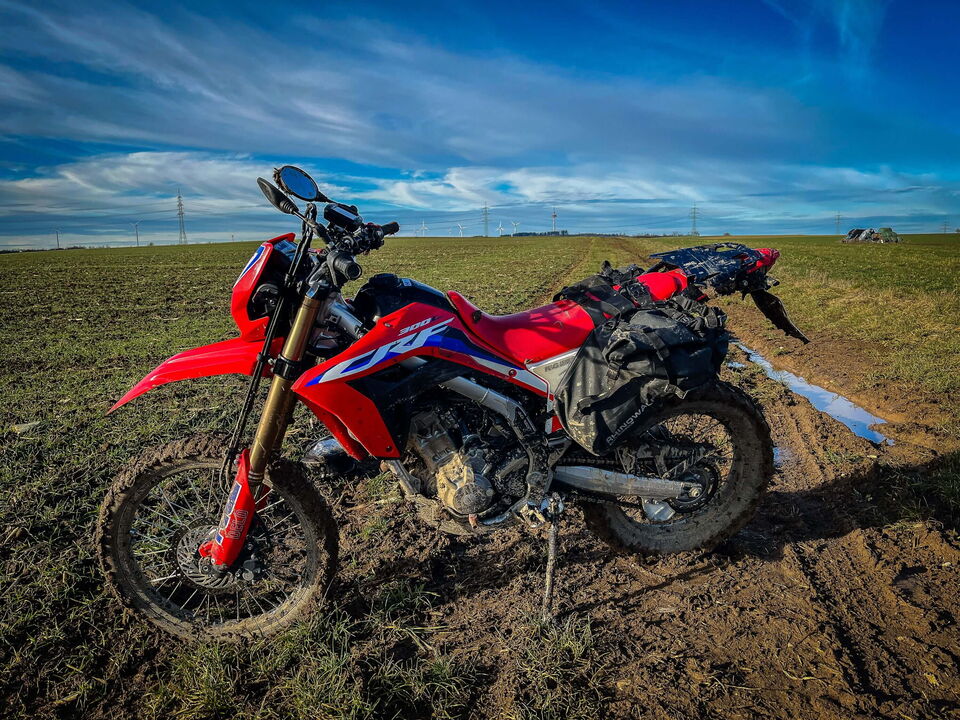
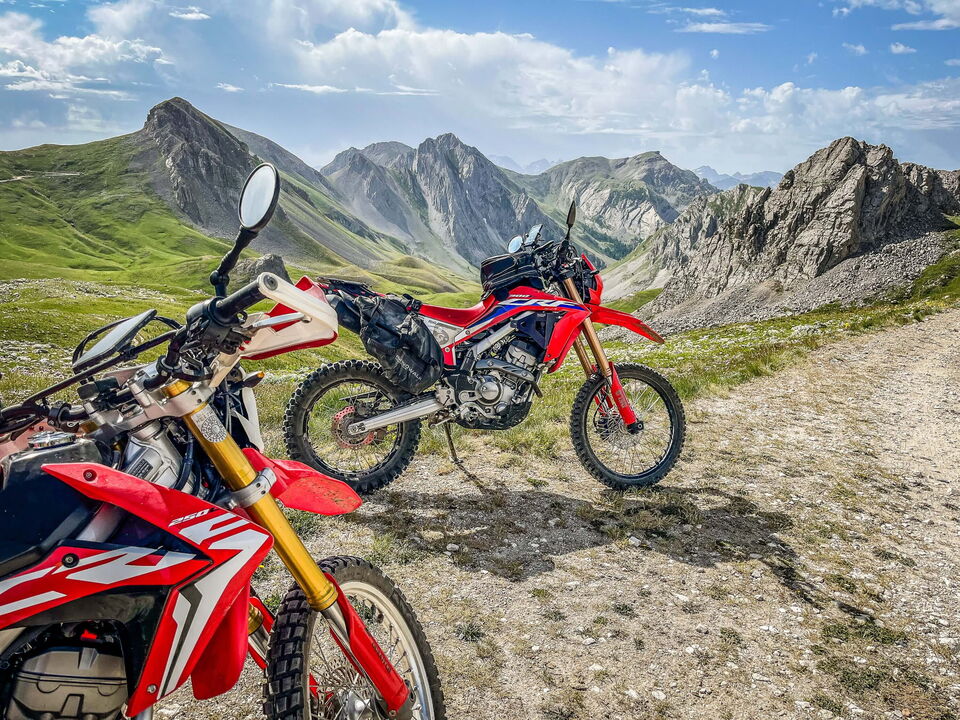
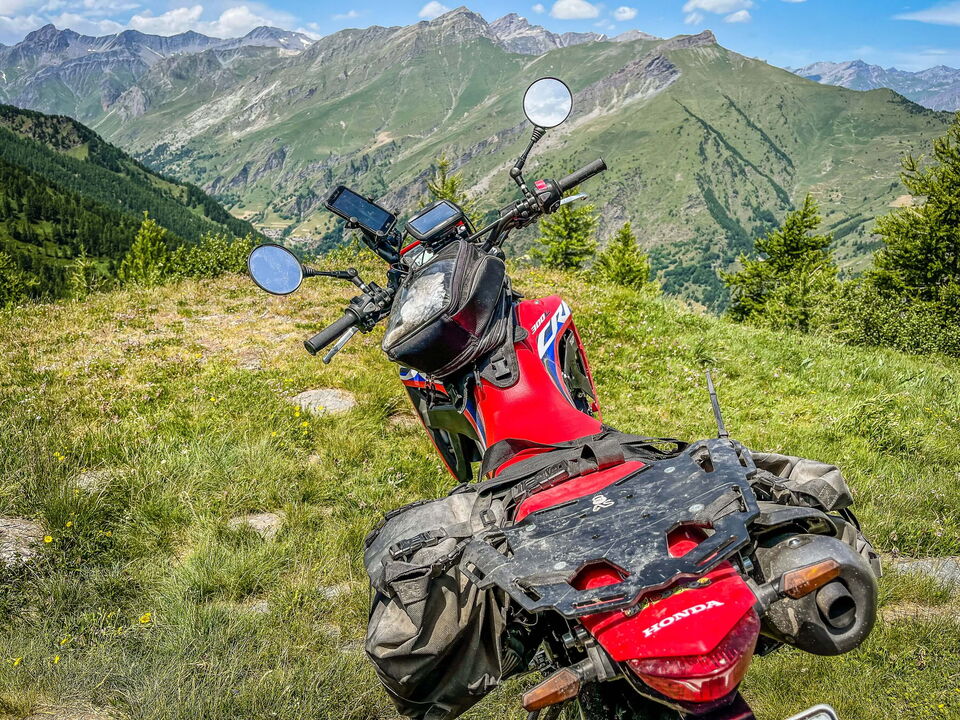
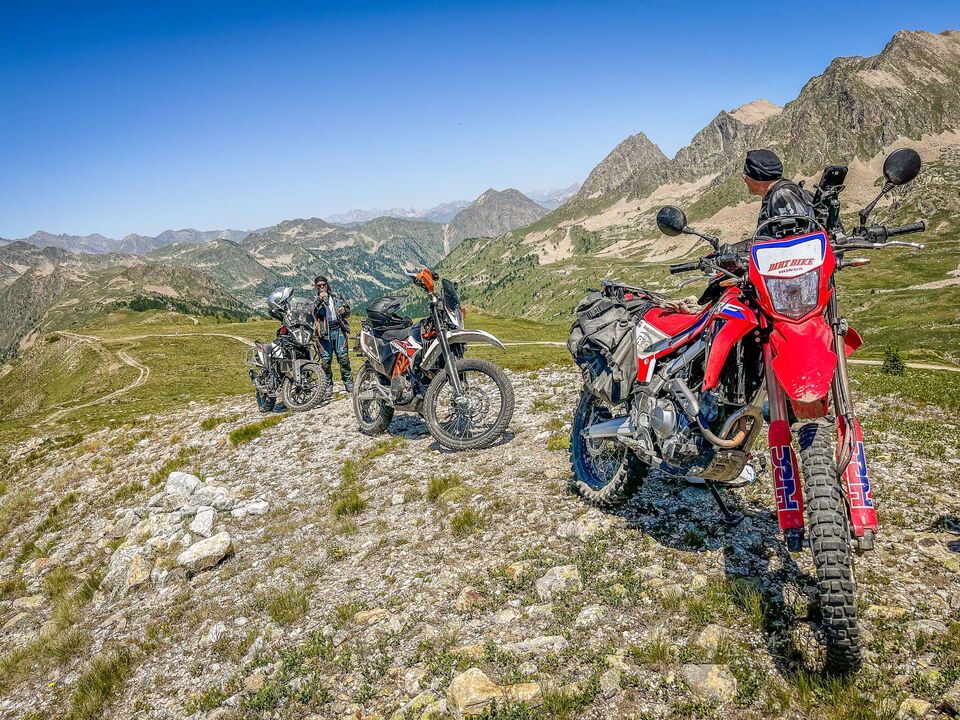
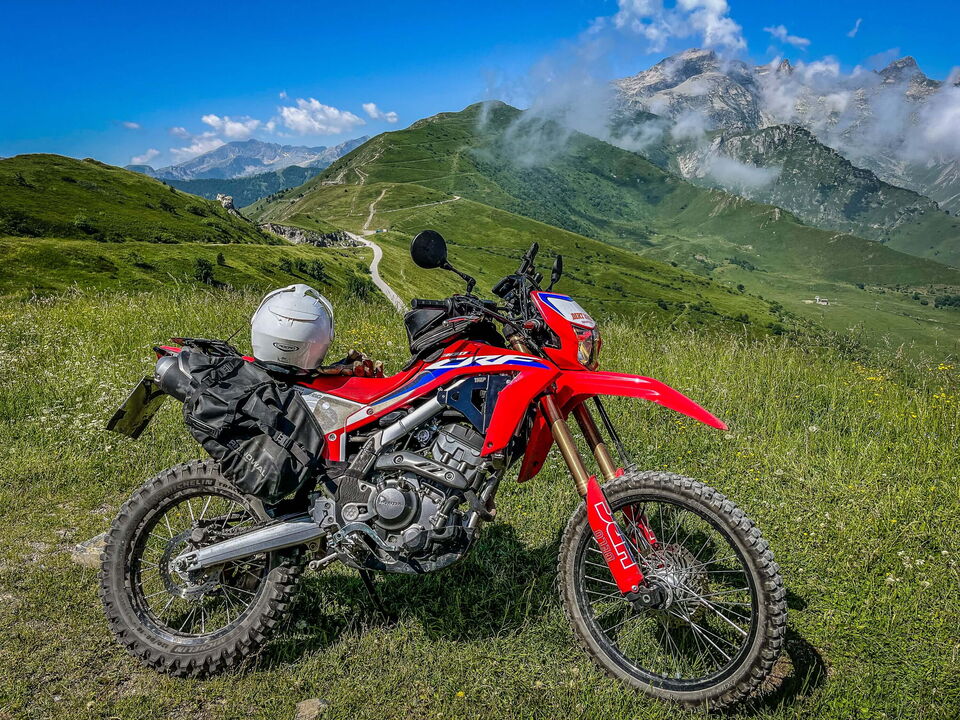
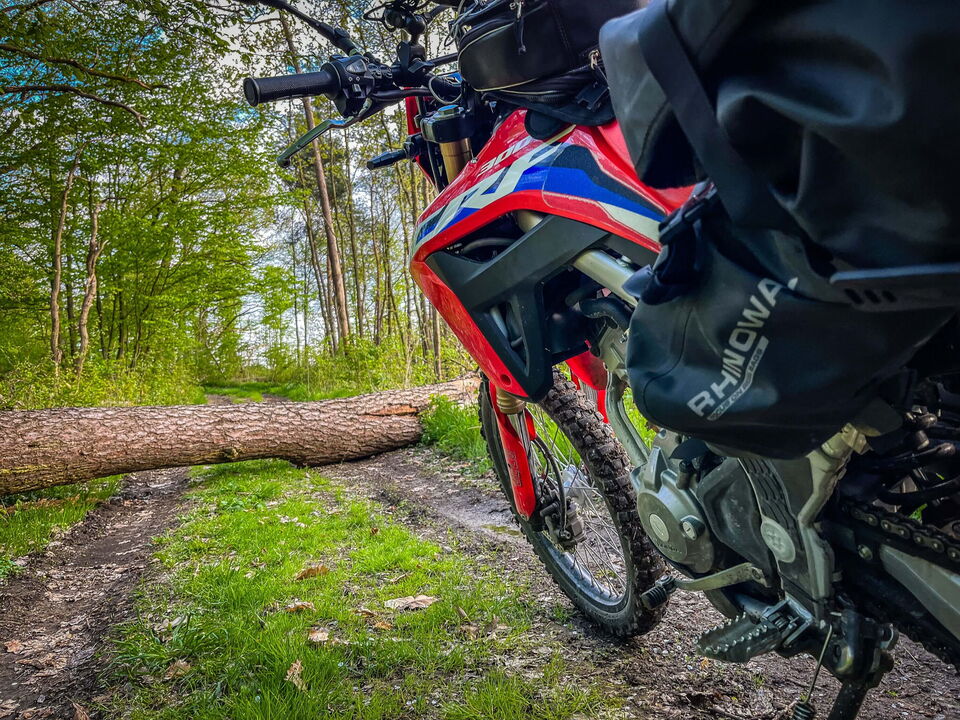
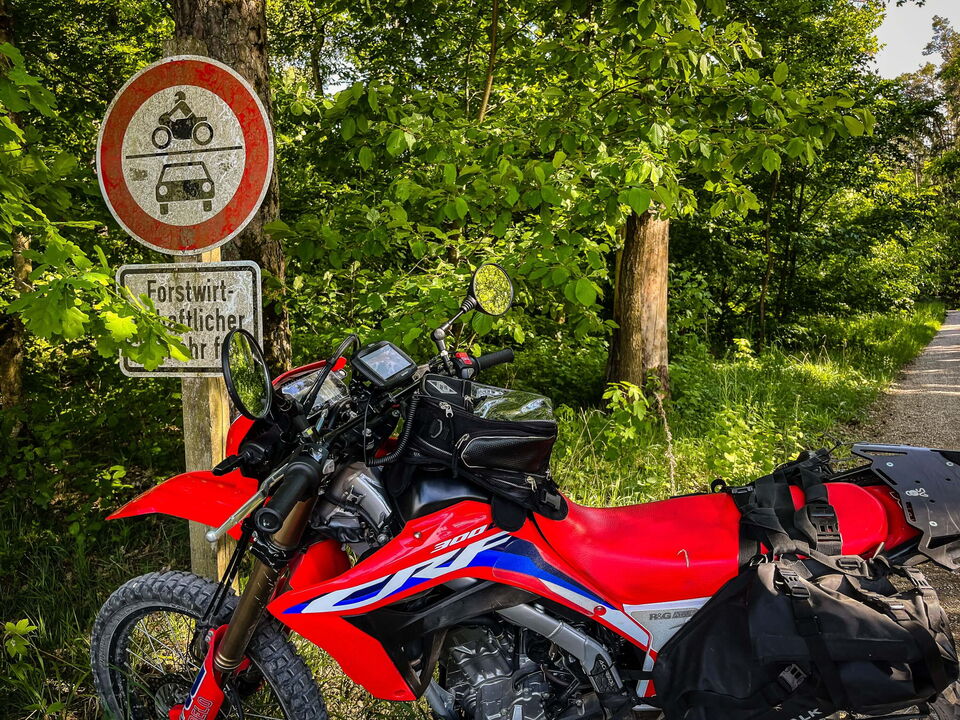
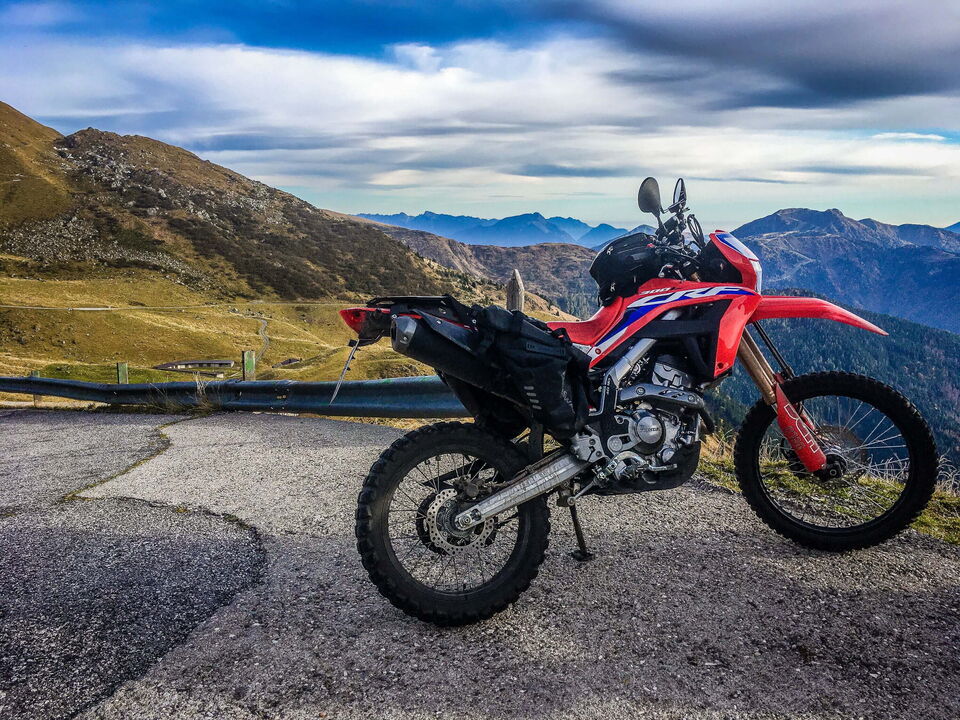
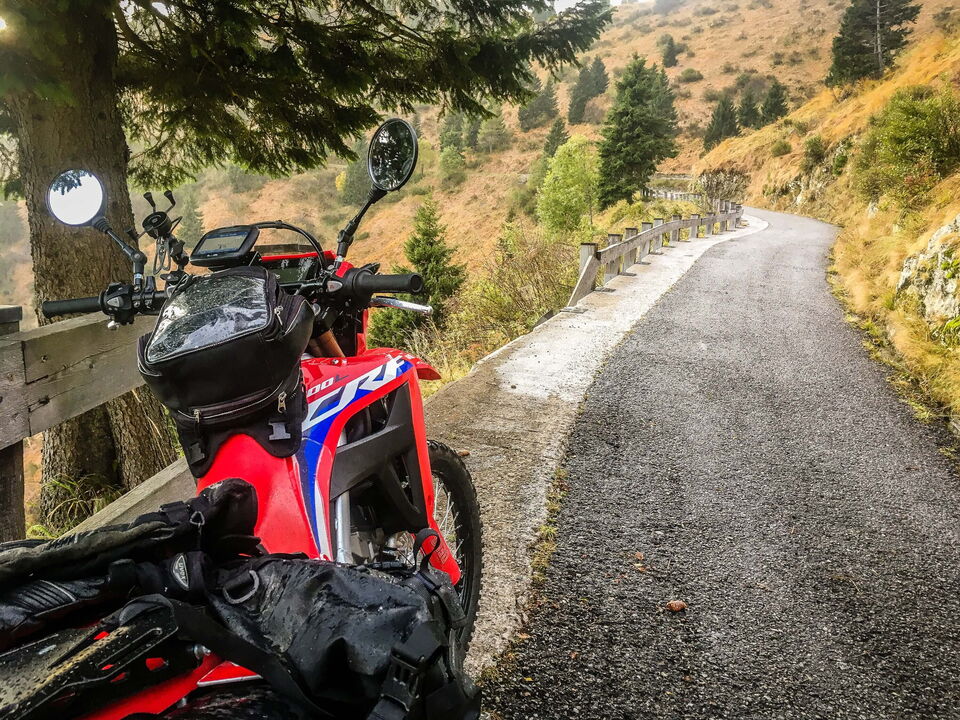
I wanted something lighter for dirt. For a long time I flirted with the Kove 450 Rally, the first “legendary” bike out of China. But looking at our Franconian tracks, I realized a Dakar-style rally bike like the Kove needs speed—which is pretty counterproductive around here. So I went with the sensible Honda.
Sensible means, for example: 12,000-km service intervals. Tons of accessories available. Only 142 kg fully fueled. Quiet. Not insanely tall. And wrapped in that intoxicating reputation for round-the-world durability.
Plus, I’ve got an excellent Honda dealer I’ve trusted for 30 years. Rule of thumb: you buy your first motorcycle. You buy your second from the dealer. How much better would another brand have to be for me not to go to Horst Hübler?
I bought the CRF used in Bautzen. It had everything on it—especially a Wilbers shock instead of the stock air pump. The seller wanted something more touring-friendly like a Ténéré 700 and sounded trustworthy, so I headed out in February 2024.
The test ride was my first ride on a CRF ever. After one kilometer it was clear: it fits me like a glove. Thirty years as a motorcycle and scooter tester makes you decisive. Handshake, cash, into the van and back to Nuremberg—with a mental note: Bautzen is beautiful; next time, explore it.
Sure, 27 hp isn’t a pressure-fed rocket. With fresh tires and tucked in, after a long run-up it’ll do a true 140 km/h top speed. I tried that once out of curiosity. Its real territory is trails. And honestly, for my skills, the power is enough.
You just have to dare to turn the throttle to the stop—100%. When the rear wheel spins on gravel, many riders instinctively roll off without noticing. Uh-oh. Show me your trails and I’ll tell you whether the CRF suits you.
My trails are small and hidden—rarely more than a three-meter-wide, flat gravel path. In a Franconian summer it’s dusty, so you have to slow down; otherwise you drag a Dakar-style dust plume behind you. Nobody likes that: farmers, hikers, cyclists, dog walkers, riders. We want to keep enduro wandering tomorrow too. So: relaxation instead of speed.
With the CRF I’ll head into the tightest paths even solo. No matter how tricky it gets, I know the Honda can do it—and with it, so can I. My off-road learning curve climbs steeply with this supposedly “unsporty” machine. It makes things easy. It doesn’t overwhelm me.
I really like that the first four gears are short. In first gear at idle it does 7 km/h indicated; in fourth, 32 indicated. A GS would still be in first. Especially uphill and steep downhill—say in the Alps—that’s fantastic. Engine braking is relaxing! And in first it’ll crawl up the steepest tracks. Stock gearing: 14/40.
Rider aids? ABS is on board. Unfortunately you can only disable it in the rear—not the front. Surprisingly, even in the Western Alps or steep Lombardy it’s not actually that bad. I now leave it on; turning it off with a button press every time is annoying. I could happily live without all the electronic tinsel anyway. Pure riding—just you and the trail.
The fork is stock. Soft, great for feel—but bad for charging hard. Overall the CRF’s front end feels lively and agile, not nearly as planted as, say, the Kove 450 Rally. The Kove screams for throttle, while the Honda whispers: “It’ll be fine.”
That works for me. Strap on a few soft bags and a waterproof roll to the Adventure Spec rack, and off you go. ACT France and Romania, TET Northern Italy, or just the sandy playground of Brandenburg. Enduro life can be so easy. Less really is more here.
The previous owner had Bridgestone A41s on it—excellent stuff, surprisingly good on-road, and it’ll tolerate plenty of wild off-road too. But it burns through rear tires. These days my favorites are Michelin Trackers: a clear performance jump off-road without losing much fun on pavement. They wear faster—so be it. Tracker prices are really attractive.
And because the sidewalls are softer, you can still remove them decently on the road. Flats happen—more often than you’d think. I had a bad streak: three rear flats and one front in just twelve months, all in the center of the tread. And I’ll say it clearly: modern 70/30 or 50/50 tires are so stiff you can barely remove them on the trail. Tubed tires are a pain for normal riders!
Does the bestseller BMW GS have that problem? Of course not. It has cross-spoke wheels and a repair kit. After 15 minutes the boxer rolls again while you’re still sweating and swearing. Yet more and more everyday dual-sports go down the dead-end road of tube-type tires. What nonsense.
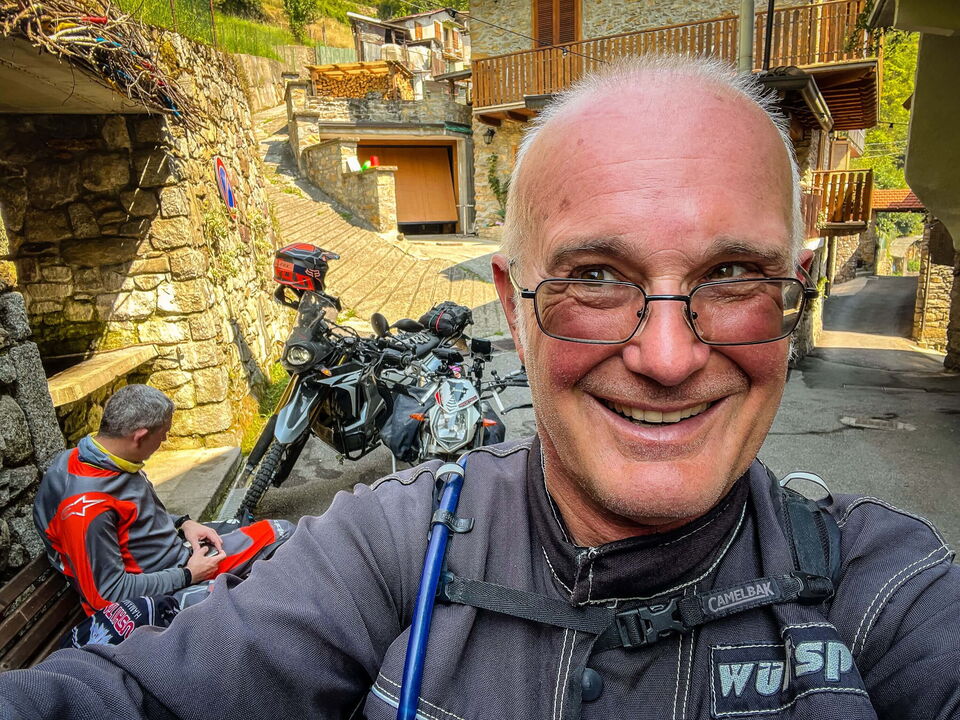
Günter Wimme
First and foremost: vroom, vroom. He loves motorcycles and scooters—and has spent his entire professional life around them: as a test editor at MO, editor-in-chief of SCOOTER & Sport, and a racetrack instructor.
When it comes to travel, he raves about his Honda Forza 300 (nearly 90,000 km on the clock). For enduro wandering, he prefers lightweight machines like the Beta Alp 200 or Honda CRF 300 L. For those wild five minutes, he turns to his Aprilia Tuono 1100 V4.
Dream bikes: Honda RC30, Scout Flying Squirrel.
Motto: It’s the rider, not the bike.