Honda Transalp XL 600 V (1994)
Enduro
Honda Transalp XL 600 V
Model year 1994, 111,000 km, 4.5–5.5 L/100 km
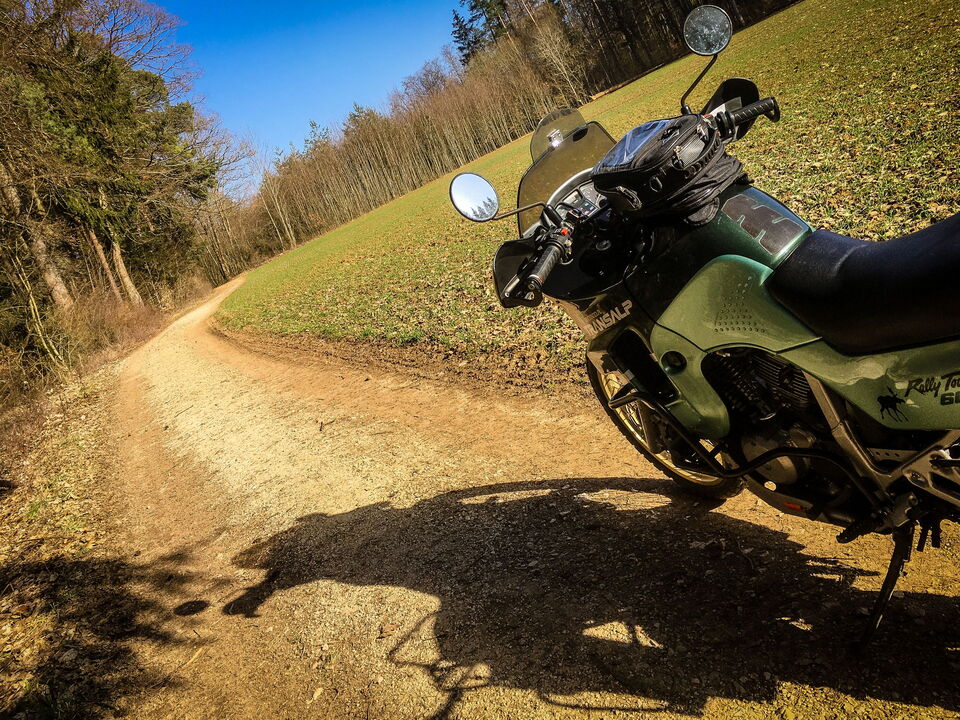
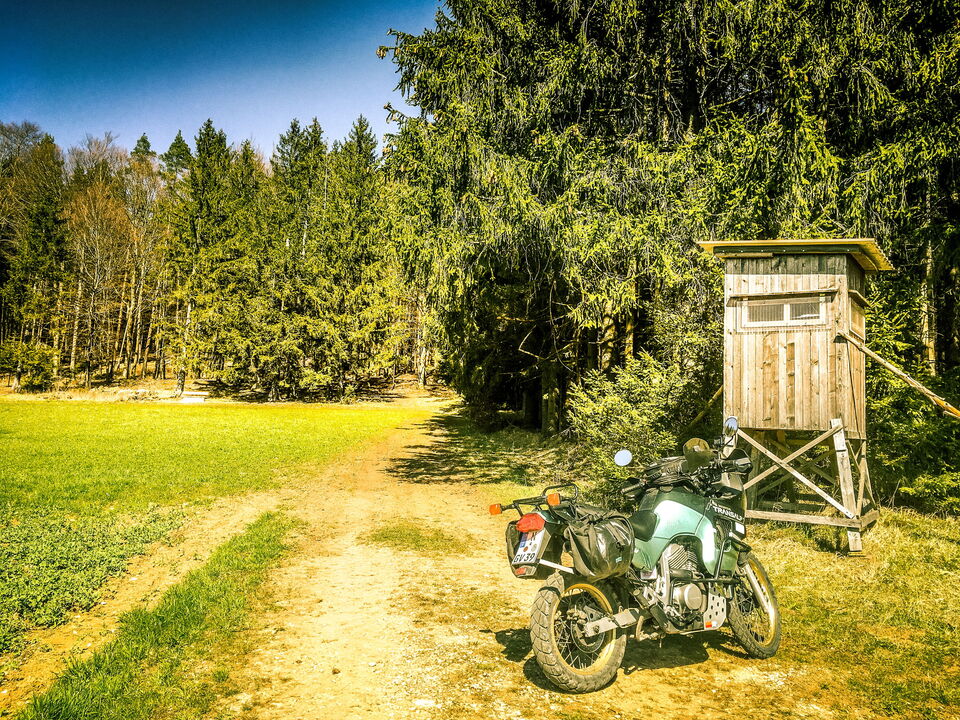
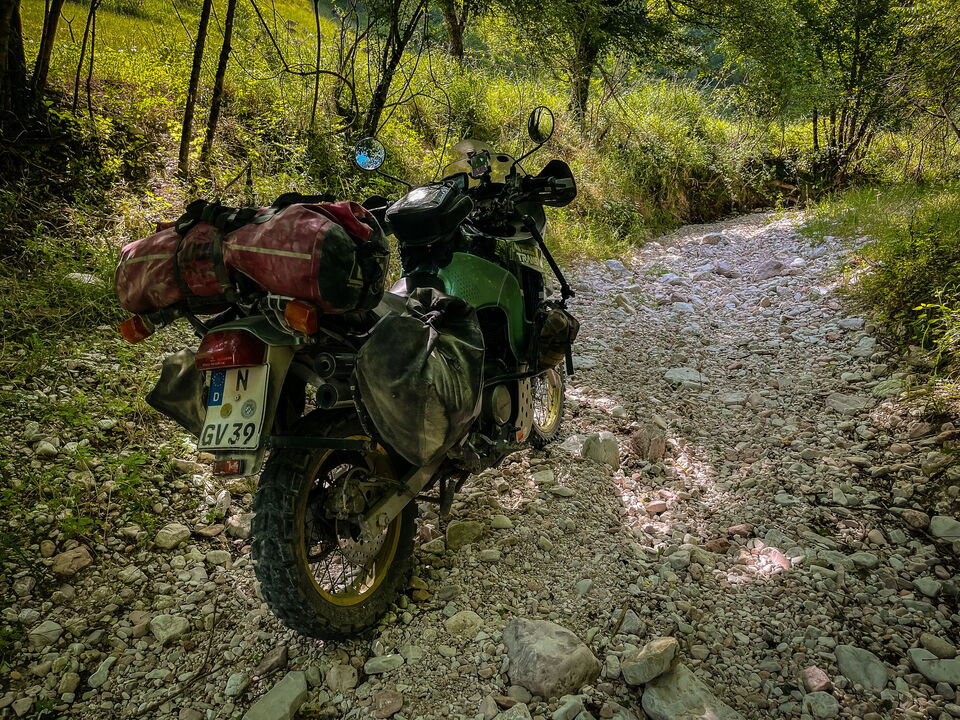
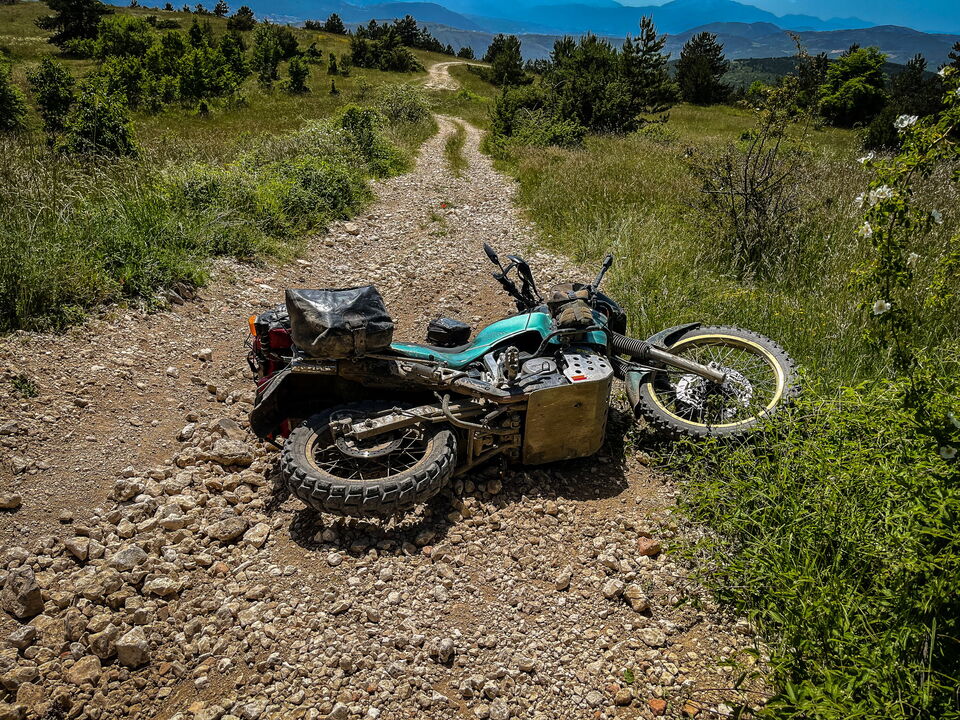
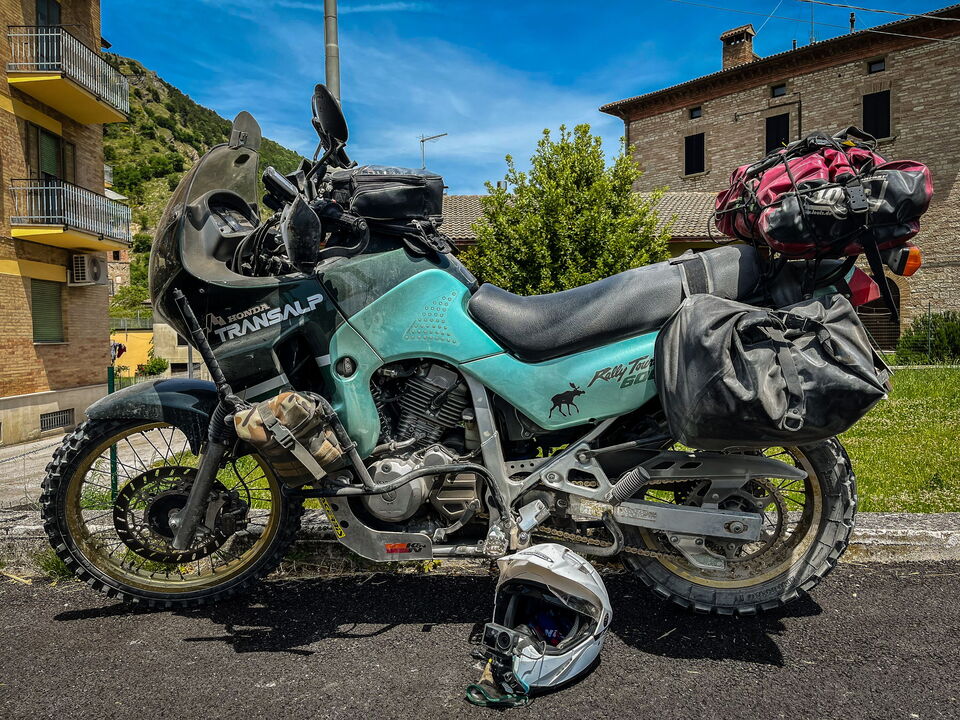

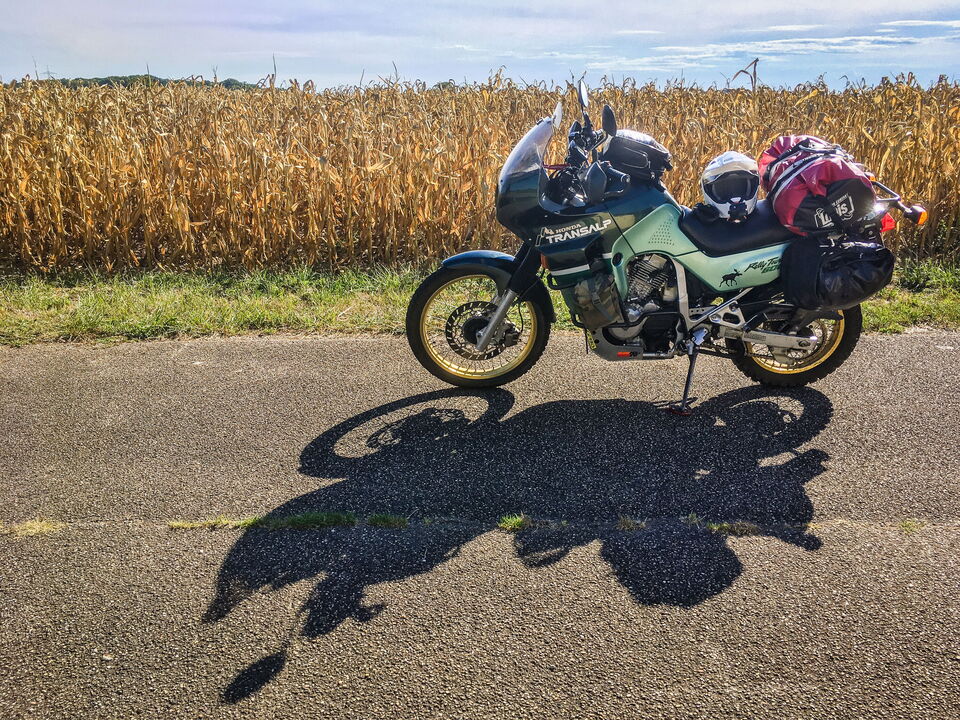
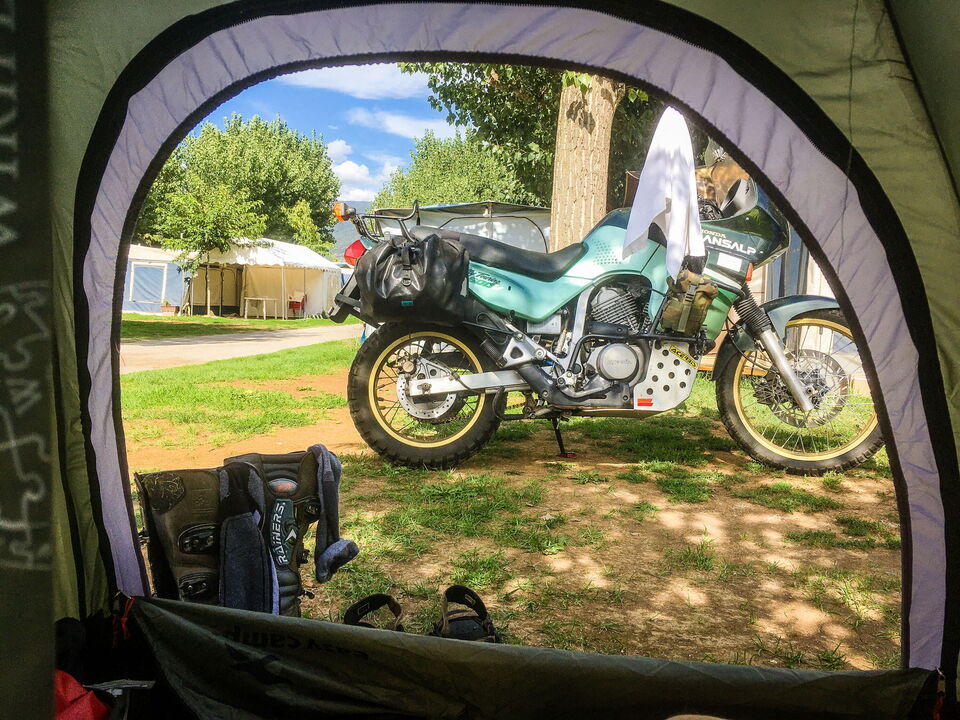
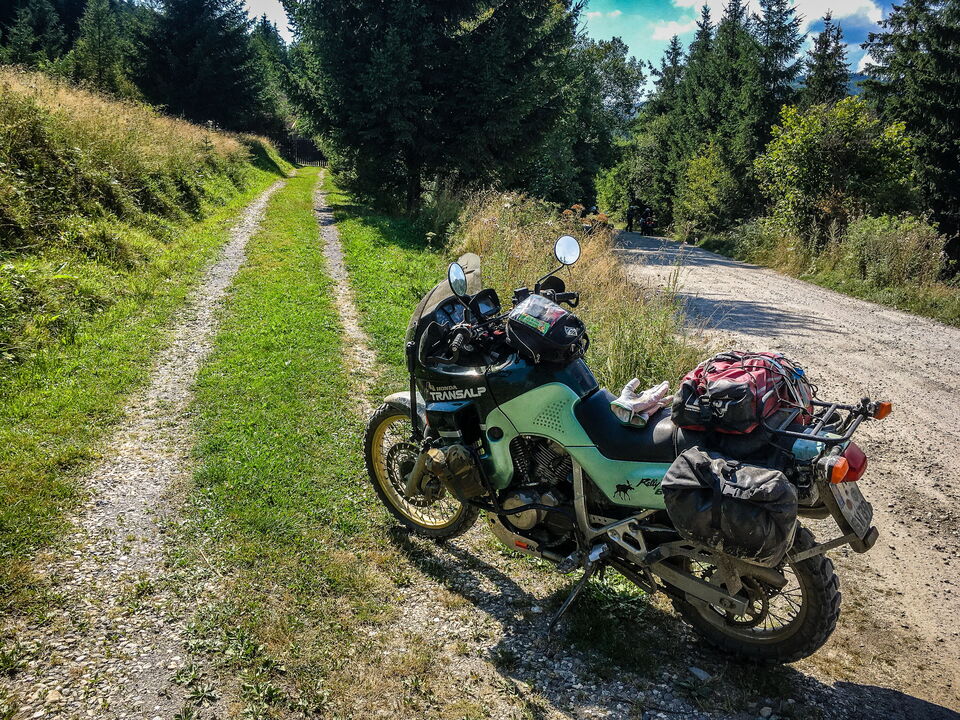
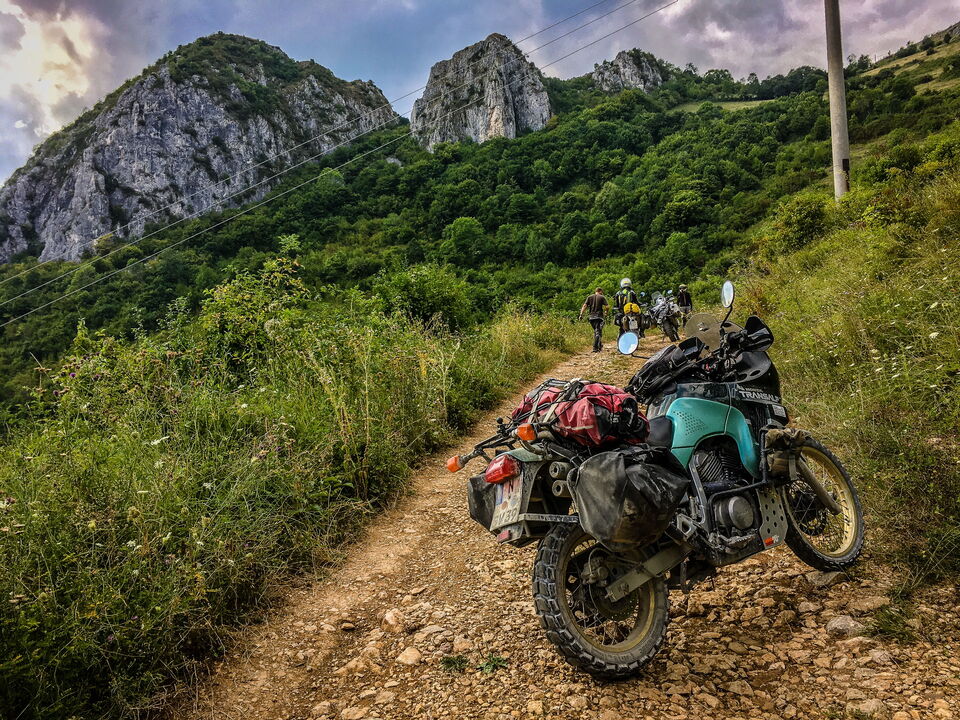
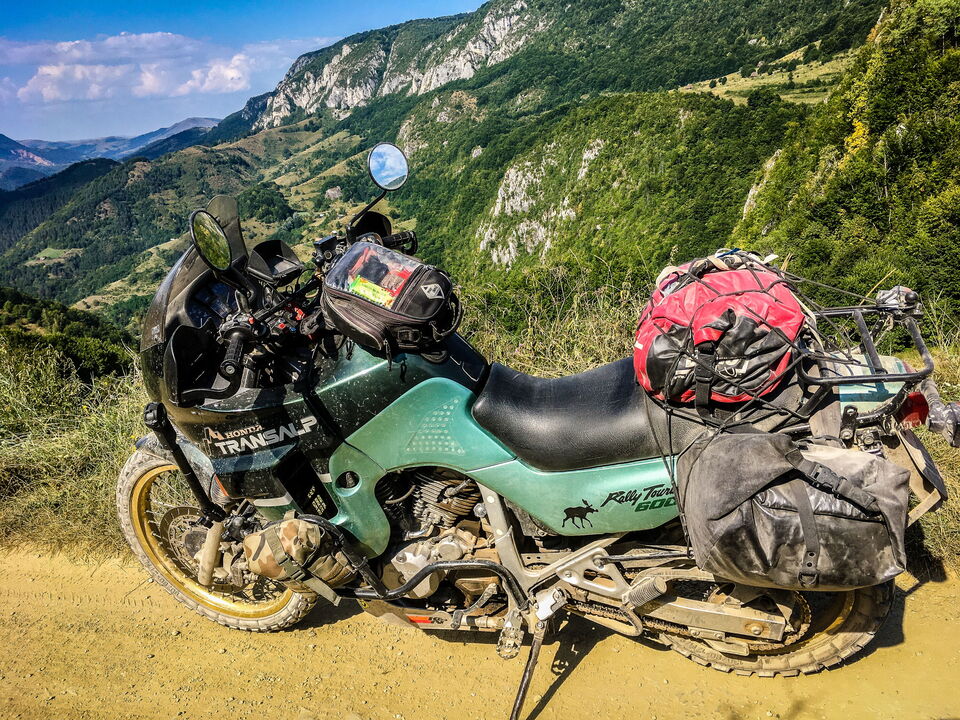
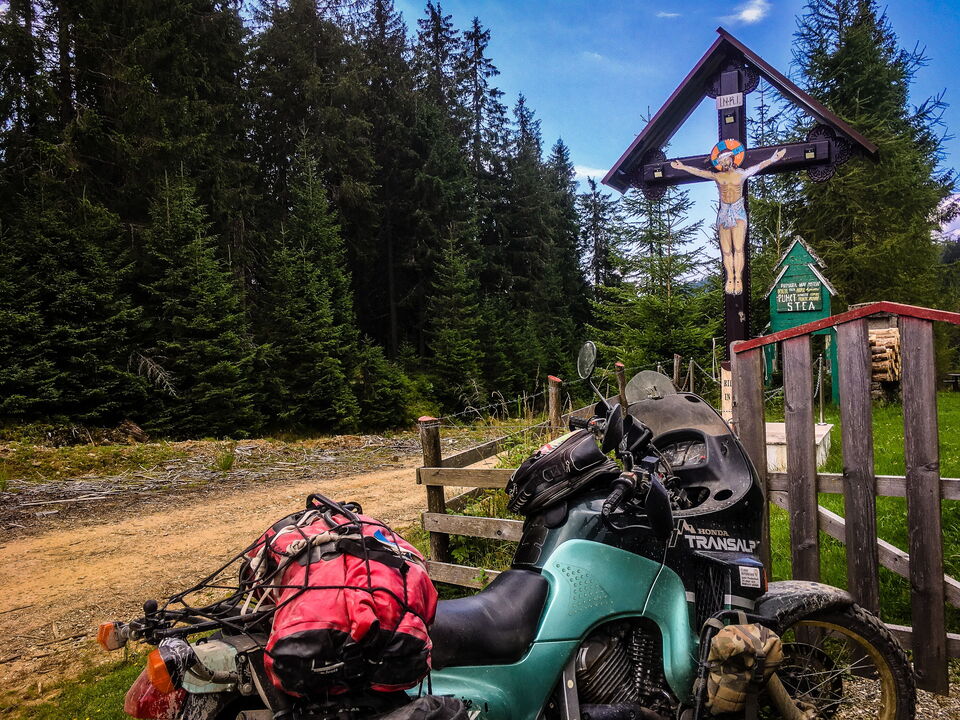
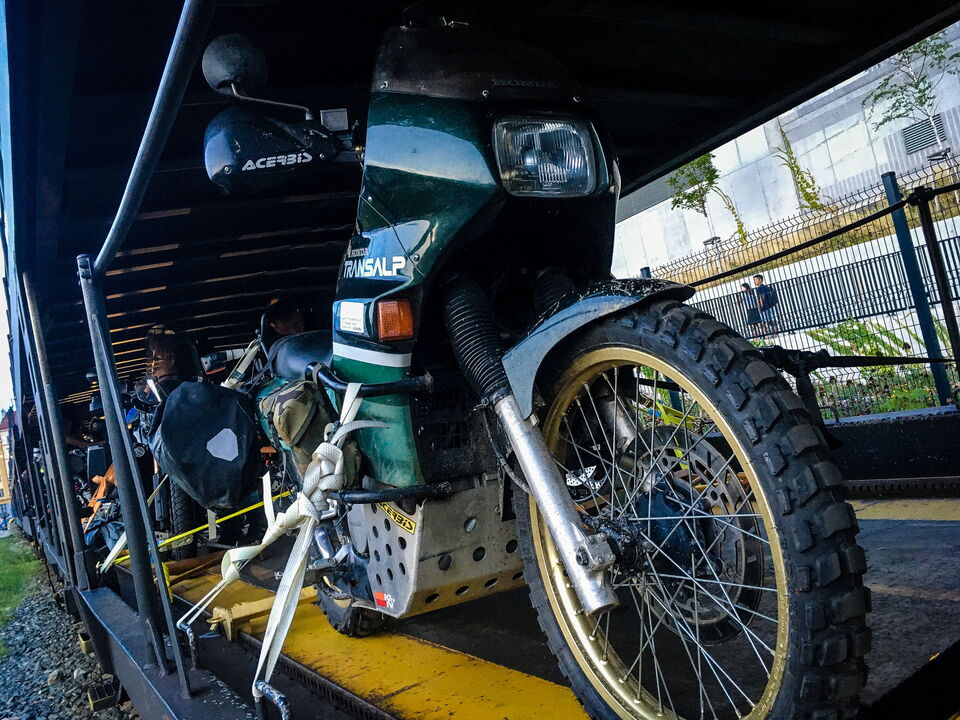
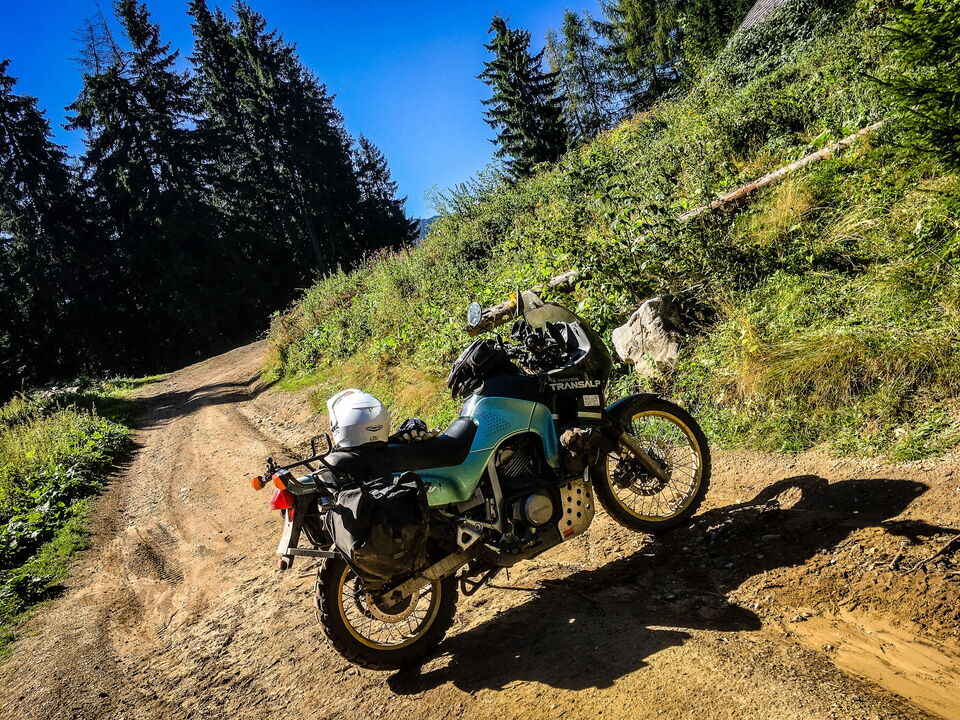
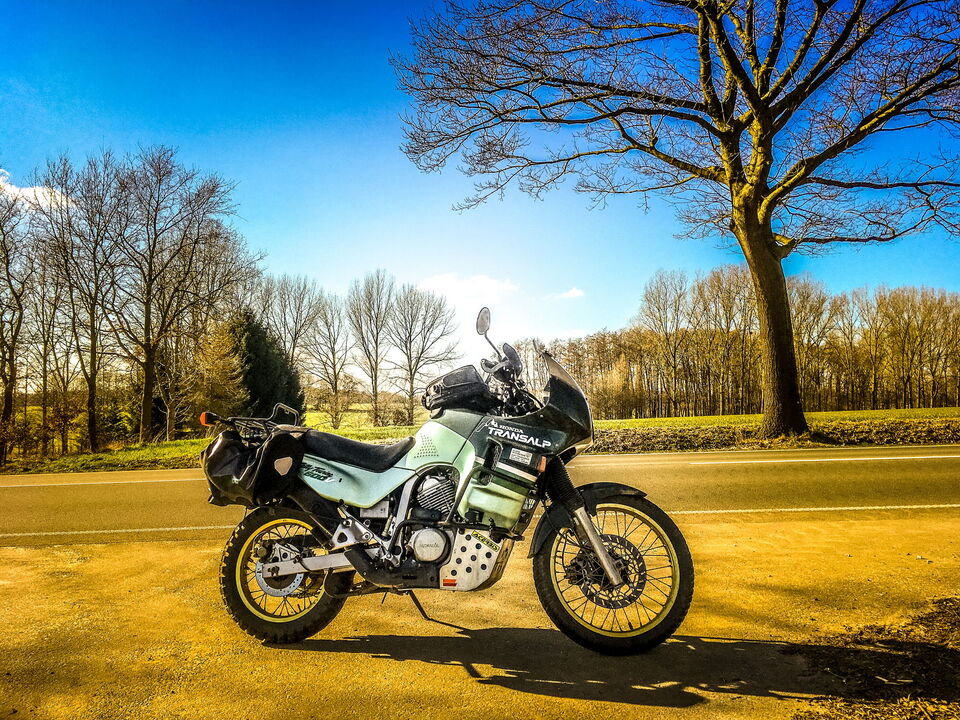
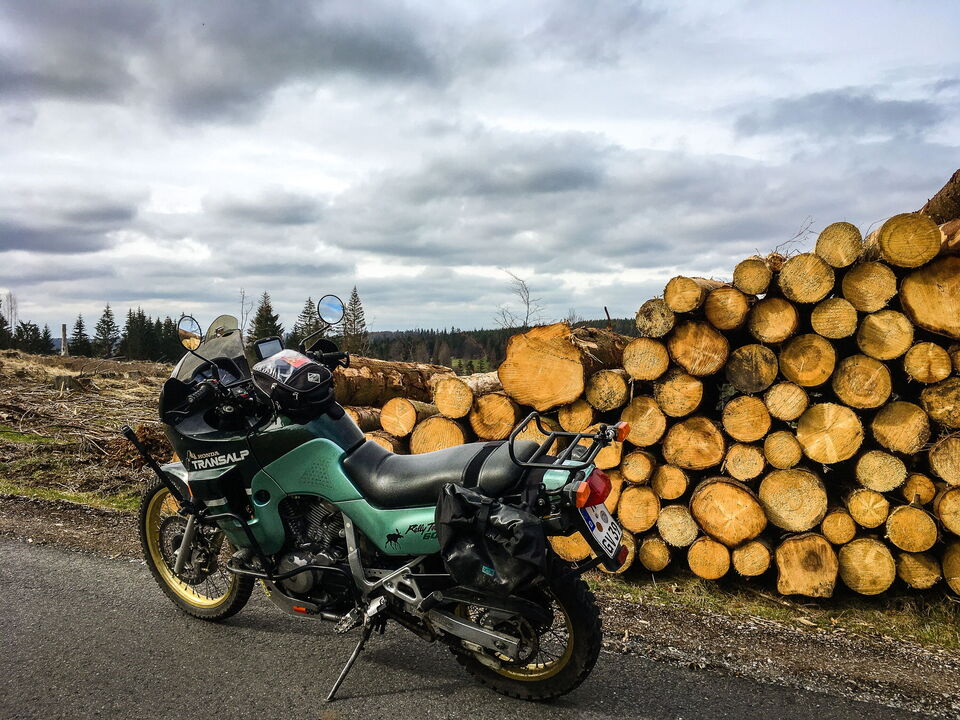
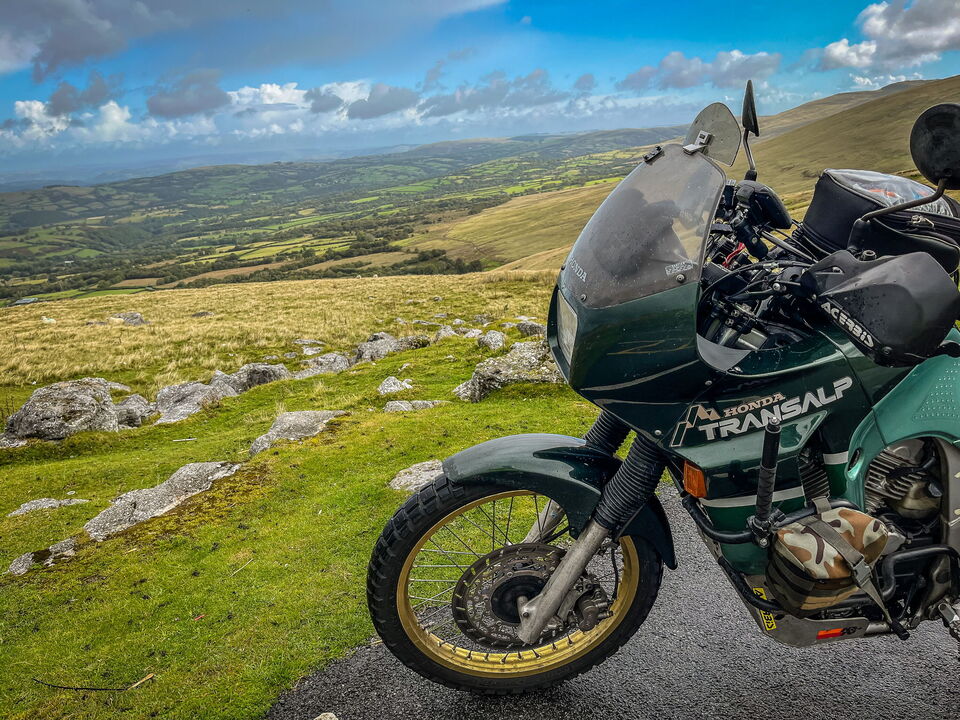
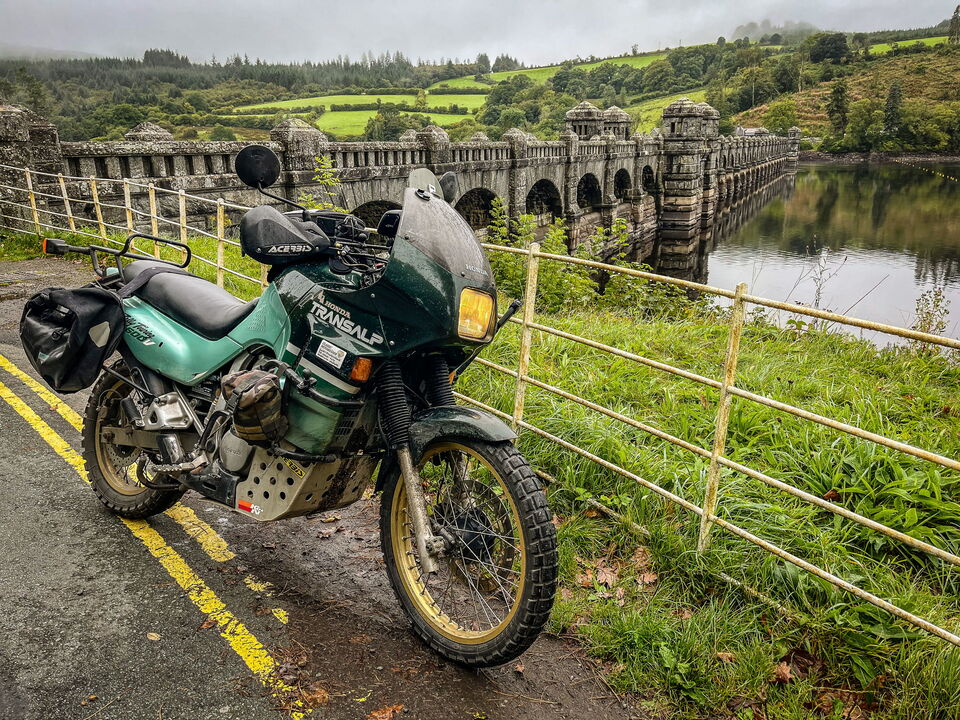
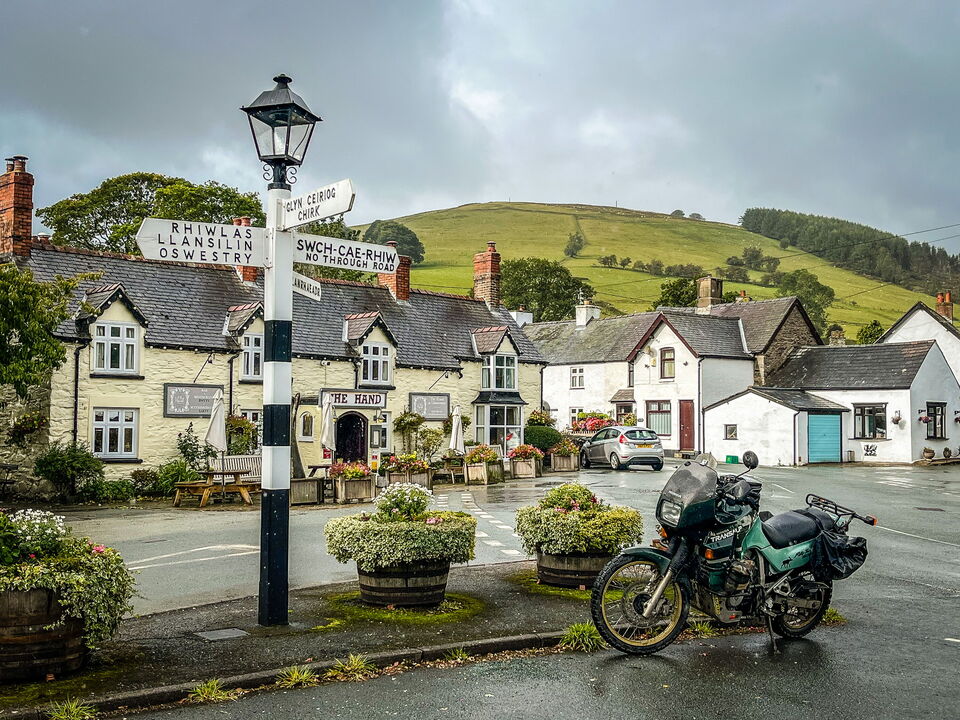
The oldest horse in the stable. It doesn’t do anything particularly well, and by today’s standards it’s a youngtimer. But looking at it only through a nostalgic lens doesn’t do it justice—because it’s a Trans-Alp, as the name suggests. It can do both: travel and gravel. A compromise, not a pure specialist.
And that’s exactly why I bought it used. I didn’t want a pure off-roader, but I didn’t want a Gold Wing either. I wanted an “I-can-do-everything” bike. Let’s see if that suits me—I didn’t come from dirt, I came from asphalt.
A new Yamaha Ténéré 700 was too expensive; with the necessary accessories I’d have been out 13 grand. A used BMW R 1100 GS felt too risky to me—ABS failures and that questionable third gear—so I looked for a totally trouble-free motorcycle. Honda, many people sigh.
I searched online and bought by far the most expensive used PD06 I could find. It had basically everything I wanted: fork springs, shock, hefty skid plate, luggage rack, crash bars, center stand, sturdy Acerbis hand guards, and the larger brake disc with road approval. Knee-friendly padded seat, pegs low and wide. Everything registered, good condition. I still love the green.
After five years, the high purchase price is forgotten—the enjoyment remains. And what does “expensive” even mean? Compared with a new Ténéré, I saved ten grand. You can ride a lot—a lot—for that.
My dealer (Honda Hübler) said when I bought it: good bike, weak point is the countershaft. So I installed a special sprocket from Italy (KKBike) that’s supposed to save you from an expensive countershaft replacement. Otherwise, a few things for navigation and filming. Oh—and a used Ortlieb soft-bag set for bicycles from classifieds, which the previous owner had adapted for the bike with an aluminum plate near the hot exhaust. Bolt it on, forget it, it works.
Two years ago I got tired of fussing with a lead-acid battery. I bought a new Motek regulator that delivers steadier voltage—so I could install a maintenance-free gel battery. Half the price of lead-acid, so the €110 for the regulator almost pays for itself. You see: with the old Transalp, you don’t have to buy the most expensive stuff.
At first I enjoyed the Transalp on the road. Not especially powerful, but if you keep it in its stride, it goes along pretty briskly. The single front disc—even upgraded to a 320 mm single disc and “sharper” pads—still has to work hard. In return, the rear brake is beautifully controllable—worlds, worlds (!) better than on my sportbikes (CBR 600 RR or Tuono 1100). That helps in hairpins. Off-road even more so.
I gradually left pavement behind and chased the Transalp over various Action Country Tracks (ACT) and Trans Euro Trails (TET). Thanks to its gentle nature, I dared more and more; the tires got knobbier; I got bolder.
Outstanding—also compared to modern fuel-injected bikes—is the buttery-smooth throttle response from its two CV carbs. You can feed power to the rear wheel millimeter by millimeter and feel exactly what’s happening back there. Brilliant.
On the downside, without a catalytic converter it smells. In private groups I always ride in the back. It uses a bit more fuel than a BMW 1250 GS—with a third of the power. No rider aids; you even have to turn the petcock by hand.
But you also never forget to switch ride modes when you go from asphalt to gravel. You make the difference. It’s the rider, not the bike. That’s exactly why the Transalp is so likable to me. It’s honest—just not an adrenaline missile.
For off-road I now have a Honda CRF 300 L, so the Transalp 600 can take it easier in its old age and be more road-biased—say 80/20. For example in Wales or Friuli. It runs flawlessly if you service it regularly: oil and filter, valve clearance, spark plugs, air filter. 12,000-km service intervals are still perfectly reasonable today. For a bike designed 40 years ago—amazing. Where’s the progress?
What broke: the steering-head bearing, naturally at the worst possible time on ACT Romania. The first battery from the previous owner also died at the worst spot—while refueling on the TET near Schwerin. The stiff choke cable was replaced. And the rear brake disc was too thin after 100,000 km.
Most annoying: a vandal smashed the cockpit while it was parked on the street in front of my place. That takes brute force. No, it wasn’t blocking anything. Since then, tape has kept the rain out. Lesson learned: temporary fixes last longer than you’d think.
For tires, I like the proverbial “jack of all trades”: the Heidenau K60 Scout from Saxony. Very long-lasting, good in the wet, pretty quick for the wild five minutes, and quite good on gravel. I’m thoroughly happy with this so-called 60/40 combo.
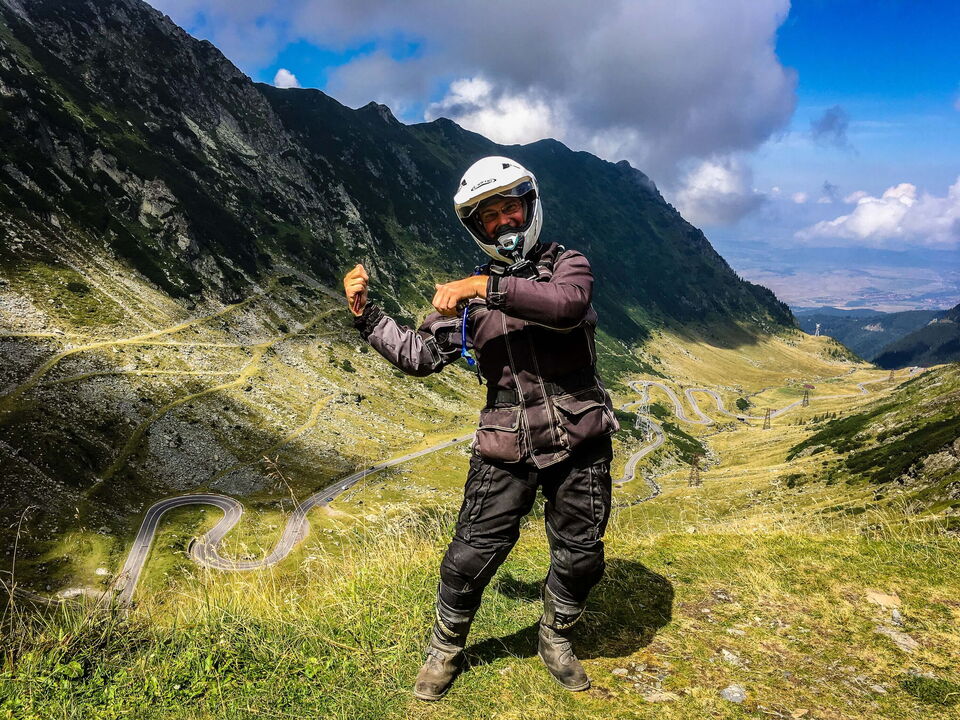
Günter Wimme
First and foremost: vroom, vroom. He loves motorcycles and scooters—and has spent his entire professional life around them: as a test editor at MO, editor-in-chief of SCOOTER & Sport, and a racetrack instructor.
When it comes to travel, he raves about his Honda Forza 300 (nearly 90,000 km on the clock). For enduro wandering, he prefers lightweight machines like the Beta Alp 200 or Honda CRF 300 L. For those wild five minutes, he turns to his Aprilia Tuono 1100 V4.
Dream bikes: Honda RC30, Scout Flying Squirrel.
Motto: It’s the rider, not the bike.