Triumph Trident 900 (1992)
Naked
Triumph Trident 900
Model year 1992, 160,000 km, 6–7 L/100 km
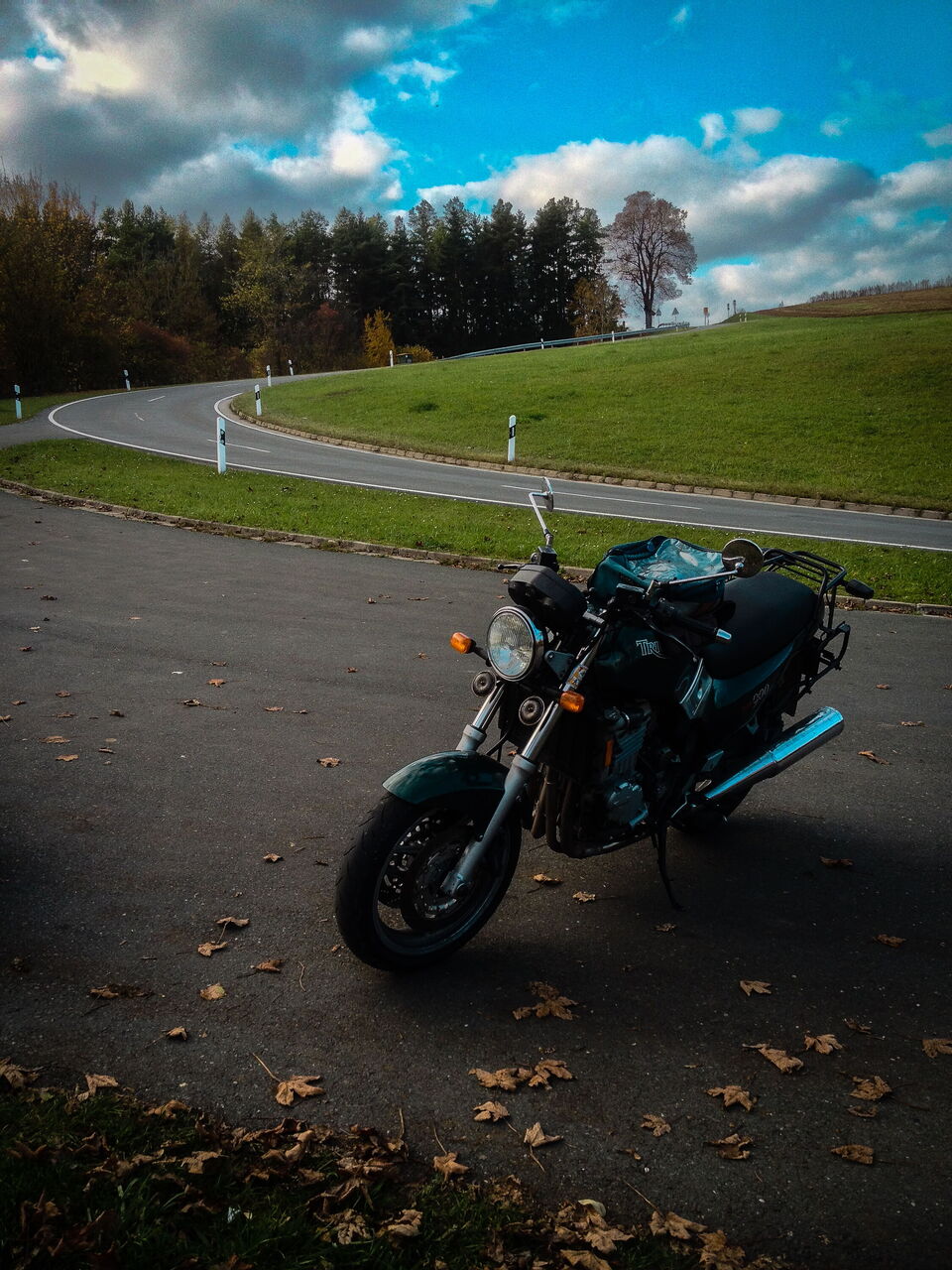
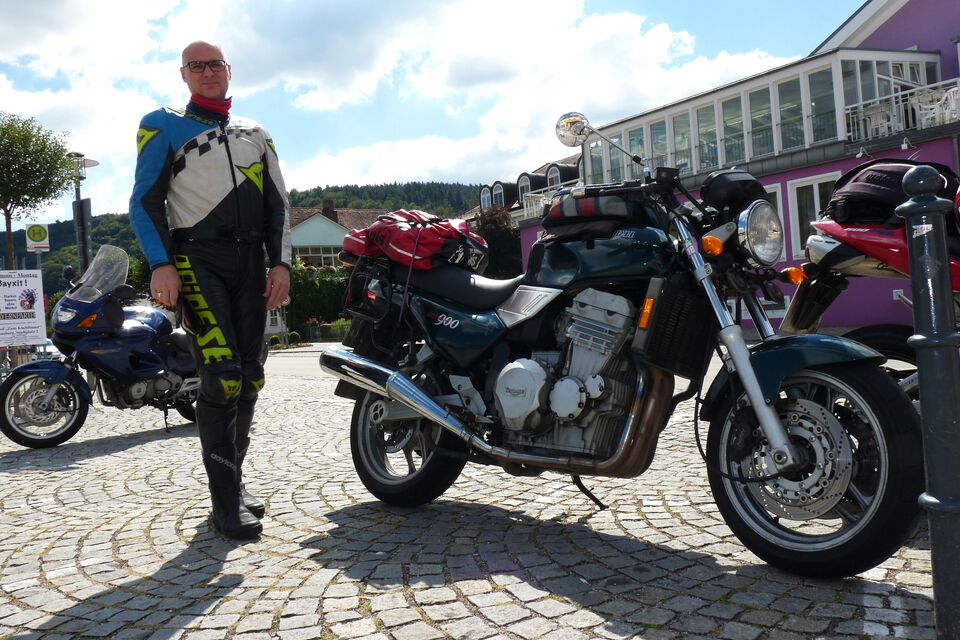
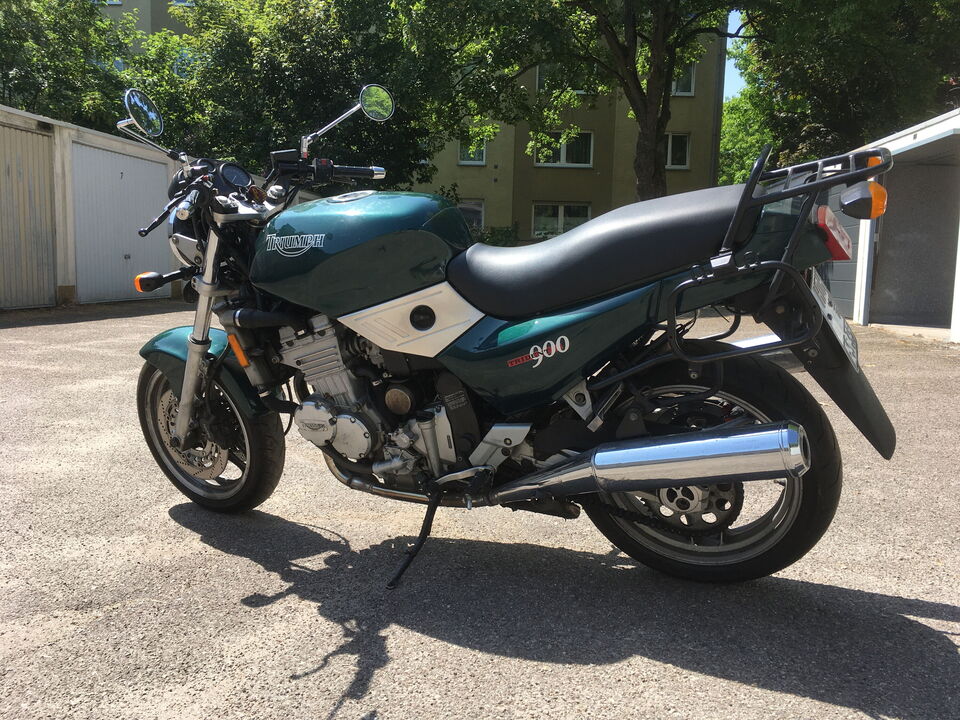
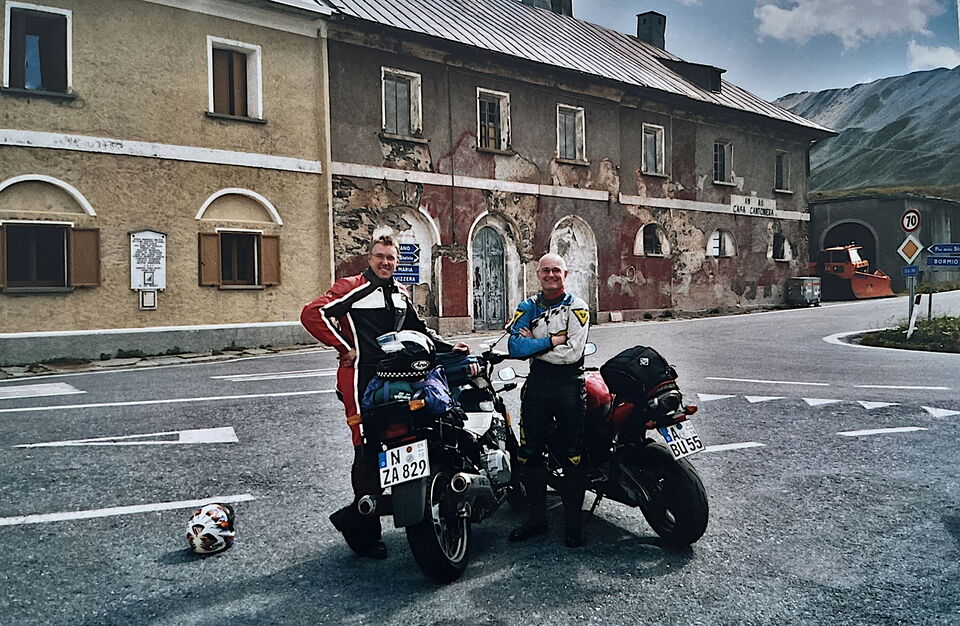
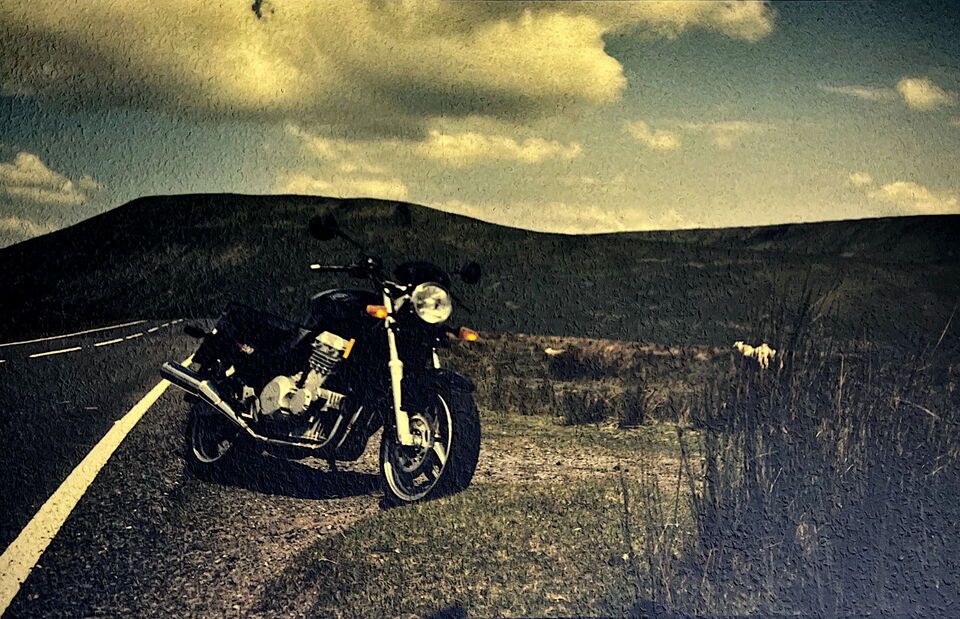
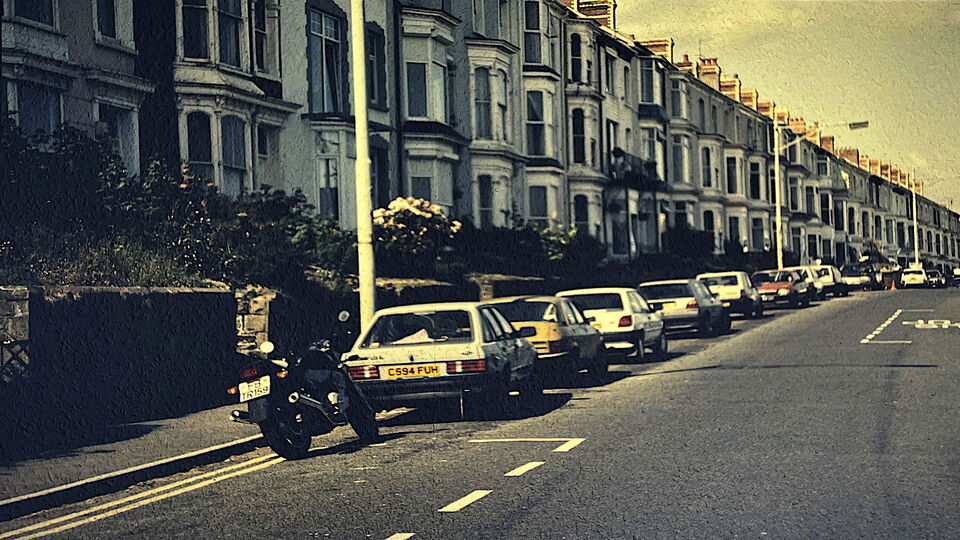
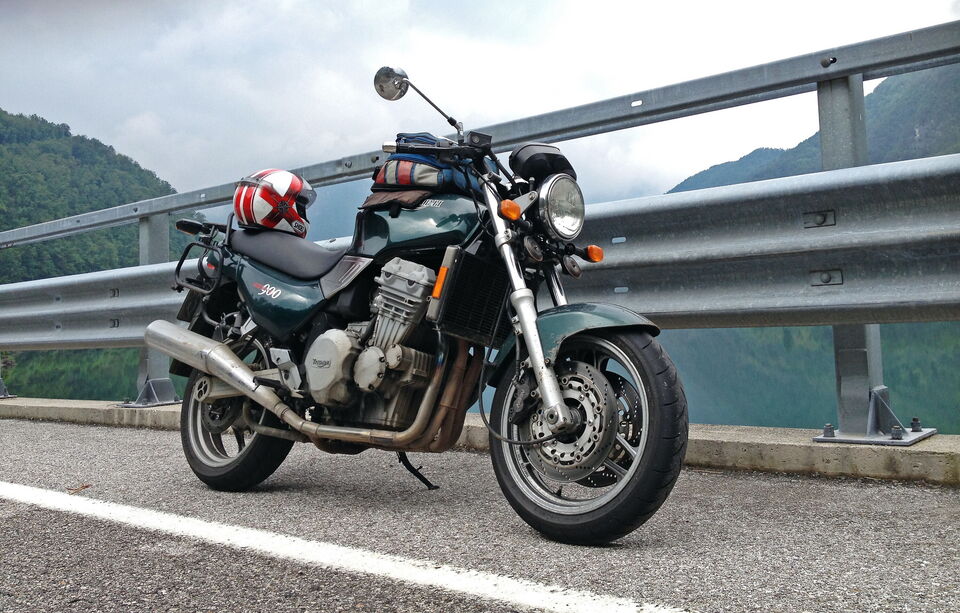
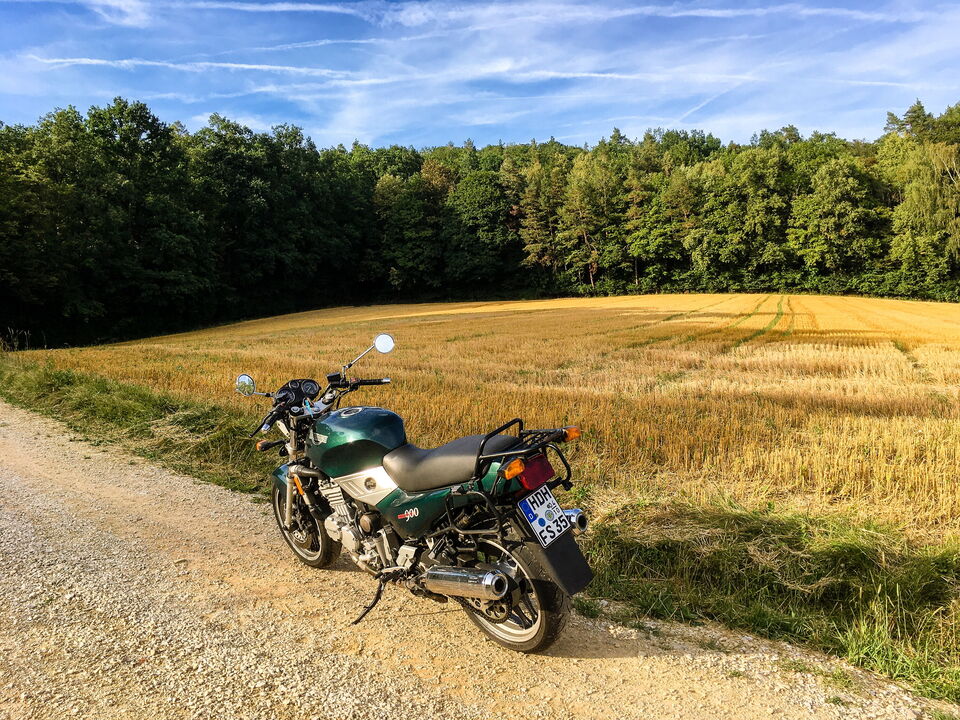
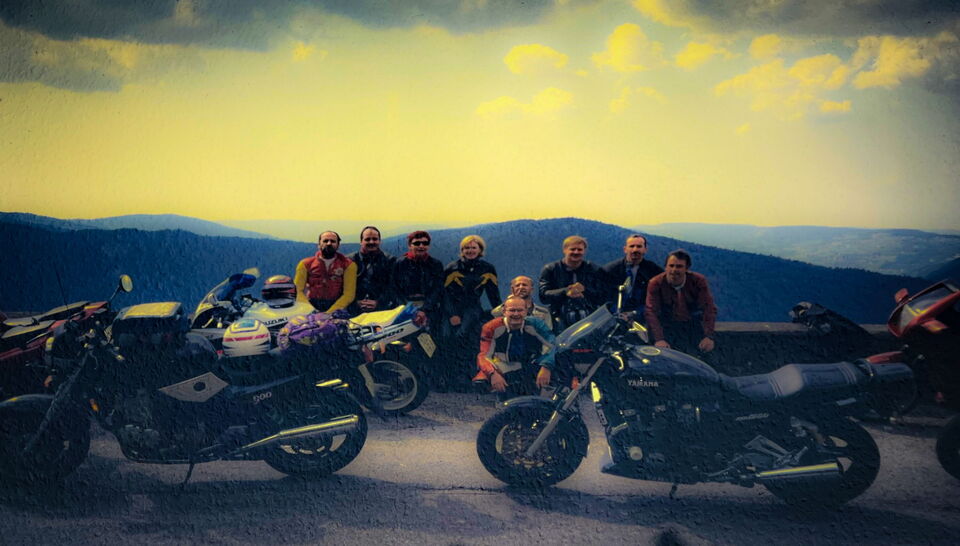
Technically it’s not mine anymore. But it’s still in my cramped garage—because the owner lives in the U.S. Yet whenever he visits home, he still loves riding the “old lady.” For a few years now, we’ve done monthly “exercise rides” to make sure everything’s okay. Machines need to be moved, otherwise they break—kind of like people.
If something acts up, Hubi has taken care of it for 25 years. He’s the motorcycle wizard—his shop is now south of Hilpoltstein. The Triumph was supposed to get TÜV in winter 2025/2026, plus new coolant, new footpeg rubbers, and new rear turn signals. After 33 years the old ones had become brittle. Plastic ages; even my best glue work couldn’t save them.
“But like this you won’t pass TÜV.” Huh? “Your front Daytona brake rotors are too thin—you need new ones. From Triumph they’re unaffordable.” I found EBC rotors for a fair price. That should last for the next world tours—if it ever gets them.
In recent years it hasn’t even done 1,000 km. Before that it ran in MO’s long-term test: 100,000 km in three years, most of it with me on board. I even rode it on the Isle of Man. Rule Britannia, cool Britannia. In February 1995, Jo Soppa and I went to the English mother plant to tear it down together with Triumph’s engineers.
I bought it and put another 60,000 km on it—mostly on winding back roads in southern Germany, but also into Friuli and Switzerland.
Even today, that engine still has something special: a growling triple that revs slowly, almost ship-diesel-like. But the way it does it is fantastic. It has real character and stands apart from the competition—even from modern triples from the same brand.
Sure, 83 Nm and 100 hp isn’t exactly huge when the bike weighs 250 kg. “Grenade dynamics” look different. Still, that old engine puts you in a good mood—and it’s by no means slow. One tooth down on the front sprocket helps.
These days it only gets Aral Ultimate with no ethanol. Painfully expensive, but with so few miles per year, it’s still cheaper than cleaning three carbs and syncing them afterward.
How does the Trident 900 ride? Controlled pace—yes. Snappy “whack the throttle”—no. In quick direction changes you feel the biggest difference to modern bikes. First you have to give a sharp steering input through the halfway-raised stock clip-ons, then immediately ease off pressure—otherwise the heavy front end keeps tipping in lazily, while you already want to be somewhere else. The counter-holding and correcting takes effort. After a fast ride on the Trident, you feel it in your triceps at night.
The Bridgestone BT16 Pros don’t get in the way of corner chasing. In 2011 they were sport-tire test winners at Motorrad (Stuttgart). And before anyone complains about the old design: do you still ride as well as you did in 2011?
What do I still like about the Trident? Sit on it, ride off, have fun. Not at race pace, of course. But on multi-day tours into the low mountain ranges or the Alps, rider and machine feel right at home.
They grow into a single unit and realize: it doesn’t always have to be the newest technology. To ride fast, the rider has to step up. And when it works, the joy afterward is even bigger. Triumph used to advertise: “When technology meets character.” It’s true.

Günter Wimme
First and foremost: vroom, vroom. He loves motorcycles and scooters—and has spent his entire professional life around them: as a test editor at MO, editor-in-chief of SCOOTER & Sport, and a racetrack instructor.
When it comes to travel, he raves about his Honda Forza 300 (nearly 90,000 km on the clock). For enduro wandering, he prefers lightweight machines like the Beta Alp 200 or Honda CRF 300 L. For those wild five minutes, he turns to his Aprilia Tuono 1100 V4.
Dream bikes: Honda RC30, Scout Flying Squirrel.
Motto: It’s the rider, not the bike.