The Dakar Without Dakar: How Much Myth Is Left?
It used to be simple. Say “Paris–Dakar,” and the image was instant: dust in your hair, compass in hand, and a route that stitched Europe to Africa.
Today the rally runs entirely inside Saudi Arabia, uses digital navigation, and is dominated by high-tech prototypes — yet it still carries the Dakar name. Is that justified? Yes. But the more interesting question is what was gained — and what quietly disappeared.
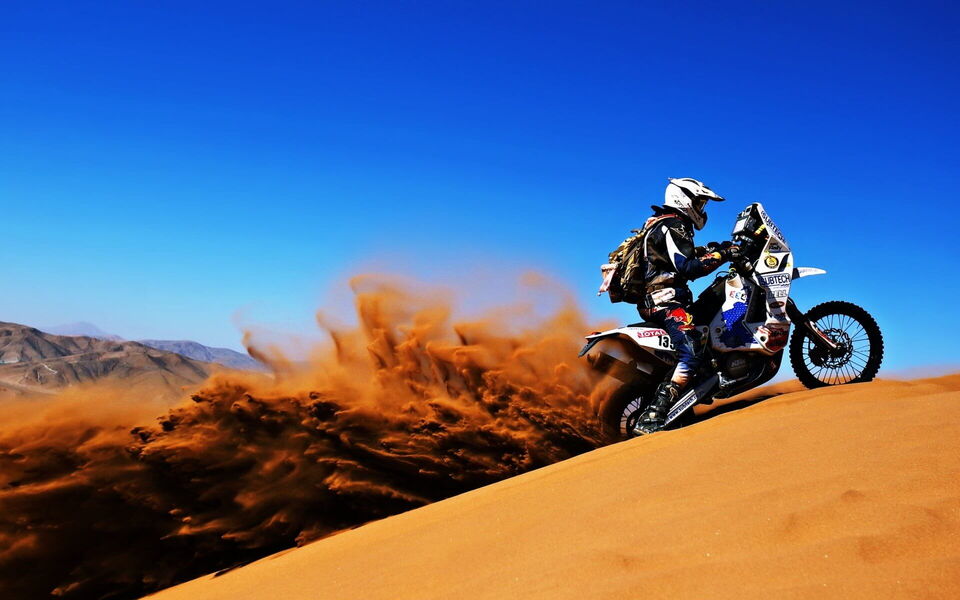
When It Was Still an Expedition
The original Paris–Dakar was less a race than an expedition with a stopwatch attached.
Paper roadbooks were handed out each morning. The compass often mattered more than outright speed. And if you got lost, you were truly lost. Improvisation wasn’t optional — it was survival.
Cars were patched together in the sand. Riders slept beside their machines. The event thrived on uncertainty and on the sense that humans were battling the desert itself, not just the clock.
“Paris–Dakar” quickly became global shorthand for the toughest desert challenge on wheels.
The Turning Point: 2008
The rupture came in 2008, when concrete terror threats in Mauritania forced the rally’s cancellation at the last minute — a shock that fundamentally changed the event’s trajectory.
Africa was suddenly too risky. The caravan moved to South America. And that’s where the deeper transformation happened: the route became a brand.
“Paris–Dakar” was streamlined into simply the Dakar Rally. The name no longer described geography. It described a promise: maximum off-road hardship.
Argentina, Chile, Peru — the exact location mattered less than the Dakar aura.
The Saudi Era
Since 2020, the rally has run entirely in Saudi Arabia.
From a logistical standpoint, the move makes sense: easier security control, centralized organization, and terrain that still delivers serious difficulty. The modern Dakar is a highly professionalized off-road mega-event.
Digital roadbooks, GPS checkpoints, and advanced safety systems have tamed much of the old chaos. Factory teams now field extremely sophisticated prototypes — some partially electrified — with suspension tech that wouldn’t look out of place in aerospace.
Average speeds are higher. Operations are tighter. Risks are better managed.
Adventure has evolved into elite high-performance sport.
Has the Soul Changed?
This isn’t a betrayal of the Dakar spirit — but it is undeniably a shift.
Today’s rally is often more demanding from a pure sporting perspective and far better organized. Saudi Arabia’s dunes are brutally unforgiving, navigation remains complex, and two weeks of desert punishment still break even seasoned veterans.
Anyone claiming the modern Dakar is soft is missing the reality of contemporary rally raid.
And yet, something intangible has changed.
The original Paris–Dakar told a bigger story: continents, cultures, vast distances. It was messier, harsher, sometimes dangerously naïve — but precisely because of that, mythically charged.
Today’s Dakar feels more like a perfectly produced desert spectacle: deeply impressive, but more controlled and more predictable.
The Brand vs. the Legend
“Dakar” is now a global motorsports brand. It no longer points to a finish line in Senegal but to a promise of extreme off-road competition.
Commercially and competitively, that works.
Emotionally, the picture is more complicated.
The Dakar may be better organized than ever — but somewhere along the way, a piece of its wild soul didn’t make the trip.
Maybe that’s the price of progress.
Maybe it’s nostalgia talking.
Most likely, it’s a bit of both.