Why is Viñales hiring Lorenzo as a coach?
When a MotoGP rider seeks help to become world champion—that speaks volumes about an unwavering will to win—and what we everyday riders can learn from it.
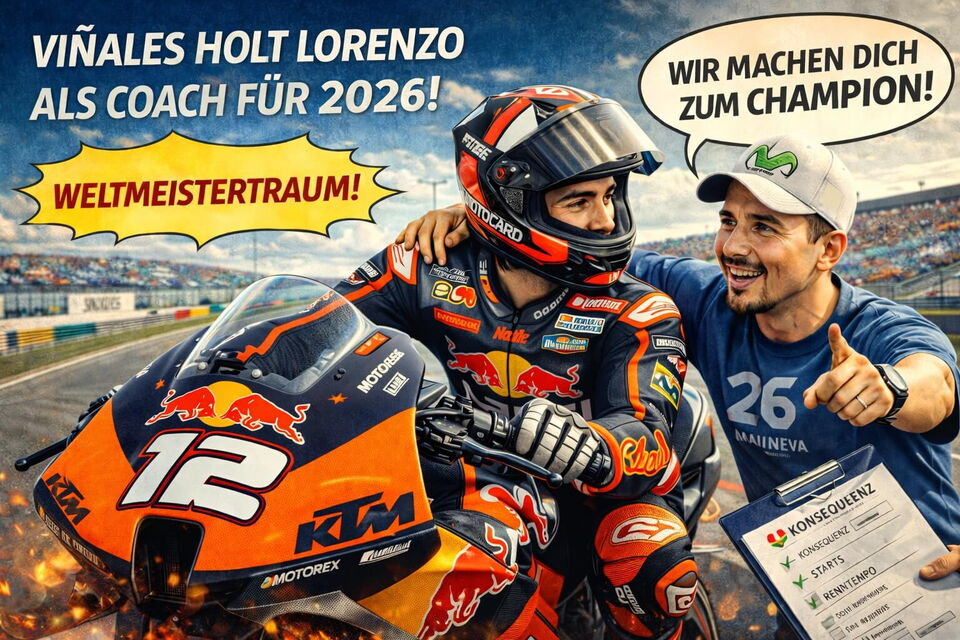
Who are they?
● Maverick Viñales: insanely fast, but sometimes inconsistent—one day a win, the next day mid-pack.
● Jorge Lorenzo: former world champion, famous for ultra-smooth riding—brake, turn, throttle like a dimmer switch, not a light switch.
Think of it like this:
Viñales is already world-class. But even at that level there are days when everything clicks—and others when it just doesn’t. That nagging question: “Why isn’t today as good as yesterday?” has annoyed him for years. That’s exactly why he brought in five-time world champion Jorge Lorenzo.
Lorenzo was never the type to force things. He was the rider who looked calm: braking, turning, accelerating—nothing jerky, nothing hectic. Viñales knows: if anyone can spot where I’m agitated without realizing it, it’s this guy.
The point isn’t for Viñales to reinvent himself. He doesn’t want a totally different line or personality. He wants to remove the tiny errors you barely feel—but that cost time, confidence, and consistency. Lorenzo watches from the outside and basically says: “Here you’re too rushed. There you went for too much too early. And there you’re getting in your own way.”
That’s how they work: not “ride a thousand laps and hope it improves,” but targeted. Each session has a clear theme: sometimes only braking, sometimes only first throttle contact, sometimes body position and tension. Everything else gets ignored. It is simple—and brutally effective, because your brain can focus on one thing.
Another key: Viñales deliberately leaves his comfort zone. He used to avoid bad conditions. Now he rides on purpose when grip is poor, it’s cold, or it’s unpleasant—not to be brave, but because any unpolished input gets punished immediately. If you can ride clean and calm on low grip, you can do it in good conditions. Lorenzo uses that as the teacher.
What stands out: it’s almost never about spectacular tricks. It’s about boring basics: how loose are your arms? Do you carry weight with your core or hang on your hands? How smooth is the transition from braking to turning? These aren’t what people brag about at the bar—but that’s where control and consistency are born.
And here’s the key: you can apply this 1:1 yourself, without racetracks or data.
If you ride, it helps surprisingly little to “just go for a ride.” Much better: pick one focus before you leave. For example: “Today I will brake softer and more evenly.” Or: “Today I am focused only on my vision—look far ahead, not right in front of the tire.” Everything else is secondary. After a few rides you’ll notice it sticks.
A big learning from the Lorenzo school is this mantra: Smooth isn’t slow. Smooth is controlled. Most uncertainty comes from abrupt inputs: braking too hard, snapping the throttle open, releasing too suddenly. If you train yourself to use a dimmer instead of a switch, the bike feels calmer—and so do you.
Ergonomics aren’t something only available as a premium upgrade either. Bad lever angles, cramped posture, or loading your arms means you’re fighting your own bike. A small setup check can do more than any technique debate.
Maybe the most important takeaway—what Viñales gains from Lorenzo and every rider can use: Consistency beats bravery. A clean, relaxed corner ten times in a row is real skill. One “hero corner” feels good, but doesn’t make you better.
In short: Pros don’t improve by taking more risks. They improve by riding calmer, clearer, and more consciously. You can copy that—no race license required.