Review Aprilia Tuareg 660 (2026)

The Adventure Bike That Loves the Long Way Around
80 hp, 204 kg, 240 mm of suspension travel, a fully faired adventure bike with racing DNA—the Aprilia Tuareg 660 may be the most unlikely all-round motorcycle in its price class. This test reveals what it can really do on asphalt and off-road.
As of: March 17, 2026 | Tested model: Aprilia Tuareg 660 (2026) | Price: €11,999
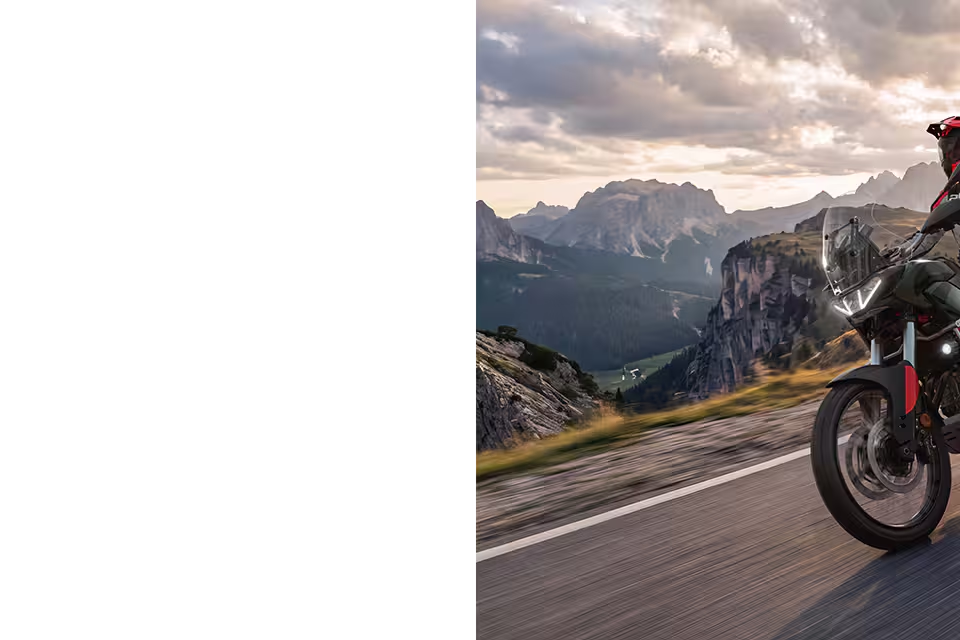
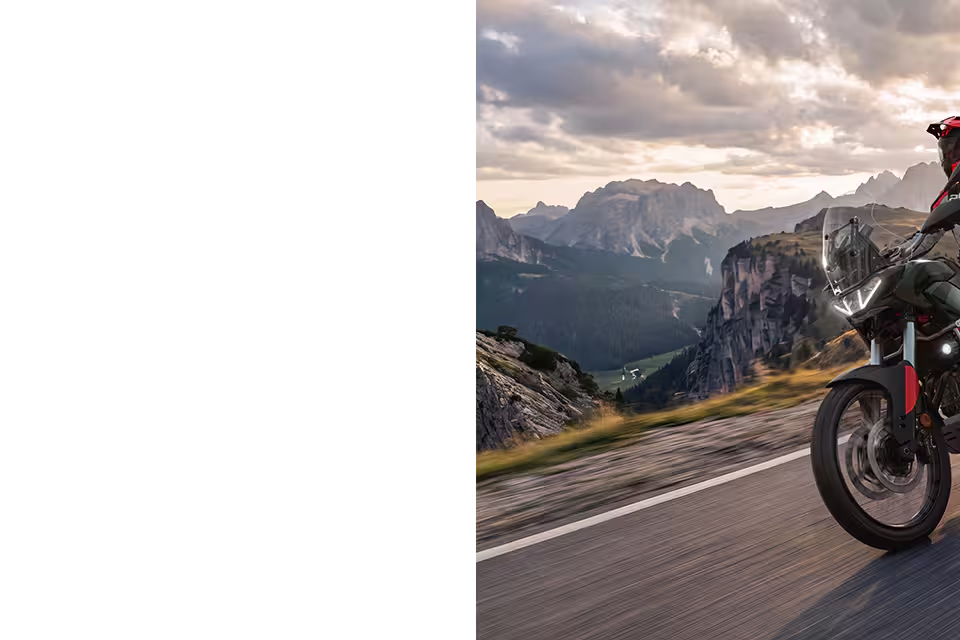
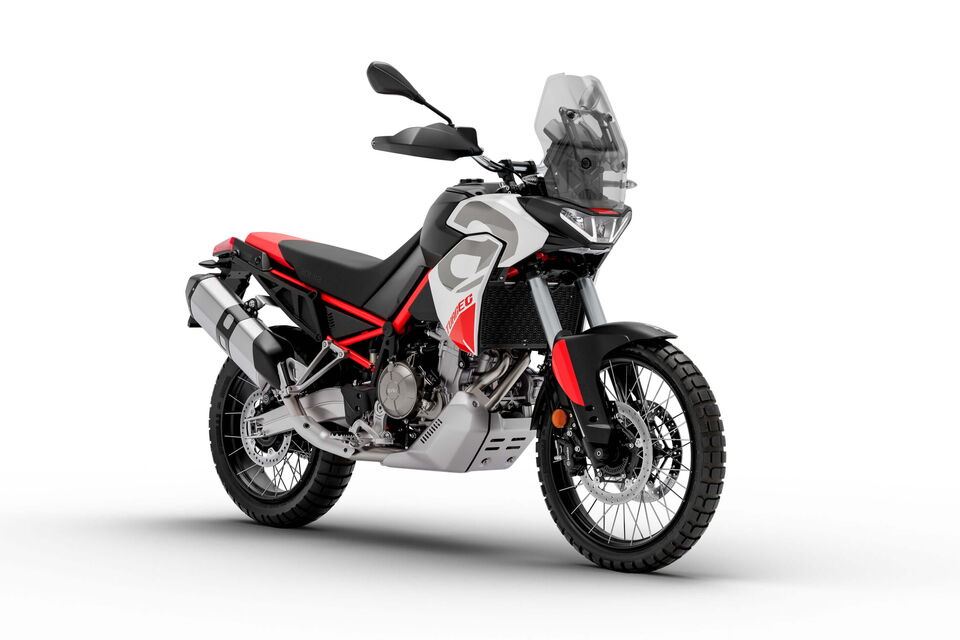
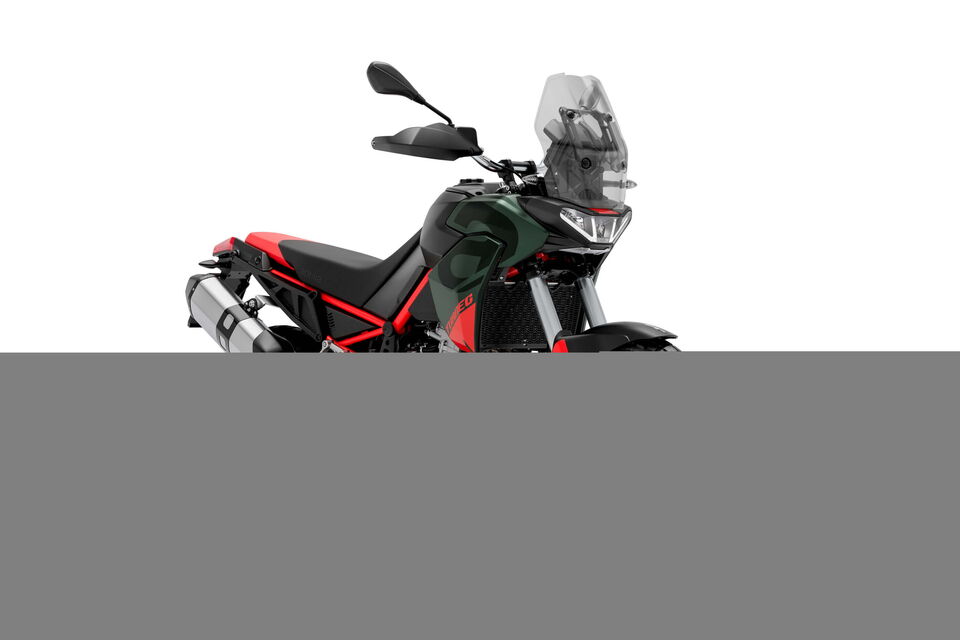
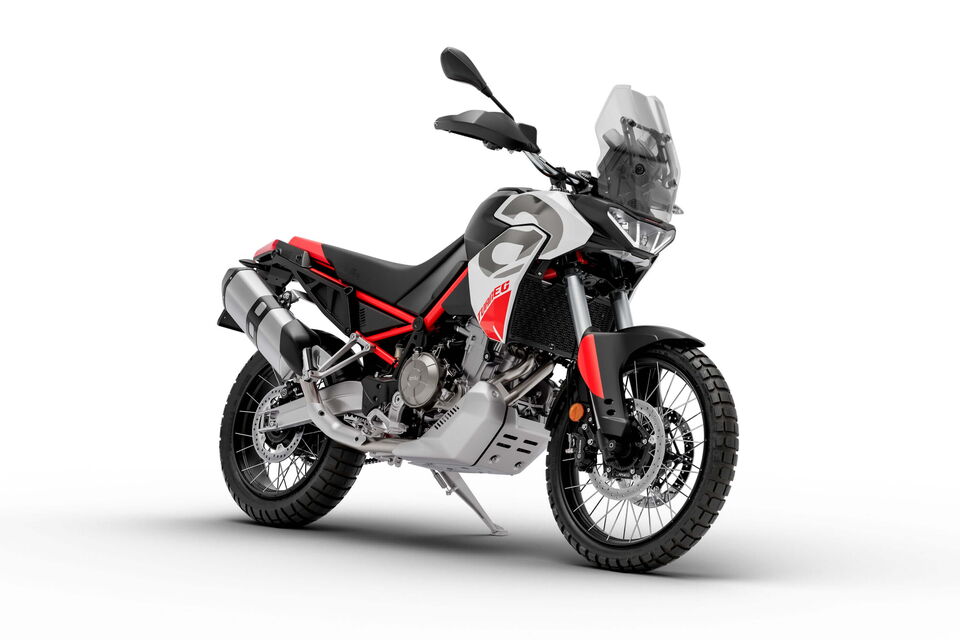
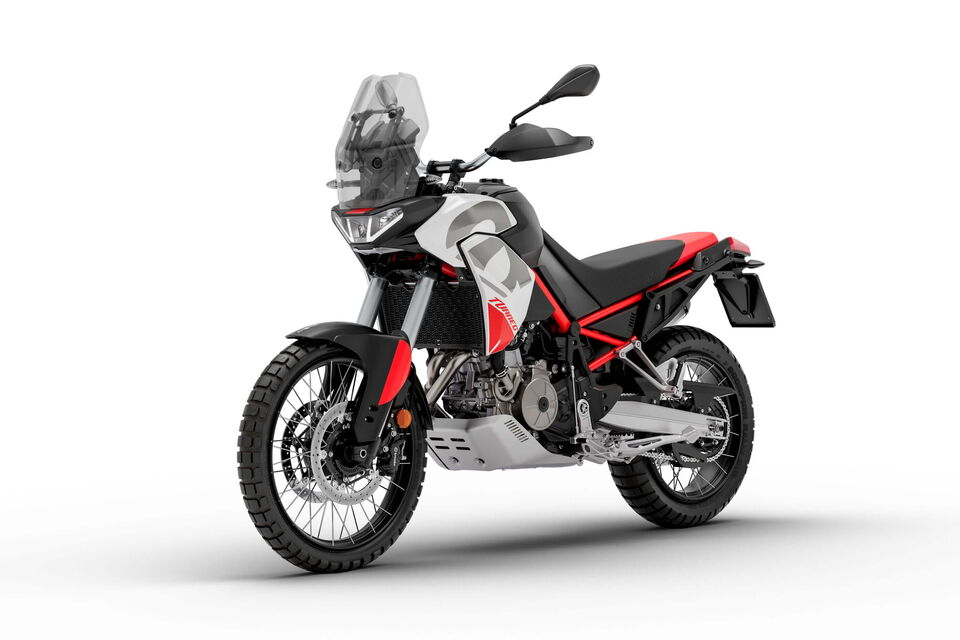
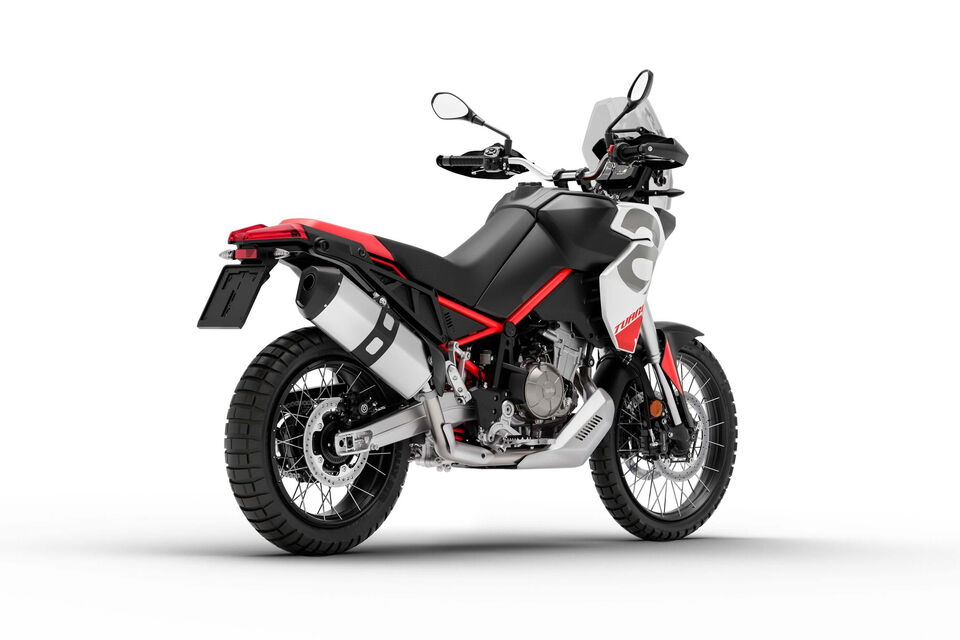
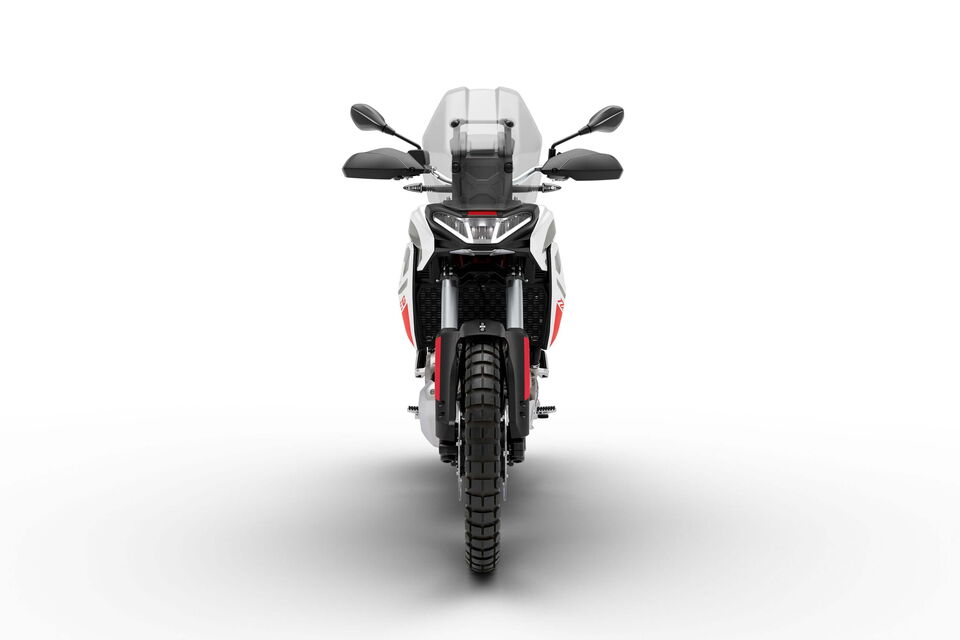
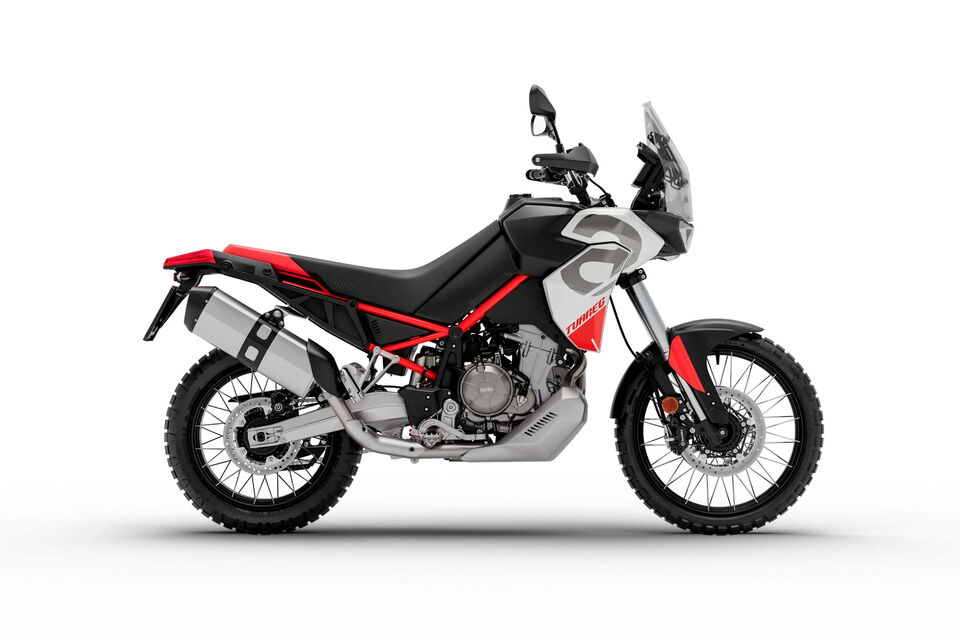
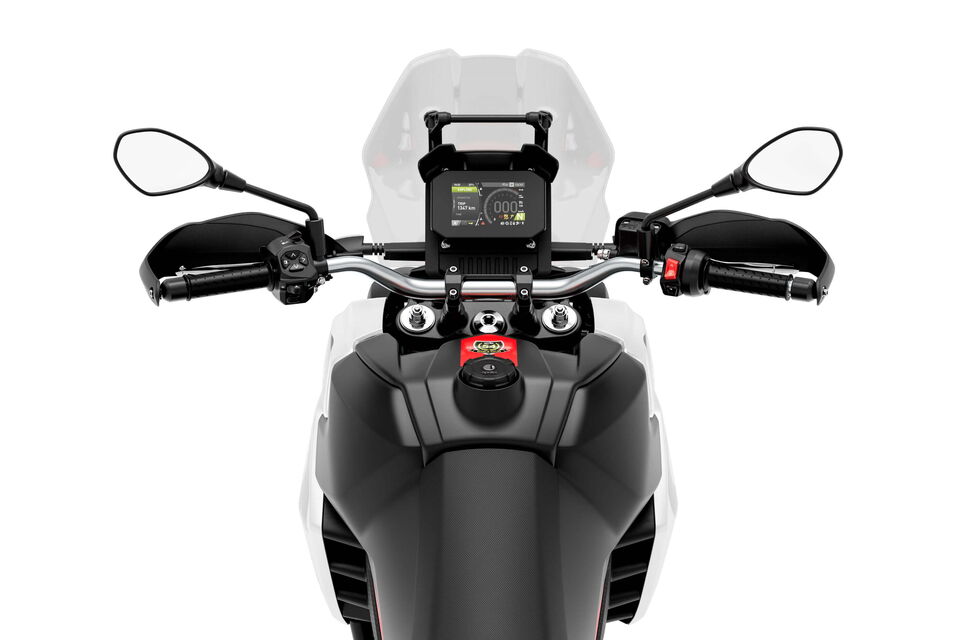
Engine: The 660 Twin—This Is Where It Comes Into Its Own
The 659 cc parallel twin is familiar from the RS 660 and Tuono 660—as a sporty street engine that loves to rev and was developed for asphalt enthusiasts. Something interesting happens in the Tuareg: Aprilia has tuned it for a broader, more usable torque curve. It produces 70 Nm at 6,500 rpm, with 80 percent of that torque already available from 3,000 rpm. That sounds technical, but in practice it means you can pull away on a loose gravel road in third gear at idle without stalling. The engine forgives the kind of mistakes an off-road engine needs to forgive.
80 hp at 9,200 rpm is a lot for an adventure bike of this size. For comparison, a Yamaha Ténéré 700 produces 72 hp. The Tuareg is not a sluggish all-rounder but a motorcycle with real bite. You notice it when overtaking on the highway. And if you open the throttle while descending a mountain pass with gravel beneath the tires, you had better know what you are doing—the traction control is not merely an option here, but an active safety feature.
Ride-by-wire, four riding modes (City, Tour, Off-Road, Individual), and multi-level traction control make the electronics package exemplary for an adventure bike in this price class. In Off-Road mode, traction control intervenes much more gently, allowing controlled slides on loose surfaces. The assist-and-slipper clutch helps prevent rear-wheel instability during downshifts—something that matters off-road as well. Standard cruise control (Aprilia Cruise Control) rounds out the package nicely for long-distance riding.
Chassis: 240 mm—and You Can Feel It
240 mm of suspension travel front and rear—that is not just marketing hype, you can really feel it. The fully adjustable Kayaba upside-down fork at the front and Kayaba monoshock at the rear offer adjustment for spring preload, rebound, and compression damping. The basic setup is firm enough for fast asphalt riding and compliant enough for moderate off-road terrain. Riders heading onto more demanding surfaces should adjust the spring preload accordingly—the adjustment range is there.
The handling on the road is consistently surprising. Fully fueled, the Tuareg weighs 204 kg—acceptable for an adventure bike, but hardly lightweight. Once moving, however, it feels lighter than it is. The high-strength steel-tube frame with aluminum sections and the relatively high center of gravity make turn-in direct and willing. Anyone coming from a heavyweight adventure bike will immediately be pleasantly surprised. On twisty backroads, the Tuareg is genuinely fun.
The same applies off-road, with some limitations. In light to moderate terrain—gravel roads, forest tracks, firm dirt—the Tuareg is confident and encouraging. In serious off-road terrain with deep ruts, large rocks, or very loose sand, its weight begins to impose limits. The Tuareg is not a hardcore enduro machine. It is the motorcycle for riders who spend 80 percent of their time on the road and 20 percent off-road—and do not want to compromise on suspension capability.
The Brembo brakes—dual 300 mm front discs with axial four-piston floating calipers and factory-fitted braided steel lines, plus a 260 mm rear disc with a single-piston caliper—are excellent for an adventure bike. Fade resistance and modulation are clearly superior to many competitors. The dual-channel ABS offers three mappings and stoppie control and operates unobtrusively; in Off-Road mode, rear-wheel ABS can be switched off.
Ergonomics: Tall, but Not Inaccessible
An 860 mm seat height is the most honest statement about the Tuareg’s accessibility. At 1.75 meters tall, you can plant one foot flat on the ground while the other remains off the pavement. Shorter riders will need practice or the optional lowering kit. Riding while standing feels natural at this seat height and makes the motorcycle easier to control off-road; maneuvering in a parking lot requires more concentration. That is normal for an enduro-style motorcycle of this type and not a criticism—but it is something you should test before buying.
The riding position is upright and well suited to long days in the saddle. The handlebar is high and wide, while the footpegs are optimized for standing but remain comfortable when seated. The ergonomics work well for riders up to around 1.85 meters tall; very tall riders need to be careful on tight mountain roads at full steering lock, where knees and handlebar can start competing for space. Wind protection is decent for an adventure bike—comfortable on the highway up to 130 km/h, though above that the airflow starts tugging at the rider.
Handling: Everyday-Friendly All the Way to the Mountain Pasture
The 5-inch TFT display is one of the best in the adventure-bike class: large, easy to read, controllable through the handlebar switchgear, and equipped with Bluetooth connectivity. Navigation can be integrated, and phone calls can be answered. For an adventure bike, that is modern and genuinely useful in everyday riding. Operation is intuitive, even with gloves.
The 18-liter fuel tank is generous for this category. With consumption of around 5.5 to 6.5 liters per 100 km, a realistic range is between 270 and 320 km depending on riding style and terrain. That takes much of the pressure out of finding fuel on remote routes. The spoked wheels use aluminum rims and are tubeless—an important advantage over conventional tube-type spoked wheels, because a puncture can be repaired much more quickly on the road without removing and patching an inner tube.
Luggage system: Aprilia offers factory-matched accessories, including side cases, a top case, and a luggage rack. This is not bargain-basement aftermarket gear but properly integrated equipment. Anyone planning to tour will find it a sensible upgrade. Cleaning the Tuareg after an off-road ride takes more effort than cleaning a street motorcycle—that is part of the concept, not a flaw. A rear paddock stand is extremely useful for chain maintenance and inexpensive to add.
Equipment: More Than the Competition, Straight From the Factory
Ride-by-wire, four riding modes, traction control, dual-channel ABS with three mappings, stoppie control, cruise control, a TFT display with Bluetooth, assist-and-slipper clutch, Brembo brakes with braided steel lines, and a full-LED headlight—all of it comes standard, not as part of an option package. Compared directly with the Yamaha Ténéré 700 or Honda Transalp 750, which does not offer cruise control, the Tuareg is the more complete electronics package.
What is missing—and may matter depending on how you use the bike—is cornering ABS. The Tuareg does not have lean-sensitive ABS, which can become relevant when braking at deep lean angles on the road and is something competitors such as the Honda Transalp 750 handle better. A quickshifter is not standard but is available as an accessory. At a list price just under €12,000, both omissions are defensible—but they remain known and legitimate criticisms of the Tuareg.
Costs: Fair for What You Get
The list price is €11,999, putting the Tuareg 660 above the Yamaha Ténéré 700 at around €11,600 as well as the Honda Transalp 750 at around €11,400. The premium over the Ténéré can be justified by the more comprehensive electronics package, Brembo brakes, and stronger engine. Whether it is worth paying depends on how much you value those features. Compared with the KTM 890 Adventure R at around €17,000, the Tuareg is significantly less expensive despite following a comparable concept.
Service is required annually or every 10,000 km, with dealer costs ranging from €300 to €450. The 660 engine is easier to maintain than a V4, with valve-clearance inspection every 20,000 km costing between €400 and €700 depending on the dealer. Tires in adventure-bike sizes—90/90-21 front and 150/70-18 rear—cost between €150 and €280 per set depending on manufacturer and compound. Enduro tires are less expensive than superbike rubber. Build and paint quality are appropriate for the price, and there is nothing to criticize about the spoked wheels or ancillary components. Warranty: two years with unlimited mileage.
Verdict
The Aprilia Tuareg 660 is the most interesting motorcycle in its price segment. No other middleweight adventure bike combines this much electronics, this much engine performance, and this much suspension capability for the money. Accept its limitations—no cornering ABS, no standard quickshifter, and 204 kg to deal with off-road—and you get a versatile motorcycle with genuine character, one that is exciting on backroads and capable of far more in light to moderate off-road terrain than most riders will ever exploit.
Quick Check
+ 80 hp—the most powerful engine in the middleweight enduro category
+ 240 mm of suspension travel front and rear—fully adjustable
+ Brembo brakes with braided steel lines as standard
+ Comprehensive electronics package is exemplary for the price class
+ Cruise control, TFT display, and Bluetooth standard from the factory
+ 18-liter fuel tank—excellent range for touring
+ Tubeless spoked wheels—safer and easier to repair during off-road use
– No cornering ABS—competitors handle this better
– No quickshifter as standard
– 860 mm seat height—challenging for shorter riders
– 204 kg—noticeable off-road after a fall and when picking the bike back up
– More expensive than the Yamaha Ténéré 700
– Major 20,000 km service costs €400–€700
Technical Specifications: Aprilia Tuareg 660 (2026)
Country of manufacture: Italy (Noale, Veneto)
Engine: Liquid-cooled parallel twin, DOHC, 4 valves per cylinder, ride-by-wire, Euro 5+
Displacement: 659 cc
Power: 59 kW (80 hp) at 9,200 rpm
Torque: 70 Nm at 6,500 rpm
Transmission: 6-speed, assist-and-slipper clutch
Final drive: Chain
Front suspension: 43 mm Kayaba USD fork, fully adjustable (spring preload, rebound and compression damping), 240 mm travel
Rear suspension: Aluminum double-sided swingarm, Kayaba monoshock, fully adjustable, 240 mm travel
Front brakes: Dual 300 mm discs, Brembo axial four-piston floating calipers, braided steel lines
Rear brake: 260 mm disc, Brembo single-piston floating caliper, braided steel line
Front tire: 90/90-21
Rear tire: 150/70 R18
Rider aids: Dual-channel ABS (3 mappings, stoppie control, rear-wheel ABS switchable), ATC (traction control), 4 riding modes, ride-by-wire, ACC (cruise control), AEM (engine mapping)
Wet weight: 204 kg
Seat height: 860 mm
Fuel capacity: 18 liters
Price (Germany): €11,999
Warranty: 2 years, unlimited mileage