Review BMW F 800 GS (2026)

The Entry Point to BMW’s Middleweight GS Lineup
87 hp, 895 cc, 227 kg fully fueled, telescopic fork, TFT display—and prices starting at €11,990. Since 2024, the F 800 GS has used the larger engine from the F 900 GS, eliminating one of its predecessor’s major weaknesses. Riders looking for a true all-purpose motorcycle—and willing to pay the BMW premium—will find a well-rounded package here.
As of: March 17, 2026 | Tested model: BMW F 800 GS (2026) | Price from: €11,990
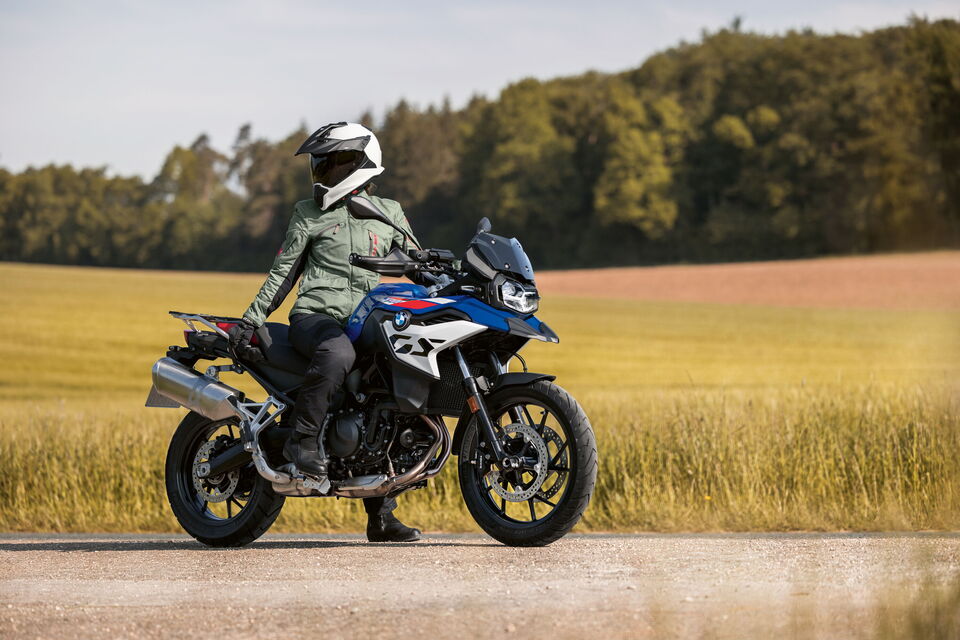
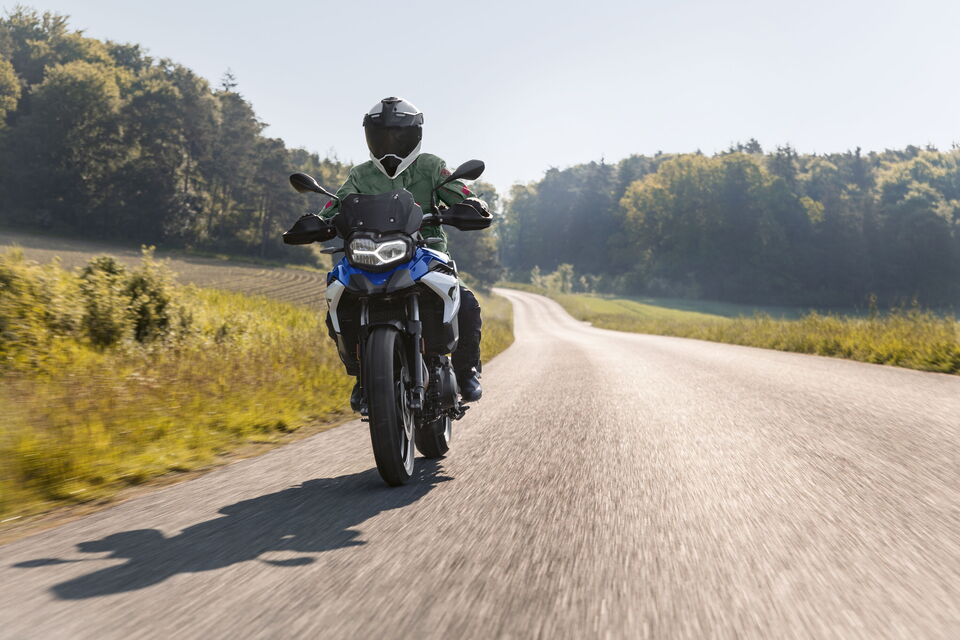

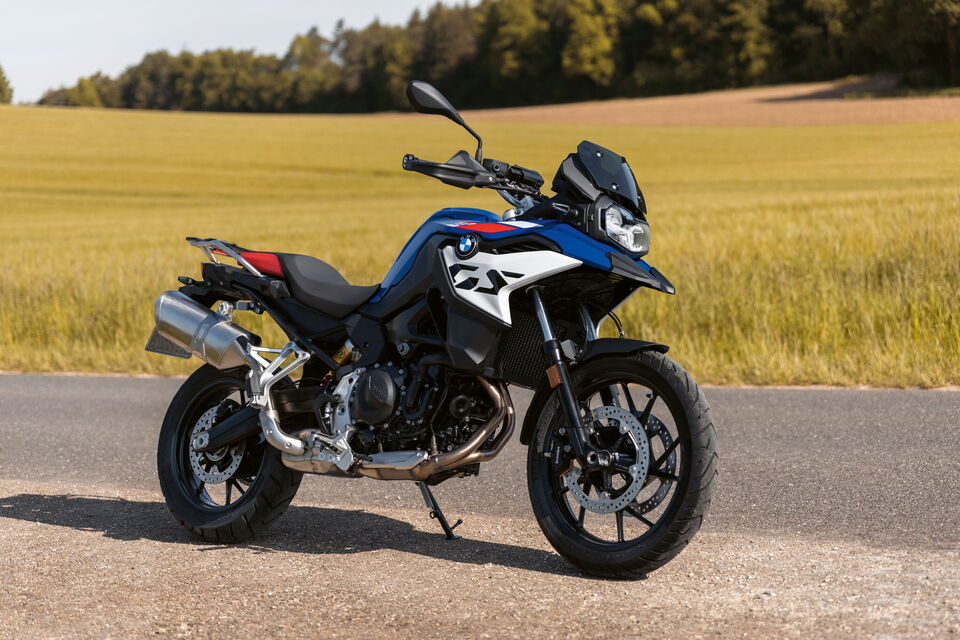
Engine: 895 cc and 87 hp—More Than the Name Suggests
Since 2024, the F 800 GS name has been technically misleading. There is no longer an 800 cc engine in the frame. Instead, it uses the same 895 cc parallel twin that powers the more expensive F 900 GS.
BMW upgraded the engine when the new generation arrived in 2024 without changing the model name—presumably to preserve its positioning as the entry-level model below the 900.
The result: 64 kW (87 hp) at 6,750 rpm and 91 Nm at 6,750 rpm—considerably more than the predecessor’s 72 hp. The liquid-cooled four-valve twin, with dry-sump lubrication and dual overhead camshafts, is a proven and robust powerplant.
On the road, the engine is the F 800 GS’s strongest asset. It pulls cleanly from as low as 2,000 rpm, making it equally suitable for relaxed backroad touring and assertive highway overtakes.
The 91 Nm torque peak arrives early and is spread evenly across the rev range. Riders who do not want to rev the engine hard do not have to—and those who take it to 8,000 rpm will find an engine that still pulls convincingly at the top end.
The characterful sound of the parallel twin, with its uneven firing intervals, is a pleasant companion on long rides.
Two riding modes come standard: Rain and Road. Riders wanting more can add the optional Dynamic Package, which includes additional riding modes, Shift Assistant Pro for clutchless gear changes, and semi-active rear suspension control.
Dynamic Traction Control (DTC) and lean-angle-optimized ABS Pro come standard. For an entry-level GS, that is a comprehensive basic safety package.
Chassis: Telescopic Fork, Conservative—and the Main Criticism
Up front is a conventional 41 mm telescopic fork with 170 mm of travel—no upside-down design and no adjustment on the base model.
This is the most obvious cost-saving measure compared with the F 900 GS, which uses a USD fork.
In practice, the telescopic fork is not a dealbreaker for touring and everyday use, but experienced riders who spend a lot of time off-road or want a sportier, more responsive front end will notice the difference.
At the rear is a directly mounted monoshock working with an aluminum double-sided swingarm, offering 170 mm of travel. Spring preload and rebound damping are manually adjustable.
Dynamic ESA is available as an option, adding semi-active damping adjustment and electronically adjustable spring preload—a definite upgrade for comfort on long trips.
The suspension setup prioritizes comfort. The F 800 GS absorbs bumps softly and without drama while remaining controlled during more aggressive riding.
On the highway, it remains composed even at higher speeds. On gravel, it performs well as long as you do not approach it with serious enduro ambitions.
The 19-inch front wheel—a tubeless cast wheel as standard—is a good compromise for mixed use: more agile on the road than the 21-inch format of the larger GS models, while still offering enough off-road ability for forest roads and gravel tracks.
The three-disc braking system—dual 305 mm front discs with two-piston floating calipers and a single rear disc—is adequate for an adventure bike in this class.
Riders accustomed to four-piston Brembo calipers will notice the difference. Riders using the F 800 GS as an all-rounder are unlikely to find the brakes lacking.
ABS Pro is lean-angle optimized and intervenes almost imperceptibly in everyday riding.
Ergonomics: 815 mm Seat Height—and Genuine Adjustability
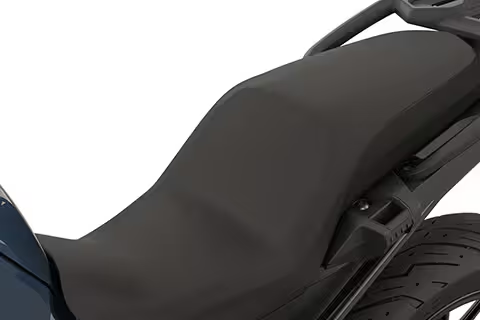
The standard seat height is 815 mm. That is moderate for an adventure bike and allows many riders to place one foot flat on the ground.
BMW offers an extensive range of alternatives: a lowering kit to 760 mm, extra-low seat at 780 mm, low seat at 790 mm, comfort seat at 830 mm, and Rally seat at 845 mm.
That range of adjustment makes the F 800 GS one of the most accessible motorcycles in its class.
The riding position is upright and designed for long-distance touring: wide handlebar, plenty of knee room, and a seat that remains tolerable even after four hours.
The standard windscreen is adequate for city riding. Riders who regularly spend long stretches on the highway will want to invest in the optional touring windscreen.
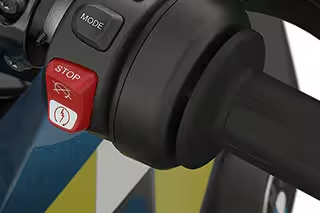
Control ergonomics are typically BMW: all controls are intuitively positioned, while the handlebar-mounted controller makes display adjustments easy even with gloves.
Handling: 227 kg and a TFT Display With Navigation
227 kg fully fueled—that is the F 800 GS’s ready-to-ride weight.
That is heavier than an Aprilia Tuareg 660 at 204 kg and heavier than a Yamaha Ténéré 700 at 204 kg, but considerably lighter than a BMW R 1300 GS at 246 kg.
Once moving, the weight is barely noticeable. The F 800 GS turns in easily and feels agile for its size.
Maneuvering in tight parking spaces requires some attention. Putting it on the centerstand is no problem.
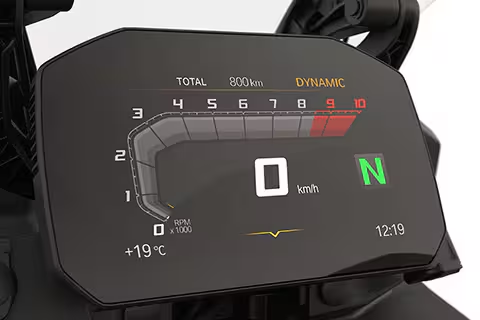
The TFT display used across BMW’s current motorcycle lineup comes standard on the F 800 GS. It displays speed, rpm, fuel level, and riding mode and, with the appropriate optional equipment, turn-by-turn navigation with lane guidance—a genuine advantage when touring.
Bluetooth connectivity for smartphone pairing and navigation through the BMW Motorrad app system comes standard.
The 15-liter fuel tank, combined with consumption of around 4.3 liters per 100 km, provides just under 350 km of range. That is sufficient for touring, though not a benchmark for the class.
BMW and third-party suppliers offer an extensive range of accessories for the F 800 GS—one of the broadest selections in the middleweight segment.
According to owners, cases from the R 1250 GS fit the motorcycle. That is a practical advantage for riders moving from another BMW.
The Endurance drive chain is included in the optional Comfort Package and extends maintenance intervals.
Equipment: Solid as Standard, Expandable Through Packages
Standard equipment on the F 800 GS includes ABS Pro with lean-angle optimization, DTC traction control, engine drag torque control, dynamic brake light, TFT display, LED lighting, two riding modes—Rain and Road—and an assist-and-slipper clutch.
Heated grips, Keyless Ride, Shift Assistant Pro, Dynamic ESA, additional riding modes, and cruise control all cost extra, either as individual options or bundled into Comfort, Dynamic, or Touring packages.
Fully equip an F 800 GS and the price quickly reaches €14,000 or more. That is a familiar—and justified—criticism of BMW’s package add-on strategy.
Good to know: according to the COC document, the F 800 GS has a stationary noise level of 89 dB(A), clearly below the 95 dB(A) threshold for Tyrol’s motorcycle restrictions, which is an important specification for riders who regularly travel through noise-regulated mountain regions.
Costs: €11,990 Base Price—and Keep an Eye on the Packages
€11,990 is the starting price in BMW’s German configurator.
For direct comparison, a Yamaha Ténéré 700 costs around €11,400, a Honda Transalp 750 around €11,600, and an Aprilia Tuareg 660 €11,999.
That places the F 800 GS toward the upper end of the segment, but it brings BMW’s quality standards, extensive accessory range, and traditionally strong resale value—all well documented in years of owner experience.
Service is required annually or every 10,000 km, with minor services at a BMW dealer costing between €350 and €500.
Valve clearance is checked every 20,000 km, with dealer costs ranging from €400 to €650. Major services involving more comprehensive inspections cost correspondingly more.
That is standard BMW ownership territory and should not come as a surprise.
Warranty: two years with unlimited mileage, optionally extendable.
Verdict
The BMW F 800 GS is the all-purpose motorcycle for riders who want BMW quality, a broad accessory range, and a mature overall package—and are willing to pay more for it than for Japanese or Italian competitors.
The telescopic fork is the biggest compromise. Riders who spend a lot of time off-road should choose the F 900 GS.
Anyone looking for a versatile touring and everyday motorcycle that does everything well without trying to dominate any single discipline will find the F 800 GS a well-rounded machine.
Quick Check
+ 895 cc twin with 87 hp—more engine than the F 800 GS name suggests
+ 91 Nm available at relatively low rpm—linear, refined power delivery
+ ABS Pro and DTC standard—a comprehensive basic safety package
+ TFT display with Bluetooth connectivity standard
+ 815 mm seat height, optionally lowerable to 760 mm—highly accessible
+ 89 dB(A) stationary noise—no problem in Tyrol or other noise-regulated regions
+ Extensive accessory range from BMW and third-party suppliers
+ Proven reliability and strong resale value
– Conventional telescopic fork instead of USD—the main difference from the F 900 GS and many competitors
– 227 kg fully fueled—heavier than most direct competitors
– No Shift Assistant or cruise control as standard—both cost extra
– Option packages can quickly push the base price beyond €14,000
– Valve-clearance inspection every 20,000 km—€400 to €650 at the dealer
– Rear-wheel ABS cannot be switched off without the Dynamic Package
Technical Specifications: BMW F 800 GS (2026)
Country of manufacture: Germany (Berlin-Spandau)
Engine: Liquid-cooled parallel twin, DOHC, finger followers, 4 valves per cylinder, dry-sump lubrication, fuel injection, Euro 5+
Displacement: 895 cc
Power: 64 kW (87 hp) at 6,750 rpm
Torque: 91 Nm at 6,750 rpm
Transmission: 6-speed, assist-and-slipper clutch; Shift Assistant Pro optional
Final drive: Chain
Frame: Tubular-steel trellis frame
Front suspension: 41 mm telescopic fork, 170 mm travel; non-adjustable on base model
Rear suspension: Aluminum double-sided swingarm, directly mounted monoshock, adjustable spring preload and rebound damping, 170 mm travel; Dynamic ESA optional
Front brakes: Dual 305 mm floating discs, two-piston floating calipers
Rear brake: 265 mm disc, single-piston floating caliper
Front tire: 110/80-19
Rear tire: 150/70-17
Rider aids: ABS Pro (lean-angle optimized), DTC (traction control), MSR (engine drag torque control), 2 riding modes standard (Rain/Road); additional riding modes and Shift Assistant included in the Dynamic Package
Stationary noise: 89 dB(A)
Wet weight: 227 kg
Seat height: 815 mm (optional 760–845 mm)
Fuel capacity: 15 liters
Price (Germany): from €11,990 plus additional charges
Warranty: 2 years, unlimited mileage