Review BMW F 900 GS (2026)

105 hp, 230 mm of Suspension Travel—the GS That Means Business
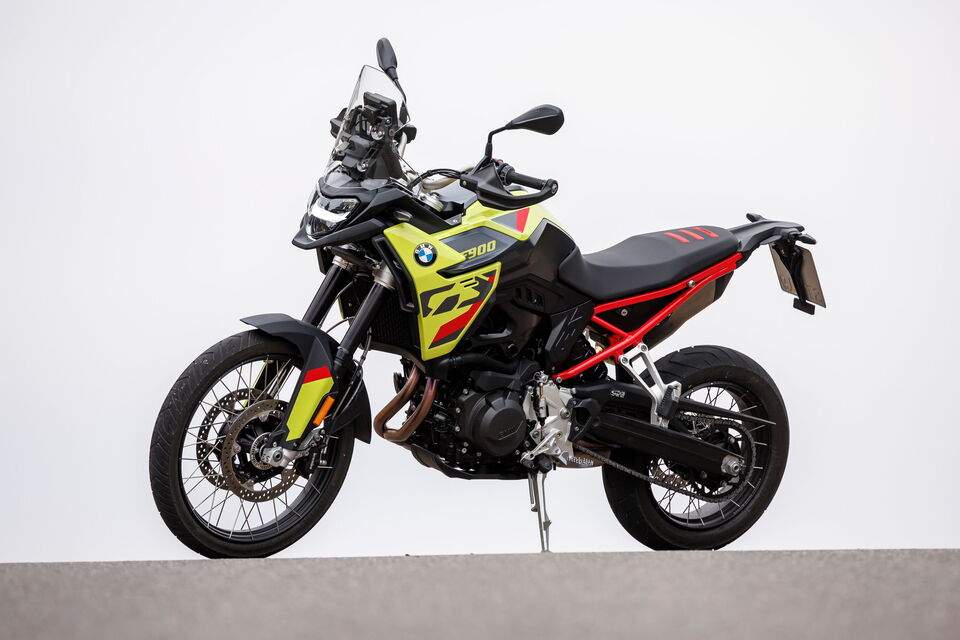
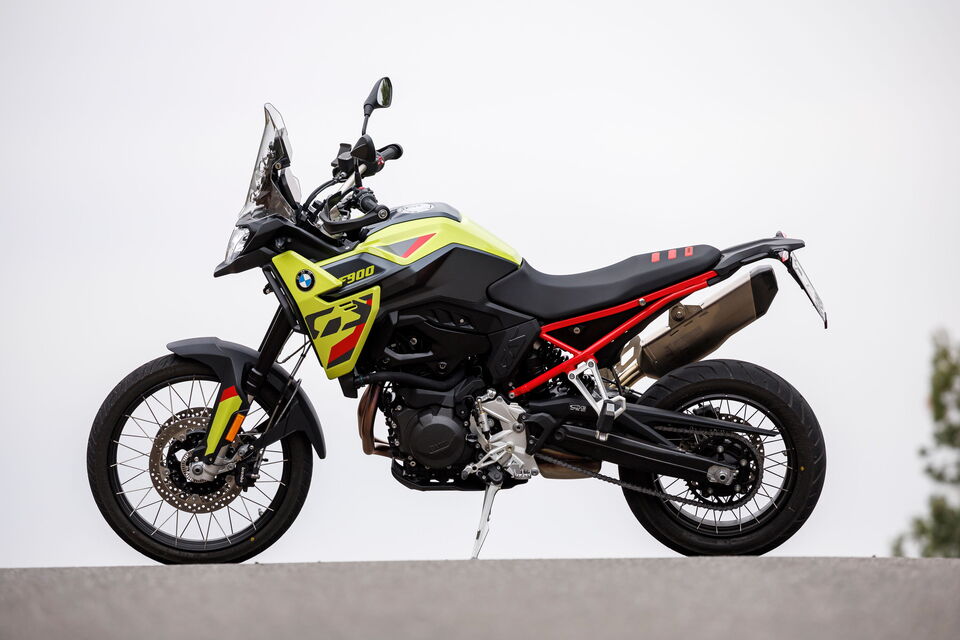
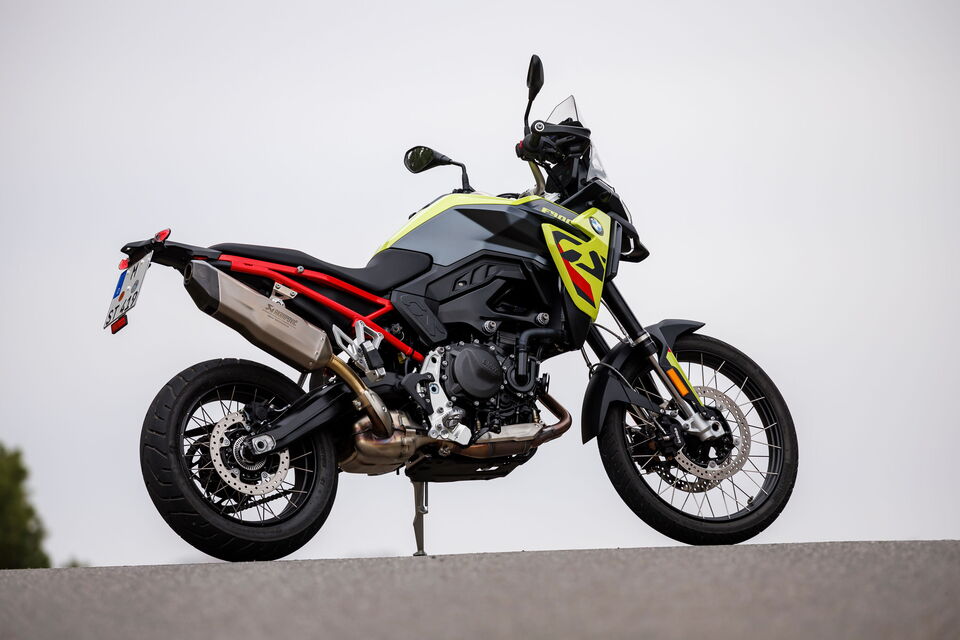
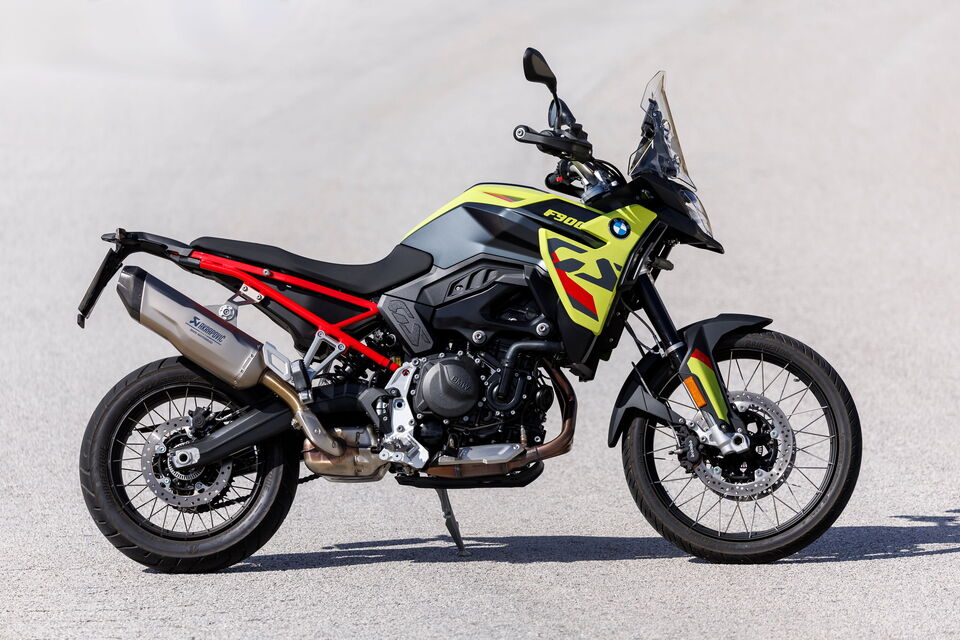
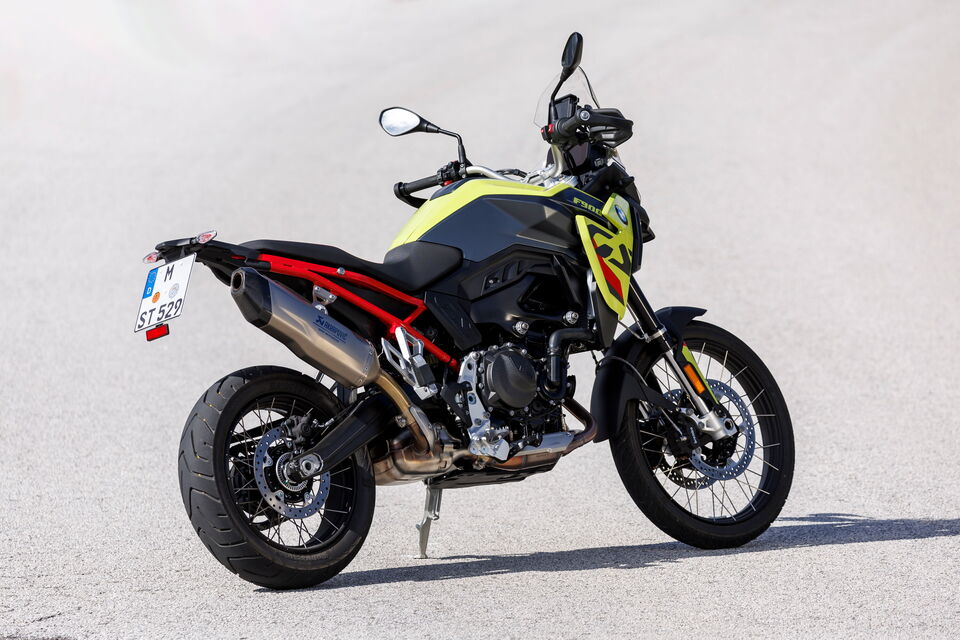
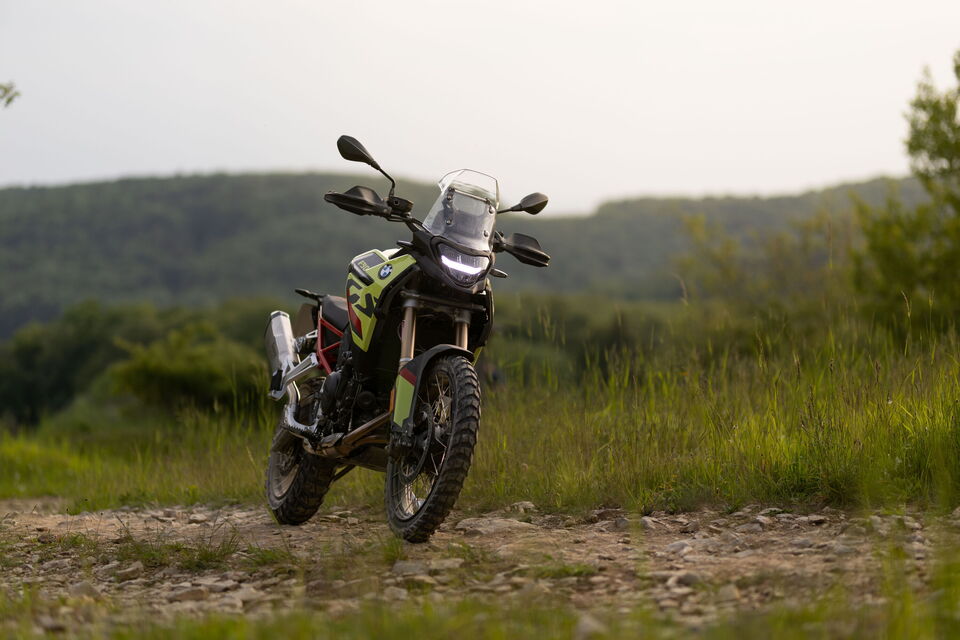
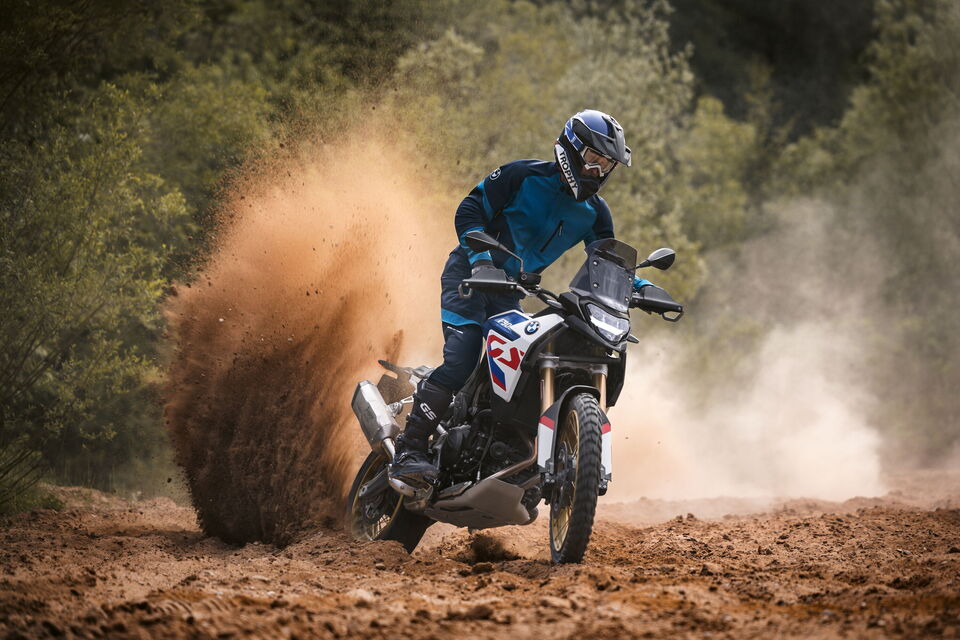
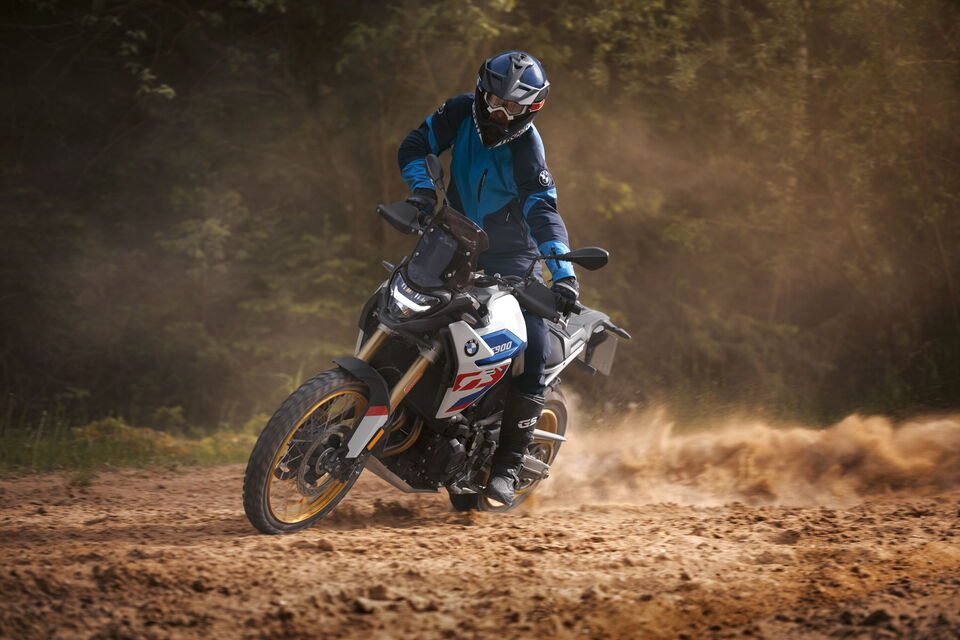
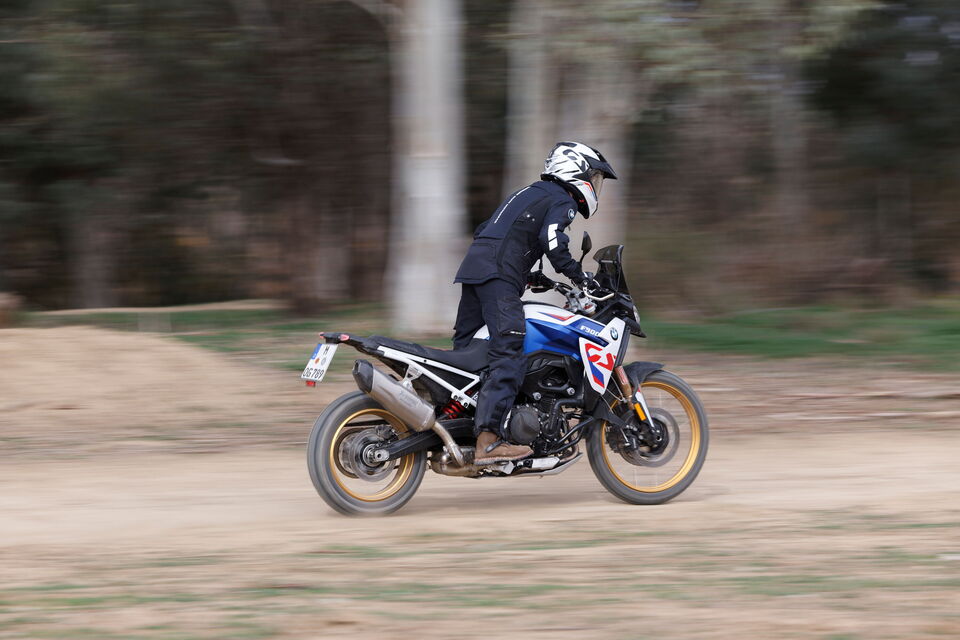
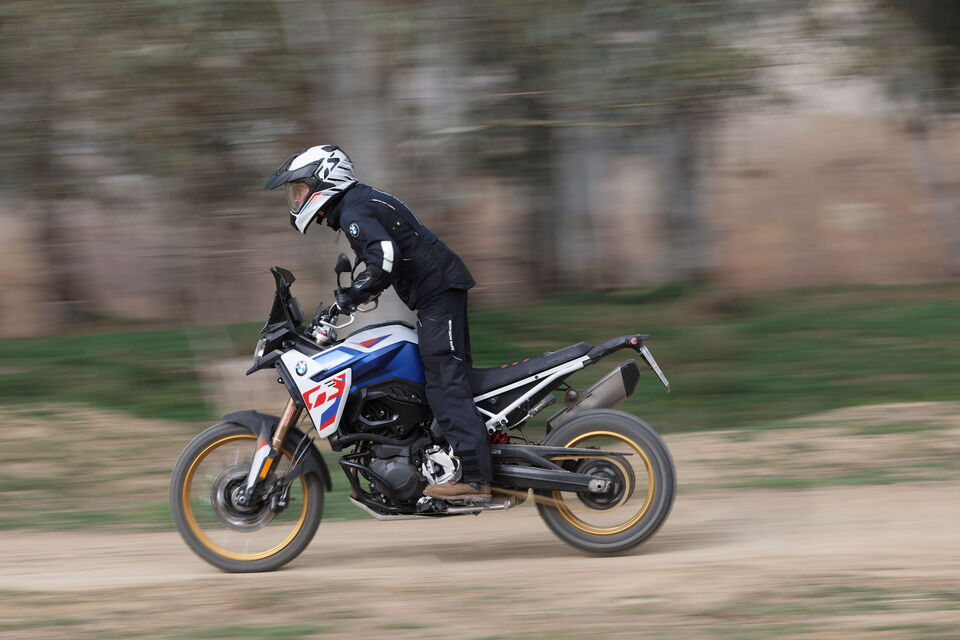
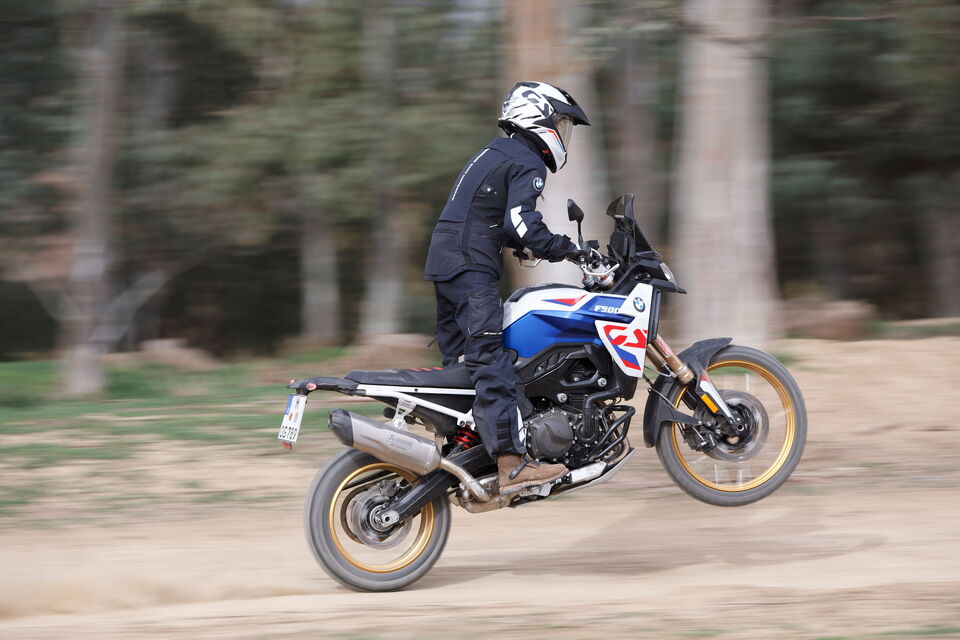
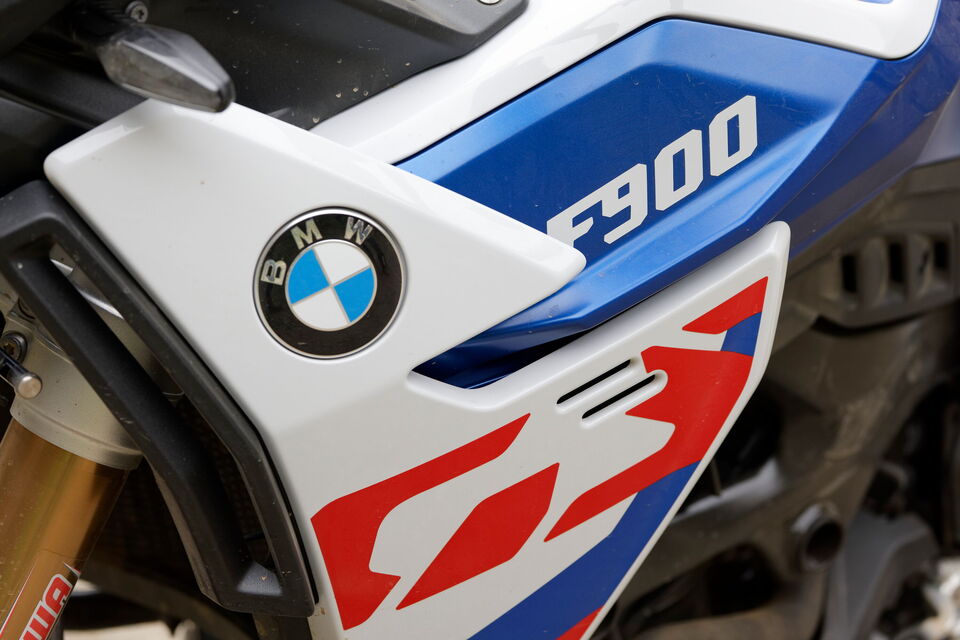
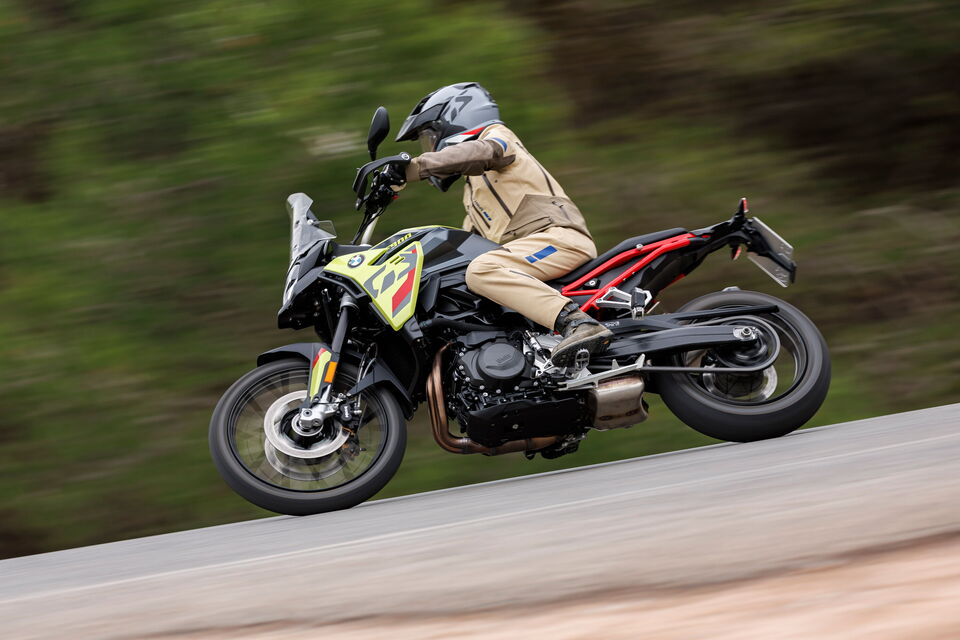
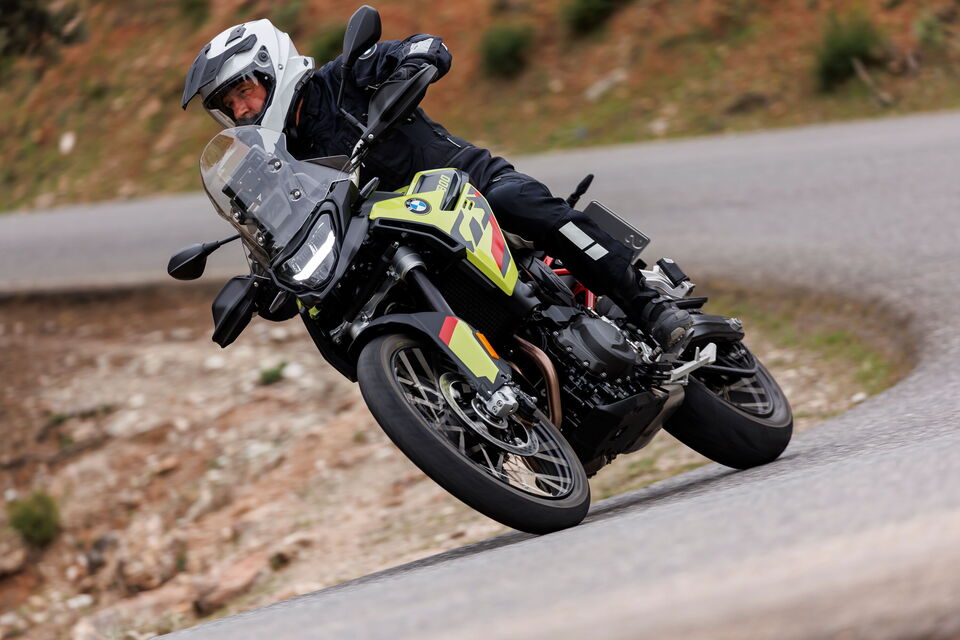
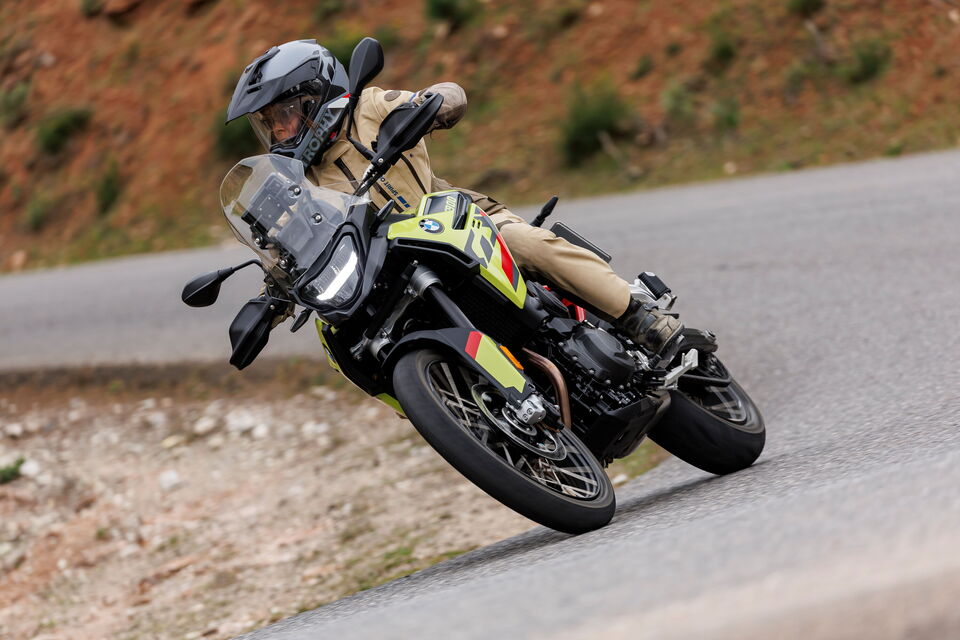
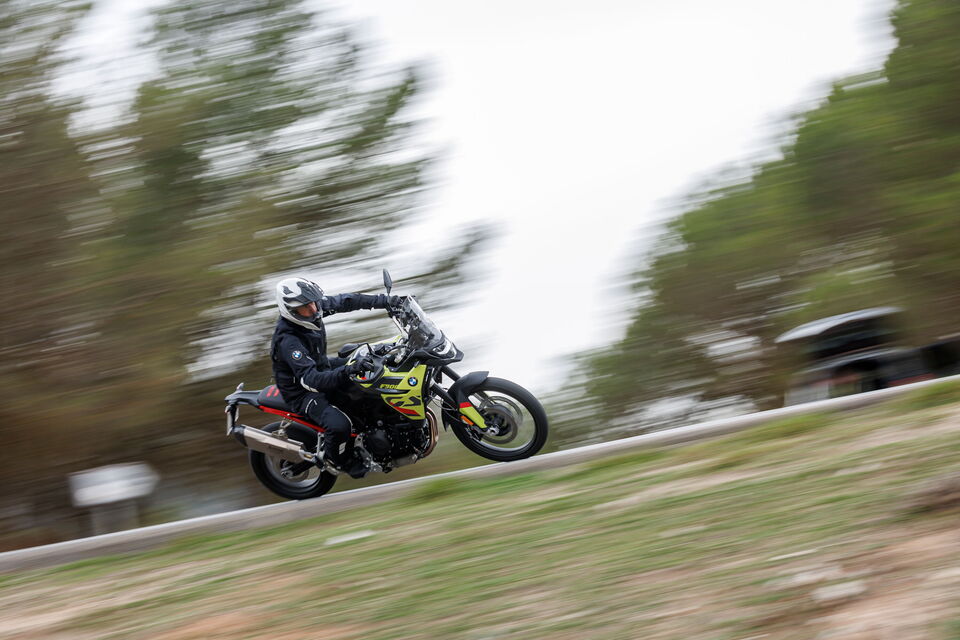
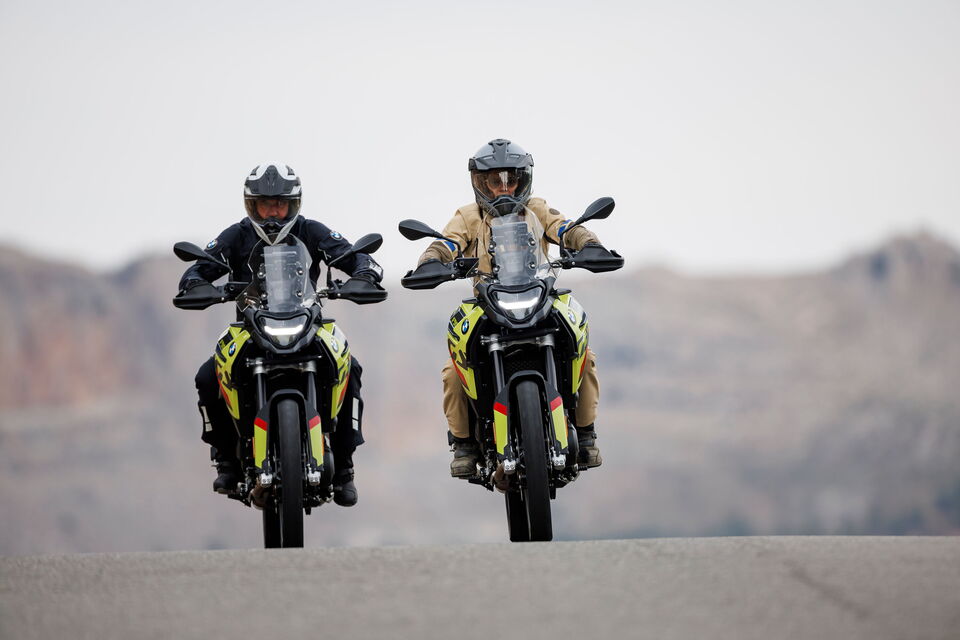
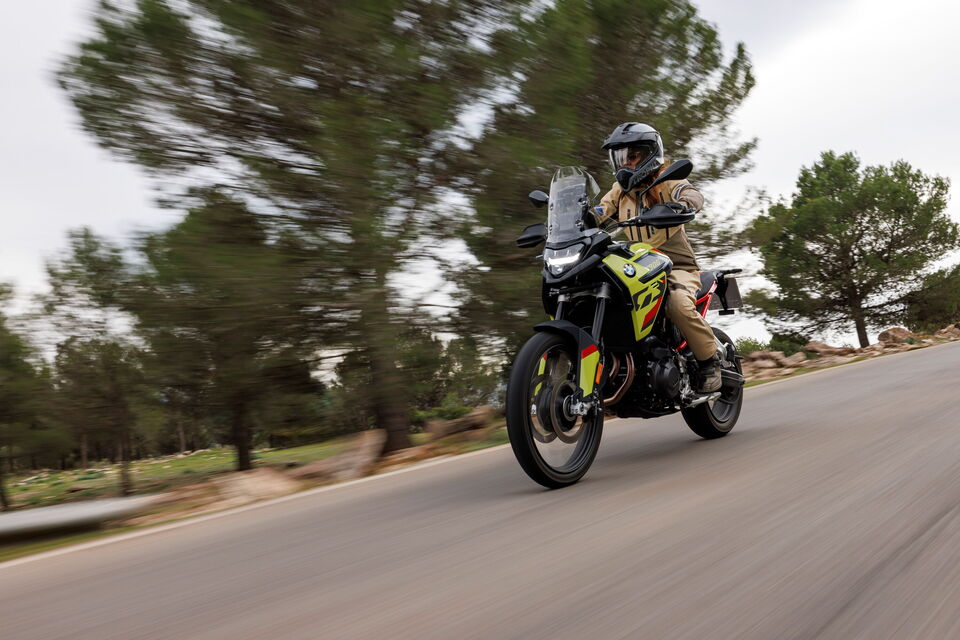
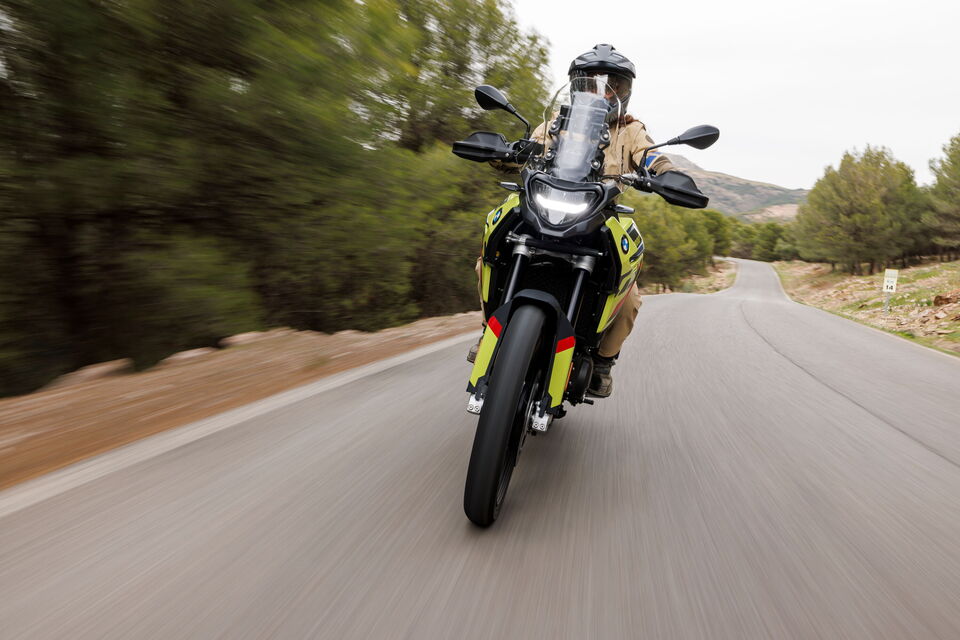
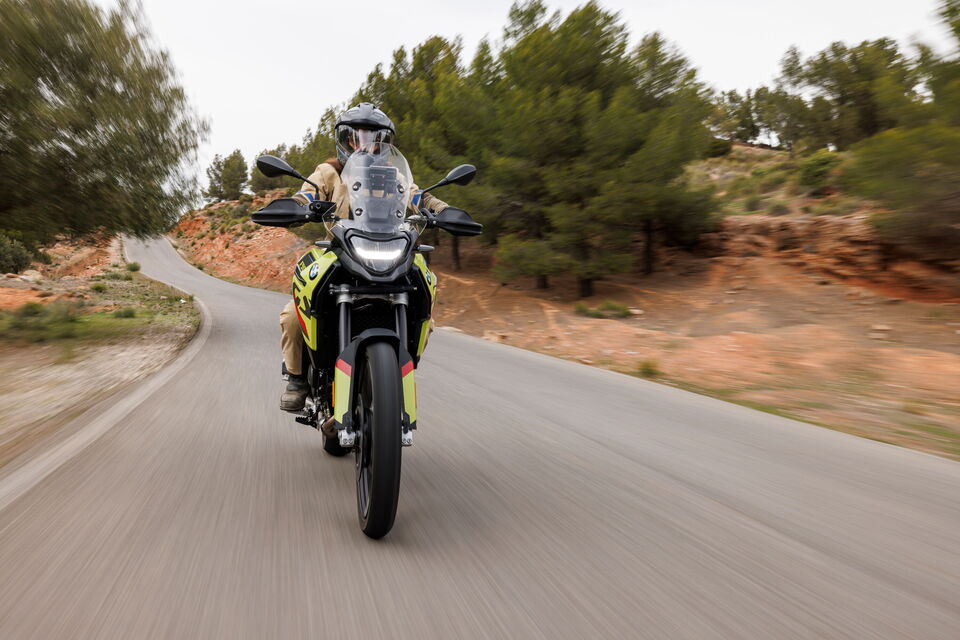
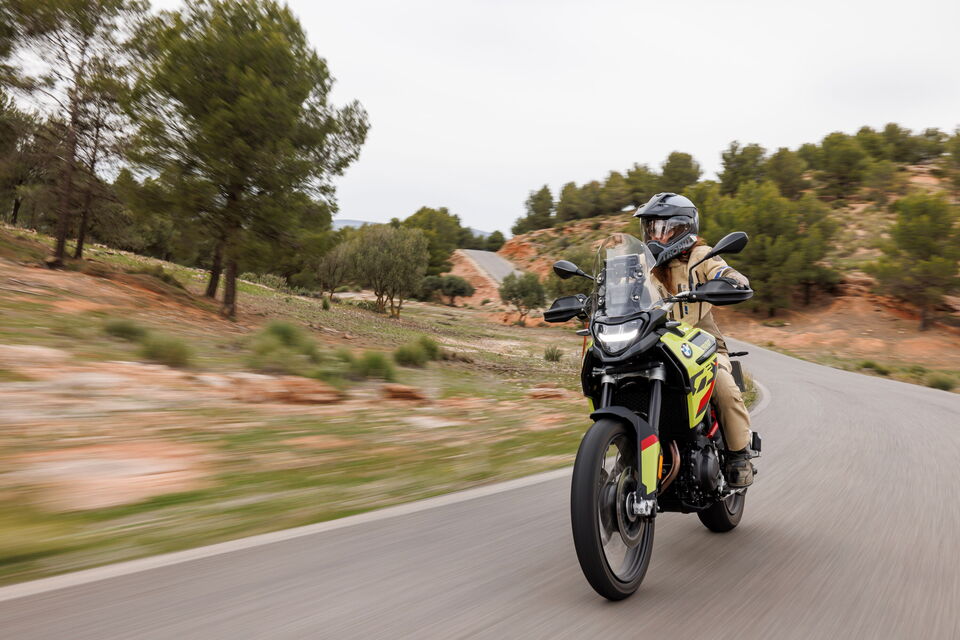
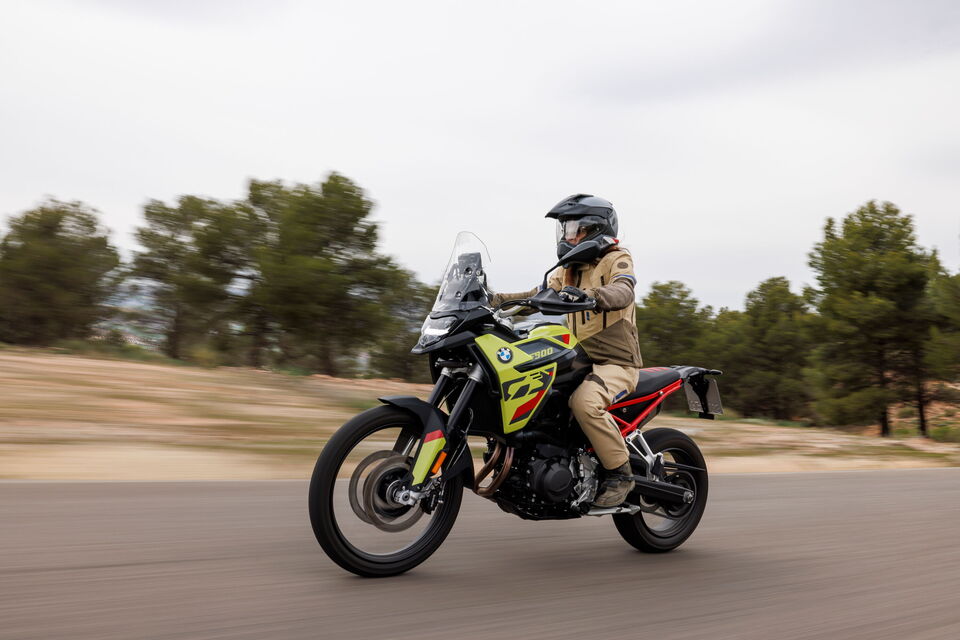
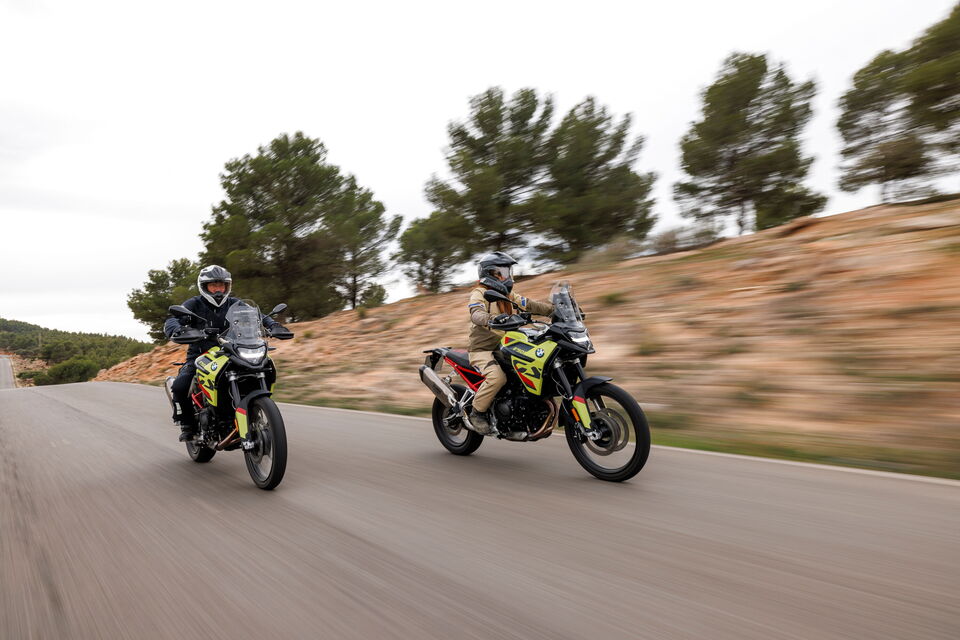
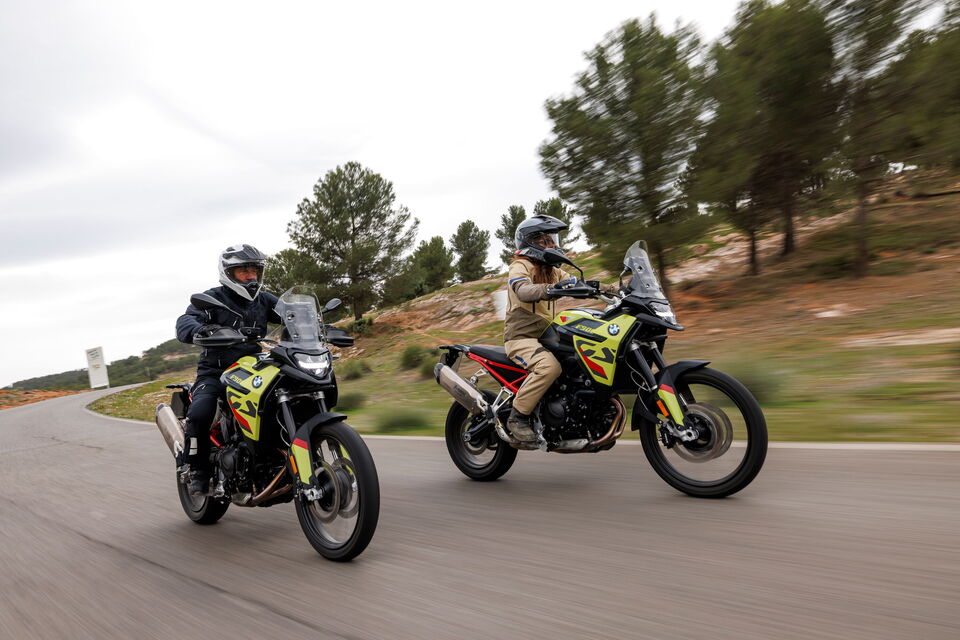
105 hp, 93 Nm, 230 mm of front suspension travel, 215 mm at the rear, adjustable Showa USD fork, 21-inch front wheel, 219 kg—and €13,750. Since 2024, the BMW F 900 GS has been a fundamentally different motorcycle from its predecessor. Fourteen kilograms lighter, 10 hp stronger, and with genuine off-road capability. This test reveals what BMW’s middleweight F-series GS can really do.
As of: March 17, 2026 | Tested model: BMW F 900 GS (2026) | Price from: €13,750
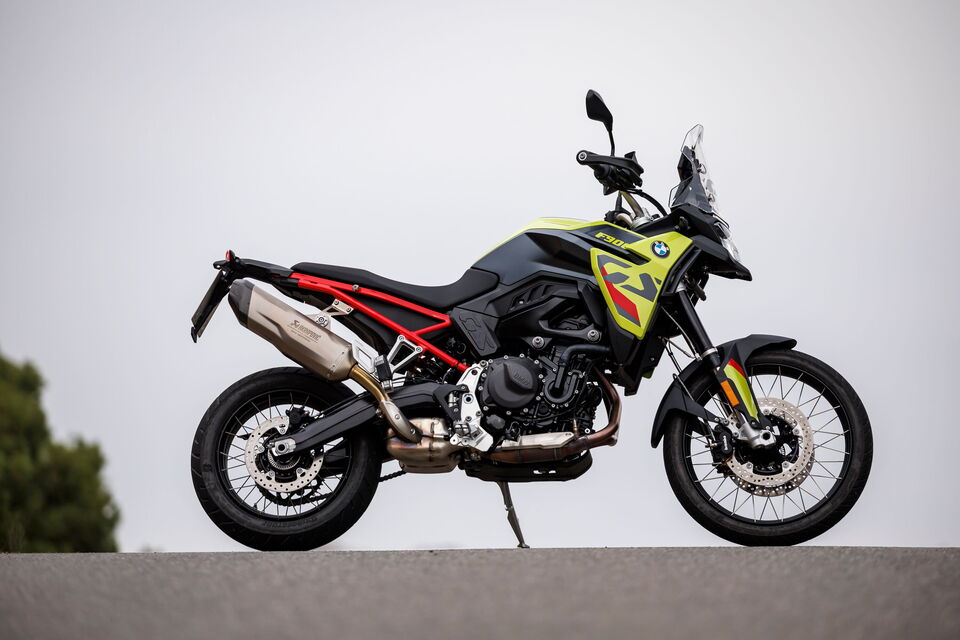
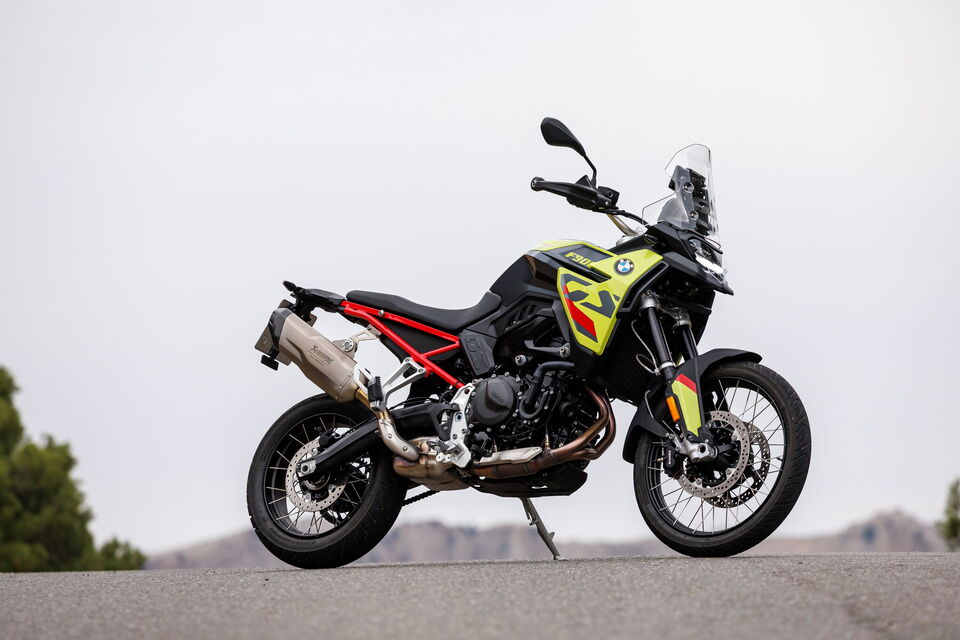
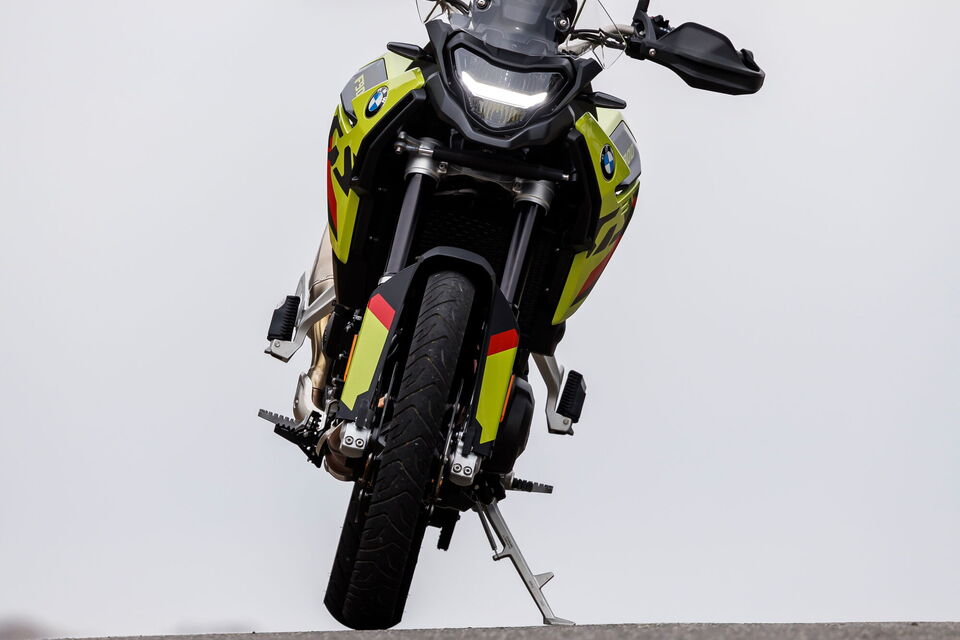
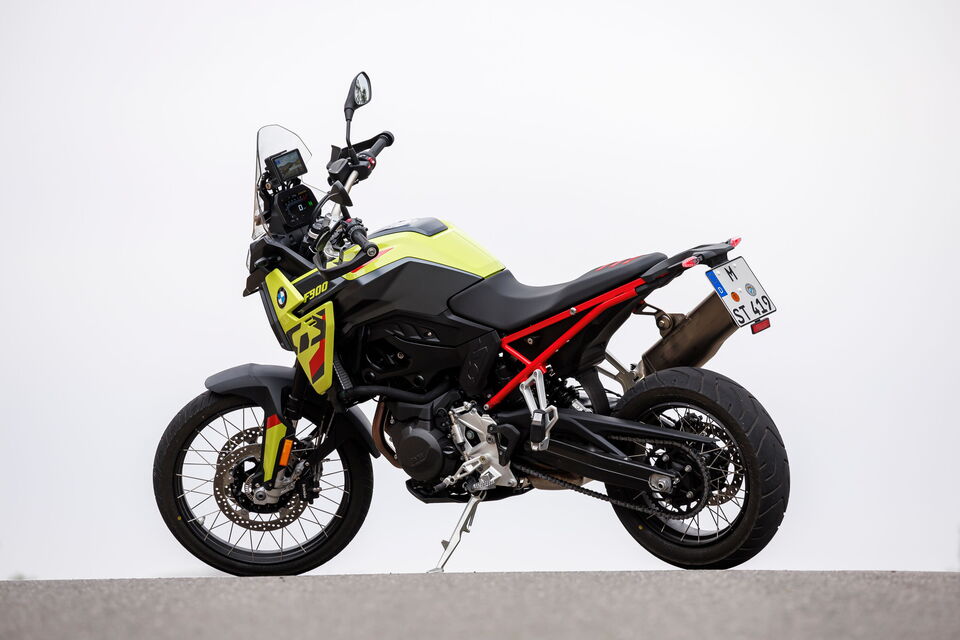
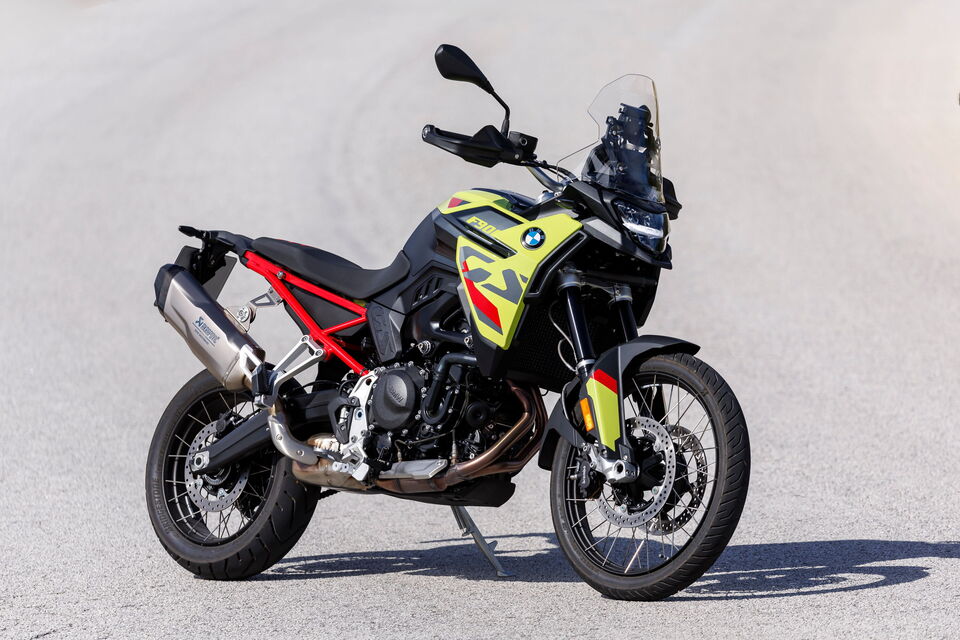
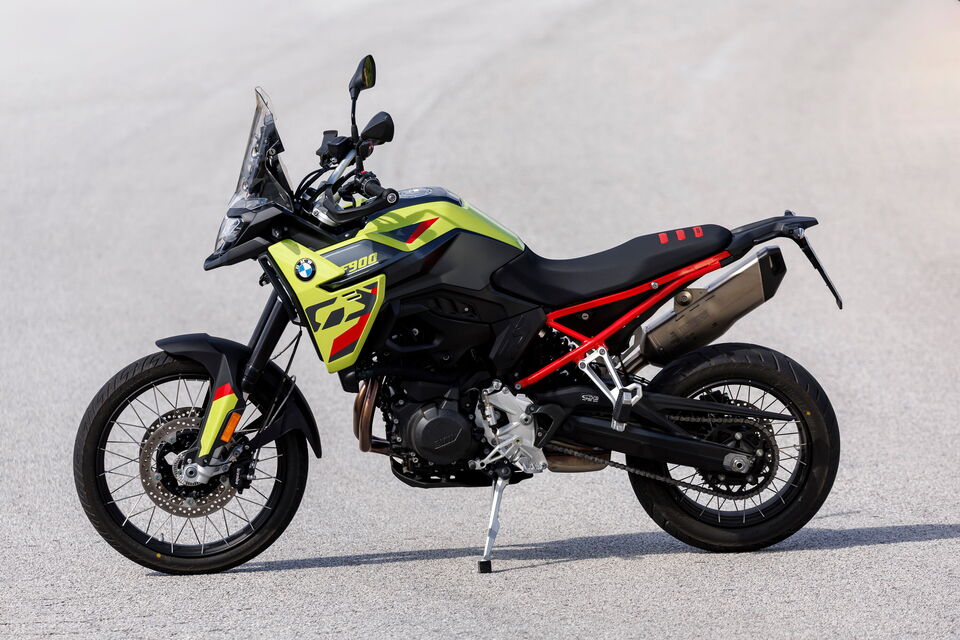
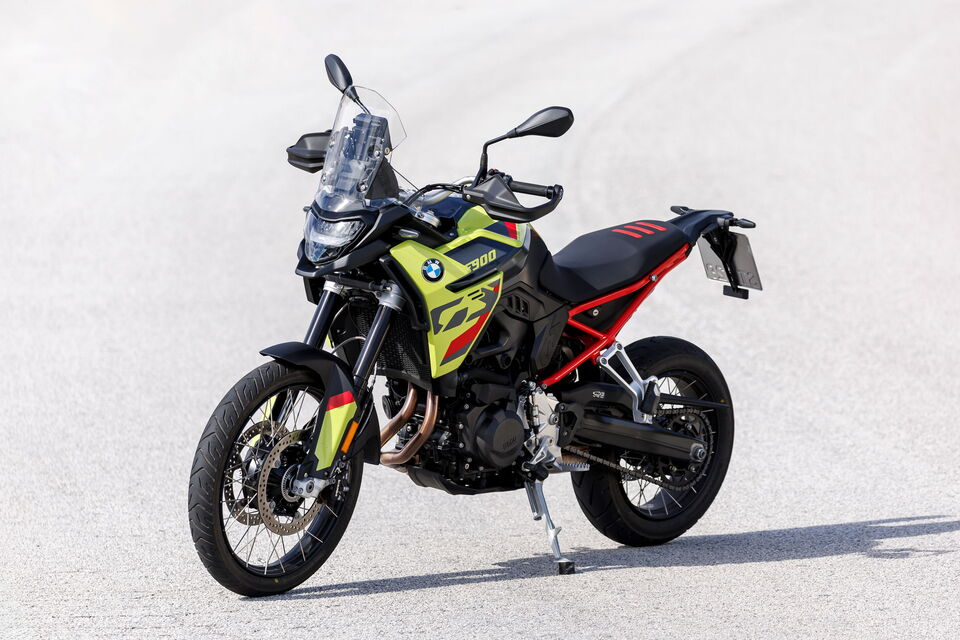
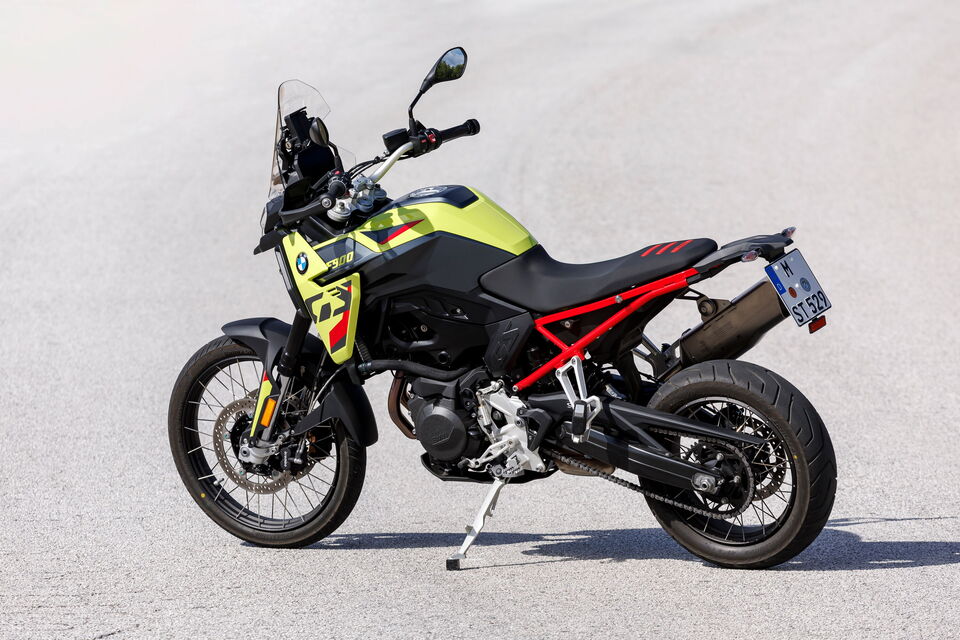











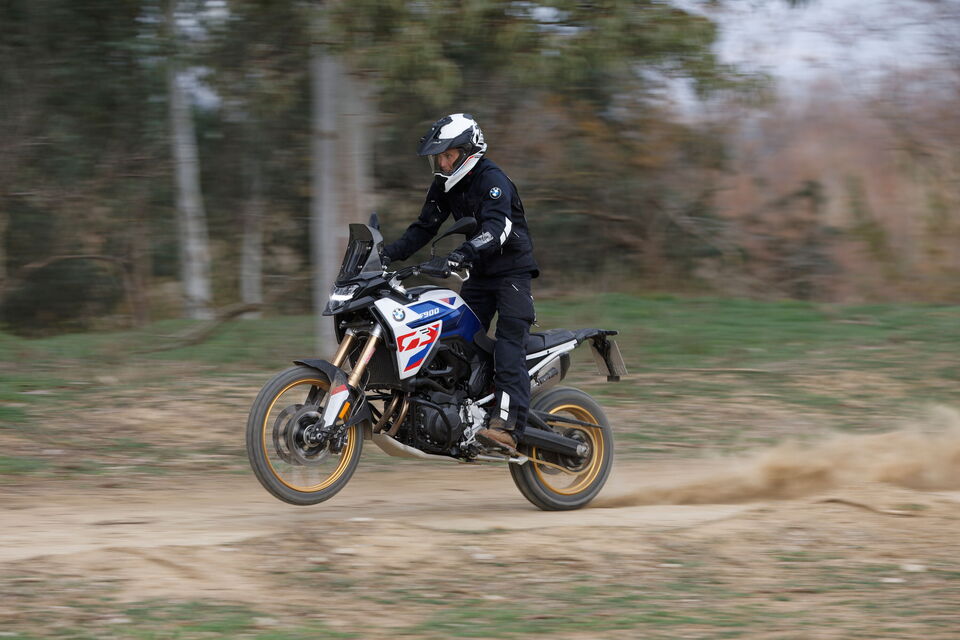
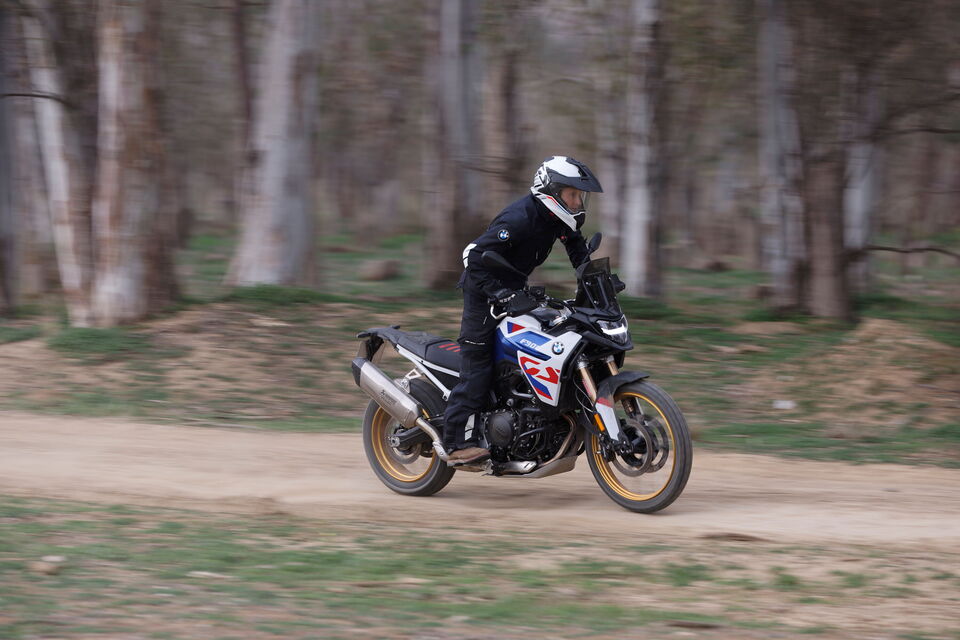
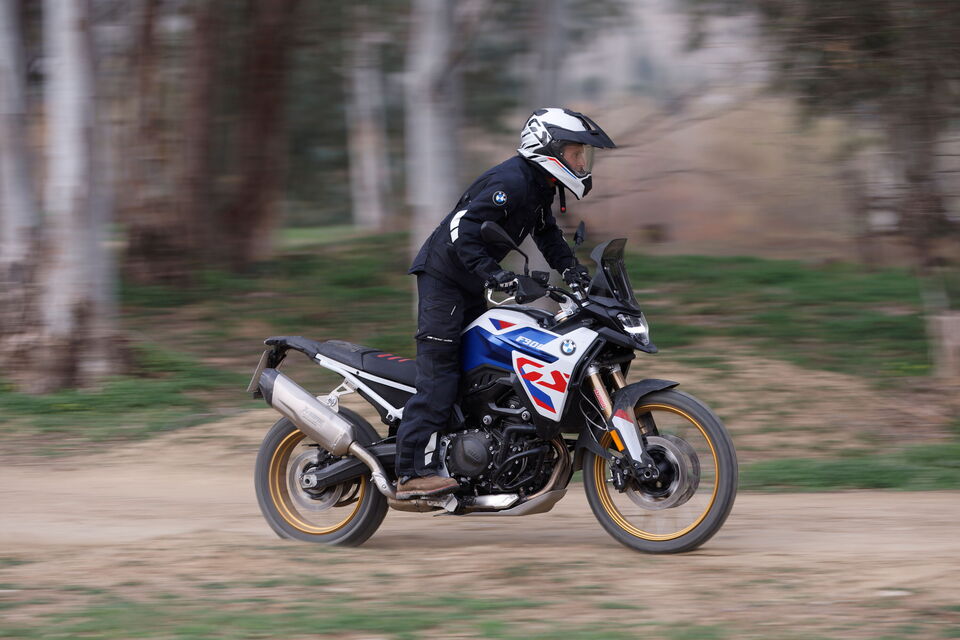
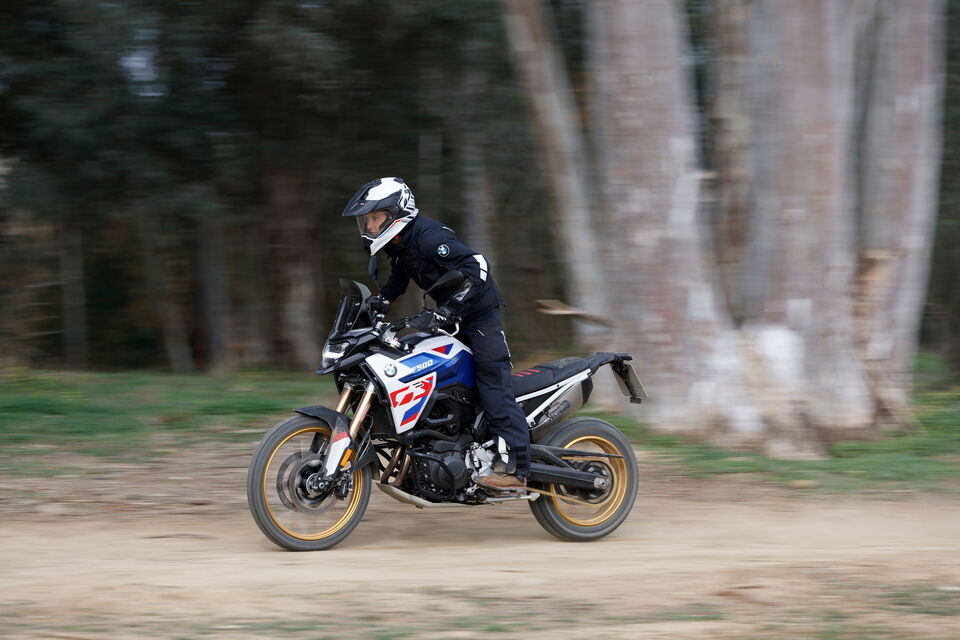

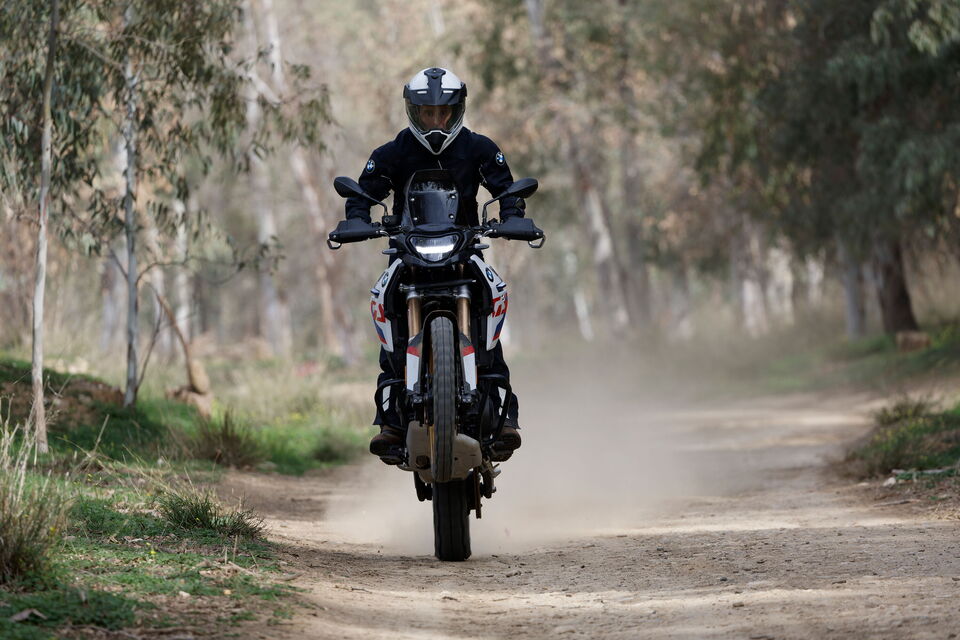
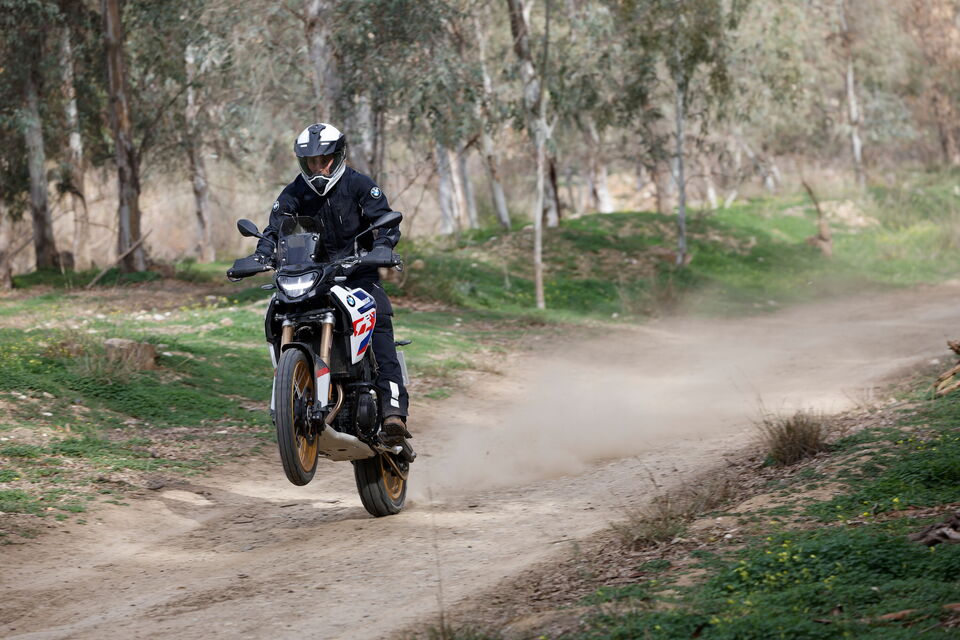
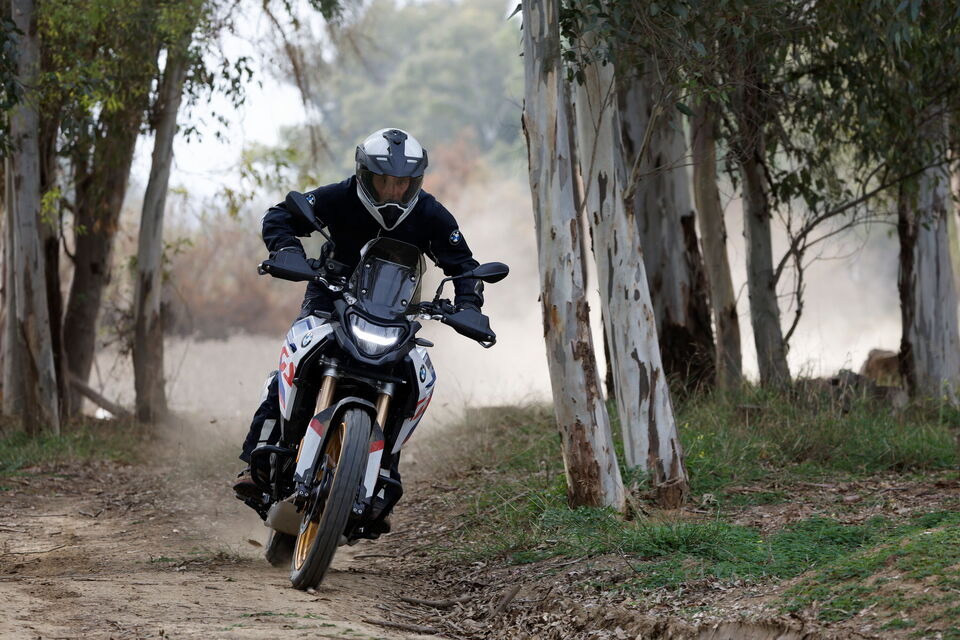
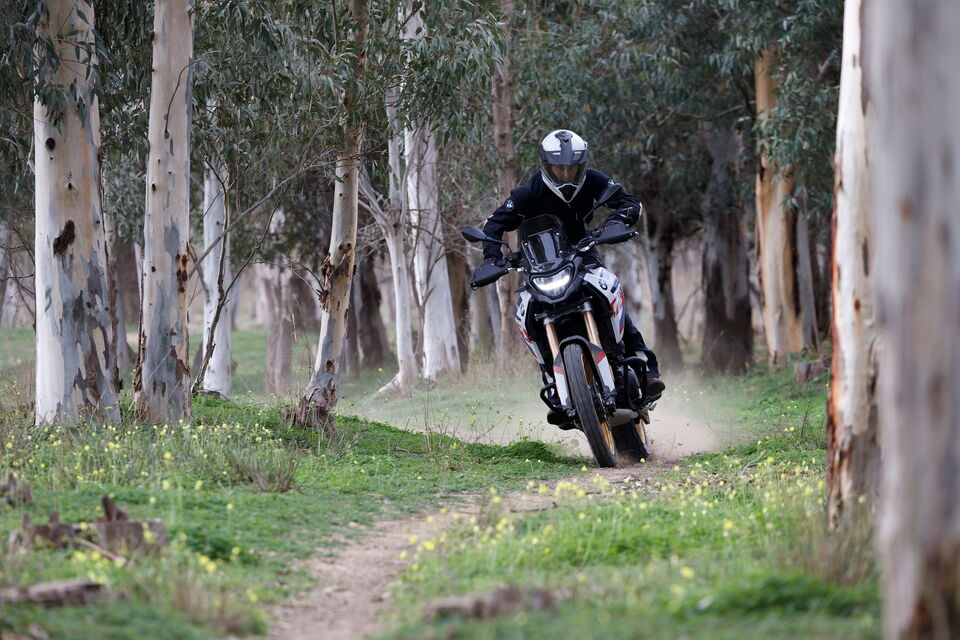

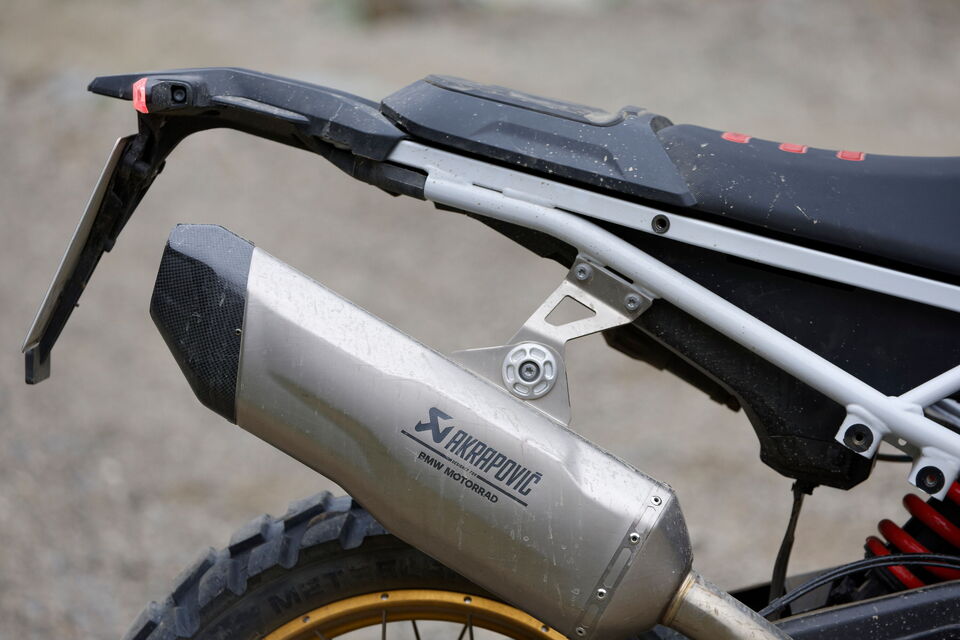
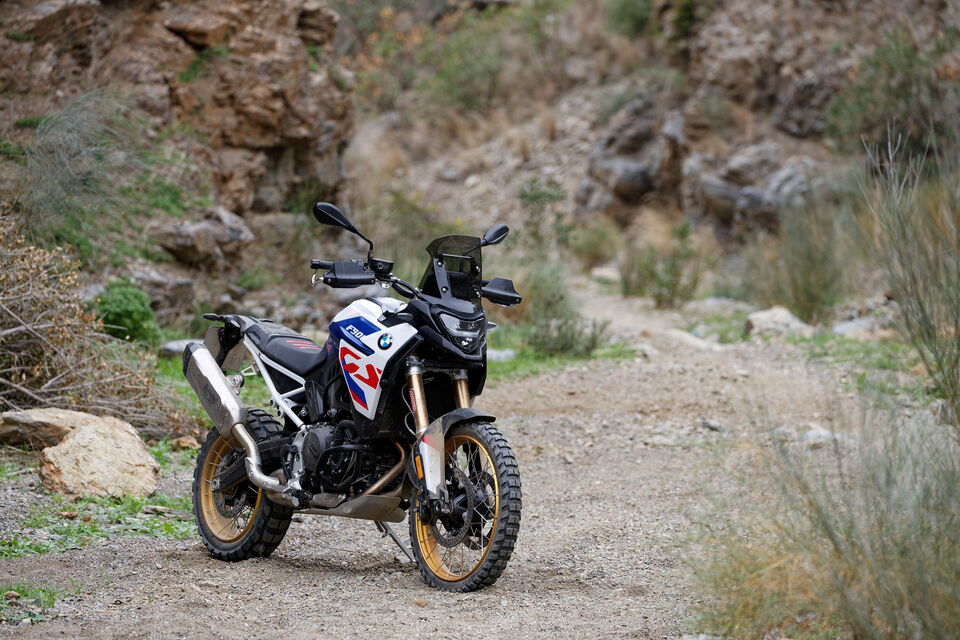
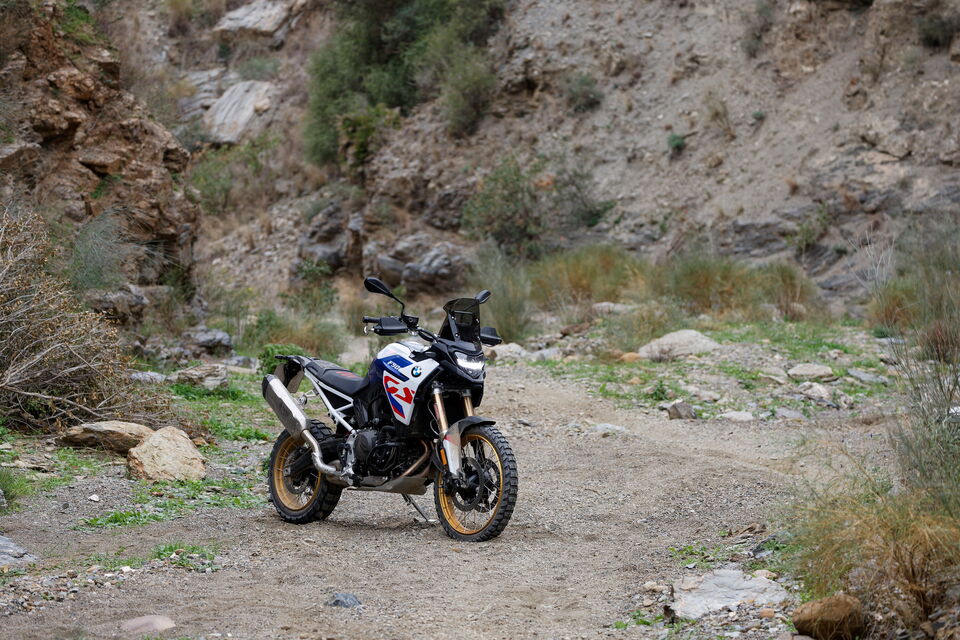
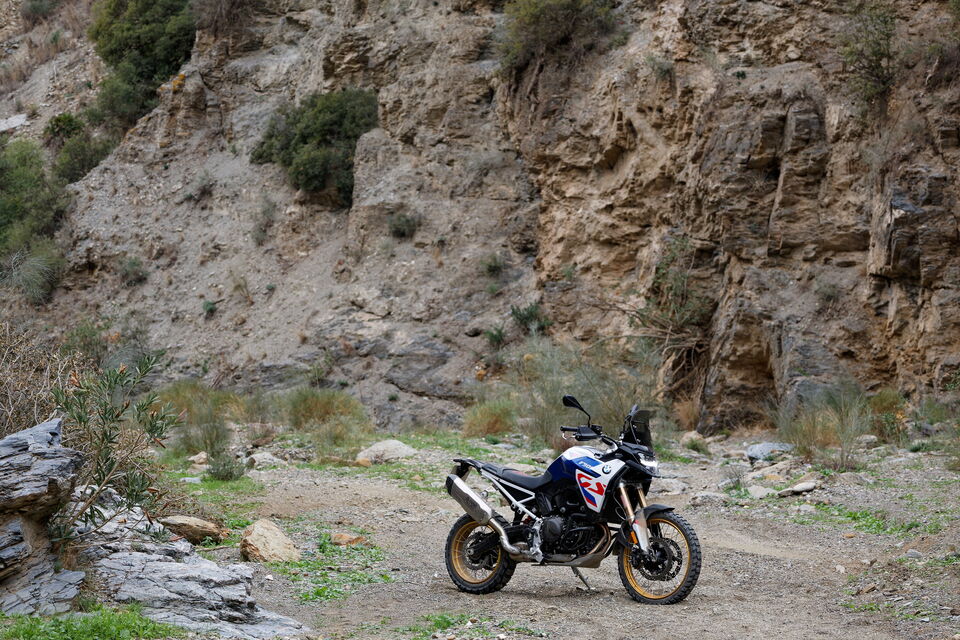
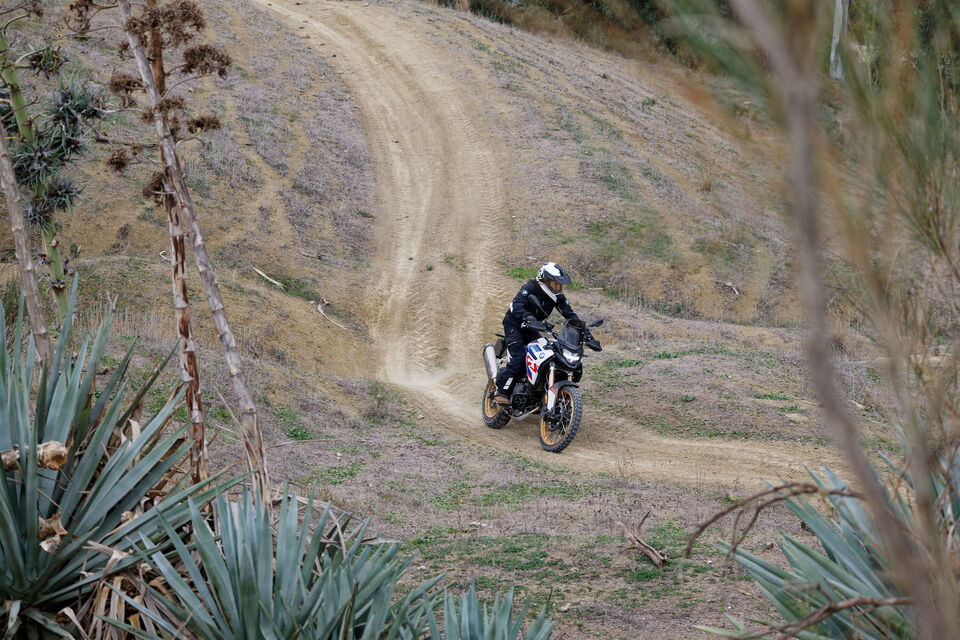
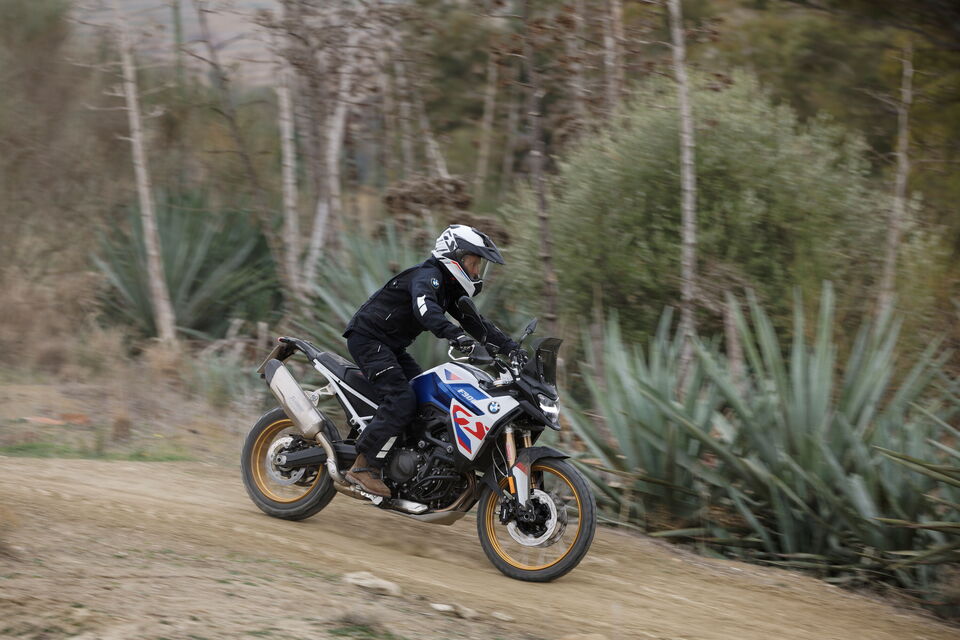
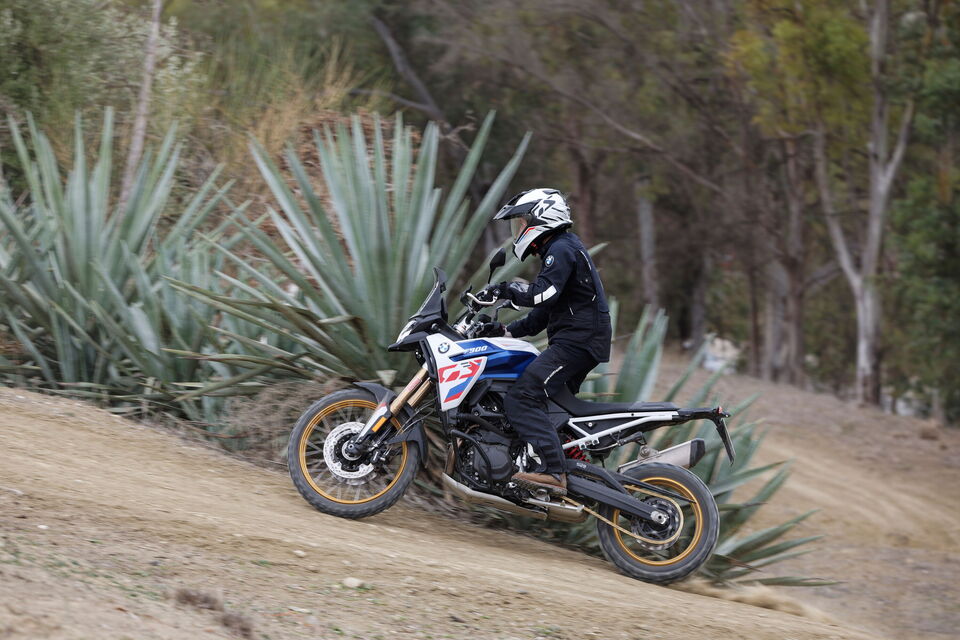
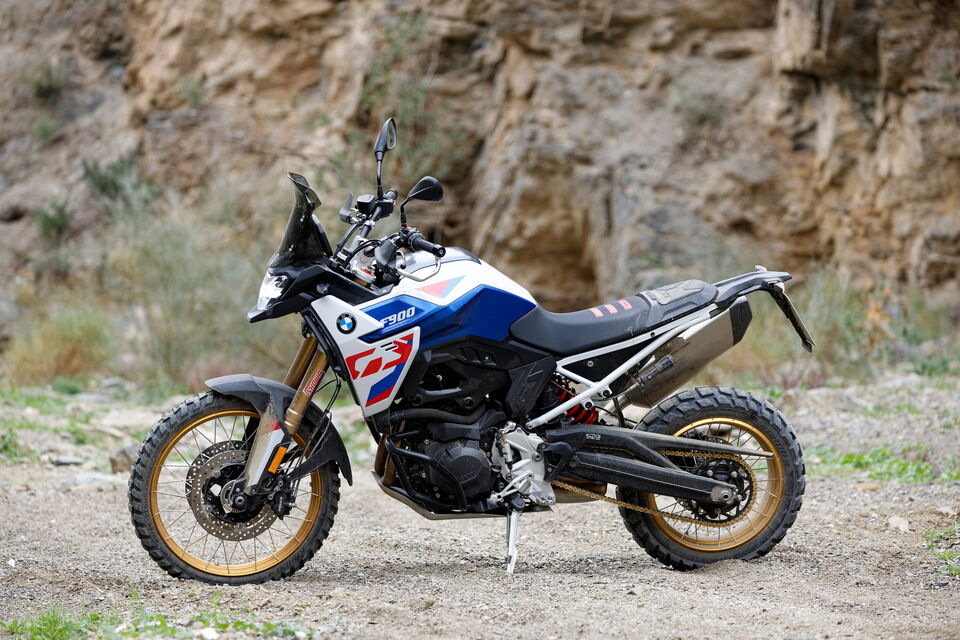
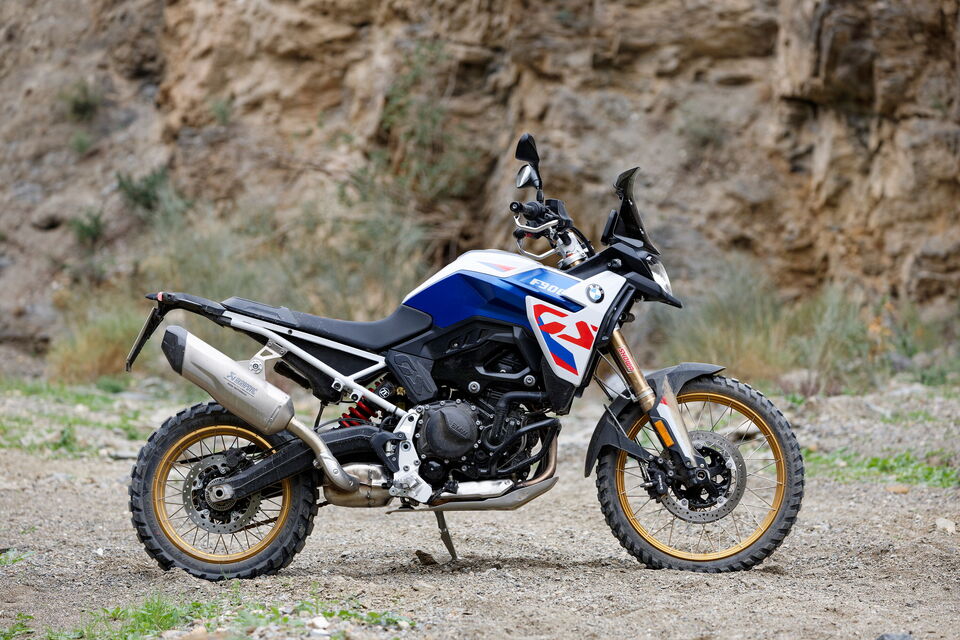
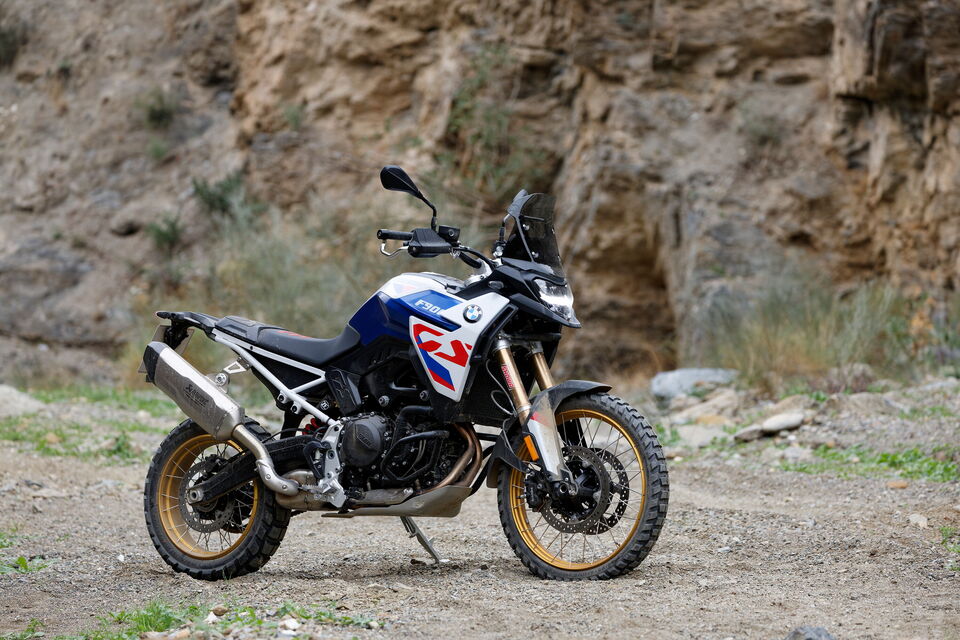
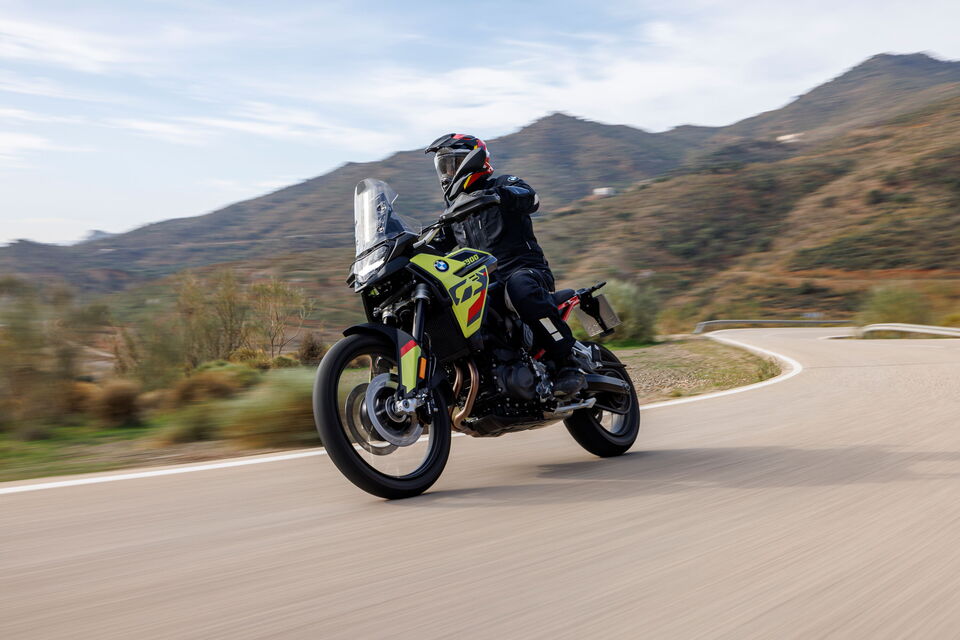
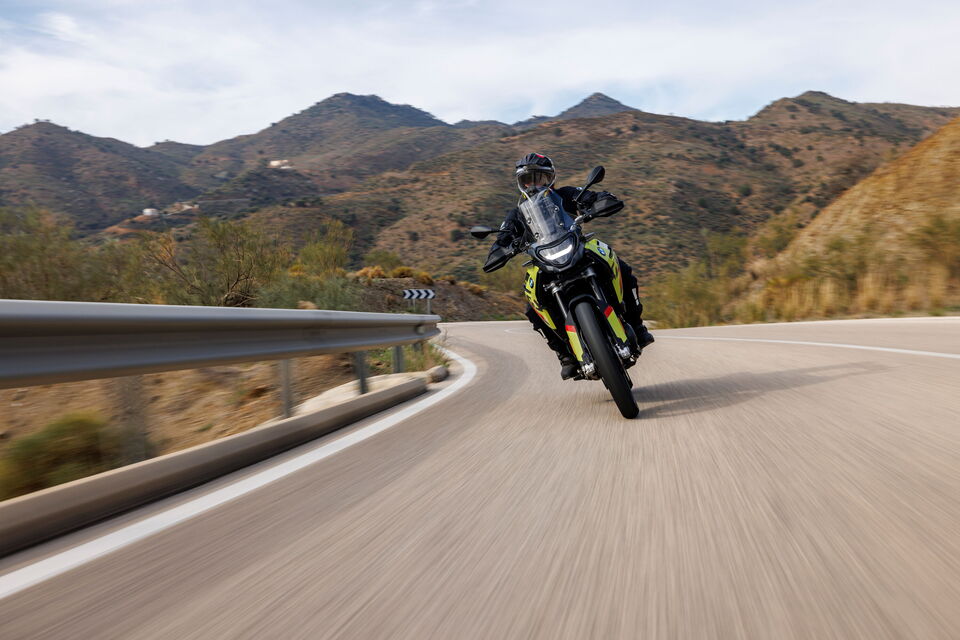
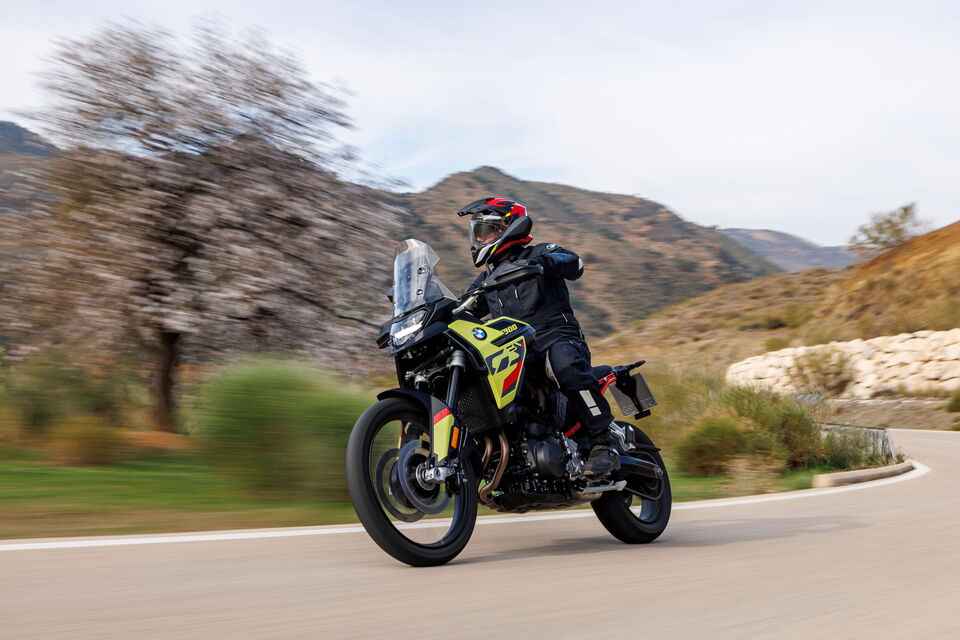
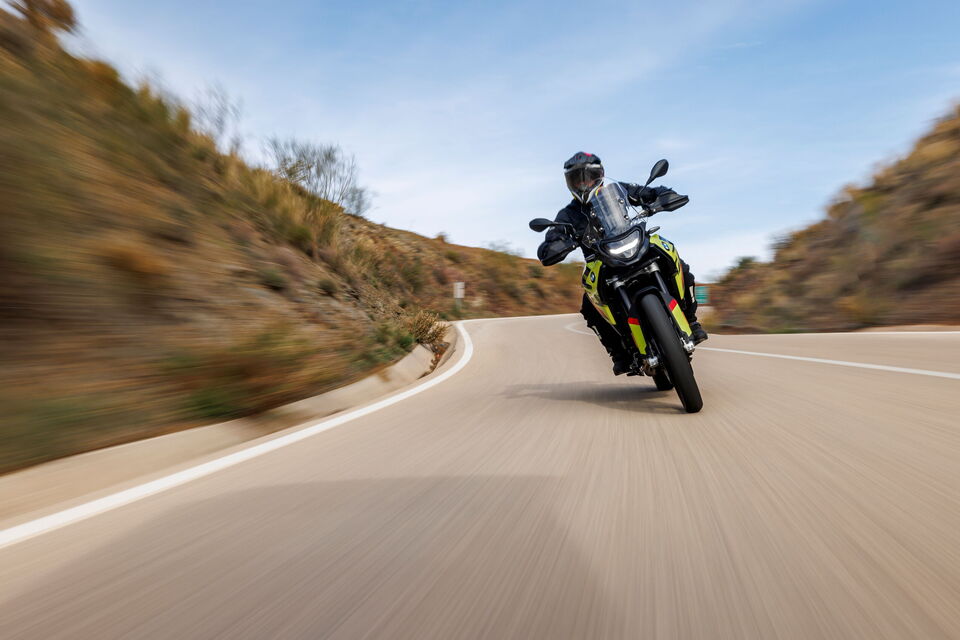
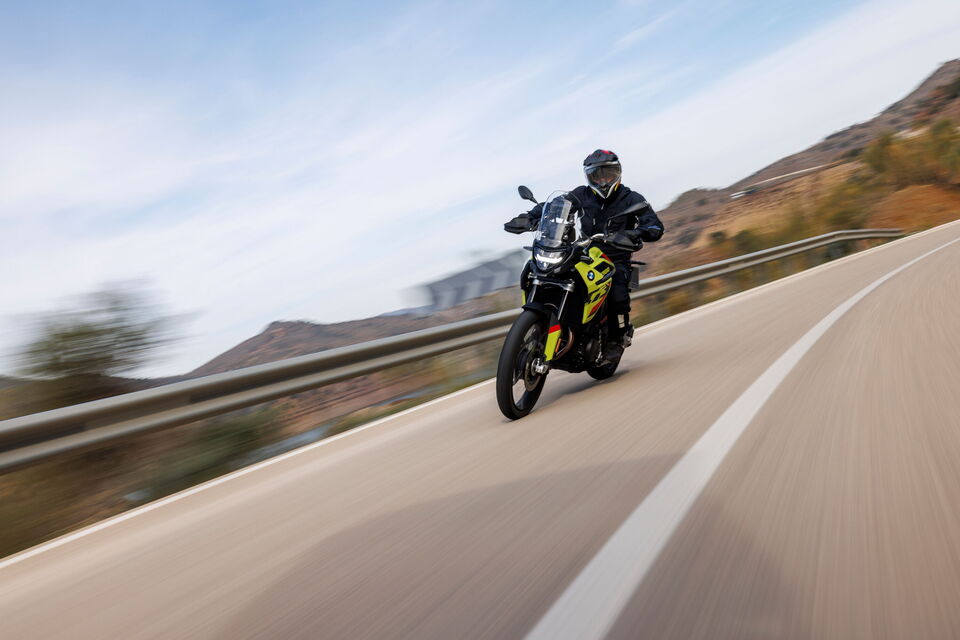
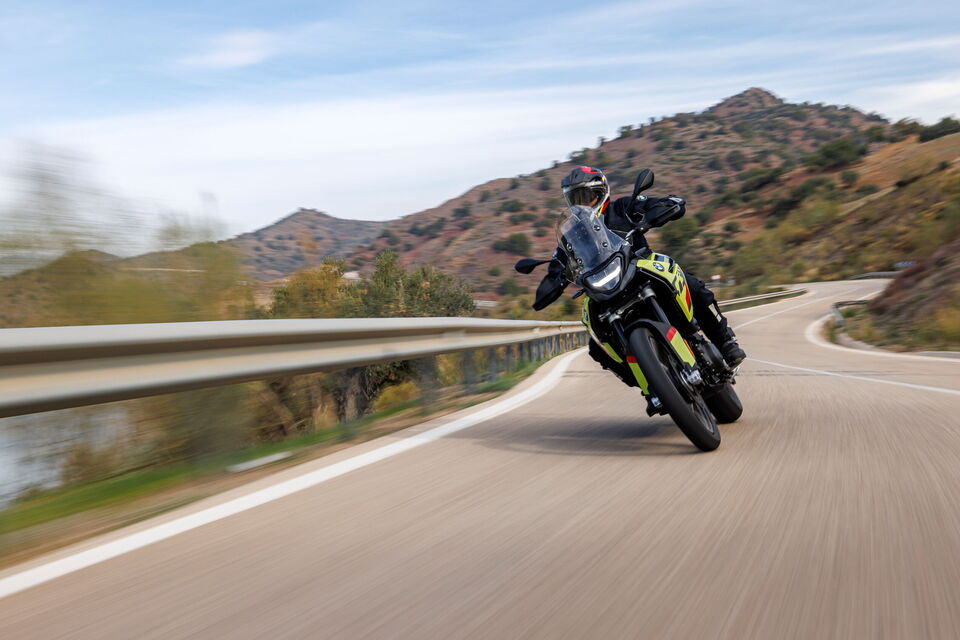
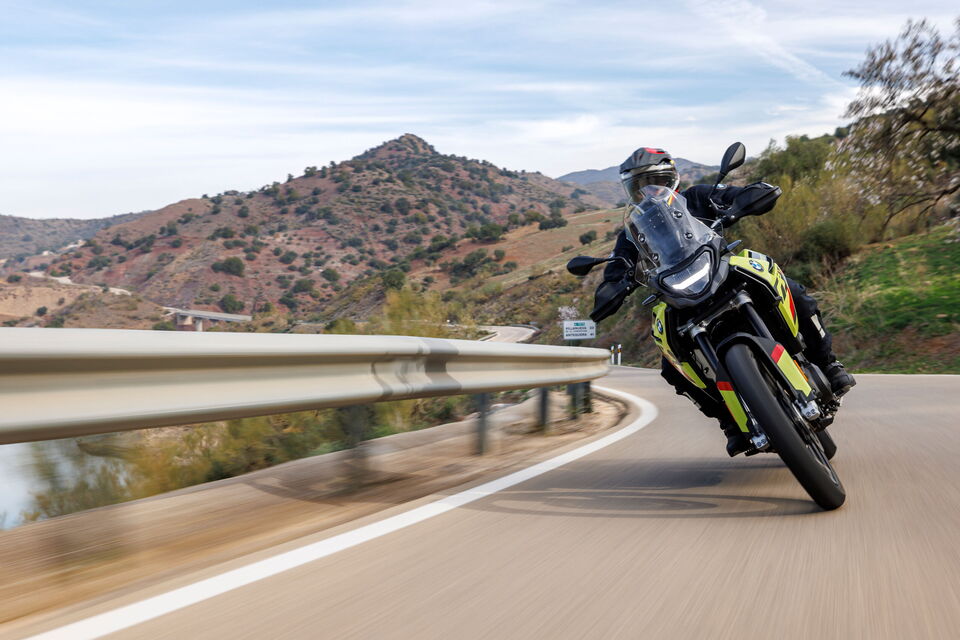
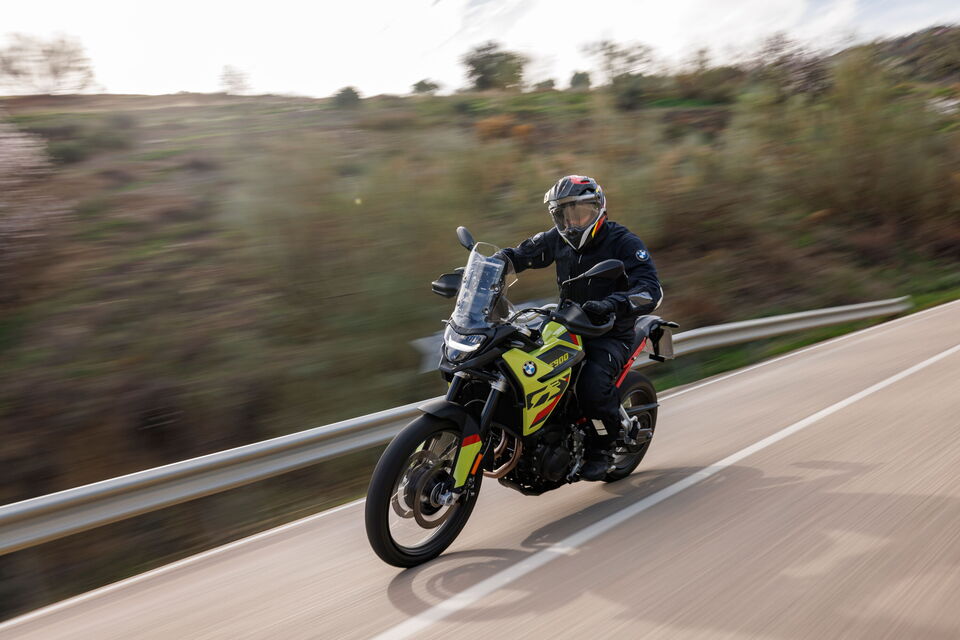
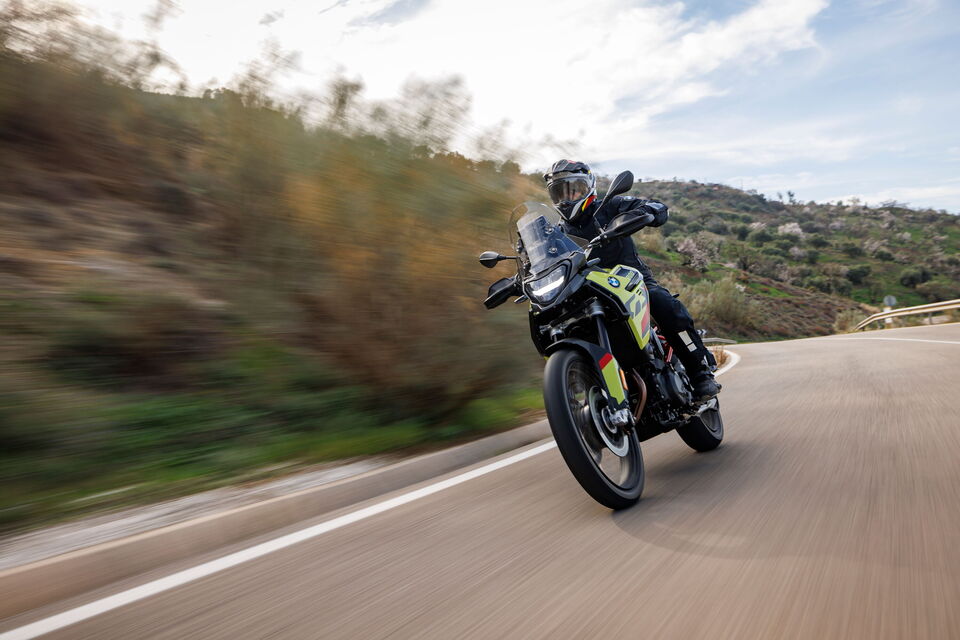
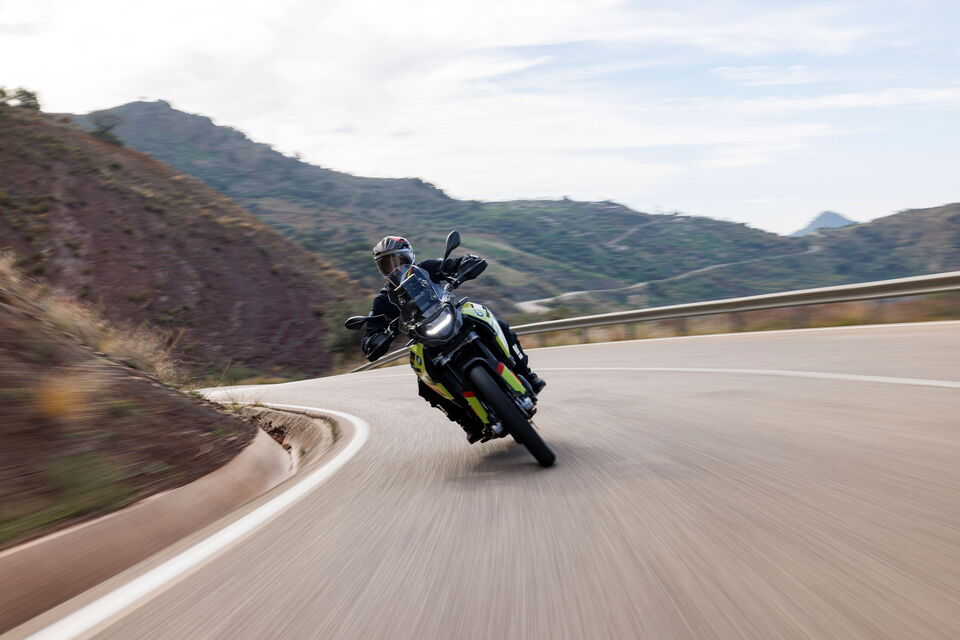
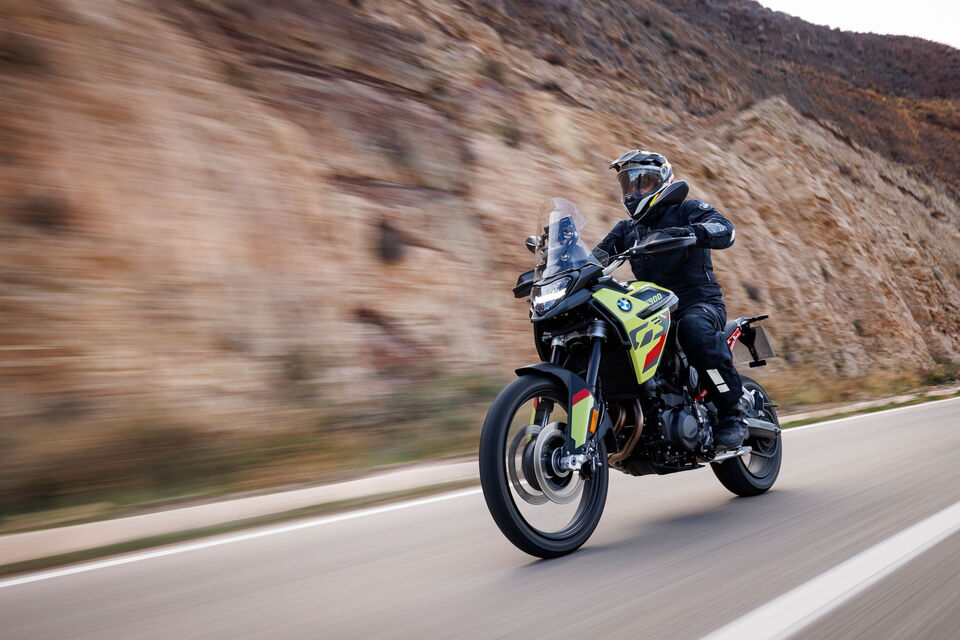
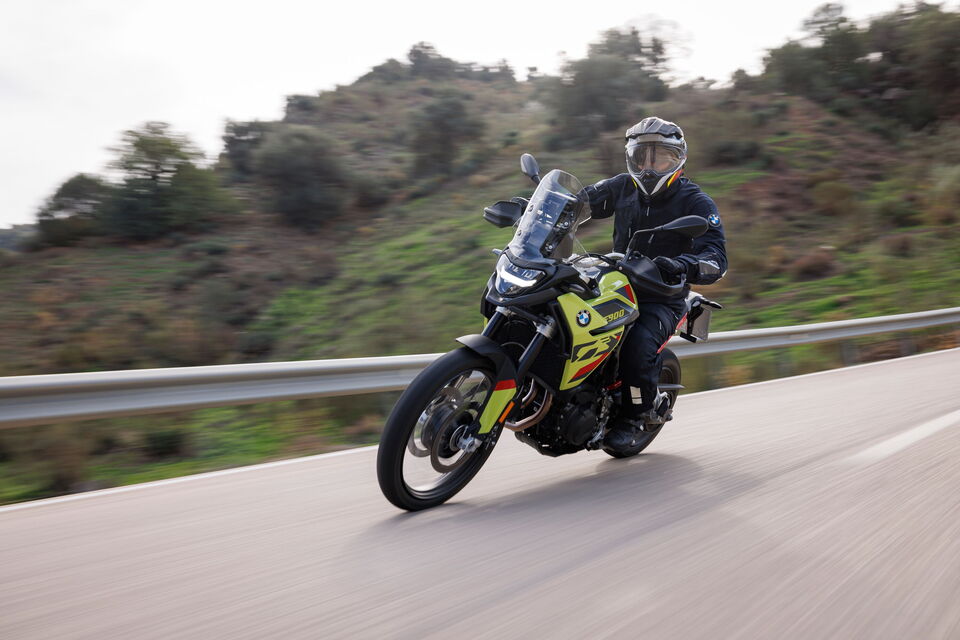
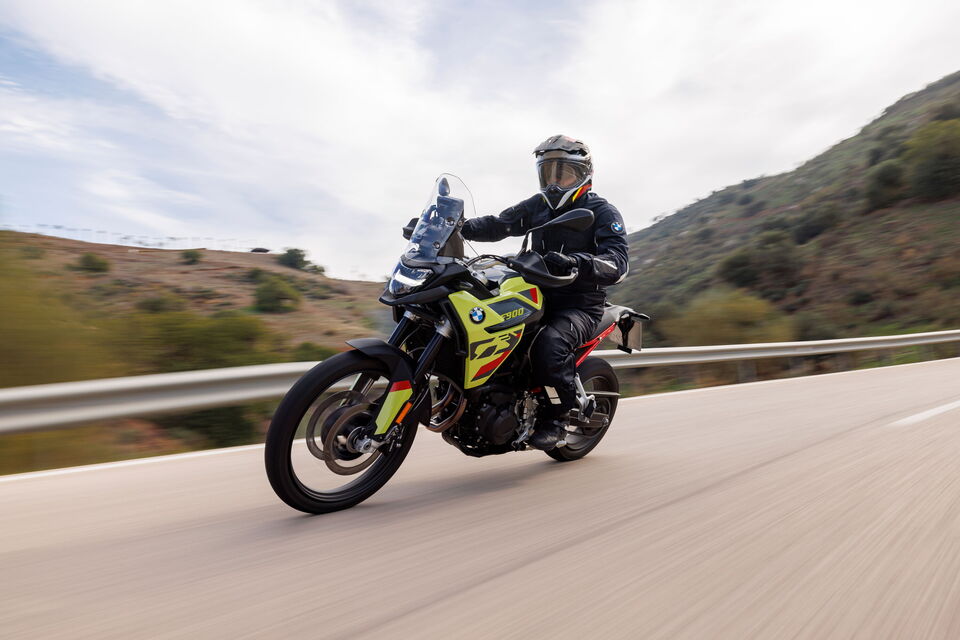
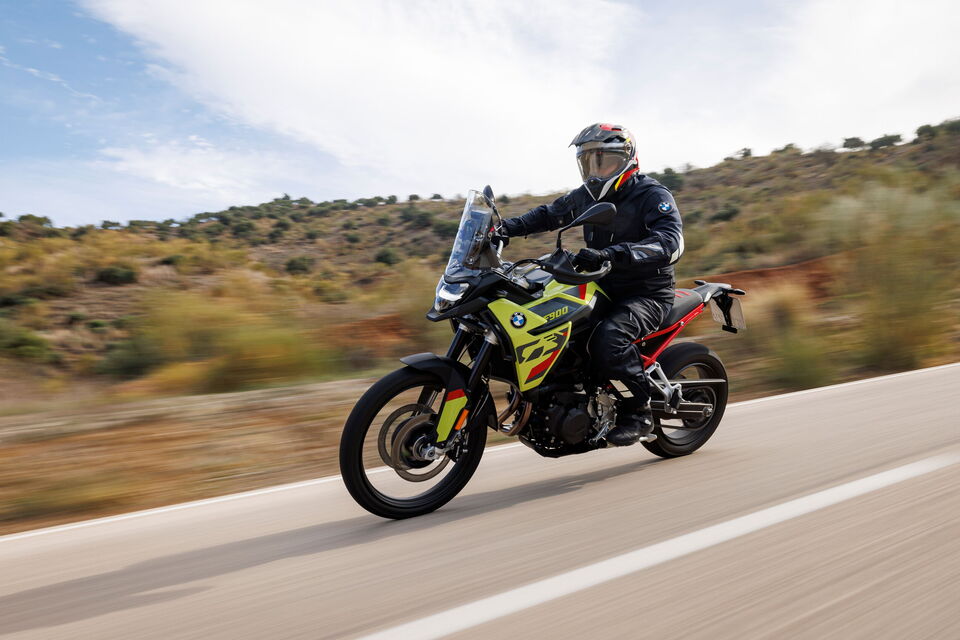

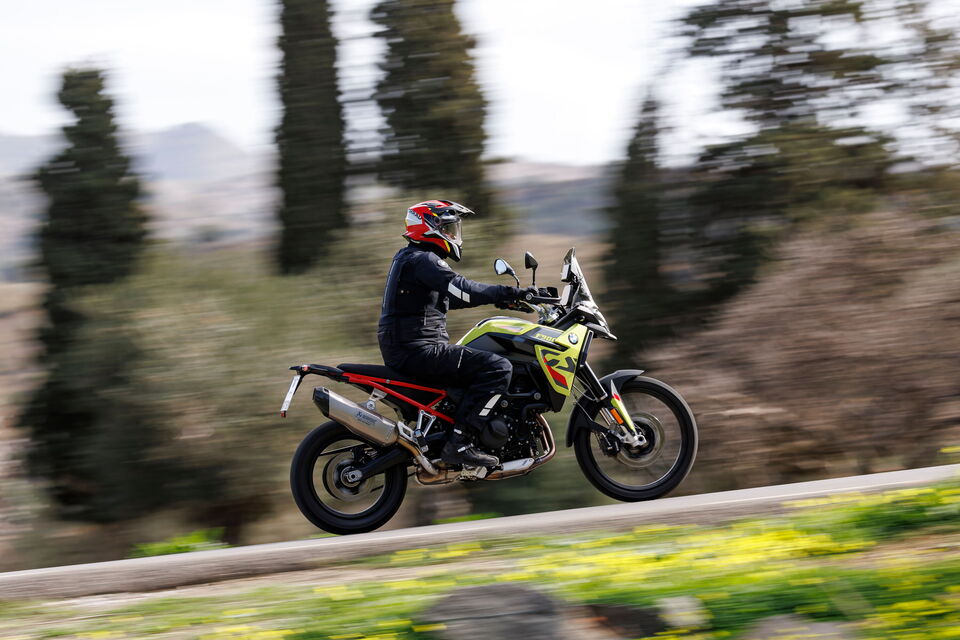
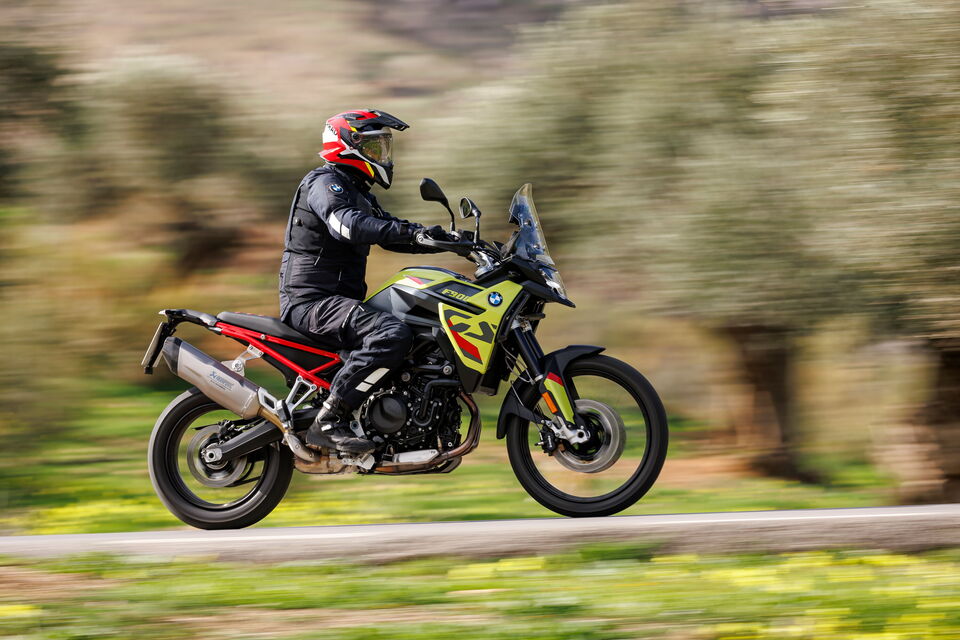
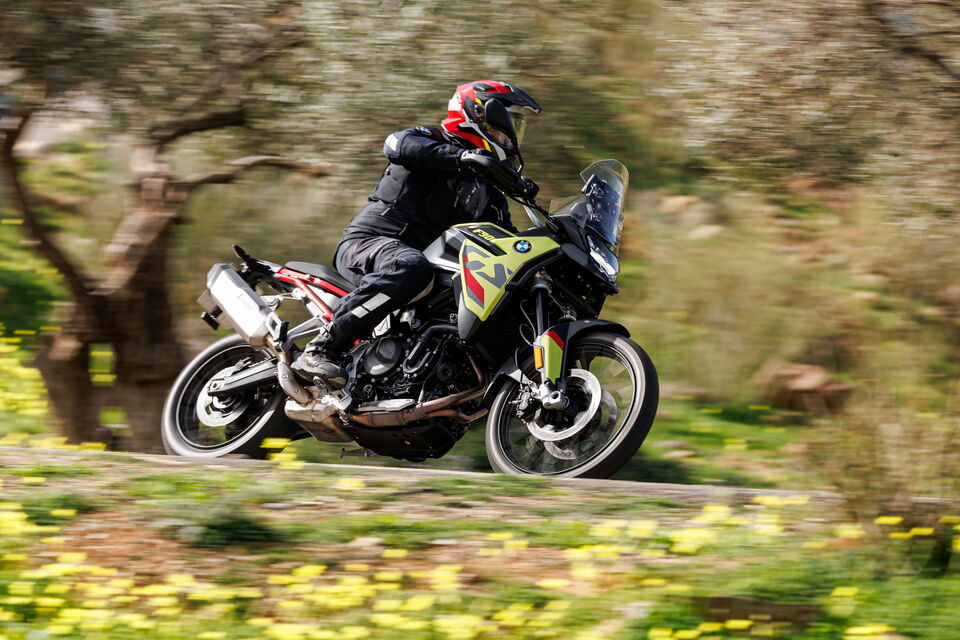
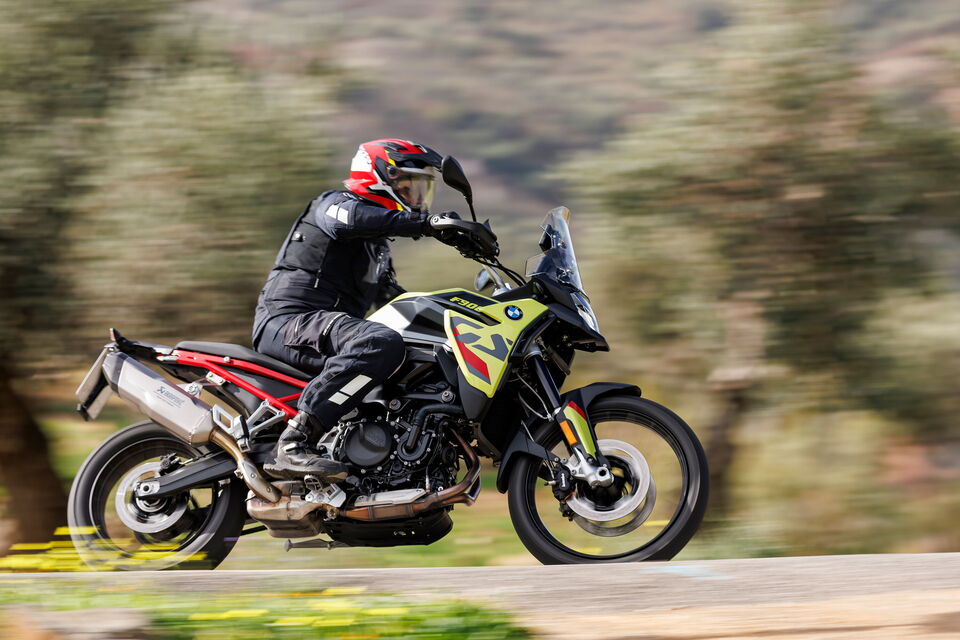
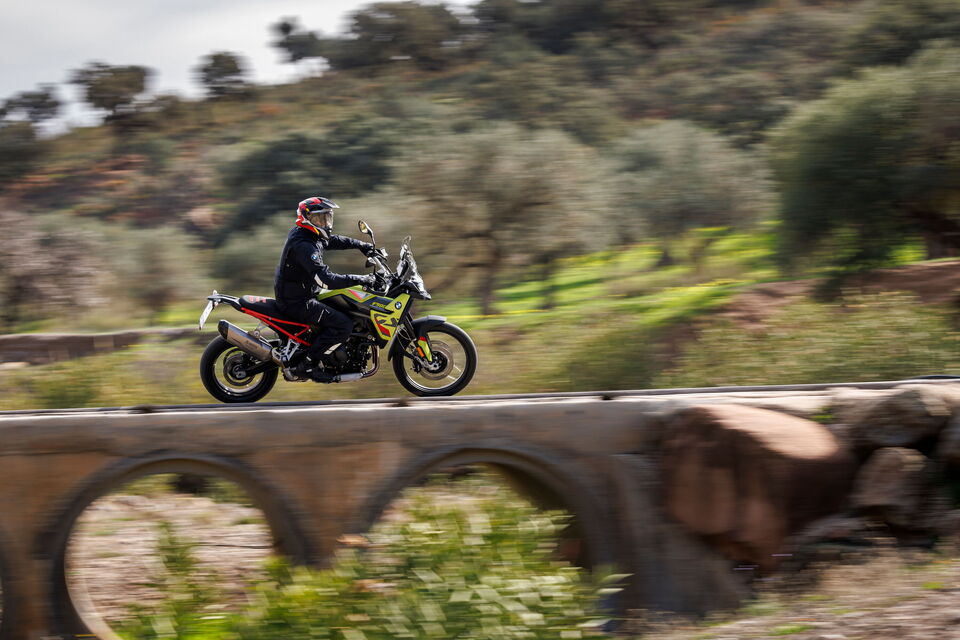
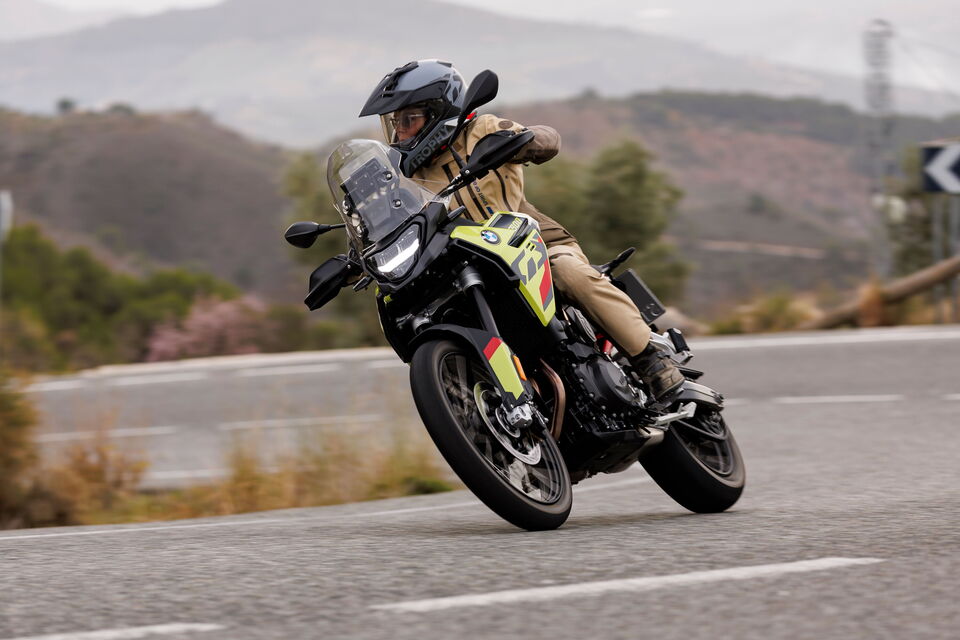
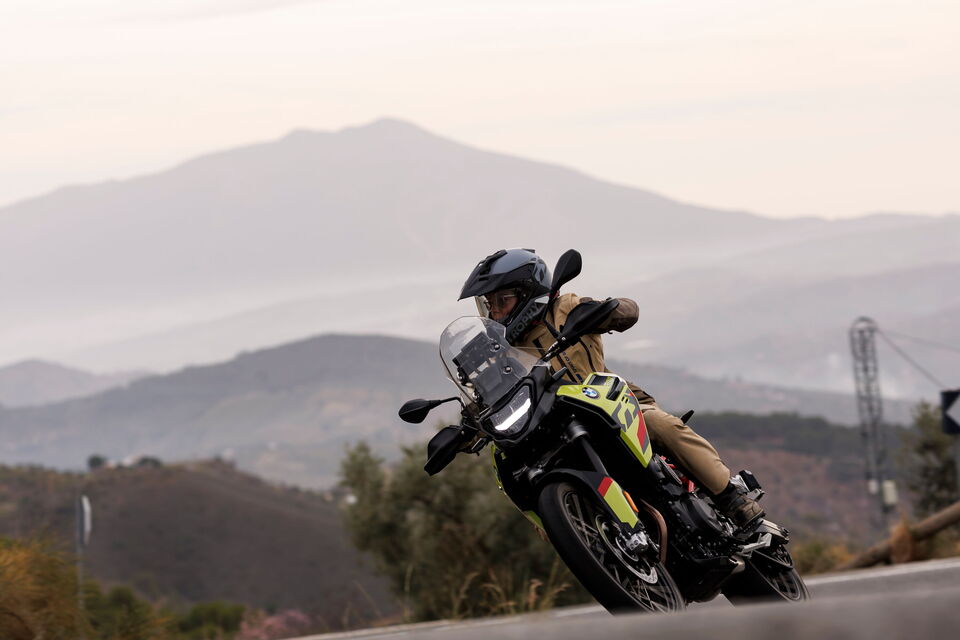
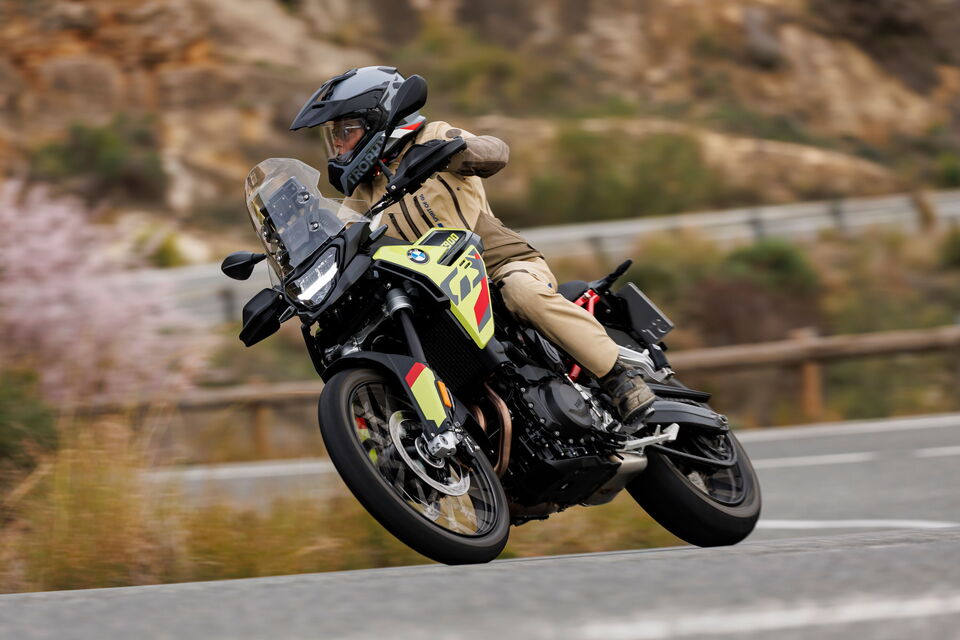
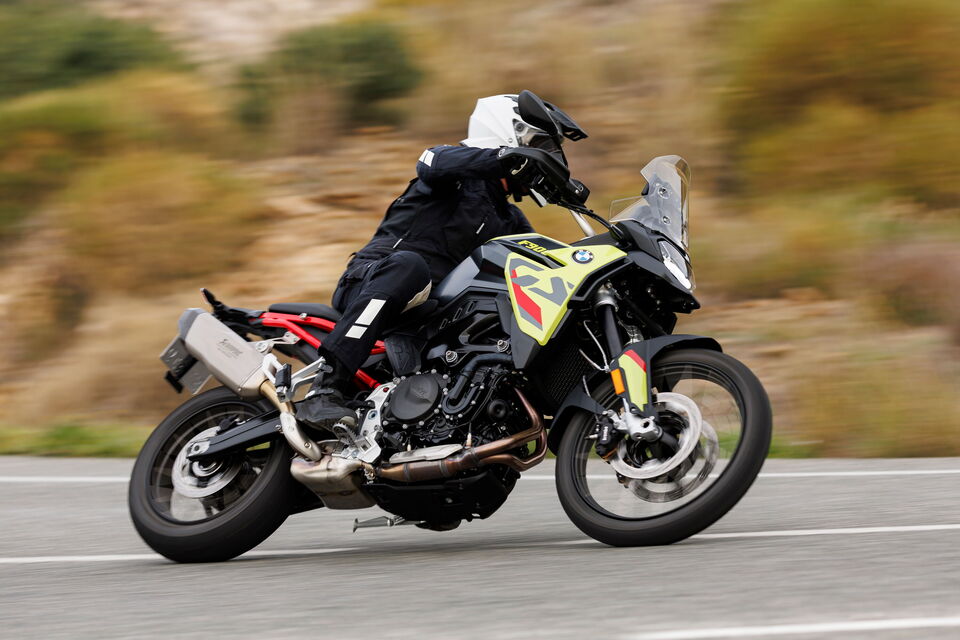
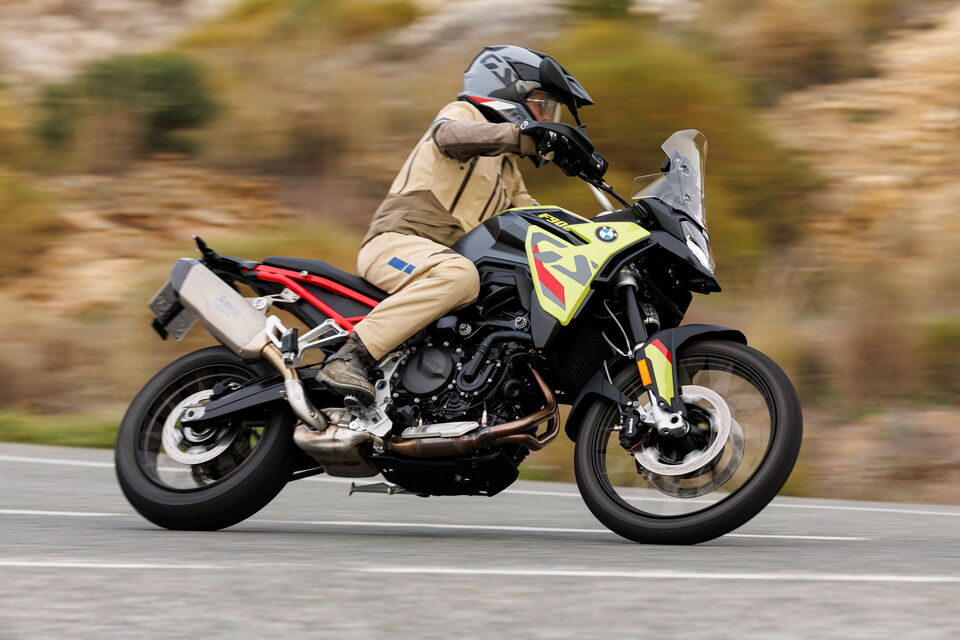
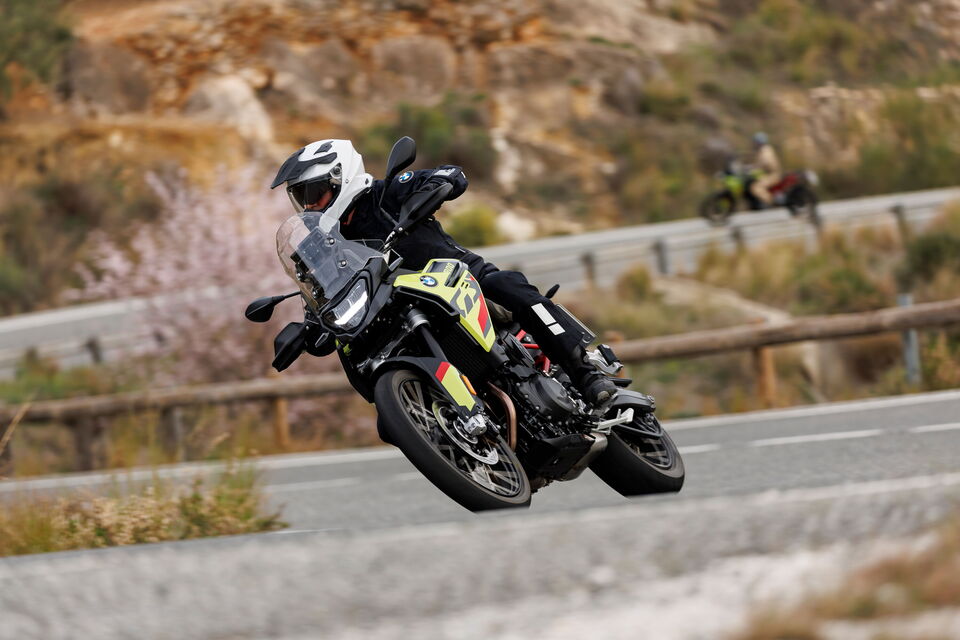
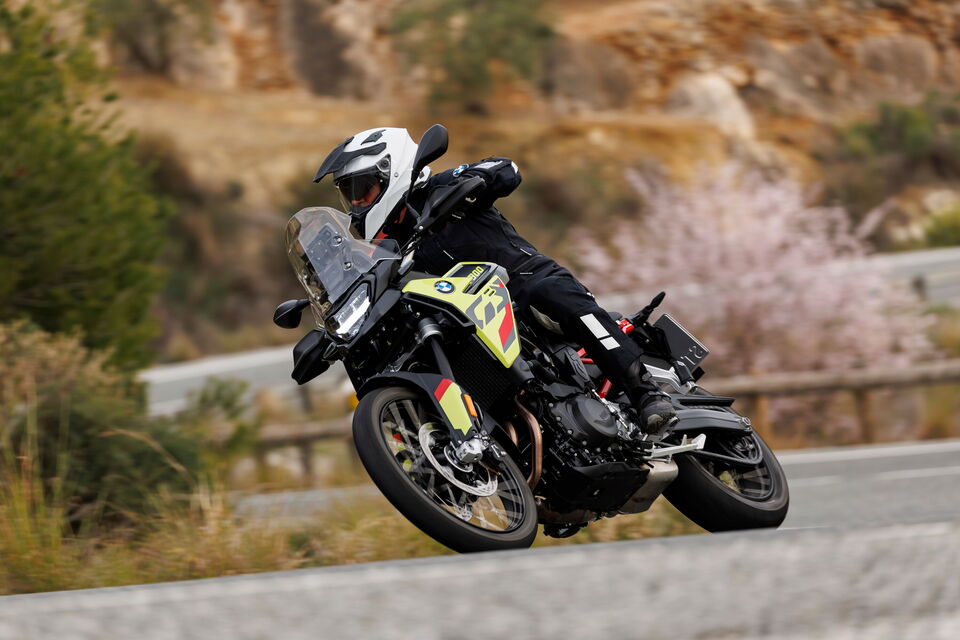
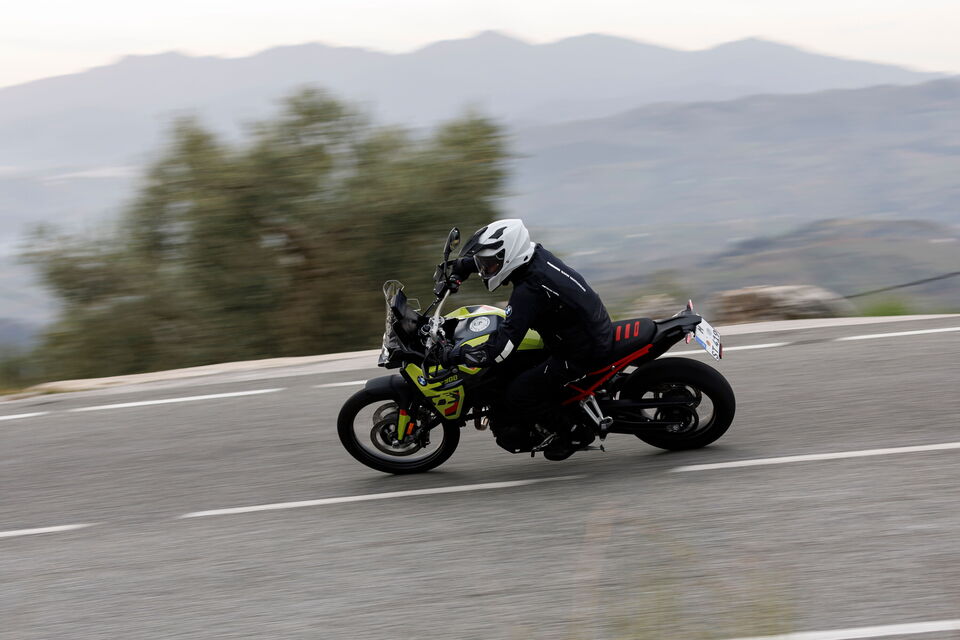
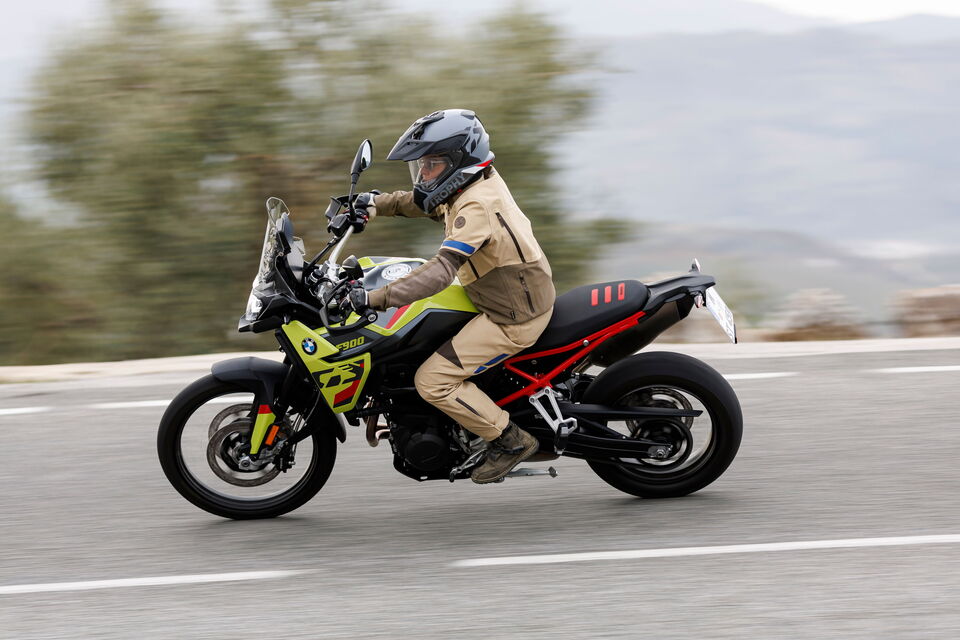
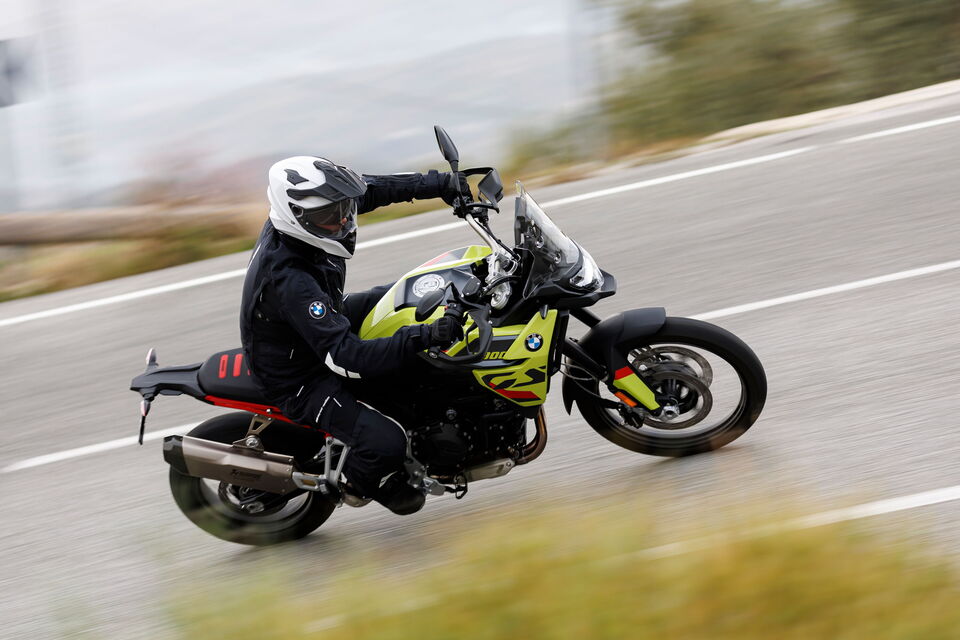
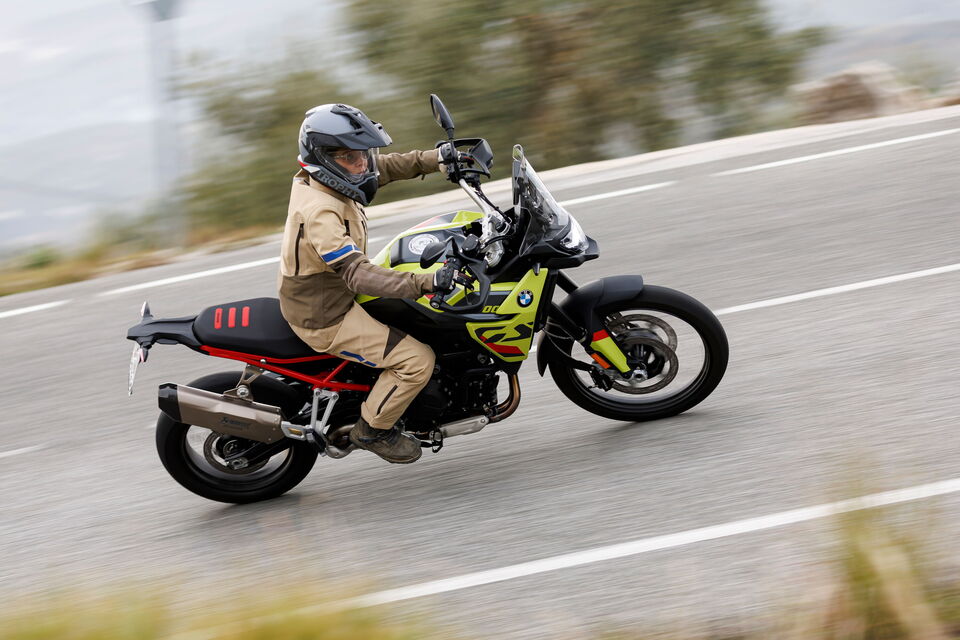
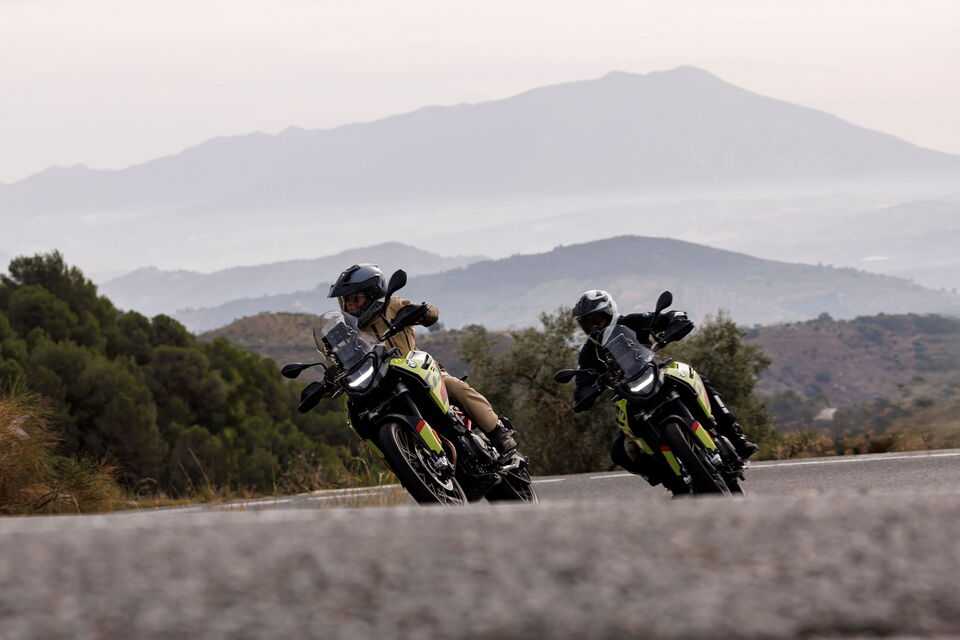
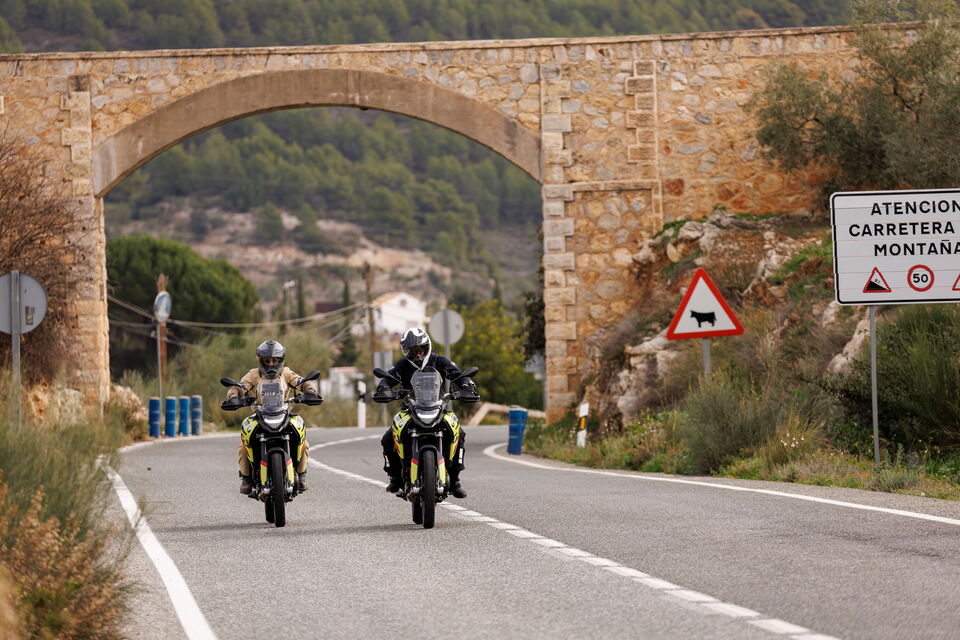
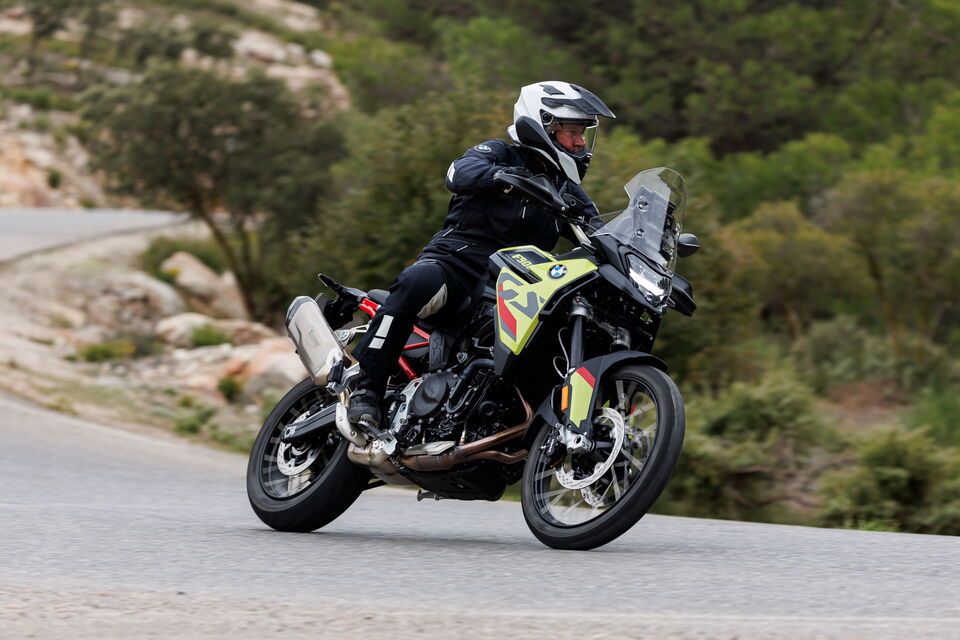
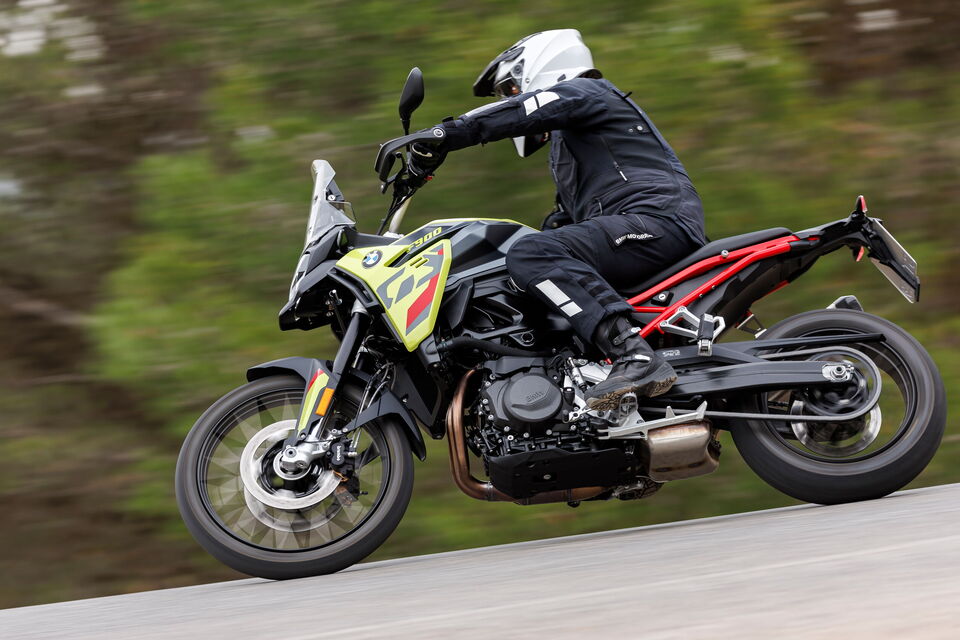
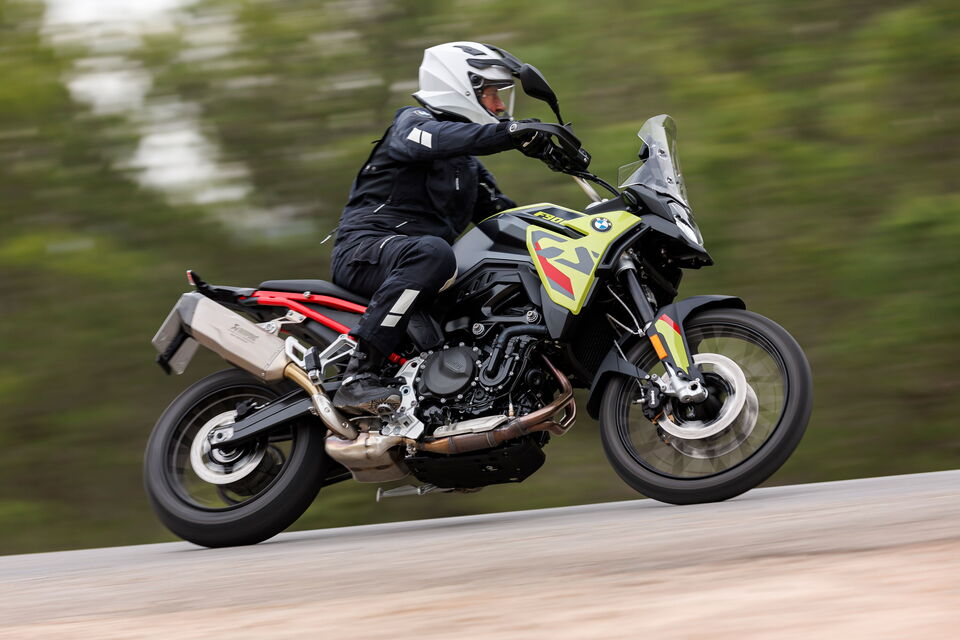

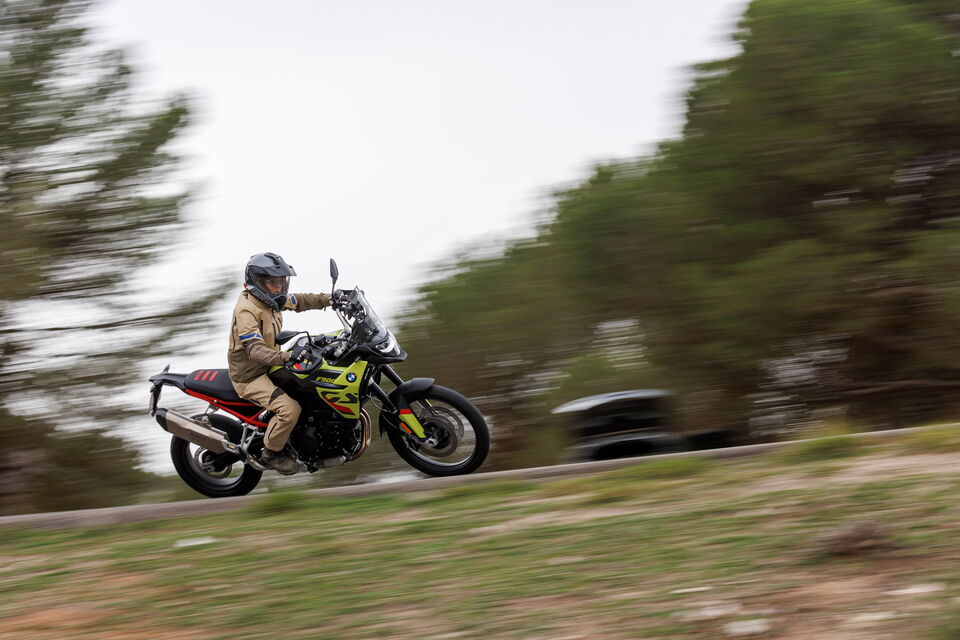
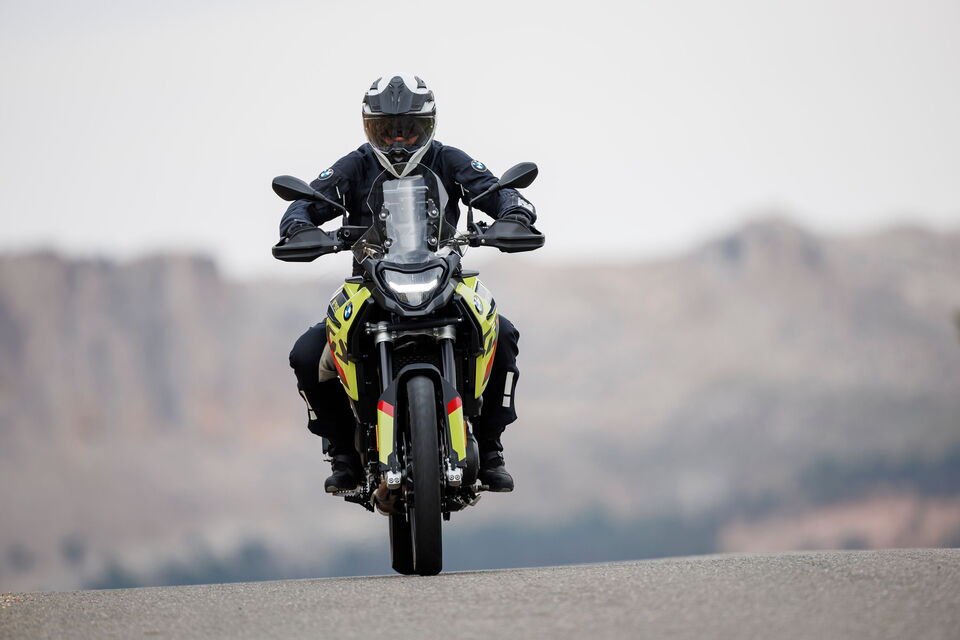
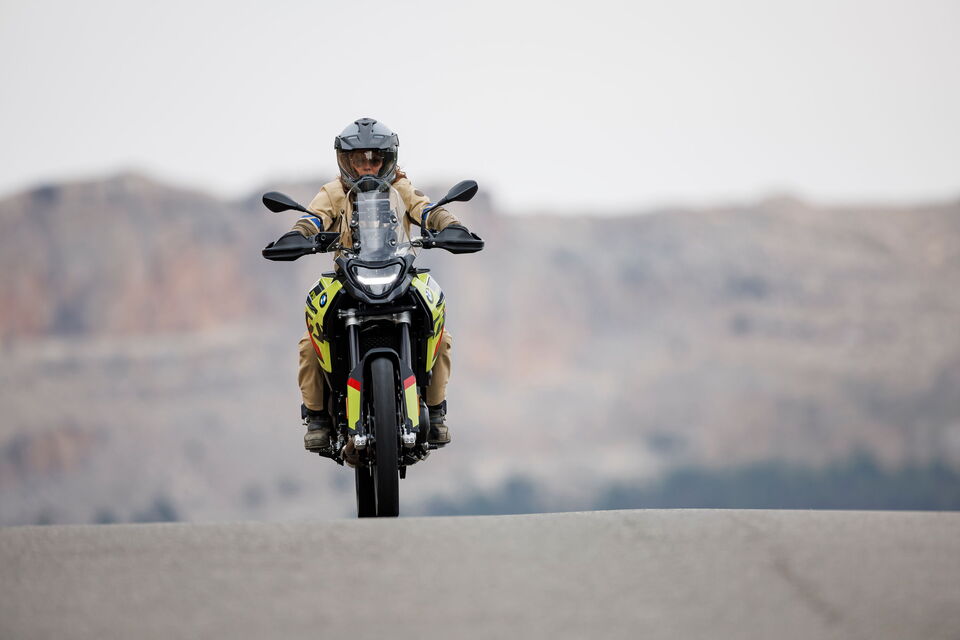
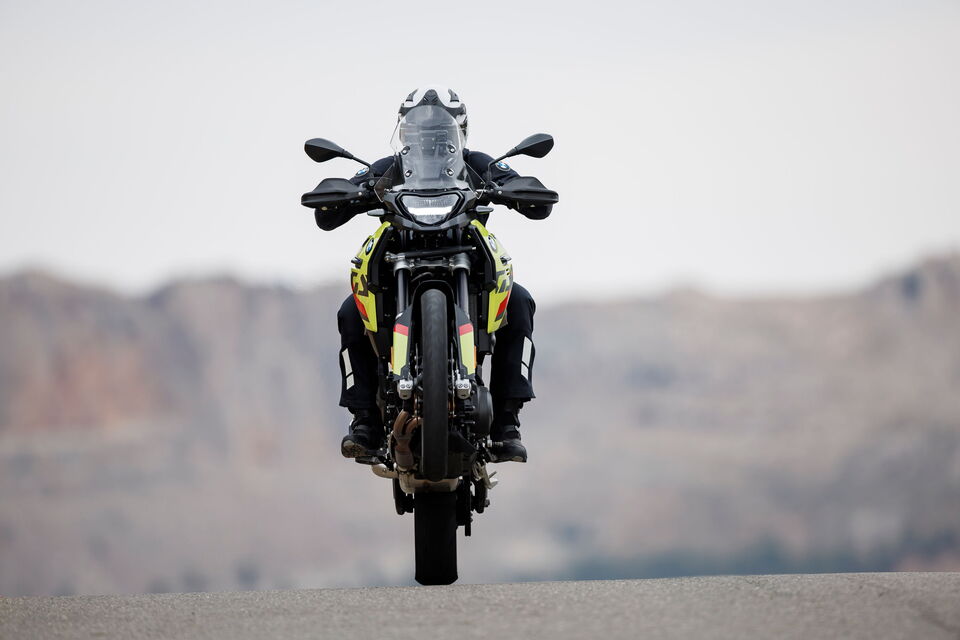

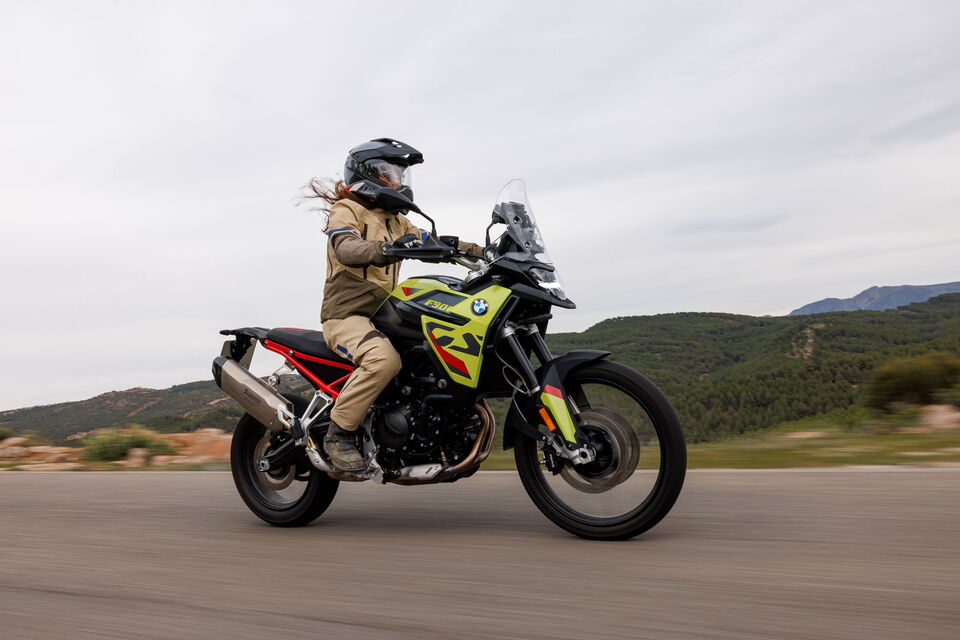
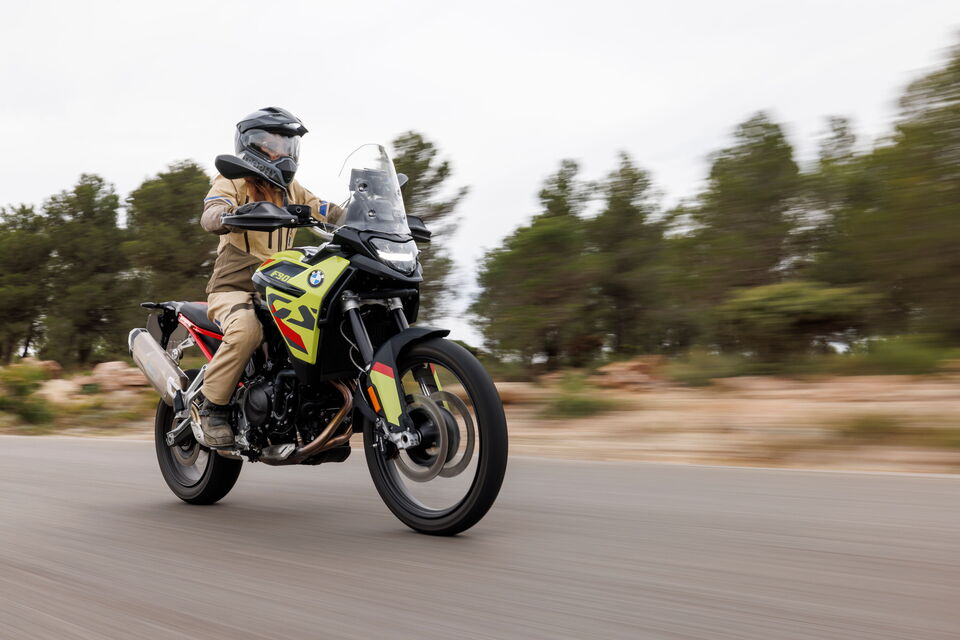
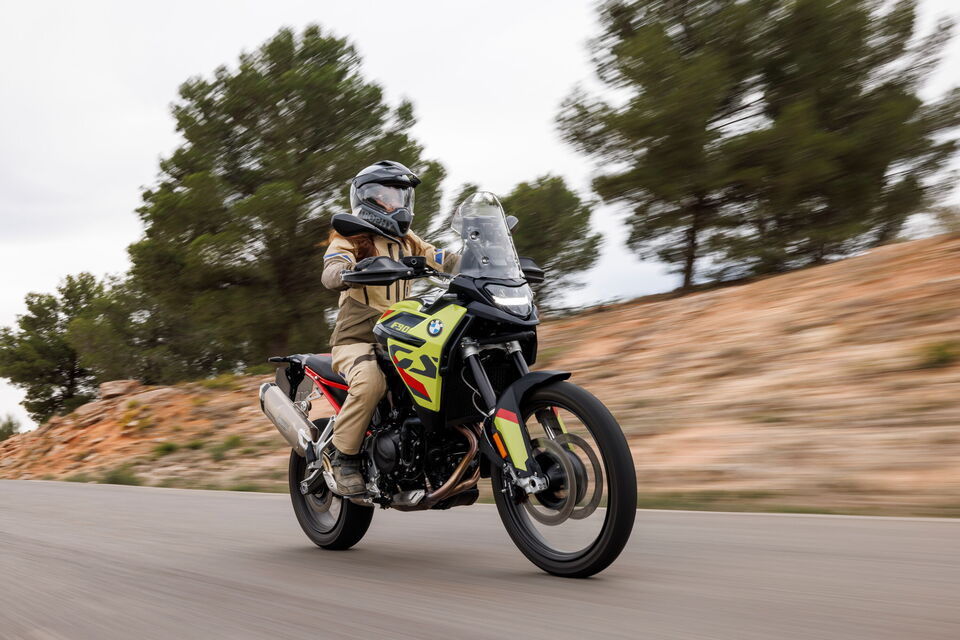
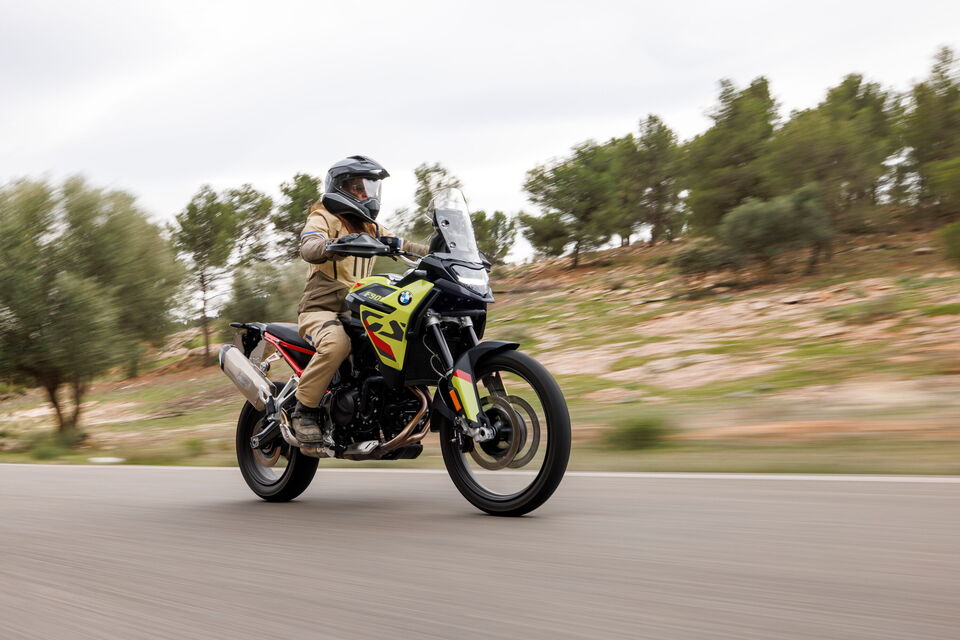
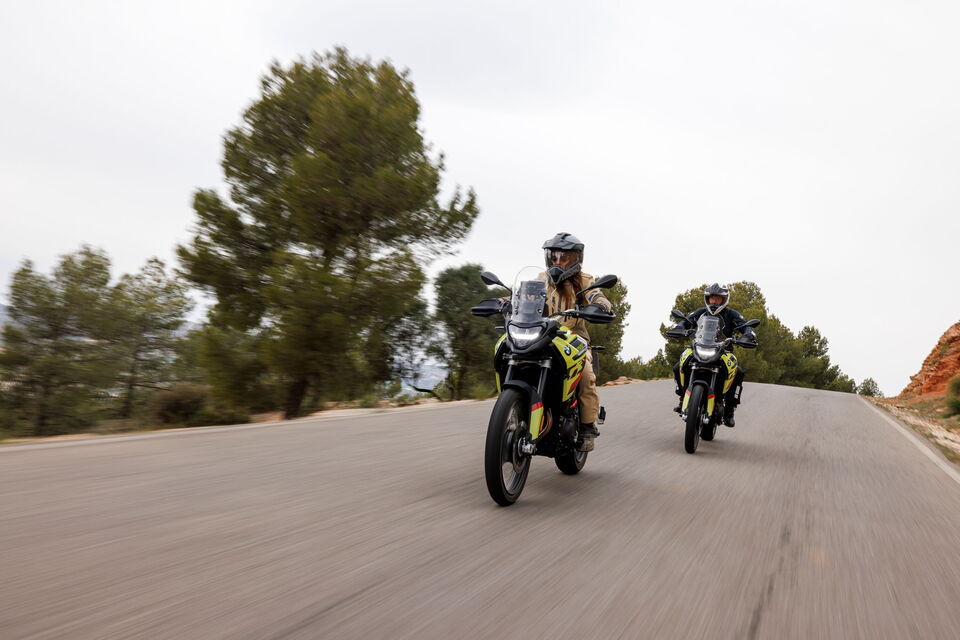
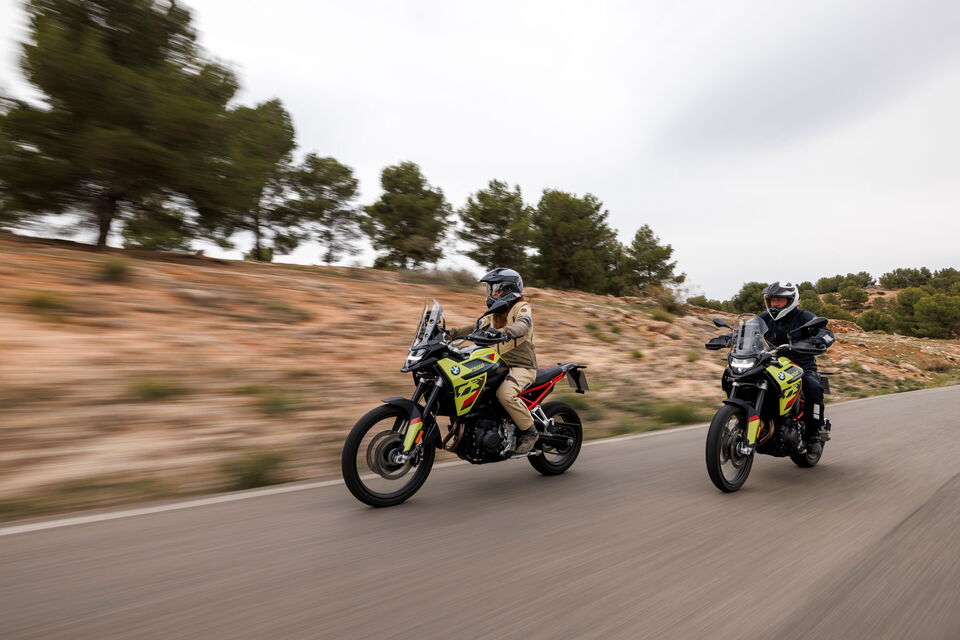
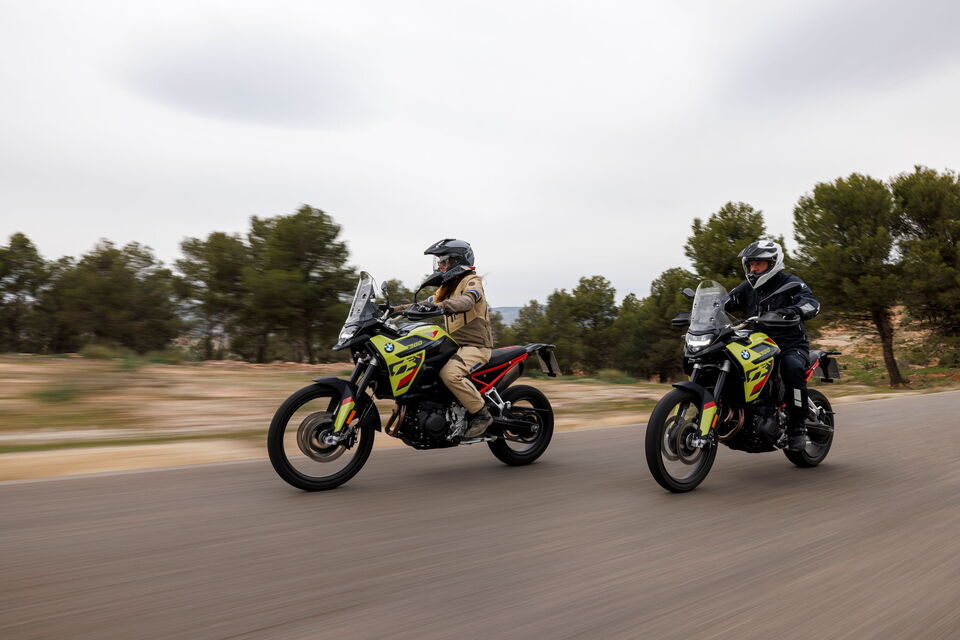
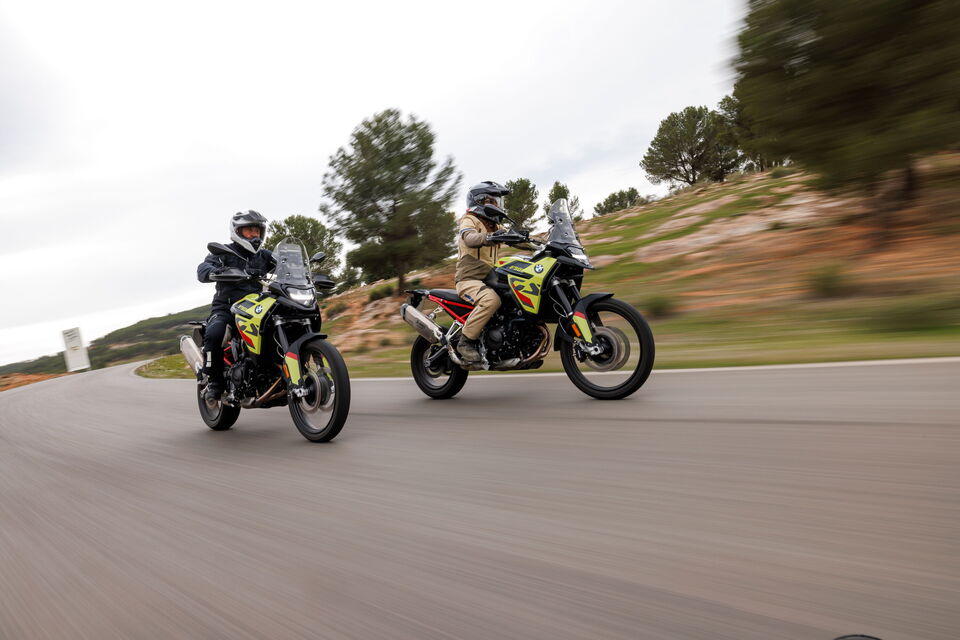
Engine: 895 cc, 105 hp—and a Gutsy Character
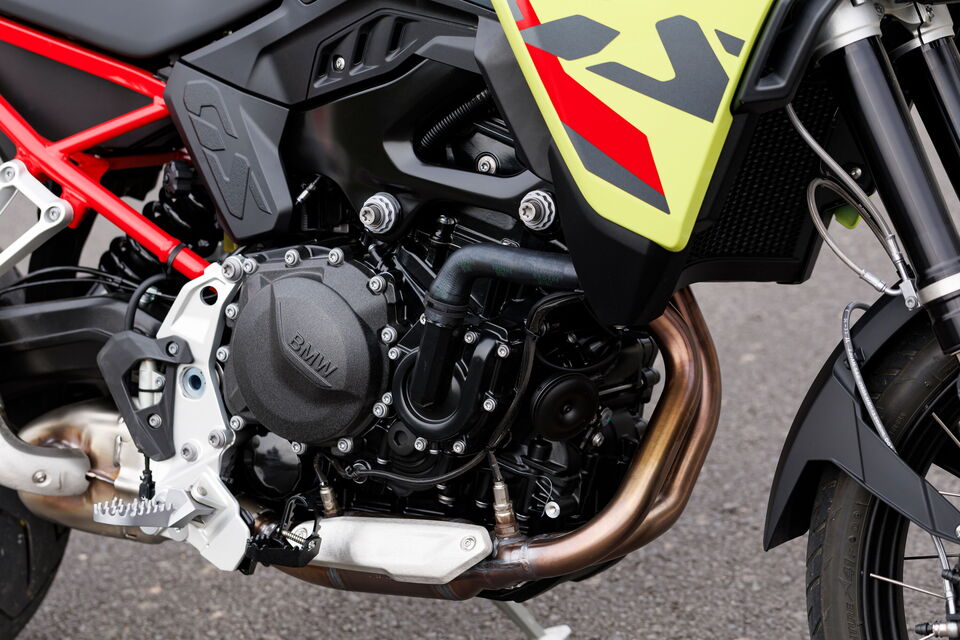
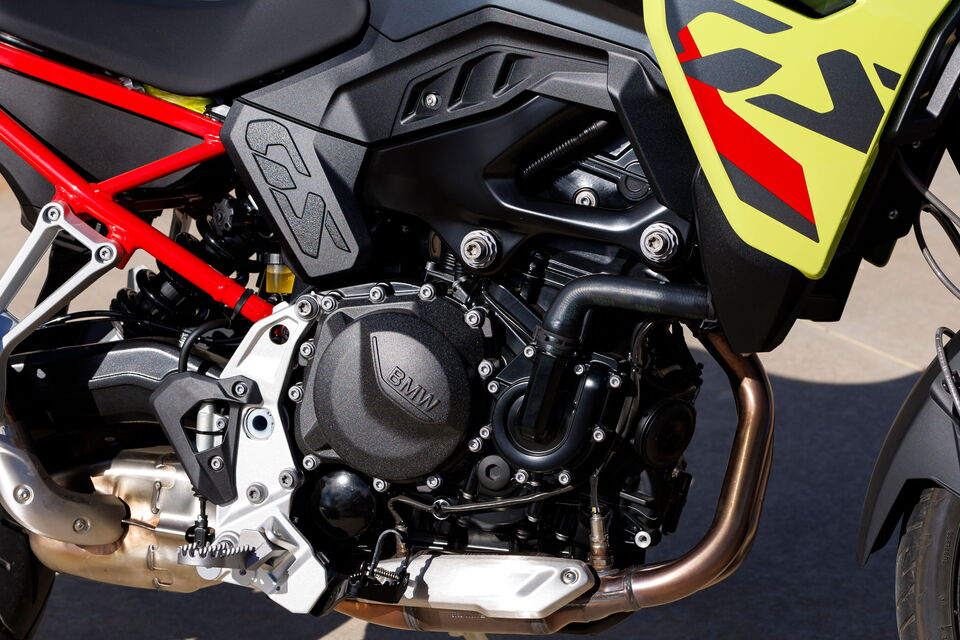
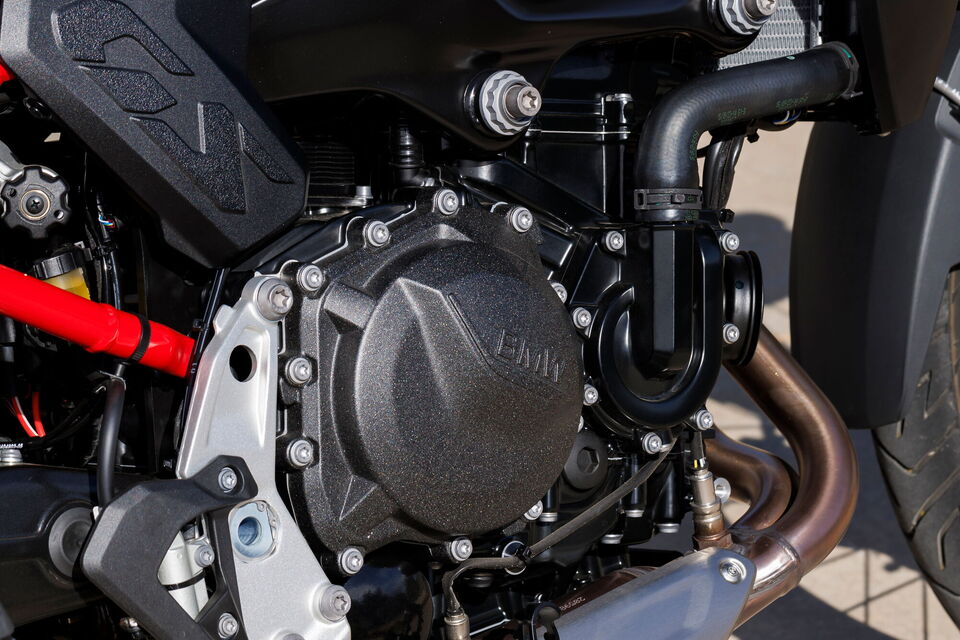
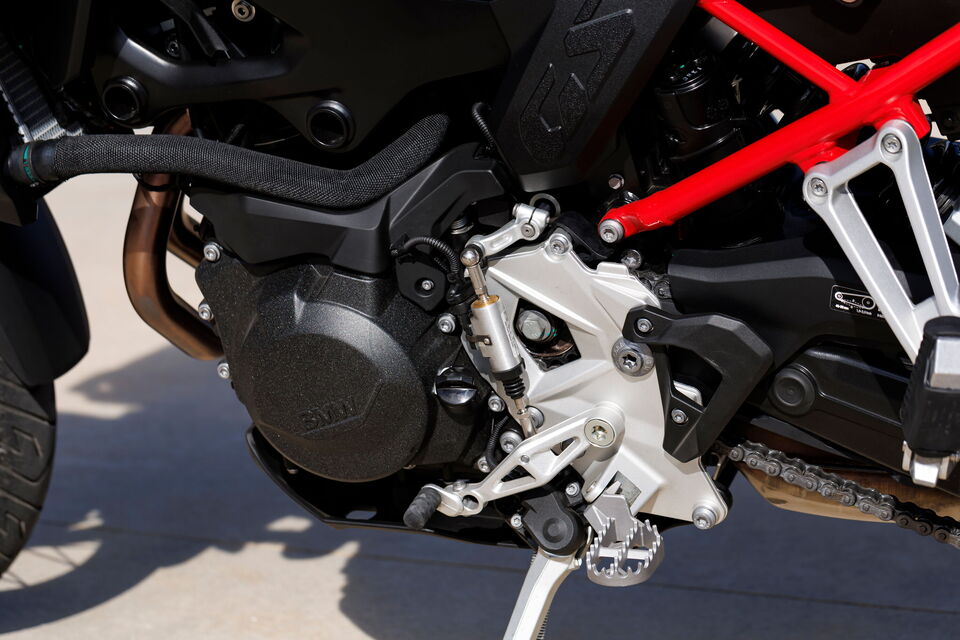
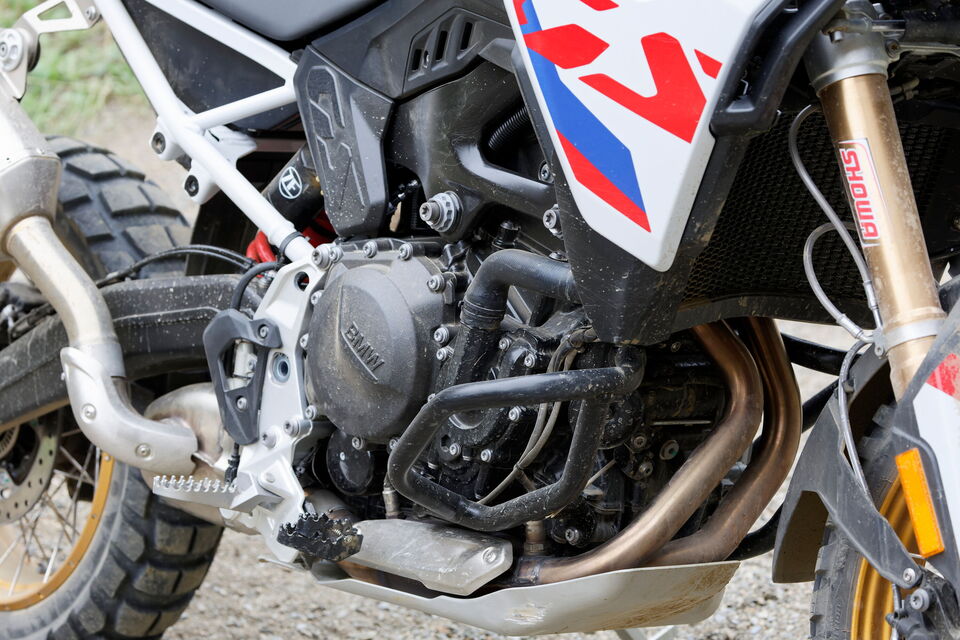
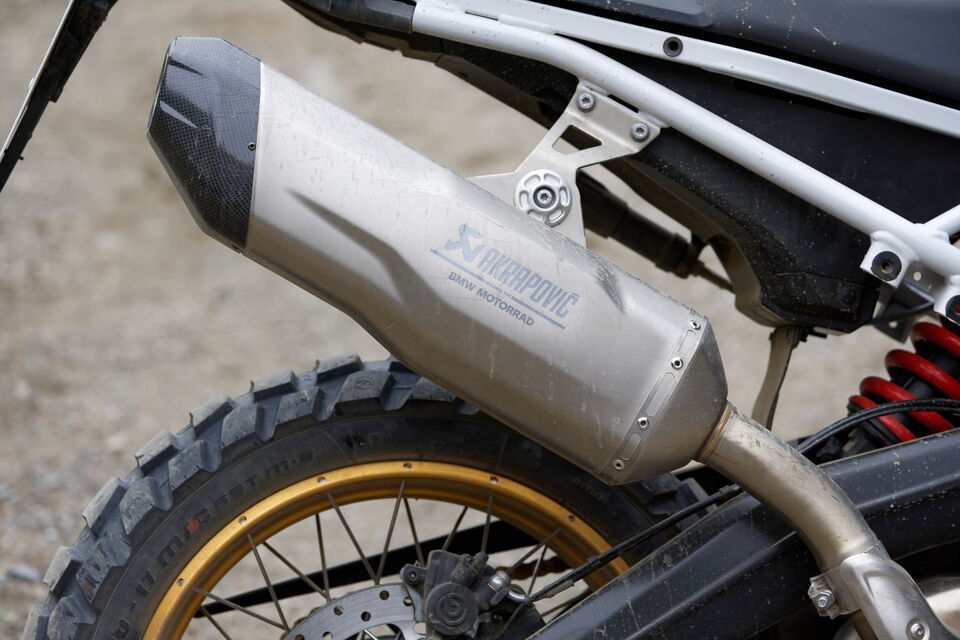
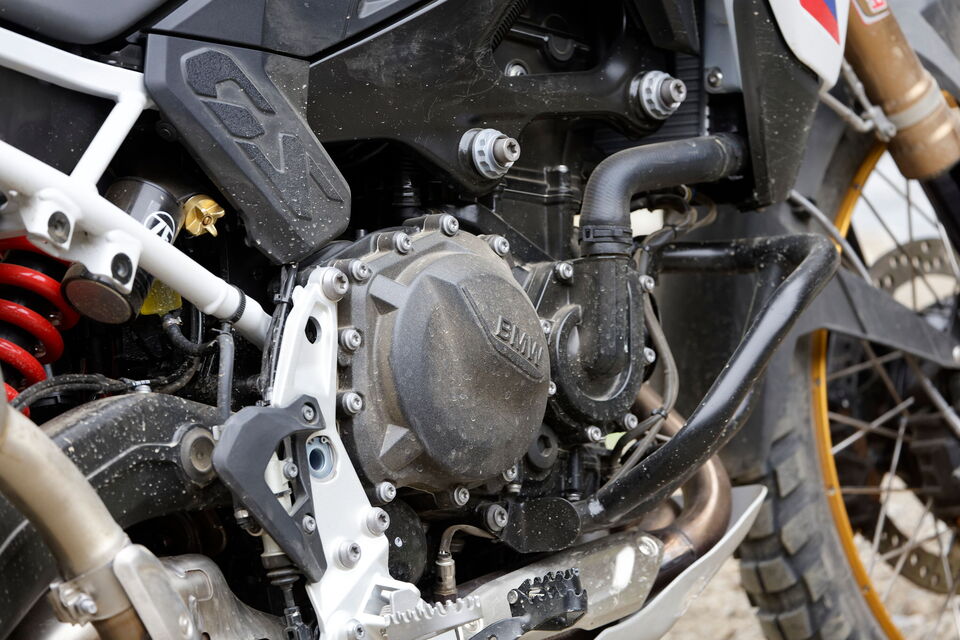
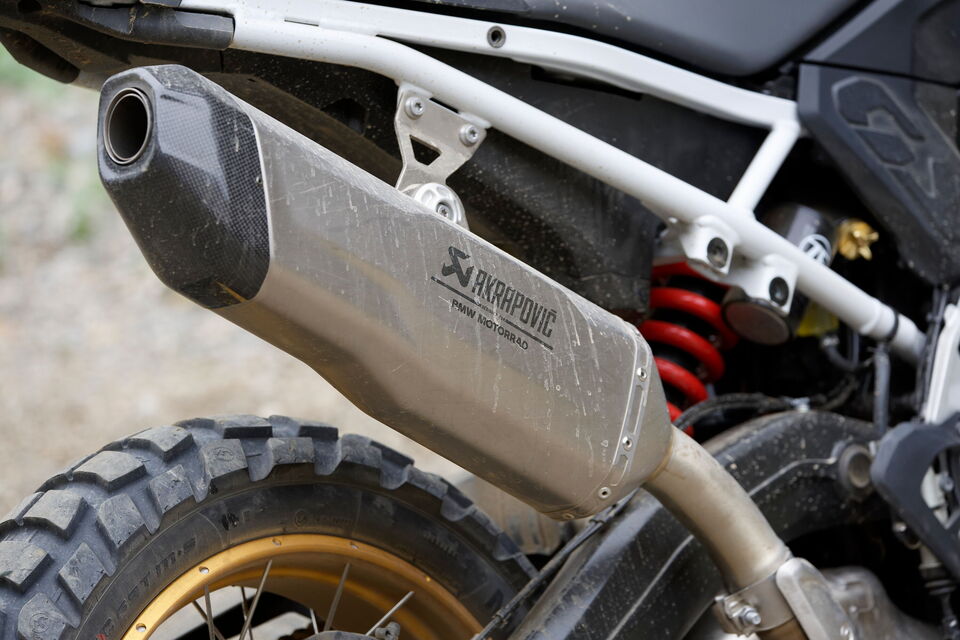
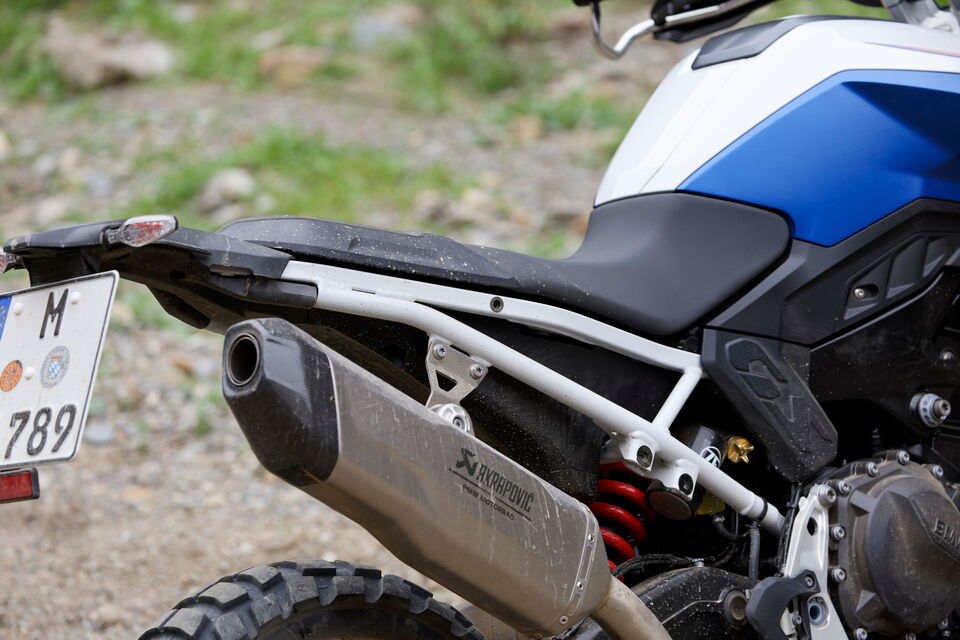
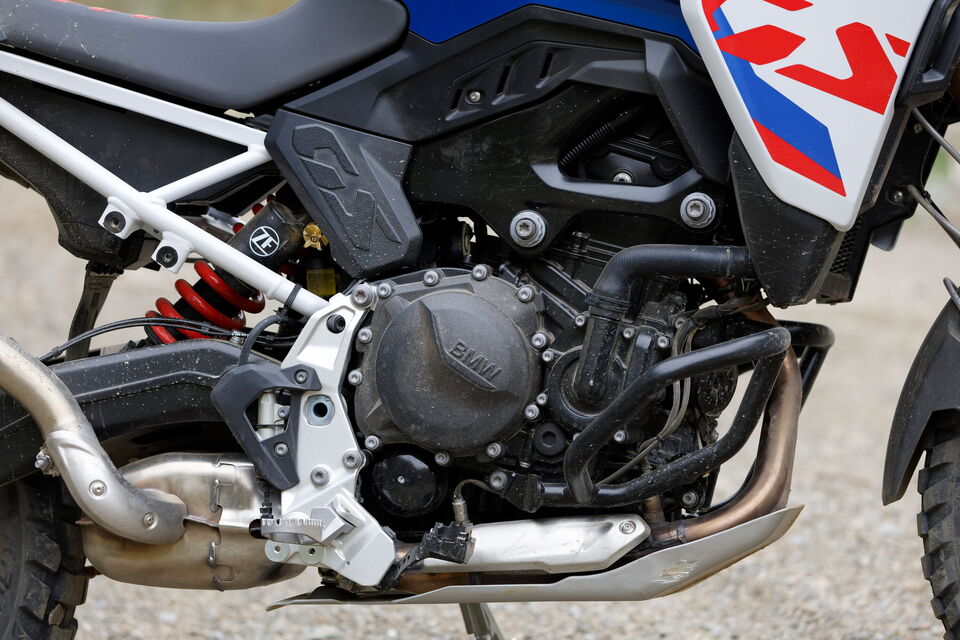
The liquid-cooled 895 cc parallel twin is the same engine BMW uses in the F 900 R and F 900 XR, but tuned specifically for the GS.
Output is 77 kW (105 hp) at 8,500 rpm, with 93 Nm at 6,750 rpm. The performance increase over the previous F 850 GS is substantial: 10 more horsepower, while displacement has grown from 853 to 895 cc.
BMW uses revised cylinder heads and forged pistons, with a compression ratio of 13.1:1. Two counter-rotating balance shafts minimize vibration, giving the engine impressive refinement for a twin at this performance level.
On the road, the twin has a personality of its own. It pulls smoothly from as low as 2,000 rpm but develops its real energy between 4,500 and 8,500 rpm.
Open the throttle in third gear at 30 km/h or fourth at 40 km/h and there is no need to downshift—the torque carries the bike forward.
At 100 km/h on the highway in sixth gear, the engine is turning around 4,000 rpm and feels relaxed. Push harder and take it into the upper rev range, and the acceleration is surpassed by only a few rivals in the segment.
The Ducati DesertX produces 110 hp, the Triumph Tiger 900 108 hp. The BMW sits between them on outright power and impresses most of all with its broad, everyday-friendly torque curve.
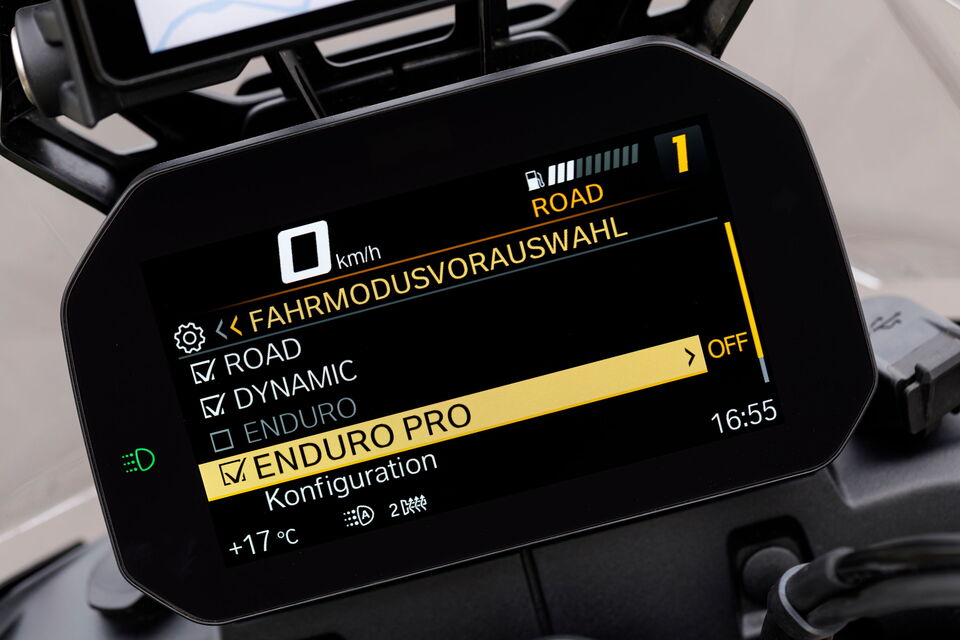
Two riding modes come standard: Rain and Road.
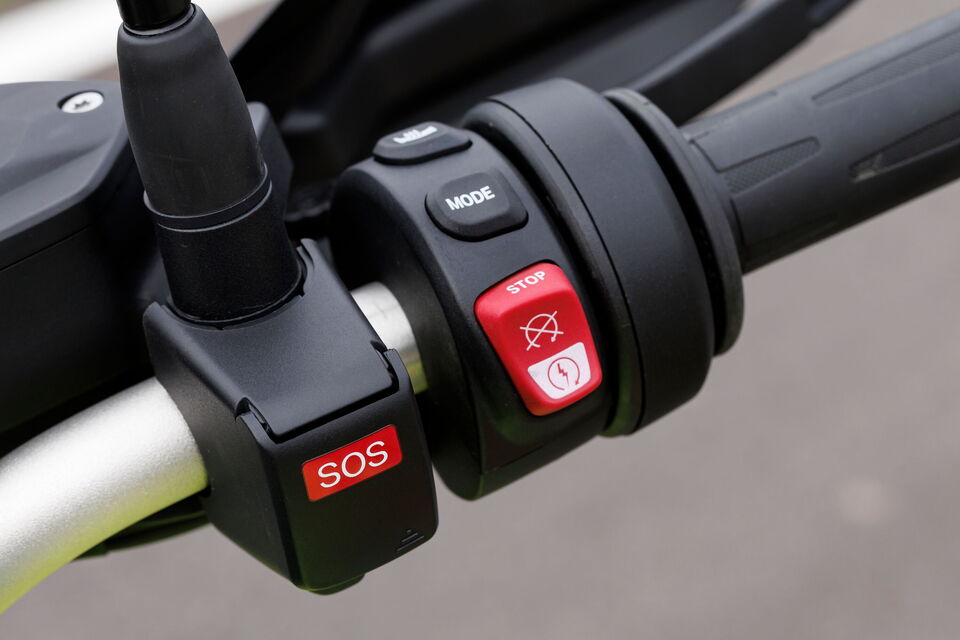
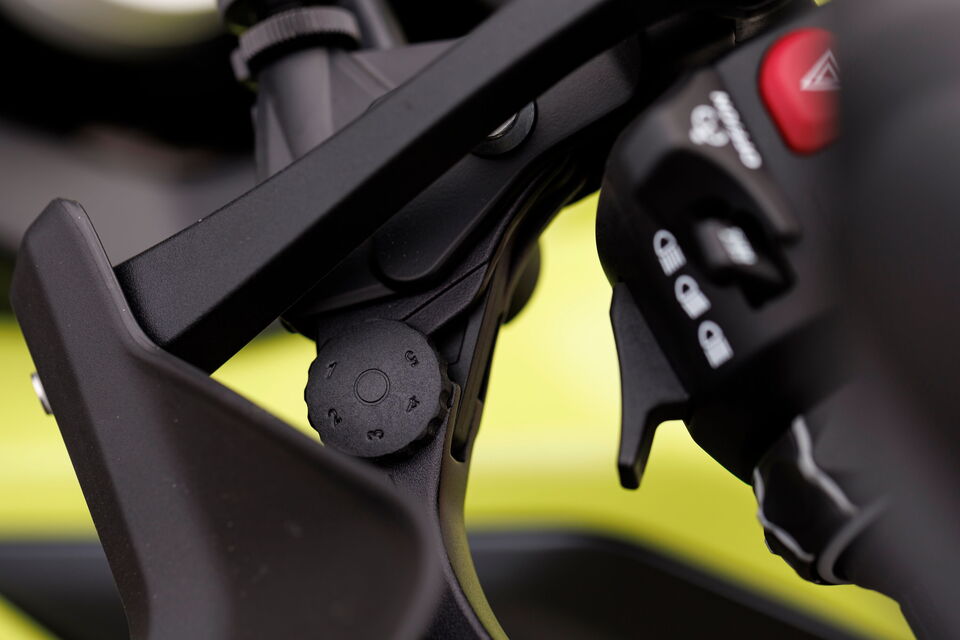
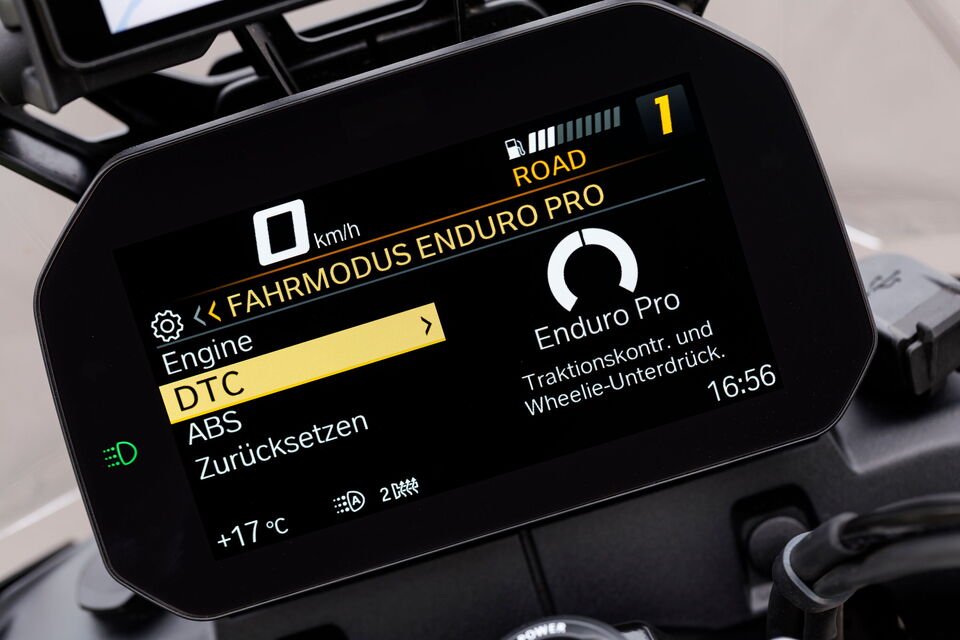
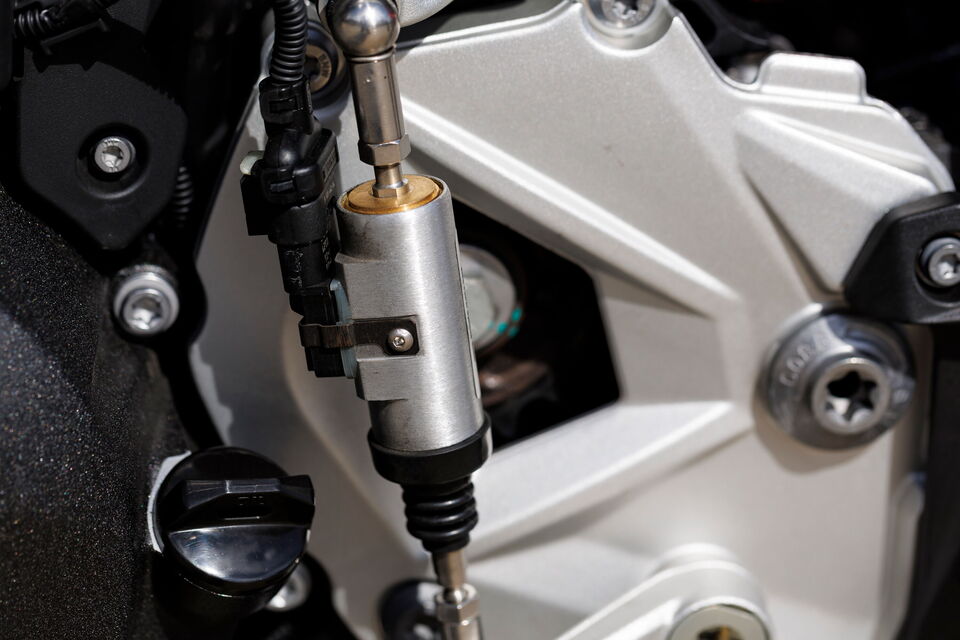
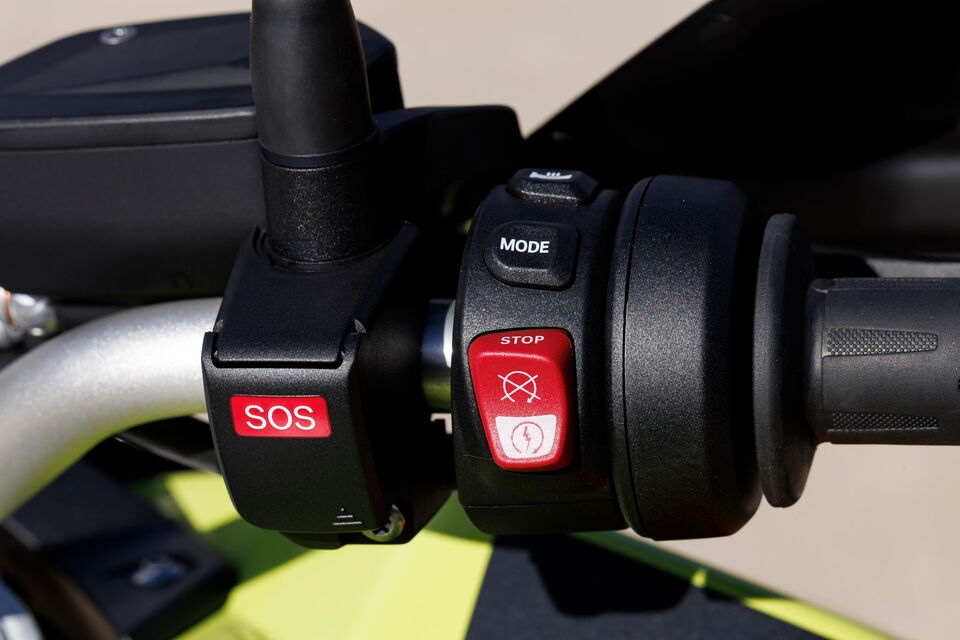
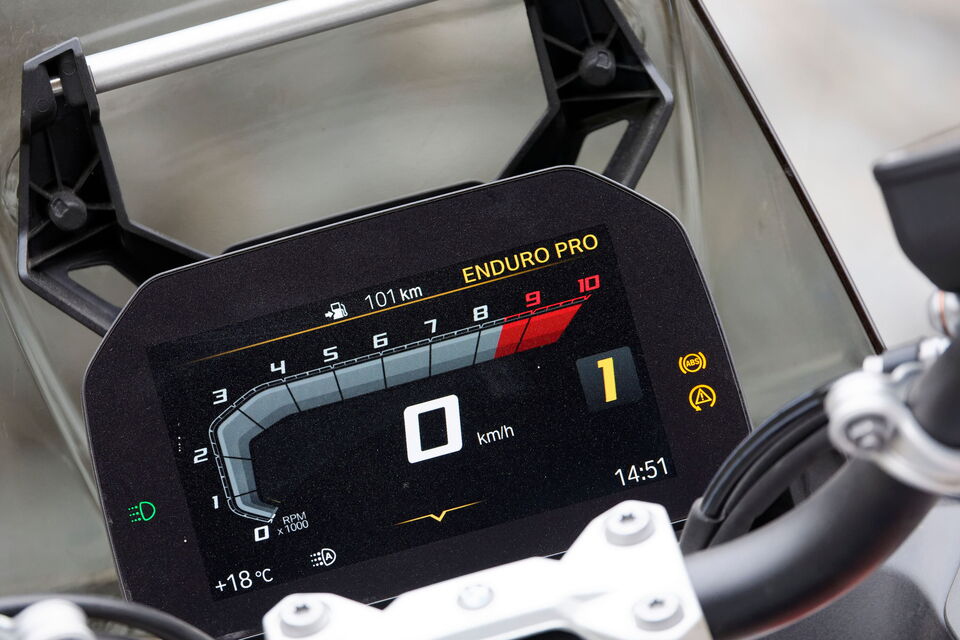
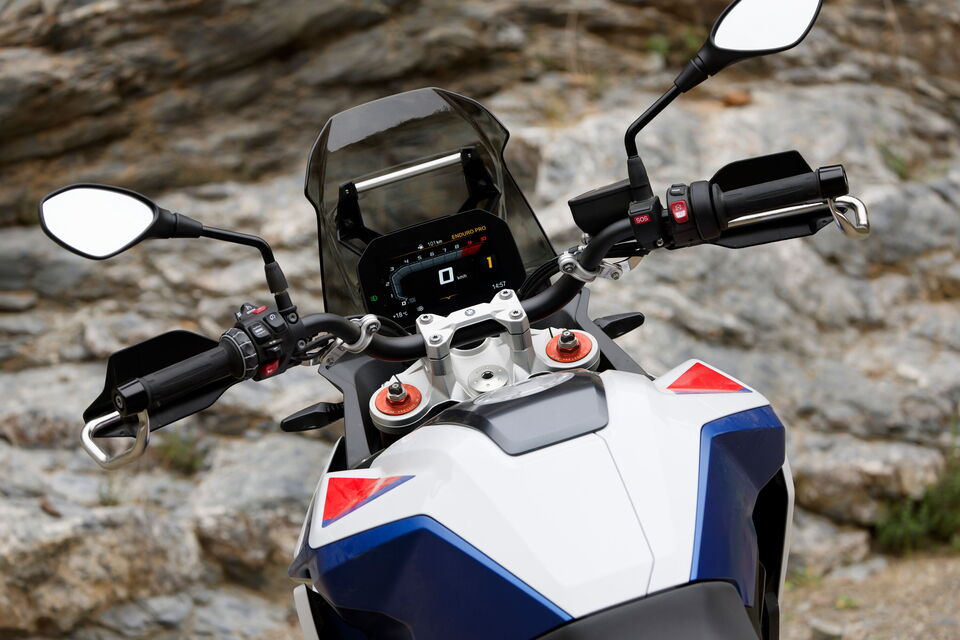
The optional Dynamic Package (€495) adds Dynamic, Enduro, and Enduro Pro. In Enduro Pro mode, rear-wheel ABS can be switched off, while traction control and throttle response can be individually adjusted.
That matters for serious off-road riding and is an advantage over many competitors that reserve similar functionality for considerably more expensive equipment packages.
The engine is manufactured by Loncin in China. BMW has used this production arrangement for this model family for years, and it has not stood out for reliability problems in independent long-term testing.
Chassis: 230 mm of Front Travel—That’s the Difference
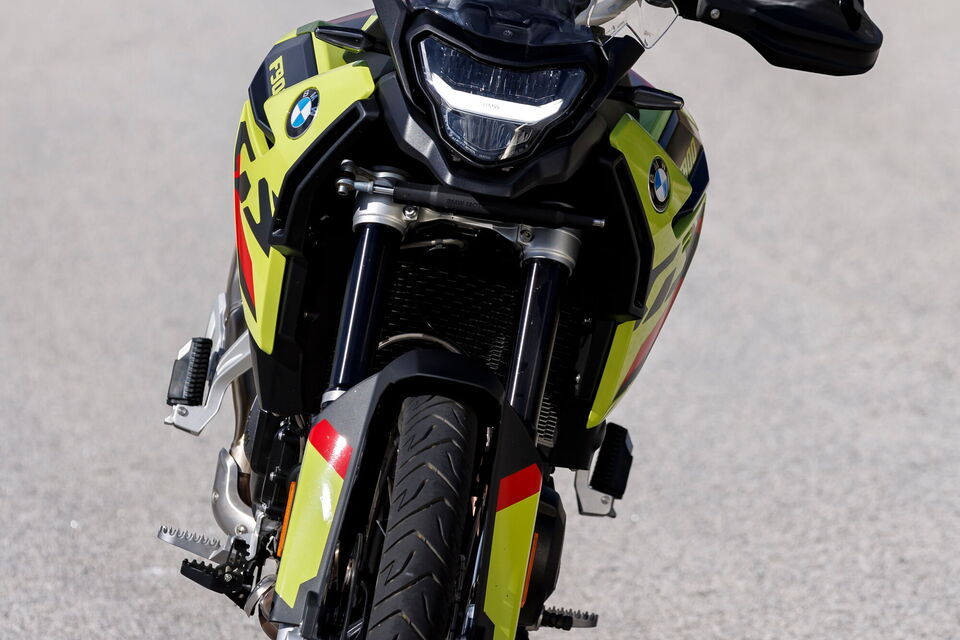
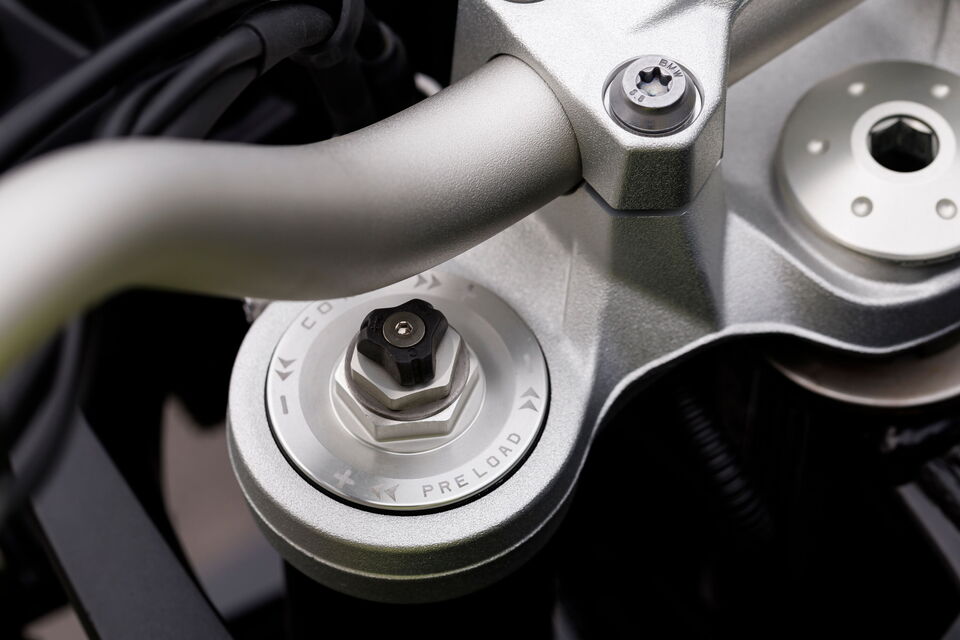
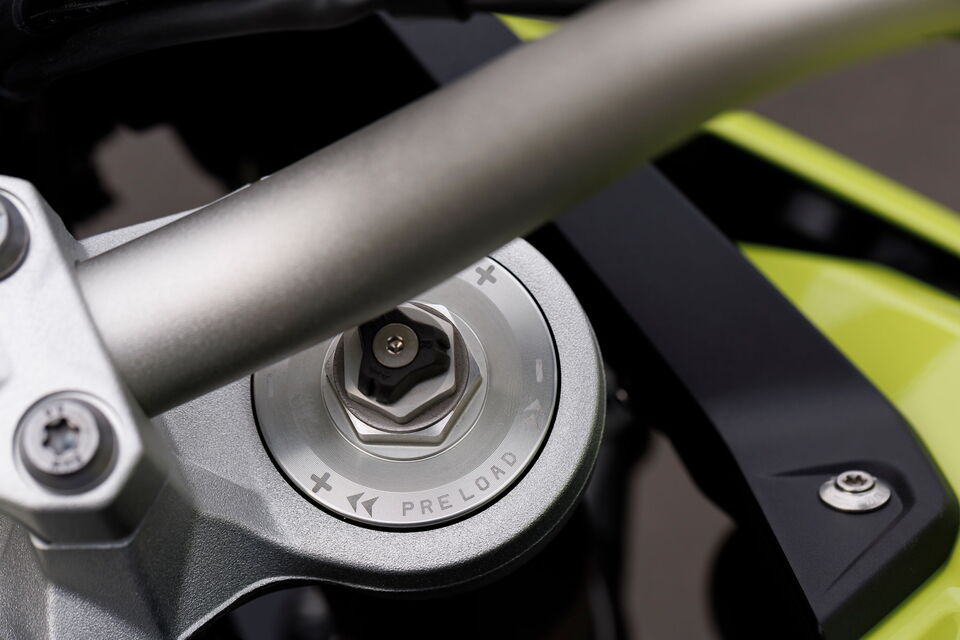
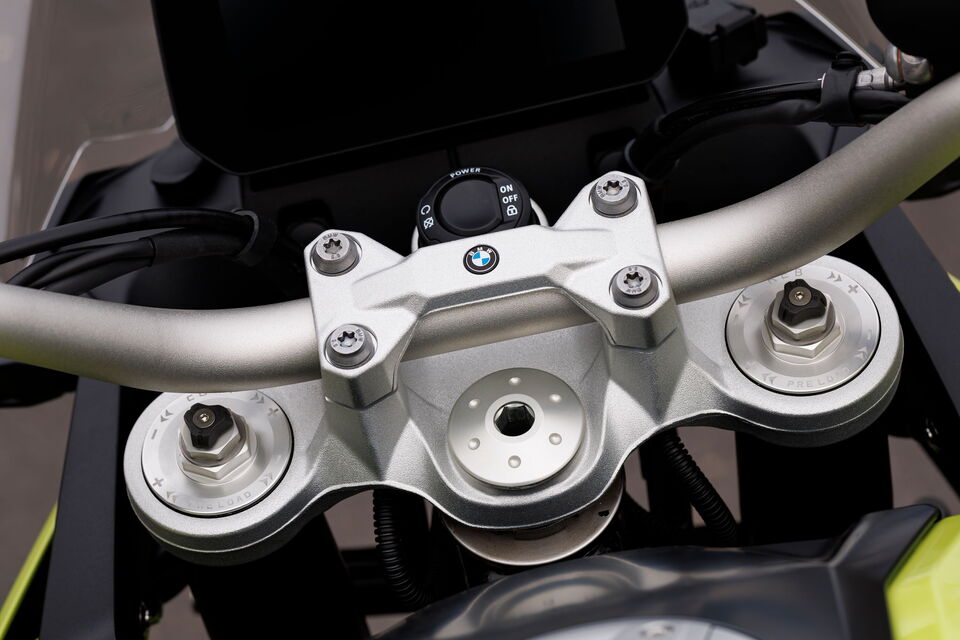
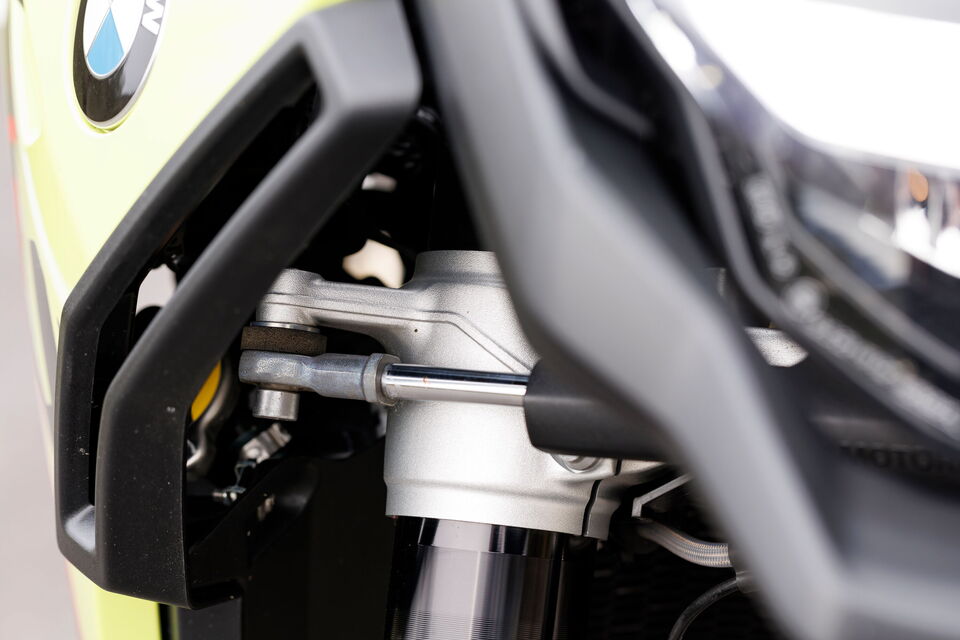
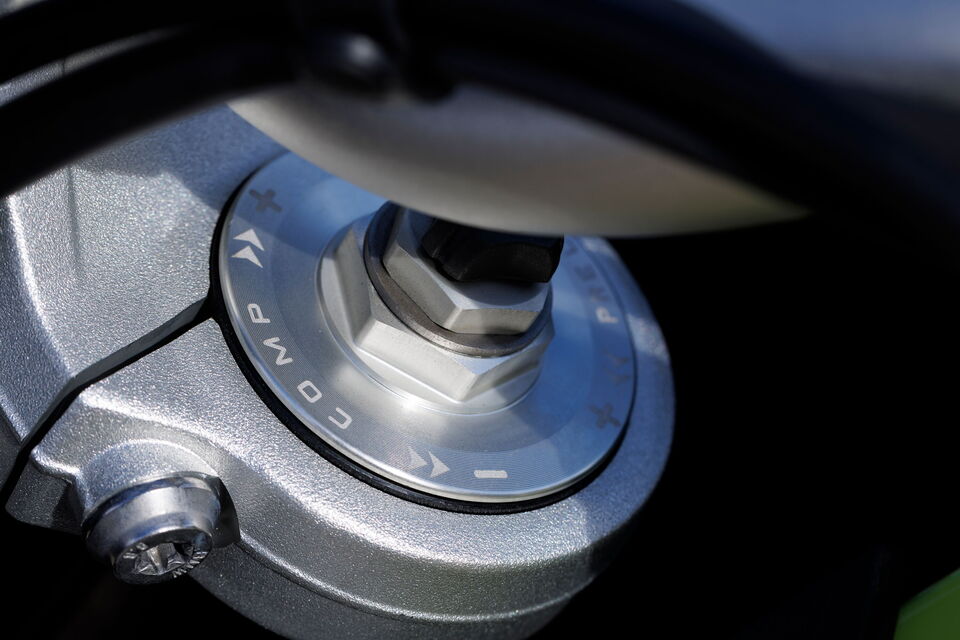
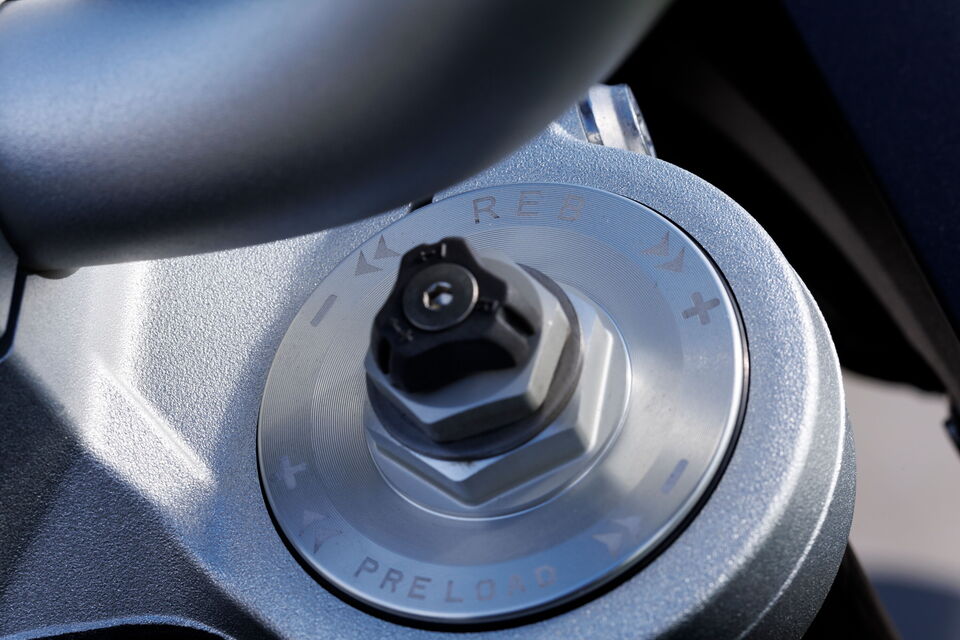
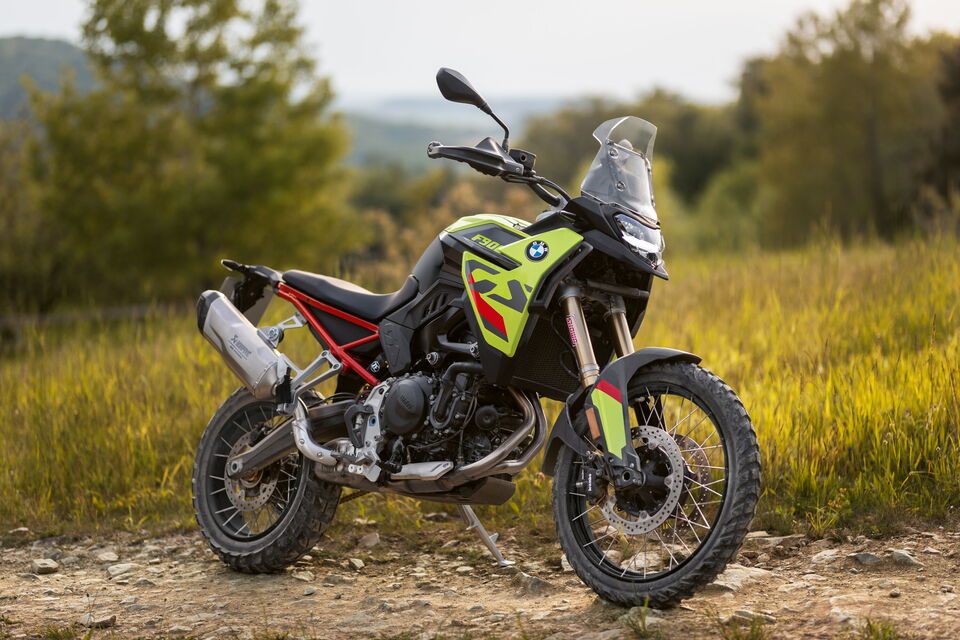
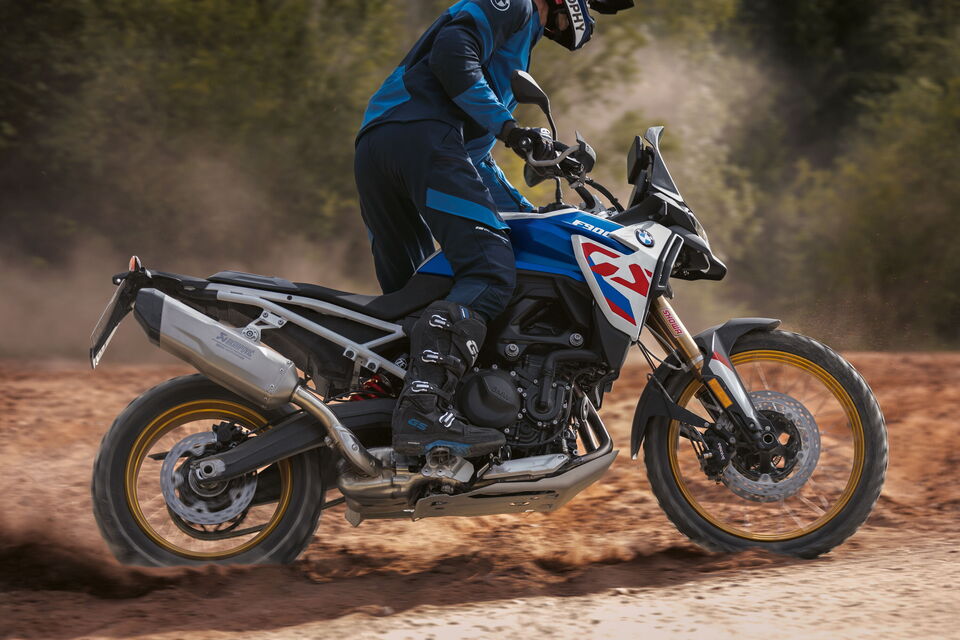
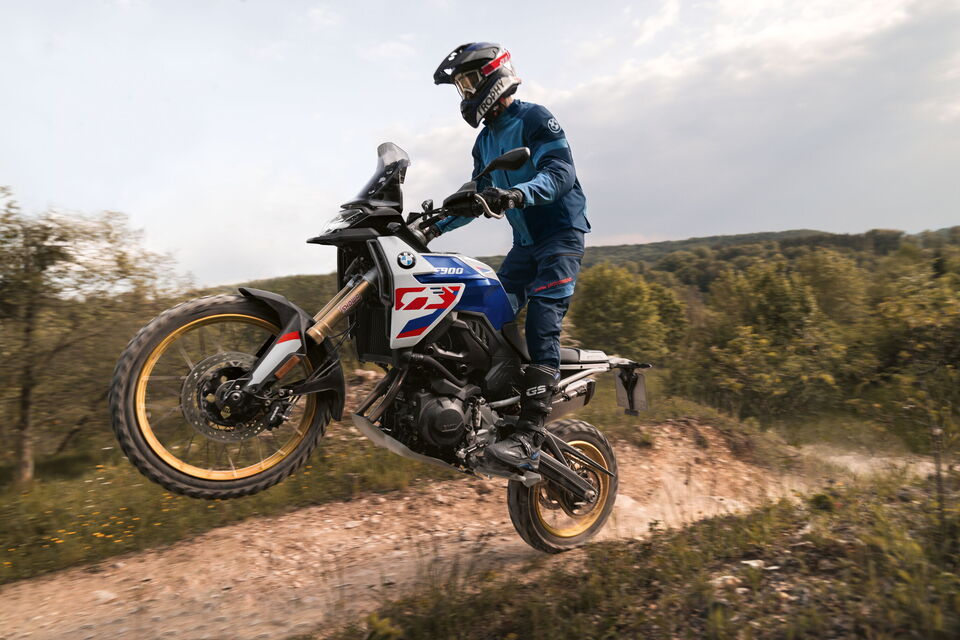
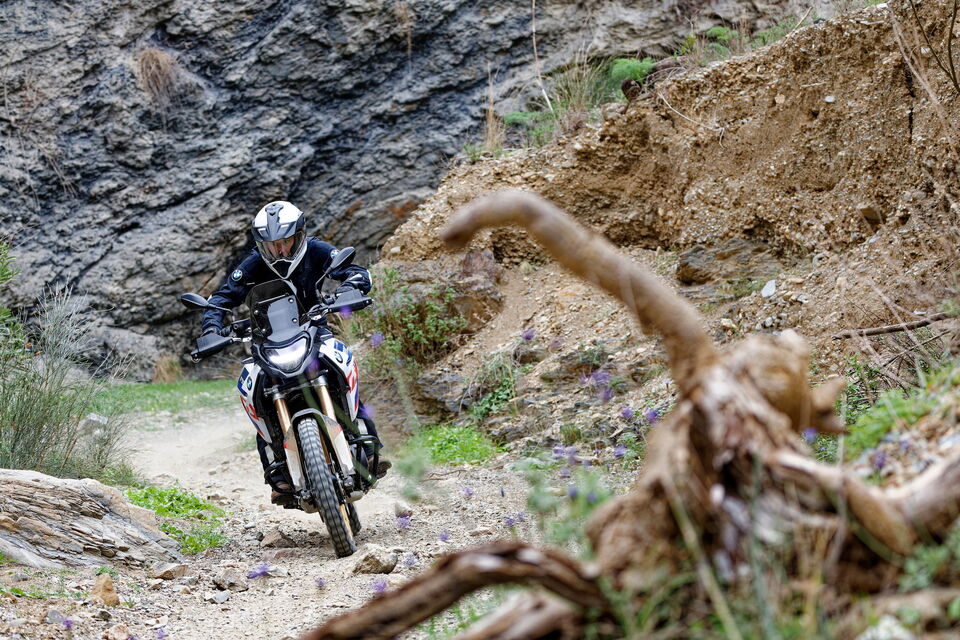
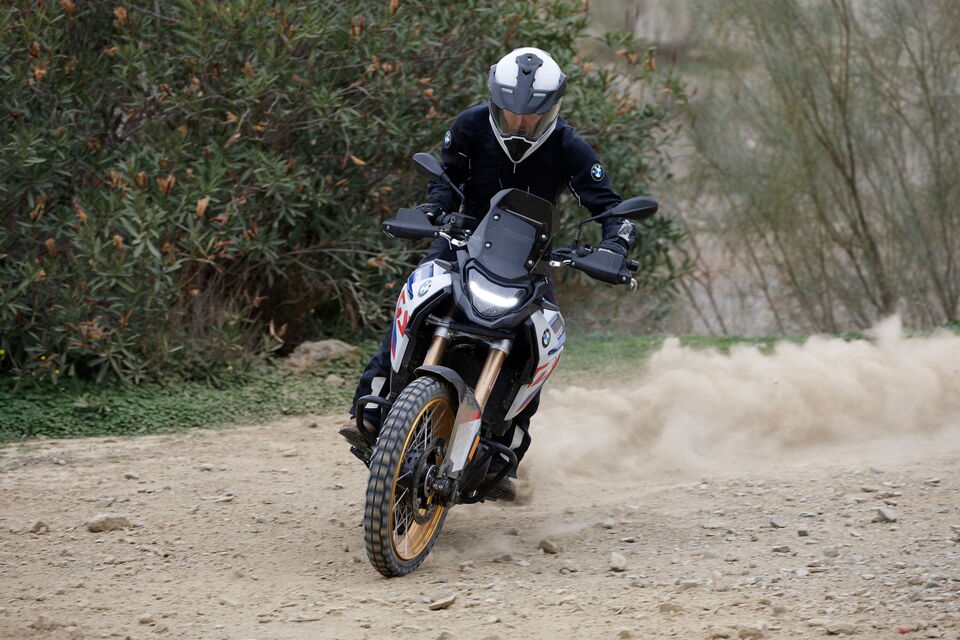
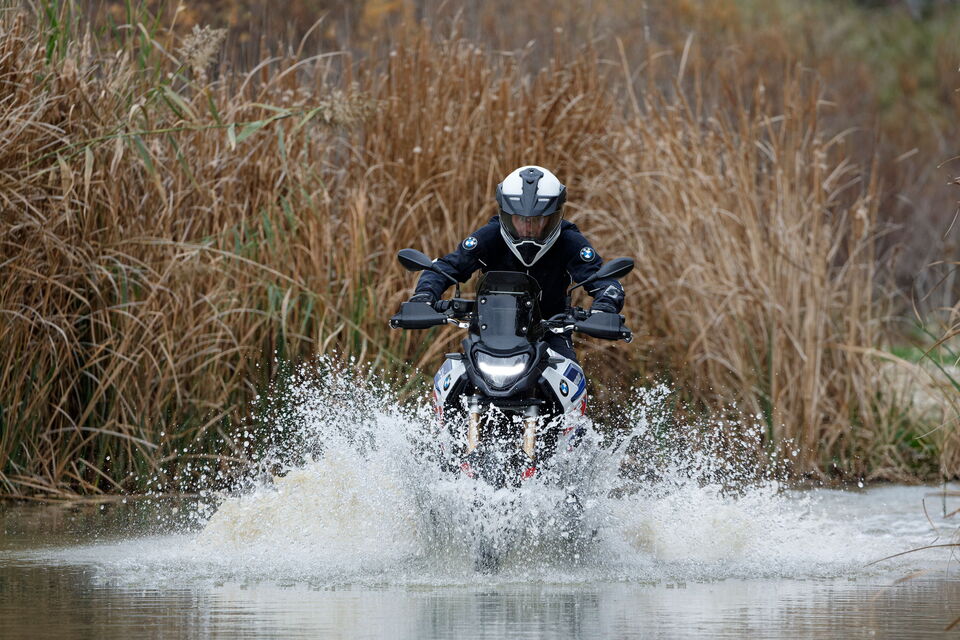
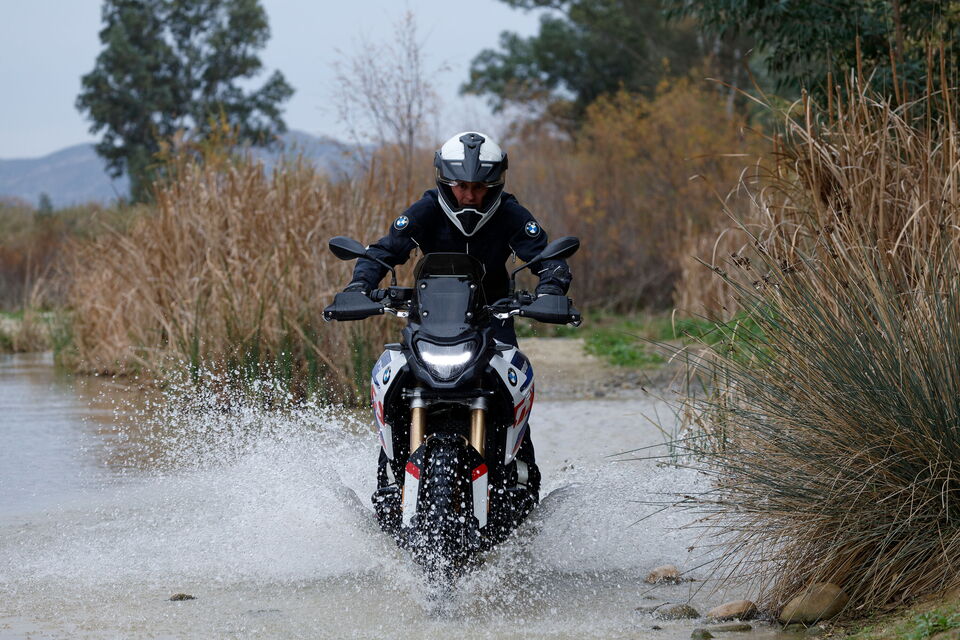
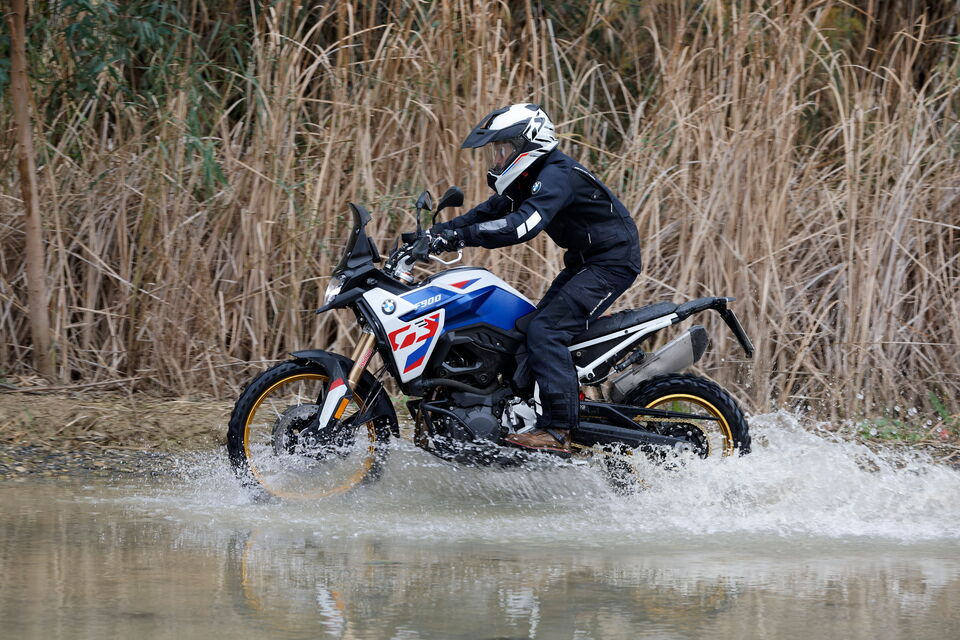
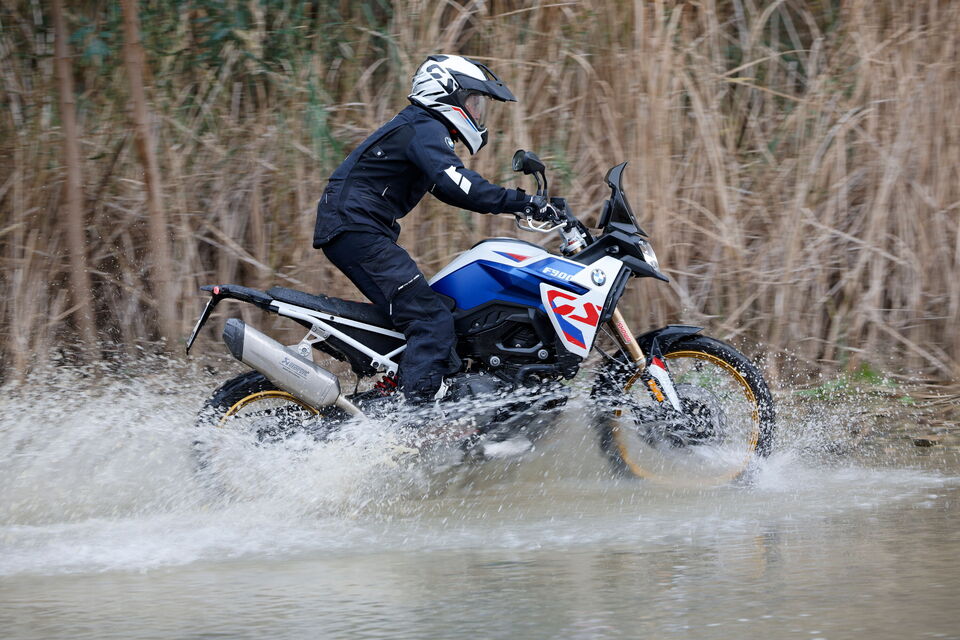
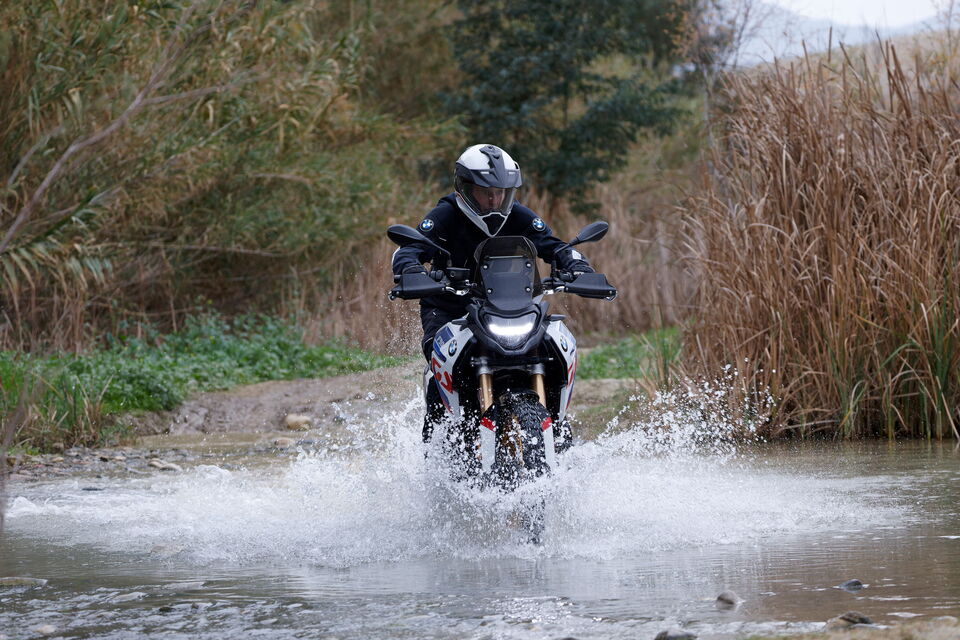
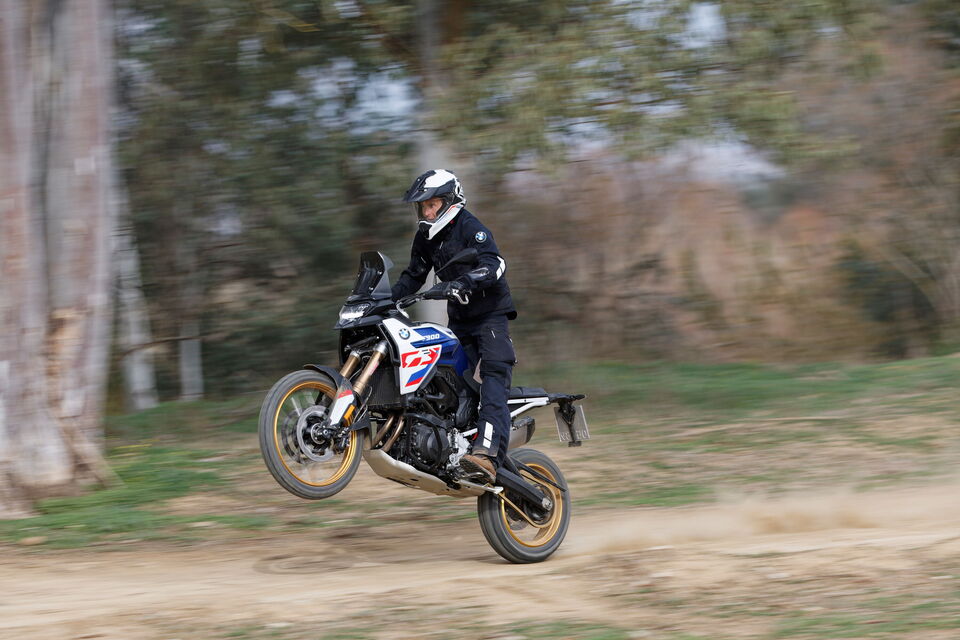
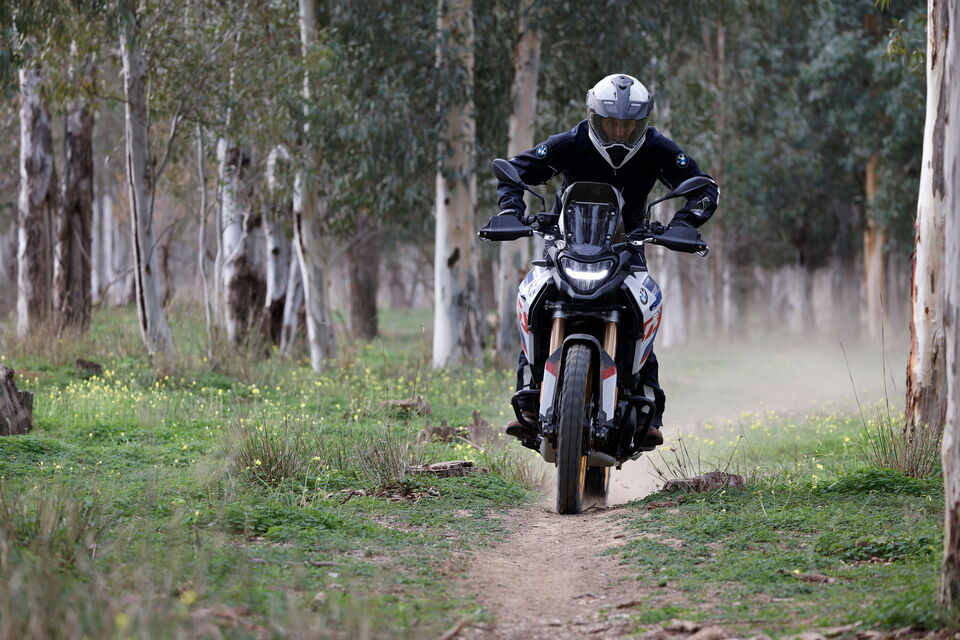
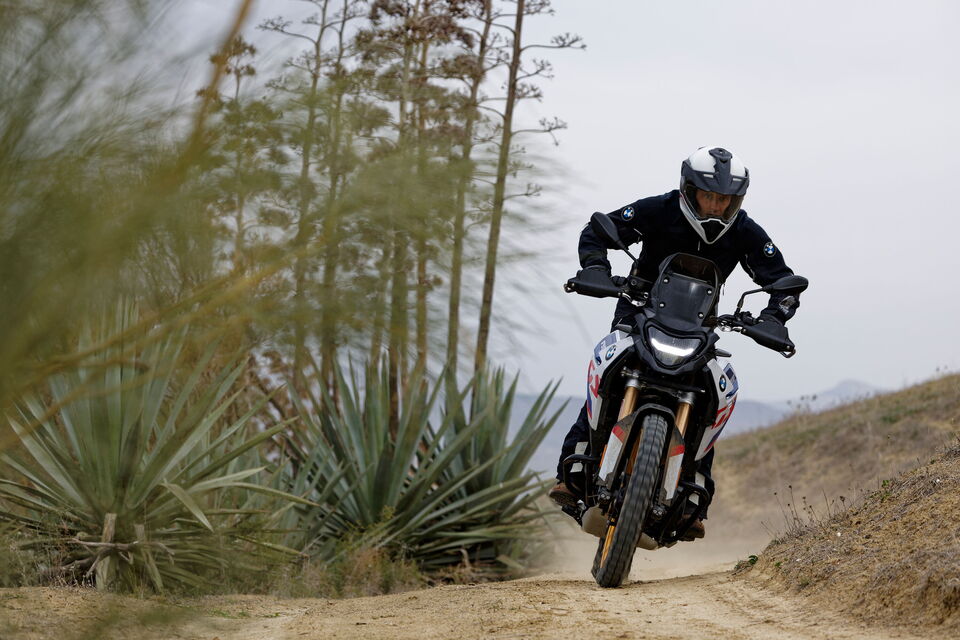
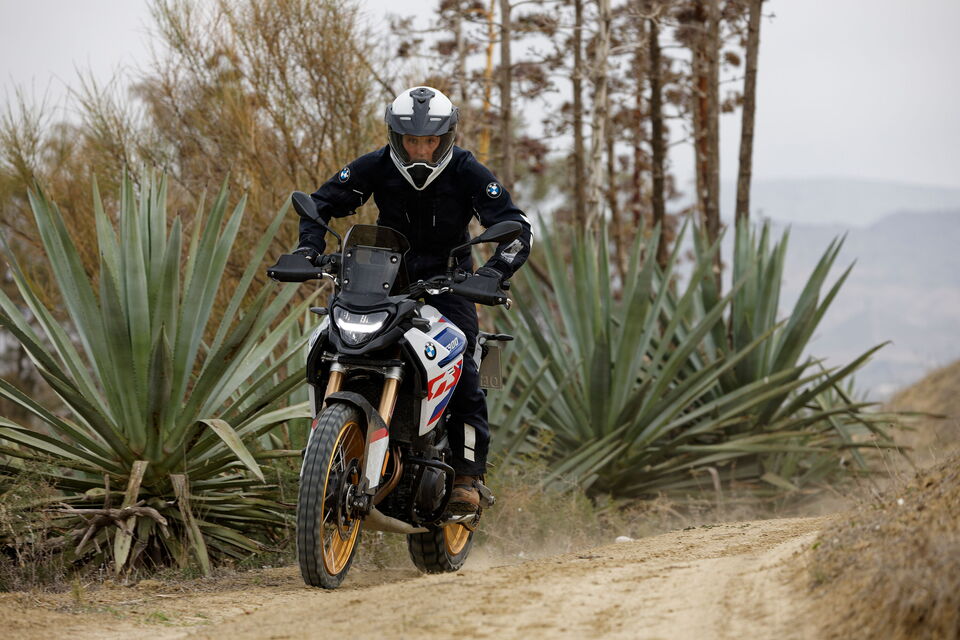
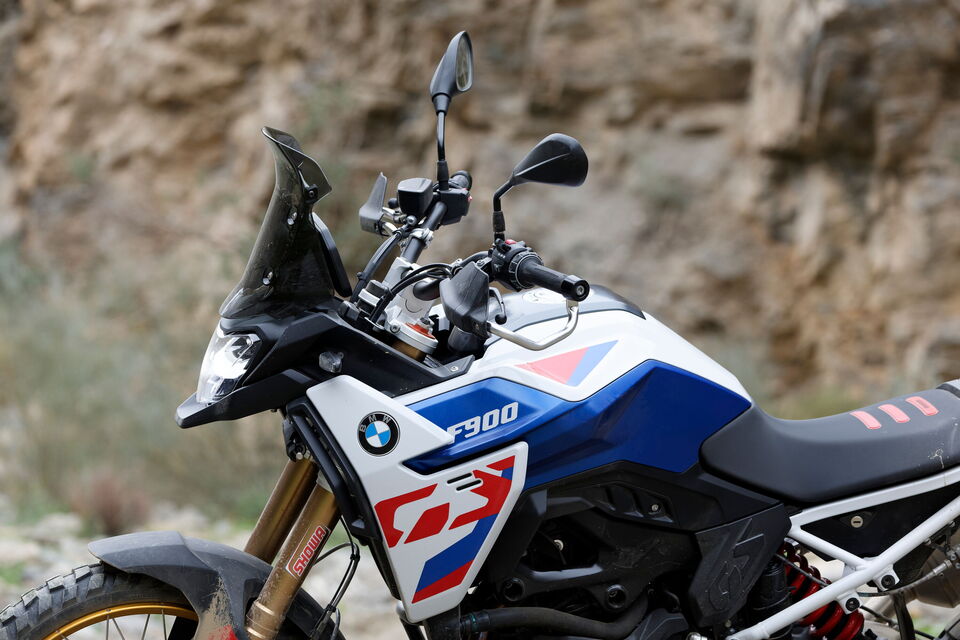
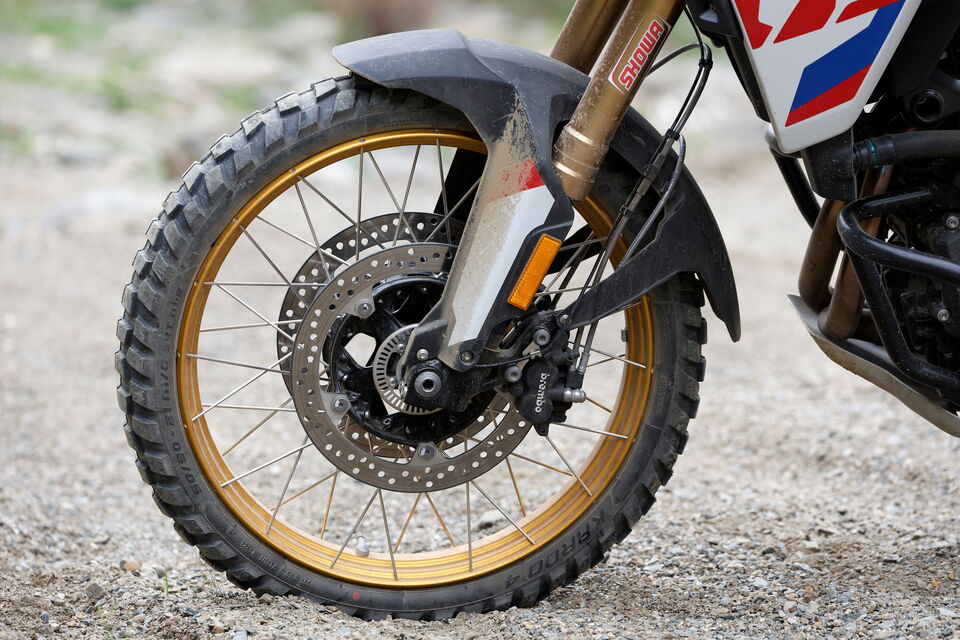
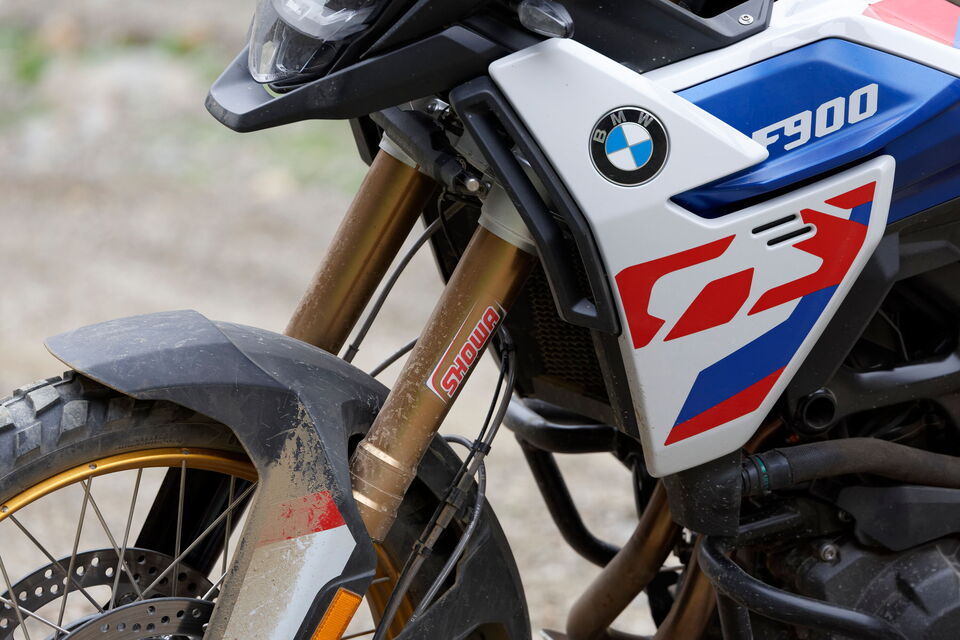
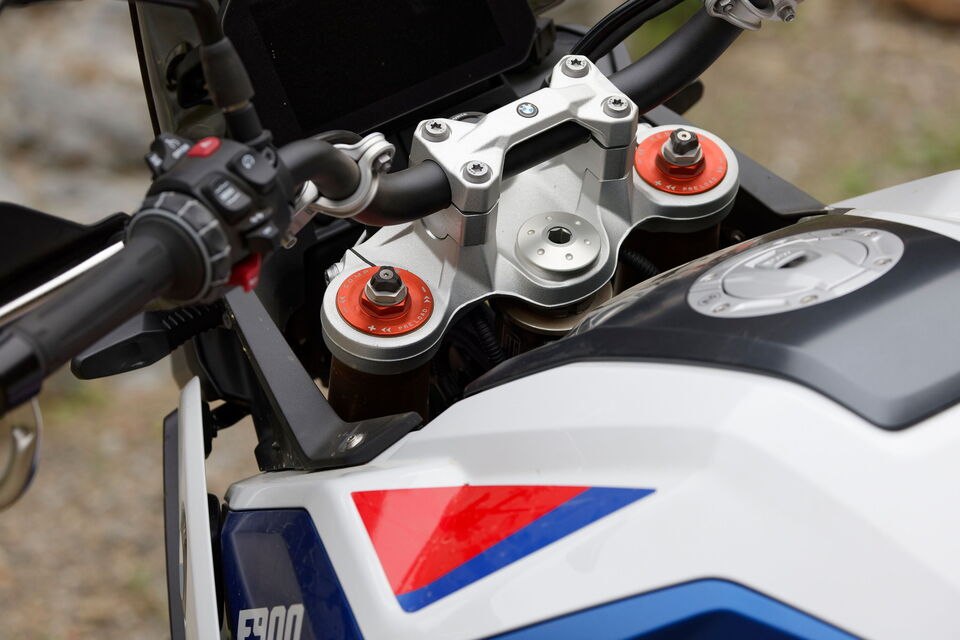
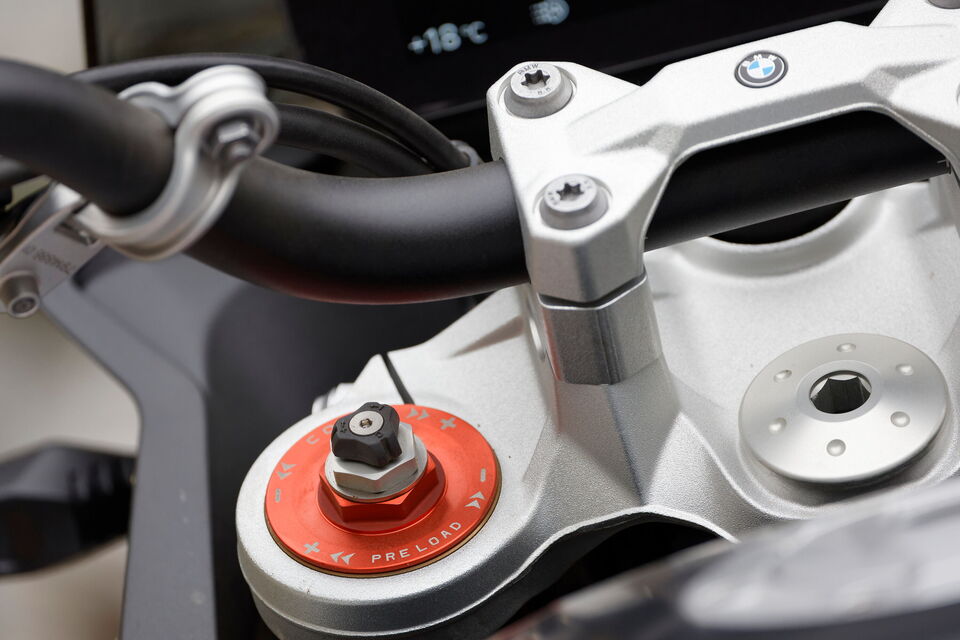
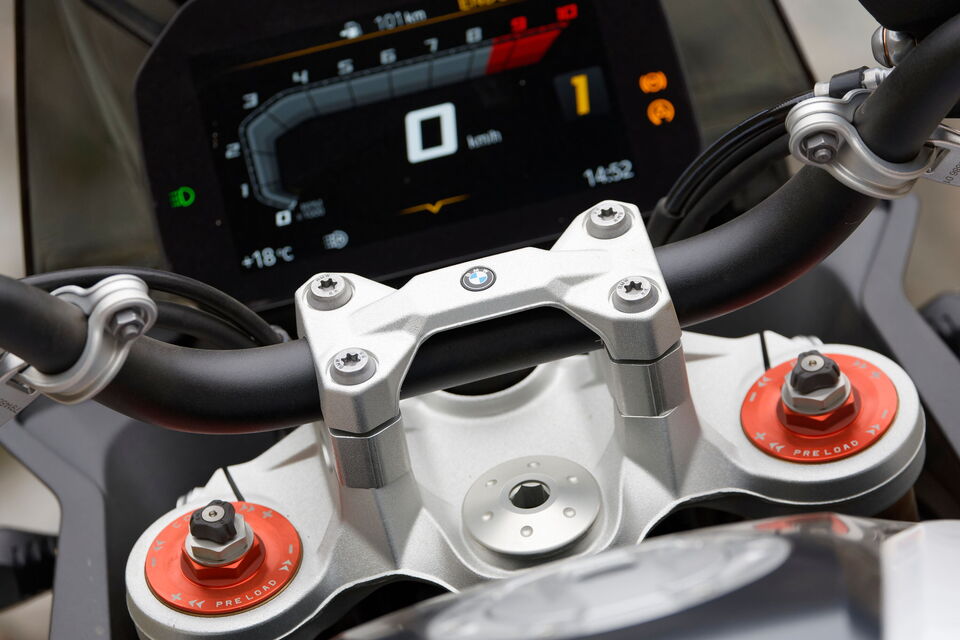
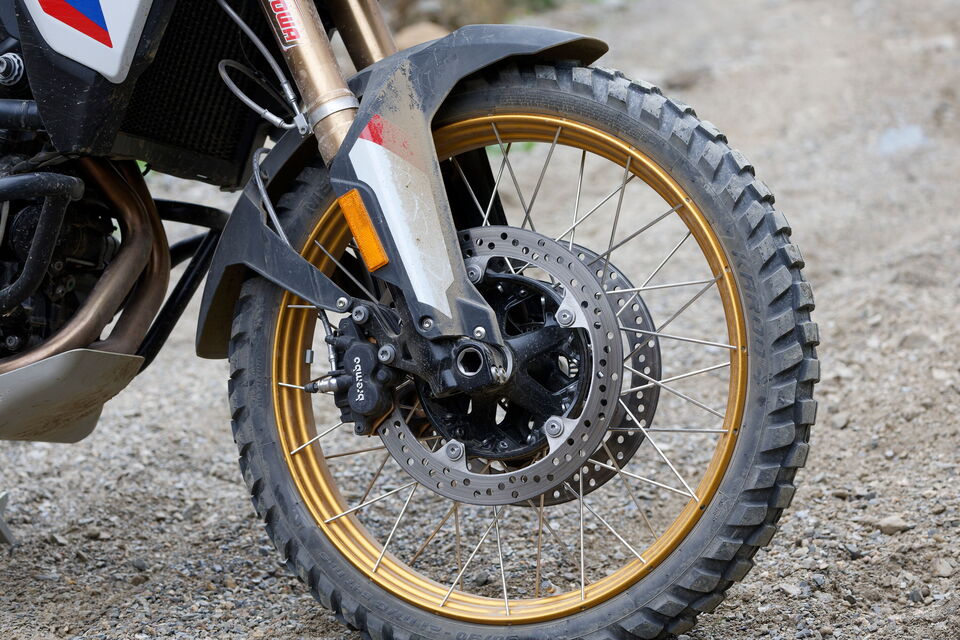
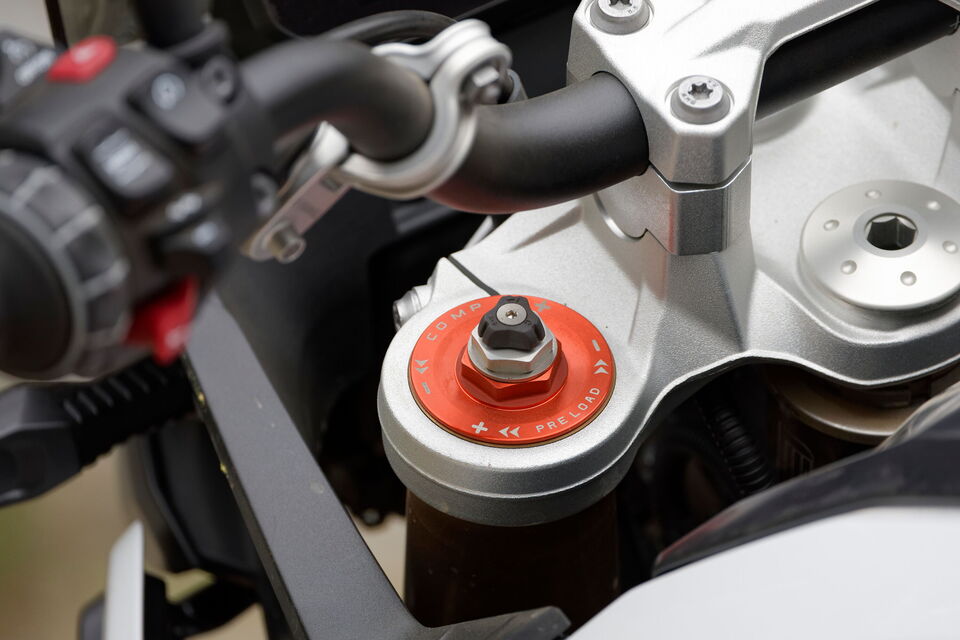
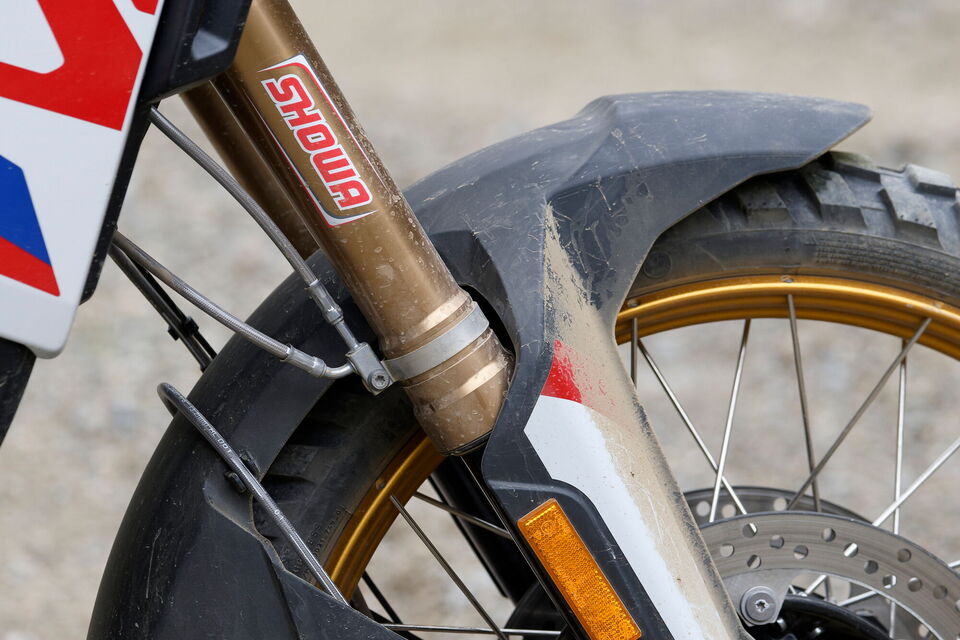
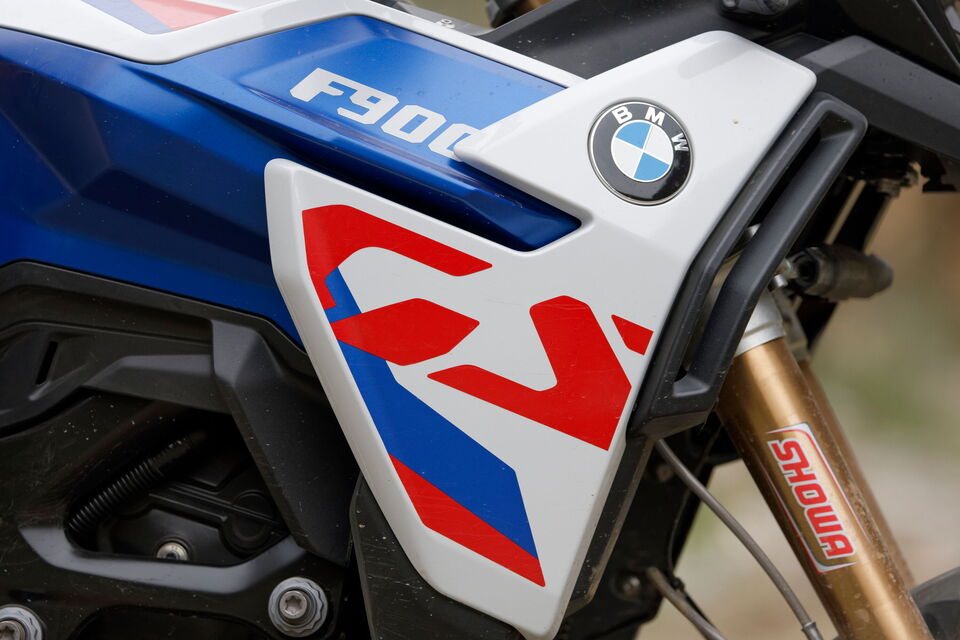
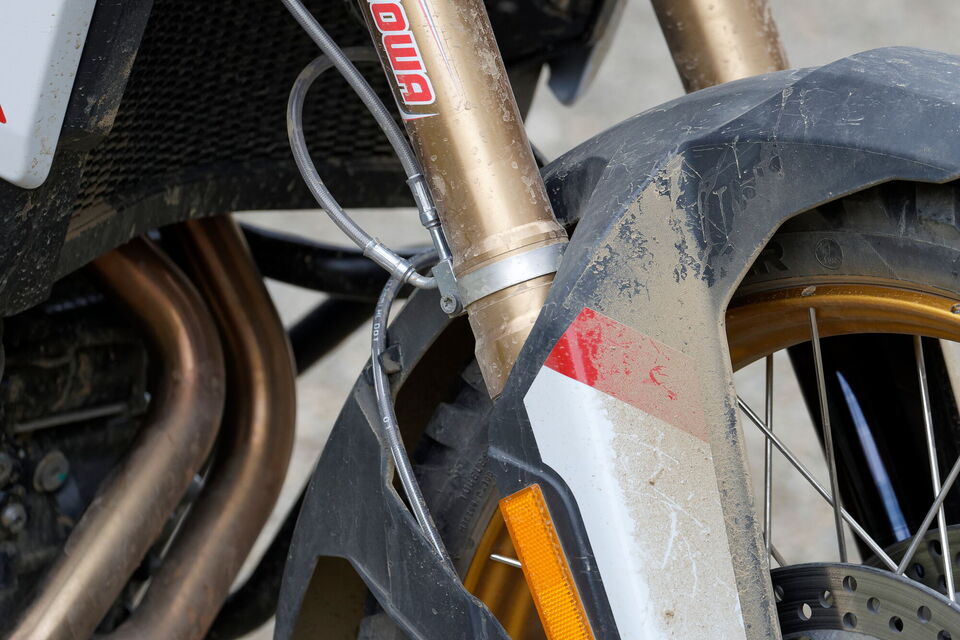
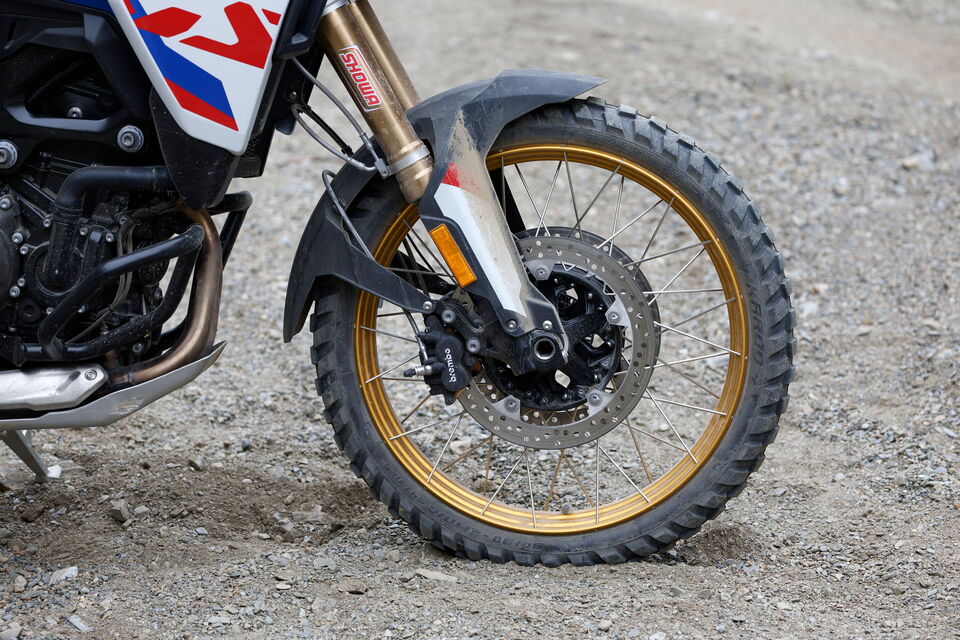
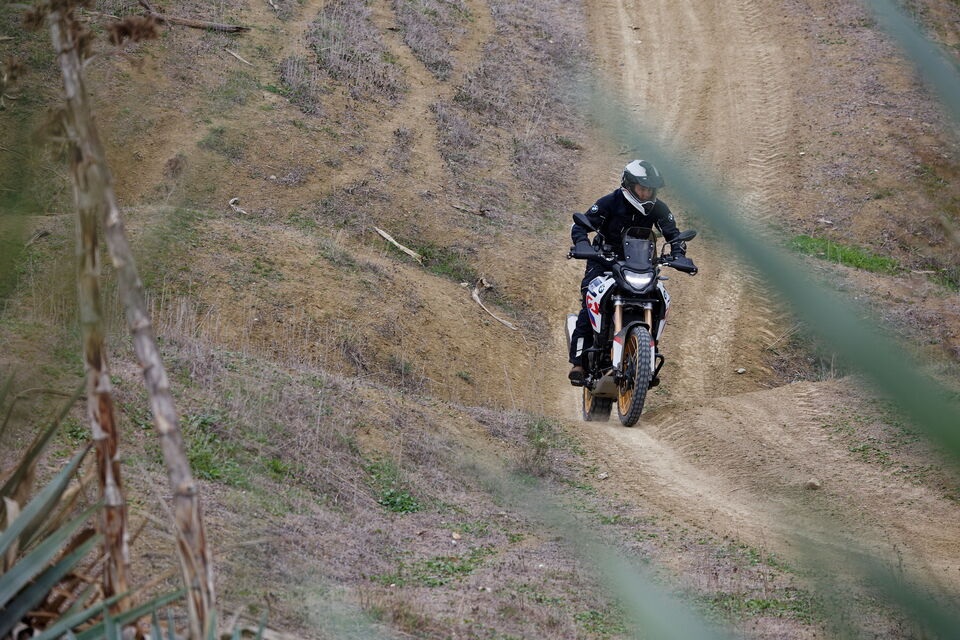
This is the heart of the new F 900 GS: a chassis that can finally be taken seriously off-road. Up front is a 43 mm Showa upside-down fork with 230 mm of travel, adjustable for spring preload, rebound, and compression damping.
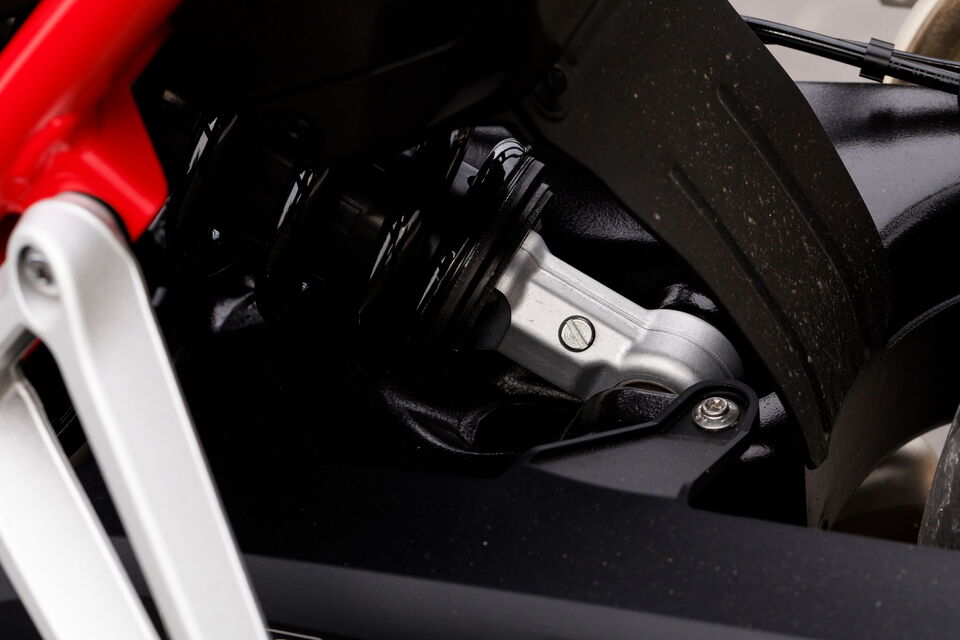
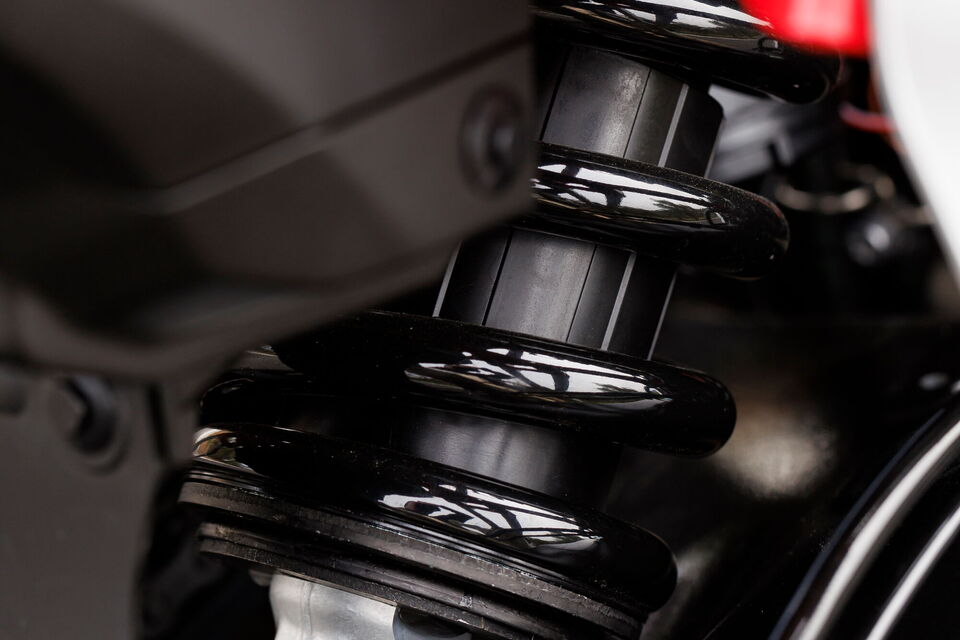
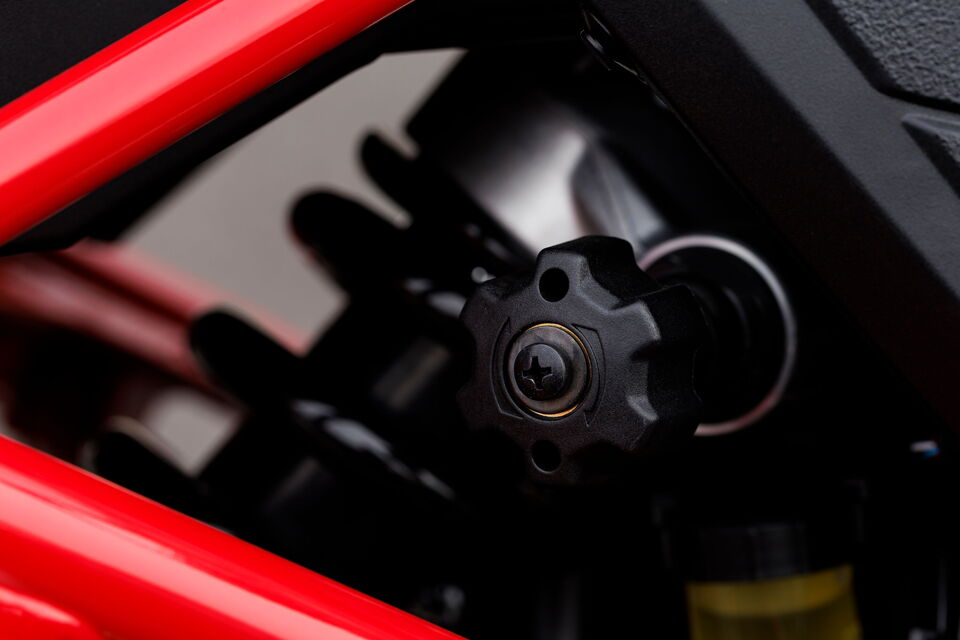
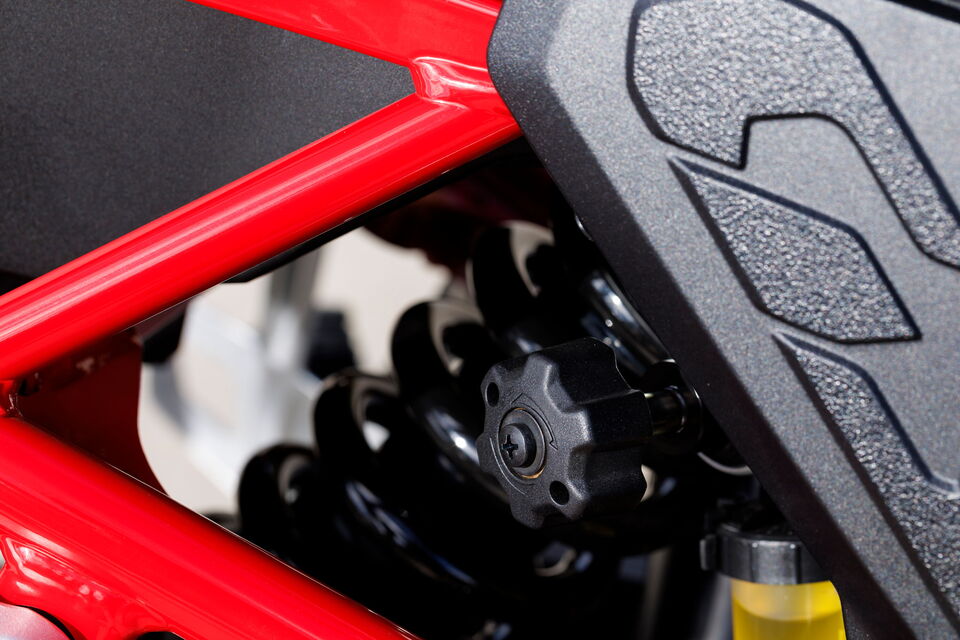
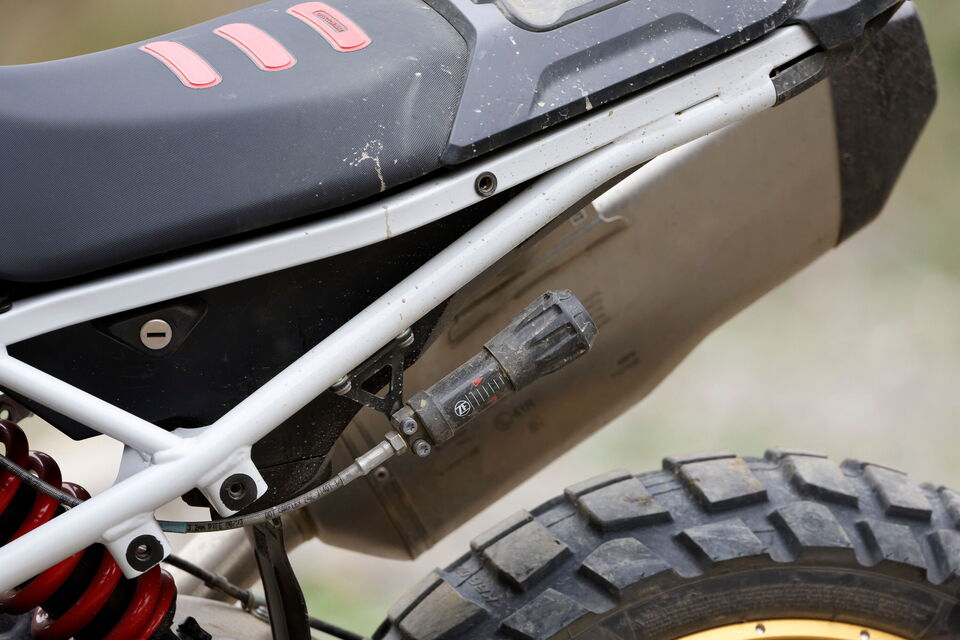
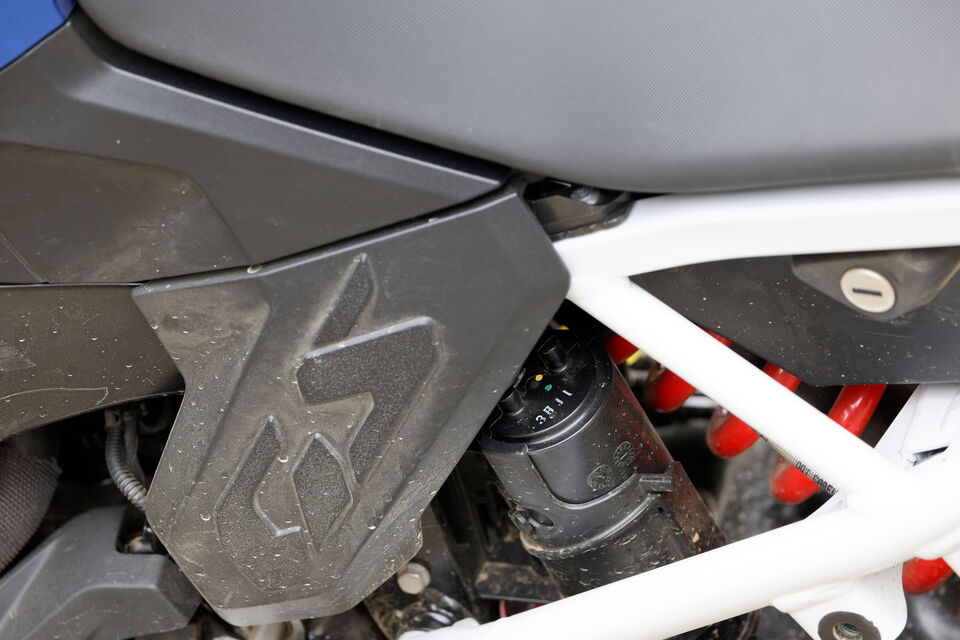
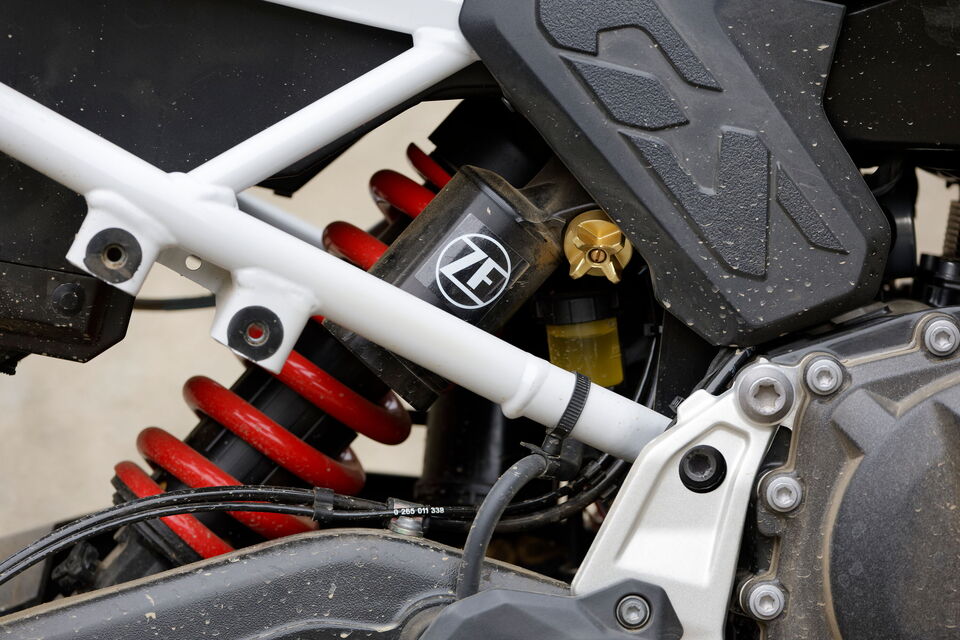
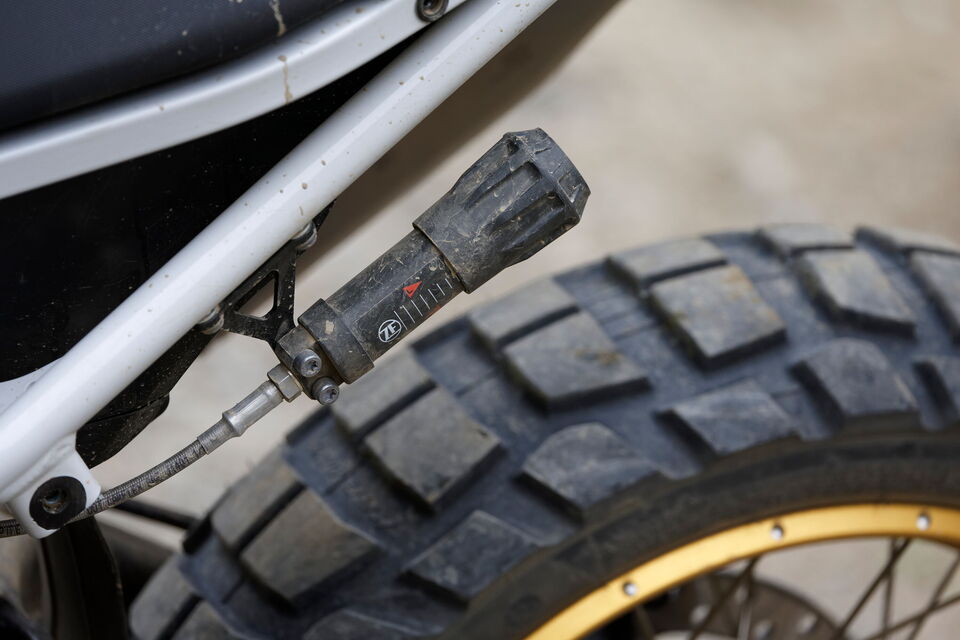
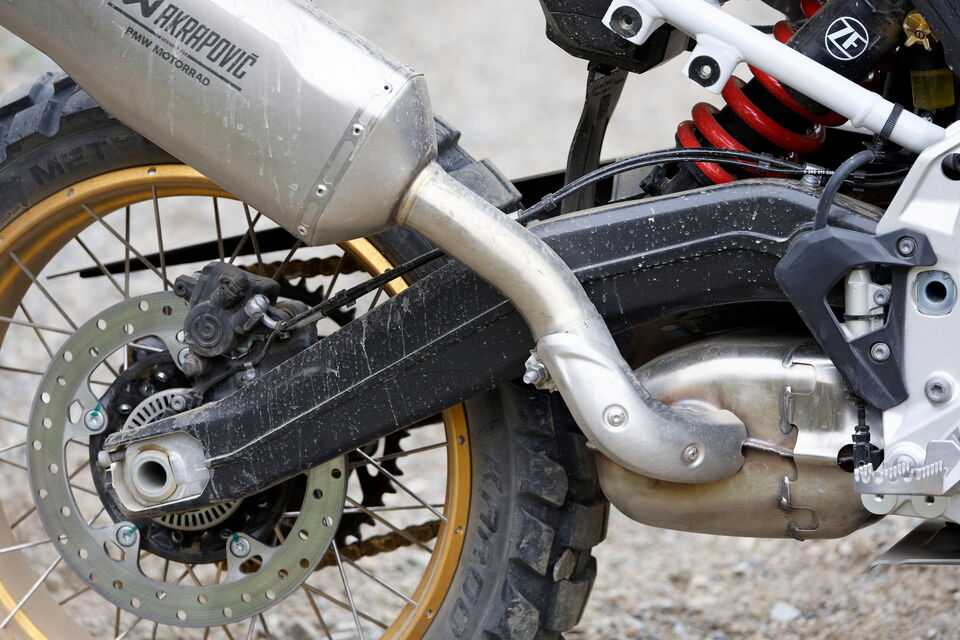
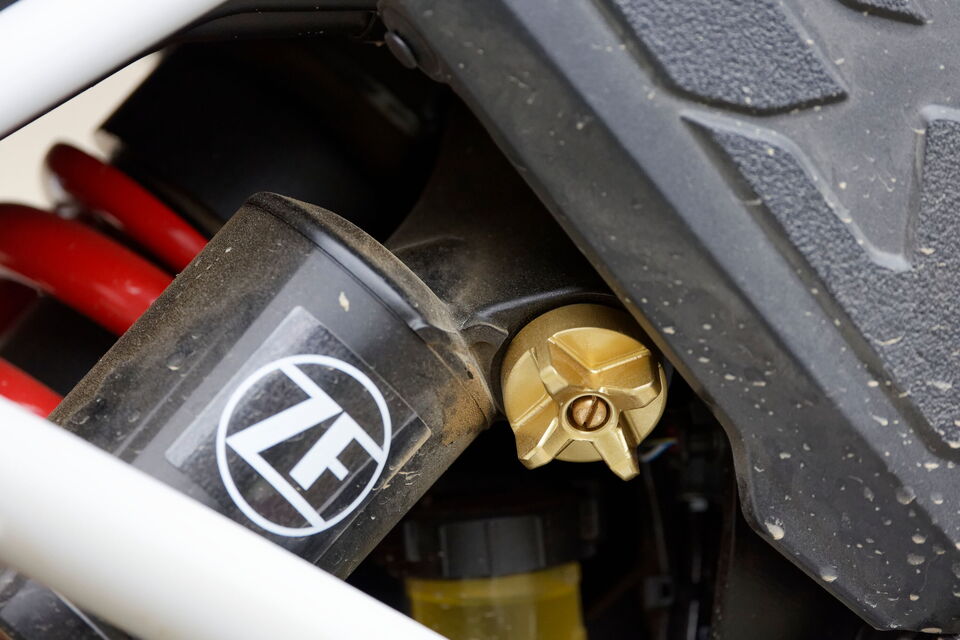
At the rear, an aluminum double-sided swingarm works with a directly mounted ZF shock offering 215 mm of travel, with adjustable rebound damping and spring preload.
Order the Enduro Pro Package for an additional €1,560 and you get a fully adjustable gold Showa fork and a fully adjustable Sachs shock with remote reservoir. With that setup, the F 900 GS reaches the suspension level of a dedicated enduro.
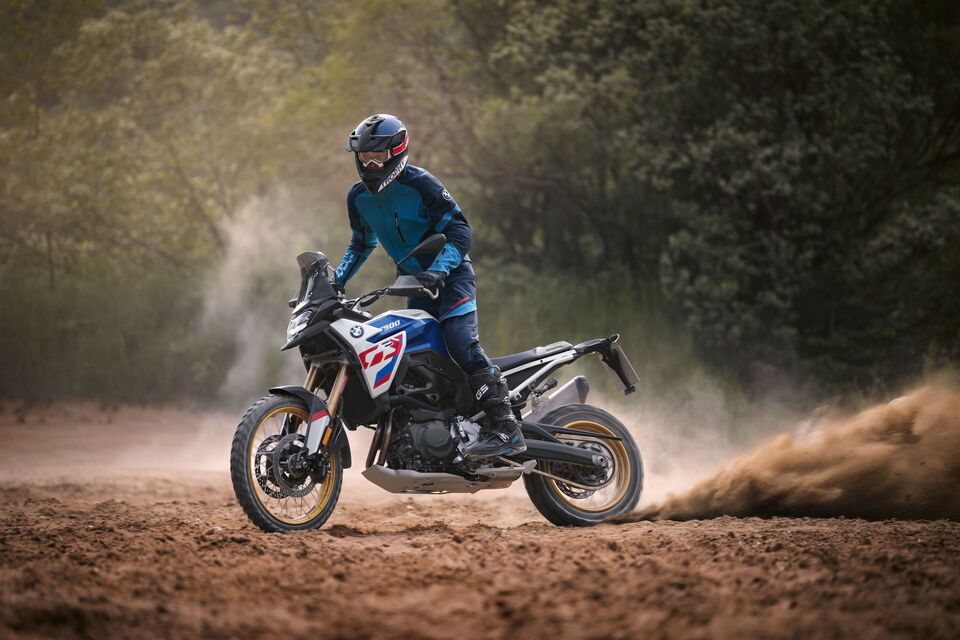
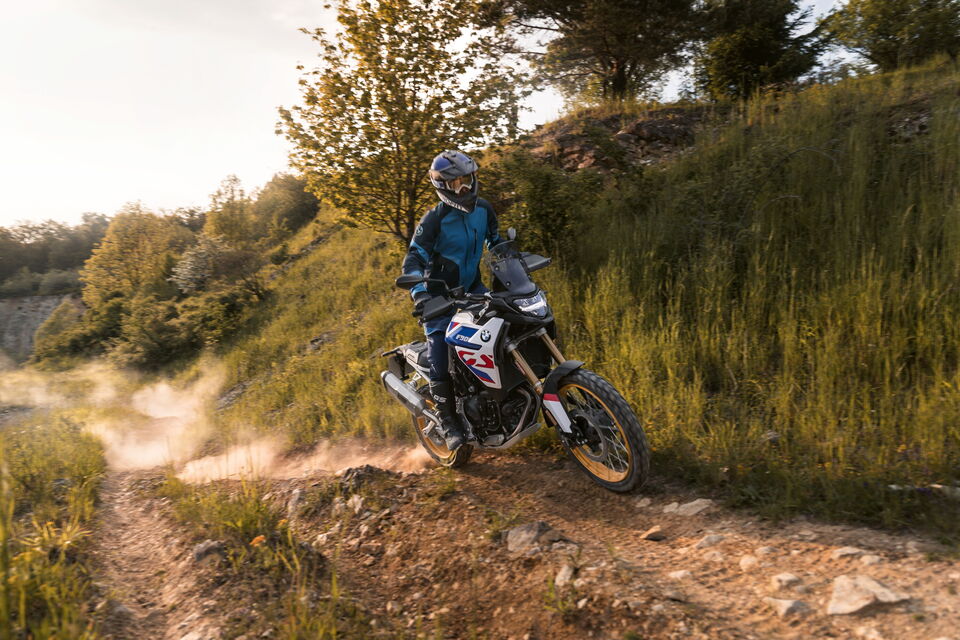
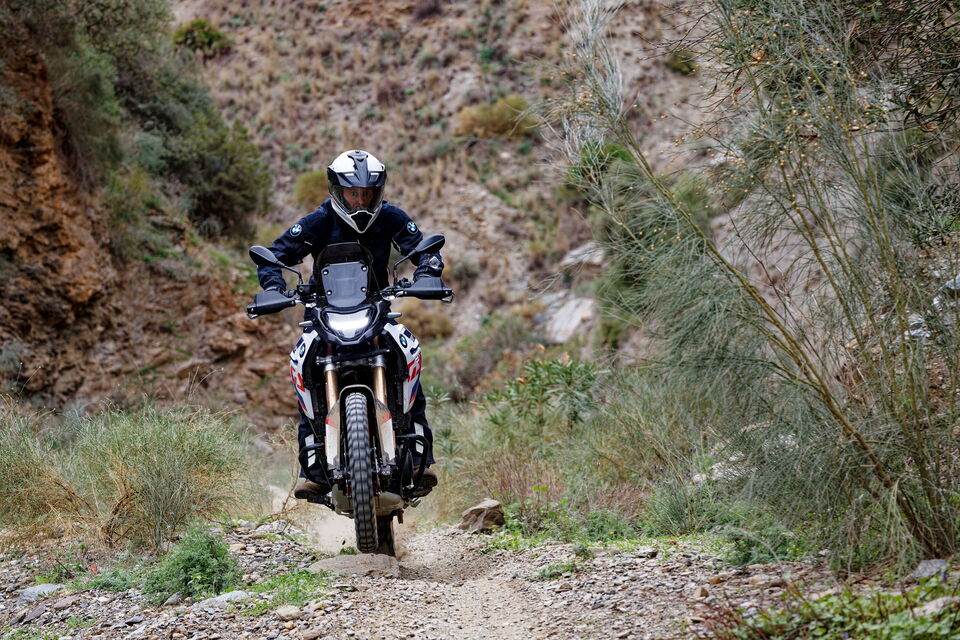
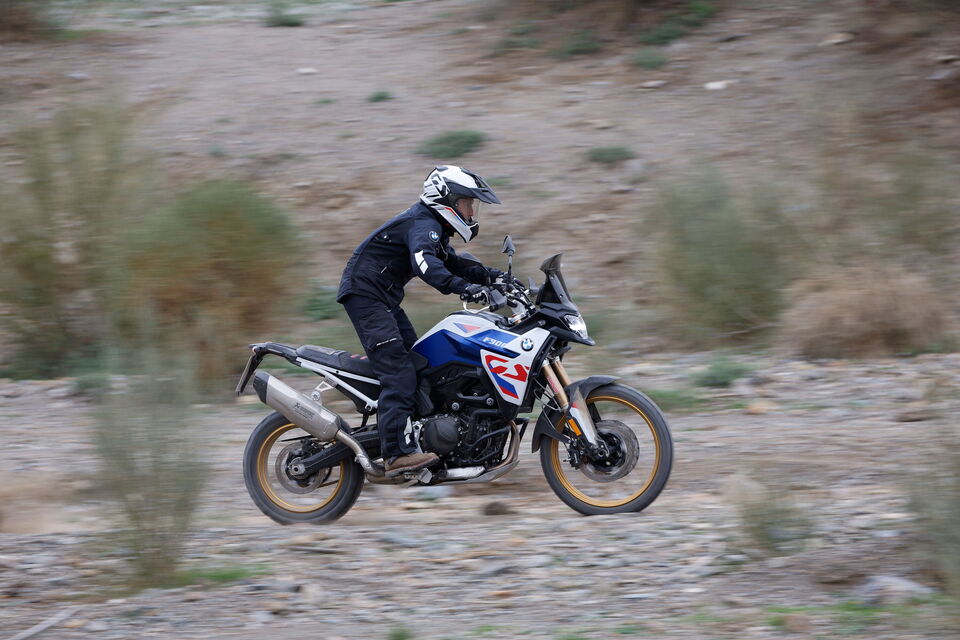
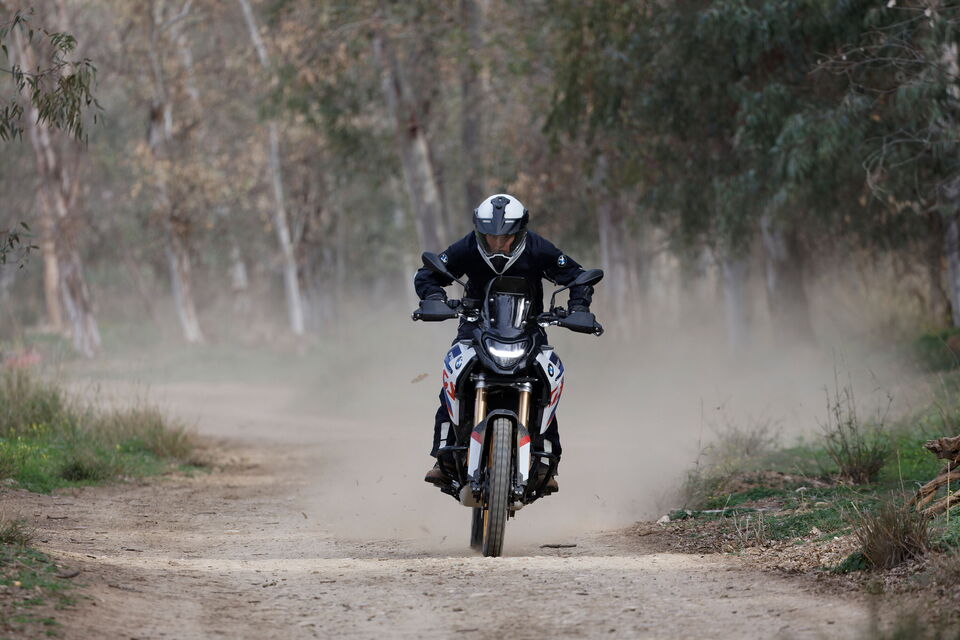
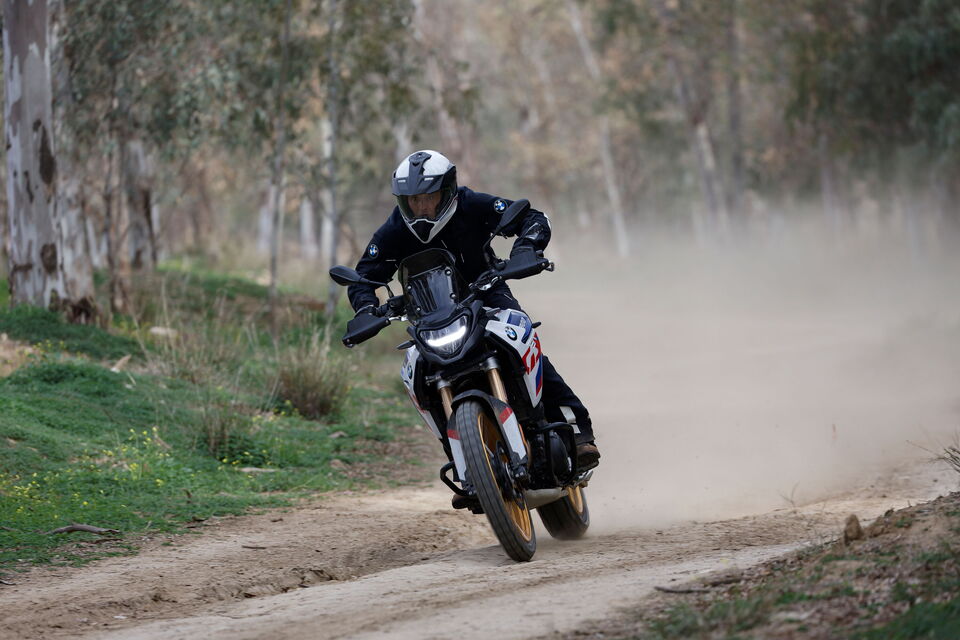
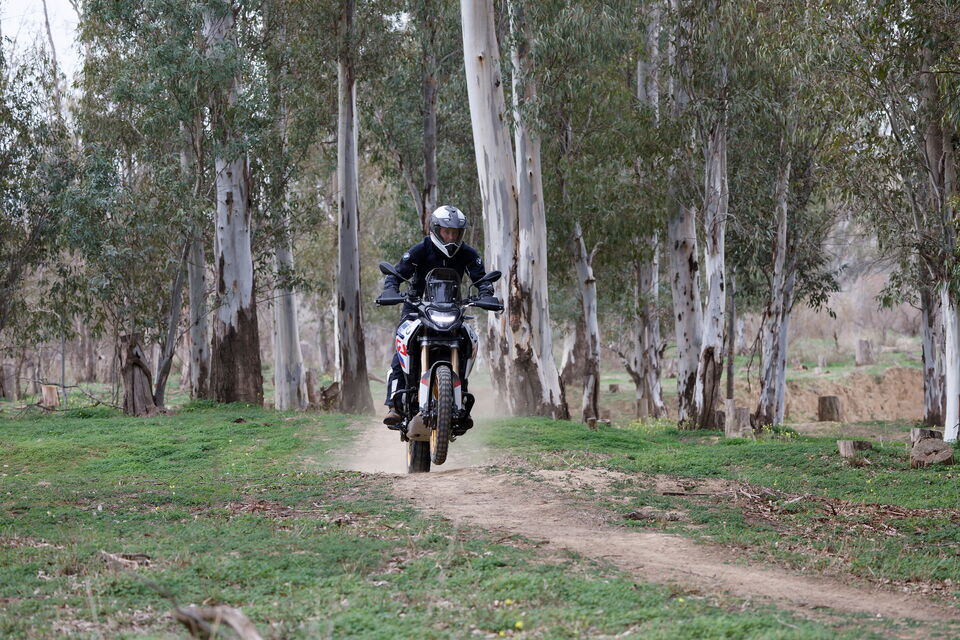
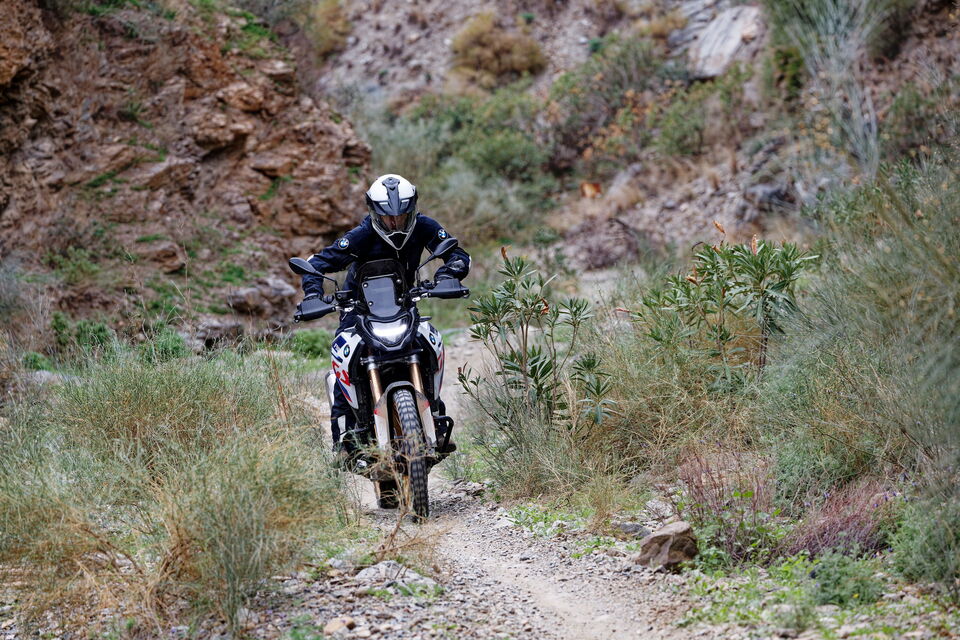
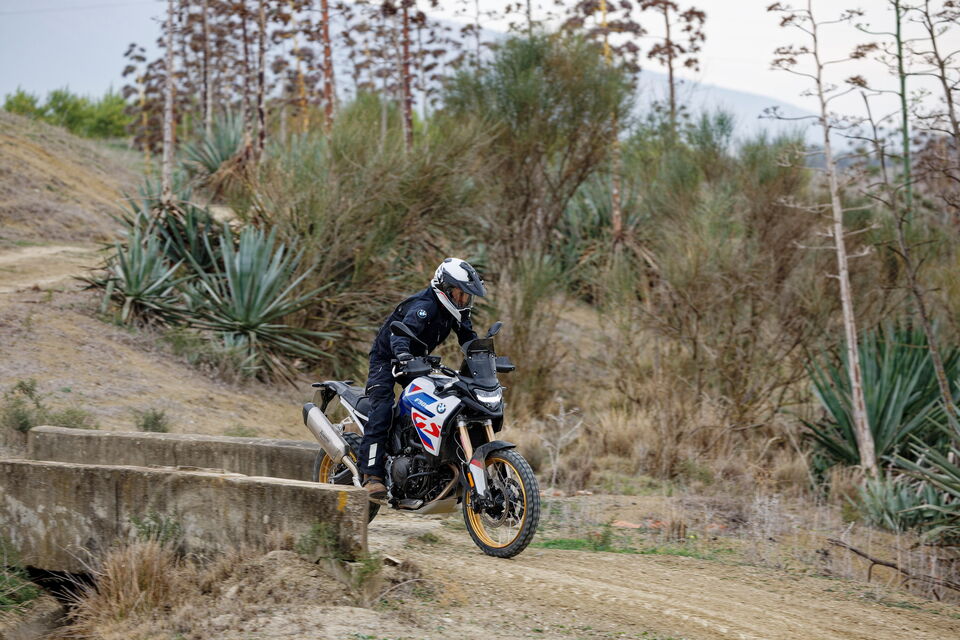
The standard suspension setup is designed for mixed use: comfortable on pavement without becoming vague, confident on gravel and dirt roads, even at higher speeds.
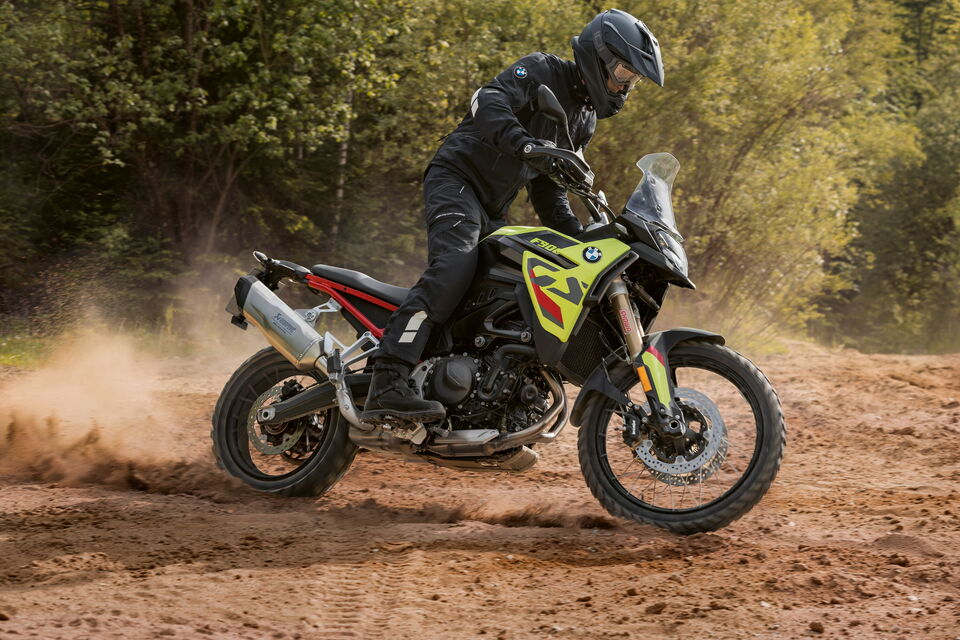
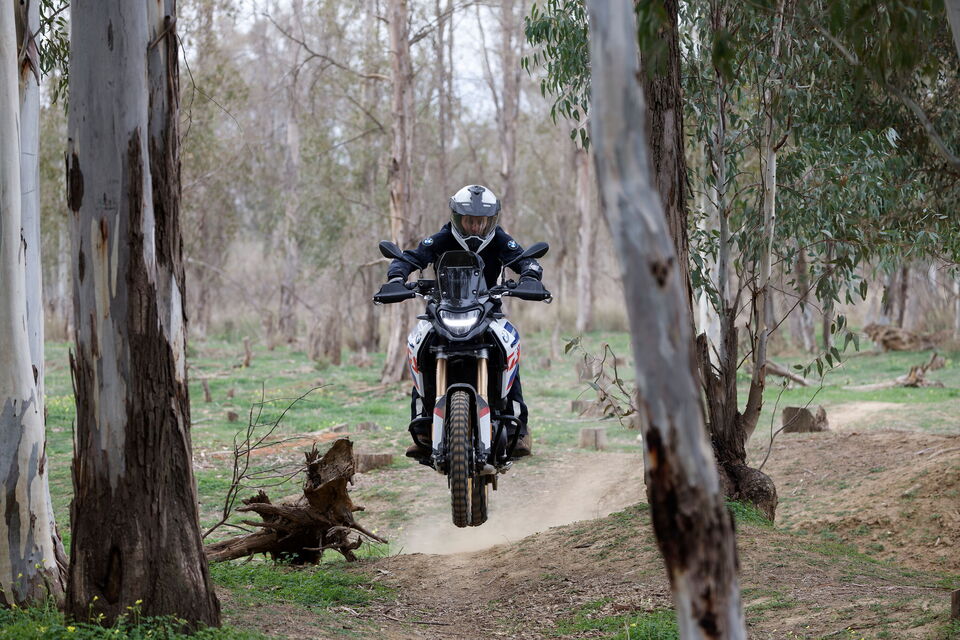
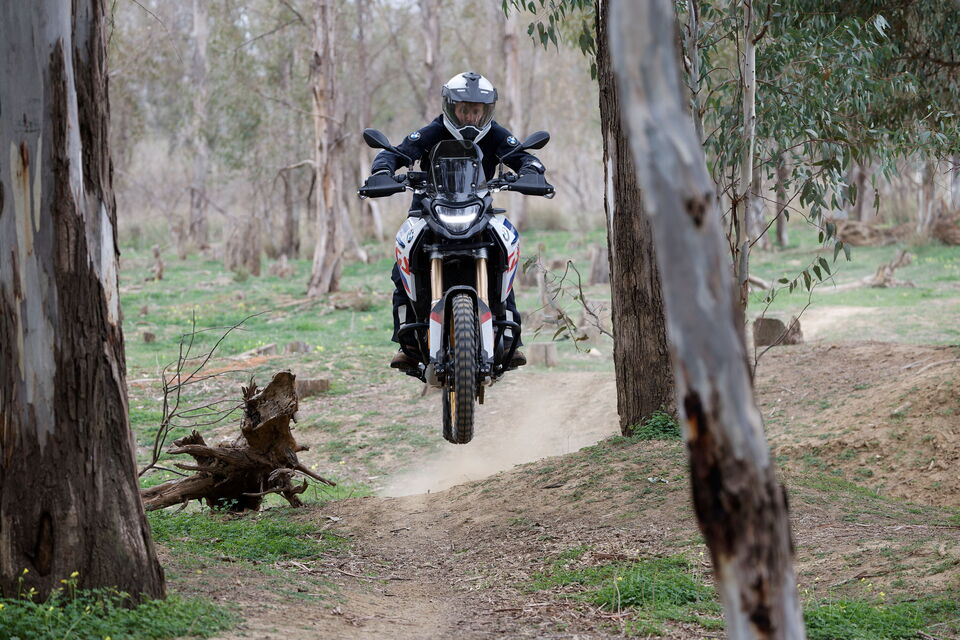
The GS absorbs deep holes without drama. With 230 mm of front suspension travel, there is plenty of reserve before the suspension reaches its limits.
Riders who regularly tackle serious off-road terrain should upgrade to the Enduro Pro Package. Those who mainly ride pavement with occasional gravel sections will be well served by the standard suspension.
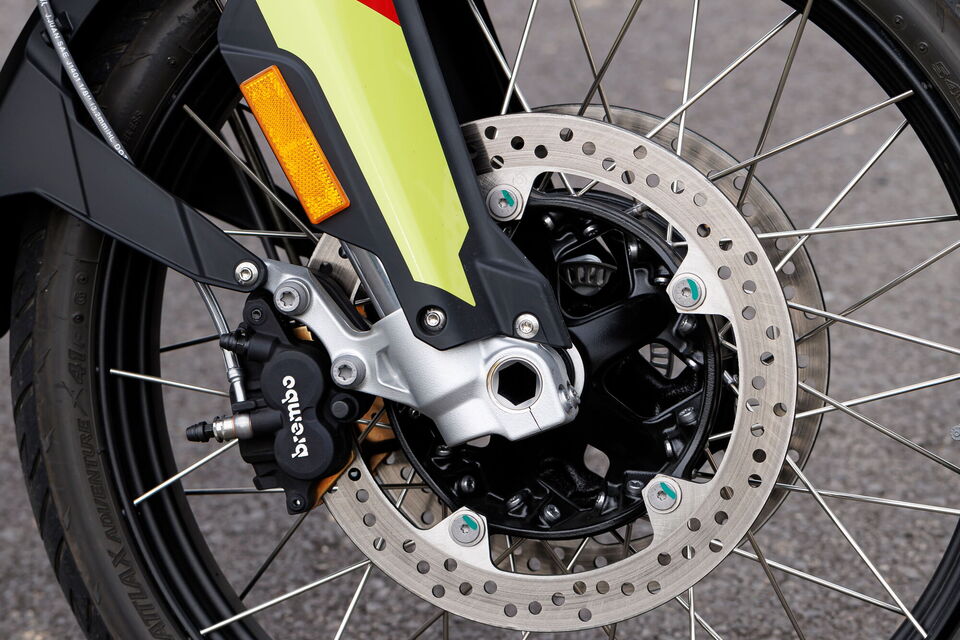
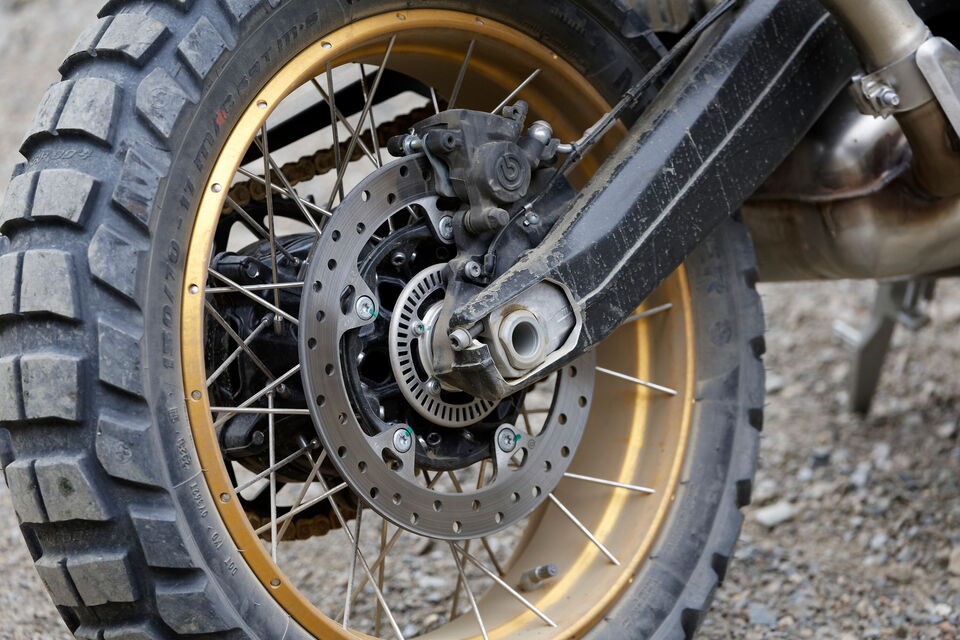
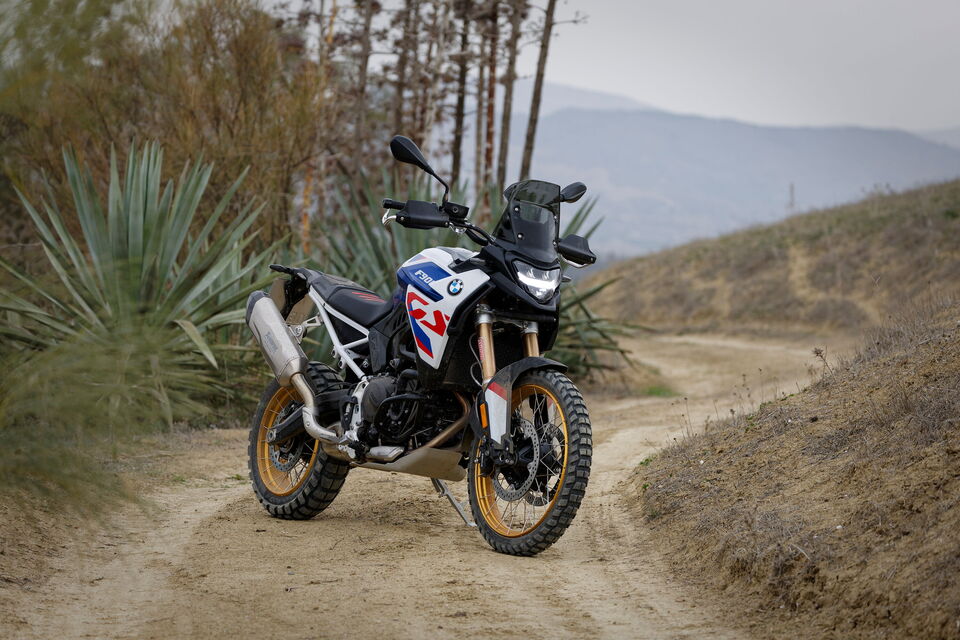
The 21-inch front wheel (90/90-21) is the most important difference compared with the F 800 GS. Larger wheels roll over obstacles more easily, work better off-road, and provide greater stability on loose surfaces.
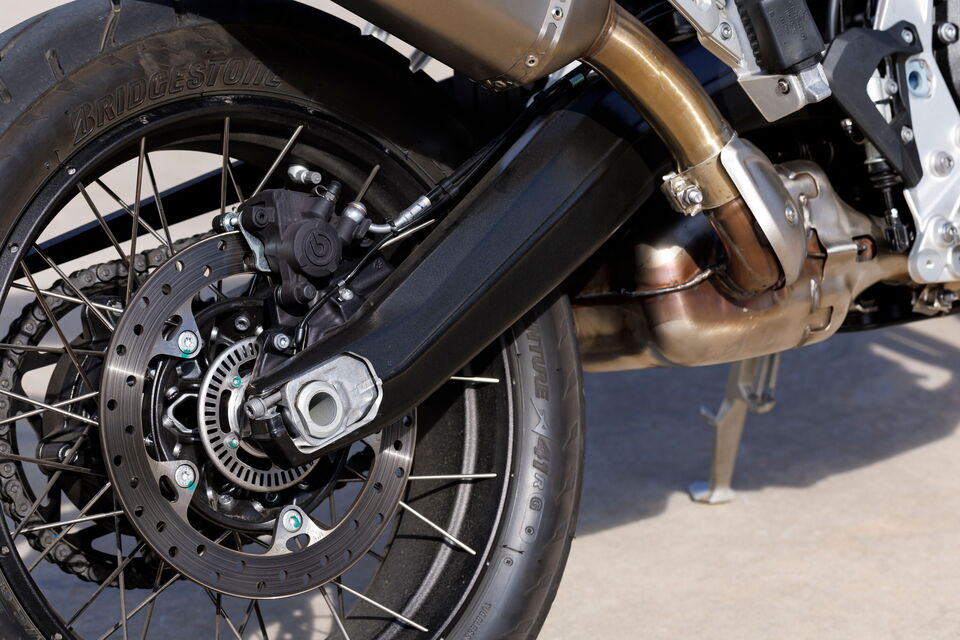
The 17-inch rear wheel (150/70-17) is the familiar compromise that preserves good road manners. Tubeless wire-spoked wheels come standard.
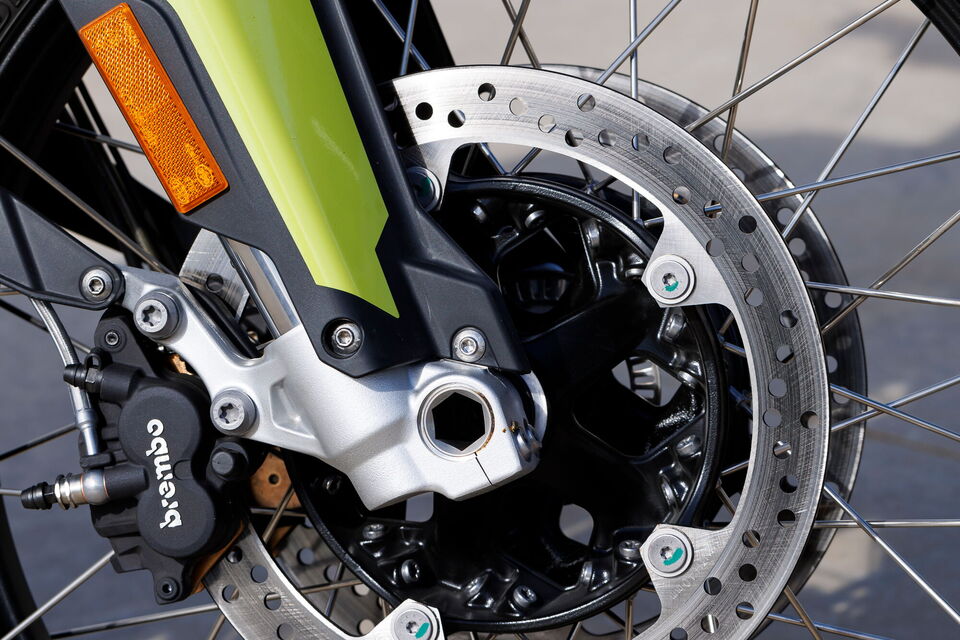
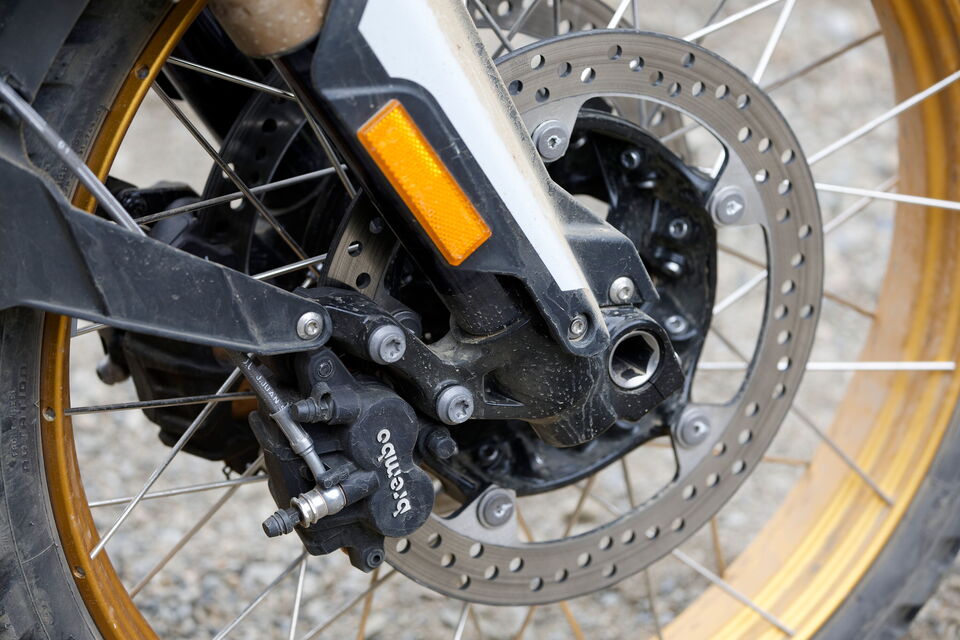
Braking comes from dual 305 mm front discs with two-piston floating calipers and a rear disc. That is adequate for a middleweight enduro. Ambitious riders may miss radial-mount Brembo calipers, but BMW’s lean-angle-optimized ABS Pro comes standard.
Ergonomics: 870 mm Seat Height—and a Natural Overall Feel
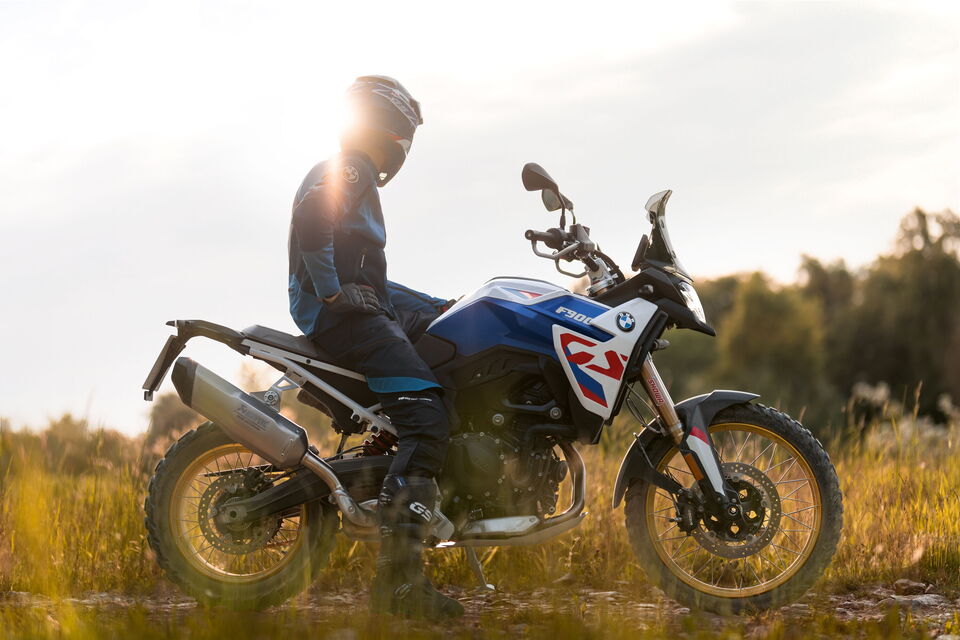
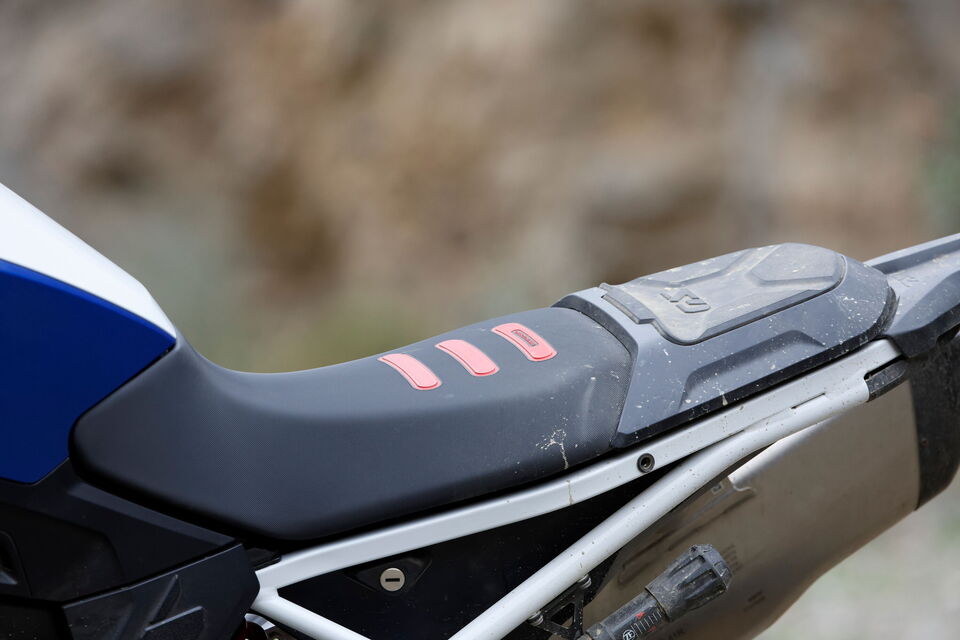
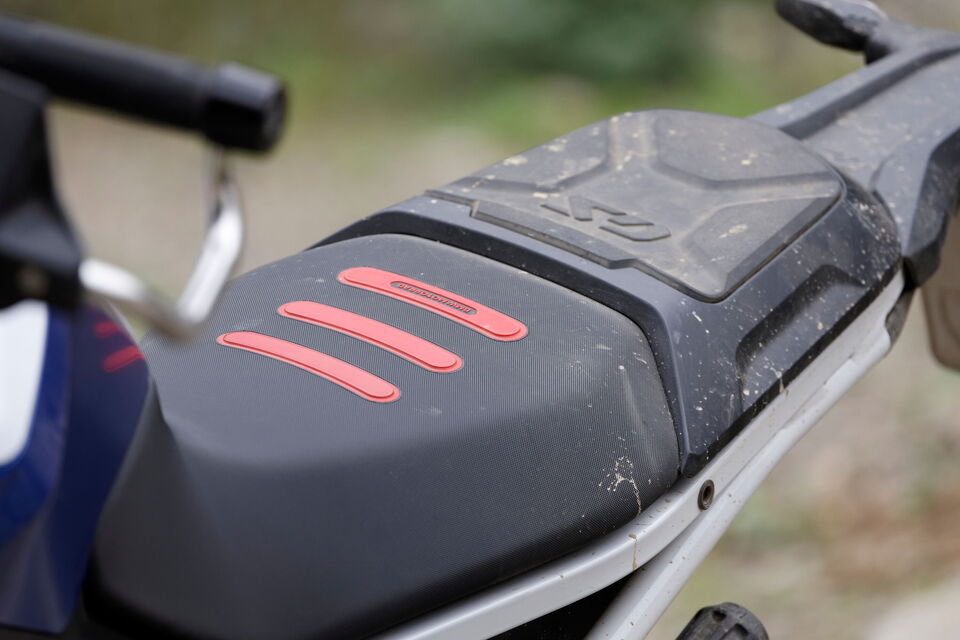
Standard seat height is 870 mm. That is moderate for a full-size enduro, but challenging for riders under 1.70 meters. You may get one foot on the ground while the other remains suspended.
BMW offers several solutions: a lowering kit that reduces seat height to 815 mm—while also reducing suspension travel to 210/195 mm—a low seat at 835 mm, an extra-low seat at 825 mm, and a Rally seat at 890 mm. That broad range of adjustment is a genuine advantage.
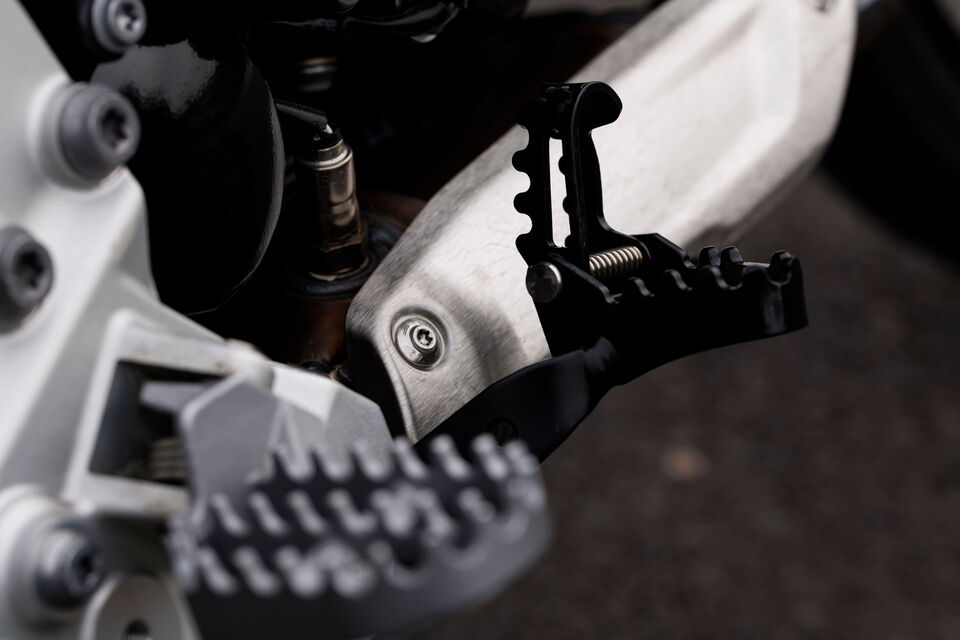
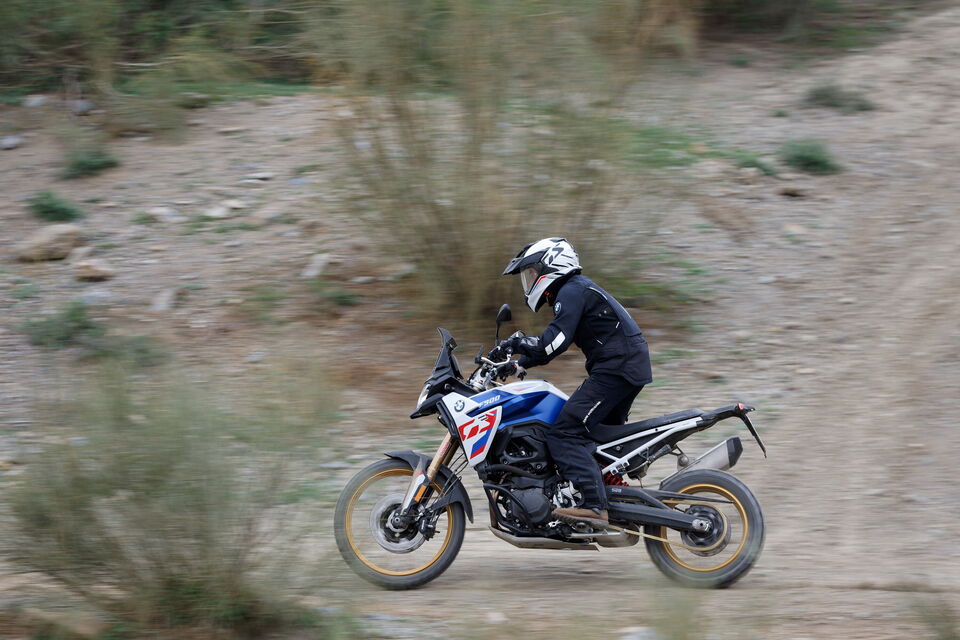
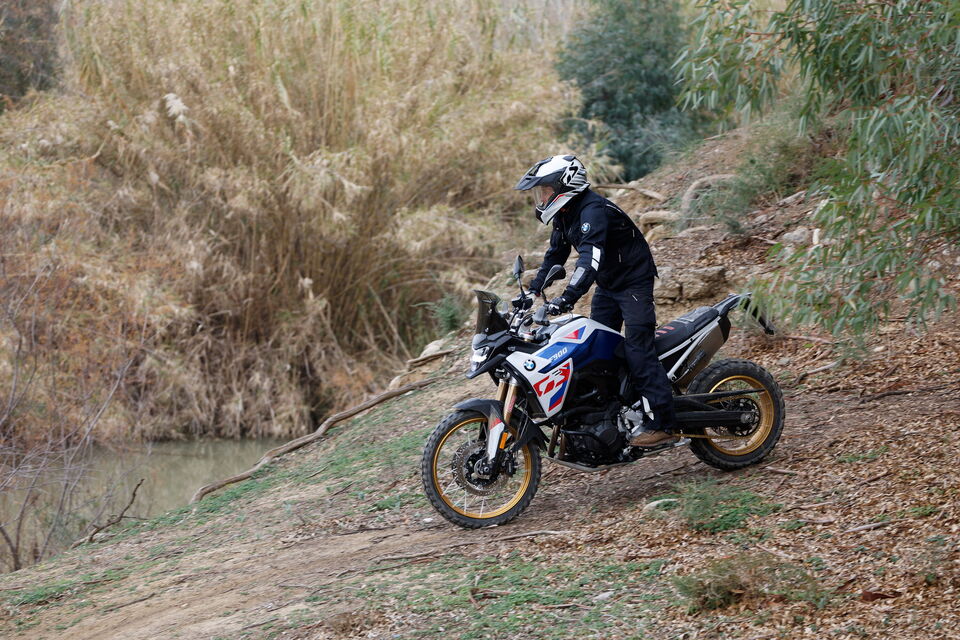
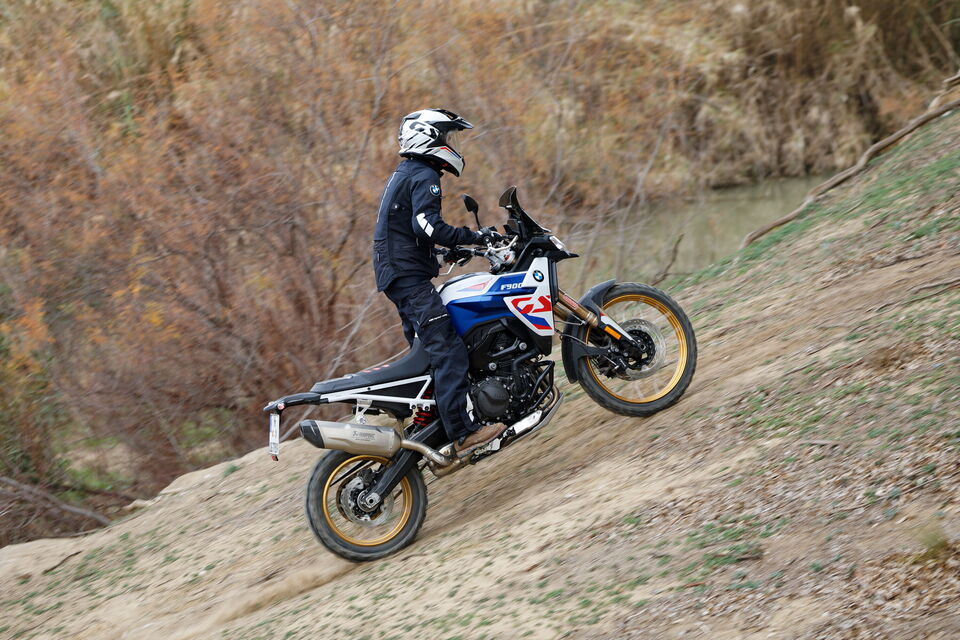
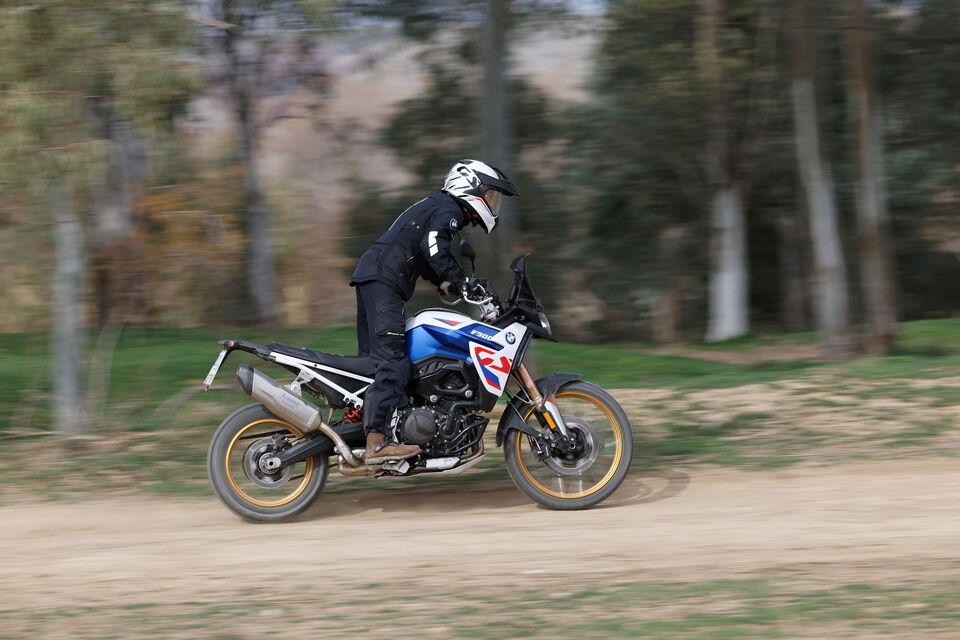
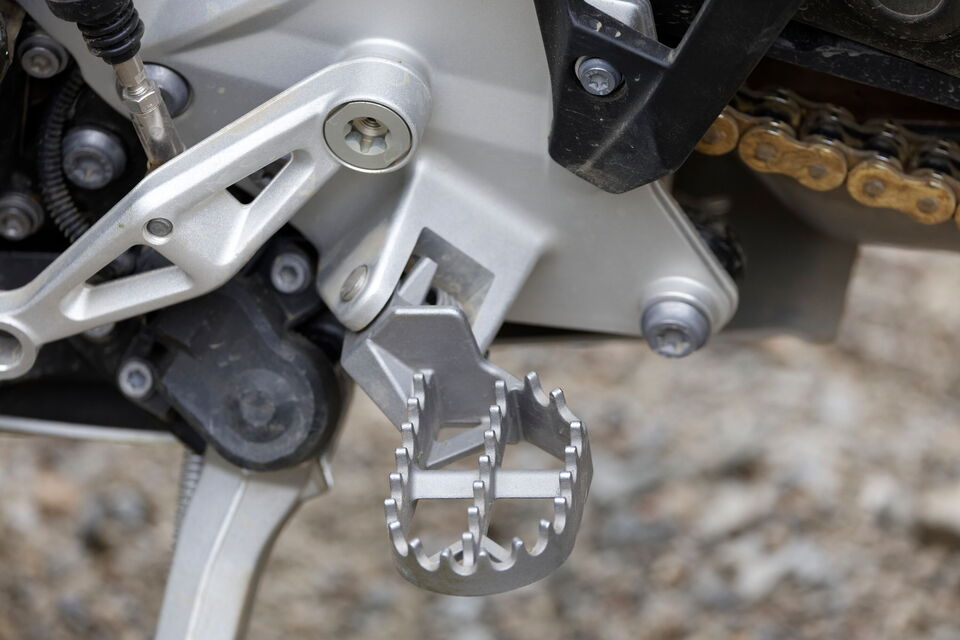
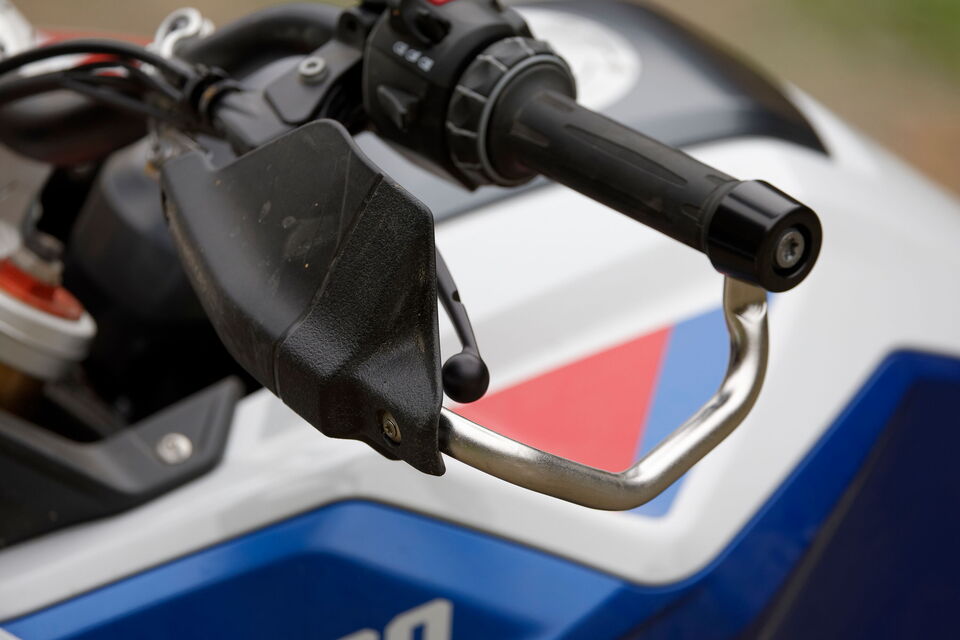
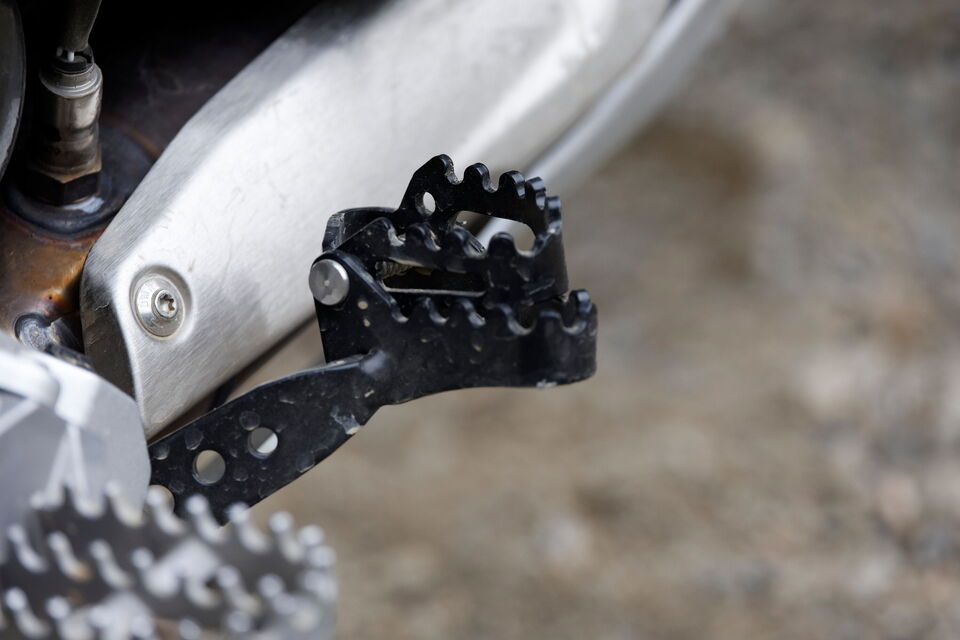
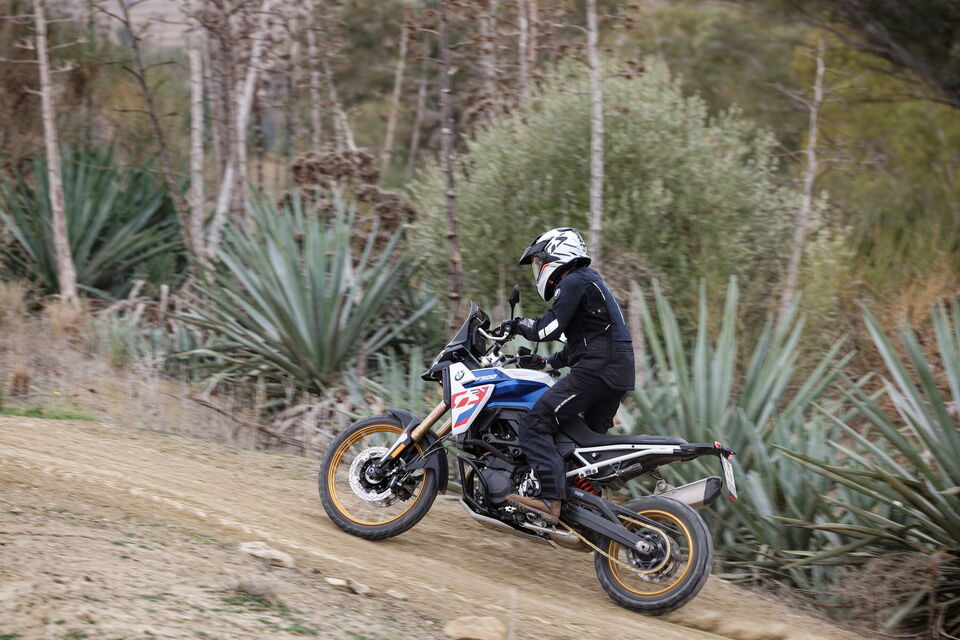
The F 900 GS ergonomics are designed for active riding. The handlebar is high and wide, and standing on the pegs feels natural and effective. Seated, the rider remains upright with a good view of the road. The slim bodywork allows the knees to grip the tank effectively, which matters off-road when actively steering the motorcycle with your legs.
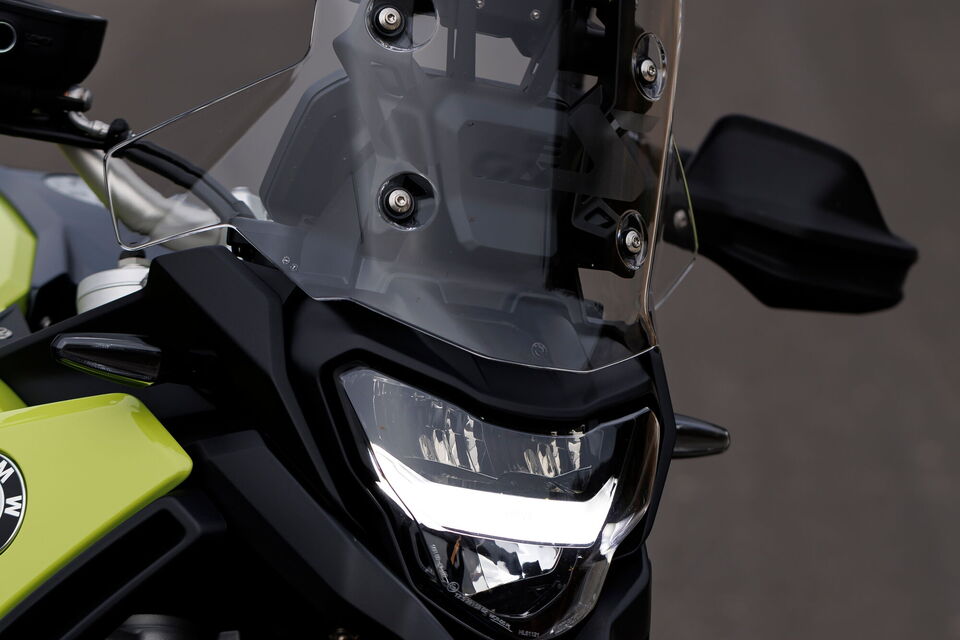
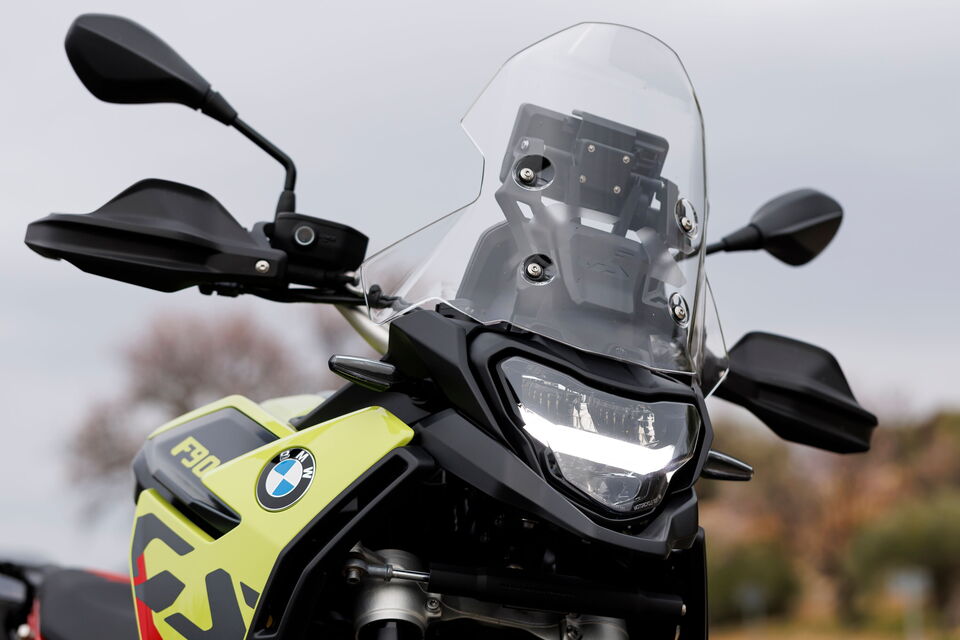
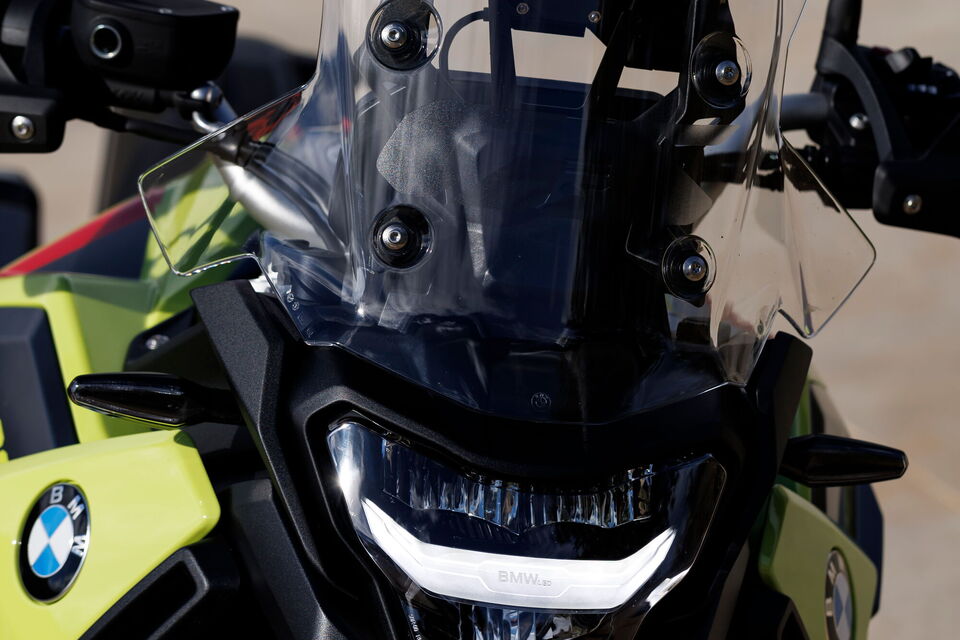
For long highway stretches, the optional touring windscreen is recommended. The standard screen provides adequate protection at moderate speeds, but at 160 km/h you will definitely feel the airflow.
Handling: 219 kg and 0–100 km/h in 3.8 Seconds
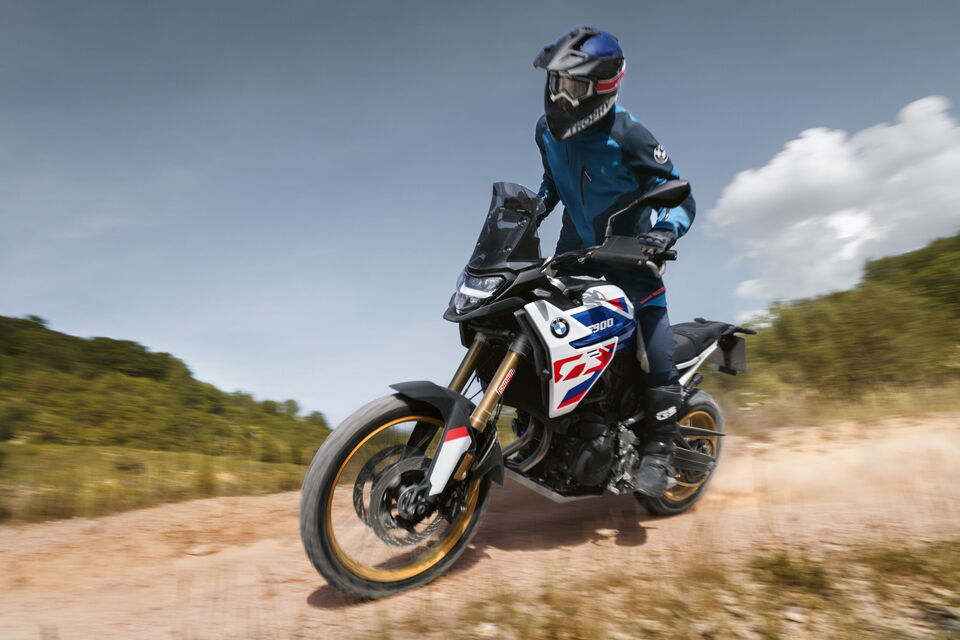
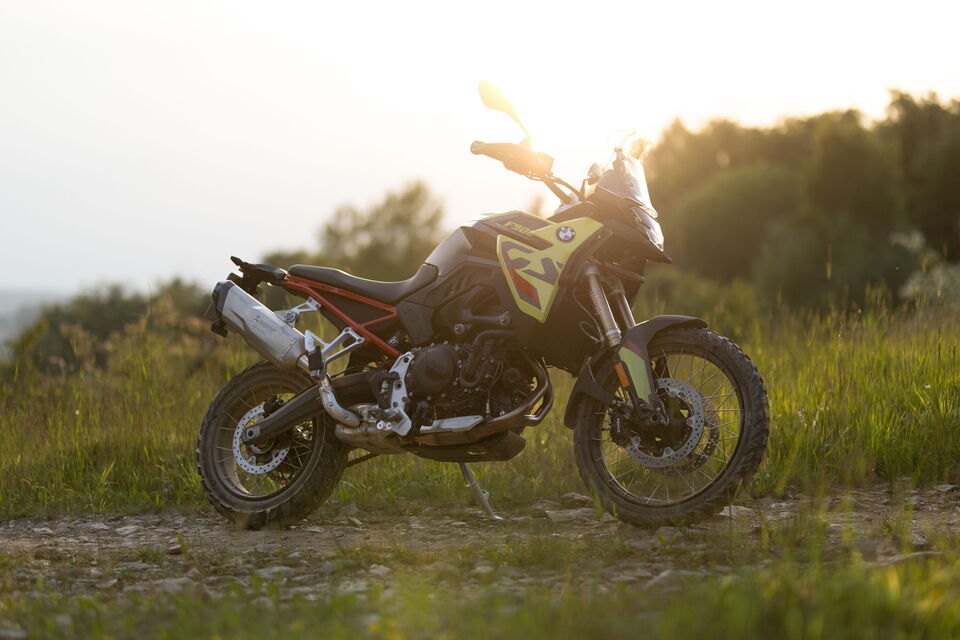
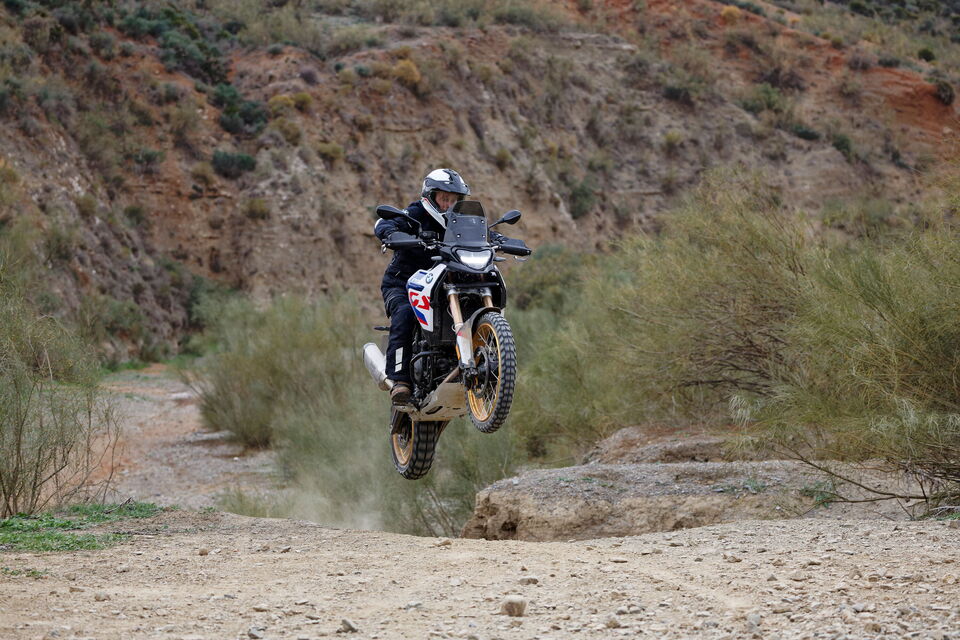
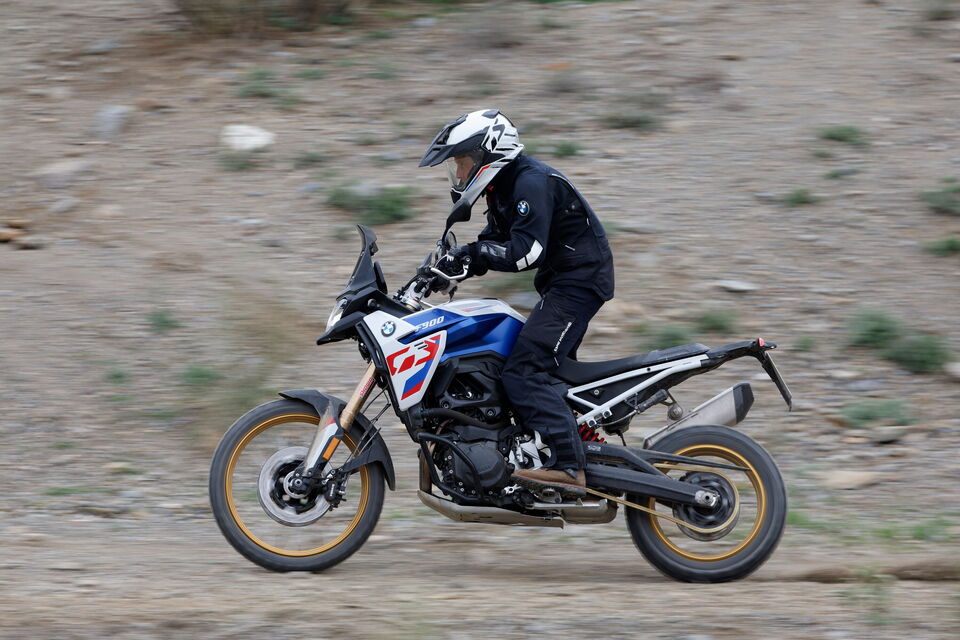
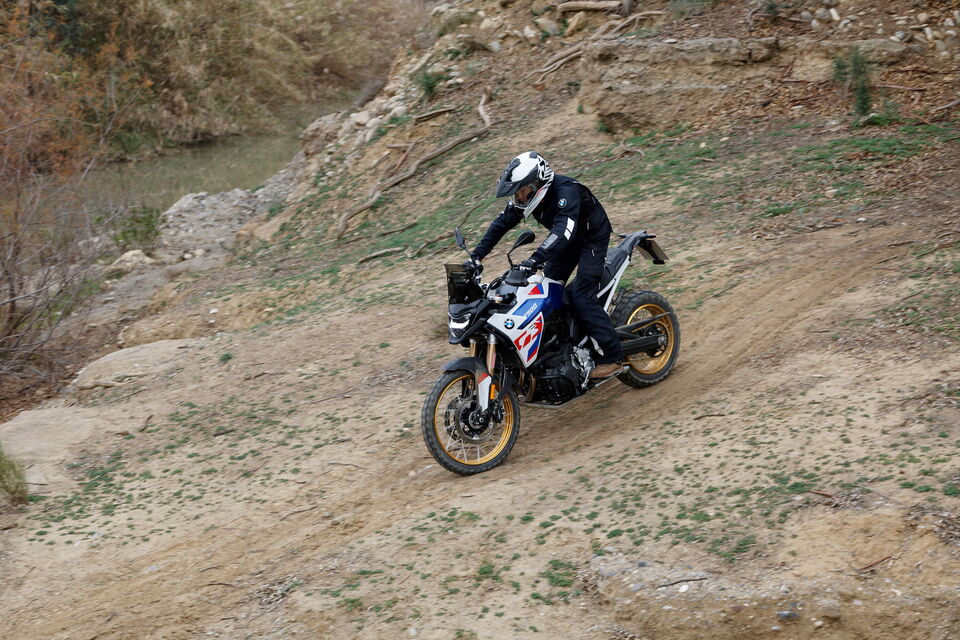
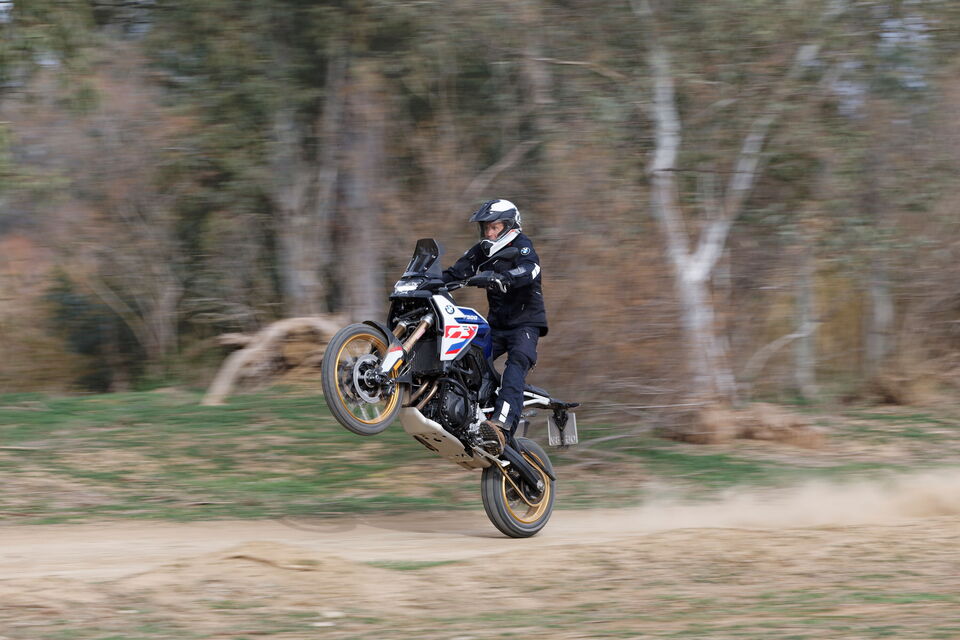
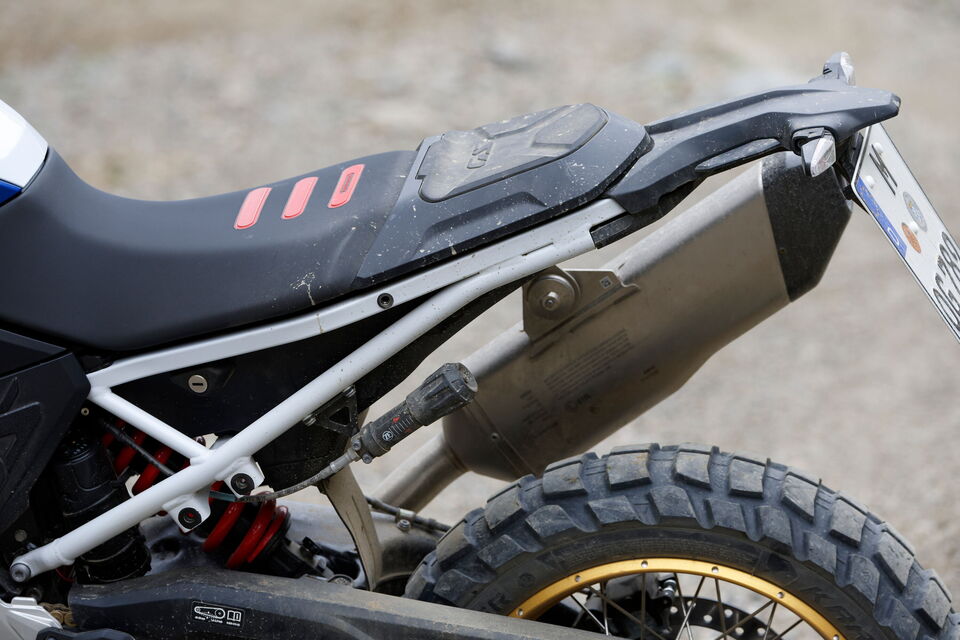
219 kg fully fueled—14 kg less than the previous F 850 GS. That may not sound dramatic on paper. From the saddle, it is. BMW systematically optimized the frame, swingarm, and components to reduce weight. The result is an F 900 GS that feels refreshingly light, responds precisely to steering input, and is considerably easier to handle off-road than its weight figure initially suggests.
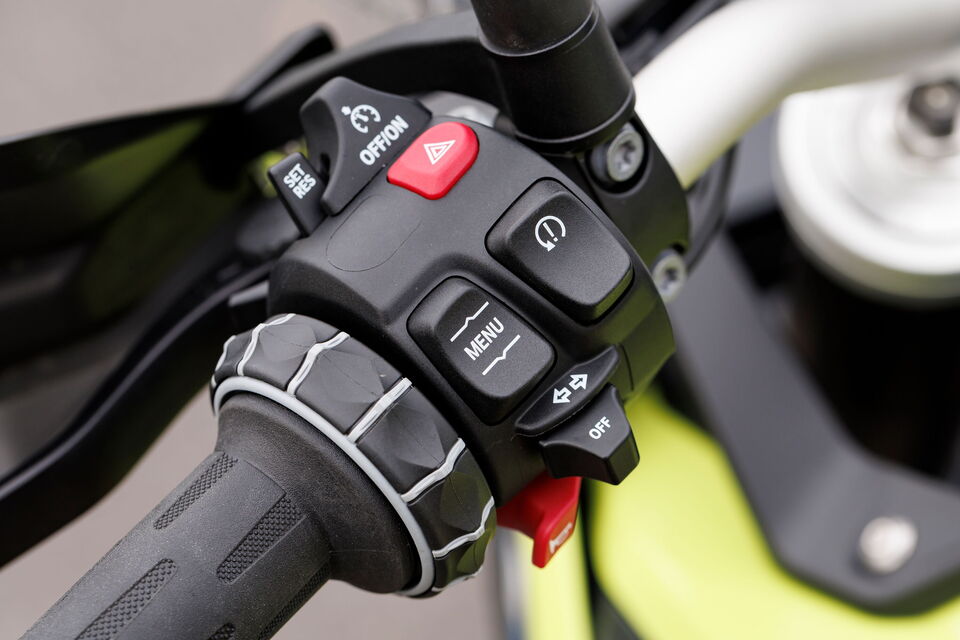
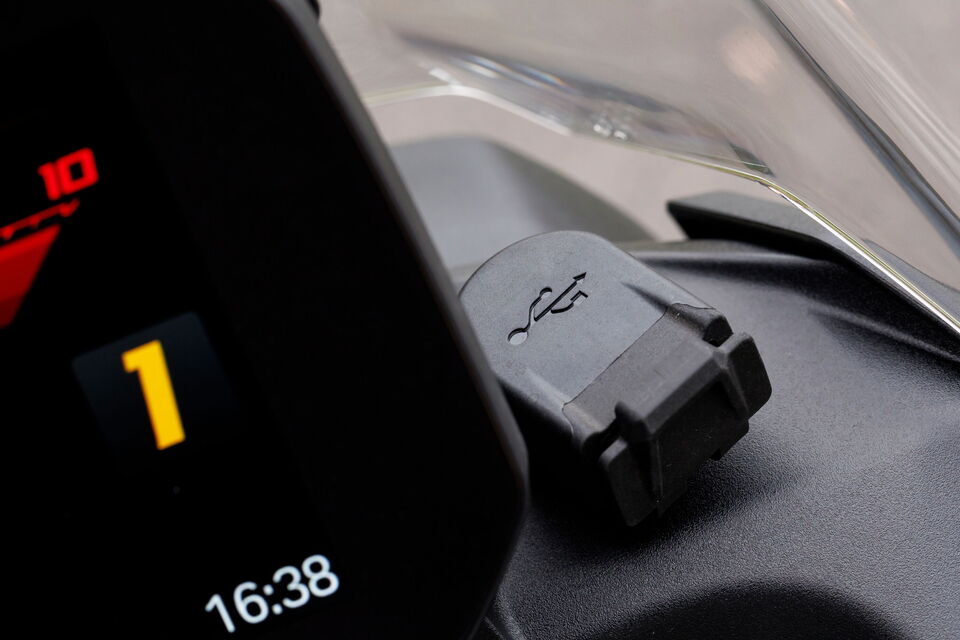
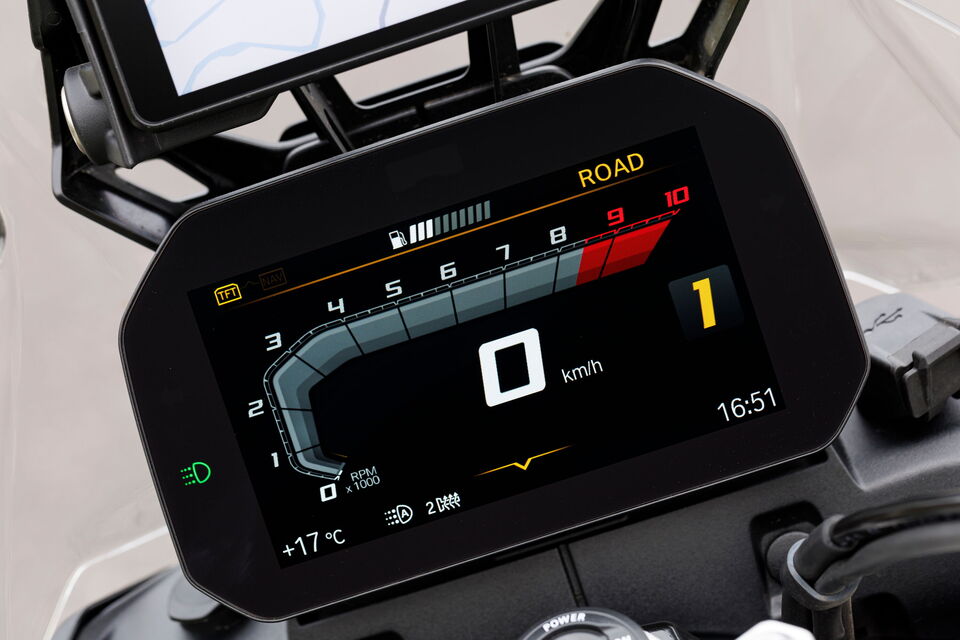
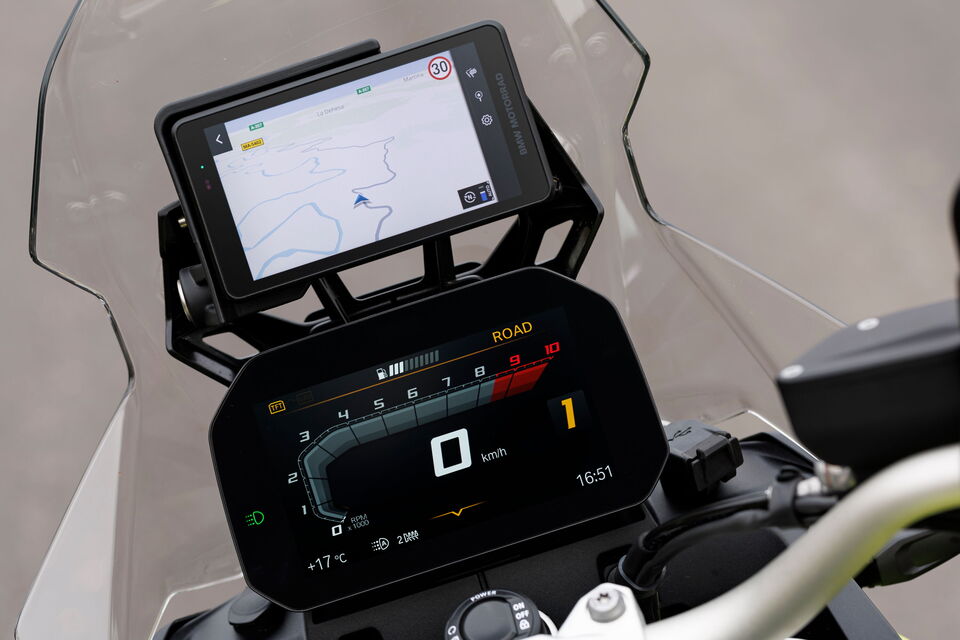
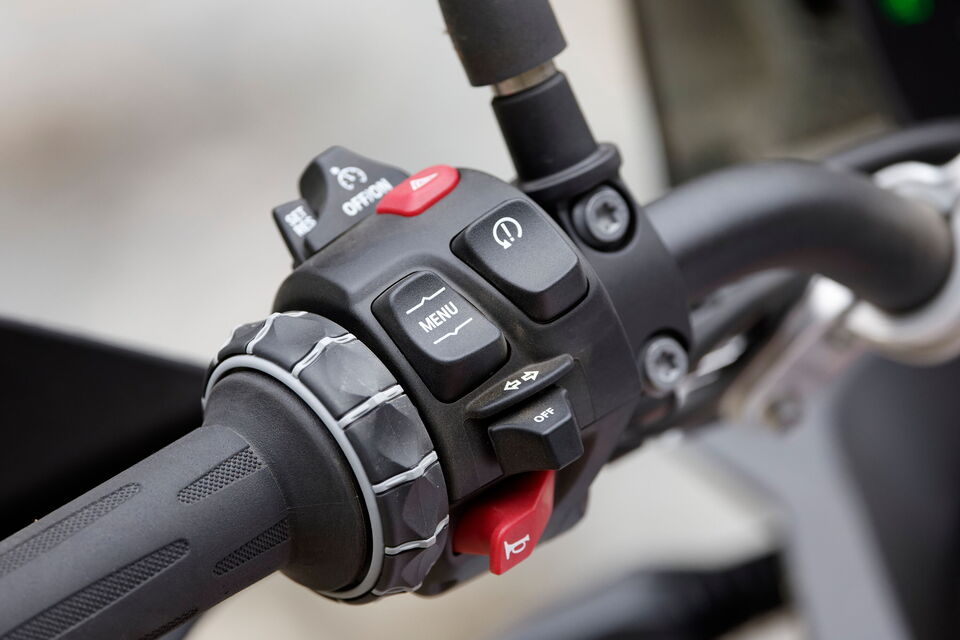
Zero to 100 km/h in 3.8 seconds—that is sportbike-level acceleration in an adventure-bike package. The 6.5-inch TFT is familiar BMW hardware, and it works well: bright, easy to read, and intuitive to operate through the handlebar controls.
Bluetooth connectivity and turn-by-turn navigation come standard.
The 14.5-liter fuel tank—slightly smaller than the F 800 GS’s 15-liter tank—provides around 310 km of range at consumption of 4.4 liters per 100 km. That is sufficient for an enduro-style travel bike, but hardly generous. Riders who regularly travel long distances through sparsely populated regions will need to plan accordingly. The F 900 GS Adventure provides significantly more reserve with its 23-liter tank.
One familiar criticism remains: equip the F 900 GS fully for serious off-road use—GS Trophy (€465), Dynamic Package (€495), Enduro Pro Package (€1,560), off-road tires—and the price rises to around €16,800.
Compared with a Ducati DesertX at around €16,500 or a KTM 890 Adventure R at roughly €17,000, that is ambitious pricing.
Equipment: Solid Base Package, Options Make the Difference
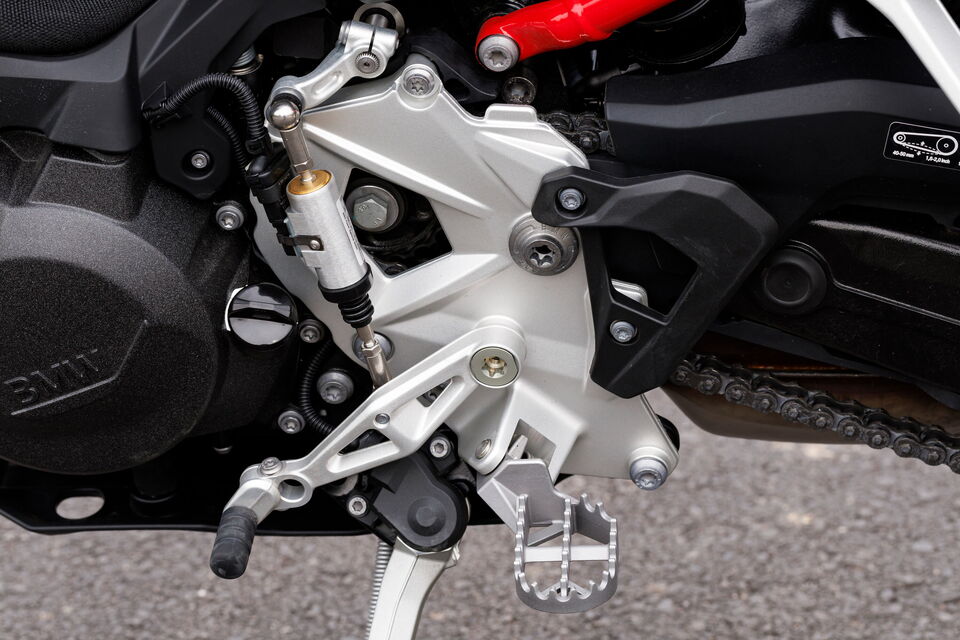
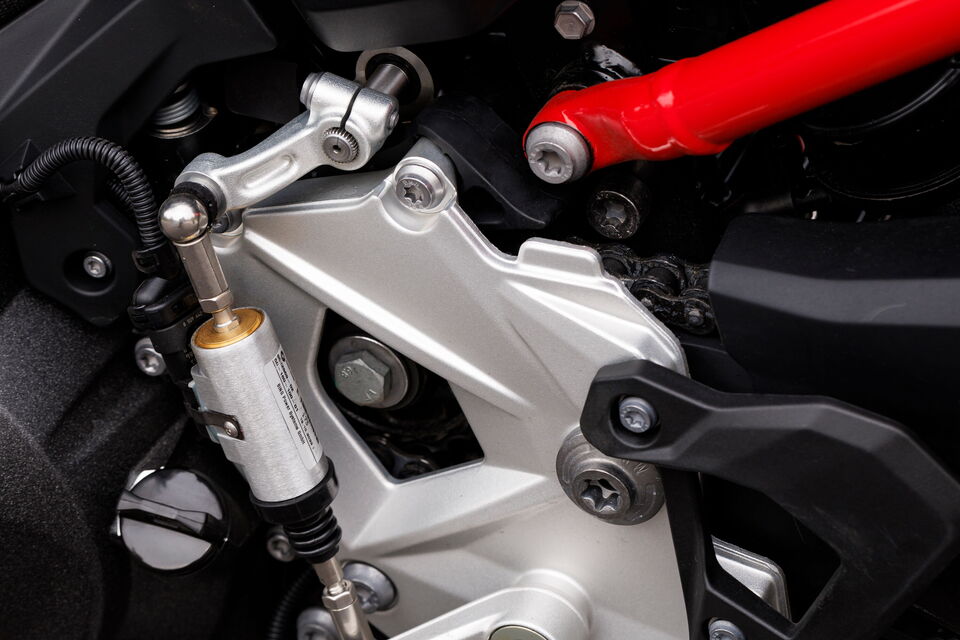
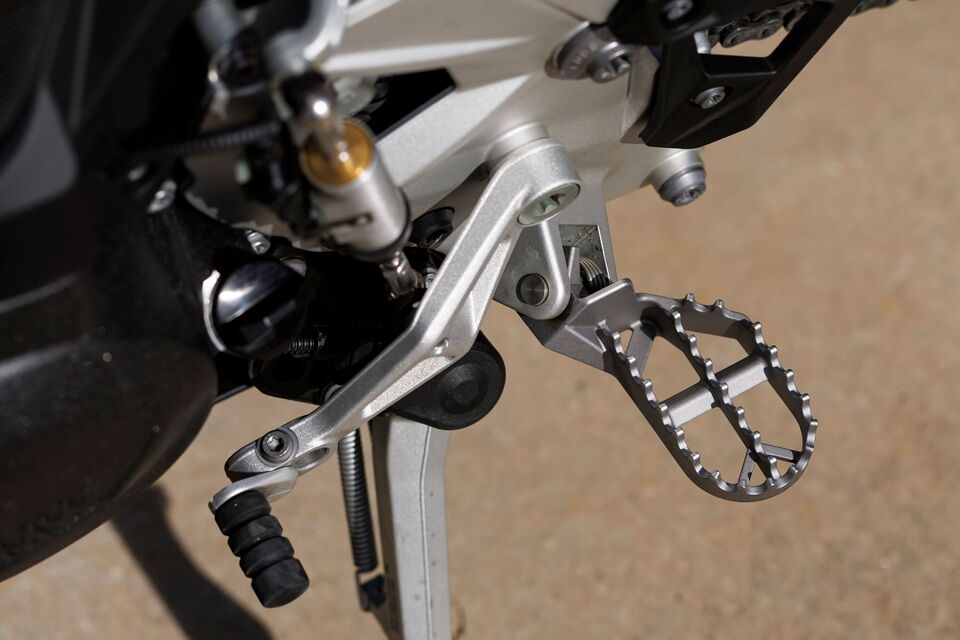
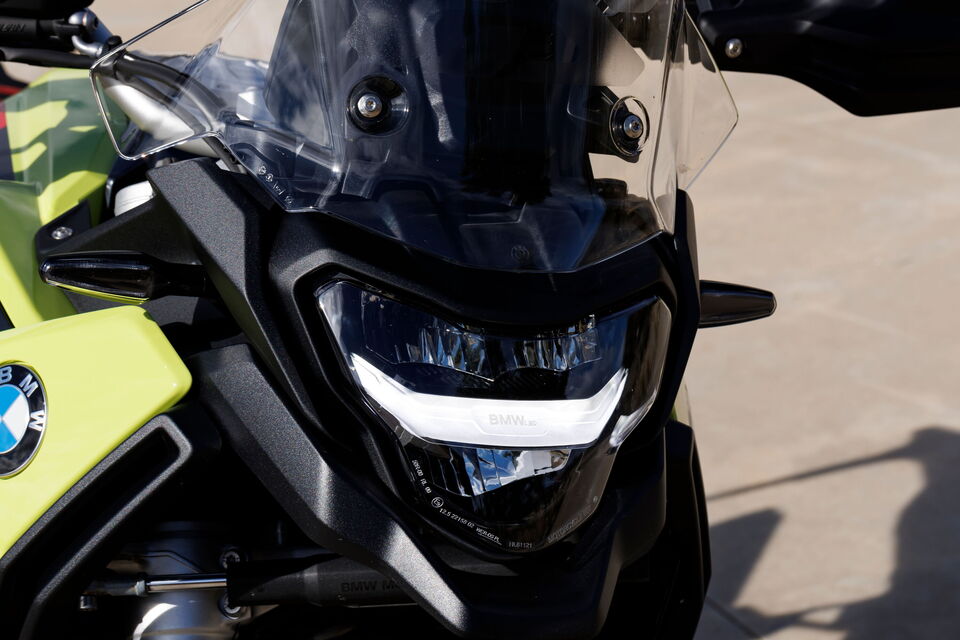
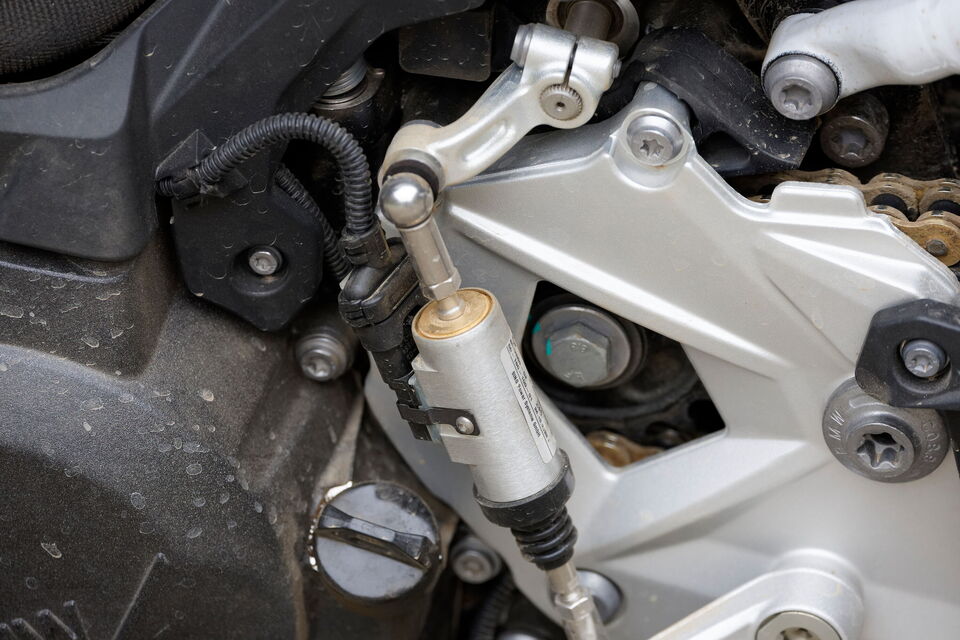
Standard equipment on the base model includes lean-angle-optimized ABS Pro, DTC traction control, MSR engine drag torque control, two riding modes—Rain and Road—TFT display, LED lighting, turn-by-turn navigation, assist-and-slipper clutch, adjustable shift lever, and adjustable USD fork.
For €13,750, that is a good standard equipment package. Shift Assistant, cruise control, Dynamic ESA, cornering lights, and additional riding modes all cost extra. BMW’s package strategy can quickly push the price upward.
The Enduro Pro Package is the most important upgrade for off-road riders. It includes the fully adjustable Showa fork, fully adjustable Sachs shock with remote reservoir, 24 mm handlebar risers, black handlebar, and M Endurance chain.
That is a substantial suspension upgrade and turns the F 900 GS into a serious off-road tool. Weight remains reasonable, and the €1,560 premium is money well spent for riders who will actually use the bike that way.
Costs: €13,750 Base—and Option Discipline Is Essential
The base price in Germany is €13,750. That puts the F 900 GS above a Yamaha Ténéré 700 at around €11,400 and an Aprilia Tuareg 660 at €11,999, but below a Ducati DesertX at around €16,500 and a Honda Africa Twin at around €16,500.
Compared directly with the Honda Africa Twin, the BMW offers more horsepower, less weight, and sportier handling while costing a similar amount—but it does not offer DCT.
Service intervals are every 10,000 km. Standard BMW dealer service typically costs between €350 and €500. Valve-clearance inspection is required every 20,000 km, with dealer costs of around €450 to €700. Early used-market data suggests stable resale values for the F 900 GS. The price increase from 2024 to 2025 was around three percent, a positive sign for a middleweight adventure bike.
Warranty: two years with unlimited mileage.
Verdict
Since 2024, the BMW F 900 GS has been the best motorcycle BMW has ever built in this class. The transformation from the heavy, somewhat sluggish F 850 GS into the agile, lighter, and more powerful F 900 GS has succeeded. Riders willing to understand BMW’s package structure and order the Enduro Pro Package get a genuine off-road and touring motorcycle.
Those who start with the base price and plan to add equipment later should calculate realistically—a well-equipped F 900 GS quickly costs €16,000 or more.
Quick Check
+ 105 hp, 93 Nm—the best engine in BMW’s middleweight GS lineup
+ 230 mm of front suspension travel—genuine off-road reserve
+ Adjustable Showa USD fork standard—no extra charge
+ 219 kg fully fueled—14 kg lighter than its predecessor
+ 21-inch front wheel with wire-spoked wheels standard
+ Rear-wheel ABS can be switched off with the Dynamic Package
+ 0–100 km/h in 3.8 seconds—sportbike acceleration in enduro clothing
+ TFT display, turn-by-turn navigation, Bluetooth standard
– €13,750 base price—full off-road equipment pushes the price to around €16,800
– No cruise control as standard
– 14.5-liter fuel tank—around 310 km of range, less than the Adventure version
– 870 mm seat height—challenging for riders under 1.70 meters
– Brakes with two-piston floating calipers are class-standard, not class-leading
– Engine manufactured by Loncin in China—a psychological purchasing concern for some buyers
Technical Specifications: BMW F 900 GS (2026)
Country of manufacture: Germany (Berlin-Spandau); engine: Loncin, China
Engine: Liquid-cooled parallel twin, DOHC, finger followers, 4 valves per cylinder, dry-sump lubrication, fuel injection, Euro 5+
Displacement: 895 cc
Power: 77 kW (105 hp) at 8,500 rpm
Torque: 93 Nm at 6,750 rpm
Transmission: 6-speed, assist-and-slipper clutch; Shift Assistant optional
Final drive: Chain
Frame: Steel bridge frame
Front suspension: Showa USD, 43 mm, fully adjustable (spring preload, rebound and compression damping), 230 mm travel; with Enduro Pro Package: fully adjustable gold Showa fork + Sachs shock with remote reservoir
Rear suspension: Aluminum double-sided swingarm, directly mounted ZF monoshock, adjustable spring preload and rebound damping, 215 mm travel
Front brakes: Dual 305 mm floating discs, two-piston floating calipers
Rear brake: 265 mm disc, single-piston floating caliper
Wheels: Tubeless wire-spoked wheels
Front tire: 90/90-21
Rear tire: 150/70-17
Rider aids: ABS Pro (lean-angle optimized, rear-wheel ABS switchable with Dynamic Package), DTC, MSR, 2 riding modes standard (Rain/Road); Enduro and Enduro Pro included with Dynamic Package
Wet weight: 219 kg
Seat height: 870 mm (optional 815–890 mm)
Fuel capacity: 14.5 liters
Price (Germany): from €13,750 (Base), GS Trophy from approx. €14,215. Plus additional charges in each case.
Warranty: 2 years, unlimited mileage