Review Harley-Davidson Fat Boy (2026)

168 Nm, 317 kg, Steamroller Looks—the Original Stays True to Itself
The Fat Boy is not a motorcycle that needs explaining. Since 1990, it has defined an aesthetic of its own—wide solid-disc wheels, massive V-twin, low seat, maximum visual presence. For 2026, the fundamentals remain unchanged, and that is exactly how it should be.
As of: April 29, 2026 | Model: Harley-Davidson Fat Boy (FLFB; 2026; new for 2026: tank emblem, Olive Steel Metallic color; technically identical to 2025) | Manufacturer: Harley-Davidson Motor Company, Milwaukee, Wisconsin, USA | Price in Germany: from €26,770 MSRP including VAT, plus €560 transportation/setup | Stationary noise: not officially published; confirm with dealer | Warranty: 4 years, 2-year manufacturer warranty + 2-year extended warranty
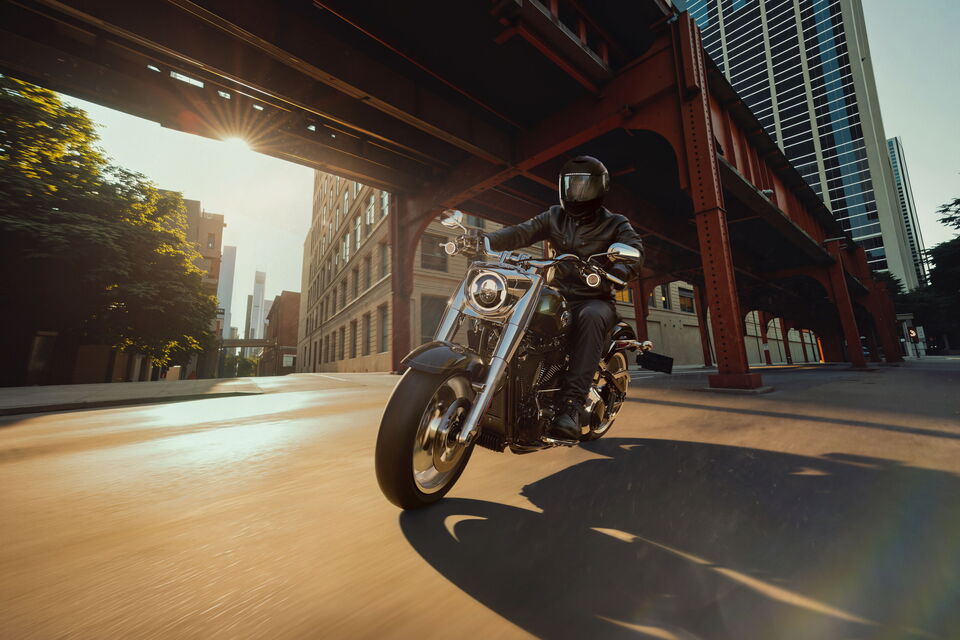
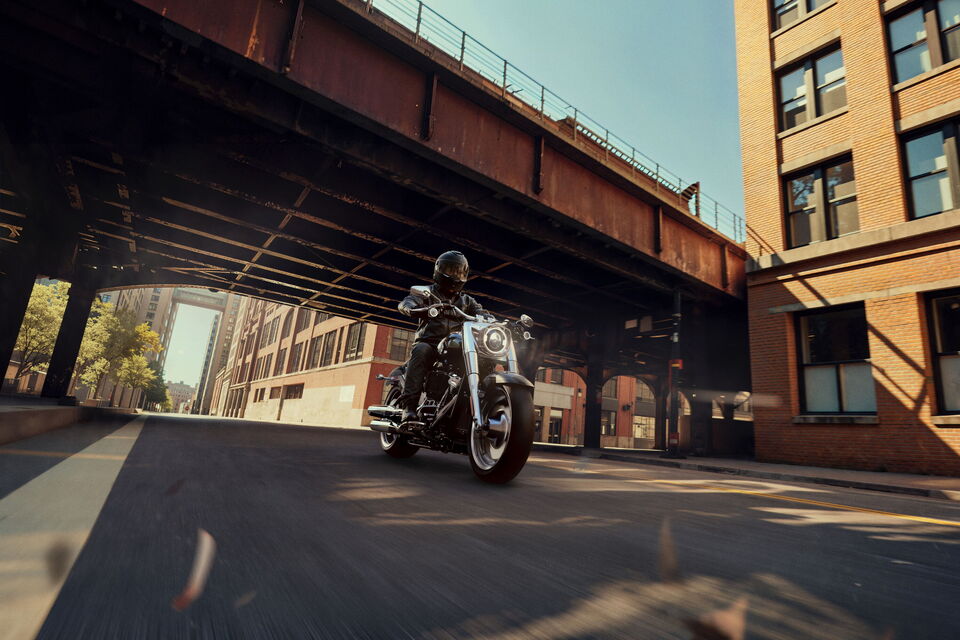
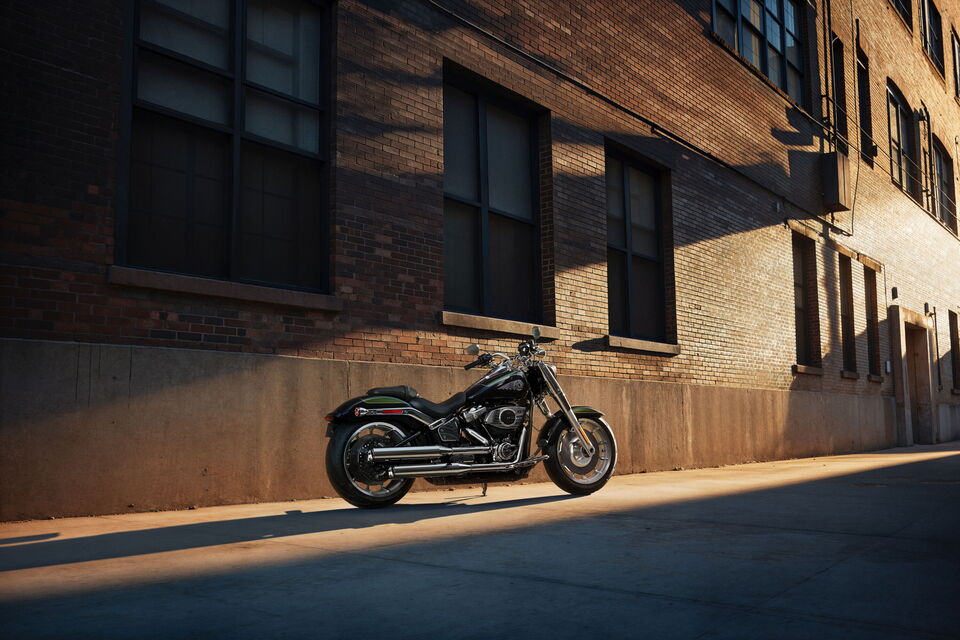
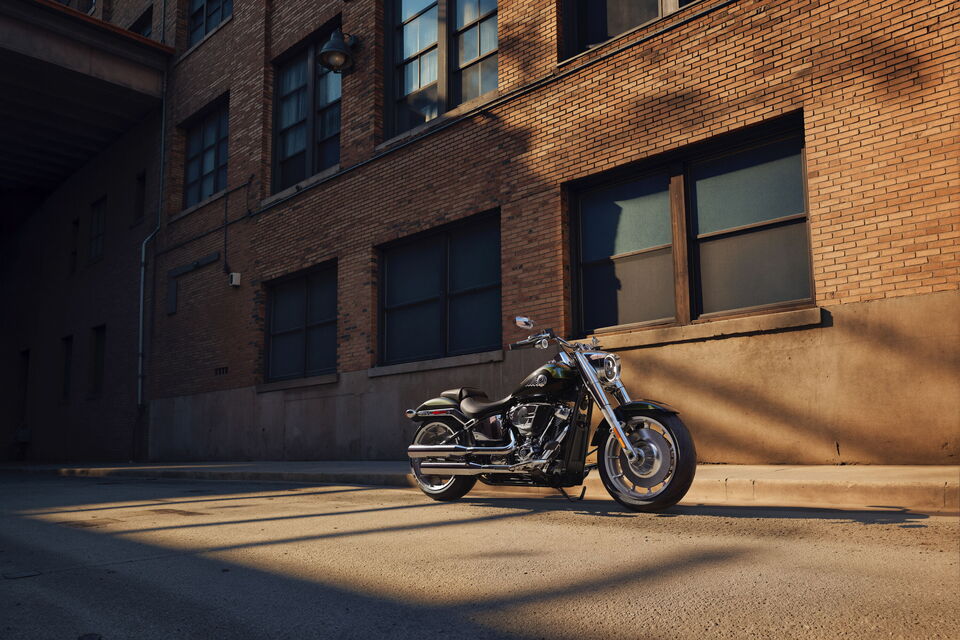
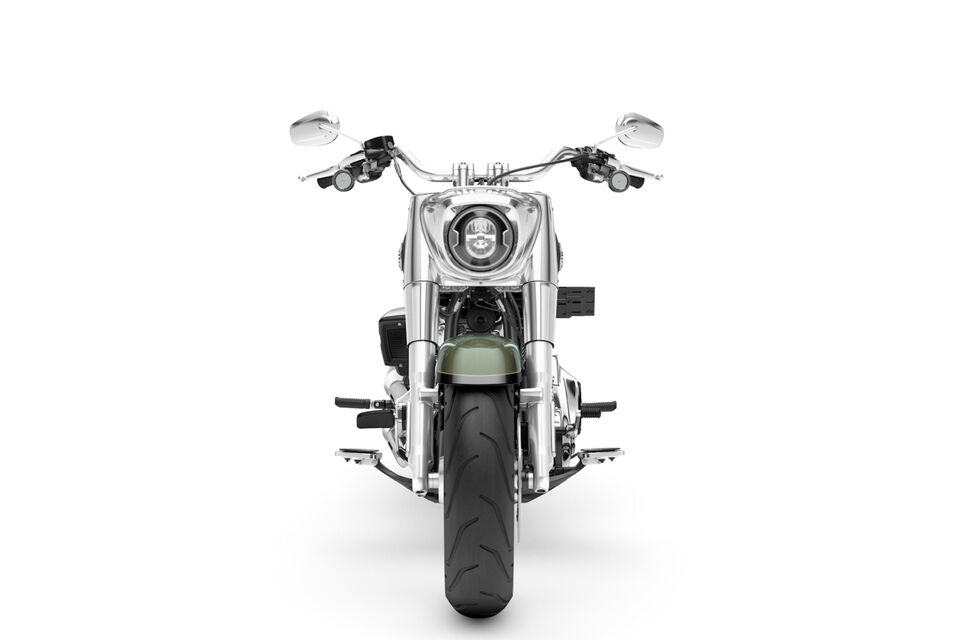
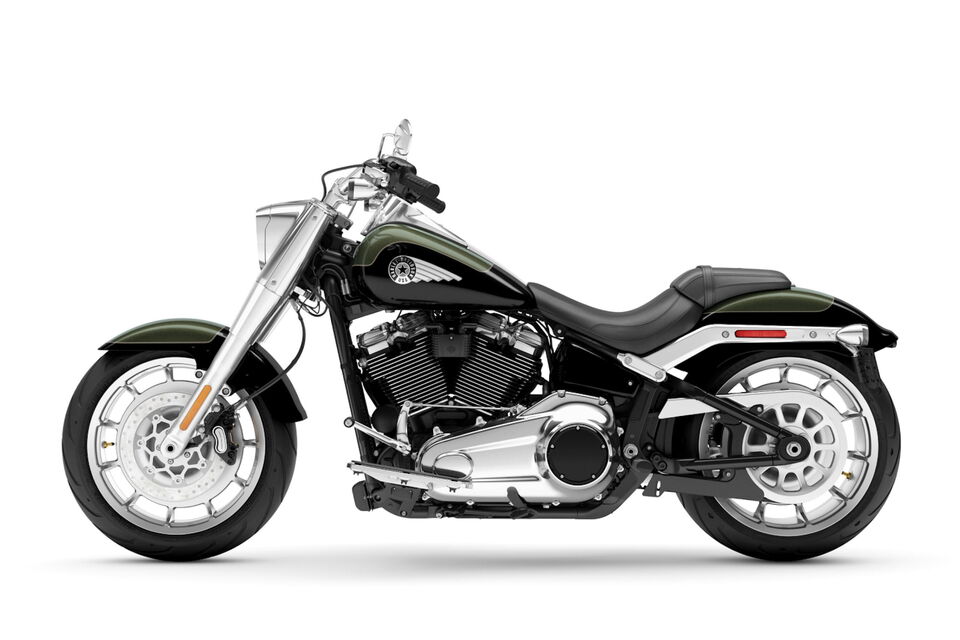
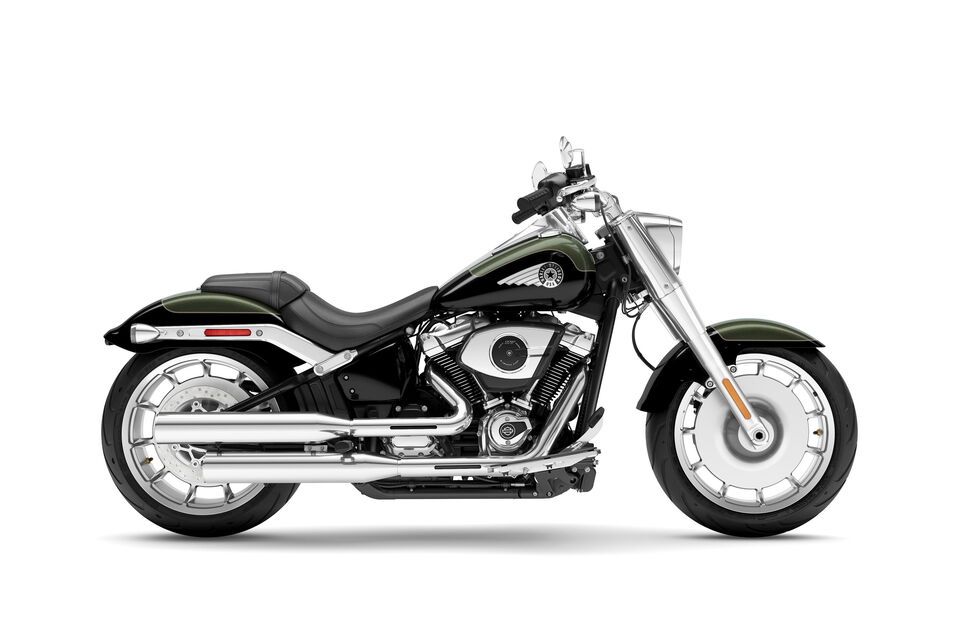
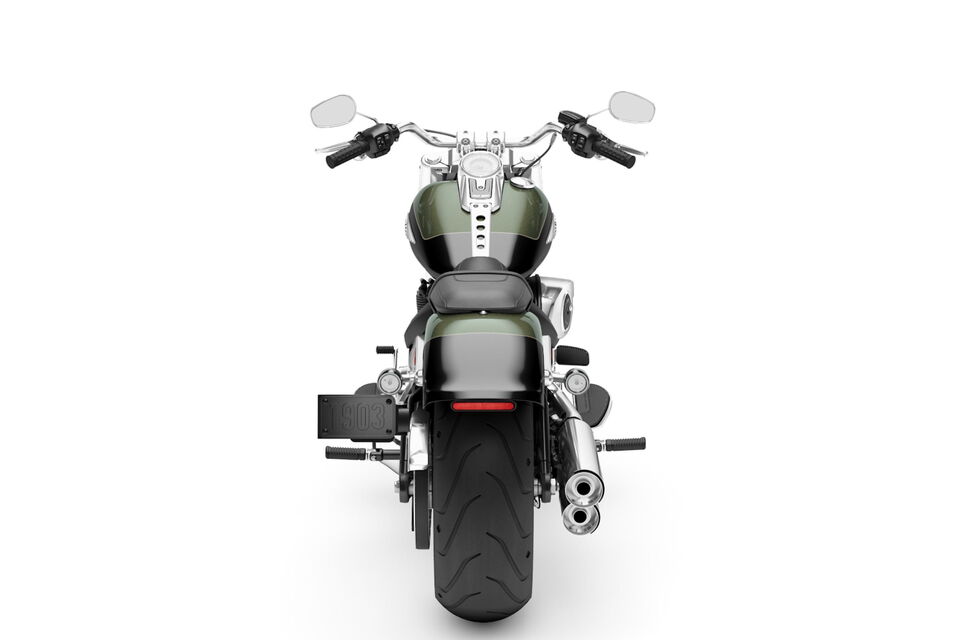

What’s New for 2026
The 2026 Fat Boy update is visual: a new model-specific tank emblem and a new two-tone Olive Steel Metallic/Vivid Black paint scheme join the existing Dark Billiard Gray, Vivid Black, White Onyx Pearl, and Brilliant Red color options.
Engine, chassis, and electronics are technically identical to the 2025 model, which itself received the most extensive update in the model’s history to date: Milwaukee-Eight 117 Custom engine with 2-into-2 exhaust, updated monoshock, and a complete rider-assistance package. If you own a 2025 Fat Boy, the 2026 model is the same motorcycle in different colors.
Engine: Milwaukee-Eight 117—1,923 cc With Custom Calibration
The Milwaukee-Eight 117 is an air- and oil-cooled 45-degree V-twin with 1,923 cc. In the Fat Boy, it runs in Custom specification. That means a specific combination of Touring intake for improved airflow, a modified camshaft profile, and exhaust system optimized for torque in the low and middle rev range.
Its 168 Nm arrives very early at 3,000 rpm and remains consistently available across a broad rev range. Let the Fat Boy cruise along a backroad in third gear at 2,500 rpm and you immediately understand why: the engine pulls smoothly and cleanly from the depths of the rev range without complaint.
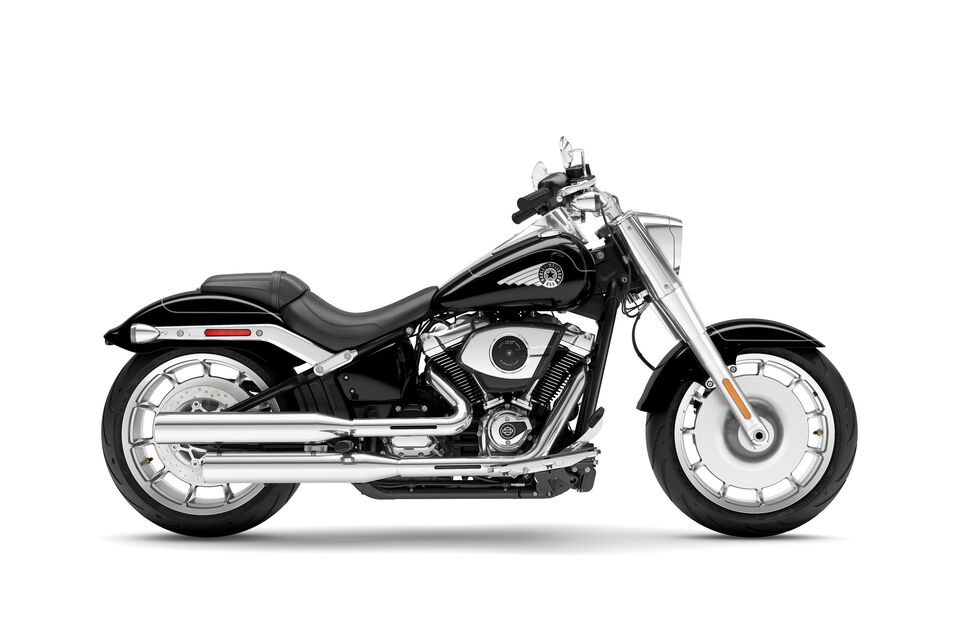
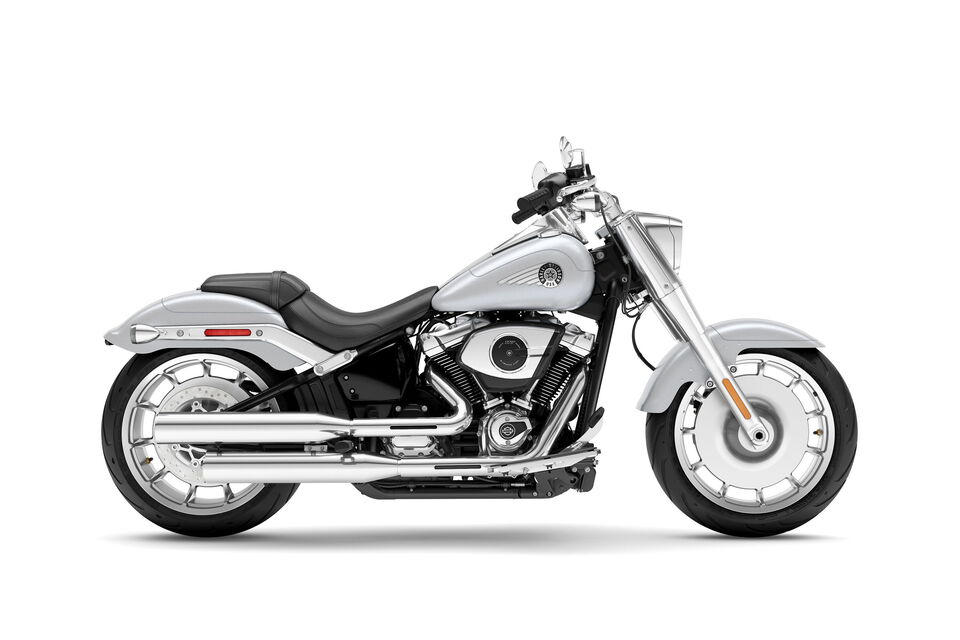
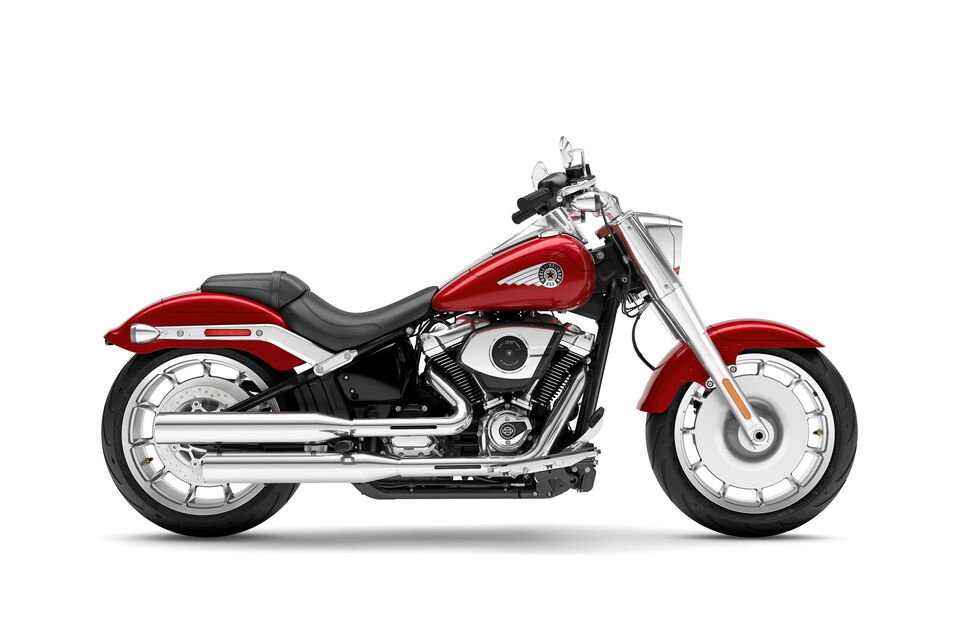
At 105 hp, peak power is not an impressive figure for this displacement, but that is explained by the calibration. The Custom version prioritizes torque and sound over high-rpm peak horsepower. The 2-into-2 exhaust system is one of the Fat Boy’s defining visual and acoustic features—deep, rhythmic, unmistakable.
There is a six-speed transmission, belt final drive, and slipper clutch. Fuel consumption is approximately 5.5 L/100 km. The 18.9-liter fuel tank provides a range of around 300 km.
Design: Lakester Wheels and the Steamroller Look
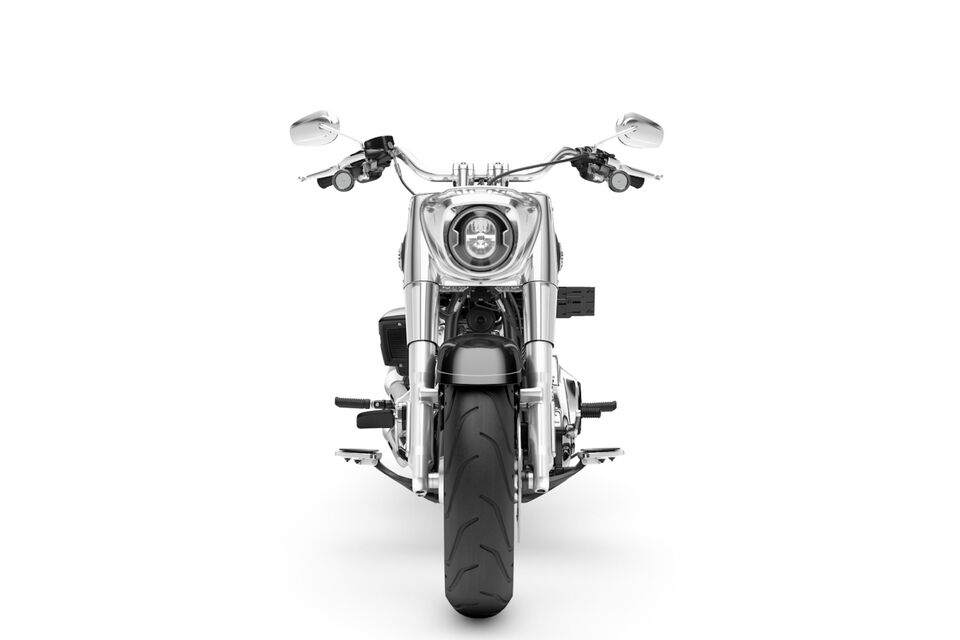
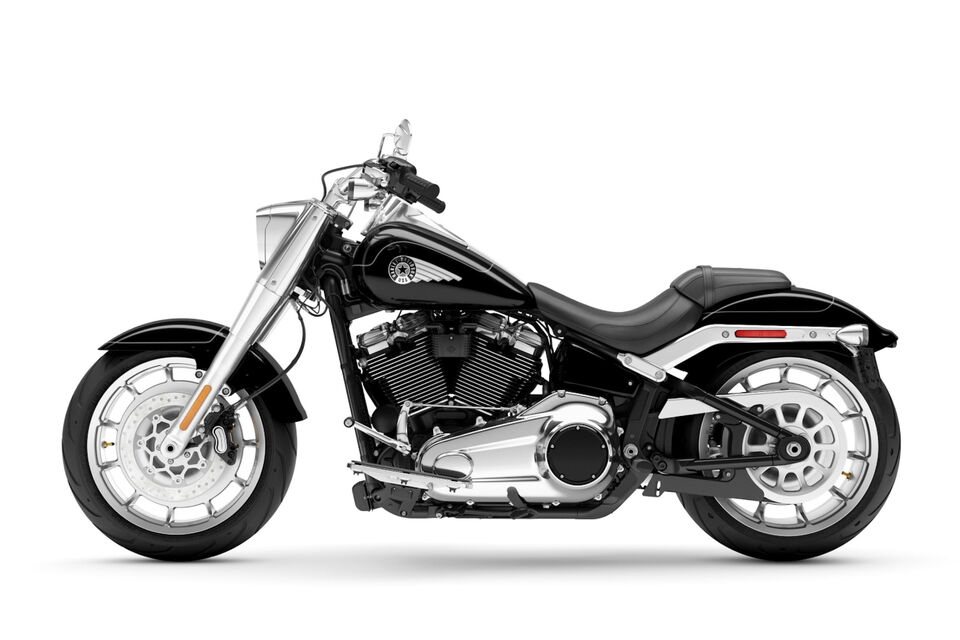
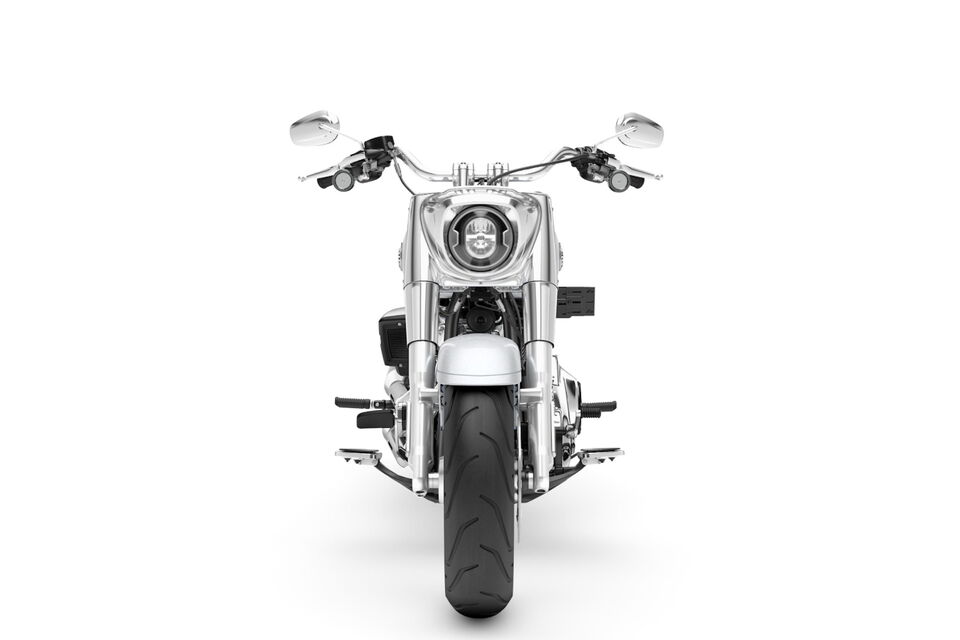
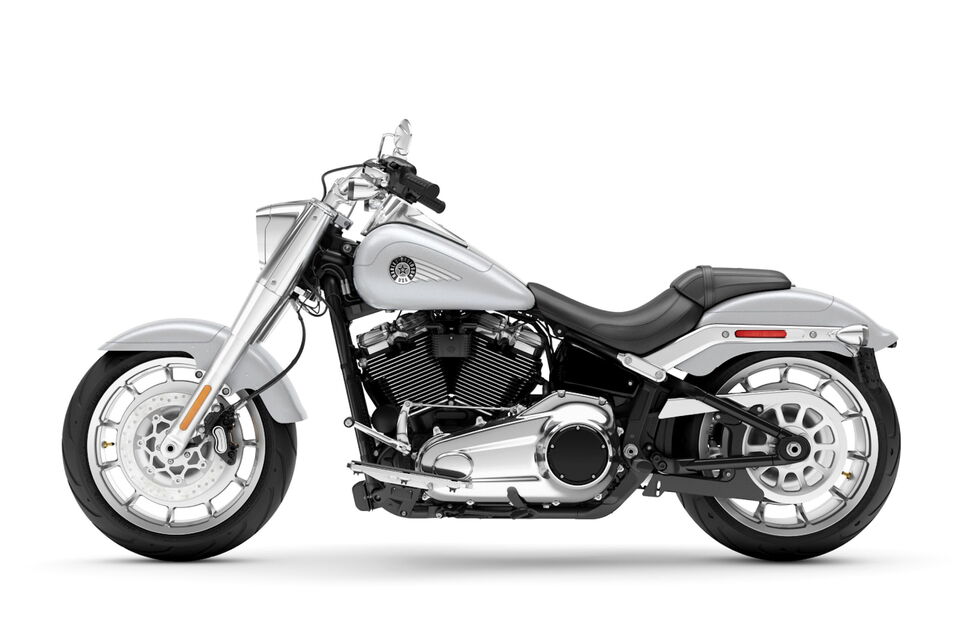
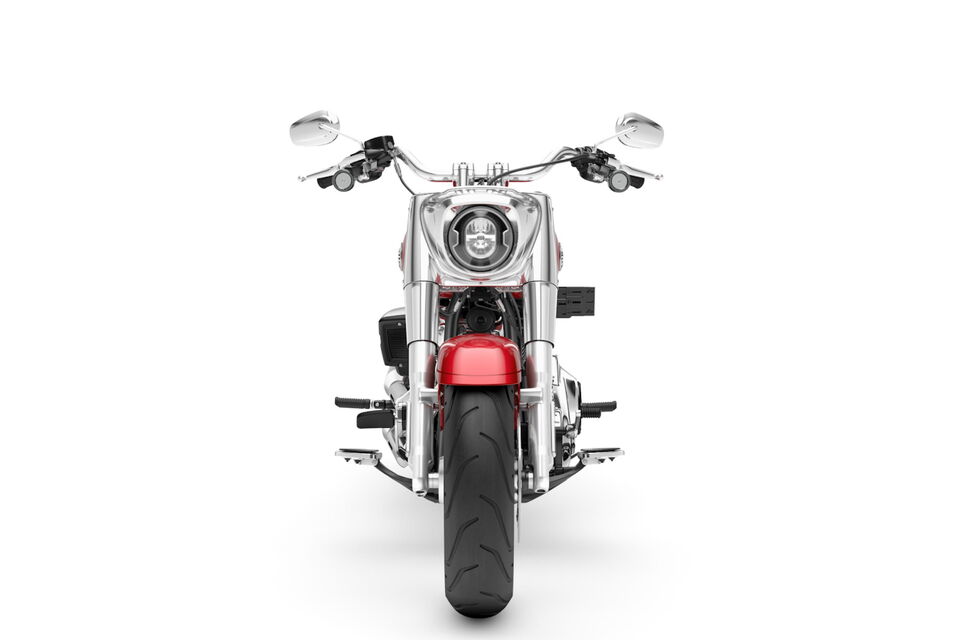
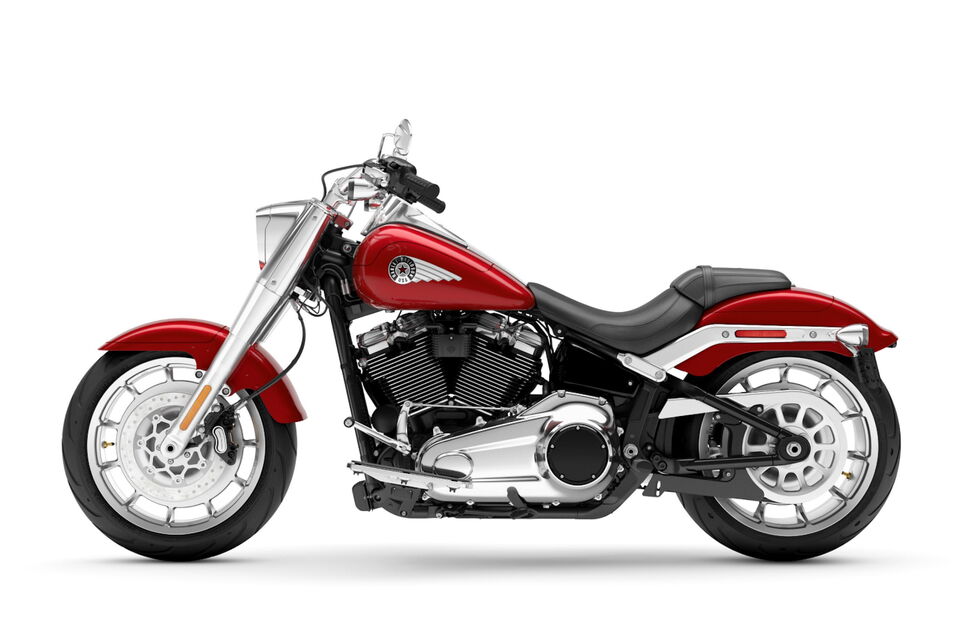
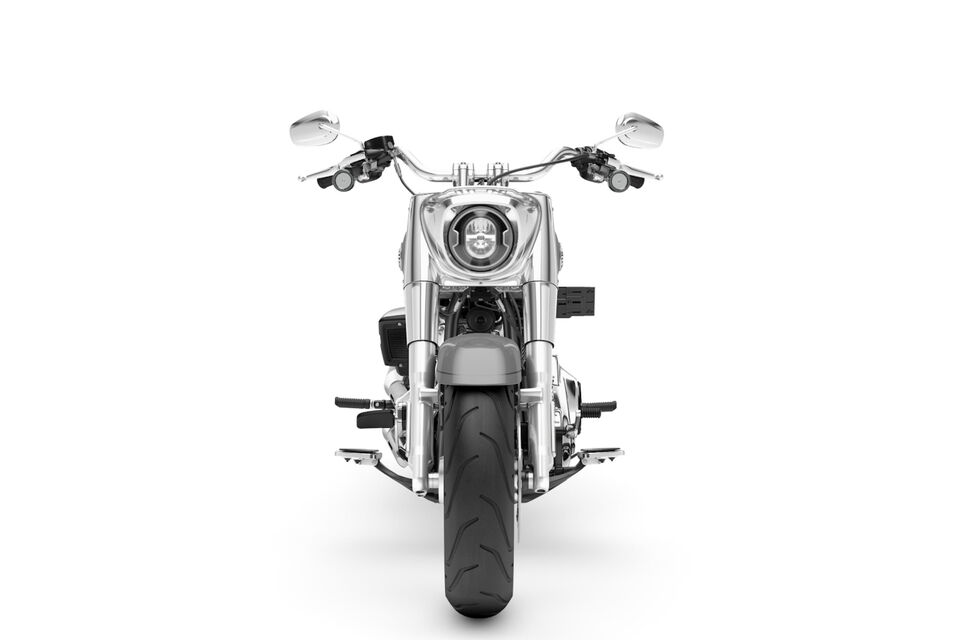
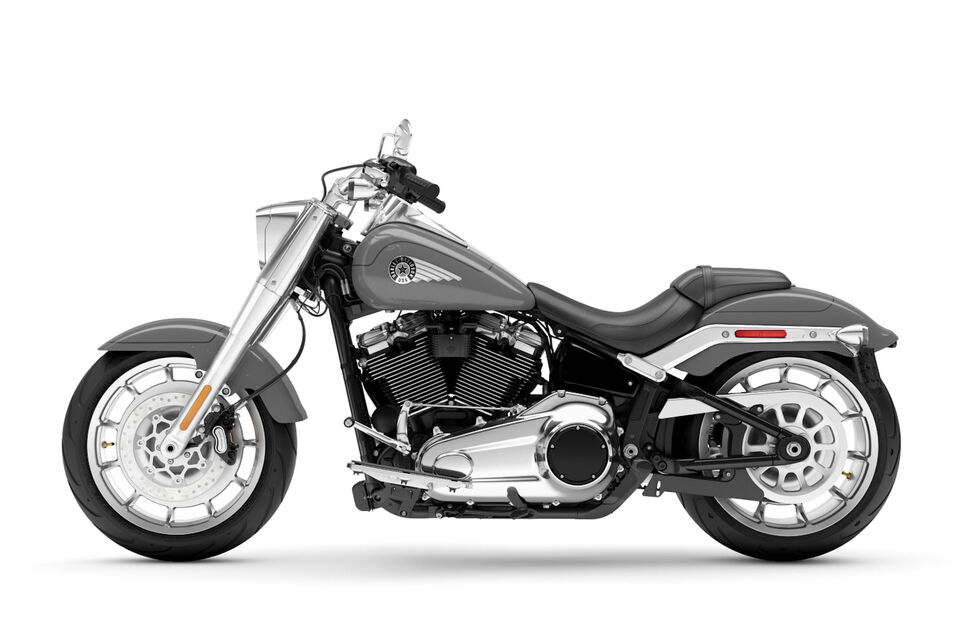
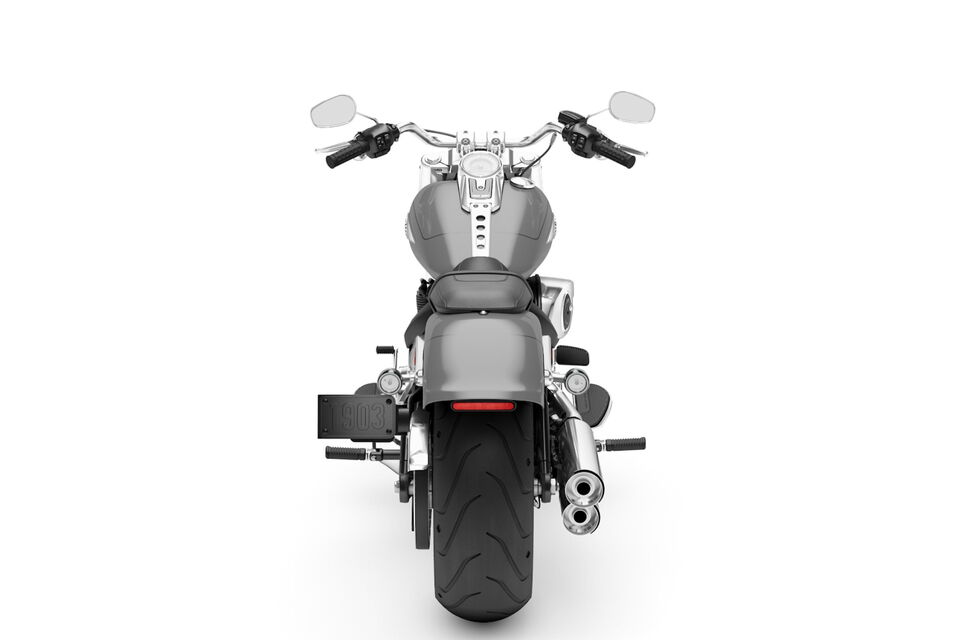
What visually separates the Fat Boy from every other cruiser is its machined Lakester cast-aluminum wheels—massive, without spokes, seemingly cast from a single piece. They measure 18 inches front and rear, with a 160/70-18 front tire and 240/40-18 rear.
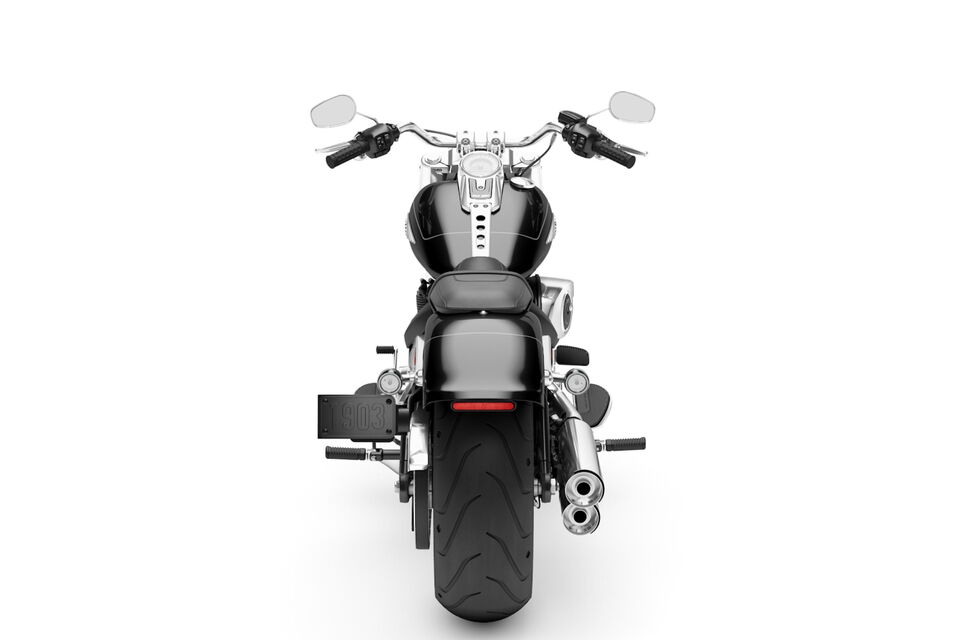
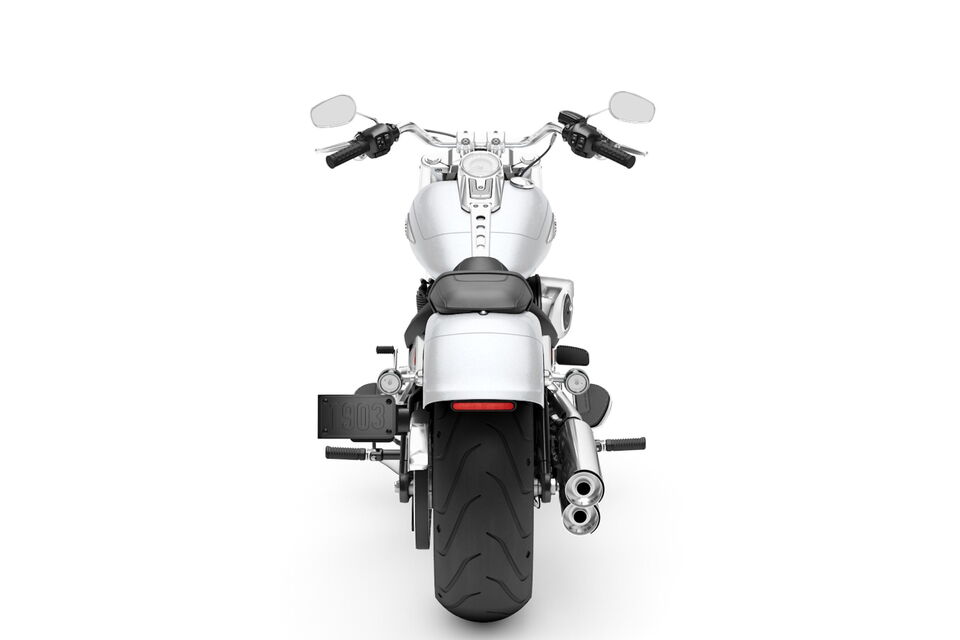
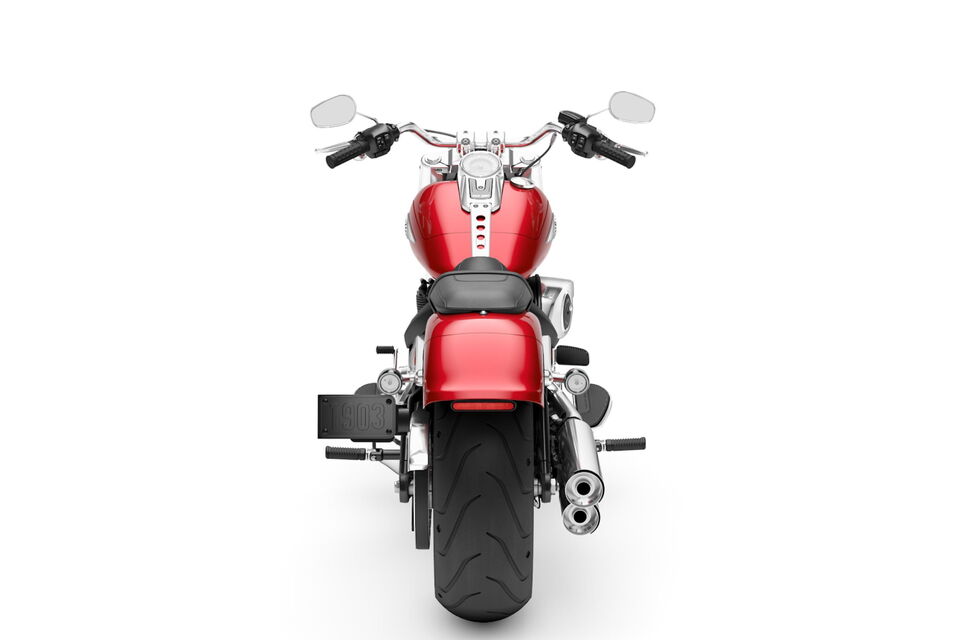
The combination of the widest rear tire in the Softail lineup and those solid-disc wheels gives the Fat Boy the same visual mass from the front as it does from the rear. The chrome headlight housing with its 178 mm LED unit is another unique feature: round, polished, massive.
Seat height is 675 mm—one of the lowest figures in Harley-Davidson’s lineup. The rider sits low and wide, arms slightly stretched toward the pullback handlebar, feet on the forward-mounted foot controls. This is how you ride a Fat Boy: with dignity, not urgency.
At 317 kg ready to ride, it is a motorcycle whose weight you are very aware of while maneuvering and barely notice once underway.
Suspension: Comfort as a Competence
Up front is a 49 mm Dual Bending Valve telescopic fork with aluminum triple clamps and the characteristic “Beer Can” covers. At the rear is a hidden monoshock—a free-piston gas-pressure unit—with hydraulically adjustable spring preload and 43 mm of travel.
The 2025 update made the monoshock more comfortable without compromising control at a brisk pace. For a 317 kg motorcycle, handling on the highway and through wide, sweeping corners is remarkably secure. In tight hairpins, the weight becomes noticeable, and the Fat Boy prefers to be deliberately steered rather than thrown into a corner.
Electronics: The Complete Rider-Assistance Package
Cornering-enhanced ABS, C-ABS, Cornering Traction Control, C-TCS, Cornering Drag-Torque Slip Control, C-DSCS, and Tire Pressure Monitoring System, TPMS, all come standard.
There are three riding modes: Road, Rain, and Sport. Cruise control is standard, along with USB-C and an adjustable brake lever. The 127 mm analog instrument with digital insert displays gear position, fuel level, riding mode, range, and time.
This depth of electronics is remarkable on a motorcycle that visually still looks like it came from 1990—and the systems operate so unobtrusively that you barely notice them in everyday riding.
Price and Positioning
From €26,770 plus €560 transportation/setup. A four-year warranty is included, consisting of a two-year manufacturer warranty plus two additional years through the dealer.
That is the price of a Fat Boy without accessories—and Harley-Davidson has an extensive dealer-accessory program capable of increasing the final bill very quickly.
Direct competitors include the Indian Scout Bobber from €15,400, slimmer, lighter, and with a different character; the BMW R 18 from around €21,600, with a boxer engine and completely different DNA; and the Triumph Rocket 3 from around €26,000, with three cylinders and an entirely different approach.
In its combination of Lakester wheels, steamroller aesthetics, and Milwaukee-Eight 117 sound, the Fat Boy has no direct competitor.
Verdict
The 2026 Fat Boy is what the Fat Boy has always been—and that is its greatest strength. Anyone who buys a Fat Boy is not simply buying a vehicle. They are making a decision about style, pace, and attitude that no other motorcycle expresses quite as consistently.
The 2026 update deliberately keeps a low profile. The 2025 foundation was good enough to leave alone.
Quick Check
+ Milwaukee-Eight 117 Custom with 168 Nm: torque arrives early and remains broad—the Fat Boy pulls cleanly from the bottom of the rev range and sounds like nothing else on the road; 2-into-2 exhaust is an essential part of the model’s identity
+ Lakester solid-disc wheels, 240/40-18 rear tire, chrome headlight housing: the strongest visual identity in Harley-Davidson’s Softail lineup; 675 mm seat height easily accessible for many rider sizes
+ Complete rider-assistance package: C-ABS, C-TCS, C-DSCS, TPMS, cruise control, three riding modes, USB-C, adjustable brake lever; four-year warranty; extensive worldwide dealer network
+ 317 kg does not feel like 317 kg once underway: suspension is calibrated for comfort, highway riding and wide corners work with complete composure; 18.9-liter tank; approx. 300 km range
– 317 kg ready to ride: slow-speed maneuvering, U-turns, and parking require experience and physical strength; not a motorcycle for beginners or tight city streets; limited cornering clearance due to cruiser geometry
– €26,770 starting price plus €560 additional charges: that is the price before accessories; the final bill rises quickly with personalized extras; Indian Scout Bobber costs approximately €9,000 less
– 105 hp from 1,923 cc: Custom calibration prioritizes torque over peak horsepower; if you expect high-performance power figures, you are buying the wrong motorcycle; fuel consumption approx. 5.5 L/100 km
– Technically identical to 2025, with only a new tank emblem and color for 2026: owners of the 2025 model get nothing new; stationary noise not officially published—confirm with dealer
Technical Specifications: Harley-Davidson Fat Boy (2026)
Make / Model: Harley-Davidson Fat Boy (FLFB; 2026; new for 2026: tank emblem, Olive Steel Metallic/Vivid Black; technically identical to 2025); manufacturer: Harley-Davidson Motor Company, Milwaukee, WI, USA
What’s New for 2026: New model-specific tank emblem; new two-tone Olive Steel Metallic/Vivid Black paint scheme; technically identical to 2025
Engine: Air- and oil-cooled 45-degree V-twin Milwaukee-Eight 117 Custom; two valves per cylinder; 1,923 cc; Touring intake; fuel injection; slipper clutch; Euro 5+
Power: 105 hp at 5,020 rpm
Torque: 168 Nm at 3,000 rpm
Top Speed / Consumption: Approx. 180 km/h; approx. 5.5 L/100 km; approx. 300 km range
Fuel Tank / Weight: 18.9 liters; 317 kg fully fueled
Transmission / Final Drive: 6-speed; belt drive
Electronics: C-ABS, cornering-enhanced; C-TCS, Cornering Traction Control; C-DSCS, Cornering Drag-Torque Slip Control; TPMS; three riding modes—Road, Rain, Sport; cruise control; USB-C; analog 127 mm instrument with digital insert; adjustable brake lever
Front Suspension: 49 mm Dual Bending Valve telescopic fork; aluminum triple clamps; “Beer Can” covers
Rear Suspension: Hidden free-piston gas-pressure monoshock; hydraulically adjustable spring preload; 43 mm travel
Front Brake: Four-piston brake caliper; single floating rotor; C-ABS
Rear Brake: Two-piston brake caliper; single rotor; ABS
Wheels: Machined Lakester cast-aluminum solid-disc wheels; 18-inch front; 18-inch rear
Tires: Dunlop; 160/70B18 front; 240/40B18 rear
Ergonomics: 675 mm seat height; upright, stretched riding position; pullback handlebar; forward-mounted foot controls; two-piece passenger seat standard
Stationary Noise: Not officially published; confirm with dealer, Tyrol limit 95 dB(A)
2026 Colors: Olive Steel Metallic / Vivid Black, new for 2026; Dark Billiard Gray; Vivid Black; White Onyx Pearl; Brilliant Red
Warranty / Service: 4 years, 2-year manufacturer warranty + 2-year dealer extended warranty; extensive worldwide dealer network
Price in Germany: From €26,770 plus €560 transportation/setup