Review Honda CB 1000 Hornet (2026)

152 hp Four-Cylinder Streetfighter for €10,729—the Best Price-to-Performance Ratio in the Class
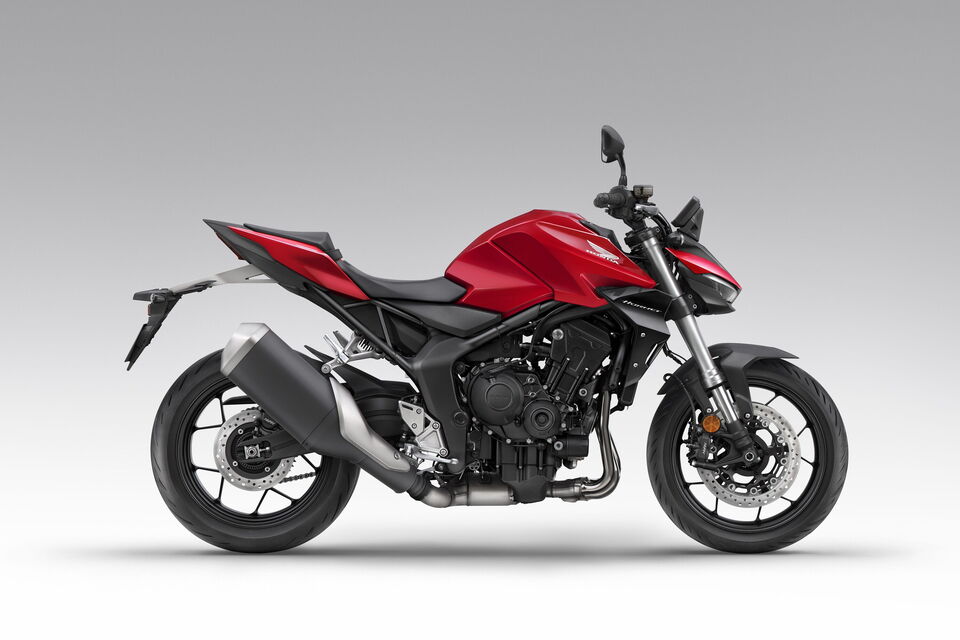
Honda shook up the 1000 cc naked-bike market with a price that forced the competition to do the math: 152 hp, 104 Nm, 211 kg fully fueled, SHOWA SFF-BP with adjustable rebound and compression damping, dual 310 mm front brakes, five riding modes, Wheelie Control, 5-inch TFT, Honda RoadSync. From €10,729 including destination charges. If you want more, choose the SP: Öhlins TTX36, Brembo Stylema, Quickshifter standard, 157 hp—from €12,599.
As of: April 10, 2026 | Tested model: Honda CB 1000 Hornet (2026) | Price from: €10,729 including destination charges, base model; €12,599, SP
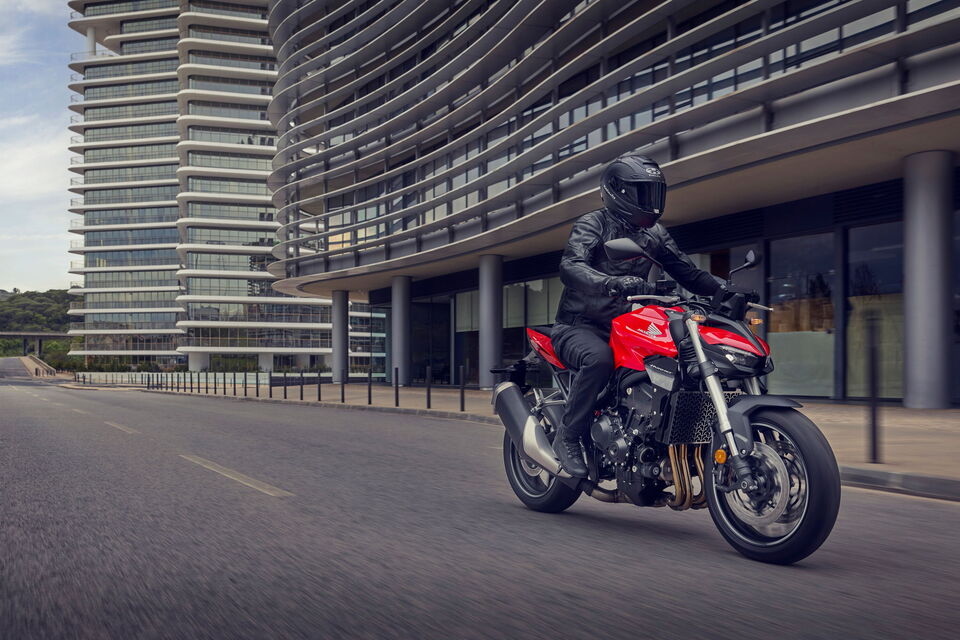
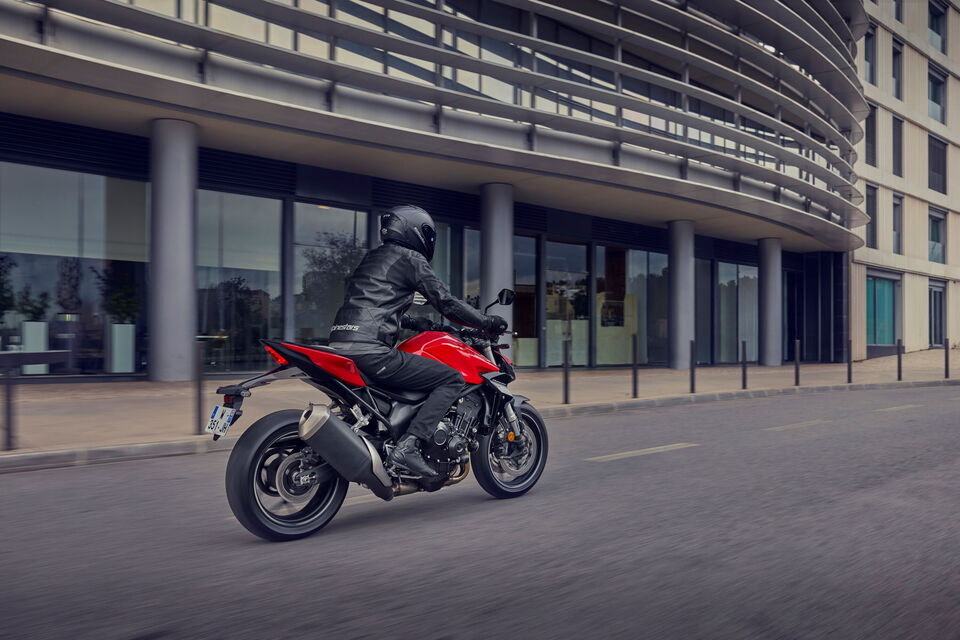
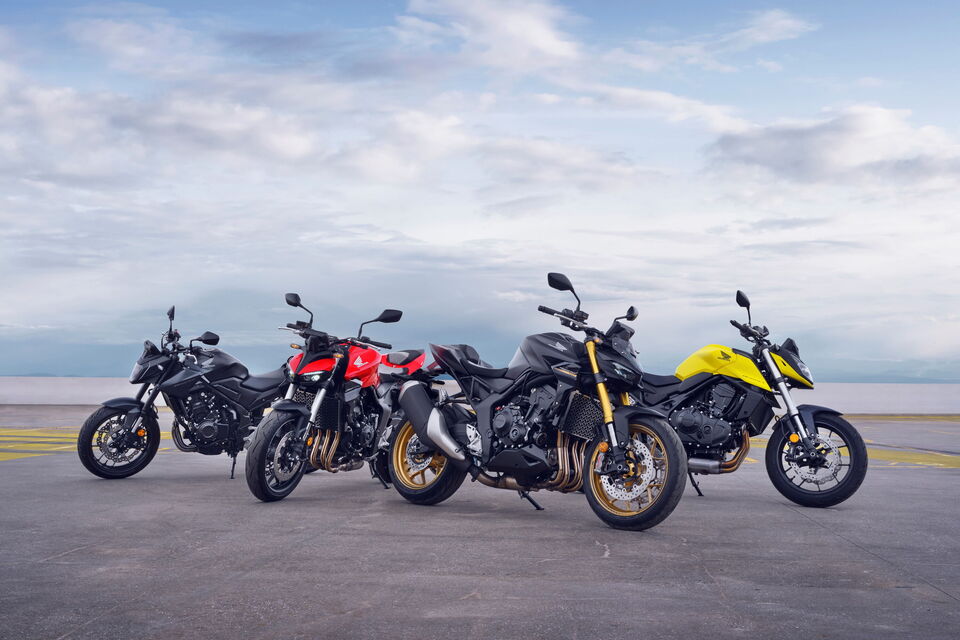
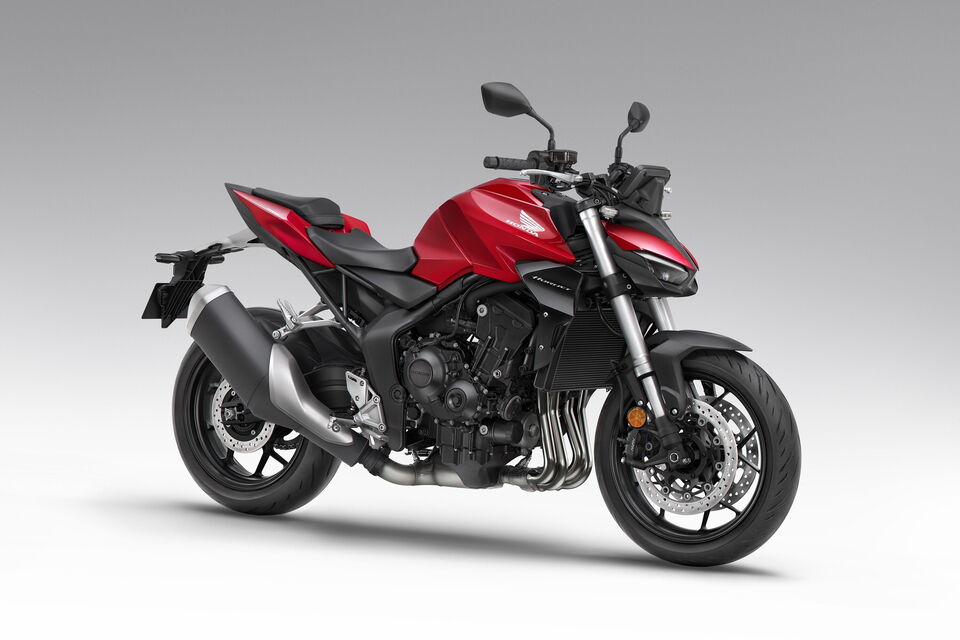
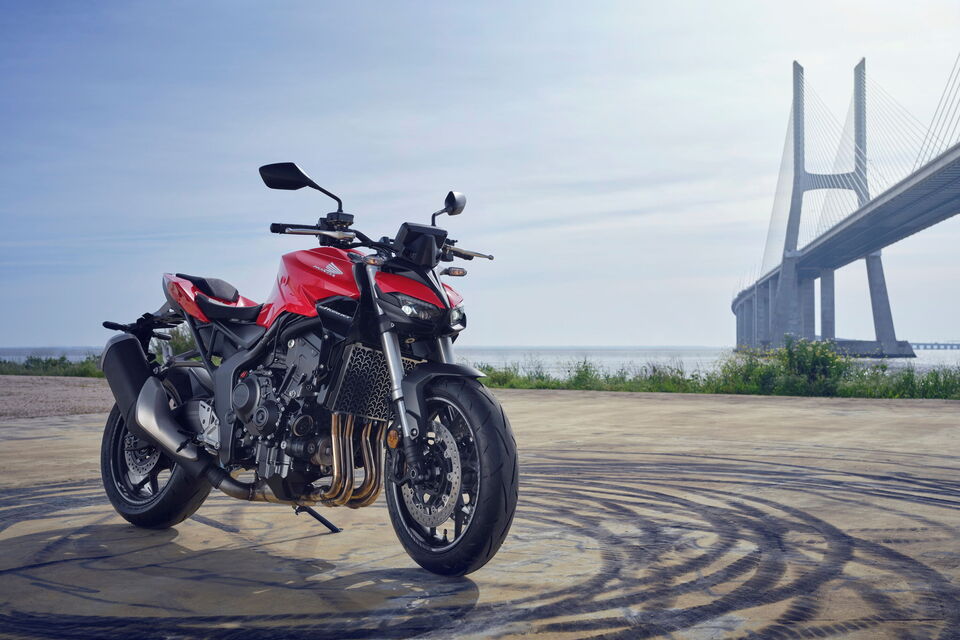
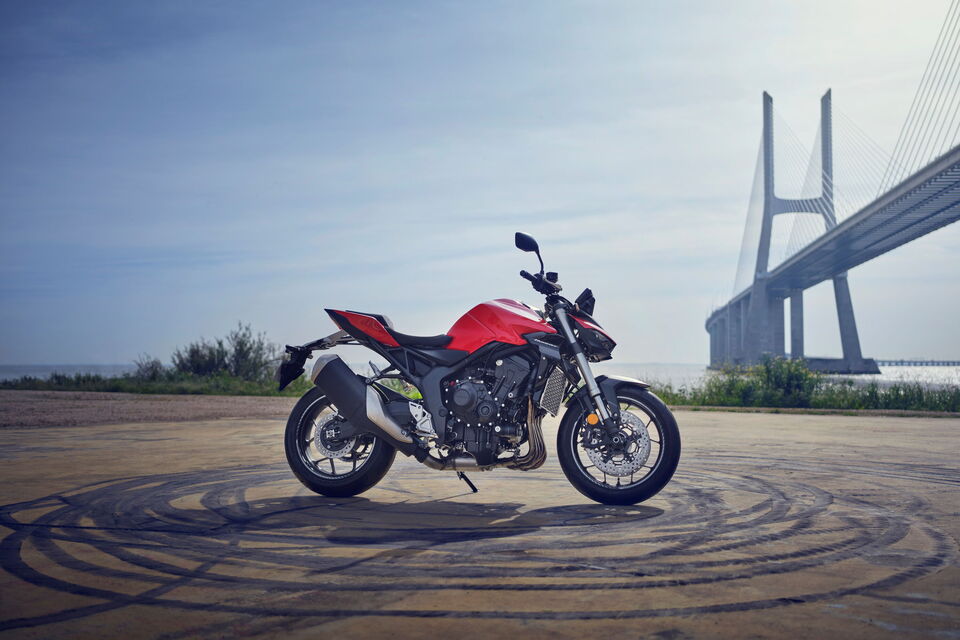
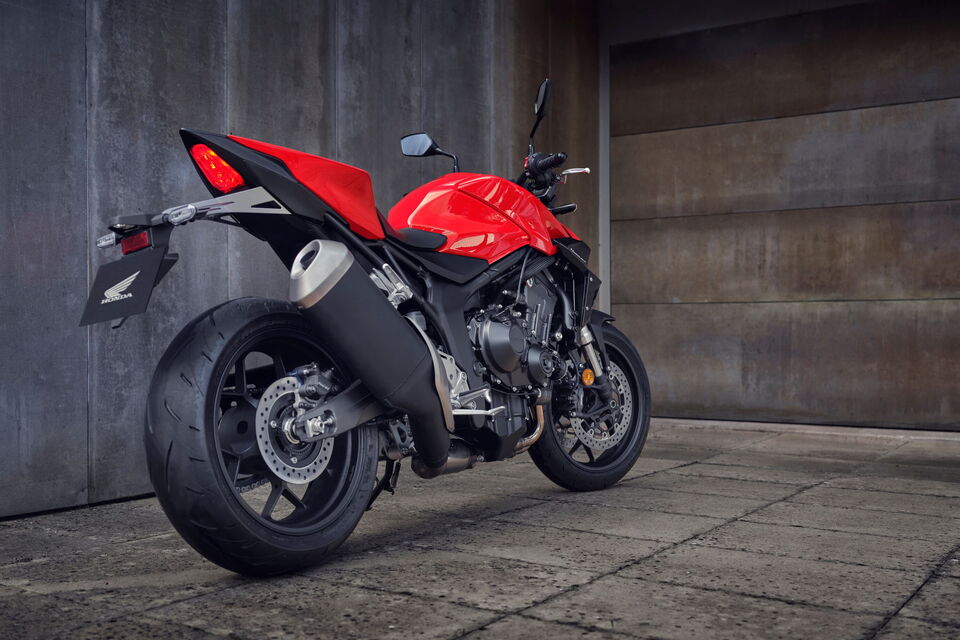
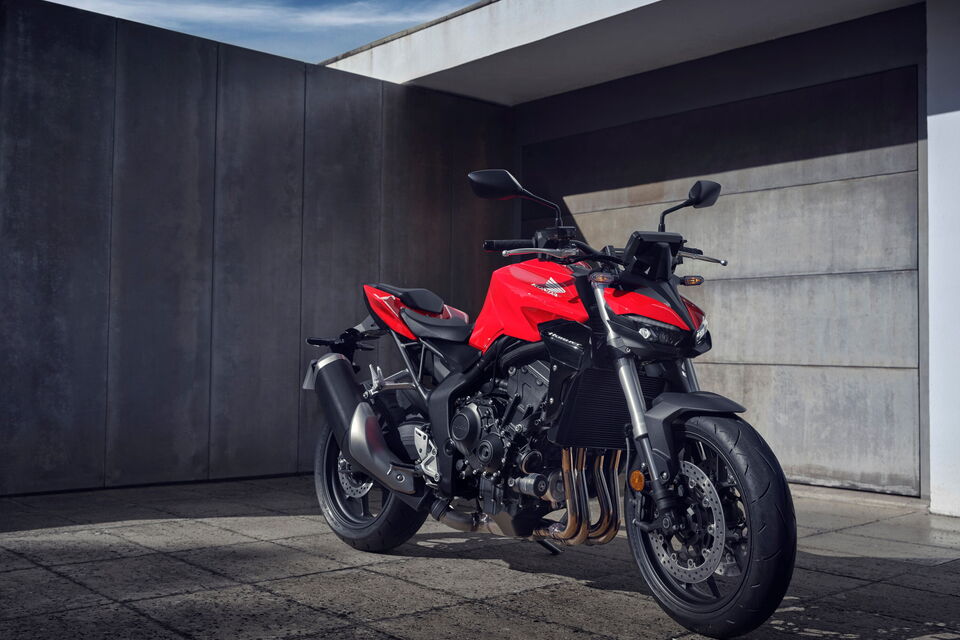
Engine: 999 cc Inline-Four, 152 hp, 104 Nm—Fireblade DNA Tuned for the Street
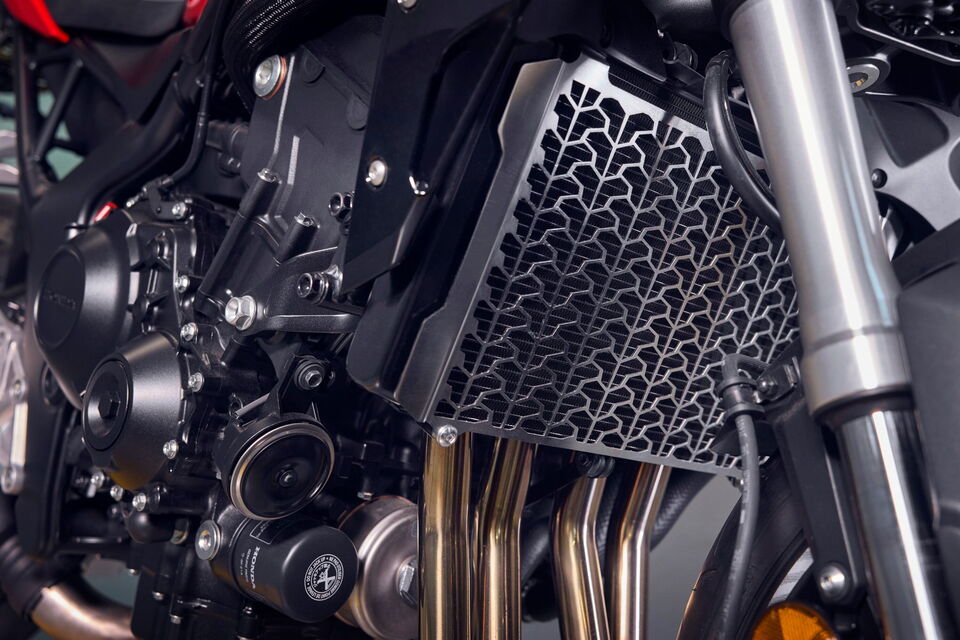
999 cc, DOHC, liquid-cooled inline-four, 16 valves, PGM-FI fuel injection, Ride-by-Wire, Euro 5+. Output is 111.6 kW / 152 hp at 11,000 rpm, with 104 Nm at 9,000 rpm. Compression ratio is 11.7:1.
The engine is based on the revised unit from the 2017 CBR1000RR Fireblade, re-tuned for naked-bike use with stronger low- and midrange performance through new cast pistons, revised cam profiles, and adapted fuel injection.
There is no loss of character. The engine revs willingly, responds precisely to throttle inputs, and delivers more backroad performance than you will ever be able to exploit within legal limits. A slipper clutch comes standard.
There are five riding modes: Sport, Standard, Rain, plus two individually configurable User modes. HSTC is adjustable through four levels, while Wheelie Control, engine power, and engine braking can each be adjusted through three levels.
A Quickshifter is not standard but is available as a genuine Honda accessory.
There is no IMU and no lean-angle-sensitive ABS. Both are missing compared with competitors such as the Ducati Streetfighter V4 or Aprilia Tuono V4, but considering the target audience and price, that is an acceptable compromise.
Suspension: Adjustable SHOWA SFF-BP, 310 mm Brakes, 118/138 mm Travel—Serious Hardware
Up front is a 41 mm SHOWA SFF-BP upside-down fork, adjustable for spring preload, rebound, and compression damping, with 118 mm of travel.
That is more sophisticated than the CB750 Hornet and CB650R, both of which use non-adjustable forks. Despite its base-model positioning, the CB 1000 Hornet gets a genuinely adjustable front end.
At the rear is an aluminum swingarm with Pro-Link and a SHOWA monoshock adjustable for spring preload and rebound damping, with 138 mm of travel.
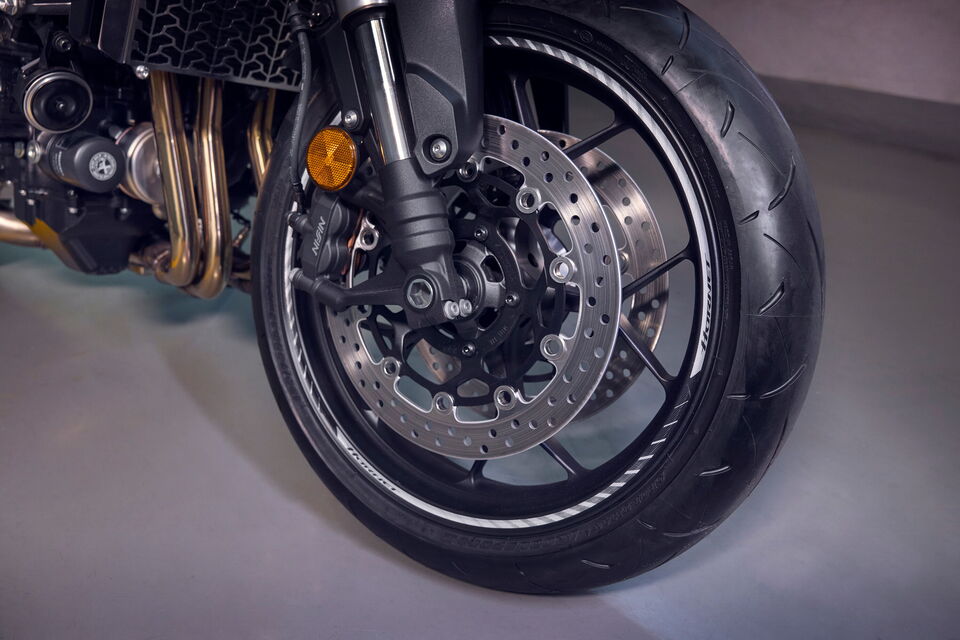
Braking comes from dual 310 mm floating front discs with radially mounted Nissin four-piston calipers and standard ABS. At the rear is a 240 mm disc. Dunlop Sportmax Roadsport 2 tires come standard.
The steel backbone frame has 70 percent greater torsional rigidity than the predecessor’s frame, according to Honda. Wheelbase is 1,455 mm and trail just 98 mm—a short figure designed for direct, agile turn-in. Steering-head angle is 65 degrees.
The CB 1000 Hornet’s chassis is designed for sporty road use. A trackday is theoretically possible, but come on - this is not a racetrack weapon.
Ergonomics: 809 mm Seat Height, Upright Streetfighter Riding Position, Dual LED Headlights, 5-Inch TFT
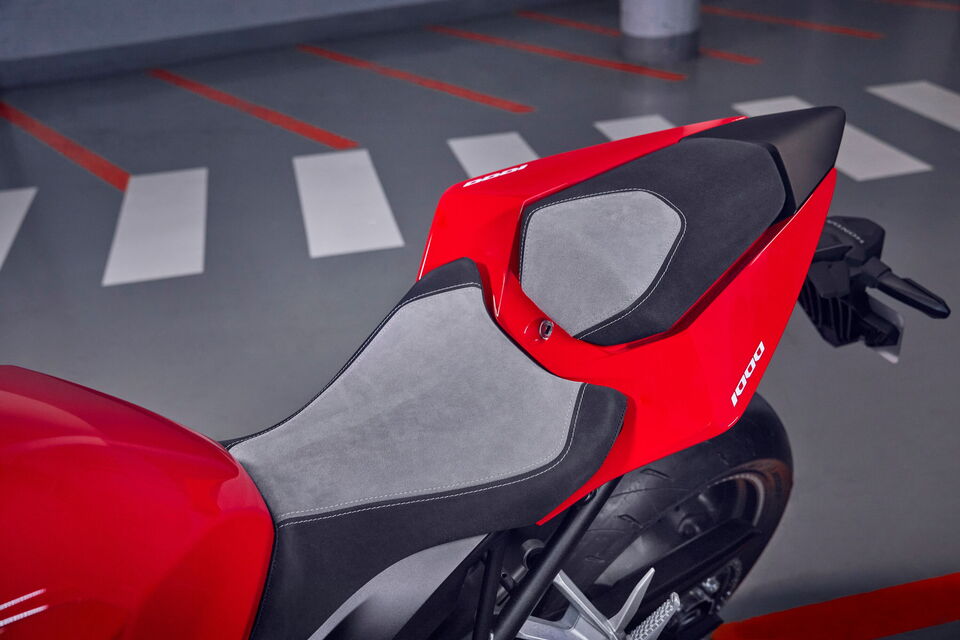
Seat height is 809 mm—1 mm lower than the CBR 650 R and CB 650 R at 810 mm, but effectively identical in how it feels when getting on.
The riding position is upright and active, while the wide handlebar provides good leverage for dynamic turn-in. The one-piece steel backbone frame shifts weight forward onto the front wheel through its geometry, producing agile, front-end-focused handling.
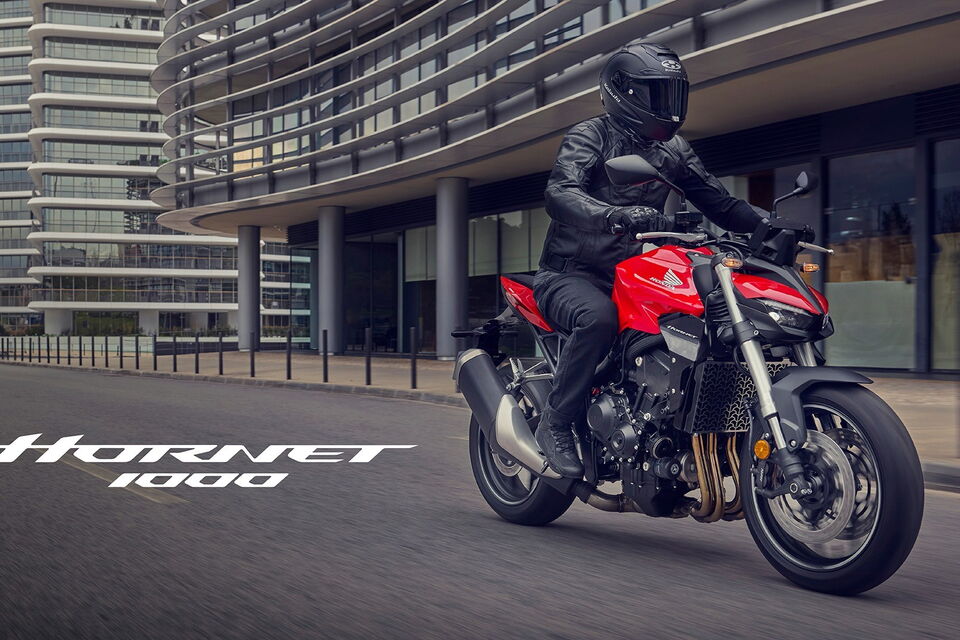
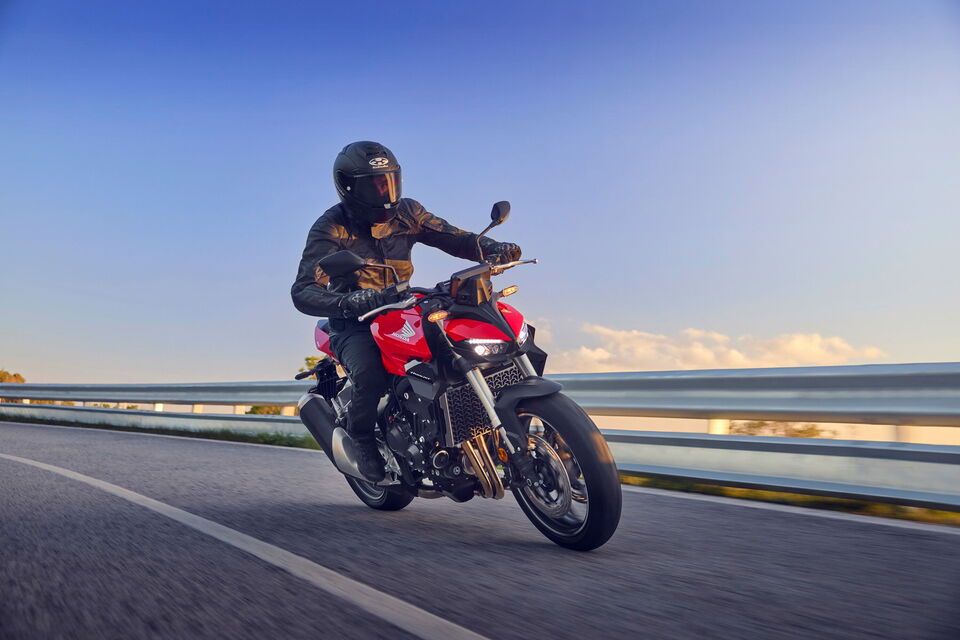
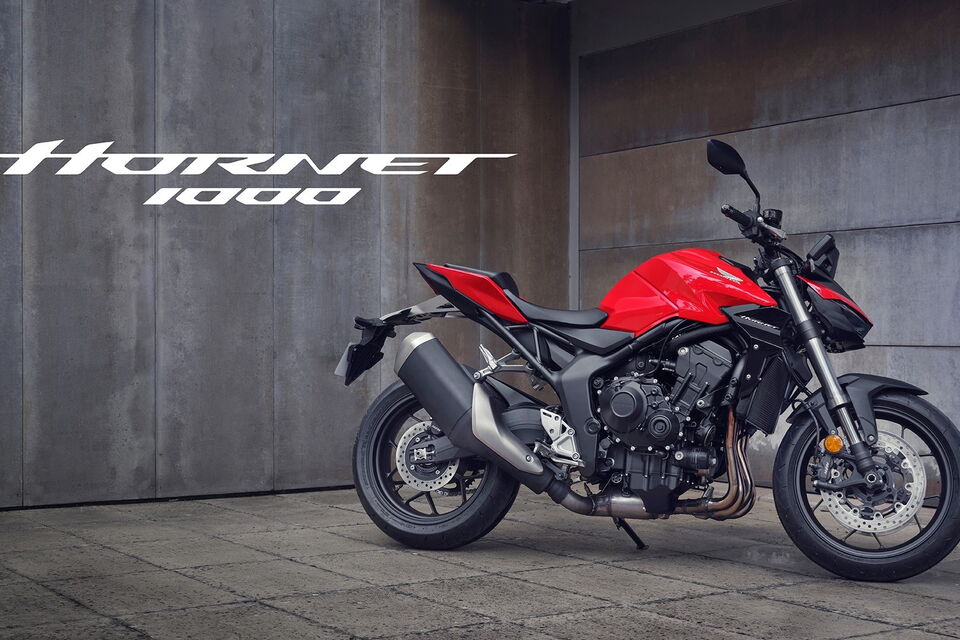
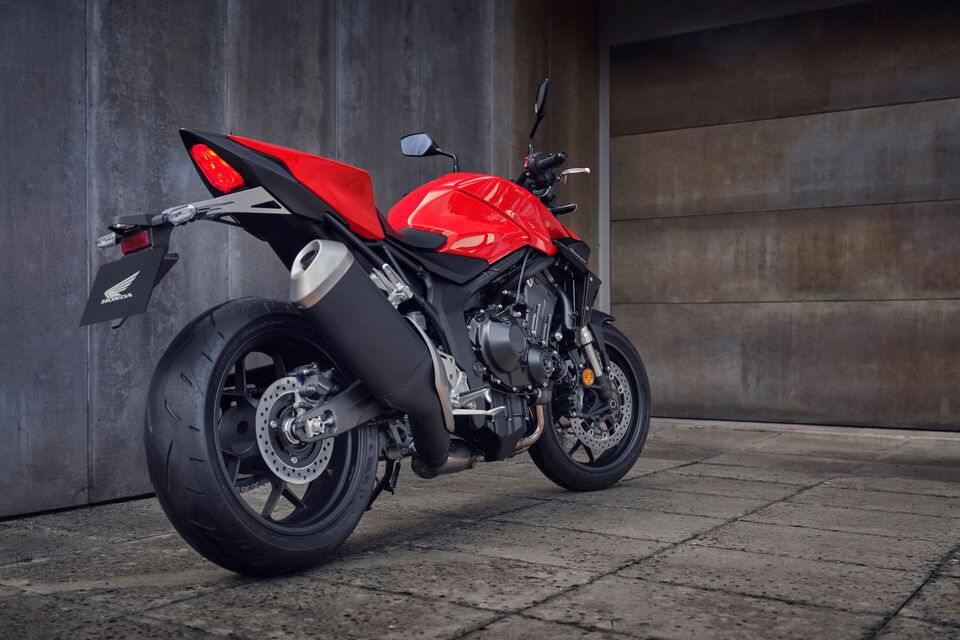
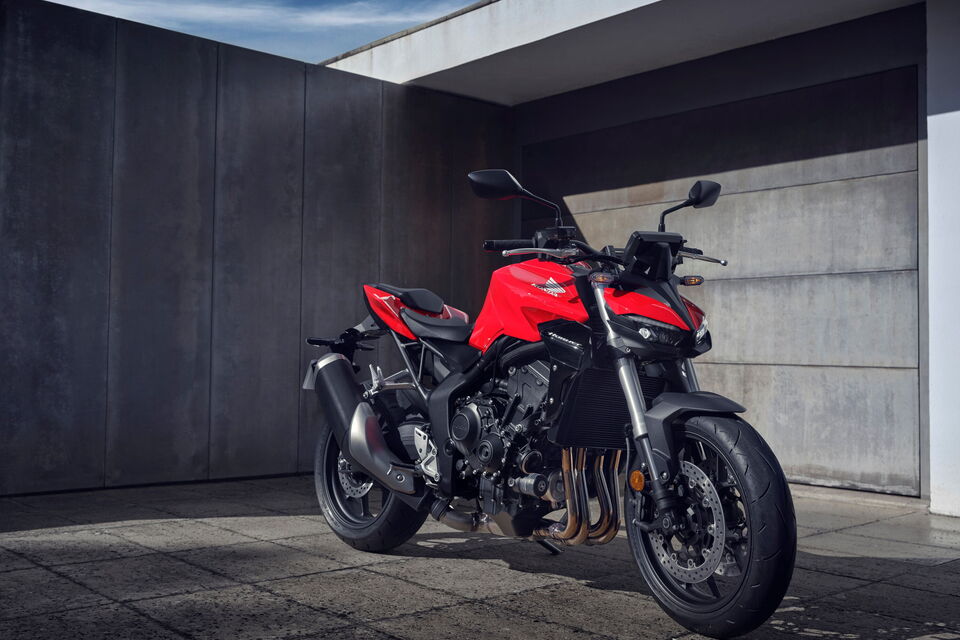
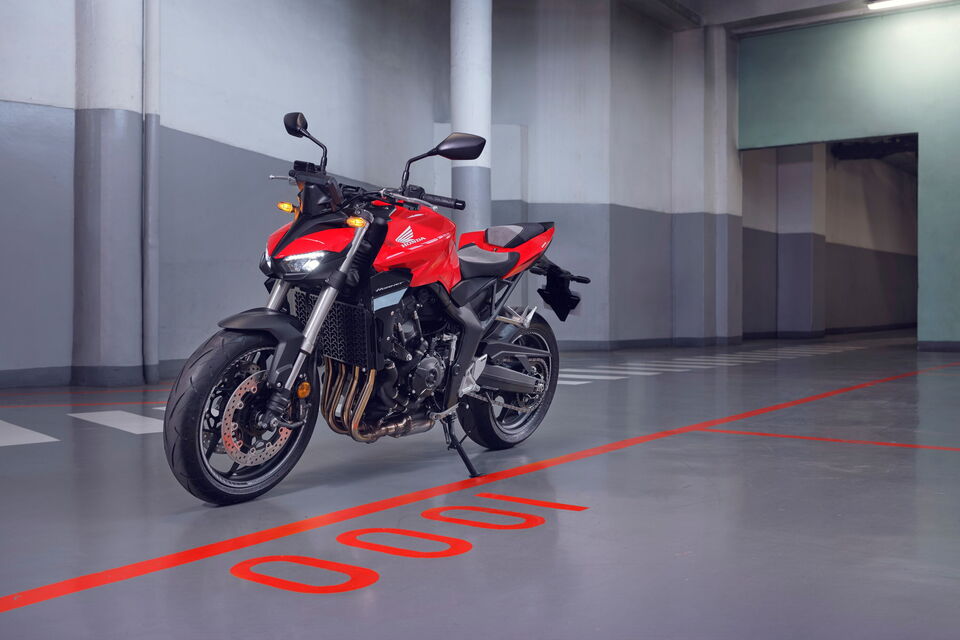
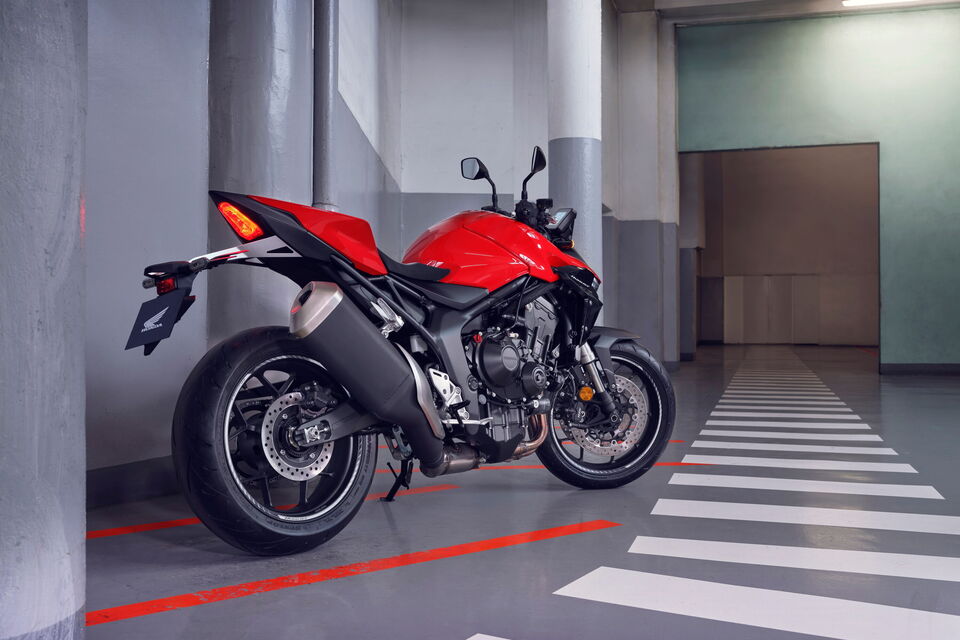
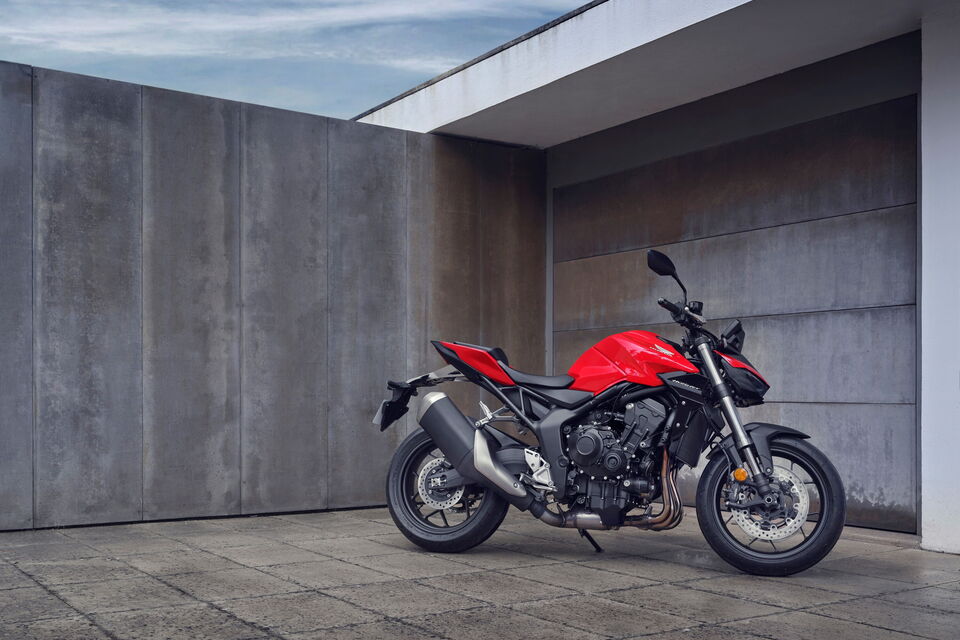
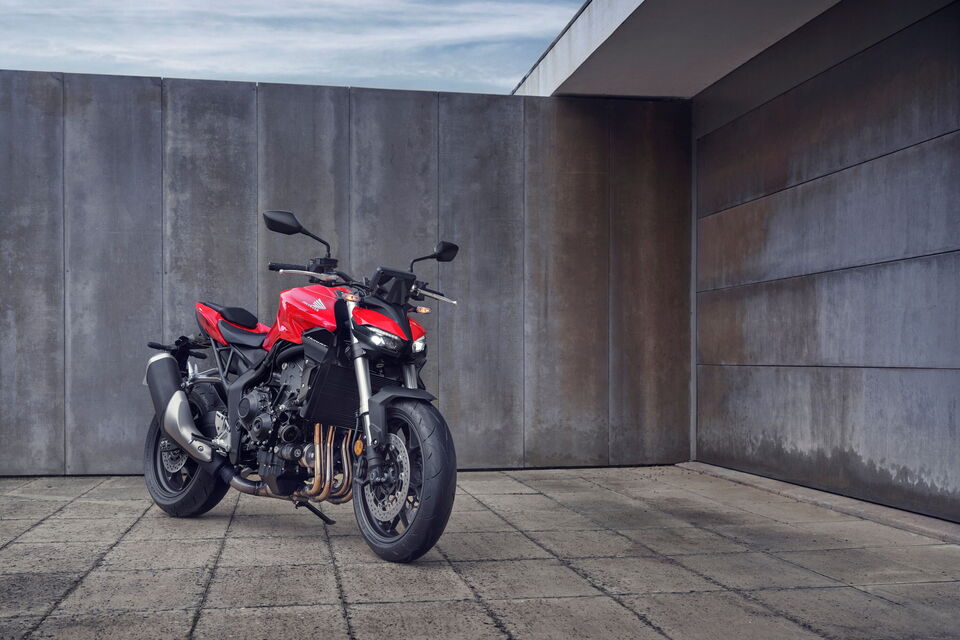
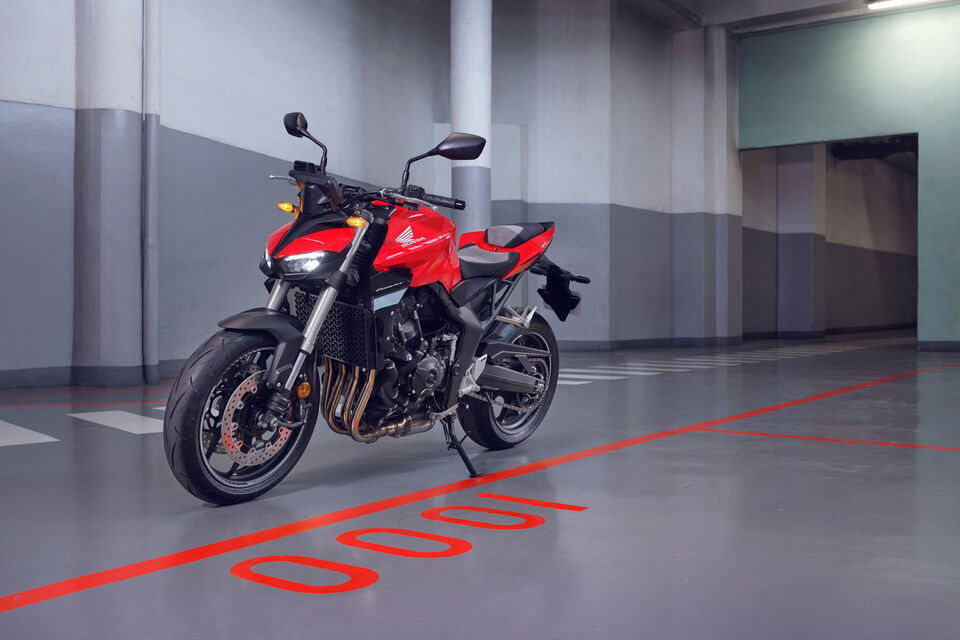
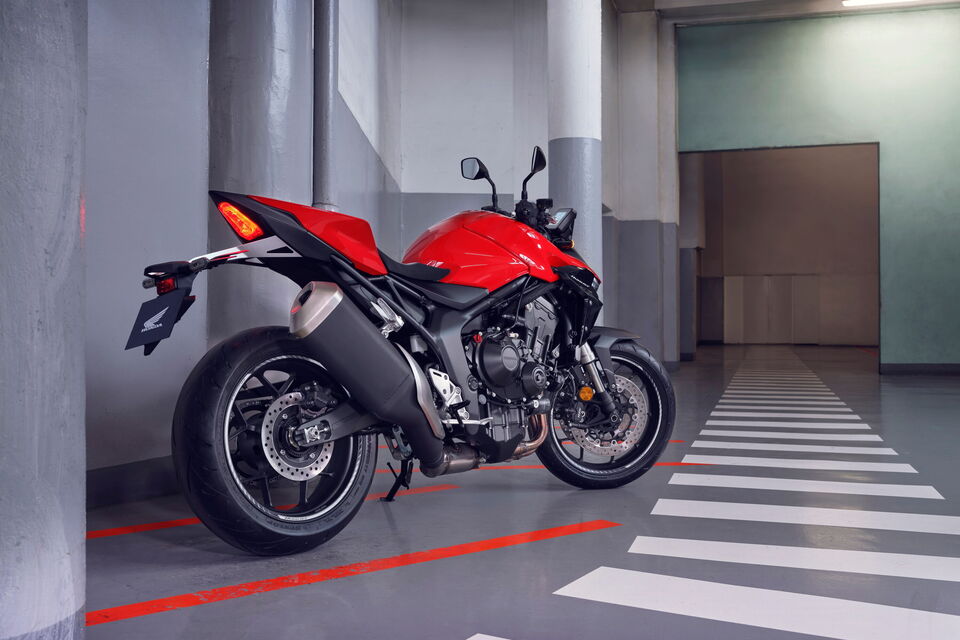
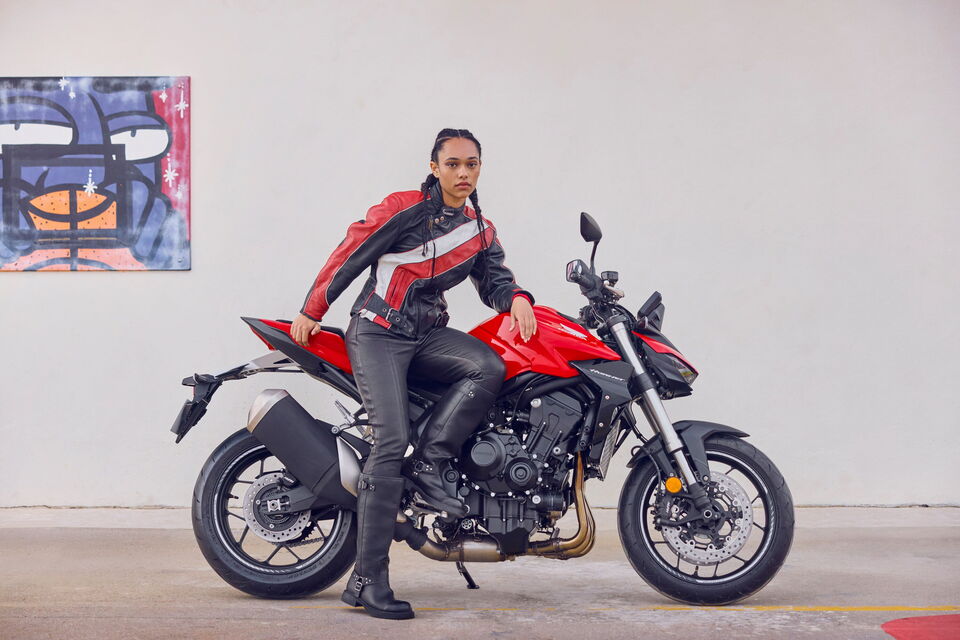
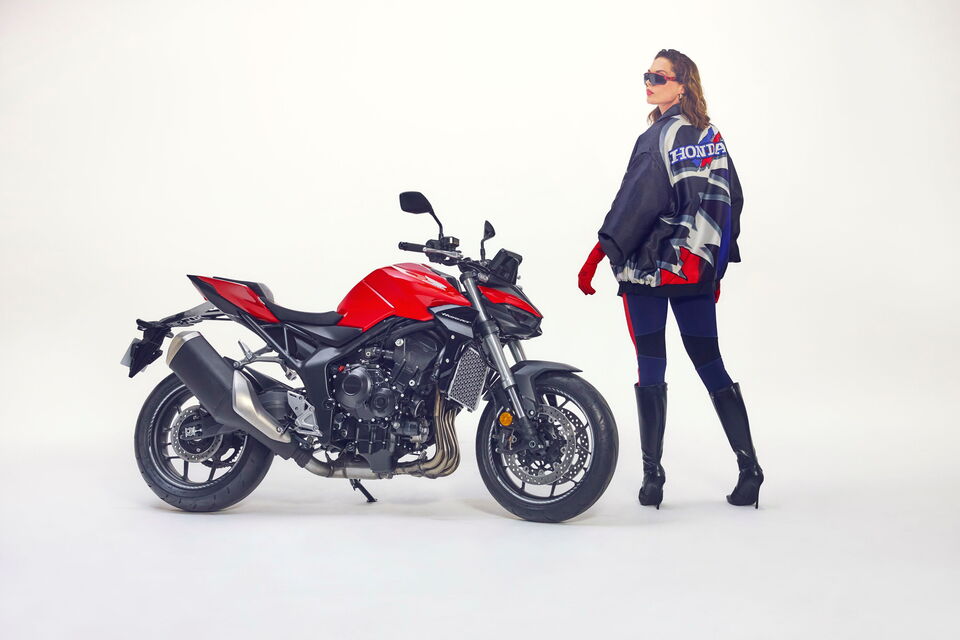
The super-compact dual LED headlight integrated into the discreet front bodywork is the CB 1000 Hornet’s defining styling feature. Black frame, black wheels, and black swingarm establish the visual language.
Fuel capacity is 17 liters, with a range of approximately 280–300 km when ridden sportily at around 5.9 L/100 km.
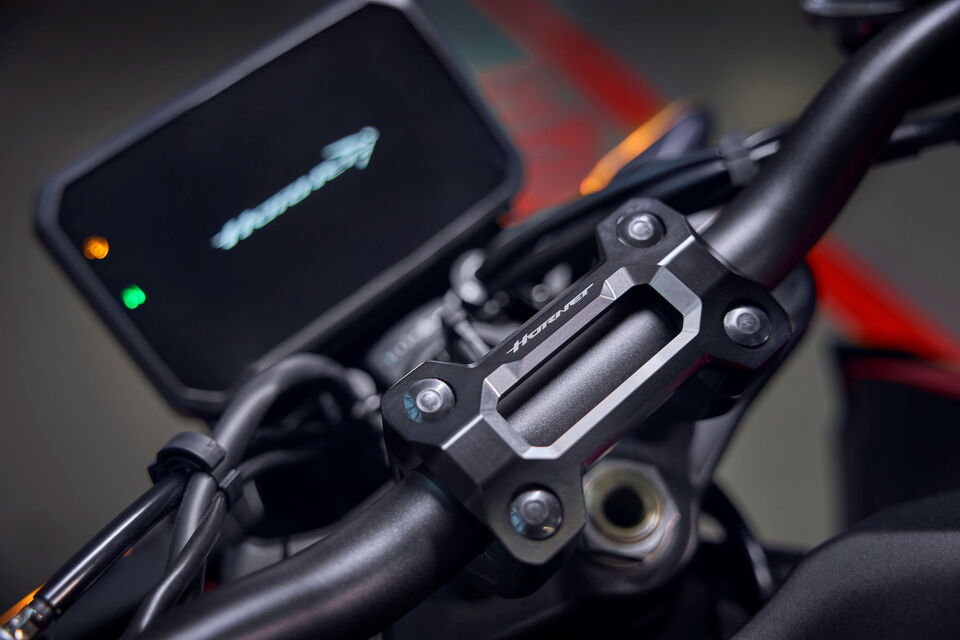
A 5-inch color TFT display with anti-glare coating comes standard, operated through a four-way switch on the left handlebar. Honda RoadSync is standard and provides navigation, music, voice control, and phone functions. The display includes speedometer, tachometer, shift light, gear indicator, and riding-mode display.
There is no Quickshifter standard and no standard USB-C port, although USB-C is available through the accessory catalog.
Handling: 211 kg Fully Fueled, 152 hp—More Power Than Ever, Well Controlled by Electronics
At 211 kg fully fueled, the CB 1000 Hornet has an excellent power-to-weight ratio for 152 hp.
Yamaha MT-09: 119 hp, 193 kg. Kawasaki Z900: 95 hp, 213 kg. Compared with the MT-09, the CB 1000 Hornet relies on considerably more displacement and horsepower at the cost of some additional weight.
In practice, the electronics make the power easy to manage. Standard and Rain modes soften power delivery enough for experienced riders moving up to the 1000 cc class, while Sport mode delivers the full package.
The short 98 mm trail creates direct, lively handling.
One criticism appears consistently in road tests: no lean-angle-sensitive ABS and no IMU. In the 150-plus-hp class, those systems have effectively become standard among competitors such as the Aprilia Tuono V4 Factory and Ducati Streetfighter V4.
But the price advantage is substantial. The CB 1000 Hornet costs less than half as much as a Ducati Streetfighter V4.
If you want lean-angle-sensitive systems and racetrack electronics, choose the SP and accept the price premium—or look toward Aprilia, Ducati, and KTM.
SP Version: 157 hp, Öhlins TTX36, Brembo Stylema, Quickshifter—From €12,599
The CB 1000 Hornet SP is not simply a different paint scheme. It is a genuine technical upgrade.
The engine is slightly modified to produce 115.6 kW / 157 hp at 10,500 rpm and 107 Nm at 8,250 rpm—5 hp and 3 Nm more than the base model.
At the rear is a fully adjustable Öhlins TTX36 shock instead of the SHOWA unit. The front fork is the same SHOWA SFF-BP, also fully adjustable on the SP.
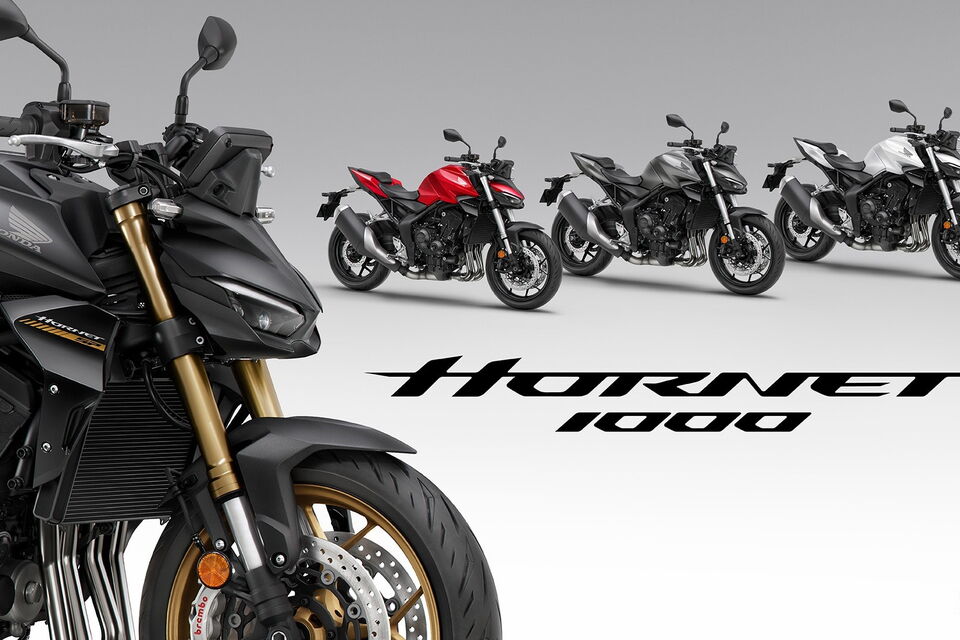
Up front, Brembo Stylema four-piston radial calipers replace the Nissin units. A Quickshifter with blipper function comes standard instead of being an accessory.
Fully fueled weight is 212 kg, just 1 kg more than the base model.
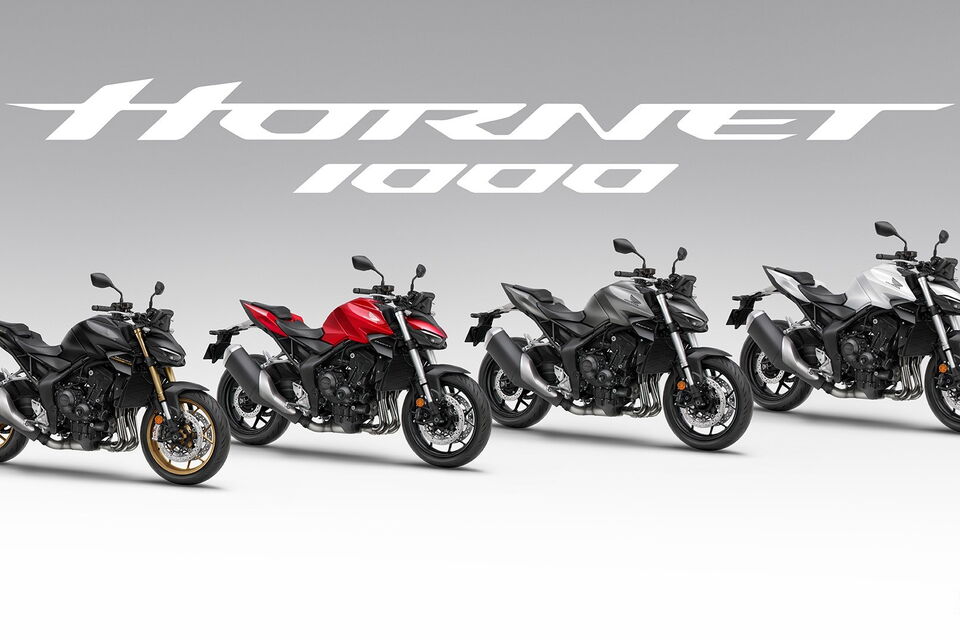
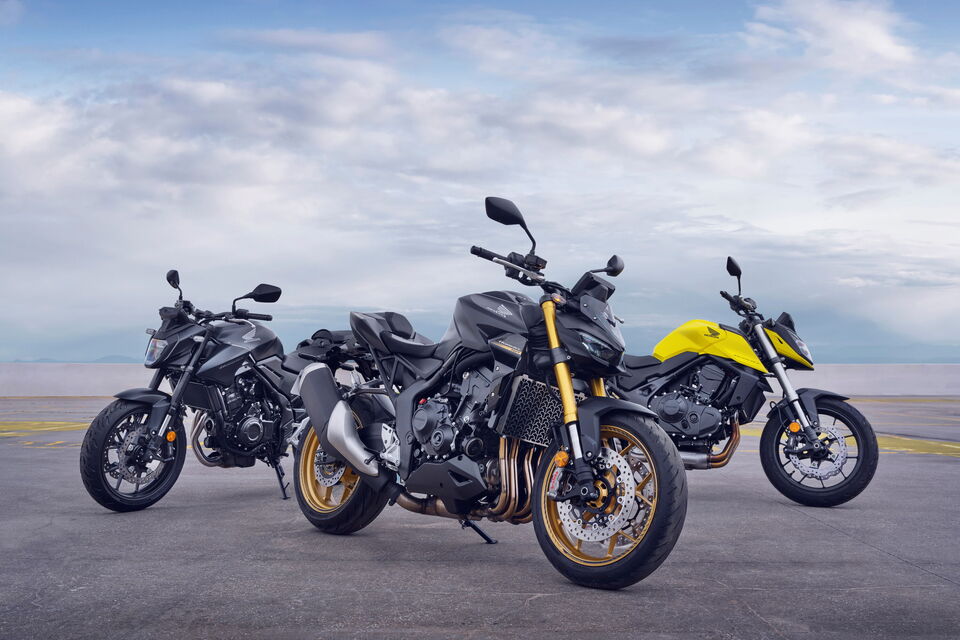
The color is Matt Ballistic Black Metallic with gold wheels and a gold-anodized fork.
Price starts at €12,599 including destination charges. That is approximately €1,870 more than the base model for Öhlins, Brembo, Quickshifter, and an additional 5 hp.
Costs: €10,729—No Other 150 hp Streetfighter Comes Close to This Price
€10,729 including destination charges. CB 1000 Hornet SP: €12,599.
The market comparison is clear. The Yamaha MT-09 starts at approximately €11,449 plus additional charges, with 119 hp, a three-cylinder engine, IMU, and lean-angle-sensitive ABS—higher price, less power, more electronics.
The Kawasaki Z900 starts at €10,170. Aprilia Tuono V4: €17,999. Ducati Streetfighter V4: more than €25,000.
The CB 1000 Hornet offers 152 hp for €10,729. That price-to-performance argument is unbeatable and deservedly made headlines when the motorcycle was introduced in 2025.
Service intervals are every 12,000 km. Warranty is two years, with extensions up to six years possible when the motorcycle is serviced by an authorized Honda dealer.
One note: there was a recall concerning a fuel leak. It has been corrected on newer motorcycles; confirm with your dealer.
Verdict
The Honda CB 1000 Hornet recalibrated the price-to-performance equation in the 150-plus-hp naked-bike segment in 2025.
152 hp, adjustable SHOWA SFF-BP, 310 mm brakes, five riding modes, Wheelie Control, TFT, RoadSync—from €10,729.
The lack of an IMU and lean-angle-sensitive ABS is the only serious objection.
If you want those features, choose the SP—or pay twice as much elsewhere.
Everyone else buys the Hornet.
Quick Check
+ 152 hp / 104 Nm from €10,729—unmatched price-to-performance ratio in the class
+ Fully adjustable SHOWA SFF-BP, rebound/compression/preload—better than on many more expensive competitors
+ Dual 310 mm front brakes with Nissin four-piston radial calipers standard
+ Five riding modes including two User modes, with four-level HSTC, Wheelie Control, engine power, and engine braking adjustable
+ Wheelie Control standard
+ 5-inch TFT with Honda RoadSync standard
+ Short 98 mm trail: agile, direct turn-in
+ SP option with Öhlins TTX36, Brembo Stylema, Quickshifter, +5 hp—for €12,599
+ Warranty extension up to six years possible
– No IMU: no lean-angle-sensitive ABS or traction control—in this performance class, now standard among many competitors
– No Quickshifter standard, accessory only
– 809 mm seat height: shorter riders may be on tiptoes
– Fuel consumption approx. 5.9 L/100 km; approx. 280–300 km range
– Recall for fuel leakage, corrected on newer motorcycles; confirm with dealer
– Two-year base warranty
Technical Specifications: Honda CB 1000 Hornet (2026)
Country of Manufacture: Japan
Engine: Liquid-cooled four-stroke inline-four, DOHC, 16 valves, PGM-FI fuel injection, Ride-by-Wire, Euro 5+; based on 2017 CBR1000RR Fireblade engine, tuned for naked-bike use
Displacement: 999 cc
Power: 111.6 kW / 152 hp at 11,000 rpm
Torque: 104 Nm at 9,000 rpm
Compression Ratio: 11.7:1
Transmission: 6-speed; chain final drive; slipper clutch standard; Quickshifter available as an accessory
Riding Modes: Sport, Standard, Rain + two User modes; four-level HSTC; Wheelie Control; engine power and engine braking each adjustable through three levels
Frame: One-piece steel backbone frame; 70 percent greater torsional rigidity than predecessor, according to Honda
Front Suspension: 41 mm SHOWA SFF-BP upside-down fork; adjustable for spring preload, rebound, and compression damping; 118 mm travel
Rear Suspension: Aluminum swingarm, Pro-Link, SHOWA monoshock; adjustable for spring preload and rebound; 138 mm travel
Front Brakes: Dual 310 mm floating discs; radially mounted Nissin four-piston calipers
Rear Brake: 240 mm disc; two-piston caliper
Rider Aids: ABS standard; four-level HSTC traction control standard; Wheelie Control standard; no lean-angle-sensitive ABS; no IMU
Wheels: Cast-aluminum wheels; 17-inch
Front Tire: 120/70 ZR17
Rear Tire: 180/55 ZR17
Display: 5-inch color TFT with anti-glare coating; four-way switch; Honda RoadSync standard with navigation, music, voice control, and phone functions
Lighting: Dual LED headlights standard
Fully Fueled Weight: 211 kg base; 212 kg SP
Seat Height: 809 mm
Wheelbase: 1,455 mm
Trail / Steering-Head Angle: 98 mm / 65 degrees
Fuel Capacity: 17 liters
SP Version: 157 hp / 115.6 kW, 107 Nm; fully adjustable Öhlins TTX36; Brembo Stylema four-piston radial calipers; Quickshifter with blipper standard; gold wheels; Matt Ballistic Black Metallic; 212 kg fully fueled
Price in Germany: From €10,729 including destination charges. SP: from €12,599
Warranty: 2 years; extension up to six years possible annually with servicing by an authorized Honda dealer