Review Kawasaki Eliminator 500 (2026)

The Most Affordable A2 Cruiser With Real Substance - 176 kg, 735 mm, 45 hp, and a Surprising Amount of Fun
No chrome, no fairing, no riding modes. Instead, you get a 176 kg curb weight, a 735 mm seat, a rev-happy 451 cc twin, and a price that is uniquely low for a new motorcycle in the cruiser segment. The Eliminator 500 is the most direct and honest retort to the idea that you need an expensive, heavy motorcycle.
As of: April 15, 2026 | Model: Kawasaki Eliminator 500 (2026) | Price: EUR 6,895 including destination | Warranty: 4 years | Stationary noise: not officially published | License: A2, 33.4 kW, rideable without restriction kit | MY2026: technically identical to MY2024, new Metallic Imperial Red/Ebony color
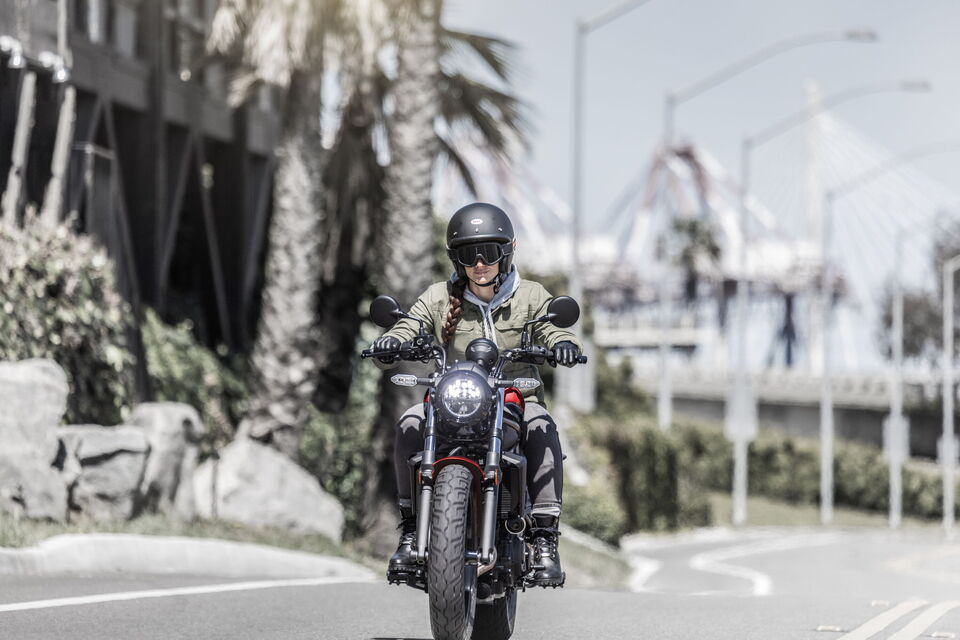
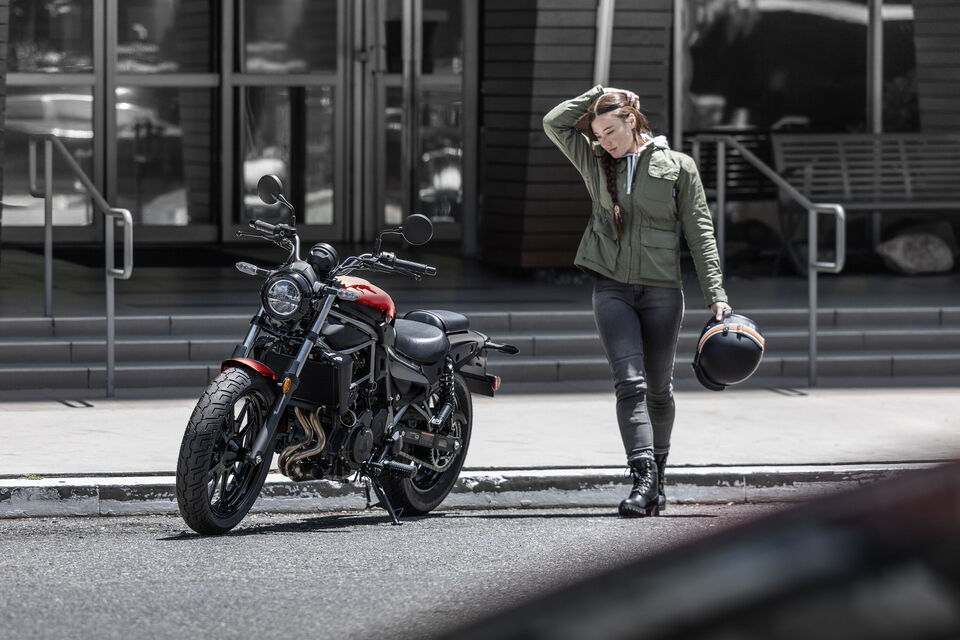
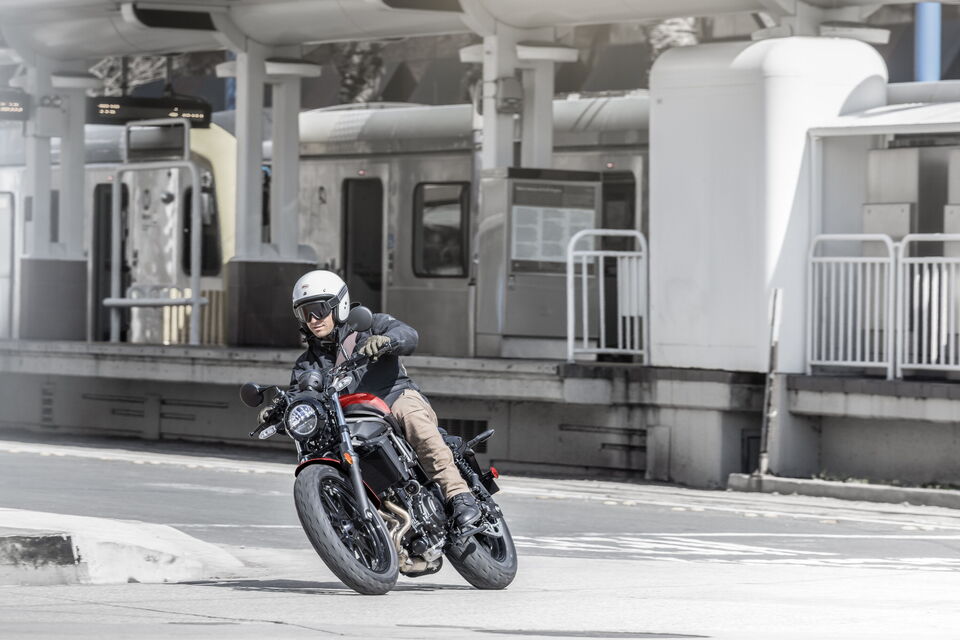
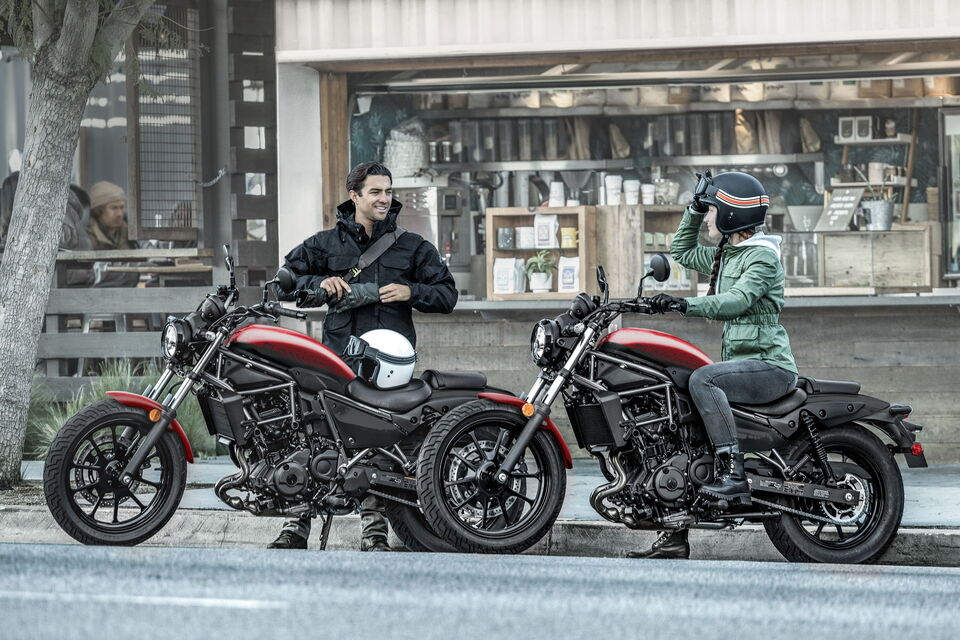
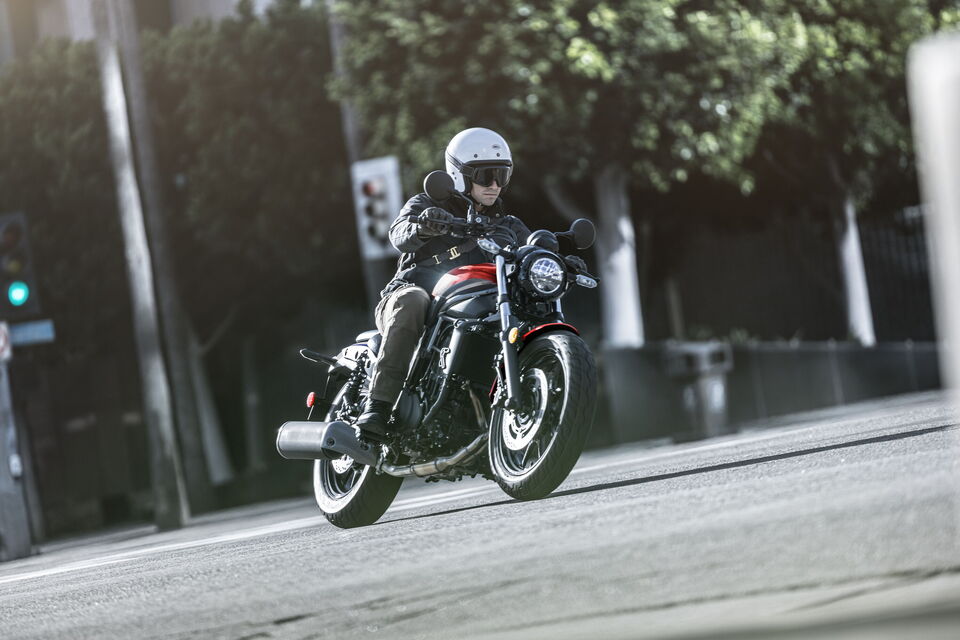
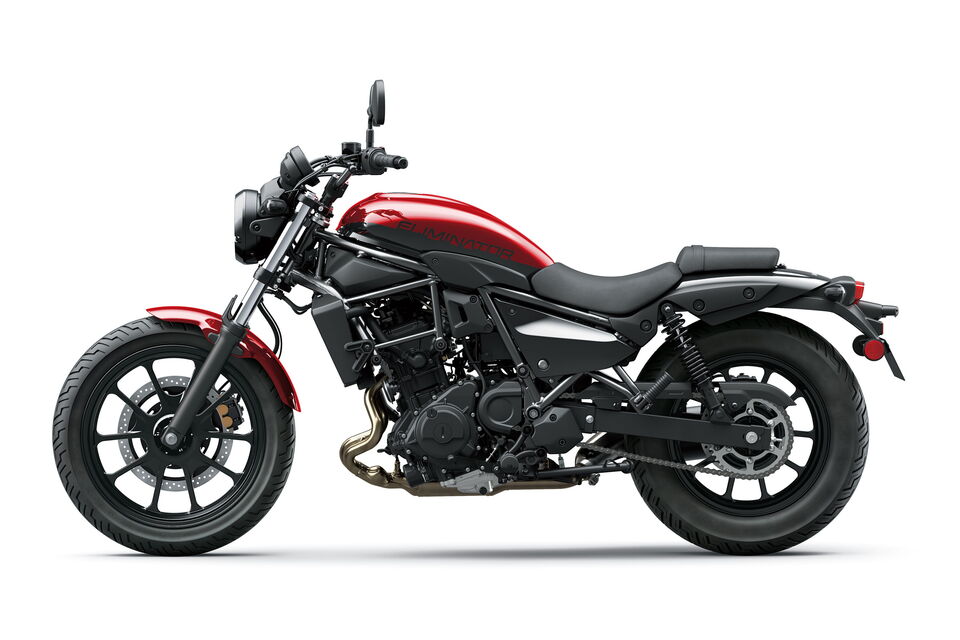
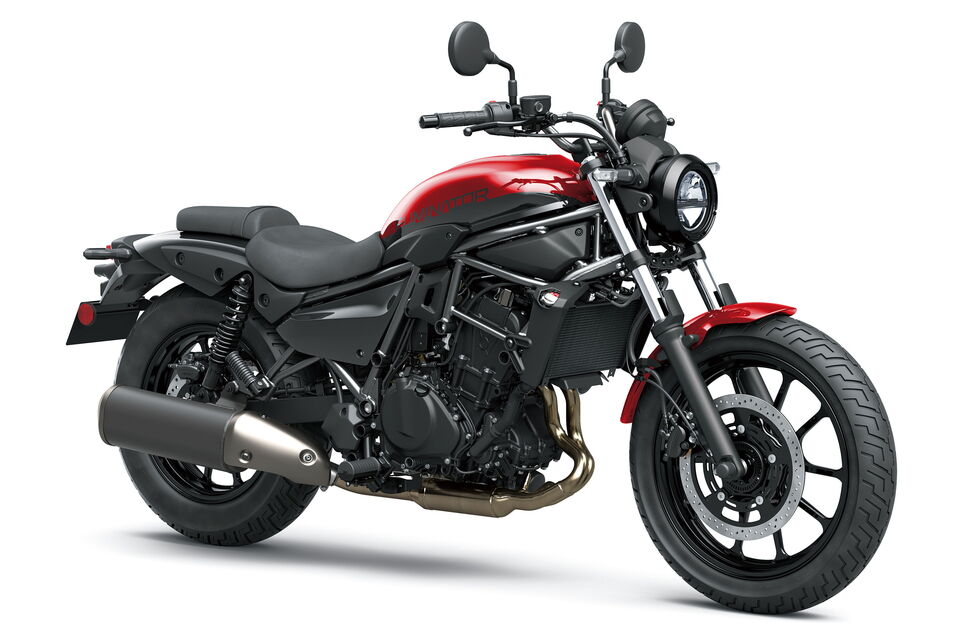
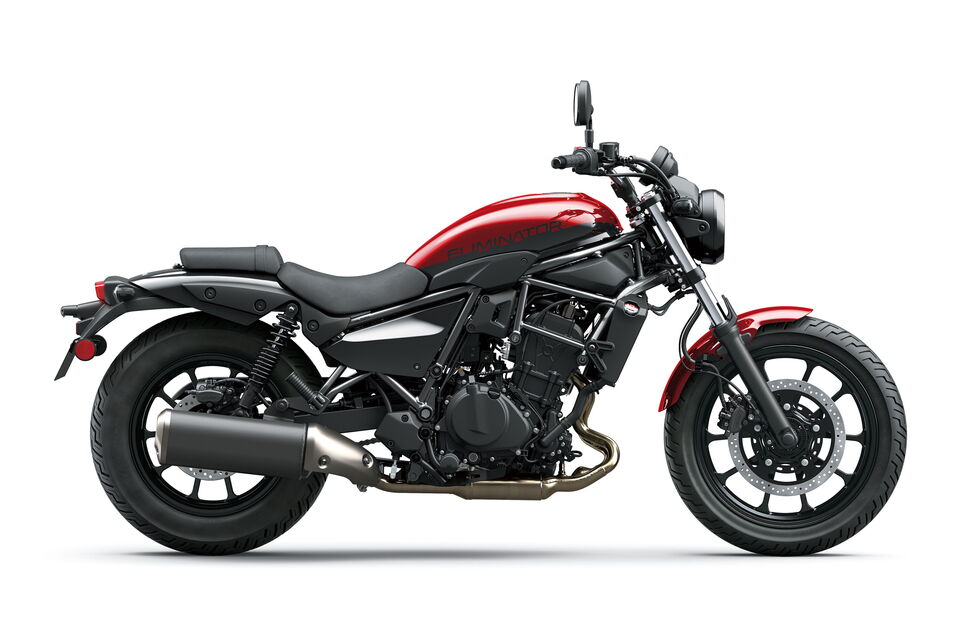
Concept: Less Is More - Kawasaki Answers the Honda Rebel 500 With a Purist Urban Cruiser
Kawasaki did not develop the Eliminator 500 by accident. It is a clear, deliberate answer to a segment that has been growing for years: affordable, light, beginner-friendly cruisers for urban use and short trips. The Honda Rebel 500 is the benchmark in this class. Kawasaki studied that concept closely and chose its own path in several areas. The most important difference is weight. At 176 kg, the Eliminator is 15 kg lighter than the Rebel, a genuine advantage you feel every time you maneuver the bike or lift it off the side stand. It also uses an 18-inch front wheel instead of the Honda’s 16-inch setup, giving the Kawasaki a longer, more traditional cruiser stance.
The concept is deliberately purist. No windshield, no chrome, no riding modes, no traction control. The finish is matte-black metal from the headlight cowl and tank to the frame and cast wheels. For model year 2026, Metallic Imperial Red/Ebony adds the first more colorful contrast to the previous all-black look. Technically, the Eliminator 500 is identical to MY2024, when it arrived on the German market. Rather than that being a weakness, it is evidence that the basic concept was right from the start.
Engine: 451 cc, 45 hp, 42.6 Nm - Rev-Happy, Linear, and Far More Energetic Than the Numbers Suggest
The liquid-cooled, DOHC 451 cc parallel twin is the same basic engine used in the Ninja 500 and Z500. Kawasaki did not dull it down with a cruiser-specific low-rpm tune for the Eliminator. It retains its rev-happy, lively character, building power linearly and noticeably all the way to 9,000 rpm. That is unusual for a cruiser, and it makes the Eliminator a pleasant surprise. Anyone expecting a lazy, reluctant twin is greeted instead by a quick, eager engine that moves the motorcycle with considerably more urgency than 45 hp might suggest.
Peak torque of 42.6 Nm arrives at 6,000 rpm, which is entirely sufficient for everyday riding. In town, the engine is happy to roll along calmly; on backroads, it spins up willingly. Highway stages are possible, but at higher speeds the lack of bodywork and the flat handlebar, typical of the style, make them tiring. The six-speed transmission shifts with impressive smoothness, and even without a quickshifter, clutchless upshifts are possible with a brief roll-off of the throttle. Measured fuel consumption is around 3.8 L/100 km. With a 13-liter tank, that works out to a theoretical range of roughly 340 km.
Chassis and Handling: 176 kg, Twin Shocks, Telescopic Fork - Simple, Honest, and Completely Adequate for the Job
The chassis is straightforward. Up front is a conventional 41 mm telescopic fork with 120 mm of travel and no compression or rebound adjustment. At the rear is a conventional swingarm with twin shocks, 90 mm of travel, and adjustable spring preload only. The non-adjustable fork is hardly a technical marvel, but for the Eliminator’s purist mission - city riding, short trips, and occasional backroads - the setup is honest and fully capable of handling a brisk pace.
Where the Eliminator repeatedly surprises is handling. Despite the typical cruiser tire combination of a large 18-inch front wheel and broad 16-inch rear, it tips into corners effortlessly and darts through direction changes. Low weight is the decisive factor. The brakes are equally appropriate: a 310 mm front disc with a two-piston caliper and a 240 mm rear disc, also with a two-piston caliper. Both are easy to modulate and feel properly sized for the motorcycle’s intended use. Dual-channel ABS is standard and remains unobtrusive even when the pace picks up.
Equipment and Ergonomics: Purist by Design - Round LCD, Bluetooth Connectivity, 735 mm Seat Height
The round LCD instrument combines a slightly old-school visual character with good readability. It displays speed, rpm, gear position, fuel level, range, and an ECO indicator. There is no TFT, no touchscreen, no GPS. Bluetooth connectivity through Kawasaki’s Rideology app is standard, however, which is genuinely surprising at this price and within such a stripped-back concept. LED headlight, LED turn signals, and LED taillight are standard. There are no riding modes, traction control, or cruise control, but with 45 hp and this motorcycle’s clearly defined character, their absence is hardly a serious gap.
At 735 mm, the seat is the lowest on any Kawasaki street model in the 250-to-500 cc range. Riders who struggle to get both feet down on a Z500 or Ninja 500 can comfortably flat-foot the Eliminator. The riding position is a modern cruiser setup: upper body slightly inclined forward, arms naturally extended toward the handlebar, and feet mid-mounted rather than stretched far forward. In that sense it feels closer to a naked bike than a traditional chopper. Riders coming from an upright motorcycle may need a few hours to adjust, but after that it is comfortable and well suited to longer urban rides. The SE version, available in Austria and Switzerland, differs only in frame color and paint. Germany gets the standard version only.
Positioning: The 2026 A2 Cruiser Market - Why 45 hp and 176 kg Can Be a Better Deal Than 90 hp and 220 kg
The market for small, light everyday cruisers has grown considerably since 2020. The buyers are not only beginners. Many experienced riders deliberately choose a lighter motorcycle that can be maneuvered through the city without effort or brute strength. The Eliminator 500 addresses that need directly. It is A2-compliant from the factory with no restriction kit, making it suitable for riders moving up through the license system, but also for downsizers, returning riders, commuters, and anyone looking for an uncomplicated second bike that does not occupy the parking footprint of a battleship.
Compared directly with Kawasaki’s own Vulcan S, the Eliminator is the livelier machine: a rev-happy engine instead of a cruiser-oriented tune, roughly 50 kg less weight, and a significantly lower price, though without Ergo-Fit adjustability and with simpler suspension. If you absolutely need Ergo-Fit or regularly carry a passenger, choose the Vulcan S. If you want to get started quickly, simply, and inexpensively, the Eliminator makes a compelling case.
Cost: EUR 6,895 Out the Door - One of the Most Affordable A2 Cruisers With Honest Substance on the German Market
At EUR 6,895 including destination, the Eliminator 500 is one of the least expensive new A2-compatible cruisers on the German market. The Honda Rebel 500 costs slightly more, weighs more, and uses a smaller front wheel. The Benelli 502C and Royal Enfield Meteor 350 offer less engine performance. Then there is the intriguing CFMoto 450CL-C.
Kawasaki’s starter bonus for newly licensed riders is EUR 500 on the Eliminator 500 because its actual displacement is 451 cc and the bonus is capped at EUR 500. That can bring the effective price below EUR 6,500 including destination. Service intervals are 12,000 km or once a year, considerably more convenient than the Vulcan S’s 6,000 km intervals. The warranty is four years. Accessories include optional seats 20 mm lower or 30 mm higher than stock, passenger grab handles, windshields, a chrome package, and saddlebags. The base motorcycle is intentionally reduced to the essentials. If you want more comfort, the dealer can add it.
Verdict
The Eliminator 500 does exactly what it was built to do: it delivers substantially more riding fun to a broad range of riders than its power figure and price suggest. Its 176 kg curb weight is the decisive buying argument, giving you a feeling of genuine control over the bike. If you want an affordable, light, purist entry into the cruiser world, there are few better offers on the German market.
Quick Check
+ 176 kg ready to ride: lightest A2 cruiser in the direct comparison; 15 kg lighter than the Honda Rebel 500.
+ 33.4 kW / 45 hp is A2-compliant from the factory - no restriction kit, dealer work, or extra cost.
+ Rev-happy 451 cc parallel twin: lively character, linear power to 9,000 rpm, no torque dip.
+ Six-speed transmission: silky smooth; clutchless upshifts possible with a brief throttle roll-off.
+ Handling: surprisingly nimble and agile despite the cruiser tire mix; darts through direction changes.
+ 735 mm seat height: lowest figure in Kawasaki’s street range up to 500 cc; optional approx. 715 mm or 765 mm seats available.
+ Bluetooth connectivity through the Rideology app standard - unusual at this price.
+ Full LED lighting standard.
+ Dual-channel ABS standard; well-modulated 310 mm front brake.
+ EUR 500 Kawasaki starter bonus for newly licensed riders: effective price below EUR 6,500 including destination is possible.
+ 12,000 km service interval; 4-year warranty.
+ New MY2026 color: Metallic Imperial Red/Ebony - first colorful contrast after the previous all-black look.
+ Suitable for A2 beginners, returning riders, downsizers, second-bike buyers, and commuters.
– Conventional telescopic fork: no compression or rebound adjustment; fork quality is limited for more ambitious use.
– No standard wind protection: higher-speed highway stages require the rider’s body to act as the windbreak.
– No riding modes, traction control, or cruise control: consistently purist, but a real equipment gap for touring-oriented riders in the segment.
– 13-liter tank: theoretical range around 340 km; more than sufficient for city use, but longer tours still benefit from fuel-stop planning.
– Passenger use is limited: no passenger grab handle as standard; the optional accessory handle is worthwhile.
– SE version with a different color concept is not available in Germany, only in Austria and Switzerland.
– Actual displacement is 451 cc despite the 500 model name - not a problem, but no secret.
Technical Specifications: Kawasaki Eliminator 500 (2026)
Country of Manufacture: Japan, Kawasaki
Engine: Parallel twin, 451 cc, marketed as 500; liquid-cooled, DOHC, eight valves; fuel injection; assist/slipper clutch; six-speed; no quickshifter
Power: 33.4 kW / 45 hp at 9,000 rpm; A2-compatible without restriction kit
Torque: 42.6 Nm at 6,000 rpm
Electronics: Dual-channel ABS standard; no traction control; no riding modes; no cruise control; Bluetooth via Rideology app
Cockpit: Round LCD with speed, rpm, gear, fuel, range, ECO indicator; no TFT
Frame: Steel trellis frame; conventional swingarm
Fork: Conventional 41 mm telescopic fork; non-adjustable; 120 mm travel
Rear Shocks: Twin shocks; adjustable spring preload; 90 mm travel
Front Brake: Two-piston caliper; 310 mm disc; dual-channel ABS
Rear Brake: Two-piston caliper; 240 mm disc; ABS
Wheels: Cast aluminum with spoke-style design; 18-inch front; 16-inch rear
Tires: 130/70-18 front; 150/80-16 rear; Dunlop D404
Weight: 176 kg fully fueled
Seat Height: 735 mm standard seat; optional approx. 715 mm low or 765 mm high seat
Wheelbase: 1,520 mm
Fuel Tank: 13 liters; approx. 340 km range based on measured 3.8 L/100 km, WMTC 3.6 L/100 km
License: A2, 33.4 kW directly with no restriction kit; A
2026 Colors: Metallic Imperial Red / Ebony, RD1, new; Metallic Flat Spark Black, BK1
SE Version: Not available in Germany; available in Austria and Switzerland
Accessories: Low seat, high seat, passenger grab handle, windshield, chrome package, saddlebags
Warranty: 4-year Kawasaki factory warranty
Service: Every 12,000 km or once annually
Price in Germany: EUR 6,895 including destination. Kawasaki starter bonus: EUR 500 for newly licensed riders