Review Kawasaki Ninja 1100 SX SE (2026)

Öhlins S46, Brembo M4.32, Heated Grips, and Integrated Luggage—the Sport-Tourer for Demanding Long-Distance Riders
An Öhlins S46 rear shock, Brembo M4.32 four-piston front calipers, steel-braided brake lines, heated grips, and an integrated luggage system all come standard. Add the same turbine-smooth 1,099 cc inline-four, bidirectional quickshifter from 1,500 rpm, and complete electronics package as the base model. The SE is not a different motorcycle—it is the same machine with substantially better suspension, stronger brakes, and more touring comfort straight from the factory.
As of: April 15, 2026 | Model: Kawasaki Ninja 1100 SX SE (2026) | Price: EUR 17,270 including destination | Warranty: 4 years | Euro 5+ | MY2026: technically identical to MY2025, new colors | Premium over base model: EUR 1,650

What Separates the SE From the Base Model—and What Both Share
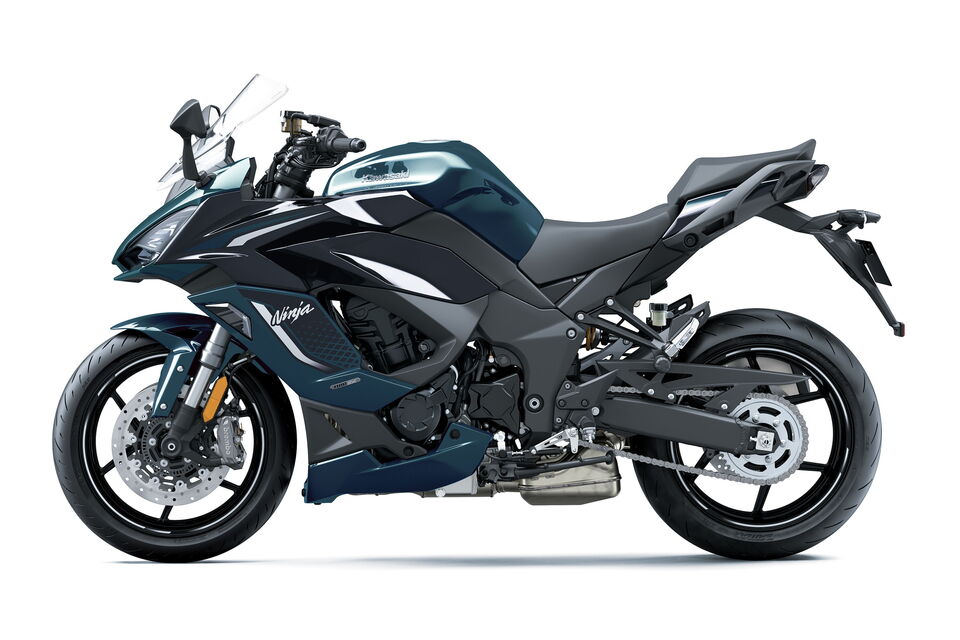
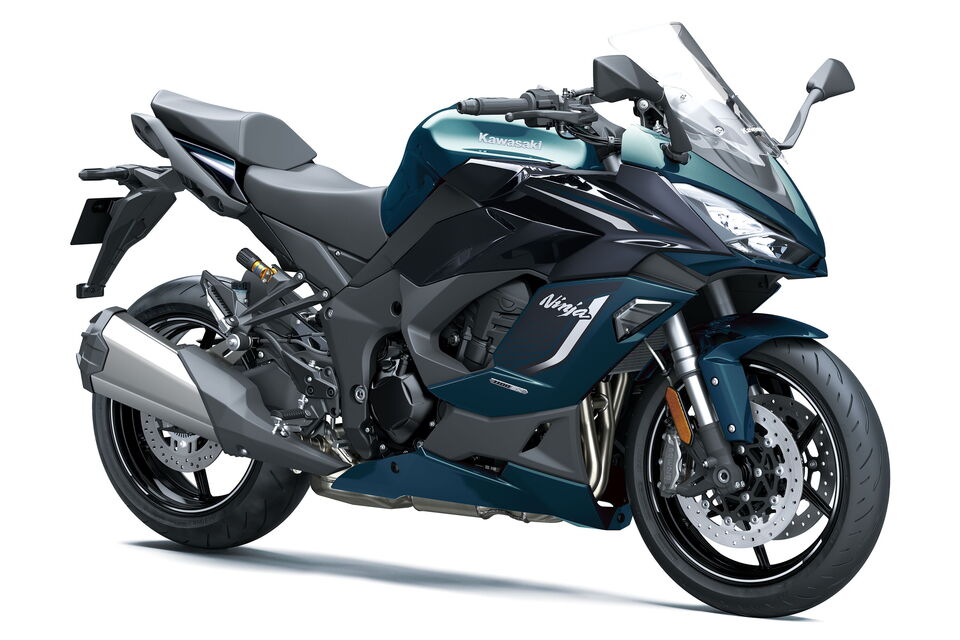
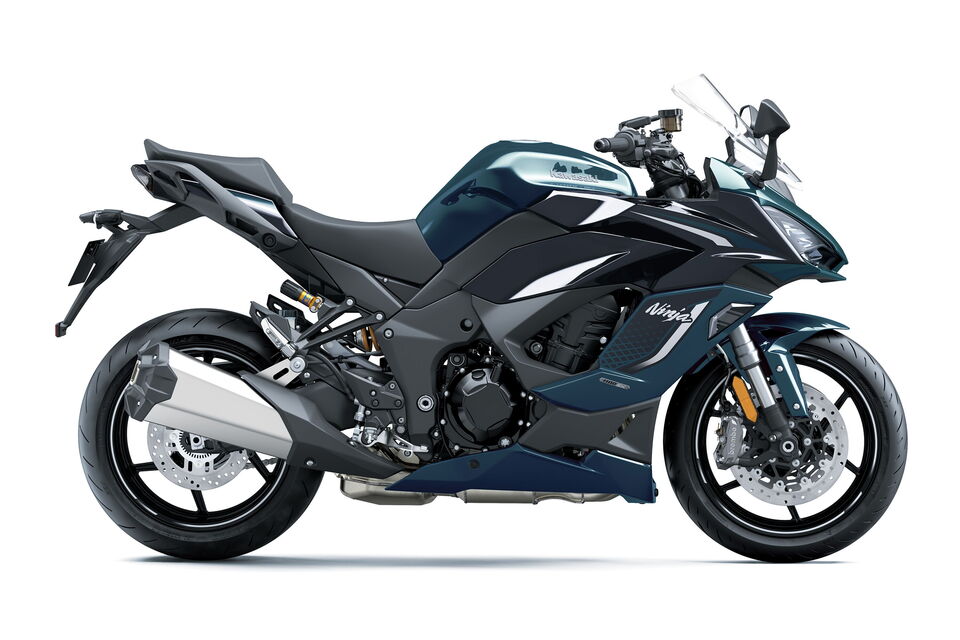
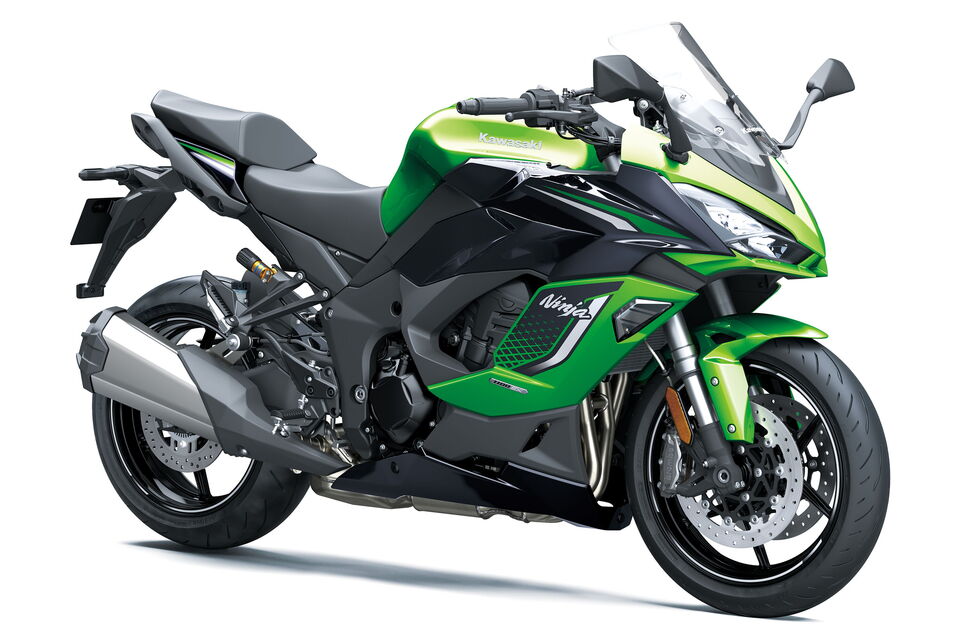
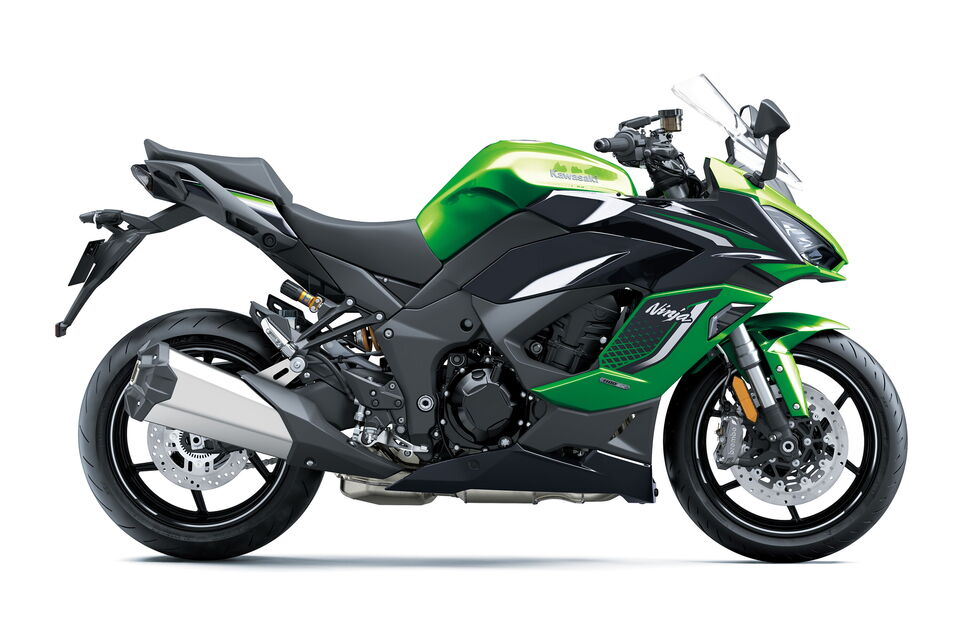
The SE version of the Ninja 1100 SX shares the engine, frame, geometry, and complete electronics package with the base model: bidirectional quickshifter from 1,500 rpm, cruise control, four riding modes, IMU, cornering ABS, lean-sensitive traction control, USB-C, and the adjustable windshield. What comes exclusively as standard on the SE is, first, the Öhlins S46 rear shock with hydraulic spring-preload adjustment by handwheel. Second, Brembo M4.32 four-piston monoblock fixed front calipers with steel-braided lines. Third, heated grips with the control button neatly integrated into the left switchgear. Fourth, an integrated luggage system with preinstalled side-case mounts.
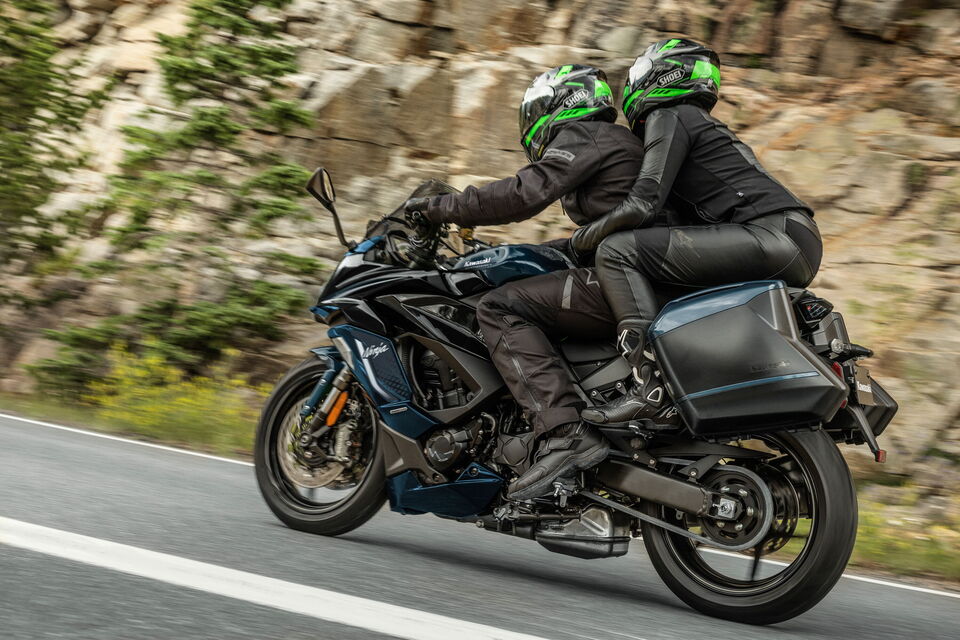
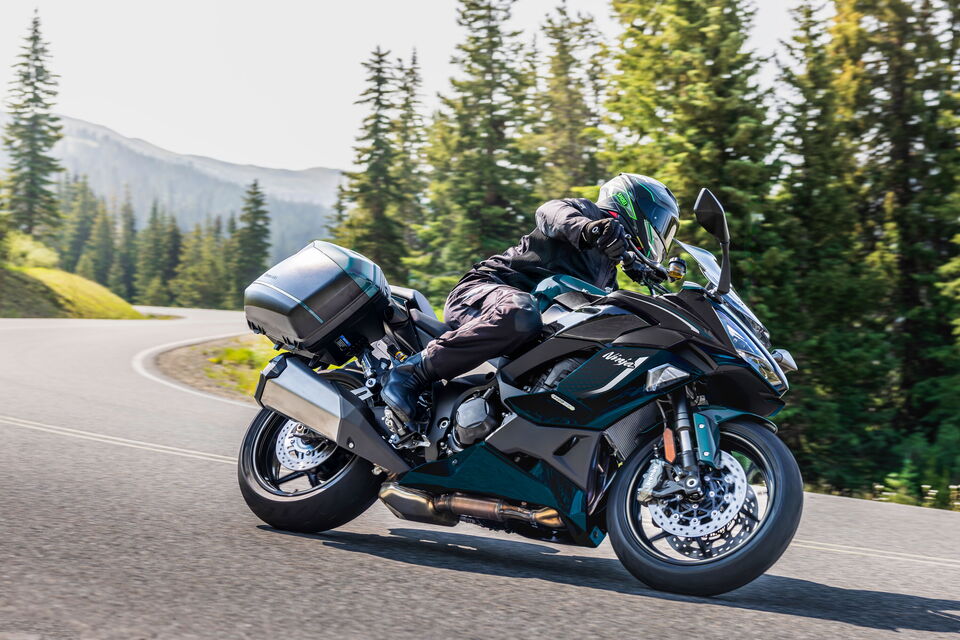
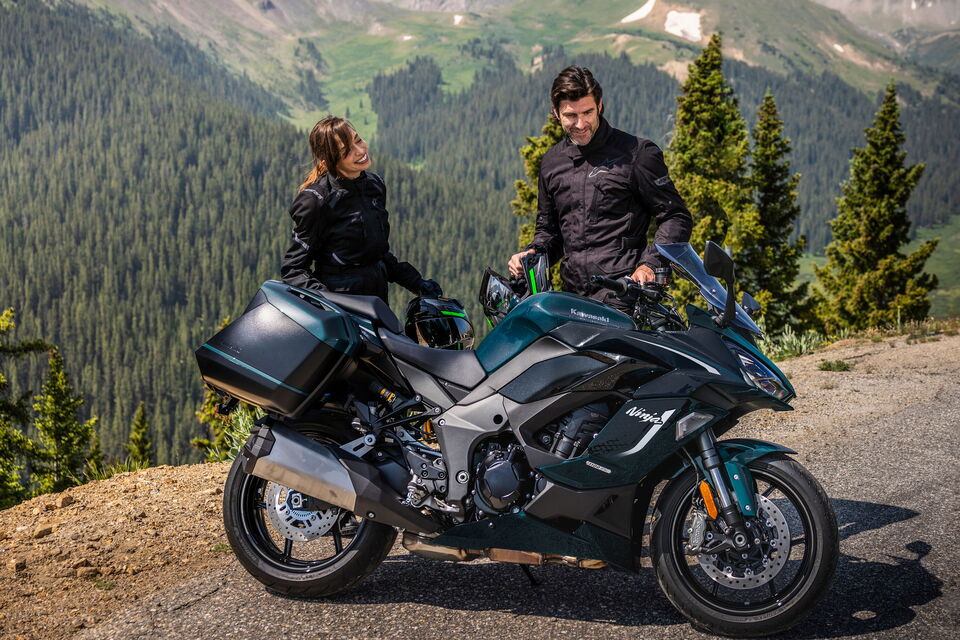
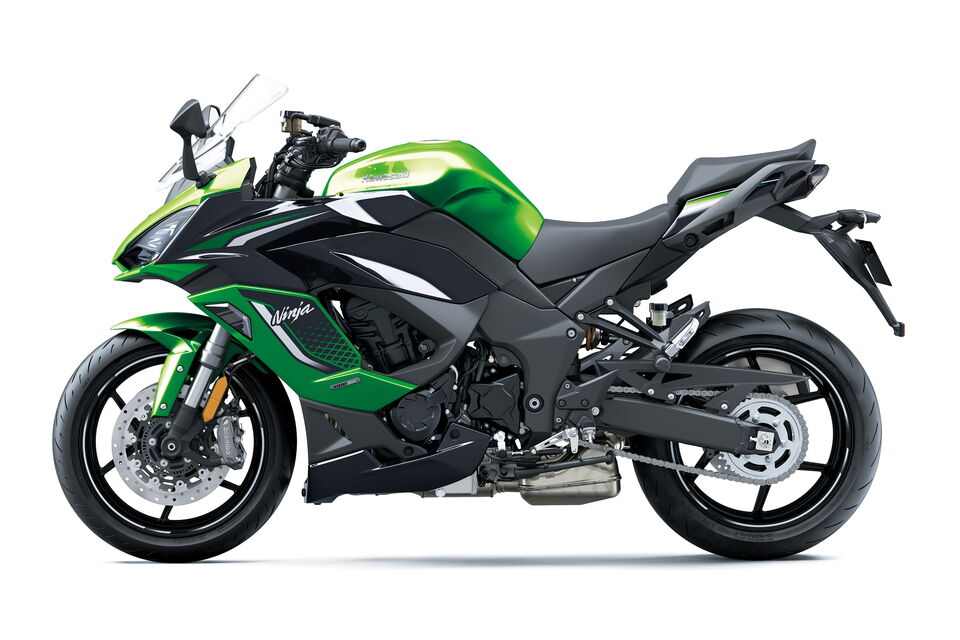
The SE also gets exclusive colors: Metallic Deep Blue/Metallic Diablo Black and Emerald Blazed Green/Metallic Diablo Black, with classic Kawasaki green reserved for the SE. Curb weight is 234 kg, one kilogram less than the base model. The premium is EUR 1,650. The SE was the first dedicated SE version in the history of the naturally aspirated SX line and has been available since MY2025.
Öhlins S46 and Brembo M4.32: The Heart of the SE Premium—and the Road-Test Verdict
The Öhlins S46 rear shock is the decisive suspension upgrade. Spring preload can be adjusted without tools using a handwheel, and rebound damping is adjustable. On the road, its superior control is noticeable on mountain-pass descents with hard braking and changing loads. It works more effectively than the Showa rear shock on the base model. The combination of the Öhlins shock and the fully adjustable Showa USD fork—the fork is shared by both versions—is harmonious, with no obvious weakness in the pairing.
The Brembo M4.32 fixed four-piston calipers working on twin 300 mm discs with steel-braided lines are the second major SE argument. These are brakes that can tame the motorcycle with one finger: sharp and powerful, yet still finely controllable. The master cylinder remains a Nissin unit even on the SE; only the calipers and lines come from Brembo. That is not a drawback but a combination that works extremely well on mountain descents with repeated hard braking. No overheating, no loss of engagement point, no fading. The rear brake also has a crisp, defined feel.
Heated Grips and Luggage: The SE as a Travel-Ready Motorcycle From Day One
The heated grips are integrated into the left handlebar controls, a much cleaner solution than an aftermarket heating system with an external control box. For motorcycle travel in the Alps or during spring and fall, they are not a luxury but genuine comfort equipment that significantly extends the usable riding season. Heated grips can be retrofitted to the base version, but without the same factory integration into the switchgear.
The SE’s standard integrated luggage system includes preinstalled side-case mounts, allowing the factory cases to be fitted without additional conversion work. The One-Key system operates the ignition, cases, and optional top case with the same key. The top case holds 47 liters and, according to Kawasaki, accommodates two conventional full-face helmets. The luggage hardware is integrated cleanly enough that the motorcycle does not look like it has an aftermarket rack fitted when the cases are removed. On the base model, the case system costs extra and must be ordered and installed separately.
Engine: Identical to the Base Model—1,099 cc, Turbine-Smooth Four-Cylinder Character, Deep Down Low and Howling Up Top
Engine, transmission, and quickshifter are identical on the SE and base model. The 1,099 cc inline-four runs with remarkable smoothness, delivers strong drive from low rpm, and spins upward without stumbling or abrupt load-change reactions. The sound is deep and sonorous at lower revs, turning into a harder, howling note in the upper third of the rev range—a four-cylinder character that has become relatively rare in the touring class. The bidirectional quickshifter works from 1,500 rpm and shifts cleanly at virtually any load and engine speed. Combined with the turbine-like engine delivery, the drivetrain feels almost clockwork precise.
Between 6,000 and 8,000 rpm, the inline-four produces light high-frequency vibration through the hands and seat. Kawasaki deliberately fitted heavier bar-end weights to reduce it, but the vibration has not disappeared entirely. On touring stages, where riders rarely sit continuously in this rpm range, it is not a significant problem.
Ergonomics: 835 mm Seat Height, Upright Posture, Good Wind Protection—and the Inevitable Windshield Criticism
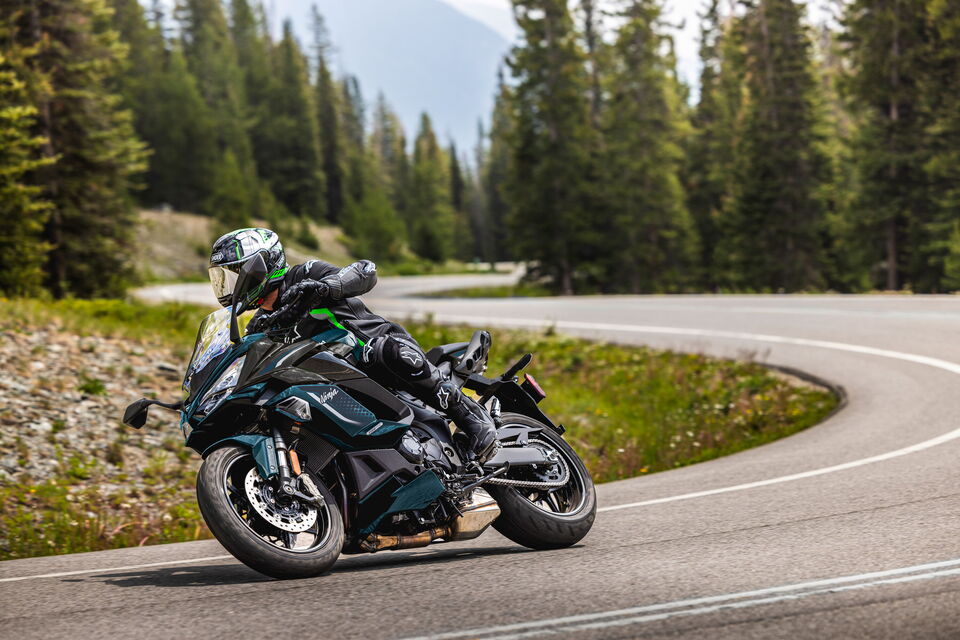
The Ninja 1100 SX SE riding position is almost upright with the upper body leaning slightly forward—sportier than a traditional tourer, more comfortable than a true supersport bike. At 835 mm, seat height produces a moderate knee angle that is ideal for riders up to roughly 1.80 meters. Taller riders report that the knee position becomes somewhat tighter, though not enough to cause real discomfort on longer stages. The knee contact against the tank is compact. The fairing provides good wind protection. Some weight on the arms is inevitable with this riding position, but it does not undermine the overall comfort.
The windshield adjusts through four positions without tools, but the motorcycle must be stopped. Adjustment while riding is not possible. High-mileage and all-weather riders should consider the accessory touring screen, which is around 30 mm taller and 60 mm wider on each side. The mirrors are mounted forward on the fairing and provide a clear, complete view to the rear.
Cost: EUR 17,270 Including Destination—and the Premium Over the Base Model Makes Immediate Sense for Long-Distance Riders
The SE costs EUR 17,270 including destination, EUR 1,650 more than the base version. In return, you get the Öhlins S46 rear shock instead of Showa, Brembo M4.32 calipers with steel-braided lines instead of Nissin, heated grips as standard, an integrated luggage system, and exclusive colors including Kawasaki green. Retrofitting heated grips and ordering a luggage system separately for the base bike brings the price surprisingly close. Add the better brakes and Öhlins shock, and the premium looks fair.
Against the competition, the SE sits below the BMW S 1000 XR at around EUR 20,000, well below the Ducati Multistrada V4 at around EUR 21,000, and in the same broad price region as the Yamaha Tracer 9 GT+. The key difference from the Yamaha is the engine concept—the Kawasaki inline-four versus the Yamaha triple—and the absence of semi-active suspension, which the GT+ provides as standard. Kawasaki’s luggage system and heated grips are standard on the SE, just as they are on the Tracer 9 GT+. Three accessory editions are available: Tourer, Performance, and Performance Tourer, allowing cases, an Akrapovic exhaust, and other components to be ordered as dealer-installed packages.
Verdict
The Ninja 1100 SX SE is a characterful old-school sport-tourer with modern features—a motorcycle that leaves very little missing for long-distance riders who value comfort and sporting dynamics in equal measure. The Öhlins shock, Brembo calipers, heated grips, and integrated luggage system turn an already complete sport-tourer into a genuinely travel-ready machine with no retrofit effort. What is still missing is semi-active suspension and windshield adjustment while riding.
Quick Check
+ Öhlins S46 rear shock: hydraulic preload adjustment by handwheel and adjustable rebound; clearly better control than the base model’s Showa unit.
+ Brembo M4.32 four-piston monoblock fixed calipers with steel-braided lines: sharp engagement point, finely controllable, fade-resistant on mountain descents.
+ Heated grips standard: elegantly integrated into the left switchgear; no external control box; major comfort advantage over retrofitting the base model.
+ Integrated luggage system standard: preinstalled side-case mounts; One-Key system for ignition, cases, and 47-liter top case, which holds two full-face helmets.
+ Exclusive SE colors: Emerald Blazed Green/Metallic Diablo Black and Metallic Deep Blue/Metallic Diablo Black; Kawasaki green is SE-only.
+ 234 kg ready to ride: 1 kg lighter than the base model.
+ 1,099 cc inline-four: turbine-smooth, no abrupt load-change reaction, deep and sonorous down low, harder and more aggressive up top.
+ Bidirectional KQS from 1,500 rpm standard: excellent at virtually any load; best quickshifter version in SX history.
+ Complete electronics package shared with base: IMU, cornering ABS, KTRC, KCMF, four riding modes, cruise control, USB-C, Rideology app with voice commands.
+ Fully adjustable 41 mm Showa USD fork, identical to base: compression, rebound, and preload adjustment.
+ Bridgestone Battlax S23 standard; good wet grip and quick warm-up.
+ EUR 1,650 premium over base: Brembo + Öhlins + heated grips + luggage system—a fair package.
+ Three accessory editions: Tourer, Performance, Performance Tourer, including Akrapovic option.
+ 4-year warranty.
– No semi-active suspension: base uses Showa, SE uses Öhlins, but there is no KECS as on the H2 SX SE or Versys 1100 SE.
– Windshield adjustment only while stationary: four positions and tool-free, but not adjustable while riding.
– Vibration between 6,000 and 8,000 rpm: reduced by heavier bar-end weights but not completely eliminated.
– USB-C port looks somewhat crudely installed: functional, but not a design highlight.
– Riding-mode changes are awkward because the up/down buttons have dual functions and require a long press.
– 4.3-inch TFT is easy to read but smaller than newer Kawasaki screens on other models.
– Limited payload: calculate carefully for two-up riding with full luggage.
– No angled tire valve as standard: a small everyday nuisance when adding air.
– MY2026 technically identical to MY2025: no suspension update and no new display.
Technical Specifications: Kawasaki Ninja 1100 SX SE (2026)
Country of Manufacture: Japan, Kawasaki
Model Series: ZX1100J, 2025-present; MY2026 technically unchanged
Engine: Inline-four, 1,099 cc, liquid-cooled, DOHC; Ride-by-Wire; fuel injection; assist/slipper clutch; six-speed
Power: 136 hp at 9,000 rpm
Torque: 113 Nm at 7,600 rpm
Electronics: IMU; KIBS cornering ABS; KTRC lean-sensitive traction control; KCMF; bidirectional KQS from 1,500 rpm; four riding modes, Sport/Road/Rain/Rider; cruise control; KLCM
Display: 4.3-inch TFT; Rideology app with voice commands; Bluetooth; USB-C standard
Frame: High-rigidity aluminum frame
Fork: 41 mm Showa USD; fully adjustable for compression, preload, and rebound; 120 mm travel
Rear Shock, SE: Öhlins S46; adjustable rebound + hydraulic spring preload by handwheel
Front Brake, SE: Brembo M4.32 four-piston monoblock fixed calipers; dual 300 mm discs; steel-braided lines; KIBS
Front Brake Master Cylinder: Nissin master cylinder, also on SE
Rear Brake: Two-piston caliper; single 260 mm disc; ABS
Wheels: 17-inch front and rear
Tires: 120/70 ZR17 front; 190/50 ZR17 rear; Bridgestone Battlax S23
Weight: 234 kg fully fueled; base 235 kg
Seat Height: 835 mm
Wheelbase: 1,440 mm
Ground Clearance: 135 mm
Fuel Tank: 19 liters; approx. 327 km range, WMTC 5.6 L/100 km
Windshield: Four-position tool-free adjustment; practical only while stationary; accessory touring screen +30 mm taller / +60 mm wider per side
SE-Exclusive Extras: Öhlins S46 instead of Showa; Brembo M4.32 + steel-braided lines; heated grips standard; integrated luggage system standard; exclusive colors
Luggage System: One-Key system; 47-liter top case for two full-face helmets; side cases; top case cannot be combined with side cases
2026 Colors: Metallic Deep Blue / Metallic Diablo Black; Emerald Blazed Green / Metallic Diablo Black
Editions: Tourer, Performance, Performance Tourer accessory packages, including Akrapovic carbon exhaust option
Warranty: 4-year Kawasaki factory warranty
Service: Every 12,000 km
Price in Germany: EUR 17,270 including destination; EUR 1,650 premium over base