Review Kawasaki Ninja H2 R (2026):

310 hp Supercharger, Öhlins TTX36, 330 mm Brembos, Bridgestone Slicks—Kawasaki’s Most Powerful Production Motorcycle, Built Exclusively for the Track
998 cc, 310 hp at 14,000 rpm, rising to 326 hp with Ram Air. Öhlins TTX36 rear shock, Öhlins USD fork, and an electronically controlled Öhlins steering damper. Semi-floating 330 mm Brembo front brakes. Bidirectional quickshifter with a dog-ring transmission. Bridgestone Battlax Racing V01 slicks as standard. Carbon-fiber bodywork and winglets. 216 kg. Hand-assembled in Akashi. EUR 58,580 including destination. Not street legal.
As of: April 16, 2026 | Model: Kawasaki Ninja H2 R (2026) | Price: EUR 58,580 including destination | Warranty: 4 years | Color: Mirror Coated Matte Spark Black (GY3), only version | MY2026: technically and visually identical to MY2025 | Not street legal. Closed-course use only.
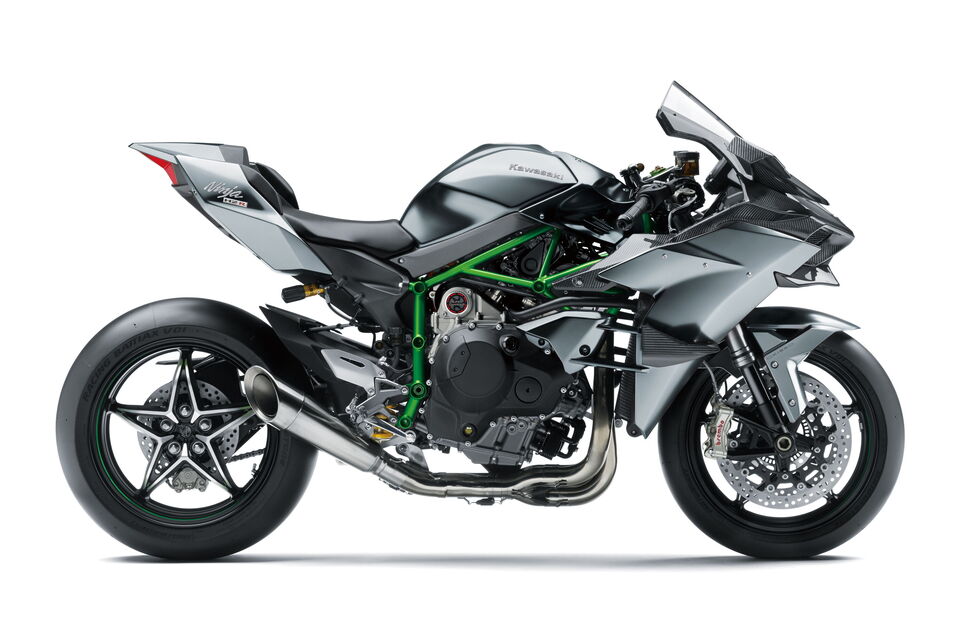
What the H2 R Is—and Who It Is For
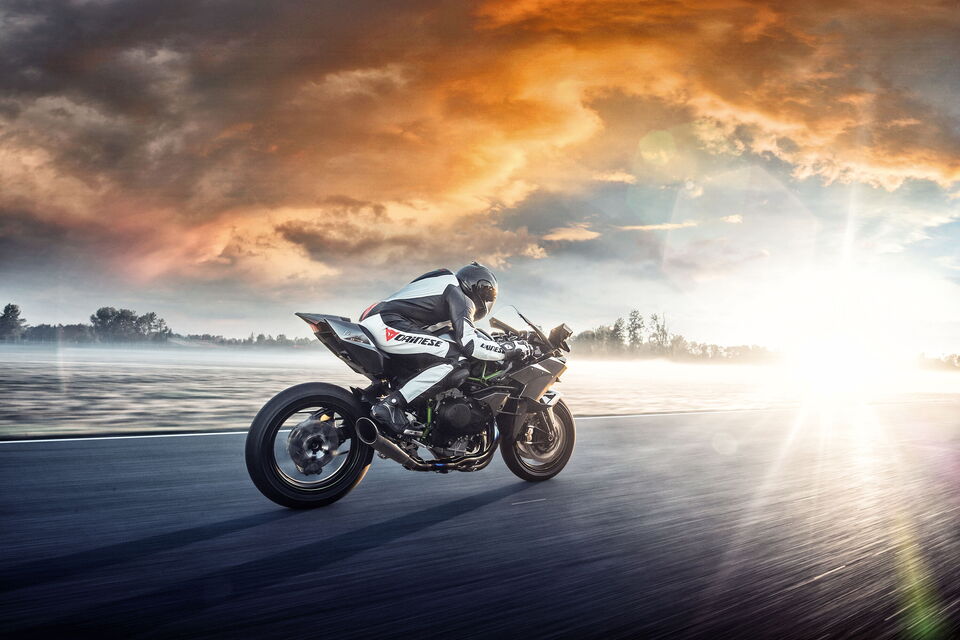
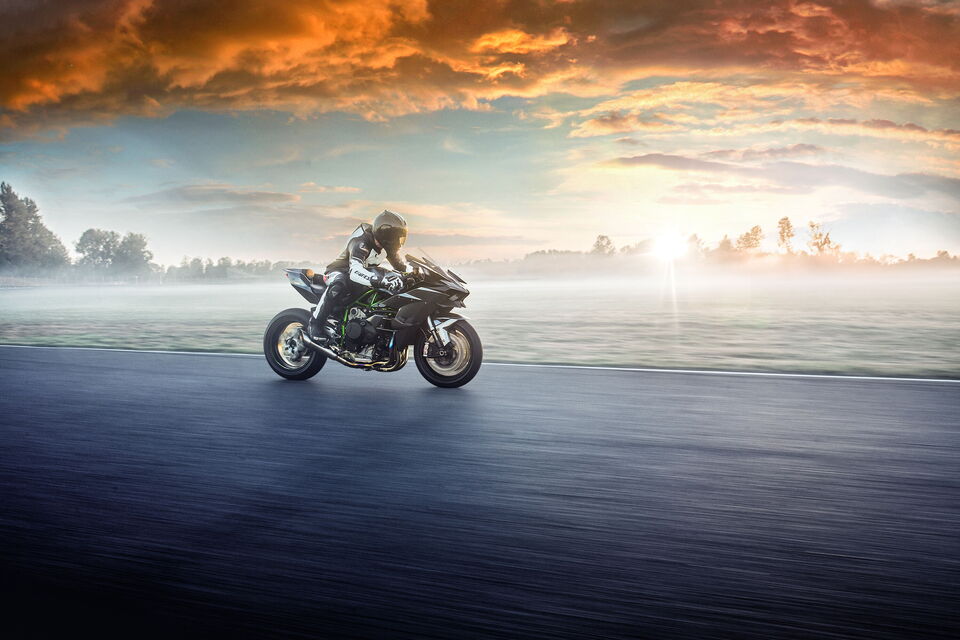
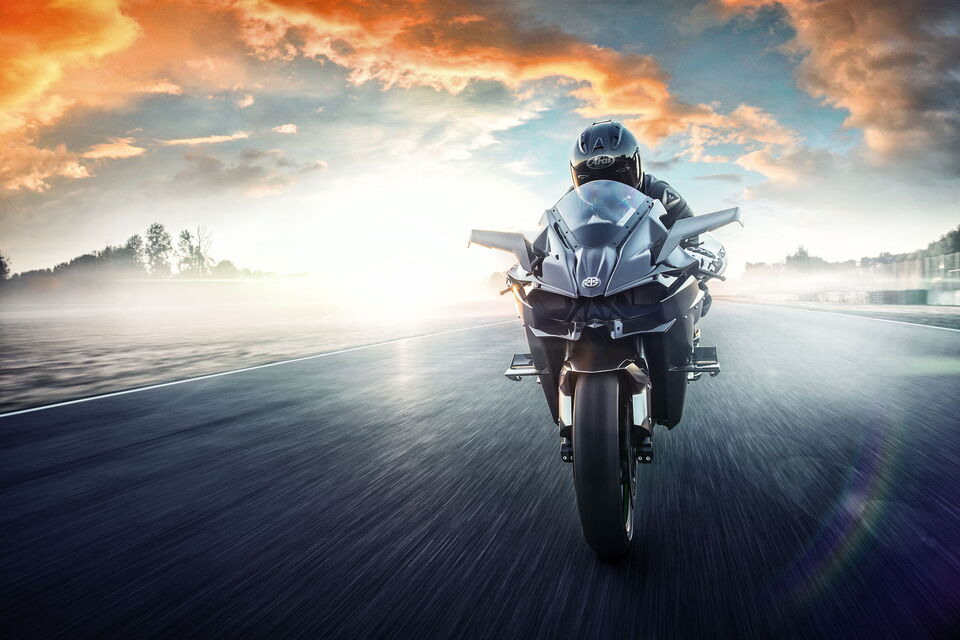
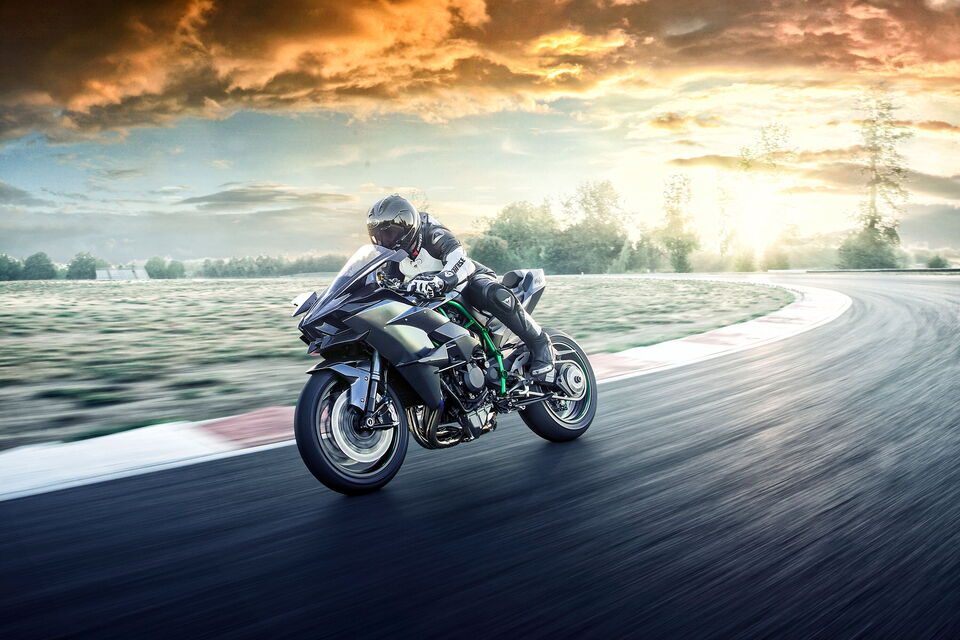
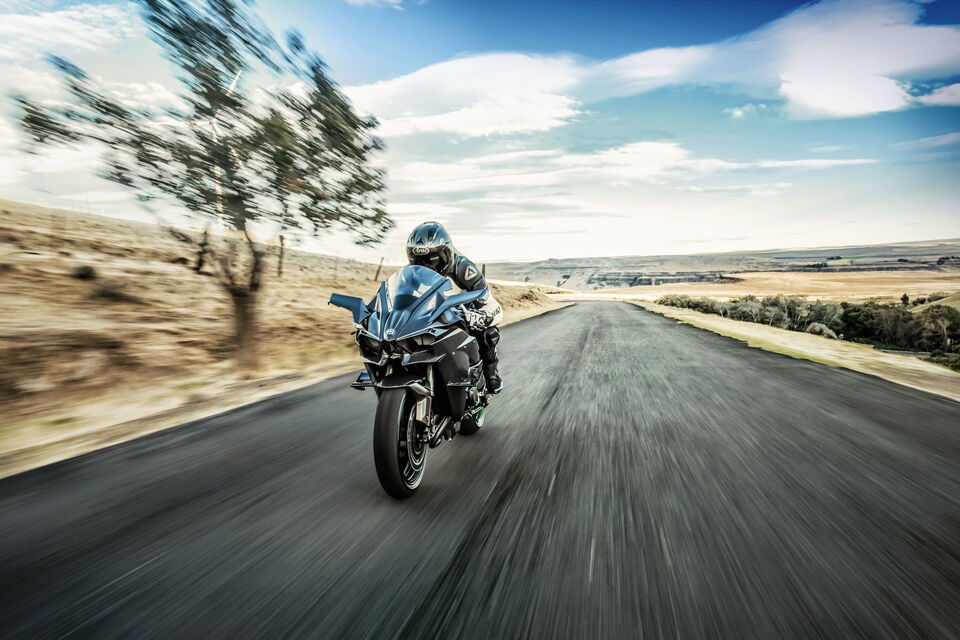
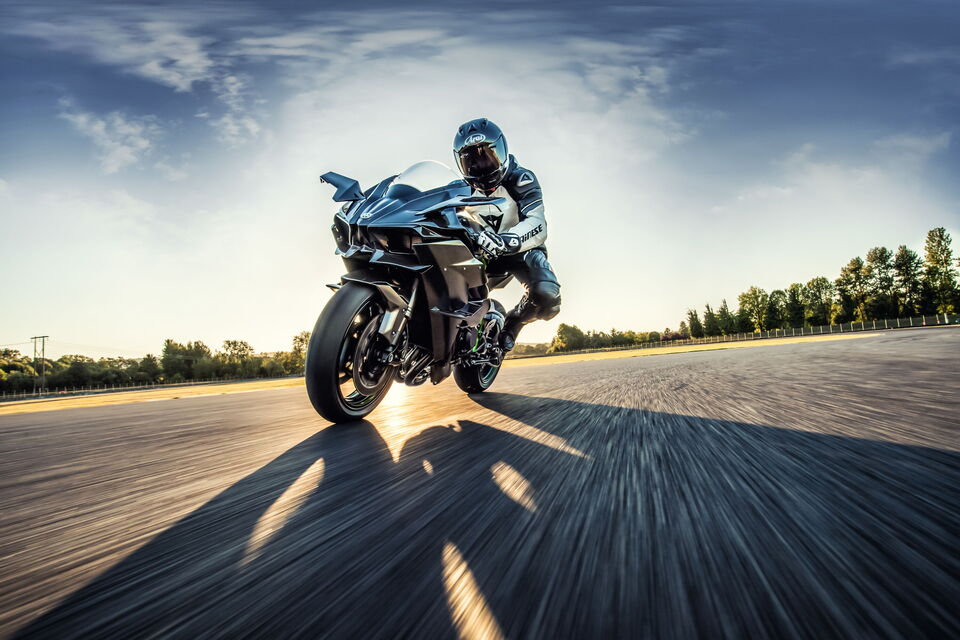
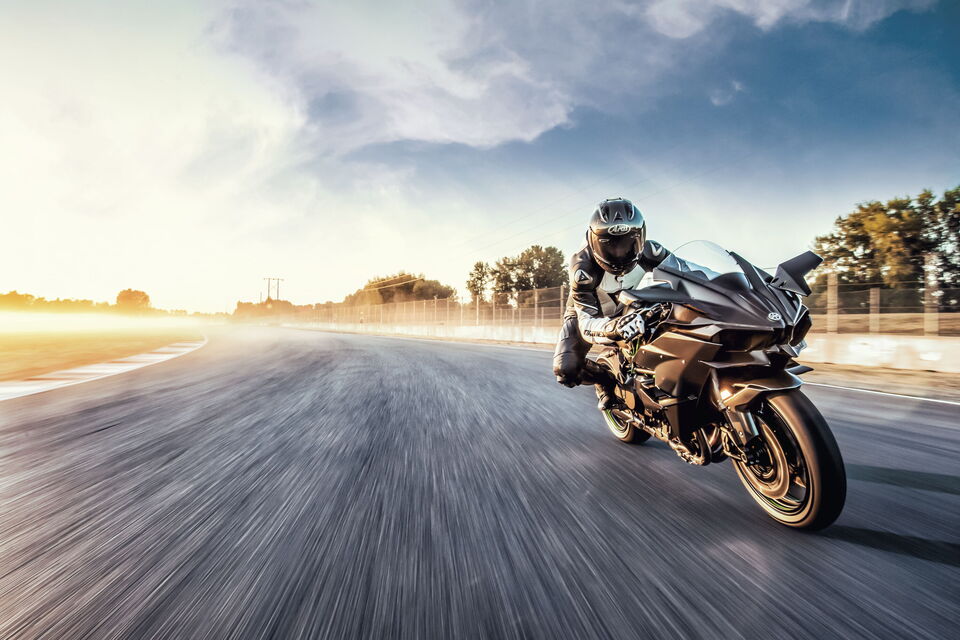
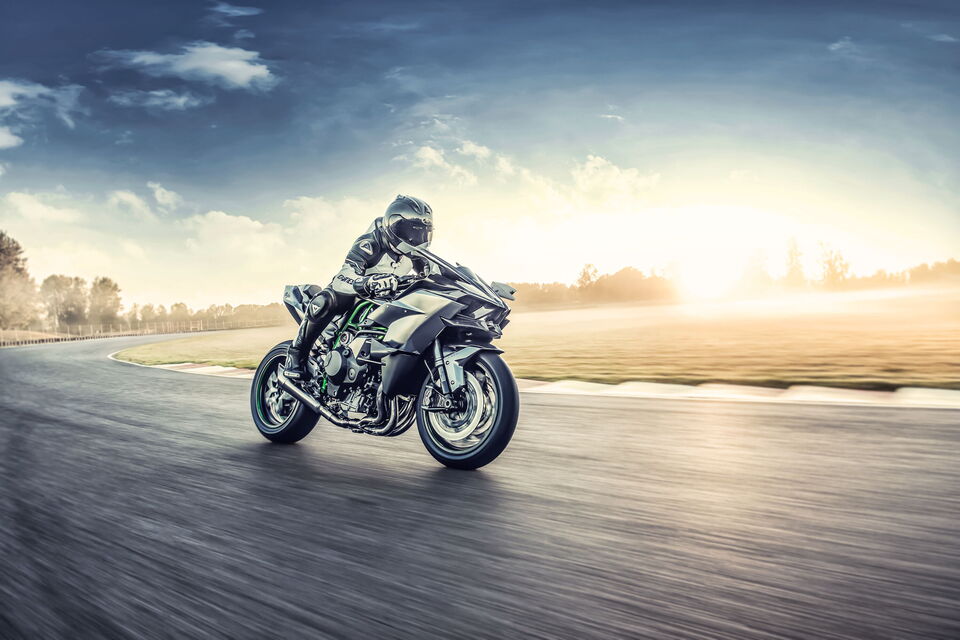
The Ninja H2 R is not a street motorcycle with track ambitions. It is designed exclusively for closed-course use, has no road homologation, and may not be ridden on public roads anywhere—whether federal highways, country roads, Germany, or Tyrol. Since 2015 it has been produced in strictly limited numbers and hand-assembled at Kawasaki’s Akashi factory in Japan. Every example is built by hand. Model year 2026 is technically and visually identical to MY2025; the price increased by EUR 2,000 to EUR 58,000 before ancillary charges.
Factory delivery includes front and rear tire warmers plus front and rear paddock stands. That makes the motorcycle immediately ready for track use without additional equipment. The H2 R is aimed at experienced trackday riders and collectors who want to own the most powerful series-production motorcycle Kawasaki has ever built. Kawasaki charges EUR 58,580 including destination for that privilege.
Engine: 998 cc, 310 hp, Kawasaki-Developed Supercharger—and Ram Air Takes It to 326 hp
The liquid-cooled 998 cc inline-four, with a 76.0 mm bore and 55.0 mm stroke, produces 310 hp at 14,000 rpm without Ram Air. With the Ram Air system fully pressurized, output rises to as much as 326 hp. The mechanical supercharger was developed by Kawasaki engineers in cooperation with the company’s Gas Turbine & Machinery, Aerospace, and Corporate Technology divisions. The H2 R is the only mass-produced motorcycle in the world whose supercharger was developed in this form entirely from in-house corporate expertise.
The six-speed transmission uses a dog-ring design. Dog-ring gearboxes are used in motorcycle racing because they allow faster gear changes than conventional transmissions: the gears engage without synchronizer rings, reducing shift time by fractions that matter at this performance level. Combined with the bidirectional quickshifter and auto-blipper for clutchless upshifts and downshifts, the drivetrain is designed for uncompromising track use. The supercharger also creates an unmistakable intake sound unique to this motorcycle.
Chassis: Öhlins TTX36, Öhlins USD Fork, Electronic Öhlins Steering Damper—Full Race Suspension
The front end uses a fully adjustable 43 mm Öhlins upside-down fork with compression, rebound, and spring-preload adjustment and 120 mm of travel. At the rear is an Öhlins TTX36 gas-pressure shock with external reservoir, hydraulic spring preload, adjustable compression and rebound damping, and 135 mm of travel. The steering damper is electronically controlled and was jointly developed by Kawasaki and Öhlins. It responds to riding conditions and speed, varying its damping actively. This is not a generic supplier component but a joint development calibrated specifically for the H2 R’s performance.
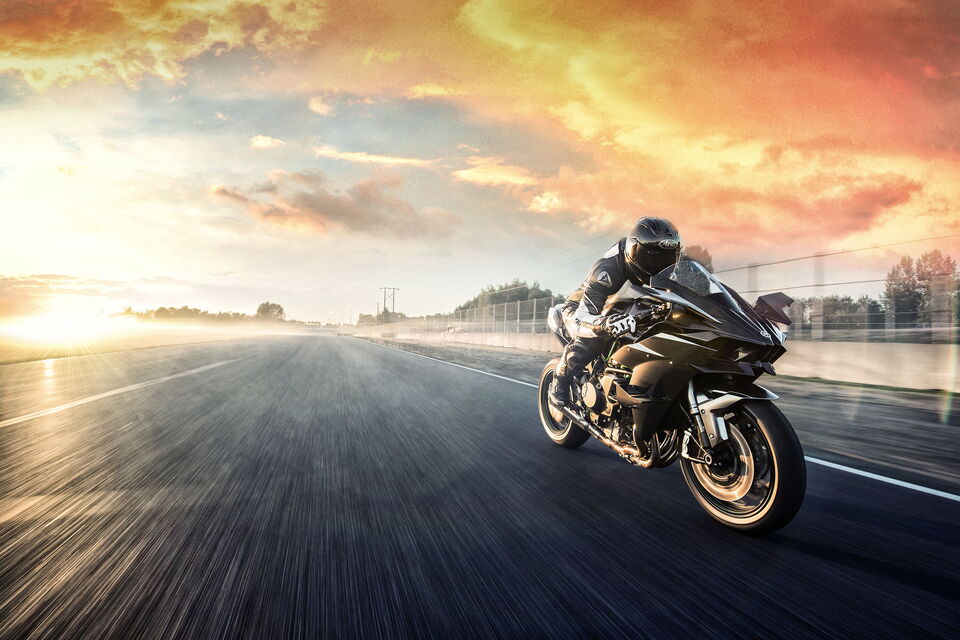
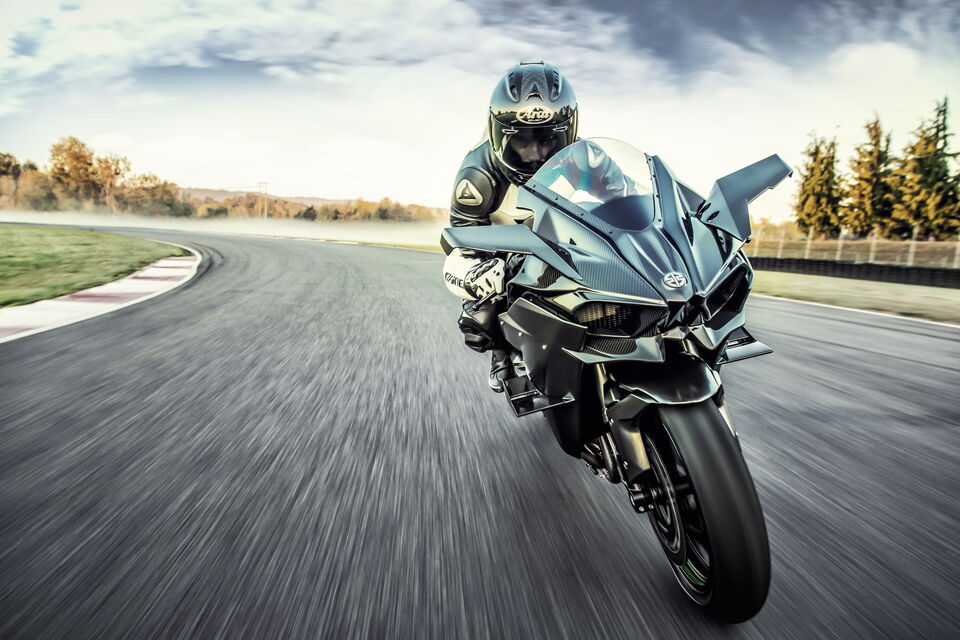
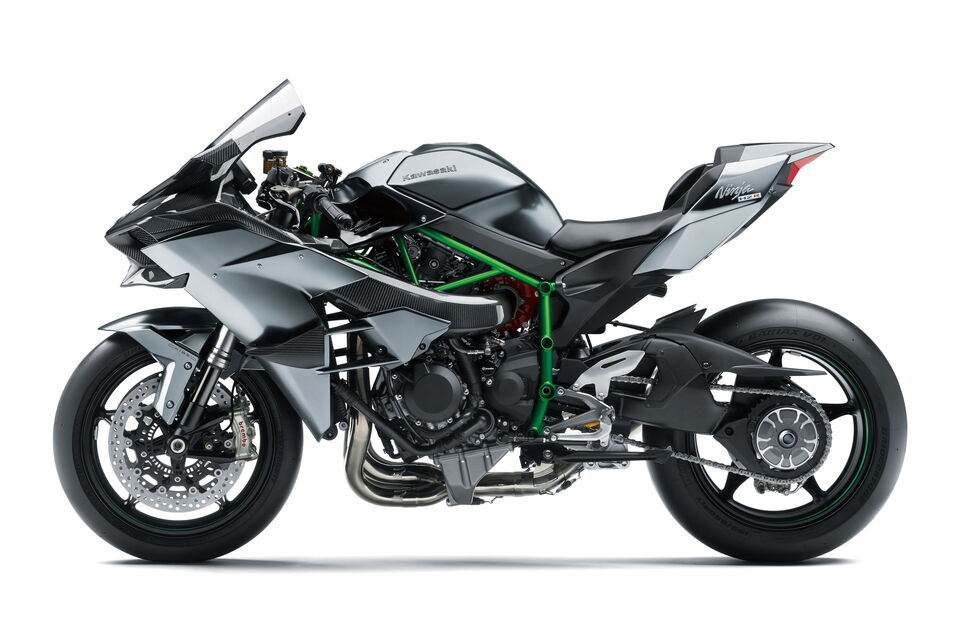
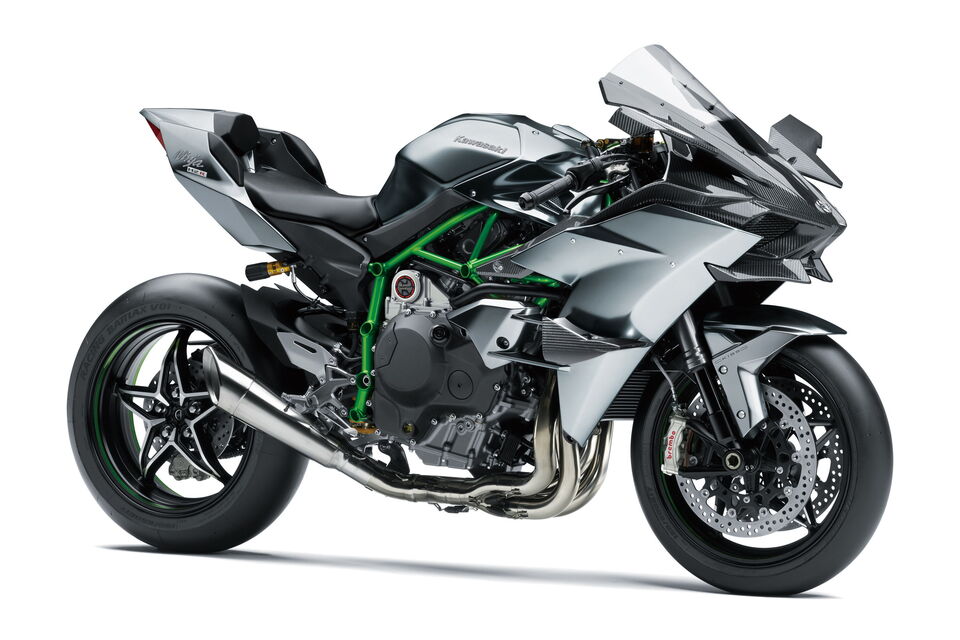
The frame is a high-strength steel trellis design. Choosing steel rather than aluminum is deliberate: at this engine output and the extreme high-speed stability demands involved, Kawasaki considers the torsional characteristics of the steel trellis frame more suitable. The bodywork is carbon fiber. Carbon-fiber winglets generate aerodynamic downforce at high speeds, helping keep the front end planted and improving stability.
Brakes and Tires: Semi-Floating 330 mm Brembos, Bridgestone Battlax Racing V01 Slicks as Standard
The front brake uses twin semi-floating Brembo discs measuring 330 mm in diameter and 5.5 mm thick, gripped by radially mounted four-piston calipers. The semi-floating design allows limited radial movement of the discs, reducing distortion caused by thermal expansion under extreme braking loads. At the rear is a 250 mm Brembo disc with a two-piston caliper. Both axles benefit from IMU-supported KIBS cornering ABS.
Since model year 2019, Kawasaki has fitted the H2 R with Bridgestone Battlax Racing V01 slicks as standard—120/60-17 front and 190/65-17 rear. Slicks have no tread pattern and are intended exclusively for closed-course use on dry surfaces. At operating temperature they provide a level of grip no street tire can match. Their use reinforces the motorcycle’s closed-course-only status. The factory-supplied tire warmers are therefore not merely a convenience but part of the operating requirement.
Electronics: IMU, KTRC With 9 Levels, KCMF, Lean-Angle Recording, Electronic Steering Damper
The H2 R electronics package is configured entirely around track use. The six-degree-of-freedom IMU—five axes measured and one calculated—feeds the ECU real-time information on vehicle attitude and acceleration. KTRC, Kawasaki Traction Control, is configurable through three modes with nine levels each, giving 27 intervention settings and exceptionally fine adjustment for tire condition, track surface, and rider preference. KCMF, Kawasaki Cornering Management Function, monitors engine and chassis parameters from corner entry through the apex to corner exit, modulating braking force and engine output to stabilize the motorcycle through the turn.
The lean-angle sensor records maximum achieved lean angle, providing direct feedback for riders and coaches during track analysis. The electronic Kawasaki/Öhlins steering damper varies damping according to conditions, helping prevent high-speed instability without making low-speed maneuvering unnecessarily heavy. Launch Control optimizes starts. Anti-wheelie is integrated through KTRC, while Slide Control limits rear-tire slip angle. All systems are accessed through a cockpit combining an analog tachometer with a digital multifunction display—deliberately free of infotainment distractions.
Exhaust and Noise: 104 dB(A) Stock, 98 dB(A) With Akrapovic Race System—No Tyrol, No Public Roads
The standard H2 R exhaust produces a stationary noise level of approximately 104 dB(A). Kawasaki’s optional Akrapovic Racing system in titanium and carbon reduces that to around 98 dB(A) with the insert fitted. Both figures exceed Tyrol’s 95 dB(A) limit, but that is entirely irrelevant because the H2 R cannot legally be ridden in Tyrol—or anywhere else on public roads. The Tyrol restriction applies to street-legal motorcycles; the H2 R is not one.
The Akrapovic system costs EUR 4,266, while the carbon exhaust hanger adds EUR 67. The hydraulic spring-preload adjuster handwheel is mounted to this hanger, making it functional rather than merely decorative.
Cost: EUR 58,580 Including Destination, Tire Warmers, and Stands; Akrapovic Optional for EUR 4,333
For MY2026, the Ninja H2 R price increased by EUR 2,000 to EUR 58,580 including destination. Front and rear tire warmers plus front and rear paddock stands are included—equipment that would otherwise have to be purchased separately and whose specification is matched to the motorcycle. Add the Akrapovic Racing system and its carbon hanger, and the total approaches EUR 63,000. Running costs also include trackday fees, replacement Bridgestone V01 slicks, and maintenance after track use.
Preorders for MY2026 were accepted through October 31, 2025, with production beginning in Akashi in February 2026. Production volume is limited and not publicly disclosed. Buyers in Germany receive Kawasaki’s four-year warranty with unlimited mileage, but Kawasaki’s warranty excludes motorcycles used for competitive racing purposes. Because the H2 R is designed exclusively for closed-course use, buyers should clarify the exact warranty status for their intended use with an authorized Kawasaki dealer.
Verdict
The Ninja H2 R is not a motorcycle for everyone. It is for the rider or collector who wants the outer limit of series-production supercharged track technology and is prepared to spend EUR 58,580 for hand assembly in Akashi, Öhlins TTX36 suspension, semi-floating Brembo brakes, and Bridgestone slicks straight from the factory. Technically unchanged from last year, visually unchanged, and available in one color only. For the right buyer, this is more than enough.
Quick Check
+ 310 hp at 14,000 rpm, up to 326 hp with Ram Air: Kawasaki’s most powerful series-production motorcycle.
+ Kawasaki-developed supercharger involving Gas Turbine & Machinery, Aerospace, and Corporate Technology divisions: a unique in-house production concept.
+ Dog-ring transmission + bidirectional quickshifter: Kawasaki’s fastest-shifting production configuration.
+ Öhlins TTX36 gas-pressure rear shock with piggyback reservoir, hydraulic preload, compression and rebound adjustment: factory-level track suspension.
+ 43 mm Öhlins USD fork, fully adjustable for compression, rebound, and preload.
+ Electronic Kawasaki/Öhlins steering damper: active, condition-sensitive, jointly developed.
+ Semi-floating 330 × 5.5 mm Brembo front discs with radial four-piston calipers: top-level high-performance braking hardware.
+ Bridgestone Battlax Racing V01 slicks standard since MY2019: track-ready without a tire swap.
+ Front and rear tire warmers plus front and rear paddock stands included: track-ready from the factory.
+ Carbon-fiber bodywork and winglets: aerodynamic downforce at high speed with weight optimization.
+ KTRC with 3 modes × 9 levels: 27 intervention settings for fine traction-control calibration.
+ Six-DOF IMU, KCMF, KIBS cornering ABS, Launch Control, Slide Control, Anti-Wheelie: complete track electronics package.
+ Lean-angle recording: direct data feedback for rider training and analysis.
+ 216 kg ready to ride: remarkably light for the performance level.
+ Hand-assembled in Akashi: limited production with documented manufacturing standards.
– Not street legal: closed-course use only, with no exemption for public roads.
– Approx. 104 dB(A) with the standard exhaust: too loud for many organized trackdays; optional Akrapovic system reduces it to around 98 dB(A) but costs EUR 4,266.
– Tyrol is irrelevant because no public-road use is permitted anywhere; this is not merely a noise issue.
– EUR 58,580 including destination: significant EUR 2,000 price increase over MY2025.
– MY2026 preorder window closed October 31, 2025: current buyers depend on dealer inventory or the used market.
– MY2026 is technically and visually identical to MY2025: no update, new electronics, or new color.
– Clarify warranty status for track use with the dealer: Kawasaki’s four-year warranty excludes competitive racing use.
– Running costs include track access, slick replacement, and post-track maintenance in addition to the purchase price.
– Only one color: Mirror Coated Matte Spark Black (GY3).
Technical Specifications: Kawasaki Ninja H2 R (2026)
Country of Manufacture: Japan, Kawasaki Akashi plant; hand-assembled, limited production
Road Legality: Not street legal. Closed-course use only.
MY2026: Technically and visually identical to MY2025. Factory price increased from EUR 56,000 to EUR 58,000 before destination.
Engine: Inline-four, 998 cc, liquid-cooled, DOHC; 76.0 × 55.0 mm bore/stroke; mechanical Kawasaki supercharger; dog-ring transmission; six-speed
Power: 310 hp / 228 kW at 14,000 rpm; up to 326 hp with Ram Air
Torque: 165 Nm at 12,500 rpm
Electronics: Six-DOF IMU; KTRC with 3 modes and 9 levels; KIBS cornering ABS; KCMF; Launch Control; Slide Control; Anti-Wheelie; bidirectional quickshifter with blipper; electronic Öhlins steering damper; lean-angle sensor with maximum-lean recording
Fork: Öhlins USD, 43 mm; fully adjustable for compression, rebound, and preload; 120 mm travel
Rear Shock: Öhlins TTX36 gas-pressure shock; piggyback reservoir; hydraulic spring preload; adjustable compression and rebound; 135 mm travel
Steering Damper: Electronic; Kawasaki/Öhlins joint development
Front Brake: Brembo semi-floating; twin 330 × 5.5 mm discs; radial four-piston calipers
Rear Brake: Brembo; 250 mm disc; two-piston caliper
Tires: 120/60 ZR17 front; 190/65 ZR17 rear; Bridgestone Battlax Racing V01 slicks
Frame: High-strength steel trellis frame
Bodywork: Carbon fiber; carbon-fiber winglets for aerodynamic downforce
Weight: 216 kg fully fueled
Seat Height: 830 mm
Wheelbase: 1,450 mm
Fuel Tank: 17 liters
Stationary Noise: Approx. 104 dB(A) standard; approx. 98 dB(A) with Akrapovic Racing system, titanium/carbon, EUR 4,266 plus EUR 67 carbon exhaust hanger; Tyrol not relevant because motorcycle is not street legal
Included Equipment: Front + rear tire warmers; front + rear paddock stands, standard at no extra charge
Color: Mirror Coated Matte Spark Black (GY3), only available version
Warranty: 4-year Kawasaki factory warranty in Germany; clarify warranty validity for track use with dealer
Price in Germany: EUR 58,580 including destination