Review Kawasaki Ninja ZX-4RR (2026)

399 cc, 77 hp at 14,500 rpm, 16,000-rpm Redline—the Only 400-Class Inline-Four Supersport for EUR 10,170
A 399 cc DOHC inline-four producing 77 hp at 14,500 rpm, with Ram Air boosting output to as much as 80 hp. The limiter arrives at 16,000 rpm. Bore is 57 mm, stroke just 39.1 mm. A 37 mm Showa SFF-BP fork works with a fully adjustable Showa BFRC lite rear shock—the same basic shock used on the ZX-10R. Twin 290 mm front discs with radial-mount Monobloc calipers, bidirectional KQS as standard, four riding modes, and a Track display with lap timer. Curb weight is 189 kg. The steel trellis frame uses geometry DNA derived from the ZX-10R. Top speed: 228 km/h. MY2026 brings new colors but no technical changes.
As of: April 10, 2026 | Model: Kawasaki Ninja ZX-4RR (2026) | Price: EUR 10,170 including destination | Warranty: 4 years | A2: restrictable to 35 kW / 48 hp | MY2026: technically unchanged, new colors | EUR 400 starter bonus available

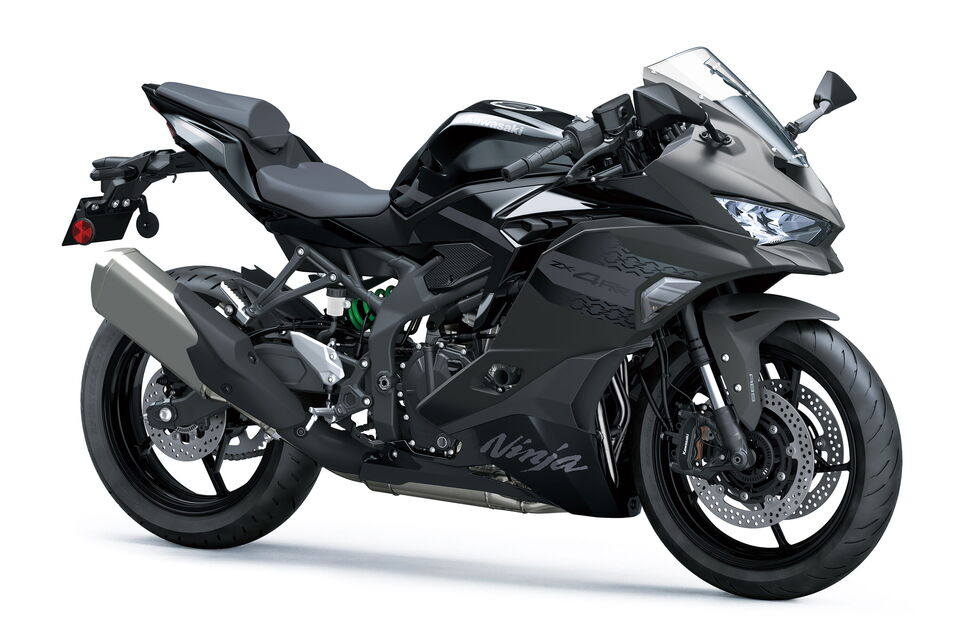
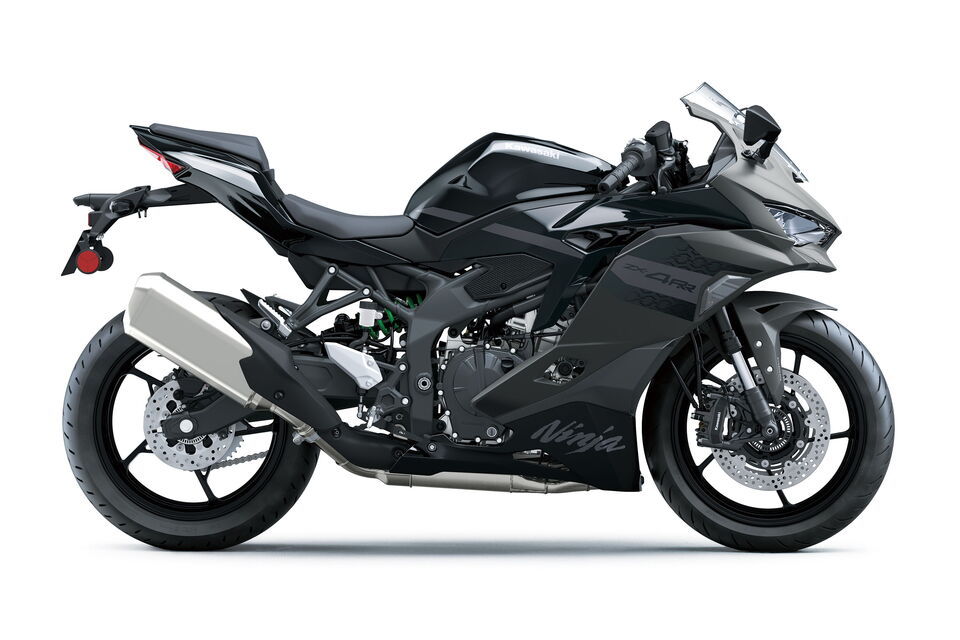
Positioning: An Inline-Four Below 400 cc—and Why That Creates a Class of Its Own
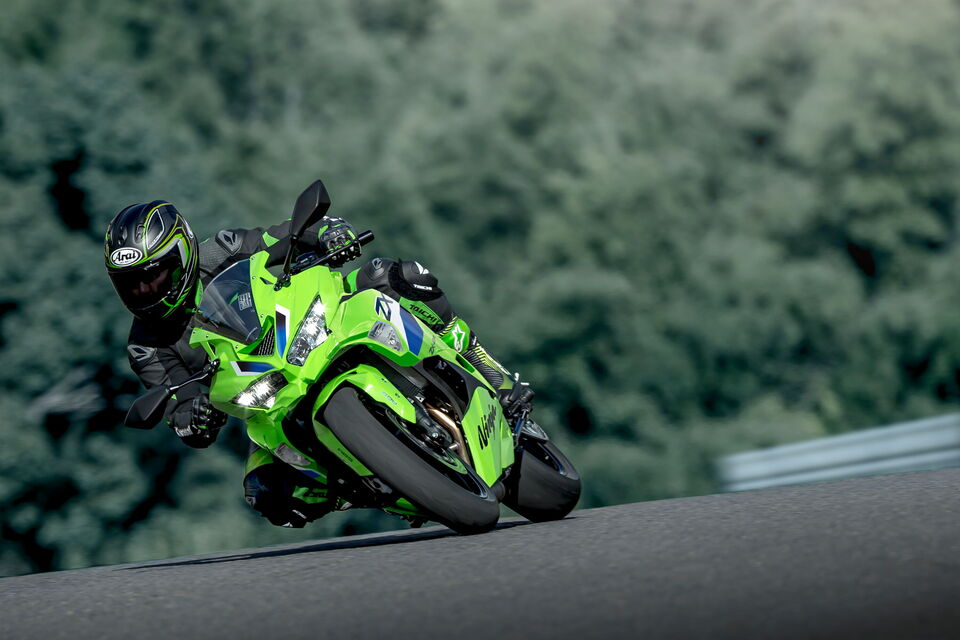
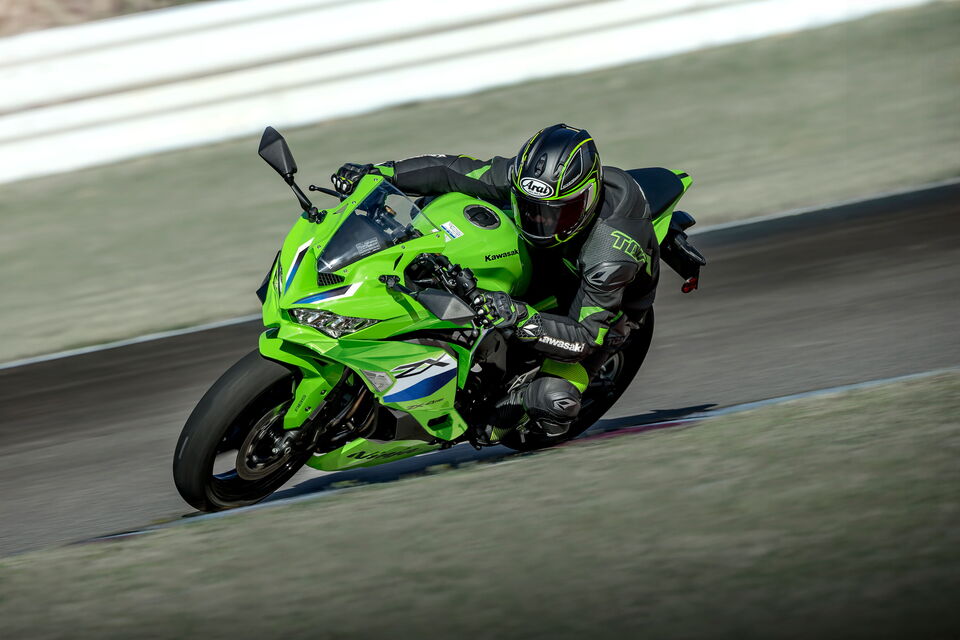
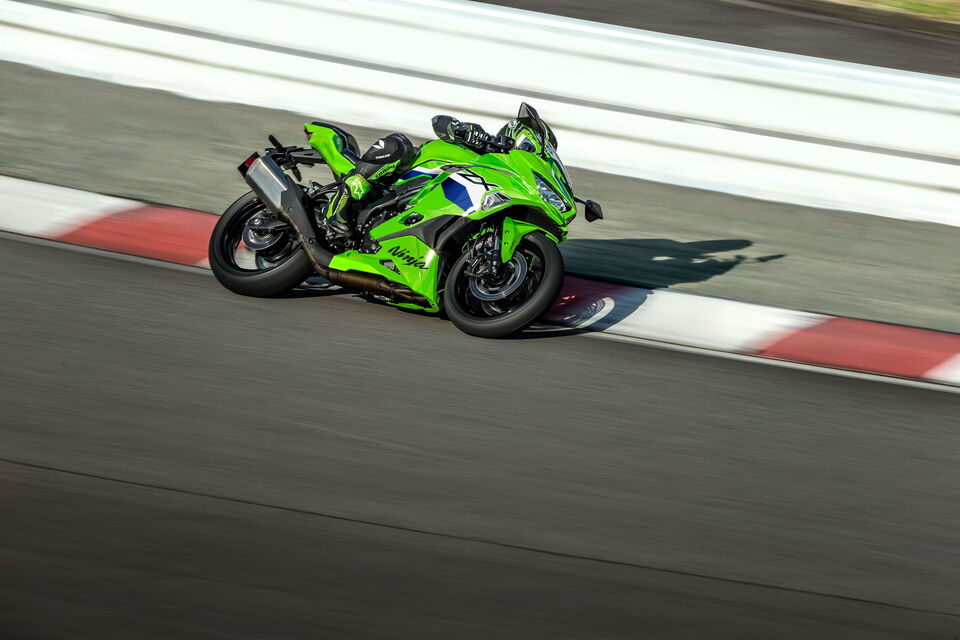
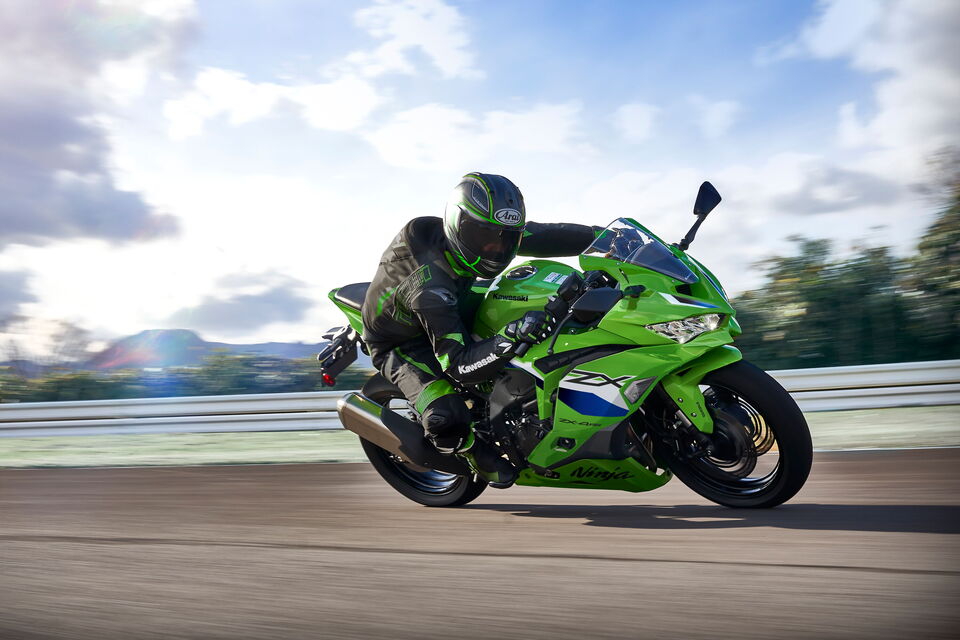
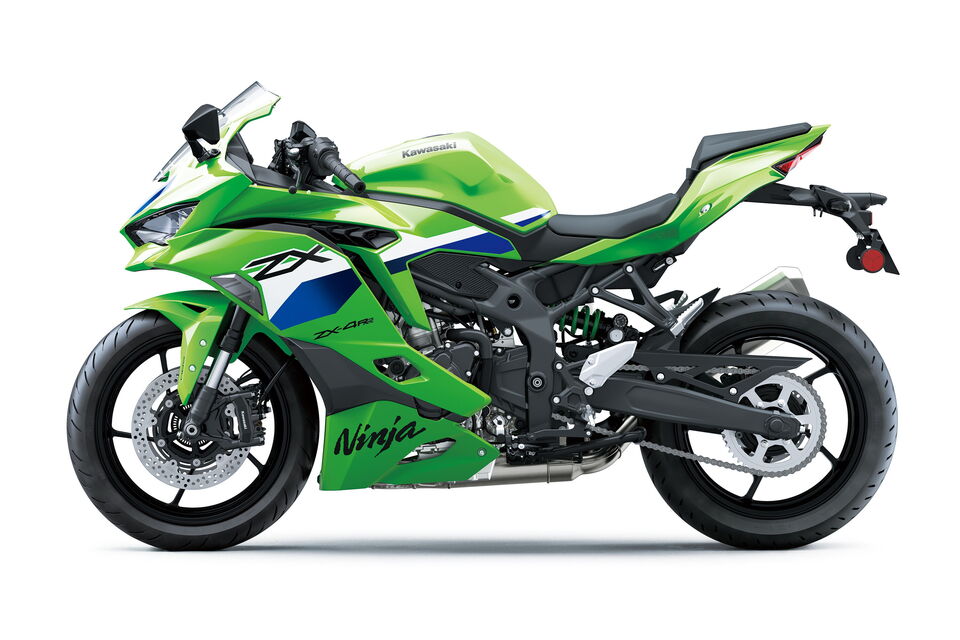
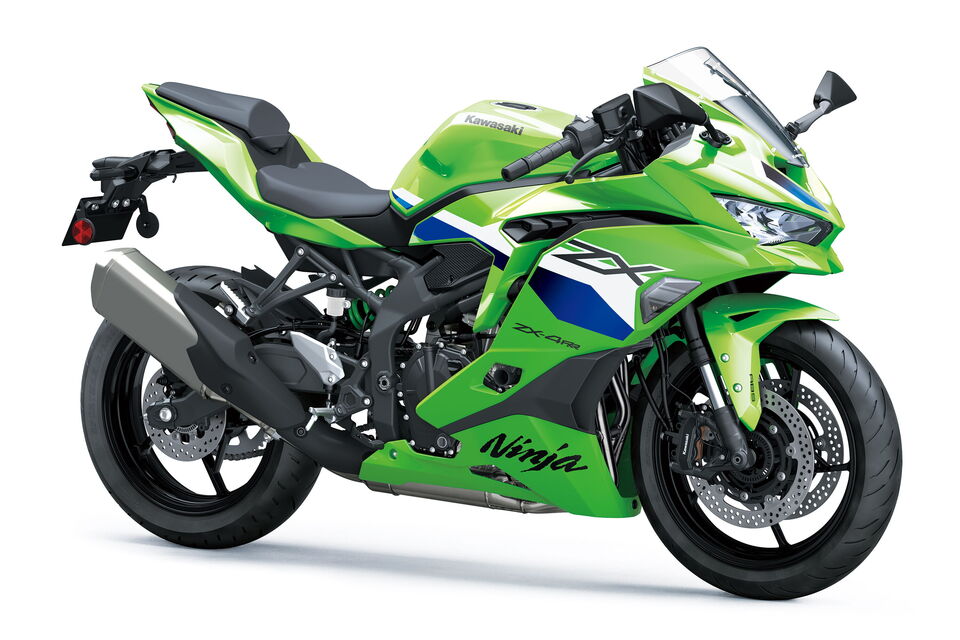
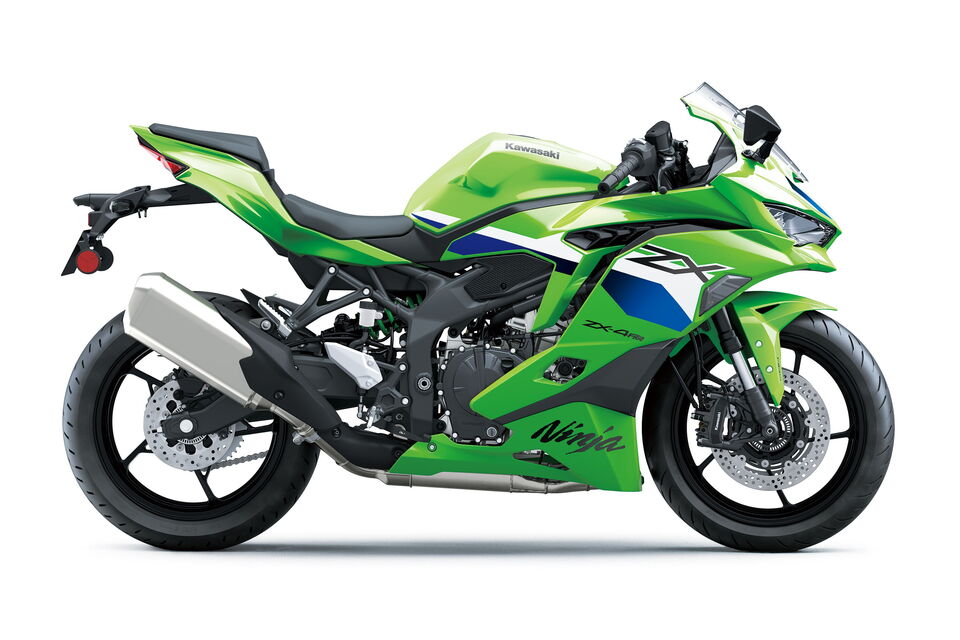
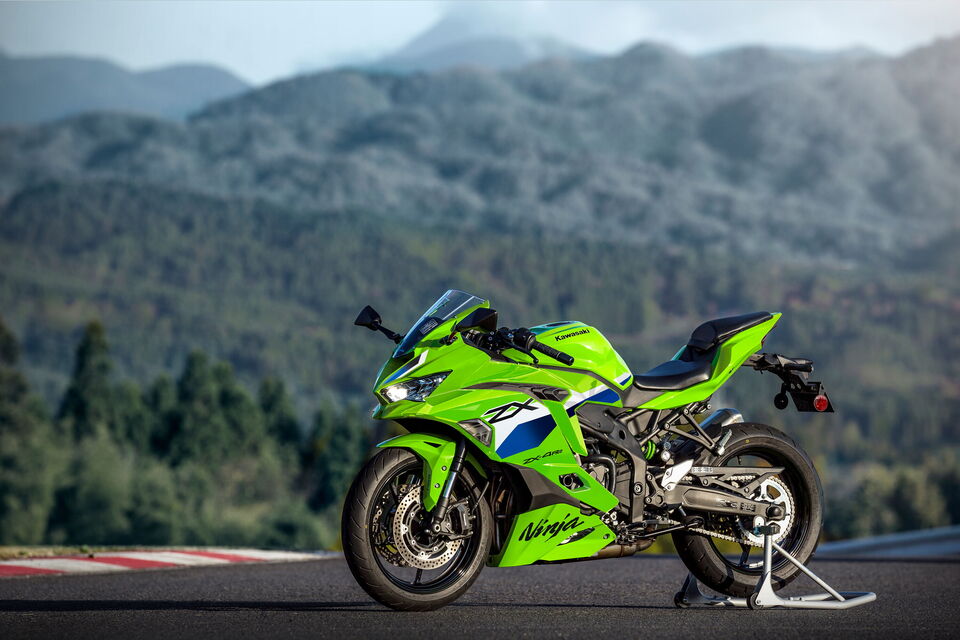
The Kawasaki Ninja ZX-4RR has no direct rival. There are 400-class twins and triples, and there are 600 and 1,000 cc four-cylinder supersports. But no other motorcycle combines a 399 cc inline-four with radial-mount Monobloc brake calipers, a Showa BFRC lite rear shock, bidirectional quickshifter, four riding modes, and a 16,000-rpm limiter. That is the ZX-4RR’s market position: it does not try to compete with 600s; it defines its own category. Importing it to Germany—a market that traditionally has little enthusiasm for small displacement—is a bold move. But the motorcycle makes a convincing case for itself.
The frame is a steel trellis rather than aluminum, an understandable decision on cost. Its geometry is directly derived from the ZX-10R, including swingarm pivot position, engine mounting points, and steering-head angle. The chassis is not a budget solution but a surprisingly serious package for the class. The limiting factor in hard supersport use is not the suspension hardware—it is the stock tires.
Engine: 57 mm Bore, 39.1 mm Stroke, 77 hp at 14,500 rpm—How a High-Revving Engine Works and Why It Sounds Like This
A 57 mm bore and 39.1 mm stroke make this an extremely short-stroke engine. The bore-to-stroke relationship is optimized for rpm: a longer stroke favors stronger torque at lower engine speeds, while a short stroke such as this allows very high revs. The result is 77 hp at 14,500 rpm, a limiter at 16,000, and a redline beyond 15,000. With Ram Air assistance, output rises to as much as 80 hp. The dual intake combines a central Ram Air duct with a side duct—a concept inspired by the Ninja H2—to optimize airflow and sound.
Below 4,000 rpm, not much happens. In the middle four-digit range, the engine produces enough power to keep pace with traffic. But when the tach passes 10,000 rpm and the throttle stays open, the four-cylinder truly comes alive. It is a good thing the bidirectional quickshifter works flawlessly with the crisp, precise six-speed transmission. The exhaust is derived from the ZX-6R. Above 15,000 rpm, the sound is the electrifying signature of the entire concept: no other production 400 sounds like this.
Chassis: 37 mm Showa SFF-BP Fork, Fully Adjustable BFRC Lite Like the ZX-10R—a Precision Instrument
The front fork is a 37 mm Showa SFF-BP—Separate Function Fork, Big Piston—upside-down unit with spring-preload adjustment only. At the rear is a Showa BFRC lite in a horizontal Back-Link layout, fully adjustable for compression, rebound, and spring preload—the same rear shock used in the ZX-10R. Even small changes at the shock produce clearly perceptible results. This is not mass-market 400-class suspension. It is serious hardware.
Turn-in is almost effortless, and the ZX-4RR hits the intended line with almost indecent accuracy. It is a precision instrument that delivers as much riding enjoyment as considerably more powerful motorcycles, just in a different way. With the ZX-4RR, the focus is the riding itself: the right line, the right speed. An assist/slipper clutch is standard, allowing abrupt downshifts into tight corners without rear-wheel hop. Both hand levers are adjustable as standard, something that cannot be taken for granted in this class.
Electronics: Four Riding Modes, Track Display With Lap Timer, Bidirectional KQS—a Complete Package for a 400
The ZX-4RR electronics package sets an unusually high standard for a 400-class motorcycle. Four riding modes—Rain, Road, Sport, and Rider—combine traction-control settings with power-mode logic. In Rider mode, traction control can also be switched off completely. The 4.3-inch TFT offers two display layouts: a normal road mode and a Track mode that activates the lap timer, enlarges rpm and gear-position information, and is optimized for circuit use—a detail no other 400 offers.
Sport mode also works perfectly well on the road. The bidirectional KQS quickshifter is standard and performs flawlessly. Smartphone connectivity is handled through the Rideology app. Full LED lighting is standard, including the cornering-light headlamp. The display is clear and easy to read, while the buttons on the left handlebar are intuitive.
Ergonomics: Sporty but Not Ruthless—Usable in the City, Tall Riders Take Note
The ZX-4RR riding position is sporty, with clip-on handlebars and rearset footpegs, but it is not as radical as a full-size superbike. A ride through congested city traffic is entirely tolerable. Tall riders should note one detail: with the handlebar at full lock, space around the knees can become tight.
Internationally, the motorcycle is conceived as a standalone 400-class supersport. In Germany, it can also be restricted to 35 kW / 48 hp for A2 license holders and later returned to full power. A 189 kg curb weight is light for a supersport with this equipment, and the 15-liter tank provides realistic range. The full fairing, with styling clearly related to the ZX-10R, places the bike firmly in Kawasaki’s Z supersport lineage and recalls the ZXR400 and ZXR750 of the 1990s.
Cost: EUR 10,170 Including Destination—Fair for the Package, With No Direct Comparison Point
The ZX-4RR costs EUR 10,170 including destination. In a 400-class context, that is expensive. In a supersport context, it is inexpensive. Kawasaki’s next larger supersport, the ZX-6R, costs EUR 13,170—EUR 3,000 more for 126 hp instead of 77 hp. That is not a fair comparison, because the ZX-6R has a different character and a different level of performance.
For the technical package and riding dynamics on offer, the price is entirely reasonable. For riders who love the extreme rpm of this engine, the ZX-4RR is the only available tool. A EUR 400 starter bonus is possible for riders whose license is no more than 12 months old. A2 restriction to 48 hp is available at extra cost through the dealer and is reversible. Warranty coverage is four years with unlimited mileage.
Verdict
The Ninja ZX-4RR is the only motorcycle that delivers a 400-class inline-four at genuine supersport level. Anyone who has experienced this engine above 10,000 rpm understands what makes it unique: there is no comparable sound, no comparable sense of revs, and no comparable tool for learning dynamic riding at manageable risk and for sensible money. MY2026 brings new colors. Everything else is already very good.
Quick Check
+ 399 cc inline-four with a 16,000-rpm limiter: no other production 400 currently available in Germany offers this configuration.
+ 77 hp at 14,500 rpm, up to 80 hp with Ram Air: exceptional specific output for 399 cc.
+ 57 mm bore / 39.1 mm stroke: extreme short-stroke layout for high-rpm performance; exhaust derived from ZX-6R.
+ Fully adjustable Showa BFRC lite rear shock for compression, rebound, and preload: the same rear shock used in the ZX-10R.
+ Geometry directly derived from the ZX-10R, including swingarm pivot, engine mounting points, and steering-head angle.
+ Dual air intake, central + side: H2-inspired Ram Air system for increased performance and characteristic sound.
+ Twin 290 mm front discs with radial-mount Monobloc calipers: supersport-level braking hardware.
+ Bidirectional KQS standard.
+ Four riding modes—Rain/Road/Sport/Rider—plus switchable traction control standard.
+ Track display mode: lap timer, large rpm readout, gear position in a circuit-oriented layout—unique in the 400 class.
+ Assist/slipper clutch standard; both hand levers adjustable, unusual in this class.
+ 189 kg ready to ride: light for a supersport with this level of equipment.
+ 228 km/h top speed according to registration documents; sporty but everyday-usable riding position.
+ A2-restrictable to 35 kW / 48 hp and reversible; EUR 400 starter bonus available.
+ EUR 10,170 including destination: almost a bargain in supersport terms.
+ 4-year warranty with unlimited mileage.
– Powerband: little thrust below 4,000 rpm, real awakening only above 10,000 rpm—requires plenty of shifting on winding roads.
– Steel frame rather than aluminum: a weight and cost compromise; entirely workable but not premium material.
– Fork adjustable for spring preload only, with no compression or rebound adjustment: a limitation for ambitious track use.
– Stock Dunlop GPR300 tires are the limiting factor on track; Supercorsa SP or slicks make more sense for serious circuit use.
– Cornering clearance: footpeg can touch down during committed track riding.
– No significant wind protection at full speed: aerodynamic fairing elements are present, but high-speed comfort is limited.
– Tall riders: knee clearance can become tight at full steering lock.
– MY2026 technically unchanged: anyone waiting for an update will not find one here.
– No direct competition in the segment, apart from the Bimota KB399 using the same engine/frame concept.
Technical Specifications: Kawasaki Ninja ZX-4RR (2026)
Model Series: Mk1, 2024-present; MY2026: new colors, technically unchanged
Engine: Inline-four, 399 cc, liquid-cooled, DOHC; 57 mm bore / 39.1 mm stroke; fuel injection; assist/slipper clutch; six-speed; dual Ram Air intake, central + side, H2-inspired
Power: 77 hp / 57 kW at 14,500 rpm; up to 80 hp with Ram Air
Rev Limiter: 16,000 rpm; redline above 15,000 rpm
Electronics: KTRC traction control, switchable; four riding modes, Rain/Road/Sport/Rider; bidirectional KQS quickshifter standard; Rideology app; Bluetooth
Display: 4.3-inch TFT; Road and Track modes, including lap timer and large rpm/gear display
Frame: Steel trellis frame; geometry derived from ZX-10R, including swingarm pivot, engine mounting points, and steering-head angle
Fork: 37 mm Showa SFF-BP USD; spring preload adjustment only
Rear Shock: Showa BFRC lite; horizontal Back-Link; fully adjustable for compression, rebound, and preload; identical to ZX-10R unit
Front Brake: Twin 290 mm discs; radial-mount Monobloc calipers; ABS
Rear Brake: Single 220 mm disc; ABS
Wheels: 17-inch front and rear
Tires: Dunlop GPR300; 120/70 ZR17 front; 160/60 ZR17 rear
Weight: 189 kg fully fueled
Fuel Tank: 15 liters
License: A; restrictable to 35 kW / 48 hp for A2 and reversible
Exhaust: Derived from ZX-6R; homologated Akrapovic muffler available as genuine accessory
2026 Colors: Lime Green, GN1; Metallic Matte Graphenesteel Gray / Metallic Spark Black, GY2
Warranty: 4-year Kawasaki factory warranty with unlimited mileage
Price in Germany: EUR 10,170 including destination; EUR 400 starter bonus available