Review Kawasaki Vulcan S (2026)

The Cruiser for Every Rider Size—Ergo-Fit, 705 mm Seat Height, and a Surprisingly Agile Sporting Character
A cruiser that rides like a sport-cruiser. A 705 mm seat height that gives even the shortest riders secure footing. And a unique Ergo-Fit system that tailors the handlebar, footpegs, and seat to the rider. The Vulcan S has been on the market since 2015 and has never tried to force its way into the spotlight with constant technical updates—because it never really needed to.
As of: April 16, 2026 | Model: Kawasaki Vulcan S (2026) | Price: EUR 8,870 including destination | Warranty: 4 years | Stationary noise: below 95 dB(A), Tyrol-compliant | A2: restrictable to 35 kW | MY2026: technically identical to MY2025, new color option
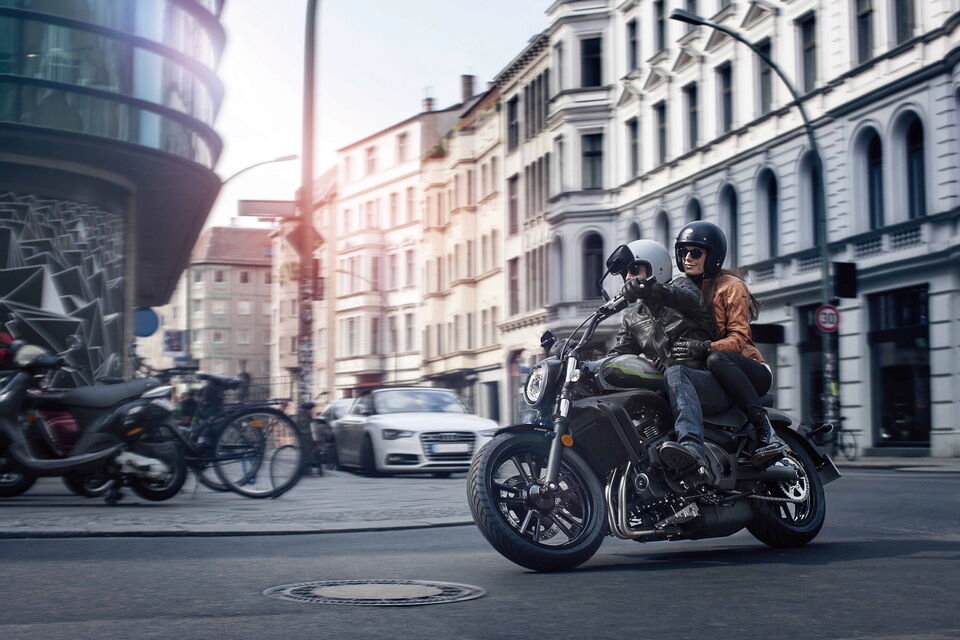
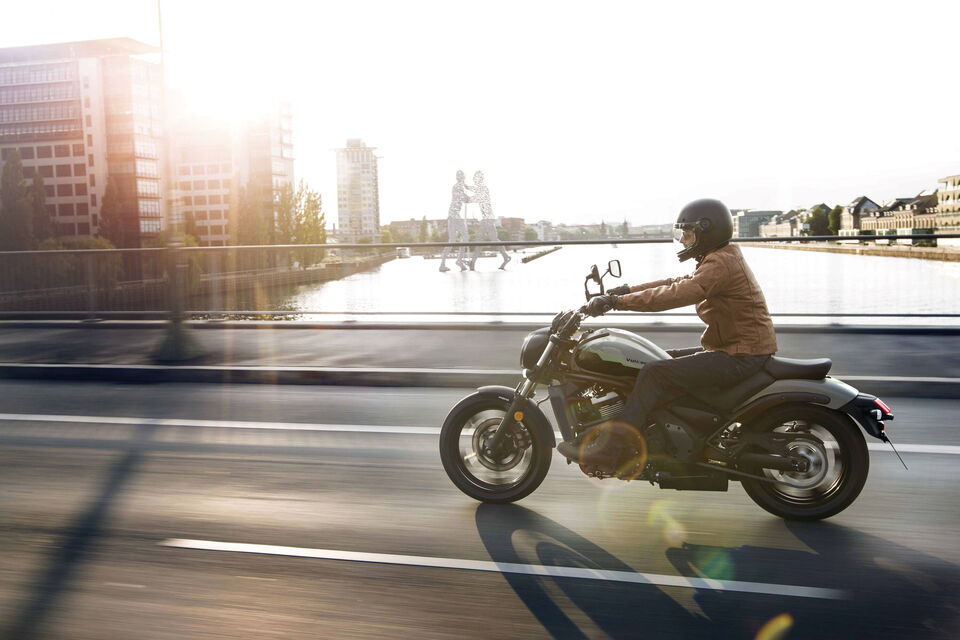
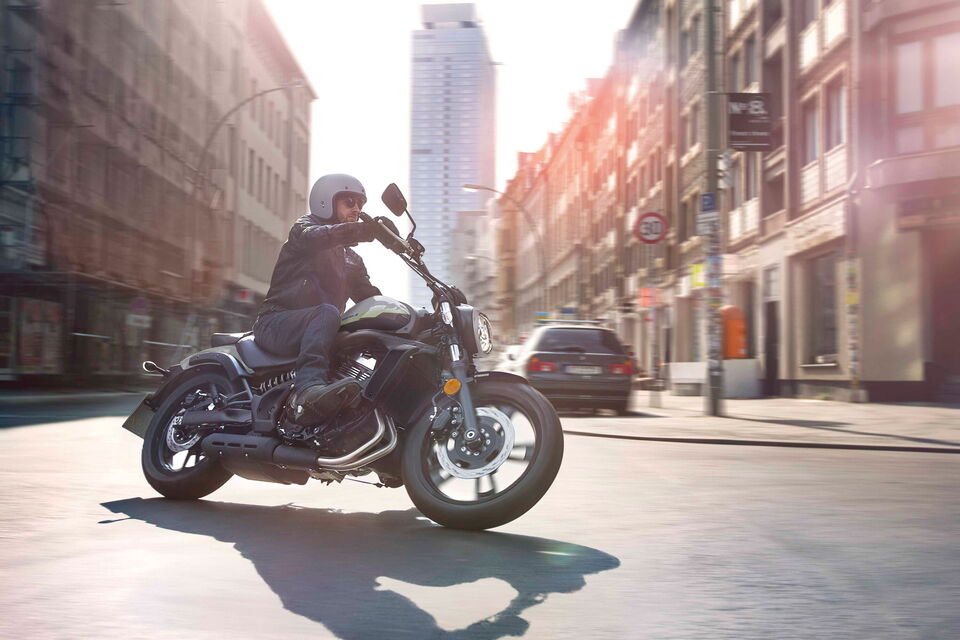
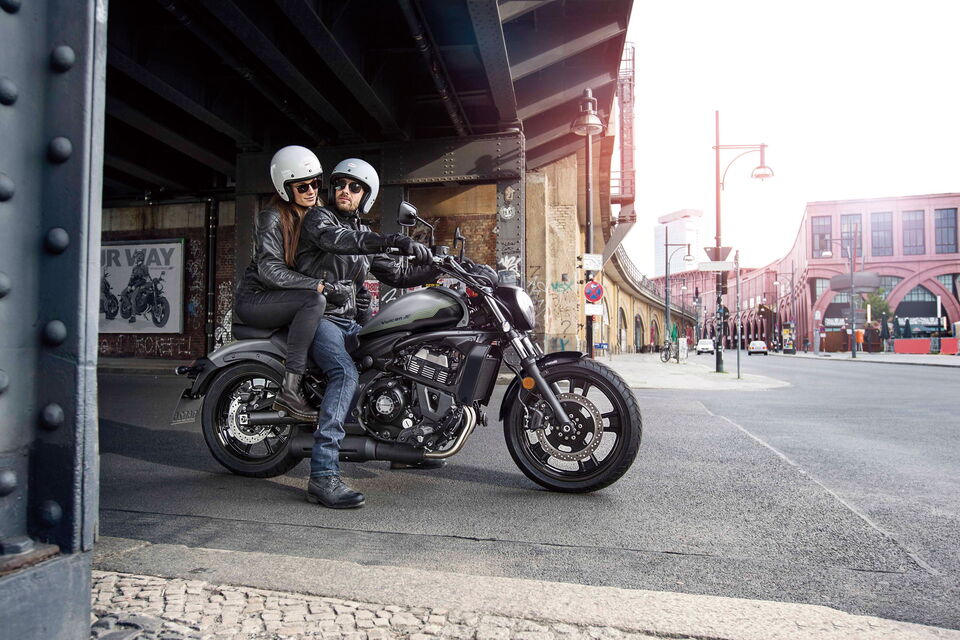
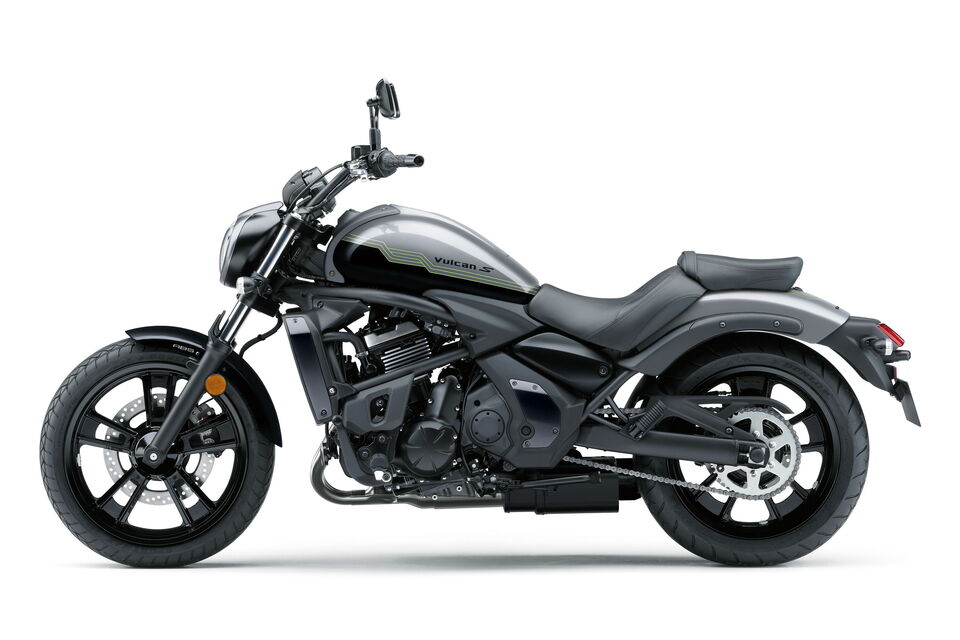
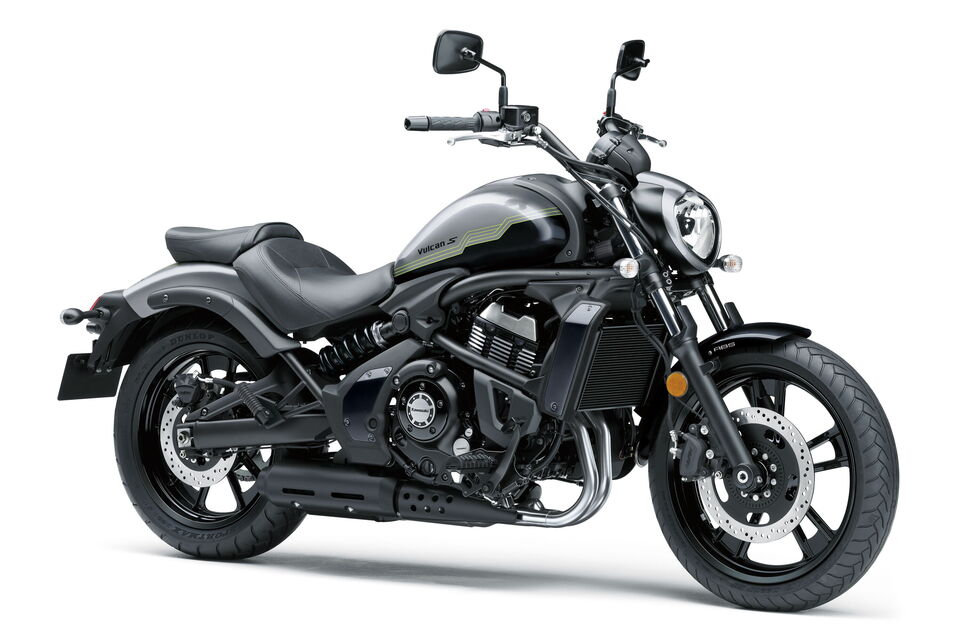
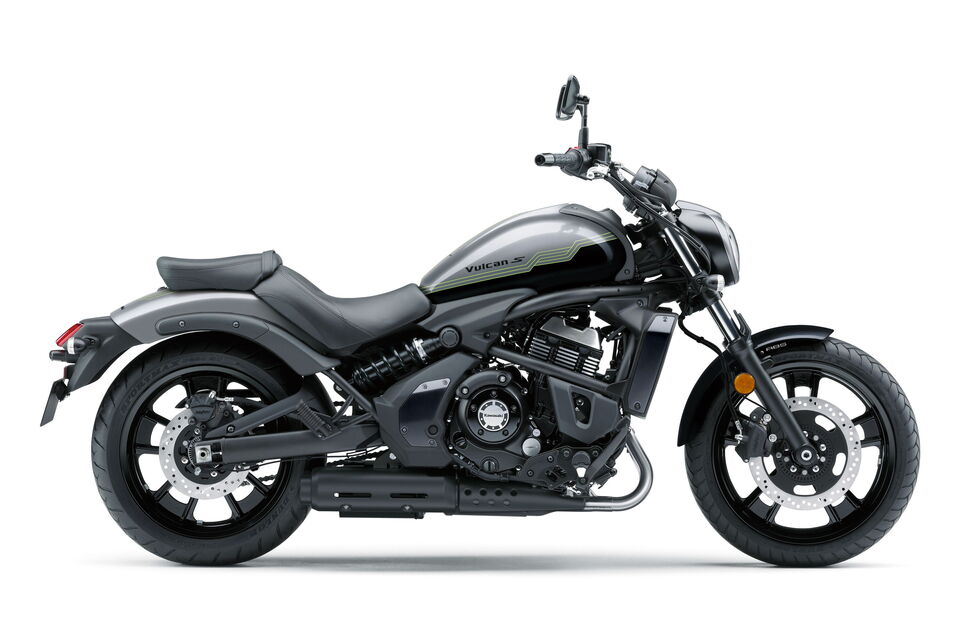
Concept: A Cruiser That Does Not Ride Like a Cruiser—and That Is Its Greatest Strength
If your idea of a cruiser is a heavy, sluggish motorcycle with substantial mass and limited cornering ability, you have not ridden the Vulcan S. Kawasaki did not design this motorcycle primarily around traditional chopper aesthetics. Instead, it targeted a broad range of riders: people who need or prefer a low seat, appreciate relaxed cruiser ergonomics, but do not want to wrestle with a cumbersome heavyweight. The result feels like a cruiser from the saddle but handles with the agility and forgiving nature of a middleweight naked bike.
The foundation is the 649 cc parallel twin from the ER-6 family, retuned for cruiser duty with revised mapping and a heavier flywheel to emphasize low-rpm torque. The chassis and frame were developed specifically for the Vulcan. At 1,575 mm, the wheelbase is considerably longer than the Z650’s, giving the motorcycle its characteristic cruiser silhouette without undermining handling. Model year 2026 adds a new Metallic Graphite Gray/Metallic Spark Black color combination and is technically identical to its predecessor.
The Ergo-Fit System: Adjust the Handlebar, Footpegs, and Seat—Kawasaki Turns the Cruiser Into a Tailored Suit
The heart of the Vulcan S is an idea pursued more consistently here than on almost any other production motorcycle: the ergonomics are not fixed. Kawasaki’s Ergo-Fit system allows three critical rider-to-motorcycle contact points to be adapted individually. The footpegs can be moved 25 mm forward or rearward from the standard position, creating a noticeable change in knee angle and hip position. Optional Easy-Reach components can bring the handlebar 36 mm closer to the rider, while a slightly lower seat reduces seat height by another 5 mm and uses a narrower profile to improve ground reach.
That may sound like fine-tuning, but in practice it expands possibilities. In standard form, the Vulcan S already accommodates a broad range of riders from roughly 1.55 to 1.90 meters comfortably. With the Easy-Reach package, it becomes a genuine option for very short riders. The Extended-Reach package works in the opposite direction, giving taller riders a roomier ergonomic triangle. Dealers can convert the standard setup without major effort. Every deviation from the standard configuration costs extra, however, and individual Ergo-Fit components should be included in the purchase calculation.
Engine: 649 cc, Cruiser Tune—More Low-End Torque, More Flywheel Mass, Less Top-End Urgency
The liquid-cooled 649 cc parallel twin is closely related to the engines used in the Z650 and Versys 650, but the Vulcan S receives its own calibration: revised mapping and a heavier flywheel. The difference is easy to feel. The engine pulls more strongly from low rpm than a typical sporty twin of this displacement and delivers power in a creamy, even manner without the frantic character of a high-revving four-cylinder. The characteristic pulse of a twin remains clearly present. That is not a drawback; it is exactly the sound and feel many cruiser riders expect.
At higher rpm, the engine loses some of its enthusiasm. Chase the redline and the twin has less bite near the top—a direct consequence of its cruiser tuning. That is not a flaw but part of the concept. The Vulcan S is not a sportbike. It accelerates confidently from a stop, carries rider and occasional passenger comfortably through town, and works well on backroads and highways without pretending those environments are its sole purpose. Fuel consumption is pleasantly low at around 4 to 5 L/100 km. With a 14-liter tank, realistic range is roughly 280 to 350 km.
Chassis and Handling: Playfully Light—Surprisingly Agile for a Cruiser, Limited for Very Sporty Riders
What fundamentally separates the Vulcan S from heavy American cruisers is the way it handles. The combination of relatively low weight—around 227 kg depending on configuration—a radial-tire-equipped 18-inch front wheel, and well-judged chassis geometry creates a motorcycle that turns willingly, handles evasive maneuvers without drama, and feels more at home on Alpine passes than its cruiser styling suggests. Road tests consistently describe the handling as playfully light and extremely beginner-friendly without ever feeling unstable or nervous.
The limits appear where the cruiser concept dictates. Lean-angle clearance is restricted because the forward-mounted footpegs touch down relatively early. Riders who enjoy that sensation and deliberately scrape the pegs will feel at home. Anyone seeking maximum cornering clearance will be better served by a naked bike with similar power. The suspension is relatively soft and not optimized for very aggressive riding. During fast sequences of bends, the rear shock reaches the limits of its comfort-oriented calibration. That is consistent with the concept. Nissin two-piston front brakes with ABS are easy to modulate and sufficiently fade-resistant for the motorcycle’s intended use.
Target Group and Ergonomics: 705 mm Seat Height, Forward Controls, Relaxed Riding Position—Accessible to a Very Broad Range of Riders
A 705 mm seat height is one of the lowest figures in the motorcycle market. For riders under 1.65 meters, that is a major difference compared with many naked bikes that sit at 830 mm or more. The combination of a low seat, forward-mounted footpegs, and a wide handlebar creates an upright, relaxed riding position with extended legs—typically cruiser-like, but without the discomfort that extreme chopper ergonomics can cause on longer rides. Riders who develop back discomfort after an hour on a Z650 can often remain comfortable considerably longer on the Vulcan S.
The motorcycle is especially well suited to beginners, shorter riders who struggle with ground reach on other motorcycles, anyone who appreciates cruiser style without wanting the weight of a traditional American chopper, and experienced riders looking for a relaxed everyday motorcycle. The standard passenger seat is compact. Riders who regularly carry a passenger should consider the optional comfort pillion seat. Wind protection is minimal in standard form, but Kawasaki offers several windshield sizes as accessories.
Cost: EUR 8,870 Including Destination—The Most Affordable Entry Into the European Cruiser Segment With Serious Substance
The Kawasaki Vulcan S costs EUR 8,870 including destination. Compared directly with the Honda Rebel 500, starting at EUR 7,009, it is more expensive; compared with traditional Harley-Davidson models, it costs considerably less. Kawasaki’s EUR 649 starter bonus—one euro per cubic centimeter—is particularly attractive for newly licensed riders and can reduce the effective entry price to around EUR 8,200 including destination. A2 riders can have the motorcycle restricted to 35 kW. One dealer quoted EUR 199 including DEKRA inspection as a useful reference point for the conversion.
The accessory program is extensive and well thought out: KQR quick-release saddlebags, large and medium windshields, passenger backrest, heated grips, a 12-volt outlet, and an Arrow sport exhaust. Heavily customizing the motorcycle can push the final price well beyond the base figure. Service intervals are 6,000 km—shorter than Honda’s and a running-cost factor that should be included in long-term ownership calculations. Warranty coverage is four years.
Verdict
The Vulcan S is one of the strongest arguments that a cruiser does not have to be heavy, cumbersome, or designed primarily for tall riders. The Ergo-Fit system is unique in the production market. The handling is a pleasant surprise. The price is fair. What is missing is genuine modernization: since 2015 there has been no TFT, no cornering ABS, no cruise control, and no quickshifter. Viewed through a 2026 technology lens, the Vulcan S is a proven motorcycle suffering from technical stagnation. Viewed through the eyes of a cruiser rider, it may be exactly what that buyer is looking for: an honest, dependable, agile motorcycle at a fair price.
Quick Check
+ Ergo-Fit system: footpegs adjustable ±25 mm as standard, with optional seats and handlebars—unique adjustability in the production market.
+ 705 mm seat height: one of the lowest in the segment; ideal for shorter riders and anyone who prioritizes secure ground reach.
+ Playfully easy handling: surprisingly agile for a cruiser; turns willingly without heavyweight manners.
+ 649 cc parallel twin: cruiser-specific tune with good low-rpm drive and creamy, even power delivery.
+ 18-inch front wheel with radial tire: good cornering stability and unusually sporty behavior for a cruiser in this class.
+ Dual-channel ABS standard since the model’s 2015 introduction.
+ Stationary noise below 95 dB(A): Tyrol-compliant.
+ Extensive accessory range: windshields, saddlebags, backrest, Arrow exhaust, heated grips, 12V outlet.
+ Restrictable to 35 kW for A2 license holders; EUR 649 Kawasaki starter bonus available.
+ Affordable access to a cruiser with serious substance: EUR 8,870 including destination.
+ 4-year Kawasaki warranty; low fuel consumption, around 4.2 L/100 km WMTC.
+ MY2026 technically identical to MY2025: proven, mature technology with no surprises.
– No TFT display: analog cockpit with LCD, unchanged since 2015; limited information depth.
– No cruise control and no quickshifter, even as options.
– No cornering ABS: conventional dual-channel ABS without IMU; technically behind the class.
– Limited lean-angle clearance: footpegs touch early; enthusiastic corner riders reach the limits sooner than on a naked bike with similar power.
– Standard passenger seat is compact; optional comfort seat makes sense for regular two-up riding.
– 14-liter tank: roughly 280–350 km range; touring still benefits from fuel-stop planning.
– 6,000 km service interval: short by class standards and potentially higher annual maintenance cost than 12,000 km rivals.
– Ergo-Fit changes cost extra: every deviation from the standard position adds to the purchase price.
– MY2026 is based on 11-year-old technology with no fundamental development: no IMU, Ride-by-Wire, or modern electronics suite.
Technical Specifications: Kawasaki Vulcan S (2026)
Country of Manufacture: Japan, Kawasaki
Engine: Parallel twin, 649 cc, liquid-cooled, DOHC, eight valves; fuel injection; cruiser tune with heavier flywheel and revised mapping; assist/slipper clutch; six-speed
Power: 61 hp at 7,500 rpm
Torque: 63 Nm at 6,600 rpm
Electronics: Dual-channel ABS, no cornering ABS; no traction control; no cruise control; no quickshifter
Cockpit: Analog speedometer; LCD with gear indicator, clock, tripmeter, ECO indicator; no TFT
Ergo-Fit: Footpegs adjustable ±25 mm as standard; optional Easy-Reach seat, -5 mm, handlebar 50 mm closer; Easy-Reach handlebar, 36 mm closer; Extended-Reach options
Frame: Steel trellis frame; dedicated cruiser design
Fork: USD fork; 120 mm travel
Rear Shock: Monoshock; adjustable spring preload; 105 mm travel
Front Brake: Nissin two-piston caliper; single 300 mm disc; dual-channel ABS
Rear Brake: Single-piston caliper; 250 mm disc; ABS
Wheels: 18-inch front; 17-inch rear
Tires: 120/70ZR18 front; 160/60ZR17 rear; Dunlop Sportmax D220
Weight: Approx. 227 kg ready to ride
Seat Height: 705 mm standard; approx. 700 mm with Easy-Reach seat; higher positions available with Extended-Reach package
Wheelbase: 1,575 mm
Fuel Tank: 14 liters; approx. 280–350 km range, WMTC consumption 4.2 L/100 km
Stationary Noise: Below 95 dB(A), Tyrol-compliant
License: A; restrictable to 35 kW / 48 hp for A2
2026 Colors: Metallic Graphite Gray / Metallic Spark Black; Metallic Flat Spark Black
Accessories: KQR saddlebags, large/medium/Café-style windshields, passenger backrest, Arrow exhaust, Euro 5+, heated grips, 12V outlet, navigation mount
Warranty: 4-year Kawasaki factory warranty
Service: Every 6,000 km
Price in Germany: EUR 8,870 including destination. Kawasaki starter bonus: EUR 649 for newly licensed riders