Review Kawasaki W230 (2026)

233 cc, 18 hp, 143 kg, 745 mm Seat Height—the Lightest Way Back to the Sixties for EUR 5,395
An air-cooled 233 cc single with fuel injection, 18 hp, and 19 Nm. Six-speed transmission and a buttery-light clutch. A 37 mm telescopic fork with gaiters, twin rear shocks with five-position preload adjustment, 18/17-inch wire-spoke wheels, and ABS as standard. An analog round instrument with no tachometer. 143 kg ready to ride. 745 mm seat height. Peashooter exhaust. Styling inspired by the 1965 W1. MY2026 brings a new Metallic Matte Dark Green color and a three-dimensional W logo, with no technical changes.
As of: April 16, 2026 | Model: Kawasaki W230 (2026) | Price: EUR 4,995 ex-factory / EUR 5,395 including destination | Warranty: 4 years | MY2026: new color, technically unchanged

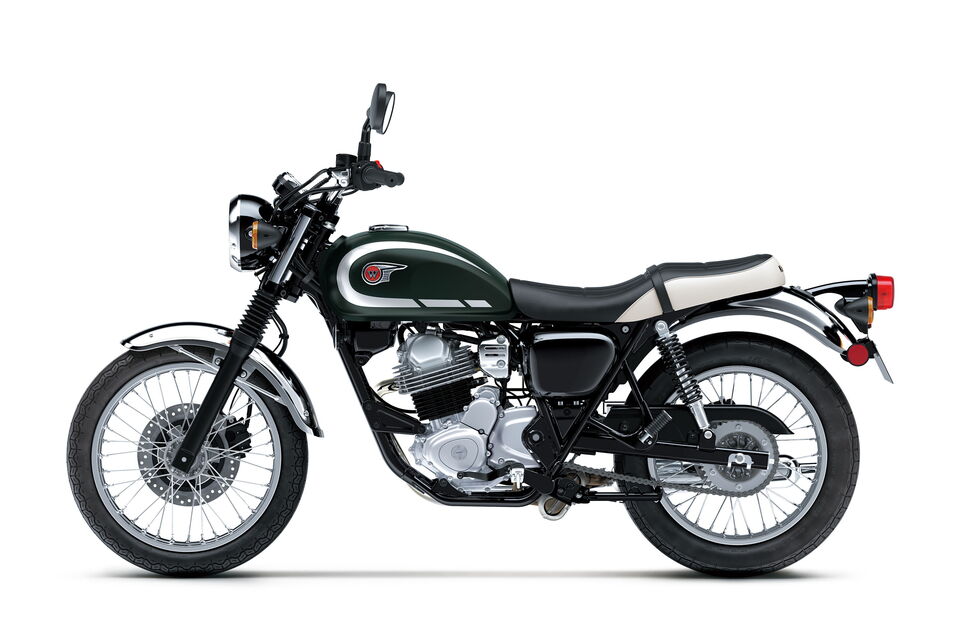
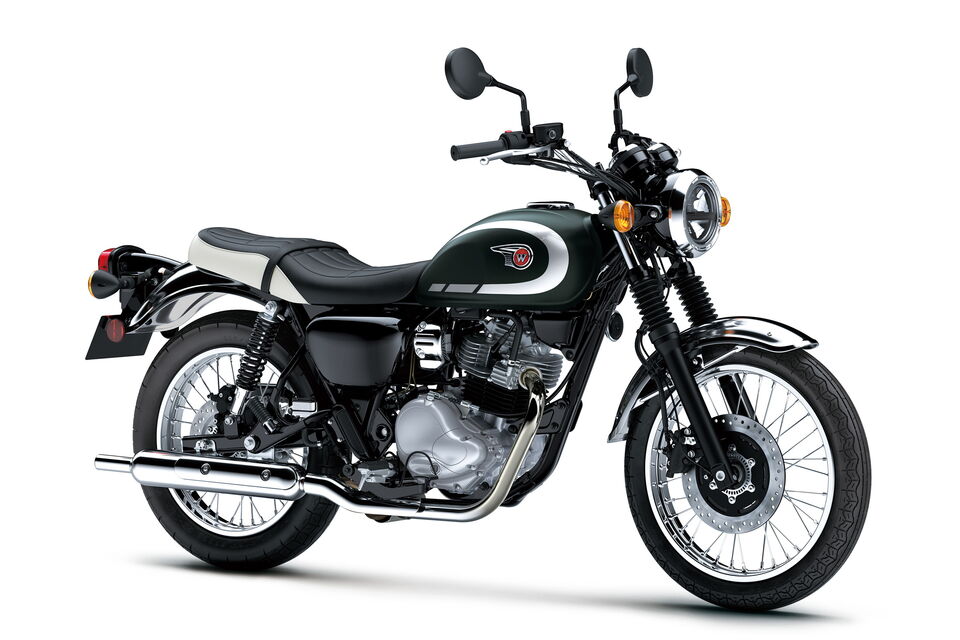

Origins and Concept: Great-Great-Grandchild of the 1965 W1—and What That Means
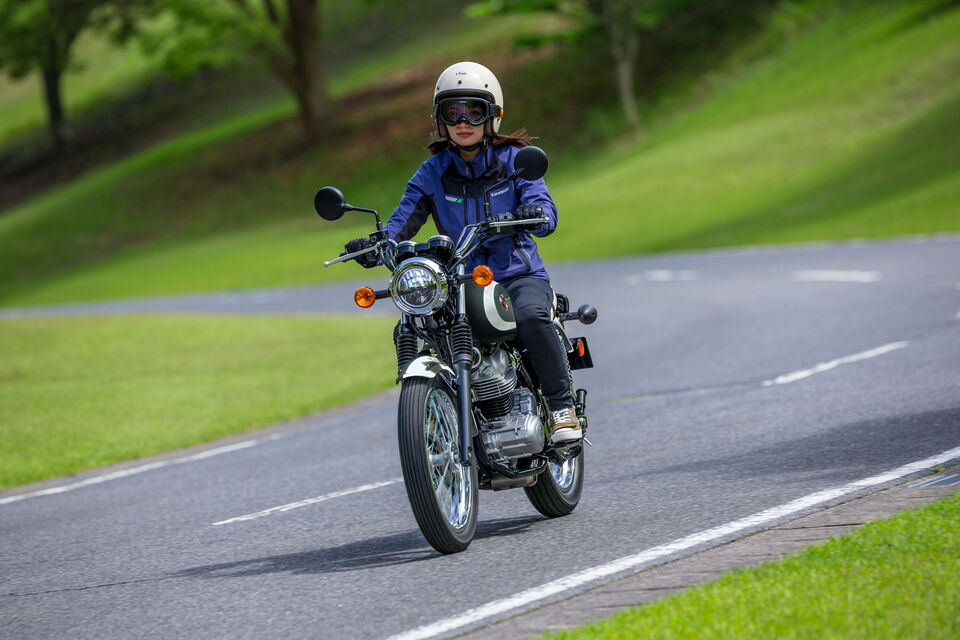
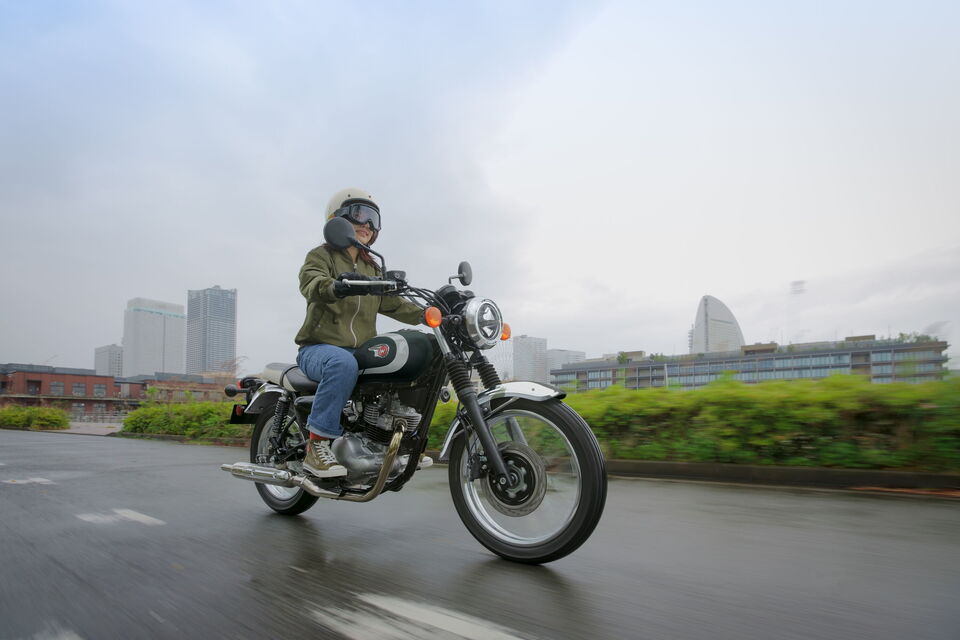
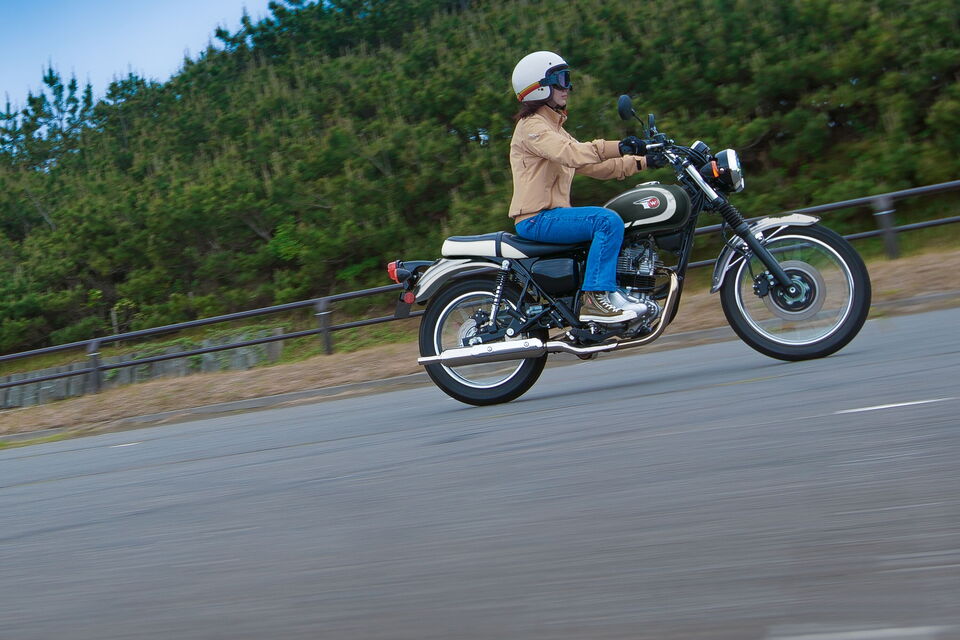
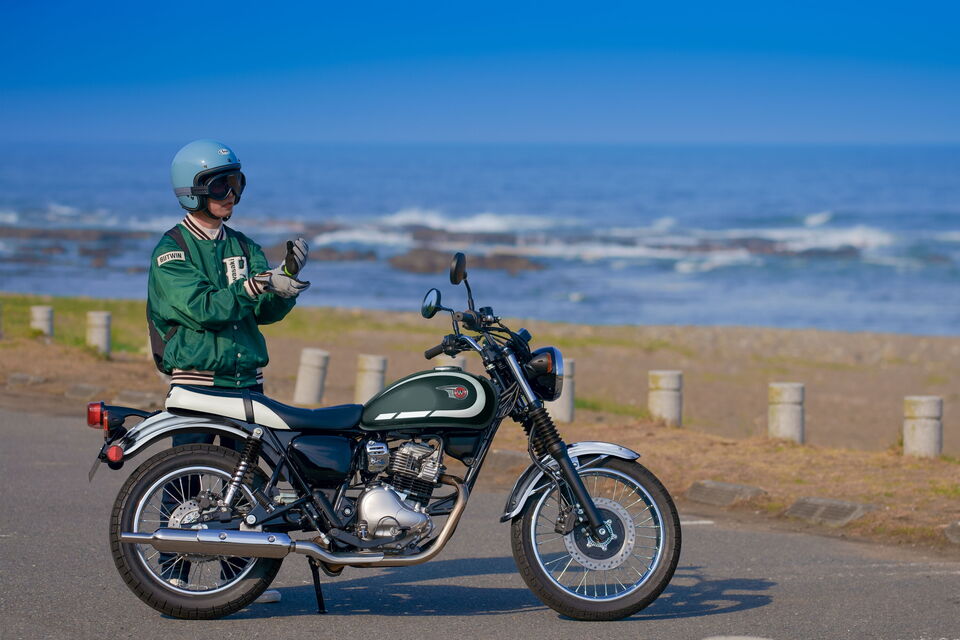
Kawasaki’s history in Germany began in 1966 with the 650 W1, an unfaired roadster in the British motorcycle tradition that introduced the brand to the German market. The W230 draws a direct line back to that machine: fork gaiters, twin rear shocks, wire-spoke wheels, a peashooter exhaust, steel fenders instead of plastic, and analog round instrumentation. This is not retro styling applied as an afterthought, but a consistent interpretation of Kawasaki’s own historical starting point.
The W230 was first introduced in Asian markets from 2023 and arrived in Europe in 2025 to compete in the growing market for uncomplicated retro singles, a segment already successfully occupied by Royal Enfield and Honda with their 350-class models.
MY2026 brings no technical changes. New is Metallic Matte Dark Green, a muted green finish that suits the model’s retro aesthetic, along with a three-dimensional W emblem on the tank. Both changes are cosmetic. The price remains EUR 5,395 including destination.
Engine: 233 cc, High Crankshaft Inertia, Revs Instead of Displacement—the Character Difference From the 350-Class Competition
The 233 cc single-cylinder engine uses DOHC, two valves, fuel injection, and a balance shaft. It produces 18 hp at 7,000 rpm and 19 Nm at 5,800 rpm. Compared with the Honda GB350S at 21 hp and 29 Nm and the Royal Enfield Hunter 350 at 20 hp and 27 Nm, those figures are measurably lower. The difference lies in character. The 350s are lower-revving engines that build a stable but relatively unexciting torque plateau. The W230’s 233 spins higher and delivers a willingness to rev that can make it feel more entertaining than the larger singles. Kawasaki deliberately chose a high crankshaft moment of inertia to give the engine a rhythmic, pulsing character. The riding feel is intentional, not accidental.
The metallic peashooter exhaust sounds surprisingly full-bodied for a motorcycle in this class. From idle, the W230 moves away smoothly and keeps up easily with urban traffic. At higher rpm, vibration remains noticeable despite the balance shaft—a character trait that suits the retro concept. The clutch is exceptionally light, and the six-speed gearbox is precise with short shift throws. The motorcycle is well suited to city streets, backroads, and relaxed trips between destinations—not sustained highway travel.
Chassis and Handling: 143 kg + Narrow Spoke-Wheel Tires = Bicycle-Like Character in Tight Corners
The steel semi-double-cradle frame carries a conventional 37 mm telescopic fork with classic gaiters and 117 mm of travel. At the rear are twin shocks with five-position spring-preload adjustment and 95 mm of travel. Apart from rear preload, neither end is adjustable. The suspension is appropriately soft and comfort-oriented for the concept, absorbing poor road surfaces well but naturally reaching its limits during sporty cornering. The 18/17-inch wire-spoke wheels use narrow 90/90-18 front and 110/90-17 rear tires, giving the motorcycle an exceptionally light, almost bicycle-like turn-in.
At 143 kg, the W230 carries momentum through tight bends with an ease that shifts the rider’s attention away from outright speed and toward the surroundings—a form of riding enjoyment that larger-displacement motorcycles cannot reproduce in quite the same way. The low 745 mm seat height allows a broad range of riders to place both feet securely on the ground. Kawasaki explicitly positions the motorcycle for returning riders and beginners as well.
Design and Details: Steel Fenders, Analog Instruments Without a Tachometer—Where Authenticity Ends and Cost-Cutting Begins
Most of Kawasaki’s design decisions on the W230 are consistent. The fenders are genuine steel rather than plastic. The telescopic fork wears real gaiters. The wire-spoke wheels are stylistically correct. The peashooter exhaust has a proper metallic finish and a convincing sound. The round instrument combines an analog speedometer with a digital LCD for odometer, trip distance, and fuel level. There is no tachometer. Opinions may differ here, because a tach would suit the retro environment visually, even if the W230’s relaxed riding style hardly demands one.
Lighting is entirely halogen and incandescent—there are no LEDs. This is one of the few areas where the retro concept falls behind modern safety standards. ABS is standard on both wheels. The front brake uses a 265 mm disc with a two-piston caliper; the rear uses a 220 mm disc with a single-piston caliper. Braking performance is appropriately matched to the speeds the motorcycle can achieve. A passenger seat and grab rail are standard.
Cost and Market Position: EUR 5,395—More Expensive Than the Honda GB350S and Less Powerful, but 36 kg Lighter
The W230 costs EUR 5,395 including destination. The Honda GB350S is more powerful at 21 hp and 29 Nm from 348 cc, but it is also 36 kg heavier at 179 kg and, with an 800 mm seat height, considerably less accessible to shorter riders. In a direct comparison, the GB350S has the advantage in performance and price. The Royal Enfield Hunter 350 also costs less and offers more engine output. The W230 defends its position through its unique combination of weight and seat height: no other motorcycle in this retro class weighs 143 kg and sits at 745 mm.
The Meguro S1 uses identical mechanical hardware and costs EUR 6,095 including destination. It differs through additional chrome, a stylized M emblem, and design references to the historic Meguro SG. Within Kawasaki’s own lineup, the W230 and Meguro S1 form the foundation of the Heritage range. Kawasaki’s official consumption claim of 44.3 km/l in the WMTC cycle, equivalent to around 2.3 L/100 km, is realistic under ideal conditions. In everyday riding, roughly 3.0 L/100 km is likely the more useful figure. Fuel capacity is 12 liters.
Verdict
The W230 is not a motorcycle for riders who want to optimize horsepower figures. It is for people who experience riding as relaxed movement through the landscape and want to do it on a motorcycle with historically credible styling. Its 143 kg curb weight and 745 mm seat height set it apart from competitors, for riders who need or simply prefer smaller dimensions. MY2026 brings a new color. The concept does not need anything else.
Quick Check
+ 143 kg ready to ride: the lightest motorcycle in the retro-single segment; no direct rival matches this figure.
+ 745 mm seat height: one of the lowest in the segment, providing secure ground reach for shorter riders and returning motorcyclists.
+ Rev-happy character: despite lower output, subjectively more entertaining than the lower-revving 350-class rivals.
+ Metal peashooter exhaust, steel fenders, fork gaiters, and wire-spoke wheels: largely authentic retro materials.
+ Styling inspired by the 1965 Kawasaki W1: historically credible within Kawasaki’s own brand heritage.
+ Buttery-light clutch, precise six-speed transmission, and bicycle-like turn-in from the narrow spoke-wheel tires.
+ ABS standard on both wheels.
+ Approx. 300 km range from a 12-liter tank; everyday consumption around 3.0 L/100 km.
+ Passenger seat + grab rail standard; approved for two-up use.
+ MY2026: new Metallic Matte Dark Green color + 3D W emblem; visually convincing retro treatment.
+ EUR 5,395 including destination: least expensive entry into Kawasaki’s W family.
+ 4-year warranty with unlimited mileage.
– 18 hp / 19 Nm: measurably less than the Honda GB350S at 21 hp / 29 Nm and Royal Enfield Hunter 350 at 20 hp / 27 Nm.
– 233 cc displacement: roughly 115 cc less than the 350-class competition; not a motorcycle for sustained highway touring.
– Halogen and incandescent lighting: no LED; visually consistent with the retro concept, but behind modern safety standards.
– No tachometer as standard: appropriate to the riding style, but still an equipment omission compared with some rivals.
– Suspension is non-adjustable except for rear preload and reaches noticeable limits during sporty riding.
– Vibration remains noticeable at higher rpm despite the balance shaft.
– EUR 5,395 price is higher than the Royal Enfield Hunter 350 despite lower engine output; the weight advantage has to justify the difference.
– 12-liter tank: smallest tank among the direct rivals.
– IRC original-equipment tires are solid but not the grip benchmark of more modern premium tires.
– MY2026 technically unchanged: no power increase, LED lighting, or tachometer.
Technical Specifications: Kawasaki W230 (2026)
Model Series: EJ230A, 2025-present; MY2026 adds Metallic Matte Dark Green, technically unchanged
Engine: Single-cylinder, 233 cc, air-cooled, DOHC, two valves; fuel injection; balance shaft; high crankshaft inertia; six-speed; chain final drive
Power: 18 hp / 13.2 kW at 7,000 rpm
Torque: 19 Nm at 5,800 rpm
Frame: Steel semi-double-cradle frame
Fork: Conventional 37 mm telescopic fork with gaiters; 117 mm travel; non-adjustable
Rear Shocks: Twin shocks; five-position spring-preload adjustment; 95 mm travel
Geometry: 1,415 mm wheelbase; 63-degree steering-head angle
Front Brake: Single 265 mm disc; two-piston caliper; ABS
Rear Brake: Single 220 mm disc; single-piston caliper; ABS
Wheels: Wire-spoke wheels; 18-inch front / 17-inch rear
Tires: IRC GP-21F / GP-22R original equipment; 90/90-18 front; 110/90-17 rear
Cockpit: Analog round speedometer; digital LCD for odometer, trip distance, and fuel level; no tachometer; halogen/incandescent lighting
Weight: 143 kg fully fueled
Seat Height: 745 mm
Fuel Tank: 12 liters
Fuel Consumption: Approx. 2.3 L/100 km WMTC; around 3.0 L/100 km in everyday riding
Range: Approx. 300 km
2026 Colors: Metallic Matte Dark Green, new with 3D W emblem; Candy Tone Blue, 2025 color may continue
Warranty: 4-year Kawasaki factory warranty with unlimited mileage
Price in Germany: EUR 5,395 including destination