Review Kawasaki Z 7 Hybrid (2026)

The Hybrid Motorcycle for Riders Who Want to Sit Upright
The Z 7 Hybrid is the naked-bike version of the Ninja 7 Hybrid—the same powertrain, the same riding modes, the same 2026 software update, and the same promotional price. What changes is the bodywork and riding position: no full fairing, a higher handlebar, a more upright posture, and cleaner naked-bike styling. Kawasaki describes the concept this way: “If it weren’t for the Hybrid lettering, you wouldn’t even know it was a hybrid motorcycle.” That is the Z 7 promise: hybrid technology in naked-bike clothing, without making a spectacle of itself. Promotional price: EUR 8,995 including destination.
As of: July 17, 2026 | Model: Kawasaki Z 7 Hybrid (2026; 451 cc parallel twin + 48V electric motor; Strong Hybrid; Naked Bike; A2-compatible at 35 kW) | Manufacturer: Kawasaki Motors Europe N.V., Almere, Netherlands | Price in Germany: promotional price EUR 8,995 including destination; regular MSRP approx. EUR 12,995 | Stationary noise: not published | Warranty: 4 years, unlimited mileage
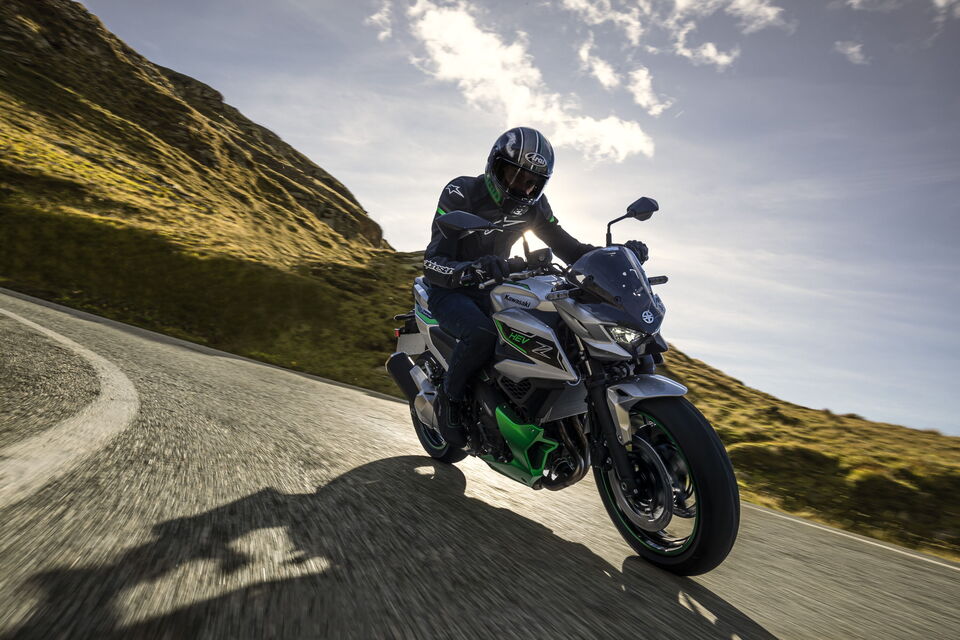
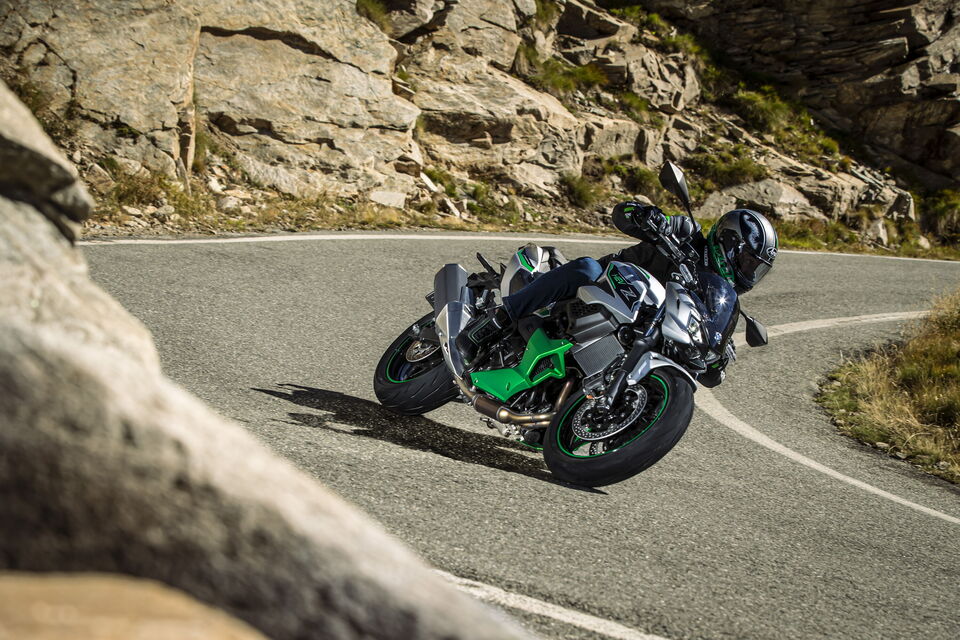
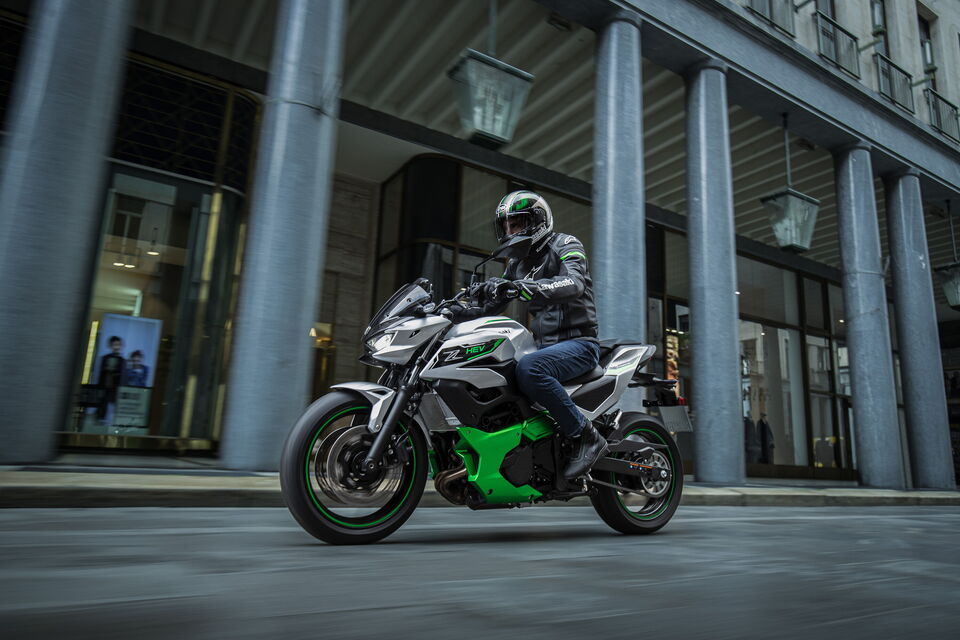
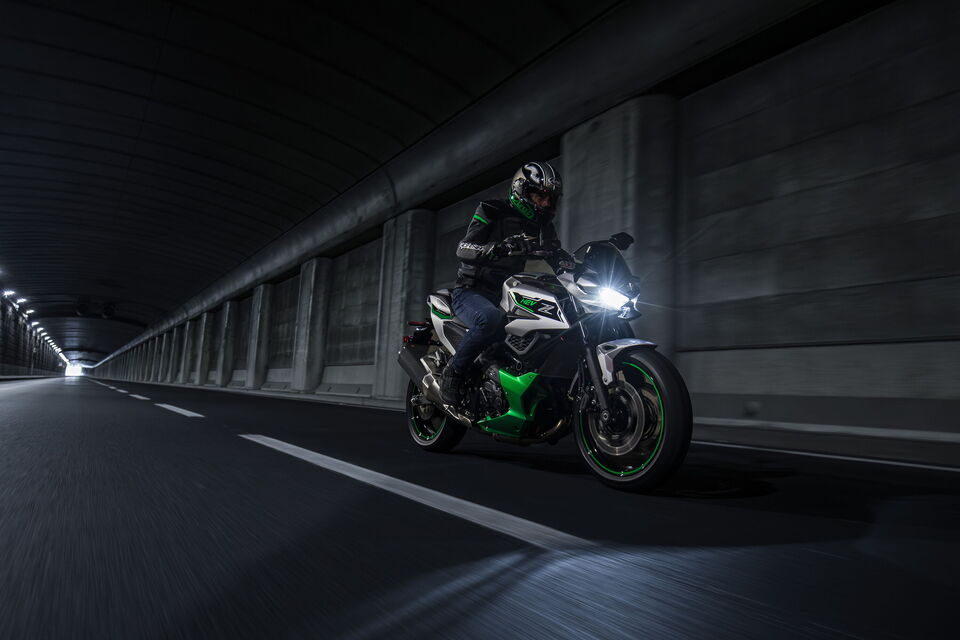
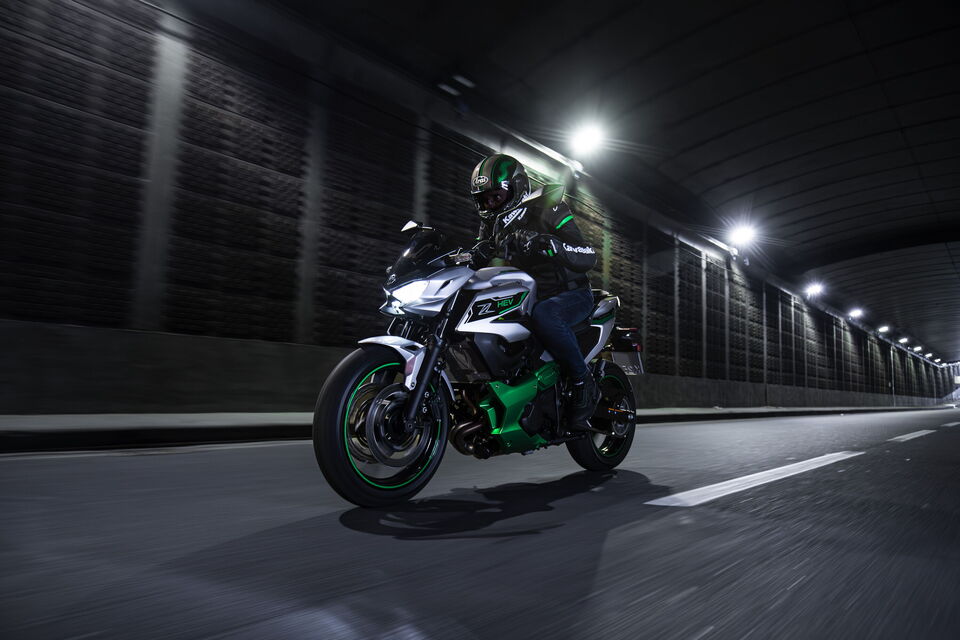
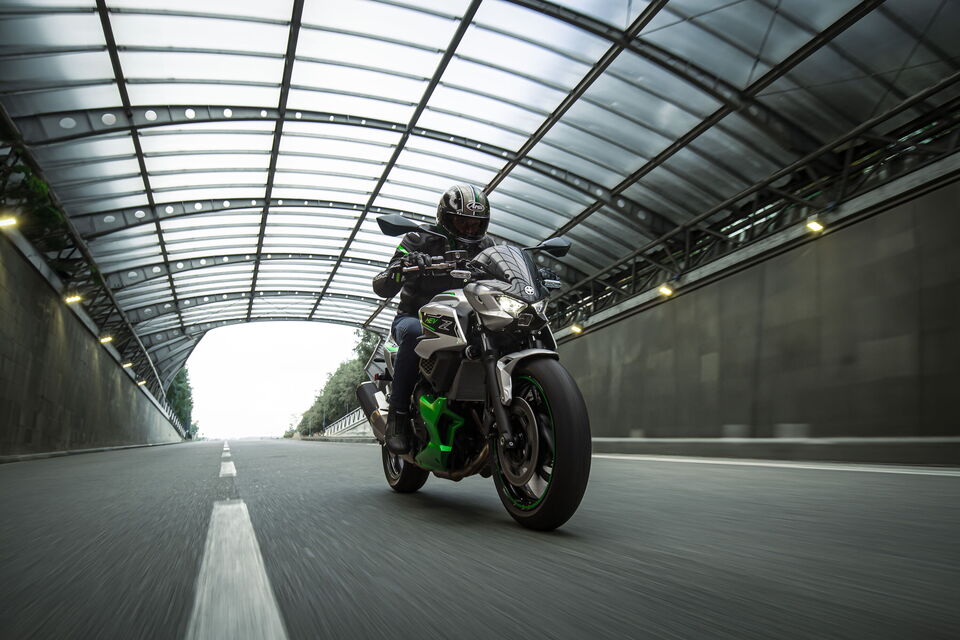
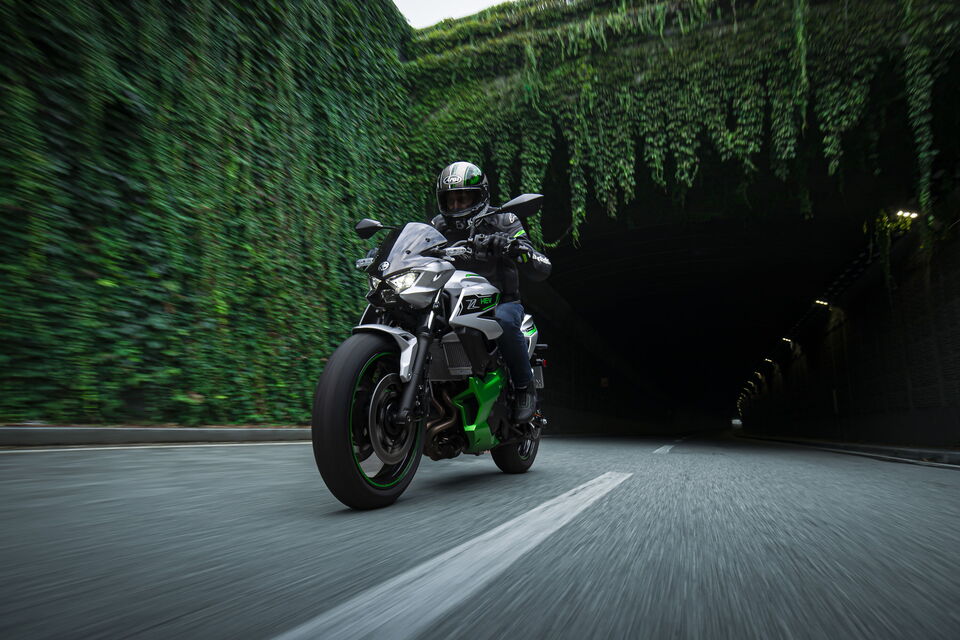
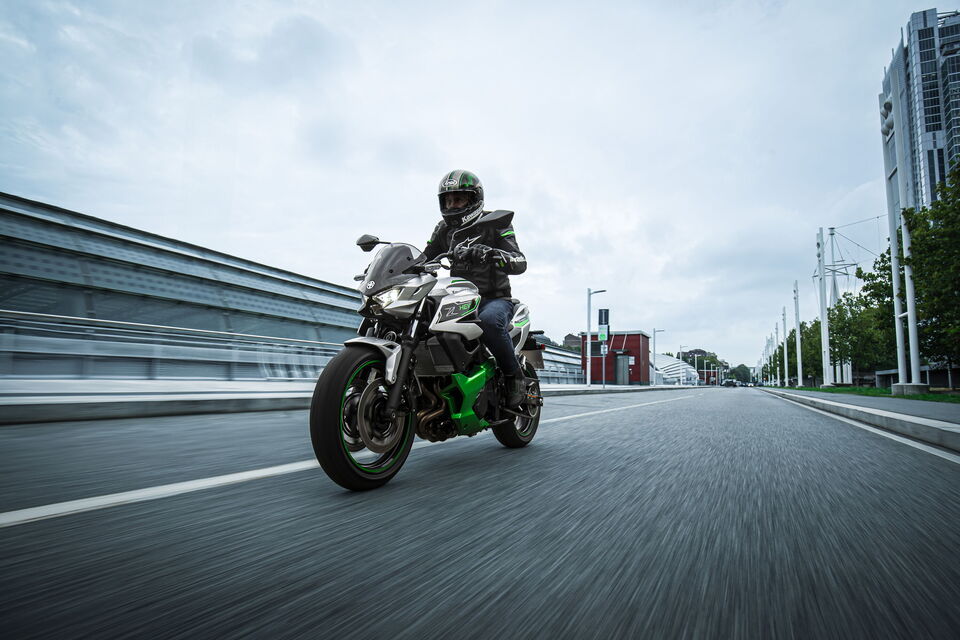
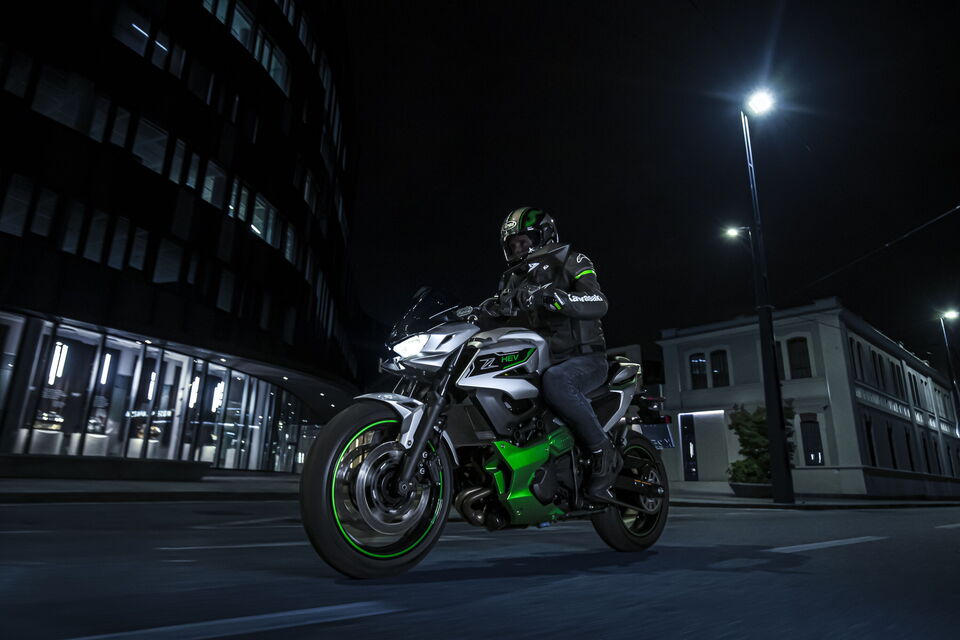
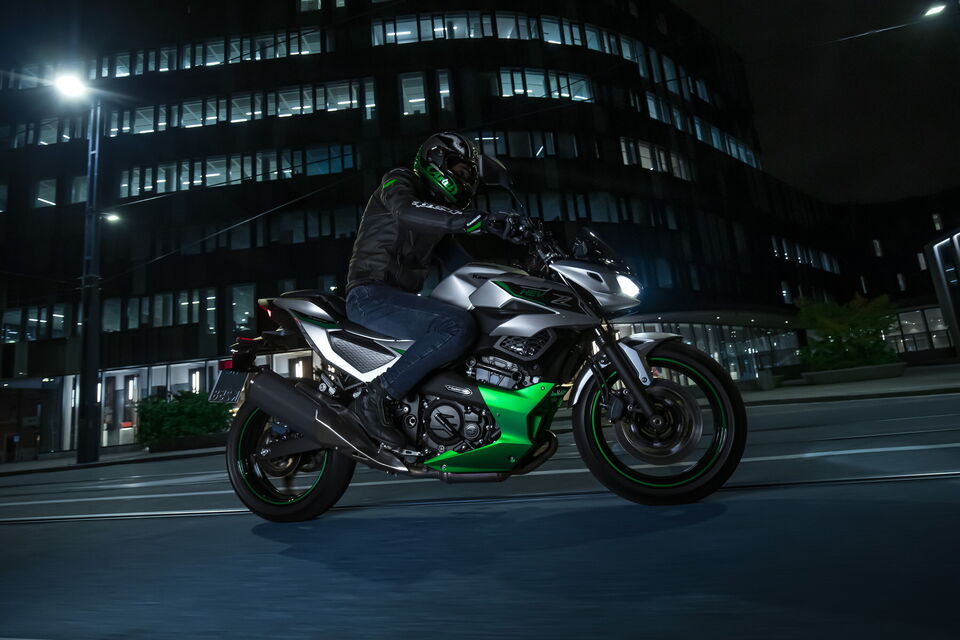
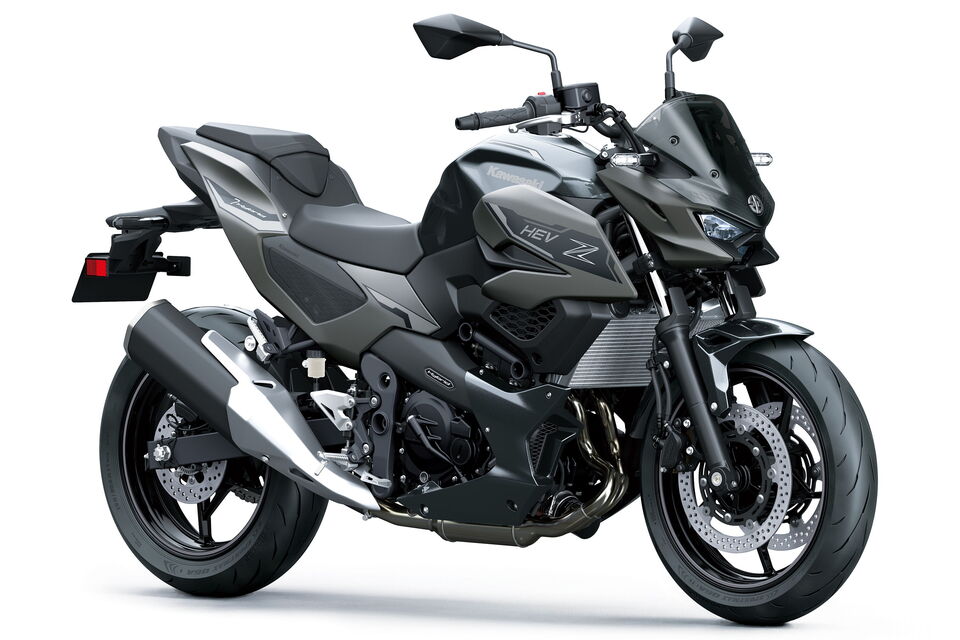
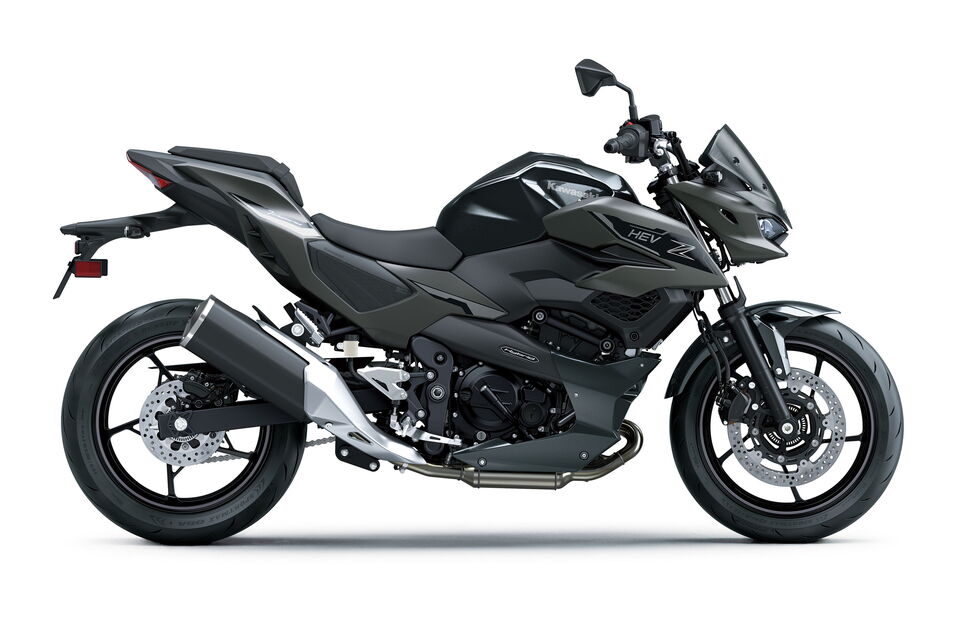
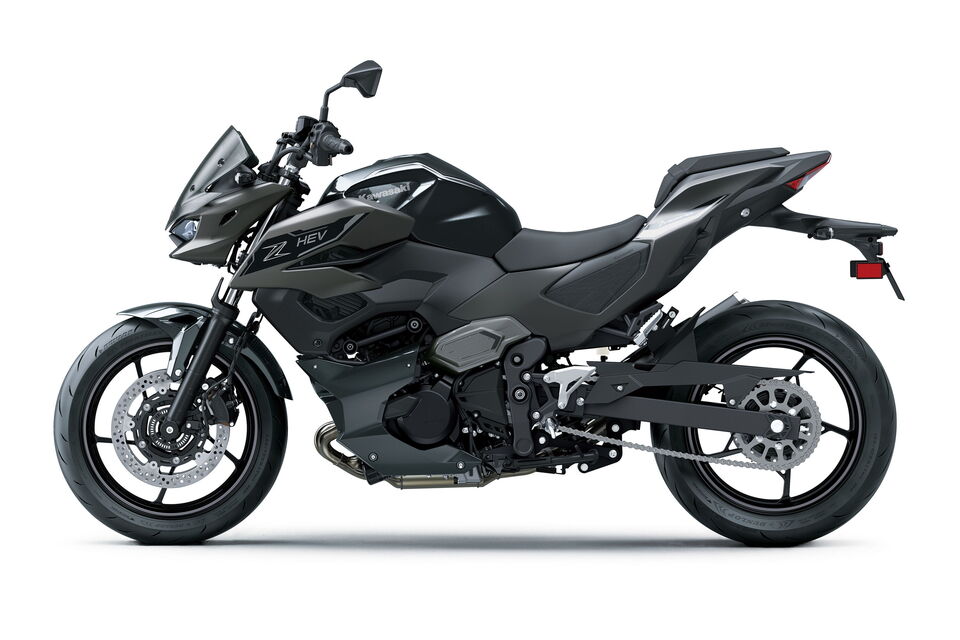
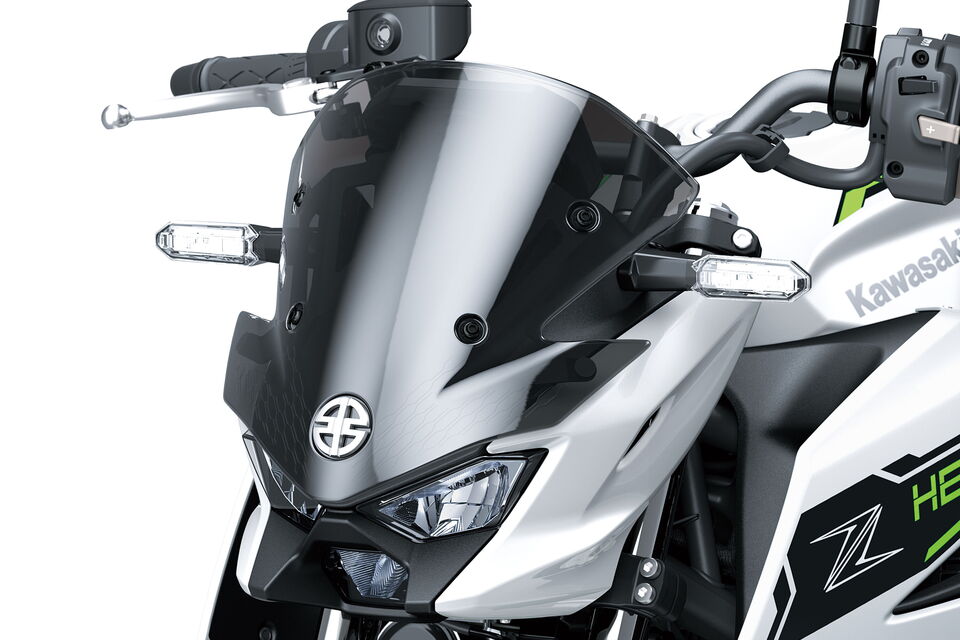
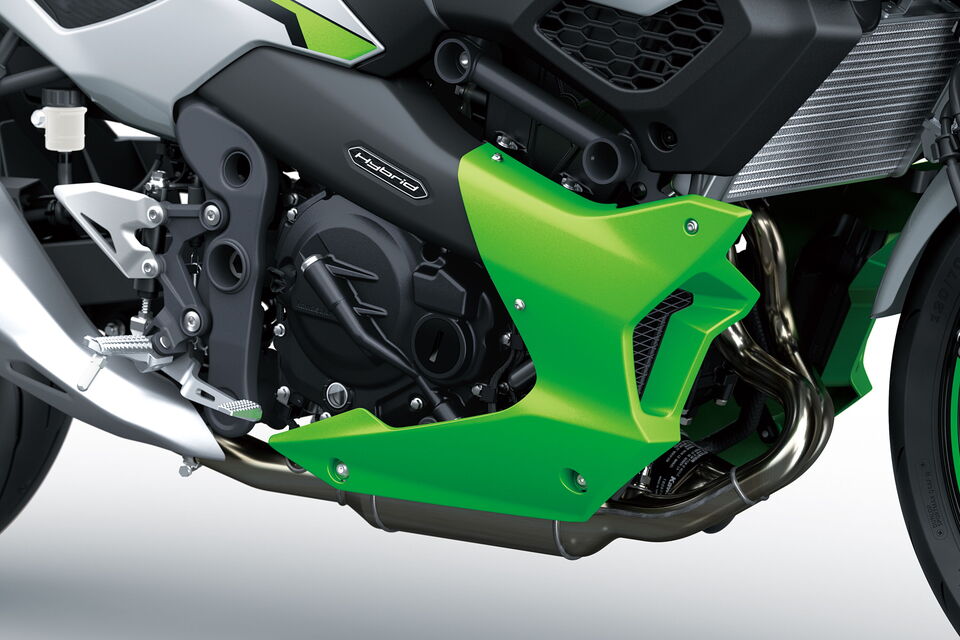
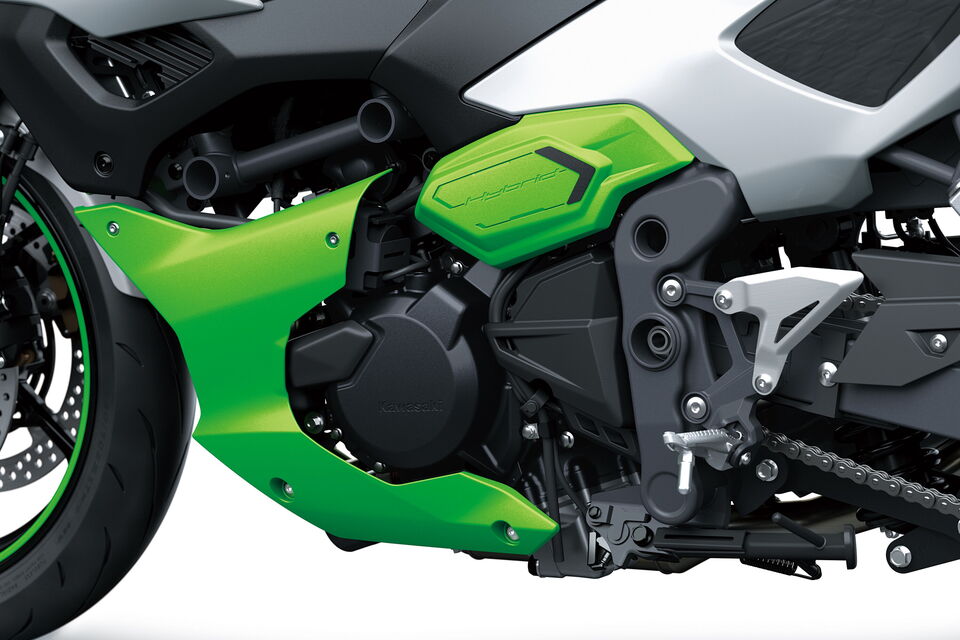
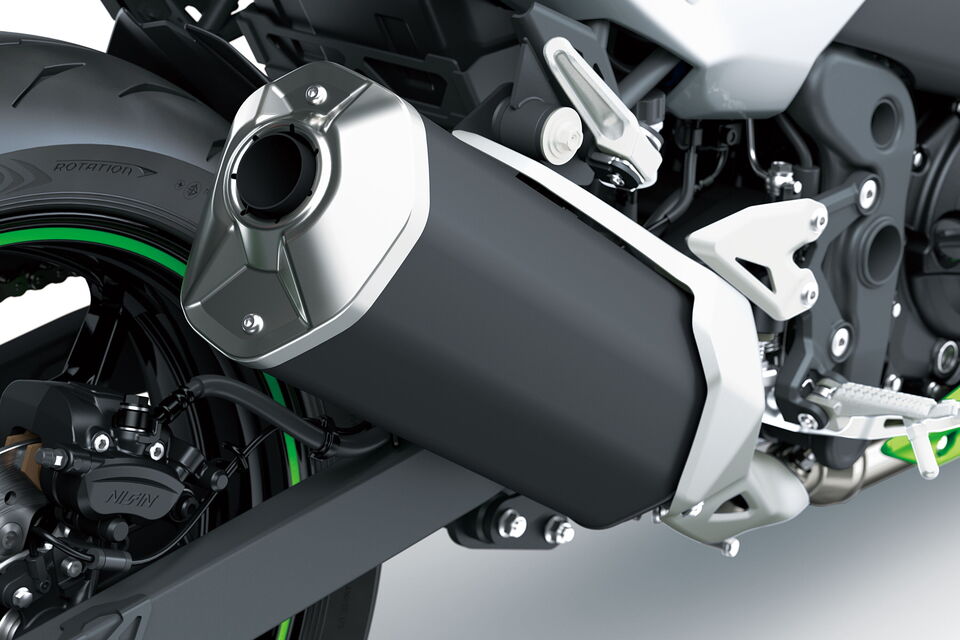
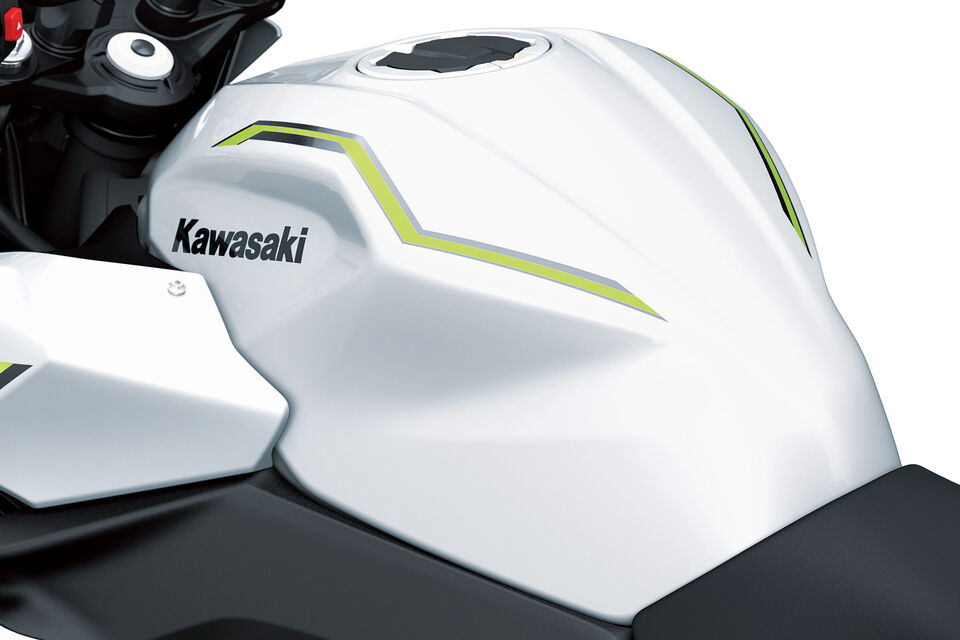
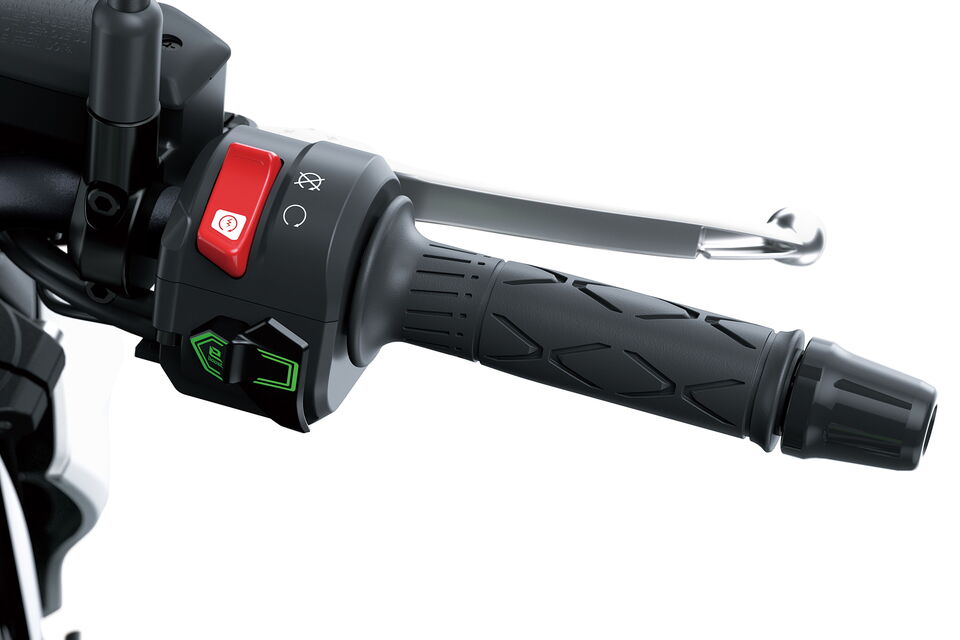
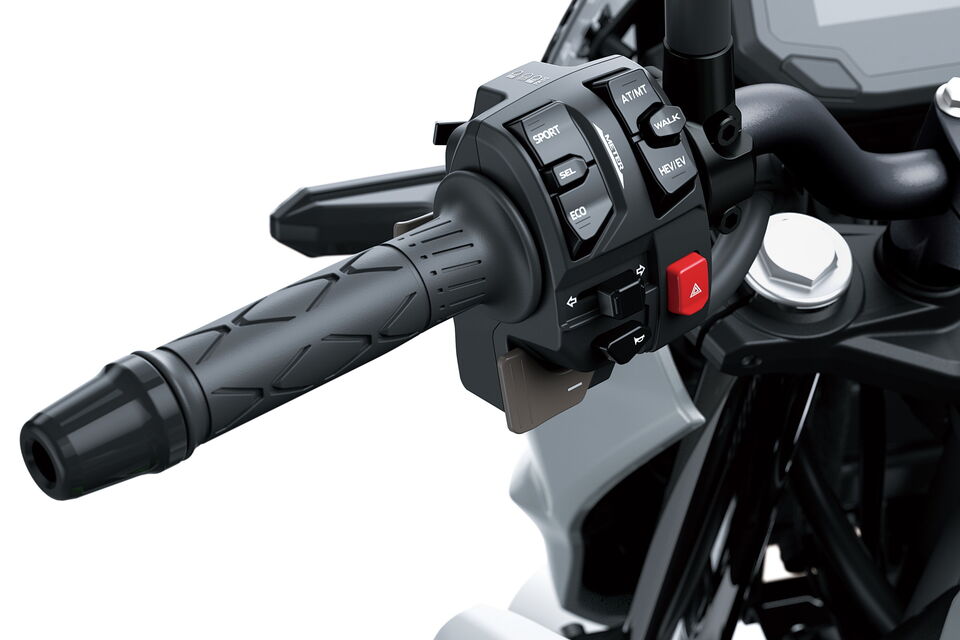
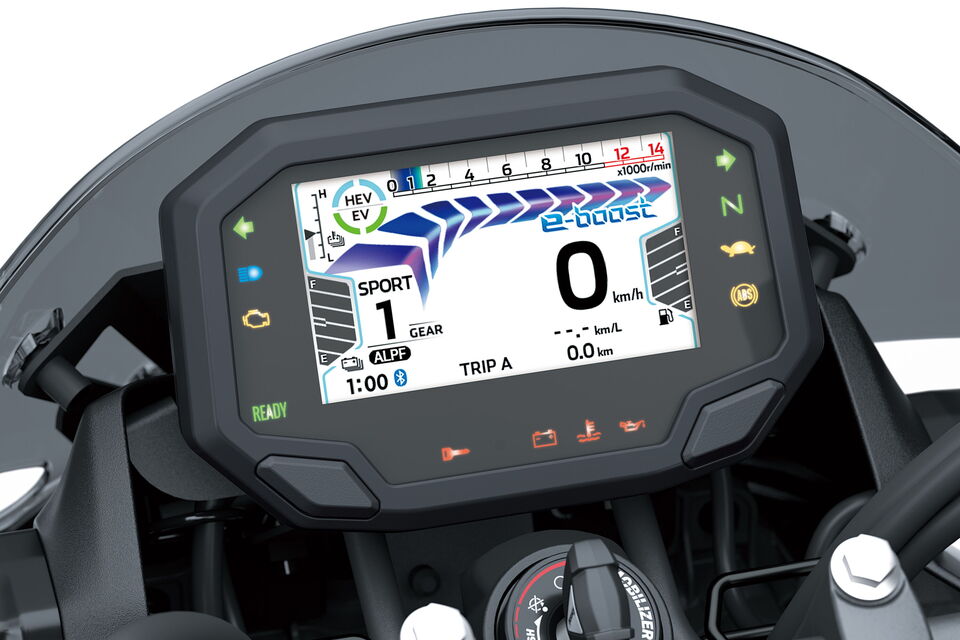
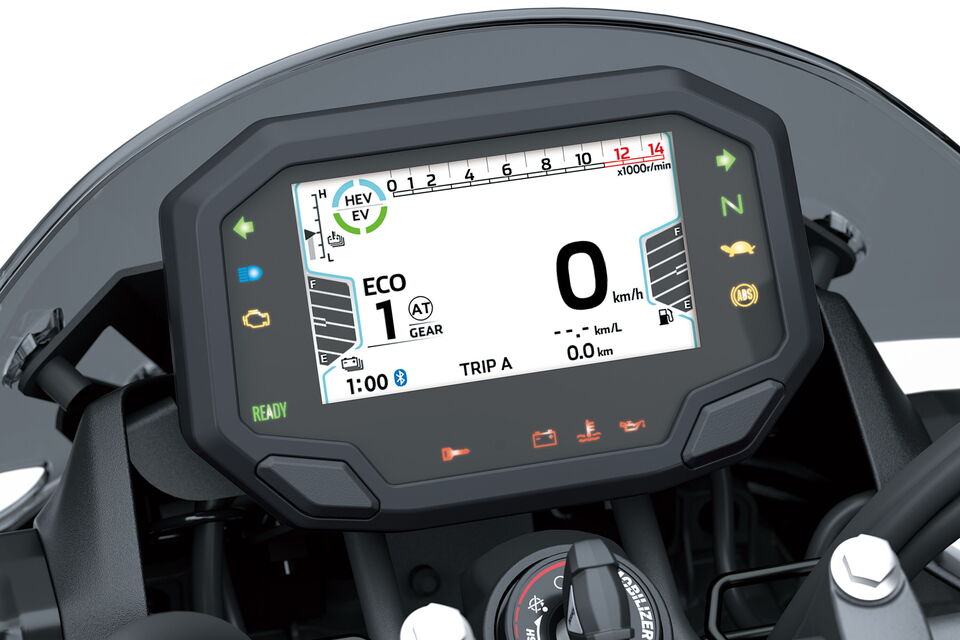
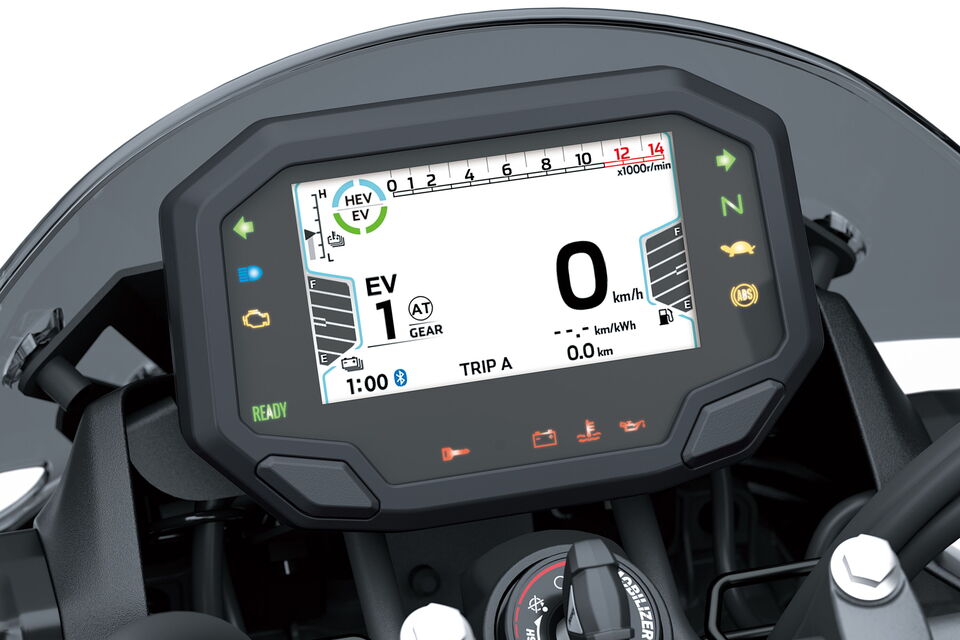
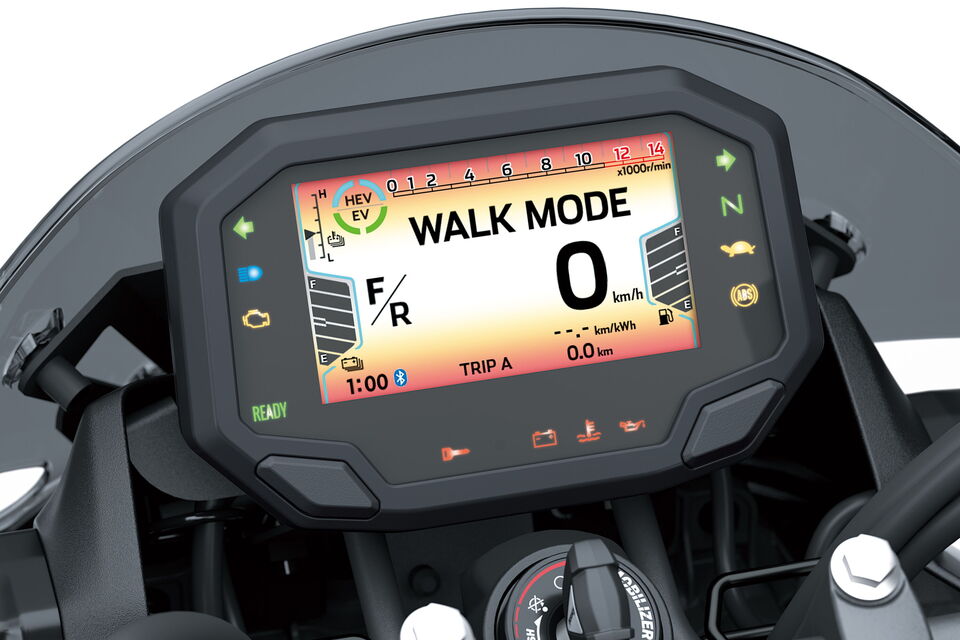
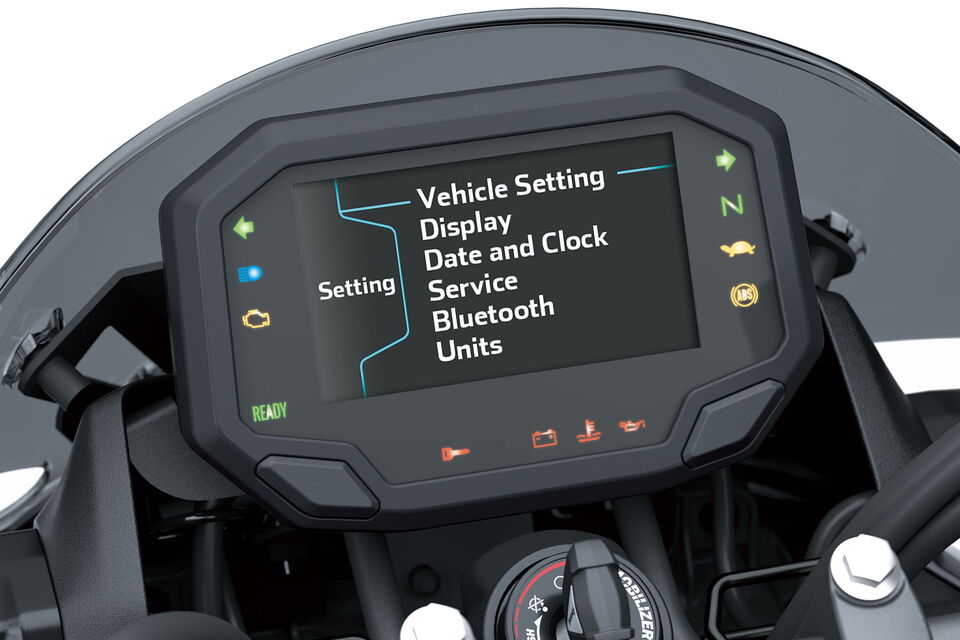
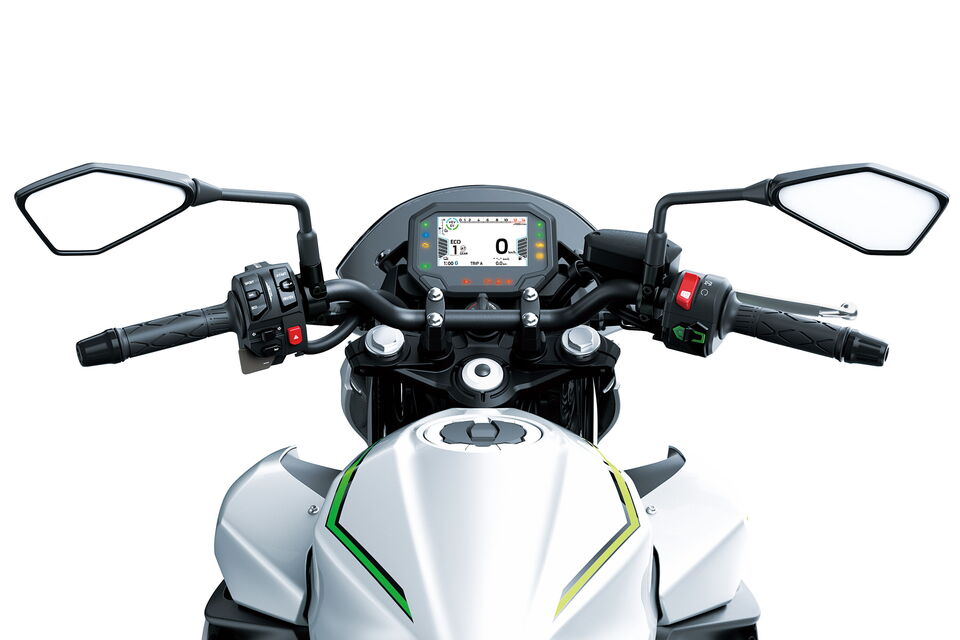
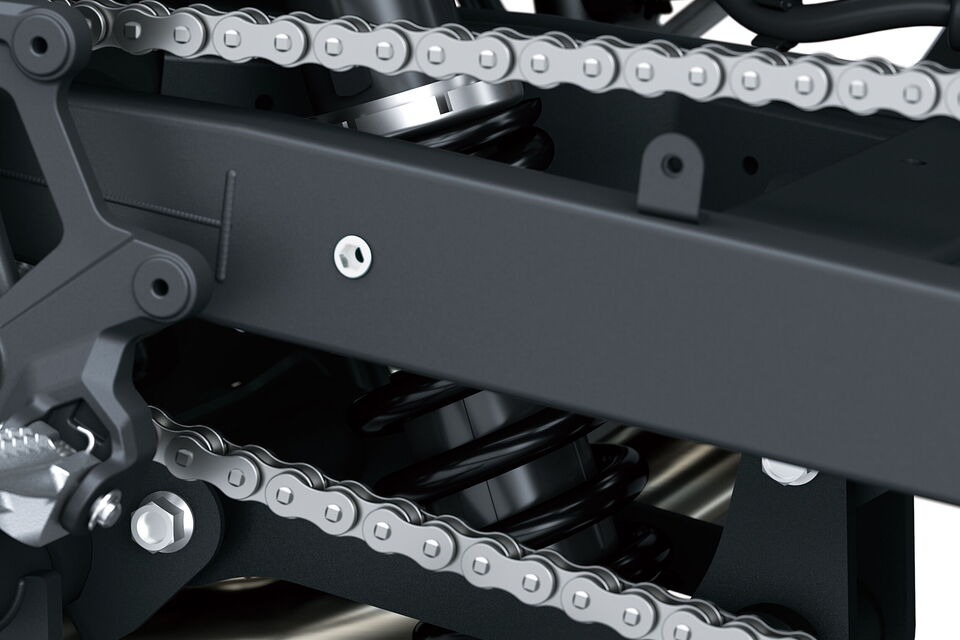
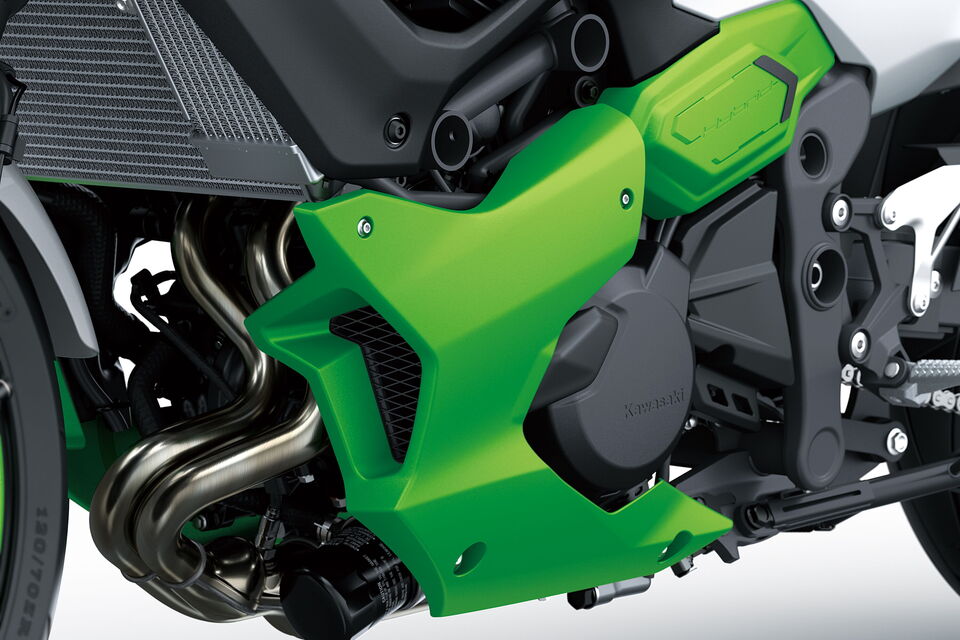
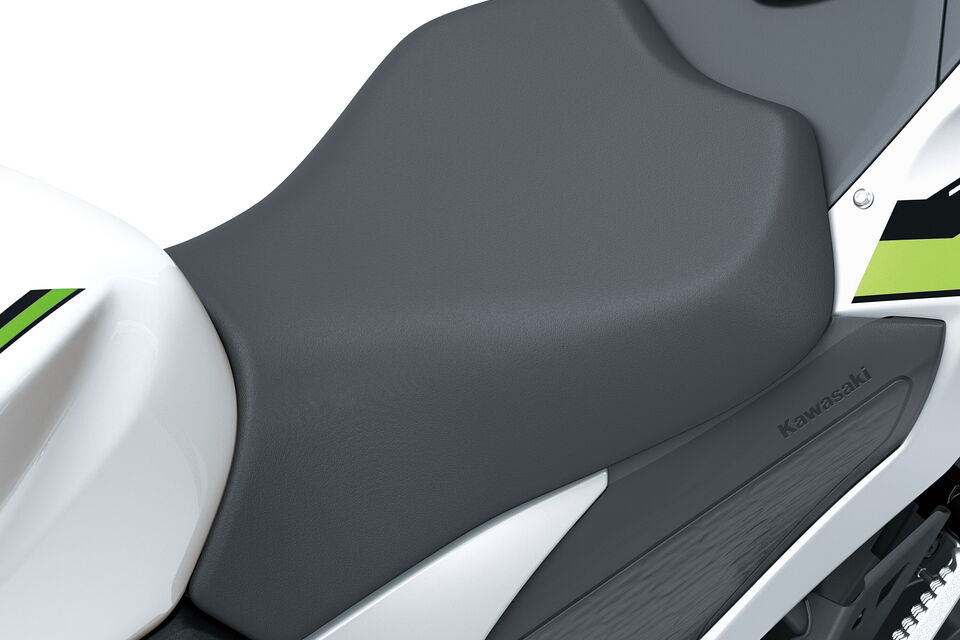
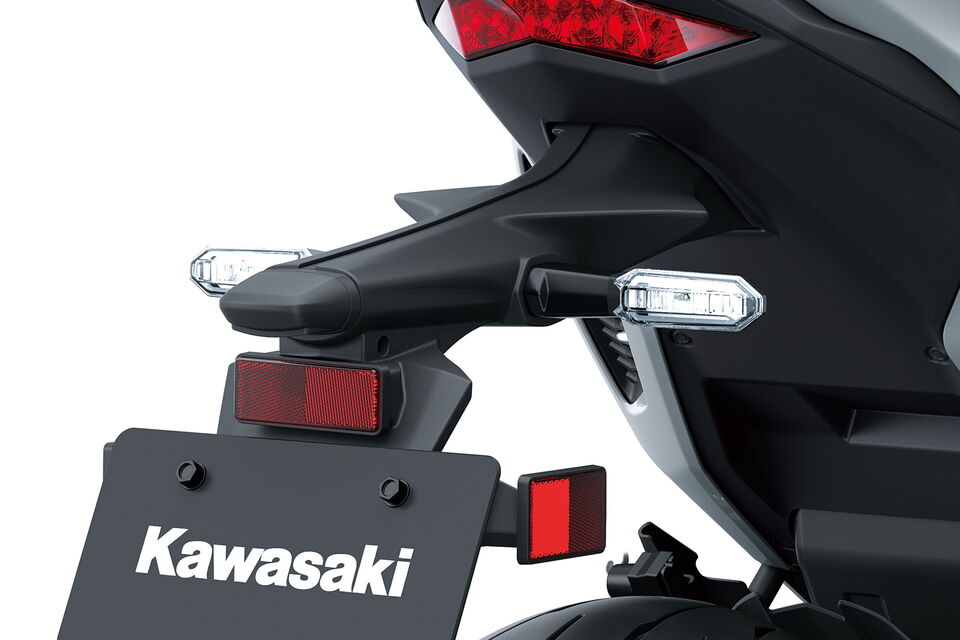
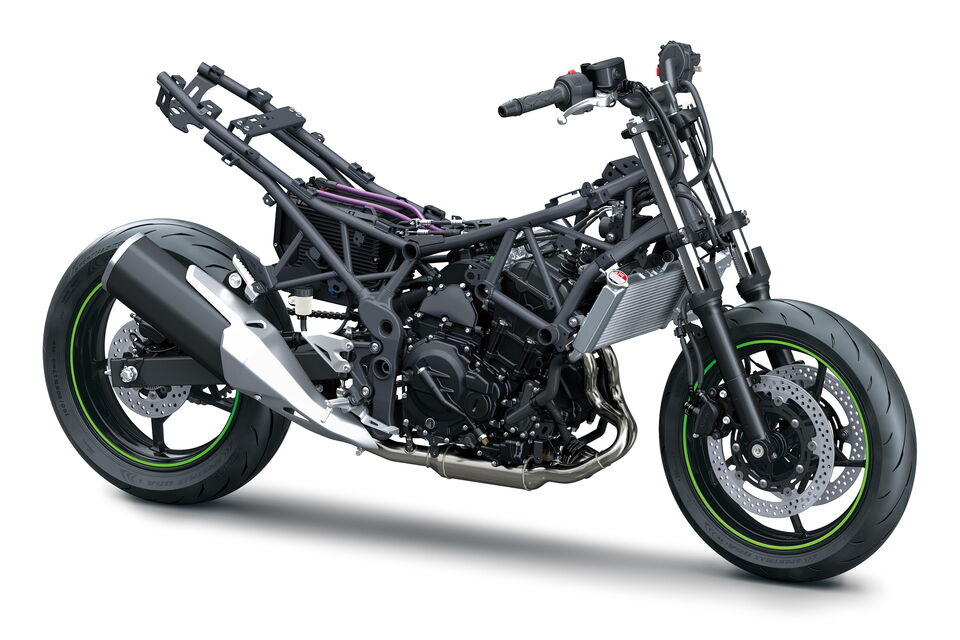
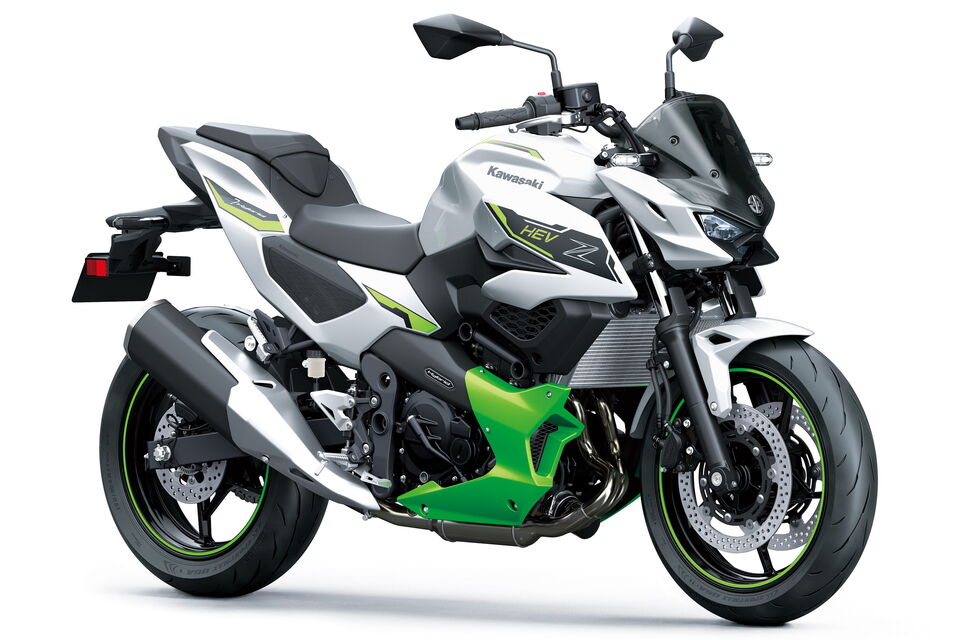
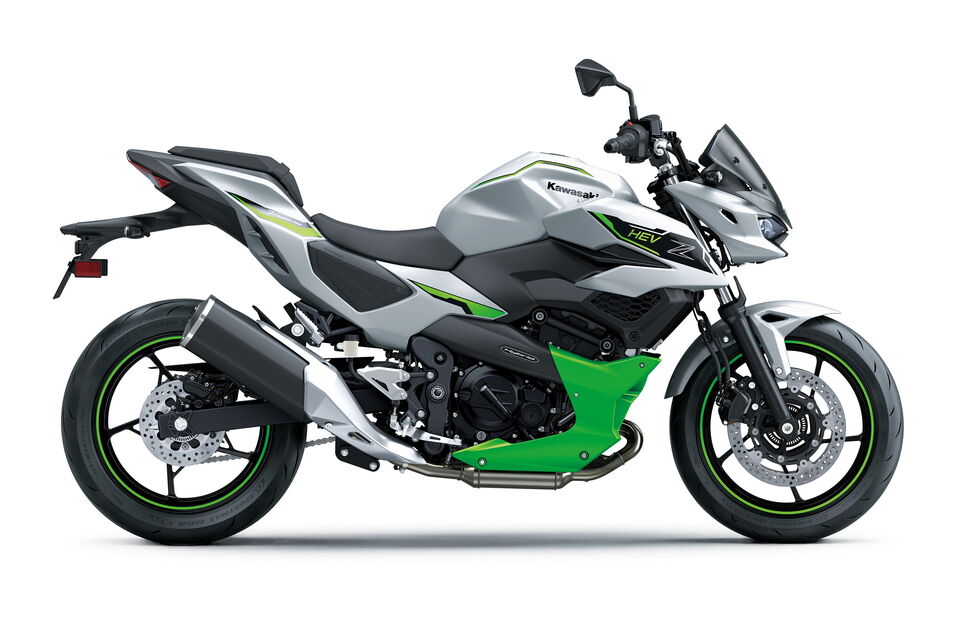
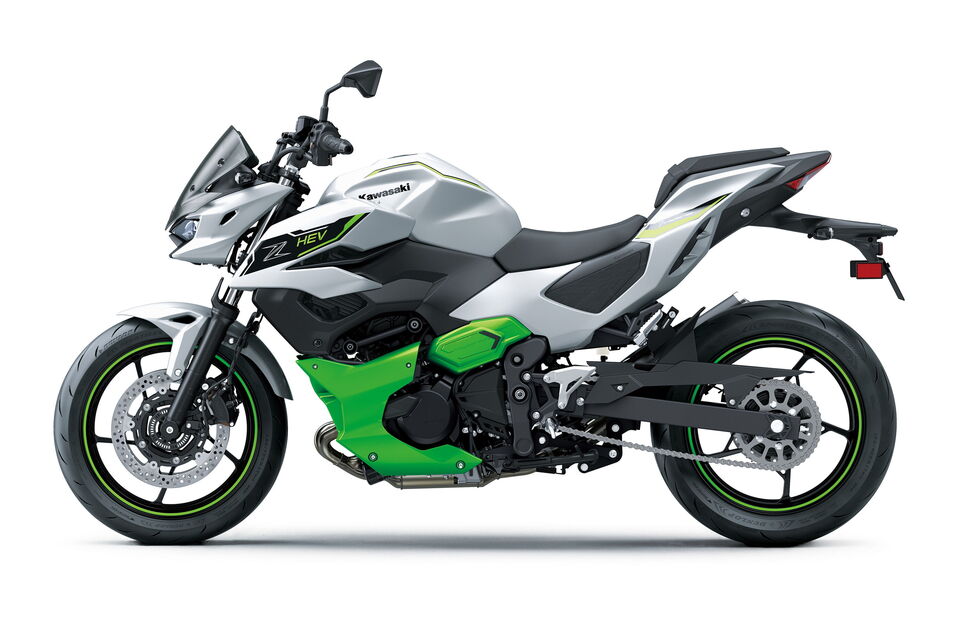
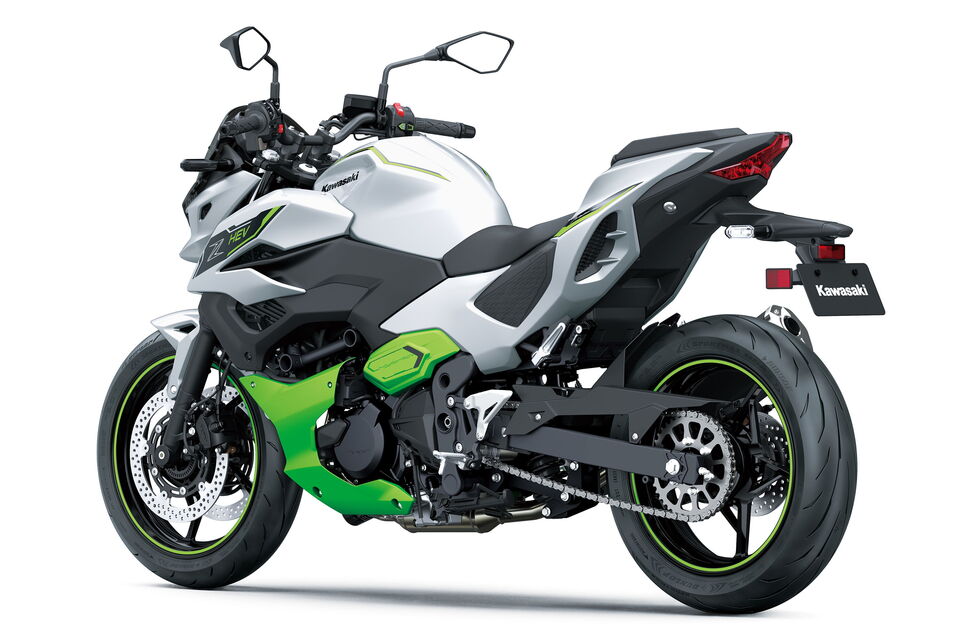
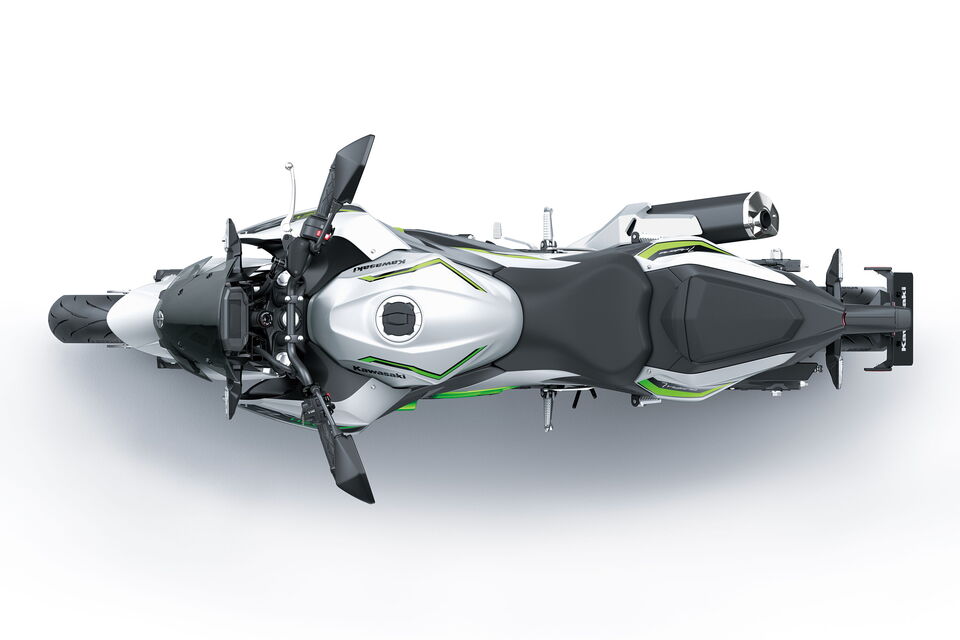
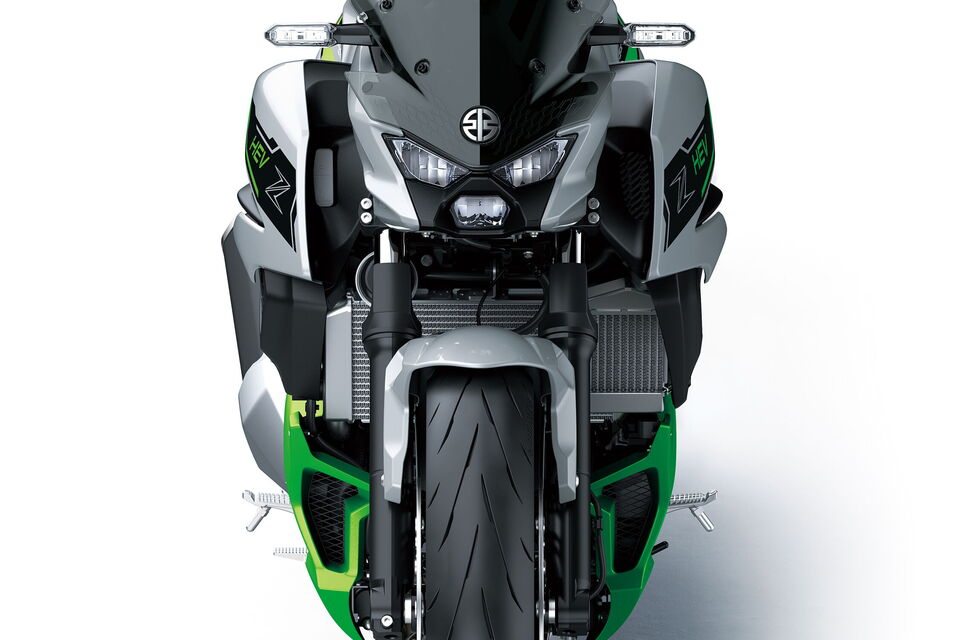
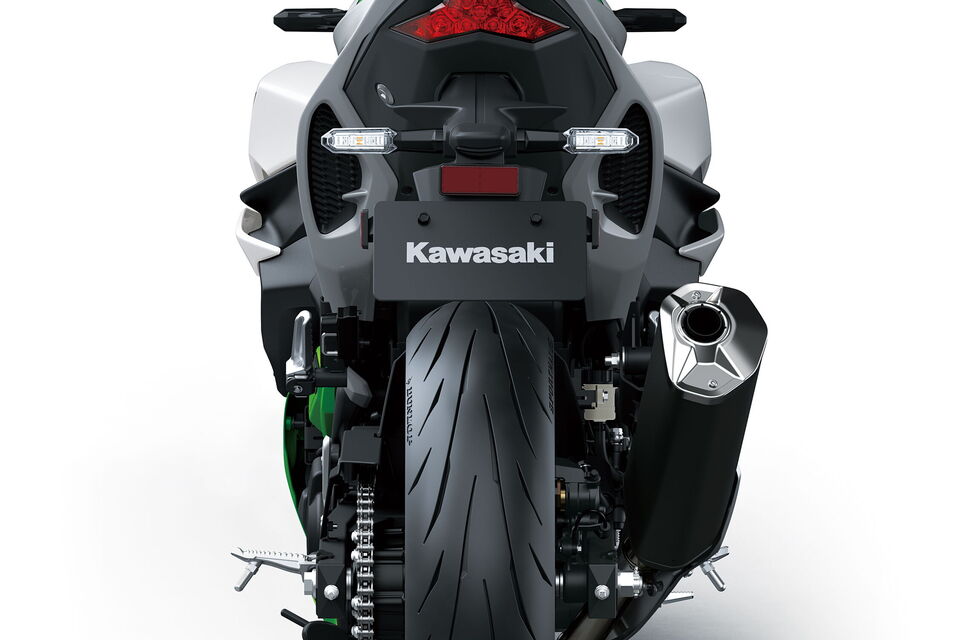
The Kawasaki Z 7 Hybrid and Ninja 7 Hybrid are technically identical. If you have read the Ninja 7 Hybrid review, you already know the engine—a 451 cc parallel twin producing 60 hp—the 9.0 kW, 48V electric motor, the automated six-speed transmission, the three riding modes, and the 2026 software update. All of it applies to the Z 7 as well. What does not apply is the full fairing. The Z 7 is a naked bike, with an exposed frame, higher handlebar, and upright riding position. That is the difference when deciding between the two.
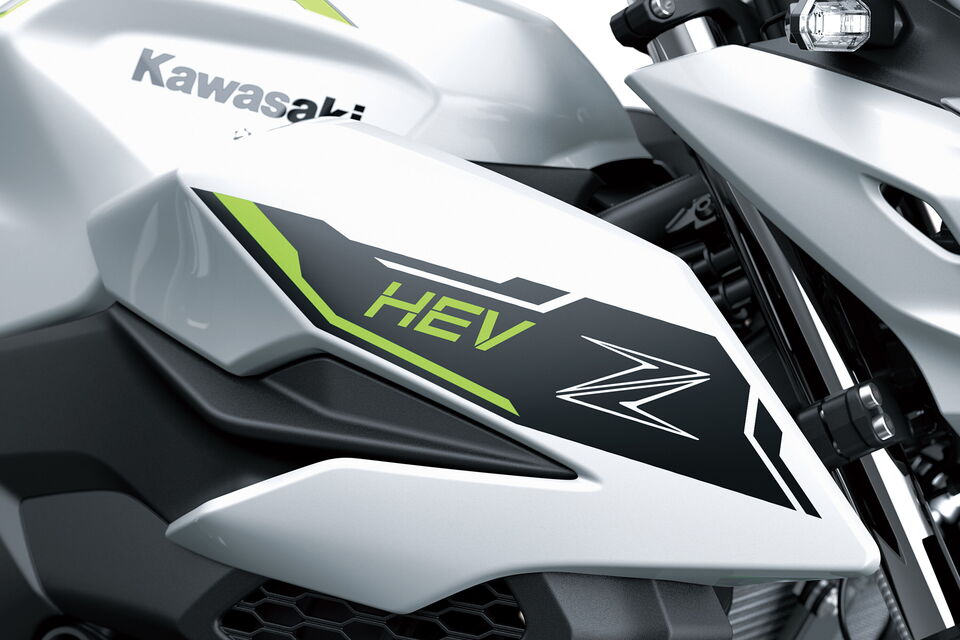
Motorradtest.de summed up the concept in one sentence: “If it weren’t for the Hybrid lettering, you wouldn’t even know it was a hybrid motorcycle.” That is the Z 7 design decision: to be a hybrid without looking conspicuously like one. The battery sits beneath the seat. The electric motor is mounted on the combustion engine under the side bodywork. From the outside, the Z 7 looks like a middleweight naked bike—while being one of the most technologically advanced naked bikes on the German market in 2026.
What Separates the Z 7 From the Ninja 7: Ergonomics, Not Technology
The differences between the Z 7 Hybrid and Ninja 7 Hybrid are purely ergonomic. The Ninja 7 has a full fairing, lower clip-on-style bars, and a sportier forward lean. The Z 7 has no fairing, a higher handlebar, and an upright naked-bike riding position. Motorradtest.de notes that the seat height of just under 80 centimeters works even for shorter riders, while taller riders still have enough room for a comfortable upright posture. That is the Z 7’s comfort advantage over the Ninja: the upright position is friendlier on long rides, with less load on the shoulders and wrists.
Weight is identical at 227 kg ready to ride. Seat height is identical at 795 mm. The fuel tank is identical at 14 liters. Wheelbase is identical at 1,535 mm. Choosing between the Z 7 and Ninja 7 comes down entirely to riding position: upright on the Z 7 or sportier and more forward-leaning on the Ninja 7.
Walk Mode With Reverse, E-Boost, Auto Launch: The Special Features
Both hybrid models offer features that are unusual in motorcycling. Walk Mode allows the motorcycle to move forward or backward electrically at the press of a button, at up to 3 km/h. In effect, it is a reverse gear—something very few motorcycles offer—and it is useful when parking, maneuvering in tight spaces, or backing into a garage. Automatic Launch Position Finder automatically selects first gear when the motorcycle comes to a stop, eliminating the possibility of forgetting to downshift while stationary.
E-Boost allows the rider to call up the full 69 hp system output for around five seconds in Sport-Hybrid mode. Kawasaki references “acceleration comparable to a 1,000 cc sportbike from a standing start.” That is marketing. What is factual is that the 451 cc hybrid system delivers 69 hp to accelerate a 227 kg motorcycle.
The 2026 Software Update: Identical to the Ninja 7 Hybrid
EV mode now works up to 60 km/h instead of the previous 25 km/h. Sport mode can now be used with automatic shifting. Hybrid calibration is more harmonious. The complete update is documented in the Ninja 7 Hybrid review, and the same changes apply to the Z 7. The update addresses the central everyday-use criticism that limited earlier versions. Owners of a first-generation 2024 Z 7 Hybrid should check the software-update status with an authorized Kawasaki dealer.
Recall Note: 2024 ECU Issue
Motorcycles.news documented two recalls affecting the Z 7 Hybrid and Ninja 7 Hybrid in 2024. The first, in September 2024, involved faulty ECU software that could accidentally select neutral during the shift from first to second gear, causing a loss of drive and creating an accident risk; approximately 1,150 motorcycles were affected. A second, separate defect prompted another recall in November 2024. Both recalls were U.S.-based and may have affected additional markets. The 2026 software update is an evolution of the system, not the recall remedy itself. Before buying, check the recall and update status of the individual motorcycle with the dealer.
EUR 8,995 Promotional Price: Z 7 and Ninja 7 Cost the Same
The promotional price is EUR 8,995 including destination, identical for the Z 7 Hybrid and Ninja 7 Hybrid. The regular Z 7 MSRP was approximately EUR 12,995 according to motorradtest.de, around EUR 4,000 above the promotional figure. The offer applies to demonstrators and manufacturer-registered motorcycles with no mileage. Buyers looking for a regular unregistered new motorcycle should ask the dealer for the current price. Warranty coverage is four years with unlimited mileage.
Z 7 vs. Ninja 7: Who Should Buy Which?
If you want the hybrid technology with a sportier riding position and full fairing, choose the Ninja 7 Hybrid. If you want the same hybrid technology with an upright naked-bike posture and no fairing, choose the Z 7 Hybrid. For daily commuters and riders who spend a lot of time in the city, want to use EV mode up to 60 km/h, prefer a comfortable upright position, and appreciate reverse gear when parking, the Z 7 Hybrid is the more practical of the two.
Verdict
The 2026 Kawasaki Z 7 Hybrid is the strong-hybrid motorcycle for riders who want to combine naked-bike character, an upright riding position, and hybrid technology. It is technically identical to the Ninja 7 Hybrid but ergonomically more relaxed. Peak system output is 69 hp, EV mode works up to 60 km/h with the 2026 update, Walk Mode includes reverse, and the warranty is four years. Promotional price: EUR 8,995 including destination. Check recall status with the dealer.
Quick Check
+ Naked-bike ergonomics: higher handlebar and upright riding position—more relaxed than the Ninja 7 Hybrid on long rides.
+ Strong-hybrid powertrain: EV mode up to 60 km/h with the 2026 update, 69 hp peak system output, 4.4 L/100 km.
+ Walk Mode with reverse, max. 3 km/h: one of the few motorcycles with a reverse function.
+ Automatic Launch Position Finder: automatically selects first gear when the motorcycle stops.
+ E-Boost: five seconds of full 69 hp system output at the press of a button in Sport mode.
+ 2026 update: EV mode up to 60 km/h; Sport mode with automatic shifting; more harmonious calibration.
+ Understated design: without the Hybrid lettering, the hybrid technology is visually unobtrusive.
+ Promotional price EUR 8,995 including destination.
+ 4-year warranty with unlimited mileage.
– 227 kg ready to ride: heavy for a platform with a 60 hp combustion engine.
– EV range only around 10–12 km: not a true electric motorcycle for longer urban trips.
– No external charging: the battery is charged only by the combustion engine and regenerative braking.
– No clutch lever and no foot shift lever: learning curve for riders used to conventional motorcycles.
– Recall note: two ECU-related recalls in 2024, U.S.-based; check recall and software-update status with the dealer.
– Promotional price applies to demonstrators/manufacturer-registered motorcycles; regular new-bike MSRP is around EUR 12,995.
Technical Specifications: Kawasaki Z 7 Hybrid (2026)
Make / Model: Kawasaki Z 7 Hybrid (2026; Strong Hybrid; 451 cc parallel twin + 48V electric motor; Naked Bike; A2-compatible at 35 kW); manufacturer: Kawasaki Motors Europe N.V., Almere, Netherlands
Powertrain, Identical to Ninja 7: 451 cc liquid-cooled parallel twin, 60 hp, 43.6 Nm. Electric motor 9.0 kW / 12.2 hp peak, 48V. Peak system output 69 hp. 1.4 kWh battery, 13 kg, no external charging. Automated six-speed transmission without clutch lever.
Riding Modes: EV, pure electric up to 60 km/h, approx. 10–12 km. Eco-Hybrid, automatic, approx. 4.4 L/100 km. Sport-Hybrid, 69 hp, paddle shifting; automatic also available from the 2026 update.
Z 7 vs. Ninja 7 Hybrid: Identical powertrain, technology, and price. Z 7: no fairing, higher handlebar, upright naked-bike posture. Ninja 7: full fairing, lower bars, sportier forward lean.
Special Features: Walk Mode, forward + reverse electrically at max. 3 km/h. Automatic Launch Position Finder automatically selects first gear at a stop. E-Boost provides five seconds of full 69 hp system output in Sport mode. Regenerative braking during deceleration.
Suspension: 41 mm telescopic fork, non-adjustable; Uni-Trak rear shock with linkage and adjustable spring preload; ABS; cornering ABS
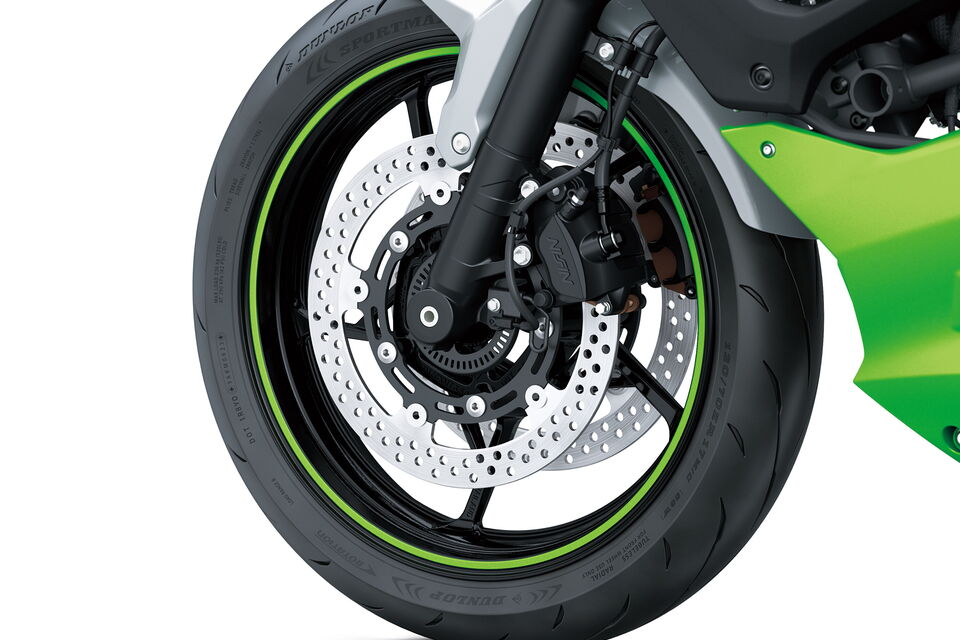
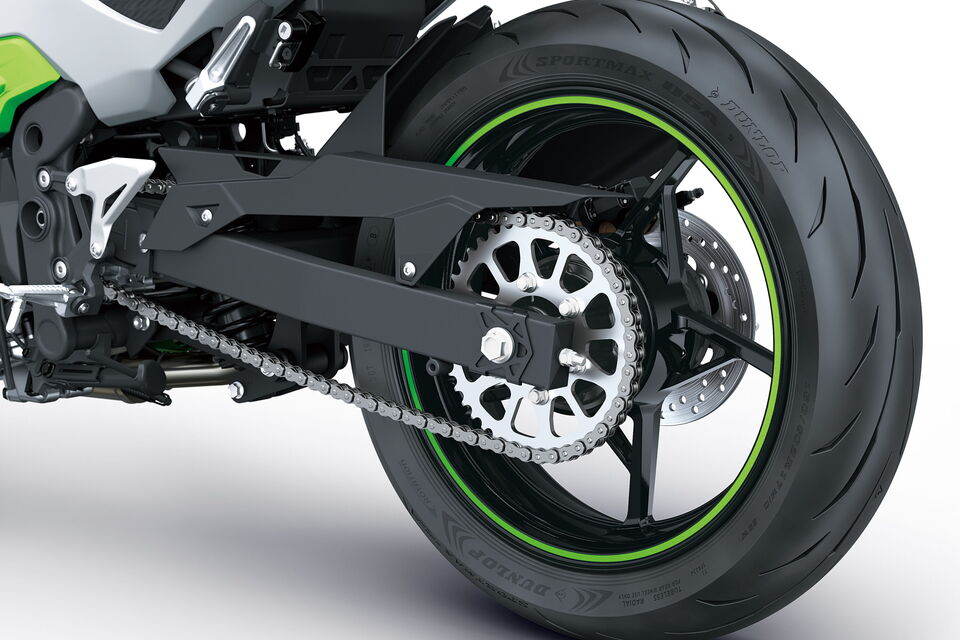
Wheels / Tires: 17-inch wheels; 120/70-17 front; 160/60-17 rear
Weight / Seat Height: 227 kg ready to ride, including 13 kg battery; 795 mm seat height; 1,535 mm wheelbase
Fuel Tank / Consumption: 14 liters; approx. 4.4 L/100 km in Eco-Hybrid; approx. 300 km range
Recall Note: Two recalls in 2024: September 2024 ECU issue during 1st-to-2nd shift could select neutral, approx. 1,150 motorcycles; November 2024 separate defect. U.S.-based and potentially relevant to other markets. Check recall and update status with Kawasaki dealer.
Stationary Noise: Not published; Tyrol limit 95 dB(A); EV mode produces no combustion-engine noise
Warranty: 4 years, unlimited mileage
Price in Germany: Promotional price EUR 8,995 including destination; applies to demonstrators/manufacturer-registered motorcycles. Regular new-bike MSRP approx. EUR 12,995