Review Kawasaki Z1100 SE (2026)

The Lurking Predator Is Back
Inline-four, 1,099 cc, 136 hp at 9,000 rpm, 113 Nm at 7,600 rpm. SE package: Brembo radial calipers, Brembo discs, steel-braided lines, Öhlins S46 rear shock, Dunlop Sportmax Q5A tires. Fully adjustable 41 mm Showa SFF-BP fork with 120 mm of travel. Six-axis IMU, cornering ABS, traction control, four riding modes, KQS quickshifter, cruise control, 5-inch TFT, navigation. 221 kg, 815 mm seat height. Tyrol-compliant. EUR 14,270.
As of: April 17, 2026 | Model: Kawasaki Z1100 SE ABS (2026; Supernaked; Category A license) | Manufacturer: Kawasaki Heavy Industries, Akashi, Japan | Price in Germany: EUR 14,270; standard Z1100 EUR 12,470 | Stationary noise: Tyrol-compliant | Warranty: 4 years, Kawasaki standard
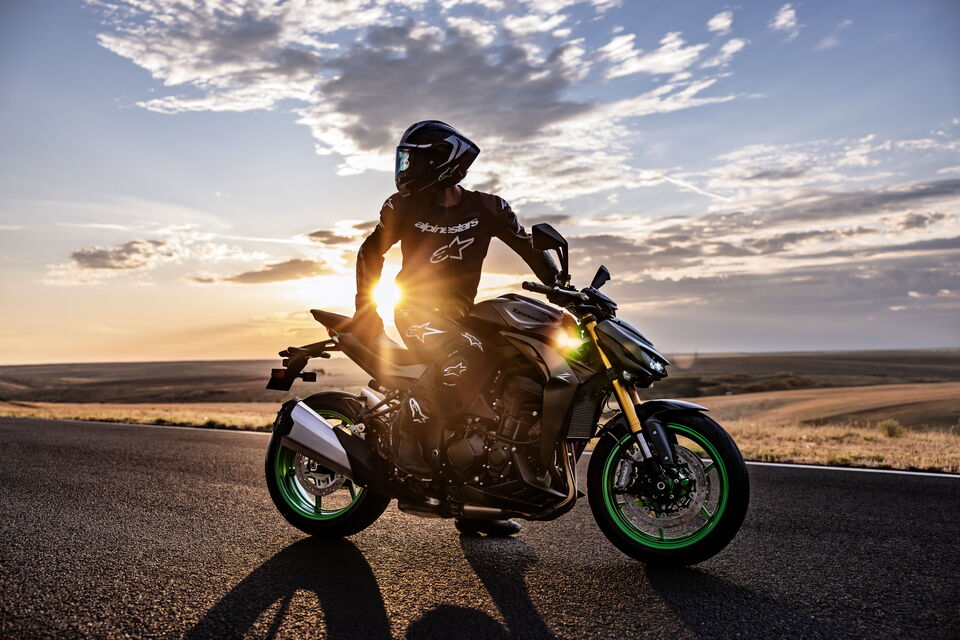
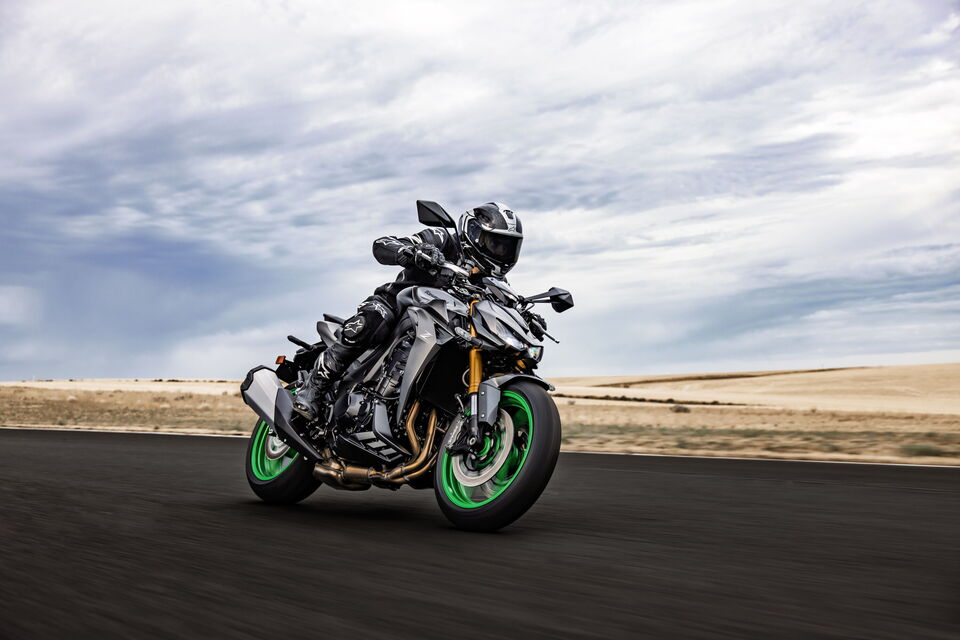
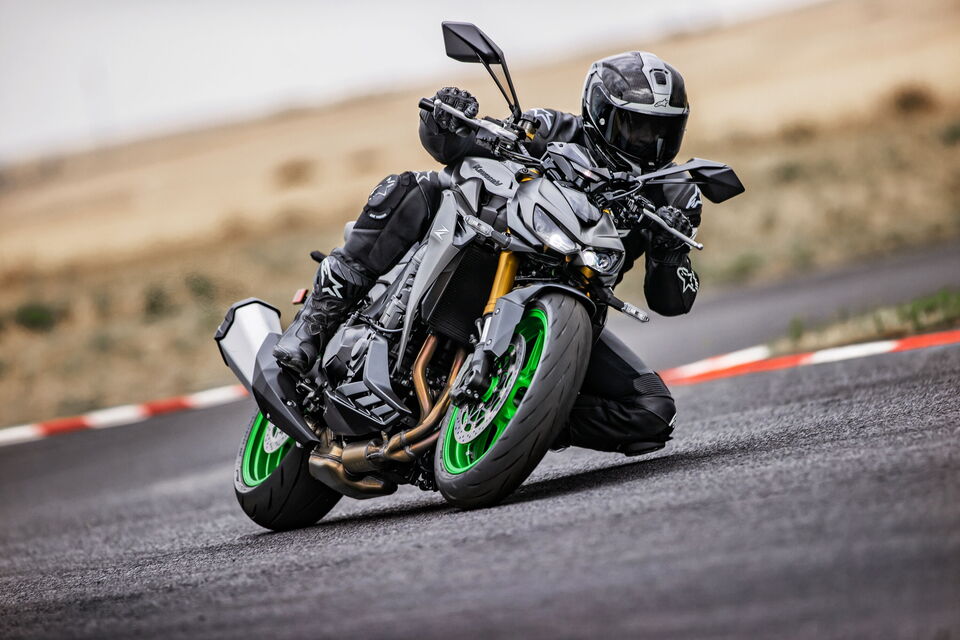
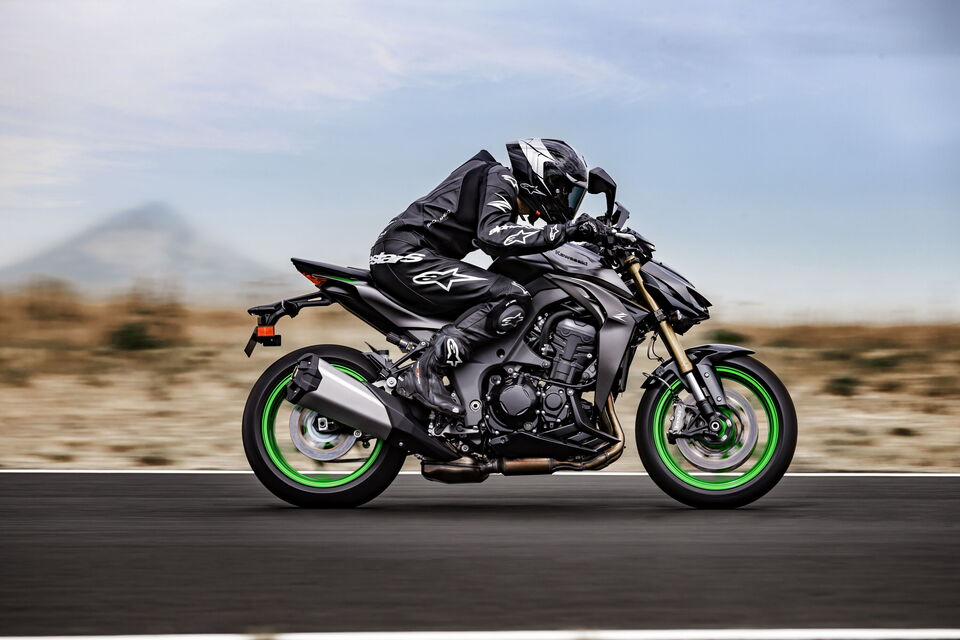
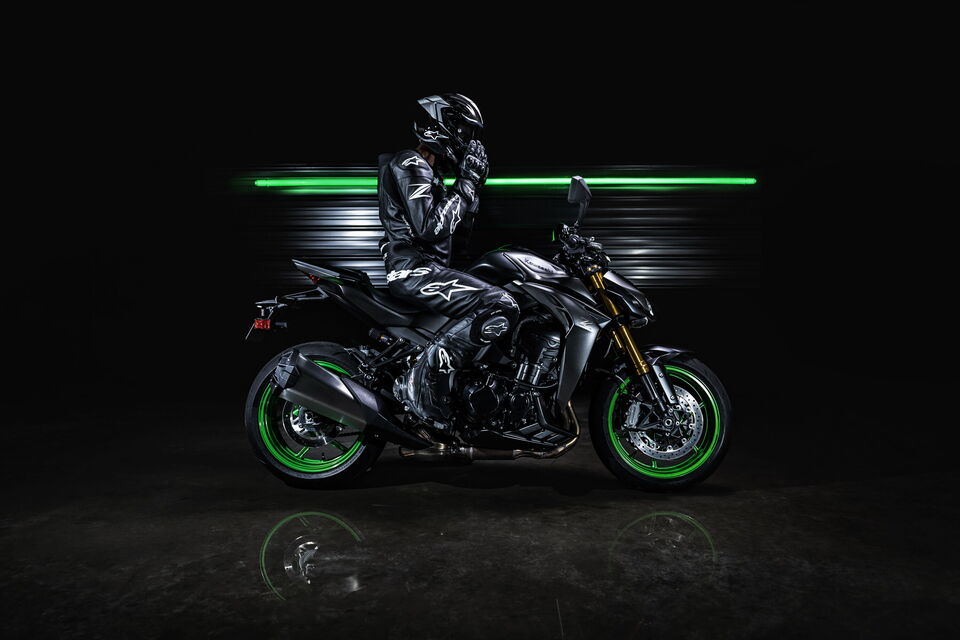
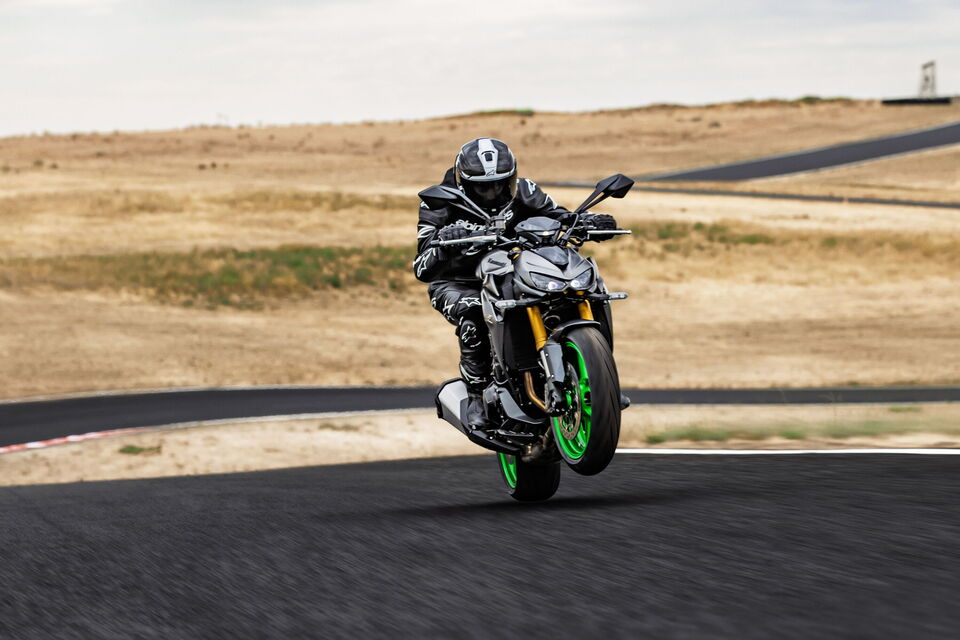
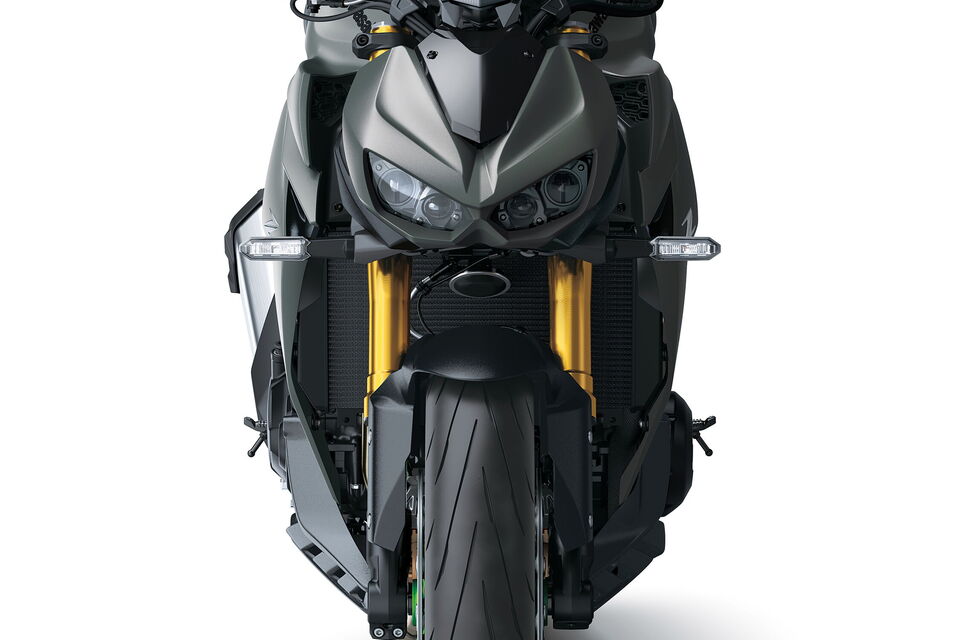
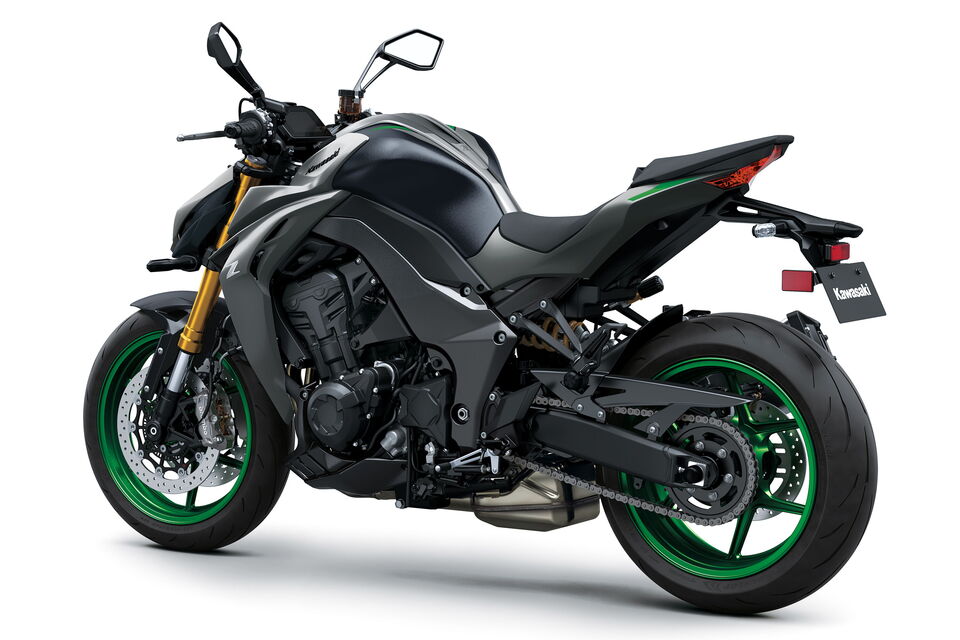
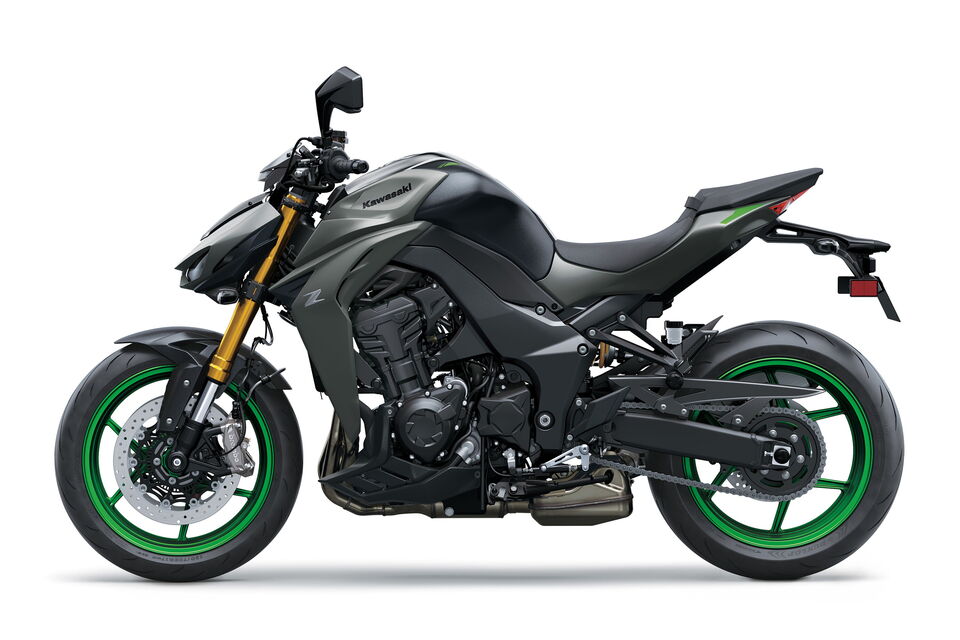
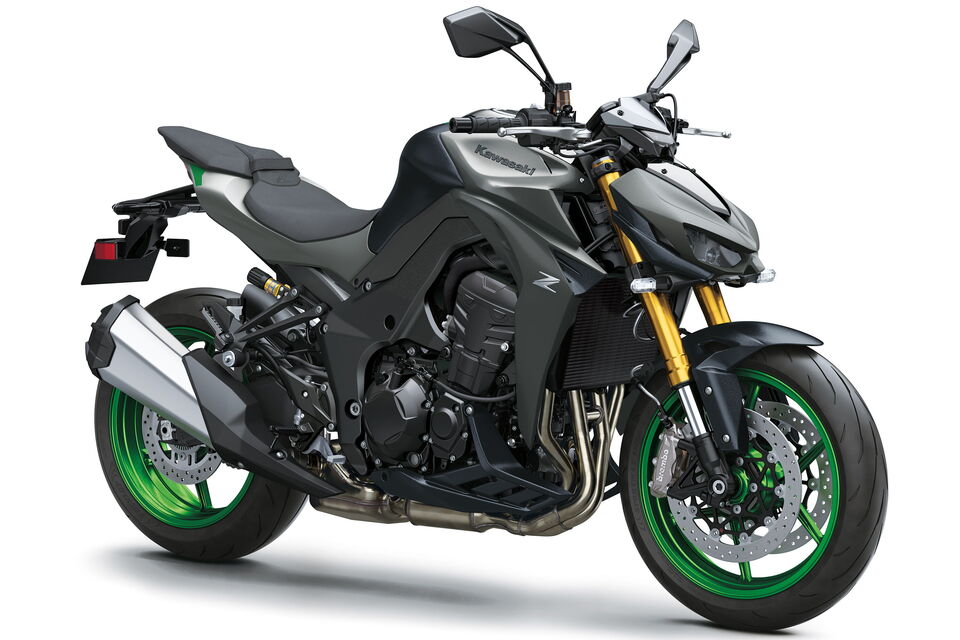
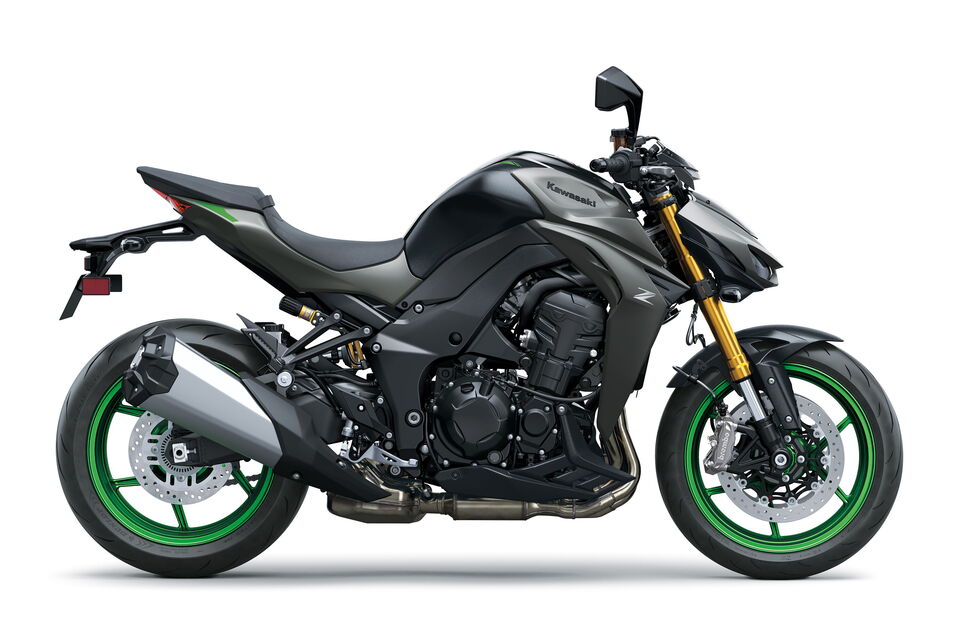
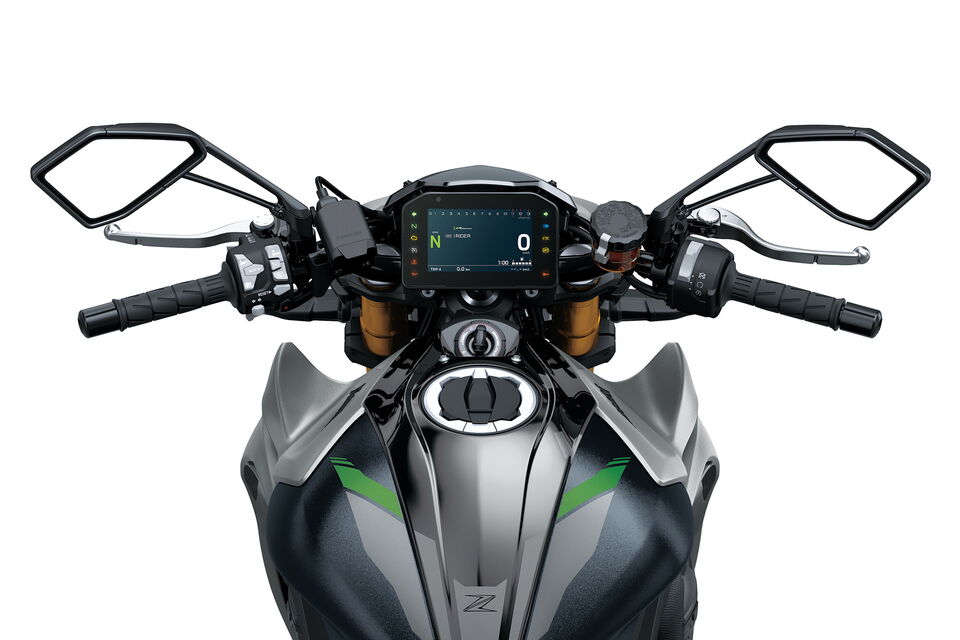
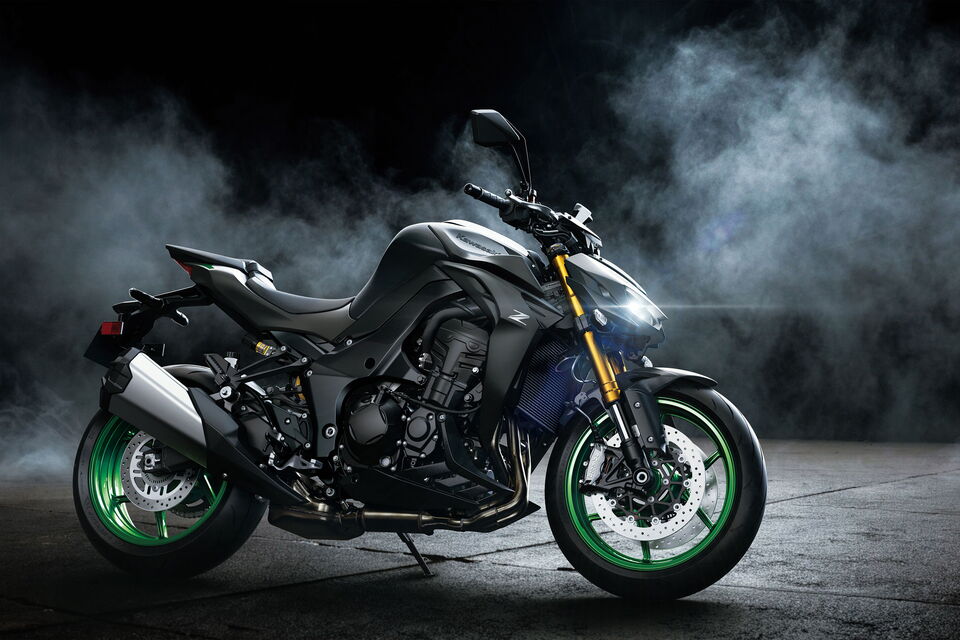
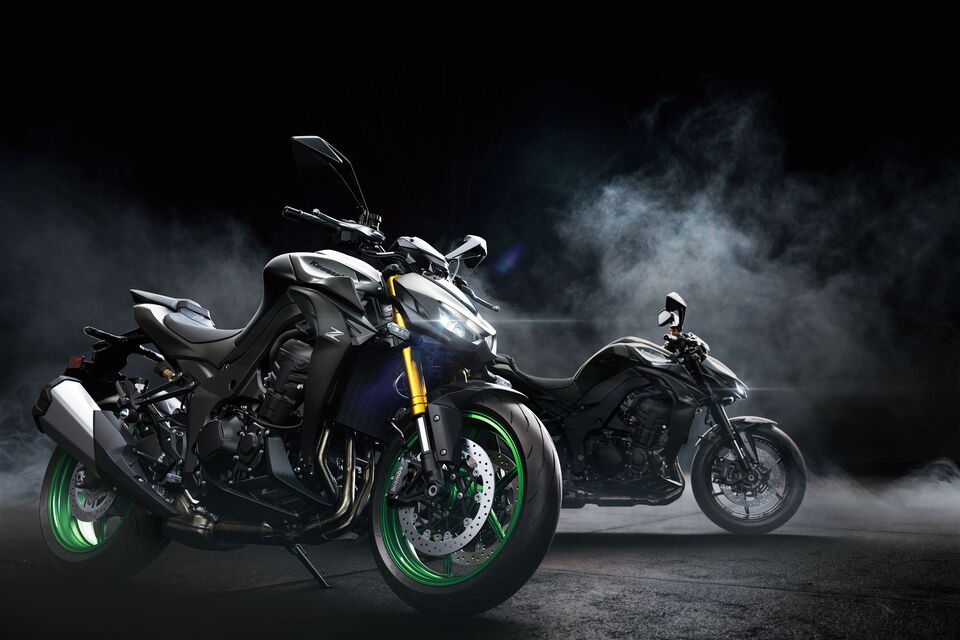
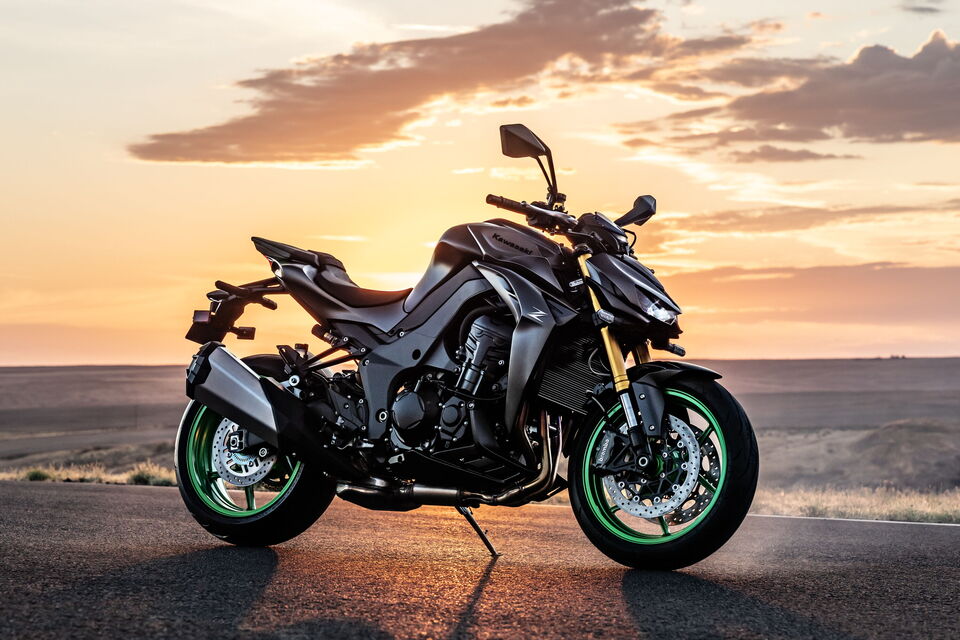
Six years of silence. The Z1000 disappeared in 2020 because Euro 5 made the old four-cylinder too expensive to keep alive, and Kawasaki quietly let its flagship naked bike fade away. Now the successor is here. Bigger, sharper electronically, and equipped with an SE package that reads like a shopping list for sportriding purists: Brembo, Öhlins, steel-braided lines, Dunlop Q5A. Welcome back, Kawasaki. It was about time.
What Separates the SE From the Standard—and Why the Premium Makes Sense
Kawasaki sells two versions of the Z1100. Both use the same engine, chassis, and electronics. What the SE adds is the package you want on a motorcycle like this: Brembo radial-mount Monobloc four-piston front calipers with Brembo 310 mm discs and steel-braided lines. At the rear, an Öhlins S46 with a separate preload adjuster that can be operated even with gloves. Dunlop Sportmax Q5A tires also come fitted from the factory—not compromise all-round rubber, but tires intended to be taken seriously on both backroads and the racetrack.
The market-average price quoted by 1000PS for the SE is EUR 14,270. The standard Z1100 costs EUR 12,470. For just under EUR 1,800 more, you get Brembo, Öhlins, and Q5A tires. That is not a bad deal.
The Engine: 1,099 cc, 136 hp, and More Torque Down Low
1,099 cc. Not 1,100, because staying just below the round number gives Kawasaki more favorable emissions metrics while still allowing the bike to wear the 1100 badge. The inline-four is familiar from the Ninja 1100SX and Versys 1100: 38 mm throttle bodies, new camshafts, revised pistons, and 3 mm more stroke than the old Z1000. Those additional three millimeters of stroke are why the engine feels different in the low and midrange from its predecessor. The full 113 Nm arrives at 7,600 rpm, but there is noticeably more torque below that point than from the old 1,043 cc engine.
Output is 136 hp at 9,000 rpm. That is an honest figure—not the most powerful in the class, with the Honda CB1000 Hornet producing 152 hp and the BMW M 1000 R 210 hp, but more than enough for anything legally possible on German backroads and Alpine passes. Taller fifth- and sixth-gear ratios help on longer trips: fewer revs on the highway and a calmer engine at cruising speed.
Chassis: Showa Up Front, Öhlins at the Rear, 120 mm
The 41 mm Showa SFF-BP—Separate Function Fork, Big Piston—provides 120 mm of travel and is fully adjustable for spring preload, compression, and rebound damping. In typical Kawasaki fashion, the calibration is performance-oriented: firm rather than comfort-first. At the rear, the Öhlins S46 works through a Horizontal Back-Link linkage and uses an external preload adjuster. The Back-Link system is Kawasaki’s answer to the challenge of making a shock respond sensitively to small imperfections while maintaining stability under high loads. It works.
Seat height is 815 mm. That is classic supernaked territory—sporty, but not so tall that riders are forced onto tiptoe. Curb weight is 221 kg, at the upper end of the class but identical to the previous Z1000. The handlebar is 22 mm wider than before and positioned farther forward. On a fast run over a winding backroad, the difference is obvious: more leverage and a more direct steering input.
Electronics: IMU, Four Modes, Quickshifter, Cruise Control
A six-axis IMU provides the data foundation for everything. Cornering ABS. Multi-level traction control. Four riding modes: Sport, Road, Rain, and Rider, with the last one fully configurable. The bidirectional KQS quickshifter allows clutchless upshifts and downshifts and comes standard. Cruise control is standard. Ride-by-Wire is standard. The 5-inch color TFT connects to a smartphone through the Rideology app, displays turn-by-turn navigation, and supports voice control.
This is the most complete electronics package Kawasaki has ever installed in a production Z naked bike. And unlike some rival systems, it can be controlled entirely through the handlebar switches without diving into menus that feel more like accounting software than motorcycling.
Sugomi Design—A Consistent Expression and a Matter of Taste
Sugomi is a Japanese word that can roughly be translated as “intimidating presence.” Kawasaki has used it for years to describe the design language of its Z supernakeds: sharp edges, asymmetric LED headlights, and aggressive lower bodywork with fins. The Z1100 is the most consistent expression of that philosophy yet. Whether you find it attractive is a matter of taste. Whether you notice it on the road is not.
Metallic Matte Graphenesteel Gray / Metallic Matte Carbon Gray is the only SE color available at launch. Matte and dark. Exactly right for the concept.
Tyrol-Compliant and Everyday-Usable
Stationary noise falls within the Tyrol-compliant range, so there is no ban on Alpine passes. The 17-liter tank, 5.6 L/100 km consumption figure, and 303 km range are sensible numbers for a supernaked. Euro 5+ compliance is standard. The KQS quickshifter does not turn the Z1100 SE into a commuter, but it does make it an everyday-usable motorcycle for riders who also ride during the week and do not want to give up performance on weekends.
Verdict
The 2026 Kawasaki Z1100 SE is the answer to six years of silence: 136 hp, 113 Nm, Brembo, Öhlins, Dunlop Q5A, Showa SFF-BP, six-axis IMU, bidirectional quickshifter, cruise control, and a 5-inch TFT—all standard for EUR 14,270. Against the Honda CB1000 Hornet SP at 152 hp and EUR 12,559, it remains competitively positioned and gives away little technically. For Kawasaki fans, it is the return of an old friend in excellent form.
Quick Check
+ SE package: Brembo radial Monobloc calipers + Brembo 310 mm discs + steel-braided lines + Öhlins S46 + Dunlop Q5A from the factory. Bidirectional KQS quickshifter standard. Cruise control standard. Six-axis IMU with cornering ABS, traction control, and four fully configurable riding modes. 5-inch TFT with navigation and Rideology app.
+ 3 mm more stroke than the Z1000: noticeably stronger midrange torque.
+ Tyrol-compliant.
+ 221 kg ready to ride: not light, but identical to the previous Z1000 and competitive within the class.
+ 17-liter tank / 303 km range.
+ Successor to a legend, the Z1000: real lineage.
– 136 hp: not the highest output in the class; CB1000 Hornet produces 152 hp, BMW M 1000 R 210 hp.
– 221 kg: at the upper end of the supernaked class.
– Only one SE color option at launch: Metallic Matte Graphenesteel Gray / Metallic Matte Carbon Gray.
Technical Specifications: Kawasaki Z1100 SE (2026)
Make / Model: Kawasaki Z1100 SE (2026; Supernaked / Z line; Category A license); manufacturer: Kawasaki Heavy Industries Ltd., Akashi, Japan
Engine: Liquid-cooled DOHC inline-four; 1,099 cc; 38 mm throttle bodies; new camshafts and pistons; 3 mm more stroke than Z1000; 136 hp / 100 kW at 9,000 rpm; 113 Nm at 7,600 rpm; taller fifth- and sixth-gear ratios; Euro 5+
Drivetrain: Six-speed transmission; chain final drive; multi-plate assist/slipper clutch
SE Exclusive: Brembo radial Monobloc four-piston front calipers; Brembo 310 mm brake discs; steel-braided lines; Öhlins S46 rear shock with separate preload adjuster; Dunlop Sportmax Q5A tires from the factory
Front Suspension: 41 mm Showa SFF-BP, Separate Function Fork, Big Piston; 120 mm travel; fully adjustable for spring preload, compression, and rebound damping
Rear Suspension: Öhlins S46 monoshock; Horizontal Back-Link linkage; external preload adjuster; adjustable
Brakes, SE: Twin 310 mm Brembo front discs with Brembo radial Monobloc four-piston calipers; 260 mm rear disc; steel-braided lines; six-axis-IMU-supported cornering ABS
Wheels / Tires: 17-inch front and rear; Dunlop Sportmax Q5A, 120/70-17 front and 190/50-17 rear
Frame / Ergonomics: Aluminum twin-tube frame; handlebar 22 mm wider and positioned farther forward than Z1000; 815 mm seat height; 125 mm ground clearance; 1,440 mm wheelbase; 2,055 mm overall length
Weight: 201 kg dry / 221 kg ready to ride with ABS
Fuel Tank / Consumption: 17 liters; 5.6 L/100 km combined; CO2 126 g/km; 303 km range
Electronics: Six-axis IMU; switchable cornering ABS; multi-level KTRC traction control; four riding modes, Sport/Road/Rain/Rider; bidirectional KQS quickshifter; cruise control; Ride-by-Wire; 5-inch color TFT; turn-by-turn navigation; Rideology app; Bluetooth; voice control; KIPASS keyless ignition
Stationary Noise: Tyrol-compliant
Warranty: 4 years, Kawasaki standard
SE Color: Metallic Matte Graphenesteel Gray / Metallic Matte Carbon Gray
Z1100 vs. Z1100 SE: Identical engine, frame, and electronics. SE adds Brembo brakes, Öhlins S46, steel-braided lines, and Dunlop Q5A. Standard Z1100 uses Monobloc calipers and a conventional rear shock. Price difference approx. EUR 1,800.
Competition: Honda CB1000 Hornet SP: EUR 12,559; 152 hp; 202 kg; Showa + Brembo. BMW M 1000 R: from EUR 22,940; 210 hp; race-level hardware. Suzuki GSX-S1000: EUR 13,390; 152 hp; 214 kg.
Price in Germany: EUR 14,270; standard Z1100 EUR 12,470 including destination