Review Kawasaki Z900 (2026)

Germany’s Best-Selling Naked Bike Modernized—Six-Axis IMU, Quickshifter, Cruise Control, and a Price Cut to EUR 10,170
124 hp, 97 Nm, six-axis IMU, cornering ABS, quickshifter with blipper, cruise control, 5-inch TFT, 213 kg, 830 mm seat height—and at the same time around EUR 600 less expensive than its predecessor. The Z900 was already a bestseller. Now it is a bestseller with substantially more electronics.
As of: April 10, 2026 | Model: Kawasaki Z900 (2026, base model) | Price: EUR 10,170 including destination | Warranty: 4 years | Stationary noise: not officially published; previous model years were at 95 dB(A) or above—check registration documents for Tyrol status | MY2026: technically identical to MY2025, new colors


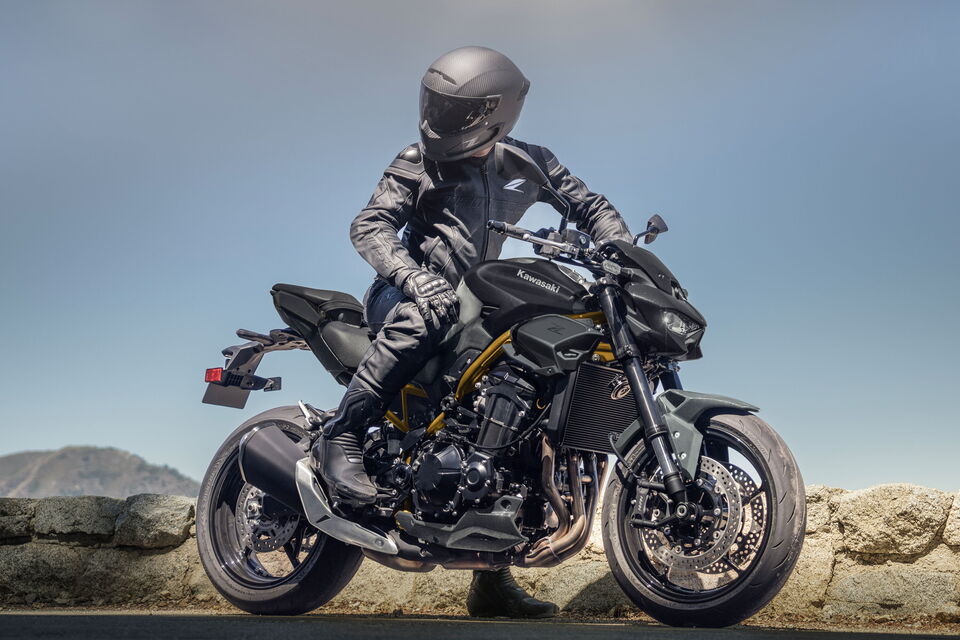
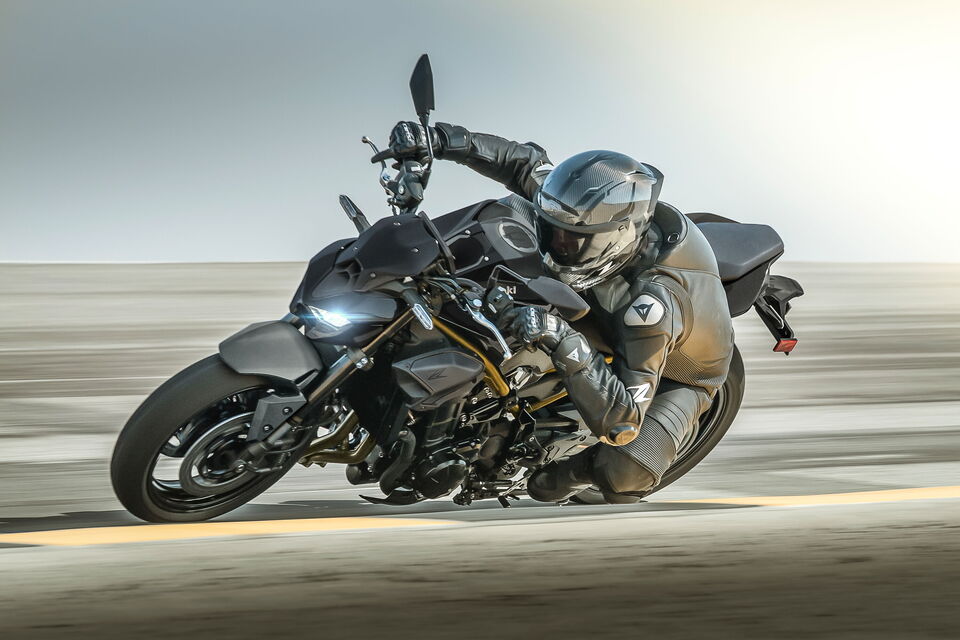
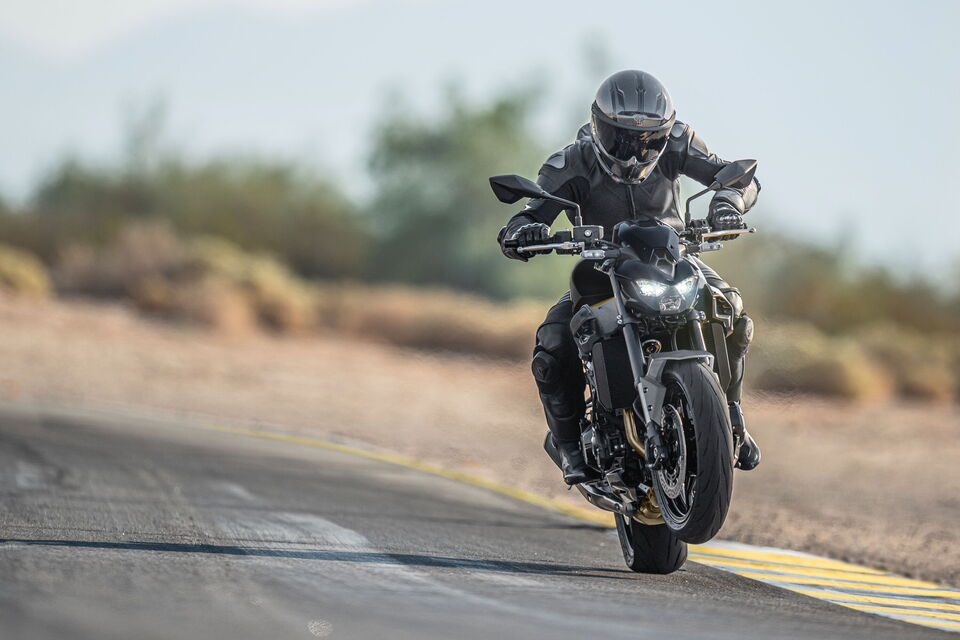
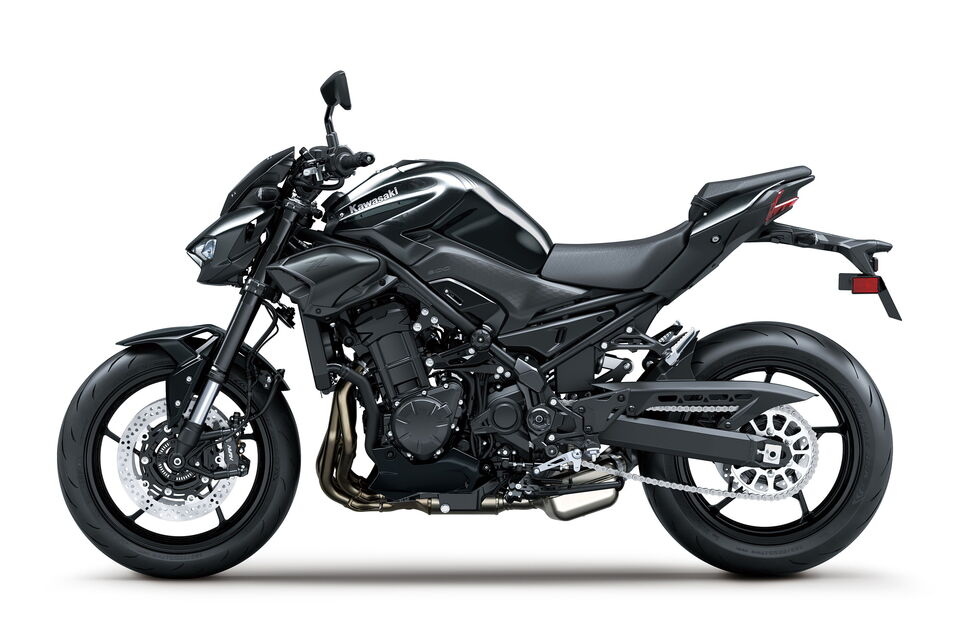
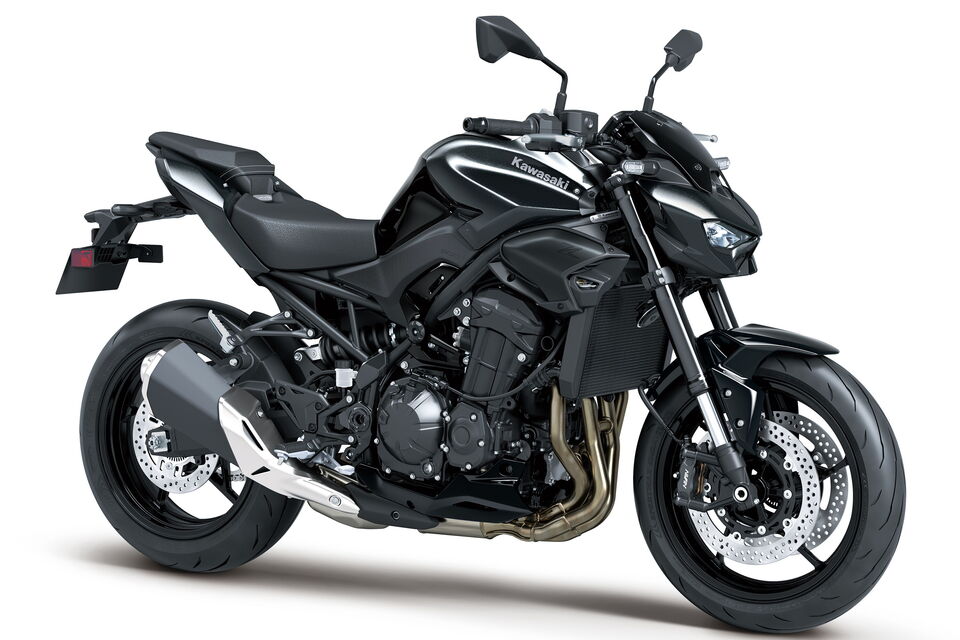
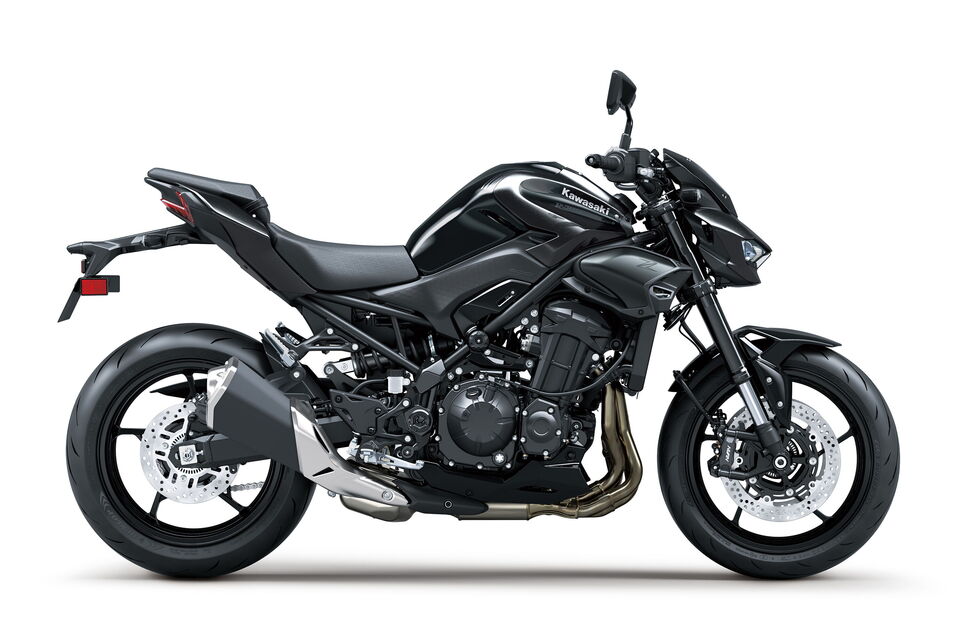
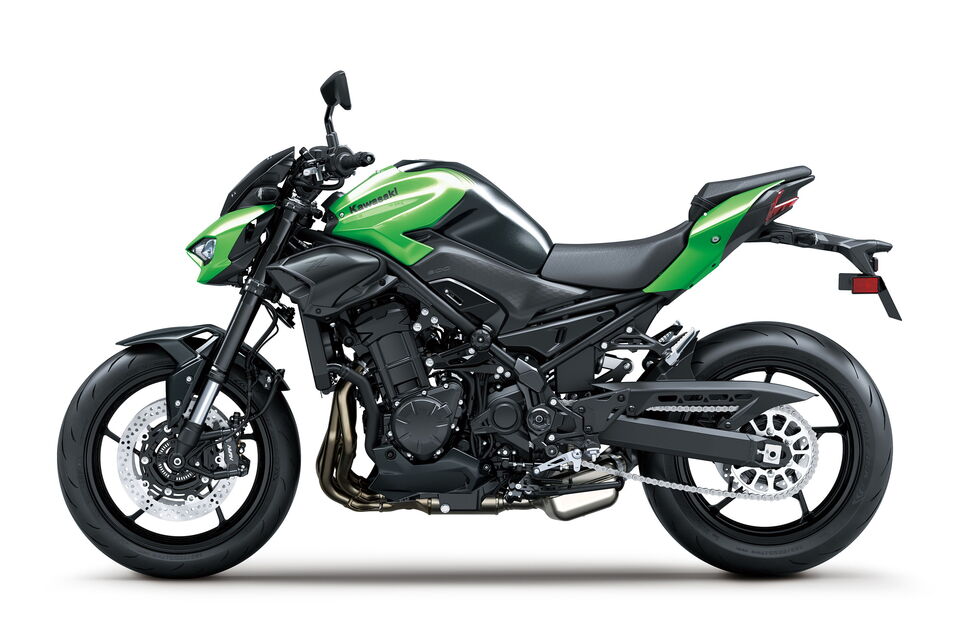
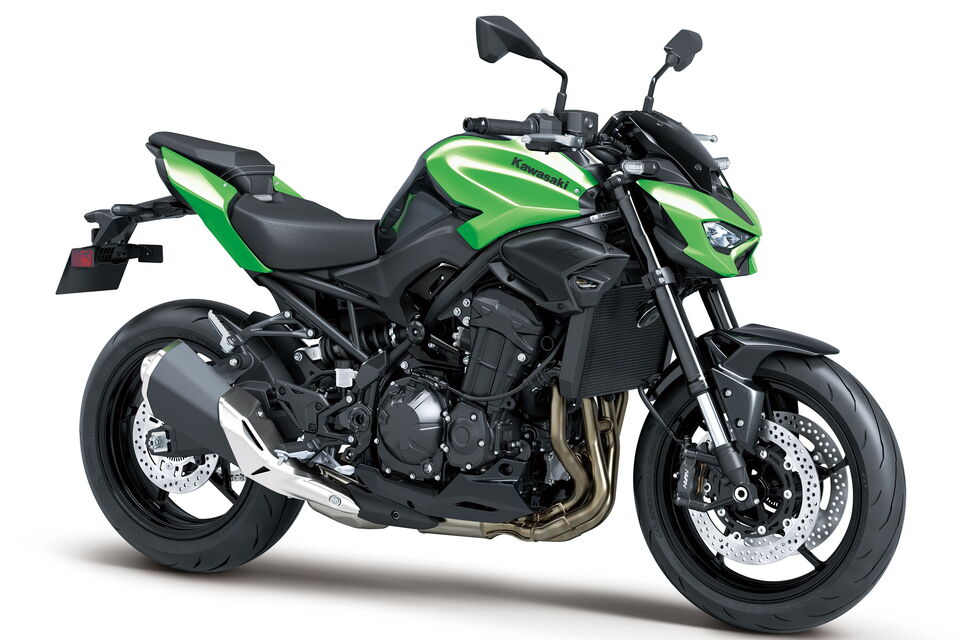
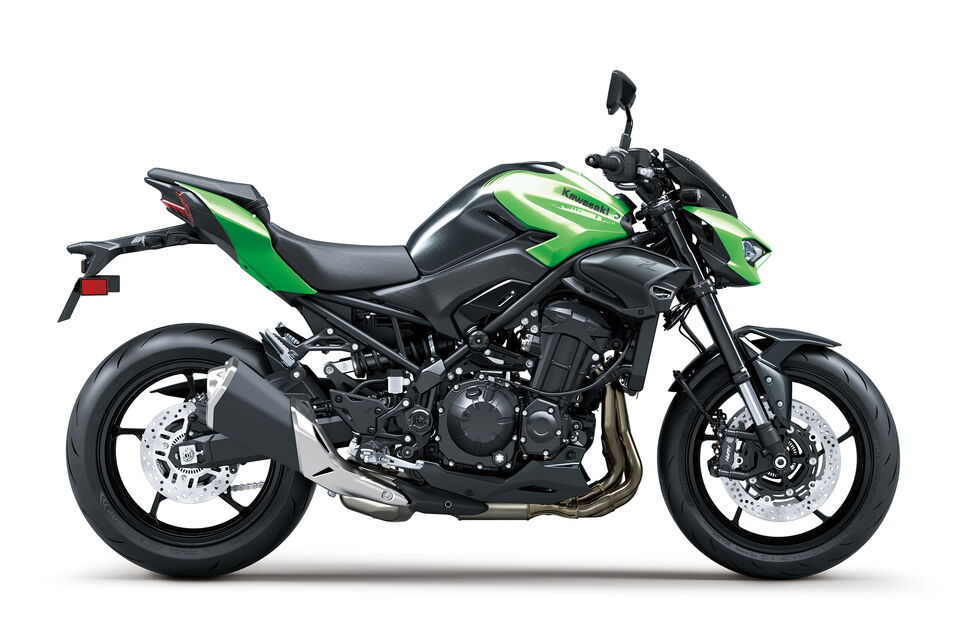
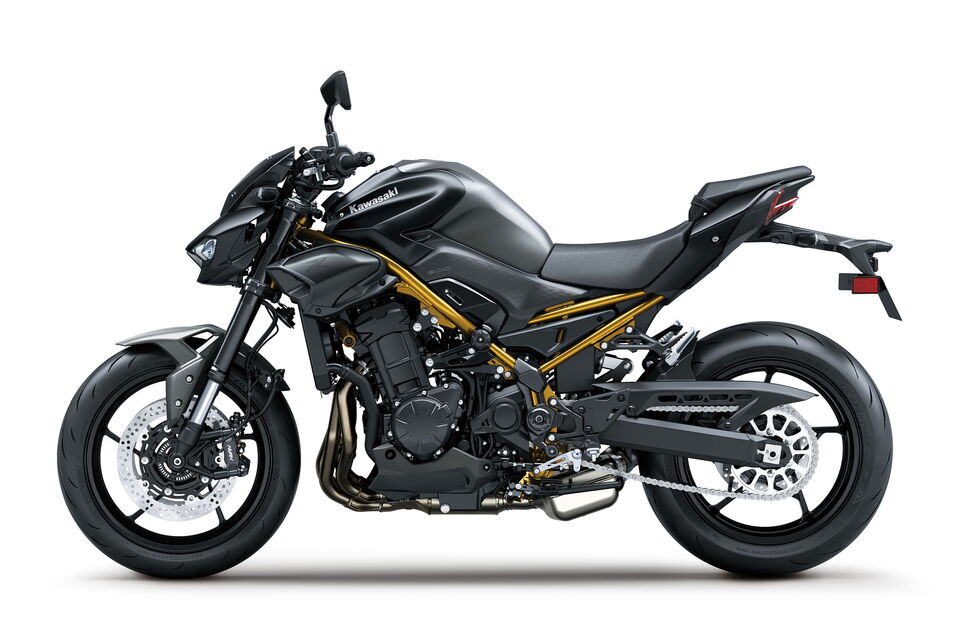
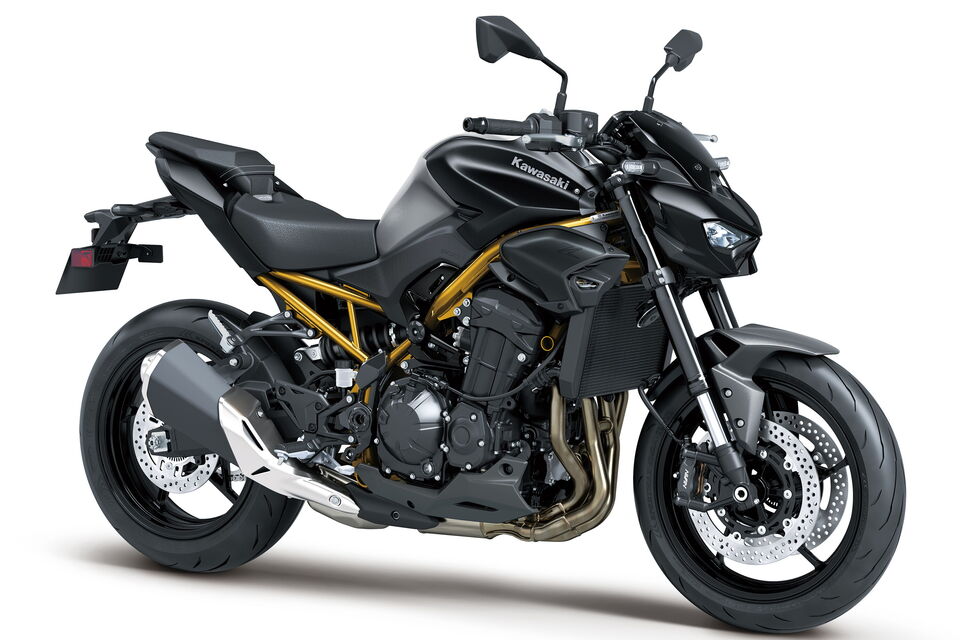
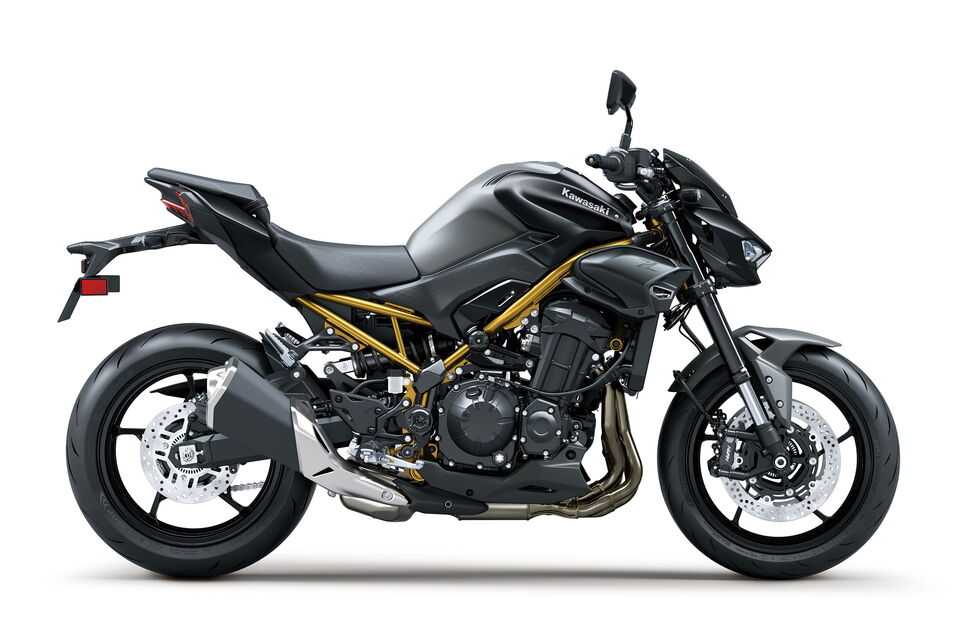
What Arrived for 2025—and Carries Over Unchanged for 2026: IMU, Quickshifter, Cruise Control, Taller Seat
Model year 2025 brought the biggest Z900 update since the fundamental 2020 revision. For the first time, a six-axis IMU became the foundation for KIBS cornering ABS and lean-sensitive KTRC traction control. Also new were a bidirectional KQS quickshifter with blipper as standard, cruise control as standard, a 5-inch color TFT with the Kawasaki Rideology app, and an aluminum tubular handlebar. Seat height increased from 795 to 830 mm, with an optional 810 mm low seat available. Wheelbase was shortened slightly from 1,455 to 1,450 mm, while trail increased from 105 to 110 mm. MY2026 is technically identical, with only new color combinations.
At the same time, Kawasaki reduced the price from EUR 10,695 for MY2024 including destination to EUR 10,170 for model years 2025/2026. The background is the arrival of the Honda CB1000 Hornet, starting at EUR 10,729 with 157 hp, which put the Z900 under direct price pressure for the first time. Kawasaki’s response was the right one: more equipment for less money.
Engine: 948 cc, 124 hp, 97 Nm—One Horsepower Less Than Before, but Stronger Drive Down Low
The liquid-cooled DOHC 948 cc inline-four has produced 124 hp at 9,500 rpm and 97.4 Nm at 7,700 rpm since model year 2025—one horsepower and one Newton-meter less than its predecessor. The reduction is not caused by Euro 5+, but by new cam profiles. The objective was stronger low-rpm drive and reduced fuel consumption; Kawasaki claims a 16 percent improvement over the previous engine. Ride-by-Wire is standard, as are an assist/slipper clutch and the Road, Sport, Rain, and individually configurable Rider modes. Factory fuel consumption is 5.7 L/100 km.
Throttle response is buttery smooth and linear, and the engine pulls harder from low revs than before. A noticeable flywheel effect gives the power delivery a smooth, composed character. The bidirectional quickshifter with blipper is now standard—previously one of the biggest equipment differences between the base model and the SE.
Chassis and Brakes: 41 mm USD Fork, Adjustable Rebound, Twin 300 mm Discs—Sporty and Balanced, Not Extreme
A steel trellis frame works with an aluminum swingarm, a 41 mm USD fork adjustable for spring preload and rebound damping, but not compression, and a rear monoshock with adjustable spring preload. Suspension travel is 120 mm front and 140 mm rear, with a 1,450 mm wheelbase. The calibration is a successful compromise between sporty response and everyday usability. The Kawasaki tips into lean almost by itself, holds a stable line through corners, and delivers useful feedback. Very ambitious riders or anyone planning track use should look to the SE with Öhlins and Brembo hardware.
The front brake uses twin 300 mm discs with radially mounted four-piston Kawasaki calipers. At the rear is a 250 mm disc with a single-piston caliper. Cornering ABS is standard. Brake feel is progressive and effective: not the hyper-aggressive bite of a hardcore hyper-naked, but accurate and precise for the intended use. Dunlop Sportmax Q5A tires have been standard original equipment since MY2025.
Electronics and Ergonomics: Six-Axis IMU, Cornering ABS, Four Riding Modes, Cruise Control, 5-Inch TFT—Fully Up to Date
The six-axis IMU provides the data foundation for KIBS lean-sensitive cornering ABS, KTRC traction control with cornering functionality, KCMF Kawasaki Cornering Management Function, and the bidirectional KQS quickshifter. Cruise control is standard. Four riding modes—Road, Sport, Rain, and Rider—are available. The 5-inch color TFT includes the Kawasaki Rideology app, turn-by-turn navigation, voice control, and smartphone connectivity. USB-C is optional on the base model and standard on the SE. In almost every relevant area, the electronics package is on the level of the Z1100 SE at a substantially lower price.
Ergonomics are defined by an 830 mm seat height, optional 810 mm low seat, aluminum tubular handlebar, and a sporty-upright riding position. The taller seat compared with the previous 795 mm version was a deliberate decision: Kawasaki’s product planners chose to make the highest seat option standard in Europe. Riders who prefer to sit lower can order the 810 mm seat. Passenger use is possible and grab handles are standard.
Positioning: Germany’s Bestseller Under Pressure—But Responds Strongly
In June 2025, the Z900 was Germany’s best-selling motorcycle, with 679 new registrations in a single month. That is no accident. The combination of a familiar engine, proven chassis, now-complete IMU electronics, and a reduced price is very appealing in this segment. Direct rivals include the Honda CB1000 Hornet at around EUR 10,729 with 157 hp but no standard cruise control, the Yamaha MT-09 from EUR 11,449 with 119 hp and an IMU, and the Suzuki GSX-S1000 from around EUR 13,390 with 150 hp. The Z900 has less power than the Honda and Suzuki, but one of the most comprehensive electronics packages with cruise control at this price point. Riders who want the sportier suspension and braking hardware should choose the SE.
Cost: EUR 10,170 Including Destination—Around EUR 600 Less Than the Predecessor, With More Equipment Included
The Kawasaki Z900 costs EUR 10,170 including destination. The Z900 SE costs EUR 12,320 including destination. The EUR 2,150 premium for the SE buys a fully adjustable Öhlins S46 rear shock, Brembo M4.32 monobloc calipers with steel-braided lines, USB-C in the cockpit, exclusive colors, and one additional kilogram of weight at 214 instead of 213 kg. Service intervals are 12,000 km, with valve-clearance inspection every 36,000 km. Warranty coverage is four years. Kawasaki’s starter bonus can provide up to EUR 800 for riders who obtained their license within the previous 12 months, depending on the model at one euro per cubic centimeter.
Kawasaki quotes fuel consumption at 5.7 L/100 km. With a 17-liter tank, that gives a theoretical range of around 298 km. In brisk real-world riding, 6.0 to 6.5 L/100 km is more realistic, corresponding to roughly 260 to 280 km between fuel stops.
Verdict
948 cc, 124 hp, 97 Nm, six-axis IMU, cornering ABS, quickshifter with blipper, cruise control, 5-inch TFT, 213 kg, 830 mm seat height, Dunlop Q5A tires, and a four-year warranty. The Z900 has less power than the Honda Hornet and Suzuki GSX-S1000, and the base suspension is not at the level of the SE. Know that going in, and you still get an uncomplicated, proven, technically current all-round naked bike. Germany’s best-selling bike after the GS has earned that position for good reason.
Quick Check
+ Six-axis IMU standard since MY2025: foundation for cornering ABS, cornering traction control, and cornering management.
+ Bidirectional KQS quickshifter with blipper standard since MY2025.
+ Cruise control standard since MY2025; absent from the base Honda CB1000 Hornet and base Yamaha MT-09.
+ Four riding modes: Road, Sport, Rain, Rider, individually configurable and IMU-supported.
+ 5-inch TFT with Kawasaki Rideology app, turn-by-turn navigation, and voice control.
+ 948 cc inline-four: proven, smooth throttle response, linear power delivery, strong low-rpm drive.
+ 41 mm USD fork with adjustable spring preload and rebound damping.
+ Twin 300 mm front discs with radially mounted four-piston calipers; cornering ABS standard.
+ Dunlop Sportmax Q5A original-equipment tires since MY2025.
+ Steel trellis frame: light, rigid, and central to the bike’s character.
+ 213 kg ready to ride; 830 mm seat height, optional 810 mm; relaxed sporting ergonomics.
+ Germany’s best-selling motorcycle in June 2025, with 679 new registrations in one month.
+ Price reduced to EUR 10,170 including destination—around EUR 600 less than MY2024.
+ Kawasaki starter bonus: up to EUR 800 for newly licensed riders, license no more than 12 months old.
+ 4-year Kawasaki factory warranty; 12,000 km service intervals.
+ MY2026 technically identical to MY2025: proven, established technology with no surprises.
– 124 hp: less than the Honda CB1000 Hornet at 157 hp and Suzuki GSX-S1000 at 150 hp, but more than the Yamaha MT-09 at 119 hp.
– One horsepower less than the predecessor at 125 hp.
– Base suspension: only rebound damping and spring preload are adjustable; no compression adjustment and no Öhlins, which arrives with the SE.
– No Brembo brakes on the base model; Kawasaki’s own calipers are good but one category below the SE hardware.
– Stationary noise is not officially published; previous model years were at 95 dB(A) or above, so check registration documents for Tyrol status.
– 830 mm seat height versus 795 mm on the predecessor: disadvantage for shorter riders; optional 810 mm seat costs extra.
– No USB-C in the cockpit as standard on the base model; standard only on the SE.
– 17-liter tank: around 260–298 km range depending on riding style, tight for intensive touring.
– Some Rideology app features require a subscription, a point often criticized as outdated.
Technical Specifications: Kawasaki Z900 (2026, Base Model)
Country of Manufacture: Japan, Kawasaki
Engine: Inline-four, 948 cc, liquid-cooled, DOHC; Ride-by-Wire; assist/slipper clutch; six-speed; bidirectional KQS quickshifter with blipper standard
Power: 124 hp / 91 kW at 9,500 rpm
Torque: 97.4 Nm at 7,700 rpm
Riding Modes / Electronics: Road, Sport, Rain, Rider, individually configurable; six-axis IMU; KIBS lean-sensitive cornering ABS; KTRC cornering traction control; KCMF Kawasaki Cornering Management Function; bidirectional KQS quickshifter; cruise control
Frame: High-tensile steel trellis frame; aluminum swingarm
Fork: 41 mm USD; adjustable spring preload and rebound damping; 120 mm travel
Rear Shock: Monoshock; adjustable spring preload; 140 mm travel
Trail: 110 mm
Front Brake: Radially mounted four-piston calipers; twin 300 mm discs; KIBS cornering ABS
Rear Brake: Single-piston caliper; 250 mm disc; ABS
Wheels: Cast aluminum; 17-inch front and rear
Tires: 120/70-17 front; 180/55-17 rear; Dunlop Sportmax Q5A
Display: 5-inch color TFT; Kawasaki Rideology app; turn-by-turn navigation; voice control; smartphone connectivity
Weight: 213 kg ready to ride
Seat Height: 830 mm; optional 810 mm
Wheelbase: 1,450 mm
Ground Clearance: 145 mm
Fuel Tank: 17 liters; approx. 298 km range at factory consumption of 5.7 L/100 km
Stationary Noise: Not officially published; previous model years were at 95 dB(A) or above—check registration documents for Tyrol status
2026 Colors: Ebony/Metallic Carbon Gray; Candy Lime Green/Metallic Carbon Gray; Metallic Matte Graphenesteel Gray/Metallic Spark Black
Price in Germany: EUR 10,170 including destination; Kawasaki starter bonus up to EUR 800 for newly licensed riders
Warranty: 4-year Kawasaki factory warranty
Service: Every 12,000 km; valve-clearance inspection every 36,000 km