Review KTM 1390 Super Duke GT (2025/2026)

The Long-Distance Beast – 190 hp, Semi-Active WP SAT Suspension, Radar, Brembo Stylema Brakes, 228 kg
190 hp. 145 Nm. A 1,350 cc LC8 V-twin. Third-generation semi-active WP APEX SAT suspension at both ends. Brembo Stylema Monobloc front calipers. Front radar with adaptive cruise control, Brake Assist, and Group Ride mode. An 8.8-inch TFT touchscreen with offline navigation. TPMS standard. Michelin Power 6 tires. A two-position height-adjustable windshield. Cornering lights standard. 228 kg fully fueled. 834 mm seat height. 19.5-liter tank. Technically unchanged for MY2026.
Note: Introduced as MY2025 and technically unchanged for MY2026. A prototype with revised bodywork and a new luggage system was spotted in December 2025; no official announcement has followed. Price: no official German list price published; estimated from around EUR 24,000 plus ancillary charges. Production: KTM Mattighofen, Austria.
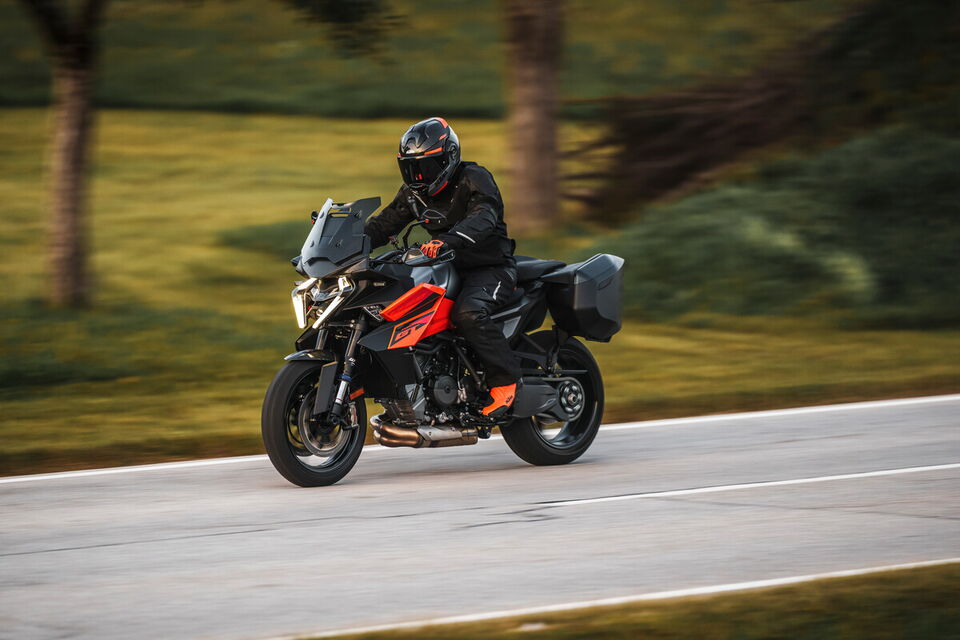
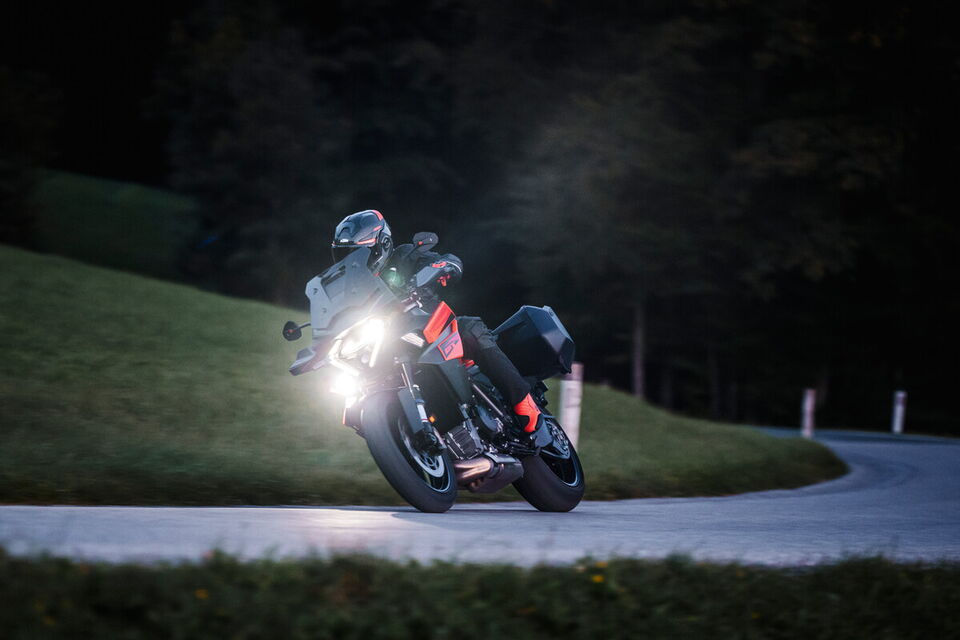
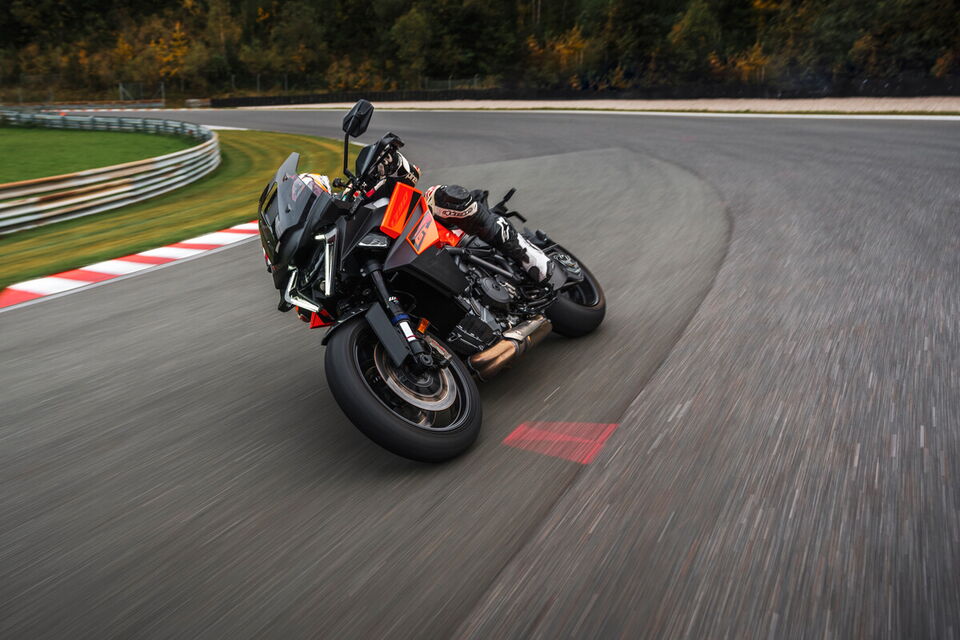
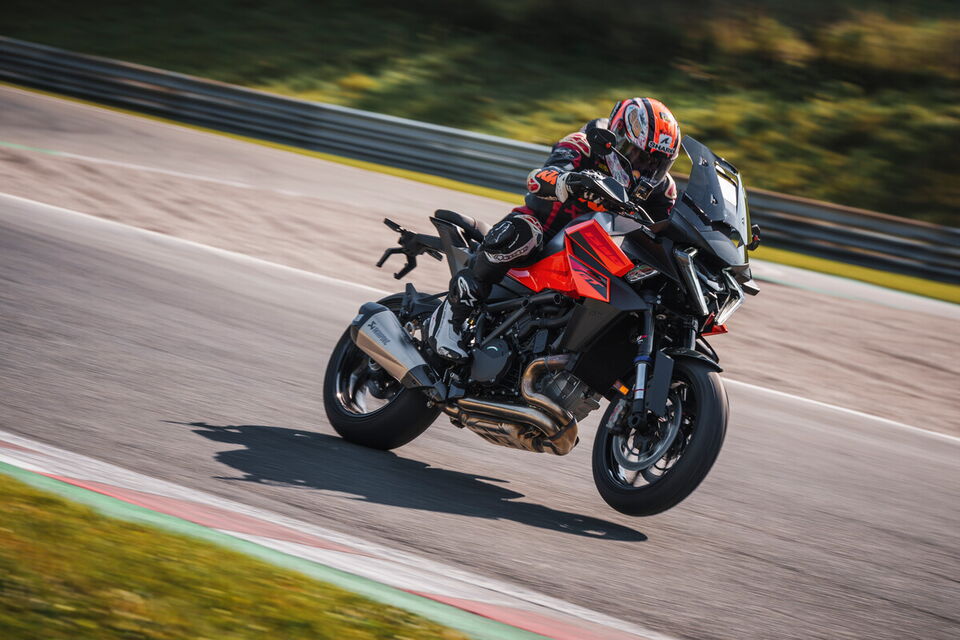
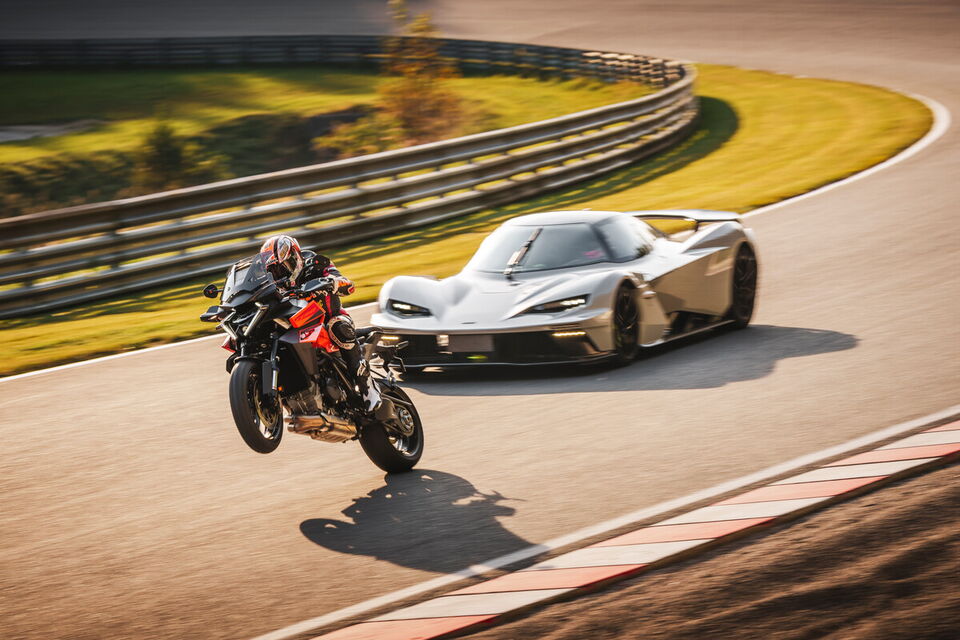
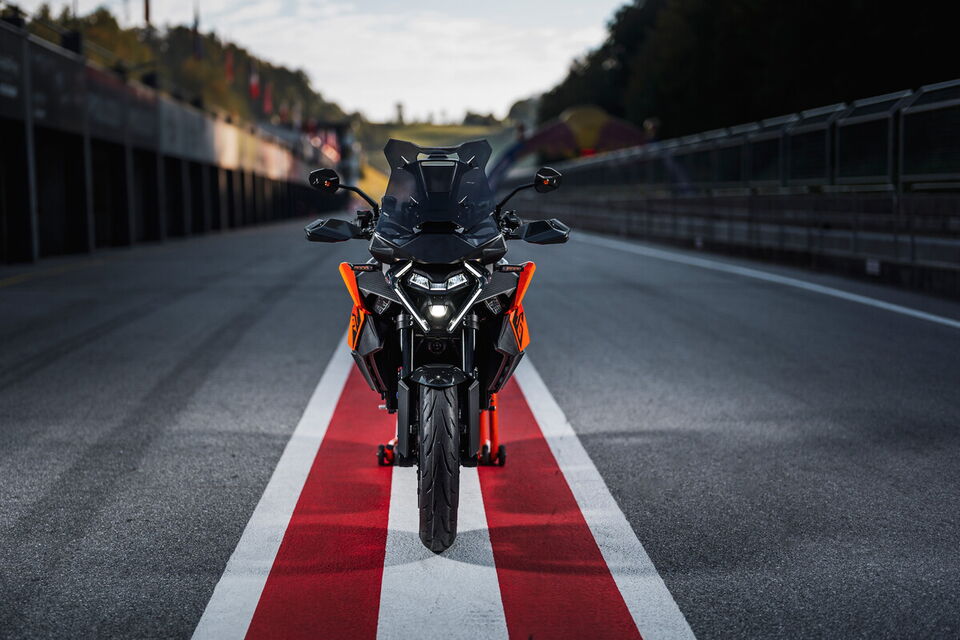
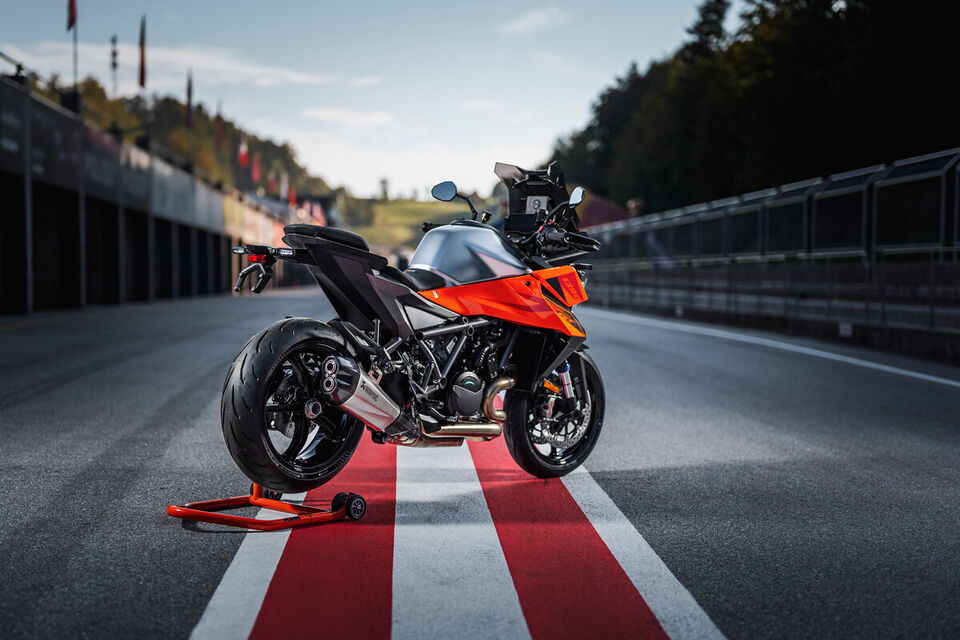
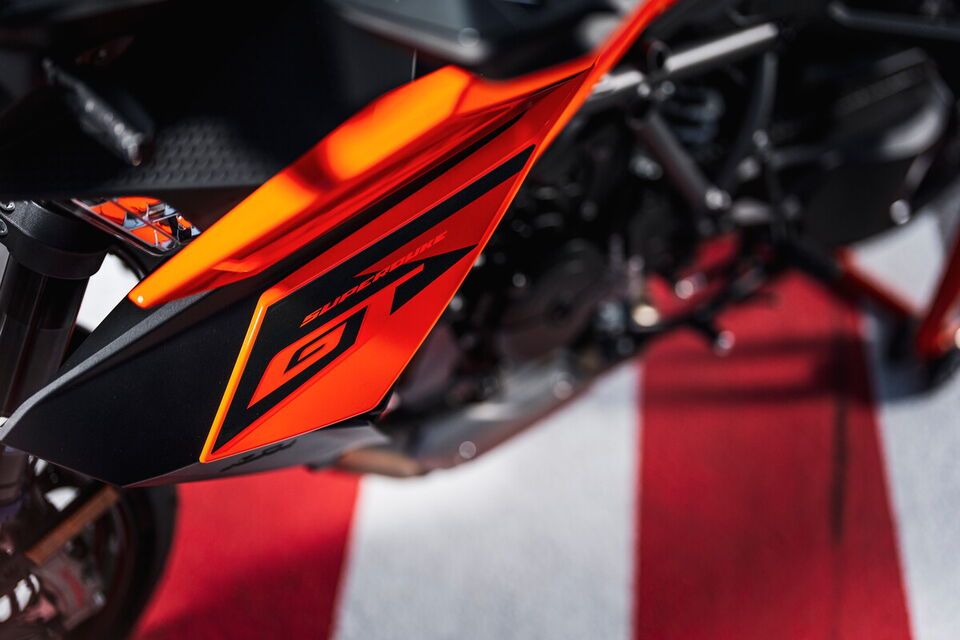
GT vs. Super Duke R: Same Engine, Different Mission – 190 hp for Long-Distance Riding
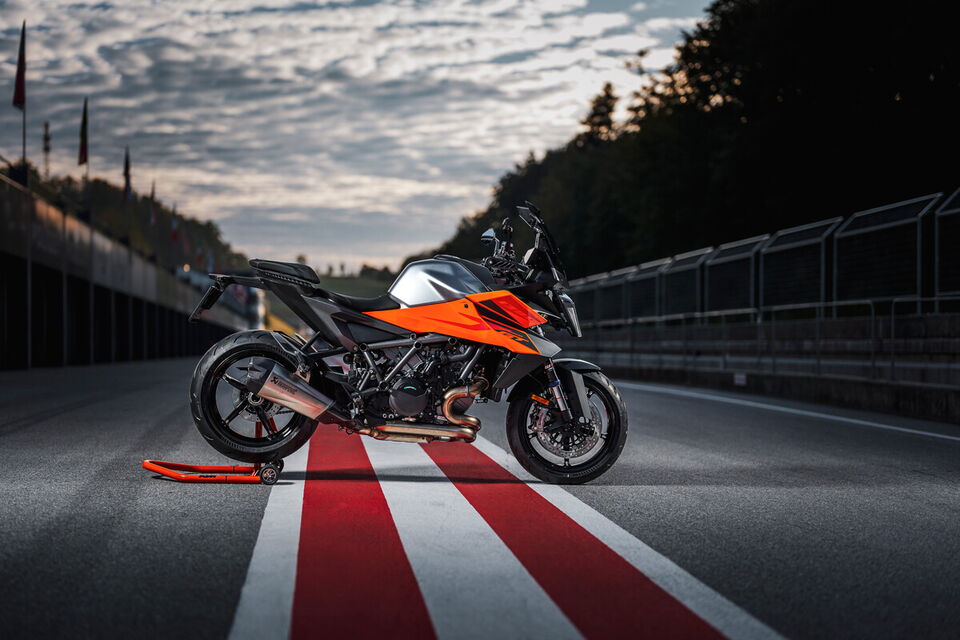
The KTM 1390 Super Duke GT shares its engine with the 1390 Super Duke R and R EVO: the same 1,350 cc LC8 V-twin producing 190 hp and 145 Nm. The difference is the concept. The GT is a sport-tourer, with bodywork, a two-position height-adjustable windshield, TPMS and cornering lights as standard, front radar with adaptive cruise control and Group Ride mode, a Comfort setting specifically optimized in the semi-active WP suspension, and Michelin Power 6 tires instead of the more aggressive rubber used on the Super Duke R. What it gives up are winglets, a top speed beyond 250 km/h, and the R’s more aggressive ergonomics. What it gains is a 19.5-liter tank, larger than the 17.5-liter tank on the Super Duke R EVO.
The previous 1290 Super Duke GT made 175 hp, weighed 234 kg fully fueled, and most recently cost EUR 22,499. The 1390 is six kilograms lighter, better equipped, and 15 hp stronger. This is not a facelift but a substantially different motorcycle on the same basic platform.
Engine: 190 hp, 145 Nm, Cam Shift, Shorter Gearing – No Overdrive in Fifth and Sixth
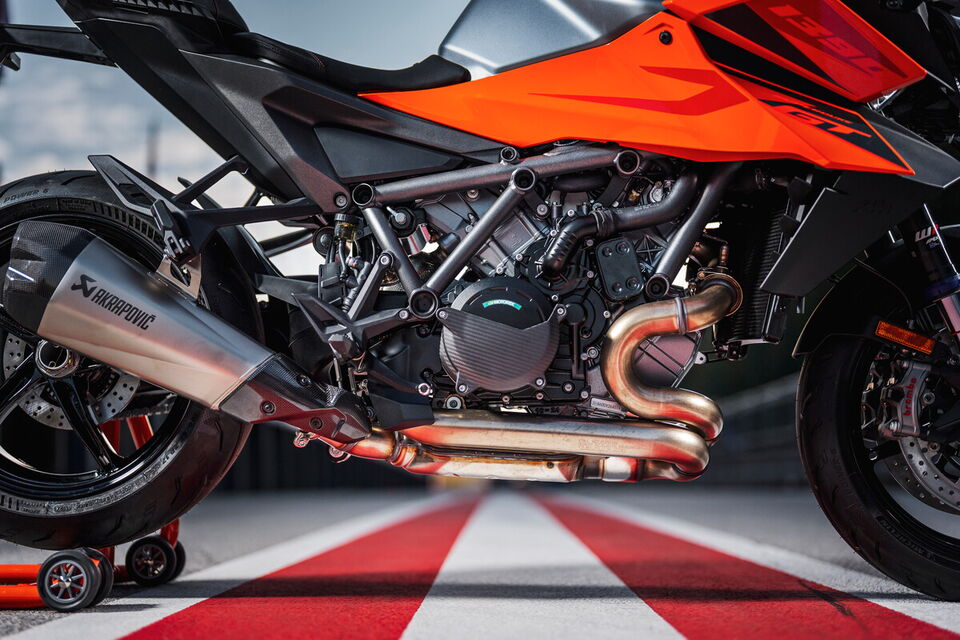
The 1,350 cc LC8 V-twin uses a 75-degree cylinder angle, 110 mm bore, and 71 mm stroke, and produces 190 hp at 10,000 rpm and 145 Nm at 8,000 rpm. It is the most powerful series-production road-legal V-twin on the market. Two-stage Cam Shift intake-cam control improves power delivery across the rev range. KTM has geared the GT shorter than the previous 1290: fifth and sixth are no longer overdrive-style ratios but play a meaningful role in everyday riding. That improves real-world usability on roads where riders are not simply cruising permanently in top gear. A hydraulic PASC slipper clutch and Euro 5+ compliance are standard.
Two details matter to potential buyers. Quickshifter+ is not standard, a noticeable omission at this price. Heated grips also cost extra, unusual for a sport-tourer in this class. The AMT automatic transmission from the 1390 Super Adventure S EVO is not currently available on the GT.
WP APEX SAT Gen 3: Semi-Active Suspension With an Improved Comfort Mode
The third-generation WP APEX SAT suspension is the same basic system that debuted on the 1390 Super Duke R EVO, but with a GT-specific calibration. Comfort mode has been significantly improved for long-distance use. The WP SAT system continuously and automatically adapts compression and rebound damping to road conditions and rider inputs. The DCC compression valve continuously monitors suspension movement and acceleration, while the rear shock uses a hydraulic preload adjuster. The Open Cartridge fork is 750 grams lighter than the unit on the 1290 Super Duke R EVO while also being more efficient and responsive.
Travel is 125 mm front and 140 mm rear. Seat height is 834 mm, ground clearance 149 mm, wheelbase 1,491 mm, and steering-head angle 65.3 degrees. An aluminum single-sided swingarm is used. The suspension is not manually adjustable in the traditional sense; electronics do the work. Riders who enjoy turning clickers may need to adapt. Riders who want comfort and consistency over long distances will find the concept highly effective.
Brakes and Radar Electronics: Brembo Stylema, Supermoto+ ABS, Adaptive Cruise Control, Group Ride Mode
Up front, Brembo Stylema radial four-piston Monobloc calipers work on 320 mm discs, controlled by a Brembo MCS brake lever with multi-click adjustment. At the rear, a two-piston Brembo caliper works on a 240 mm disc. Lean-sensitive ABS offers Sport, Supermoto, and Supermoto+ modes. Supermoto+ permits controlled rear-wheel brake drifts – an unexpected feature on a sport-tourer, but one that preserves the Super Duke DNA.
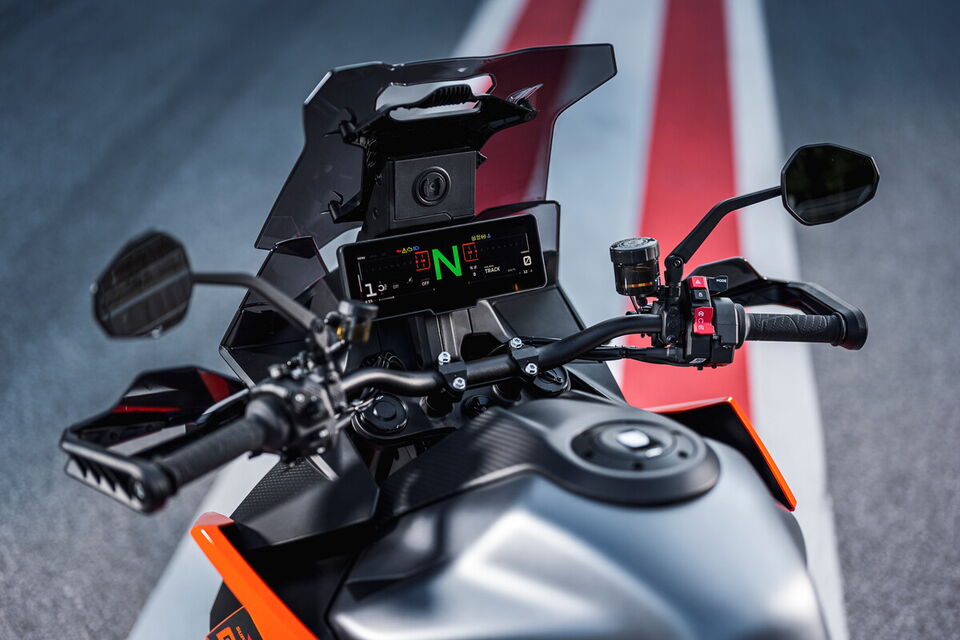
The key electronics difference from the Super Duke R is radar technology. Front radar supports adaptive cruise control, Brake Assist, and a Group Ride mode that optimizes distance control in a convoy. TPMS and cornering lights are standard. Demo Mode is included. The 8.8-inch TFT touchscreen offers offline navigation, split-screen layouts, smartphone connectivity, and USB-C. Rain, Street, Sport, and Custom riding modes are standard.
Ergonomics and Long-Distance Use: 834 mm Seat Height, Two-Position Windshield, 19.5-Liter Tank
The 834 mm seat height is almost identical to the 1390 Super Duke R EVO. The GT is not lower for touring; instead, it is more comfortable through its riding position and wind protection. The windshield adjusts between two height positions and provides substantially better wind protection than the naked Super Duke R. Fully fueled weight is 228 kg with 19.5 liters of fuel, six kilograms less than the previous 1290 Super Duke GT, although that bike carried a larger 23-liter tank. At around 5.9 L/100 km, realistic range is roughly 300 to 320 km, requiring more disciplined fuel stops on long tours than the predecessor.
Michelin Power 6 tires are standard. They are road-oriented sport-touring rubber with a broad operating-temperature window, well suited to travel use. Sizes are 120/70-17 front and 200/55-17 rear. Top speed is electronically limited to 250 km/h, compared with 270 km/h for the Super Duke R. On a touring motorcycle, that distinction is largely academic.
Handling: 190 hp in the Touring Class – No Longer a Compromise Between Sport Bike and Tourer
No other sport-tourer in this segment combines a 190 hp V-twin with semi-active suspension, radar cruise control, and Group Ride mode. The BMW S 1000 XR makes 170 hp from an inline-four and offers semi-active DDC suspension as an extra. The Ducati Multistrada V4 S makes 170 hp from a V4 and comes with semi-active suspension at a higher price. The Honda NT1100 starts much lower, makes 102 hp, and has no semi-active suspension. The GT sits between BMW and Ducati on price while offering the strongest engine of the group.
Its compromises are equally clear. Quickshifter+ costs extra. Heated grips cost extra. A 19.5-liter tank instead of 23 liters means less range. And riders who genuinely want to use 190 hp on a racetrack should buy the Super Duke R EVO. The GT is calibrated for comfort and long distances, even if it remains sportier than almost every other tourer.
Cost and MY2026 Status: No Official German List Price – Estimated From Around EUR 24,000
Concrete German dealer pricing was not available at the editorial deadline. For model year 2026, the motorcycle continues technically unchanged. A prototype with revised bodywork and a redesigned luggage system was spotted testing in the Alps in December 2025, but no official presentation date is known. KTM offers up to four years of Premium Manufacturer Warranty from MY2025, provided scheduled servicing is performed by an authorized KTM dealer.
Verdict
A 190 hp V-twin, semi-active WP suspension, Brembo Stylema brakes, radar cruise control, Group Ride mode, offline navigation, Michelin Power 6 tires, 228 kg fully fueled, and an 834 mm seat. The KTM 1390 Super Duke GT is the fastest sport-tourer at its expected price level. It asks for compromise on Quickshifter+ and heated grips, both extra-cost options, and on fuel capacity at 19.5 liters. But the concept is crystal clear: the Beast tamed for long-distance work – tamed, but certainly not neutered.
Quick Check
+ 190 hp / 145 Nm from the 1,350 cc LC8 V-twin – the most powerful series-production V-twin sport-tourer on the market.
+ Third-generation semi-active WP APEX SAT at both ends; automatic adjustment; Comfort mode improved for GT use.
+ Brembo Stylema Monobloc front calipers; Brembo MCS brake lever; cornering ABS with Supermoto+ mode.
+ Front radar: adaptive cruise control + Brake Assist + Group Ride mode.
+ 8.8-inch TFT touchscreen; offline navigation; split screen; USB-C.
+ TPMS standard.
+ Cornering lights standard.
+ Michelin Power 6 with a broad temperature operating range.
+ 228 kg fully fueled – six kilograms lighter than the 1290 GT, though with a smaller tank.
+ Two-stage Cam Shift; shorter gearing makes fifth and sixth more useful in everyday riding.
+ Hydraulic PASC slipper clutch.
+ Two-position height-adjustable windshield.
+ Up to four years Premium Manufacturer Warranty; built in Mattighofen.
– Quickshifter+ is not standard: unusual at this price level.
– Heated grips cost extra.
– 19.5-liter tank: less range than the 1290 GT predecessor’s 23 liters; around 300–320 km per fill.
– AMT automatic transmission is not currently available.
– Top speed electronically limited to 250 km/h, versus 270 km/h for the Super Duke R.
– No official German list price published; estimated from around EUR 24,000 plus ancillary charges.
– Stationary noise is expected at around 95 dB(A), potentially relevant to Tyrol restrictions.
– Warranty coverage depends on scheduled servicing at an authorized KTM dealer.
Technical Specifications: KTM 1390 Super Duke GT (MY2025/2026)
Country of Manufacture: Austria, KTM Mattighofen
Engine: LC8 V-twin, 75-degree cylinder angle, 1,350 cc, 110 mm bore x 71 mm stroke, liquid-cooled, DOHC, two-stage Cam Shift intake-cam control, Keihin EFI, Ride-by-Wire, Euro 5+; twin ignition; stainless-steel silencer with two catalytic converters
Power: 190 hp at 10,000 rpm
Torque: 145 Nm at 8,000 rpm
Transmission: Six-speed; shorter gearing; hydraulic PASC slipper clutch; Quickshifter+ extra-cost option
Riding Modes / Electronics: Rain, Street, Sport, Custom standard; Track optional; 6D IMU; cornering ABS; Sport/Supermoto/Supermoto+ ABS modes; MTC; front radar with adaptive cruise control, Brake Assist and Group Ride mode; TPMS; cornering lights; Demo Mode, first 1,500 km all options free
Frame: Powder-coated chrome-molybdenum steel trellis frame; cast-aluminum/composite subframe; engine as stressed member
Fork: 48 mm WP APEX SAT USD, third-generation semi-active Open Cartridge; 125 mm travel; automatically controlled
Rear Shock: Third-generation semi-active WP APEX SAT linkage shock; DCC compression valve; hydraulic preload adjuster; 140 mm travel; aluminum single-sided swingarm
Front Brakes: Radial four-piston Brembo Stylema Monobloc calipers; twin 320 mm discs; Brembo MCS lever; cornering ABS
Rear Brake: Two-piston Brembo fixed caliper; 240 mm disc; ABS
Wheels: Cast aluminum; 3.50 x 17-inch front / 6.00 x 17-inch rear
Tires: Michelin Power 6; 120/70-17 front; 200/55-17 rear
Windshield: Two-position height adjustable
Display: 8.88-inch landscape TFT touchscreen; offline navigation; split screen; smartphone connectivity; USB-C
Weight: 228 kg fully fueled
Seat Height: 834 mm
Ground Clearance: 149 mm
Wheelbase: 1,491 mm +/-15 mm
Steering-Head Angle: 65.3 degrees
Fuel Tank: 19.5 liters; approx. 300–320 km range at around 5.9 L/100 km
Top Speed: 250 km/h, electronically limited; Super Duke R: 270 km/h
MY2026 Status: Technically unchanged; prototype of revised version spotted December 2025 with new bodywork and luggage system; presentation date unknown
Price in Germany: No official list price published; estimated from around EUR 24,000 plus ancillary charges
Warranty: Up to 4 years Premium Manufacturer Warranty from MY2025; scheduled servicing at an authorized KTM dealer required